
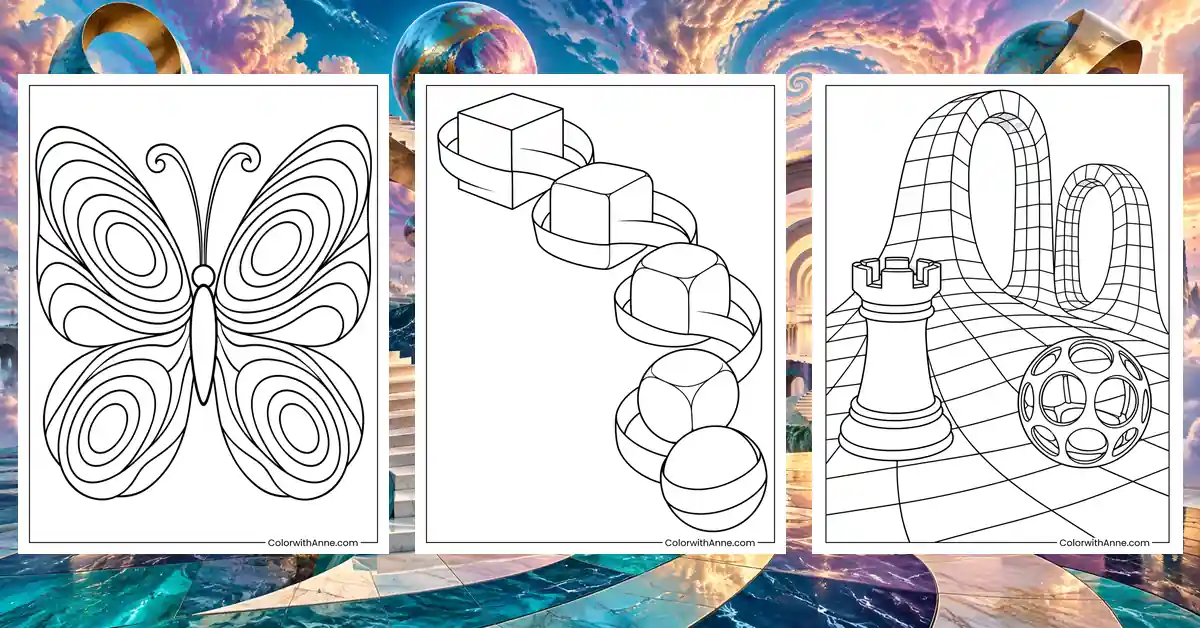
Trippy coloring pages invite you to follow looping lines, shifting shapes, and unusual perspectives. This collection includes patterned butterfly wings, a cube gradually becoming a sphere, floating islands, and an hourglass holding two landscapes. Some drawings offer broad spaces for smooth color, while others have smaller repeating sections that reward a slower approach.
Start with two or three colors and decide where to repeat them before filling the page. Contrasting light and dark shades can emphasize a curved grid or nested outline. Softer gradients can round a solid shape. The eight ideas below suggest palettes and techniques for the visible details in particular designs.
Free Printable Trippy Coloring Pages
Click any coloring page below to open the PDF, then print on US Letter or A4 paper.
Did you find what you needed?
Help us choose what to create or improve next.
Coloring Ideas for Trippy Pages
Try these creative ideas to make the most of your coloring sheets.
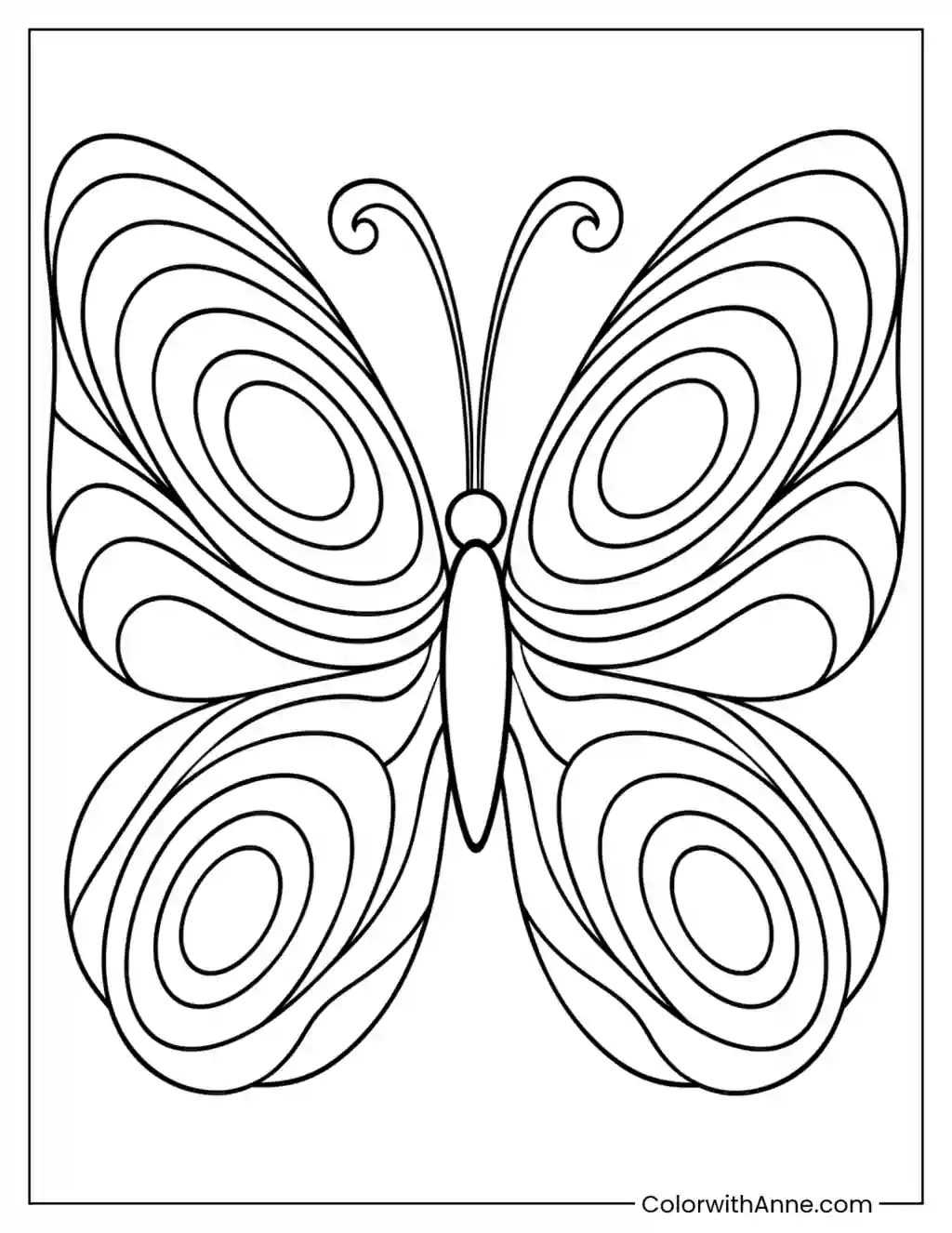
Repeat a Color Sequence Across the Butterfly's Nested Wing Bands
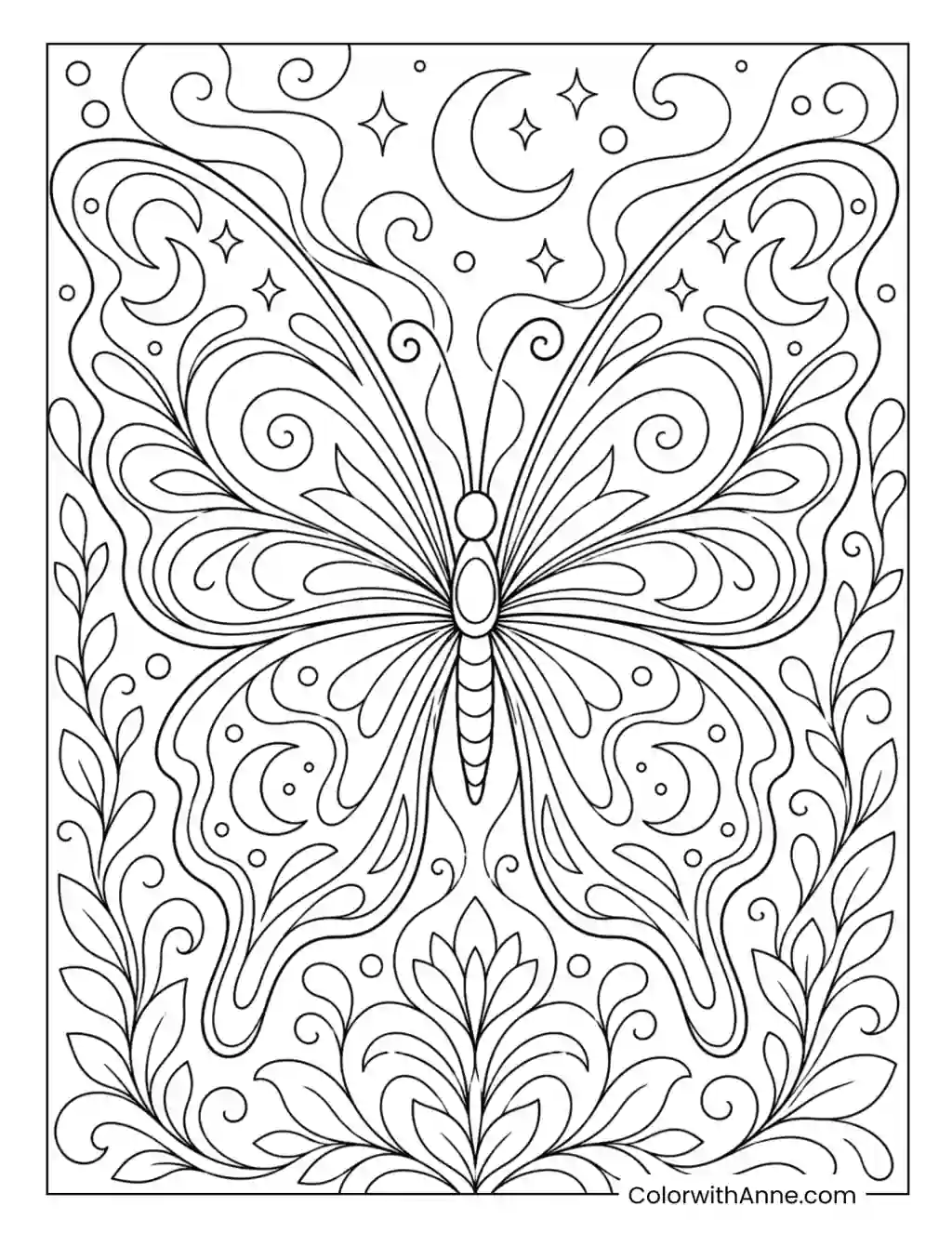
Choose turquoise, blue, and violet for the nested bands inside the wings. Repeat the same sequence on matching left and right sections to emphasize the butterfly's symmetry.
Keep the smallest oval centers pale yellow or cream, then use stronger color in the surrounding bands. Follow each curved outline carefully where the spaces become narrow.
Color the slender body deep blue and the curled antennae a matching shade. A light background will leave the broad outer wing contours easy to see.
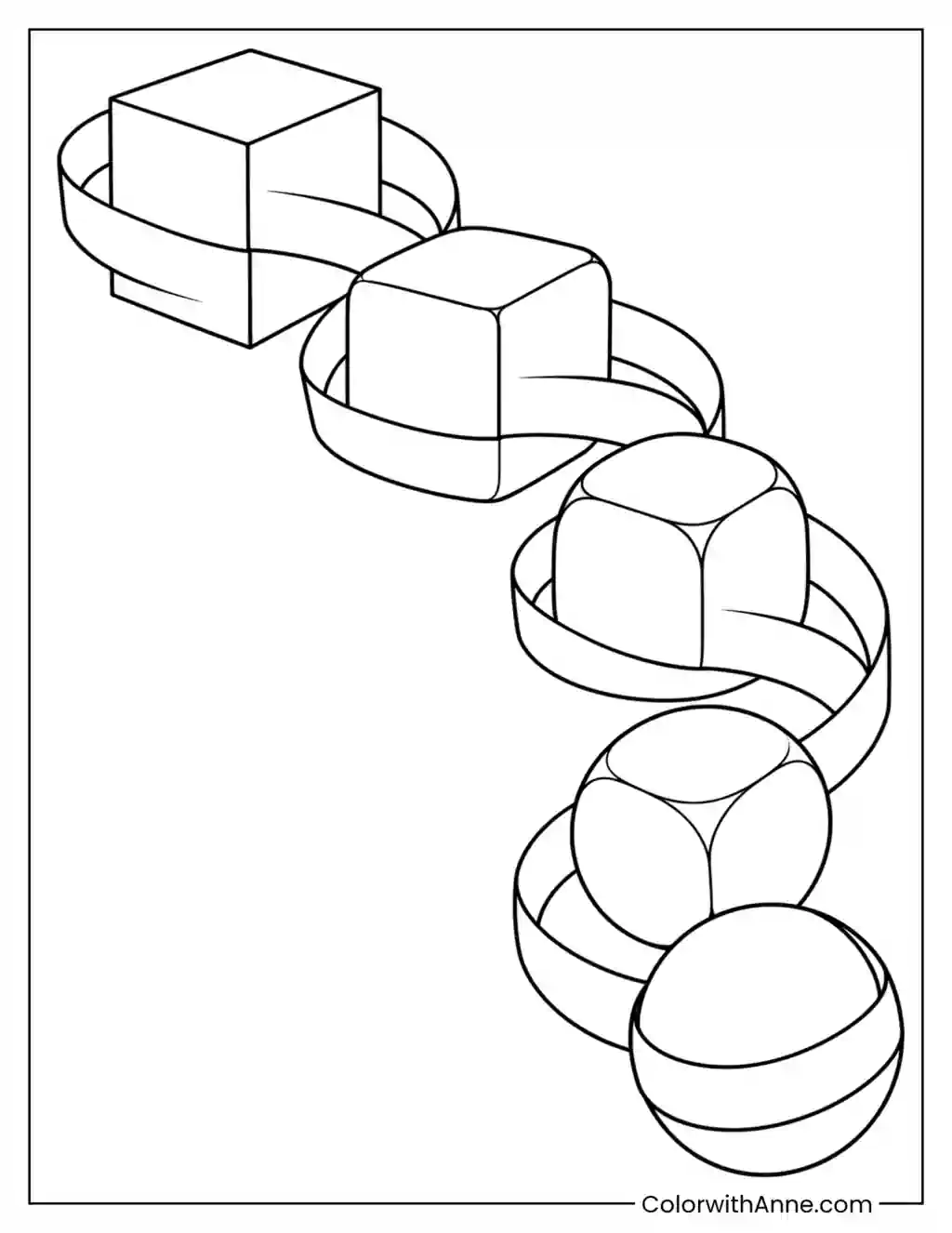
Carry One Shading Direction From the Cube to the Sphere
Choose one blue pencil for the changing solid shapes. Keep their upper surfaces light, use medium blue on the left sides, and deepen the right sides consistently.
As the corners become rounded, soften the transitions between those shades. On the final sphere, blend gently from a pale upper area to a darker lower right edge.
Give the wrapping ribbons a contrasting coral or gold. Darken the portions passing behind each solid while keeping the broad front sections lighter and clearly separate.
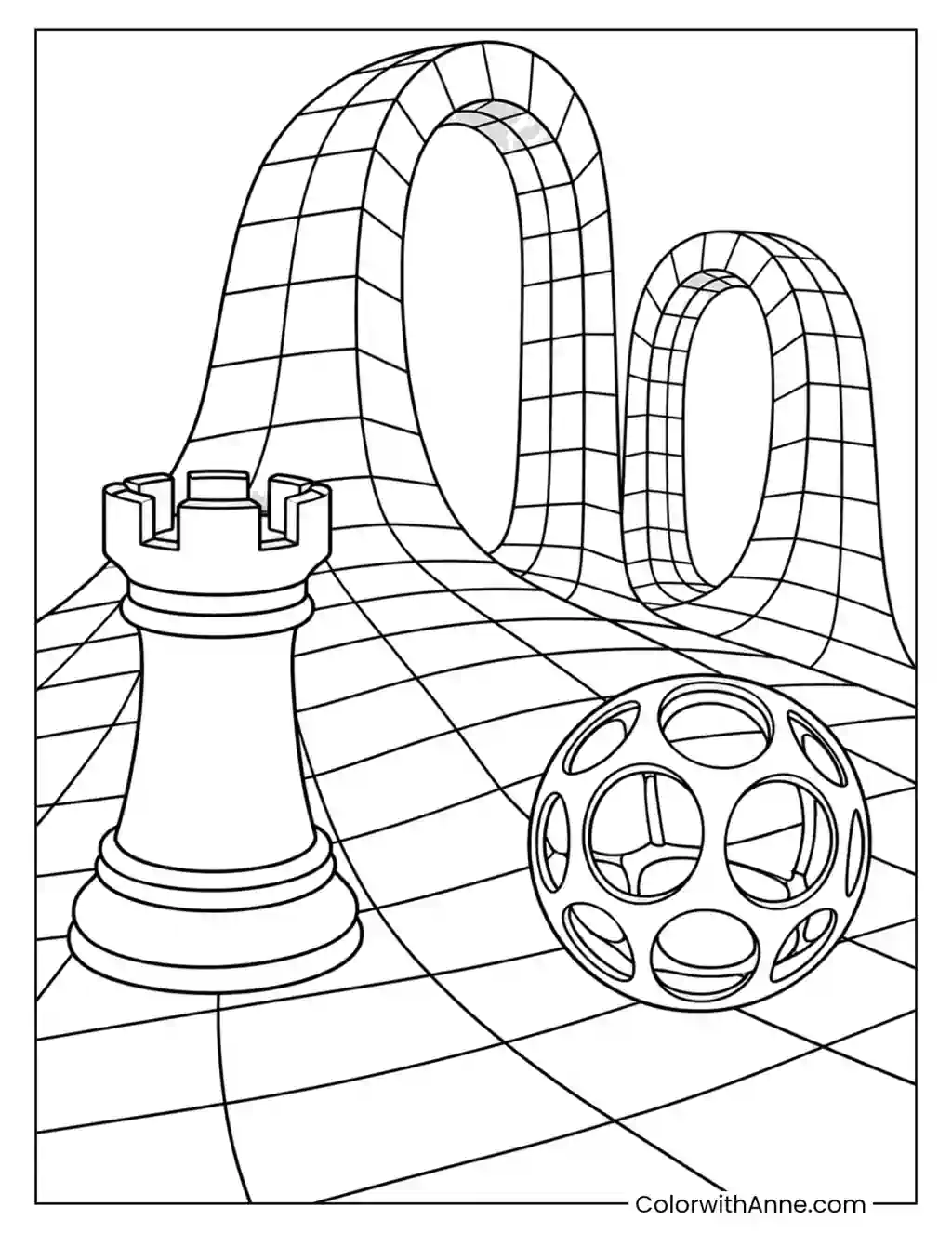
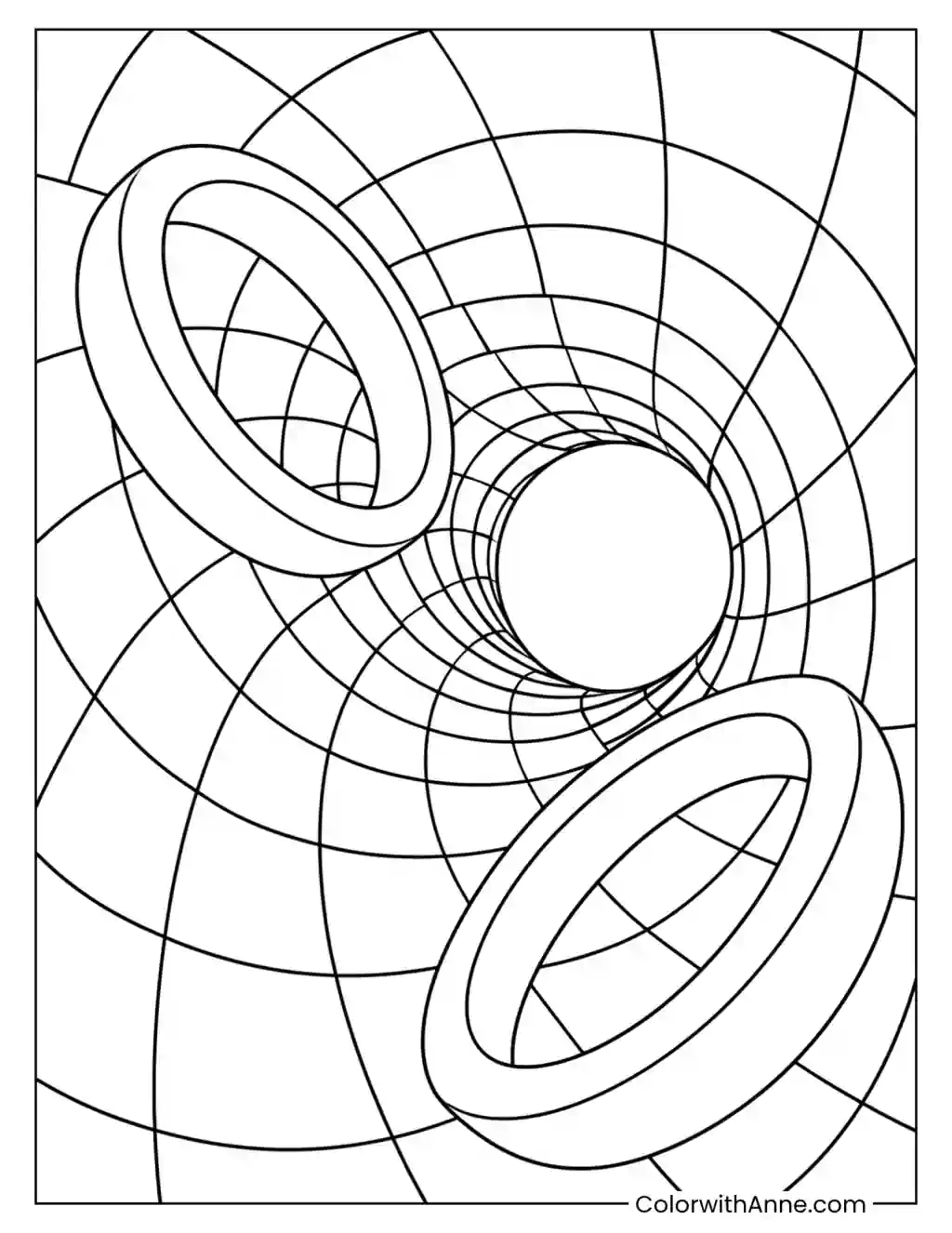
Follow the Warped Grid With Alternating Light and Dark Tiles
Alternate cream and deep blue across the floor's curved grid. Continue the pattern up the tall arches, following each changing tile shape rather than drawing new straight divisions.
Color the large rook warm ivory with soft beige shading beneath its battlements and around its circular base. Keep it lighter than the darkest nearby floor tiles.
Try copper on the perforated sphere and darker brown along the inner edges of its round openings. Use light pressure on its upper surface to suggest a smooth curved shell.
Frame the Circular Portal With Pale Gold Architecture
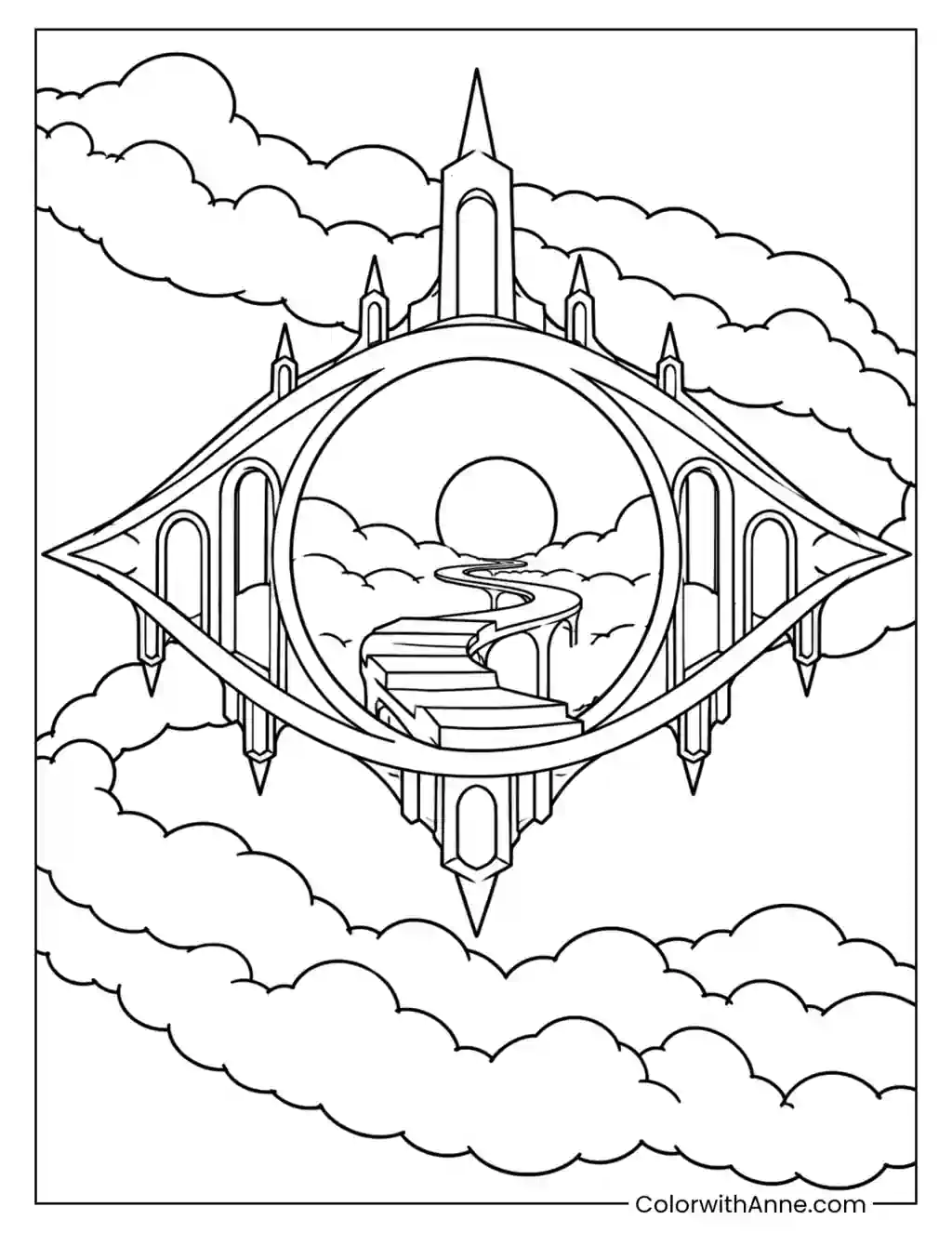
Use pale gold on the long eye shaped frame and the narrow towers rising above and below it. Add deeper ochre inside the small arched recesses.
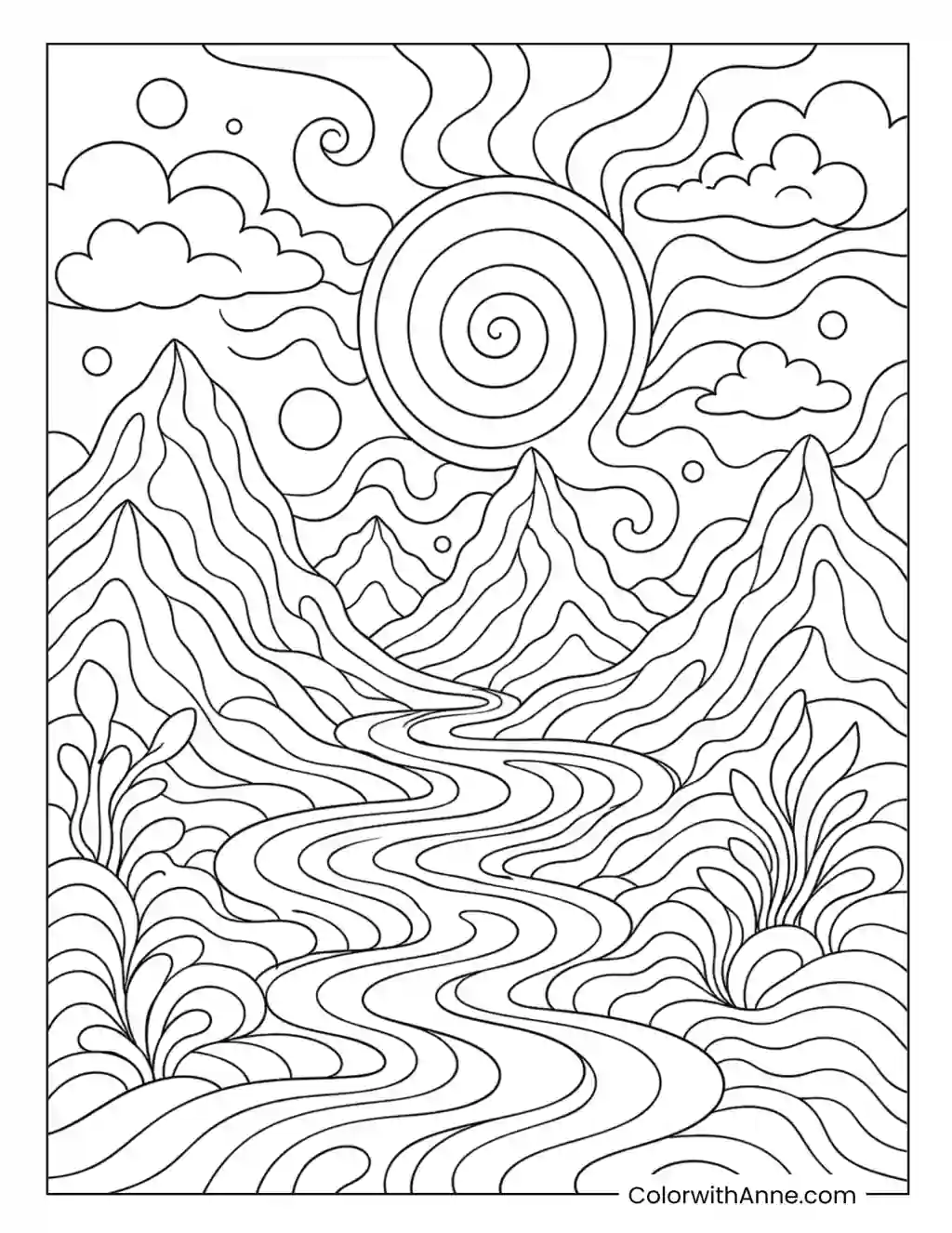
Choose lavender for the steps leading into the circular opening, shading beneath their front edges. Keep the winding path beyond them lighter as it approaches the round sun.
Color the sun warm peach and the clouds pale blue or soft pink. Leave small white areas along their rounded upper edges to separate the overlapping cloud bands.
Keep the Rising Droplets Bright Inside Pale Hourglass Glass
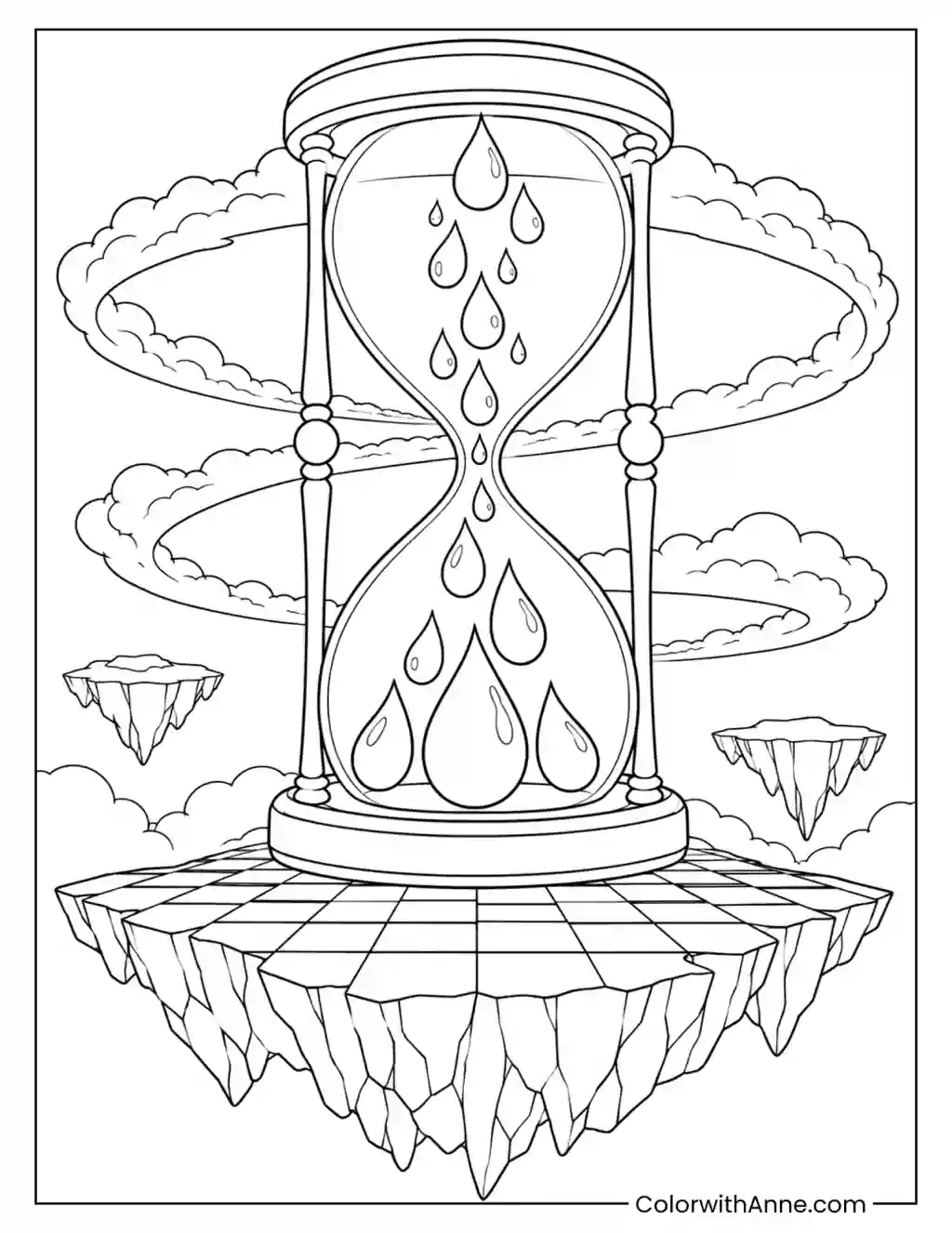
Try turquoise on the pointed droplets, leaving a narrow pale highlight along one side of each. Deepen the larger lower drops near their rounded bases.
Use faint blue along the hourglass's curved glass edges and warm gold on its posts and circular rims. Keep the glass interior light around the rising droplets.
Alternate lavender and cream on the floating platform's tiled top. Shade its jagged underside purple gray, then keep the cloud rings and smaller distant islands softer.
Separate the Floating Island Tops From Their Angular Undersides
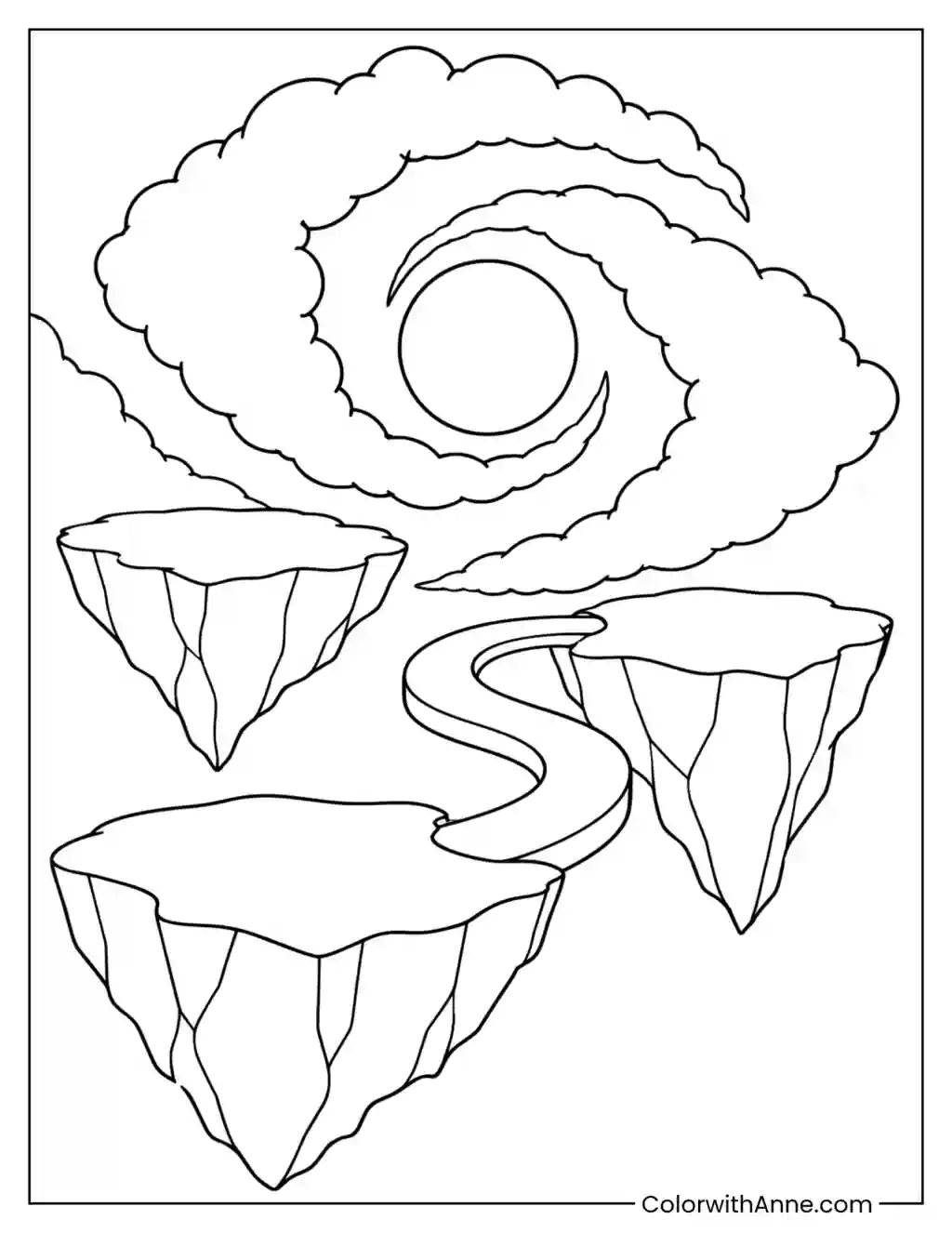
Choose soft green for the islands' flat tops and warm brown for their pointed undersides. Use different brown strengths on adjoining rock faces to show the angular divisions.
Give the narrow winding connection between the islands a pale yellow shade. Darken its thin lower edge slightly so the sweeping curve remains distinct from the open sky.
Try pink and lavender on the spiraling cloud bands, keeping their inner edges a little deeper. Color the central circle pale gold and the sky around the clouds light blue.
Repeat Two Greens Through the Smaller Leaf Shapes
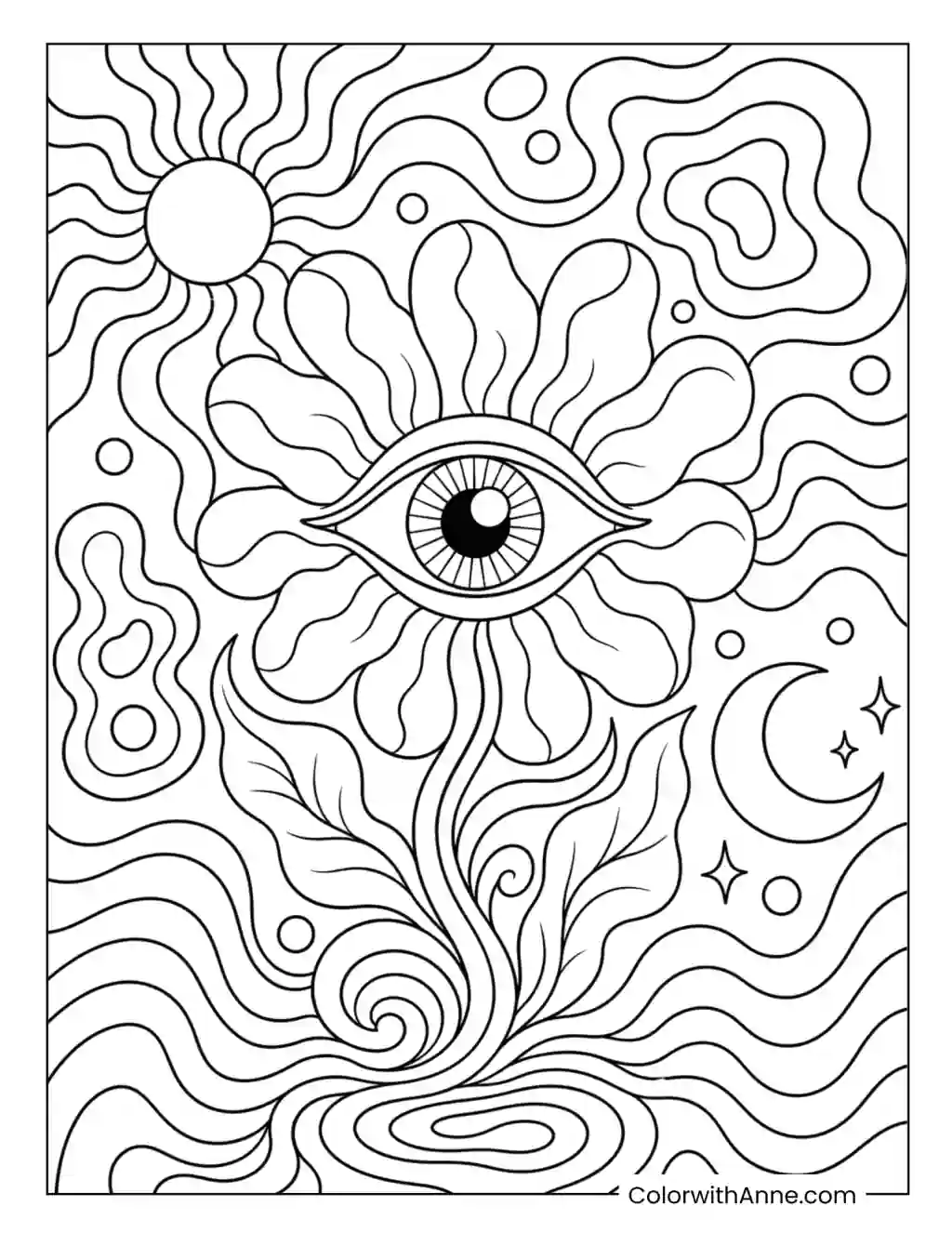
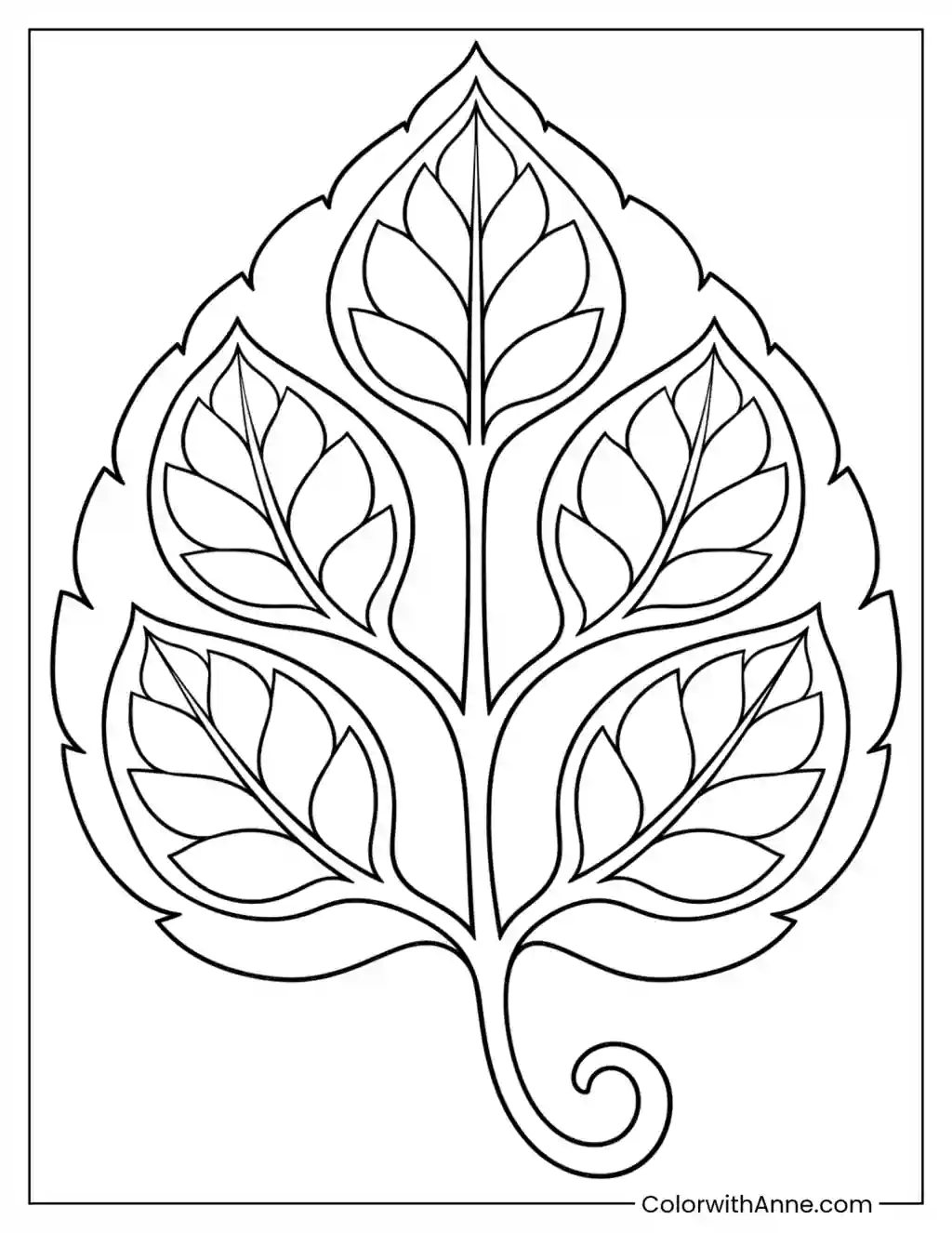
Use emerald and yellow green in alternating sections of the five smaller leaf shapes. Repeat the sequence on either side of each vein to make their branching patterns easy to follow.
Choose a lighter mint for the broad areas between the smaller leaves and the pointed outer border. Add deeper green near the inner leaf outlines without covering their narrow spaces.
Give the central stem, branching veins, and curled lower tip a warm golden color. A fine pencil point will help where the branches narrow toward each leaf tip.
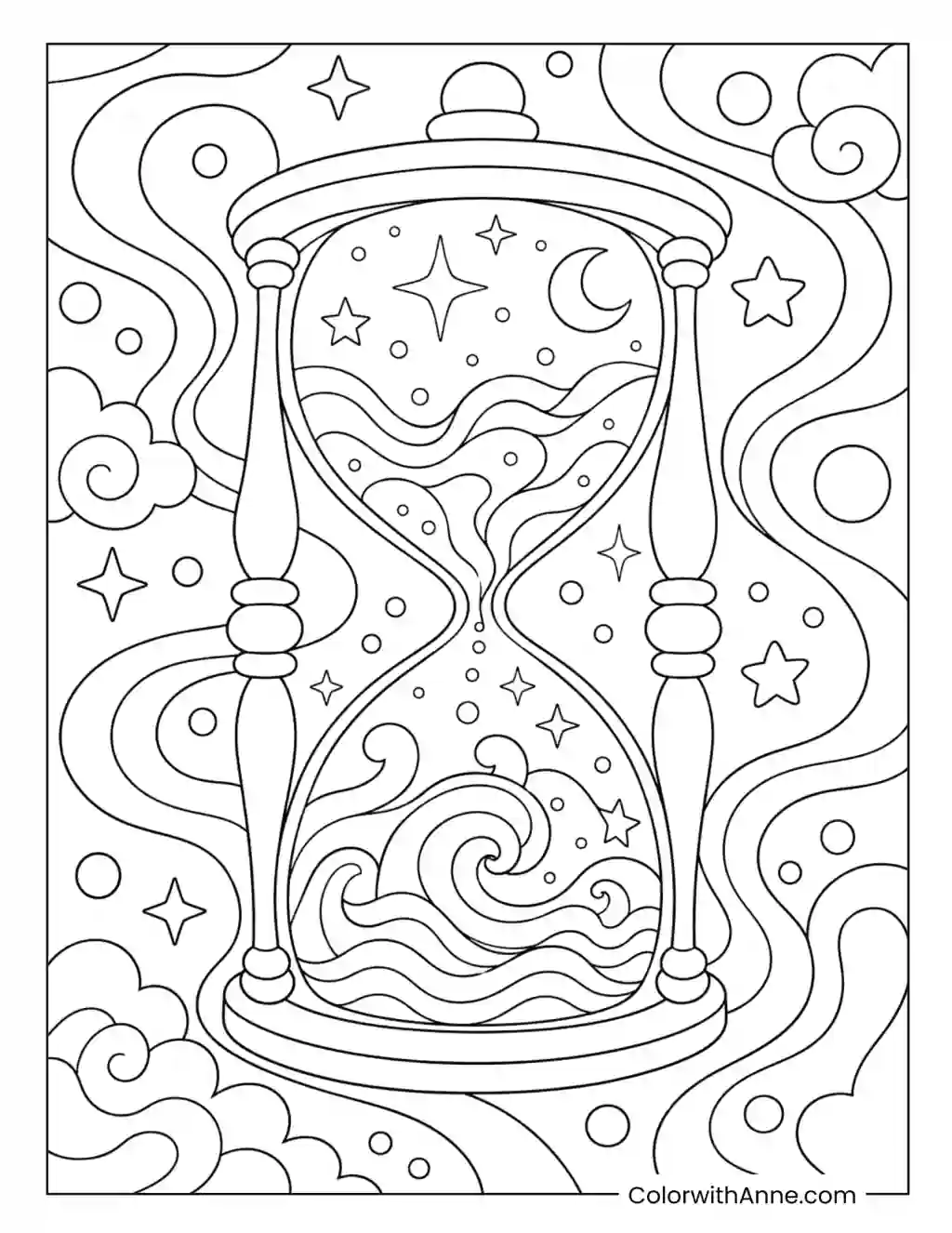
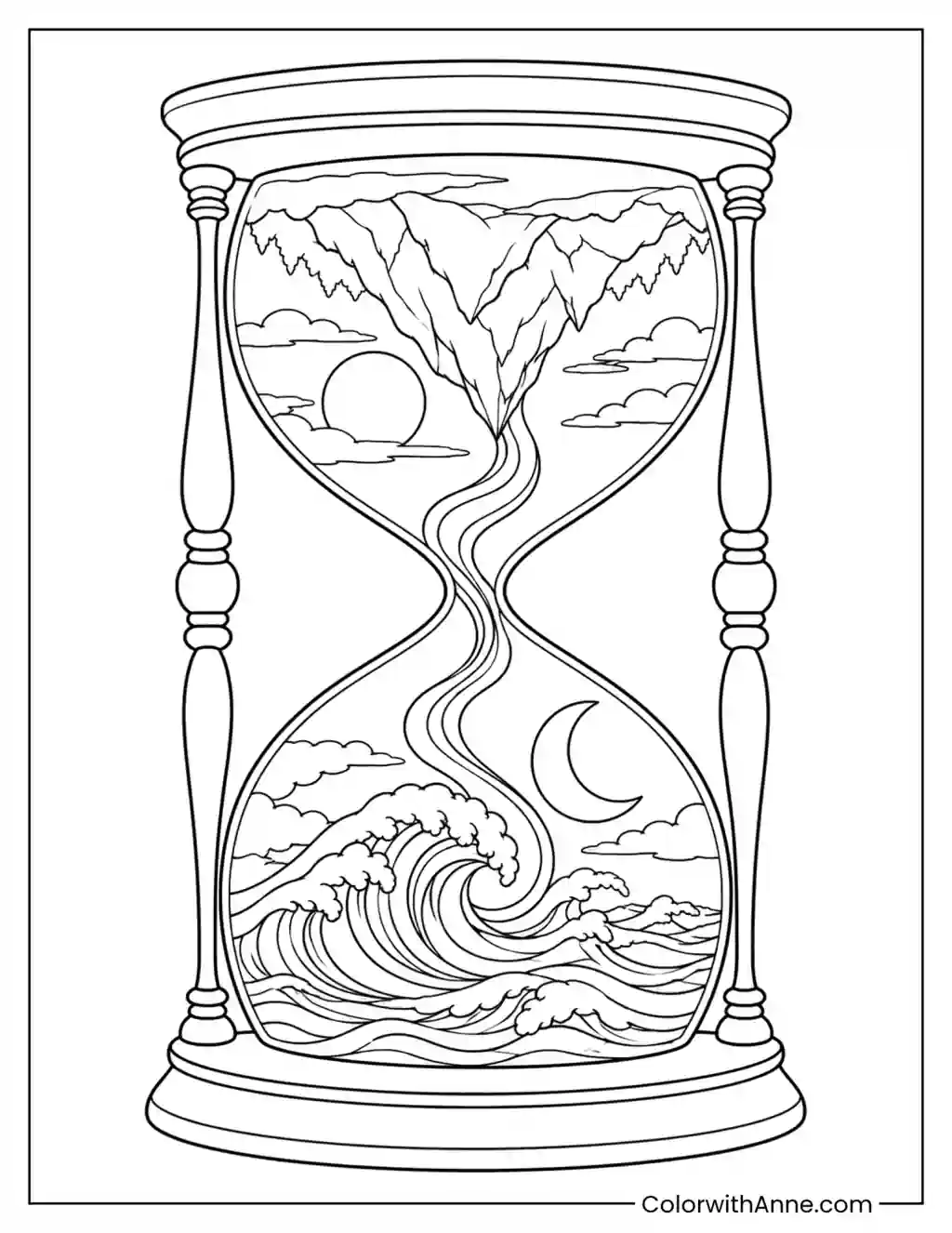
Use Warm and Cool Palettes for the Hourglass Landscapes
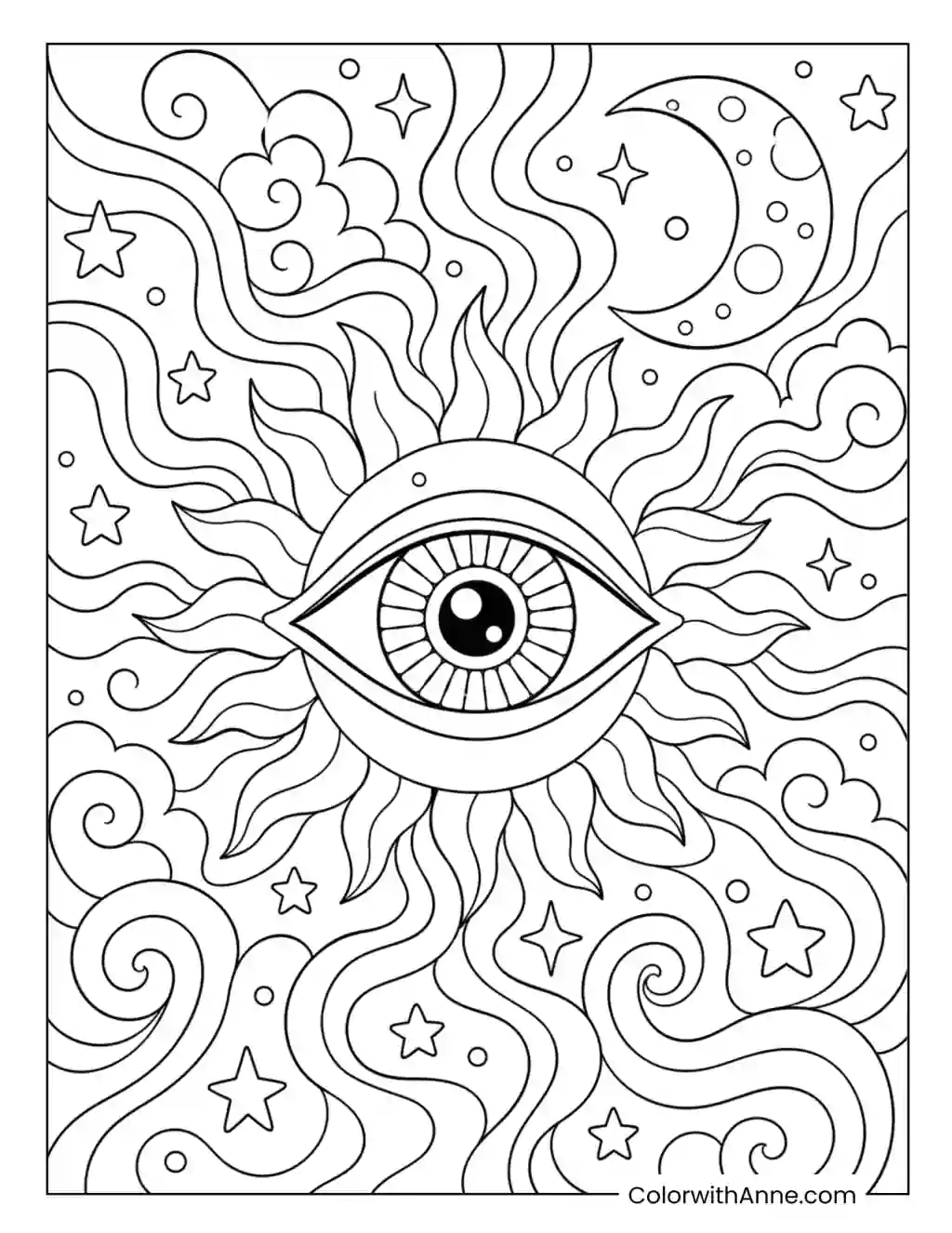
Try pale peach around the upper sun and gray violet on the inverted mountain peaks above it. Keep the small clouds cream against the softly colored sky.
Use deeper blue and turquoise on the lower waves, leaving their curled foam edges white. Color the crescent moon pale yellow and the nearby clouds soft lavender.
Carry a light blue through the winding lines joining the two chambers. Give the hourglass frame muted gold, deepening the rims' lower edges and the narrow grooves in its side posts.