
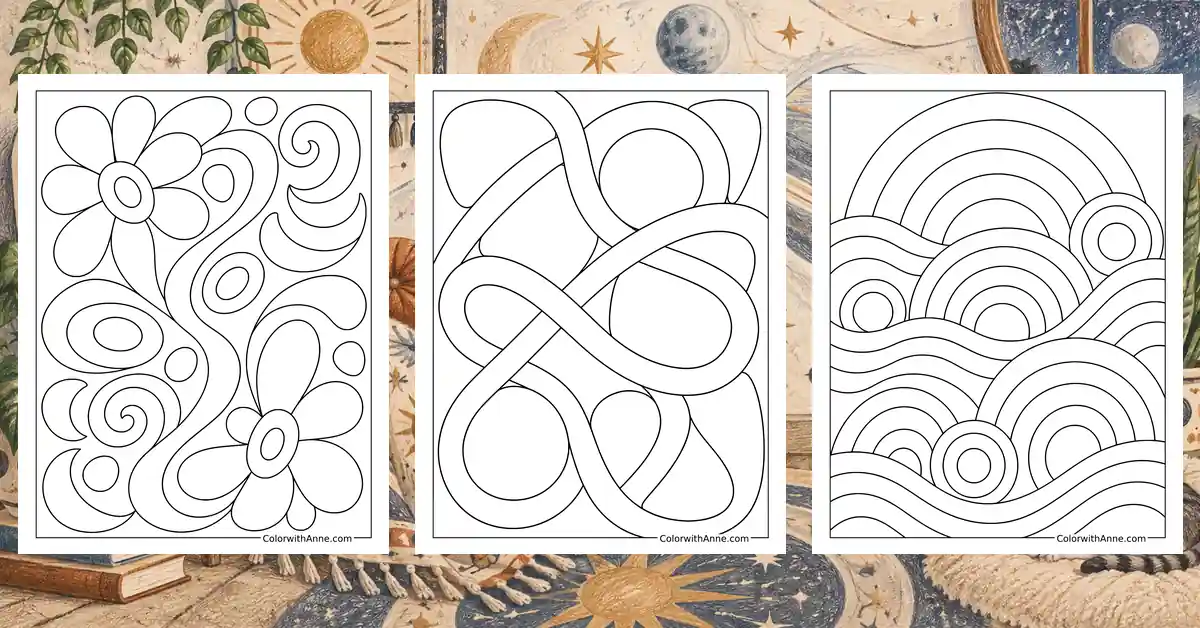
An abstract picture does not always reveal itself at first glance. The eye follows a line, doubles back, and finds a shape that seemed invisible a moment ago. Someone else looks at the same thing and sees something entirely different. Neither person has to surrender their version.
With Abstract coloring pages, that freedom is part of the pleasure. There is no familiar face waiting to look correct, so attention can wander a little. What seemed like the background may become the most interesting part, and a page can feel different each time it is picked up again.
Free Printable Abstract Coloring Pages
Click any coloring page below to open the PDF, then print on US Letter or A4 paper.
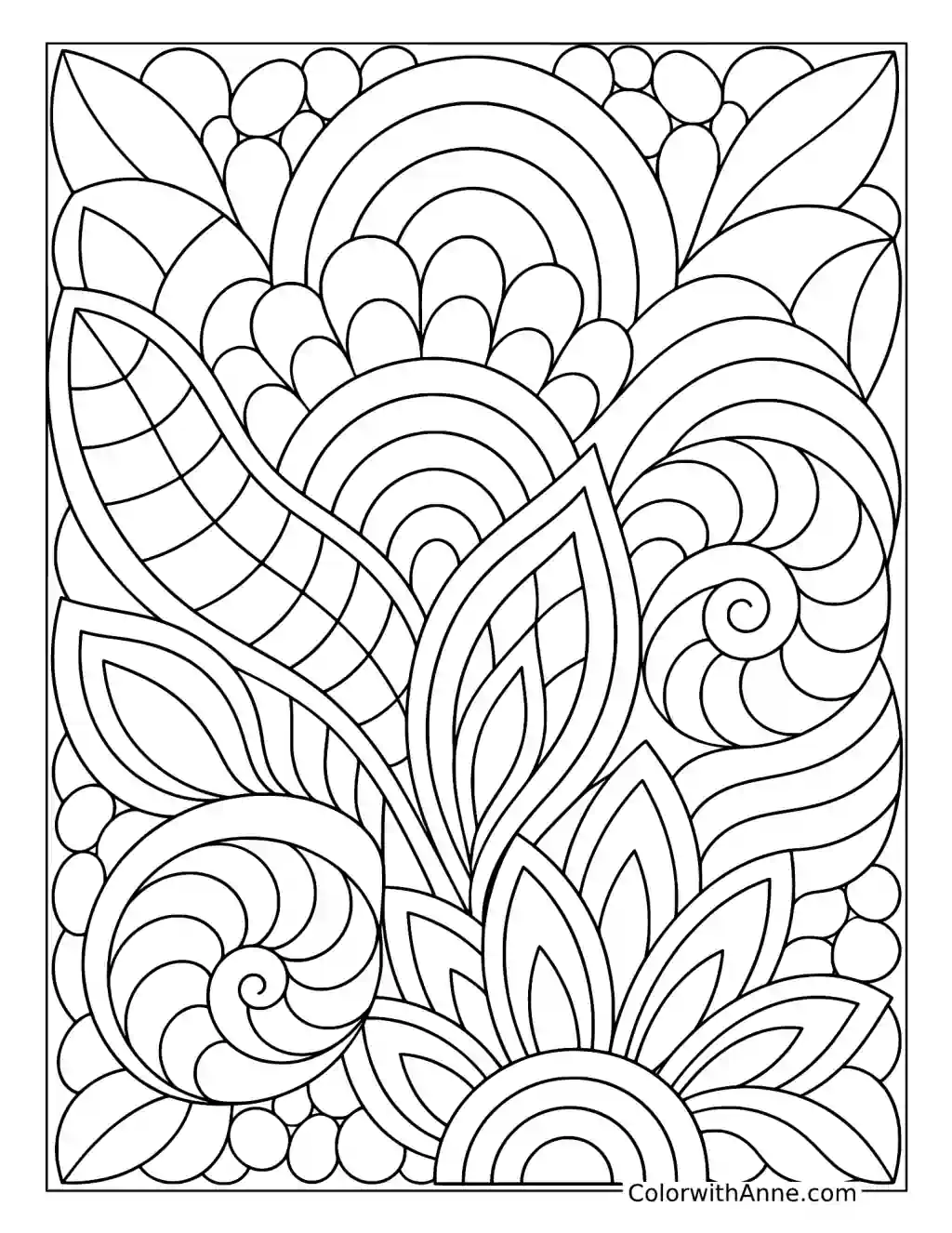
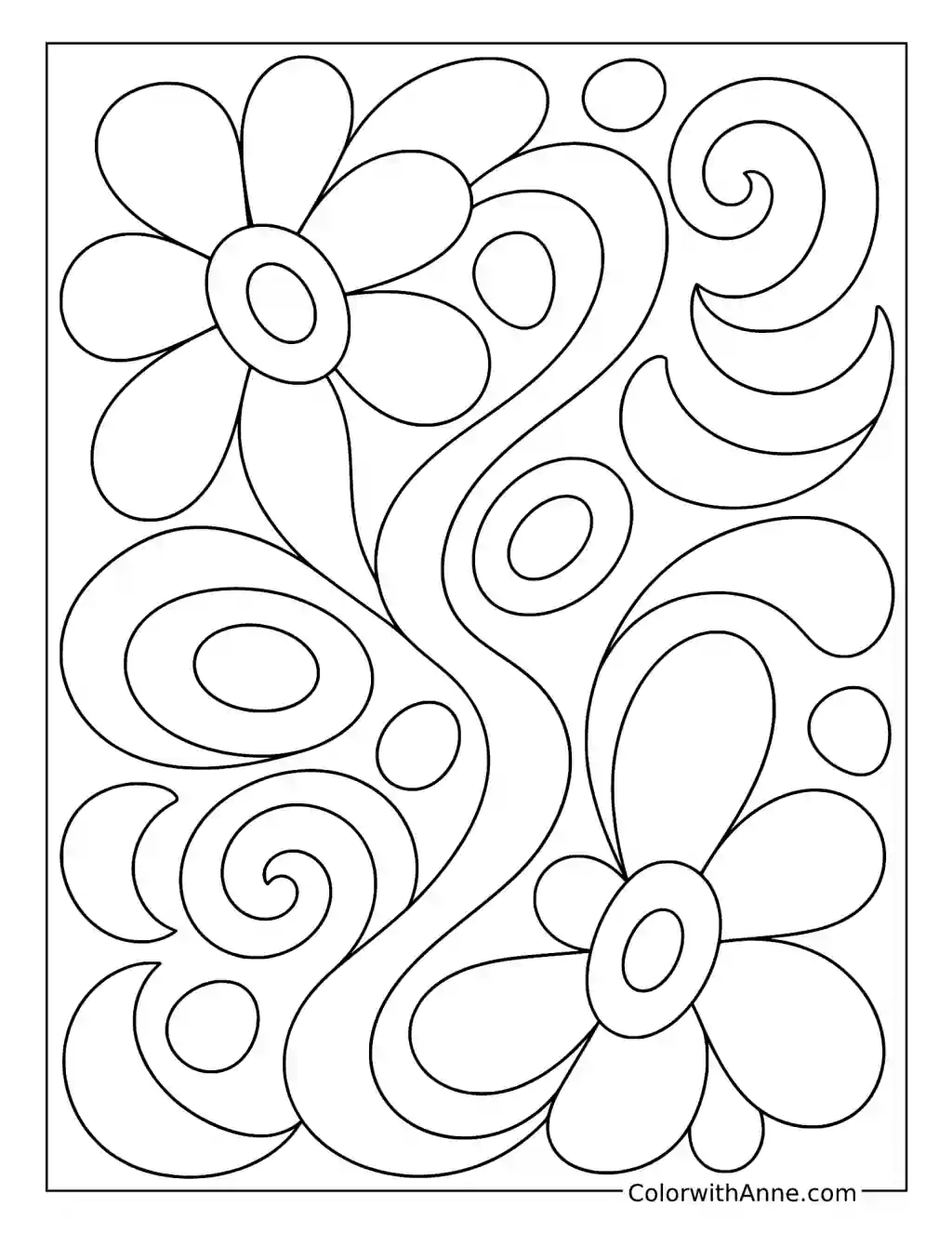
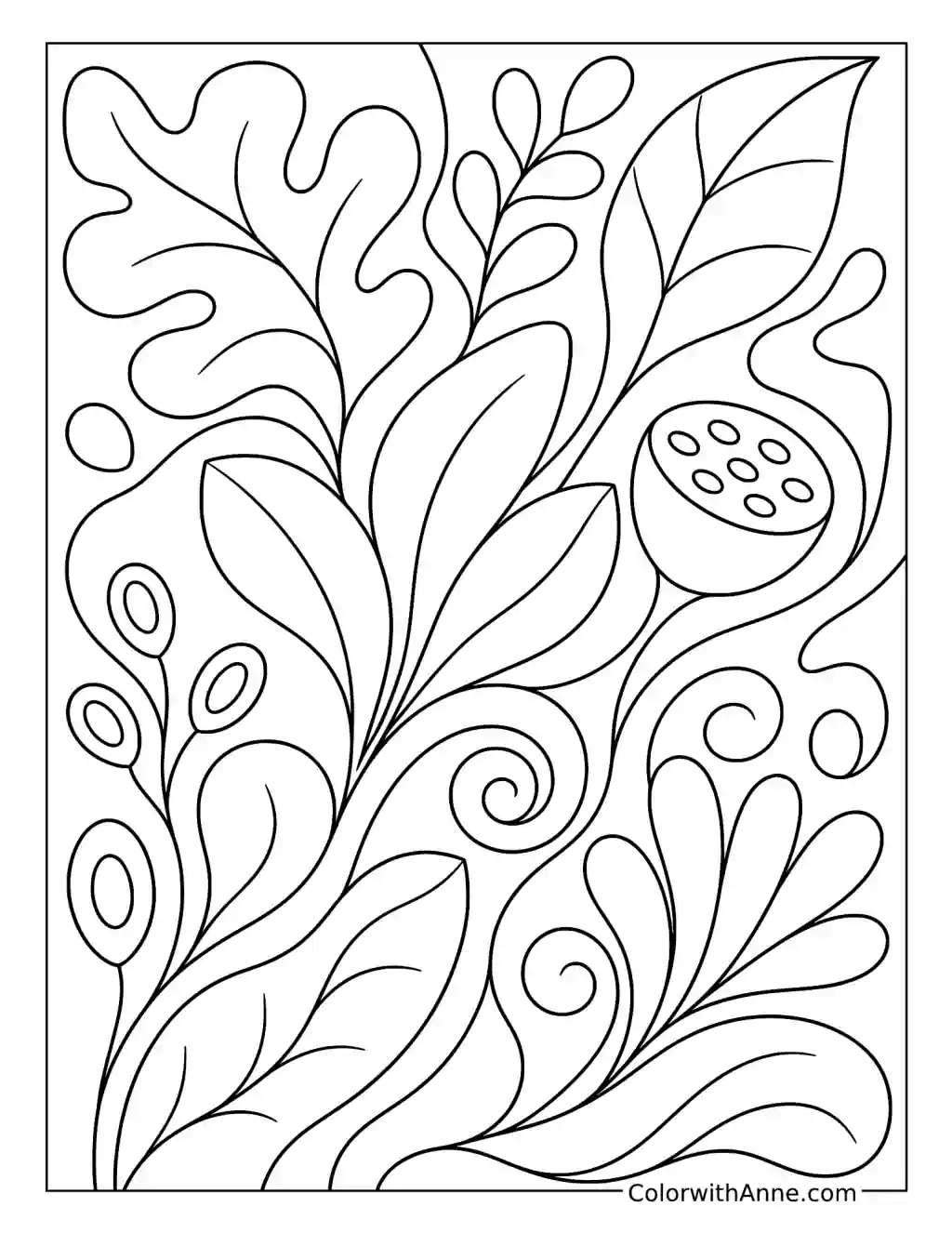
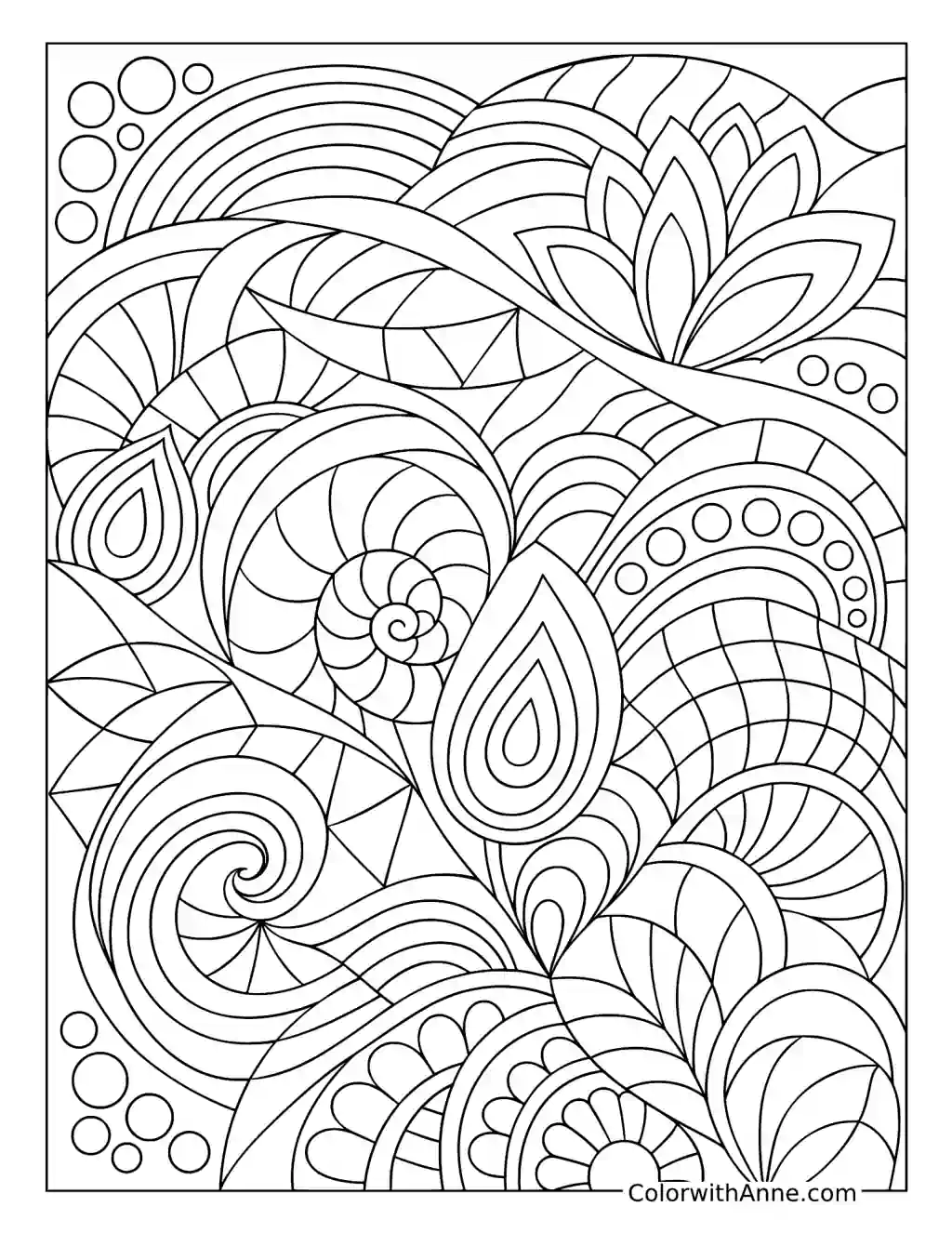
Did you find what you needed?
Help us choose what to create or improve next.
Coloring Ideas for Abstract Pages
Try one of these coloring ideas, or use them as a starting point for your own.
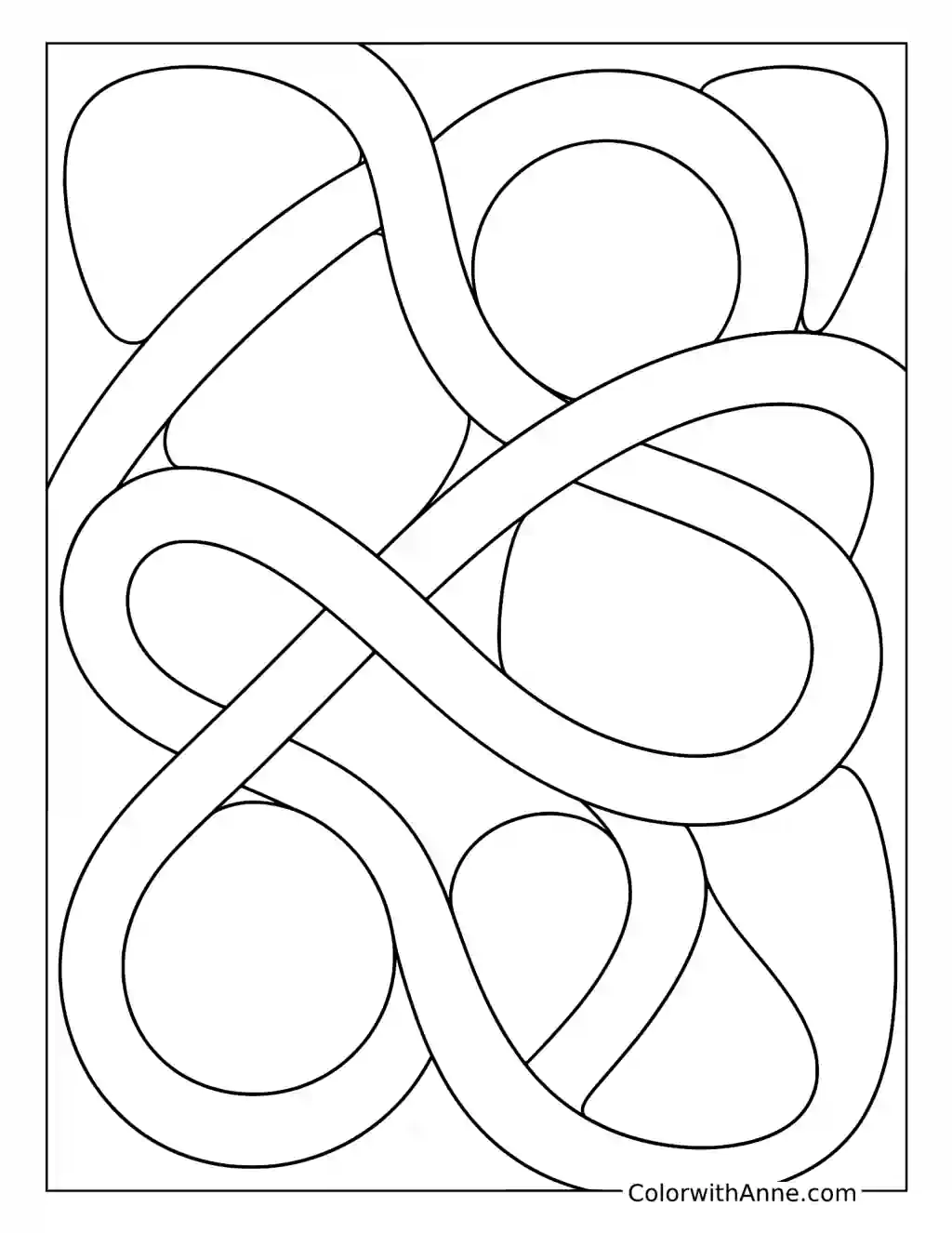
Follow the Ribbon through the Celtic Knots
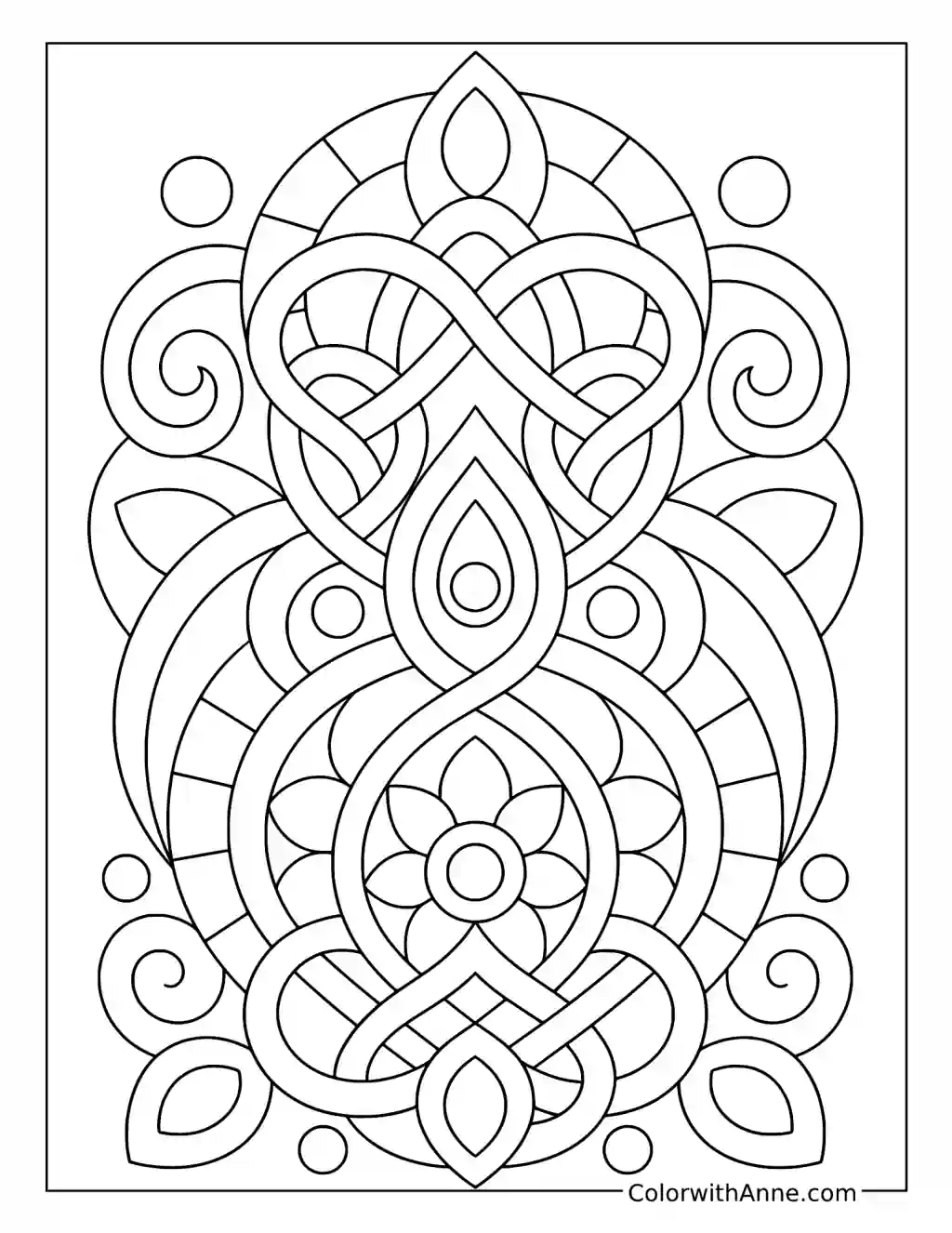
Before choosing a palette, follow one band through the knotwork with a fingertip. Notice where it passes over another section and where it disappears beneath it.
Carry the same color along that route, including the pieces separated by crossings. A little shadow beneath an overlap can strengthen the woven effect. Work outward from one completed section so the pattern gradually becomes understandable. The satisfying moment arrives when an apparently complicated knot begins to read as a continuous ribbon.
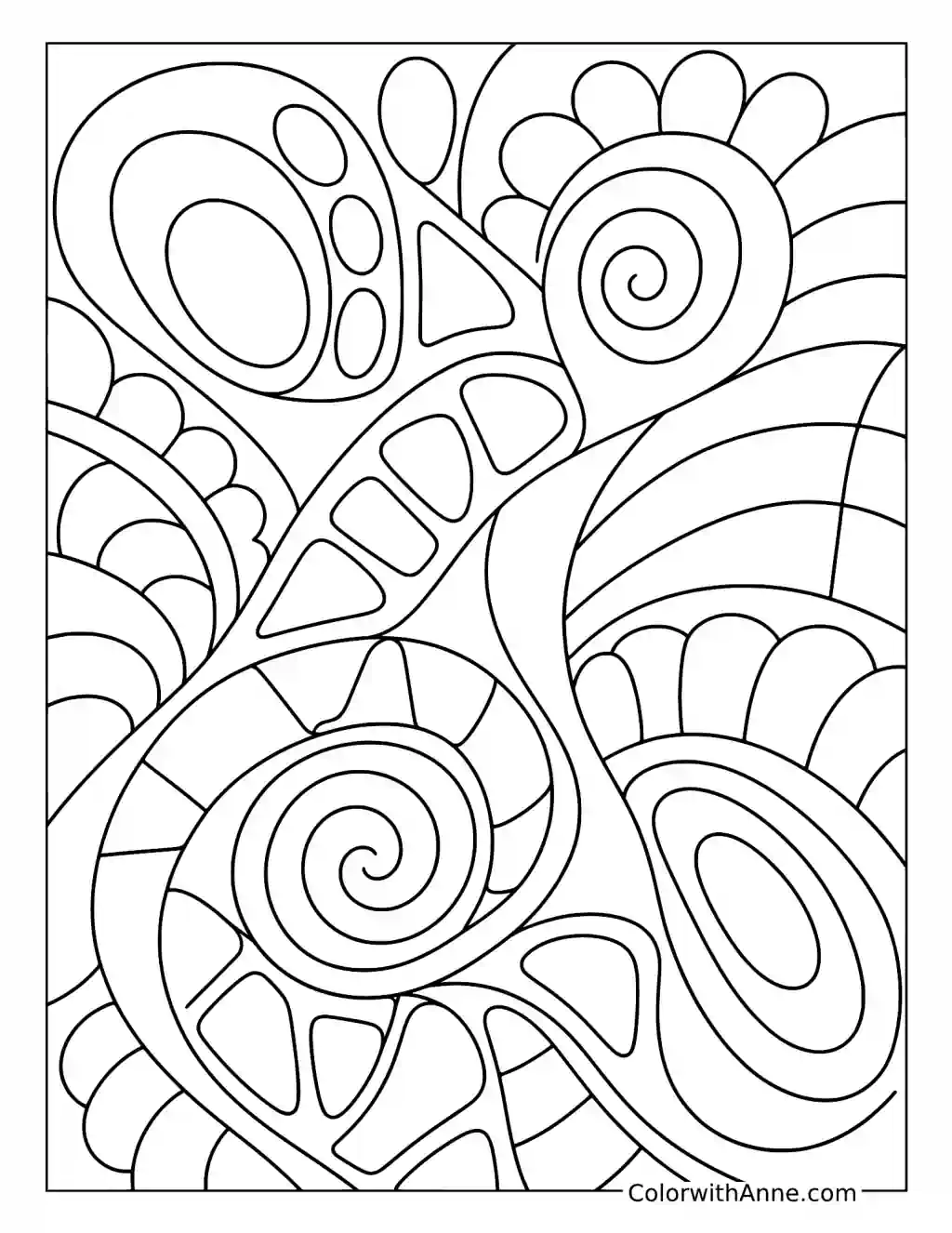
Invent the Worlds inside the Circles
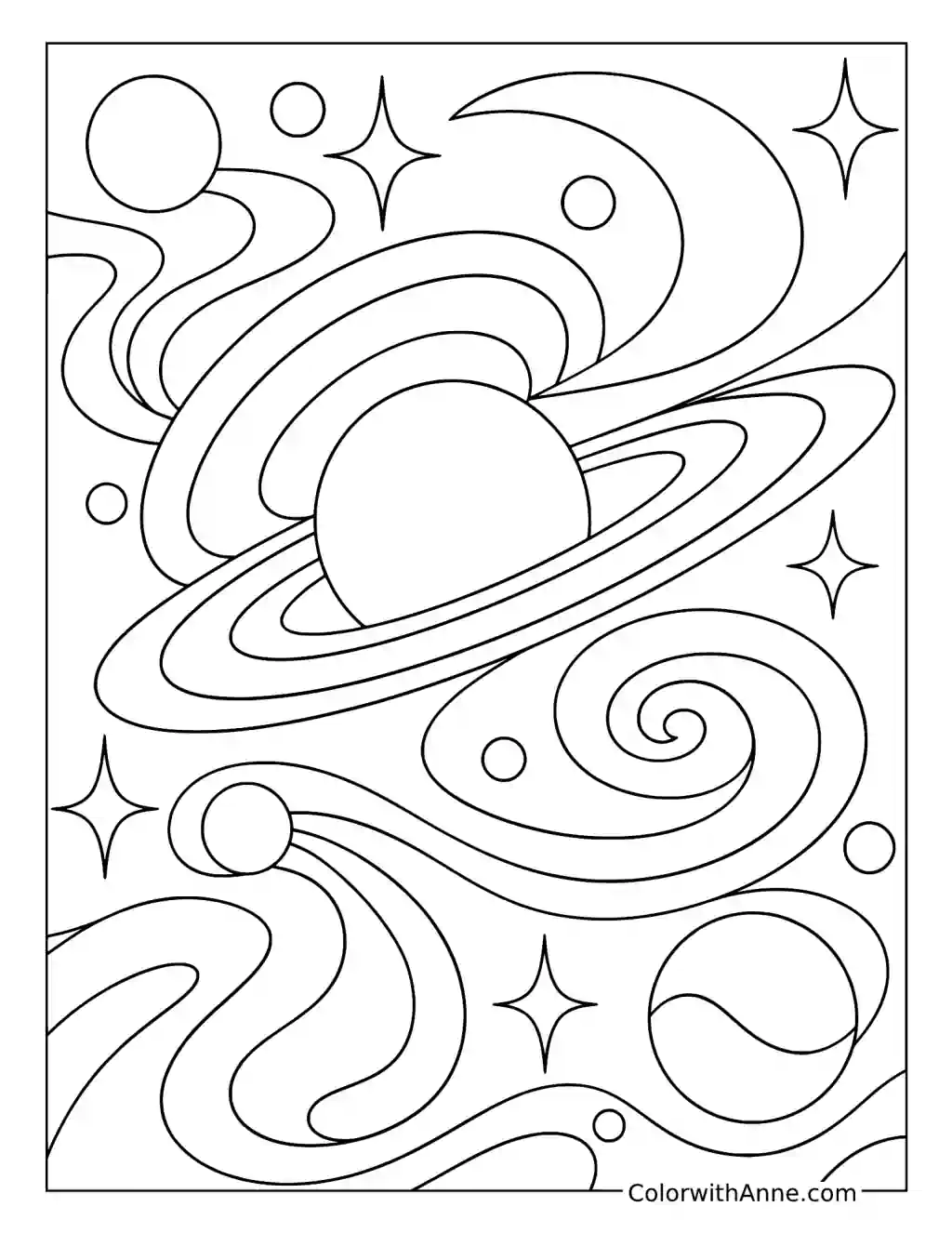
The circles and sweeping orbital shapes leave room for imaginary planetary surfaces. Choose one circle for a dry, patterned world and another for something watery or icy.
Add small marks that distinguish them: broken patches, curling currents, or pale angular areas. Keep the surrounding orbital bands more graphic and consistent so the little worlds remain visible. A circle does not need much detail to suggest a place; a few related marks can give it a weather system, terrain, and character.
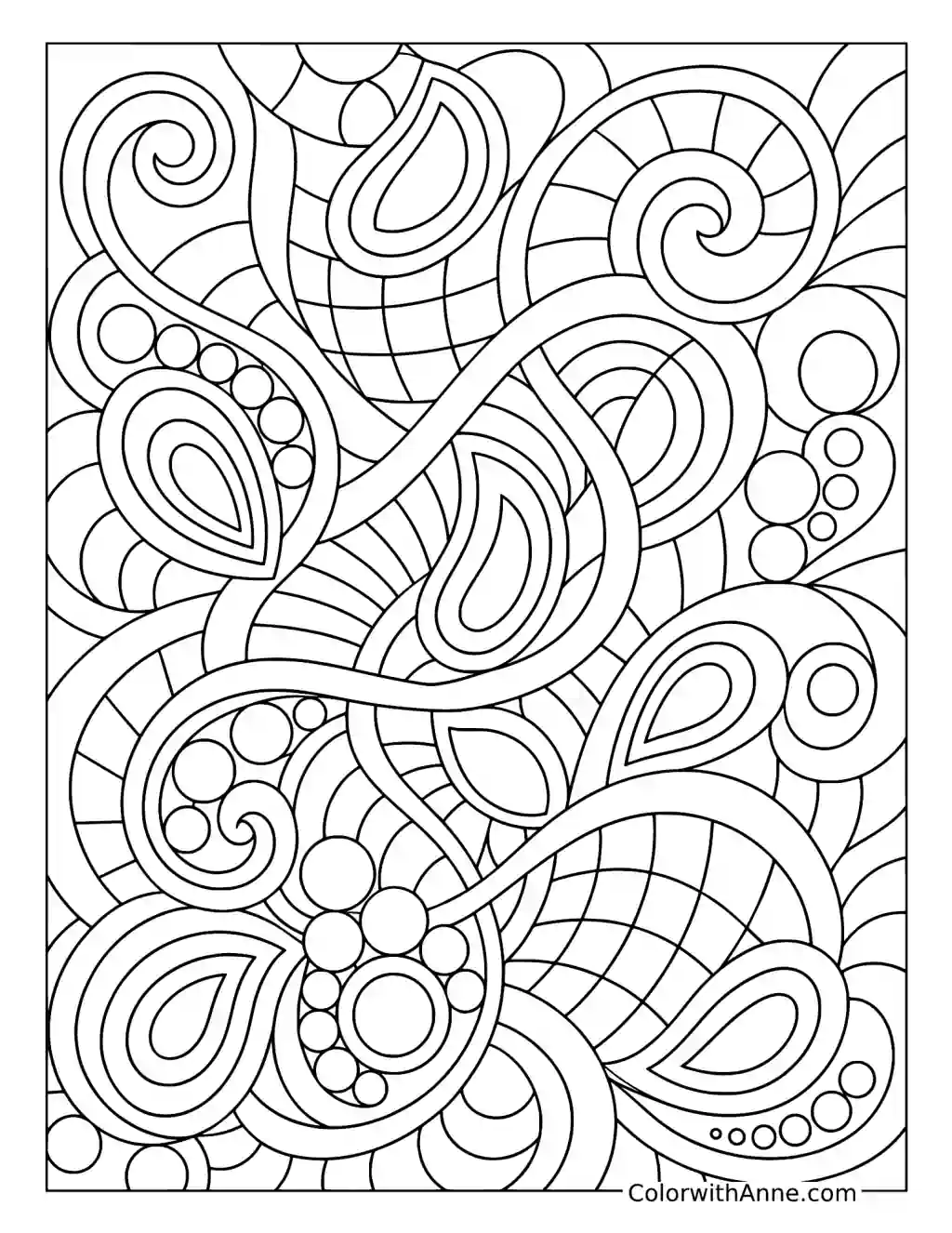
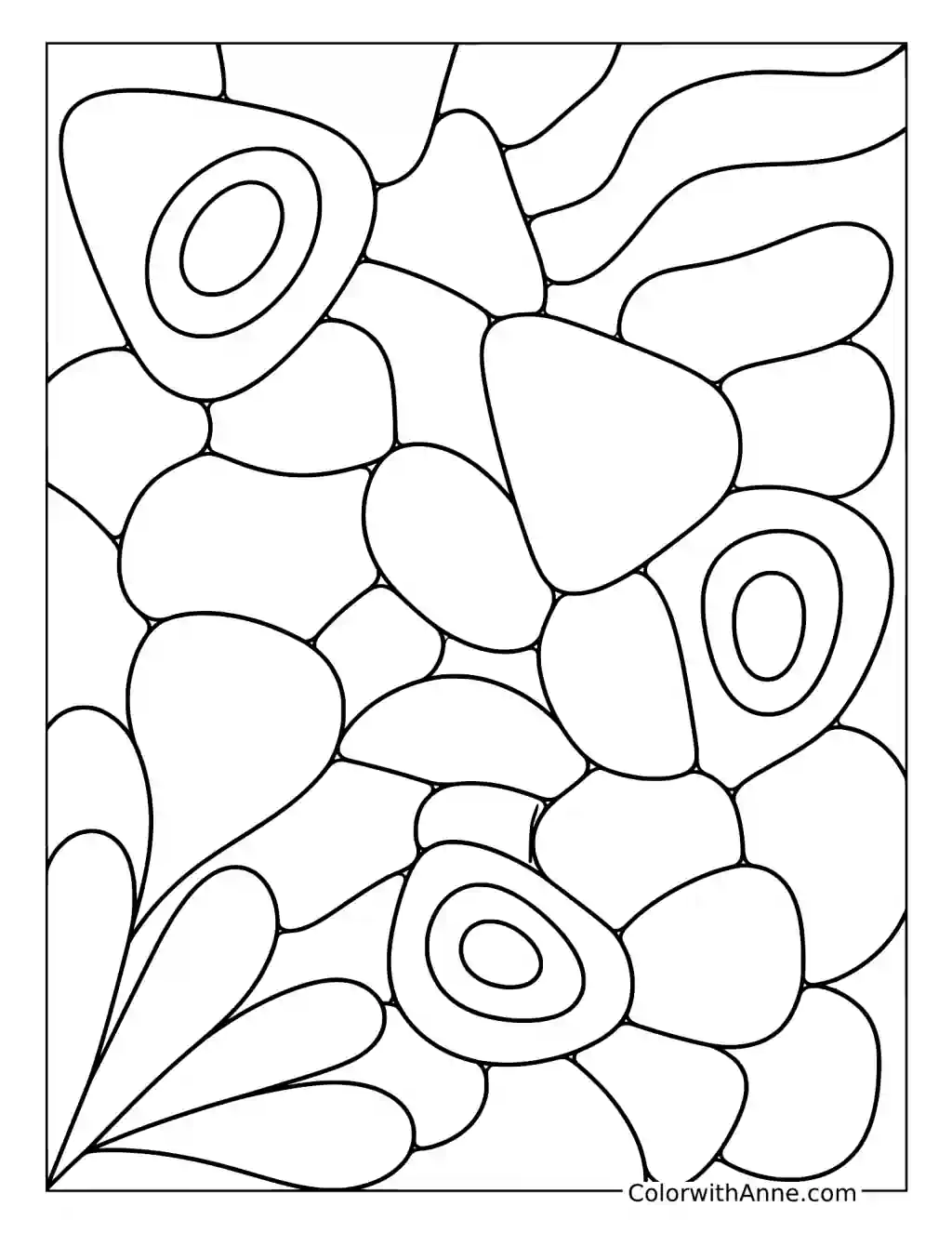
Rub Textures into the Pebble Mosaic
Some pebble shapes are plain, while others contain rings. Use those open areas for a few different surface textures.
Slip corrugated card or textured fabric beneath part of the page and rub gently with the side of a crayon. Work inside selected pebble outlines, then fill neighboring stones smoothly. The contrast between rough and even surfaces gives the mosaic variety without needing a new color for every piece. Test the rubbing on scrap paper first to find a pressure that keeps the texture clear.
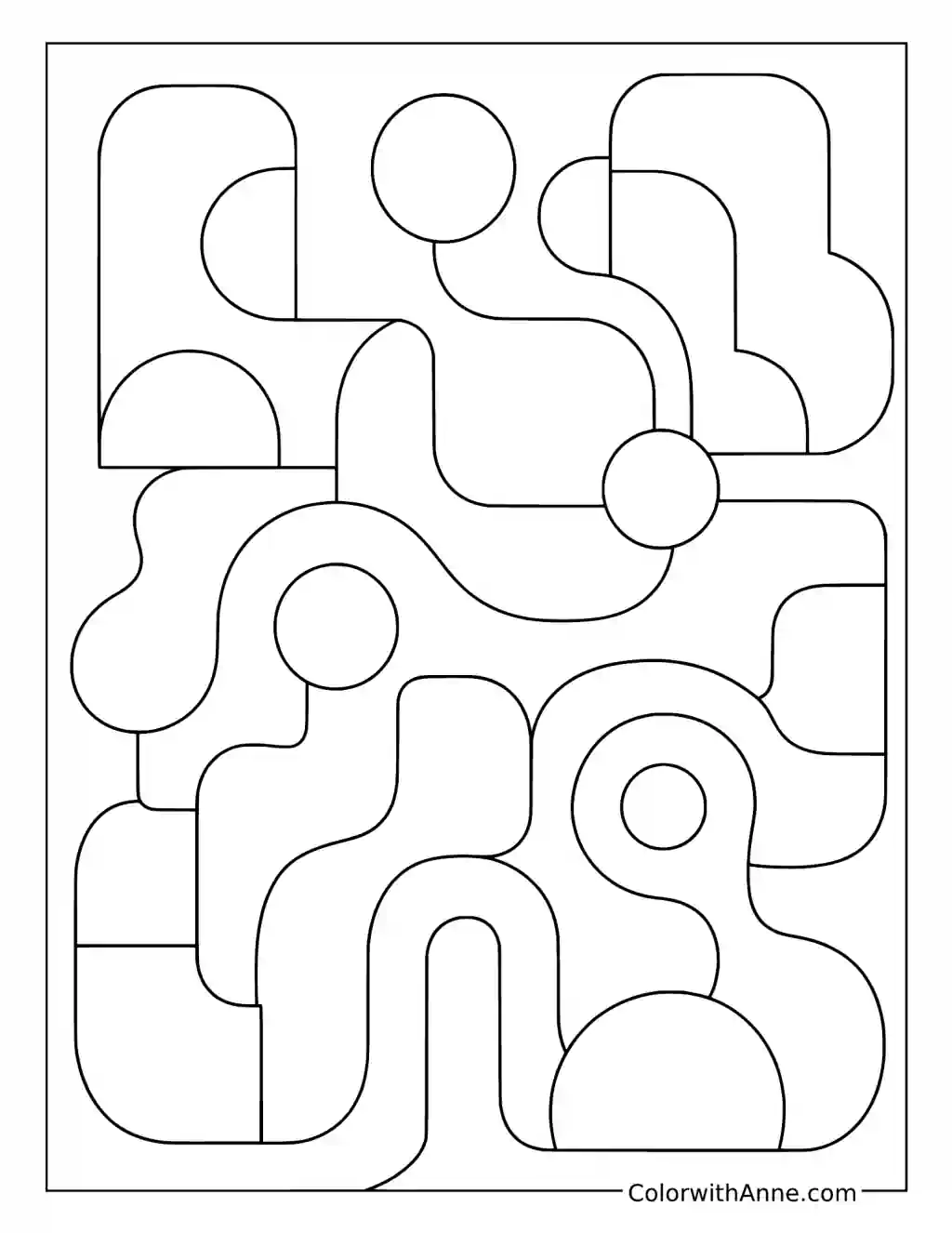
Try the Neighboring-Color Puzzle
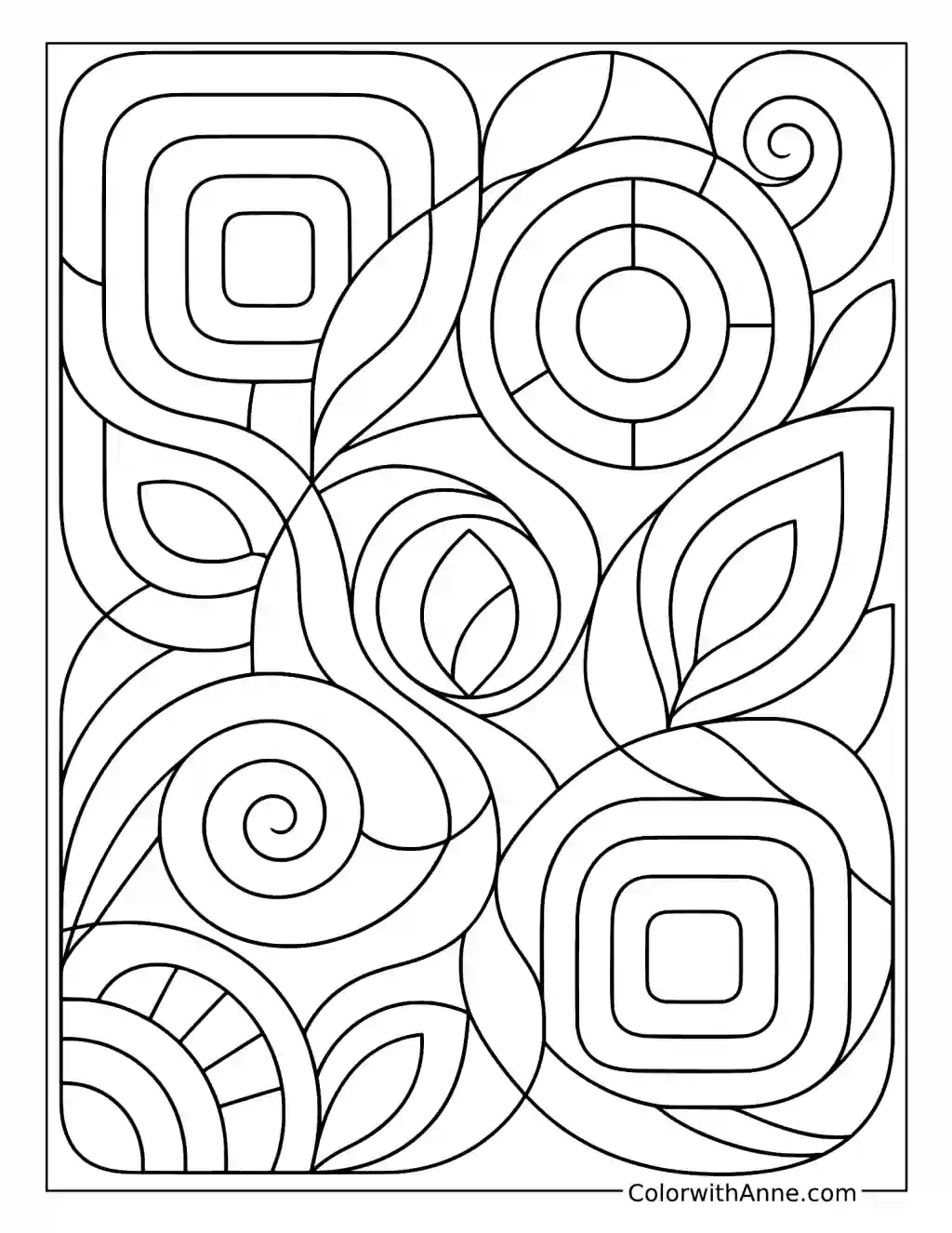
Choose four colors and try to fill the rounded sections so areas sharing an edge have different colors. Begin near the center, where several shapes meet.
When a choice becomes awkward, look at the surrounding sections before continuing. A small change earlier in the pattern may open a better route. The drawing supplies the boundaries, but the order of your decisions determines the result. This is a good page for someone who enjoys a rule to work within.
Turn the Contours into an Imaginary Map
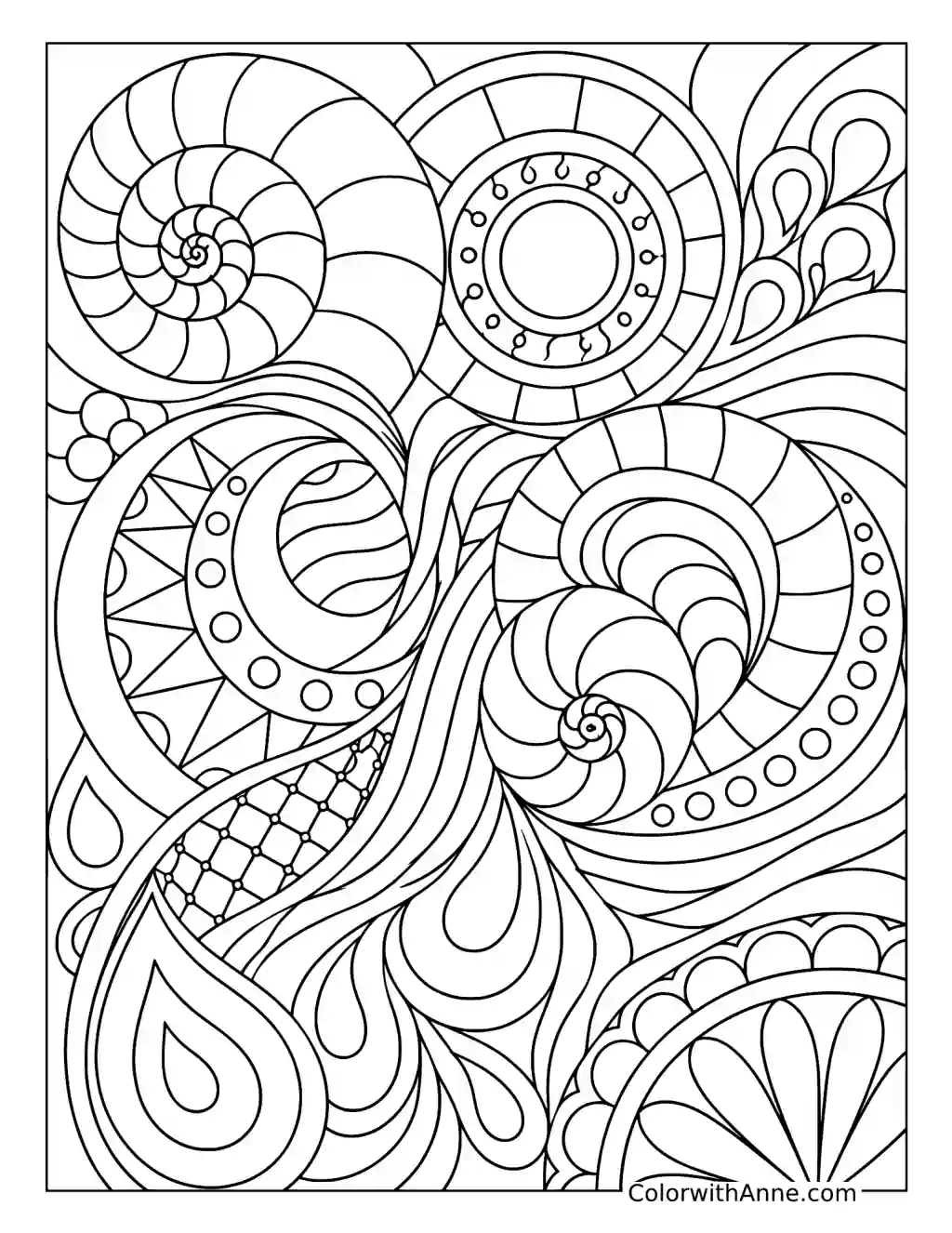
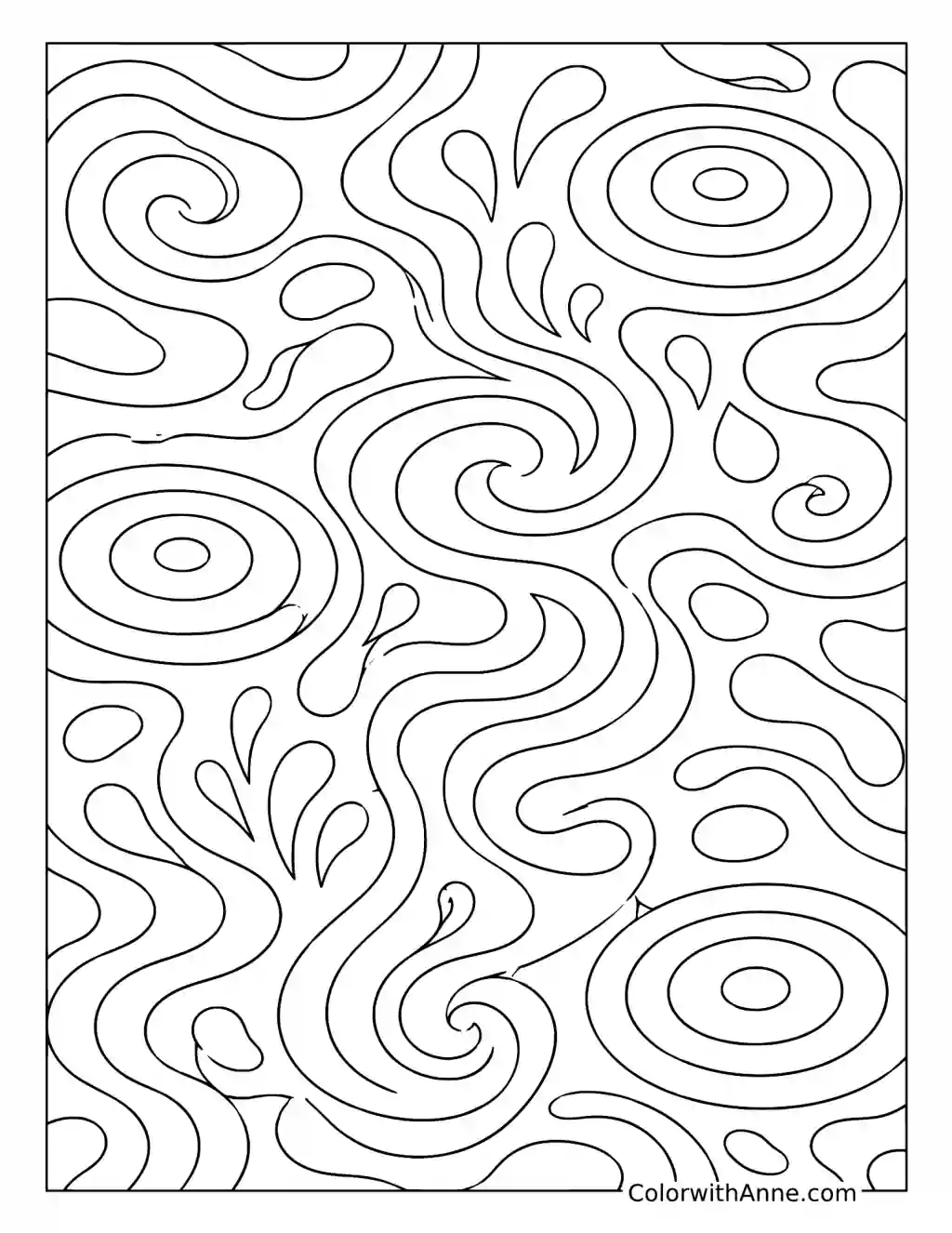
The nested curves can suggest islands, hills, pools, or currents. Choose one interpretation and let it guide the whole sheet.
For an imaginary landscape, start with blue low areas and move through greens toward lighter hilltops. Add a small color key in the margin once the map begins to make sense. Then pick a route across it and see what terrain the traveler would encounter. The contours can remain invented while the journey feels consistent.
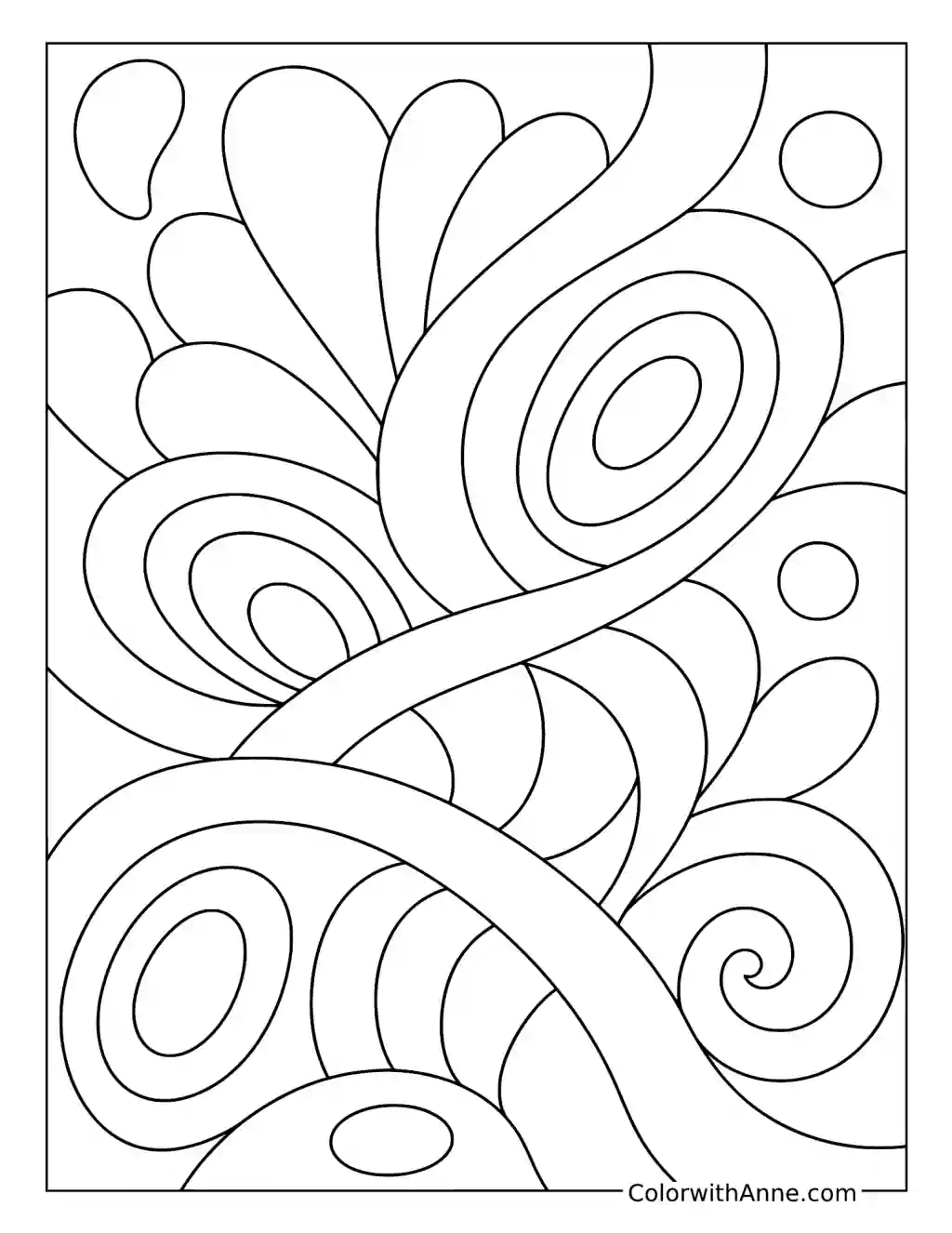
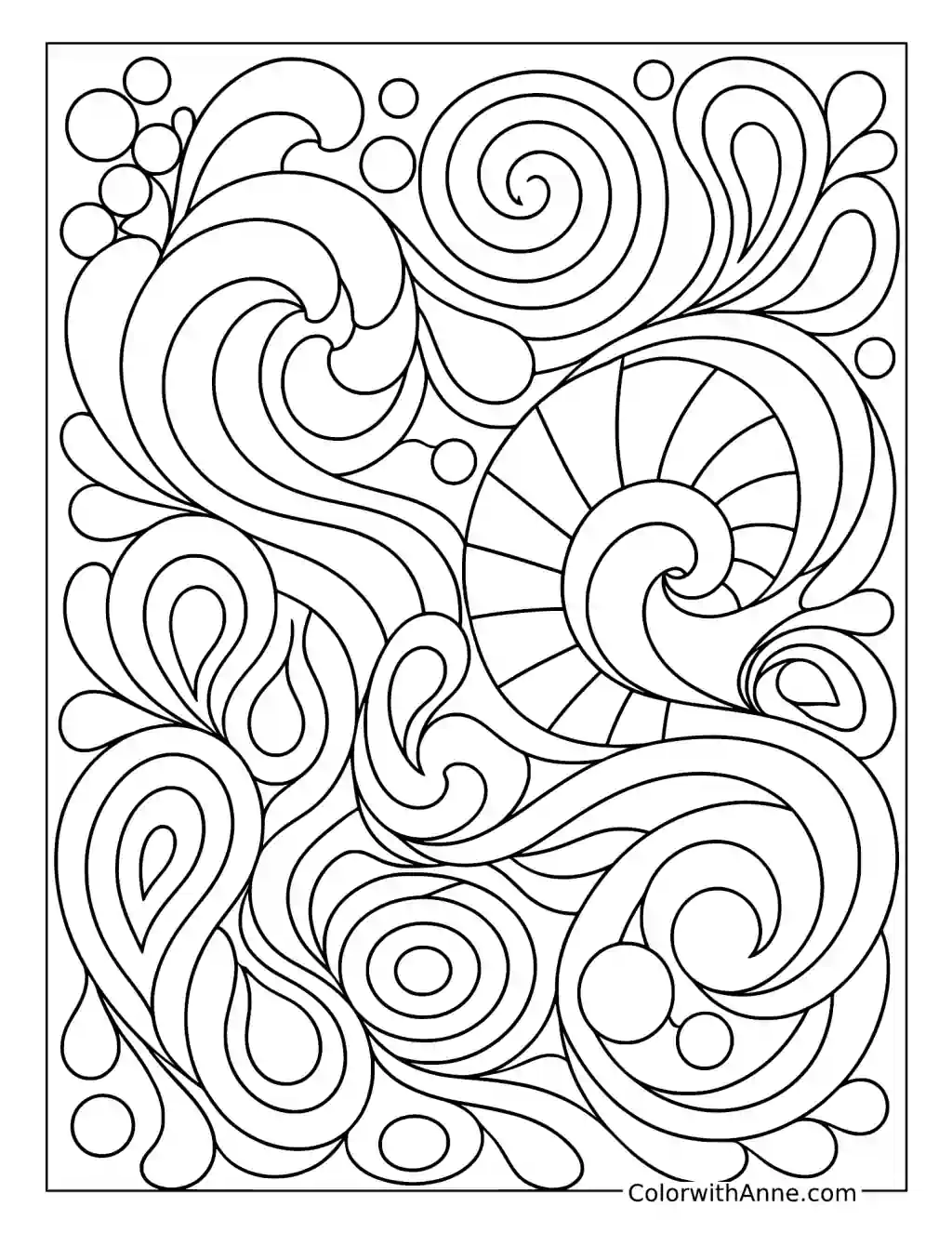
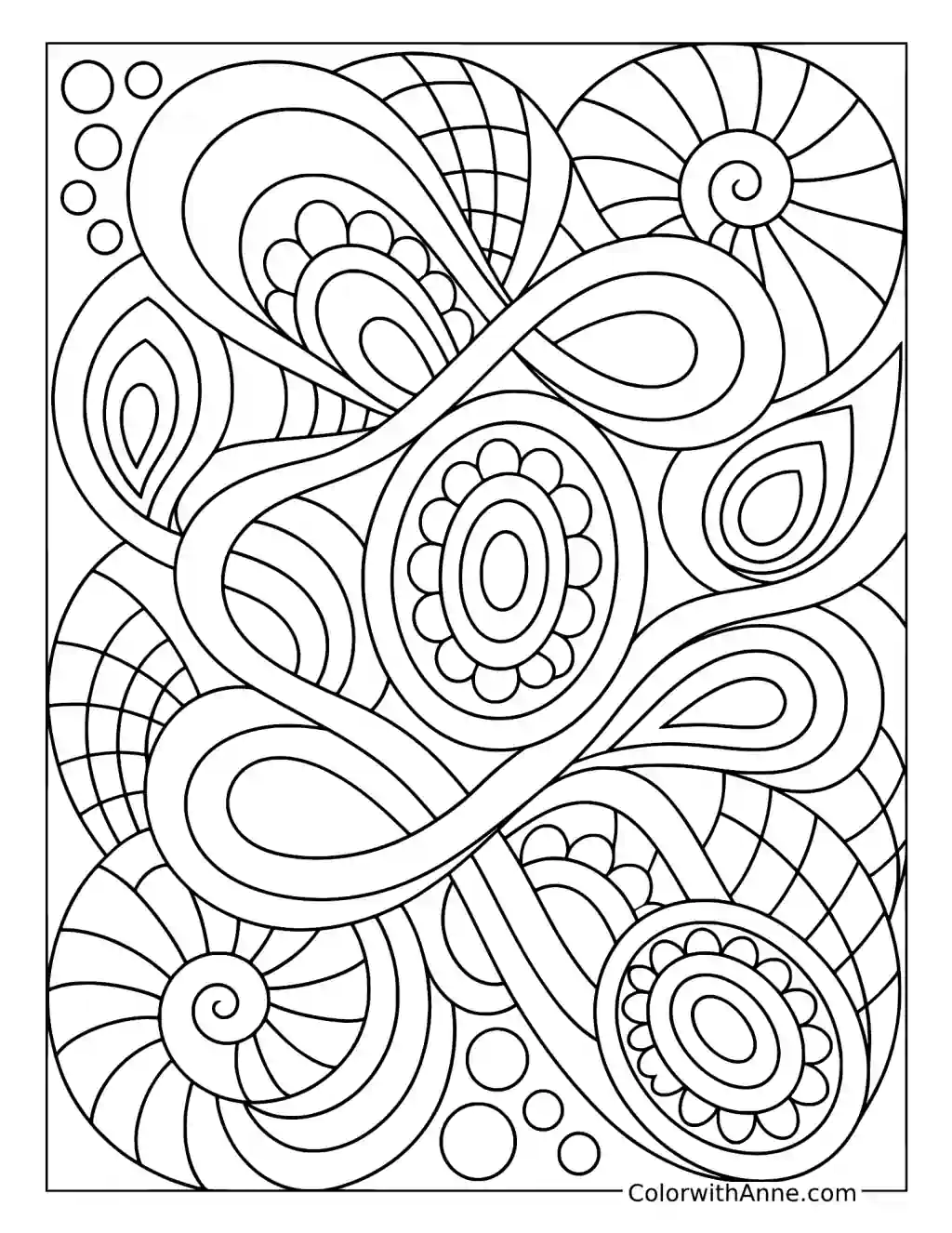
Make the Ribbon Loops Look Twisted
Curl a strip of paper beside the drawing and look at the surfaces that turn toward and away from the light. A single strip can show several tones even though the paper itself has one color.
Use that observation on the wide illustrated loops. Keep brighter areas broad and soften the change into shadow along each bend. Where one band crosses another, give the lower band a small shadow. The page’s large shapes make those twists easy to follow.
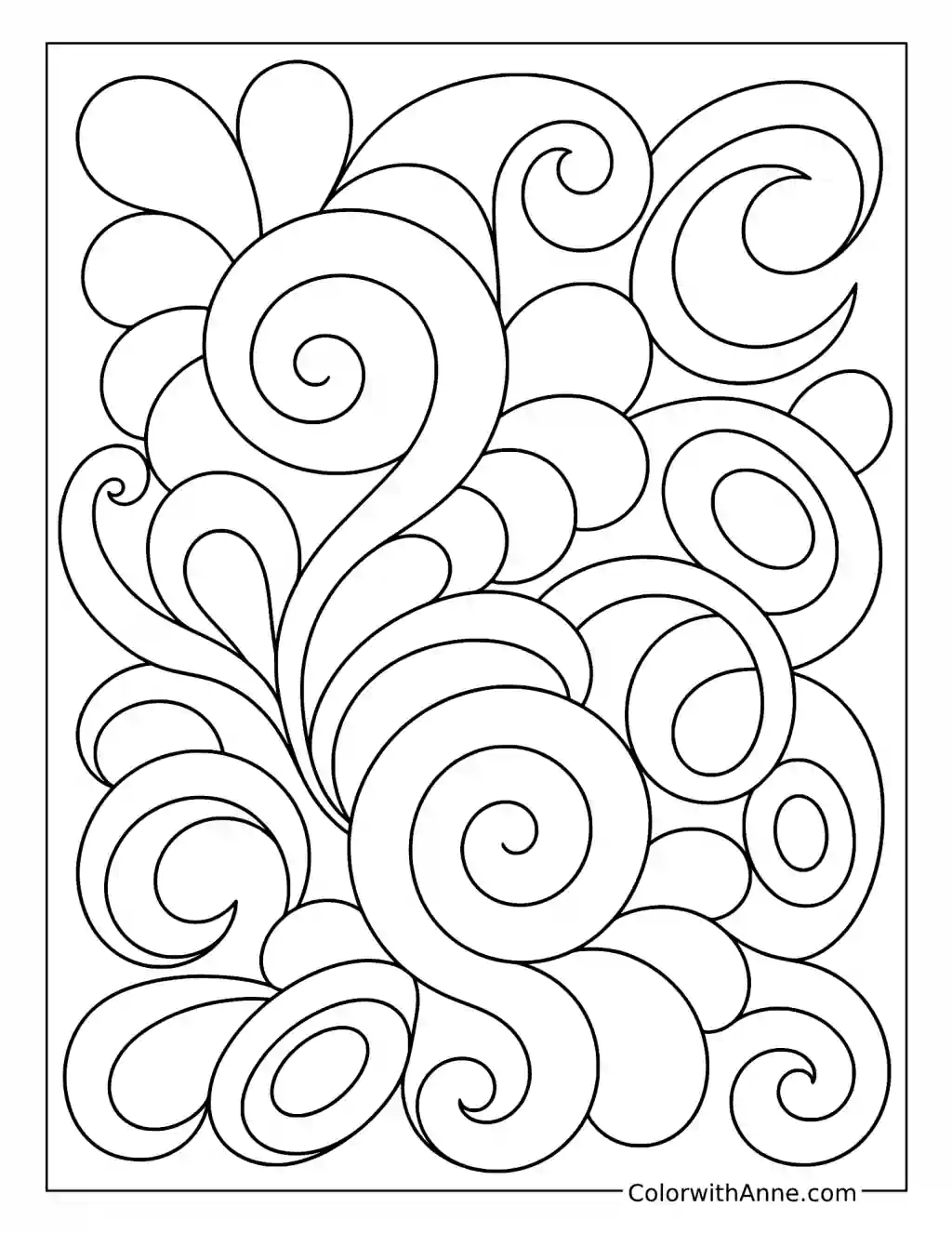
Use the Floral Doodles as a Small Gift Wrap
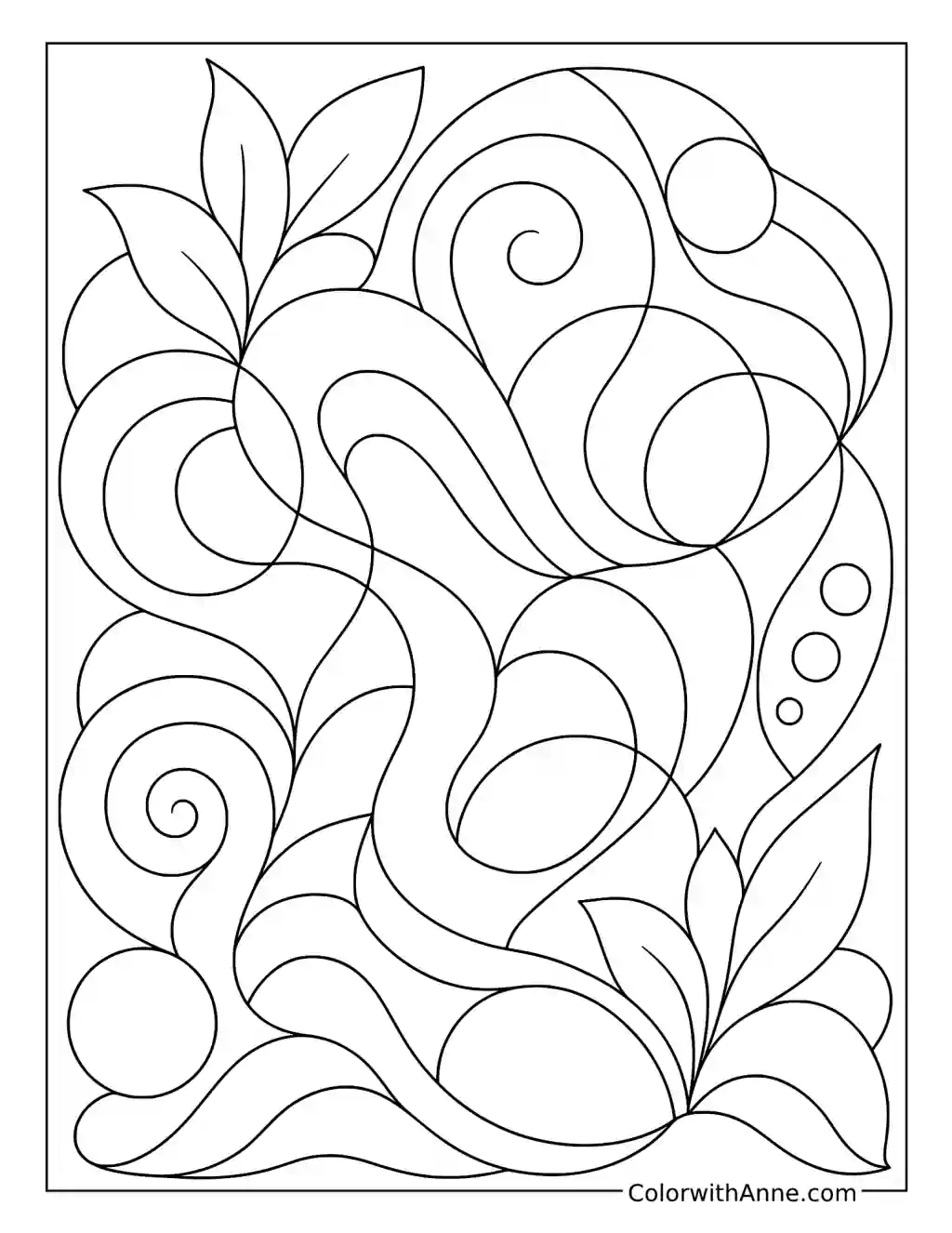
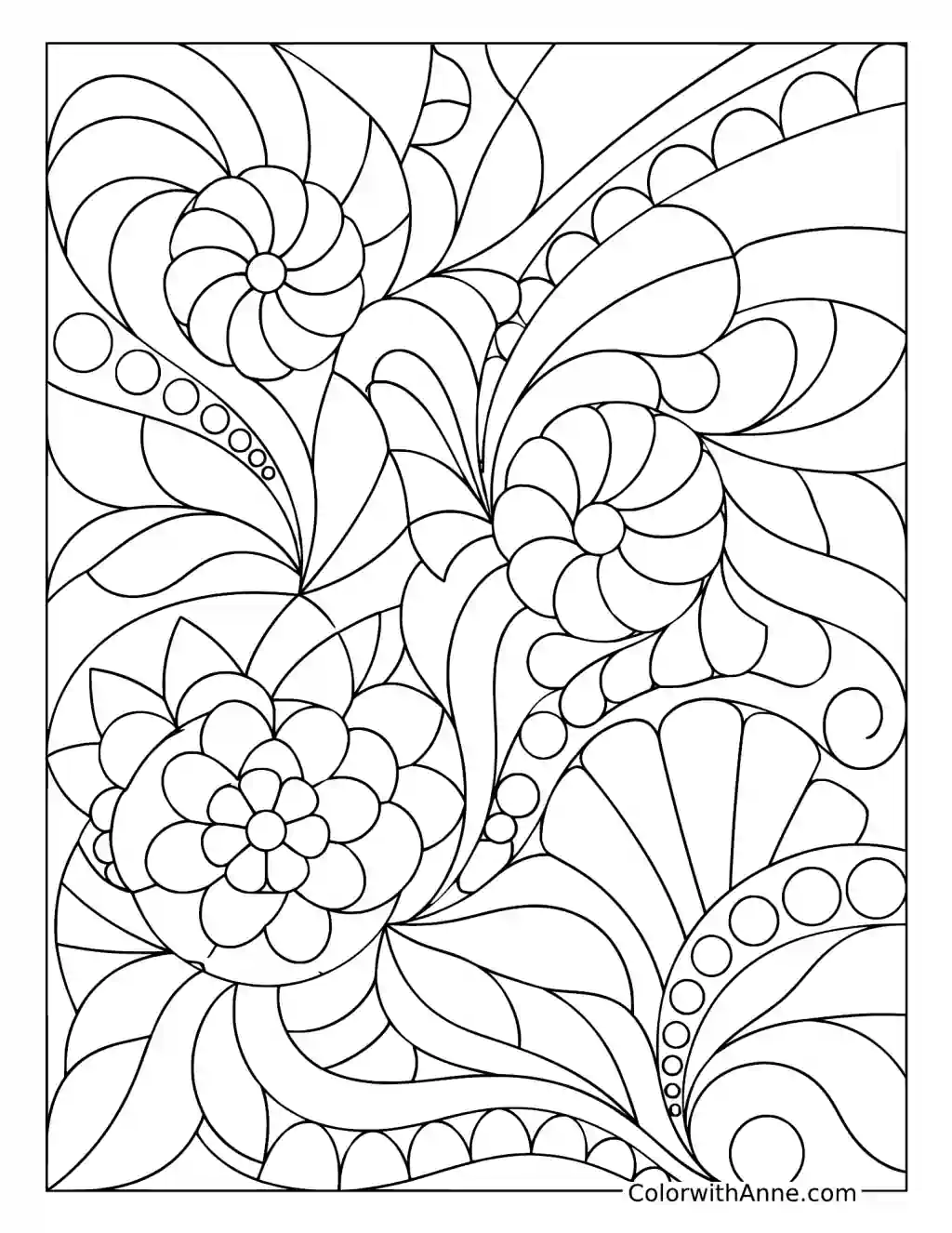
The loose flowers and spirals make a cheerful pattern for wrapping something small. Decide which motifs should repeat in the same color before working through the page.
When finished, lay the sheet around the intended package and check where the folds will fall. A flower centered on the top can become the main decoration, with the swirls continuing down the sides. Secure the wrap with a narrow paper band or a little tape, leaving the handmade pattern visible.
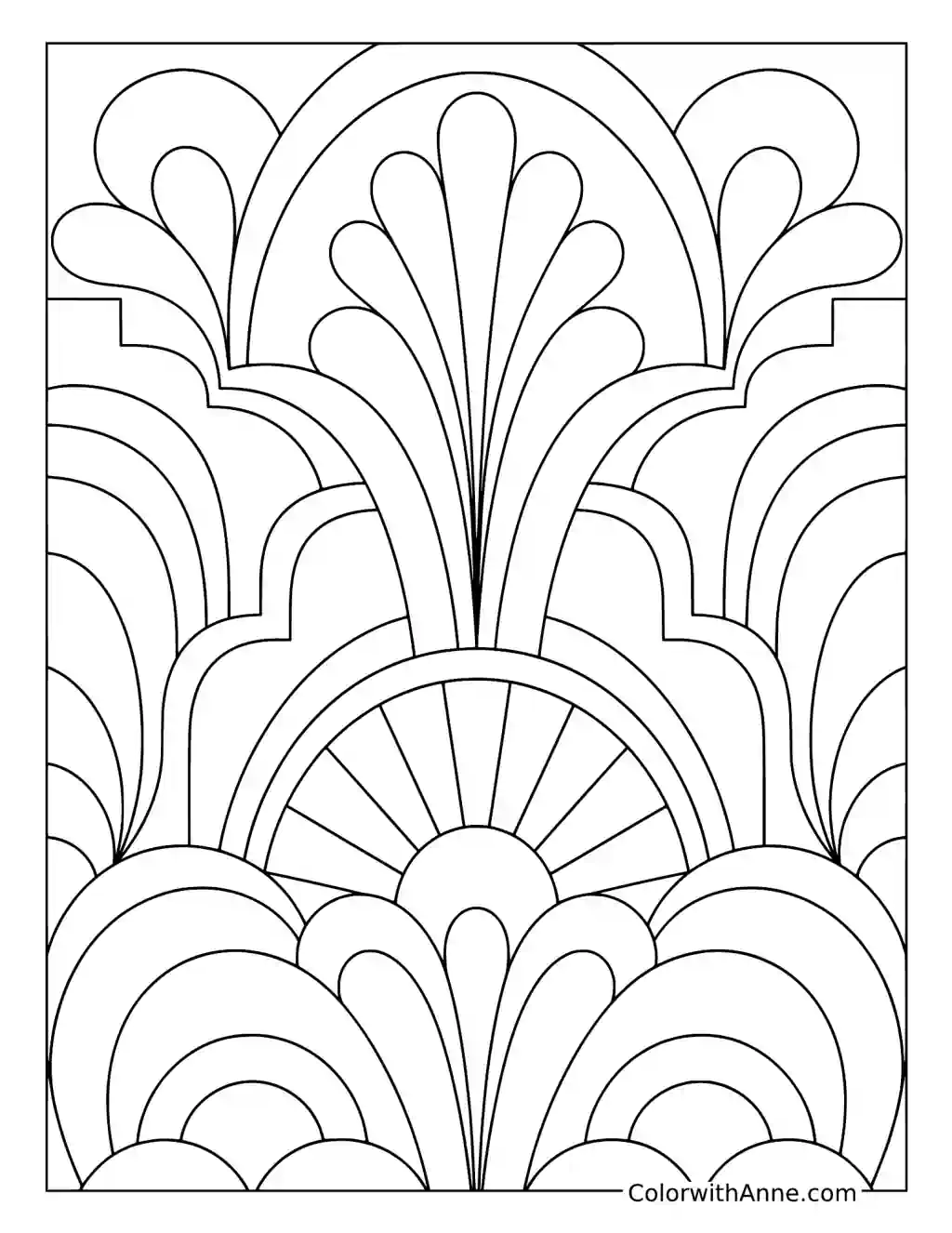
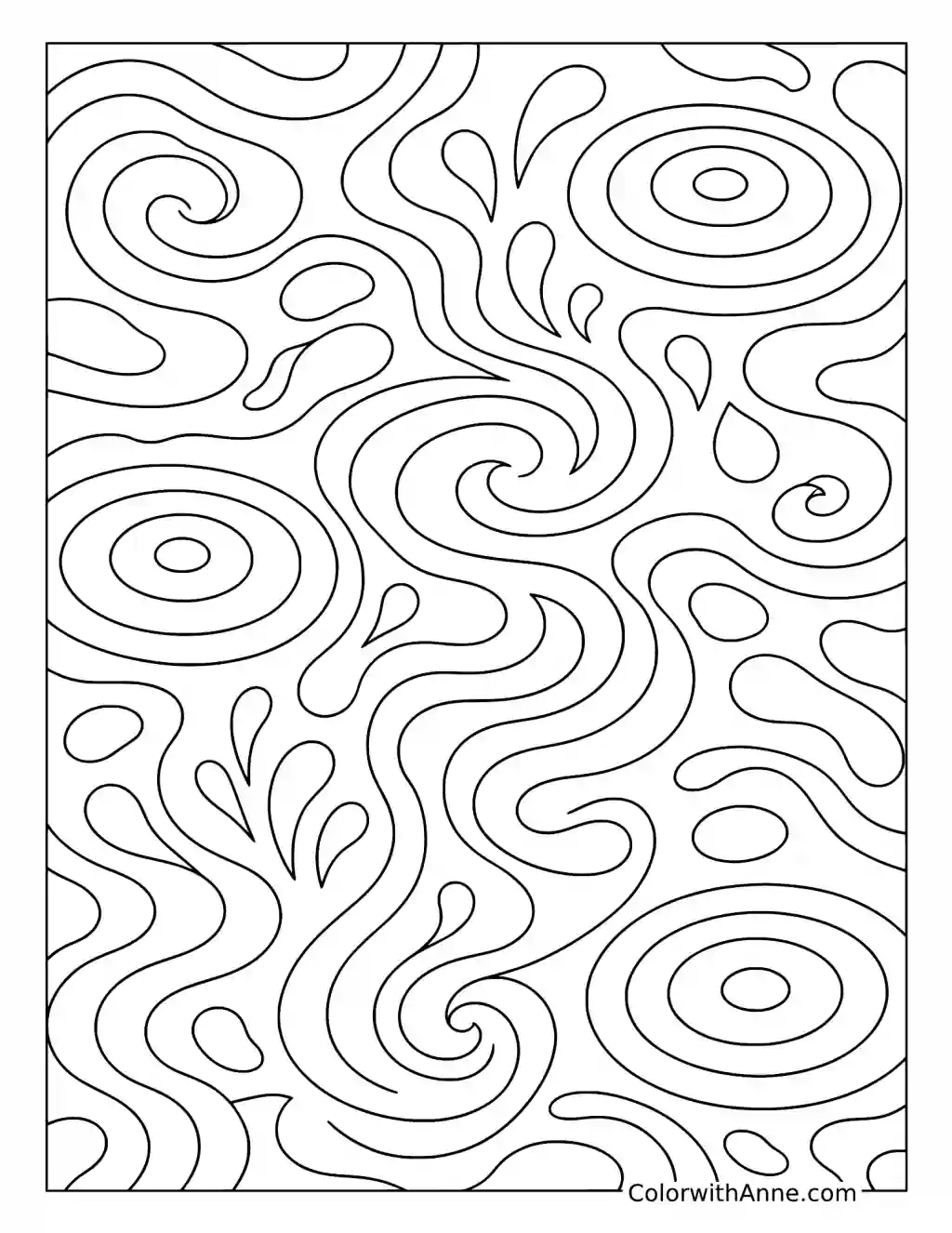
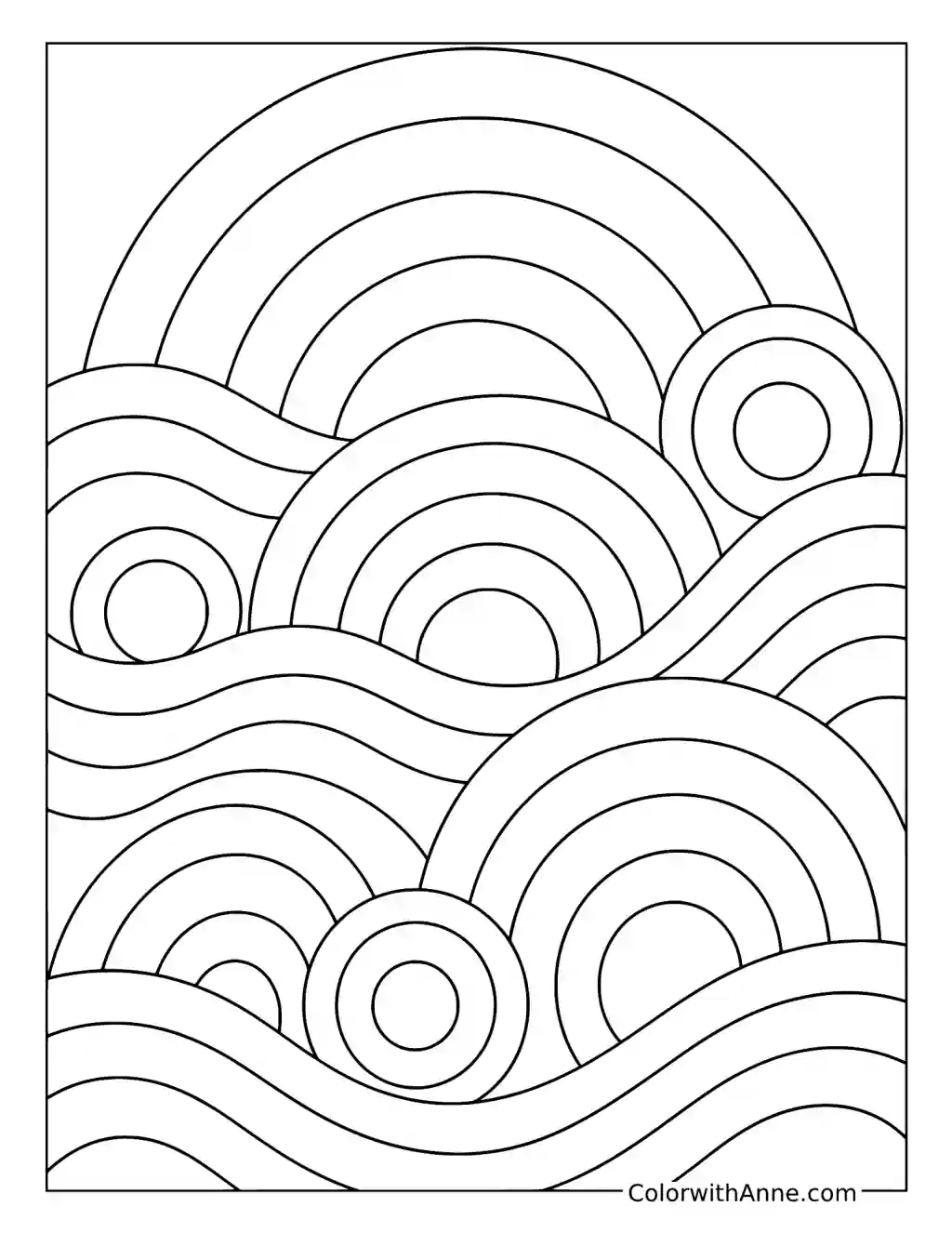
Create a Background from the Rainbow Waves
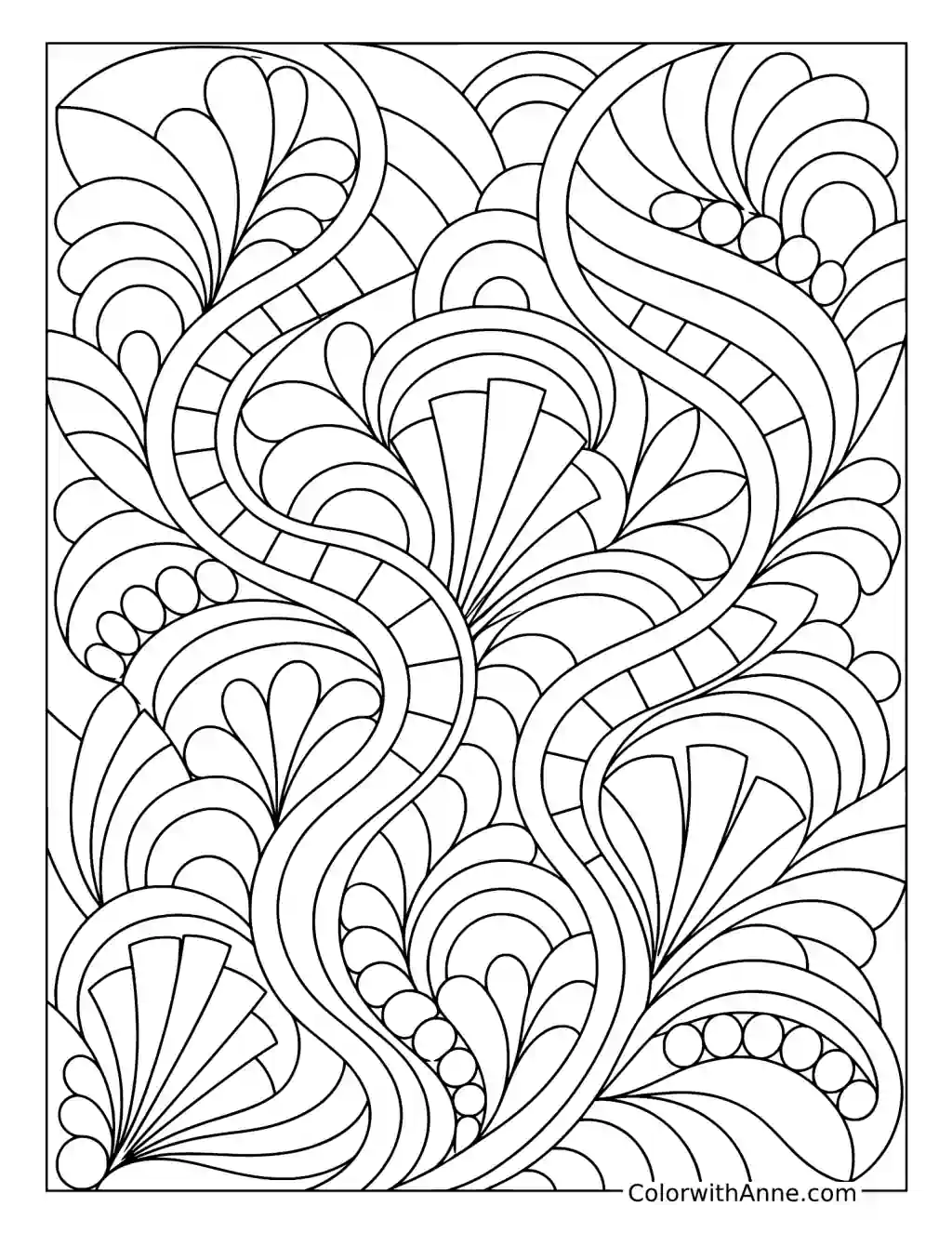
The bands bend in several directions, crossing behind rounded arches. Choose a sequence of colors that stays recognizable as it moves between those shapes.
Once the page is finished, photograph it in even light and crop an area for a personal phone background. Try a section with broad, calmer bands if icons will sit over it. The full drawing can be busy; a small crop may reveal a much quieter arrangement that was easy to overlook while coloring.