
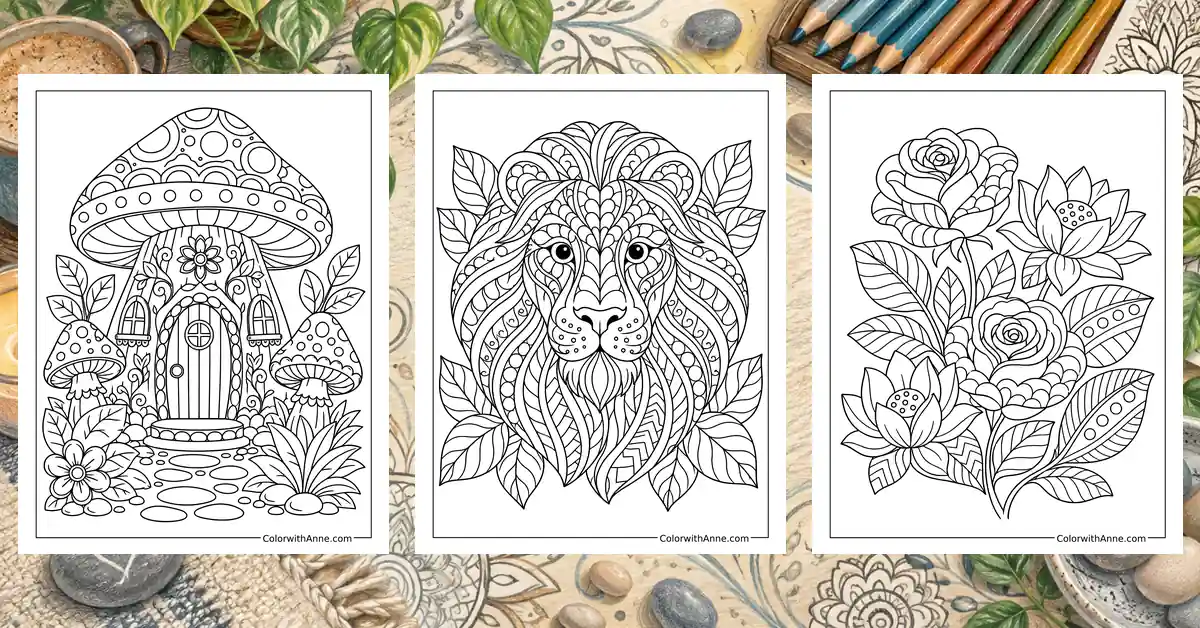
A repeated pattern can hold attention without asking for a decision about what it represents. The eye follows one small section, notices how it meets the next, and gradually finds a rhythm. There is no dramatic moment to wait for; the interest is already there in the arrangement.
Zentangle coloring pages suit the evening when a phone keeps getting picked up without anything particular to check. Working through a section gives the hands something more satisfying to do. A cup of tea may cool unnoticed nearby, which is a modest inconvenience compared with discovering that the usual urge to scroll has briefly passed.
Free Printable Zentangle Coloring Pages
Click any coloring page below to open the PDF, then print on US Letter or A4 paper.
Did you find what you needed?
Help us choose what to create or improve next.
Coloring Ideas for Zentangle Pages
Try one of these coloring ideas, or use them as a starting point for your own.
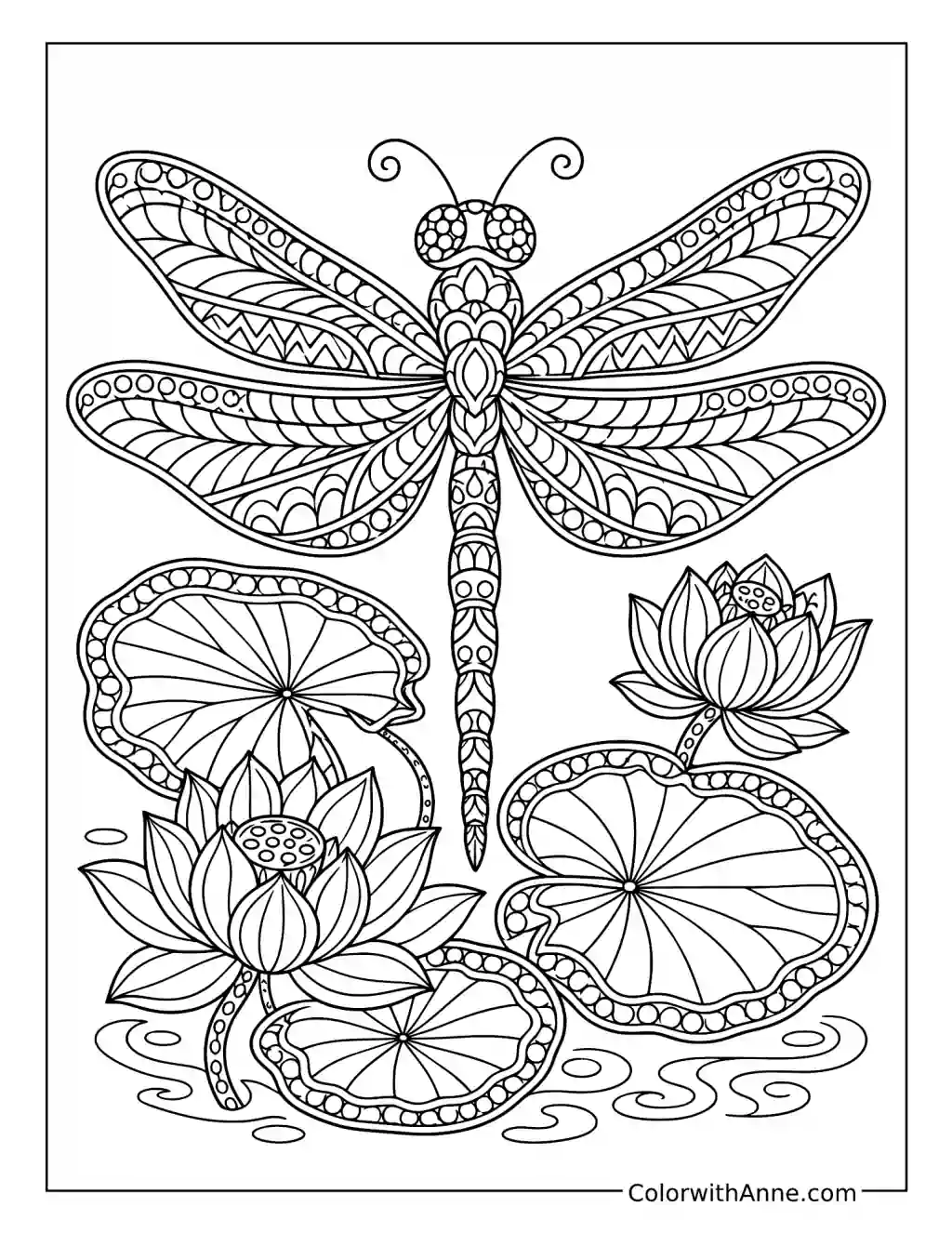
Borrow One Pattern From the Dragonfly’s Wings
The dragonfly’s wings contain several small patterns above broad lotus leaves. One wing section is enough to begin exploring the design.
Try blue-green wings, a darker body, and softer green leaves. Leave a little white between the denser patterns.
Choose one repeated mark and copy a short row onto scrap paper. Continue it for a second row, watching how the spacing changes the result. Then return to the wing section with a clearer sense of the pattern you are coloring.
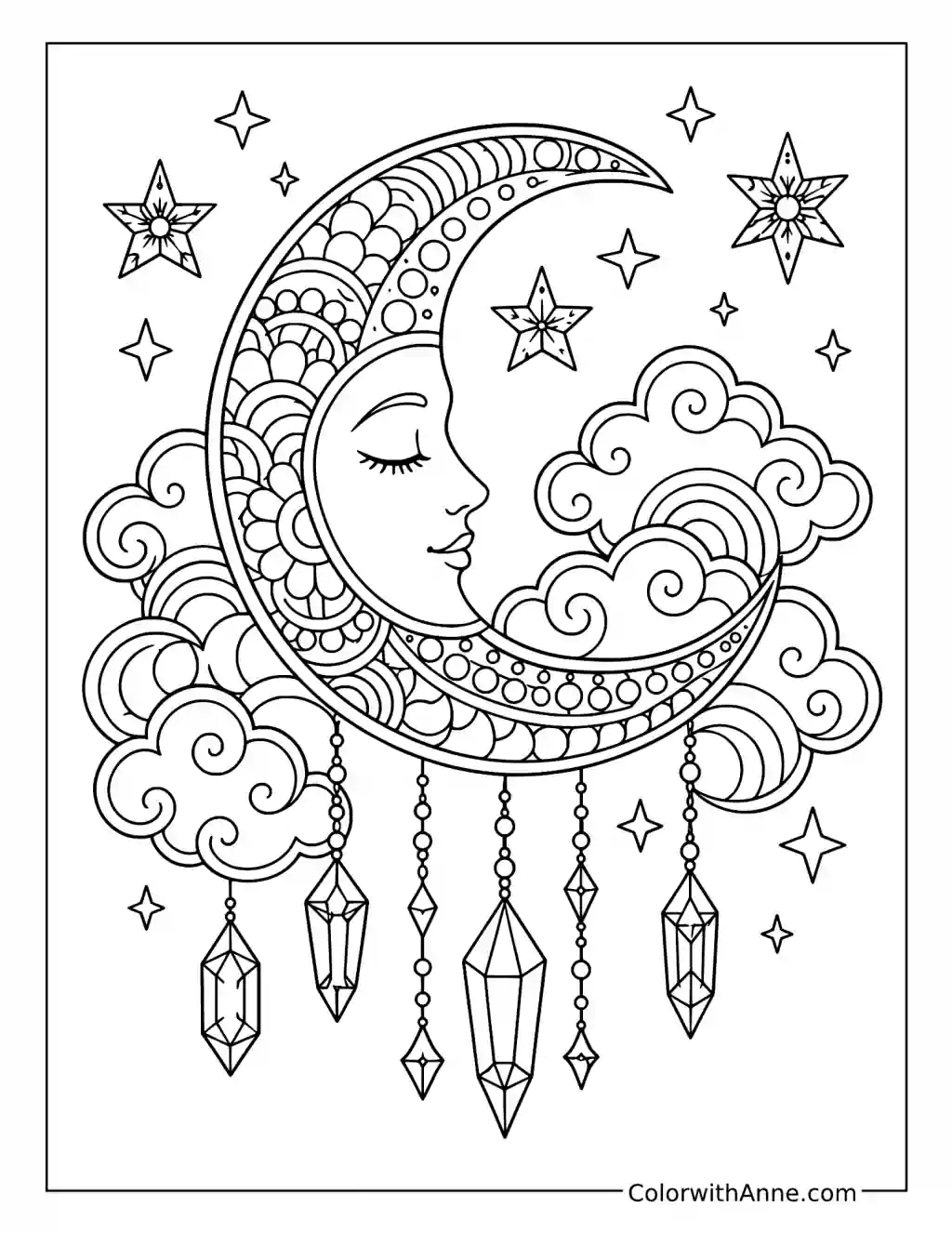
Give the Crescent Moon a Metallic Accent
A patterned crescent rests above curled clouds and hanging crystals. The smaller details leave room for a restrained metallic finish.
Use blue and violet on the clouds, pale yellow on the moon, and cool colors on the crystals.
Pick just one repeated feature for a metallic marker: the moon’s outer edge or selected crystal faces. Leave the remaining patterns matte. When the page moves, those few accents will catch the light without obscuring the printed linework.
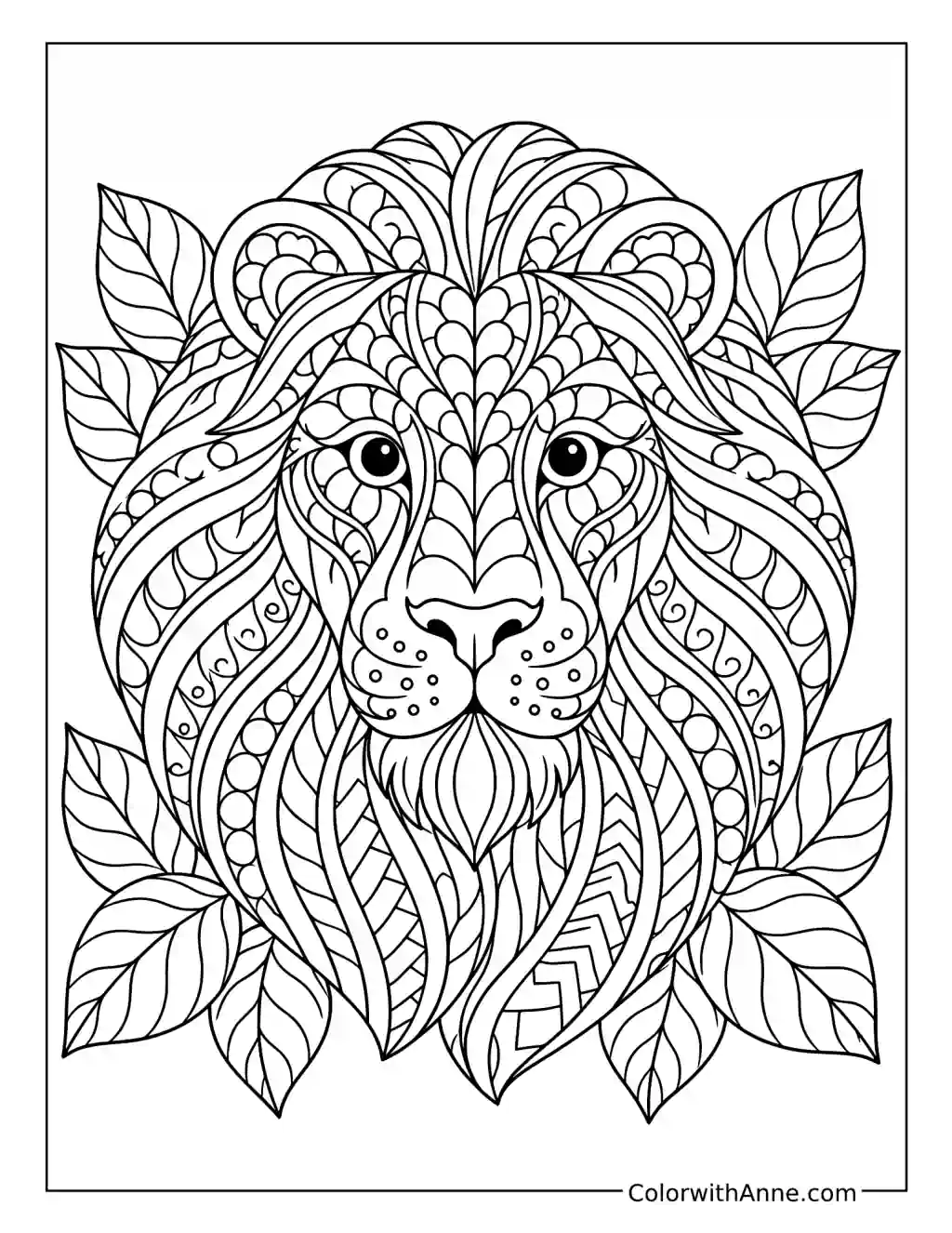
Separate the Lion’s Mane Into Strands
Long patterned sections sweep around the lion’s face like individual locks of mane. Following those shapes can keep the intricate portrait from becoming visually tangled.
Choose gold, rust, and brown for the mane, with a quieter tan face and green leaves.
Complete one flowing mane section before starting its neighbor. Carry the same color through its length even where the internal pattern changes. Step back occasionally to check that the larger strands remain visible around the face.
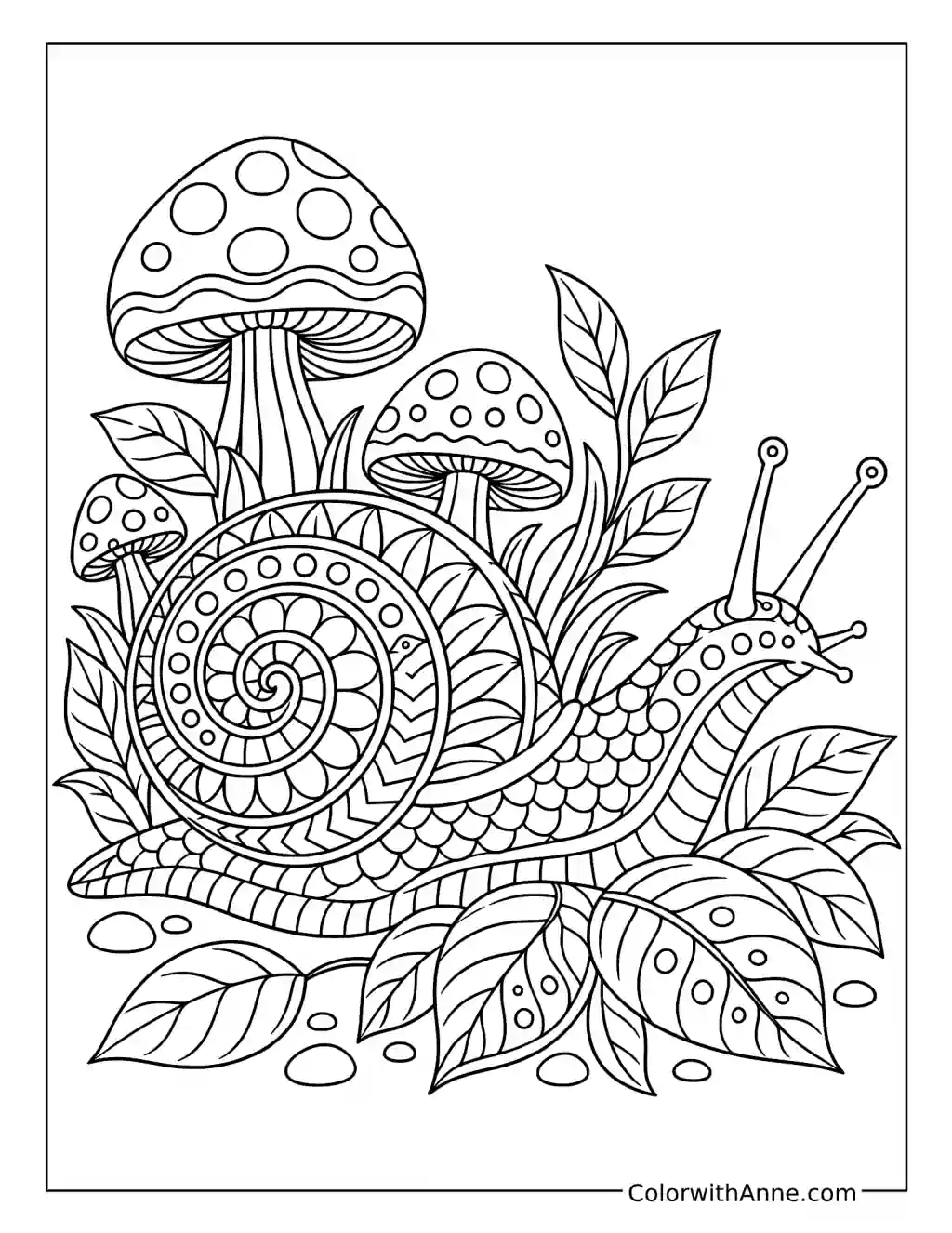
Follow the Snail’s Spiral
The snail’s shell forms a large spiral among mushrooms and leaves. Its continuous curve offers a clear route through an otherwise detailed garden.
Try warm brown and cream shell bands, muted mushroom caps, and varied greens. Keep the snail’s body distinct from its shell.
Start near the spiral’s center and follow one band outward before coloring another. Notice where the internal patterns change direction. There is no need to finish the surrounding garden in the same sitting; the completed shell makes a satisfying stopping point.
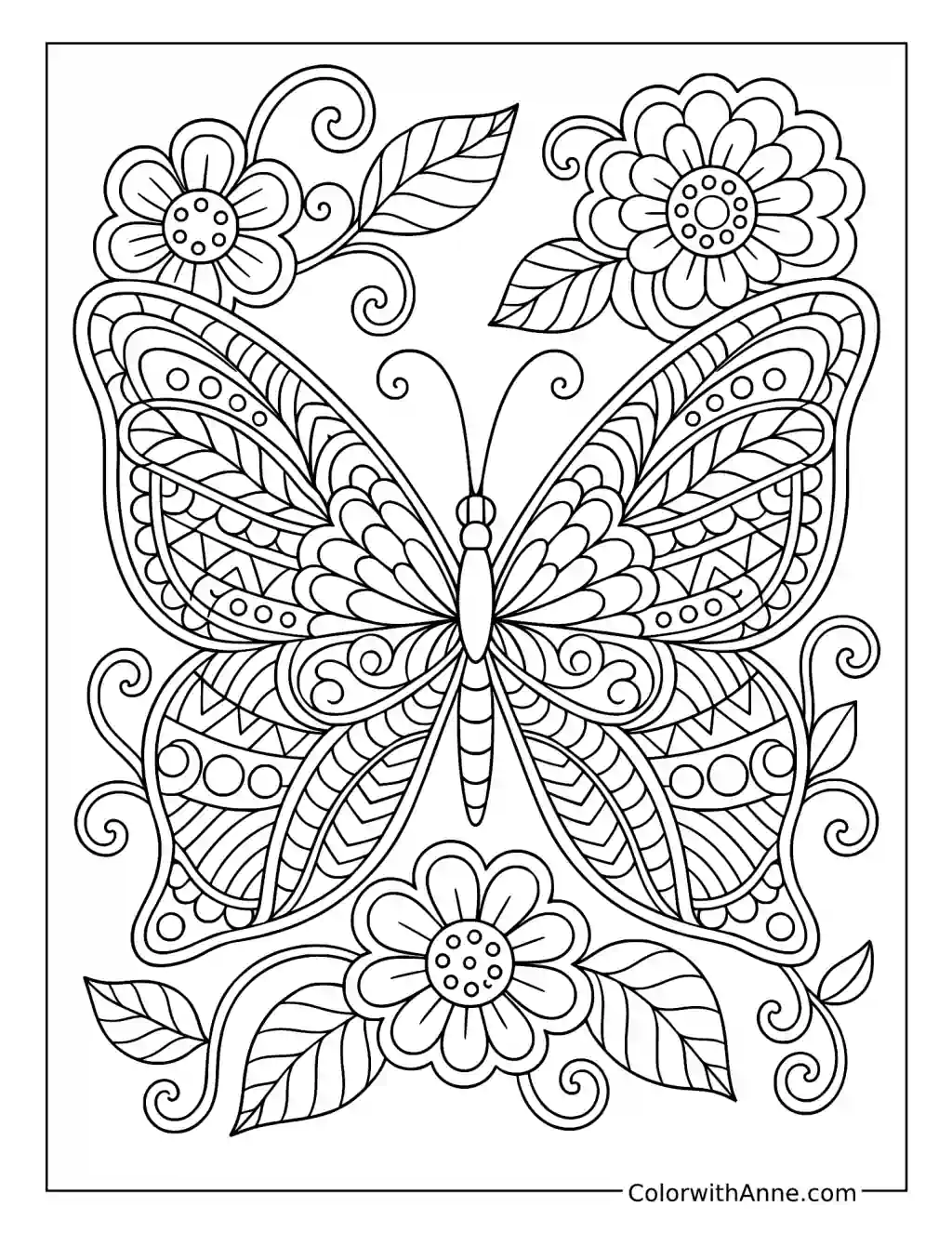
Share the Butterfly’s Mirror Pattern
The butterfly spreads patterned wings between flowers and curling stems. Corresponding shapes on either side make this a particularly suitable shared page.
Choose three wing colors and a quieter green for the foliage. Keep the body dark enough to separate the halves.
Let one person choose a section on the left wing while another finds and colors its partner on the right. Alternate who chooses the next color. The collaboration follows the design itself, rather than dividing the page into two unrelated halves.
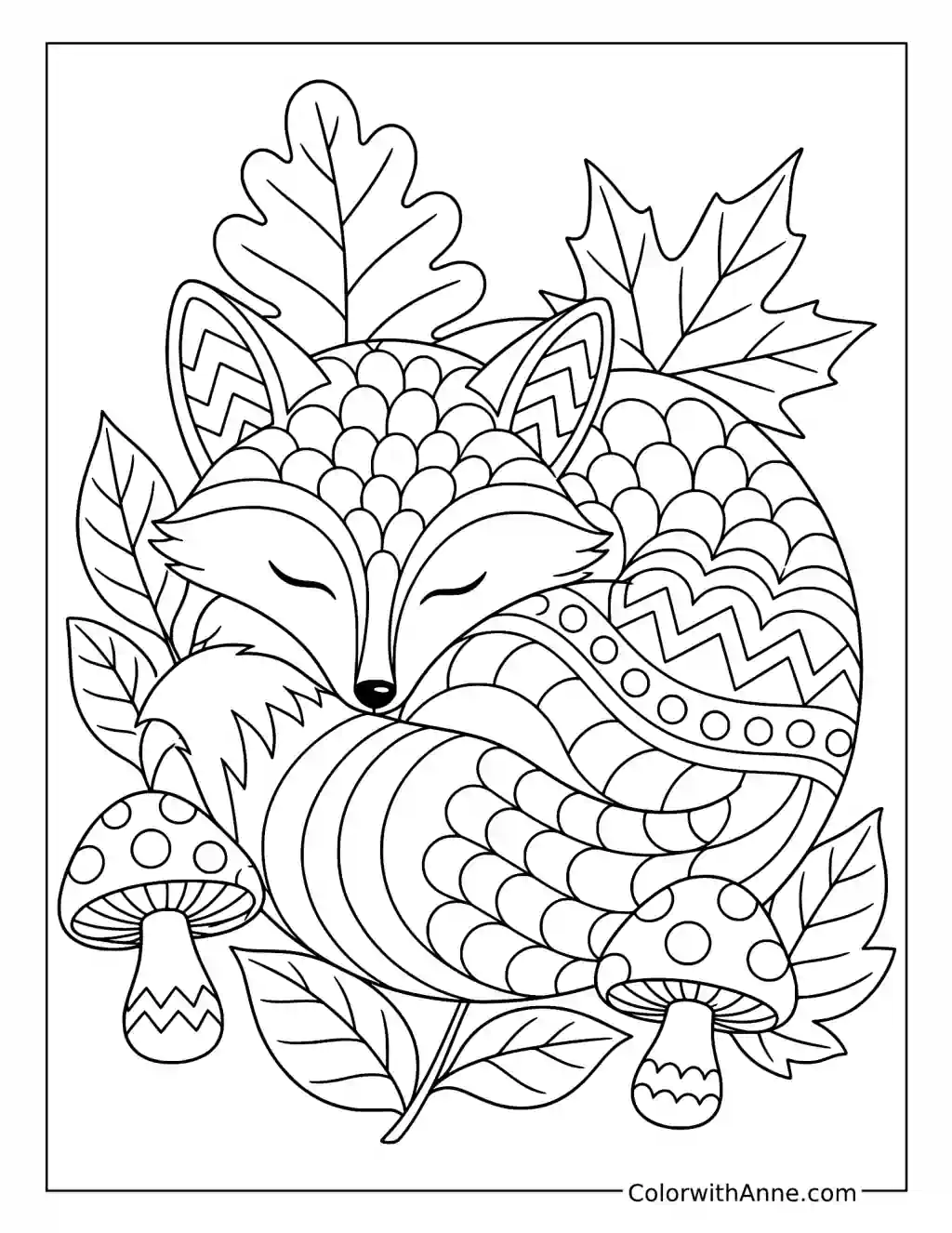
Let the Sleeping Fox Stay Quiet
The fox curls into a patterned oval among fallen leaves and mushrooms. Its closed eye gives the busy arrangement a surprisingly restful center.
Use orange and cream on the fox, with rust, gold, and muted green leaves. Keep the face simpler than the patterned body.
Color the fox first, then decide how much attention the surrounding leaves should receive. Softer, less saturated colors will let them frame the sleeping figure. The page can feel complete without making every tiny background section equally prominent.
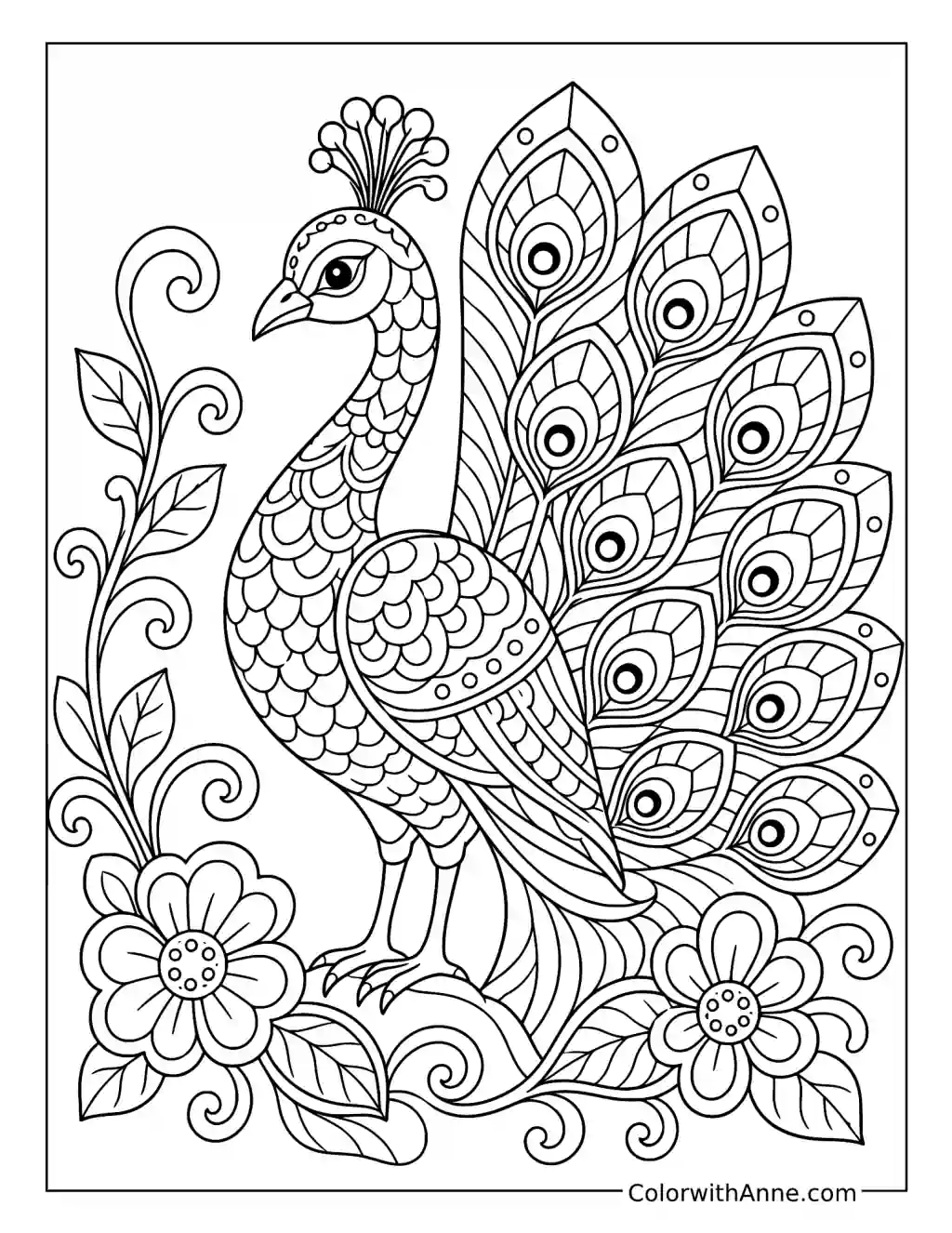
Set a Rule for the Peacock’s Tail
The peacock’s tail repeats eye-shaped feathers above a cluster of flowers. A small color rule can connect those many sections.
Try blue on the body, green outer feathers, and gold or purple feather centers. Keep the flowers in a separate warm palette.
Choose a consistent treatment for the feather eyes before filling the surrounding details. Repeat it throughout the tail, then vary the smaller patterns between them. The repeated centers will hold the fan together even when the inner decoration becomes more varied.
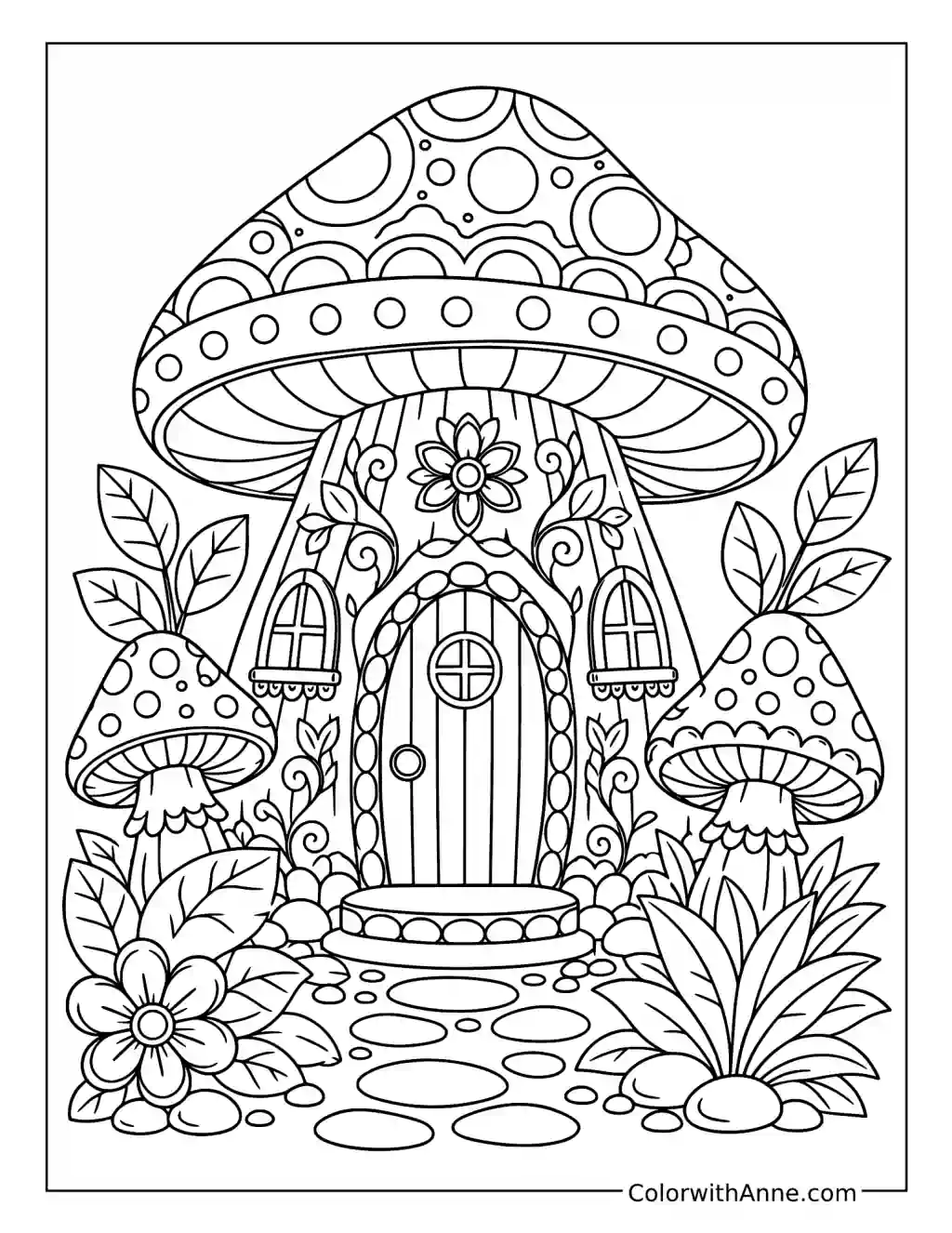
Choose a Lit Window in the Mushroom Cottage
The mushroom cottage sits beneath a broad patterned cap, with a round-topped door and crowded garden. Its windows offer small focal points within the dense linework.
Try a red-brown cap, cream walls, green foliage, and a yellow window. Use quieter stone colors along the path.
Decide which window should look illuminated and keep its immediate surroundings slightly darker. Follow the garden path toward the entrance with a few lighter stones. Those connected bright areas can guide the eye through the detailed picture.