
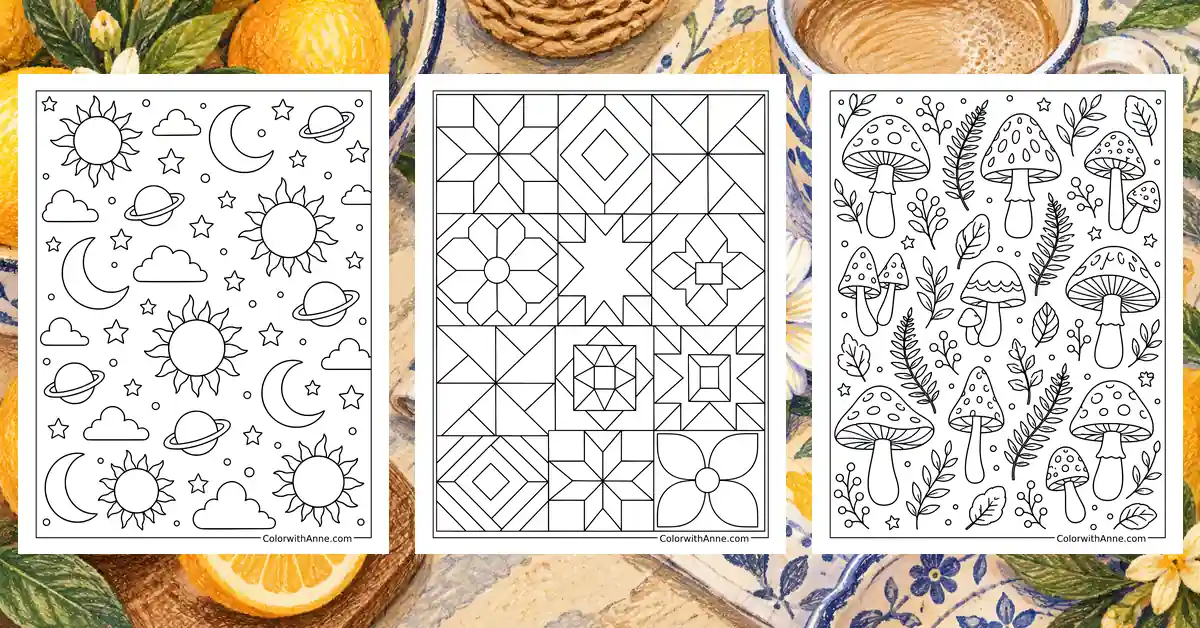
A tiled floor or a piece of fabric can hold the eye longer than expected once its repeating arrangement becomes clear. One shape leads into another, and the edges begin revealing how the whole thing fits together. Spotting the repeat is satisfying; following what happens around it can be even more absorbing.
Pattern coloring pages make that quiet interest the main event. There is no character to keep track of, so attention can settle into the rhythm of the design. A page left beside a comfortable chair can be returned to between other things, with the next section patiently waiting where it was left.
Free Printable Pattern Coloring Pages
Click any coloring page below to open the PDF, then print on US Letter or A4 paper.
Did you find what you needed?
Help us choose what to create or improve next.
Coloring Ideas for Pattern Pages
Try one of these coloring ideas, or use them as a starting point for your own.
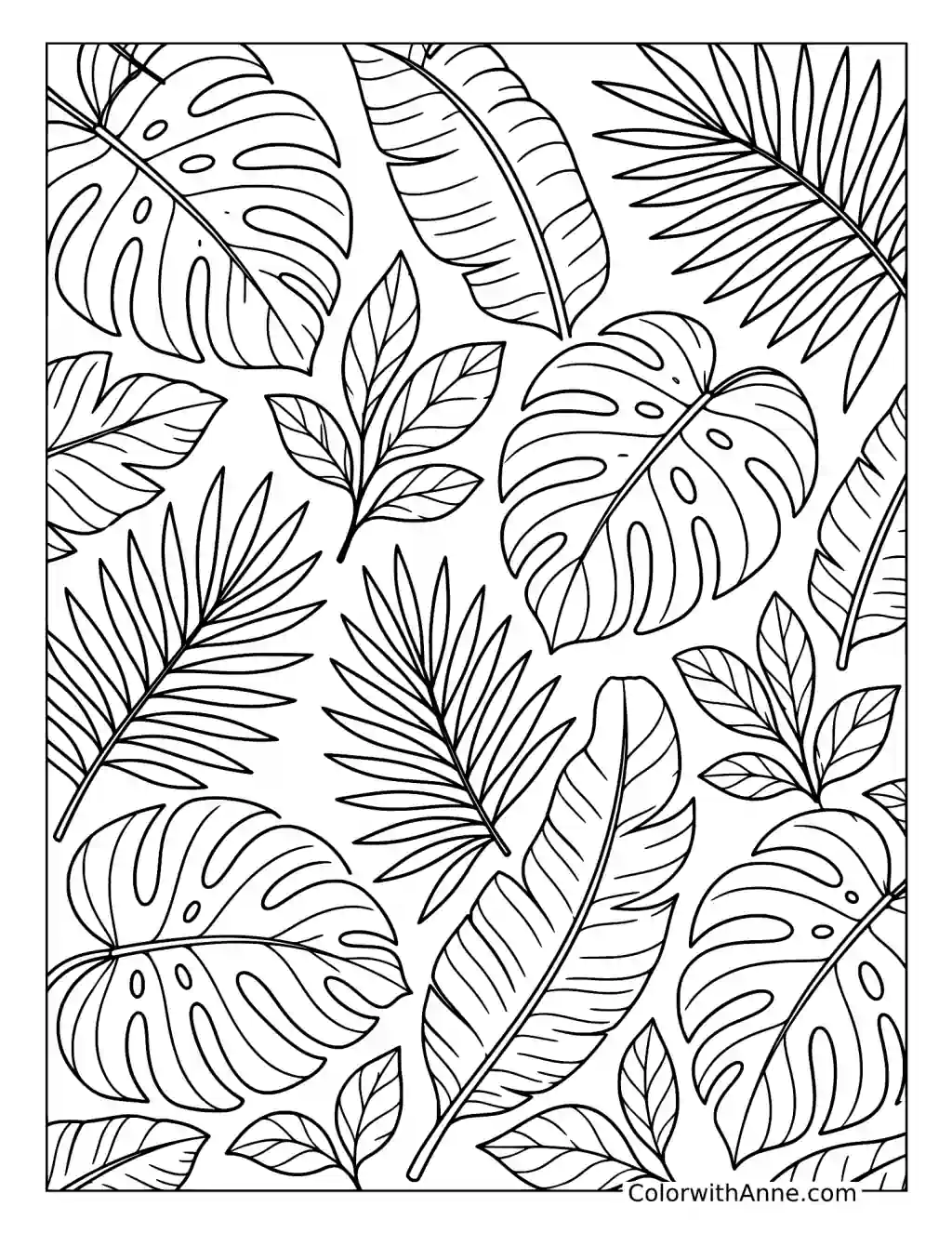
Find a Favorite Crop in the Tropical Leaves
Broad split leaves overlap long fronds across the sheet. The changing sizes make the pattern feel full, with new little arrangements appearing wherever two leaves meet.
Several greens would give it a lush, familiar look, while cream and deep blue could make a more graphic version. A few lighter leaves would help the overlaps remain visible.
Cut a rectangular window in scrap card and move it over the finished page. Some views may resemble a cushion print, while others look more like a small framed artwork. The window lets you discover those differences before trimming anything, and a favorite crop can become the starting point for a card or paper decoration.
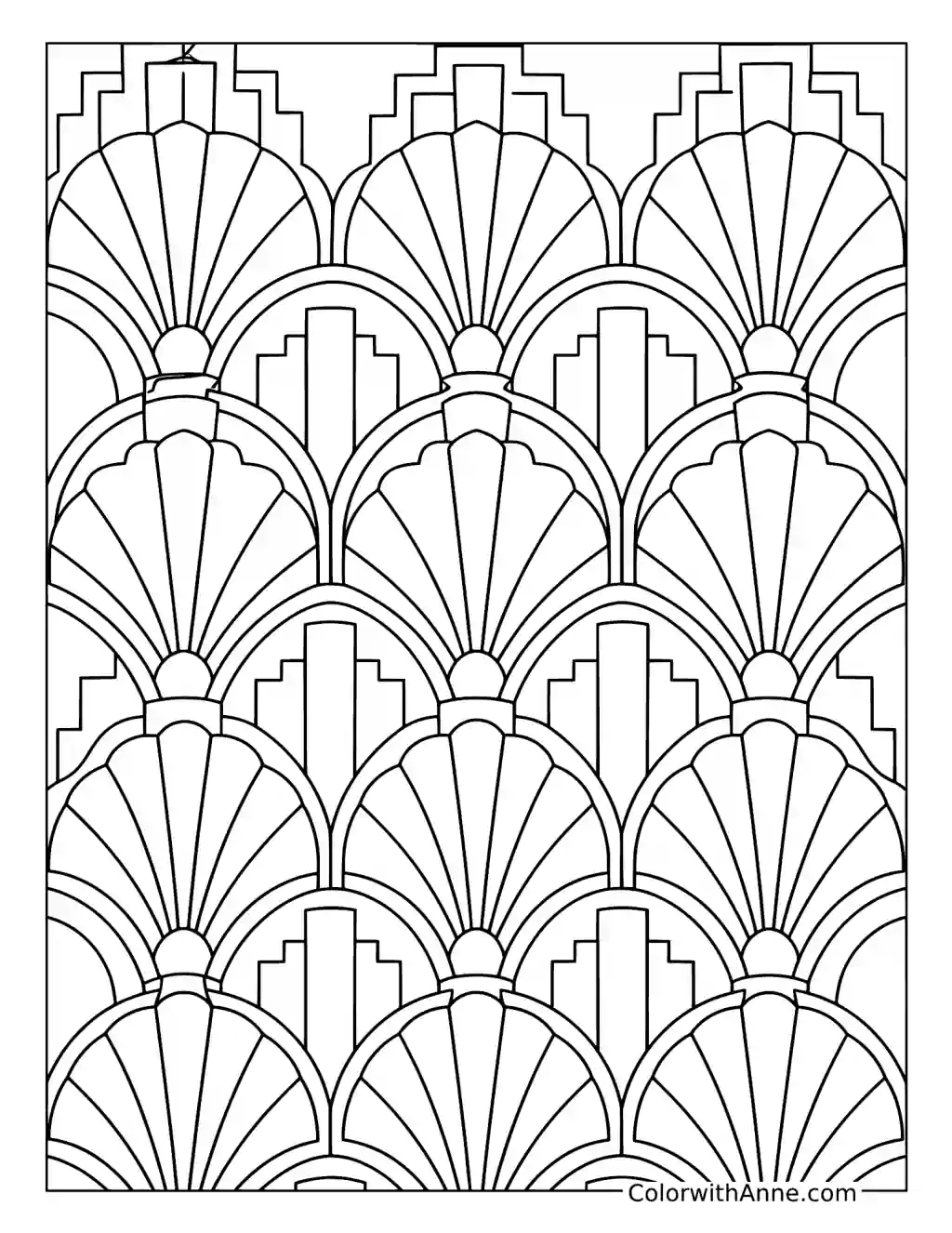
Give the Art Deco Fans a Rhythm
Rows of fans rise beneath stepped geometric tops, each shape joining the next. The repetition has a clear rhythm, but small changes in color can make the rows seem to move differently.
Teal and gold would suit the structured design, while rose and cream could feel softer. Repeating the same order across one row would establish a pattern quickly.
In the next row, reverse one part of that order and see what happens across the whole sheet. The change may emphasize a new line or make alternating fans appear closer. This is a page where one simple rule can produce plenty of interest, so there is no need to invent a fresh arrangement for every section.
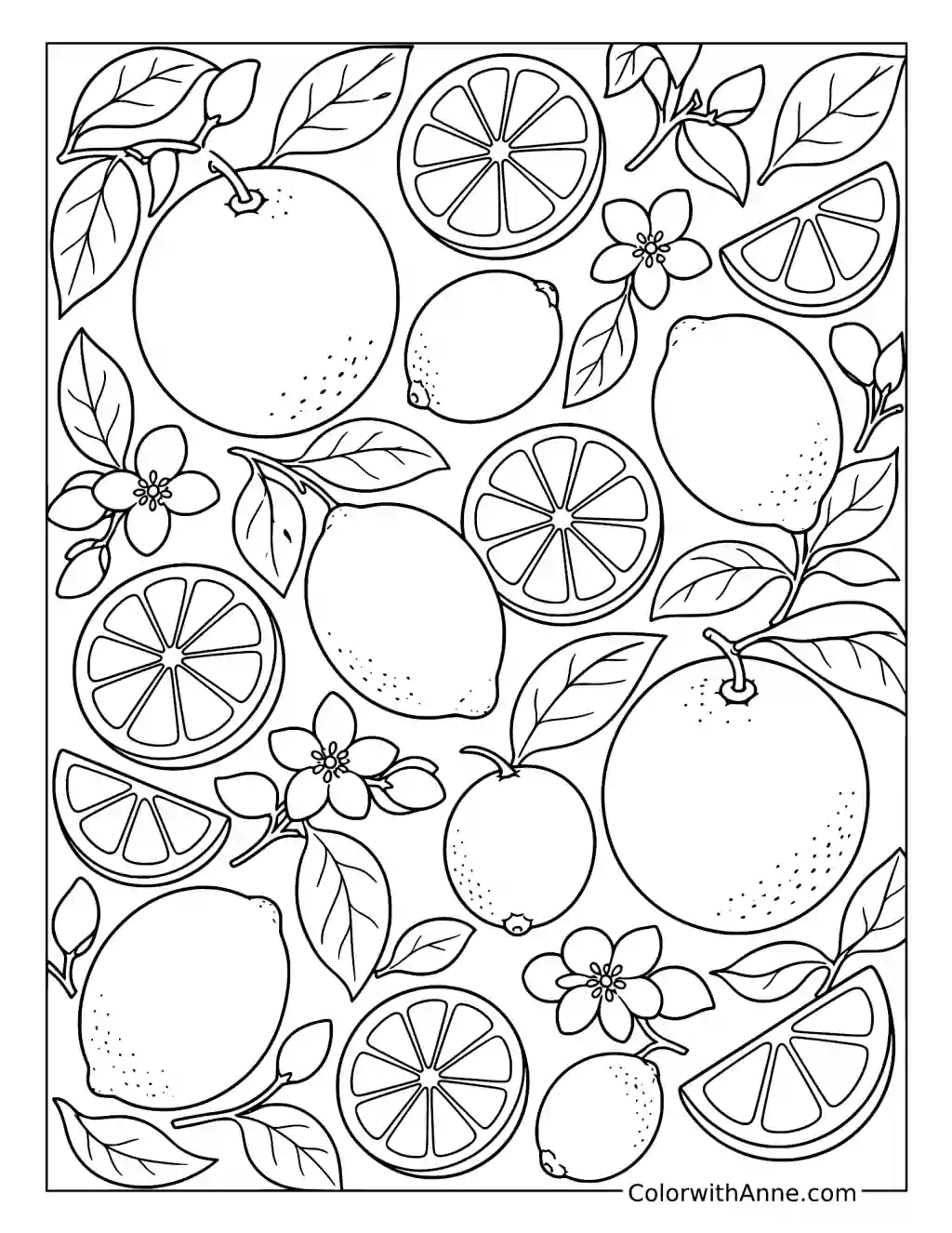
Wrap Something Small in Citrus
Whole fruits, slices, blossoms, and leaves fill the page with rounded shapes. It has the cheerful abundance of a fruit stall, packed closely enough that even a small piece will contain several details.
Lemon yellow and orange would sit naturally among fresh greens. Pale blossoms and a cream background could separate the stronger fruit colors.
Use the finished sheet around a small box or as a sleeve for a paper-wrapped gift. The pattern suits a kitchen present, a jar of preserves, or something chosen for a gardener. A plain tag will give the eye a resting place while the citrus does the decorating, and offcuts can become smaller matching labels.
Put the Cats and Yarn on a Craft Basket
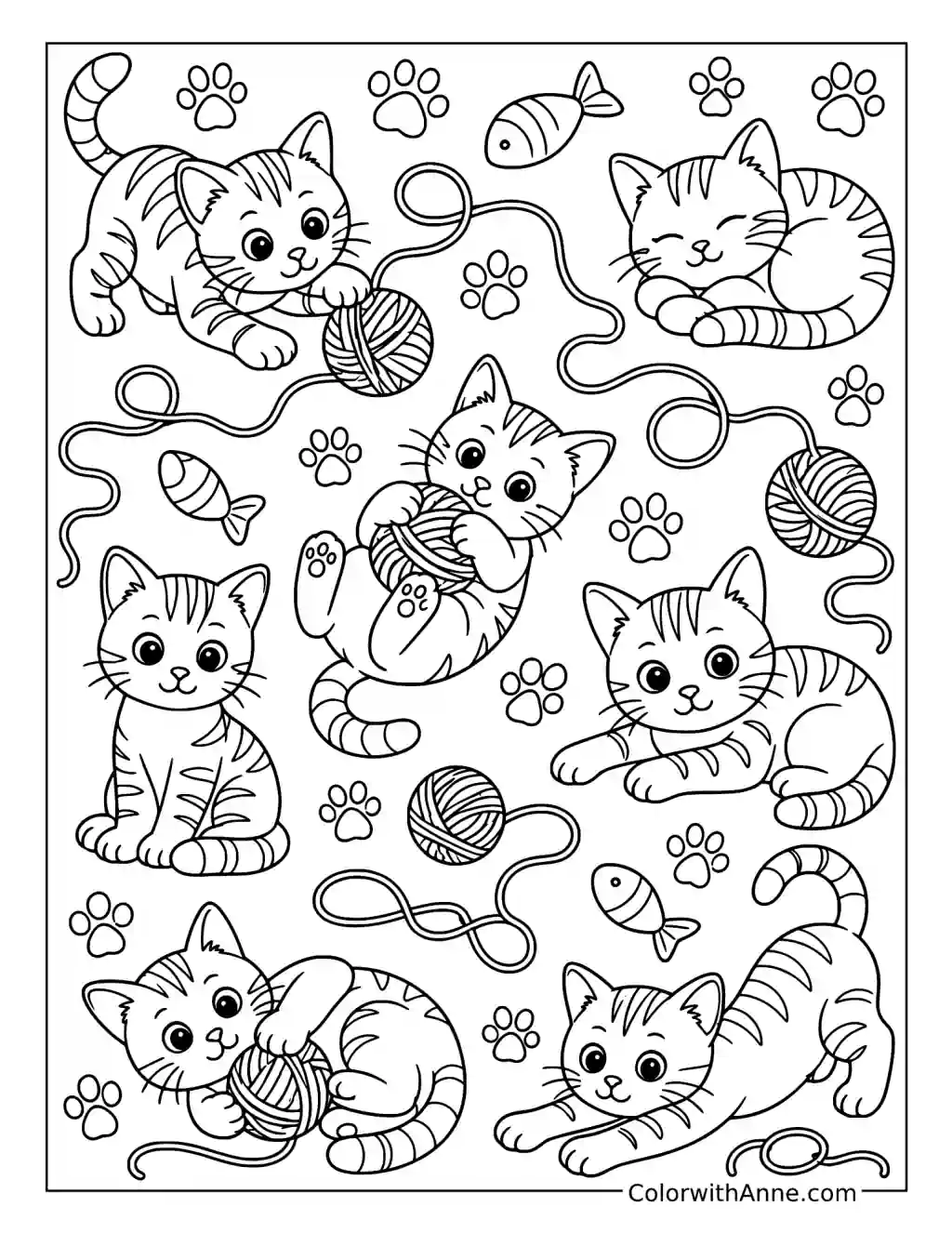
Cats stretch, sit, and curl around balls of yarn while loose strands wander between them. The page looks like the contents of a craft basket after a very successful feline investigation.
Natural coat colors could distinguish the cats, with a few repeated yarn shades connecting the scene. A light background would keep the thin threads from disappearing.
Choose a small section for a label on a knitting or crochet basket. A cat leaning toward a yarn ball makes a particularly fitting crop, though another expression may suit the basket’s owner better. The remaining pattern can wrap a small handmade gift, giving the colored sheet more than one useful piece.
Test a Quilt before Cutting Fabric
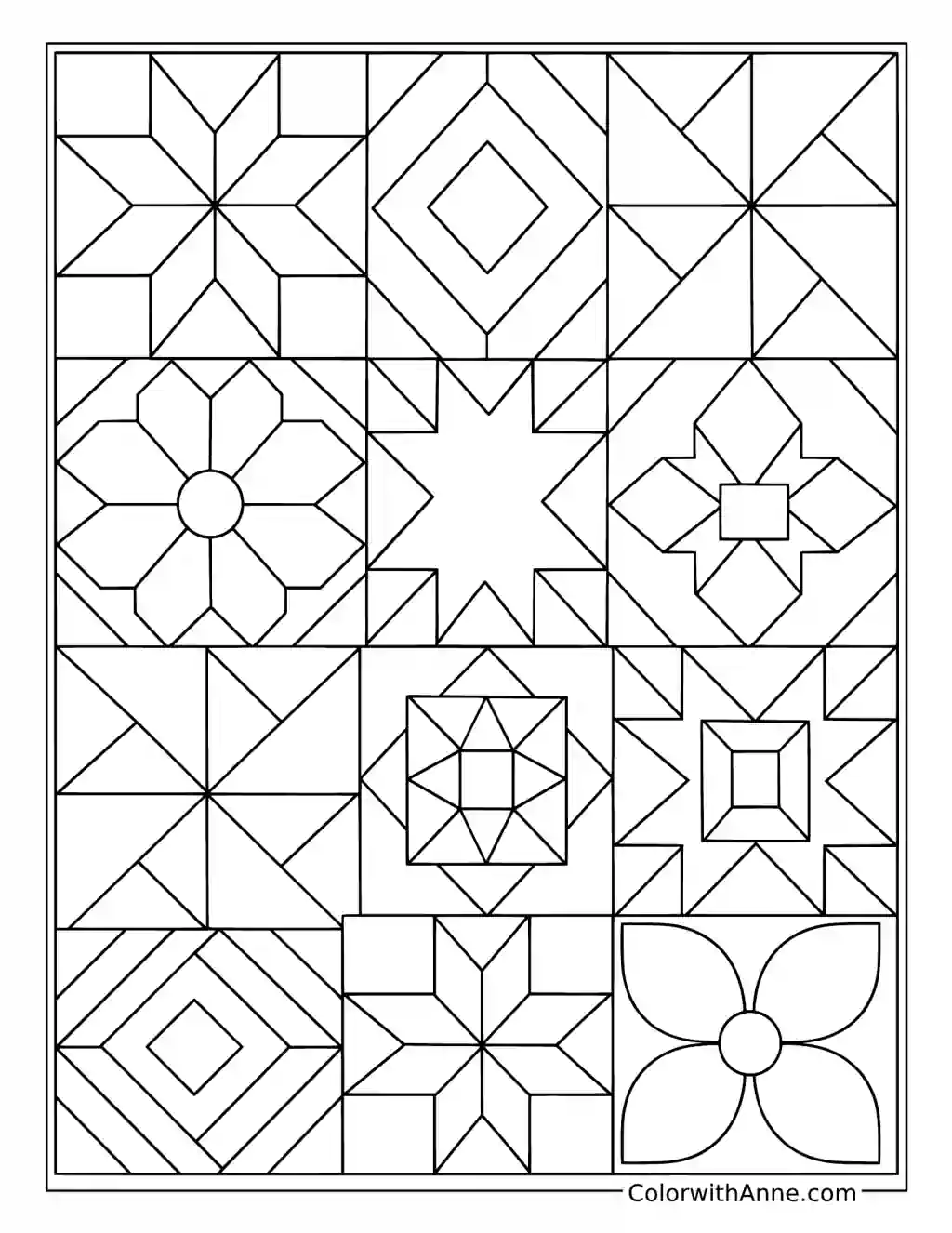
Stars, diamonds, and smaller geometric arrangements fill the quilt-like blocks. A shape can seem to belong to one block at first, then join its neighbor once matching colors begin to appear.
A small fabric-inspired palette would connect the sections. Light cream between deeper shades could help the stars emerge, while a single brighter accent might run through several blocks.
Try colors close to fabrics you already have, then stand back and look at the larger arrangement. Some areas may feel heavier than expected when several dark pieces meet. The page offers a practical place to notice that balance before cutting cloth, while still being satisfying as a pattern in its own right.
Frame a Picture with Mosaic Tiles
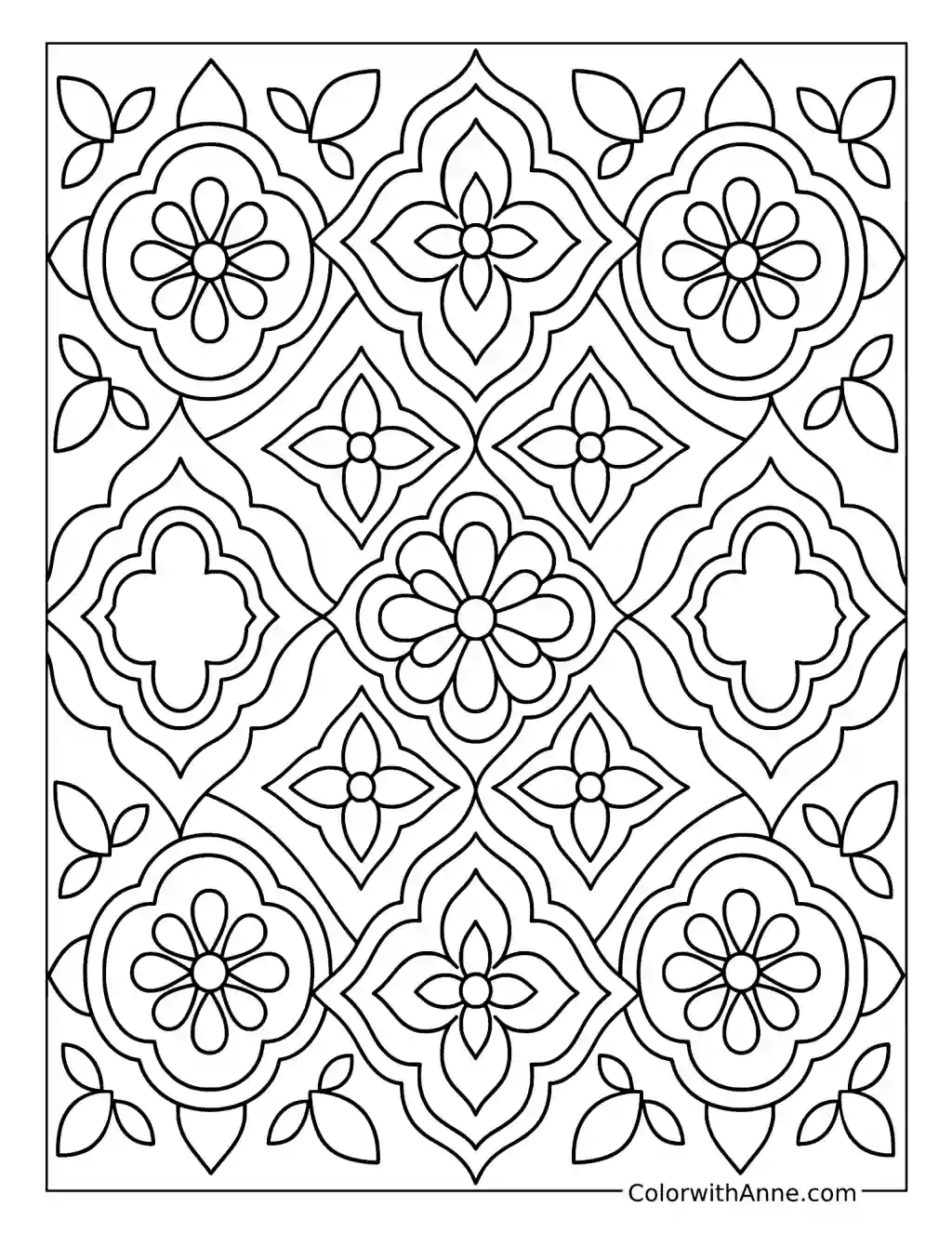
Flowers and pointed shapes repeat across the sheet, joined by narrow borders. The pattern has enough structure to remain recognizable even when only a strip is visible.
Blue and white would give the tiles a crisp finish, while terracotta and cream could feel warmer. Repeating a small accent in the flower centers would connect the units.
Cut strips from the finished pattern to frame a photograph or simple drawing. Arrange the corners before fixing them down, checking whether the shapes meet in a way you enjoy. The tiled border can provide plenty of decoration around an otherwise quiet image, making it a useful project for a favorite snapshot.
Look for the Hidden Flowers in the Circles
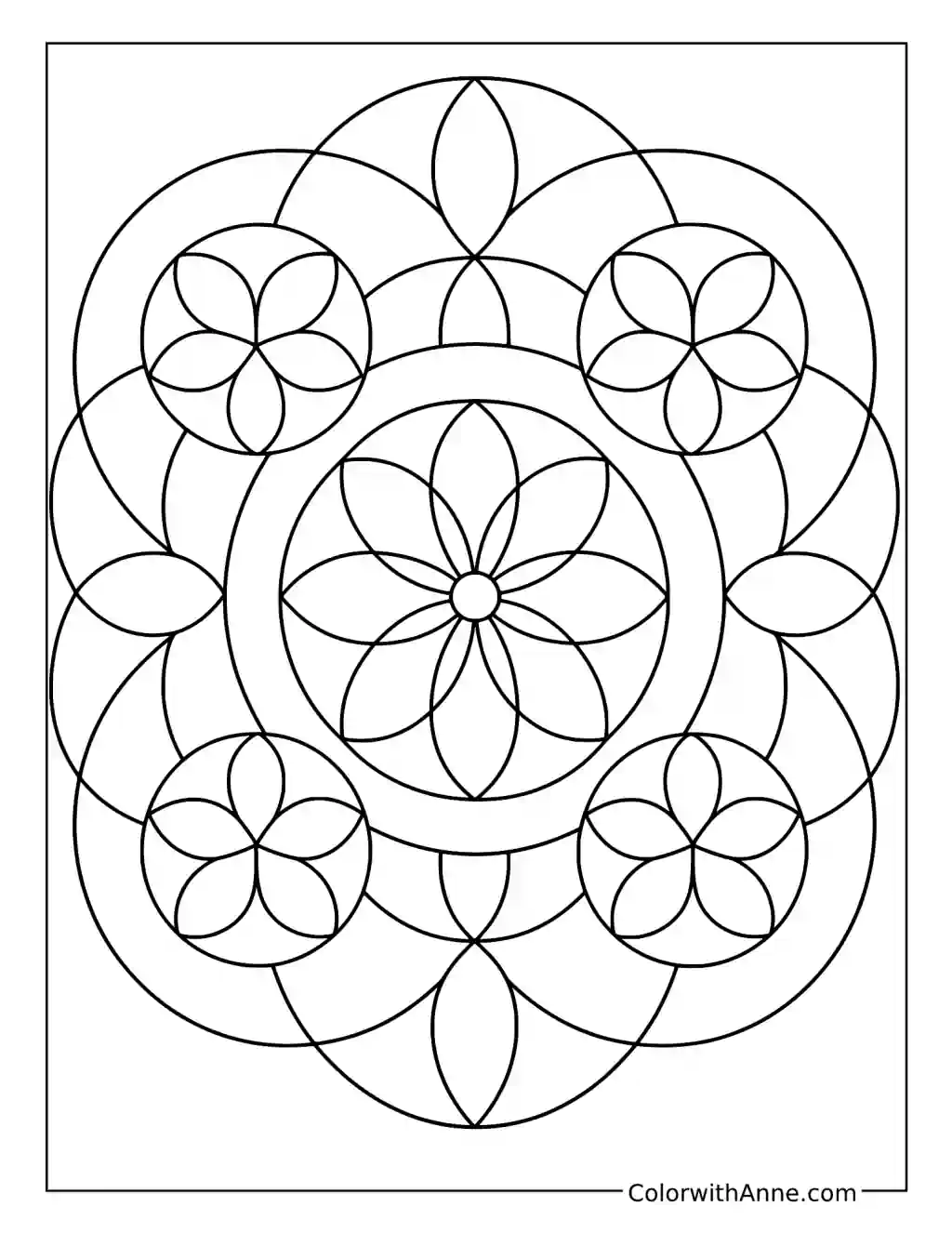
Overlapping circles create petals and narrow lenses without adding a separate flower outline. The same lines offer several possible pictures, depending on which spaces receive attention first.
Two contrasting colors could emphasize selected overlaps, with white sections between them. Neighboring shades would produce a gentler effect and make the emerging shapes less immediate.
Begin by following one kind of section, such as the narrow lens between two circles. Pause once those areas are filled and look at the larger design. A ring or flower may now appear that was difficult to see on the uncolored page. Let that discovery guide the next choice rather than planning the entire sheet in advance.
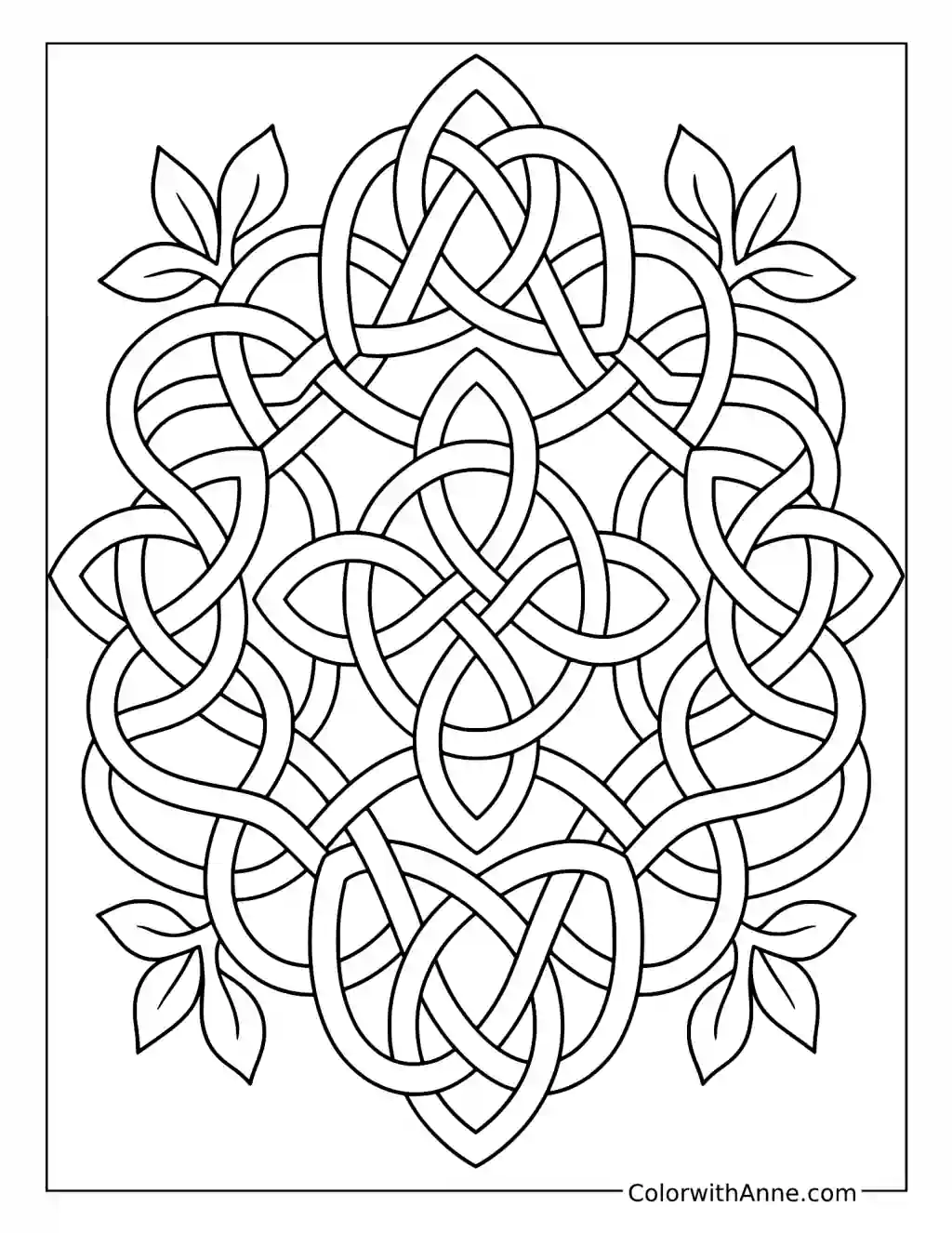
Follow the Celtic Knot’s Woven Route
Broad bands loop over and under one another inside a leafy border. The crossings can look complicated until you begin following a single strand and notice how each overlap directs it onward.
Gold against deep green would make the weave clear. Slightly darker shading where a band passes underneath another could suggest depth without introducing lots of separate colors.
Trace a strand with a fingertip before coloring it, following the visible joins through the knot. See whether you return to the starting point or discover a separate route. The design offers a small visual puzzle as part of the coloring itself, so its interest does not depend on finding another use for the finished page.