
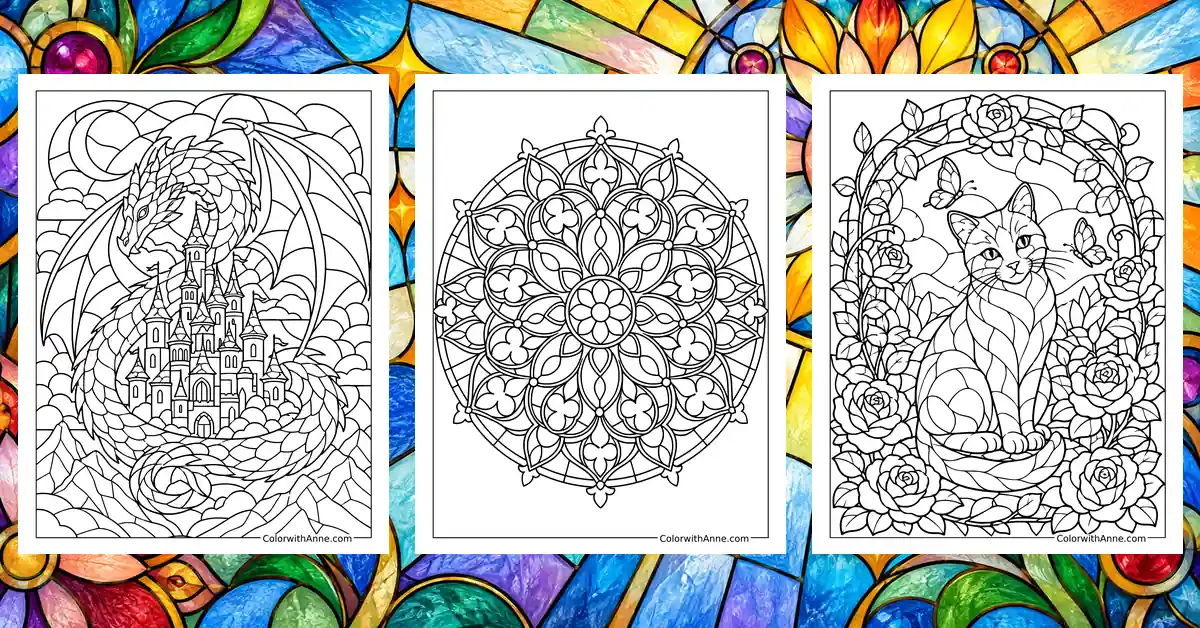
Sunlight through a stained glass window can leave a patch of color on the floor that seems worth stepping around. The window itself changes as the light moves, bringing one section forward while another grows quieter. Even a familiar room can feel different for a few minutes.
Stained Glass coloring pages offer a way to linger over that arrangement of separate pieces. Following the divisions reveals how small shapes support the larger picture, much like looking closely at a window before stepping back. A finished page beside a sunny window can recall the original pleasure, even without the glass doing the work.
Free Printable Stained Glass Coloring Pages
Click any coloring page below to open the PDF, then print on US Letter or A4 paper.

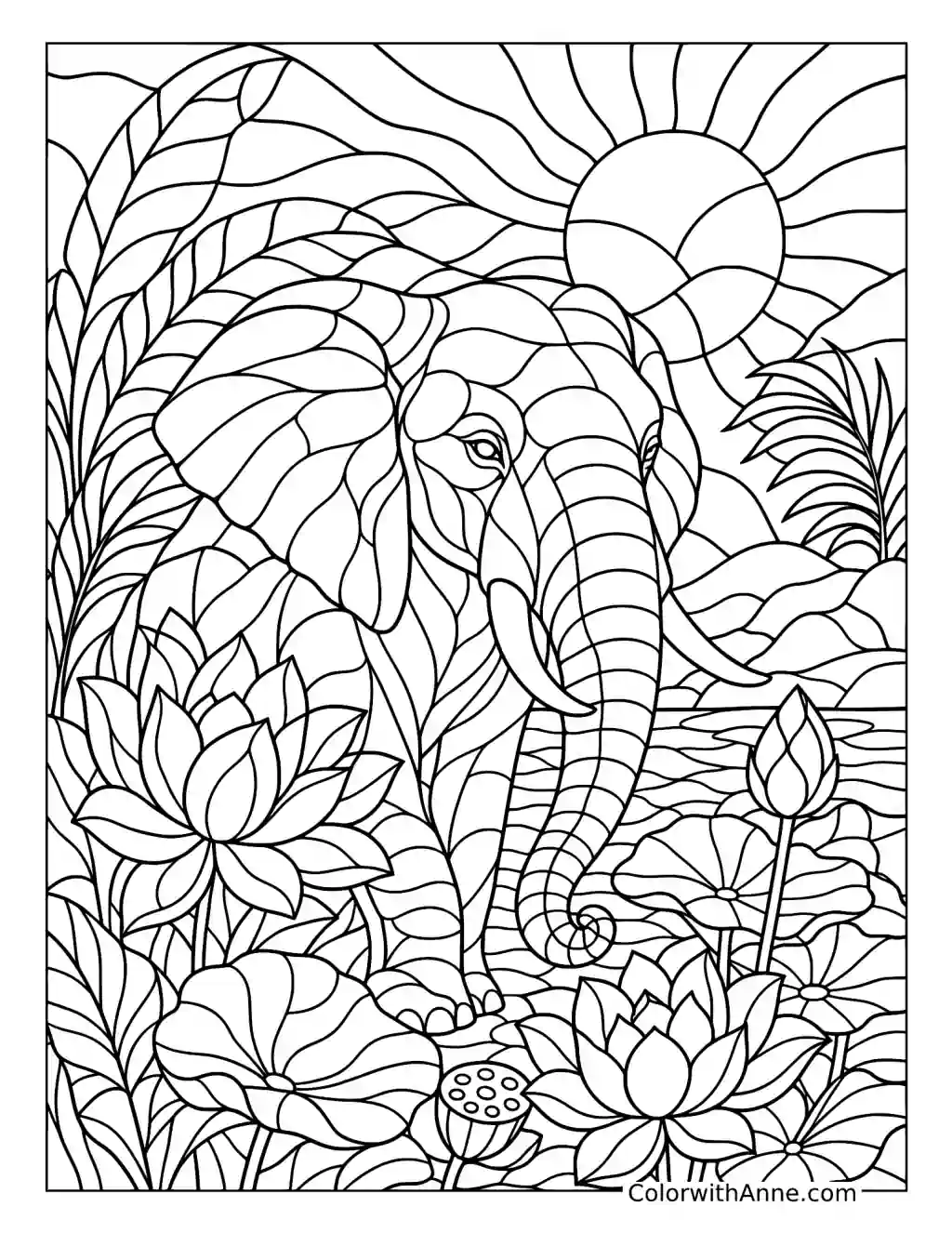
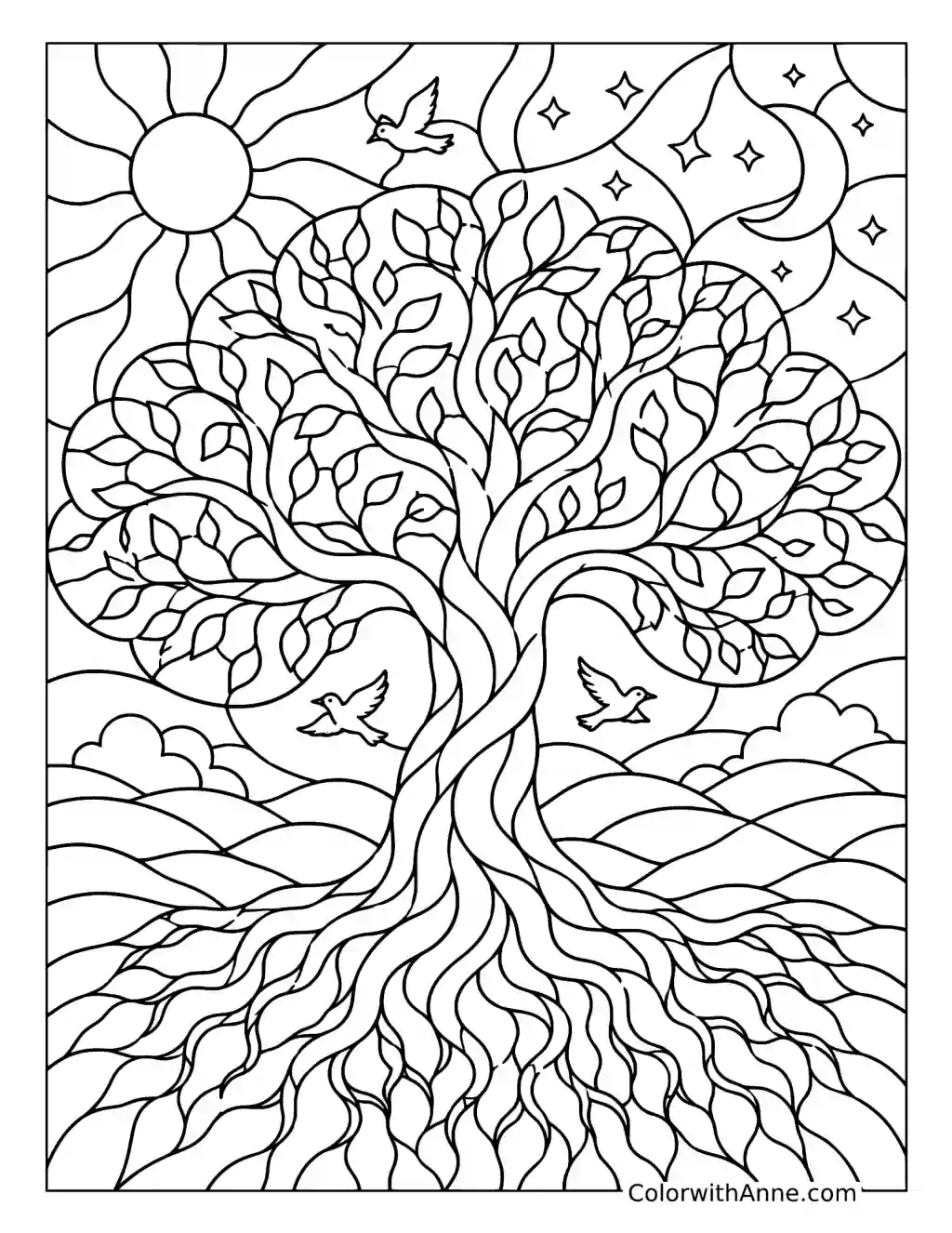
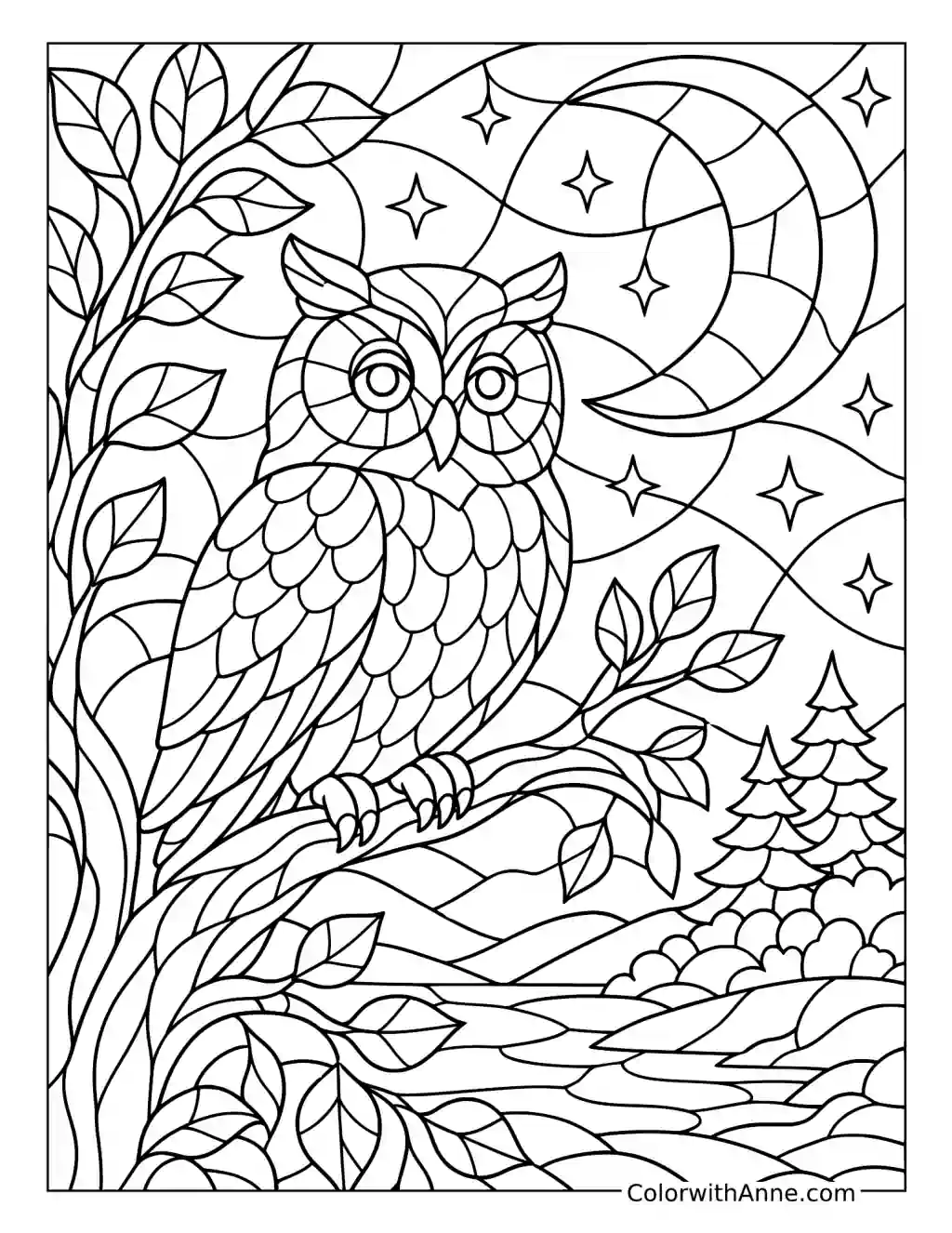
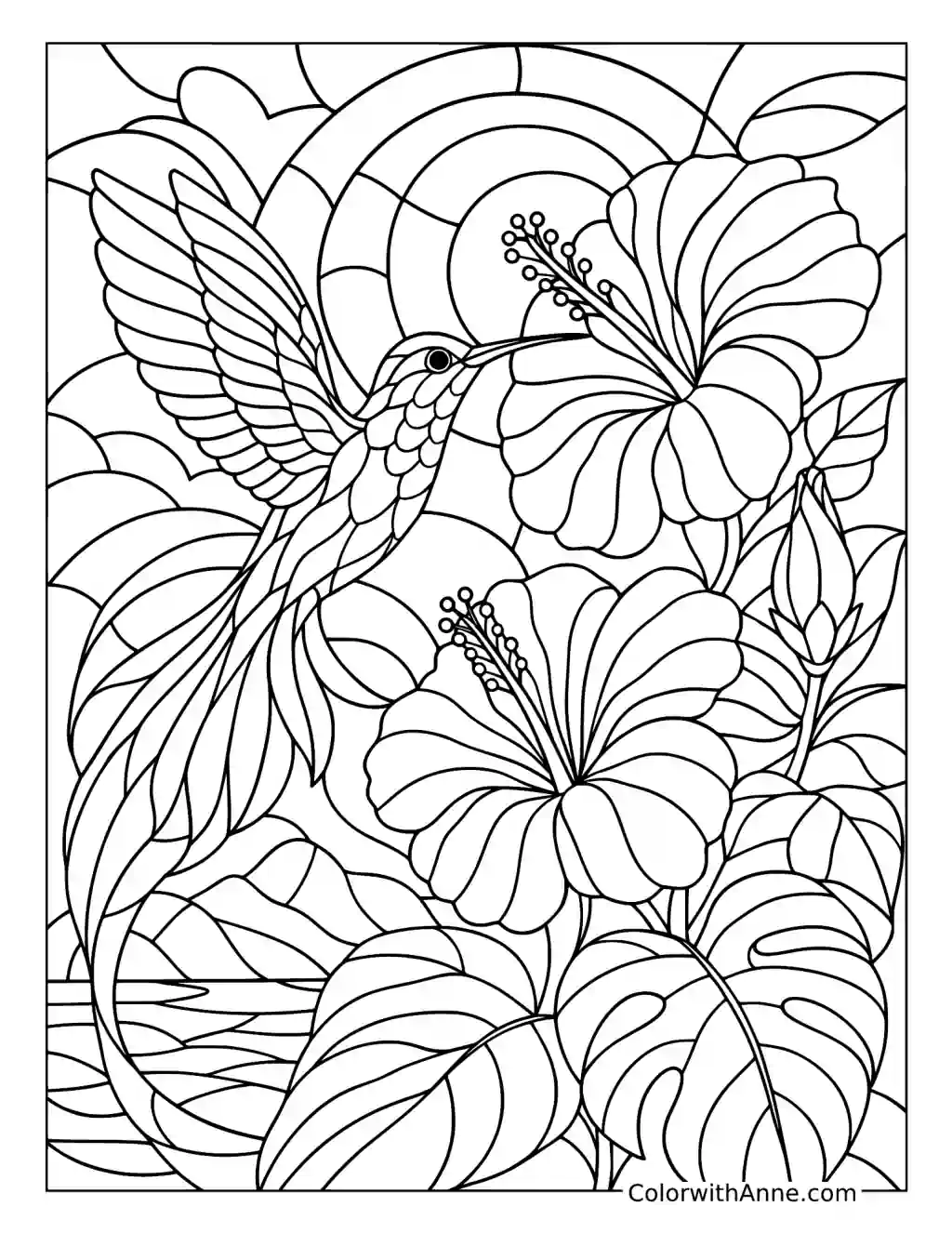
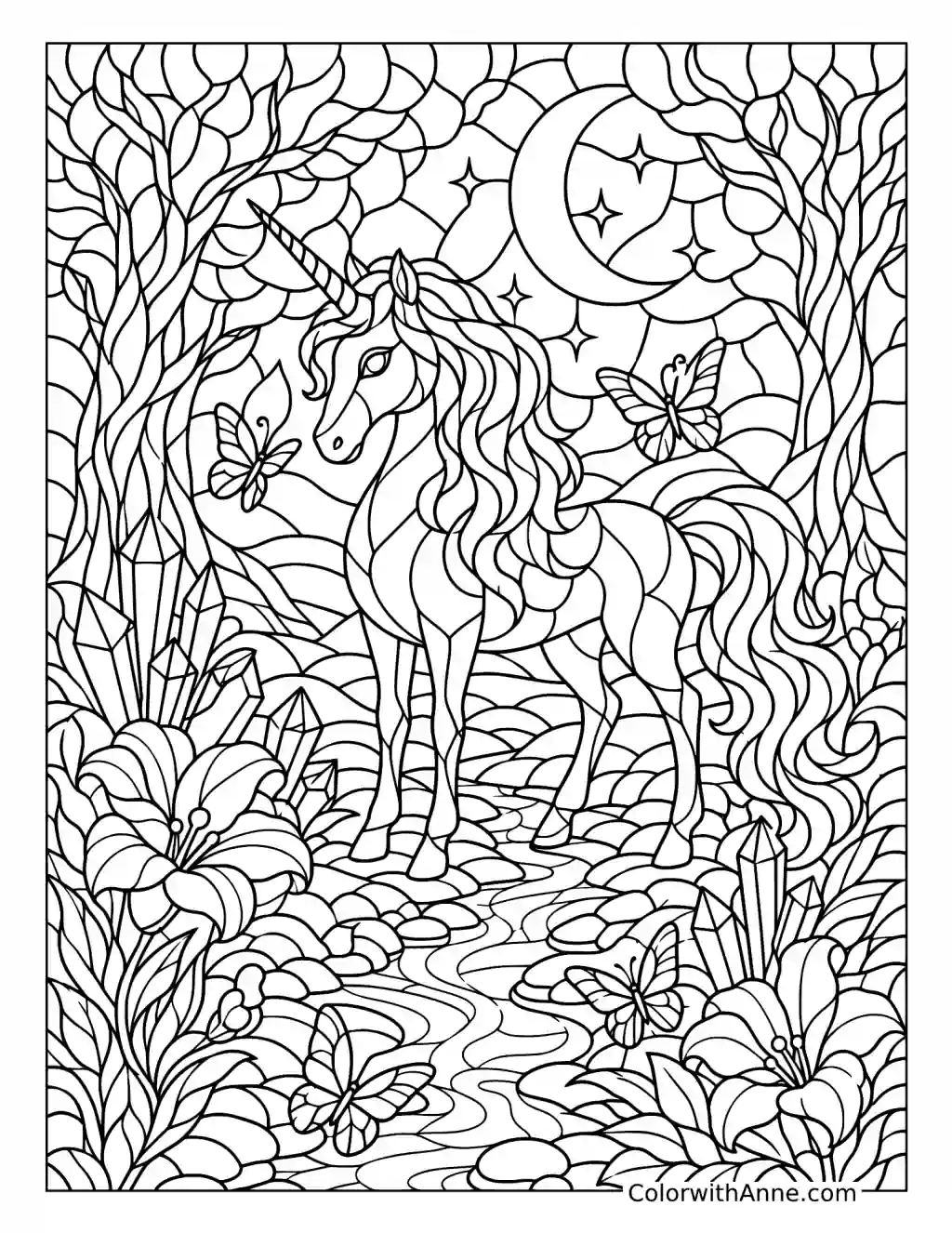
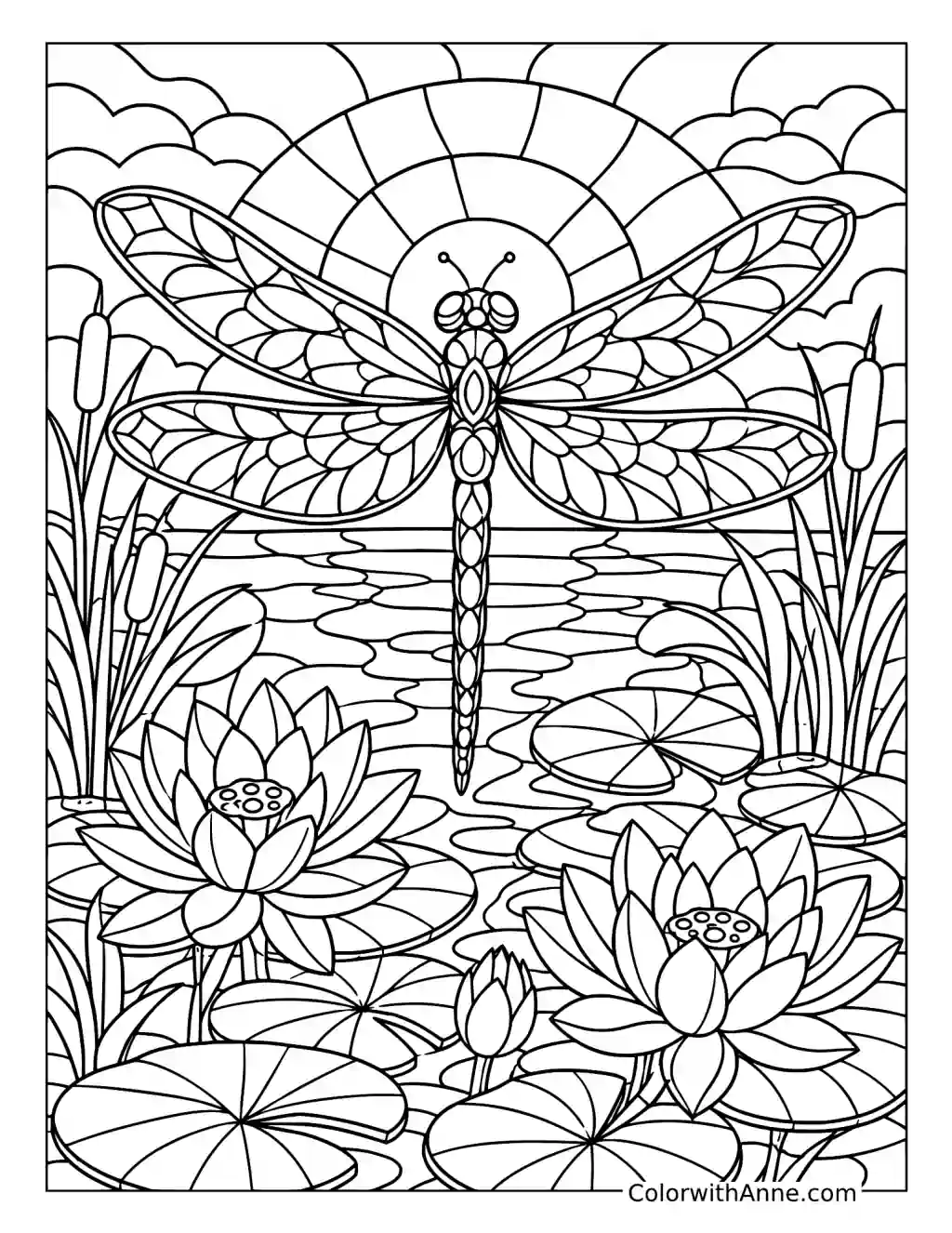
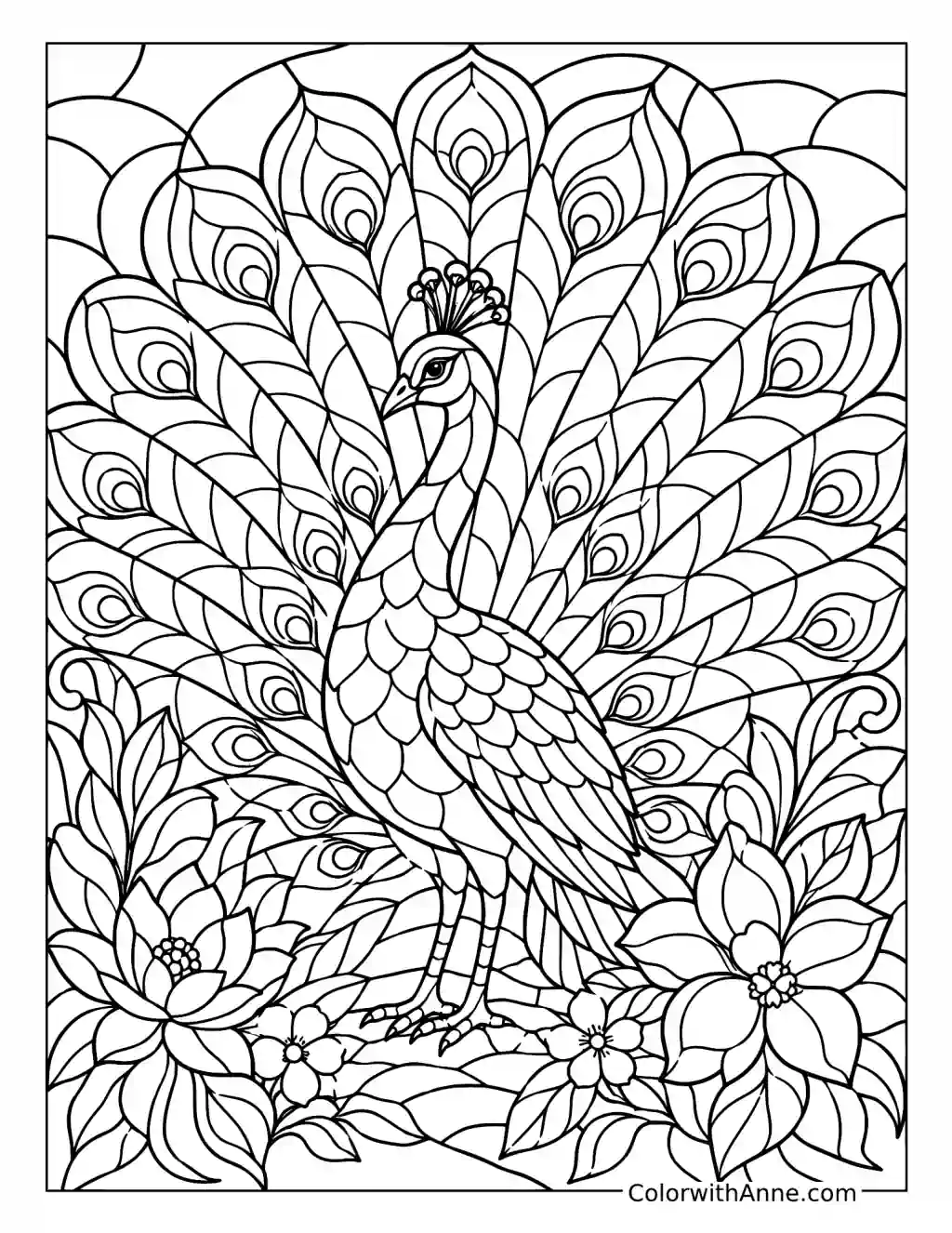
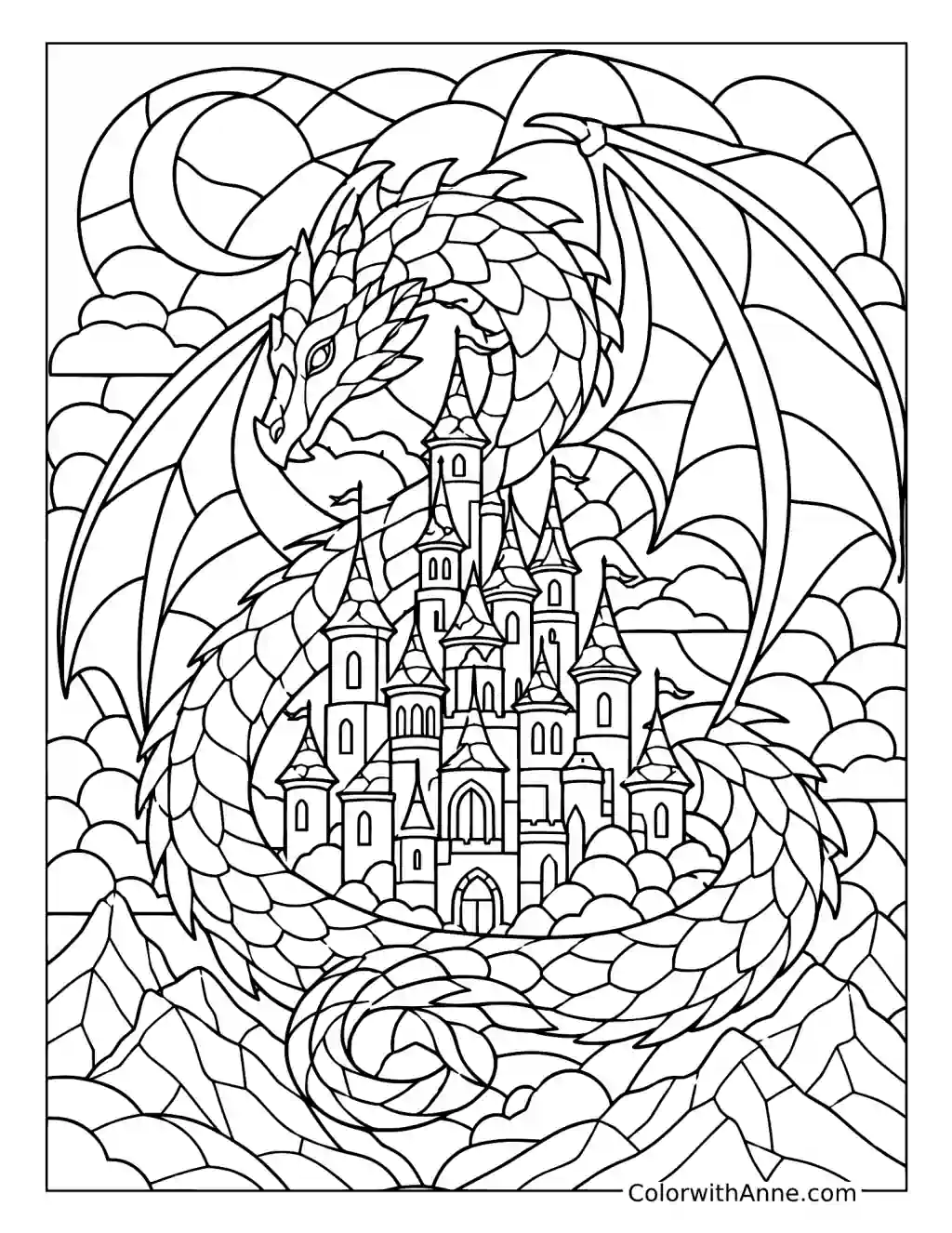
Did you find what you needed?
Help us choose what to create or improve next.
Coloring Ideas for Stained Glass Pages
Try one of these coloring ideas, or use them as a starting point for your own.
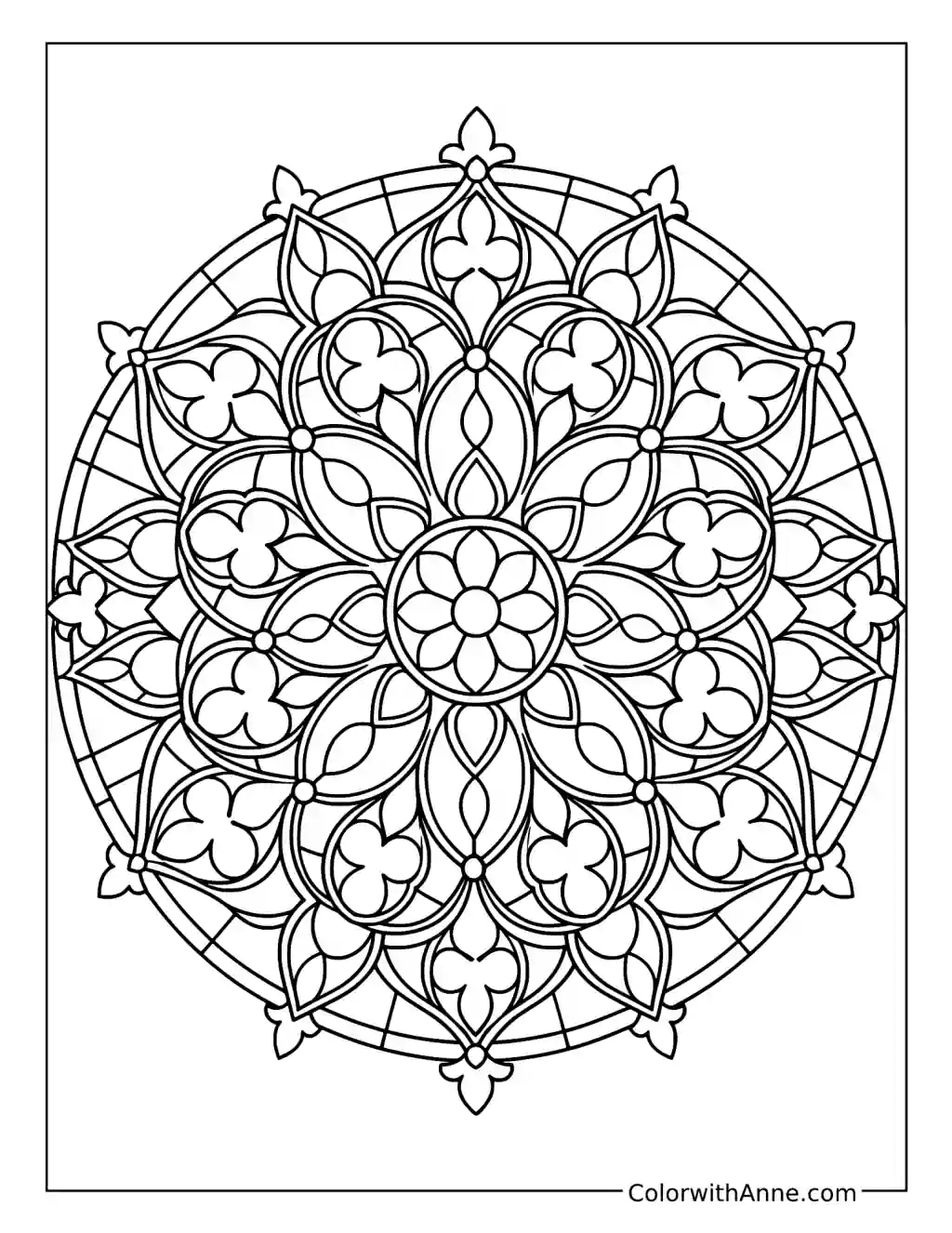
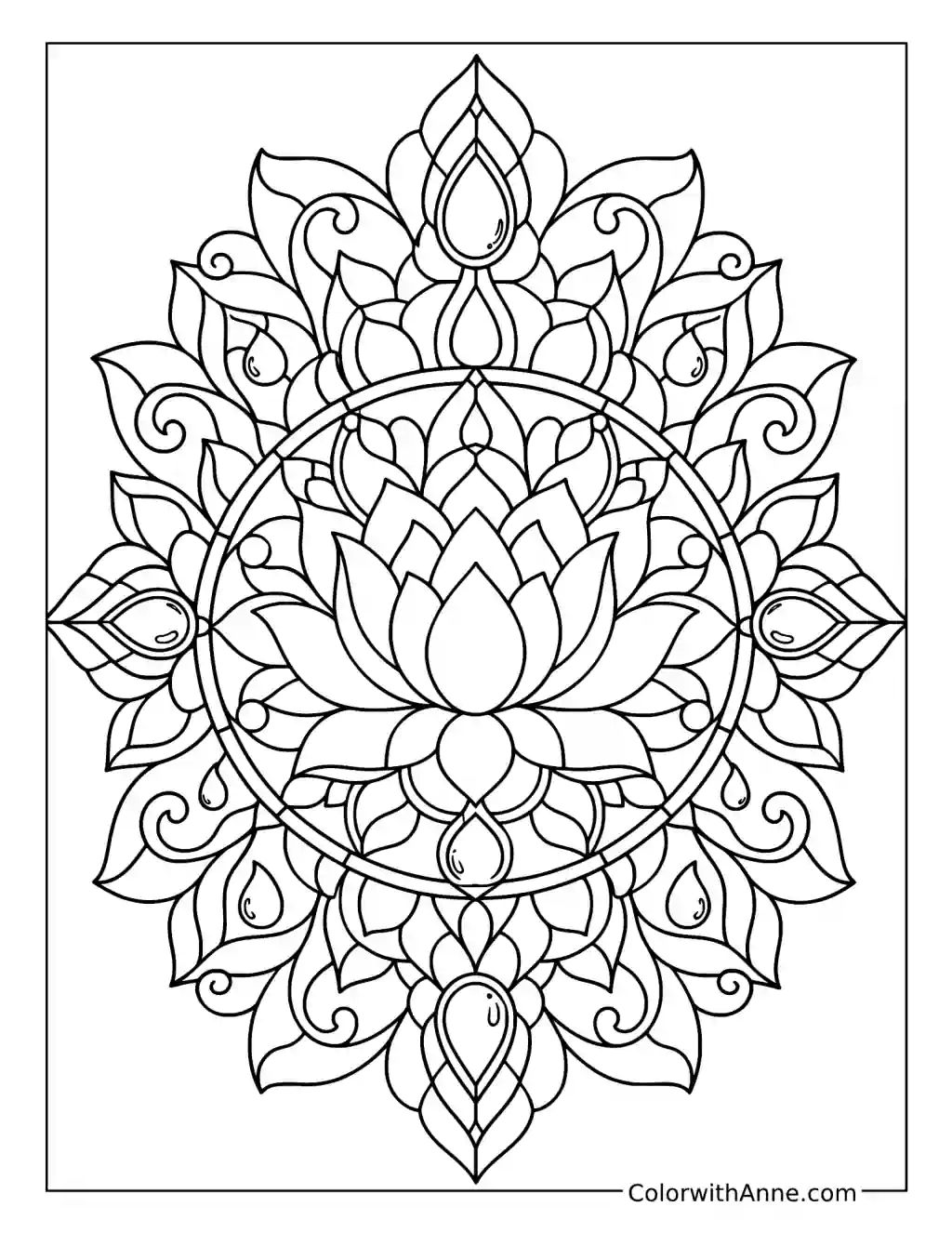
Let the Rose Window Catch the Light
The flower shapes spread outward from the center of this circular window, with each ring divided into smaller panes. It has the lovely symmetry of a window worth stopping beneath, even when the rest of the building is waiting.
Ruby red and deep blue would give it a traditional stained-glass feel. A few pale yellow panes could keep the darker rings from becoming too heavy.
For a version that actually catches daylight, trace the main lines onto tracing paper and add color with markers. Place it against a window before choosing its final spot; morning light and afternoon light can make the same colors look surprisingly different. A narrow paper border will help it hold its shape.
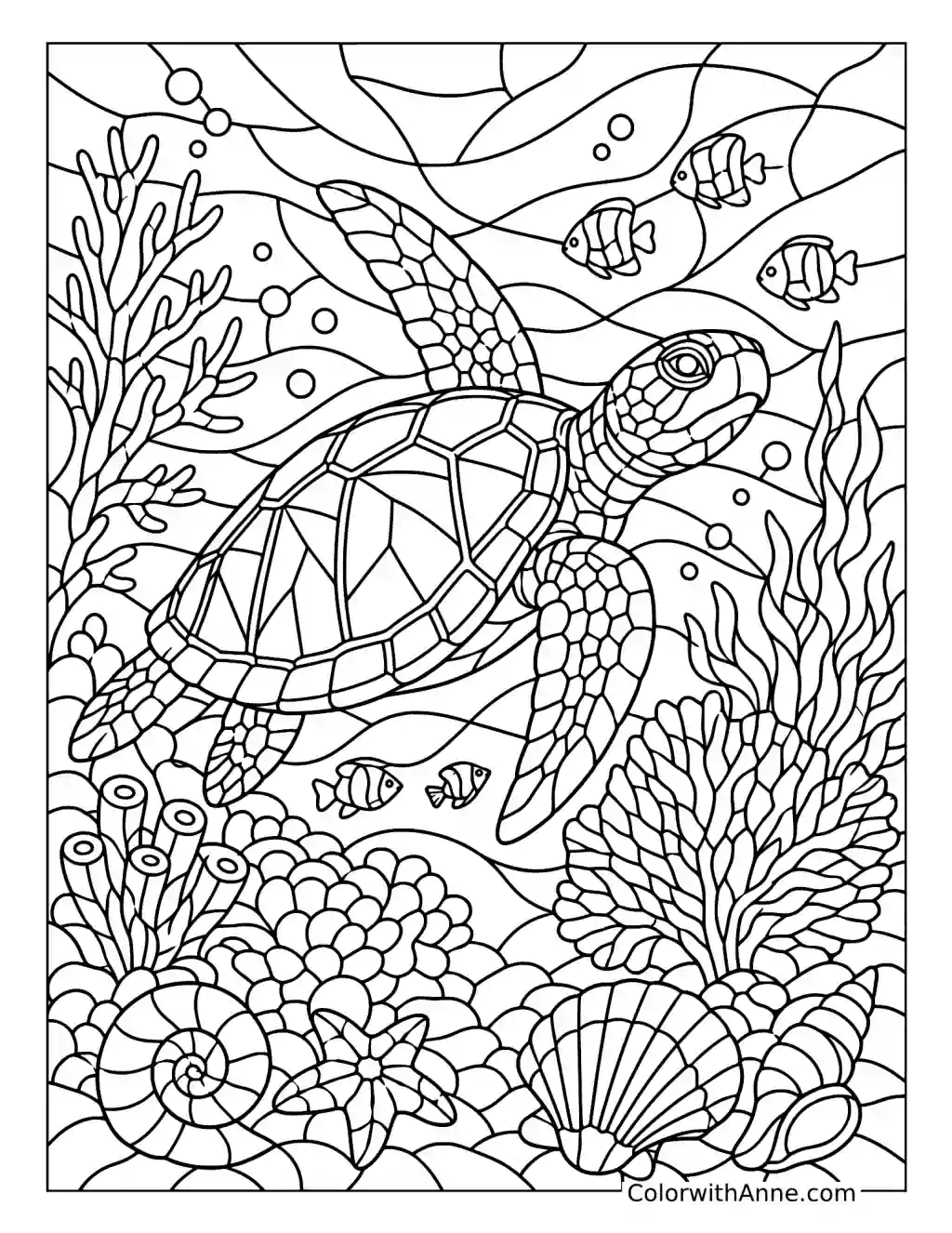
Build a Little Reef Around the Turtle
A sea turtle swims above a crowded patch of coral and shells, its shell divided into neat sections. Below it, the reef has enough small shapes to suggest that the turtle is passing over a very busy neighborhood.
Sea green would suit the turtle, with turquoise water around it. Coral pink and warm orange could bring some warmth into the lower part of the picture.
The reef lends itself to a small paper mosaic. Tear scraps of colored paper into tiny pieces and use them to fill a few coral sections, leaving the turtle colored normally. Keeping the paper pieces within the black outlines preserves the stained-glass look while giving the seabed a rougher, more textured finish.
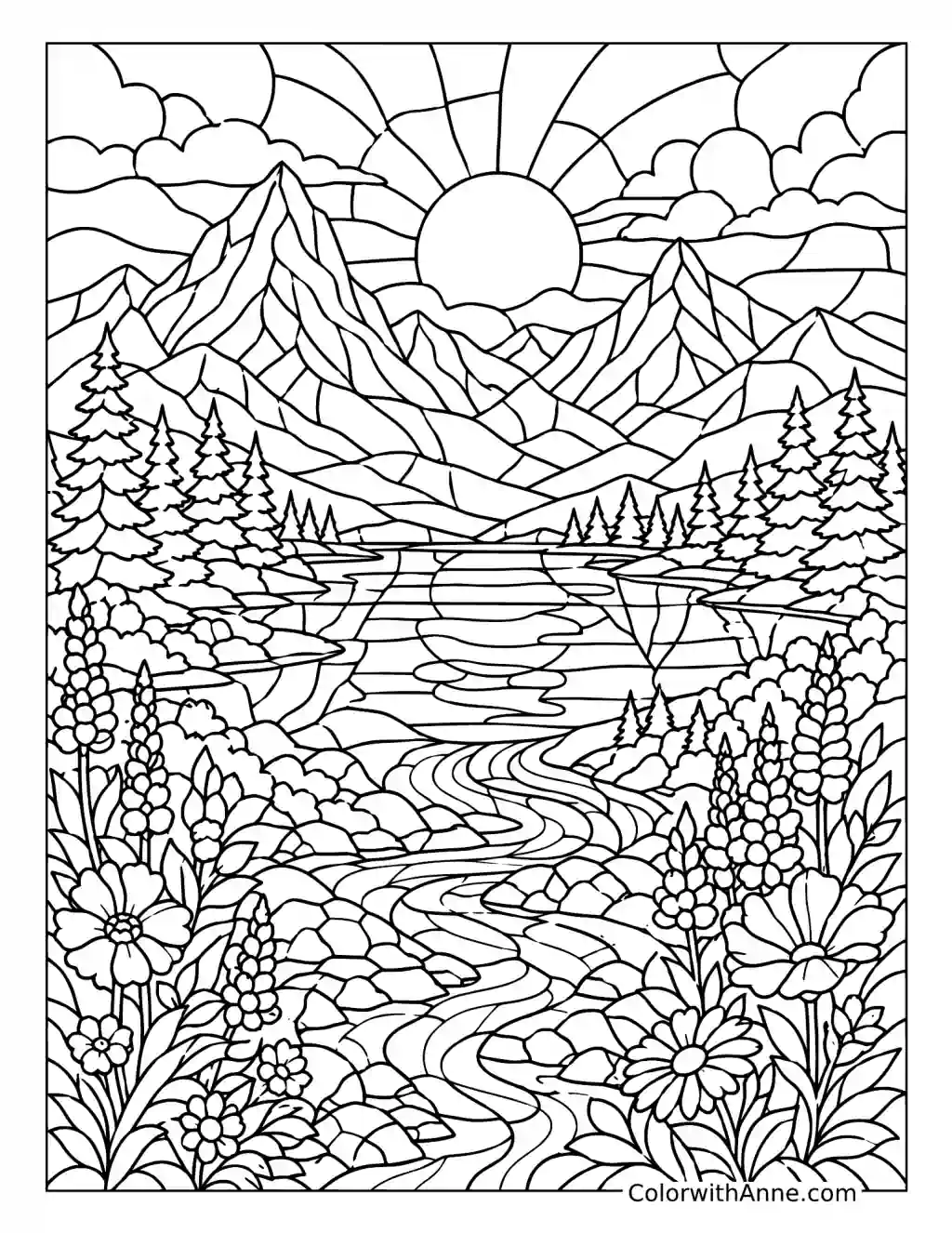
Save the Colors of an Evening Sky
The sun sits between the mountains, with water winding toward the flowers in the foreground. Those long, divided bands of sky leave room for the colors that appear just before an evening turns properly dark.
Peach near the sun could deepen into rose and violet farther away. A little of the same peach on the water would connect the sunset with its reflection.
Keep this page nearby during an evening when the sky looks especially good. Take a quick photograph, then use it as a reminder when coloring later. The useful details are often unexpected: a gray cloud with a pink edge, or a narrow yellow strip underneath a much cooler sky.
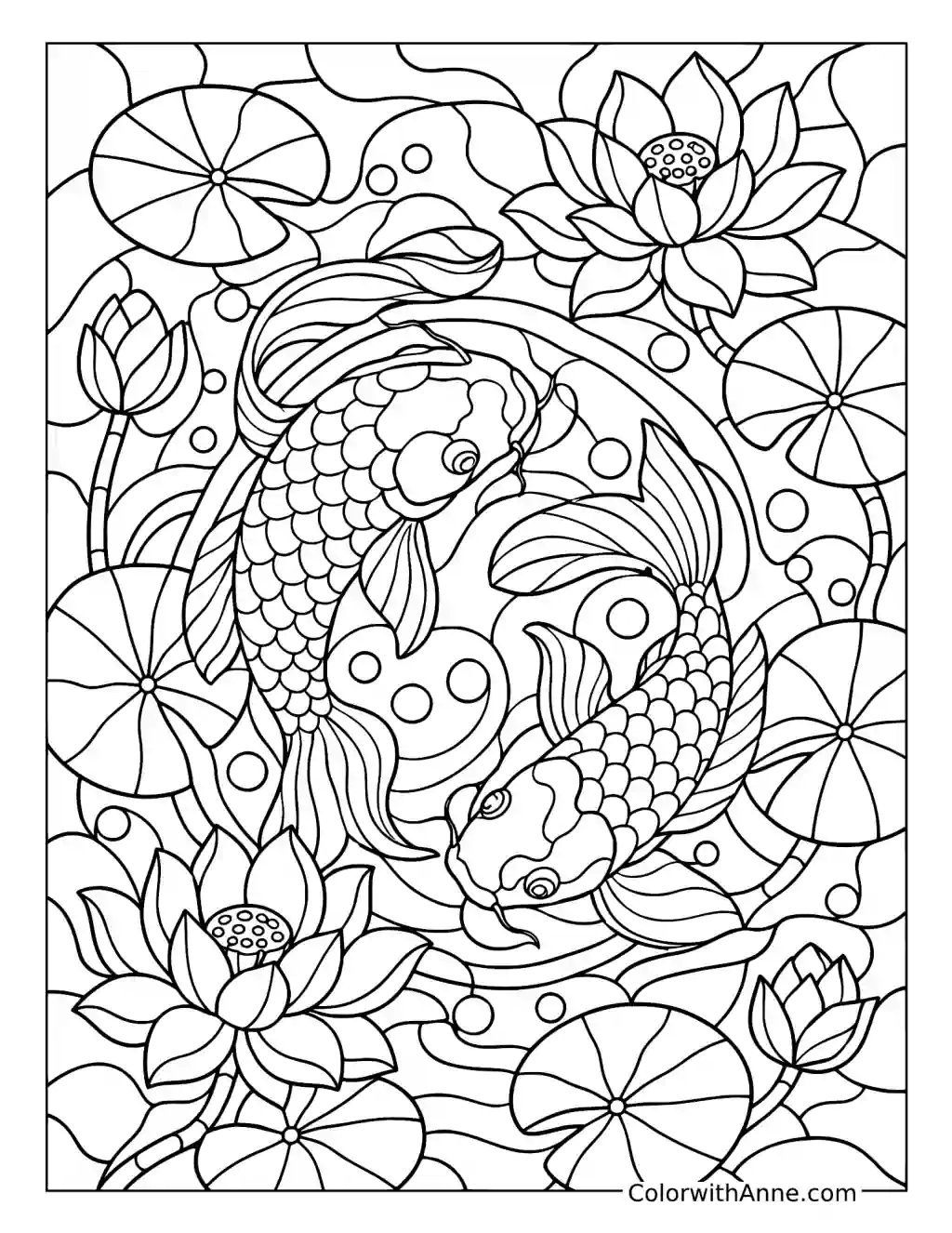
Share the Pond Between Two Koi
Two koi curve around the pond among lotus flowers and lily pads. Their bodies almost seem to follow each other through the water, giving two people a comfortable way to work on the same picture.
One fish could have orange and cream patches, while the other stays mostly white with charcoal markings. Soft green lily pads would leave room for both.
For a shared afternoon project, let each person take a fish and the flowers nearest it. Decide on the water together before starting, so the two halves still belong to one pond. Turning the page as you work makes it easier to reach the small sections without competing for the same corner of the table.
Try a Peacock Feather Pattern
The peacock’s open tail fills the picture with rows of feather shapes. There is plenty to enjoy in the repetition, especially where the rounded feather markings sit inside their own little borders.
Blue and green make a familiar starting point, with small touches of gold around the feather markings. Turquoise and purple would give the tail a different, jewel-like finish.
Before filling the whole fan, work out a color sequence on one small group of feathers. Repeat it across a row, then change one color in the next row. This is a satisfying way to experiment with the kind of repeating pattern that might later find its way onto a painted box or a piece of fabric.
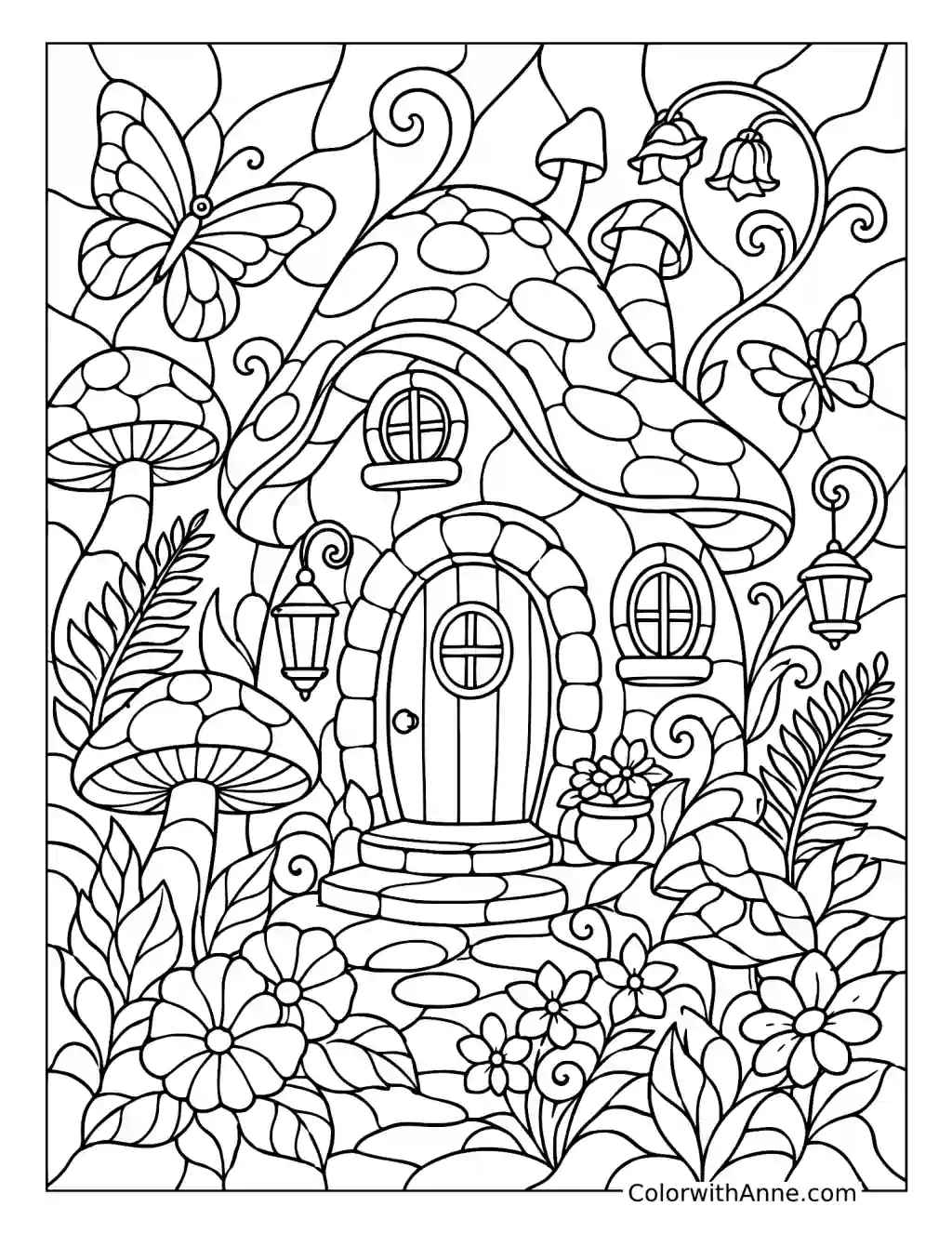
Leave a Light on in the Mushroom Cottage
The mushroom cottage has its own door, little windows, and a path leading up to it. The segmented cap makes an unusually good roof, although arranging furniture beneath all those curves might require some patience.
A warm yellow in the windows could suggest lamplight. A red or plum-colored roof would look inviting against mossy greens and a cooler blue background.
Let the cottage suggest a small evening story while you work. Someone has followed that path home, and the windows are already bright. Decide what they might have been doing outside and what is waiting indoors. A few sentences beside the finished picture are enough to give this tiny house a life beyond its front door.