
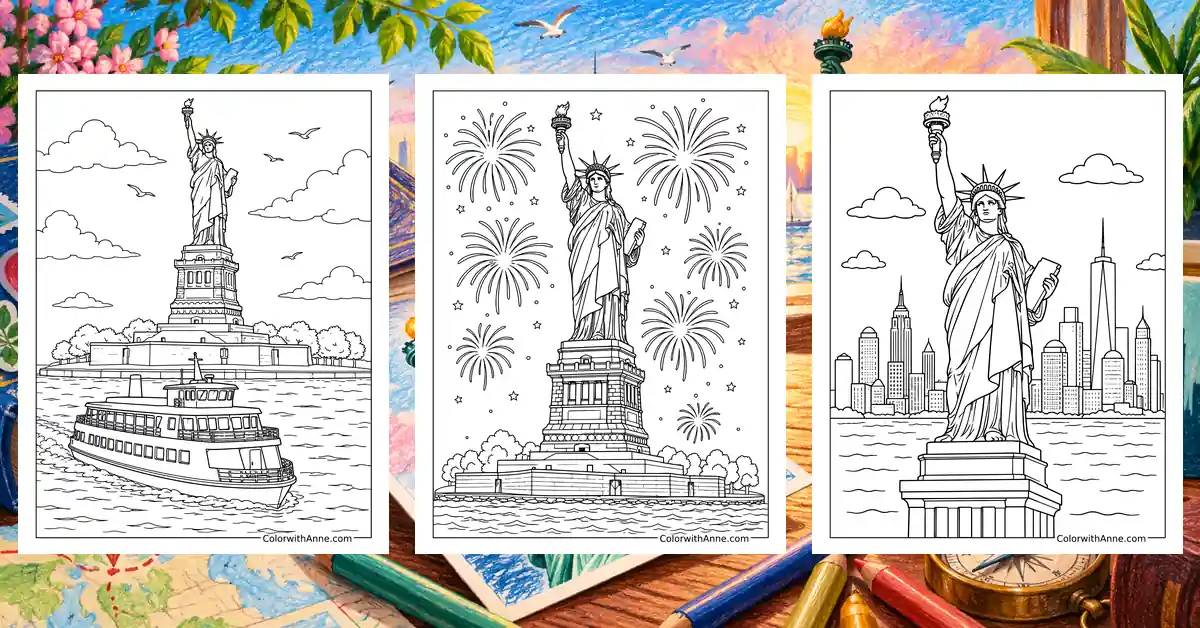
The Statue of Liberty can look surprisingly small at first from the ferry. Then the boat draws closer, and the raised torch begins to stand apart from the skyline. People move toward the railing, trying to fit the whole figure into a photograph while the wind has other plans for their hair.
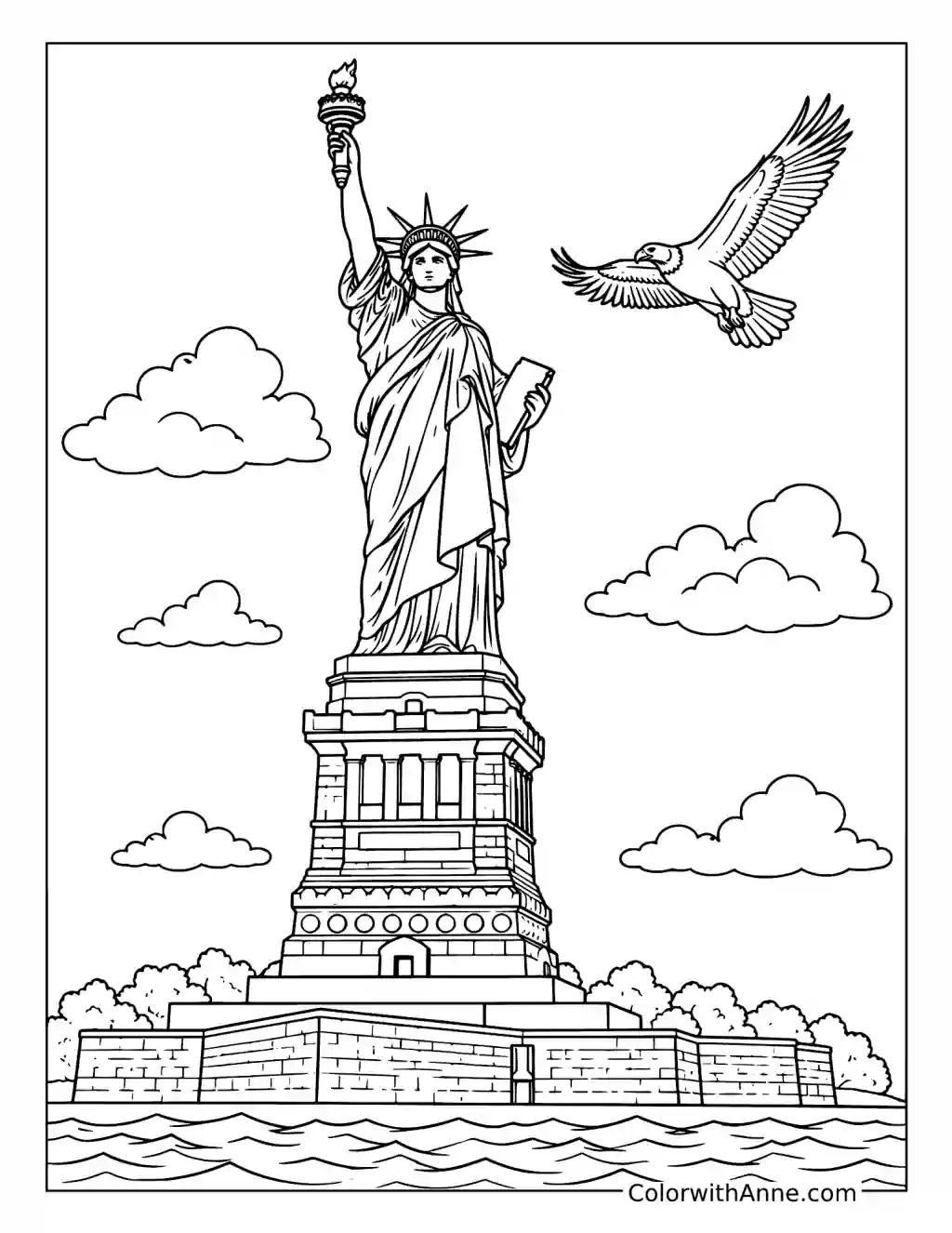
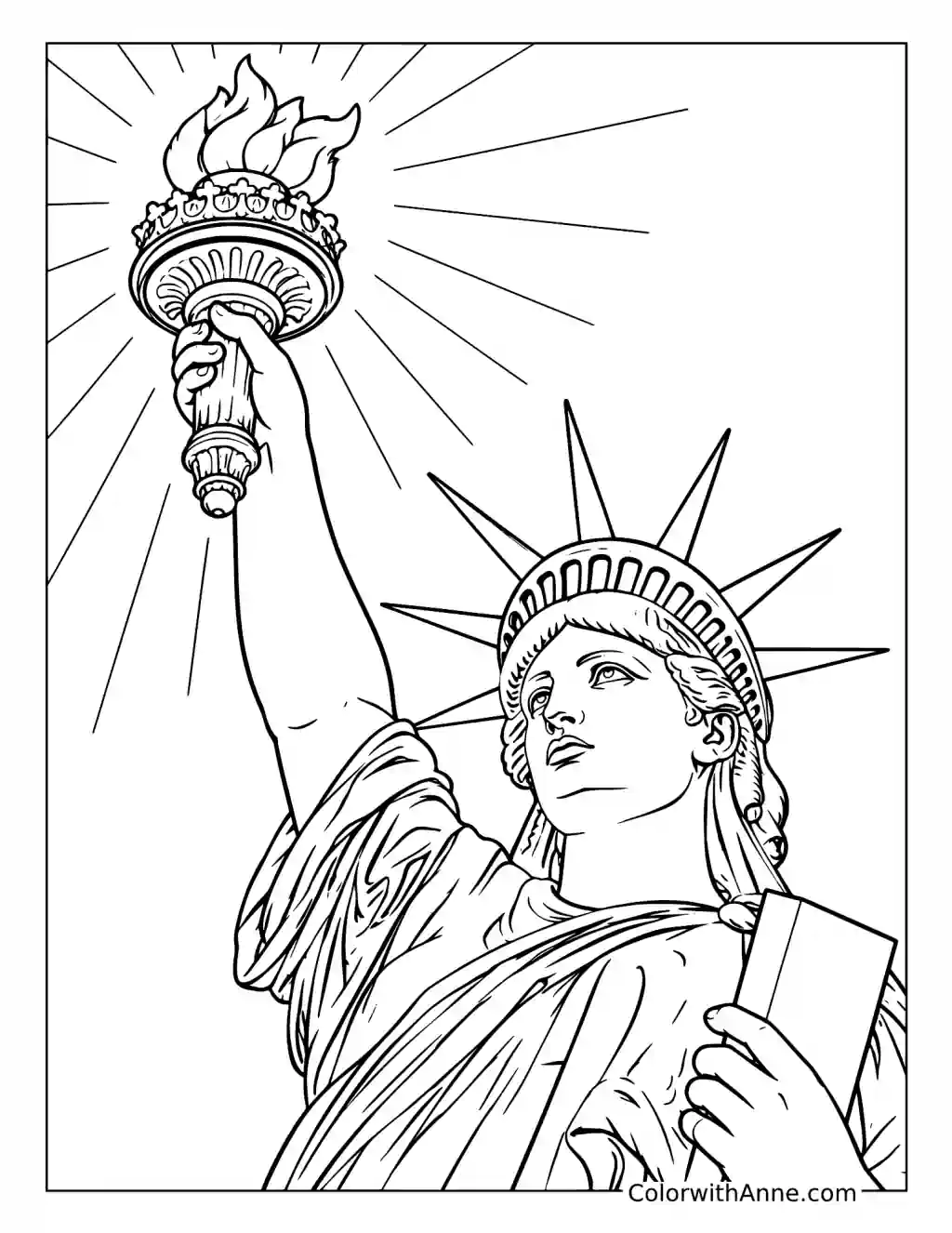
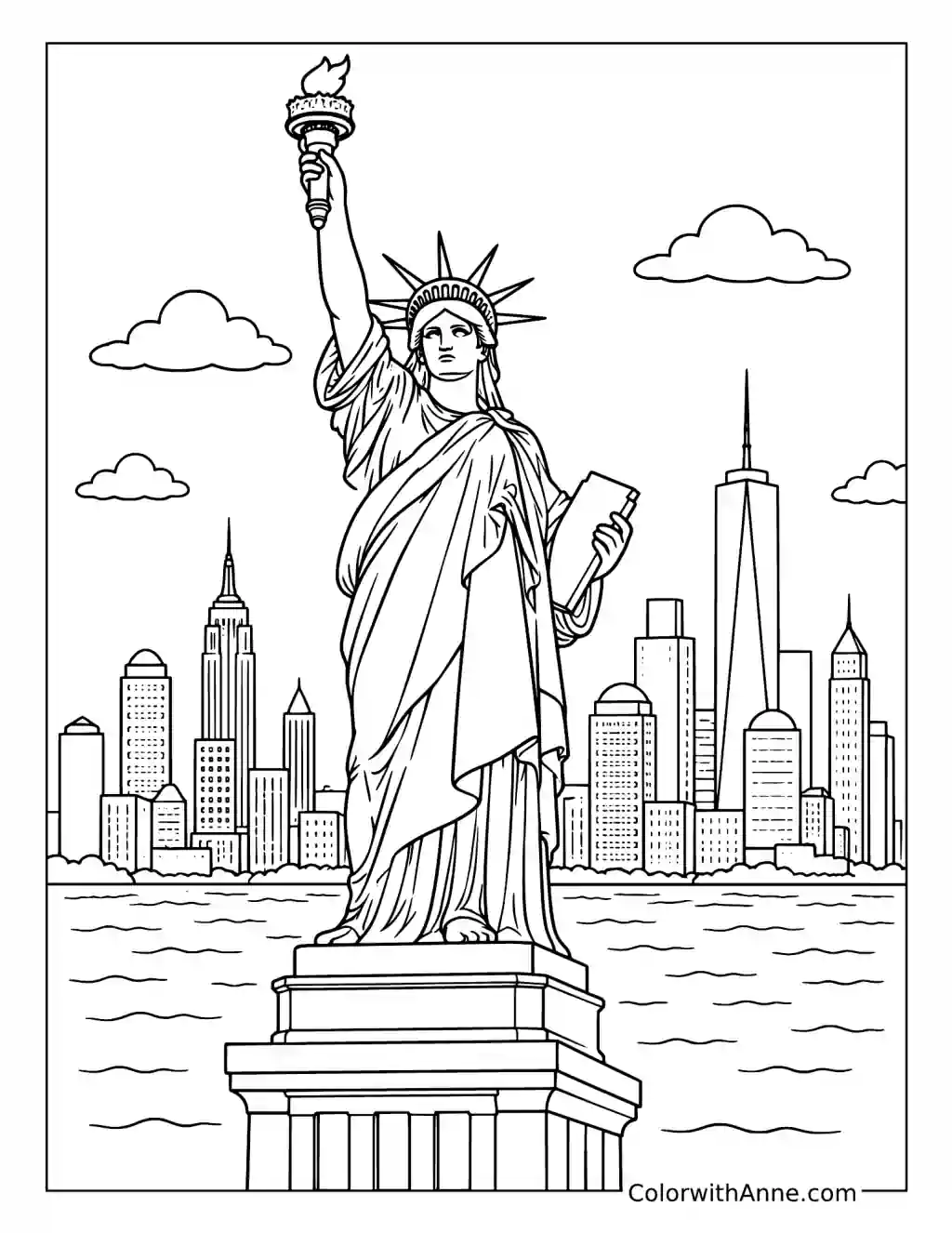
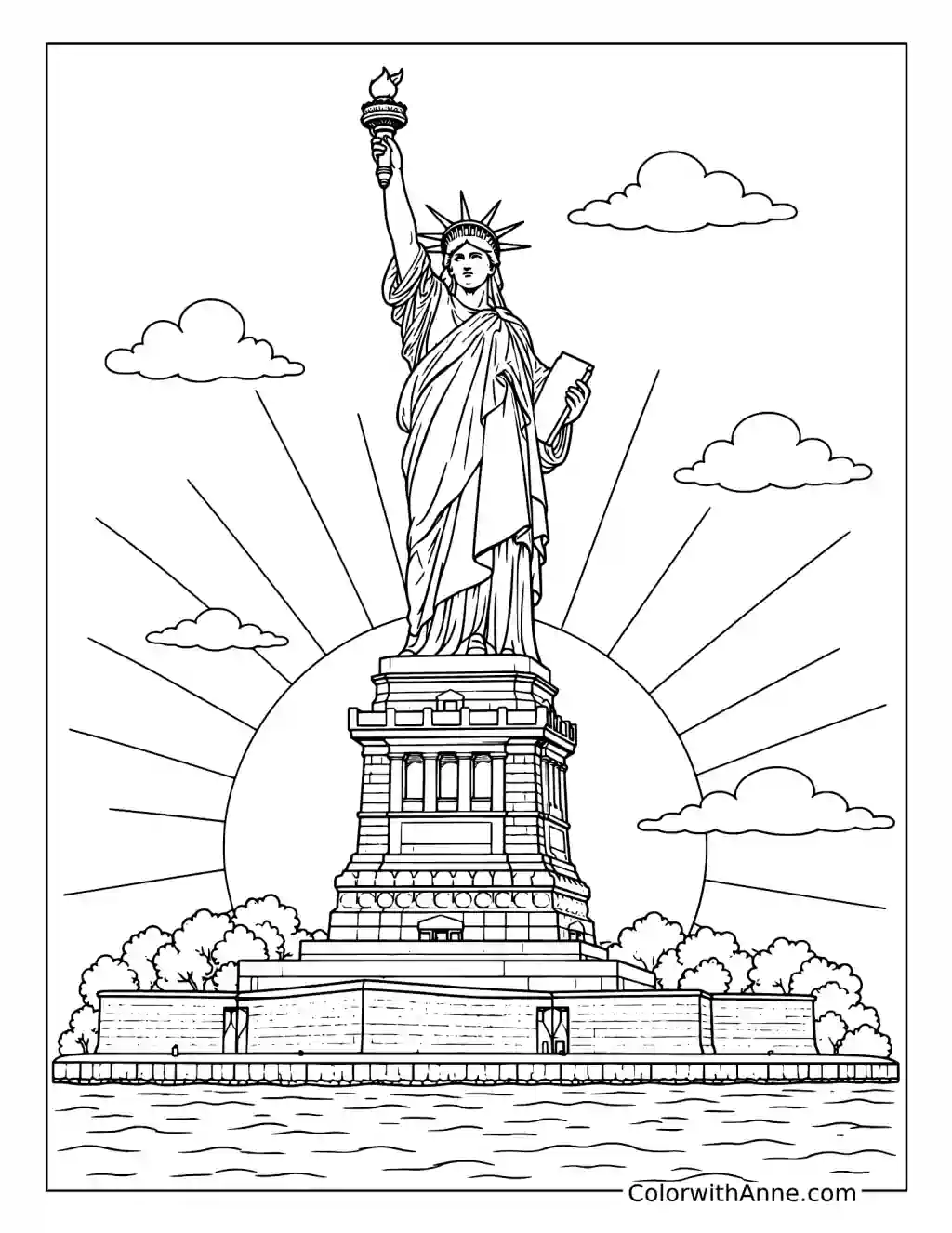
Statue Of Liberty coloring pages allow a steadier look at a landmark often seen from a moving boat or through a camera. For a child, recognizing the crown may lead to questions about the torch. For someone who has visited, the outline can bring back the crossing itself.
Free Printable Statue Of Liberty Coloring Pages
Click any coloring page below to open the PDF, then print on US Letter or A4 paper.
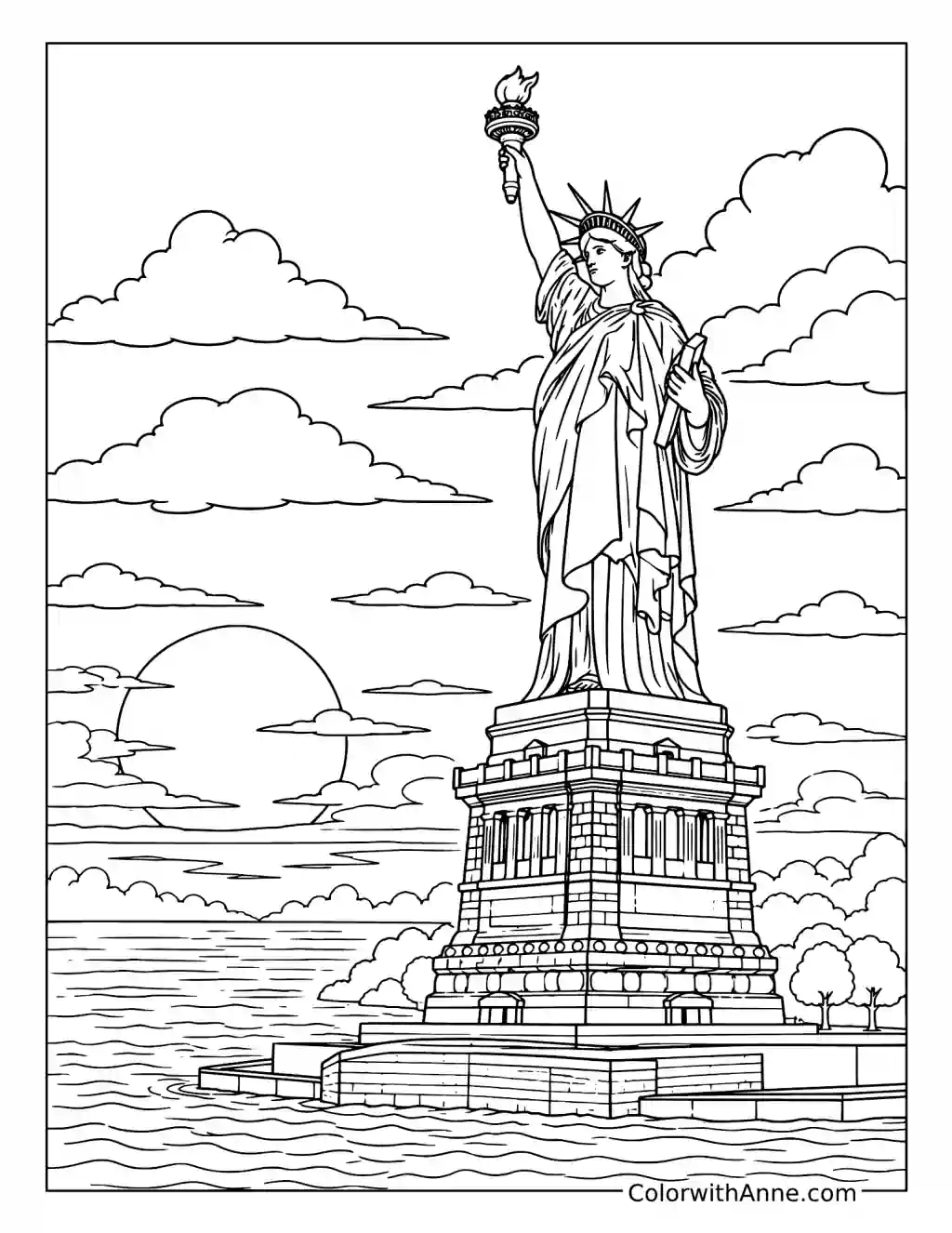
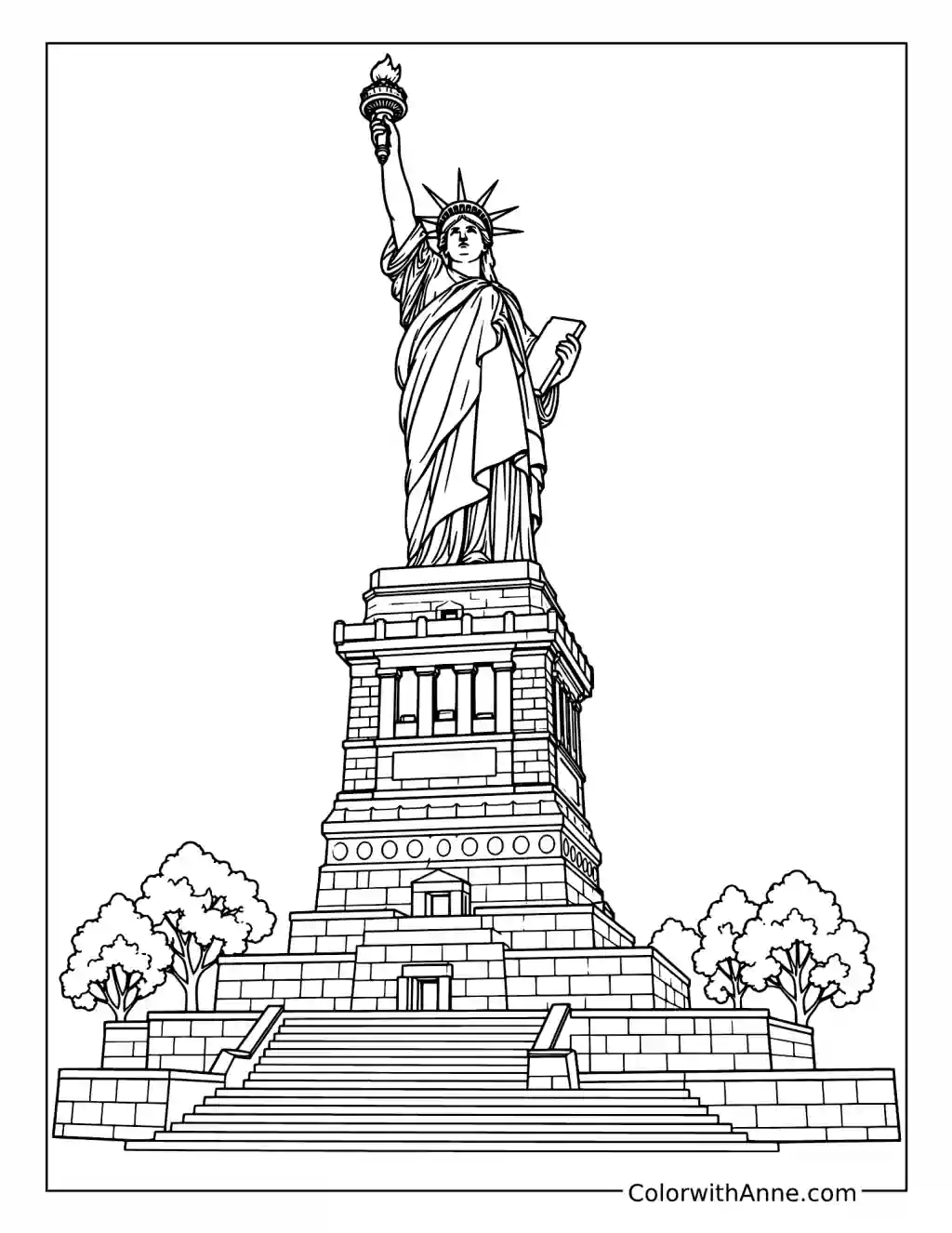
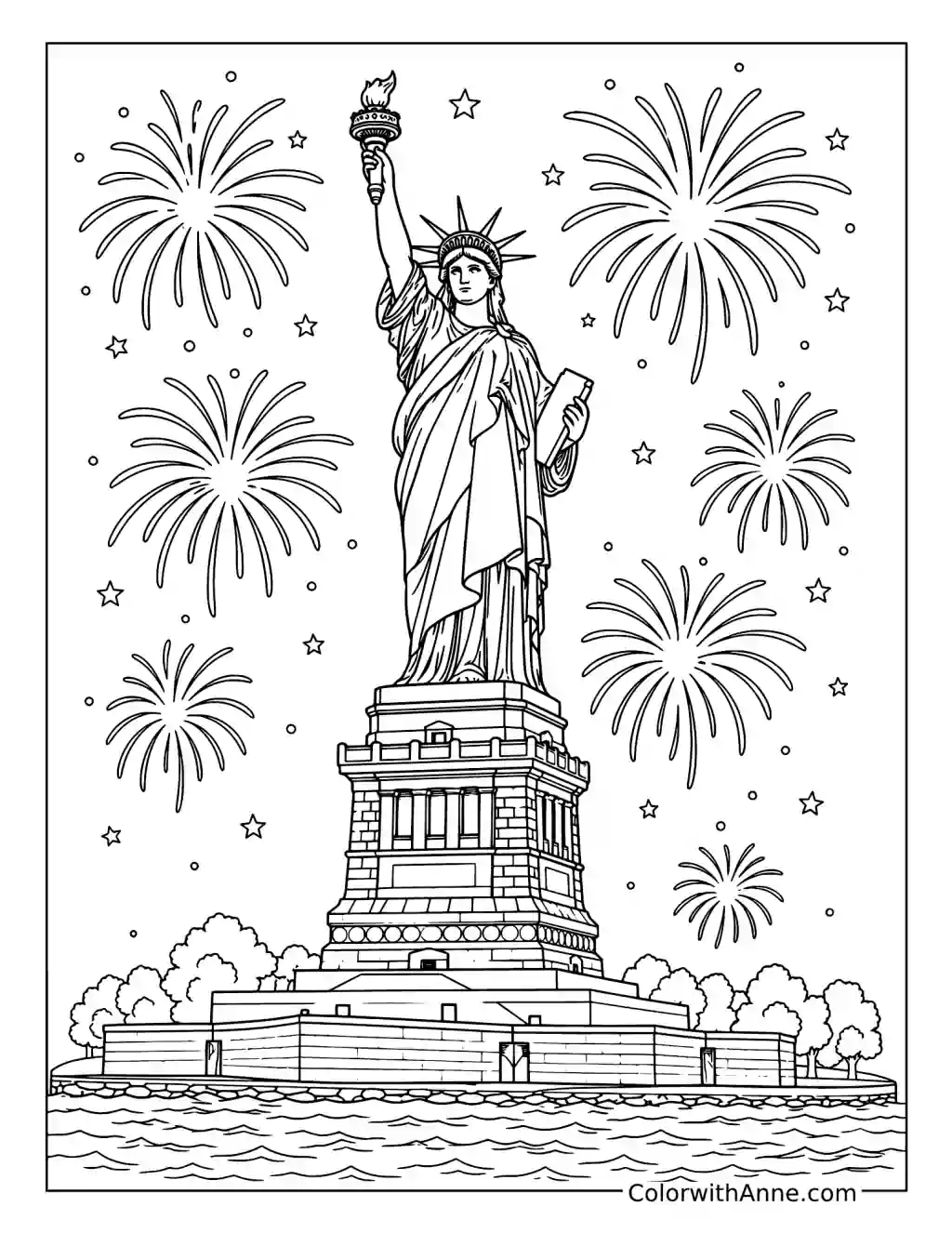
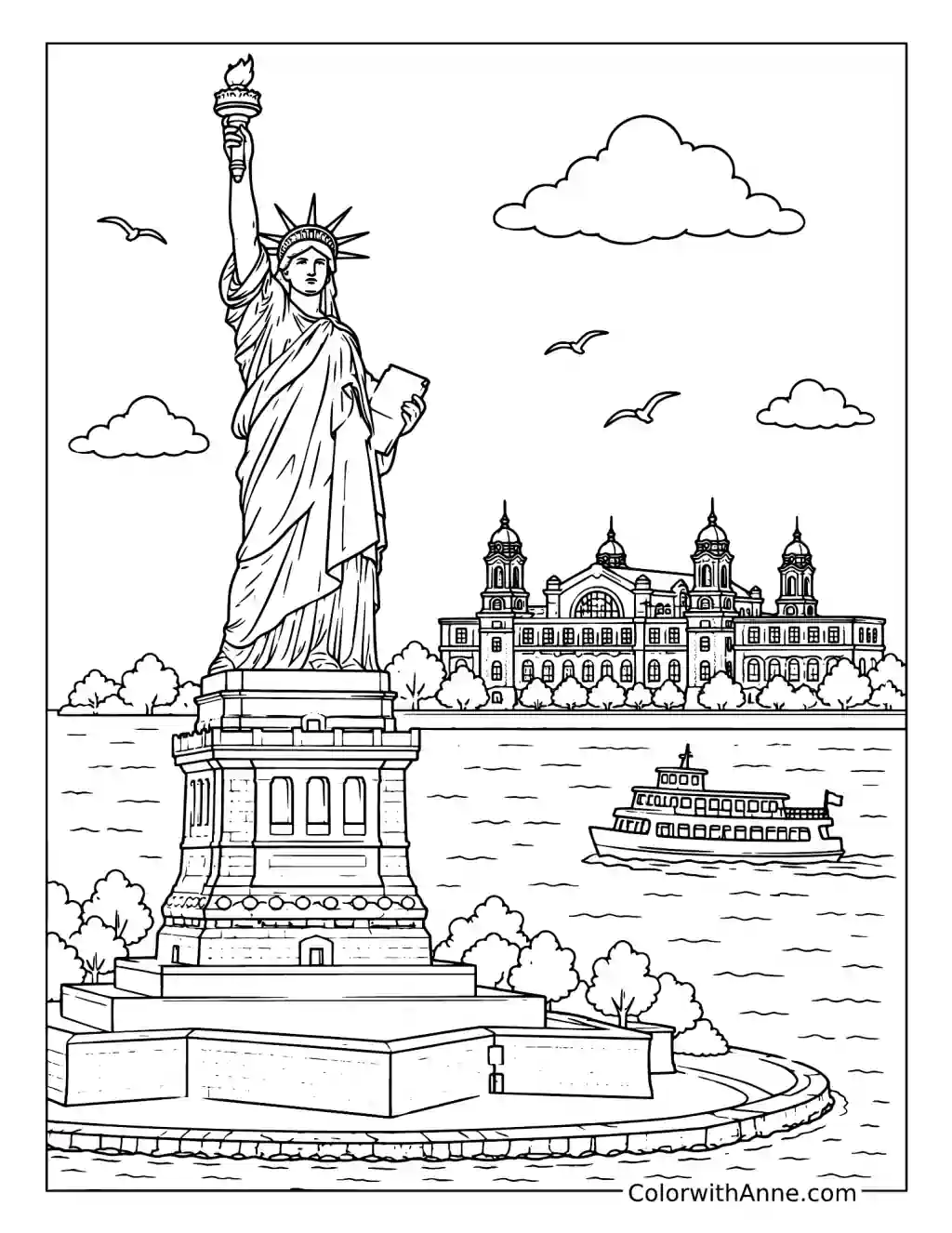
Did you find what you needed?
Help us choose what to create or improve next.
Coloring Ideas for Statue Of Liberty Pages
Try one of these coloring ideas, or use them as a starting point for your own.
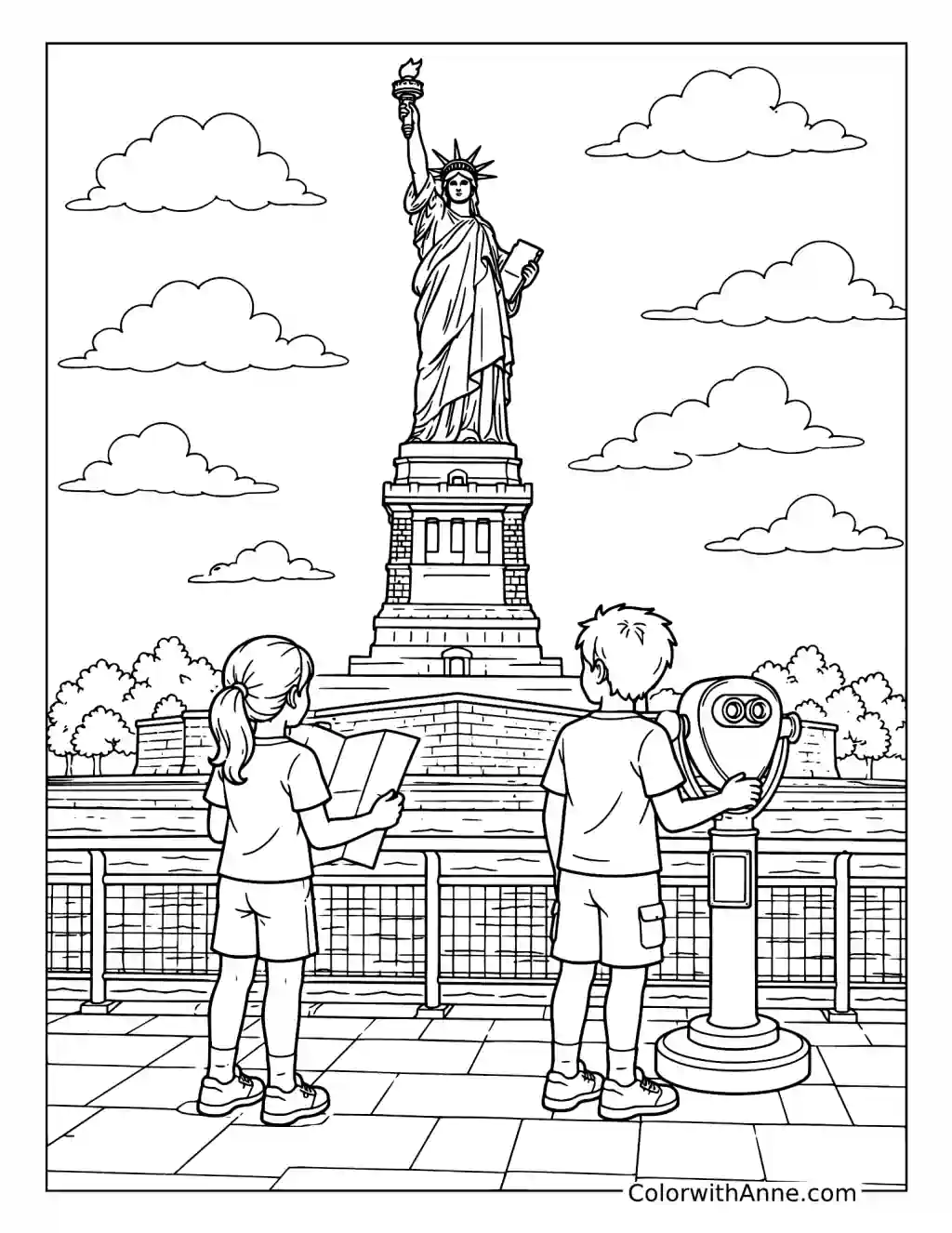
Look Through the Visitor’s Viewfinder
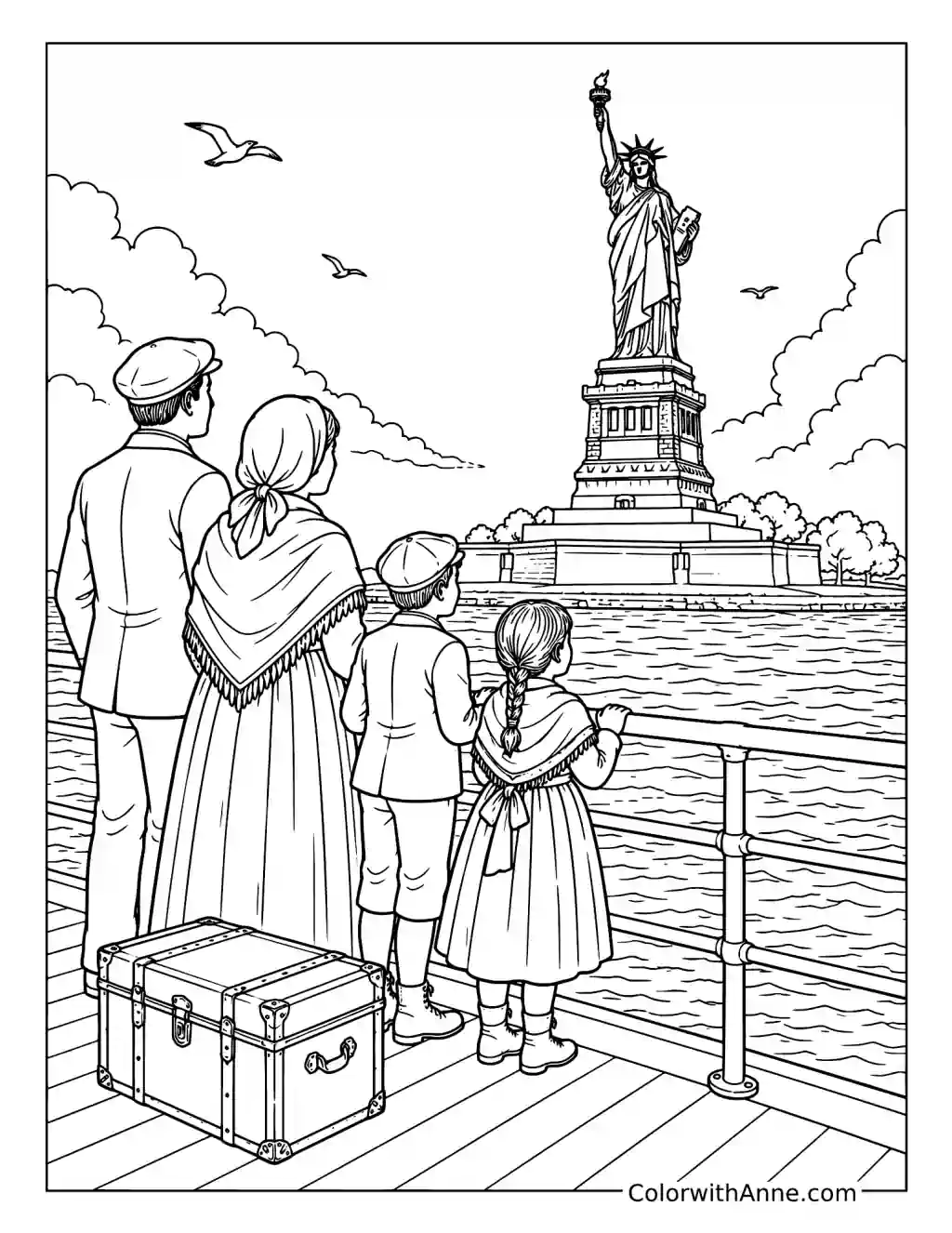
The children face the statue from the railing, with a viewing telescope beside them. A small cardboard viewfinder lets a young visitor explore this printed scene in much the same spirit.
Cut a rectangular opening in a piece of card and move it across the page. Frame the torch, then the crown, then a section of the pedestal. Another person can guess which detail is being examined from a brief description. Bring out a photograph afterward and look for those same details from a different viewpoint.
Ask About the Trunk at the Railing
The family looks across the water with a trunk at their feet. That luggage gives the picture a more personal starting point than the skyline alone.
If someone in the family is happy to talk about a move, ask what they brought with them and what they remember arriving with. An object may lead to a story that photographs never recorded. A child can draw that object beside the colored scene or help write down the account. Let the person’s own memories determine the story, rather than assigning a history to the illustrated family.
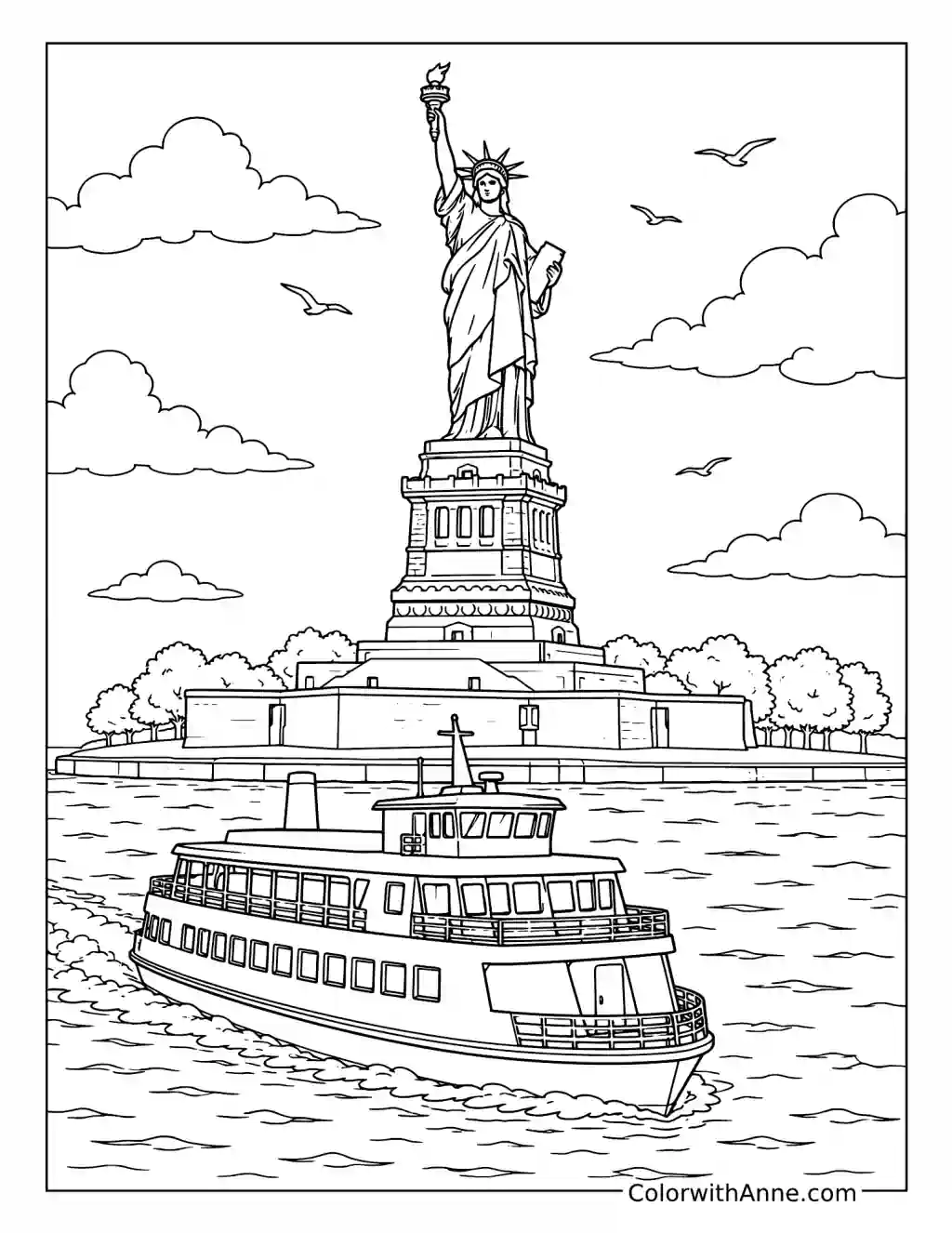
Send a Postcard From the Ferry Rail
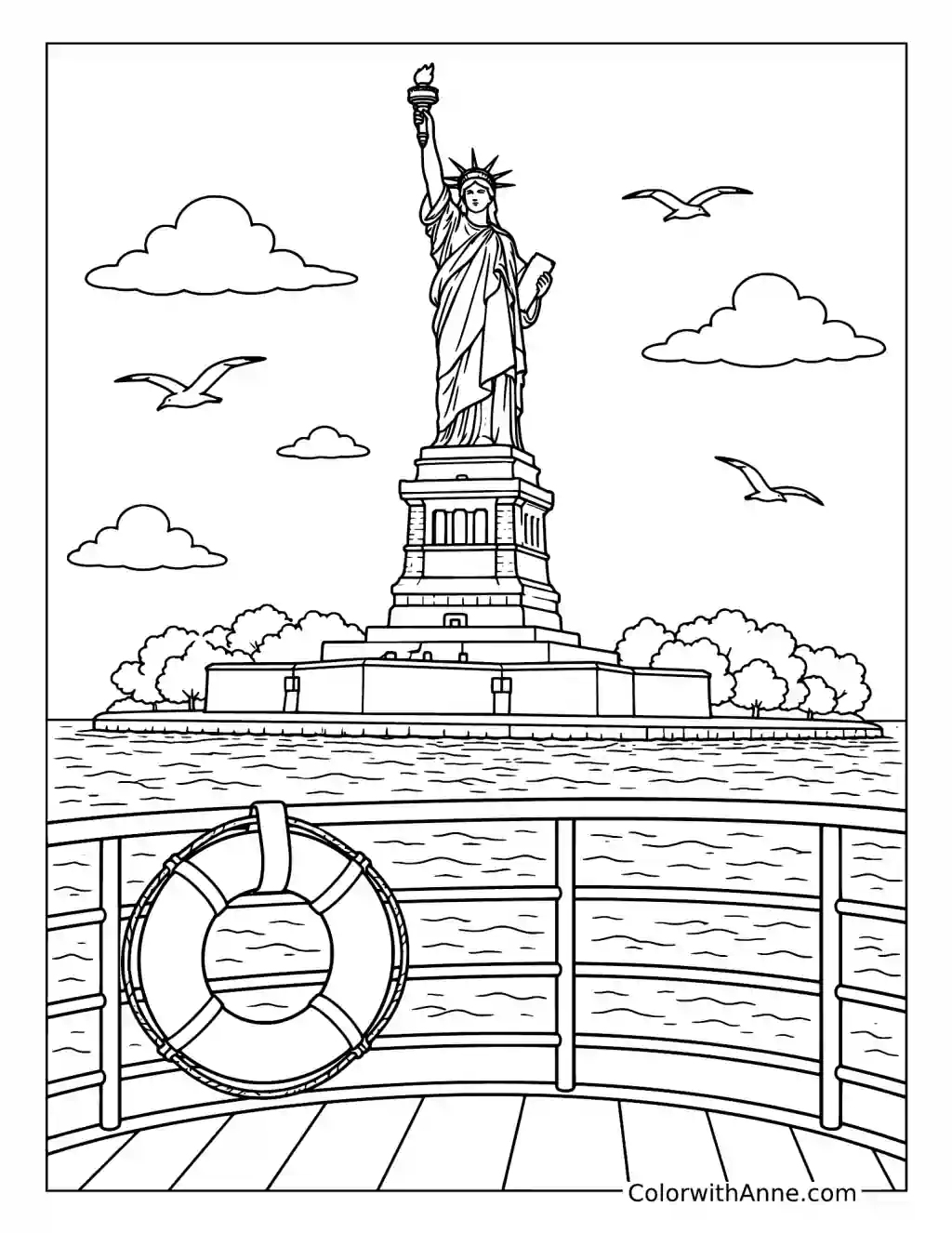
The railing and life ring place the viewer on the ferry, looking across the harbor. It is a view that belongs on a postcard.
Trim the finished picture to postcard size and mount it on card. On the reverse, write about an actual visit or compose a clearly imagined message from the crossing. A detail about the view, the wind, or who would be beside you makes the note more engaging than a general statement about New York. Leave room for the address if it will really be mailed.
Light the Harbor One Burst at a Time
The fireworks surround the statue without hiding its outline. Their bright trails are the most important marks to preserve when turning the page into a night scene.
Work the darker sky around those trails, keeping the centers pale. Carry a few short echoes of the brightest colors into the water beneath them, broken by the printed ripples. The statue can remain quieter than the display. This picture rewards a little patience around the fine lines; the harbor should look illuminated rather than filled with a flat block of color.
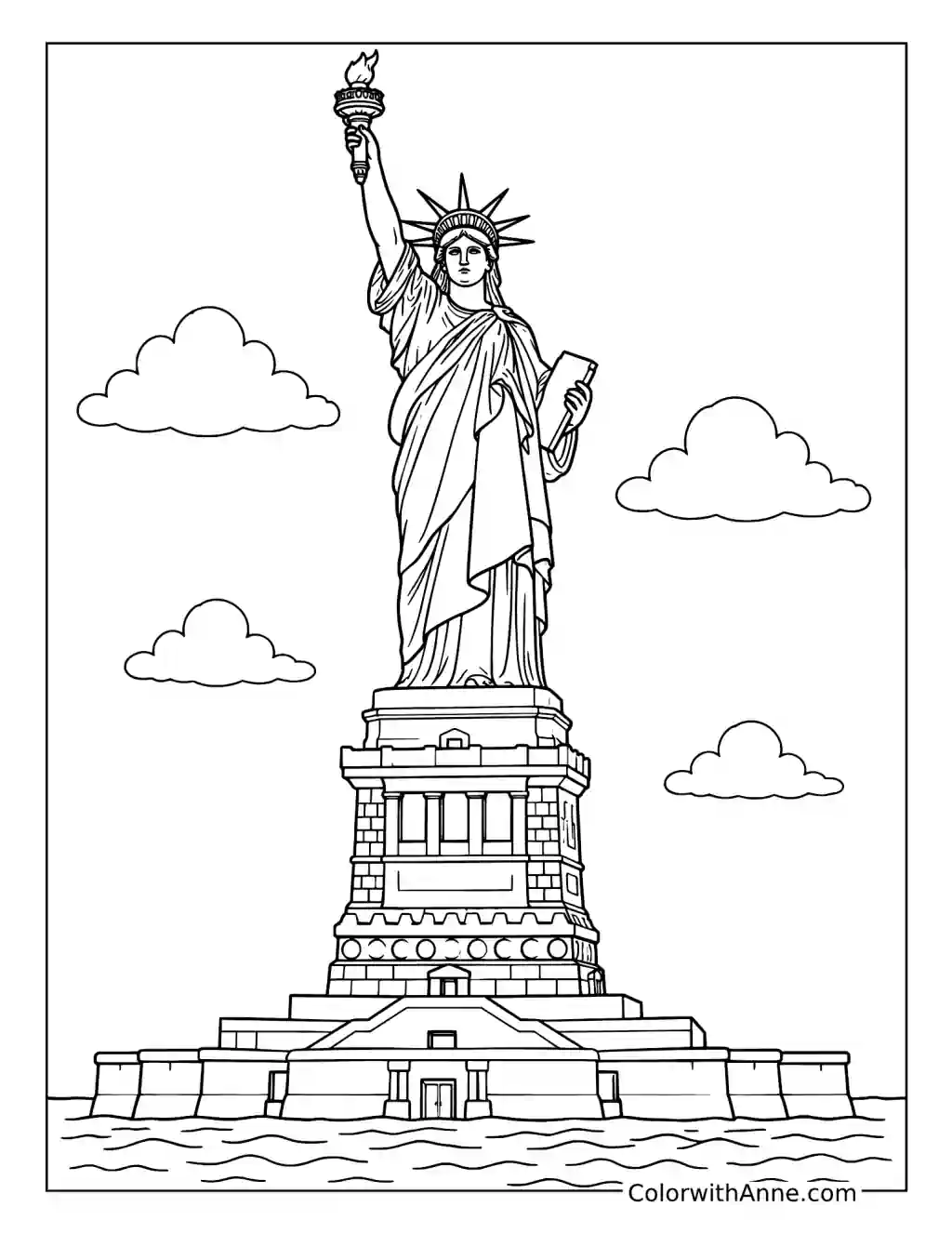
Borrow the Crown’s Shape for Dress-Up
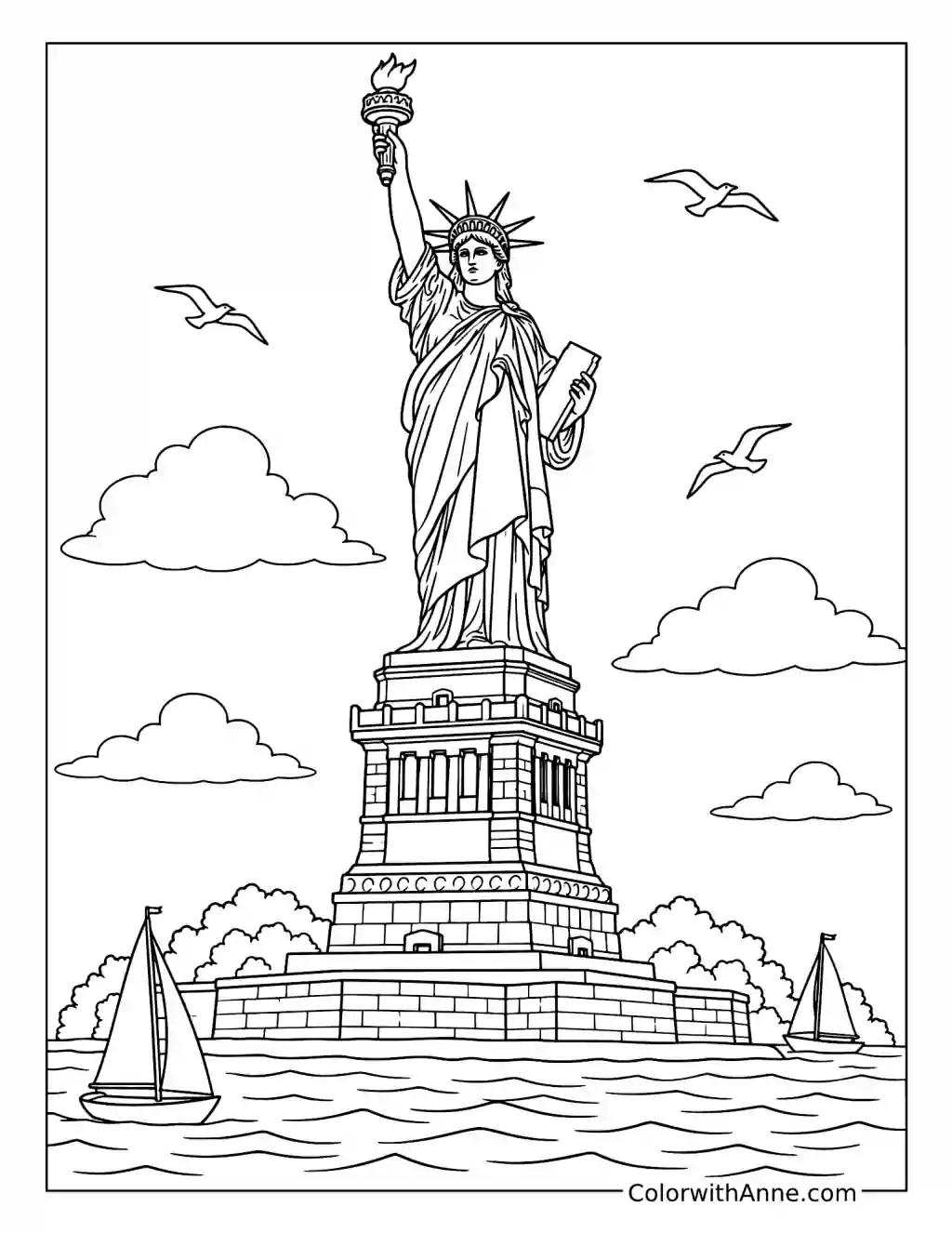
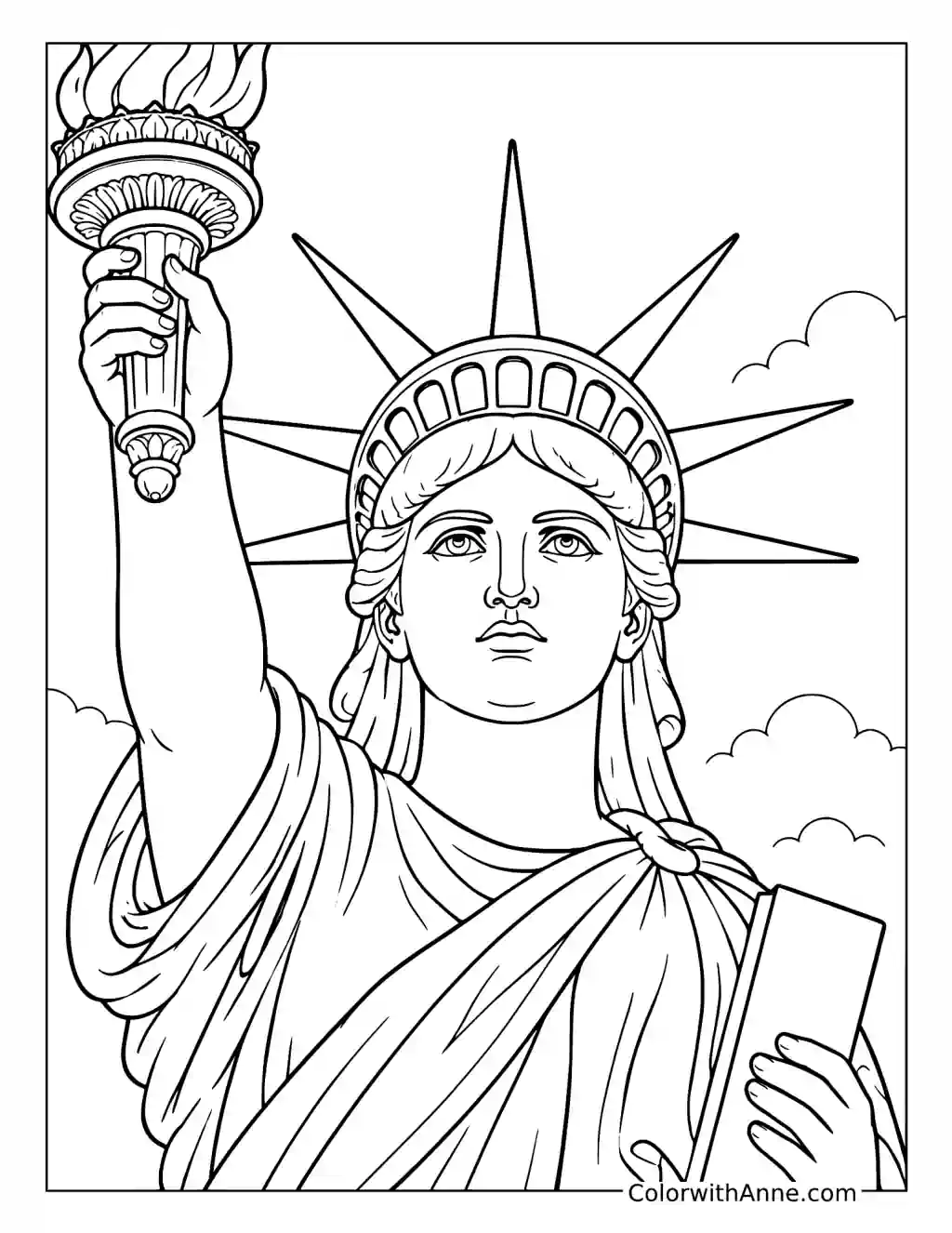
The close view makes the crown’s outline easy to study. Its rising points are the detail to borrow for a simple paper headband.
Draw a broad crown shape on card, using the picture to guide the arrangement of the points. Cut it out and attach it to a paper band fitted around the wearer’s head. The printed portrait can remain beside the project as a reference. A photograph holding a rolled-paper tablet and a pretend torch will complete a playful landmark pose without requiring a full costume.
Build the Island Around the Statue
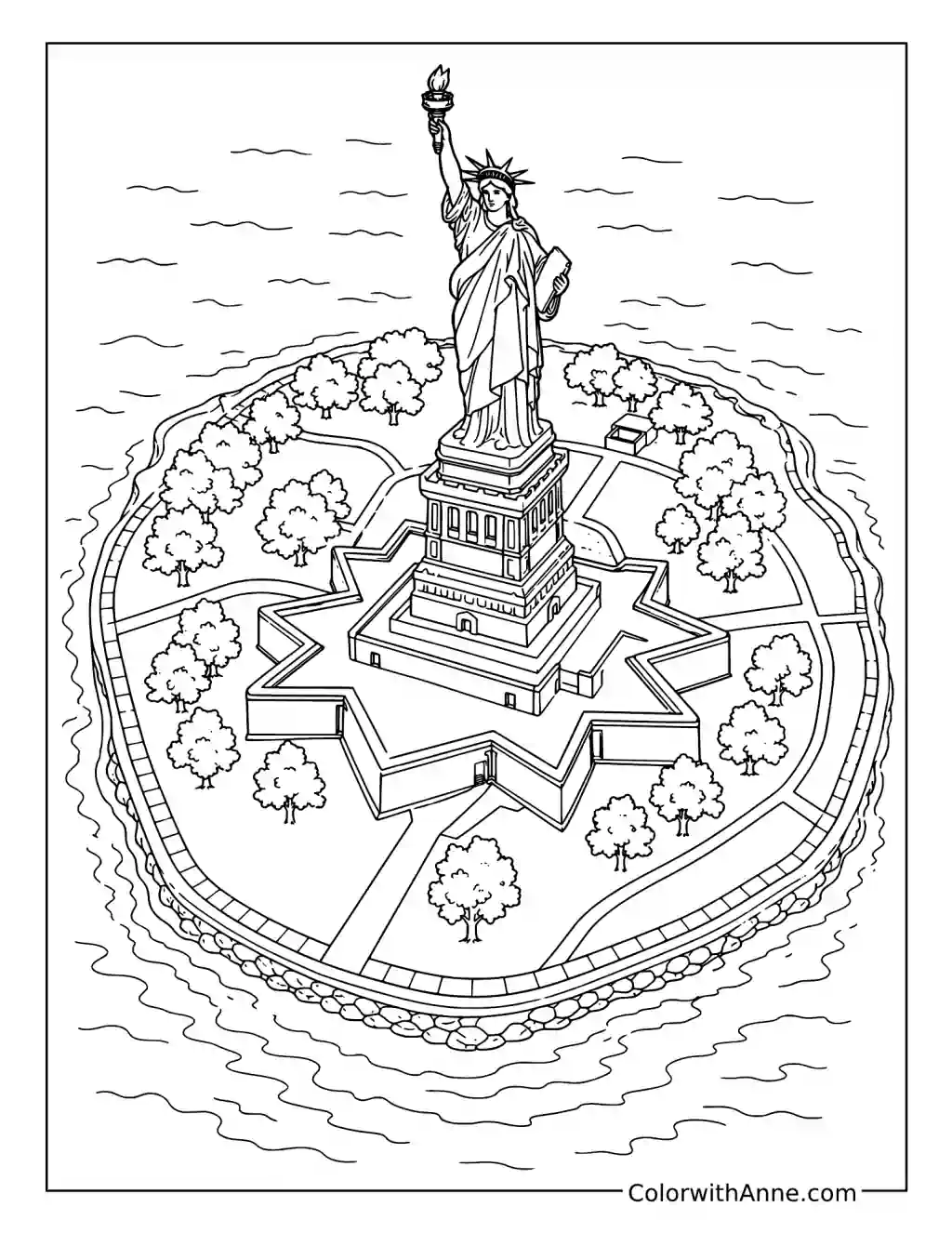
Seen from above, the statue belongs to a larger arrangement of paths, trees, and water. A small model helps those surrounding spaces become easier to understand.
Trace the illustrated island onto card and set it on blue paper. Fold a simple pedestal from another piece of card, placing it where the drawing shows the monument. Flat tree shapes and drawn paths can finish the layout. Look at the model from table height and then from above: the same place feels quite different when the viewpoint changes.