
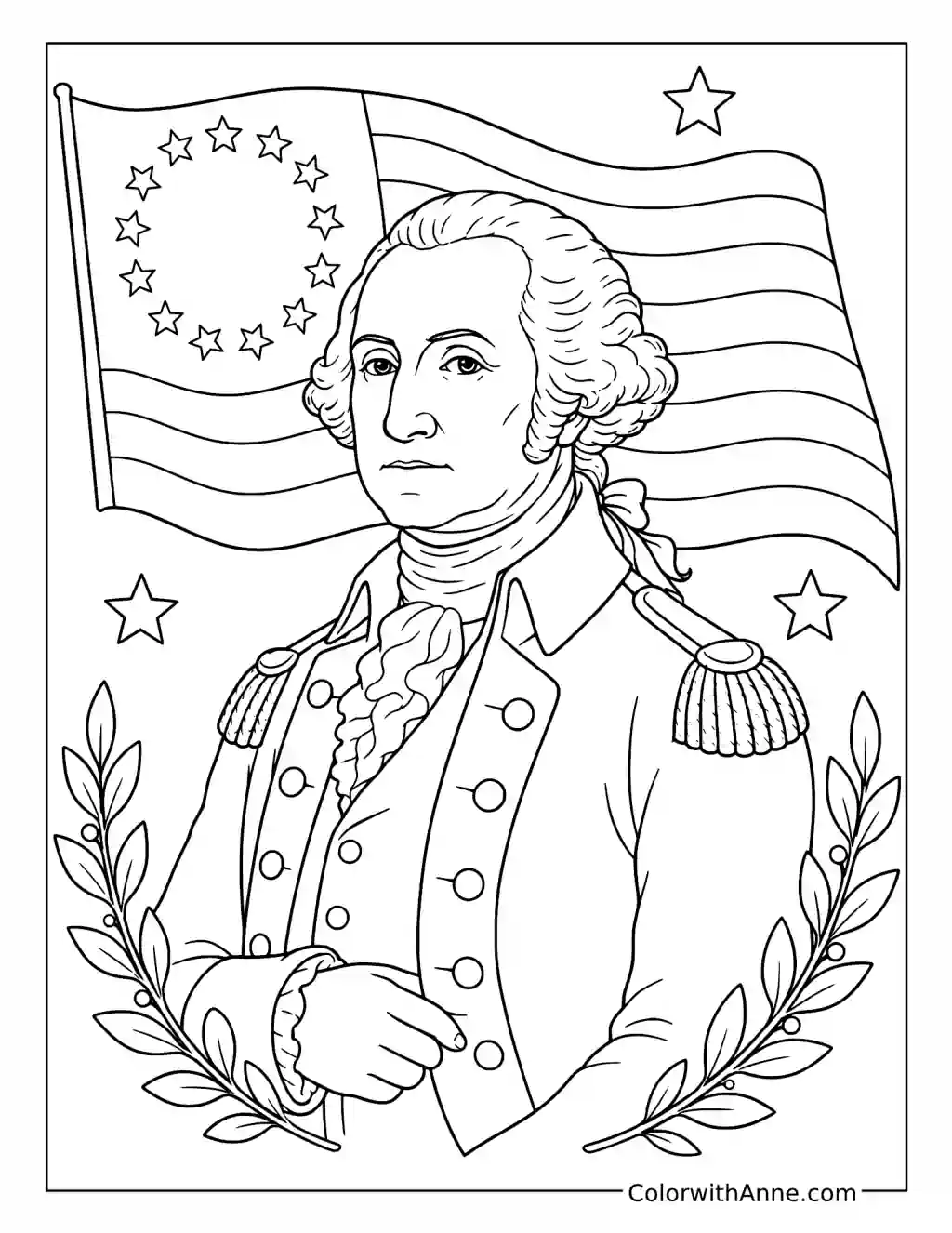
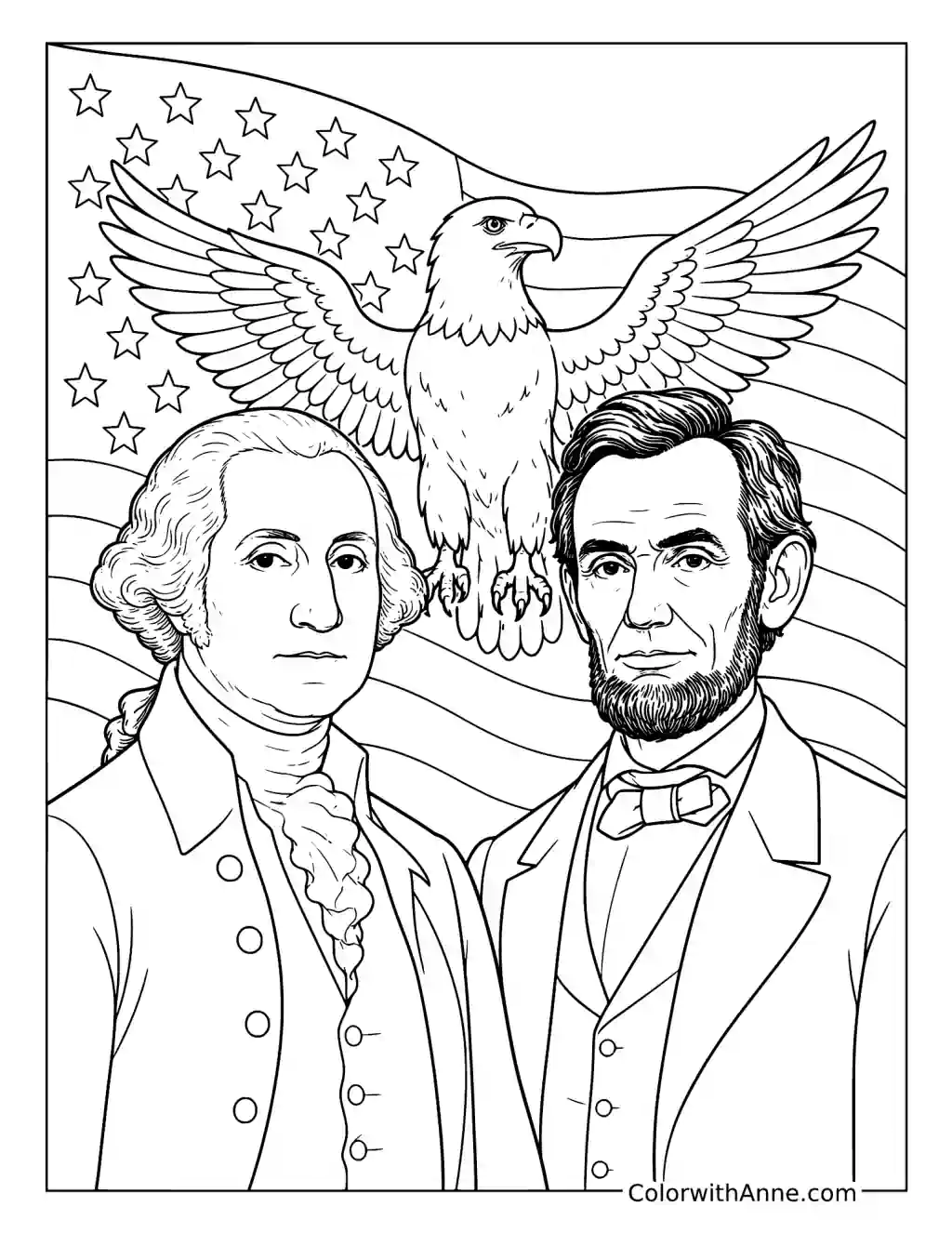
A portrait of George Washington can seem so familiar that a child recognizes the face before knowing much about the person. Abraham Lincoln’s tall hat offers another easy point of recognition. Presidents Day provides a reason to move beyond those outlines and ask what life and leadership meant in their time.
Presidents Day coloring pages can sit alongside a classroom reading or a conversation at home. The activity gives children time to look while a story supplies the context. A question about clothing or an expression may lead somewhere more interesting, helping a distant historical figure feel like someone whose choices can be discussed.
Free Printable Presidents Day Coloring Pages
Click any coloring page below to open the PDF, then print on US Letter or A4 paper.
Did you find what you needed?
Help us choose what to create or improve next.
Coloring Ideas for Presidents Day Pages
Try one of these coloring ideas, or use them as a starting point for your own.
Look Closely at the Lincoln Memorial
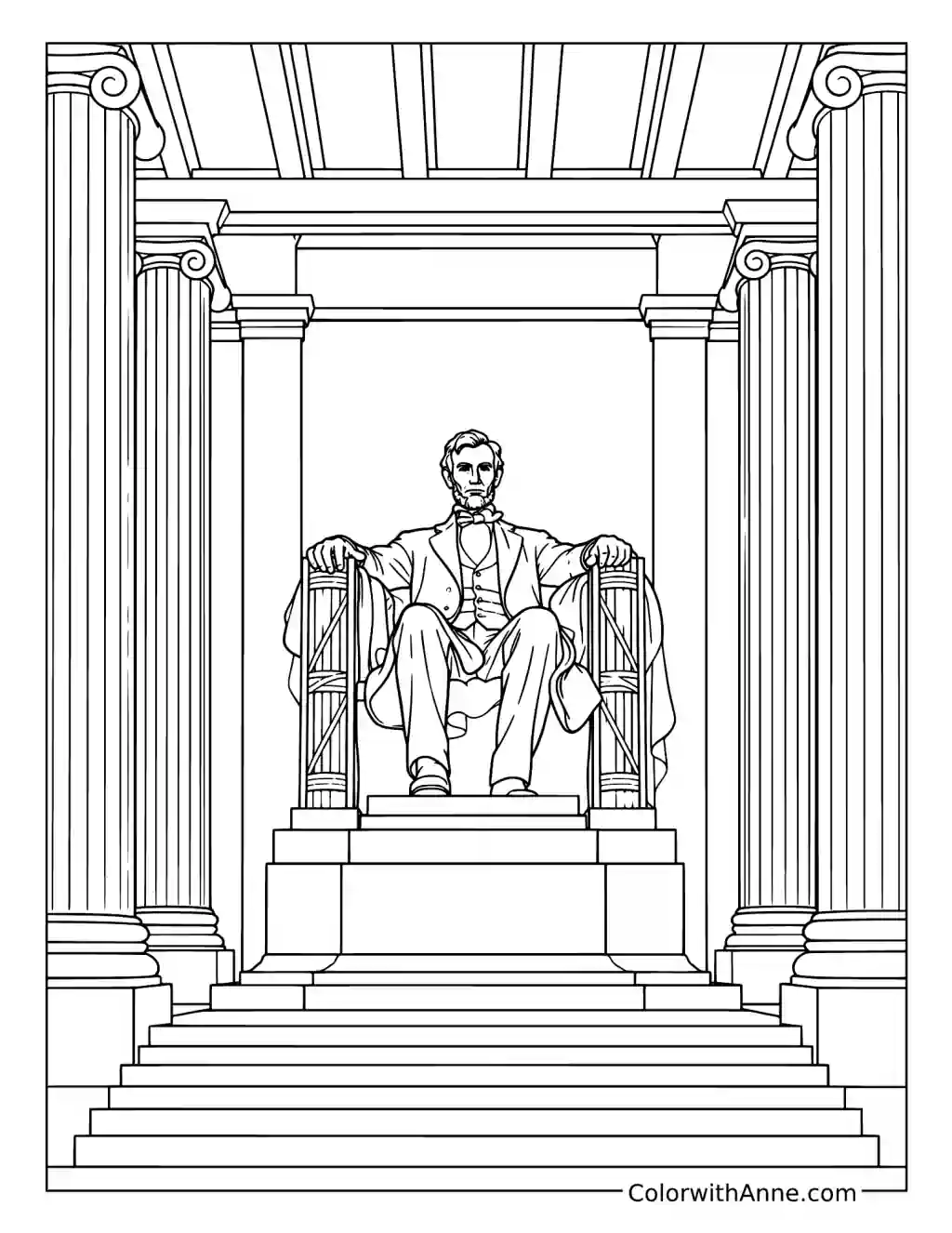
Lincoln’s seated figure appears between tall columns, with steps leading toward the statue. The architecture gives the relatively small central figure a formal setting.
Use pale gray stone, slightly darker recesses, and soft shadows beneath the chair and steps.
Compare the illustration with a photograph of the memorial’s interior. Look first at Lincoln’s posture and the chair, then at the surrounding columns. Choose one detail that the drawing simplifies and point out where it appears in the photograph.
Read Beside Young Lincoln
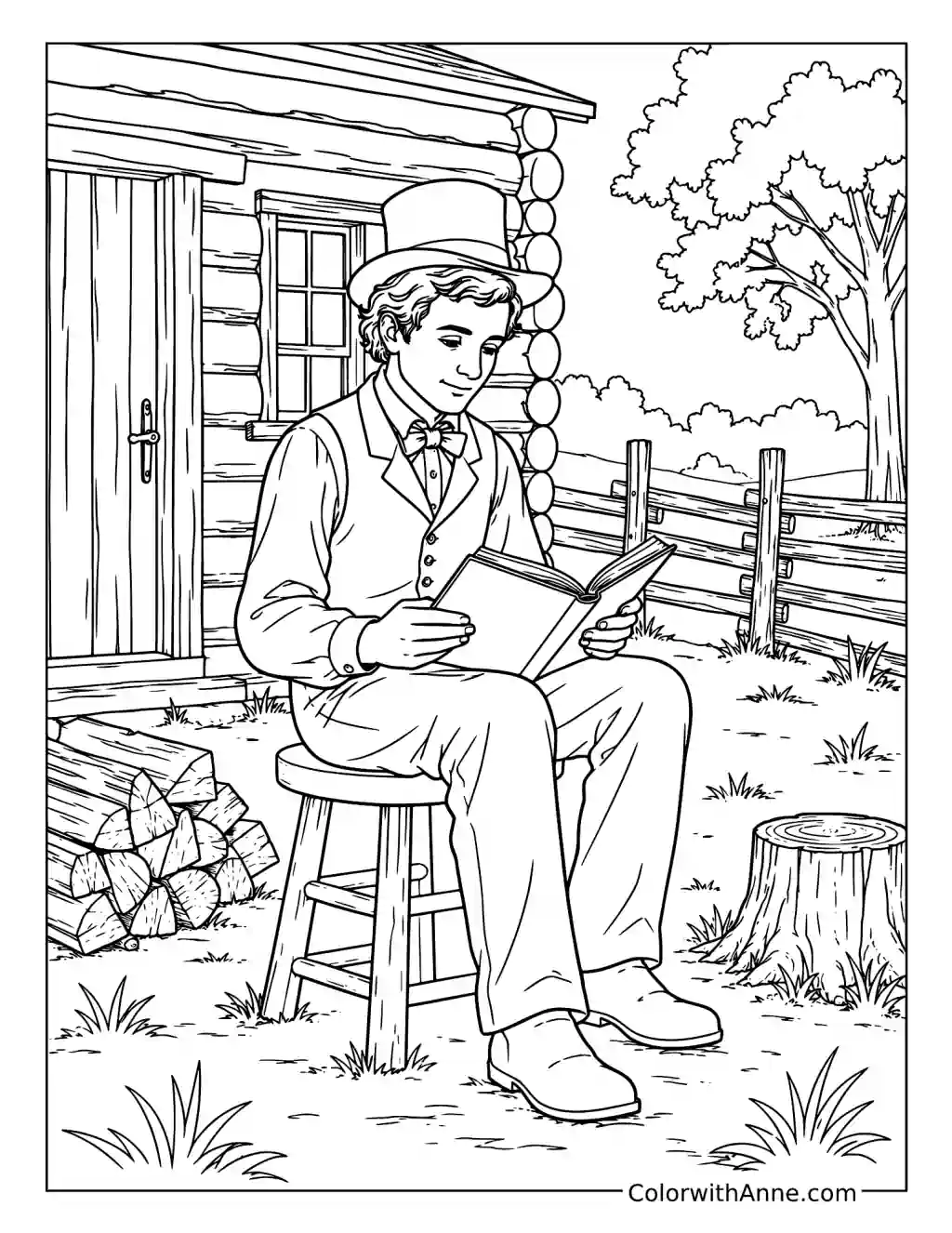
A young Lincoln reads outside a log cabin with stacked wood nearby. The picture gives the collection a quieter beginning than its formal presidential portraits.
Try warm brown logs, muted clothing, and green grass. Leave the open book’s pages light.
Choose a short passage from an age-appropriate Lincoln biography to read with the page. Look for one detail about his early life that interests you enough to ask another question. Keep that question on the back for the next reading session.
Write a Short Speech of Your Own
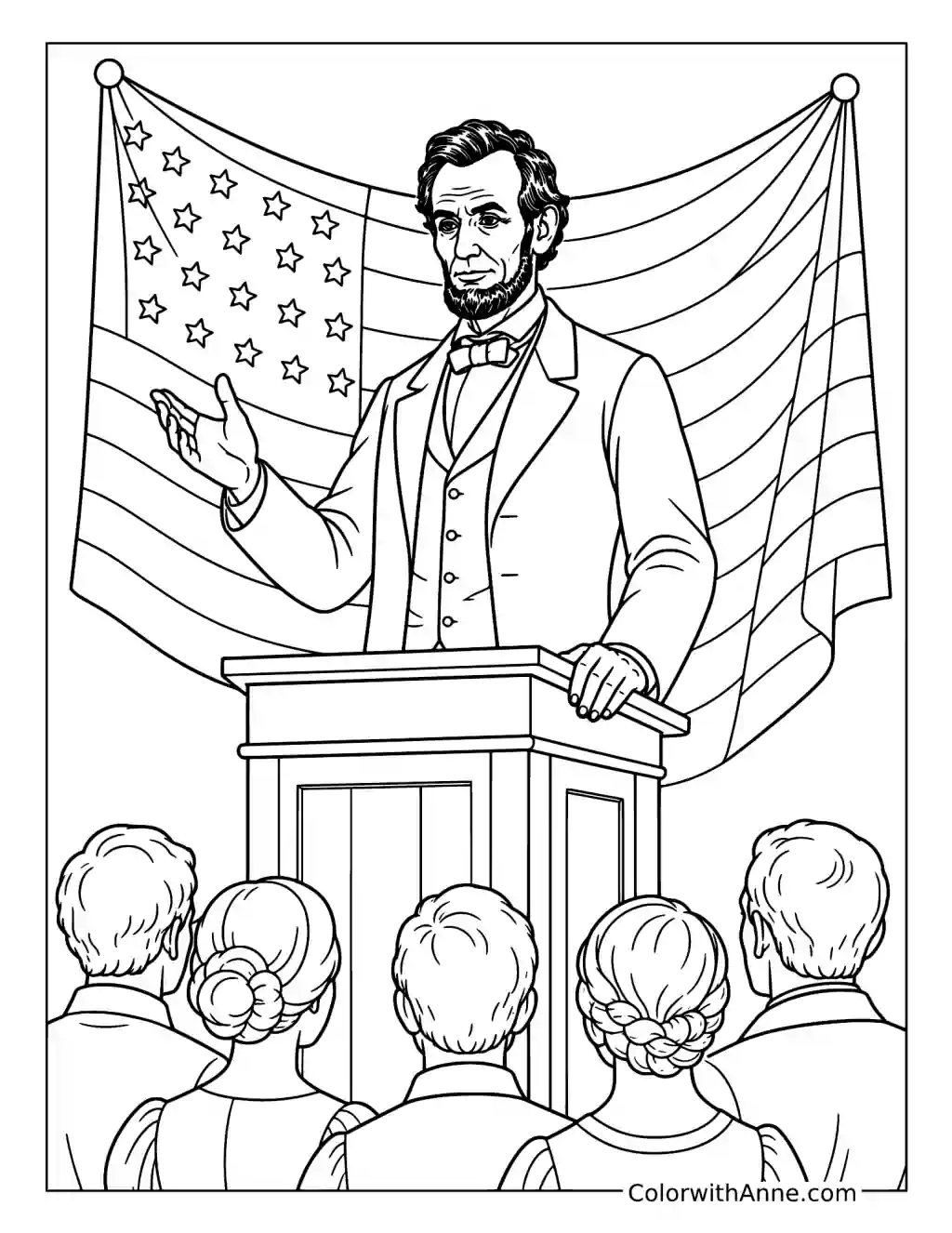
Lincoln stands behind a lectern with one hand raised toward his audience. The composition makes the act of addressing a group easy to recognize.
Use a dark coat, pale shirt, brown lectern, and red, white, and blue flag details.
Prepare three sentences about an improvement you would like to make at school: identify the problem, suggest a change, and explain whom it would help. Read them aloud beside the finished picture. Use your own words rather than adding an invented quotation beneath Lincoln.
Compare the Two Presidential Hats
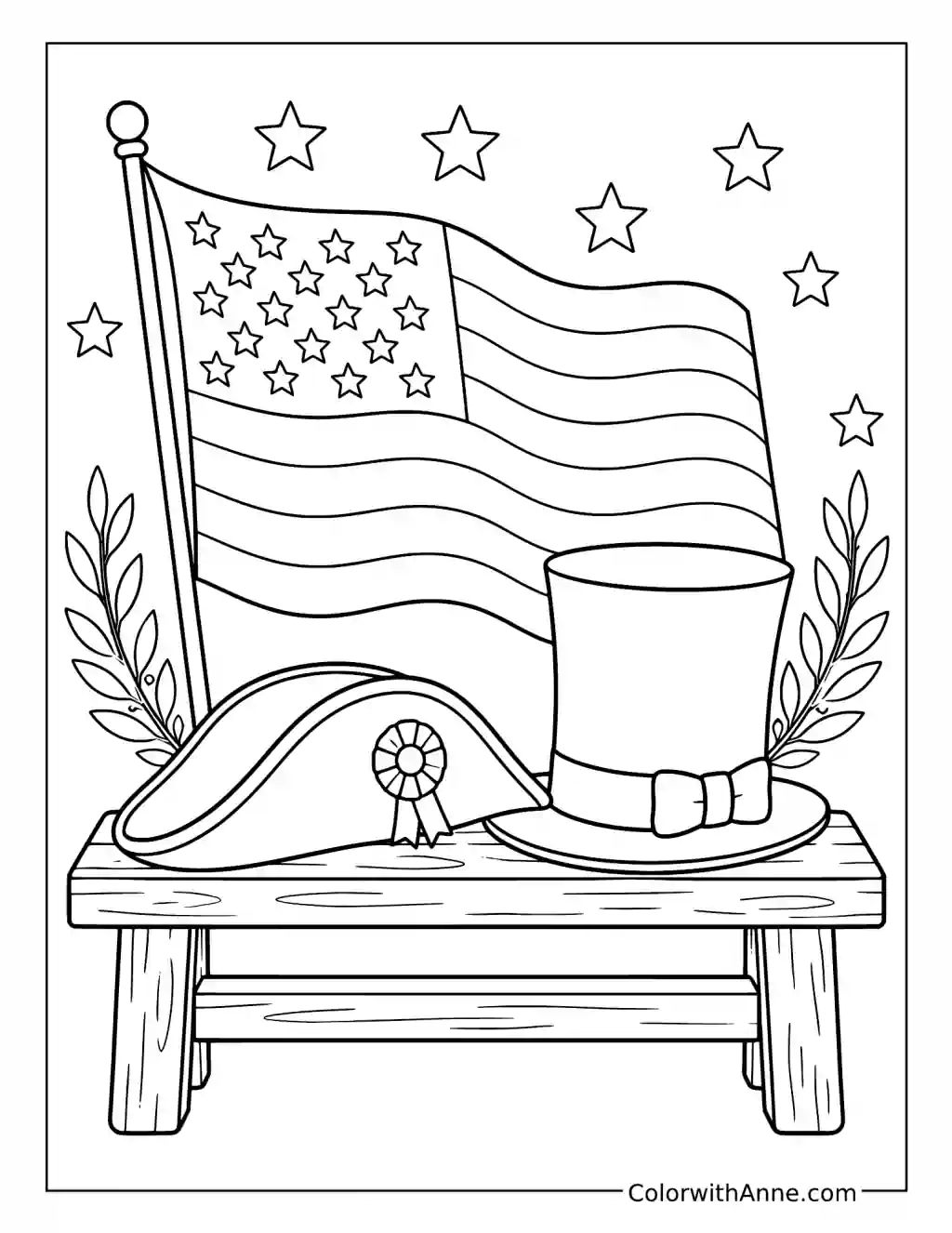
A tricorn hat and a tall top hat sit together beneath a flag. Their very different outlines make this a clear picture for discussing historical clothing.
Try a dark tricorn with lighter trim, a black top hat, and a warm brown table. Keep the flag’s stripes distinct.
Cut simple silhouettes of the two hats from scrap card and place them beside the appropriate presidential portraits in the gallery. Look at the broad brim, height, and folded edges before matching. The shapes can help distinguish the figures without a long list of dates.
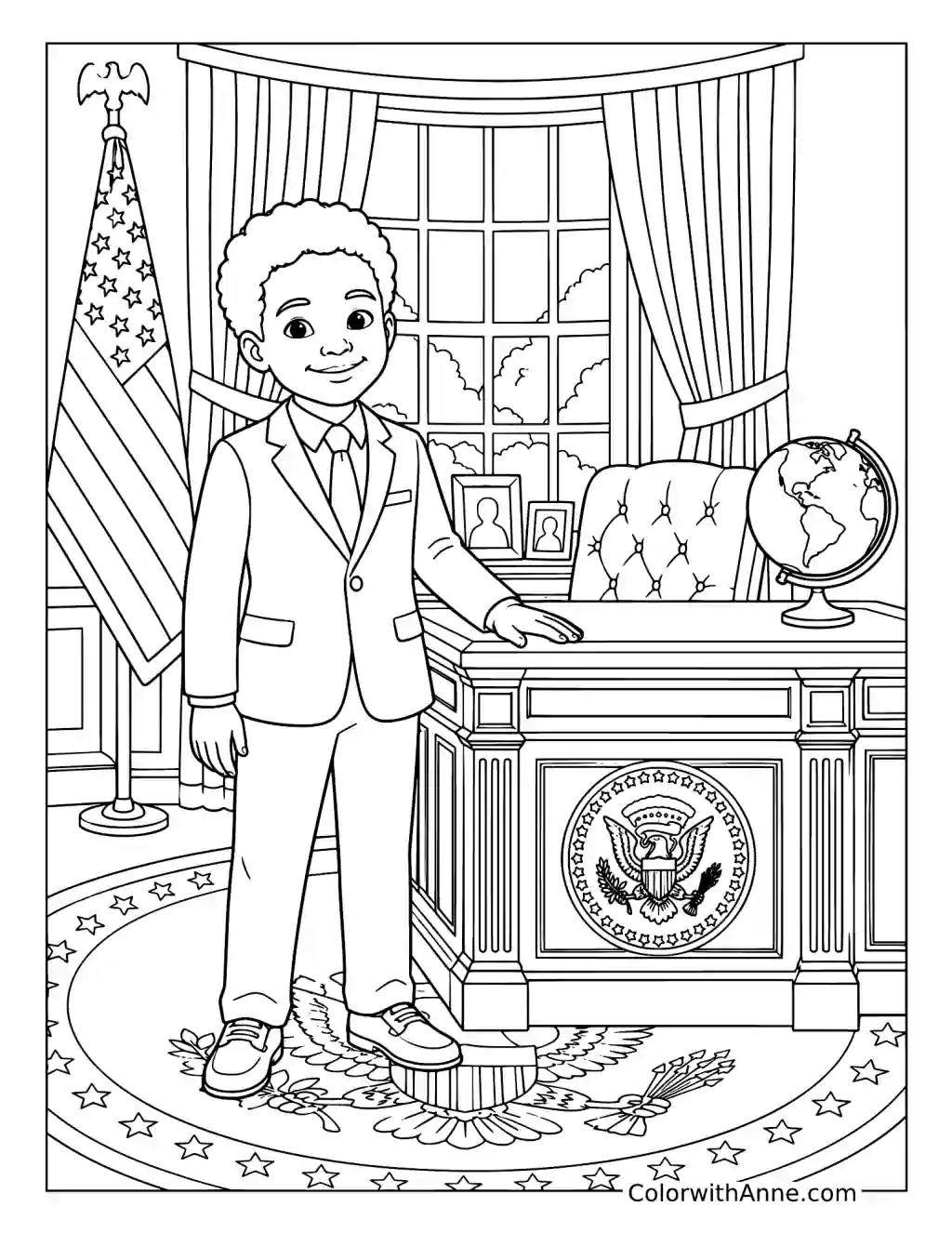
Choose One Problem for the Presidential Desk
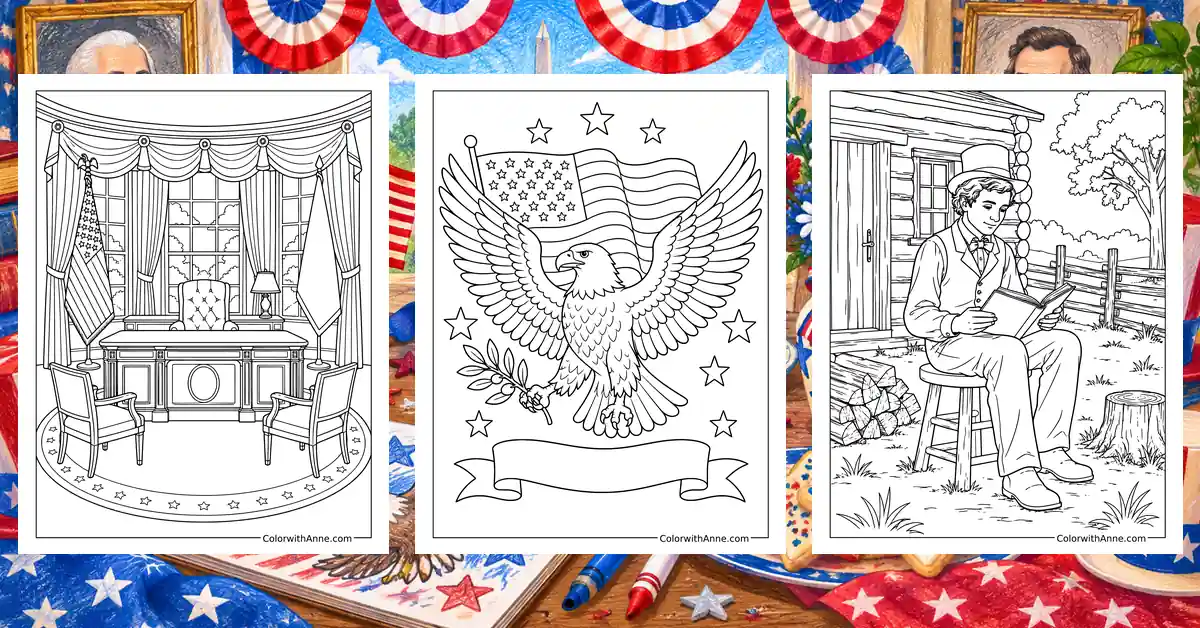
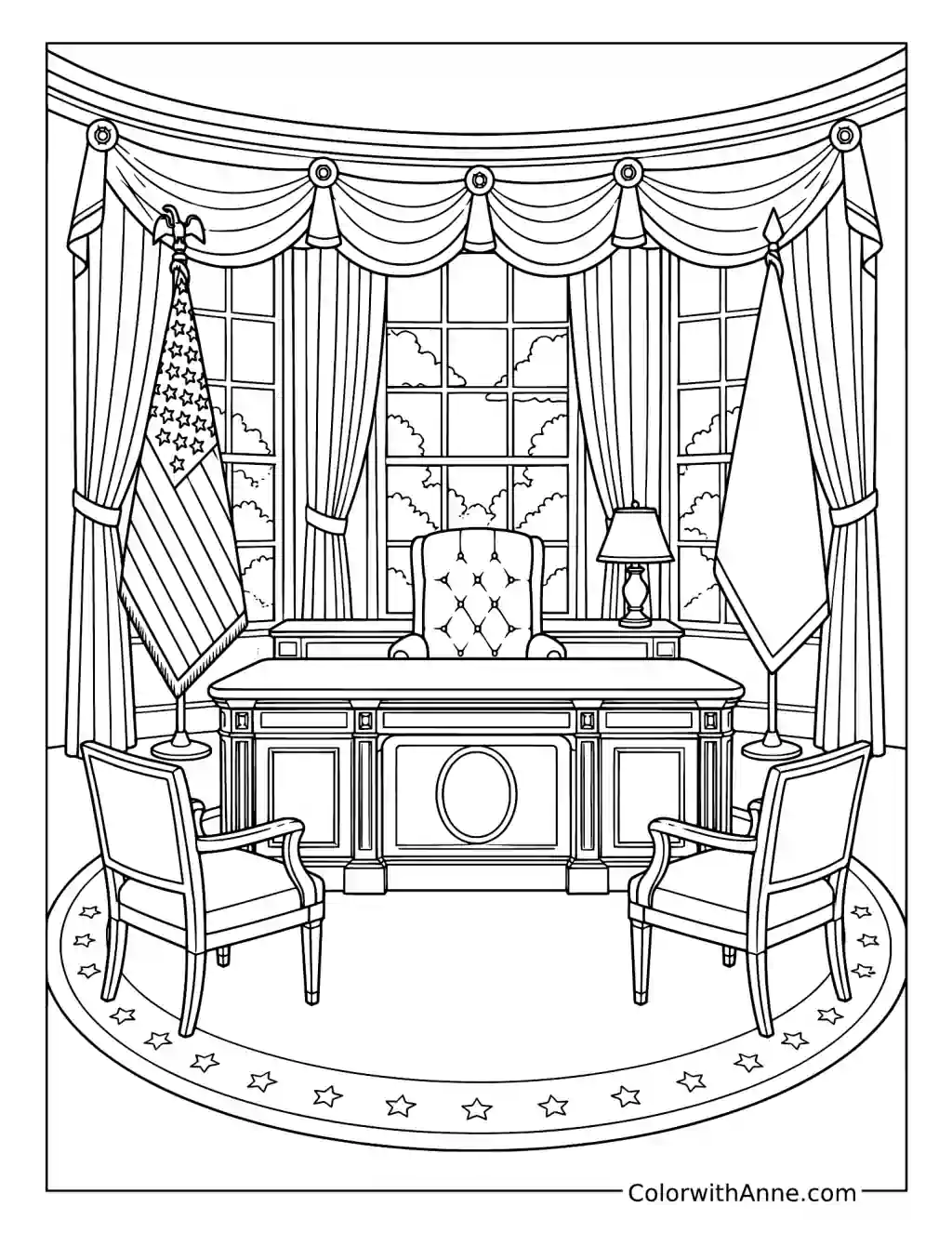
A large desk, chairs, curtains, and windows fill the presidential office. The empty room leaves its next piece of work open to discussion.
Use brown furniture, cream walls, and contrasting curtains. Keep the desktop light enough for a small paper note.
Write one community or school problem on a slip and place it on the pictured desk. Discuss what information would be needed before deciding what to do. The office becomes a setting for considering a decision, rather than simply imagining the person in charge giving orders.
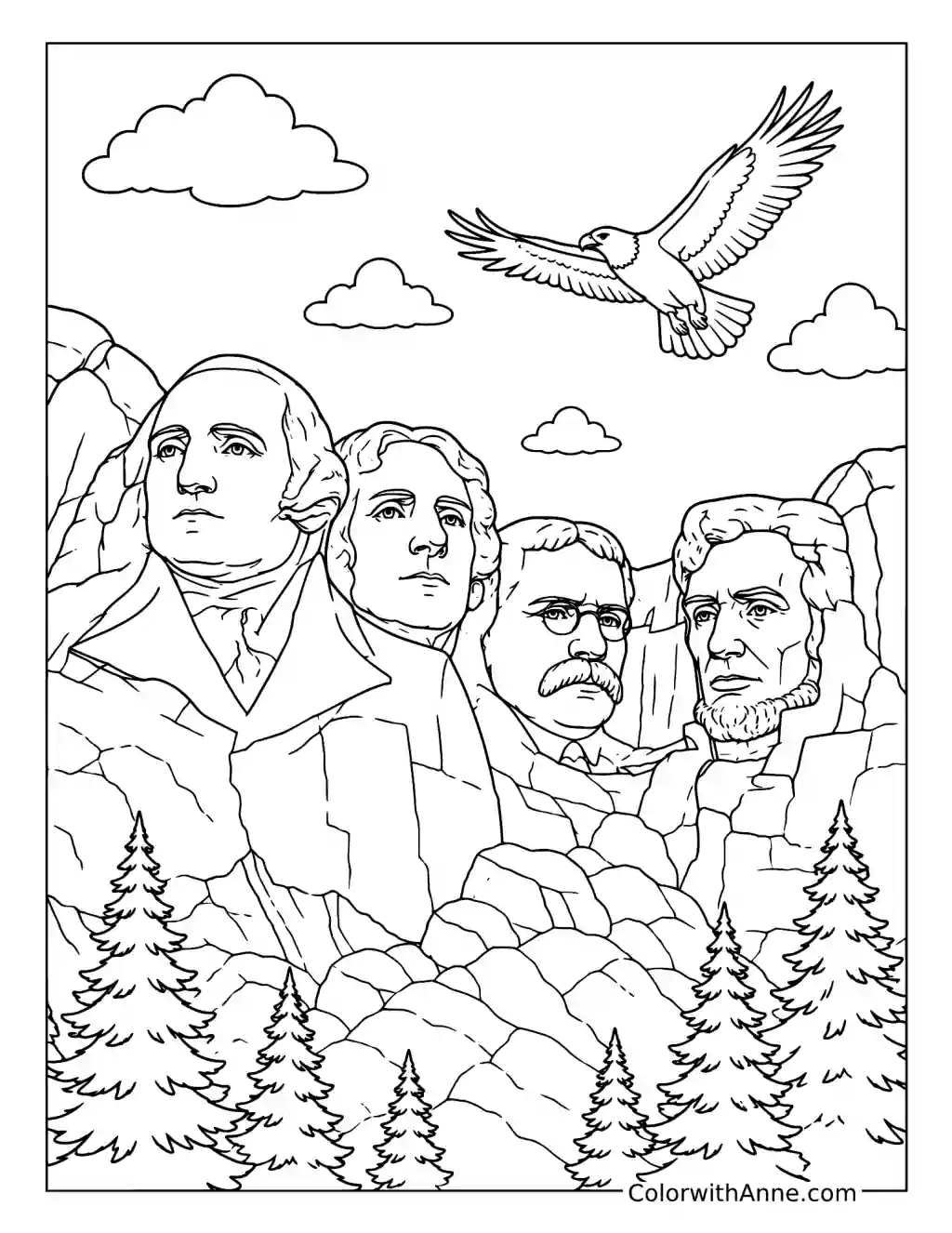
Identify Mount Rushmore’s Four Presidents
Four carved faces rise above the trees while an eagle flies nearby. The closely grouped portraits invite careful identification.
Use several grays across the rock, darker green trees, and a pale sky. Keep facial shadows gentle enough to preserve the features.
Make name slips for George Washington, Thomas Jefferson, Theodore Roosevelt, and Abraham Lincoln. Check their positions against a labeled photograph of Mount Rushmore, then arrange the slips beneath the illustration. Try the matching again without the photograph once the group feels familiar.
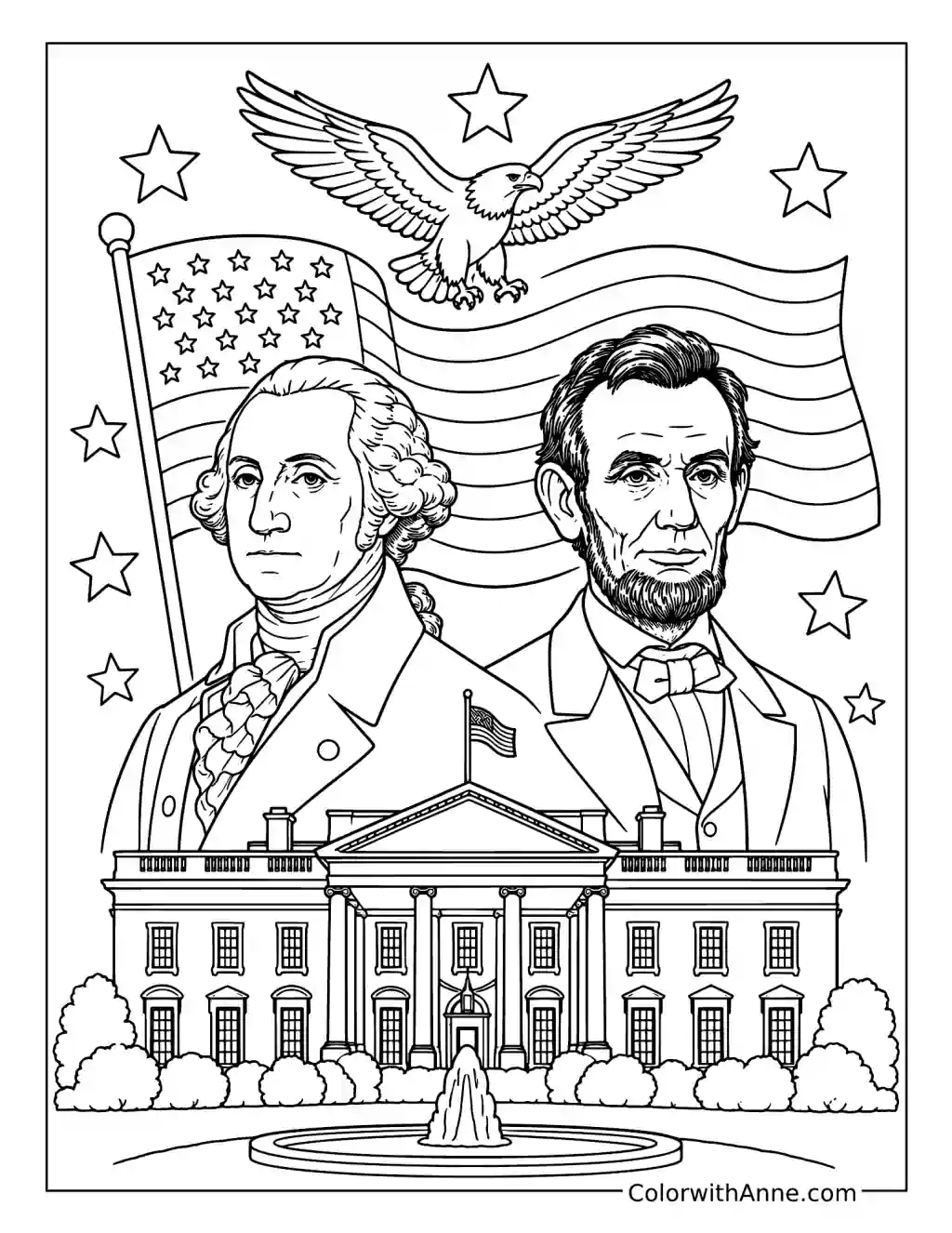
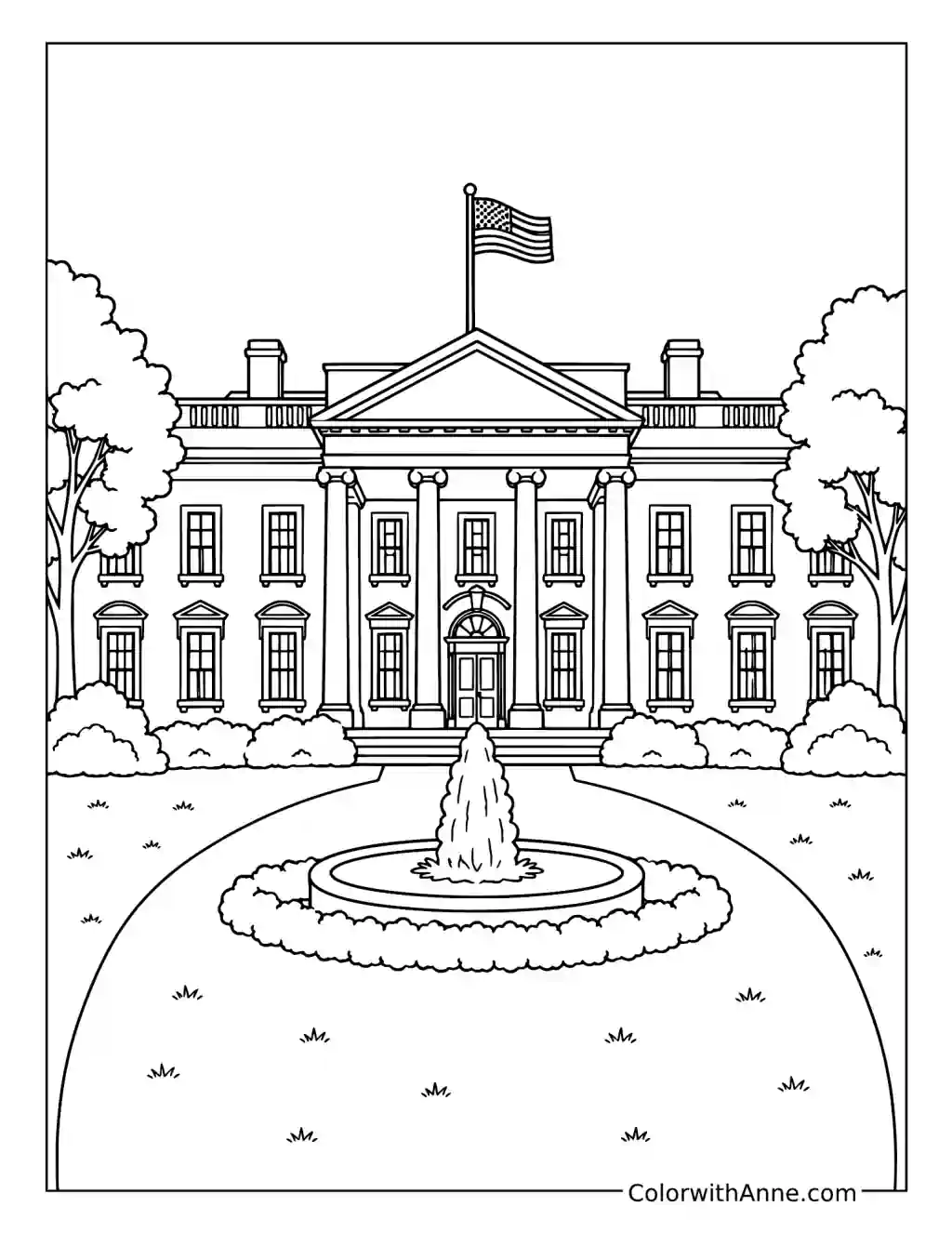
Find the White House’s Repeated Details
The White House stands behind a fountain and curved garden beds. Windows, columns, and roof details repeat across the front.
Keep the building white with pale gray shadows, green planting, and blue water. A light sky will preserve the roofline.
Choose one repeated feature and count it carefully, pointing as you go. Compare the left and right sides of the drawing before moving on. This is a useful page for noticing architectural patterns without turning the building itself into a field of bright colors.
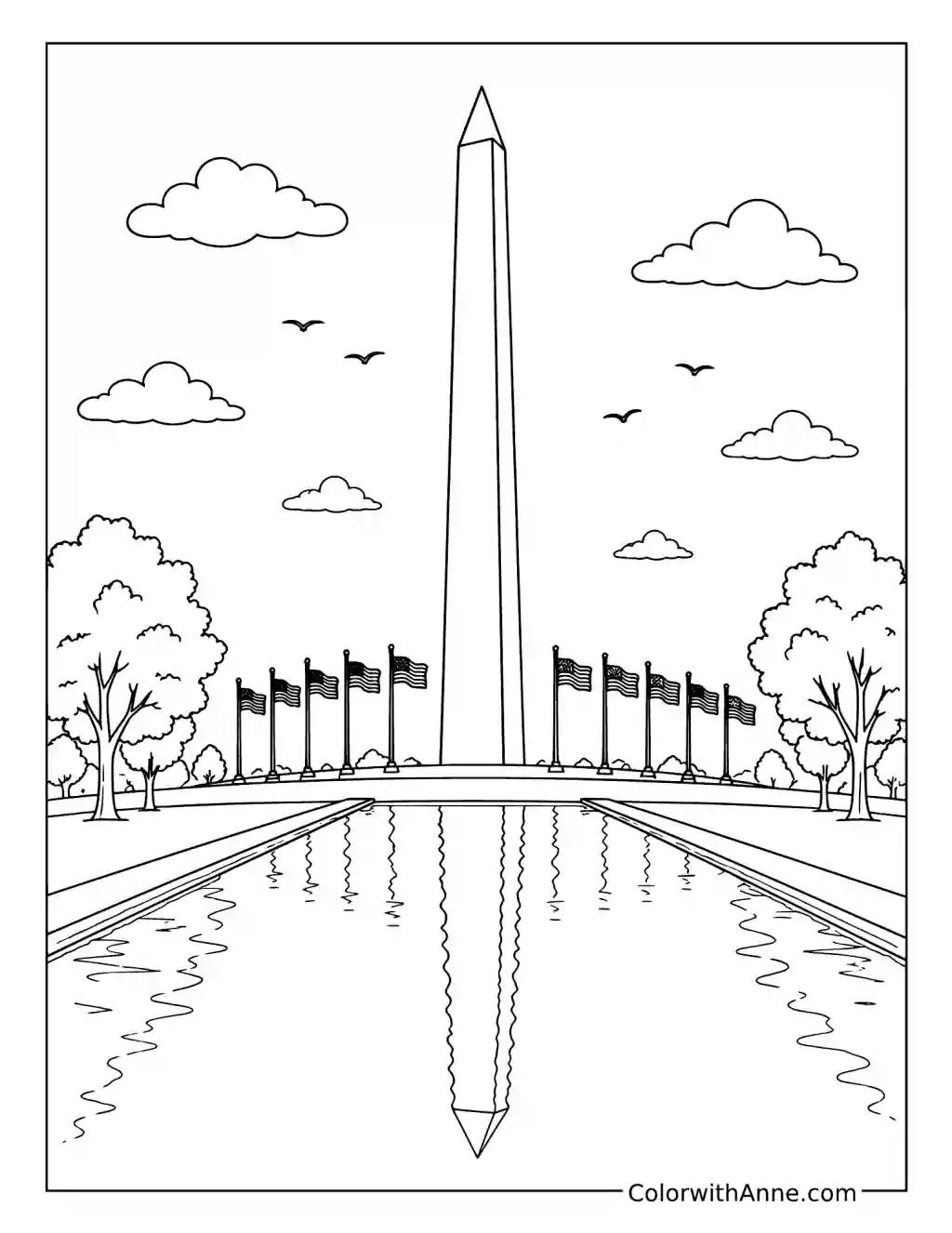
Complete the Monument’s Reflection
The Washington Monument rises above a long pool with its pointed reflection below. The strong vertical shape makes the relationship easy to follow.
Use pale gray stone, blue water, green trees, and small red-white-and-blue flag details.
Match the reflection’s color to the monument, keeping it softer and slightly interrupted by the printed water lines. Follow the tip downward to find its reflected counterpart. The page offers a simple way to notice how an image changes when it appears on water.