
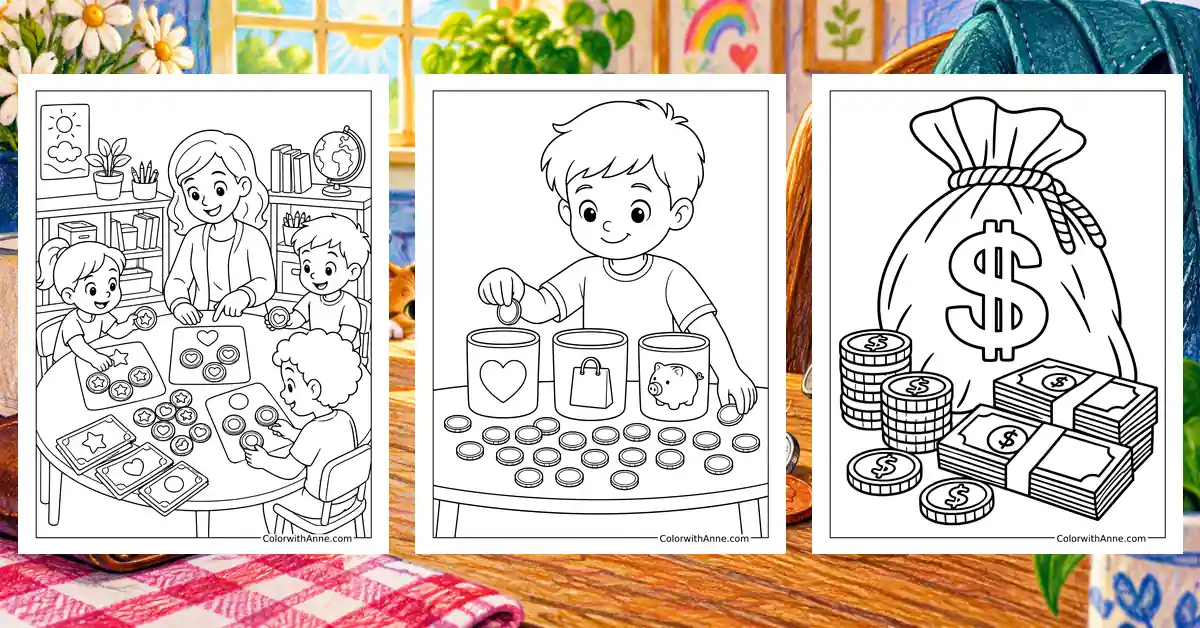
A child counting coins for a small purchase often counts them more than once. The pile is rearranged, the total is checked, and one last coin is examined as though it might improve the answer. Buying something with money saved personally makes even an ordinary trip to the shop feel significant.
Money coloring pages can join that early curiosity about what different amounts mean. Alongside real coins or a pretend shop, a page gives children something familiar to discuss while they work. The questions tend to become practical quickly, particularly when someone wants to know how much longer saving for a favorite toy will take.
Free Printable Money Coloring Pages
Click any coloring page below to open the PDF, then print on US Letter or A4 paper.
Did you find what you needed?
Help us choose what to create or improve next.
Coloring Ideas for Money Pages
Try one of these coloring ideas, or use them as a starting point for your own.
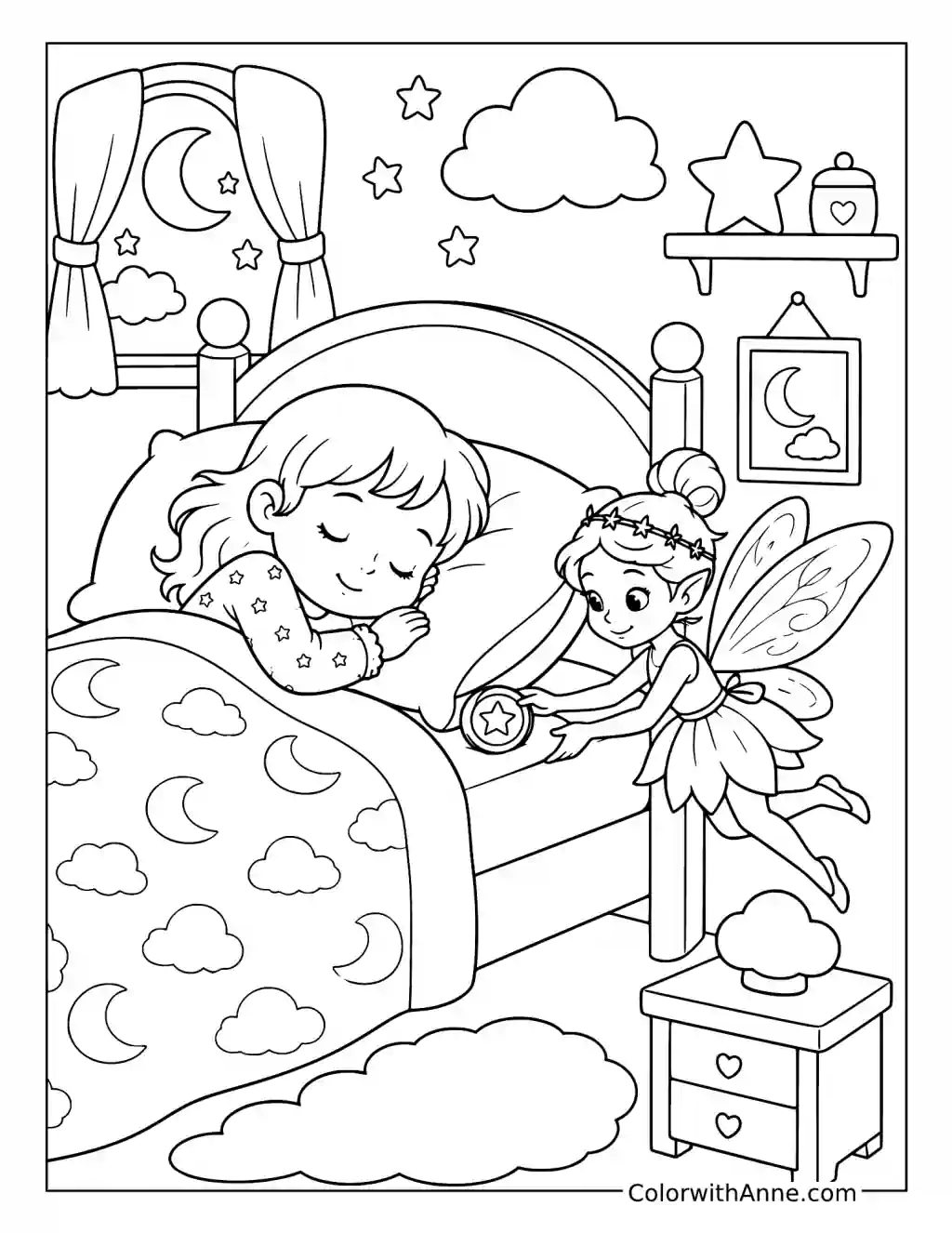
Leave a Tiny Tooth-Fairy Envelope
The fairy reaches toward the sleeping child with a star-marked coin. The bedside scene suits a small envelope left as part of a family’s tooth-fairy tradition.
Use pale blue bedding, a gold star coin, and soft pink or lavender fairy clothes. Keep the moon and stars light against the window.
Print the picture small enough for the front of a little envelope. Place a short message inside and add the child’s name on the back. The illustration makes the envelope recognizable before it is opened, while the message can mention the particular tooth or the excitement of that evening.
Make a Wallet for Invented Play Money
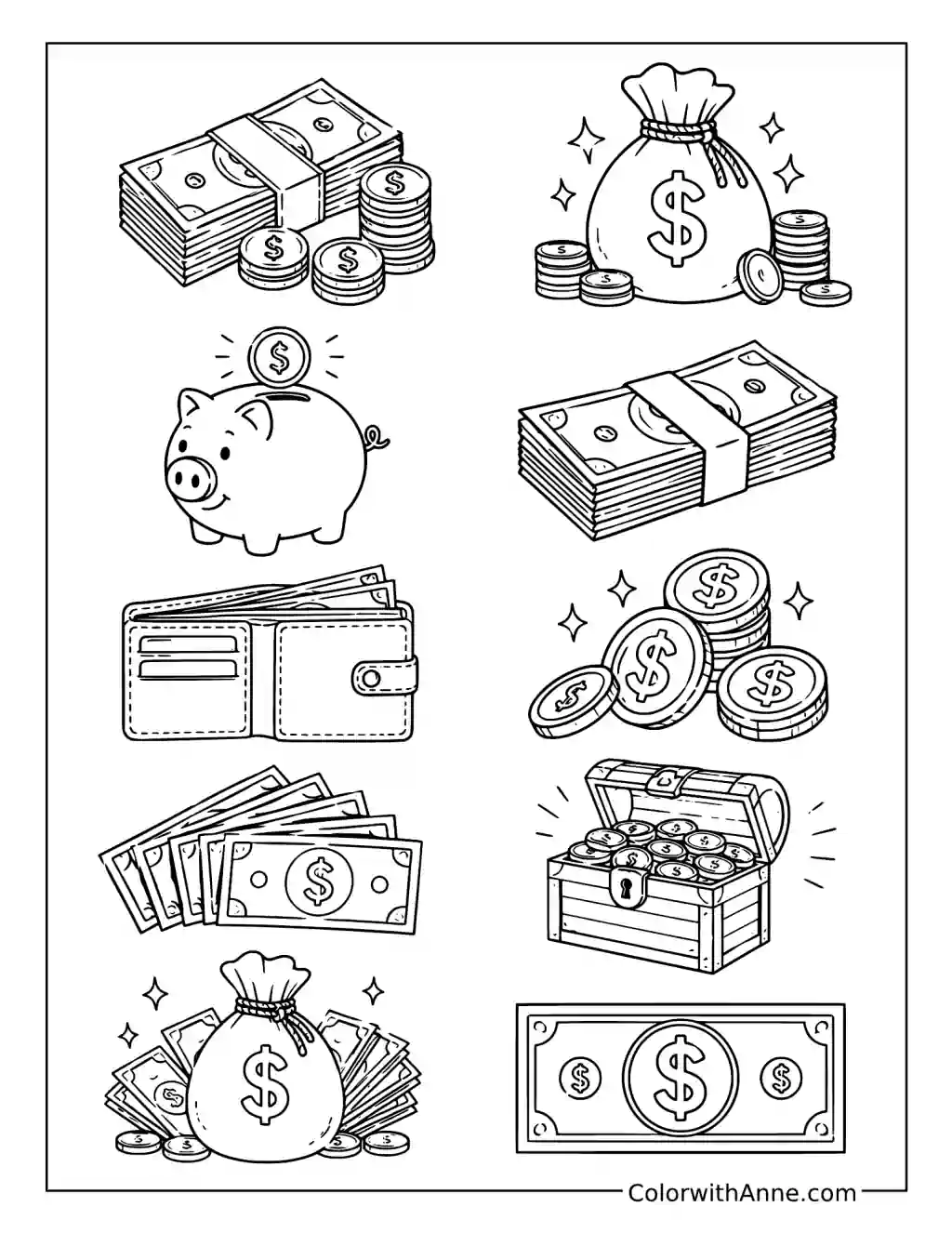
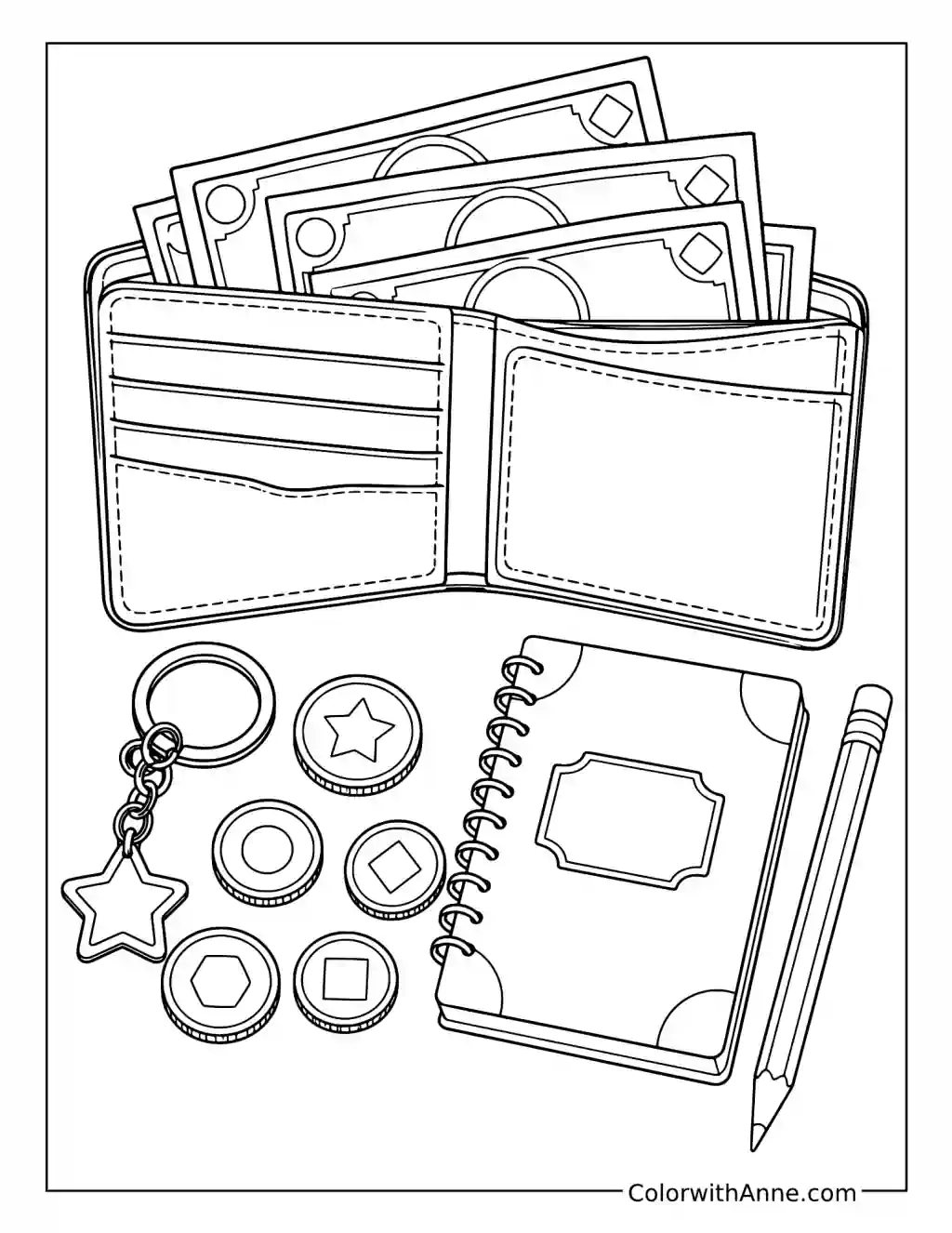
The open wallet holds notes, with simple tokens and a small notebook below it. It is a useful starting point for a pretend shopping kit.
Try brown or navy for the wallet, pale green notes, and gold or silver tokens. The notebook can have a bright cover.
Fold a paper wallet with a pocket large enough for homemade notes. Give the money original symbols and clearly mark it as play money, then store it with cardboard coins. Keeping the pieces together makes the next shop game easier to begin, especially when several customers arrive wanting change.
Give the Bicycle Goal Visible Steps
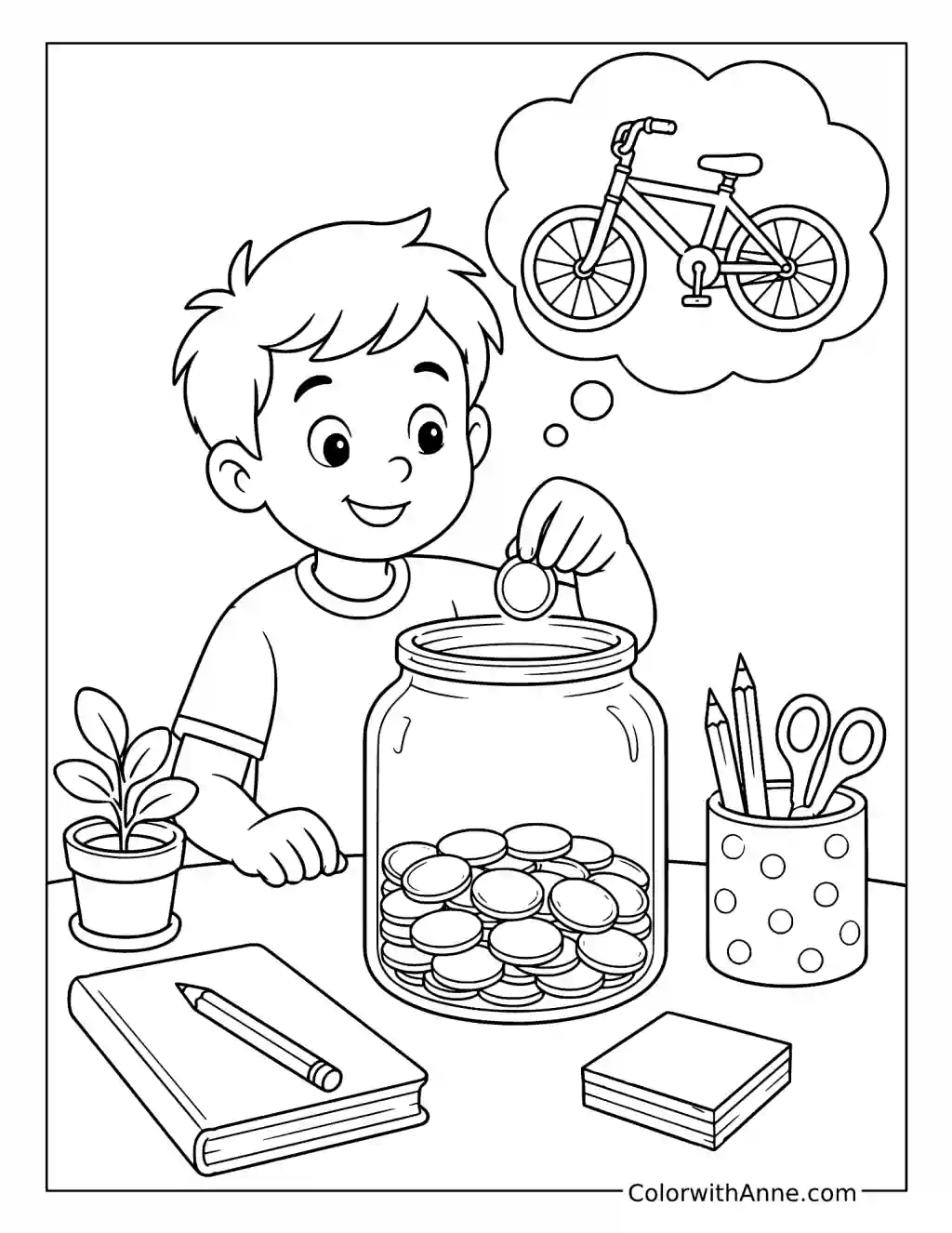
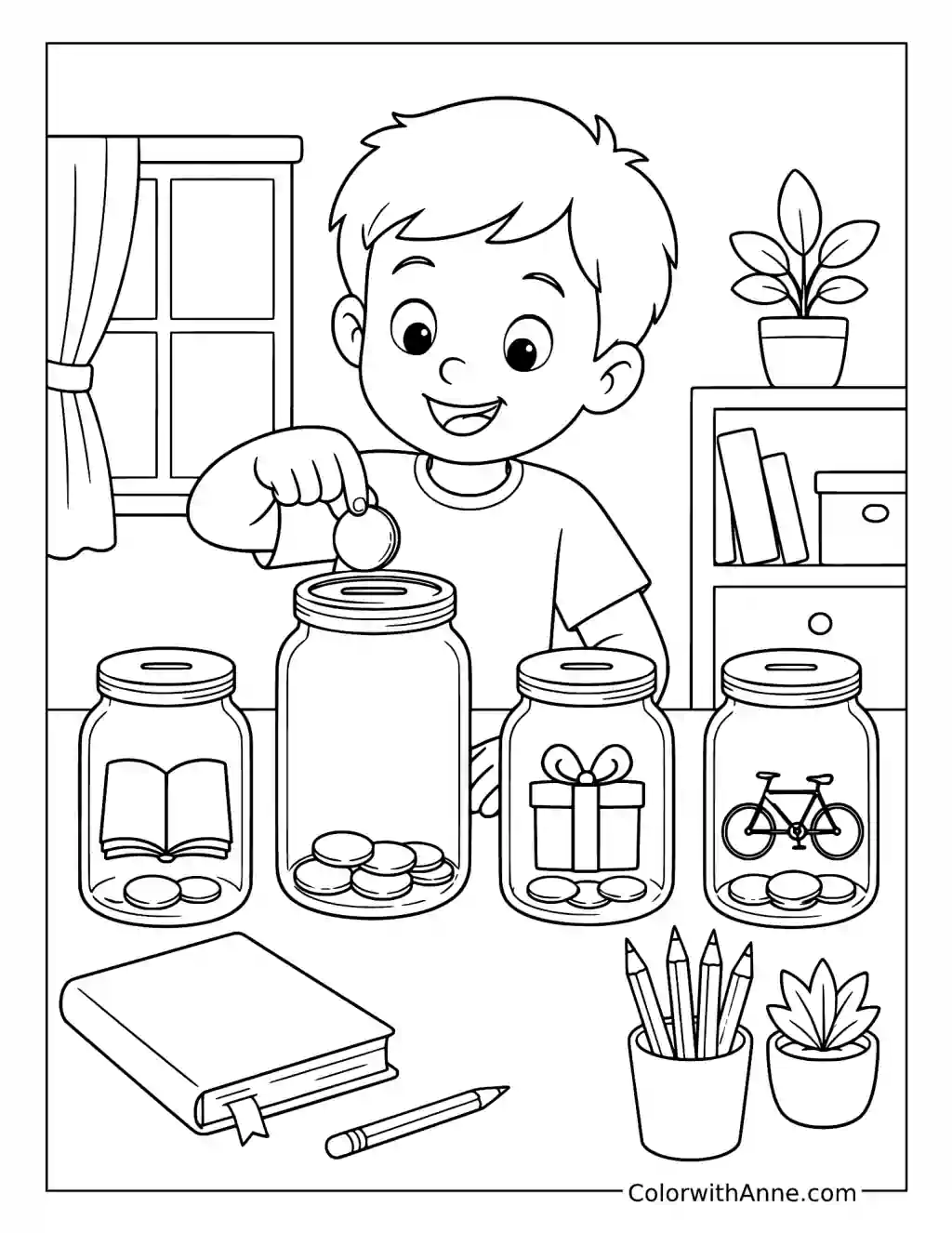
The child drops a coin into a jar while imagining a bicycle. The picture connects a small action with something that will take longer to reach.
Choose a favorite color for the bicycle, gold and silver coins, and a light blue jar outline. Leave the glass mostly pale so its contents remain visible.
Write an agreed goal amount beside the jar and add a row of boxes, each representing a manageable amount saved. Fill a box as that amount is reached. A parent can help set up the numbers so the chart reflects the actual goal, rather than simply filling it because another day has passed.
Choose What the Donation Box Really Needs
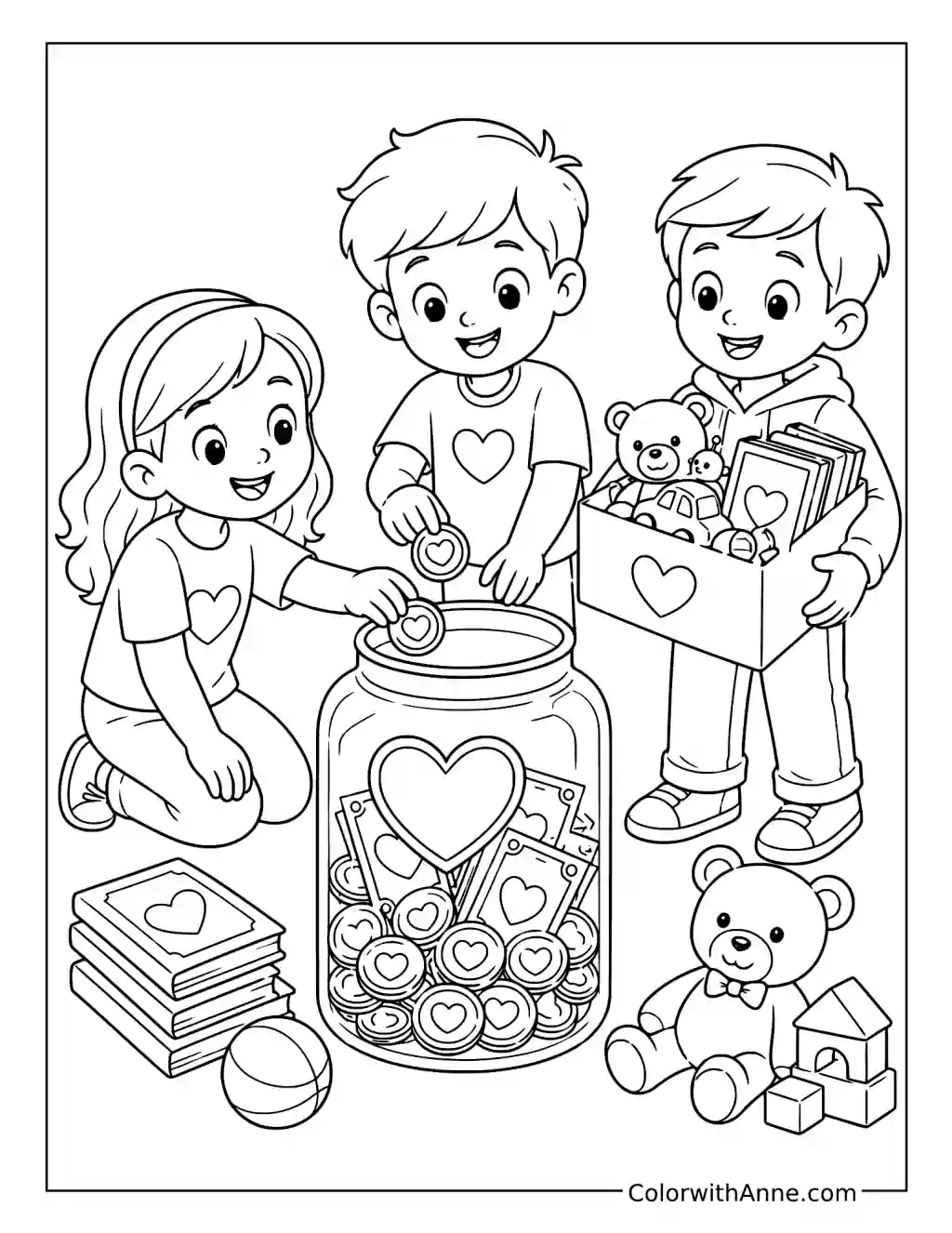
One child adds to the coin jar while another holds a box of toys. The two kinds of contribution make this a good scene for a family donation project.
Use cheerful clothing colors, warm brown cardboard, and a clear jar with bright coins. Give the visible toys different colors so they remain easy to identify.
Before gathering items, check what the intended recipient or organization accepts. Let children help choose suitable toys, make sure the pieces are together, and prepare the box. The picture can stay beside the sorting area as the project begins, without turning the activity into a contest over who gives most.
Work Out the Change at the Lemonade Stand
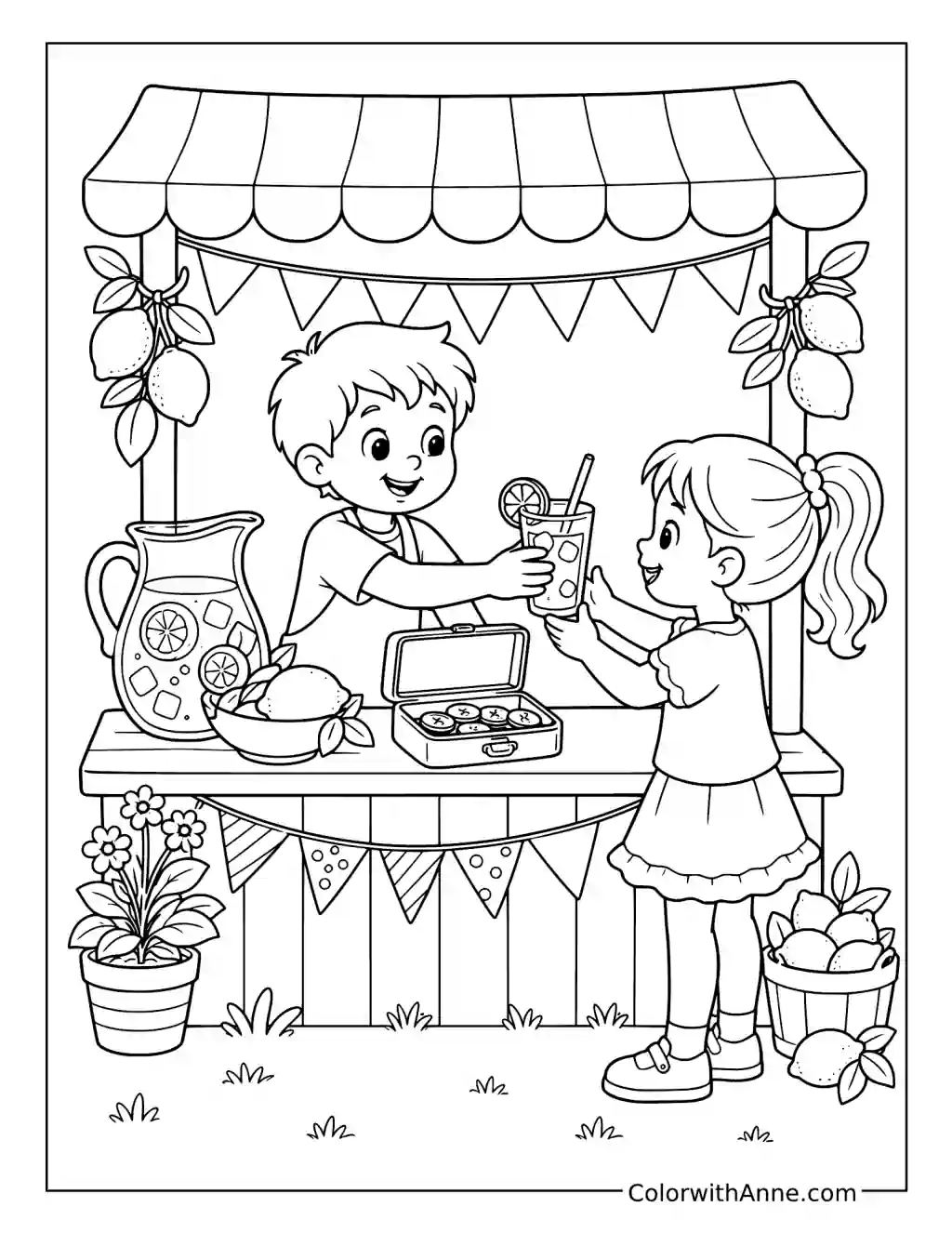
The customer hands over money while the seller stands beside the jug and cups. The exchange is the useful part to borrow for a pretend stand at home.
Try yellow lemonade, a striped blue-and-white awning, and colorful fruit around the counter. Keep the coins distinct from the tabletop.
Set a simple price in play tokens and let customers pay with larger amounts. If a cup costs three tokens and a customer hands over five, the seller returns two. Swap jobs after a few orders. Empty cups are enough for the game, leaving plenty of attention for counting and checking the change.
Shop With a Basket and a Limit
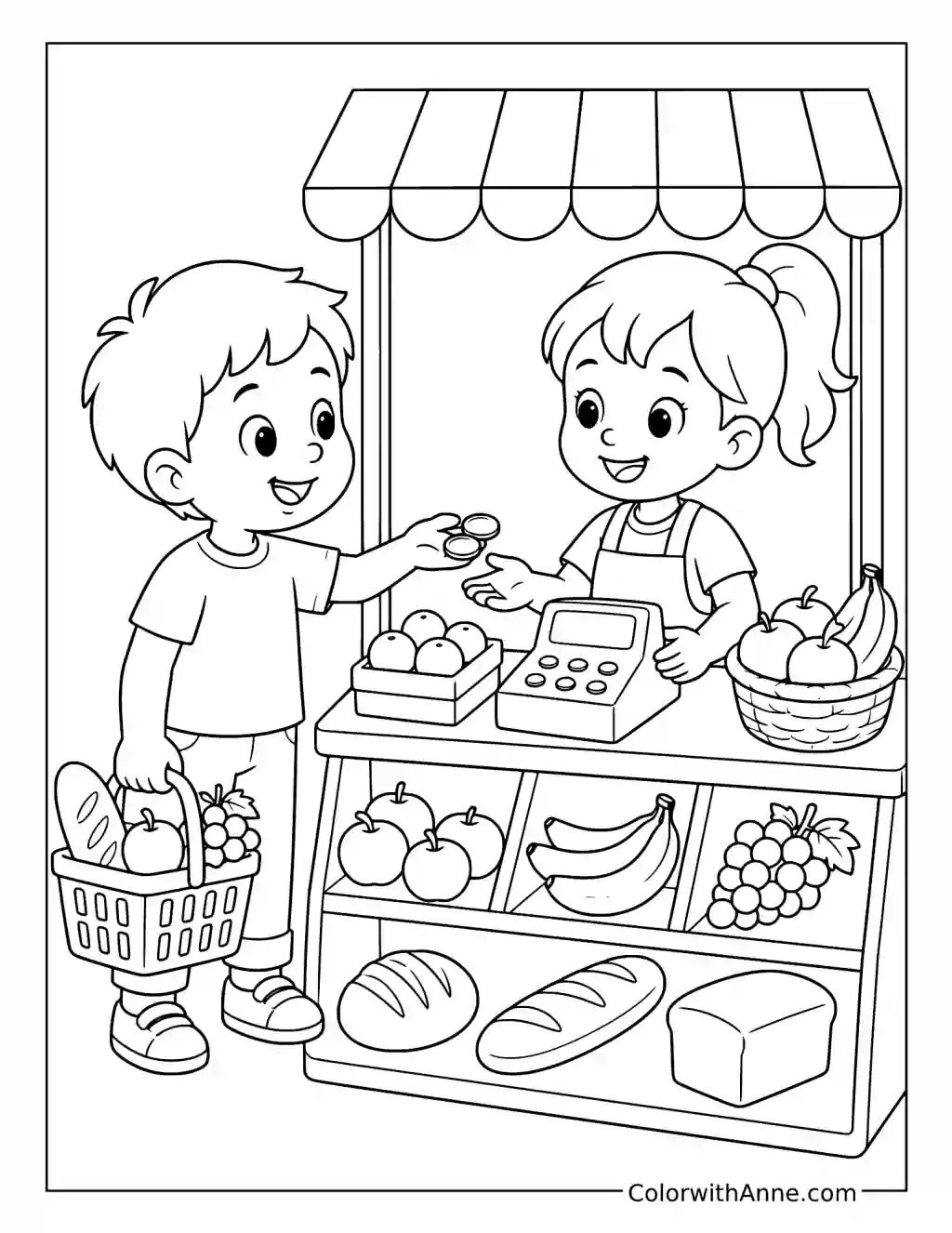
The shopper carries a basket while the seller waits behind fruit, vegetables, and bread. A limited handful of play coins makes the choices more interesting.
Use familiar food colors, a warm brown basket, and a bright striped awning. Gold tokens will stand out against the counter.
Set up a shop with empty food packages or paper groceries and give each item a small token price. Each shopper gets the same starting amount and chooses what fits within it. Someone who wants another item may need to exchange something already in the basket. The shopkeeper checks the total before payment.
Decide What the Three Jar Symbols Mean
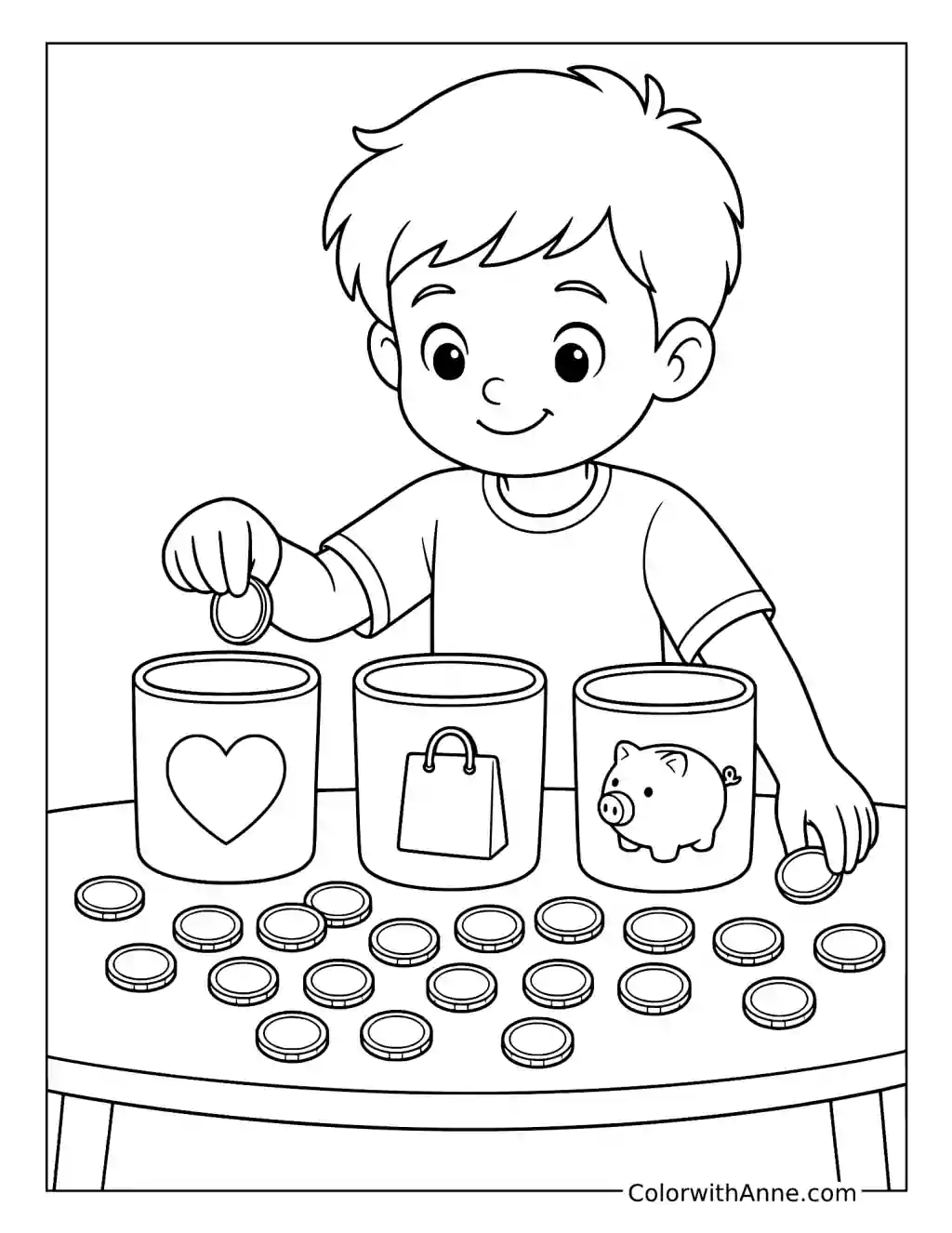
A heart, shopping bag, and pig mark the three containers. Their different symbols offer a way to talk about different purposes for money.
Try a red heart, a blue shopping bag, and a pink pig. Keep the jars pale and give the coins a consistent gold or silver finish.
Choose together what each symbol will represent, such as sharing, spending, and saving. Use play tokens to explore several possible splits before deciding on any real arrangement. Ask what each choice would make possible. There does not have to be one fixed answer for every child or every amount.
Agree on the Job Before the Payment
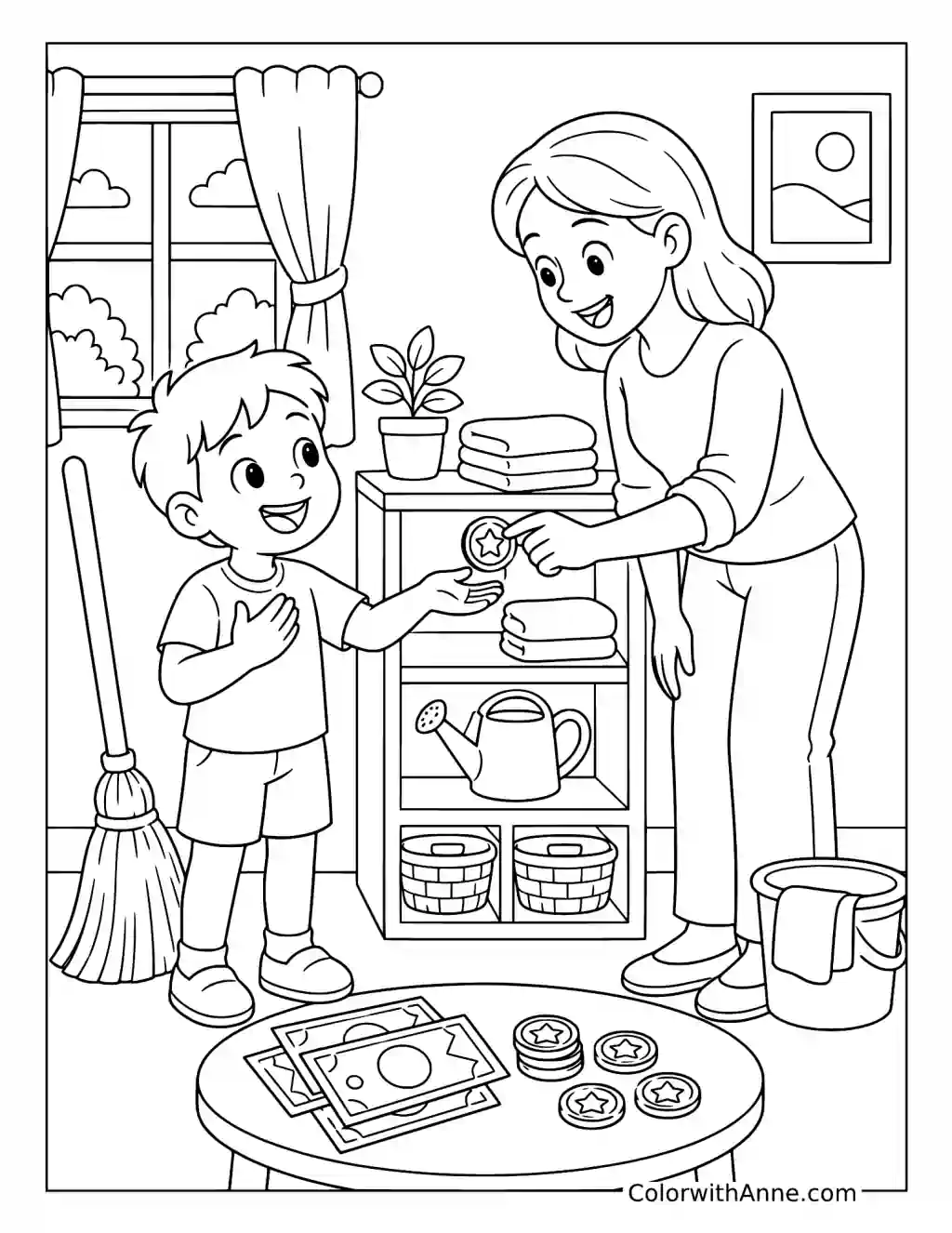
The child and adult exchange money beside a stack of folded laundry. The scene opens a practical conversation about an agreed extra job.
Use a bright shirt for the child, softer colors for the adult, and different shades across the folded clothes. Keep the payment visible between their hands.
If a family chooses to pay for an extra task, settle what needs doing and the amount beforehand. Make the finish clear enough for the child to recognize, such as folding a particular basket of towels. Check the completed job together before handing over the agreed payment, keeping the arrangement separate from other everyday household expectations.