
Rain taps against the window just as the shoes go on, and suddenly the morning needs a different jacket. By lunchtime, sunshine warms the doorstep and the puddles are shrinking. Weather has a habit of changing plans without checking the calendar, but it also gives ordinary days their own sounds, smells, and little surprises.
Weather coloring pages bring that daily noticing indoors. After a walk, a child might choose a picture that recalls what happened outside, then add the date and a few words about it. Even a soggy trip home can become a memory worth keeping once the socks are dry.
Free Printable Weather Coloring Pages
Click any coloring page below to open the PDF, then print on US Letter or A4 paper.
Did you find what you needed?
Help us choose what to create or improve next.
Coloring Ideas for Weather Pages
Try one of these coloring ideas, or use them as a starting point for your own.
Spring Rain and a Garden Ready to Grow
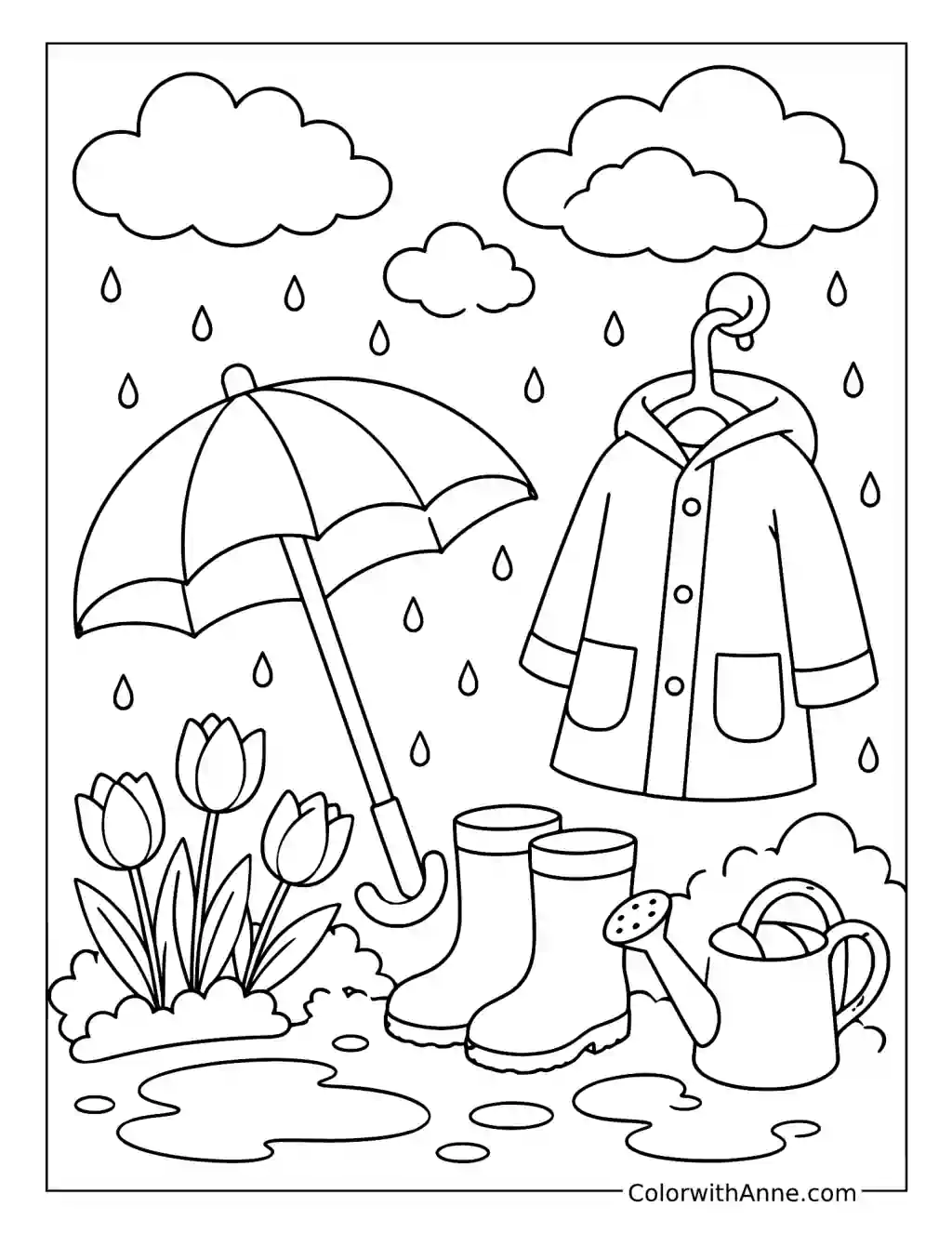
The tulips are standing tall, the boots are ready, and the watering can might get the afternoon off. With raindrops falling around an umbrella and a hanging raincoat, this picture captures the practical little rituals of a wet spring day.
Give the tulips colors borrowed from a garden or a bunch of flowers at home, then make the raincoat the cheerful centerpiece. Its pockets, buttons, and cuffs offer places to add small personal touches without changing the whole design. A favorite yellow coat or a pair of red boots can make the page feel familiar.
Afterward, look at the nearest plant through the window. The picture offers a gentle starting point for noticing what rain leaves behind: wet leaves, darker soil, and puddles where the path was dry.
A Forecast Worth Checking Against the Window
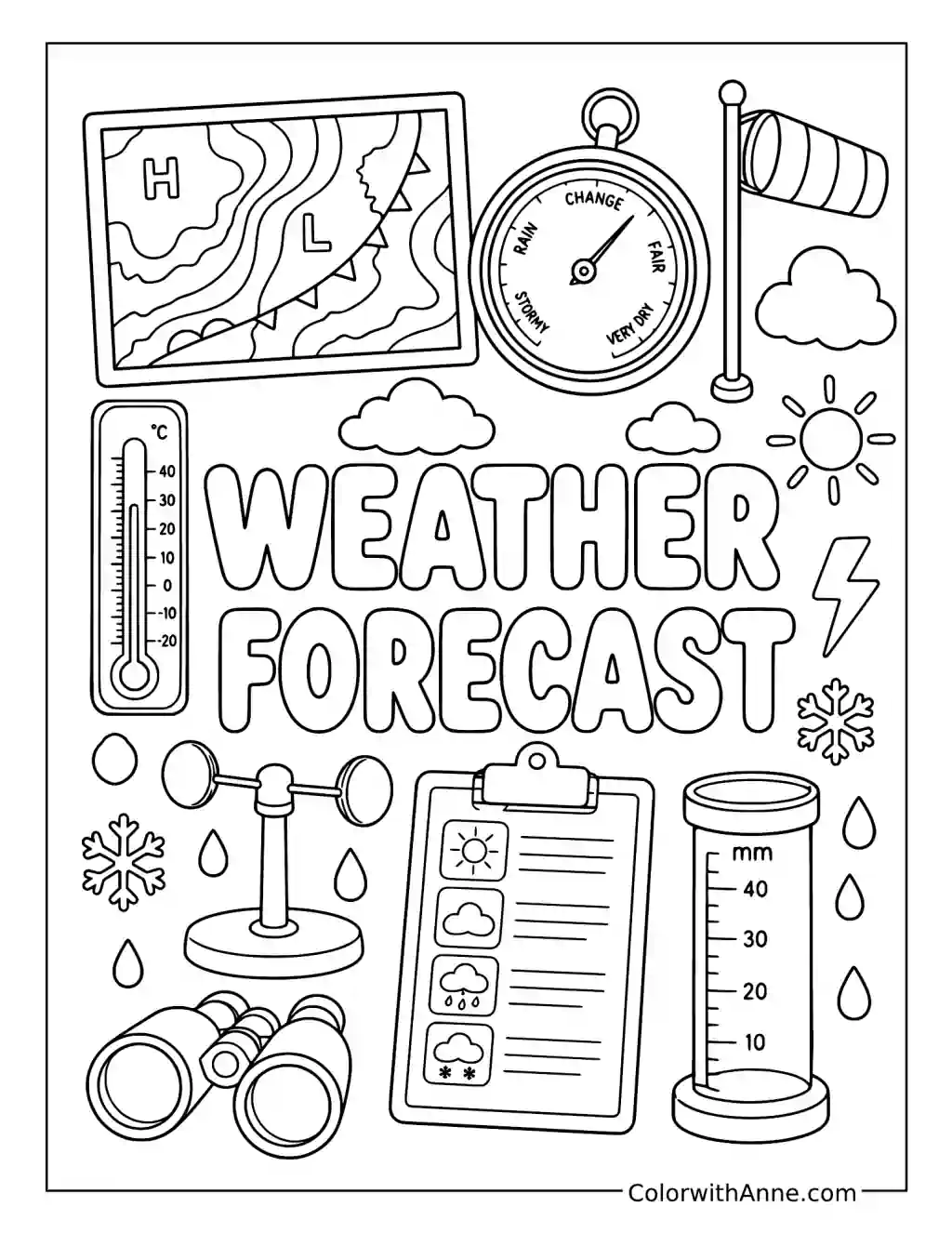
There is plenty to investigate around the large “Weather Forecast” lettering: a thermometer, a rain gauge, a windsock, and a clipboard of weather symbols. The map and round dial give the page the busy feel of a little forecasting station.
Try making this the cover of a week’s weather notes. Keep the observations brief enough to enjoy: the date, a small sky sketch, and whether a jacket was needed. Before looking outside each morning, let the child make a prediction, then compare it with what they actually see.
The instruments in the picture can become talking points as questions arise. There is no need to explain everything at once; wondering what the cup-shaped instrument does is already a good place to begin.
A Rainy Day with One Very Contented Frog
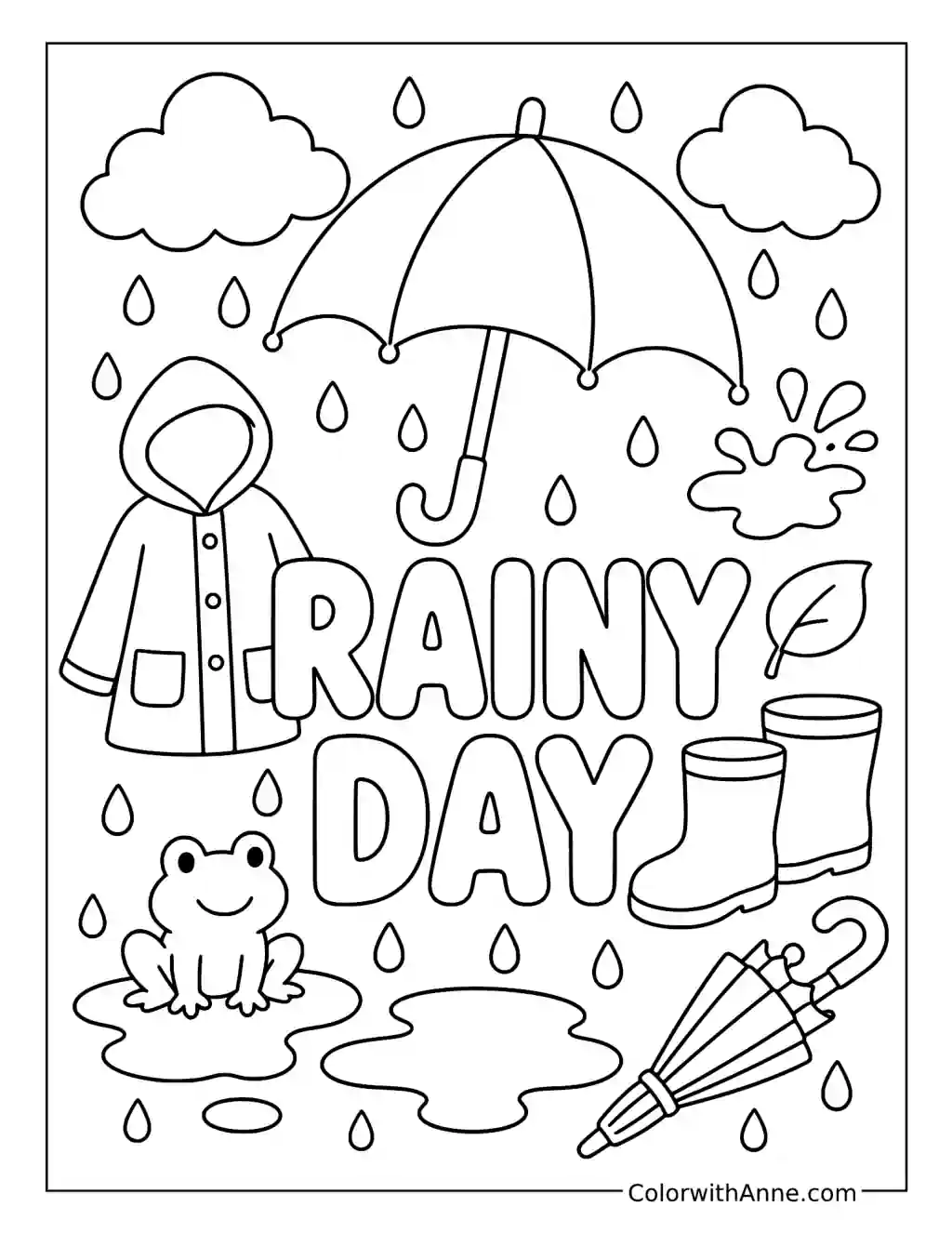
The smiling frog beside the puddles seems perfectly happy with the forecast. An open umbrella, a folded umbrella, a hooded coat, and boots surround the “Rainy Day” message, leaving plenty of room for a playful mix of rainy-day belongings.
Turn the open umbrella into the one a child would choose at a shop. Its separate panels could alternate between two favorite colors, or each hold a different tiny pattern. Let the folded umbrella have its own look rather than making everything match.
For the puddles, leave a few slim white spaces among the blue to suggest reflected light. That small touch helps the water feel wet, while the frog can remain blissfully unconcerned about soggy socks.
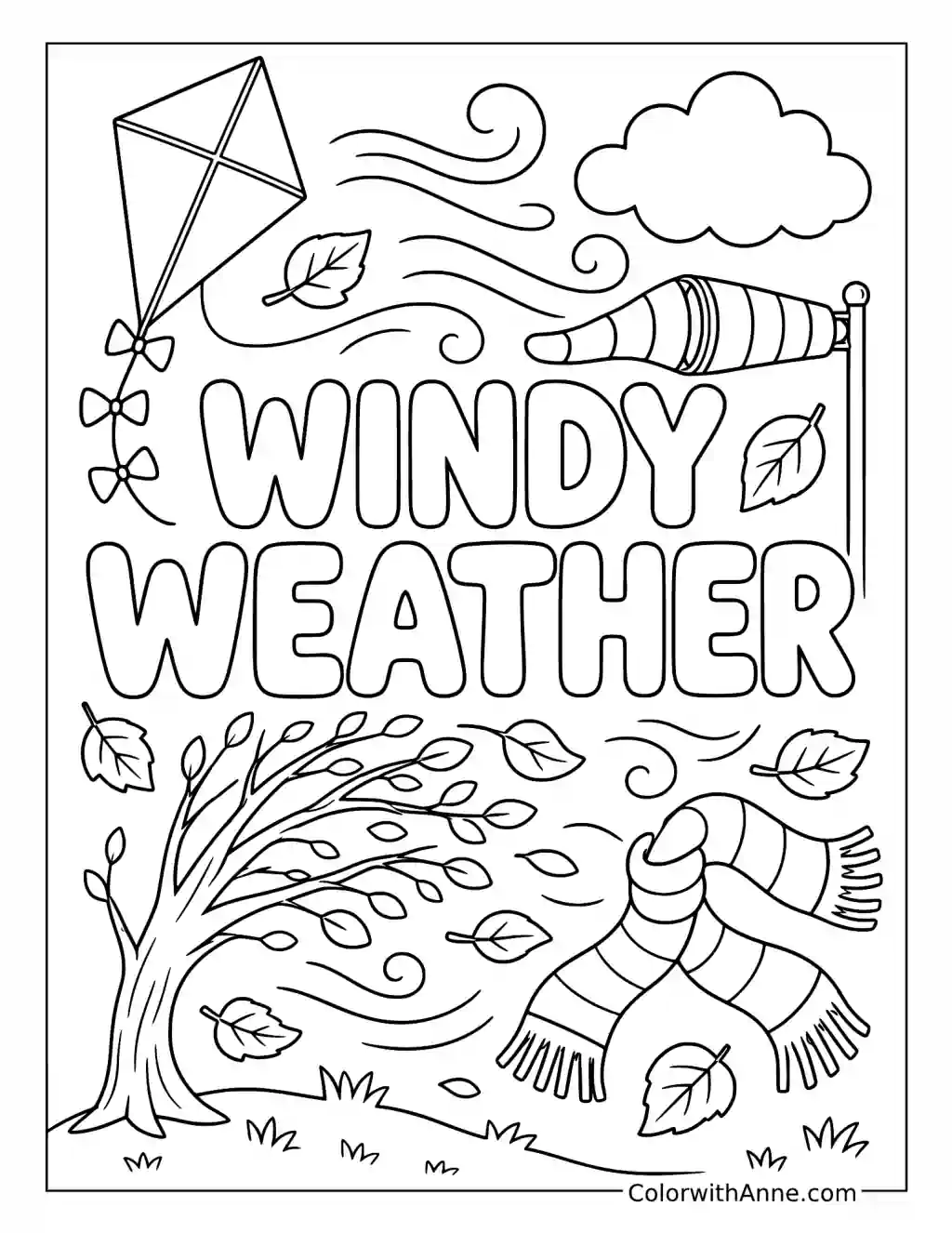
Follow the Gusts Through Windy Weather
The kite, windsock, flying leaves, and bending tree all give the wind something to move. Even the scarf looks caught in the action. Those sweeping lines make this a picture to follow with the eyes before reaching for any colors.
Choose one bright color for the kite and repeat it in its little tail bows. Then give the scattered leaves a mix of greens or autumn shades, depending on the season the picture brings to mind. Keeping the wind lines clear lets that movement remain visible.
Once the page is finished, try spotting the wind’s effects from a window. A branch shifting or laundry stirring can be easier to notice than the wind itself. The illustration becomes a reminder to look for what is moving.
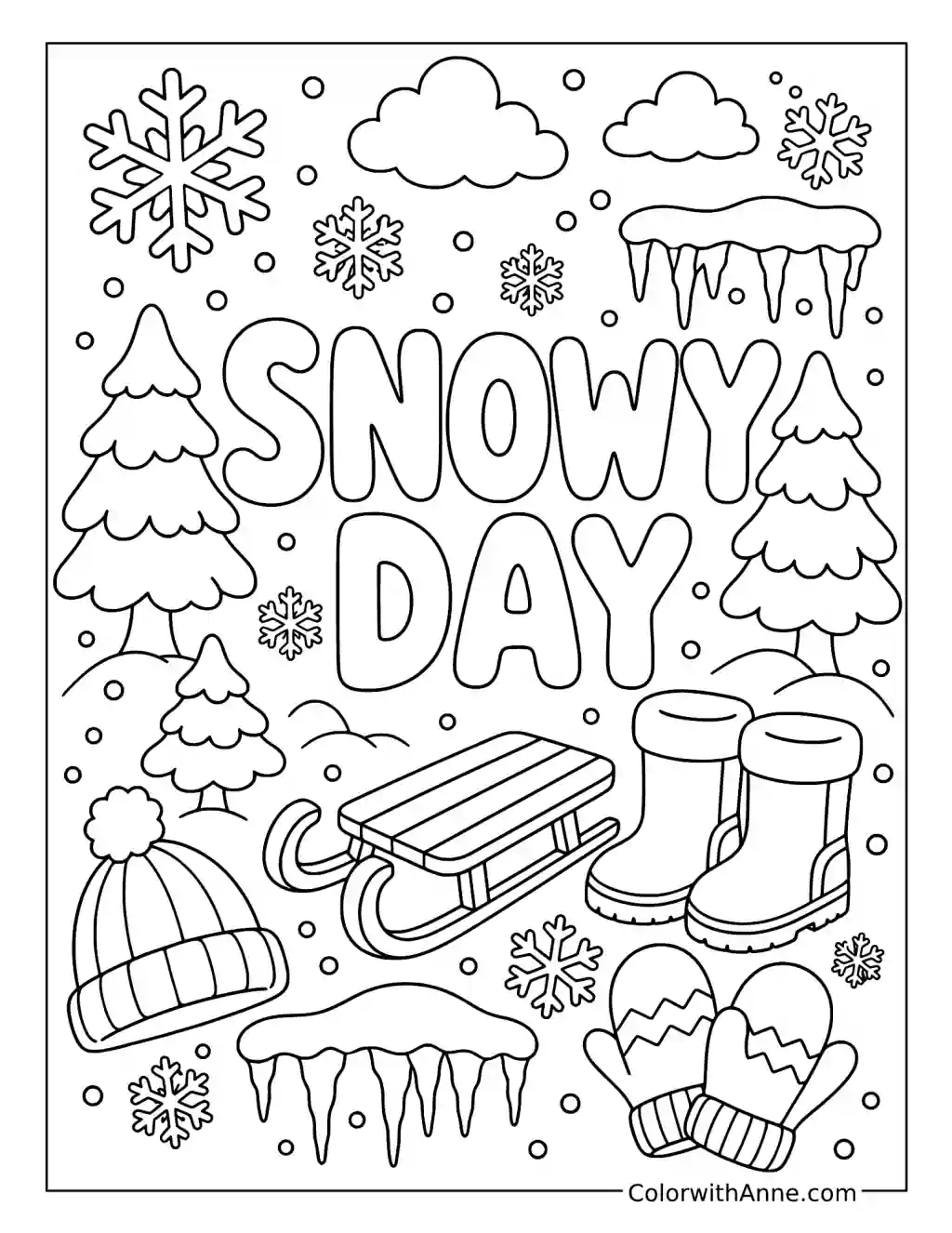
A Snowy Day Dressed in Favorite Winter Knits
The sled rests among snowy trees, with boots, mittens, and a pom-pom hat waiting nearby. It feels like the moment before everyone heads outside, when finding the second mitten becomes the household’s most pressing task.
Use the hat’s sections and the mittens’ cuffs to borrow patterns from real winter clothes. Stripes from a favorite scarf, contrasting cuffs, or a familiar two-color combination will give the picture a cozy personal connection. The sled’s separate wooden boards can stay warm brown against the snow.
Leave the snow mostly white, adding a little pale blue beneath the tree branches and along the edges of the drifts. The winter clothes will stand out, much as they do on an actual snowy afternoon.
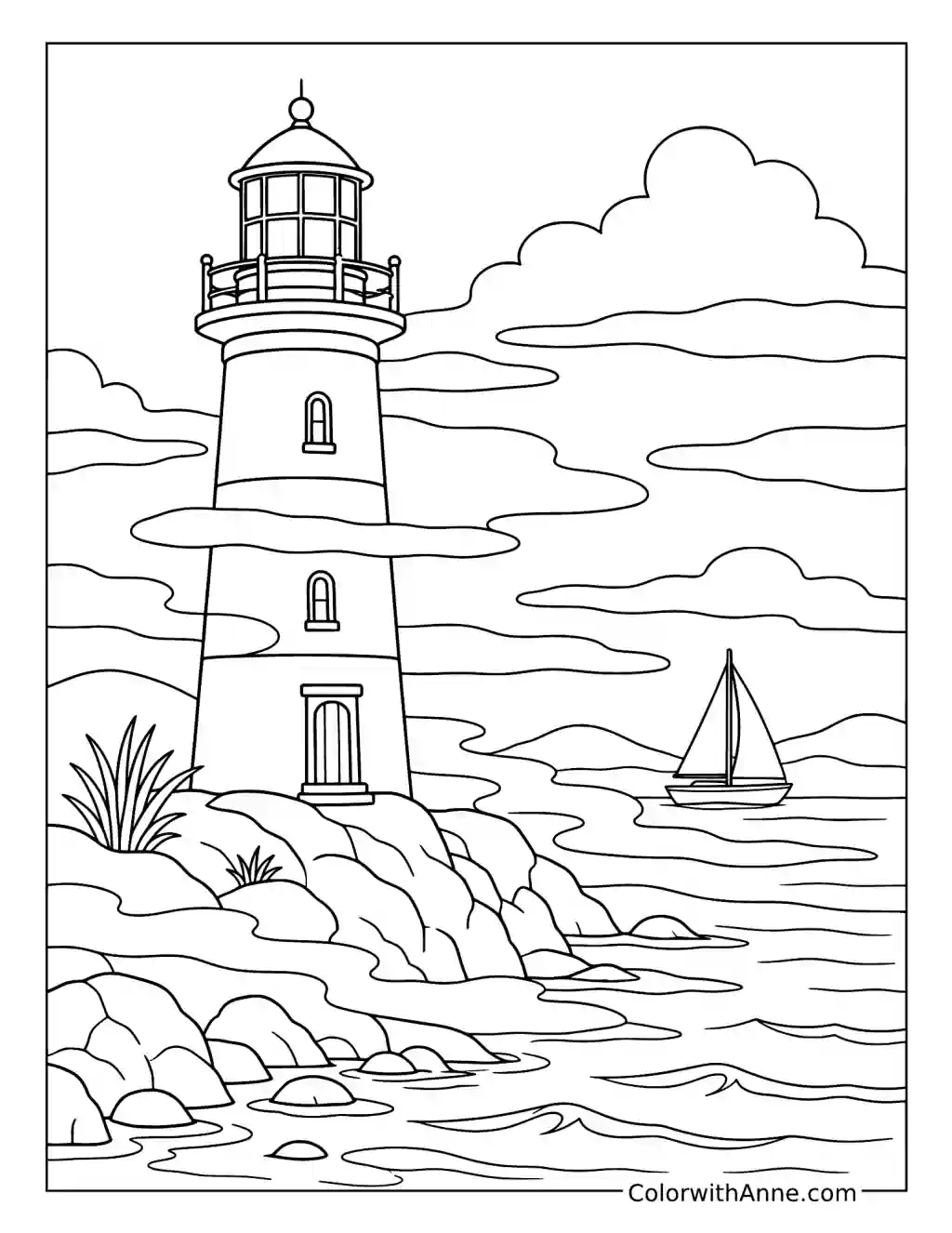
Let the Lighthouse Appear Through the Fog
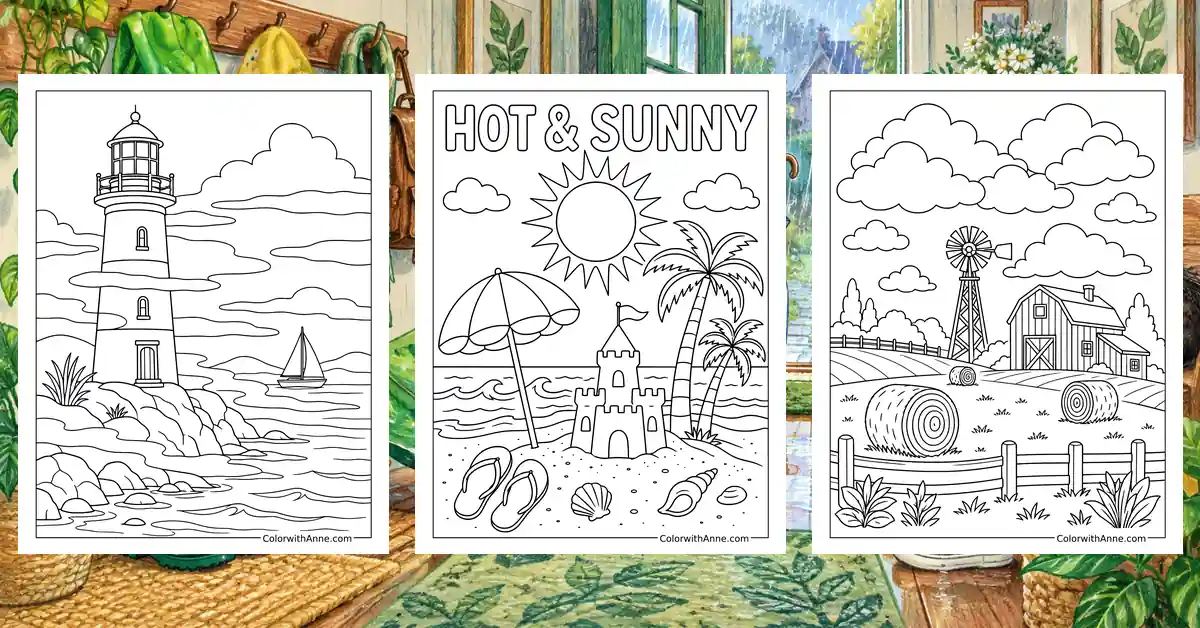
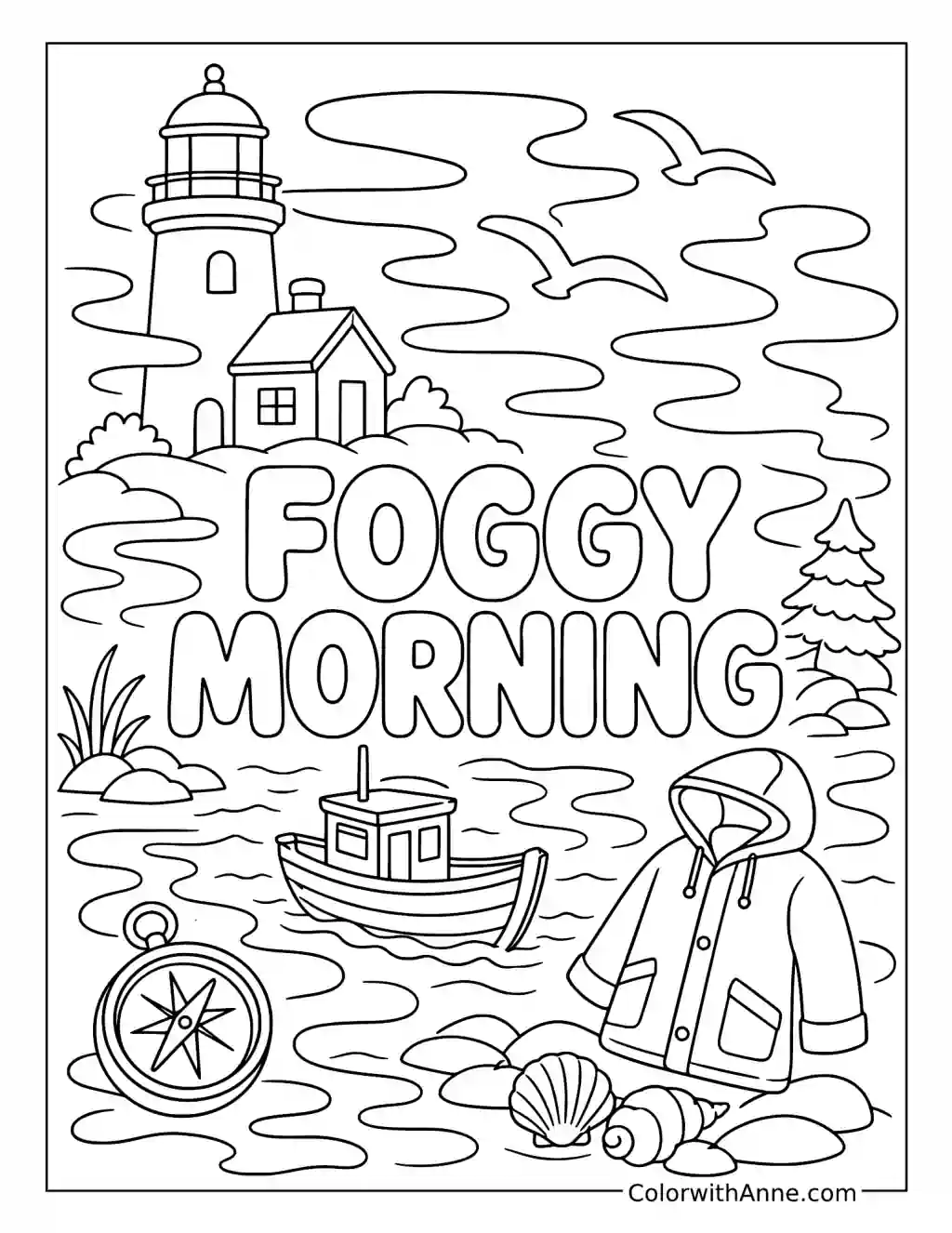
Long banks of fog cross in front of the lighthouse and stretch over the water toward a small sailboat. The rocks in the foreground give the scene a solid footing, while everything farther away feels quieter.
This picture suits a gentle experiment with distance. Make the nearest rocks the strongest colors on the page, use lighter tones for the boat and distant shore, and leave the fog white or barely tinted. Where a fog shape crosses the lighthouse, resist carrying the tower’s color straight through it.
The result can feel like a view slowly coming into focus. A small yellow glow in the lantern windows is enough to draw attention upward without filling the whole scene with bright color.
A Clear Night with Time to Look Up
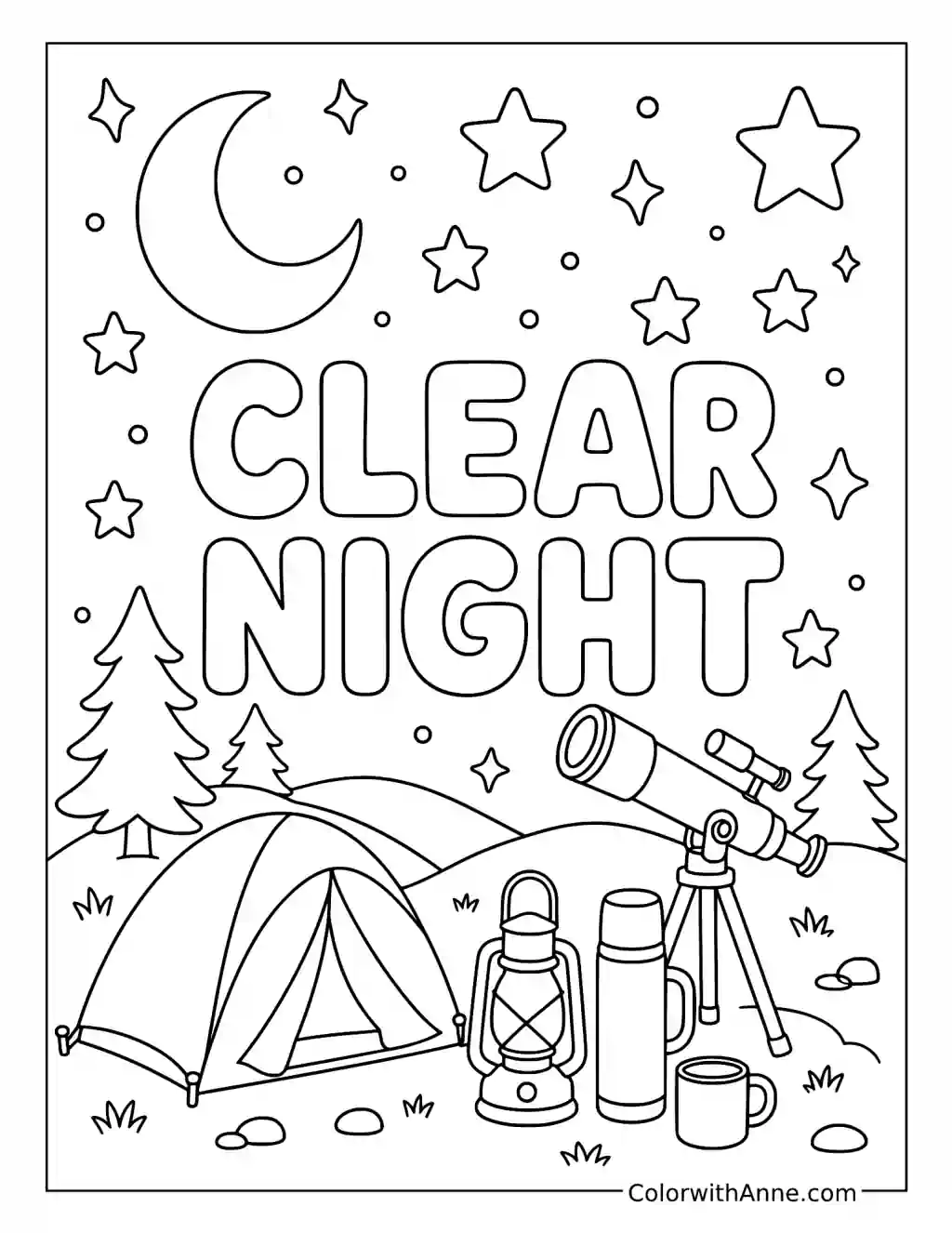
A telescope stands beside a tent, lantern, flask, and mug beneath a crescent moon and scattered stars. The campsite has the comfortable feeling of staying up a little later because the sky deserves another look.
Try coloring this one in the evening, when the room has settled down. A deep blue sky will let pale stars and the moon stand out, while a warm lantern color can bring the eye back to the campsite. The tent can borrow the color of a real family tent, or become the one a child hopes to sleep in someday.
If the sky outside is clear, finish with a brief look through the window. The printed stars are decorative, so treat them as atmosphere rather than a constellation map.
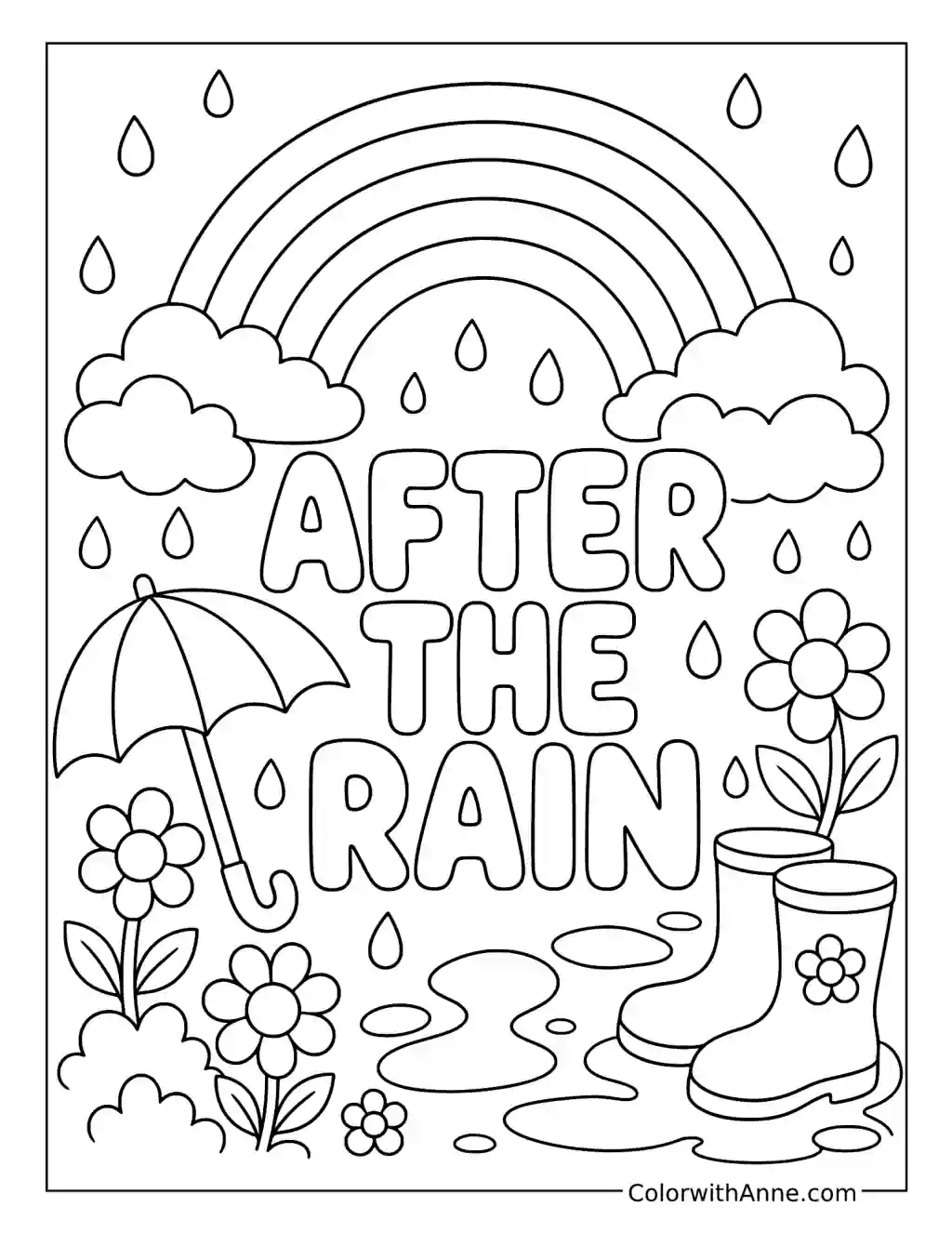
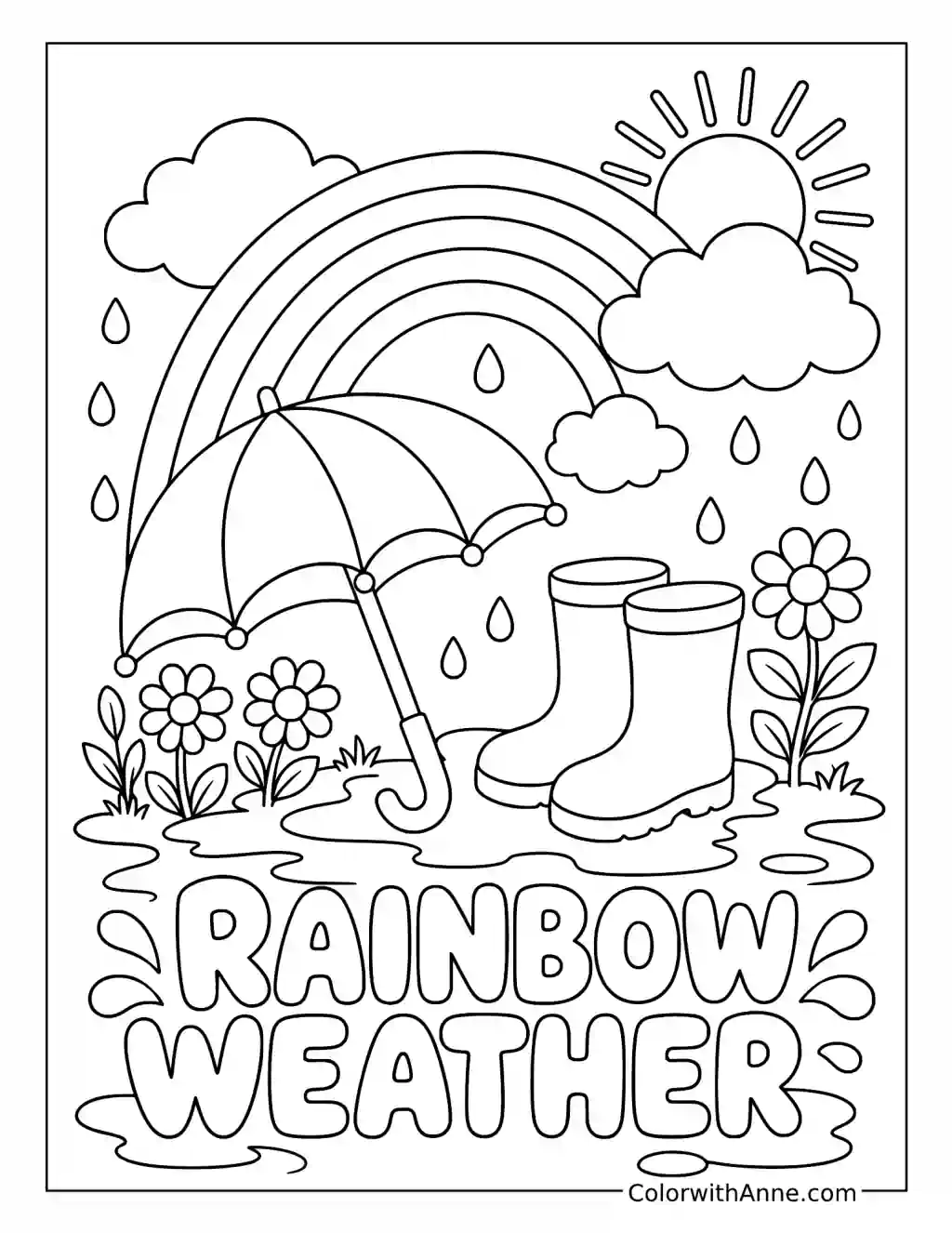
A Rainbow Above the Rain Boots
The sun peeks out beside the clouds while rain still falls around the umbrella, flowers, and boots. The rainbow arches across it all, catching that lovely in-between moment when the weather has not quite made up its mind.
Let the rainbow lead the picture’s colors. Carry a few of its shades down into the flower petals, then choose a quieter color for the boots so the arch keeps its place as the main attraction. The puddles can hold small hints of those same colors, like a fanciful reflection.
This is a lovely page to return to after a rainbow sighting. Add the date and place on the back, along with whatever interrupted the day when someone first spotted it.