
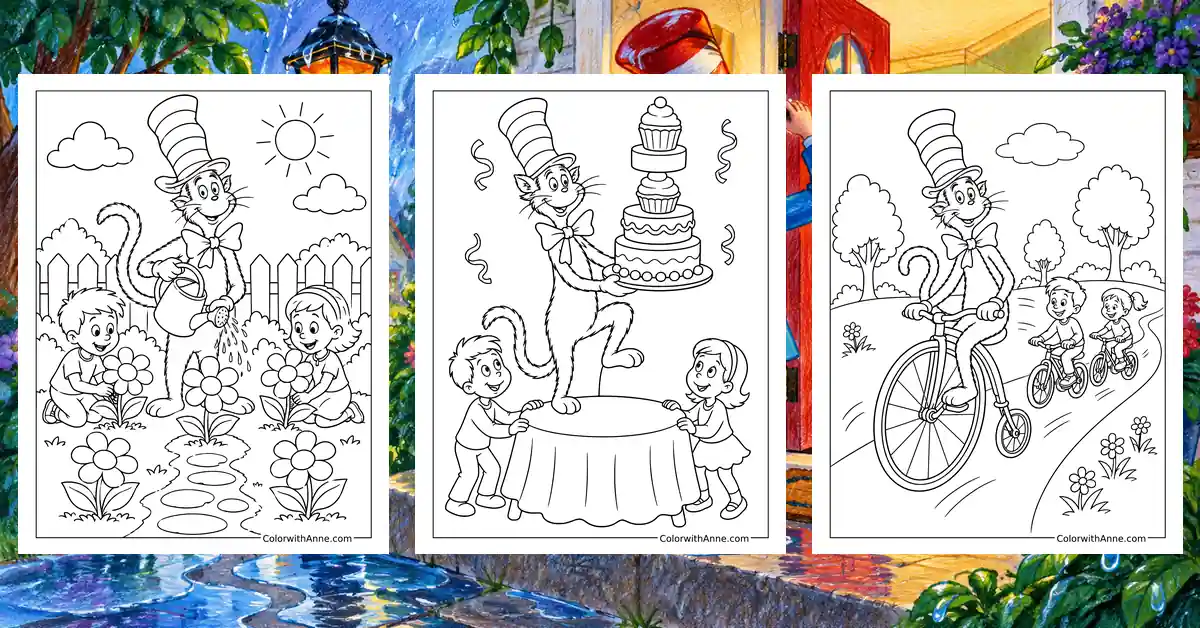
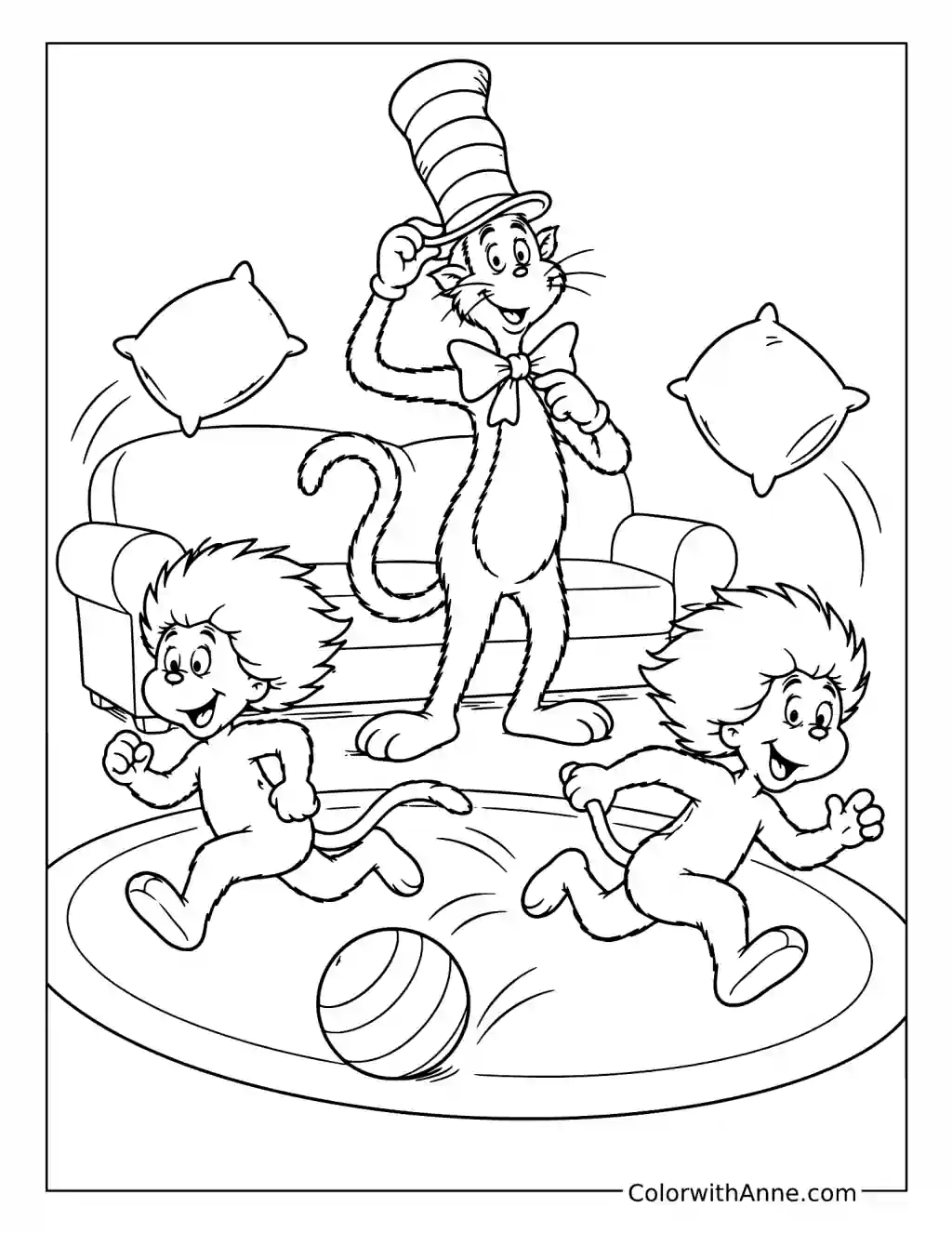
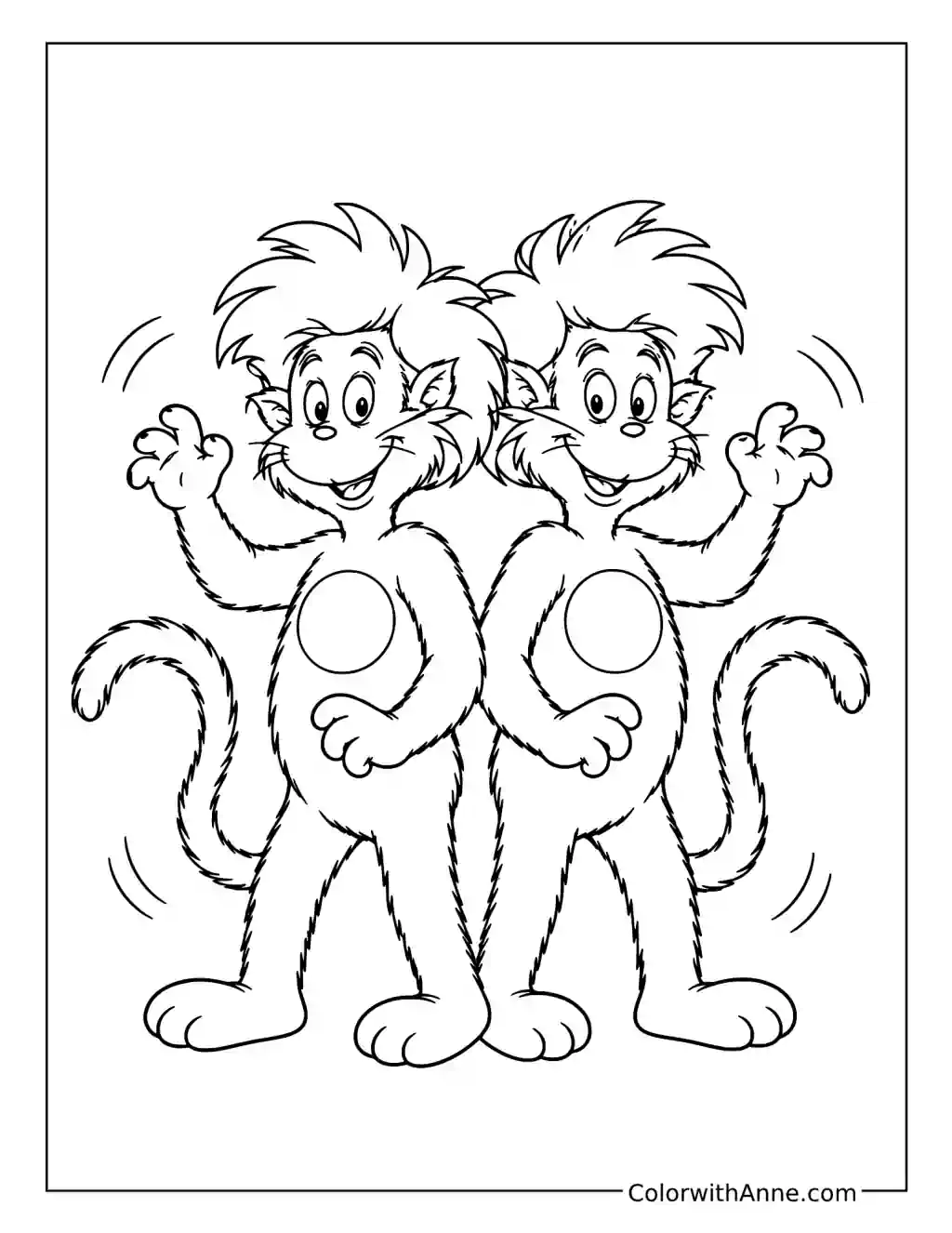
Rain tapping against the window seems like a reason to stay quiet until the Cat in the Hat gets involved. His balancing acts have a way of making an ordinary living room feel much too small, especially with Thing One and Thing Two nearby. The fish has understandable reservations about the entertainment.
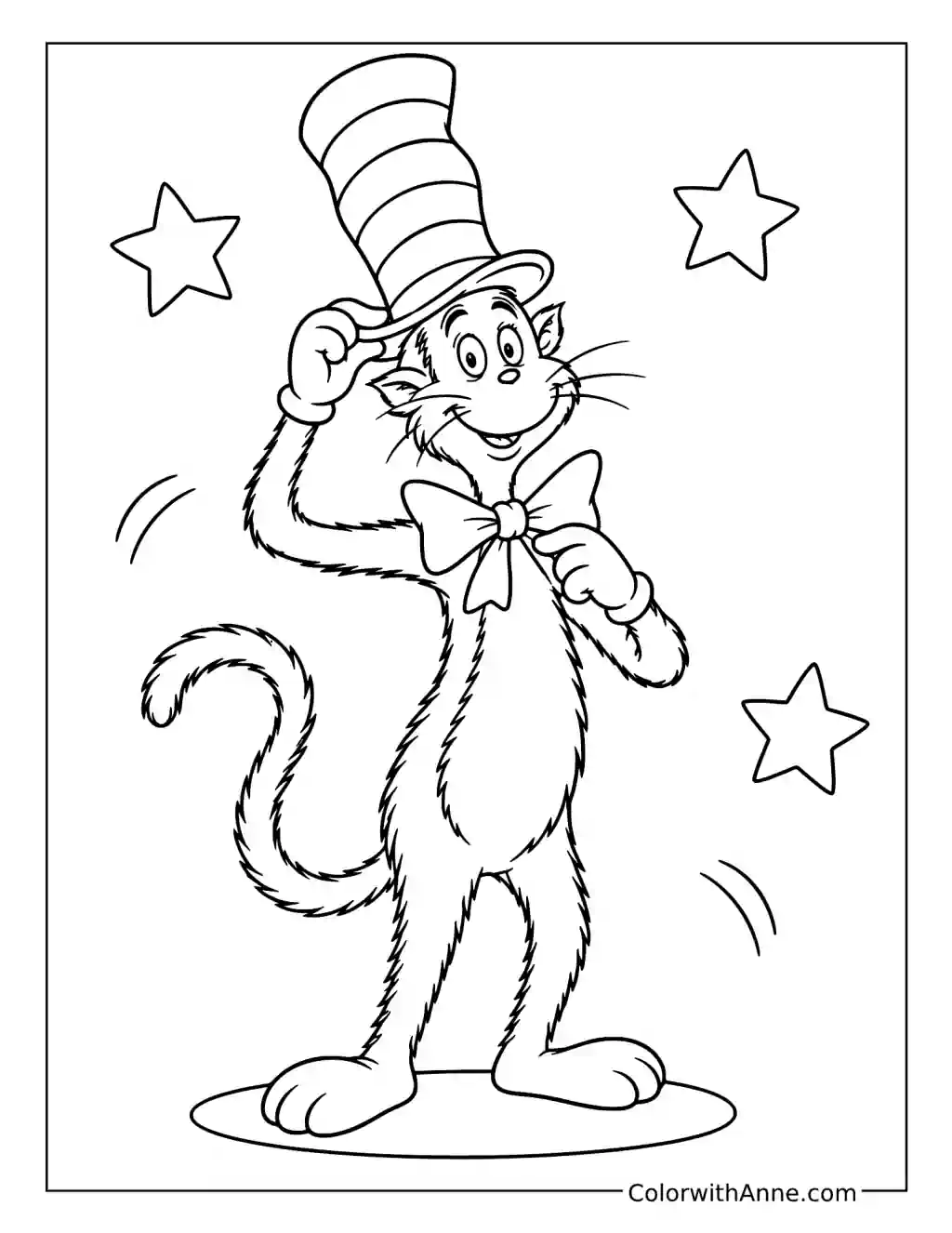
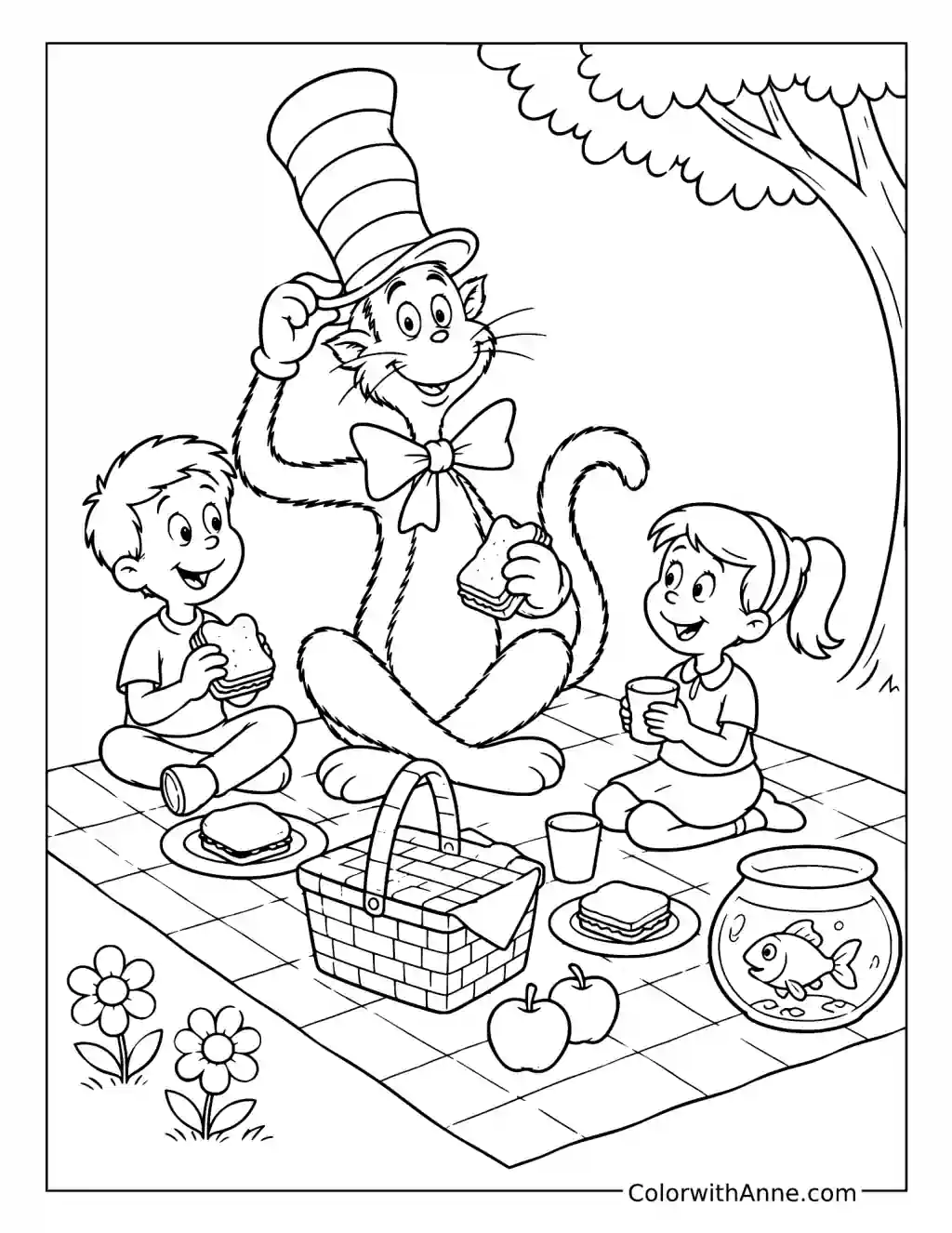
The Cat in the Hat coloring pages bring that cheerful disorder to a moment at the table. His tall striped hat gives the eye somewhere familiar to land, even when the character himself seems unlikely to sit still. There is pleasure in lingering over his mischievous expression without wondering what might topple next.
Free Printable The Cat In The Hat Coloring Pages
Click any coloring page below to open the PDF, then print on US Letter or A4 paper.
Did you find what you needed?
Help us choose what to create or improve next.
Coloring Ideas for The Cat In The Hat Pages
Try these creative ideas to make the most of your coloring sheets.
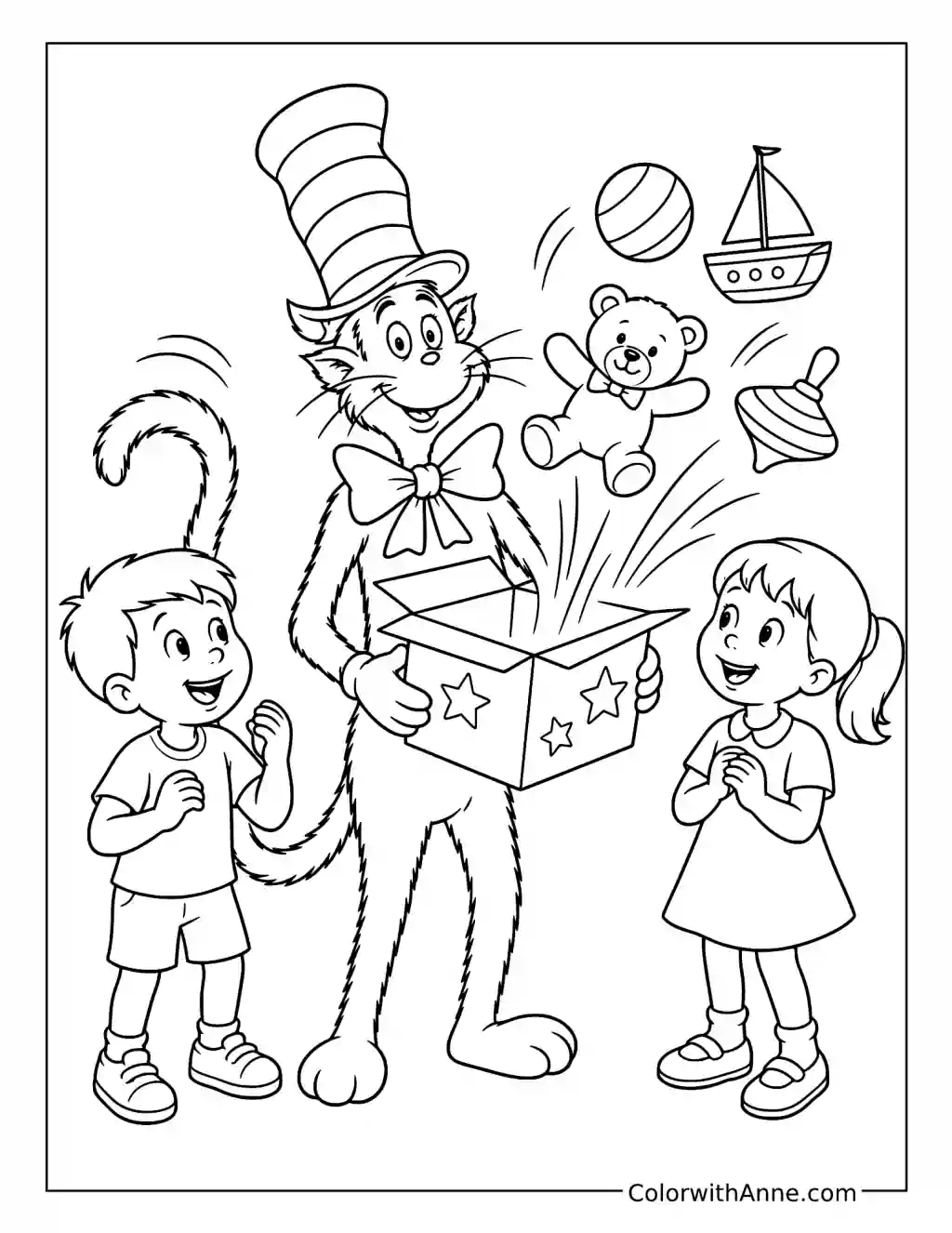
A Toy Box Full of Things to Remember
The Cat holds the open box while a teddy bear, sailboat, ball, and spinning top rise above it. The children look delighted. Apparently, taking toys out one at a time would have been far too ordinary.
Color each toy with a few distinctive details, then try a memory game with the finished picture. Study it briefly, cover the floating toys, and describe what came out of the box. Remembering four objects may be easy; remembering the ball’s stripes or the boat’s small windows takes another look. Swap roles and let someone else ask the questions. The drawing supplies enough surprises without adding anything to it.
The Fish Would Like a Word
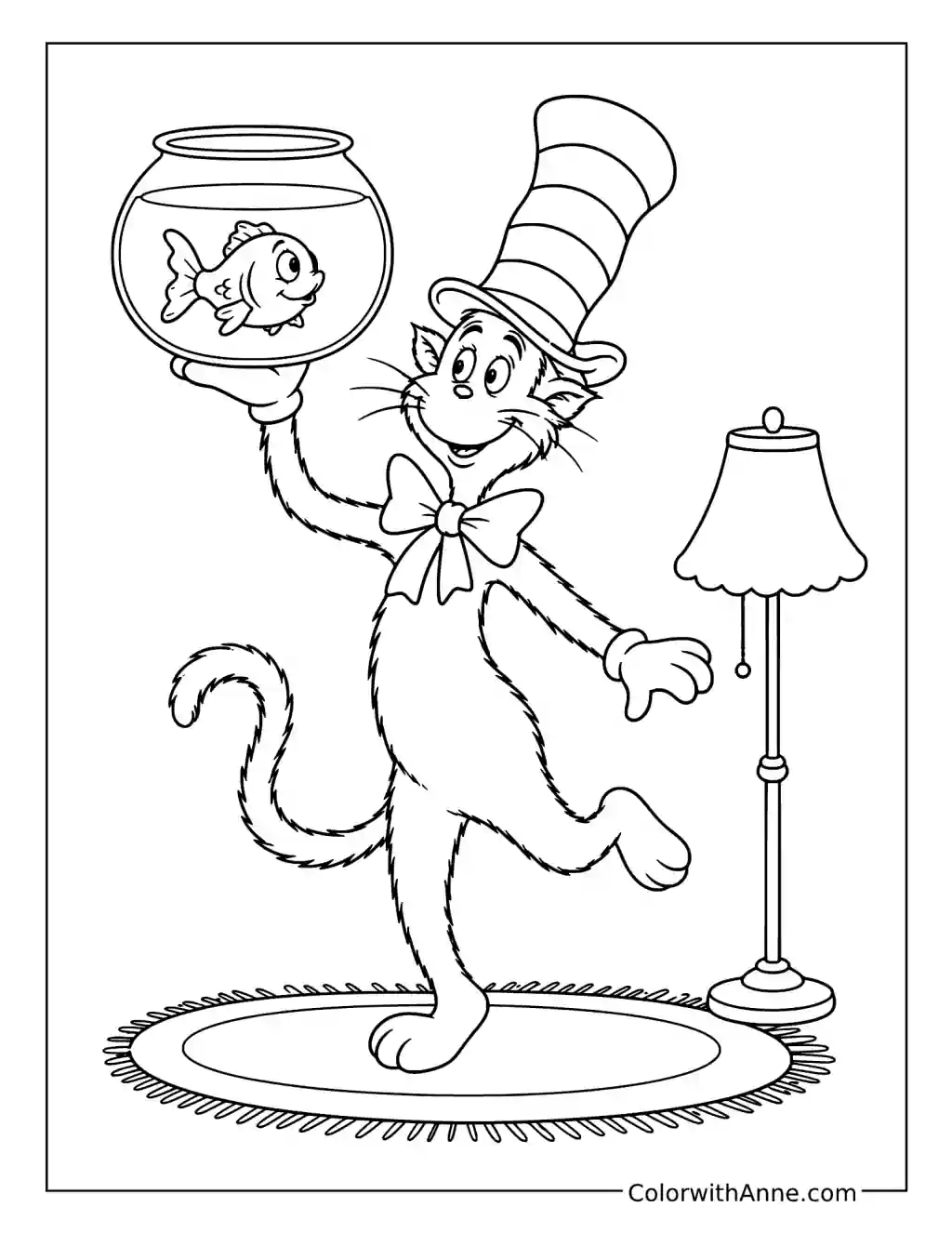
The Cat presents the fishbowl in one raised hand while standing on one leg. His open palm and easy smile suggest a performance going beautifully. The fish has a much closer view of the water.
Give the two characters a short, improvised conversation while coloring. One voice can proudly explain the balancing act; the other can ask practical questions about where the bowl is going to land. Take turns responding rather than planning the whole exchange in advance.
The humor comes from their different priorities. Keep the bowl transparent enough for the fish’s face to remain visible—this little spectator deserves as much attention as the performer.
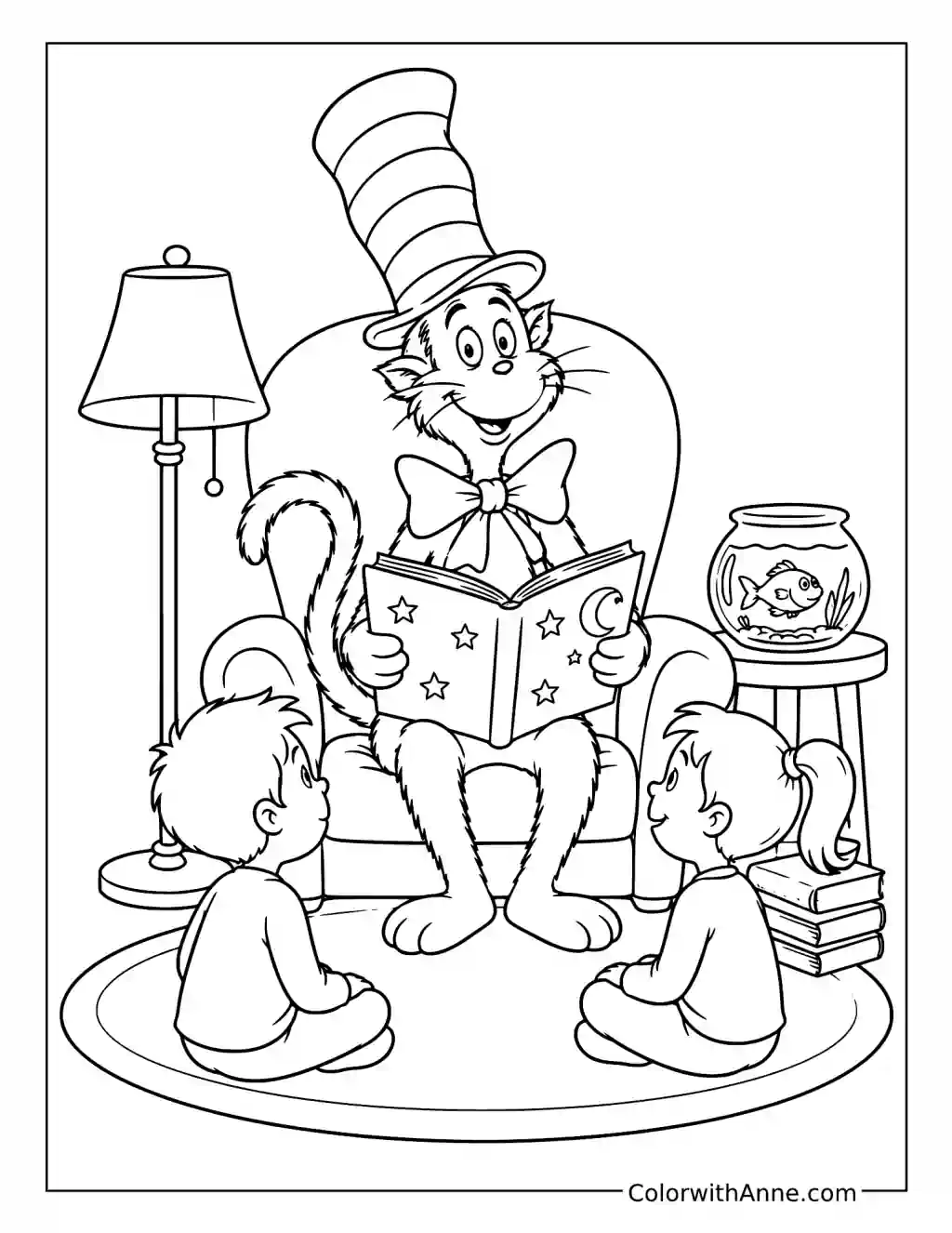
Story Time with a Little Rhyme
An armchair, a lamp, and a book give the Cat a surprisingly settled arrangement. The children sit on the rug, and the fish watches from the side table. It is a comfortable scene to place beside an actual read-aloud.
Between pages, try making small rhymes from things in the drawing: a cat with a hat, a bright light, a book worth a look. Say them aloud and listen for the rhythm. A rhyme that sounds slightly ridiculous fits the company perfectly well.
There is room to enjoy the coloring at the same unhurried pace. The stars and moon on the book cover can become a tiny illustration within the larger one, while the story being read provides the soundtrack.
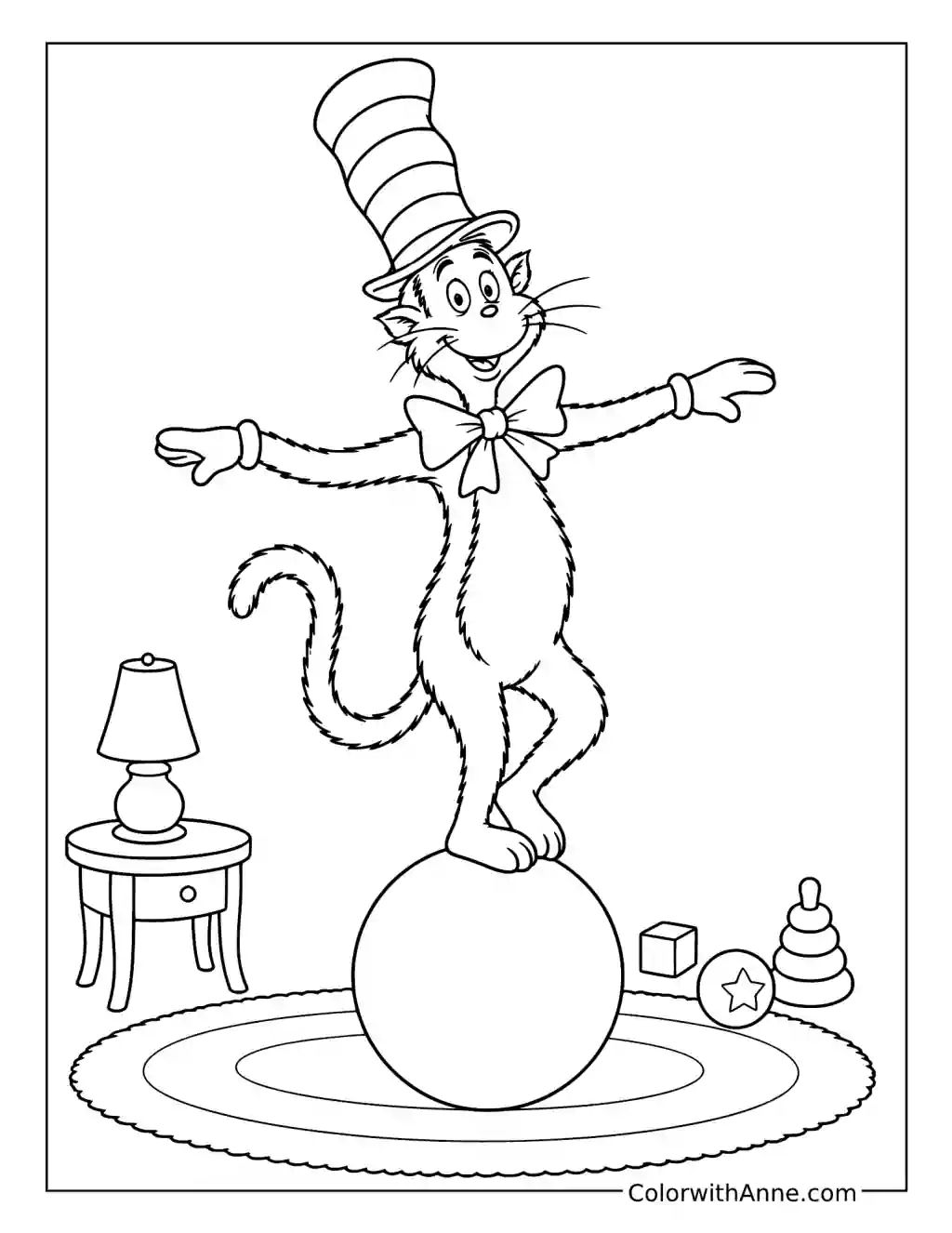
What Else Could Balance on That Ball?
With his arms stretched wide and one foot lifted, the Cat makes balancing on a ball look suspiciously manageable. Around him, a block, a smaller ball, and a stacking toy sit safely on the floor.
Use those nearby objects as prompts for an invented balancing act. On a separate scrap of paper, sketch a tower made from their shapes: perhaps the block supports the small ball, with the stacking rings somewhere above. Rearrange them until the result looks delightfully unlikely.
Keep the original scene as the starting point. Its simple pose leaves enough breathing room to appreciate the Cat’s confidence before imagining the next complication.
The Cake Tower Invites a Closer Look
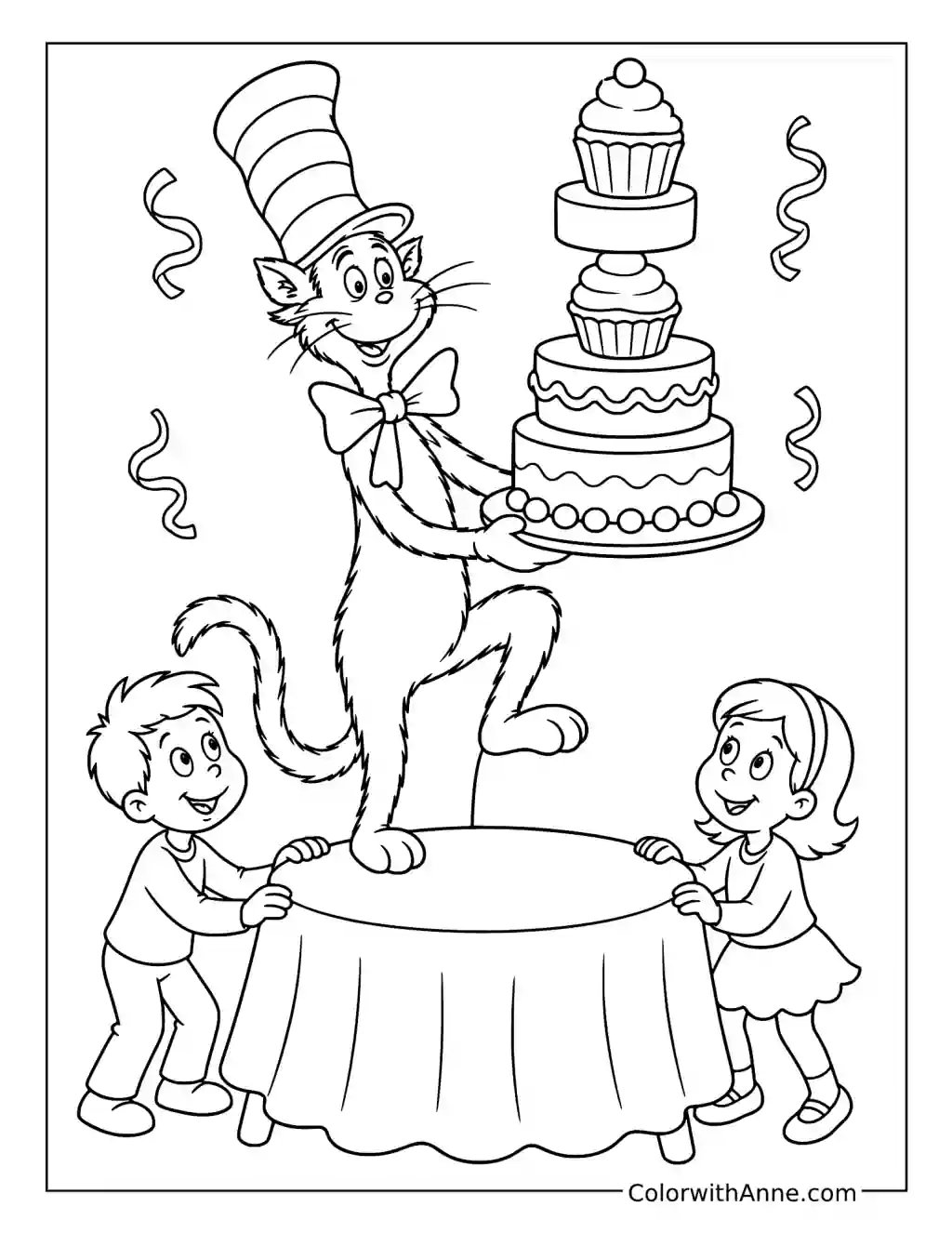
Follow the stack from the platter upward. A large decorated cake supports a smaller cake, with cupcakes and another round layer continuing the climb. Meanwhile, the Cat balances on the table with one knee raised. The children appear much more impressed than concerned.
This page suits someone who enjoys inventing cake decorations. Let one layer have scalloped icing, another a contrasting band, and the cupcakes their own frosting finish. Repeat a few colors through the tower so the treats still look as though they belong together. The fun is designing a spectacular dessert that never has to survive a trip from the kitchen.
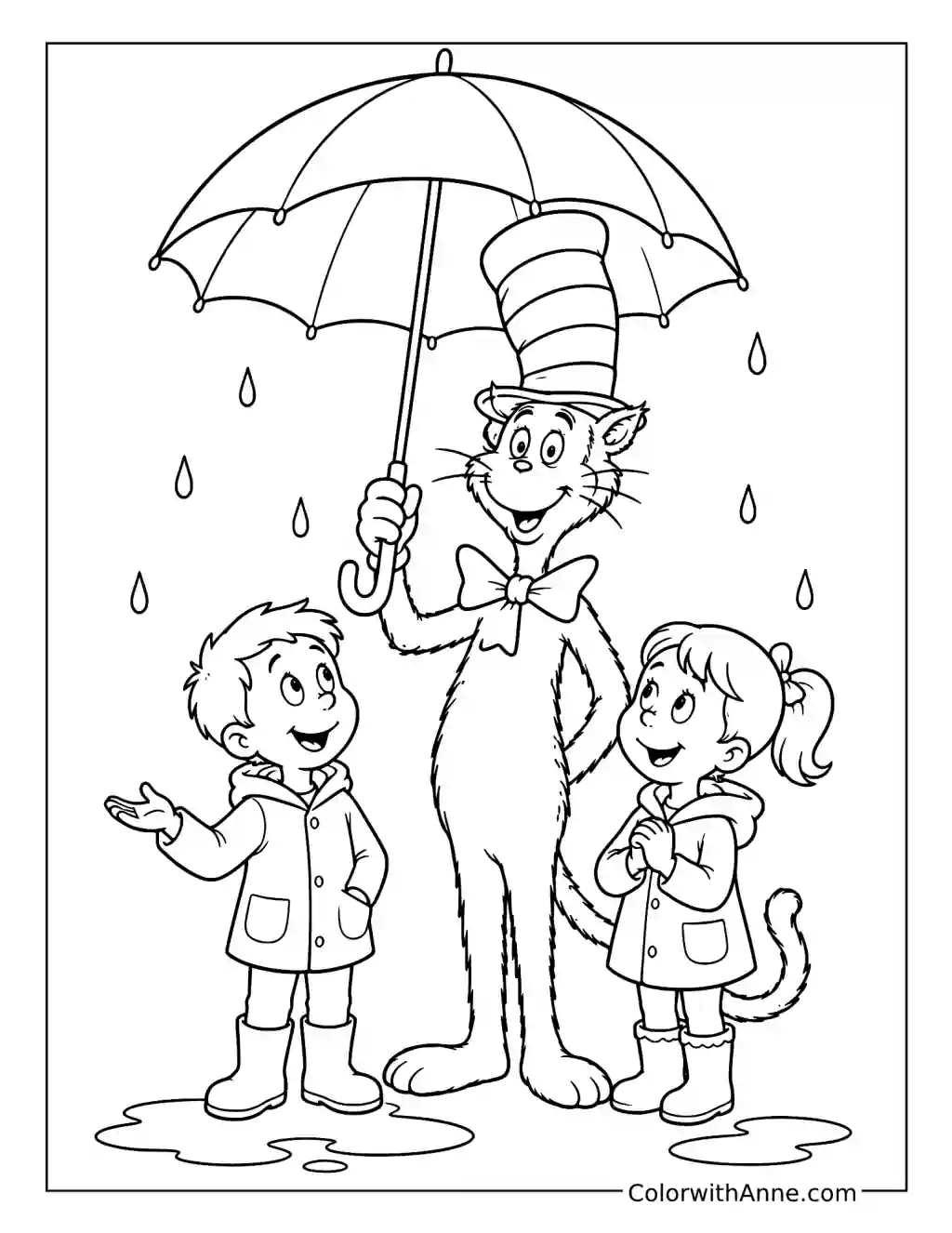
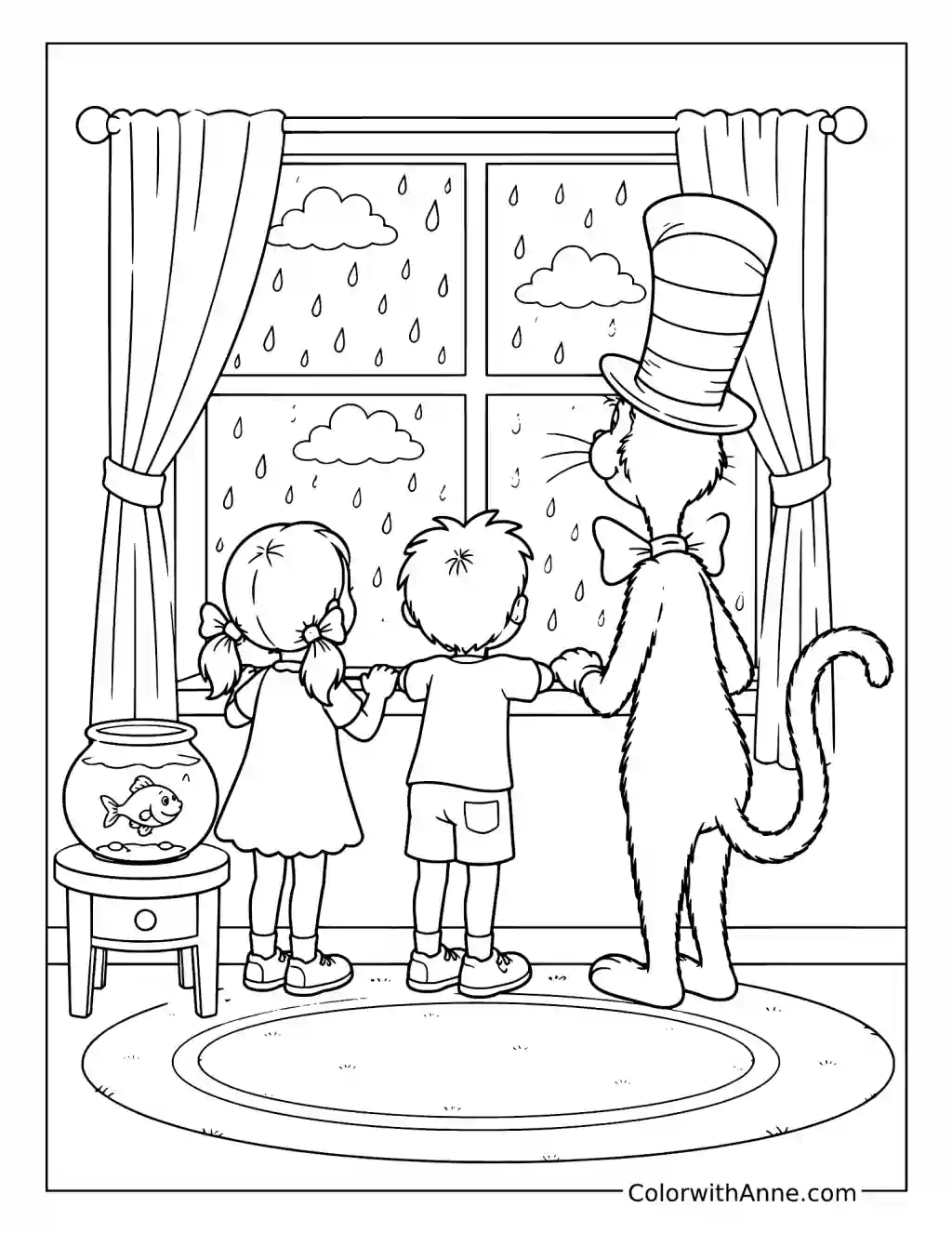
A Rainy Window, Then a Very Different Afternoon
The Cat and the children face the window together, their backs turned toward the room. Clouds and raindrops fill the panes, while the fish stays beside them on a small table. Nothing is flying through the air yet.
Choose this picture and one of the livelier scenes, then decide how the afternoon moves from one to the other. The toy box could interrupt the quiet watching, or the balancing act might begin as an attempt to entertain everyone. Color the two pages with matching clothing and room colors so they feel connected.
Placed side by side, they form a small imagined sequence. The rainy view establishes the pause; the next picture supplies whatever the Cat decides to do with it.
At Last, the Toys Are Going Back
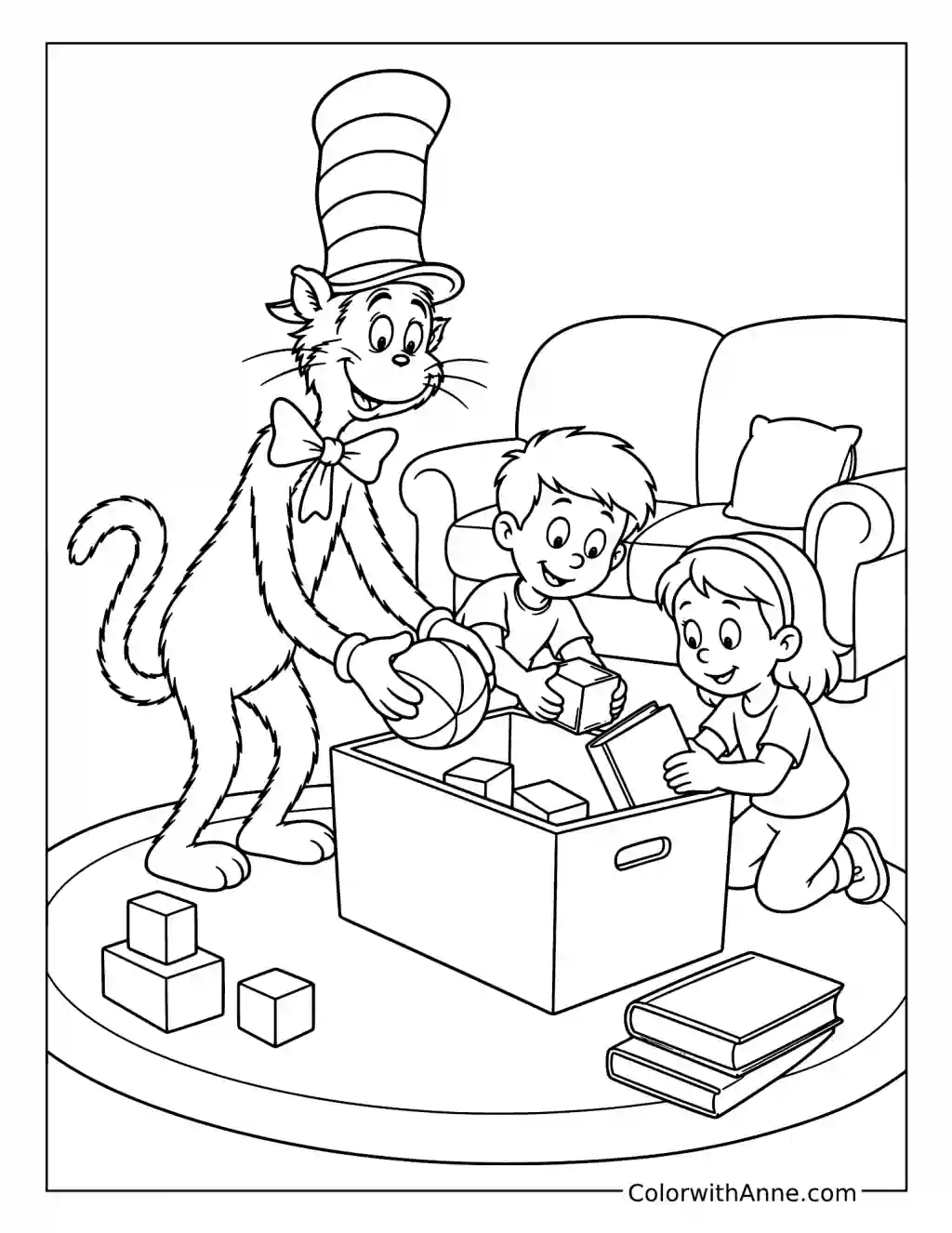
The Cat brings a ball toward the box, the boy collects a block, and the girl holds a book. More books and blocks remain on the rug. Everyone has something in hand, making the cleanup feel like a shared effort rather than a job left for one person.
Bring this page out when a real play space needs attention. Work on the picture for a few minutes, put away a small group of toys, then return to it. There is a pleasing connection between filling the illustrated box with color and clearing the actual floor.
The sofa and rug can borrow colors from the room where the activity happens. That familiar setting makes the Cat’s unusually helpful moment feel a little closer to home.