
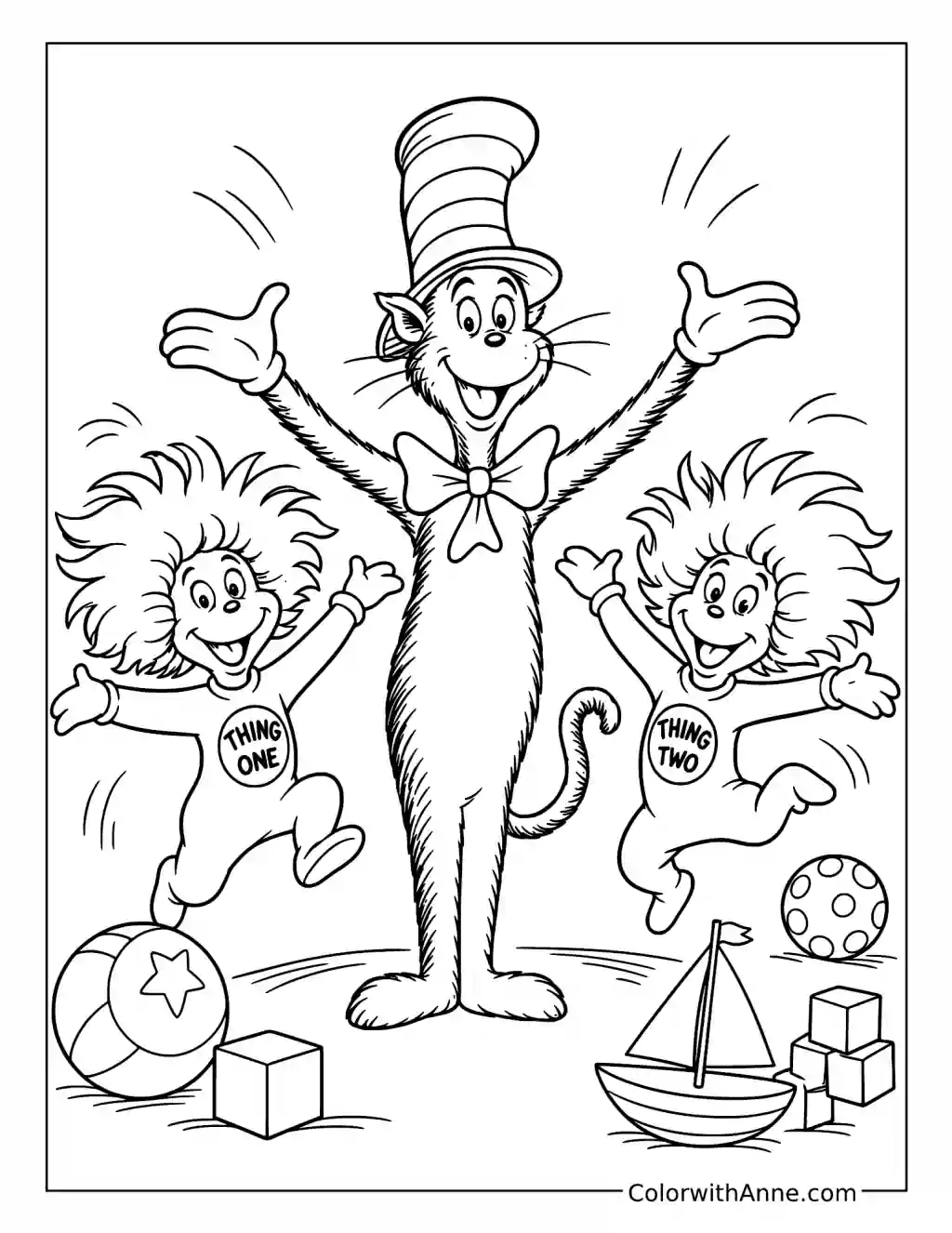
Reading Dr. Seuss aloud tends to start calmly, then suddenly the tongue has more work to do than expected. A bedtime book becomes a small performance, with a finger following the words and someone giggling before the rhyme is finished. Even the Cat in the Hat’s towering stripes feel familiar enough to spot across a crowded bookshelf.
Dr. Seuss coloring pages bring that playful feeling to a quieter moment at the table. The Cat in the Hat, the Lorax, and Horton each have a look all their own, from a splendid mustache to ears that leave very little room for a modest entrance.
Free Printable Dr. Seuss Coloring Pages
Click any coloring page below to open the PDF, then print on US Letter or A4 paper.
Did you find what you needed?
Help us choose what to create or improve next.
Coloring Ideas for Dr. Seuss Pages
Try one of these coloring ideas, or use them as a starting point for your own.
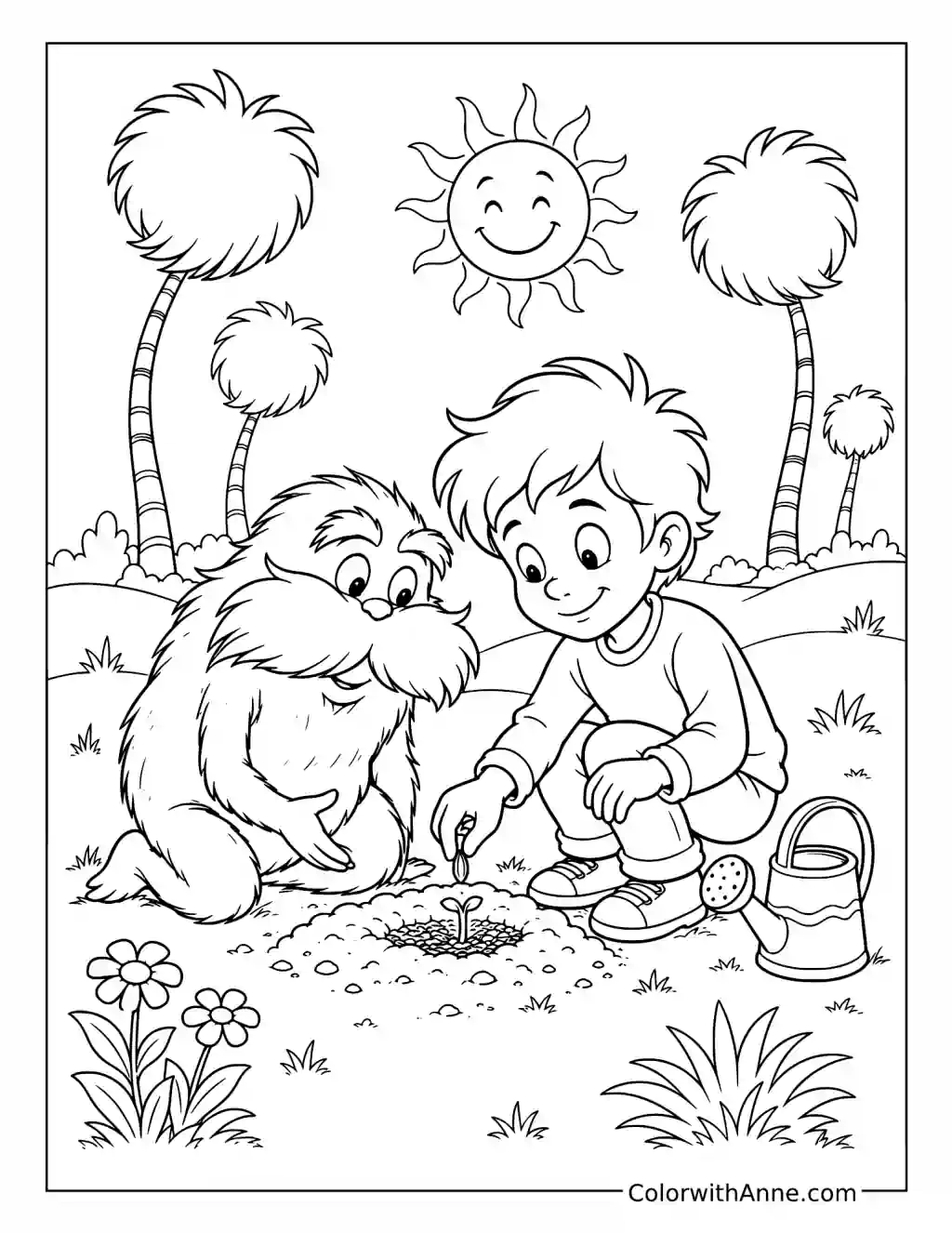
Plant Something Alongside the Lorax
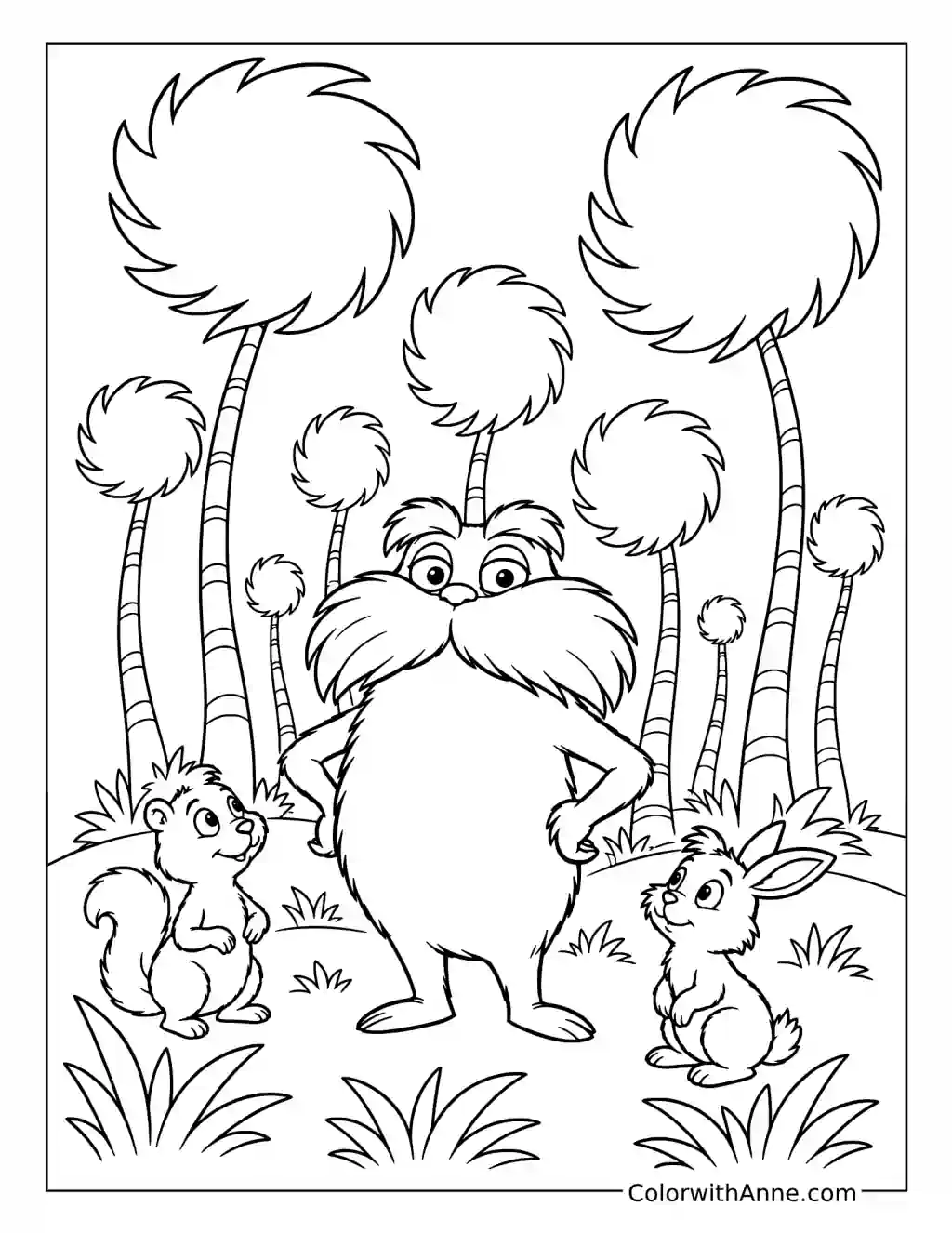
The Lorax watches a child tending the soil, with a watering can nearby and Truffula trees rising behind them. This page fits naturally beside a small planting project, whether there is a garden outside or just room for a pot on the windowsill.
After coloring, plant a bean or another suitable seed in a separate container. Write the planting date on the back of the page and keep it near the pot, away from splashes. As the seedling grows, add a few observations: the first shoot, a new leaf, or the day it finally leans toward the window.
Give the Fox a Pair of Socks Worth Showing Off
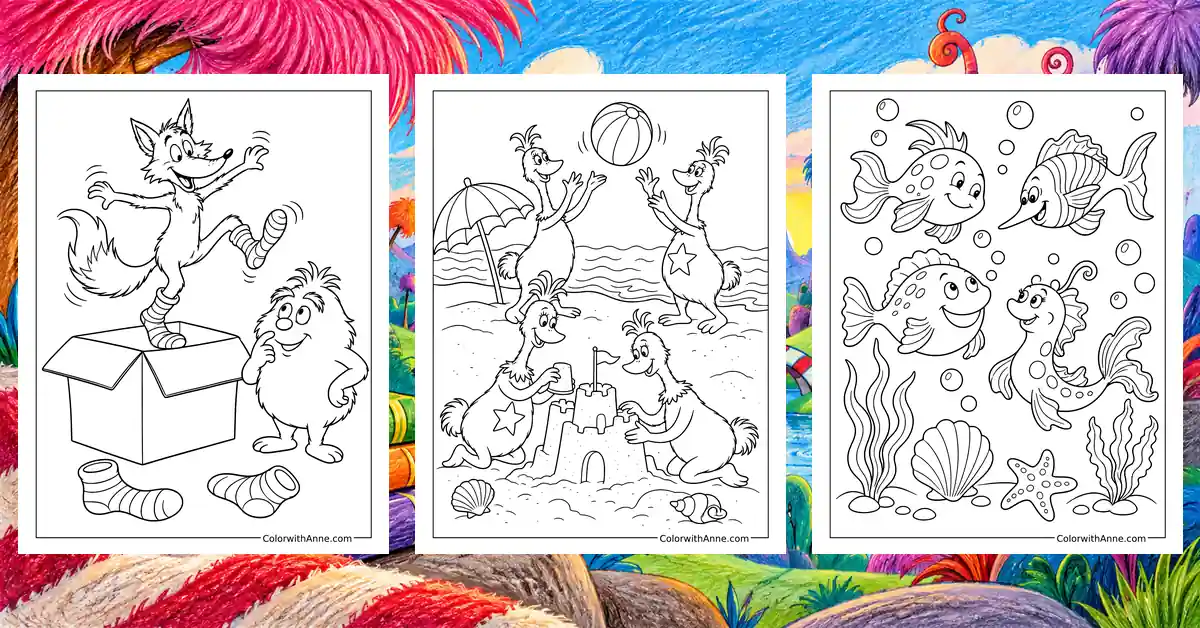
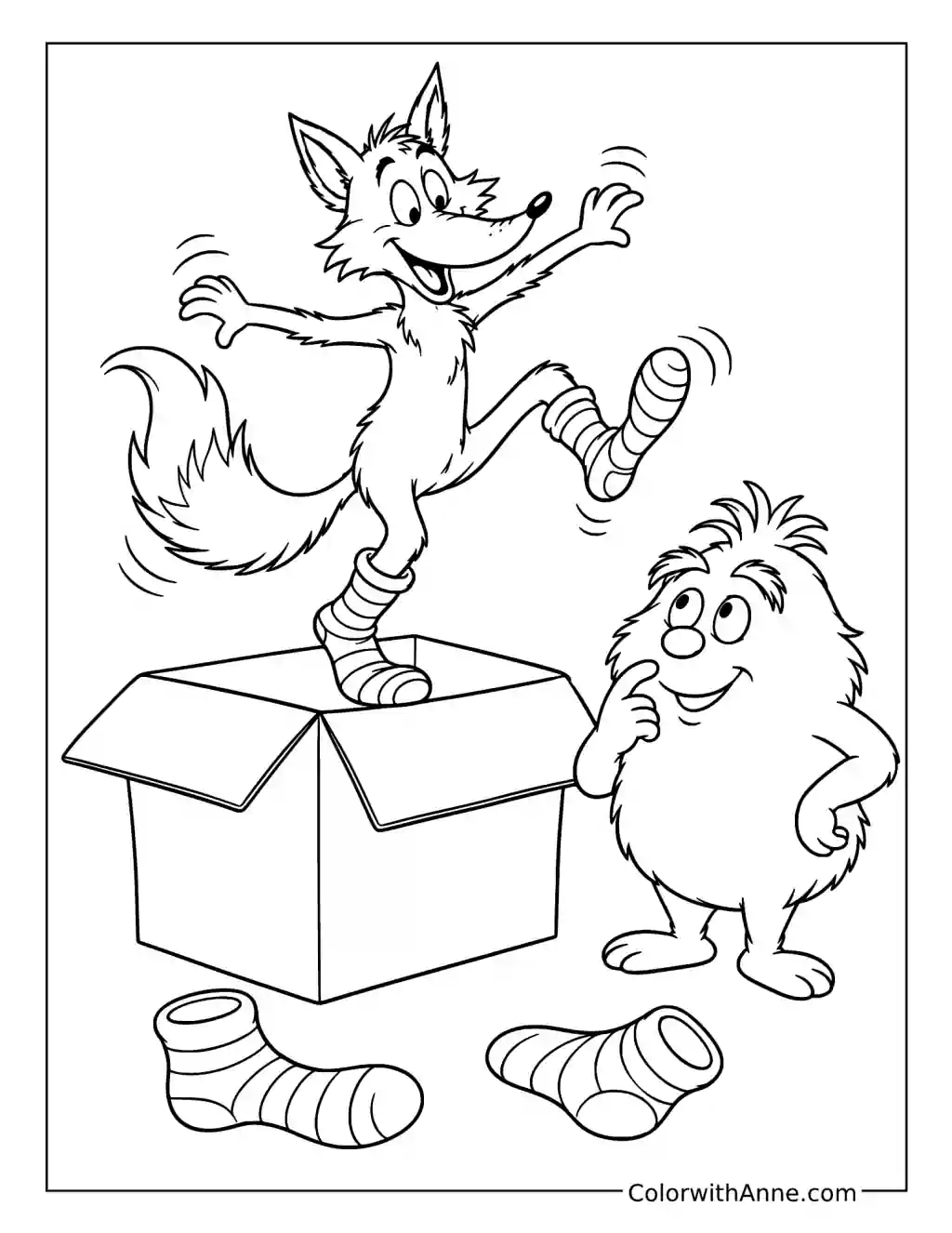
The fox has one foot raised above an open box, while loose socks lie below and his companion looks on. Borrow a pattern from an actual favorite pair: rugby stripes, tiny dots, or gloriously mismatched heels and toes. Follow the curved lines around the raised foot so the pattern feels wrapped around it.
If Fox in Socks is on the bookshelf, keep the finished page beside it for the next read-aloud. The picture offers a pleasant pause when those tongue-twisting lines start getting the better of the reader.
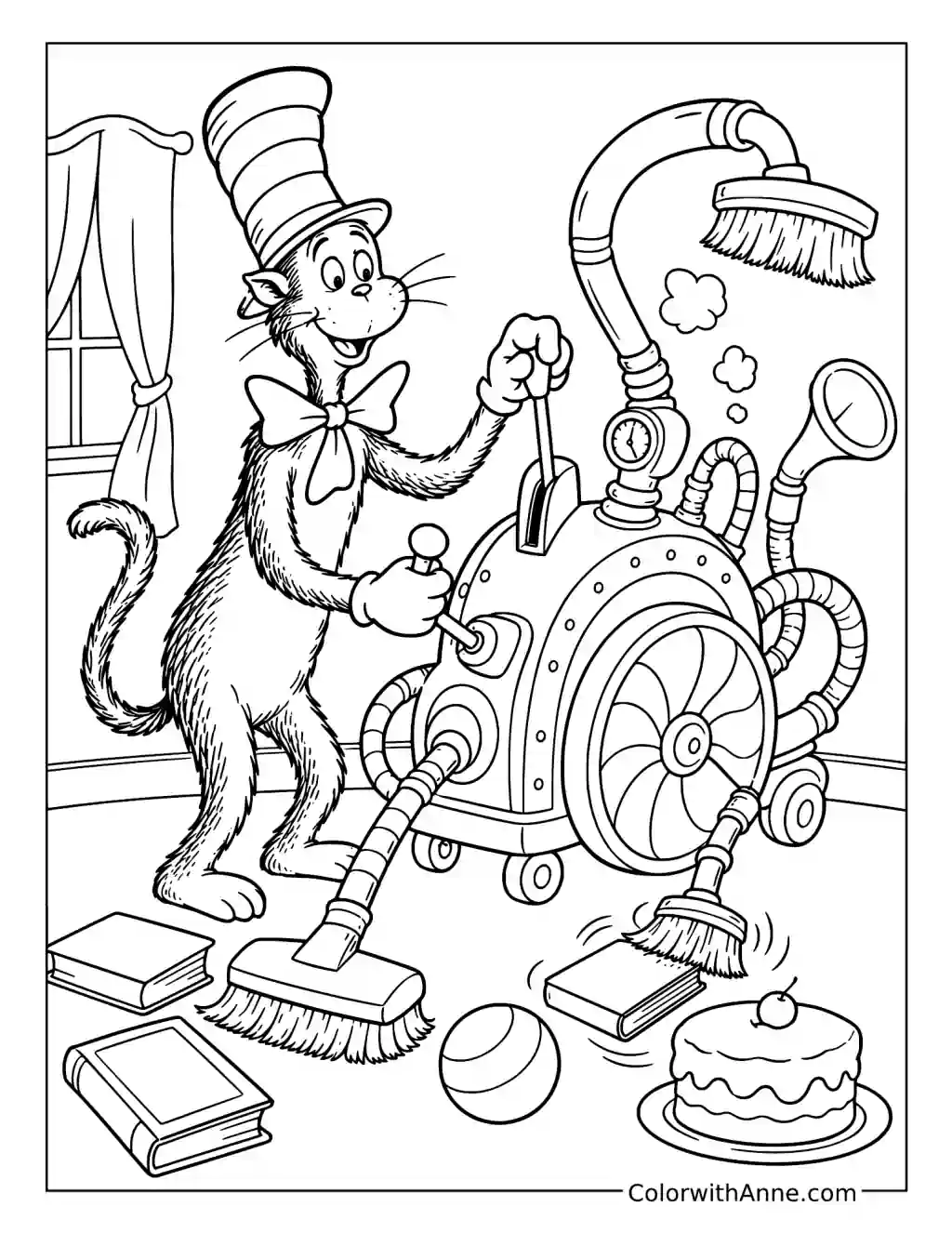
Invent an Attachment for the Cat’s Cleaning Machine
Brushes, hoses, a gauge, and a big central wheel make this machine look wonderfully busy. Trace the connections with a finger before coloring: which parts might sweep, scrub, or suck something up? The books, ball, and cake nearby give it quite an assortment to work around.
On a separate sheet, sketch one extra attachment for a real household nuisance. Perhaps it gathers stray building bricks or retrieves socks from under the bed. Label its parts with arrows and put the drawing beside the finished page. The Cat’s contraption provides plenty of encouragement to make the design a little extravagant.
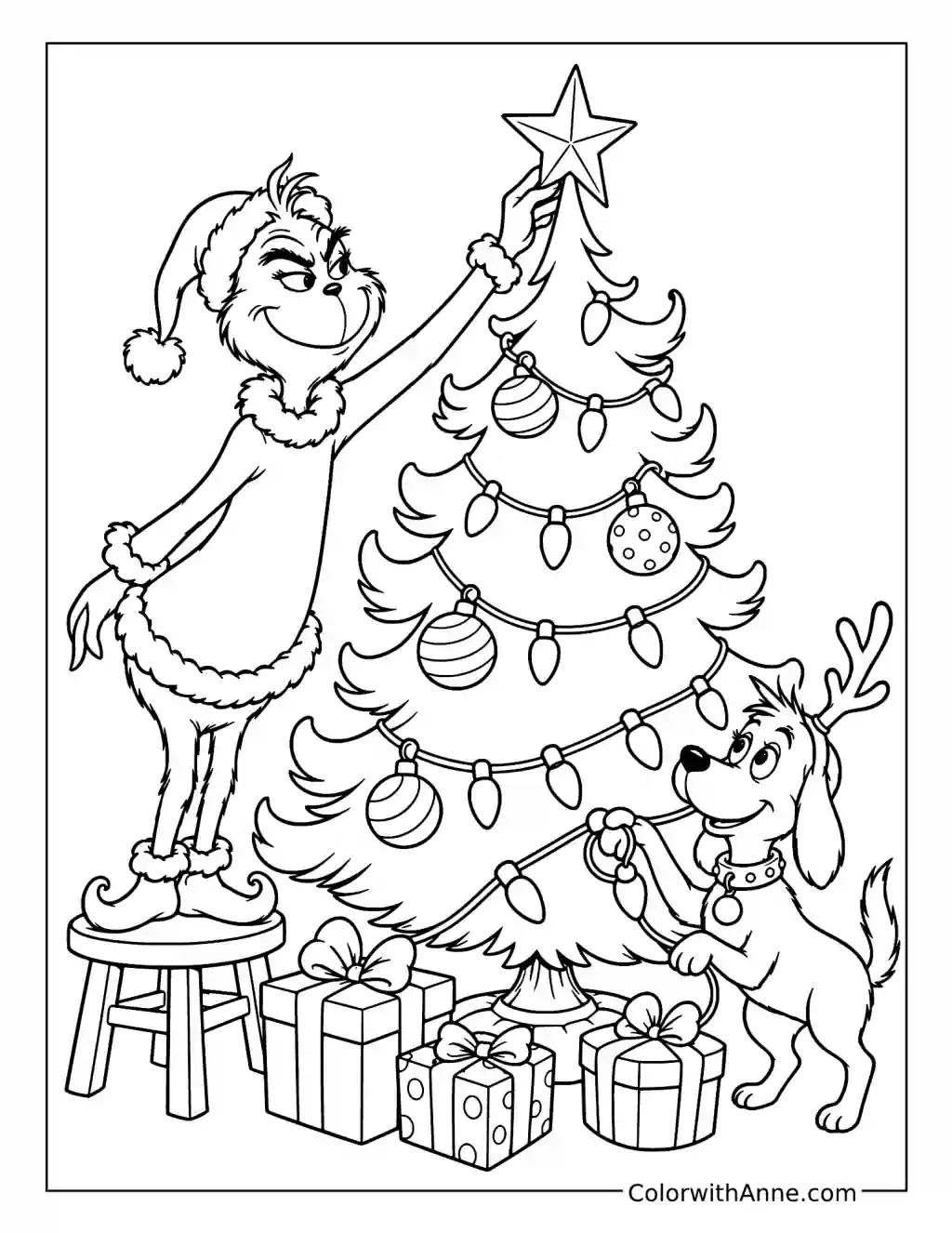
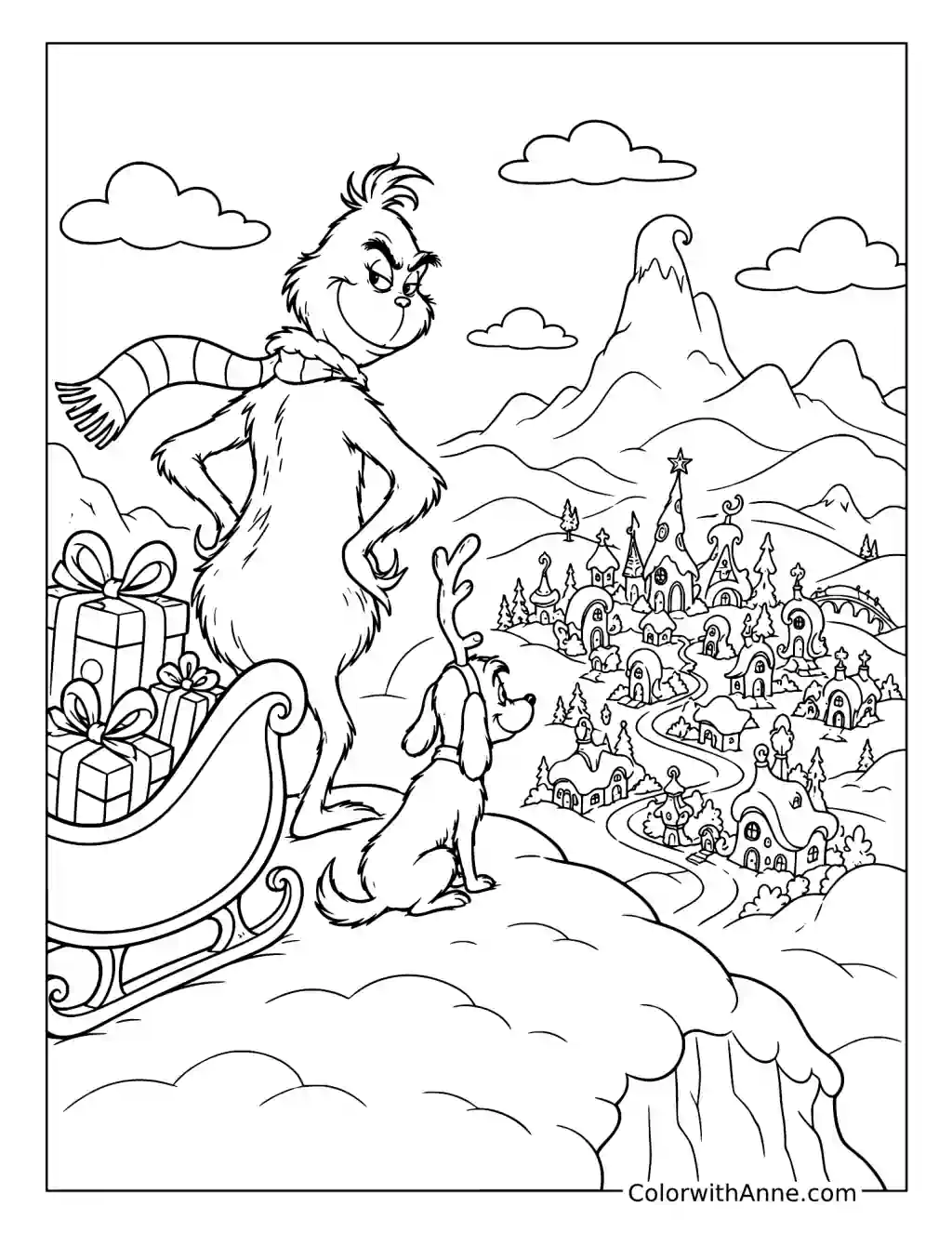
Bring Familiar Decorations to the Grinch’s Tree
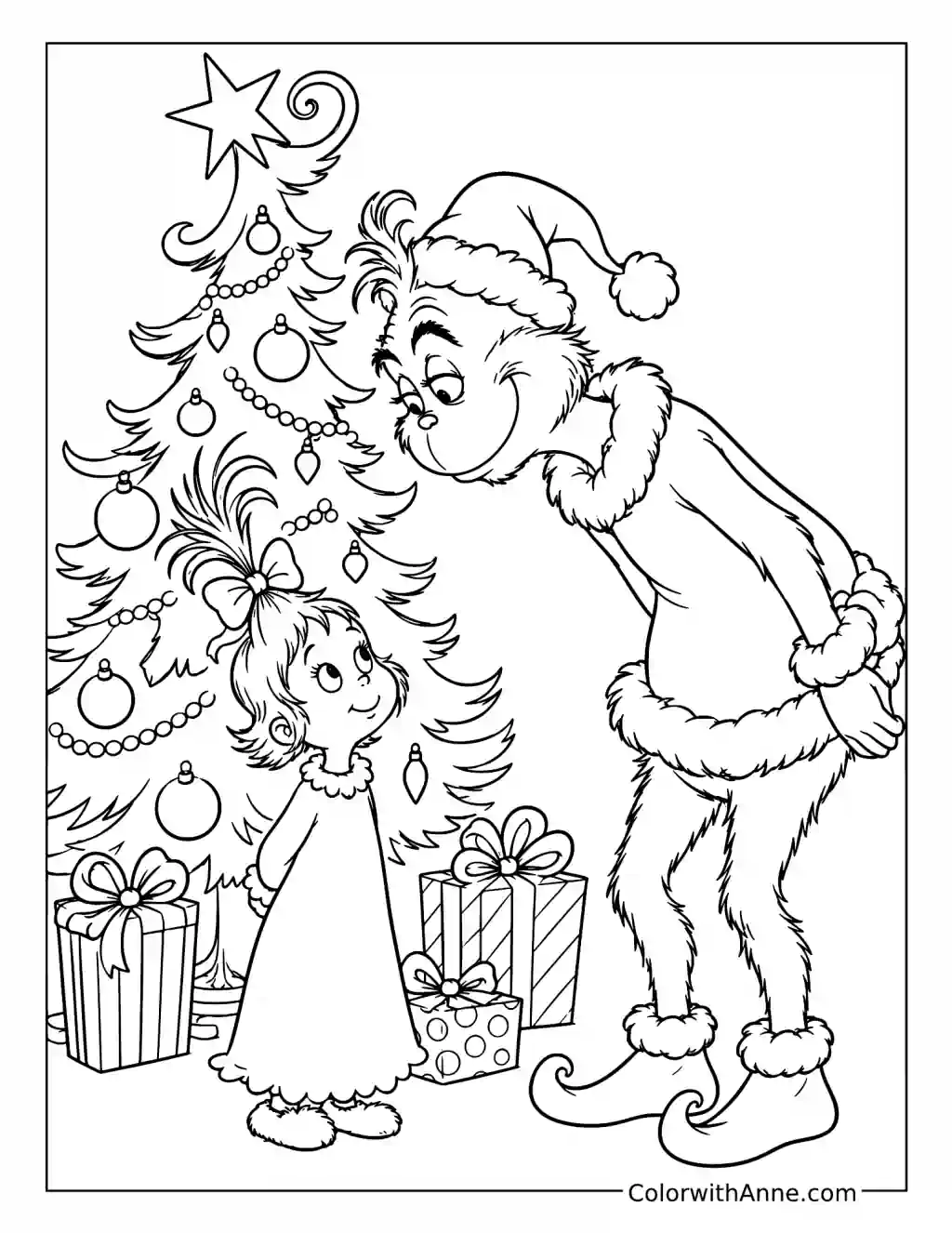
The Grinch reaches up to place the star while Max helps below, surrounded by ornaments and wrapped presents. Use the decorations at home as inspiration for the tree’s round baubles. A favorite ornament’s pattern can fit inside one of those circles, even if its real shape is quite different.
The strings of decorations give the eye a path around the branches, so repeating a few details will help the tree feel coordinated. When finished, prop the page near the ornament box during decorating. Max looks ready to lend a paw, although untangling the lights may still fall to someone else.
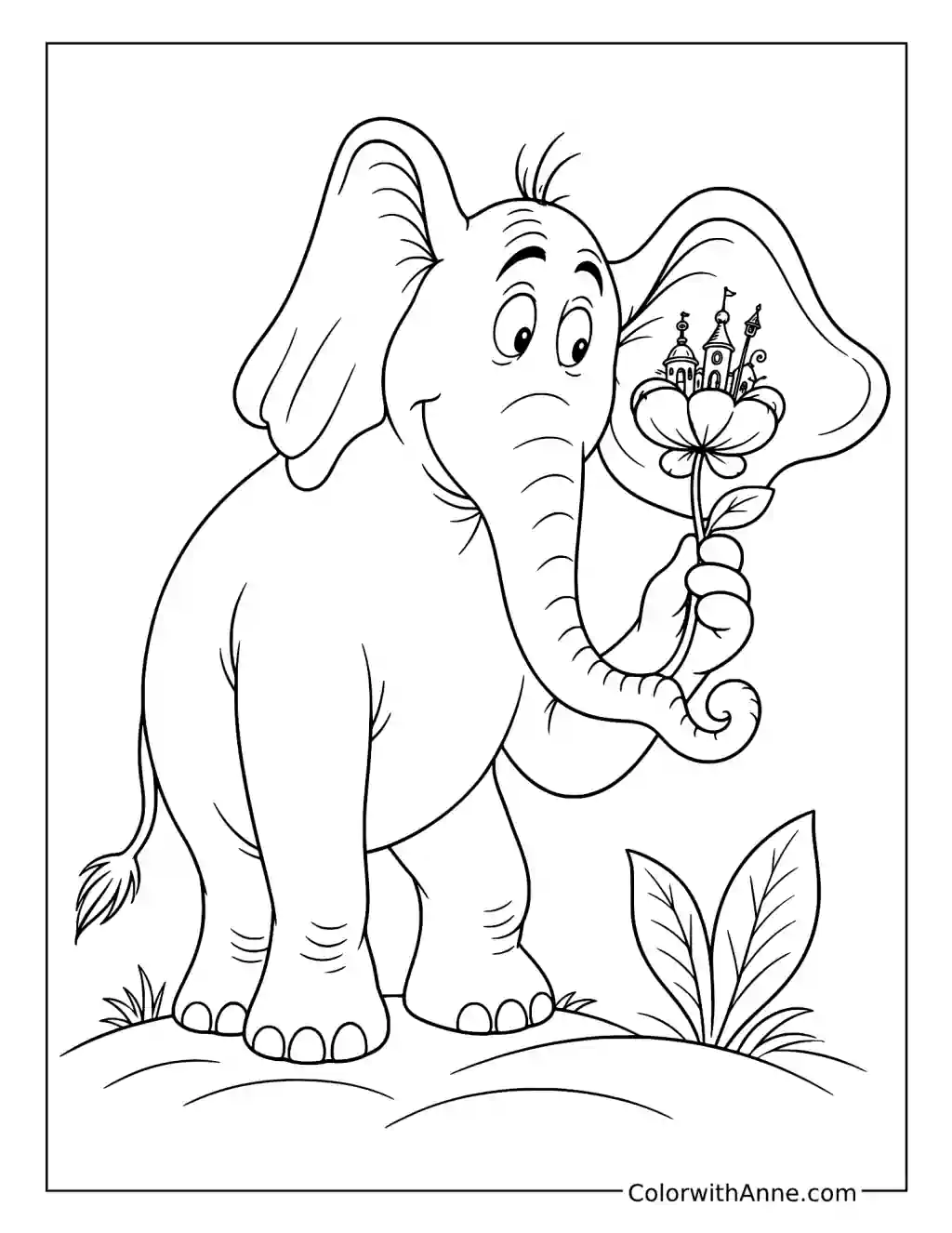
Look Closely at Horton’s Tiny Clover World
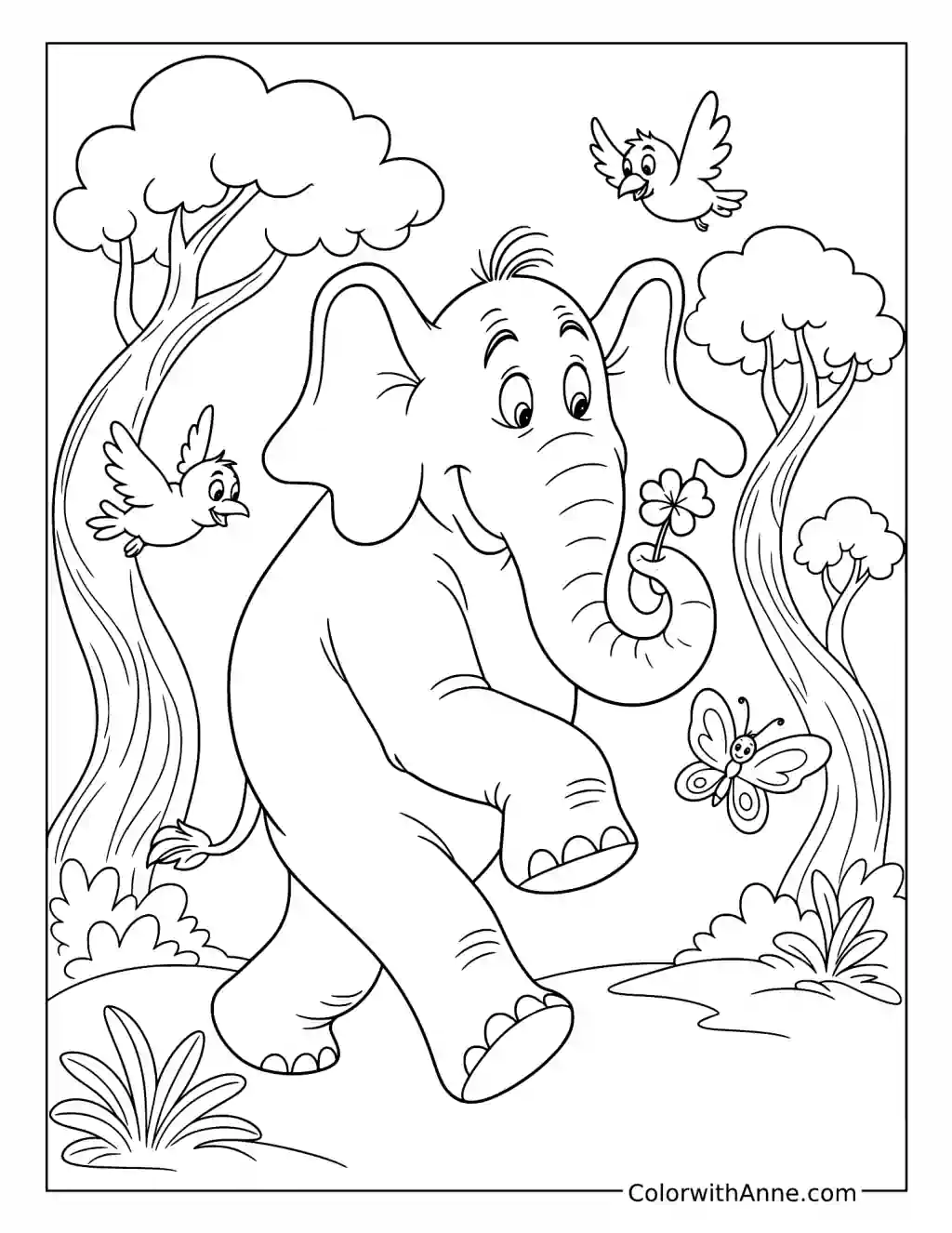
Horton holds a clover with a miniature cluster of buildings perched above its bloom. The contrast between his enormous ears and that tiny settlement is the pleasure of this picture. Give the small rooftops clear, distinct shapes, then keep Horton’s shading gentle so the little world remains easy to spot. The clover’s stem is especially worth preserving against the background. This is a page to linger over at close range, moving between broad areas of elephant and details small enough to reward a second look.
Borrow a Beach-Day Detail for the Sneetches
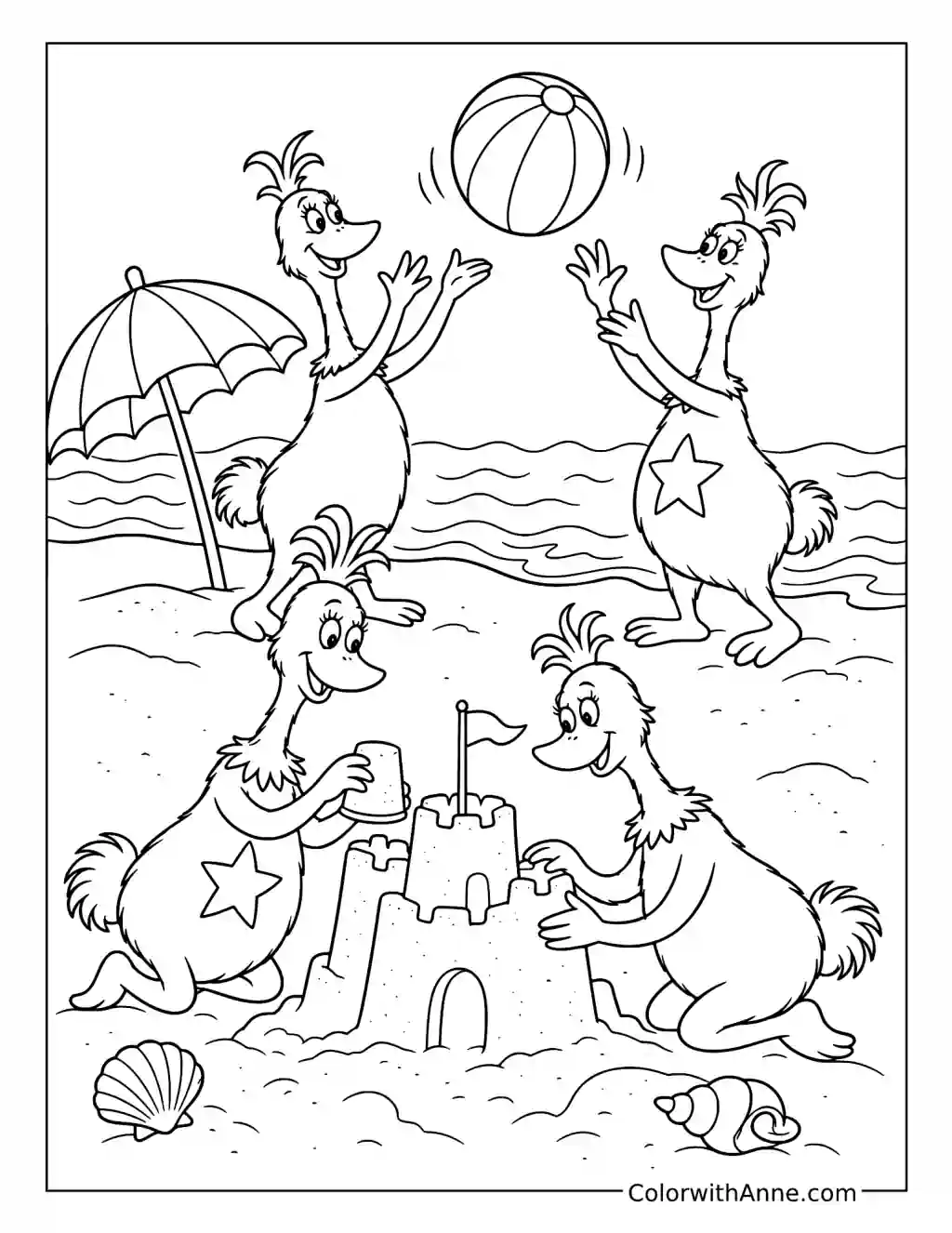
A beach ball hangs above two Sneetches while another pair works on a sandcastle. The umbrella, shell, and bucket make the setting feel like a properly equipped afternoon by the water. If a beach trip comes to mind, borrow one detail from it: the family umbrella’s stripes, a well-used bucket, or the look of wet sand around a castle.
For the castle itself, shade beneath the projecting edges and leave its upper surfaces lighter. A little scattered texture around the base can suggest loose sand without covering every inch of the beach.
Let Each of the Four Fish Keep Its Own Style
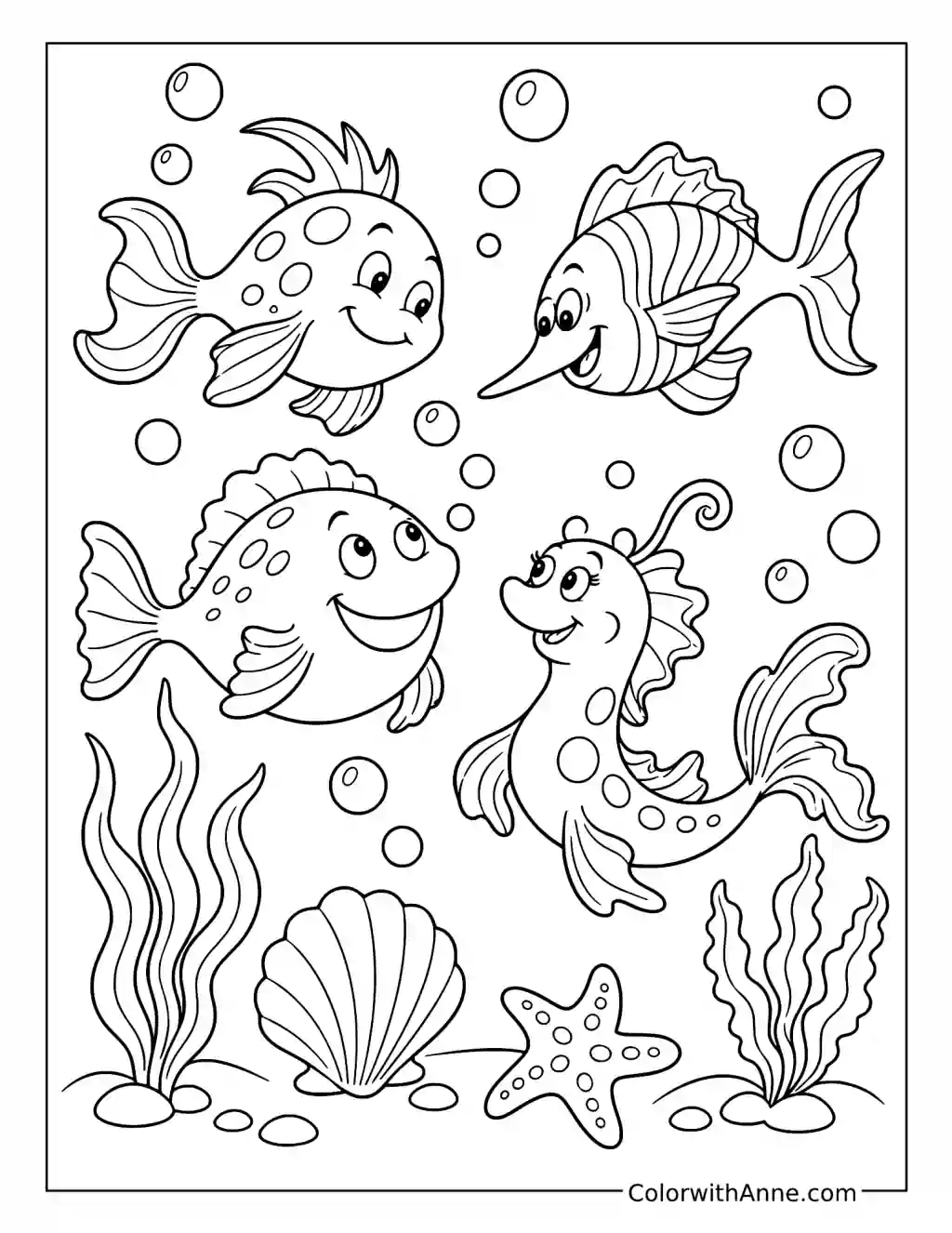
These four fish already have different personalities in their outlines, with spots, stripes, flowing fins, and distinct expressions. Work with those existing differences rather than adding the same decoration to all four. Small dots suit a spotted body; longer strokes can follow the striped fish’s fins. The bubbles offer a quieter detail between them: leave their centers pale and add just a little shading along one edge. Below, the shell, starfish, and waving plants give the busy swimmers somewhere to belong.
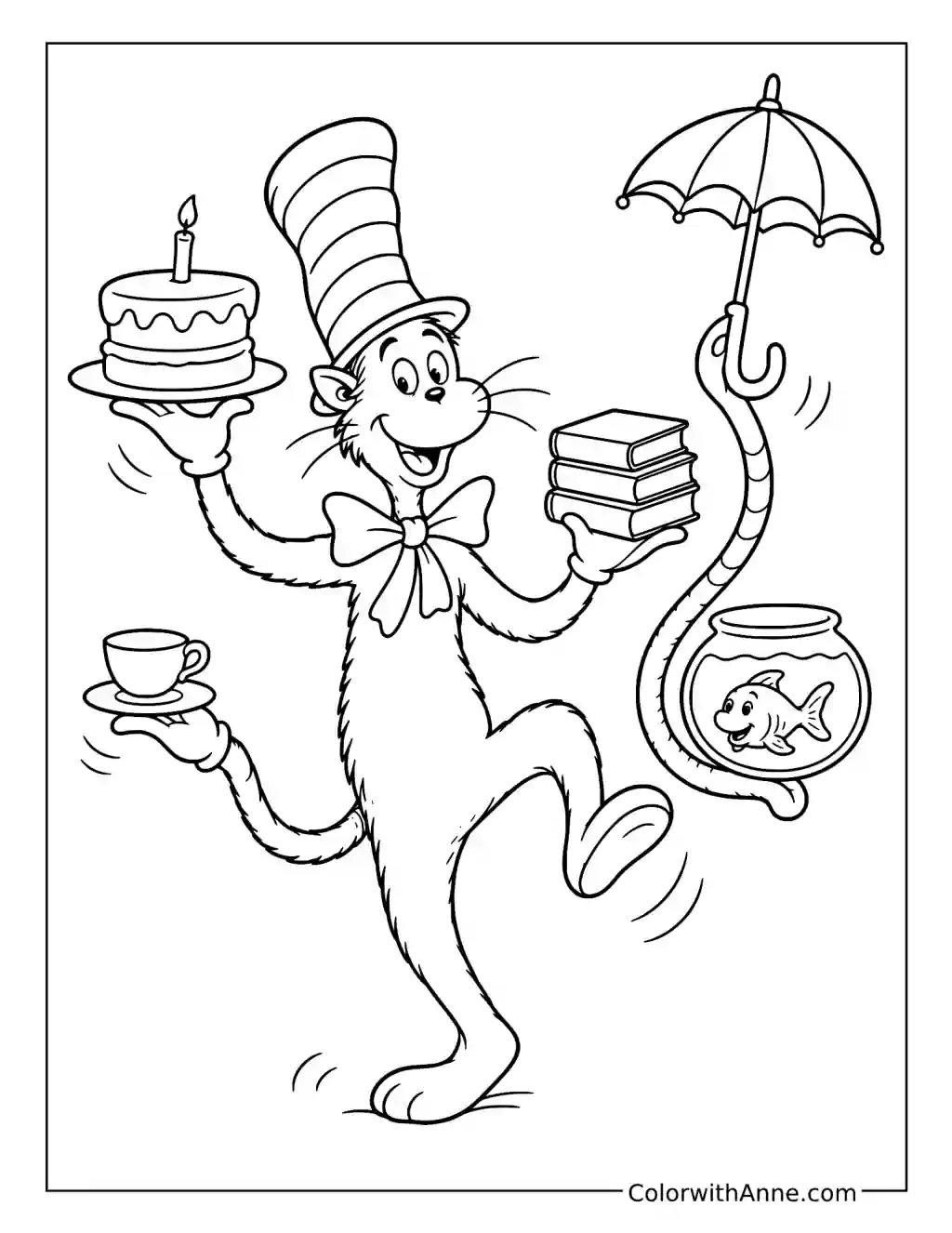
Keep the Cat’s Balancing Act Delightfully Precarious
A cake, teacup, stack of books, umbrella, and fishbowl surround the Cat as he balances on one foot. Start with whichever object catches your attention, then move around the picture as though checking each part of his unlikely arrangement. Separate the book covers clearly, and leave the fish visible through a lightly shaded bowl.
The open background suits the pose: keeping much of it clear lets every balanced object stand out. Once the page is finished, take another look at the umbrella and curling tail. The whole arrangement seems one small wobble away from becoming a very different afternoon.