
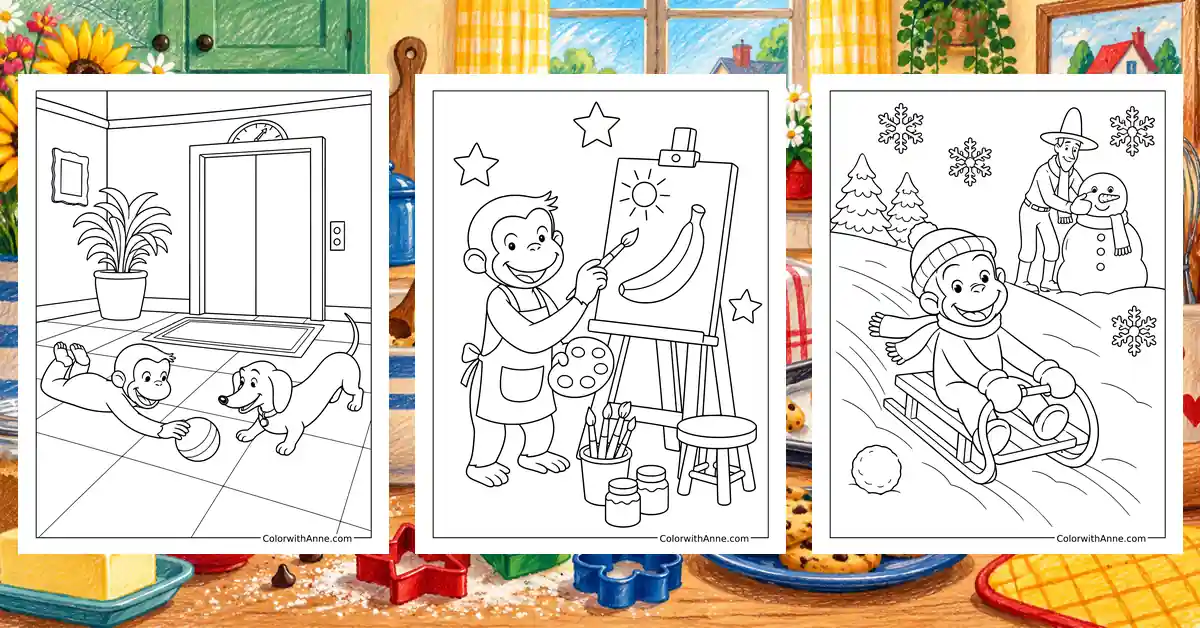
A banana on the counter might briefly hold George’s attention, but something just beyond it is bound to need investigating. The little monkey reaches and peers with the concentration of someone certain that the next discovery is worth a closer look. The Man with the Yellow Hat has learned to keep an eye nearby.
Curious George coloring pages fit naturally beside a familiar book at story time. A child can linger over George’s face while remembering a moment when curiosity got ahead of caution. There is usually a household example available, especially if someone has recently discovered what happens when a cup tips over.
Free Printable Curious George Coloring Pages
Click any coloring page below to open the PDF, then print on US Letter or A4 paper.
Did you find what you needed?
Help us choose what to create or improve next.
Coloring Ideas for Curious George Pages
Try one of these coloring ideas, or use them as a starting point for your own.
Let the Cookies Differ a Little
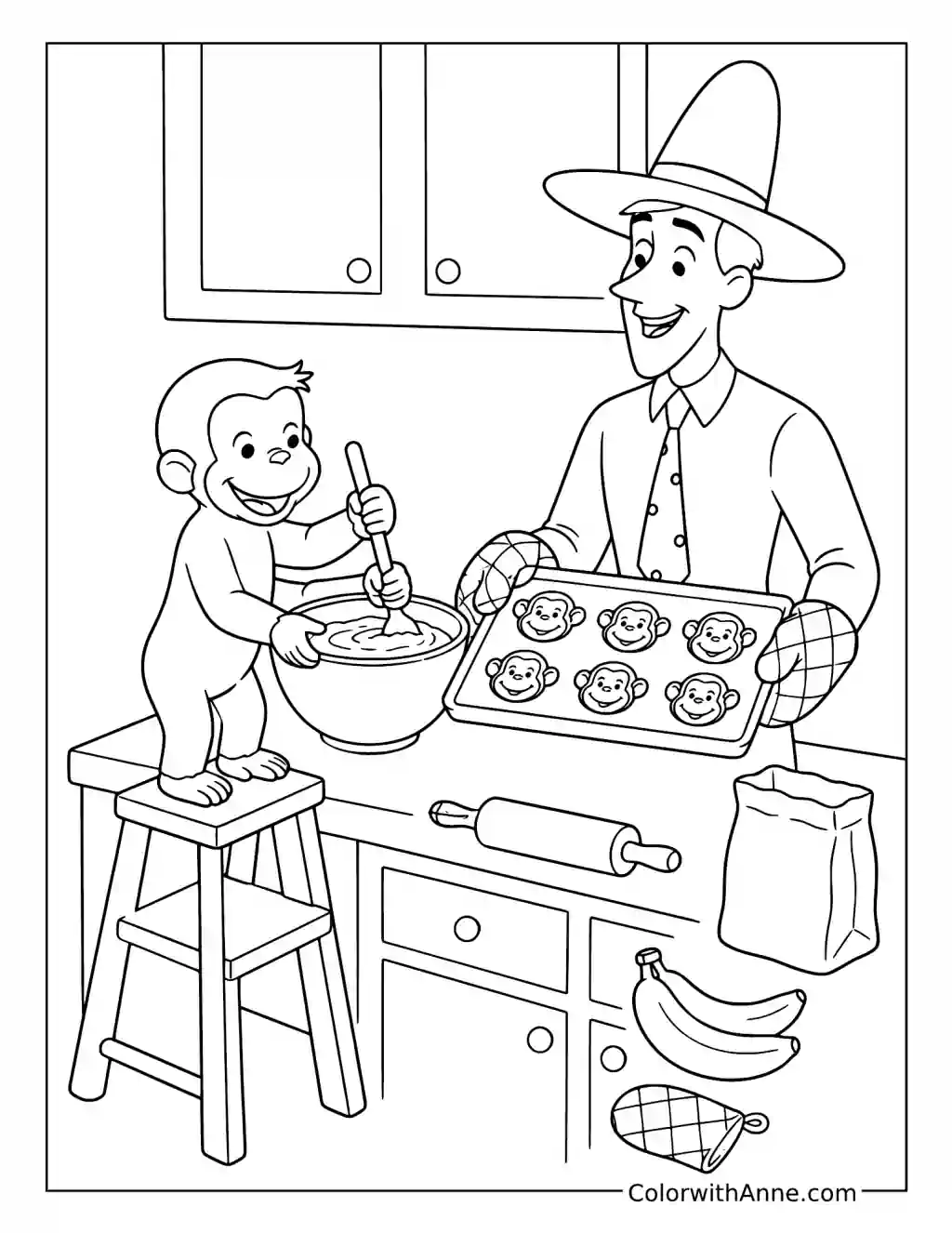
George stirs enthusiastically while the Man with the Yellow Hat holds the finished tray. The kitchen has the comfortable look of a project involving both patience and flour.
Give the cookies small differences: one a little darker at the edge, another paler in the middle. A homemade batch does not have to resemble identical shop stock. If you bake afterward, let a child help with one manageable part, such as decorating cooled cookies. George’s contribution makes a good starting point for discussing how several small jobs become one shared result.
Follow the Excavator from Cab to Bucket
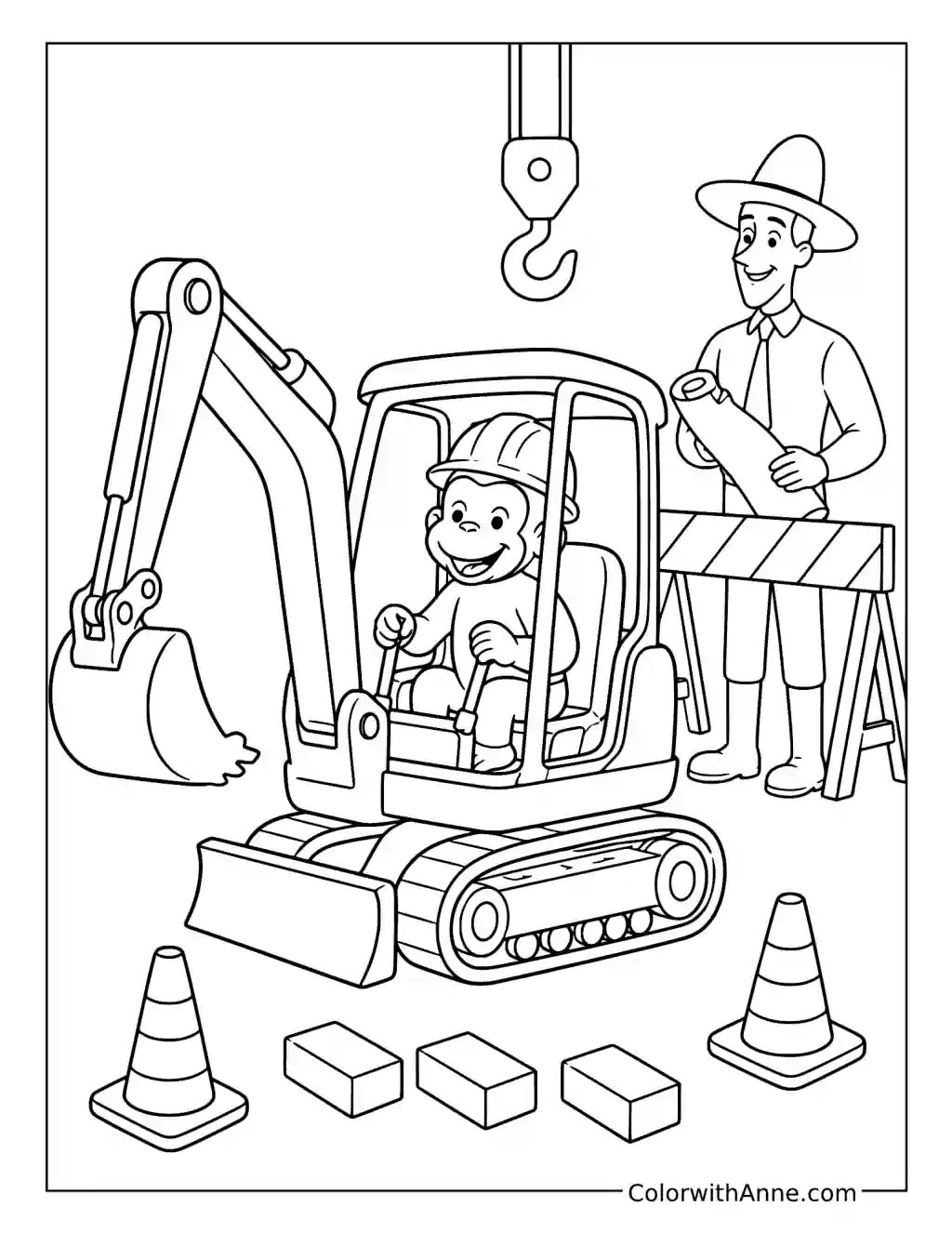
George sits inside the excavator, surrounded by a machine whose separate parts can be followed through the drawing.
Begin at the cab and trace the arm out to the bucket before coloring. Notice where the sections meet and change direction. A toy excavator nearby can help make those joints less abstract: move its arm, then find the corresponding parts on the page. George’s curiosity gives this design a natural route into understanding how something moves, without needing a worksheet of technical labels.
Make Earth Feel like the Place George Came From
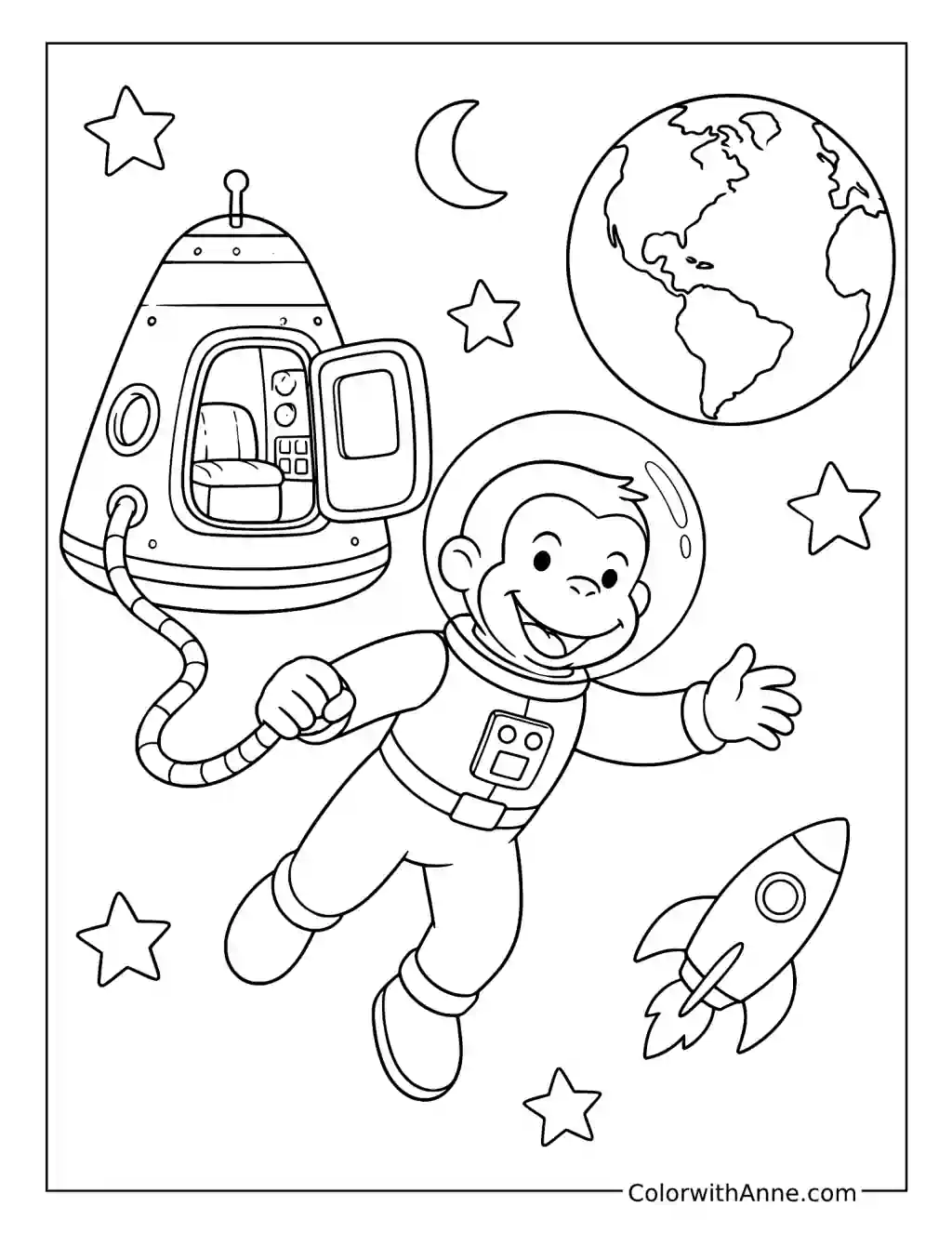
George floats near the spacecraft, with Earth visible above him. The planet gives this playful space adventure a familiar place to look back toward.
Use a globe or atlas beside the page and find the broad shapes of land and water. Do not worry about fitting every country into the small circle. What matters is noticing that the familiar world looks different from far away. George’s cheerful face can stay the focus while Earth becomes more than a decorative blue ball in the corner.
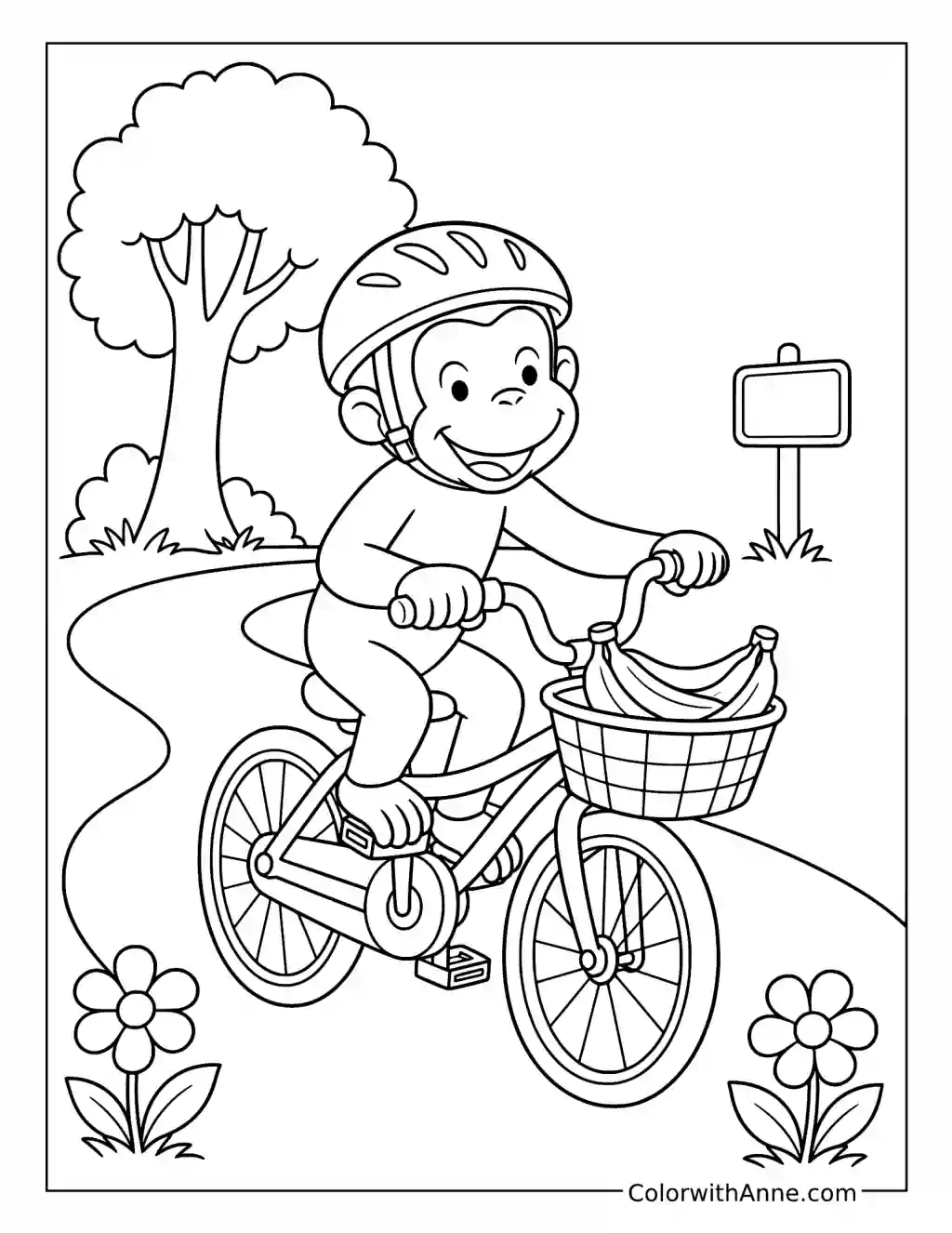
A Bicycle Basket Has Its Own Story
The bananas in George’s front basket tell you something about the ride before any destination is supplied. His helmet and determined grip on the handlebars complete the little outing.
Keep the basket’s contents visible against the frame of the bicycle. Then imagine one practical question: how would George keep the bananas from bouncing out? A child with a toy bicycle or a basket can explore that problem using small soft objects. The idea grows from the cargo already drawn, rather than from inventing a whole new race.
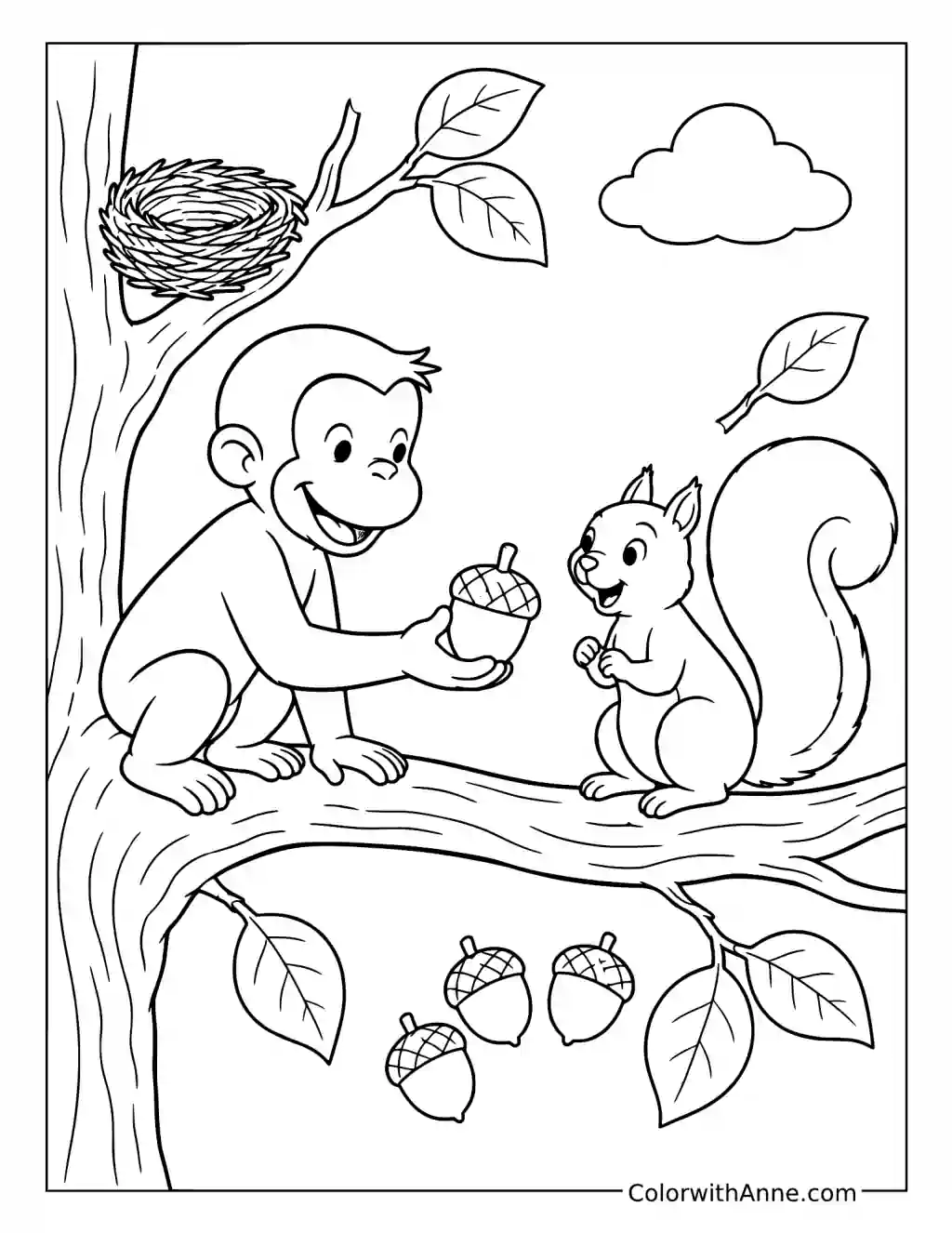
Look Closely at an Ordinary Acorn
George and Jumpy meet on a broad branch, with acorns nearby. The acorns are small, but they make the encounter feel like it belongs to this tree.
If you find an acorn on a walk, examine the difference between its smooth body and rough cap before coloring. Represent those surfaces differently on the page, even if both use brown. George’s curiosity is particularly well suited to this kind of discovery: something ordinary becomes interesting when it is finally looked at closely.
Paint George’s Subject for Yourself
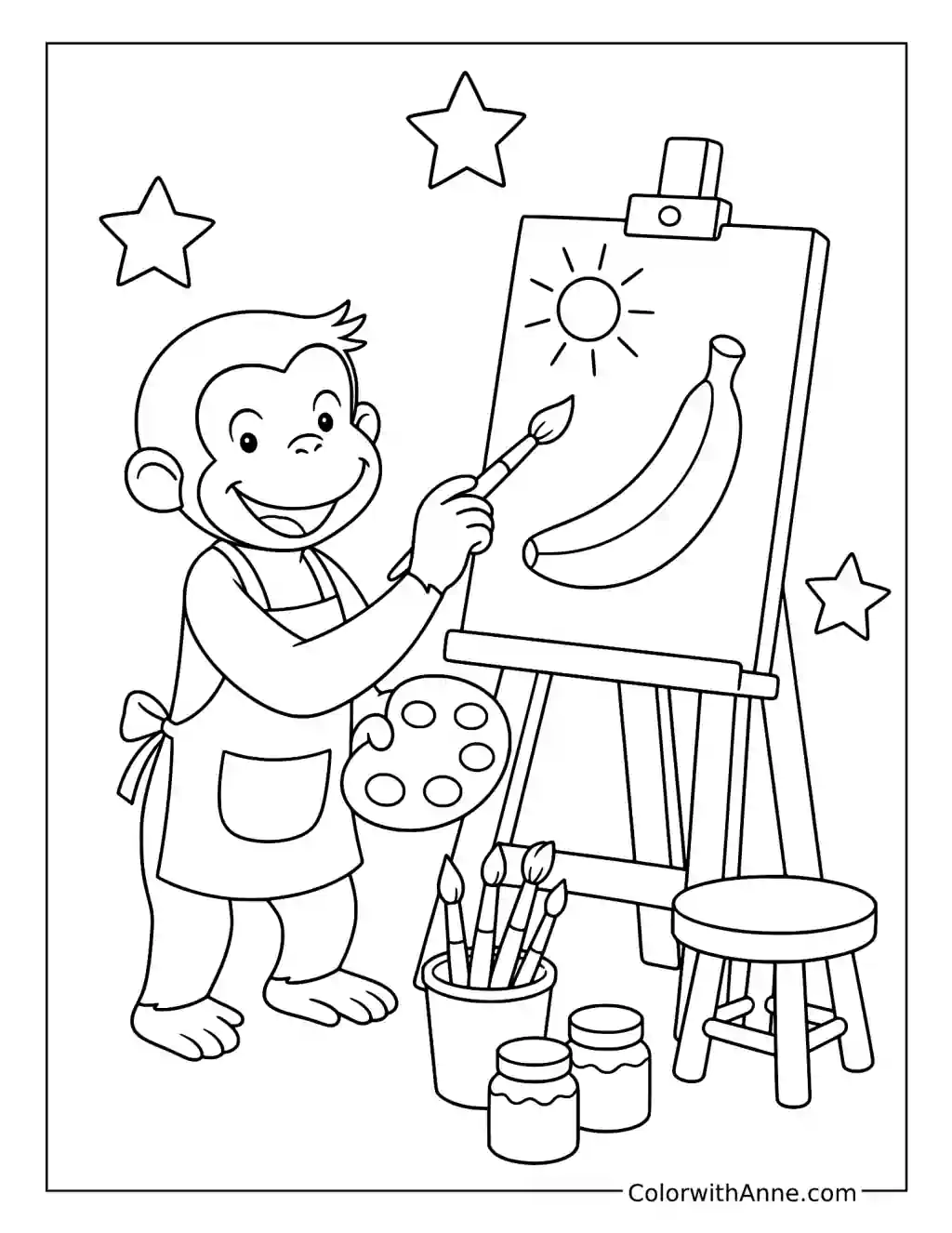
George’s canvas contains a banana and a sun, with his paints and brushes arranged around the easel. The subject is simple enough to invite a second artist.
Put a banana on the table and sketch its outline on scrap paper before completing George’s picture. Notice the curve, the darker tip, and which side catches the light. Your drawing need not match his. The connection is in looking at the same sort of object, then returning to the page with a clearer sense of what the little artist might have noticed.
Leave the Lobby Tidy around the Game
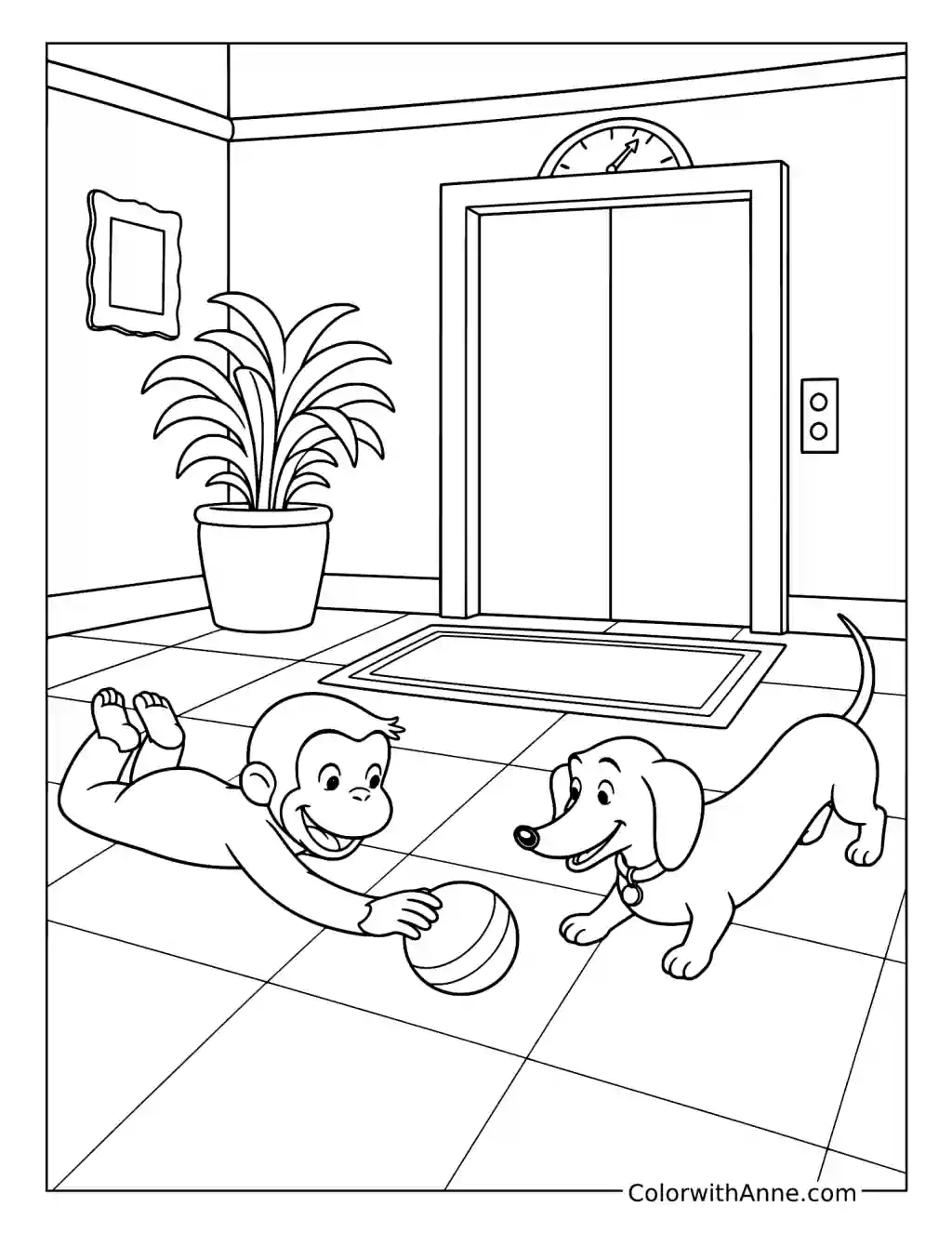
George stretches out beside the ball while Hundley approaches across the tiled lobby. The orderly room makes their small game more noticeable.
Try keeping the floor pattern regular and quiet while the ball uses a stronger, playful color. The contrast gives the picture its personality: a place meant for coming and going has briefly become somewhere to play. Hundley and George do not need extra speech bubbles or invented mishaps. Their positions already suggest enough about who is paying attention to the ball.
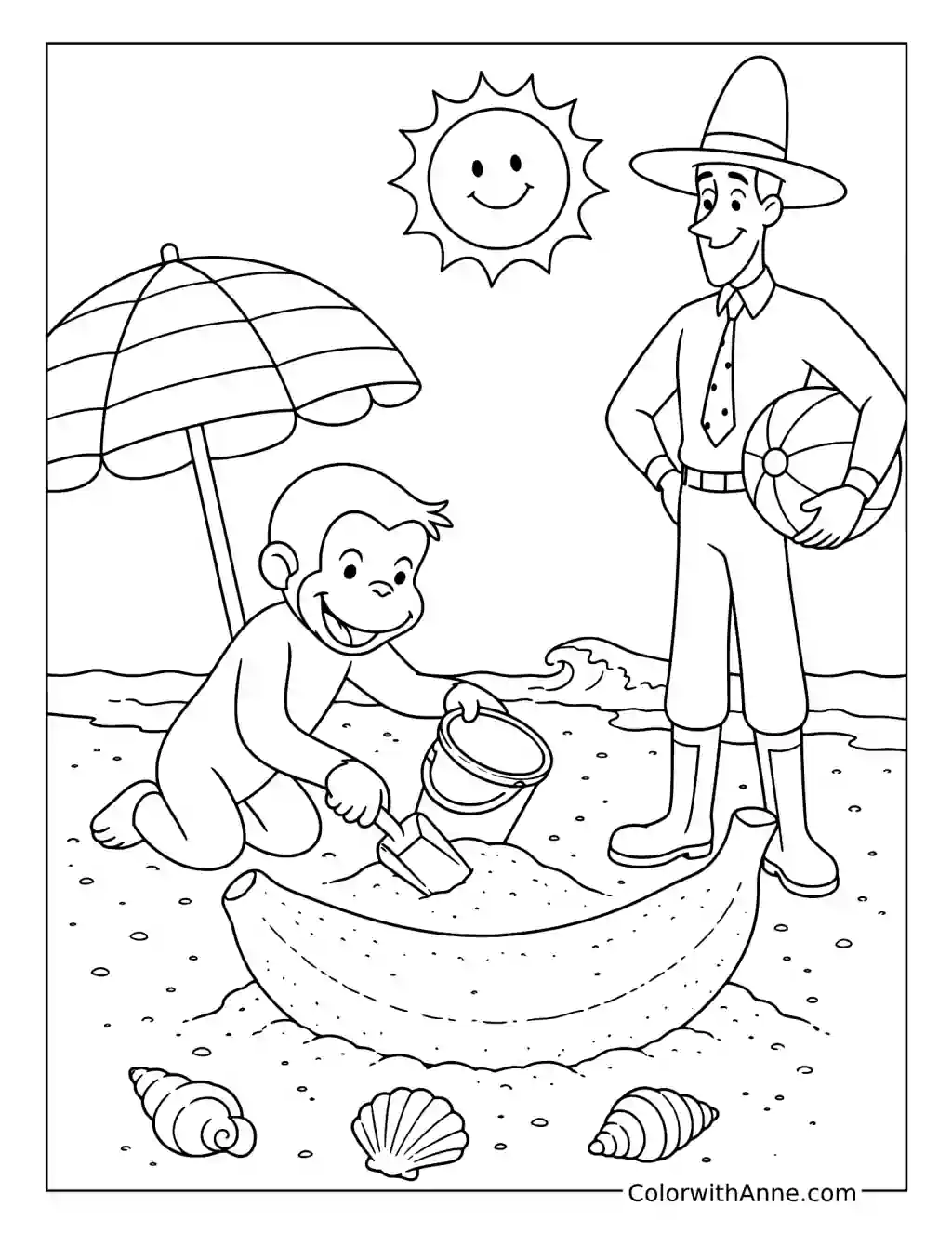
A Sand Sculpture Does Not Have to Be a Castle
George’s banana-shaped sand creation is a very George answer to an ordinary beach activity. The bucket beside him makes its construction feel cheerfully practical.
Color the sculpture so its curved edge stands apart from the sand beneath it. On a future beach visit, try shaping something with one recognizable outline: a banana, a fish, or a giant footprint. A simple form can be more satisfying than a tower that keeps collapsing. The page offers permission to make the subject personal without making the project complicated.