
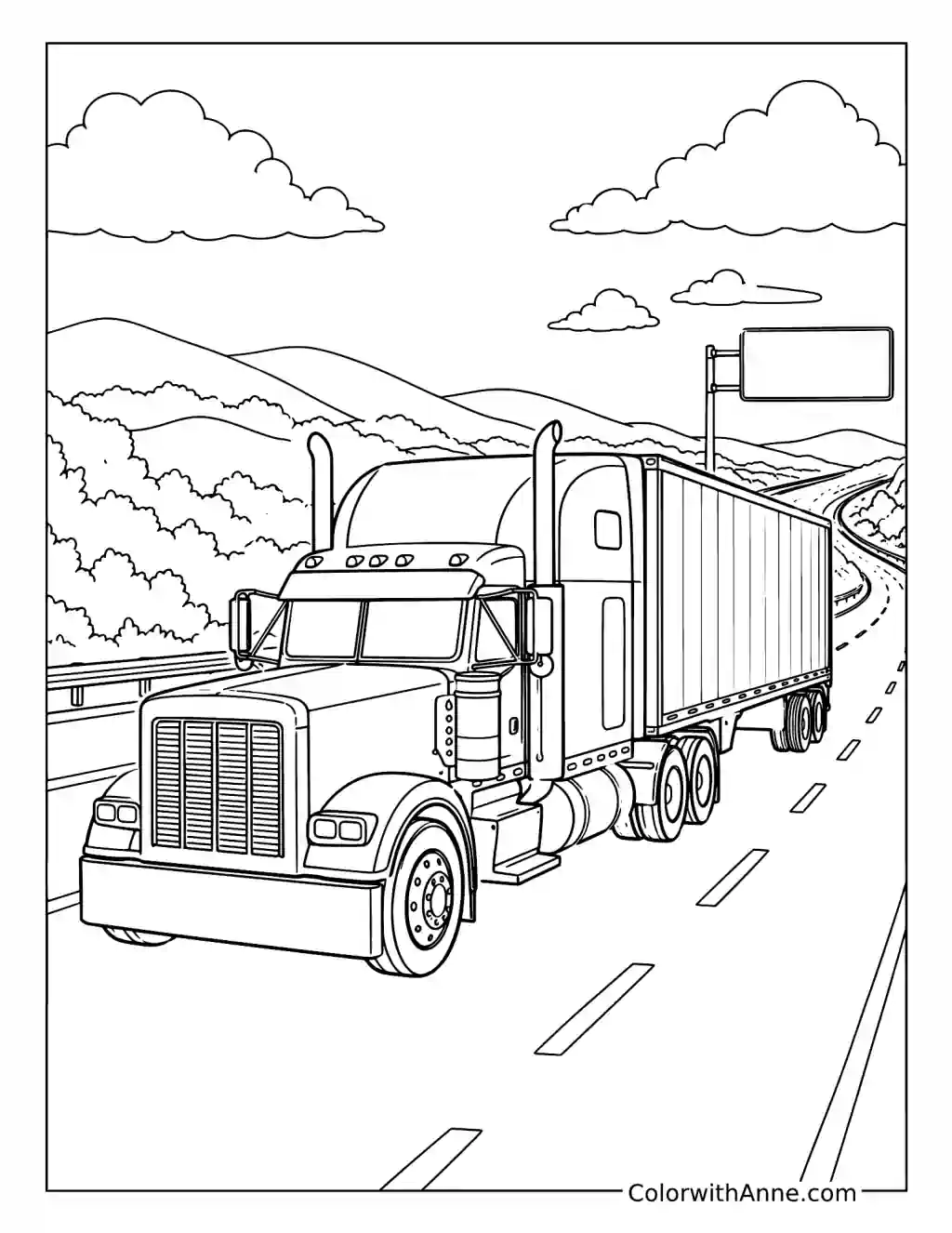
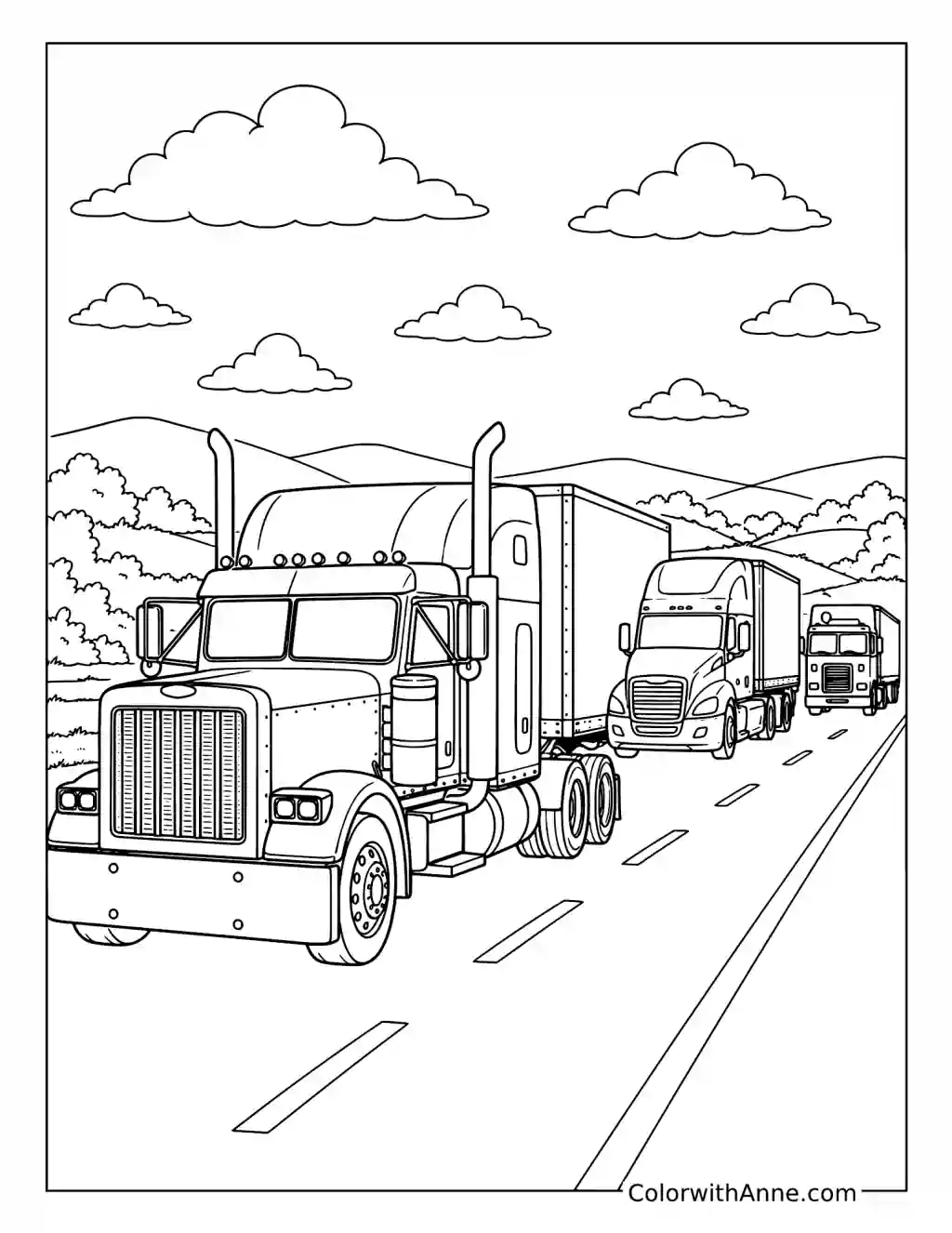
A semi truck rolls past with a trailer that seems to keep coming long after the cab has disappeared. From a car window, a child counts wheels and wonders where the driver is heading. The sleeper behind the seats makes the whole arrangement more interesting: apparently, this truck has a bedroom.
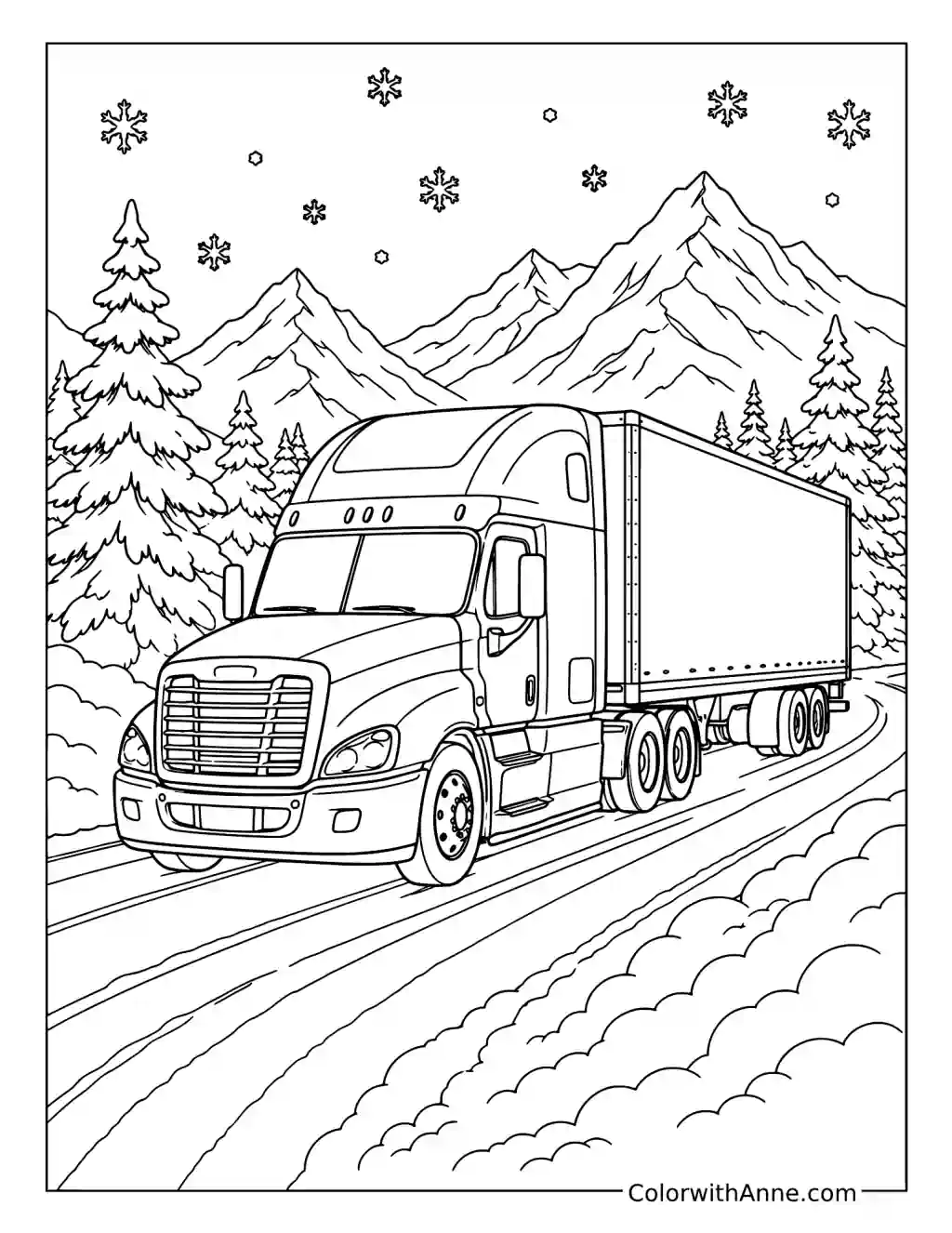
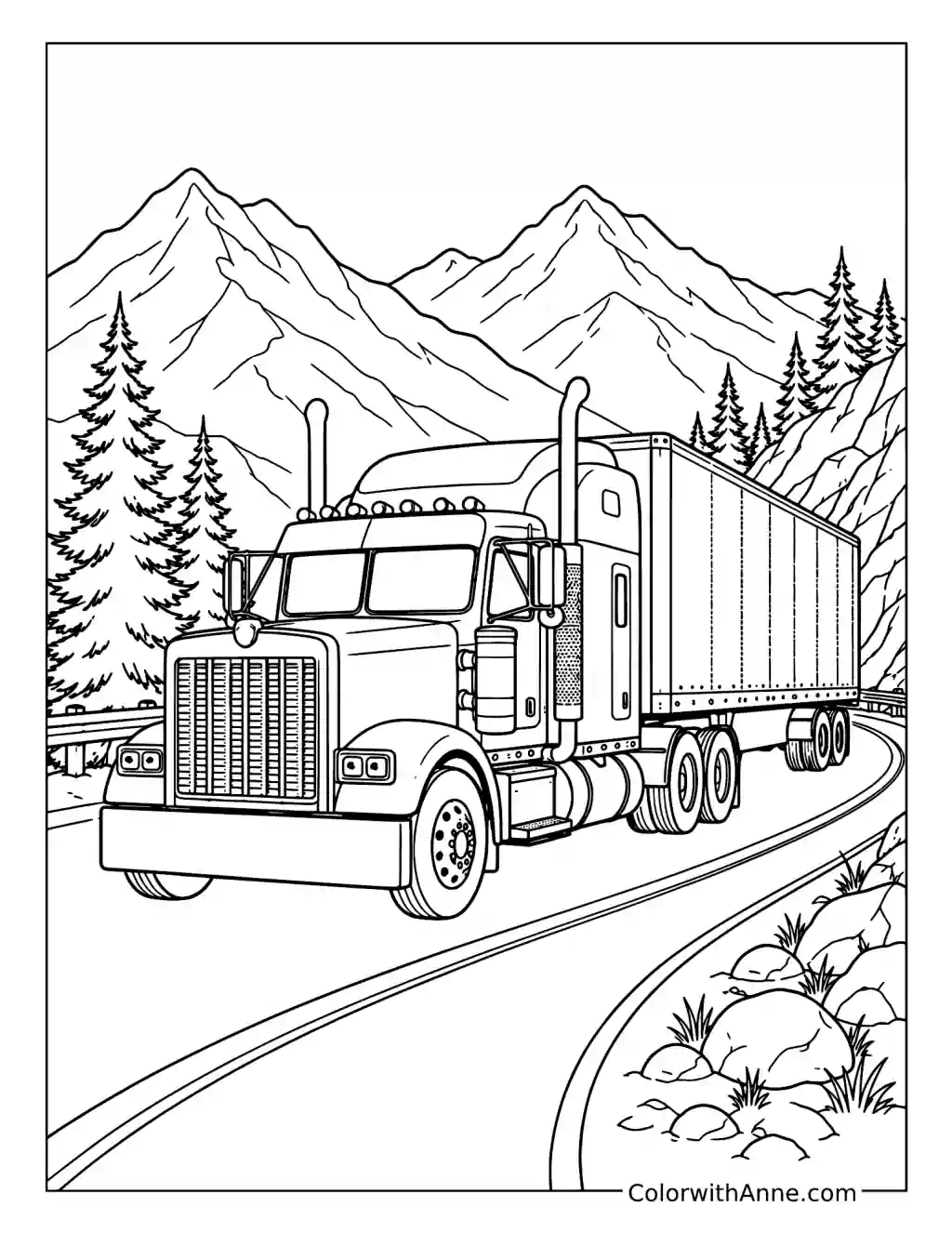
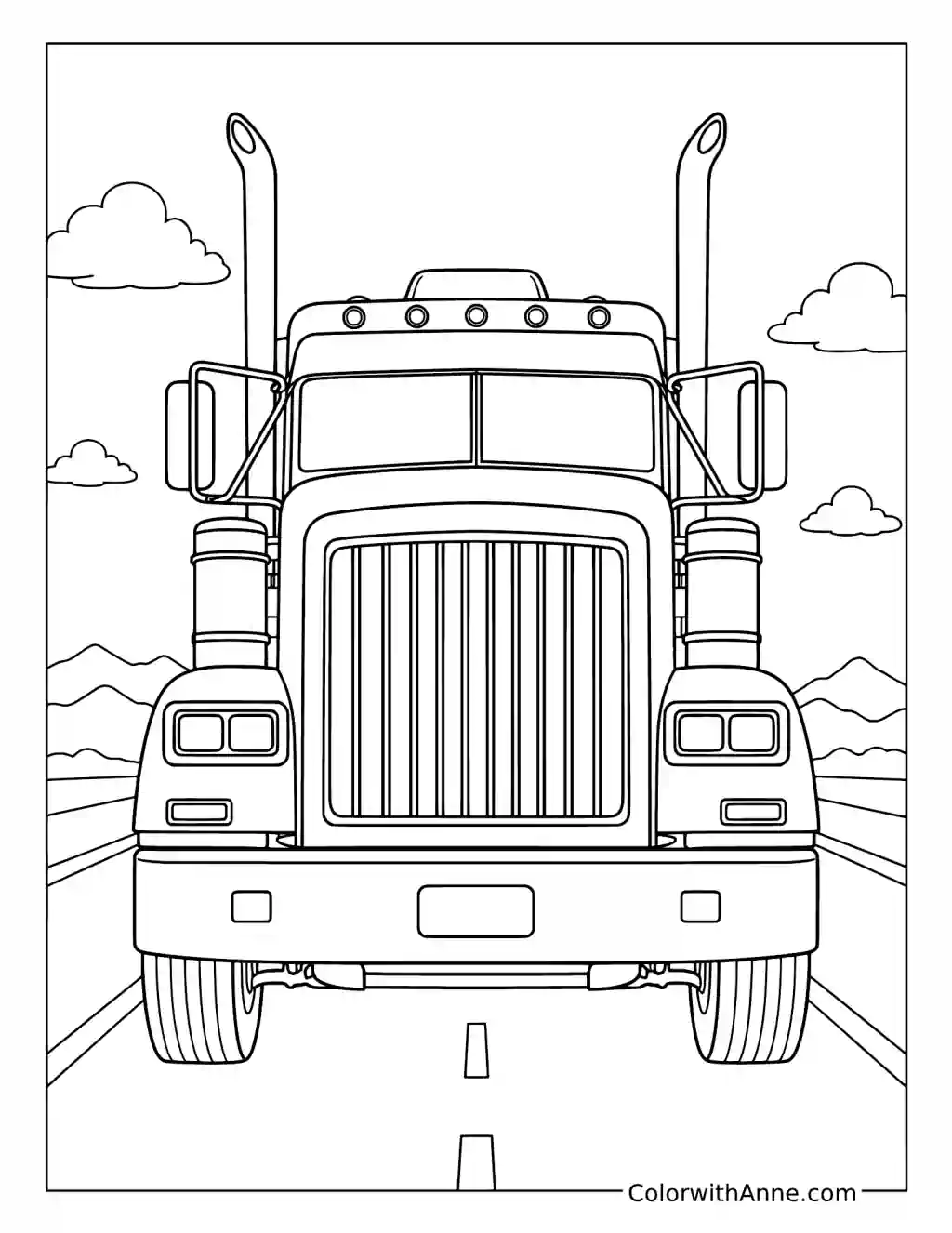
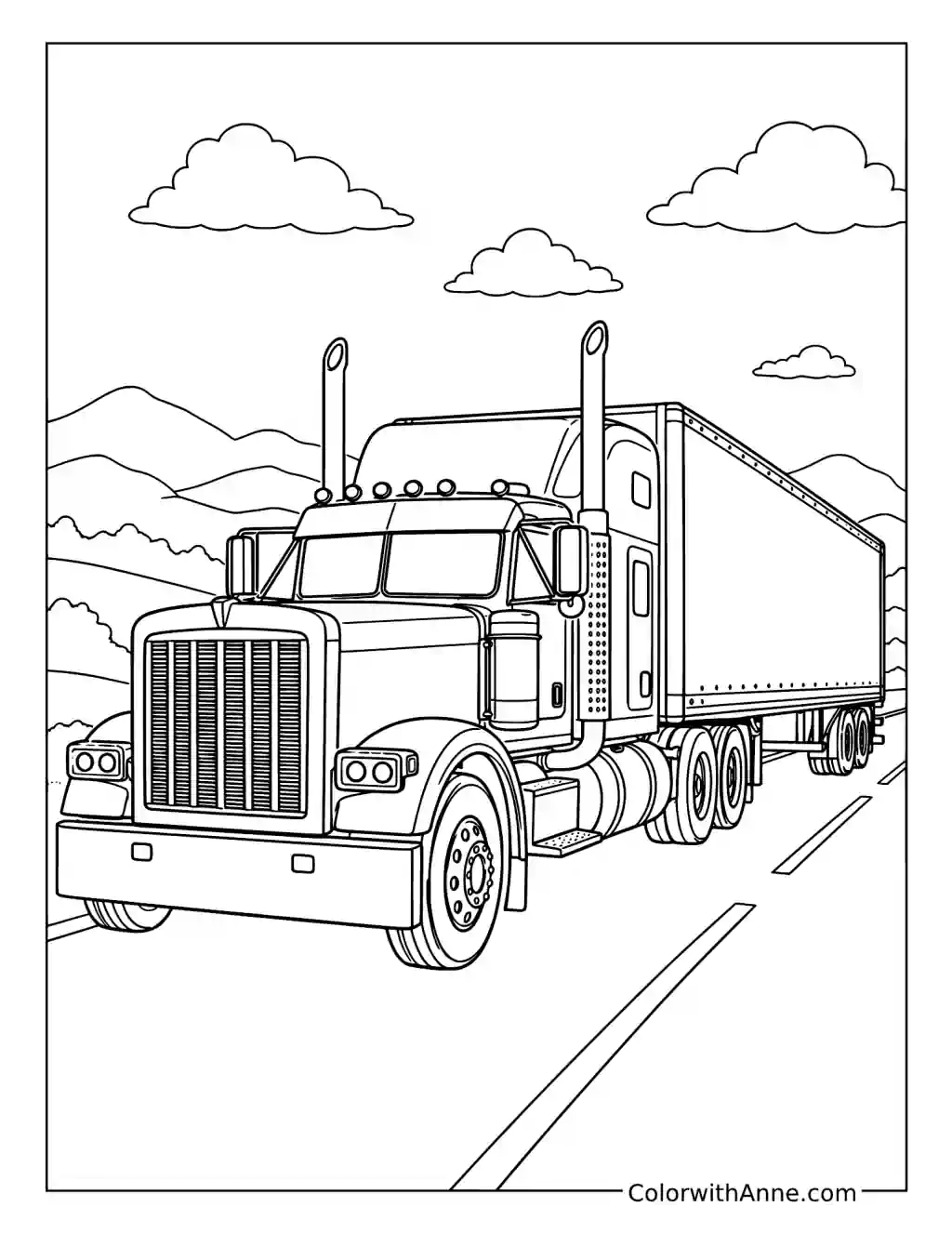
Semi Truck coloring pages bring those roadside observations close enough to examine. The cab feels like a workplace as well as a vehicle, with someone spending long stretches behind that tall windshield. Imagining the route gives the picture a destination, whether the load is heading across town or far beyond the next state line.
Free Printable Semi Truck Coloring Pages
Click any coloring page below to open the PDF, then print on US Letter or A4 paper.
Did you find what you needed?
Help us choose what to create or improve next.
Coloring Ideas for Semi Truck Pages
Try these creative ideas to make the most of your coloring sheets.
Follow a Refrigerated Delivery
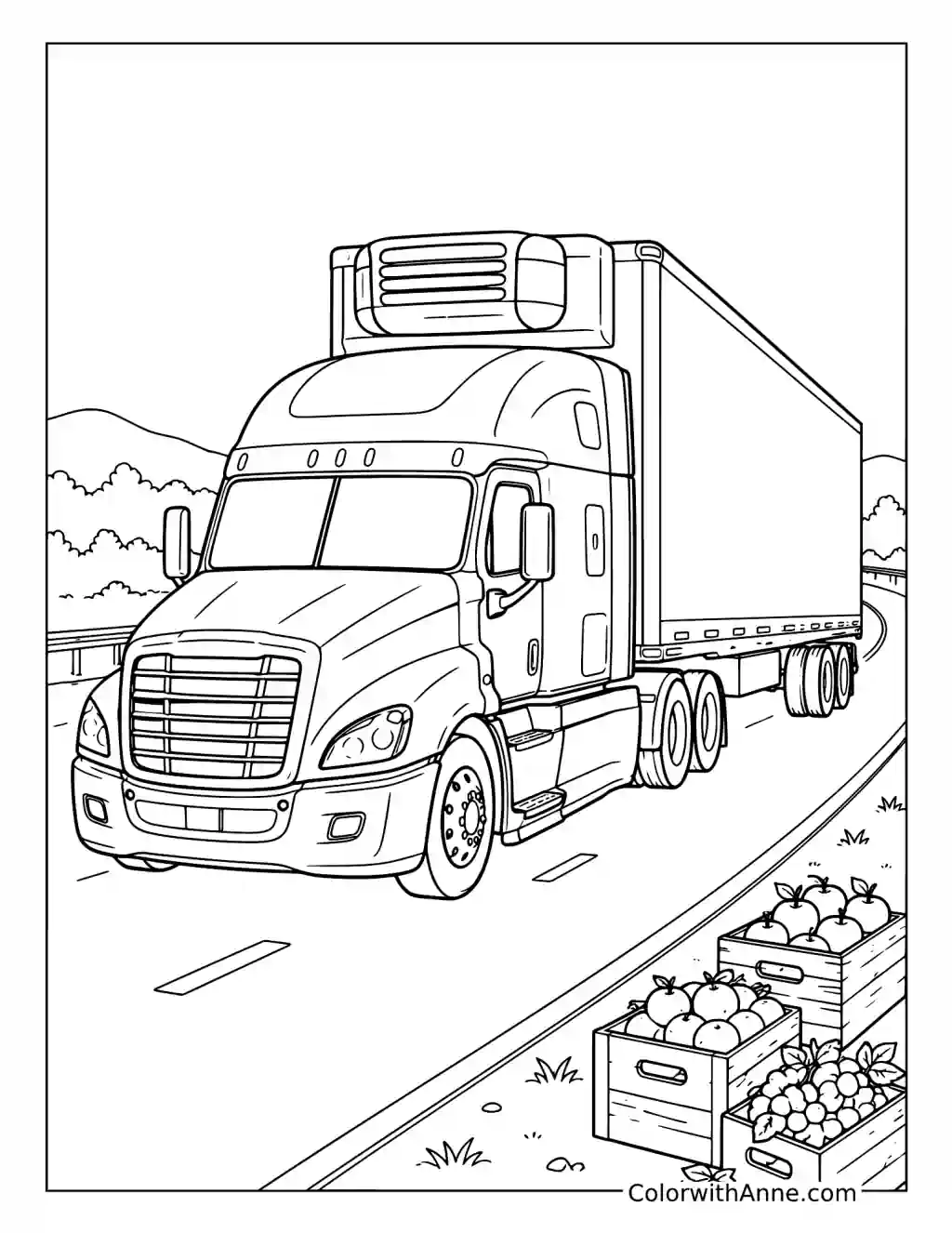
The refrigerated trailer follows its cab along the road, with produce crates beside the scene. The cooling unit above the trailer’s front hints at the special work happening inside that otherwise plain white box.
A white trailer with a blue or green cab would suit the delivery theme. Small red and yellow touches in the produce could bring warmth into the roadside details.
Choose one chilled food from the kitchen and look at its packaging together. Find where it was produced, then imagine the stages between that place and the shop. The truck can become the middle part of a simple delivery story, connecting something familiar on the table with the less visible journey that brought it there.
Load the Excavator onto the Lowboy
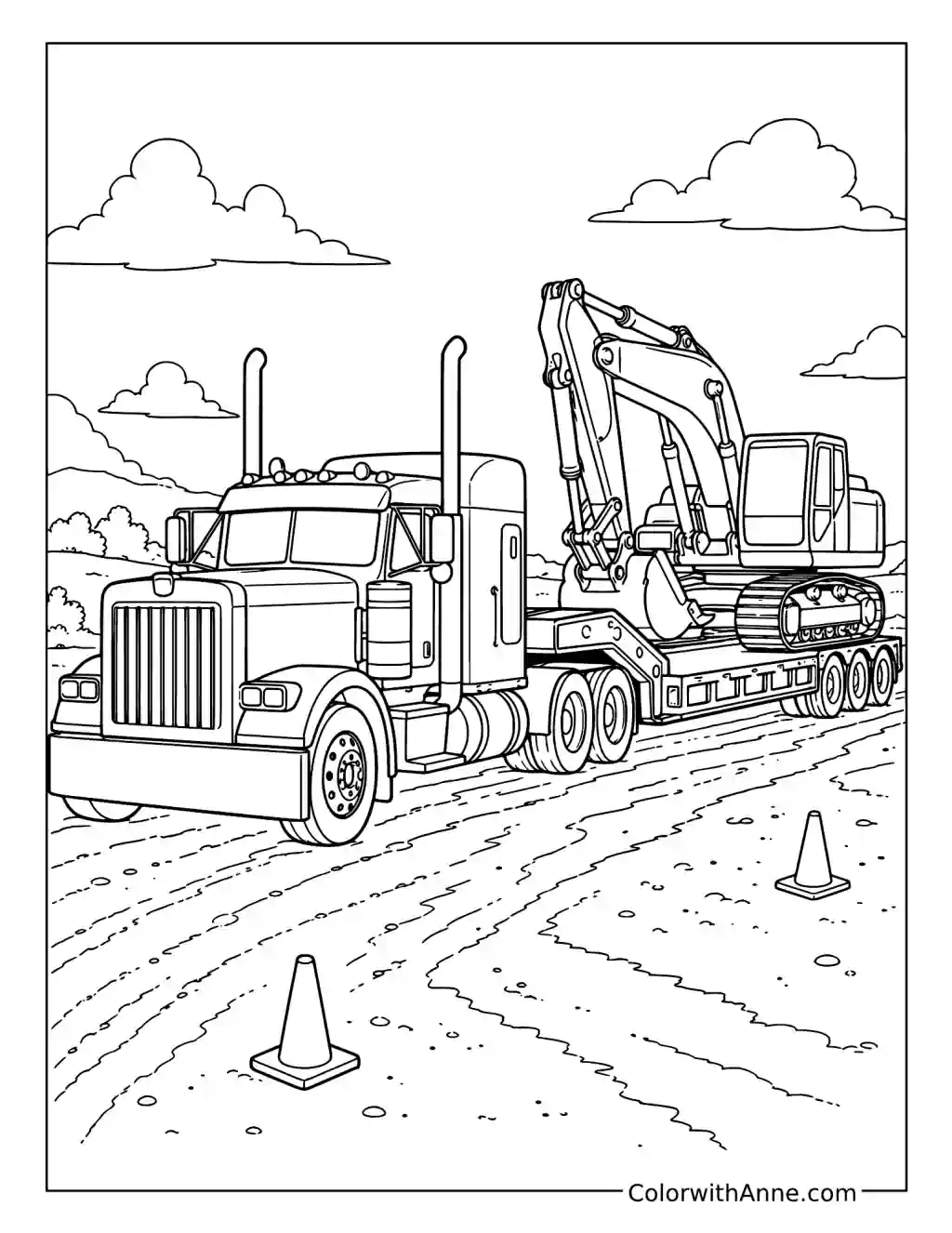
An excavator rides on the low trailer, its arm folded close above the deck. The truck has arrived with an entire piece of construction equipment aboard, which makes an ordinary parcel delivery look rather modest.
A yellow excavator would be familiar, with a red or dark blue tractor. Gray tracks and trailer parts could give the brighter machinery a sturdy setting.
A toy excavator and a strip of card can turn this into a loading game. Fold one end of the card into a shallow ramp and work out how the machine needs to face before going aboard. Lowering and folding its movable parts adds a useful challenge before the pretend journey begins.
Plan the Paintwork for a Show Truck
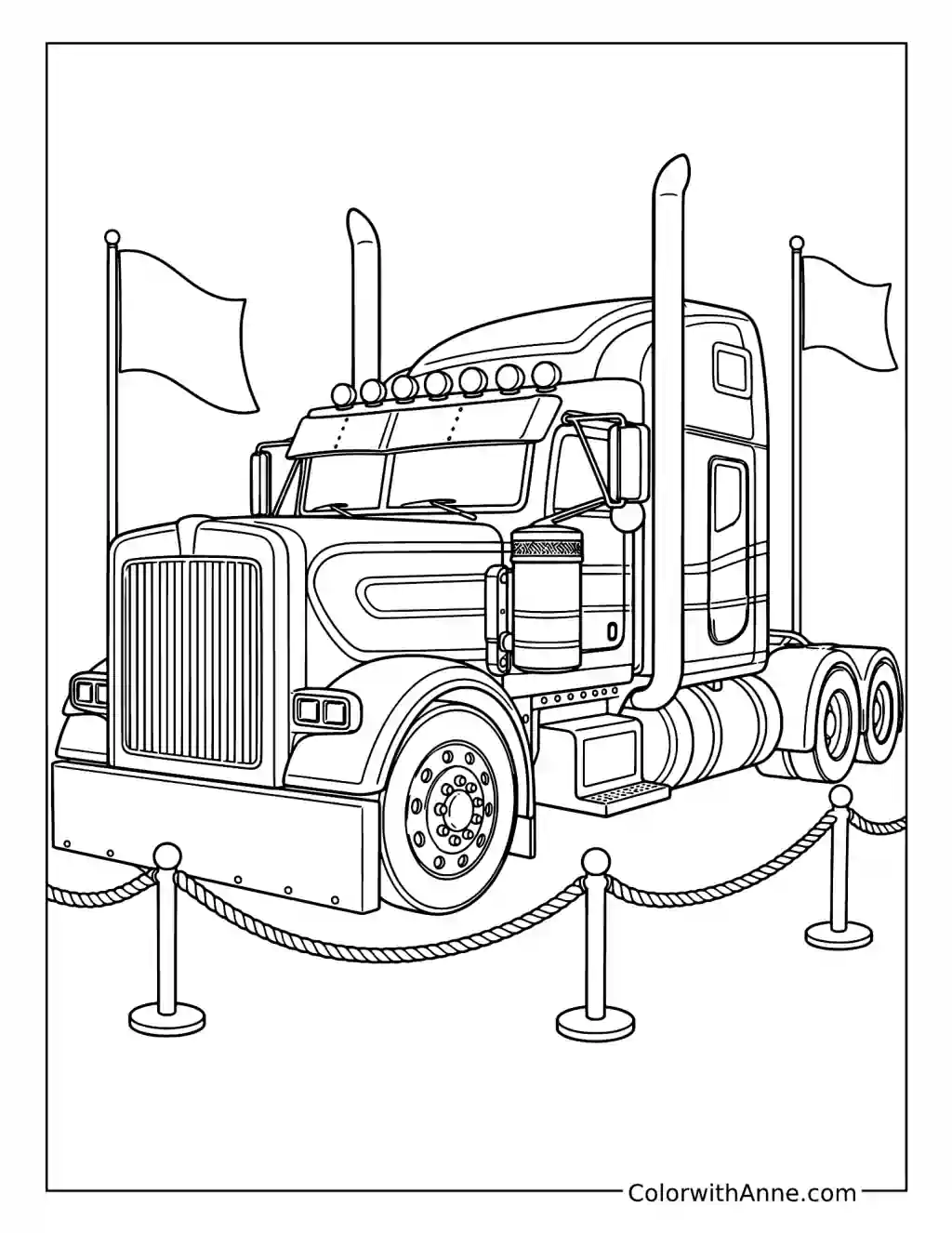
The polished truck stands behind a rope barrier, flags raised beside it. With no trailer or busy road competing for attention, the tall exhausts, grille, and cab have their moment to look thoroughly pleased with themselves.
Deep red, midnight blue, or emerald green would suit the bodywork. Pale gray chrome with a few white highlights could keep the metal looking polished.
Design one clear emblem for the cab door before adding any pinstripes. It might be a simple mountain, lightning shape, or set of initials. Try it at the small size it will actually occupy. Show-truck decoration becomes more convincing when the main mark remains readable and the finer lines have room around it.
Stack a Load for the Logging Truck
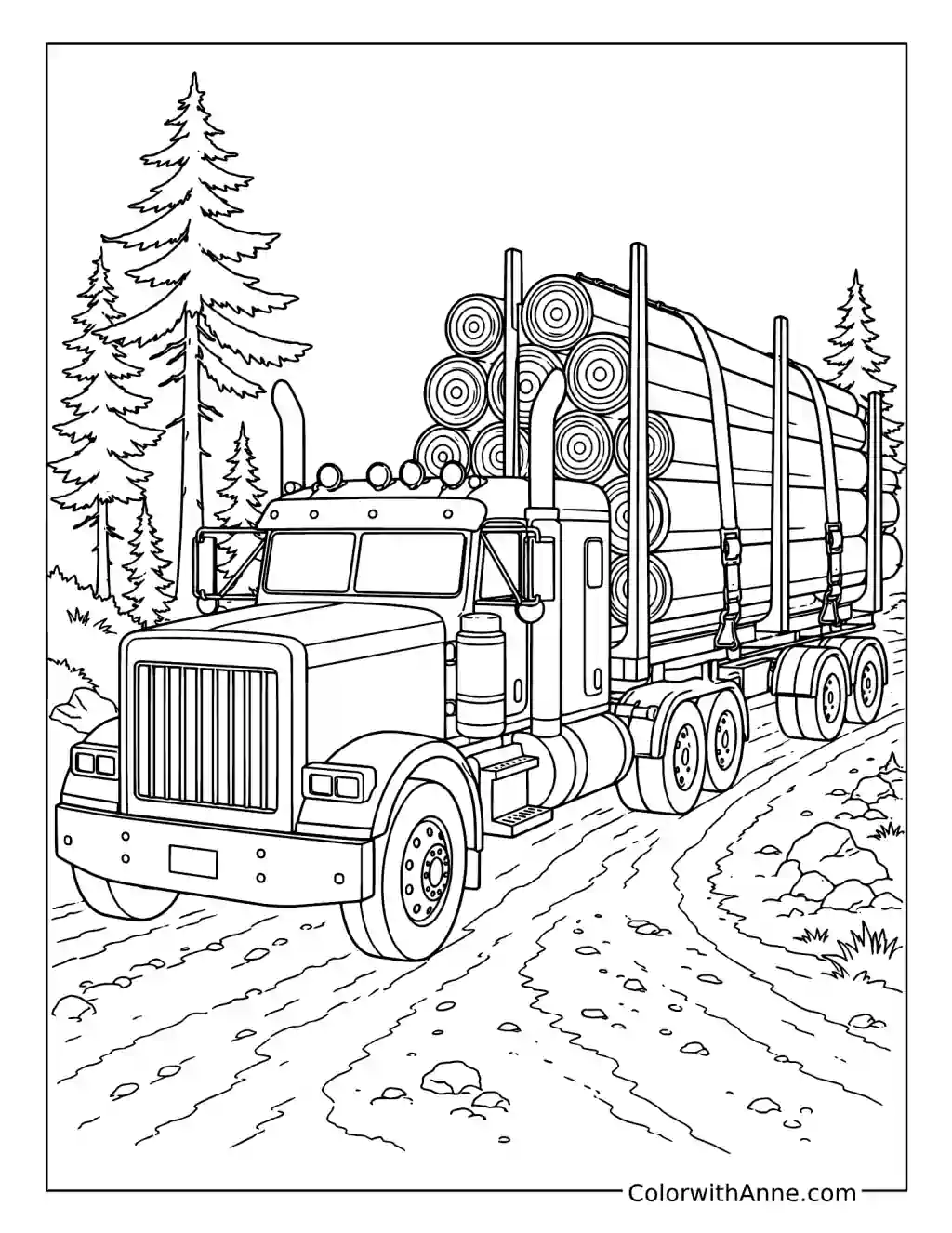
Long logs sit between the trailer’s upright supports as the truck follows a woodland road. The circular ends and rough bark make the load every bit as interesting to color as the cab.
Several browns could distinguish the logs, with lighter ends and darker bark. A strong cab color, such as red or blue, would stand out among the forest greens.
Roll a few small paper tubes to make a pretend load for a toy flatbed. Try stacking them in different arrangements and see which stays put when the vehicle moves slowly. Cardboard uprights can help hold the pile together. The challenge comes directly from the picture: round objects are not always cooperative passengers.
Make Room at the Truck Stop
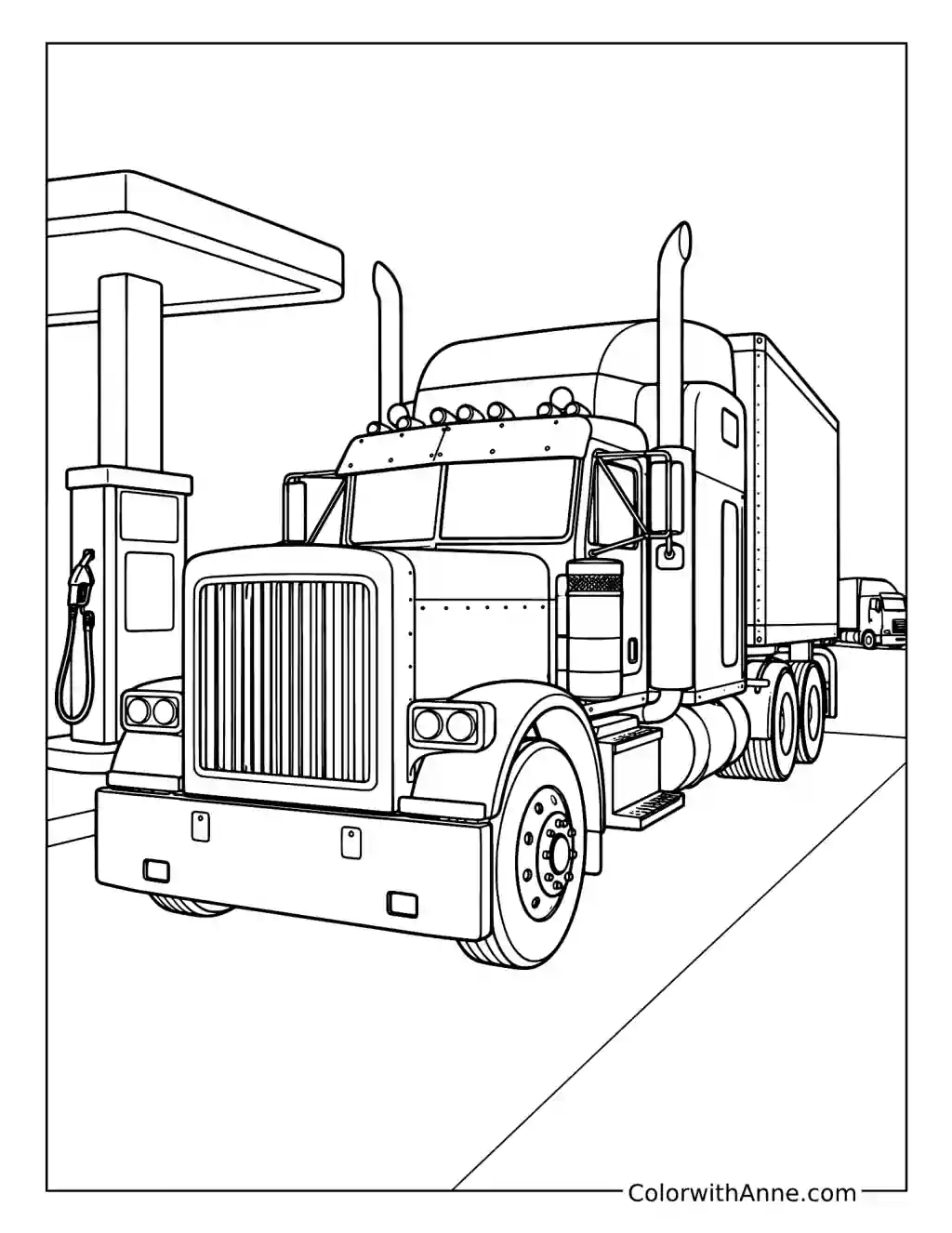
The long-nosed truck waits beside a fuel pump beneath the truck-stop canopy. After the open-road scenes, this one pauses where a driver can take care of the vehicle before continuing the journey.
A dark green or burgundy cab would suit the setting. Gray paving and cream buildings could leave the pump and small signs easy to pick out.
Set up a truck stop for toy vehicles using a sheet of paper and a few marked parking spaces. Leave enough room for the longest trailer to enter and turn. Testing the layout with the toys is the enjoyable part, especially when the first beautifully drawn parking bay turns out to be impossible to reach.
Build a Bridge for the Longest Truck
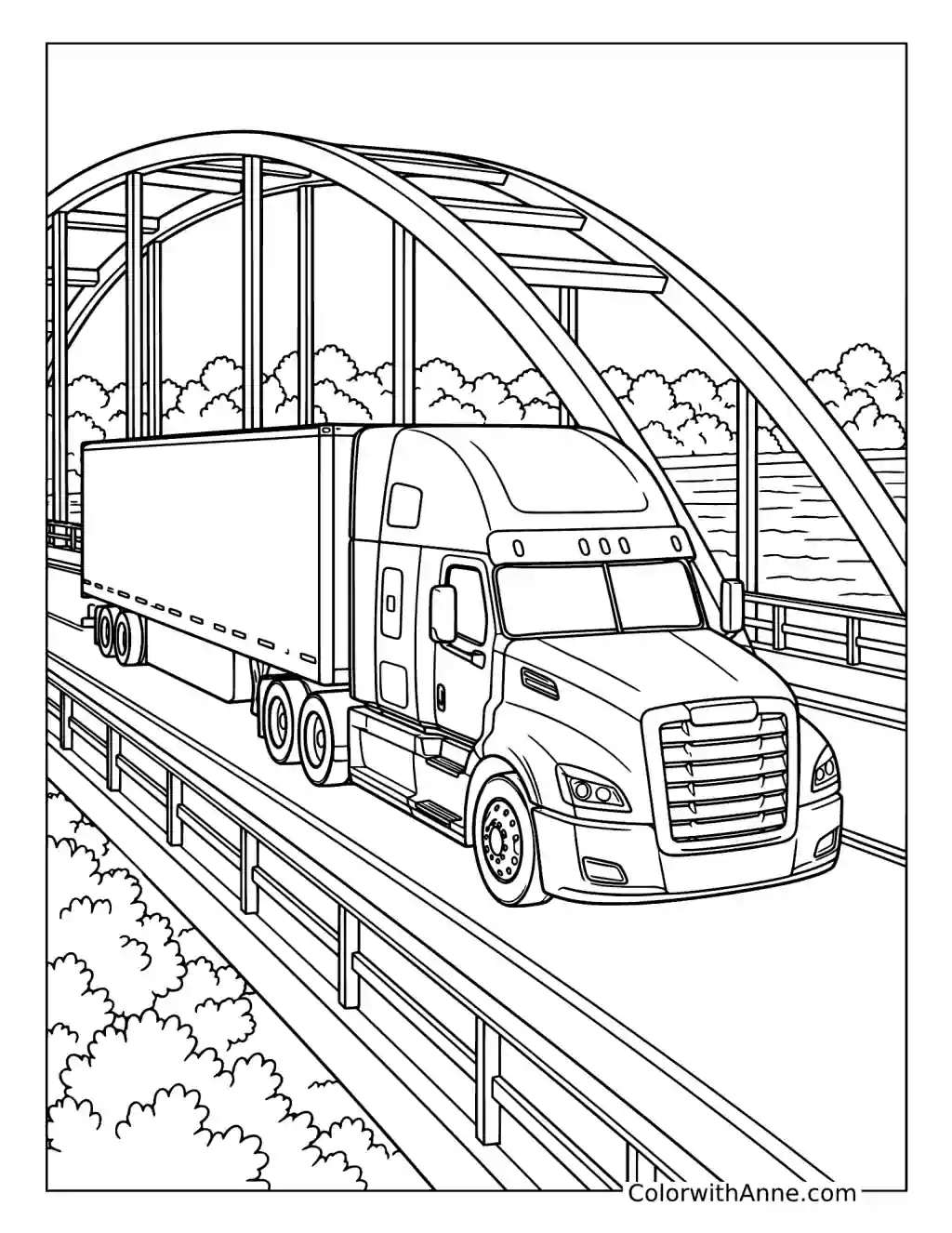
The truck crosses beneath the bridge’s broad arch, with water and banks visible below. Its long trailer makes the crossing feel substantial, giving the bridge something suitably impressive to carry.
Blue or red bodywork could sit against warm gray bridge supports. A softer blue-green river would distinguish the water from the harder shapes overhead.
Try bridging a small gap between two sturdy supports with card, then move a toy truck across it. Change the card by folding its long edges upward and compare the result. Keep the gap and vehicle the same while trying different folds, so it is easier to see which change helps the little bridge hold its shape.
Trace the Grain Back to the Farm
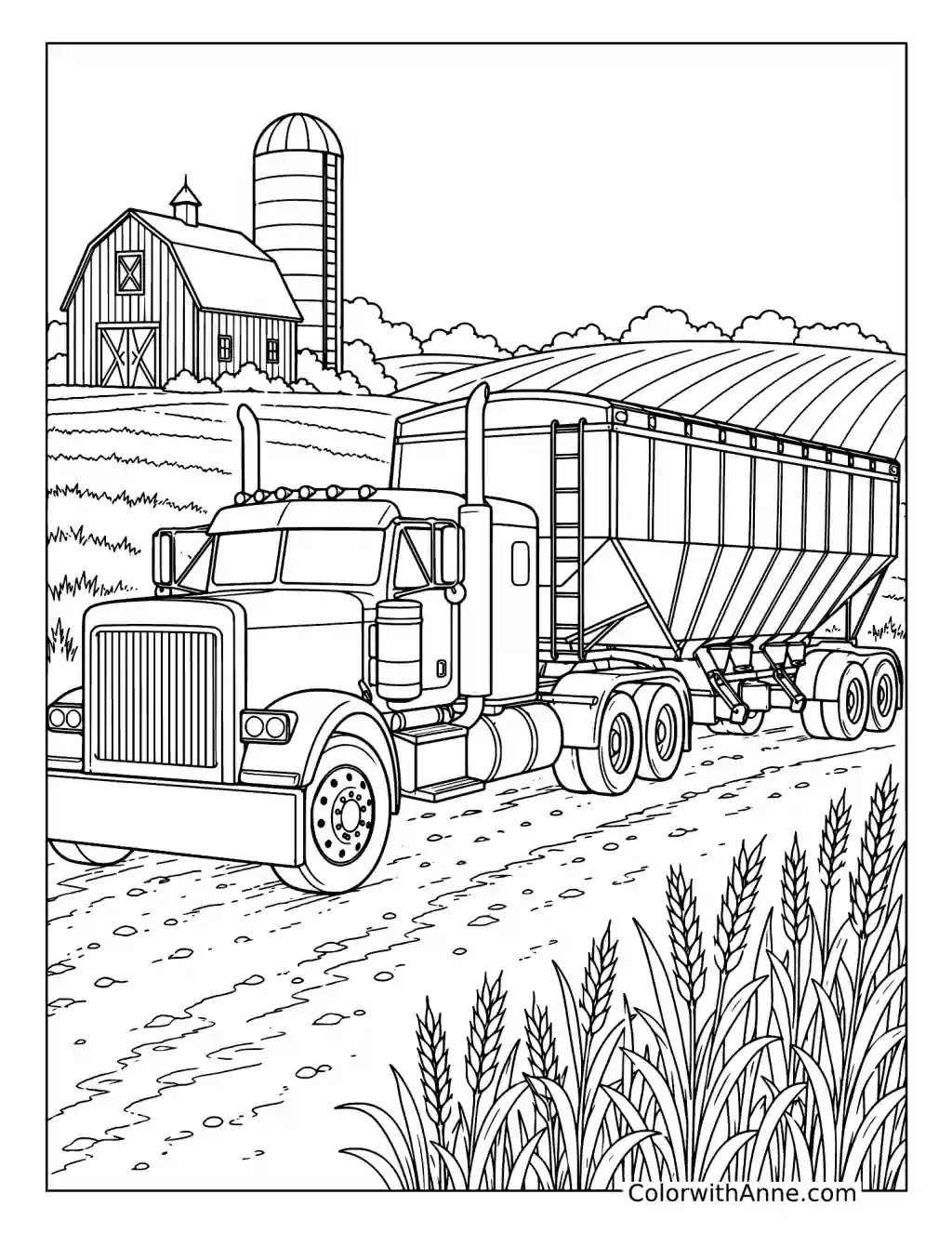
The grain hauler passes a farm with a barn and tall silos, its trailer following rows of crops. The setting gives the truck a destination and a reason for its particular load.
A red barn and golden crops would give the scene a harvest feel. The trailer could stay pale gray, with a contrasting blue or green cab.
Pick a familiar grain-based food and find the grain named on its label. Then draw a short journey beginning with a farm and ending with the finished food. Add the places where it might be processed or prepared. The truck belongs somewhere along that route, making the connection between fields and everyday meals easier to picture.
Arrange the Cars in Delivery Order
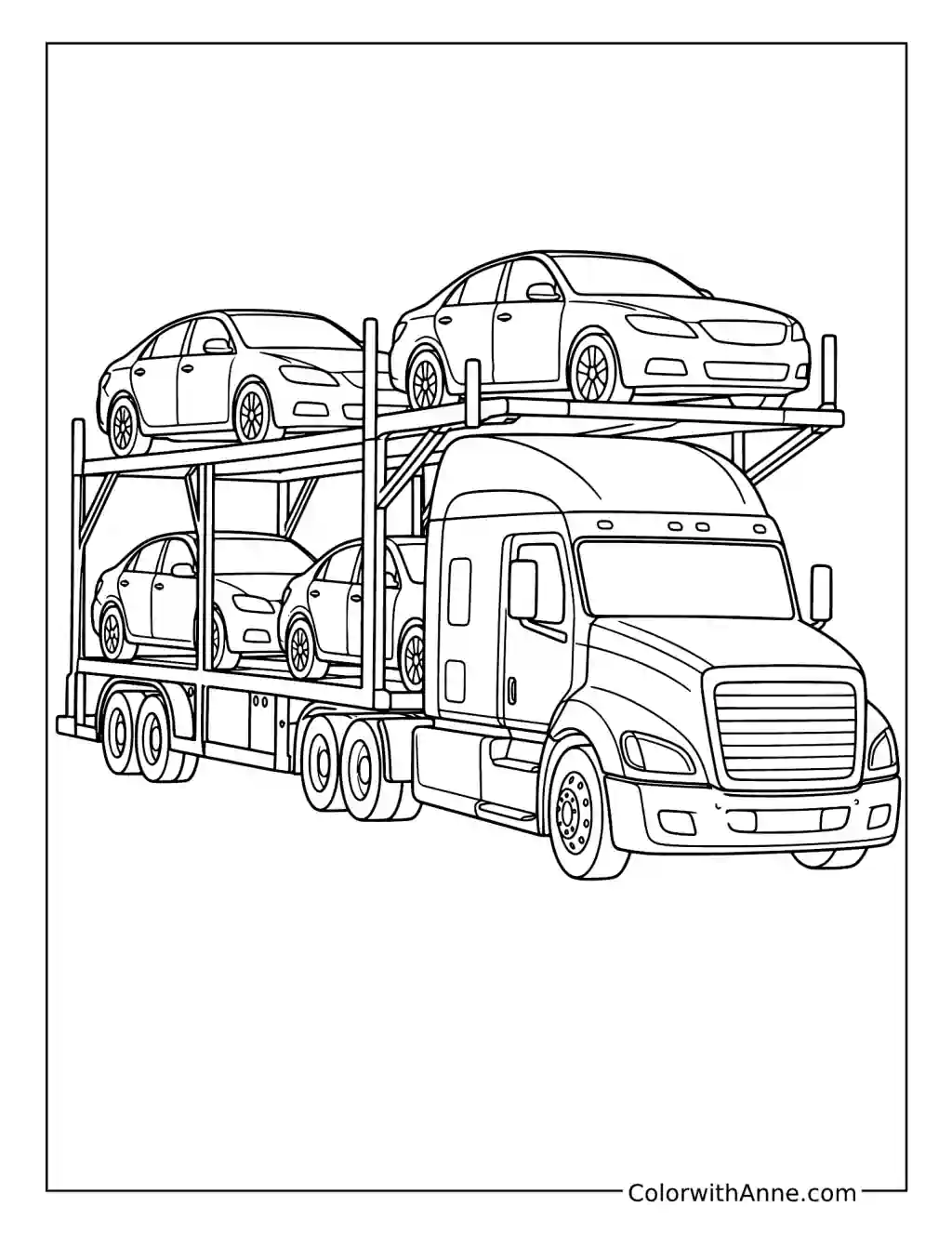
Cars occupy both levels of the carrier, tucked above the cab and along the trailer. The arrangement looks neatly planned, although choosing which vehicle comes off first might take a moment.
Give the cars distinct colors so each is easy to follow. A quieter silver carrier and one strong cab color would leave the smaller vehicles as the main attraction.
Use toy cars or colored paper rectangles to plan a delivery order. Decide which car belongs at the first stop, then arrange the load so it can be reached. If another vehicle blocks the way, try rearranging before departure. It turns the picture’s crowded trailer into a small, satisfying problem about order and access.