
A pirate ship needs more than a skull flag to get moving. Sails snap in the wind, ropes rub against salty hands, and someone has to scrub the deck while the captain studies the horizon. Treasure may be the attraction, but keeping breakfast aboard when the waves pick up deserves some credit, too.
Pirate Ship coloring pages bring that seafaring mood to an afternoon at the table. The appeal lies in imagining a vessel with somewhere to go: a distant island, a sheltered harbor, or open water beyond the map’s edge. Even with both feet firmly ashore, it is easy to linger over the next voyage.
Free Printable Pirate Ship Coloring Pages
Click any coloring page below to open the PDF, then print on US Letter or A4 paper.
Did you find what you needed?
Help us choose what to create or improve next.
Coloring Ideas for Pirate Ship Pages
Try one of these coloring ideas, or use them as a starting point for your own.
Give the Ghost Ship a Legend
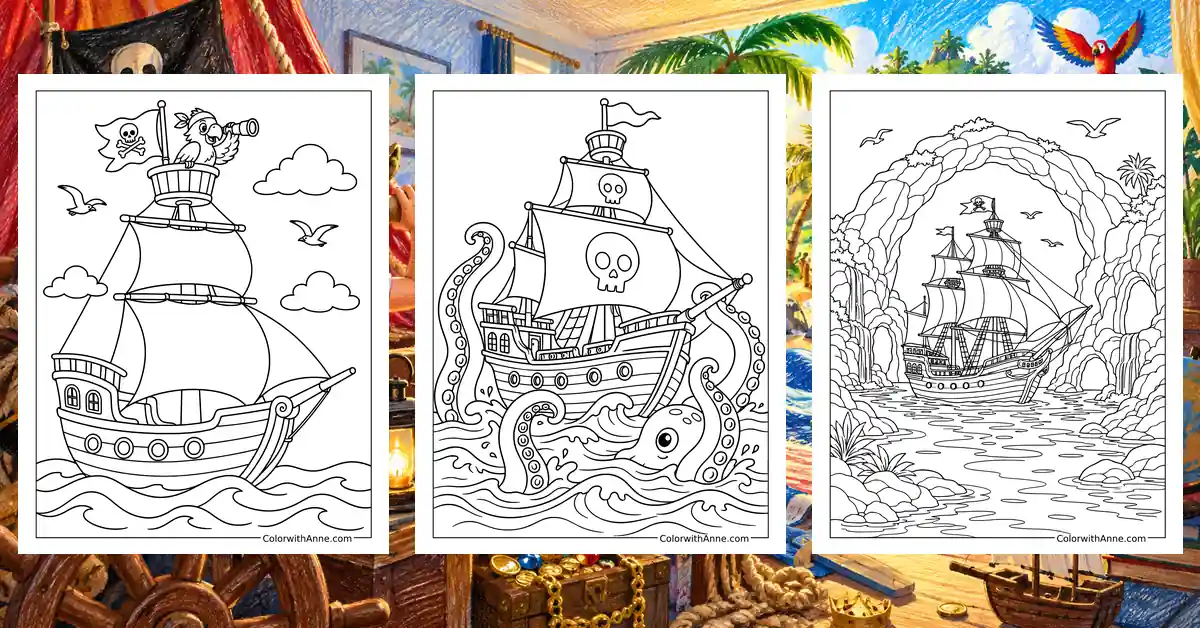
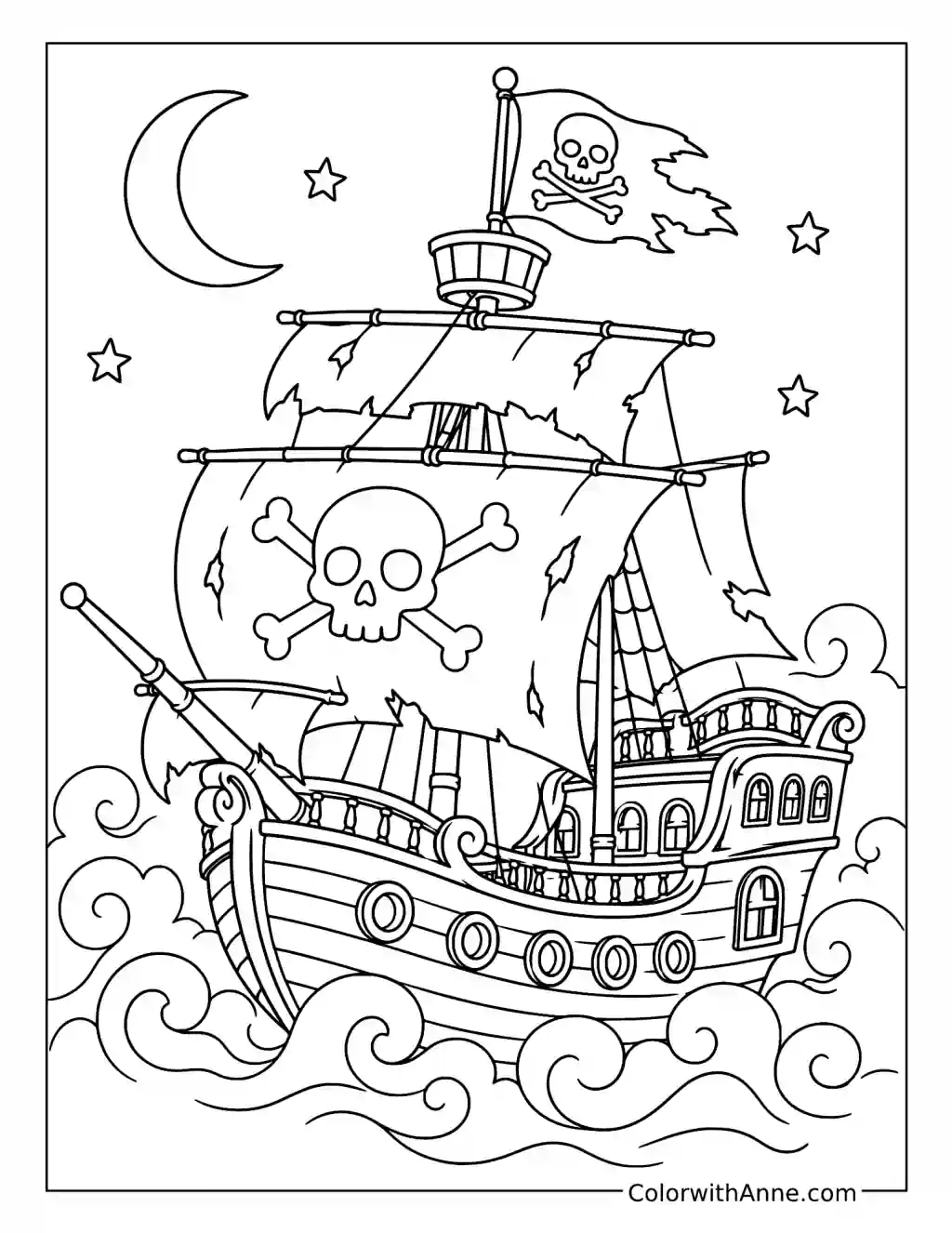
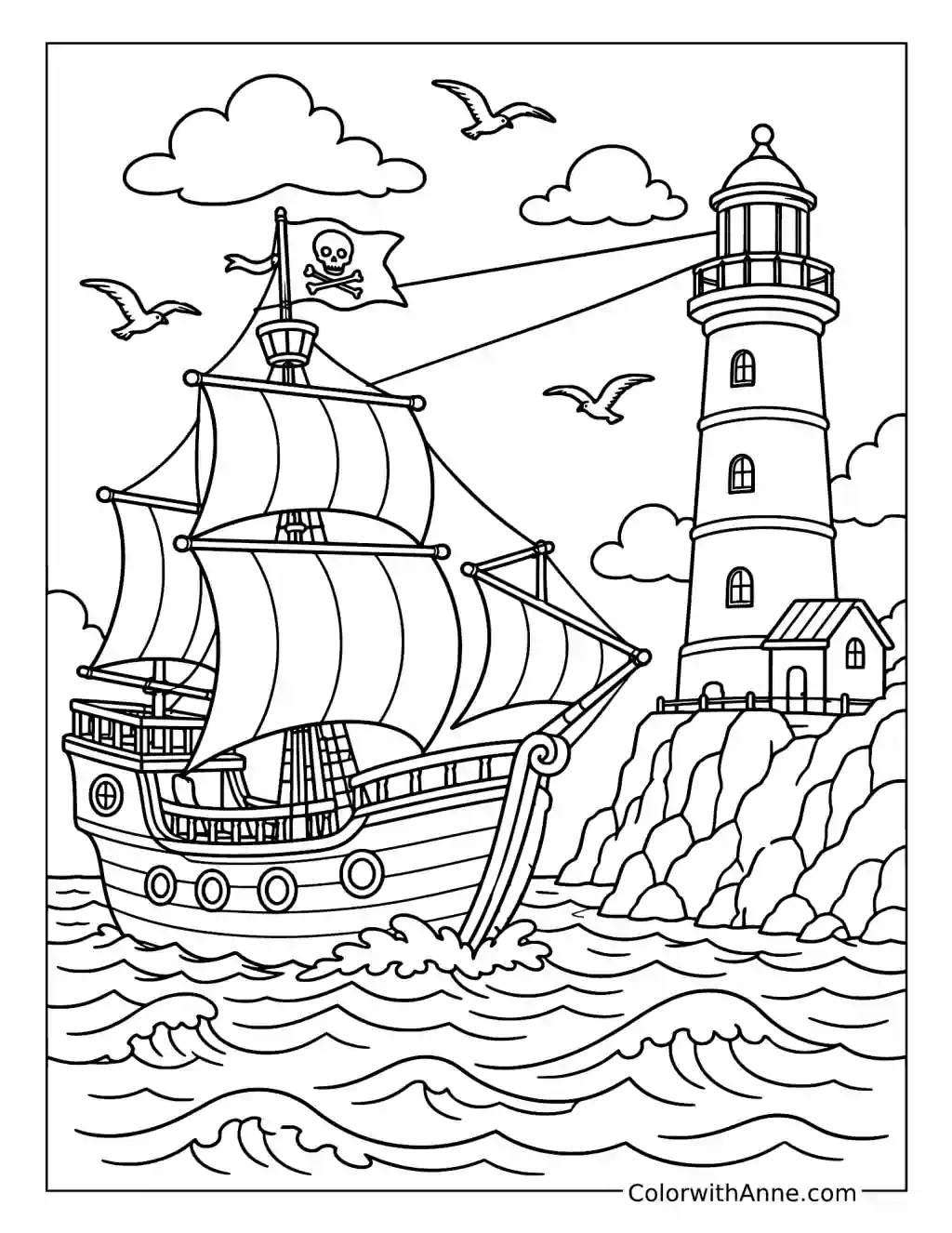
The torn sails, ragged flag, and curling mist make this ship look as though it has been sailing long after everyone expected it home. A crescent moon hangs above it, while a large skull and crossbones fills the main sail.
Let the worn fabric guide the atmosphere. Faded gray or pale green sails against darker water can give the vessel a strange, weathered presence. Keep the skull clearly visible; it is the detail another sailor might remember after the ship disappears.
Then write a short legend on the back. Give the ship a name, decide when it appears, and explain what someone on shore would notice first. One unexplained detail, such as a ship that arrives without the sound of waves, leaves plenty for the listener to imagine.
Choose the Flagship of a Three-Ship Fleet
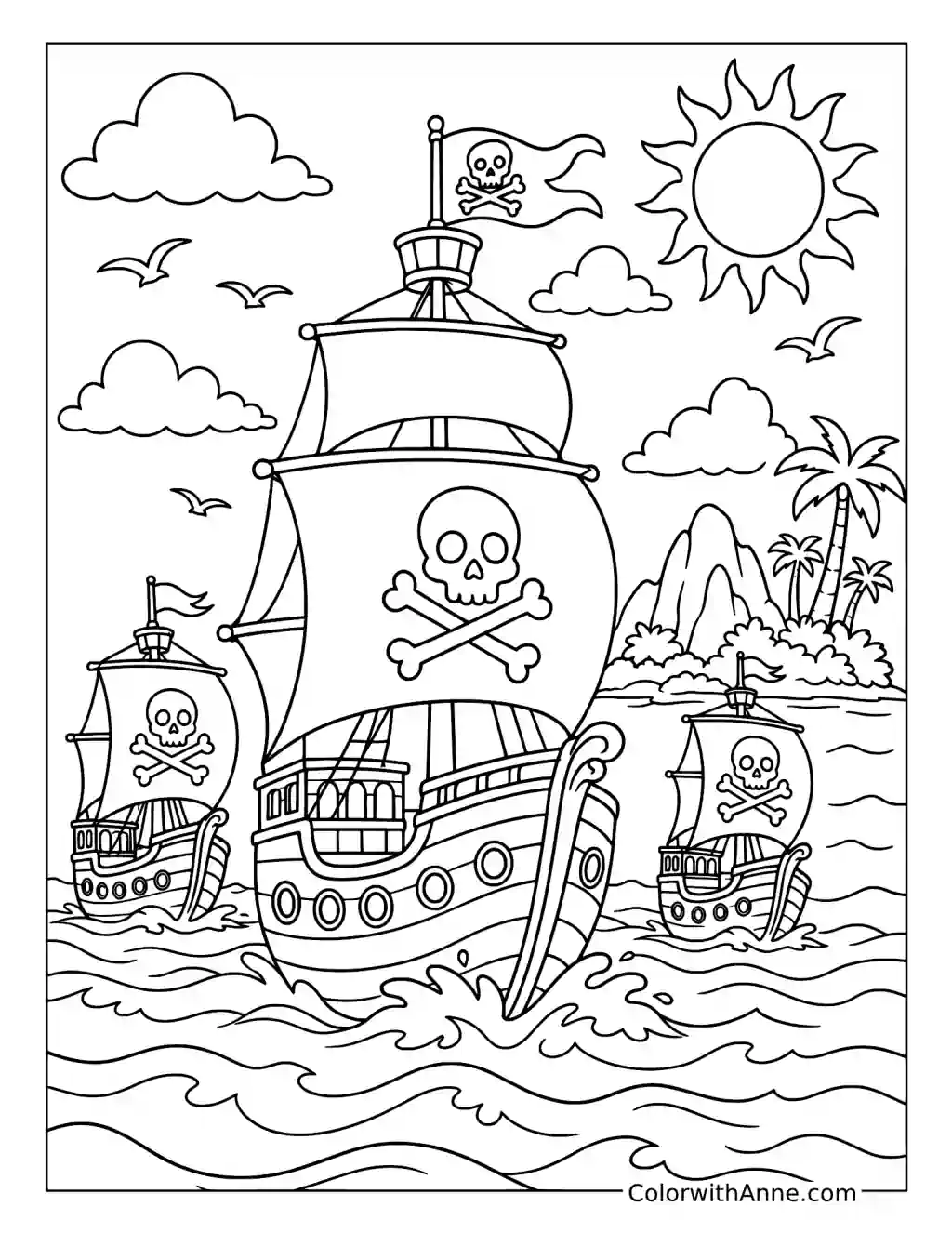
A large ship leads the picture, with two smaller vessels nearby and a palm-covered island in the distance. It feels like a fleet with plans, even if the captains have yet to agree on them.
Give the three ships a shared identifying color, then let each have its own character. One might carry red sails, another red trim, and the third a red flag. The connection stays visible without making every vessel identical.
For a shared activity, let each person claim a ship and choose its name and job. Who carries supplies? Who scouts ahead? Who leads the way? Write the assignments beneath the finished picture. A fleet becomes more interesting when everyone has a reason to be there.
Join the Crew Raising the Sails
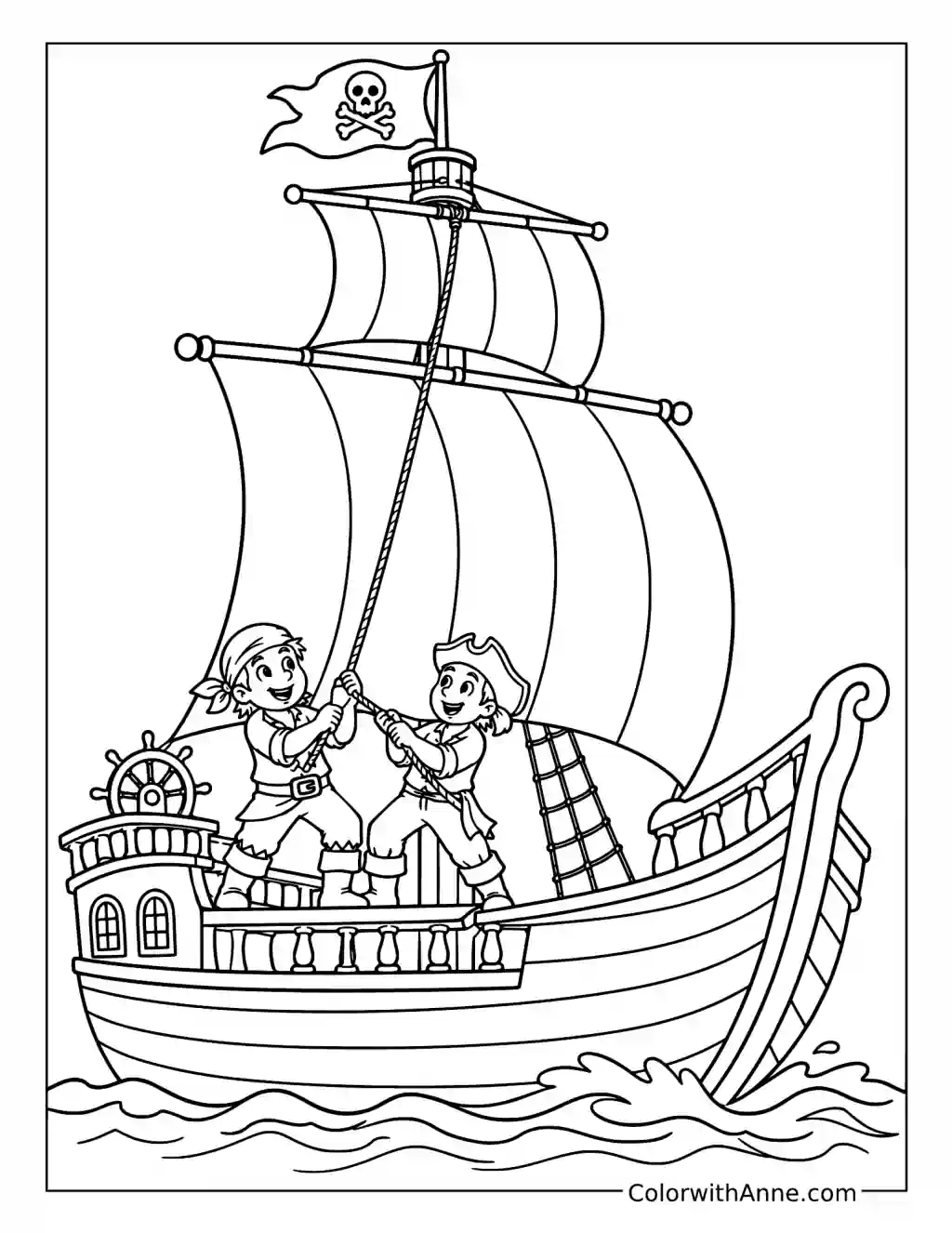
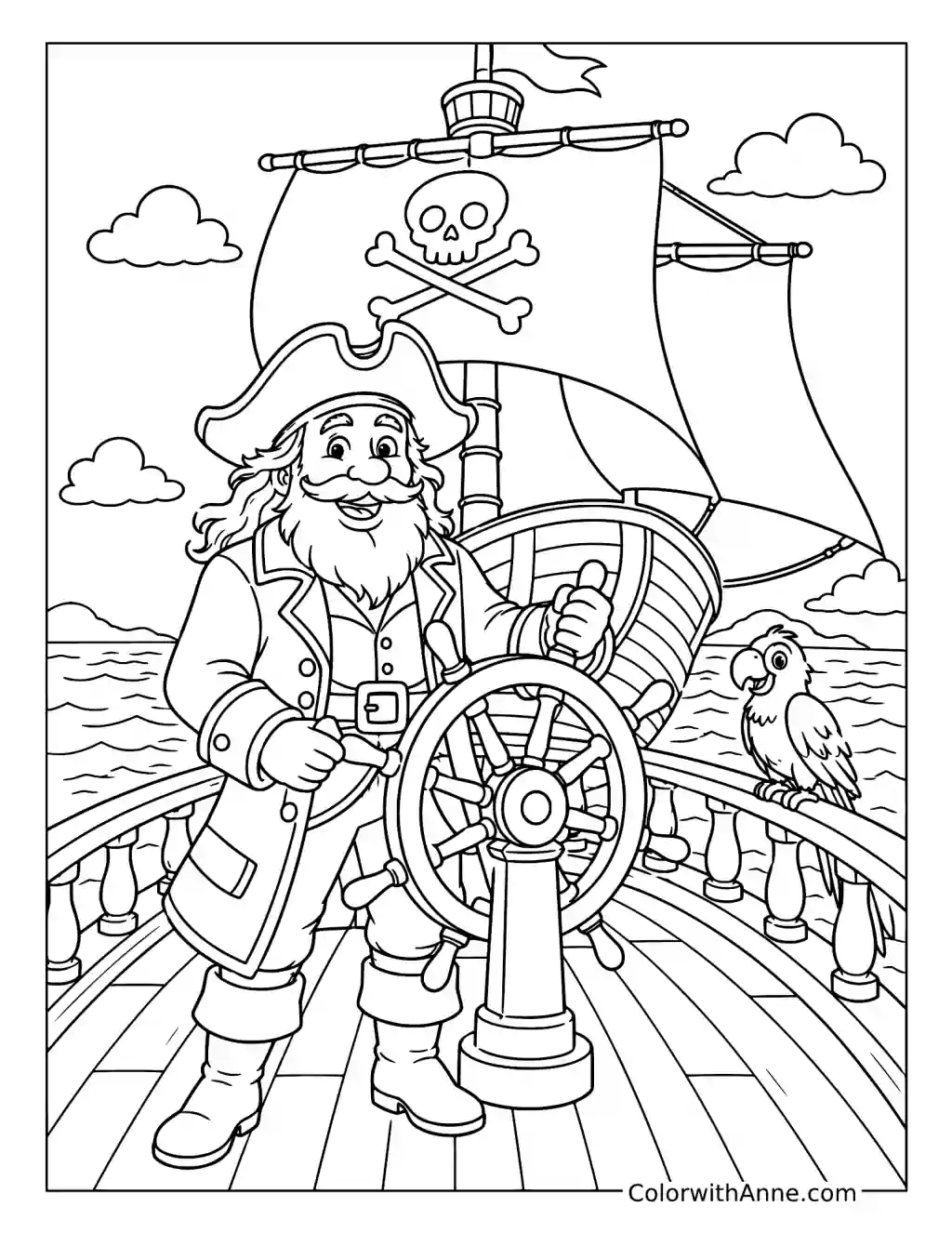
Two pirates work the ropes beneath the tall sails, with the ship’s wheel behind them and a ladder rising beside the mast. Here, the adventure begins with an actual job on deck.
Follow the drawn ropes with a fingertip before coloring, noticing how they connect the crew’s hands to the sailing equipment above. Give the two pirates distinct clothing so their positions remain easy to follow among the lines.
Bring a little movement into the activity by standing up and pretending to haul a rope together. Count three steady pulls, then return to the picture and decide what the crew does next. Checking the course or watching the water sounds sensible; treasure hunting can wait until the ship is moving.
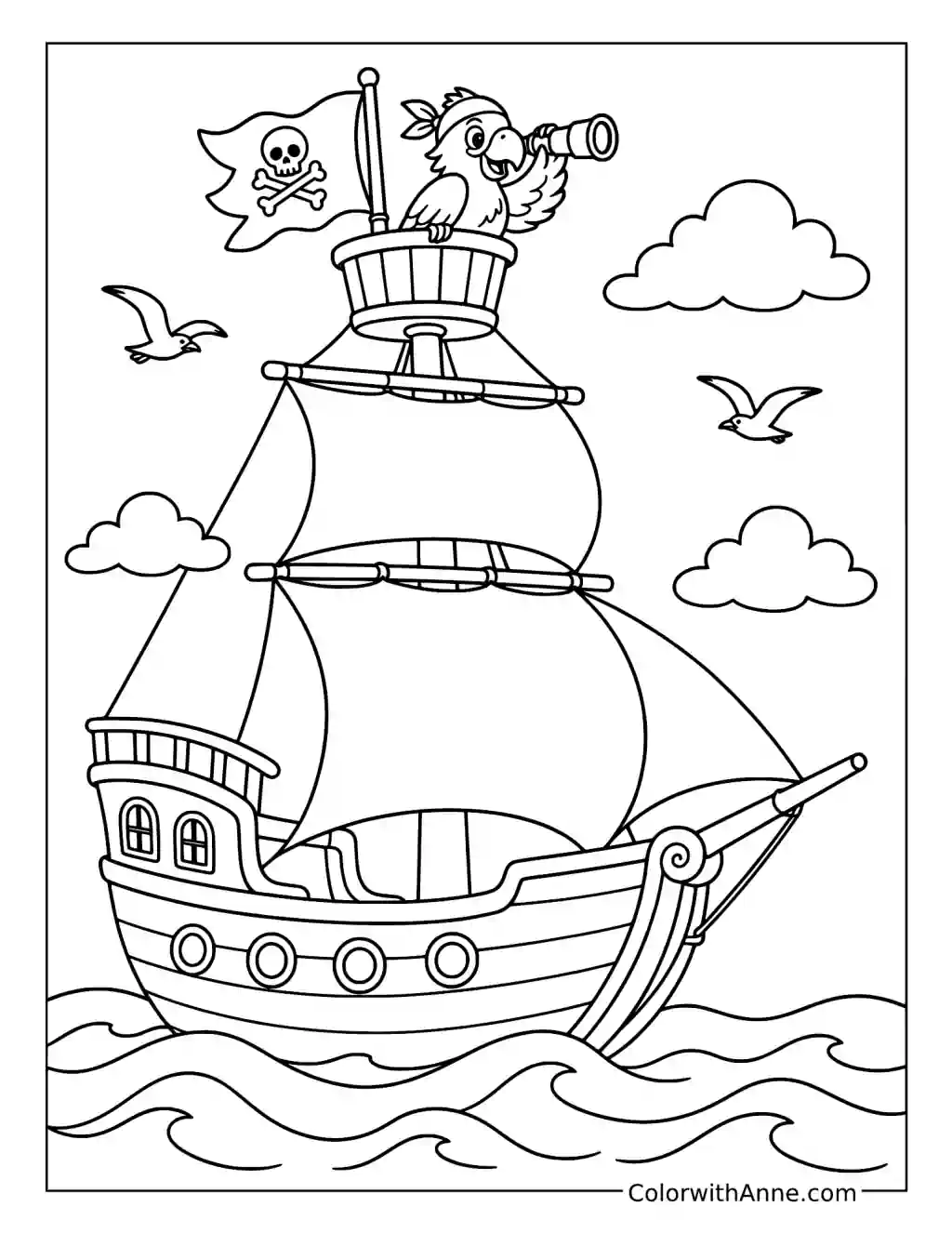
Let the Parrot Report from the Lookout
The parrot has claimed the high lookout and is peering through a telescope. Below, the ship rides the waves with its sails open, while seabirds pass between the clouds.
Color the parrot so it can be spotted immediately against the sails. Then play a lookout game with the finished page: one person secretly chooses a visible detail, and the other asks questions to identify it. Is it above the deck? Does it have wings? Is it part of the ship?
Once the pictured details have been explored, invite the lookout to report something imagined beyond the page. An island, another sail, or an approaching rain cloud would each give the crew a different decision to make.
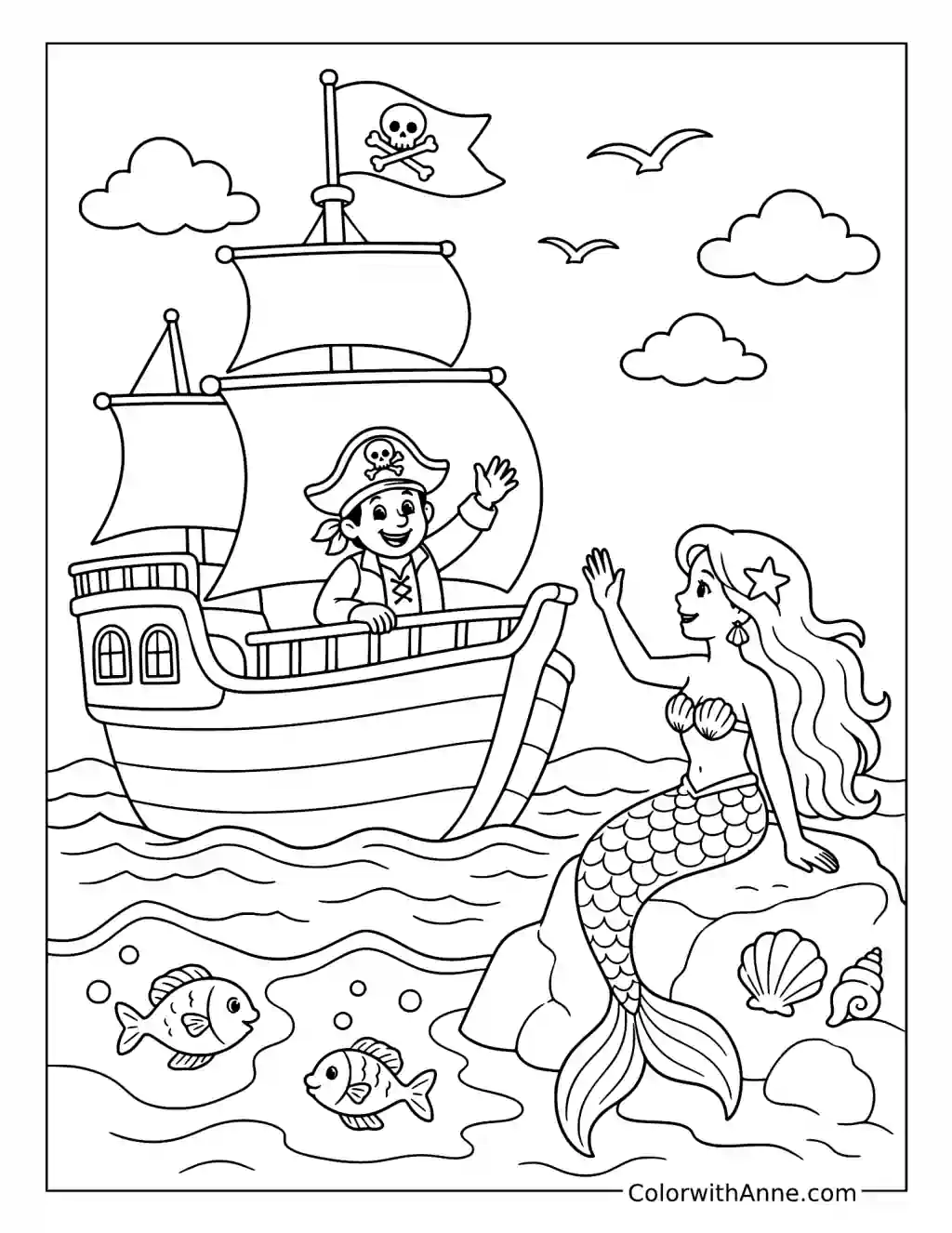
Decide What the Mermaid Has Come to Say
A pirate waves from the ship toward a mermaid seated on a rock. Fish swim below her, and a star decorates her hair. With both characters facing one another, the picture catches a meeting before its conversation begins.
Let two people take a character each and decide what they want from the encounter. The pirate might need directions; the mermaid might want the ship to steer away from her favorite swimming place. Take turns speaking for them, allowing each reply to shape the next.
Afterward, write their agreed plan below the picture. It gives the scene an ending without needing a long story, and lets the mermaid have a say in where this voyage goes.
Explore What Fits Below Deck
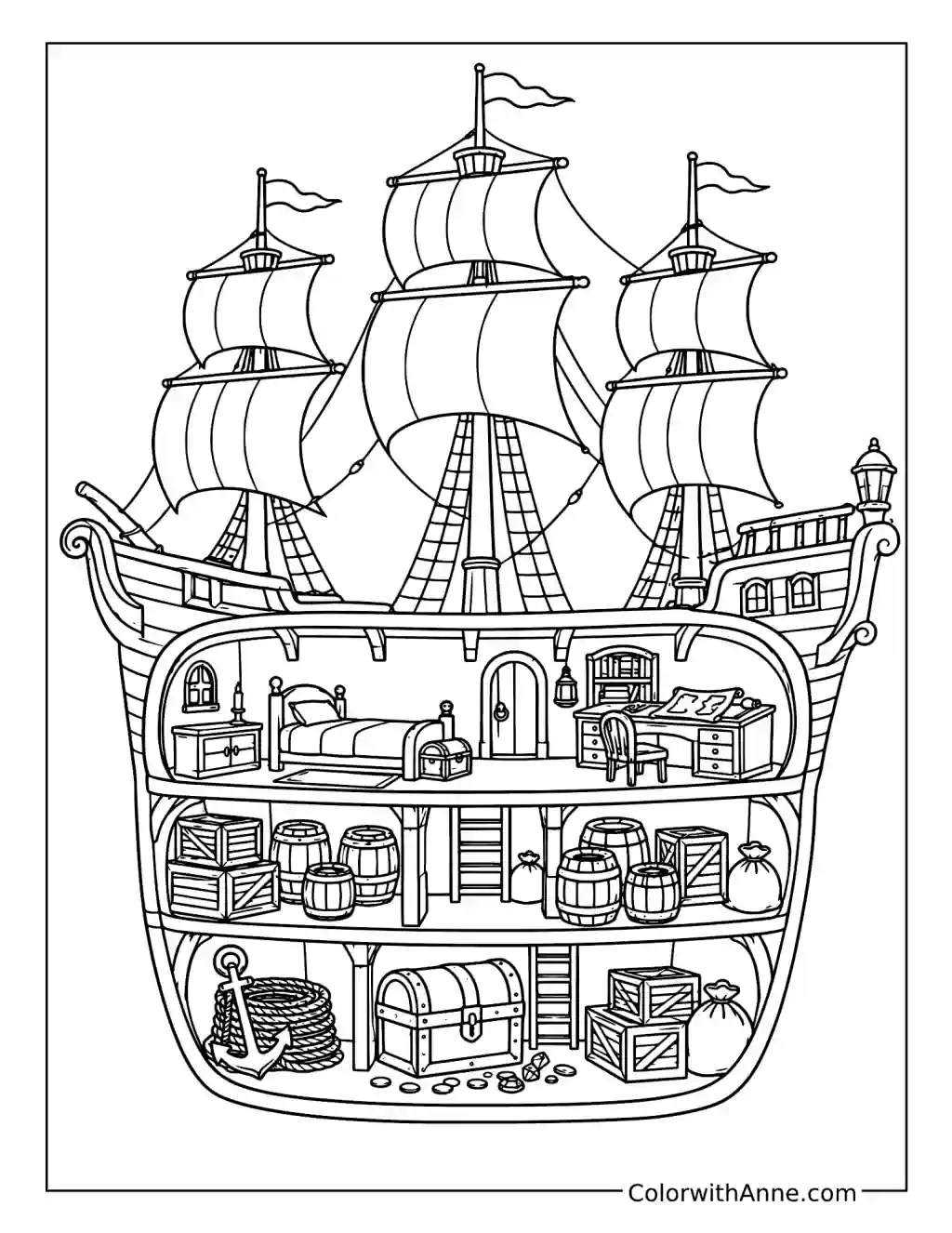
This cutaway opens the hull to reveal several levels filled with barrels, crates, chests, and an anchor with coiled rope. Above them, the masts and sails rise from a ship whose storage space suddenly looks rather important.
Turn the picture into a packing challenge. Choose five things the crew needs for a long voyage, then decide which pictured containers could hold them. A barrel might be assigned drinking water, a crate spare clothing, and a chest the captain’s maps. These are choices for the imagined voyage, rather than contents already shown.
Add a small numbered key beside the page instead of squeezing labels into every compartment. When everything has a place, ask what the crew would need to reach first after leaving harbor. Packing for adventure still involves finding things afterward.
Plan a Treasure Hunt around the Island Chest
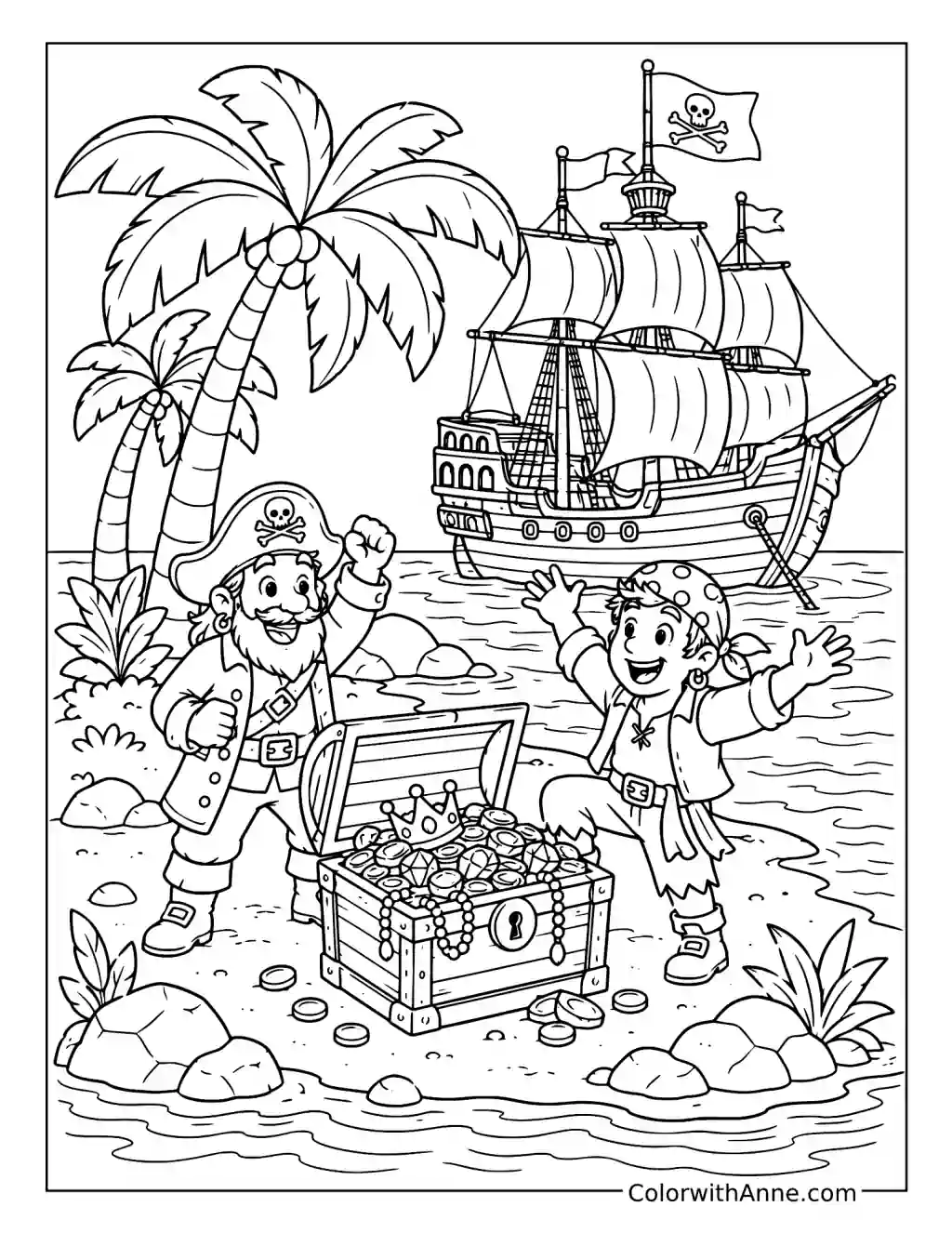
Two delighted pirates stand beside an open chest overflowing with treasure. Palm trees rise behind them, and their ship waits offshore. This is the moment the long search finally pays off.
Use the finished picture as the last clue in a small treasure hunt at home. Hide it with a modest prize, then write three clues that lead from one familiar place to another. Keep the directions concrete: beneath a cushion, beside a bookshelf, or near the shoes by the door.
Let the finder name one thing their pirate crew would do with its new fortune. Repairing the ship might be practical, but a celebration after all that searching would be understandable, too.
Chart a Route through the Treasure Islands
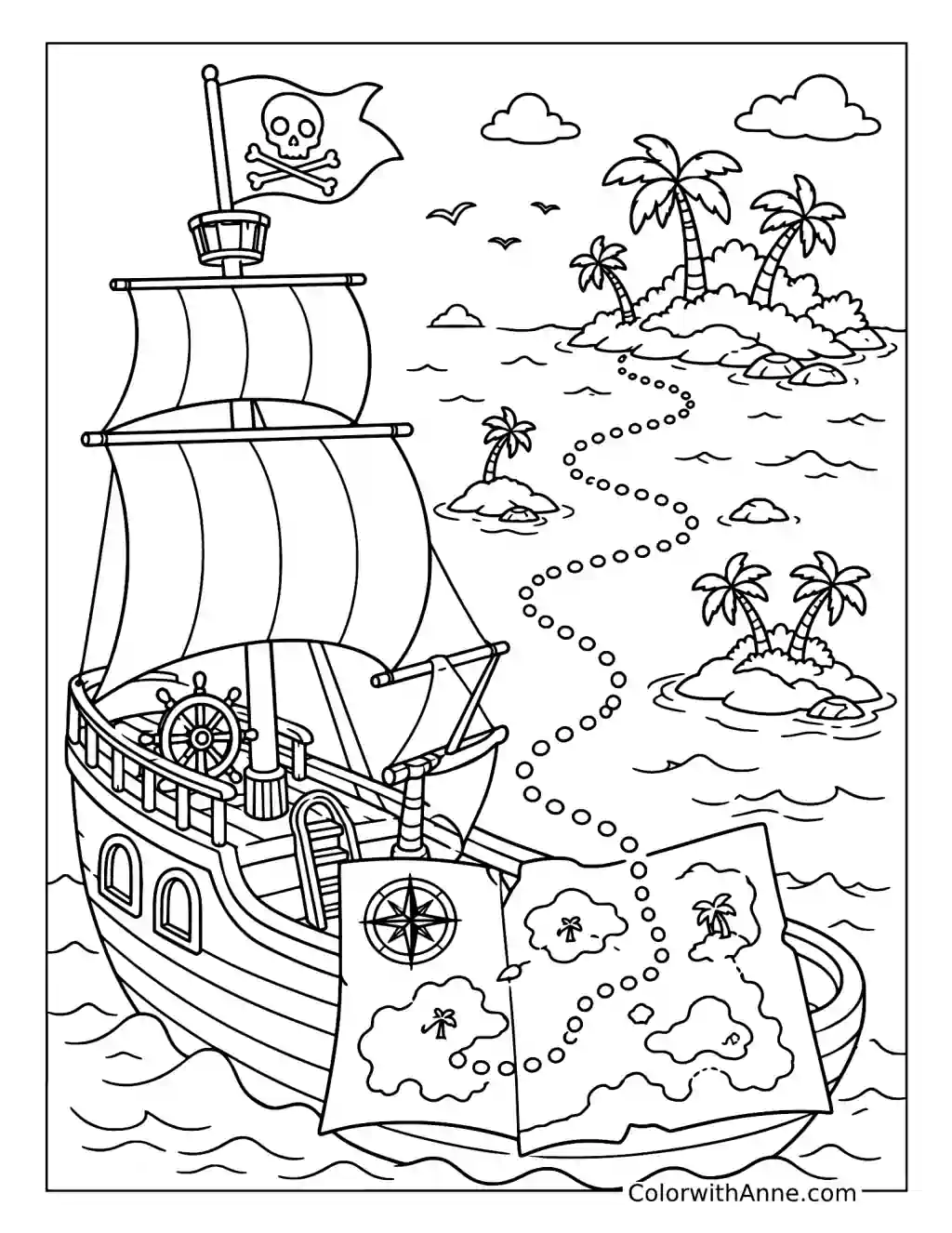
A dotted route winds between small islands beside the ship, while a treasure map fills the foreground. The repeated turns make this page feel like a journey with several stops rather than a straight sail toward one destination.
Follow the dotted route first, then give the islands names on a separate voyage sheet. Use the visible palms and rocky outlines as starting points: Tall Palm Island or Twin Palm Cove could help the crew remember where it has been.
At each stop, add one brief log entry describing an imagined event. Perhaps the crew refills its supplies or waits for better weather. Keep the entries in route order, so the finished picture and its log can be followed together from departure to the final island.