
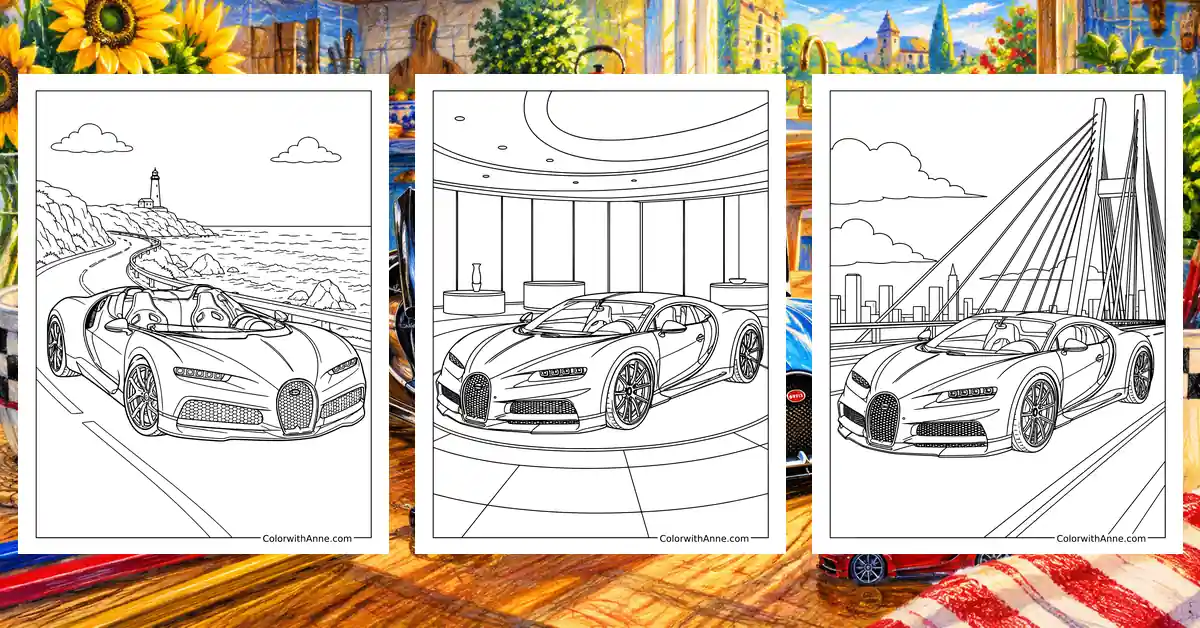
Spotting a Bugatti can interrupt an otherwise ordinary walk. A glimpse of that horseshoe grille, a low roofline, and suddenly the phone is out before the car reaches the next traffic light. The Veyron and Chiron have a way of making even people carrying groceries stop for a better look.
These Bugatti coloring pages invite a longer look at the shapes that make the cars so recognizable. Sweeping bodywork, distinctive front ends, and carefully chosen color combinations become the focus. Try a pairing inspired by a favorite Bugatti, or choose something that would be hard to miss in any parking lot.
Free Printable Bugatti Coloring Pages
Click any coloring page below to open the PDF, then print on US Letter or A4 paper.
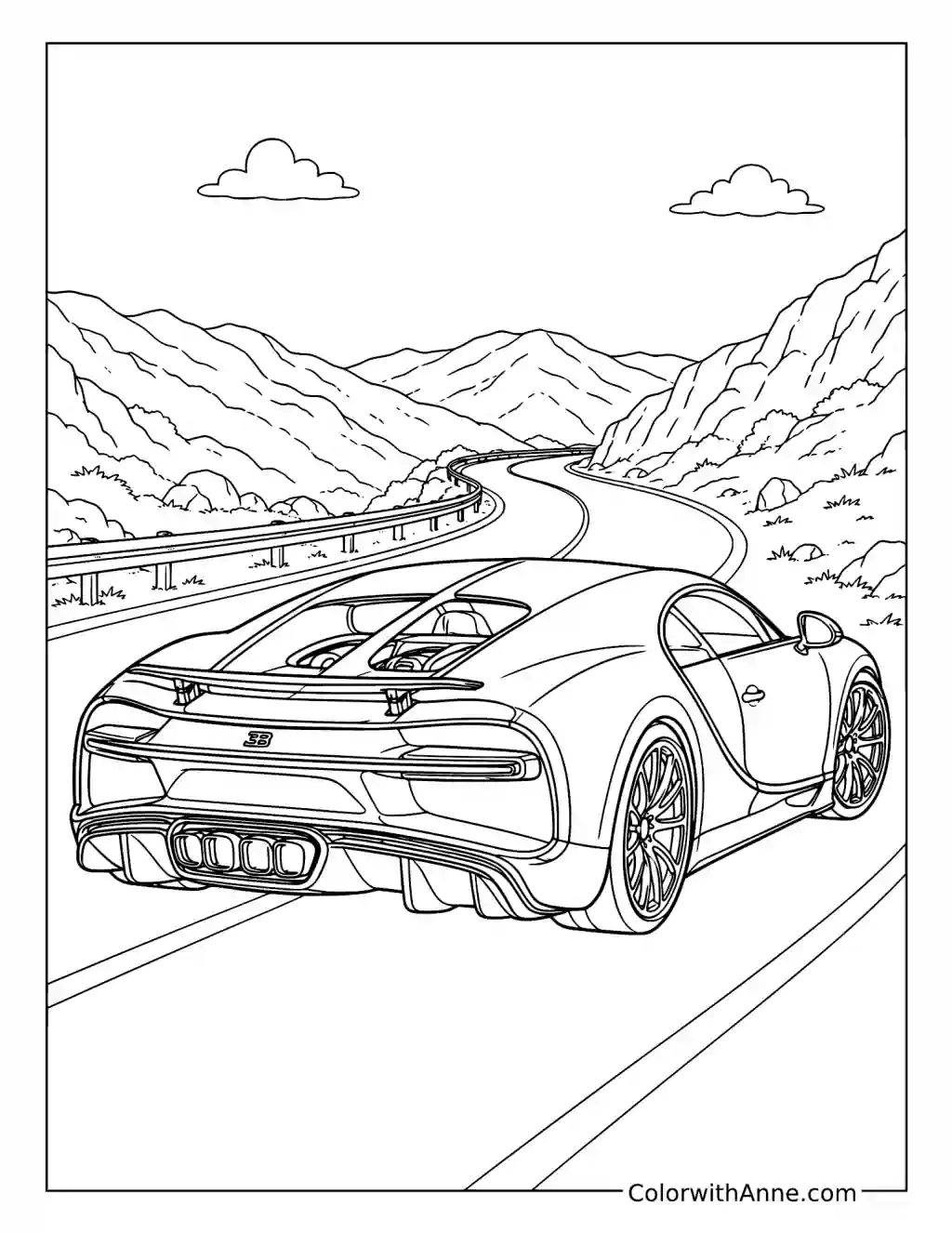
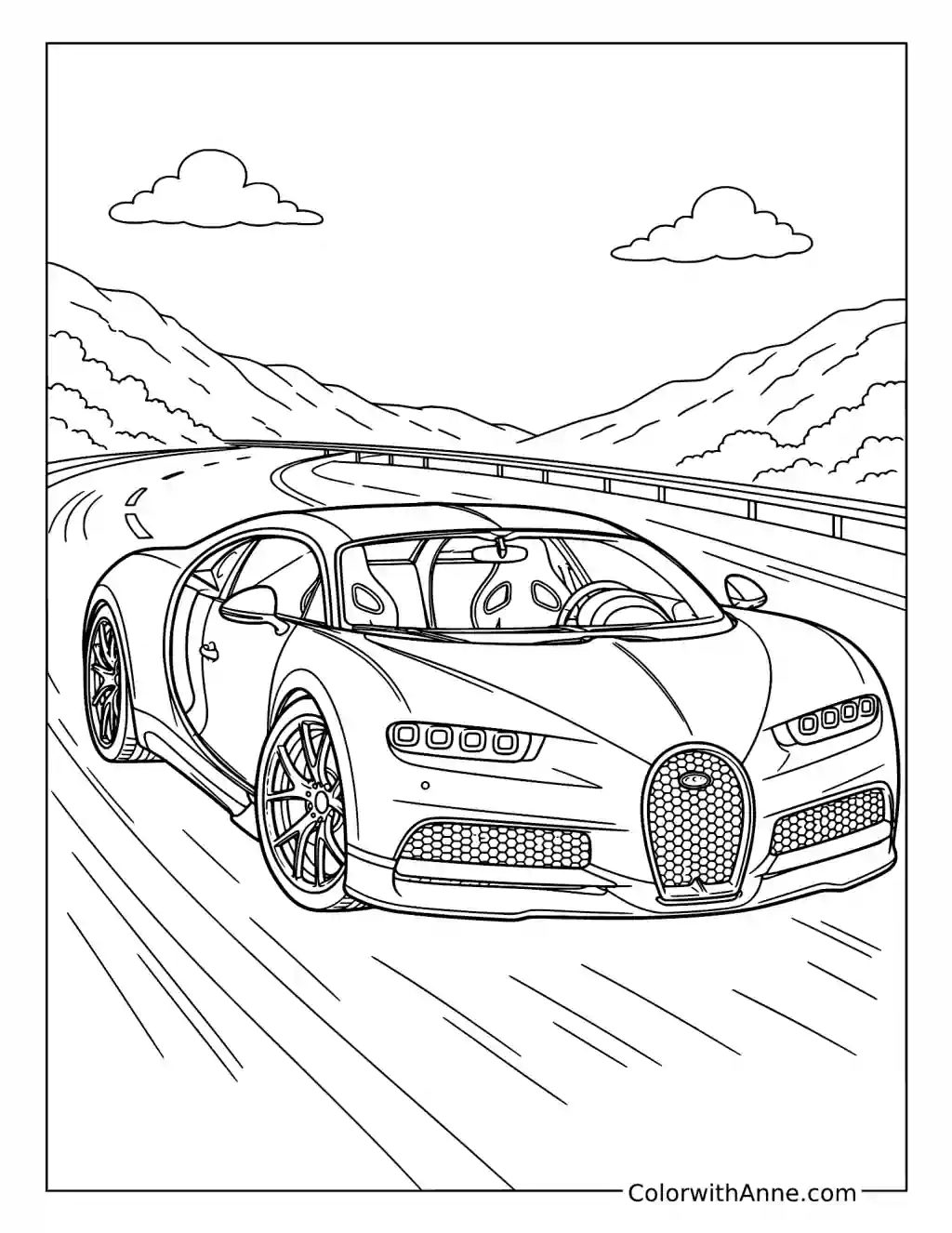
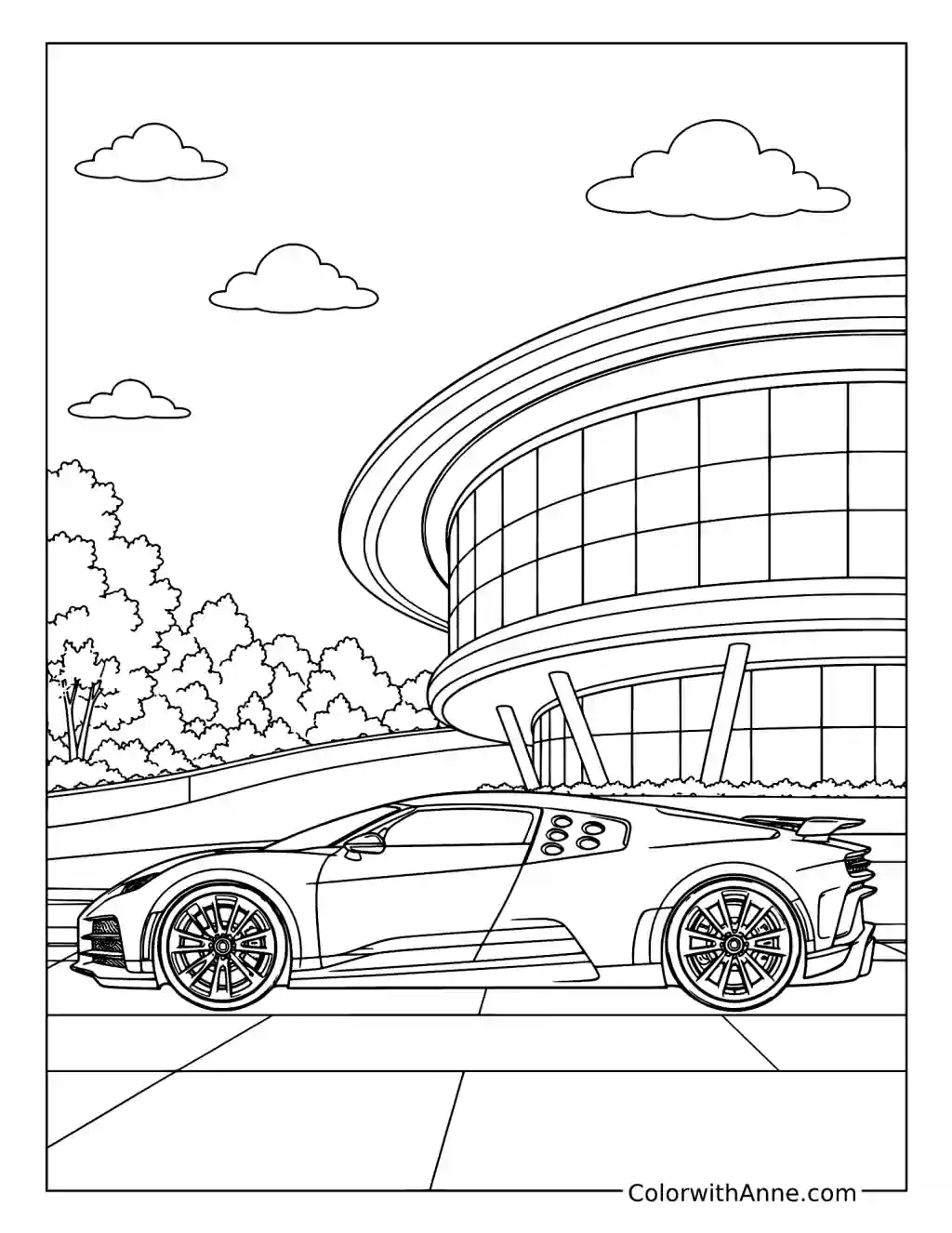
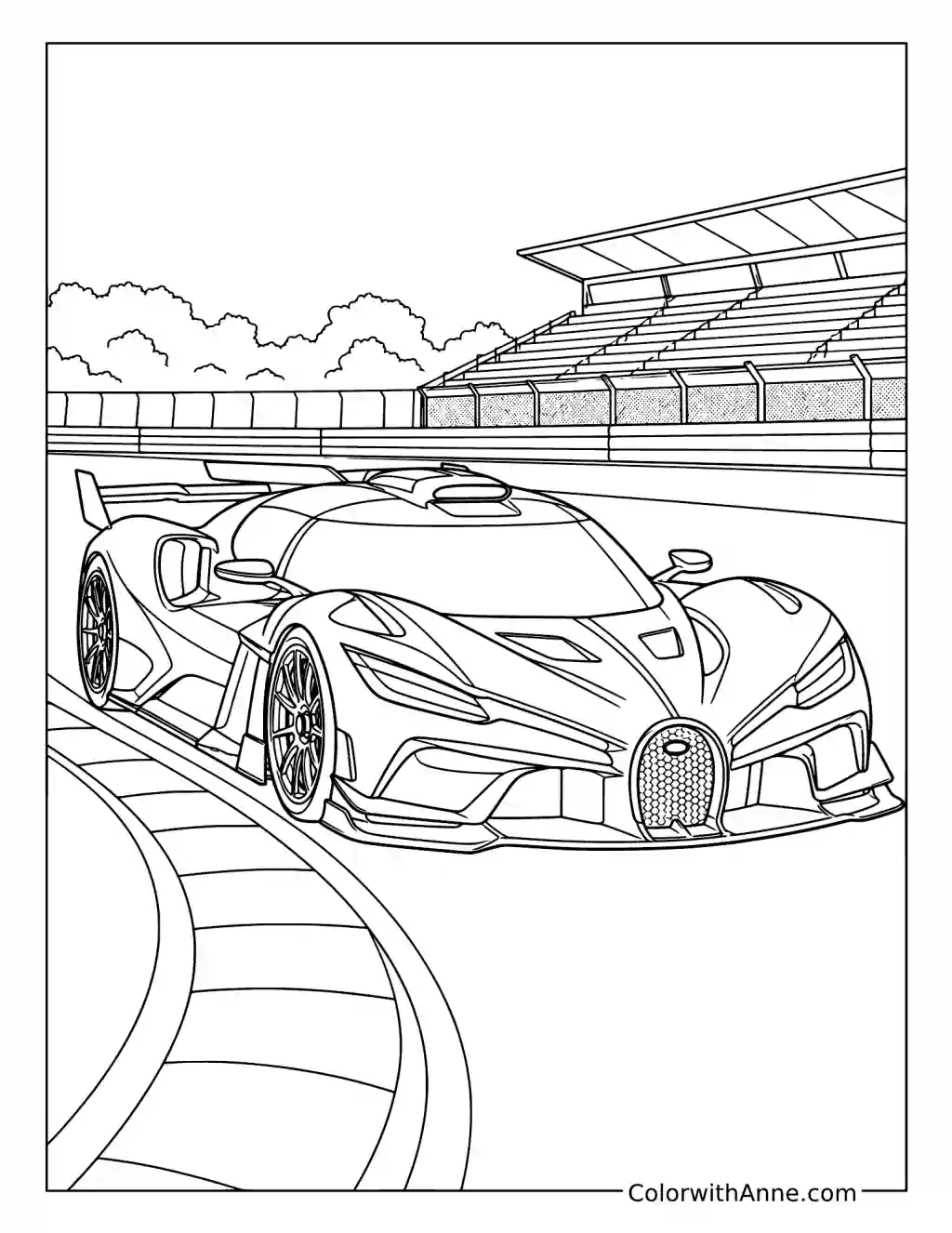
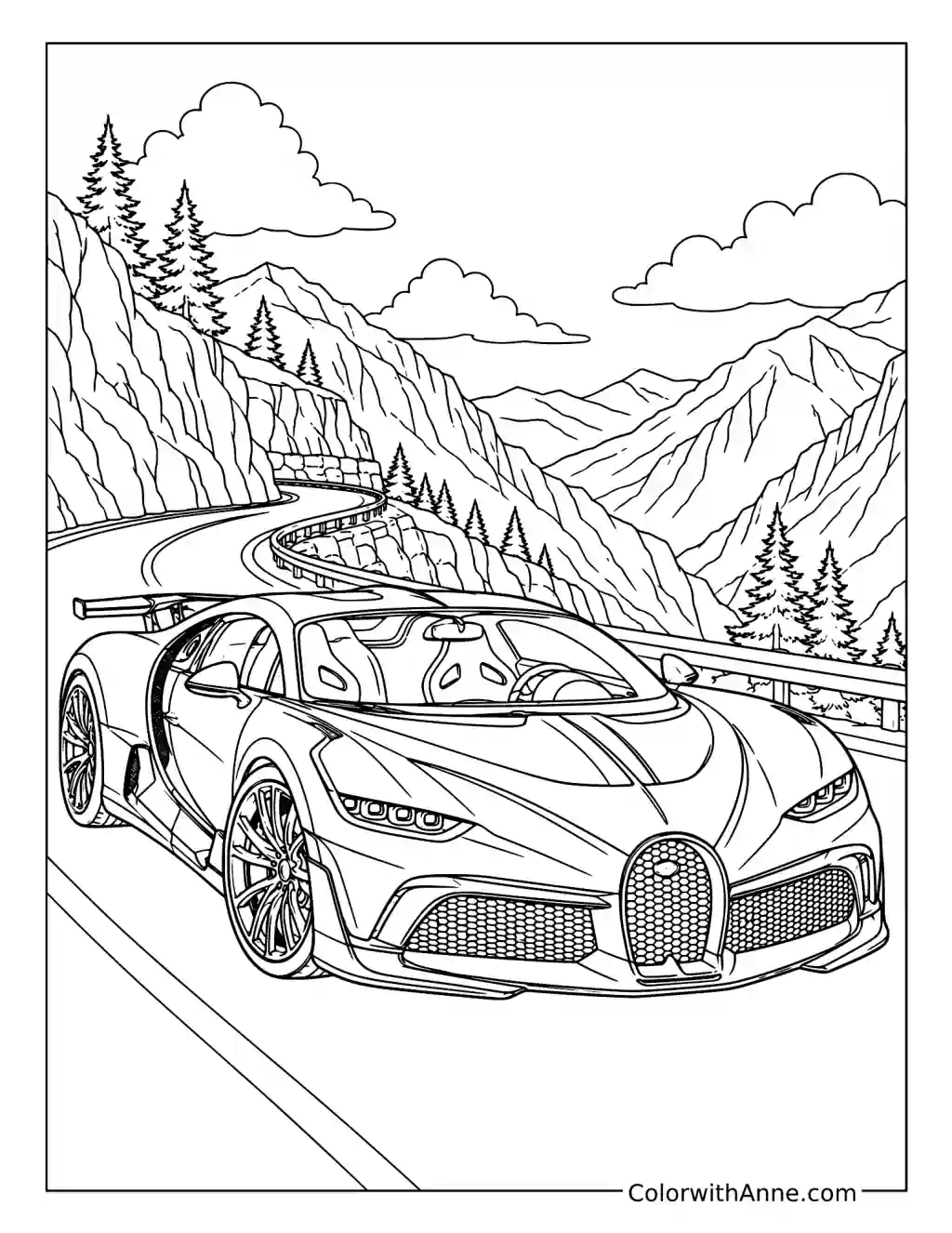
Did you find what you needed?
Help us choose what to create or improve next.
Coloring Ideas for Bugatti Pages
Try one of these coloring ideas, or use them as a starting point for your own.
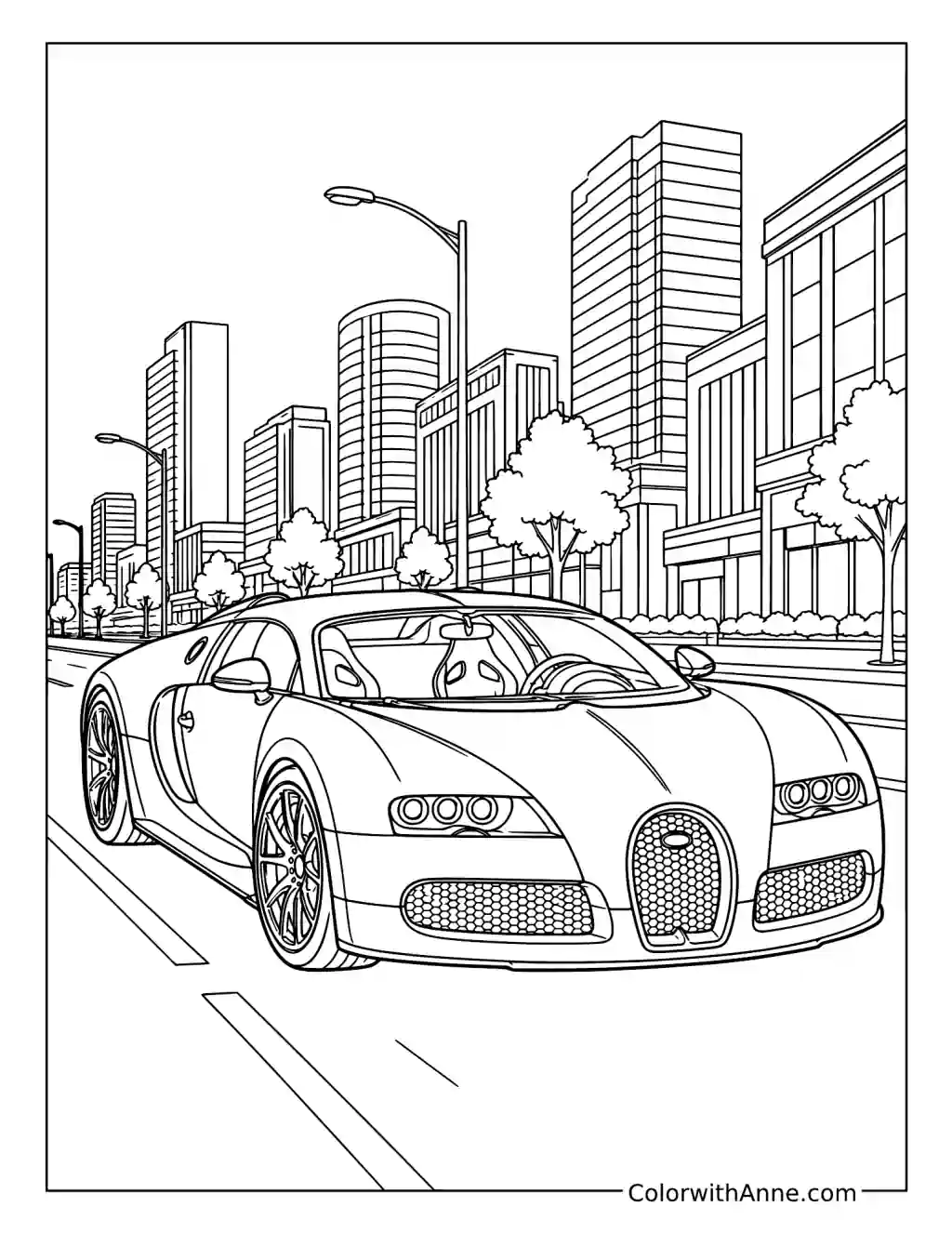
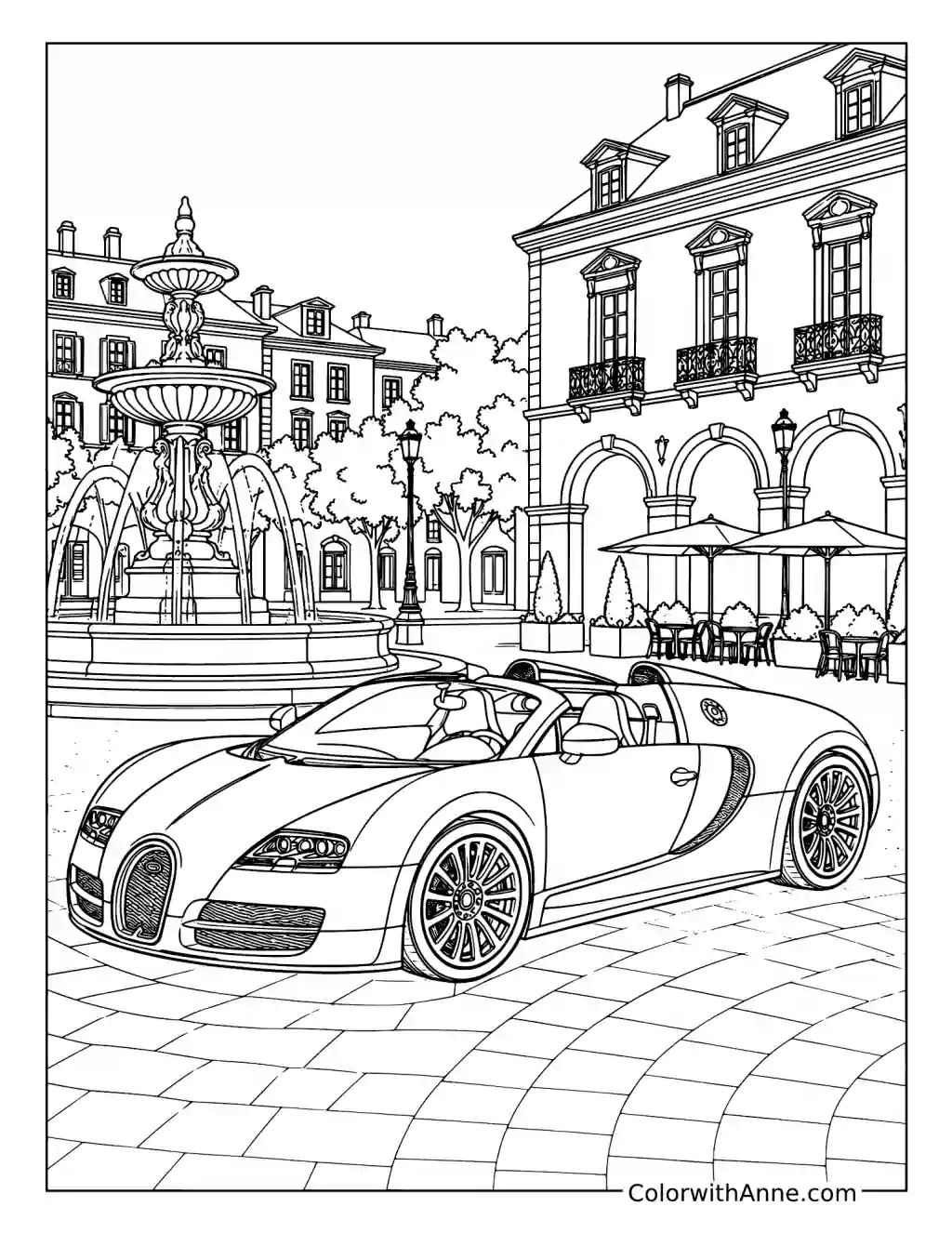
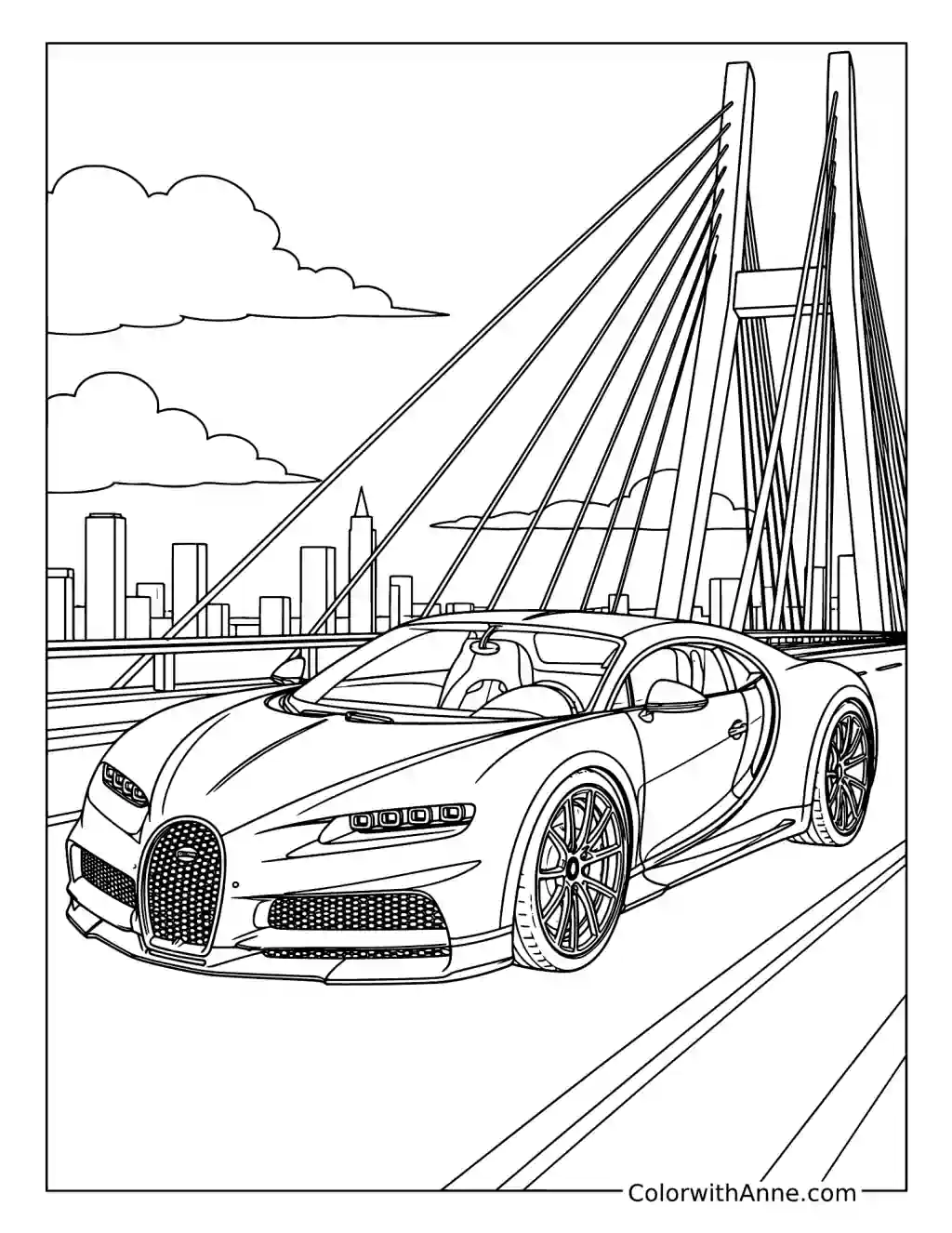
A Veyron Worth Stopping for on the Boulevard
Tall buildings, rows of windows, street trees, and a curved lamp surround the Veyron. There is plenty happening behind the car, so try treating the city like the background of an automotive photograph. Use a small range of gray and blue tones for the buildings, then give the bodywork a richer color that catches attention from across the room.
The windows do not all need individual colors. Working in larger groups keeps the skyline orderly and leaves time for the grille and wheels. A few pale areas along the hood can suggest daylight catching the paint.
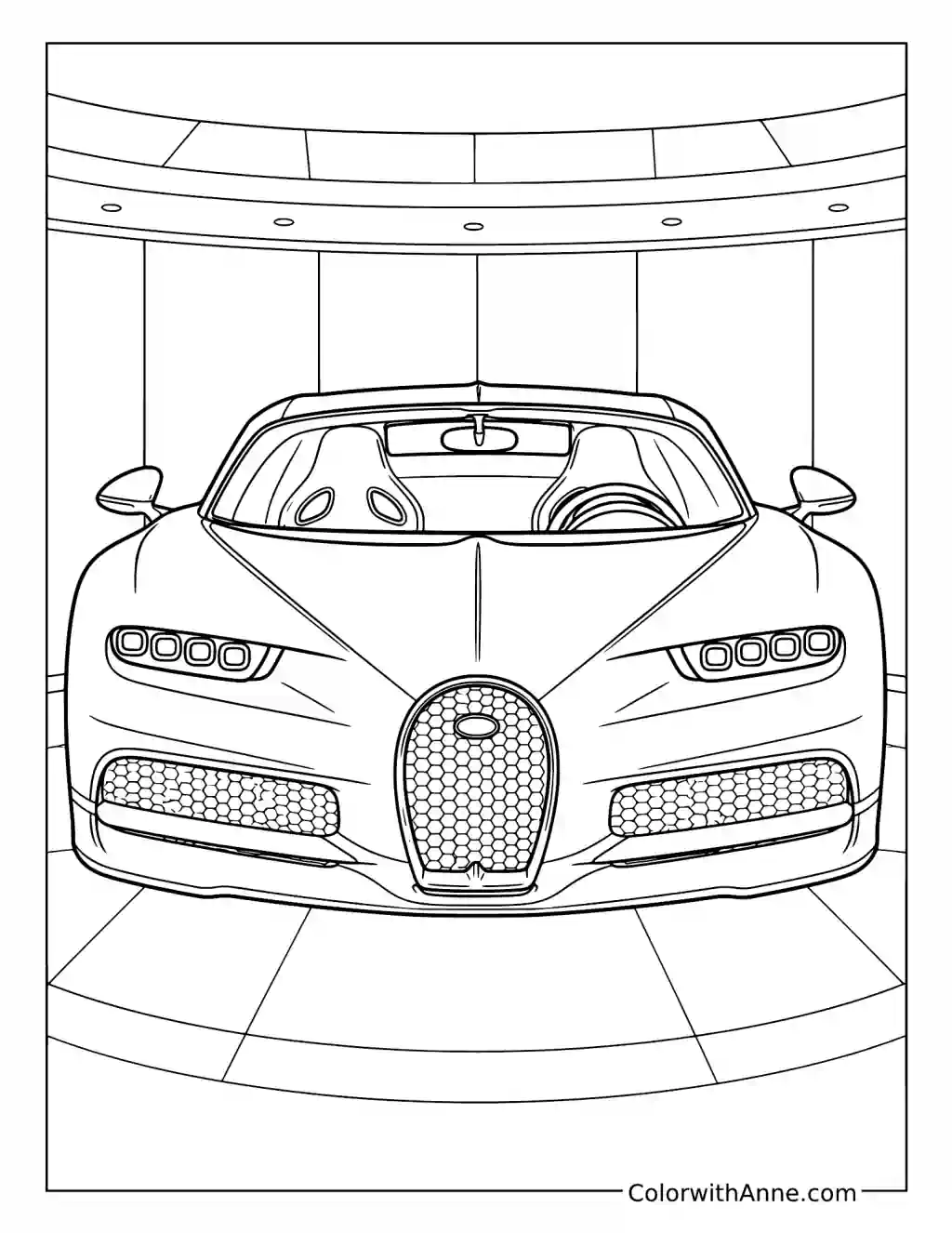
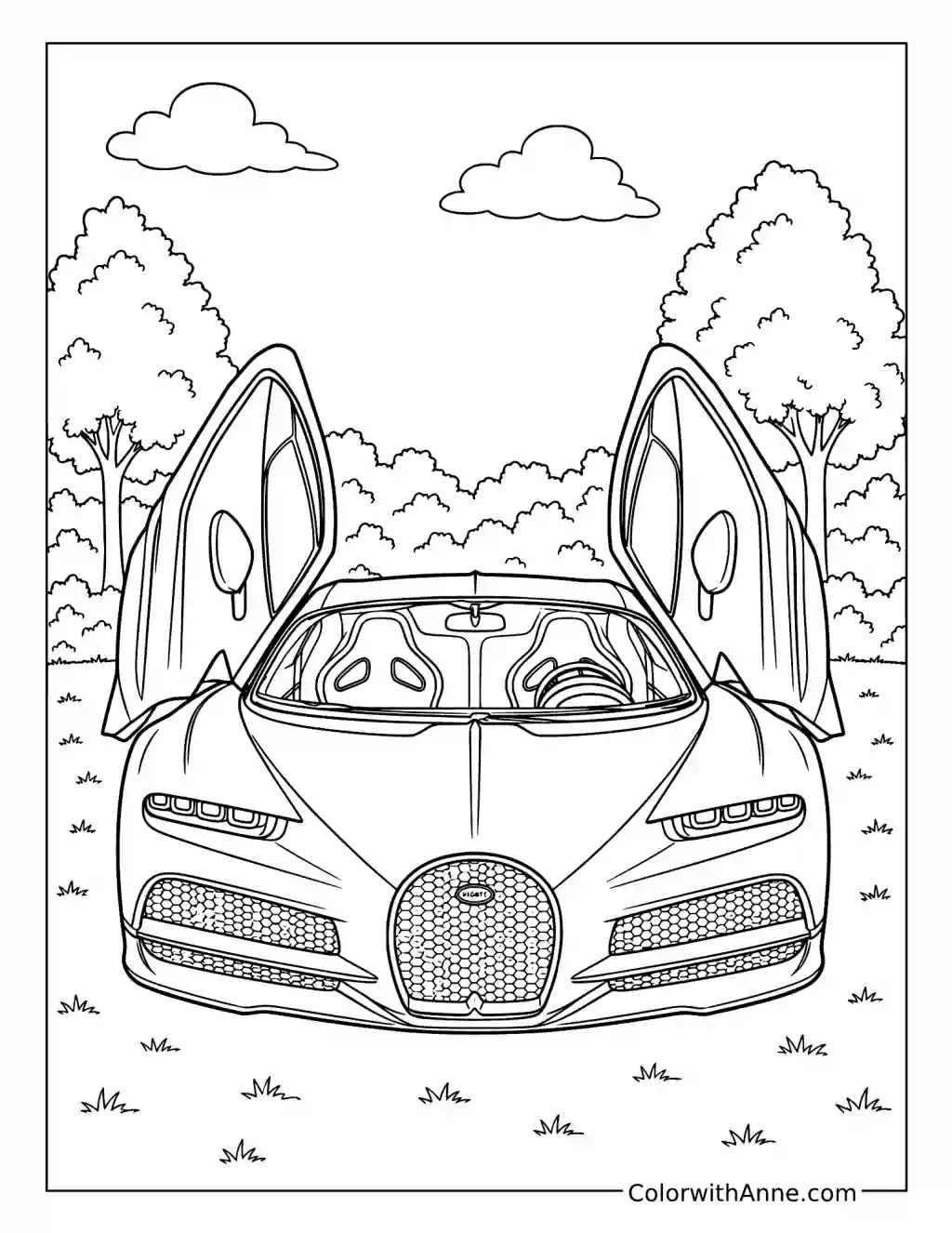
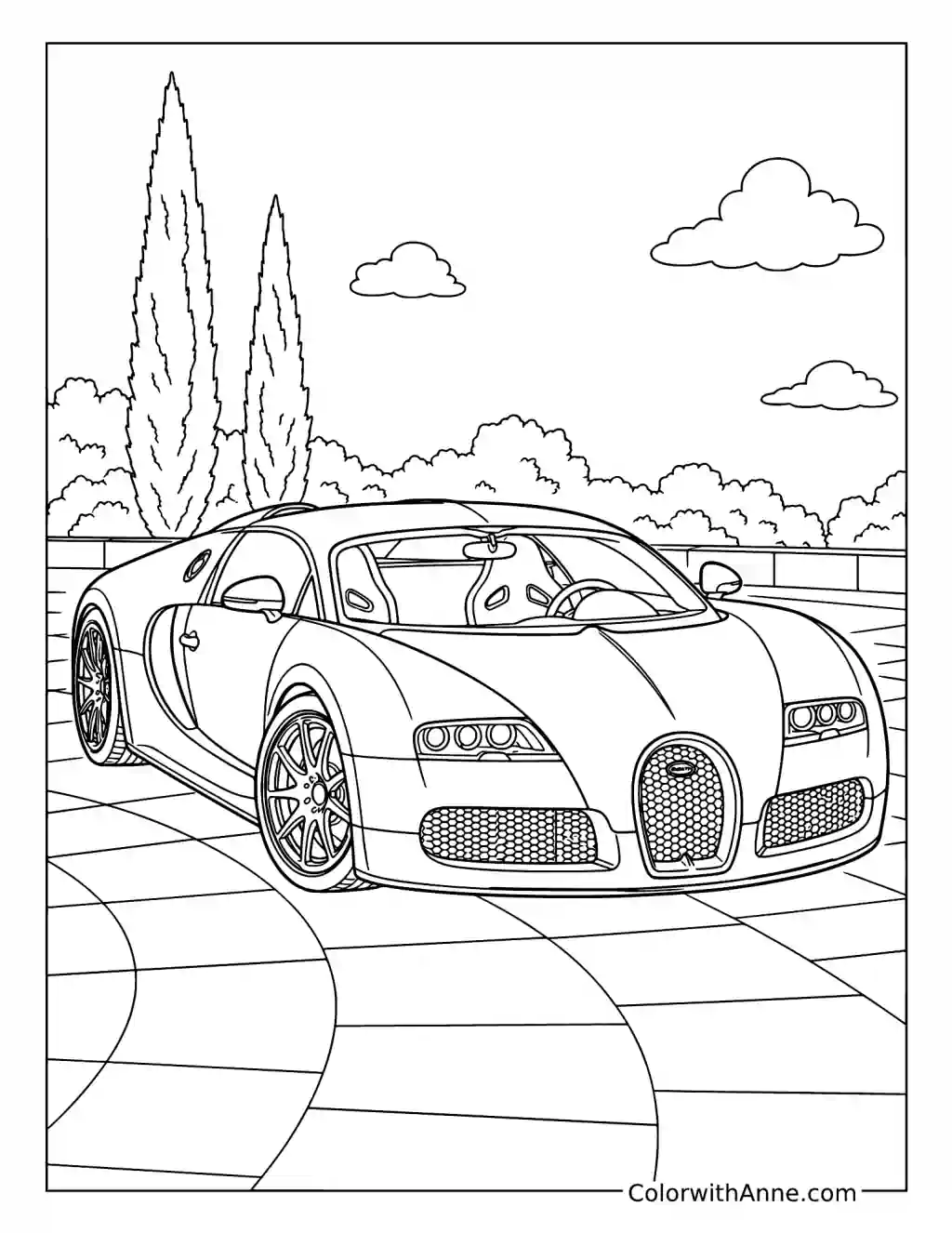
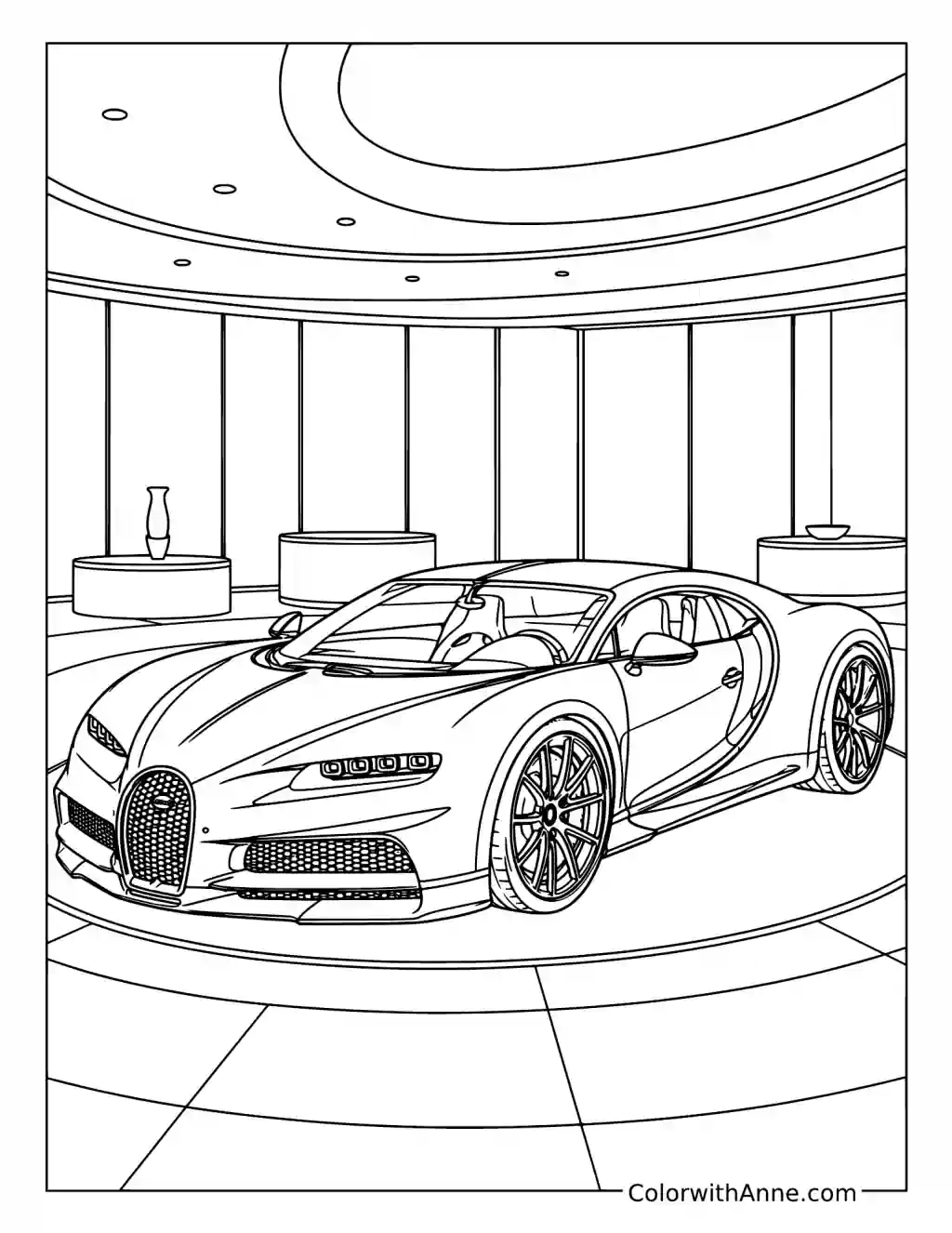
Find the Balance in the Chiron’s Front Portrait
Seen straight on, the Chiron puts its horseshoe grille and rows of headlights firmly in the spotlight. This is a satisfying design for anyone who likes noticing how the two sides of a car fit together.
Work in pairs: one mirror, then the other; one headlight cluster, then its partner. Matching those details helps the front feel balanced without requiring every stroke to be identical. Keep the grille darker than the surrounding bodywork, and leave the small lights pale. With the showroom walls kept understated, the finished page can have the tidy presence of a car portrait.
Give the Open-Door Tourbillon a Surprise Accent
Both doors rise above the Tourbillon, framing the cabin against trees and open sky. Their position makes the door panels part of the main attraction, rather than a detail tucked along the sides.
Try a restrained exterior with a more adventurous color inside the raised doors. Deep blue bodywork with warm tan panels, or silver with burgundy accents, can make opening the doors feel like revealing a second design. Carry that accent into the visible seats to connect the cabin. The grass and trees can stay in quiet greens, giving the car room to show off.
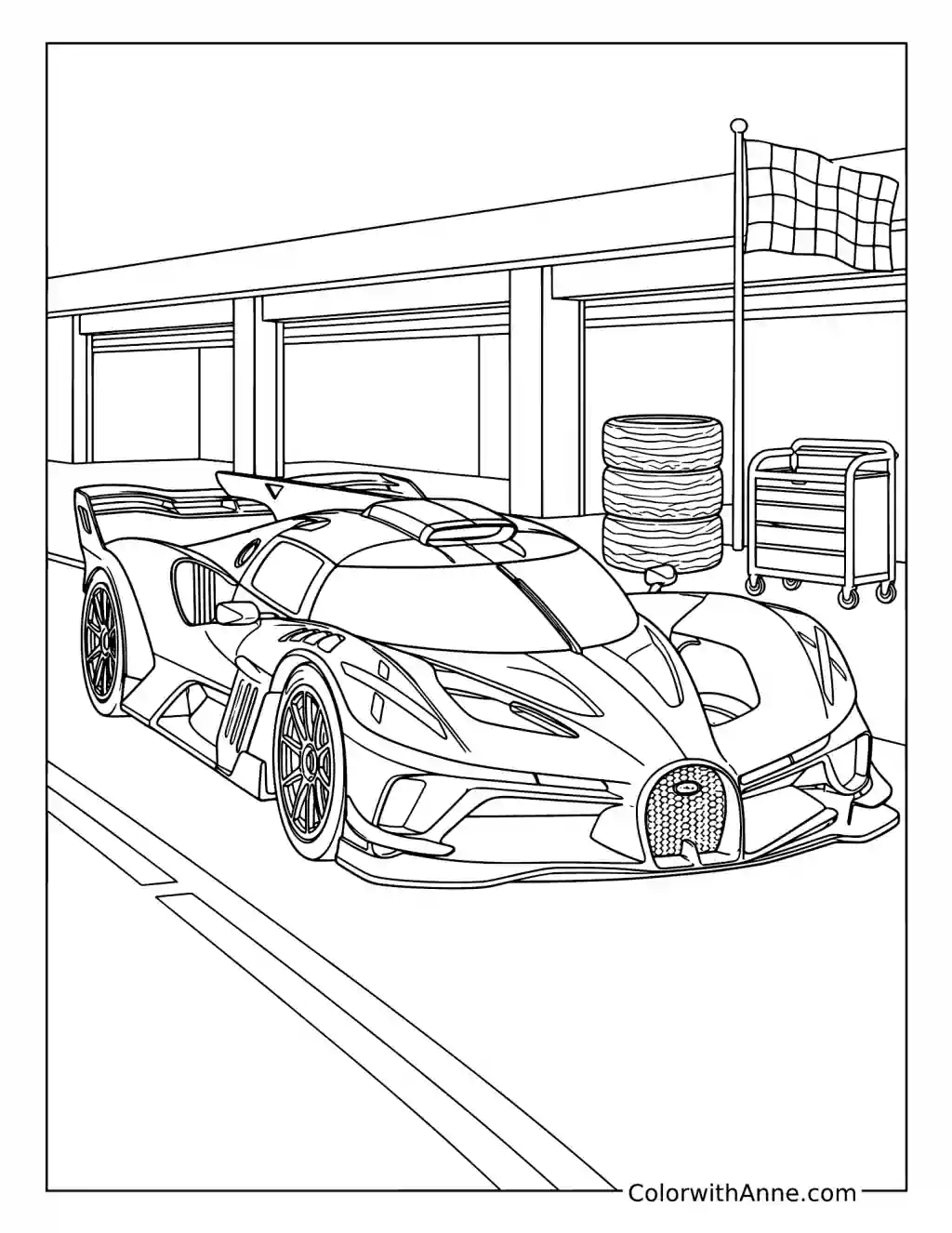
Plan a Pit-Lane Look for the Bolide
A stack of tires, a wheeled tool cabinet, garage doors, and a checkered flag place this Bolide in a working pit lane. Build a color scheme that feels coordinated enough to belong to a racing team: choose a main body color, a darker shade for the aerodynamic details, and one bright accent.
Repeat the accent on the tool cabinet to bring the garage into the same visual world. Color the tires charcoal rather than solid black if you want their outlines to remain visible. Finish with the flag’s alternating squares, a small detail that gives the whole scene its race-day character.
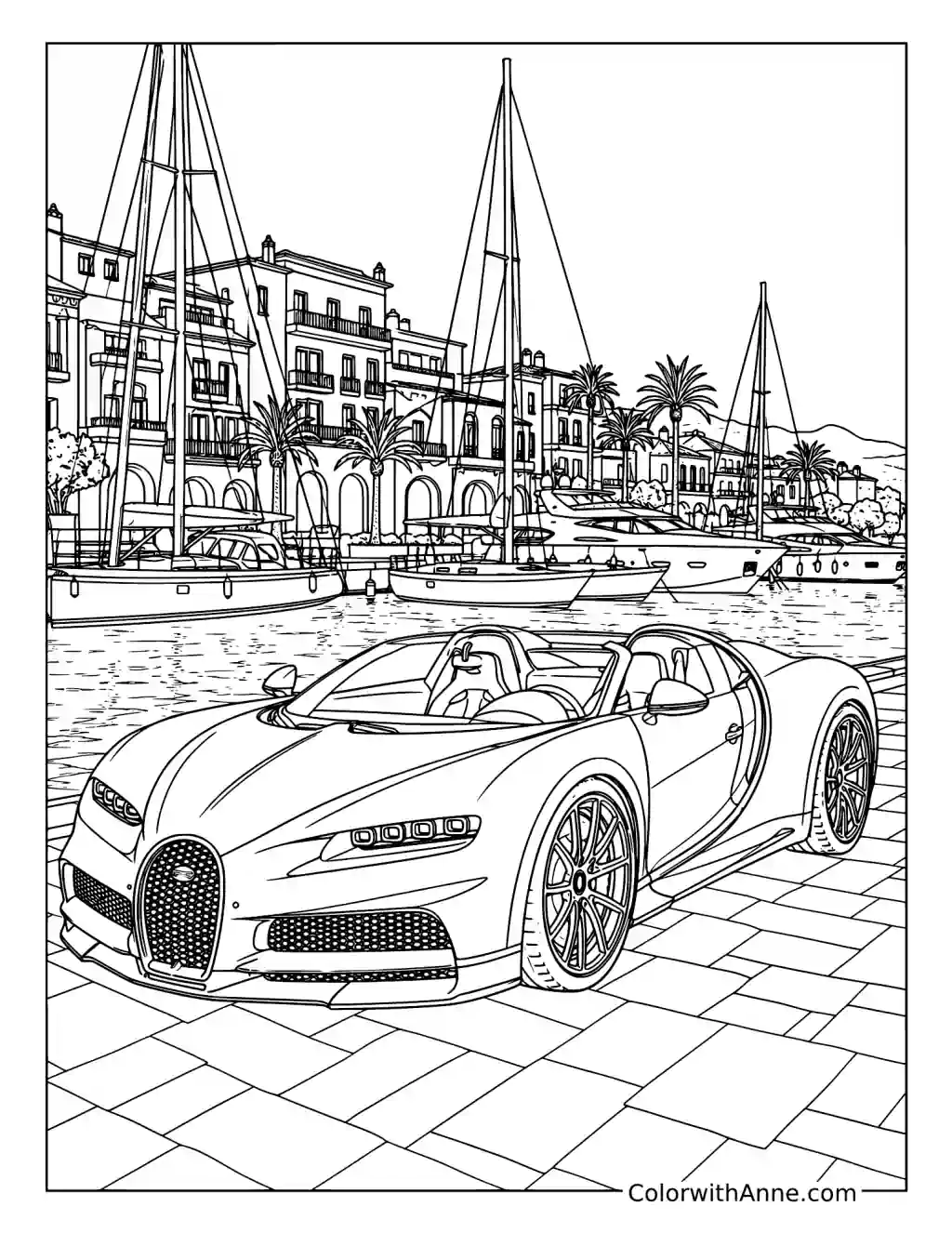
Take the Open-Roof Bugatti Out for an Afternoon
The fountain, paved square, café umbrellas, and ornate buildings give this scene a leisurely mood. The open roof also leaves the seats clearly visible, offering a chance to make the interior part of the car’s character.
Choose the upholstery before the paint. Warm caramel seats might lead to a cream exterior, while red seats could sit neatly inside a dark blue car. Use softer stone colors around the square and save a little brightness for the café umbrellas. The finished picture could become a homemade card for someone whose ideal afternoon includes a good drive and a long café stop.
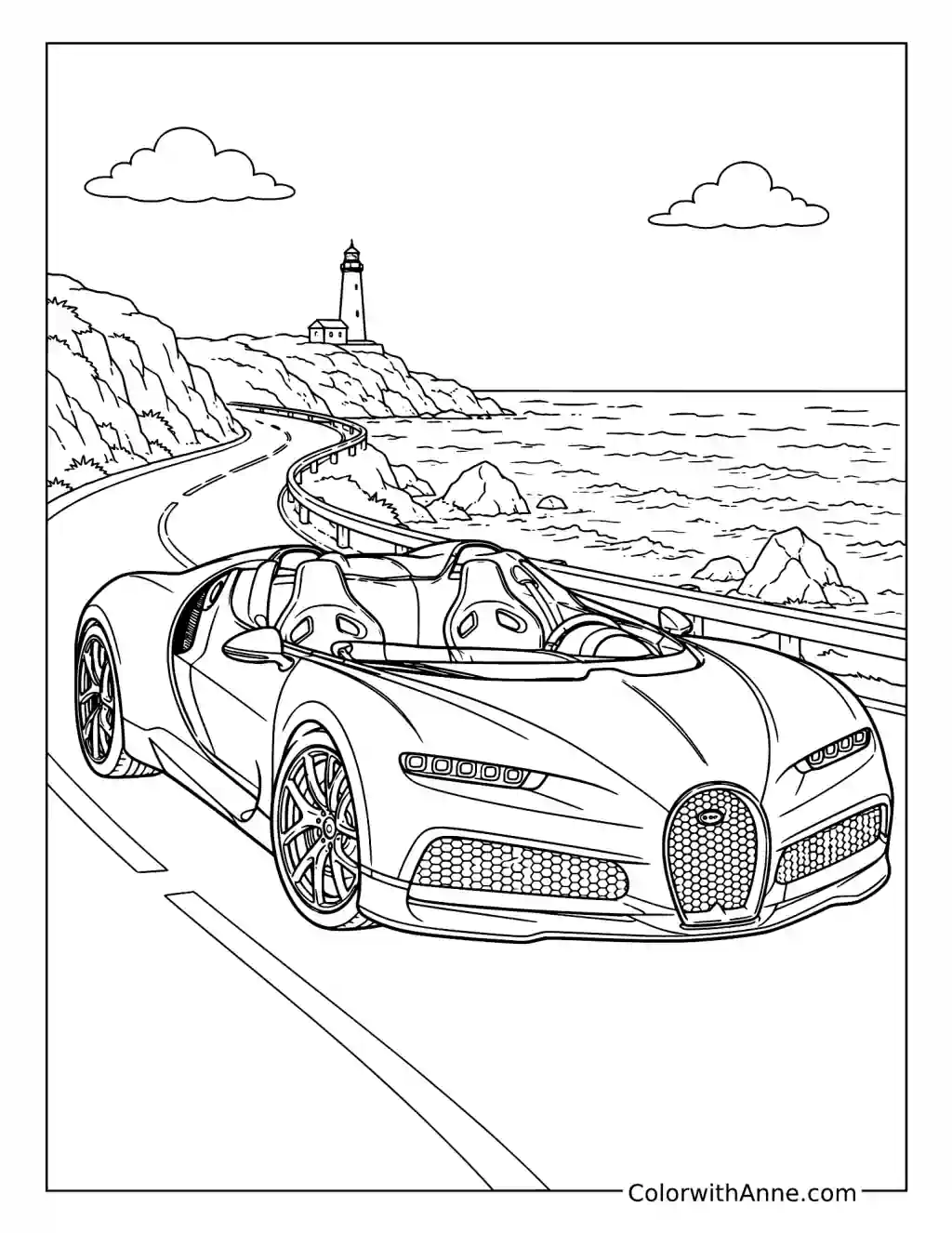
Follow the Mistral Around the Coast
The road curves beside the sea toward a distant lighthouse, with the open-top Mistral filling the foreground. Let the coastline guide the order of coloring: start with the faraway water and sky, move through the cliffs and road, then finish with the car.
A pale horizon and deeper water nearby can help the coast feel spacious. Keep the cliff colors sandy or stony, and choose a body color that remains distinct from the sea. Before starting, decide whether this is a crisp blue morning or a warmer late afternoon; that choice can shape the entire drive.
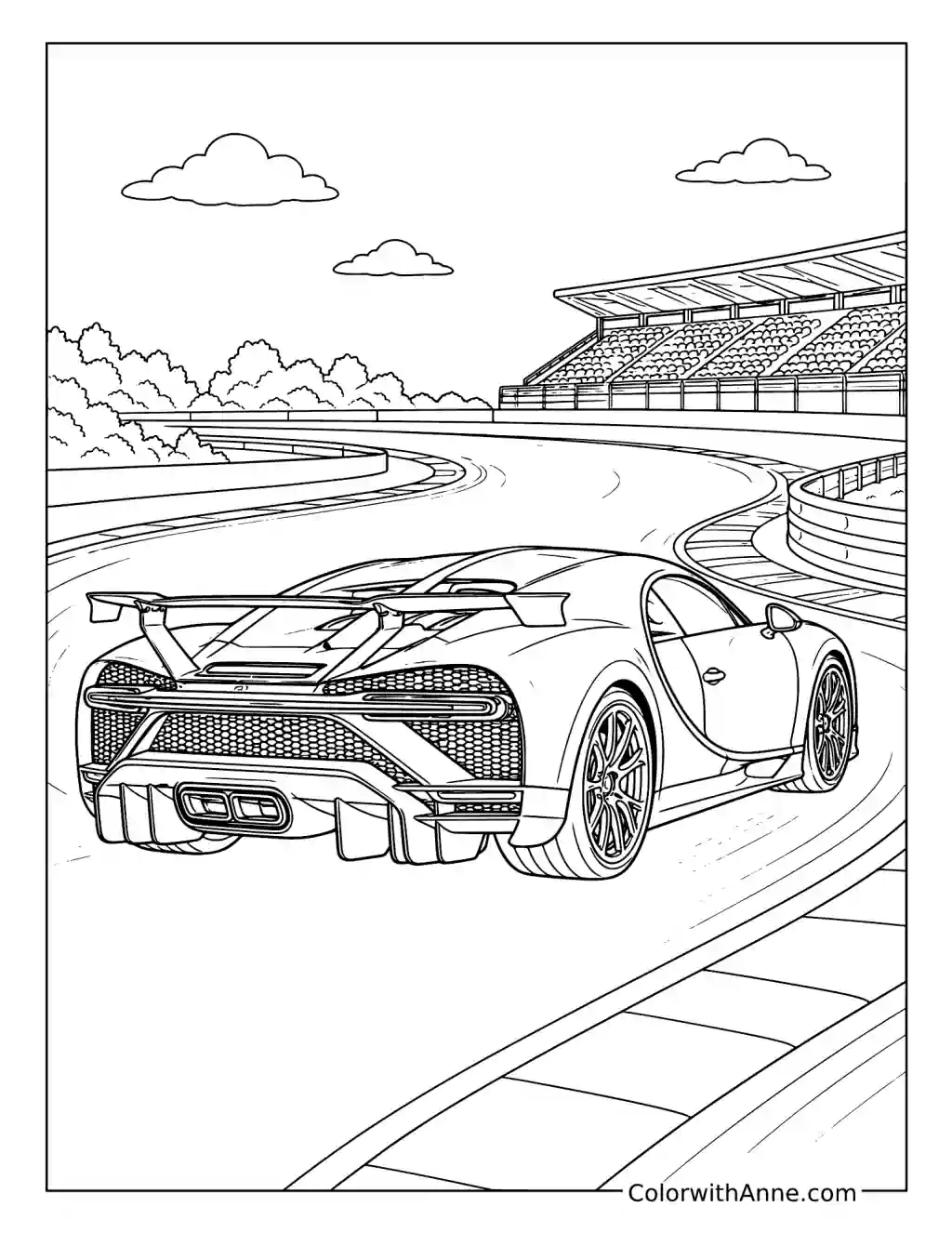
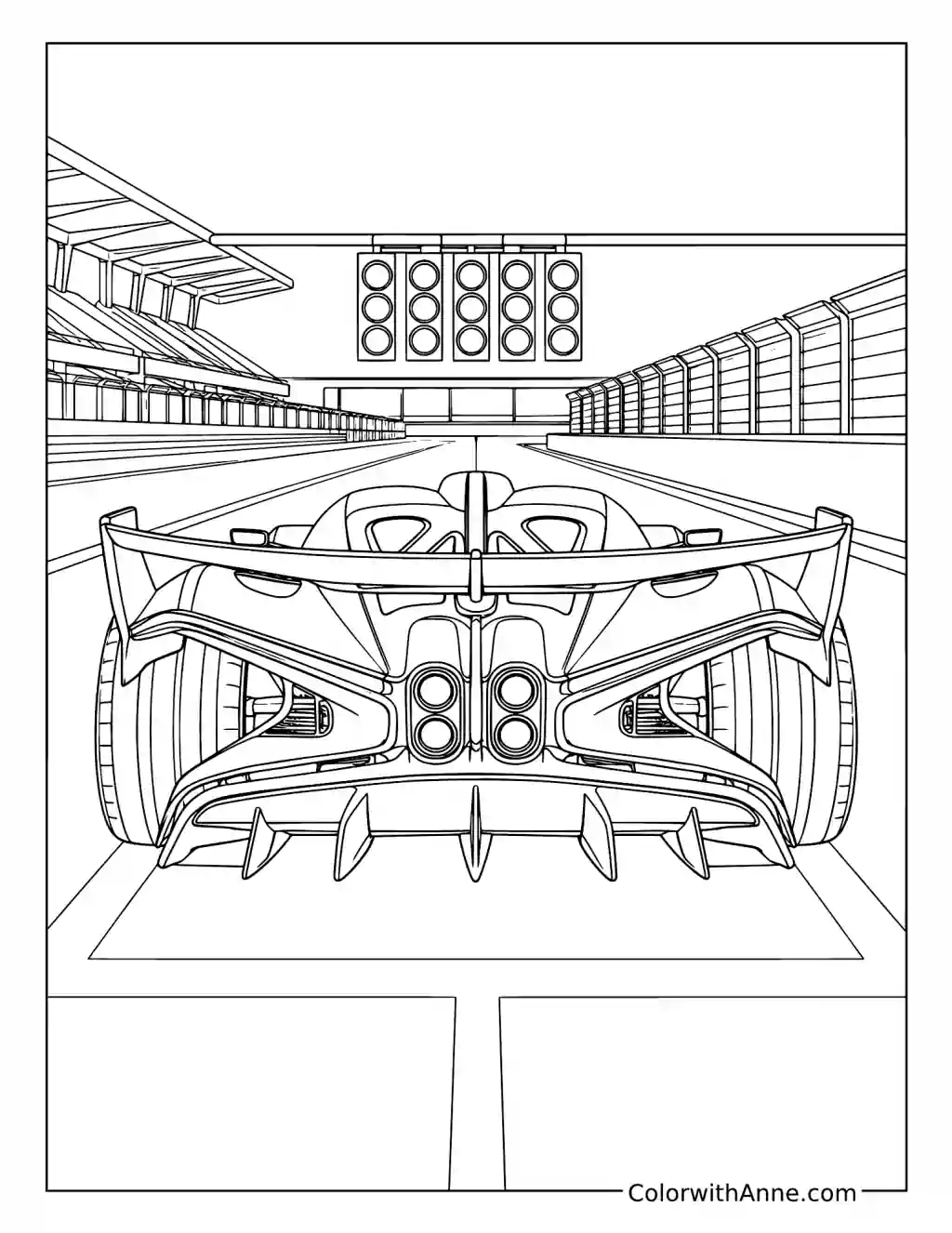
Catch the Bolide Just Before the Start
This rear view puts the Bolide’s wide wing, exhaust openings, and lower fins beneath the starting-light gantry. The grandstands and fencing stretch away on either side, making the track feel focused on the moment ahead.
Choose how close the race is to beginning. You could color a few of the overhead lights red and leave the others dark, suggesting the starting sequence is underway. Keep the track subdued so those lights register clearly. Across the car, use different dark grays to separate neighboring mechanical details instead of filling the whole rear in one solid shade.
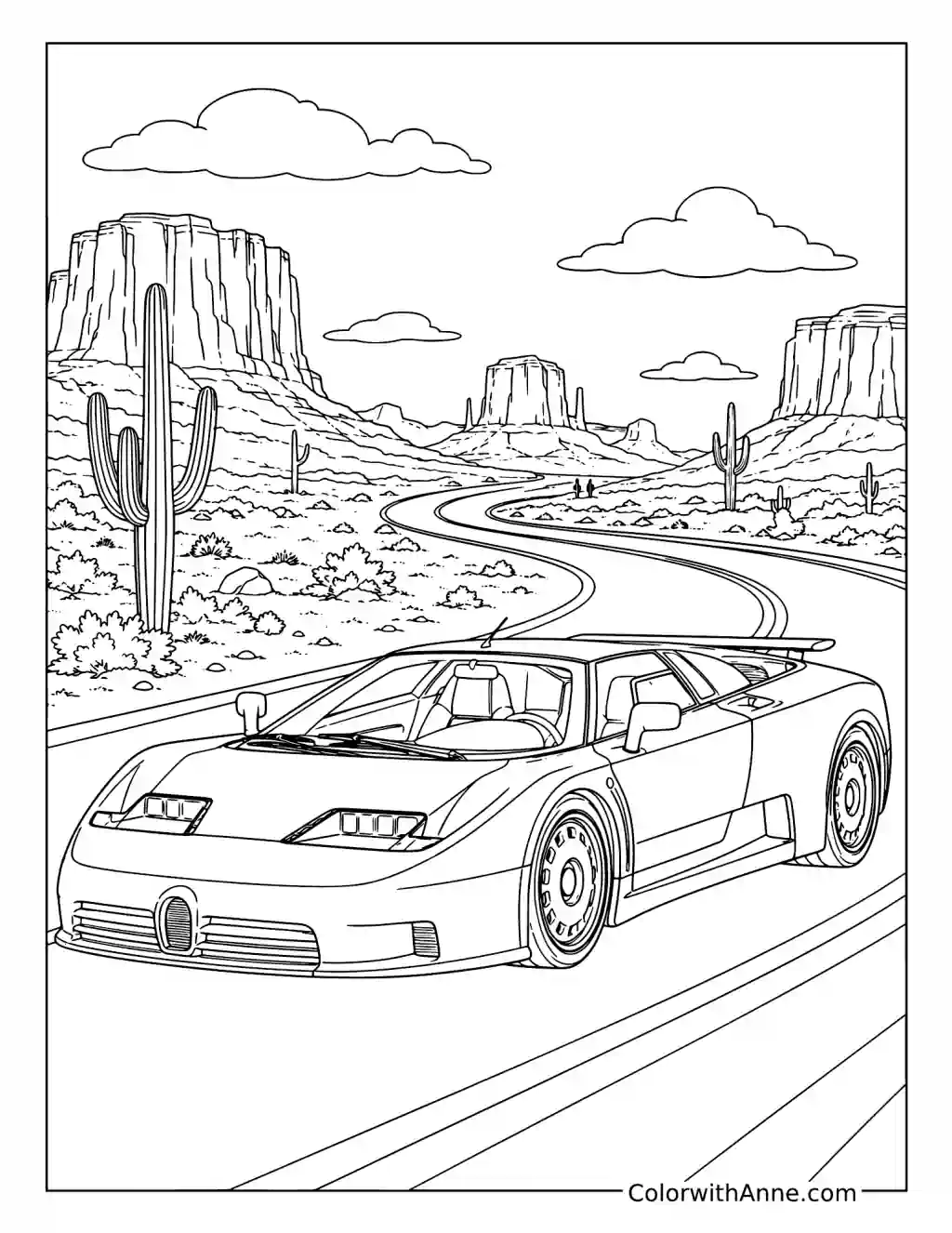
Make the Desert EB110 into a Retro Car Poster
The EB110’s angular body sits against a winding highway, tall cacti, and flat-topped desert rock formations. Try giving the page the bold, limited palette of a car poster: a blue car, warm rust-colored cliffs, pale sand, and a clear sky.
Keep the road light enough to follow as it winds into the distance. The cacti can provide darker vertical accents between the car and the rocks, while small white highlights help distinguish the windows and body panels. Mount the finished page on plain cardstock for a garage-wall-style display, letting the desert setting serve as its backdrop.