
A song a grandparent recognizes can open a conversation that a classroom question never quite reached. Someone remembers where it played, who used to sing along, and a celebration that looked different from the one a child knows today. Heritage often becomes clearest through details shared by a particular family.
Hispanic Heritage Month coloring pages can accompany that kind of exchange without needing every story to represent everyone. A picture may prompt a question about a place or tradition, then leave room for the answer to become personal. The activity feels richer when there is time to listen as well as finish the page.
Free Printable Hispanic Heritage Month Coloring Pages
Click any coloring page below to open the PDF, then print on US Letter or A4 paper.
Did you find what you needed?
Help us choose what to create or improve next.
Coloring Ideas for Hispanic Heritage Month Pages
Try one of these coloring ideas, or use them as a starting point for your own.
Listen for the Instruments in the Puerto Rican Music Scene
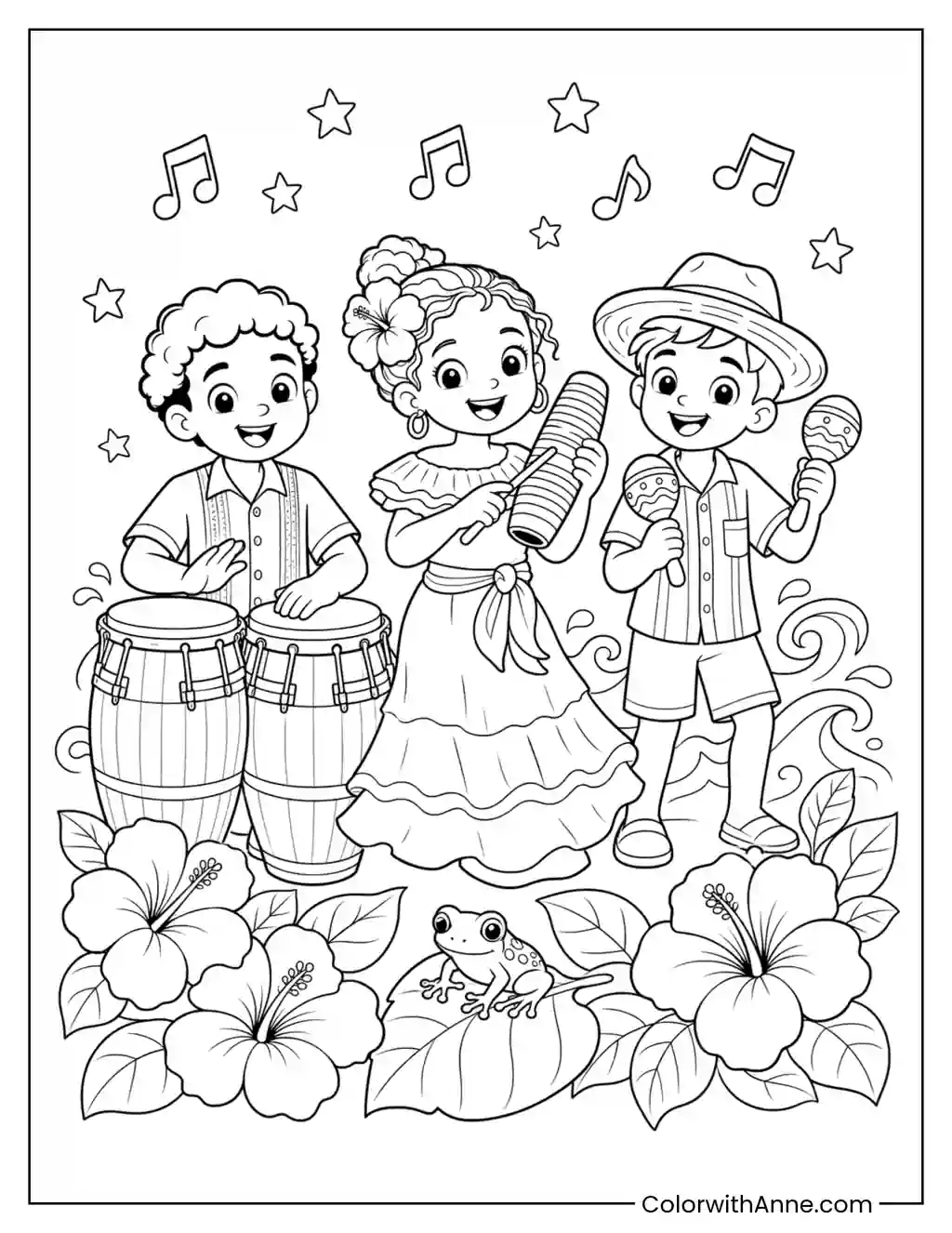
Three children play conga drums, a güiro, and maracas, surrounded by flowers and musical notes. Each instrument suggests a different way of making rhythm.
Try warm brown drums, a brightly striped güiro, and patterned maracas. Give the musicians distinct clothing colors.
Listen to recordings of the instruments individually before hearing them together in music. Point to the pictured instrument when you recognize its sound. The scraped güiro, shaken maracas, and struck drumheads give listeners clear differences to notice without needing to learn a whole performance.
Let the Painter Inspire a Personal Portrait
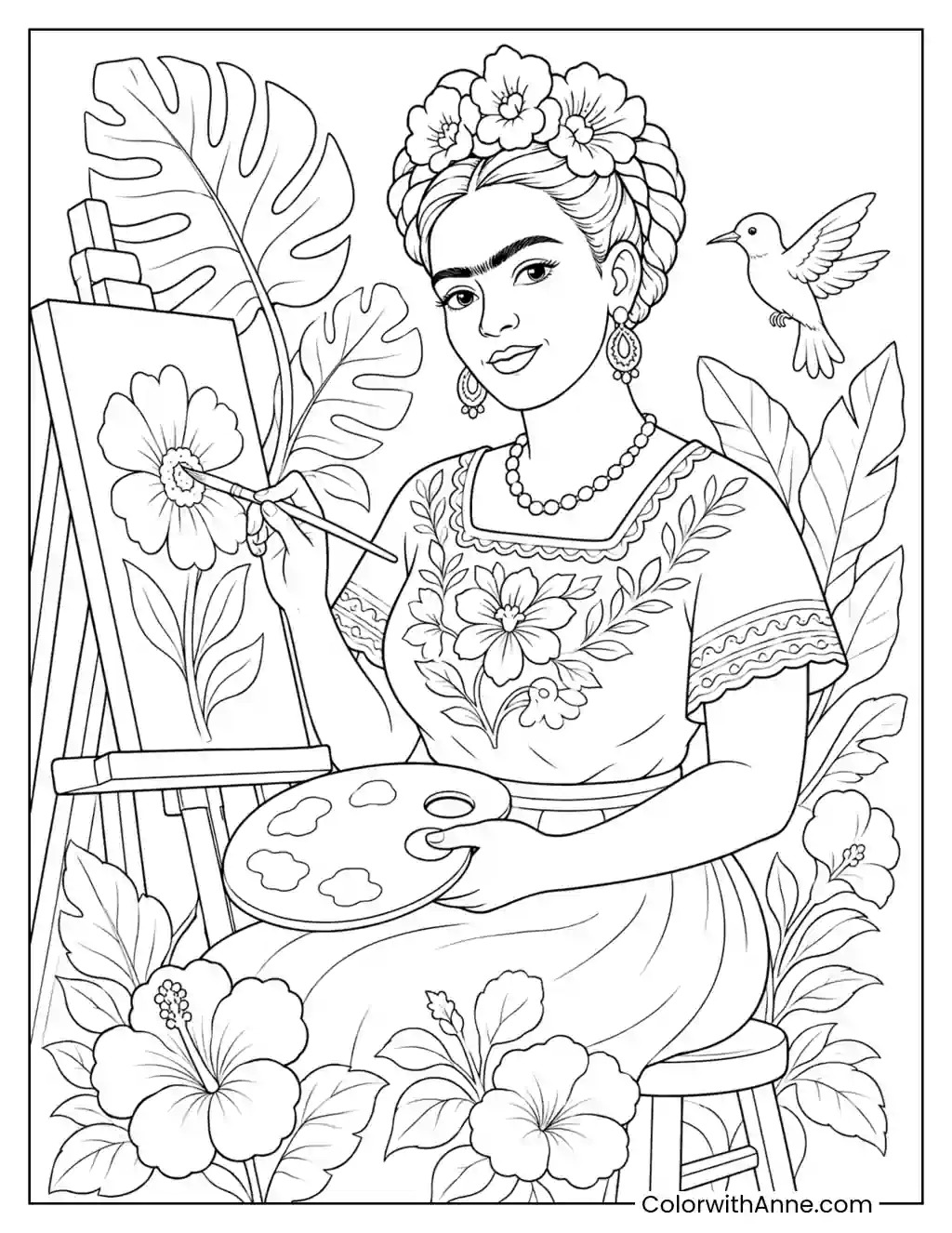
The flower-crowned painter works at an easel with a palette in hand and blossoms around her. The scene gives attention to making art as well as wearing something decorative.
Choose vivid flowers, a contrasting blouse, and several colors on the palette. Keep the easel in quieter brown tones.
For a companion self-portrait, include one object or place that matters to you in the background. Decide why it belongs before drawing it. A favorite family object, familiar landscape, or meaningful flower can tell the viewer something that a face alone would leave out.
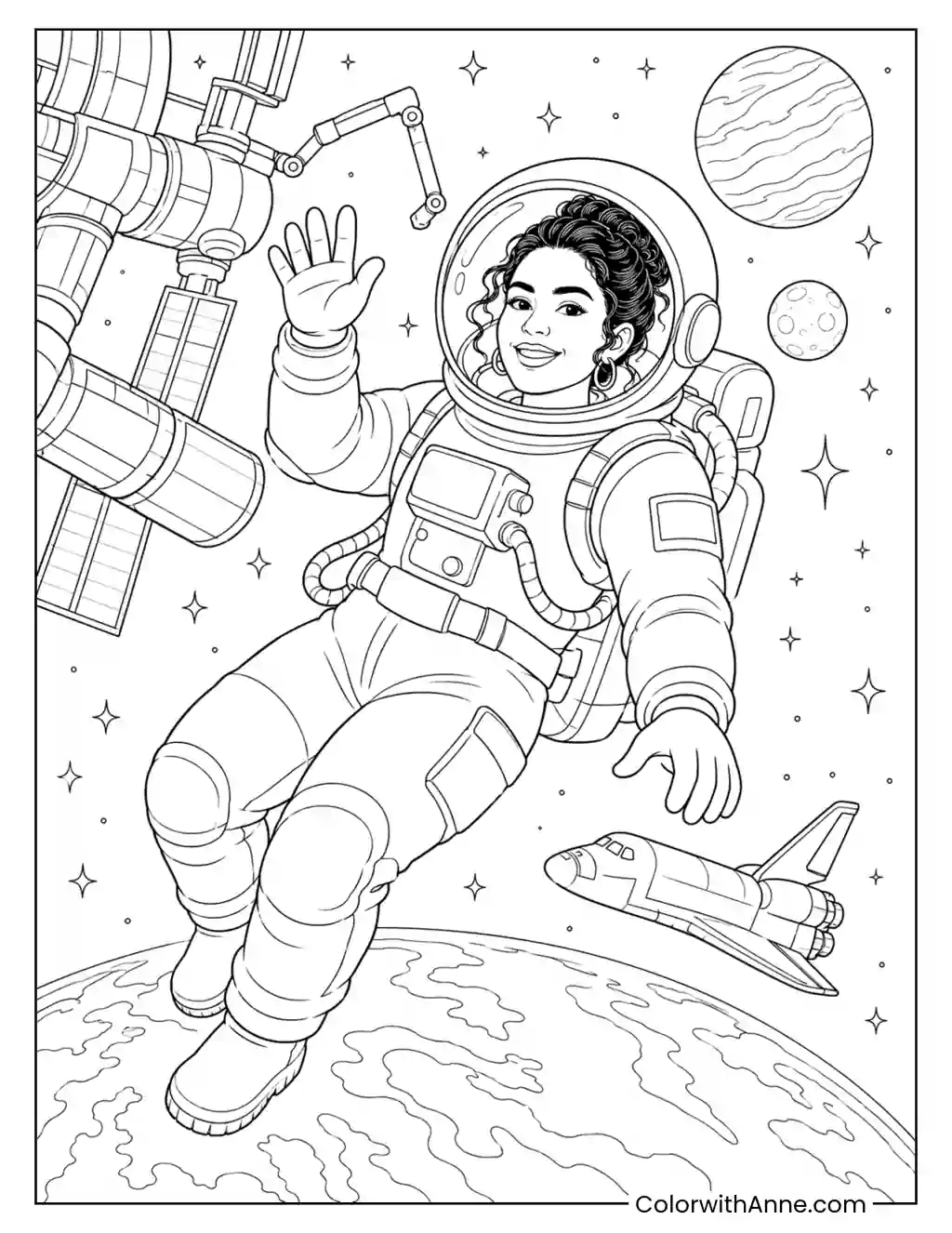
Meet a Real Astronaut Alongside the Space Scene
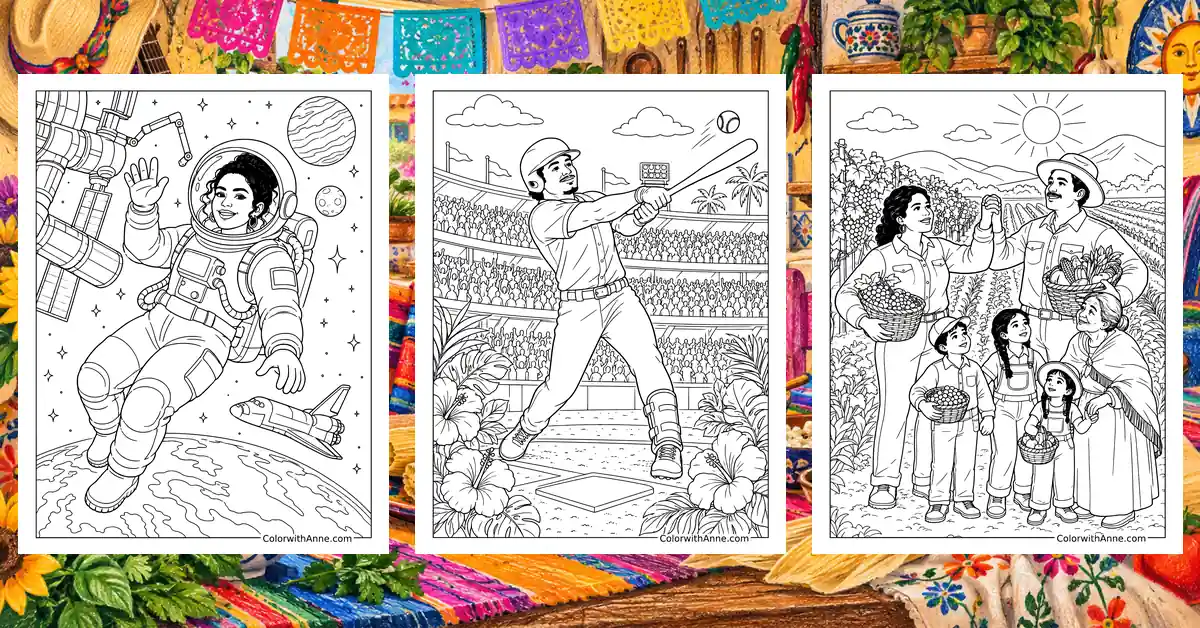
The astronaut waves above Earth with a spacecraft and planets nearby. This imaginative space picture opens a different conversation from the collection’s festival and dance scenes.
Try a white suit with blue details, gray equipment, and a deep blue background. Keep Earth’s outline clear below the figure.
Read a short biography of Ellen Ochoa, then choose one detail about her work to discuss beside the finished page. Children might be interested in the equipment astronauts use or the training behind a mission. Let their question guide what you explore next.
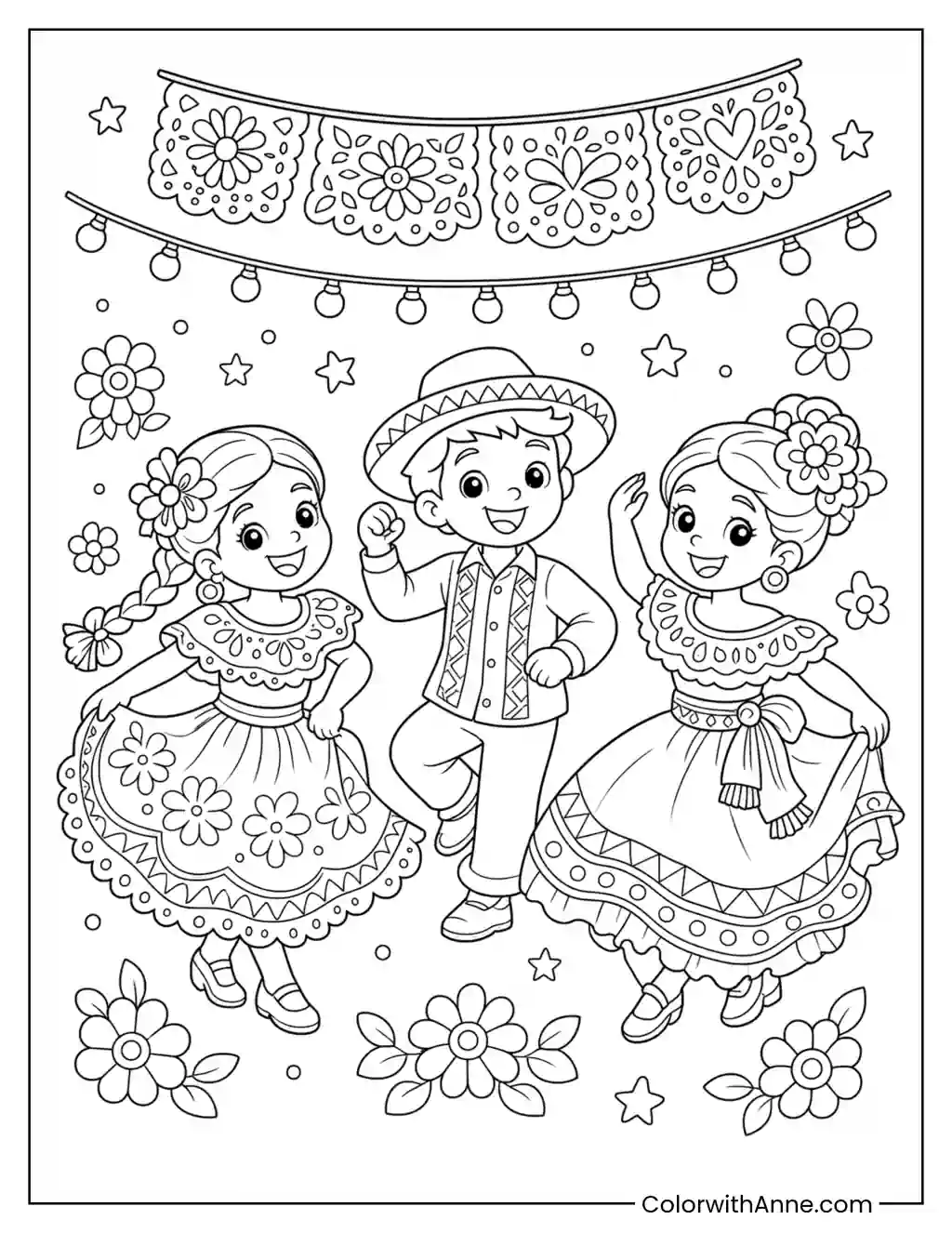
Try a Small Papel Picado Pattern
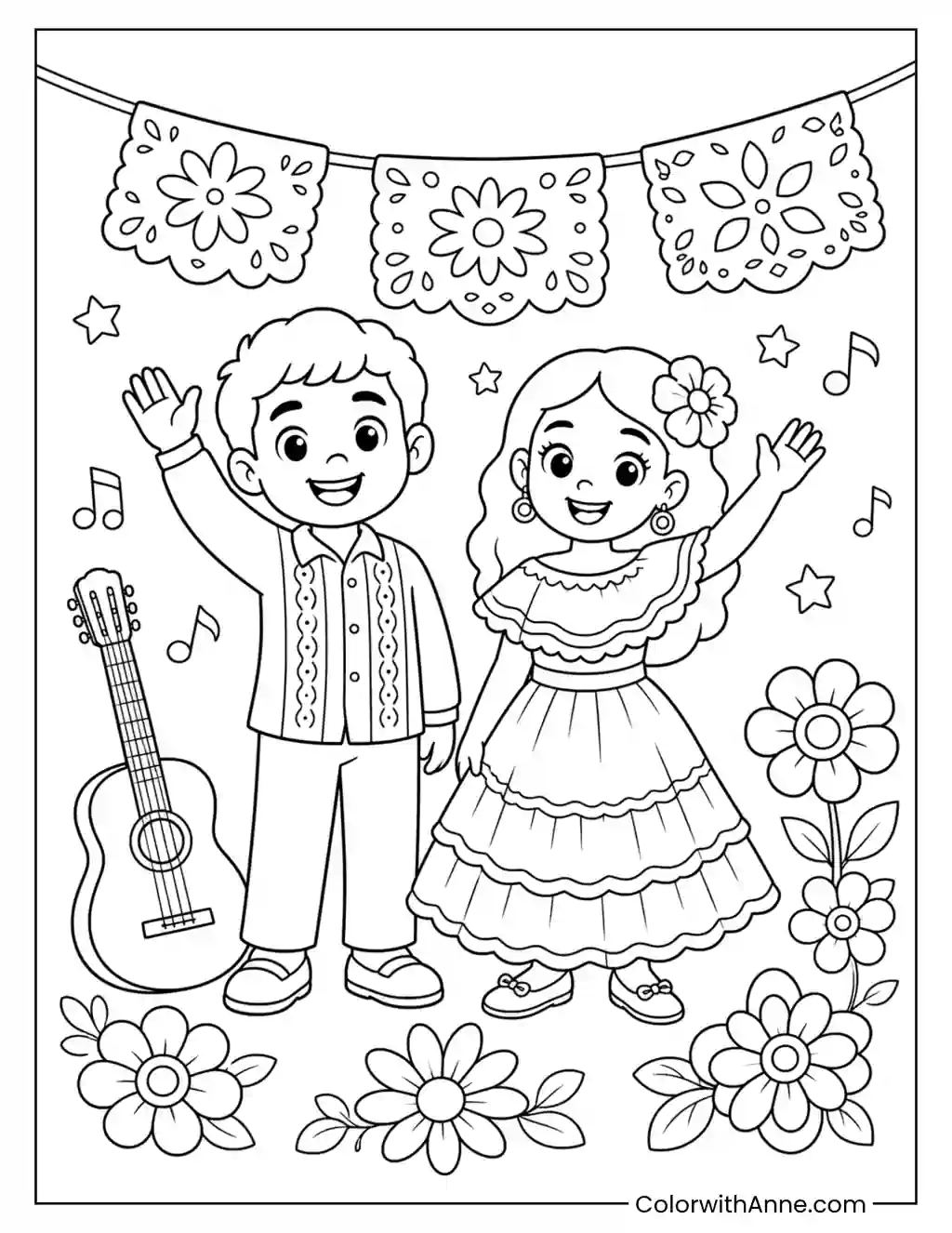
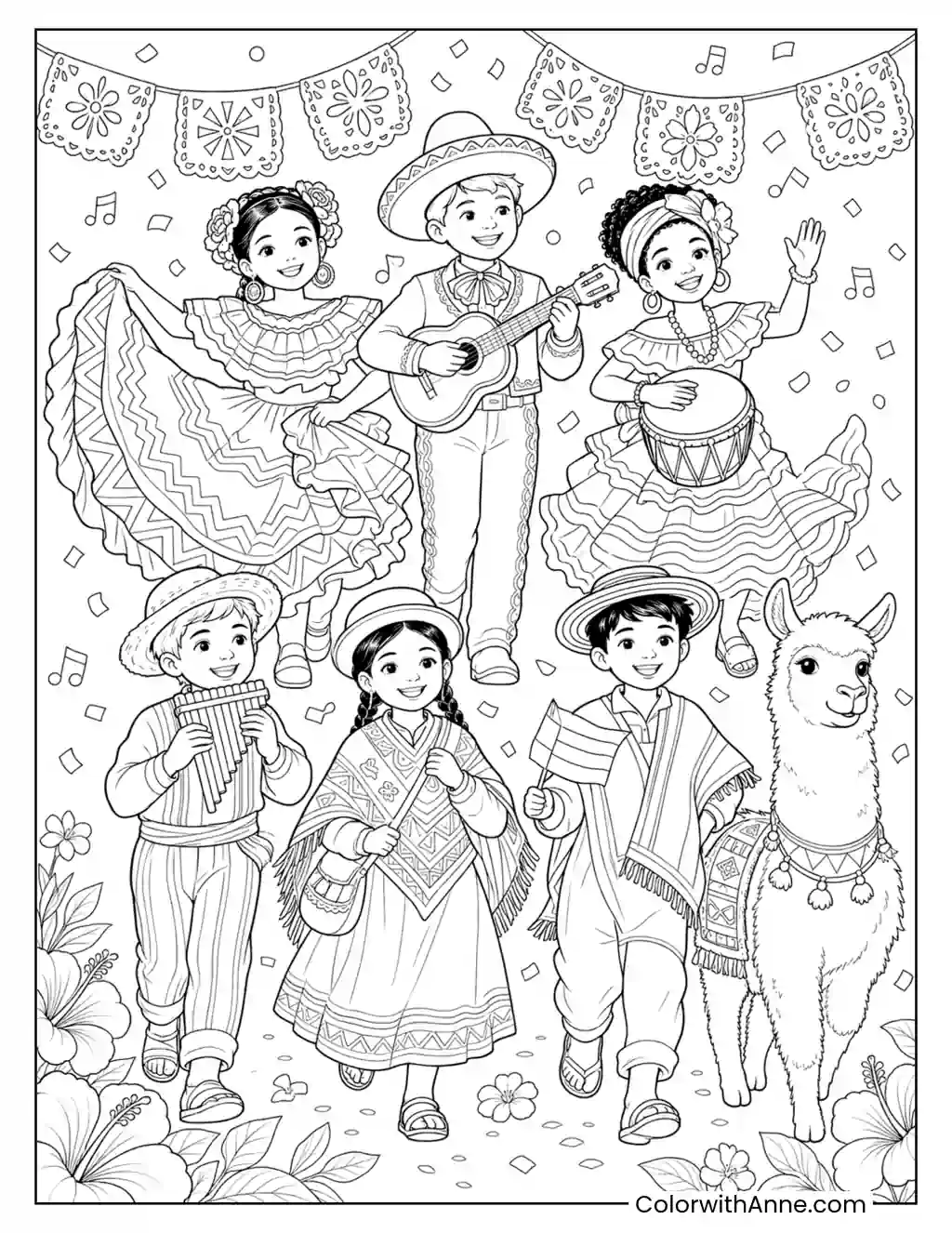
Decorative papel picado panels hang above the children, with repeated cutout-style shapes inside each rectangle. The border is worth a closer look before coloring the larger figures.
Give neighboring panels different bright colors and leave their small open shapes white. Repeat a few of those colors in the clothing below.
Fold a small paper rectangle and cut a few simple shapes along the fold, keeping the outer edges connected. Open it slowly to reveal the repeated pattern. Use the printed panels as inspiration for spacing, then compare how each cut changes when the paper unfolds.
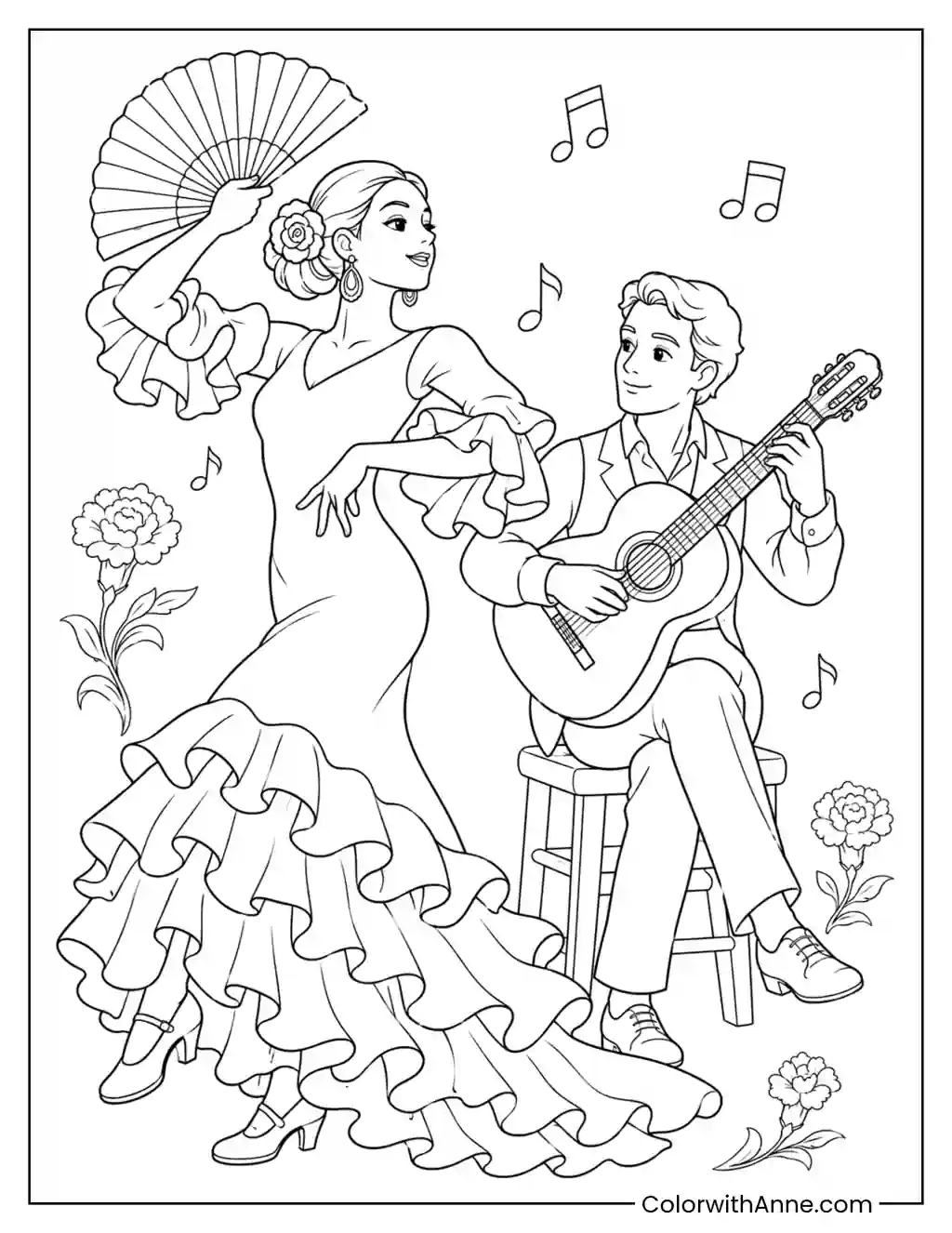
Hear the Guitar Behind the Flamenco Scene
The dancer lifts one arm and holds a fan while the guitarist sits nearby. Her ruffled skirt shows movement, but the seated musician is an equally important part of the composition.
Try a red skirt with dark accents, a warm brown guitar, and contrasting flowers in the dancer’s hair. Keep the background light.
Listen to a flamenco guitar recording and notice the changes between individual notes and fuller strummed sounds. Look back at the guitarist’s hands as you listen. The picture offers a visual companion without pretending that a still pose explains the whole dance or musical tradition.
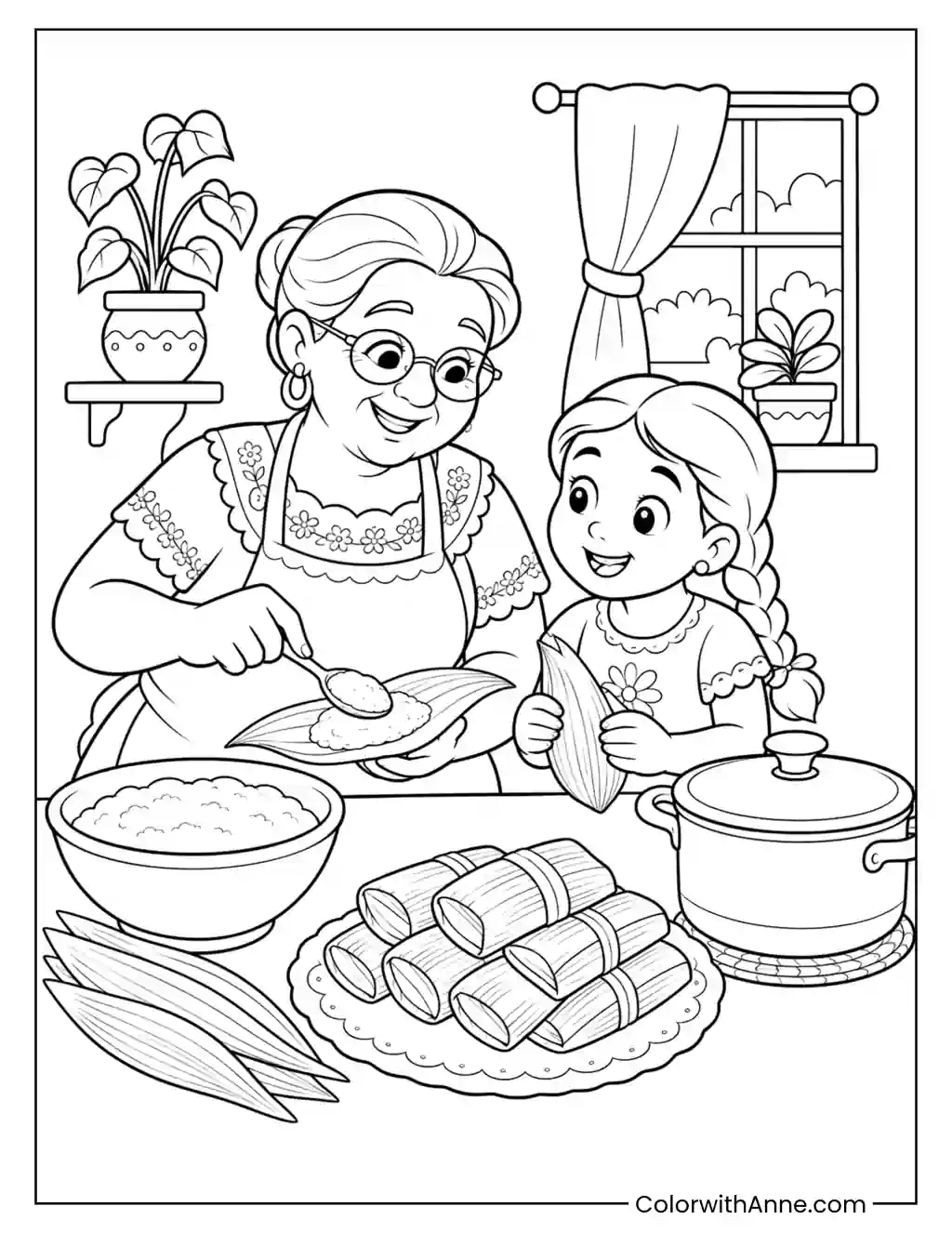
Make Room at Abuela’s Tamale Table
Abuela and a child work together beside bowls, wrappers, and a growing stack of tamales. Their shared preparation is the center of the picture.
Use warm brown kitchen surfaces, pale wrappers, and contrasting aprons. Keep the food preparation area easy to follow.
If tamales are part of your family’s cooking, ask which filling or folding method they use and who taught them. A child can help with an appropriate familiar step while listening. Write down one remembered detail afterward, especially a family variation that would be missing from a general recipe.
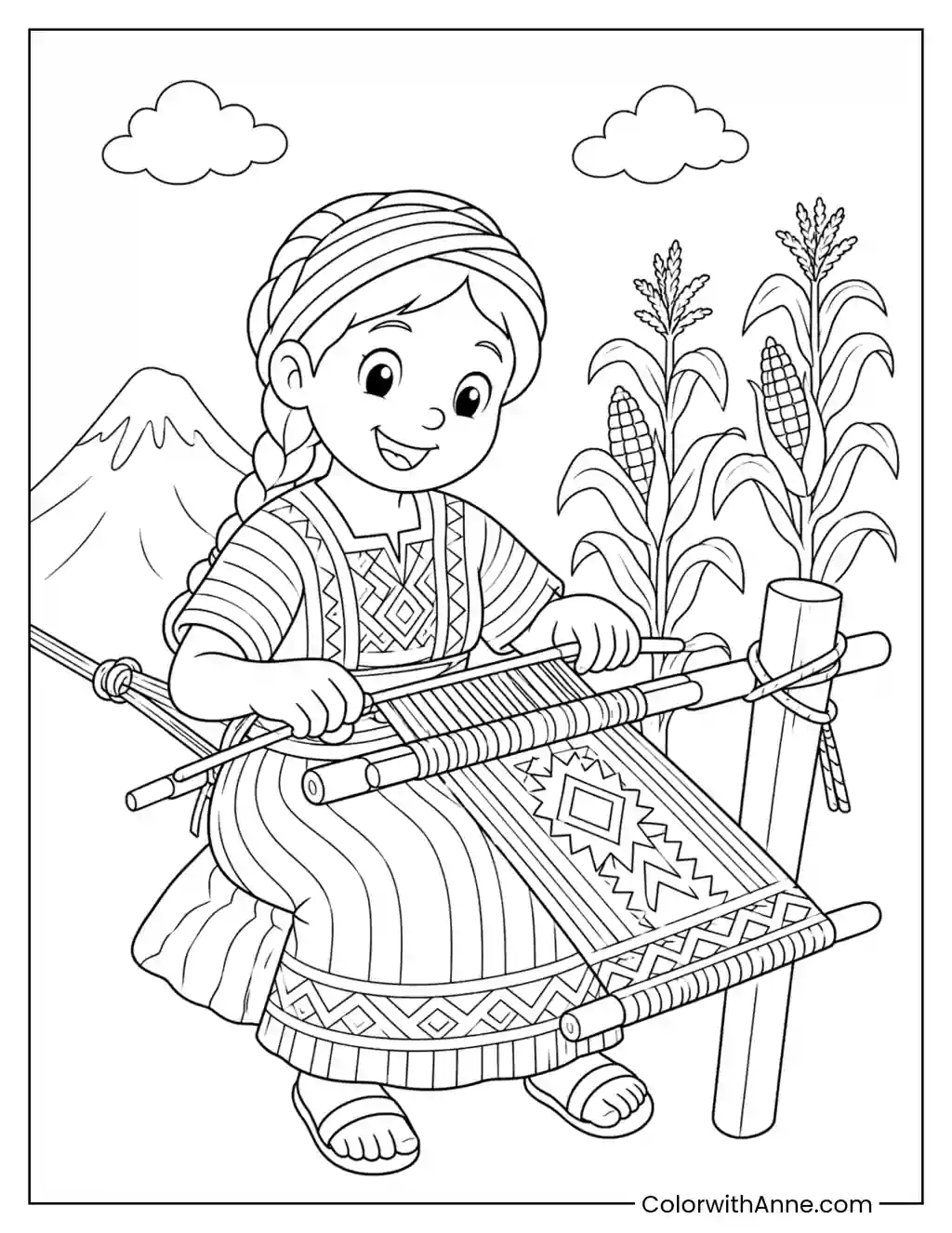
Explore the Loom’s Over-and-Under Pattern
The young weaver works with threads stretched across a backstrap loom, with a patterned textile developing in front of her. The repeated lines give the page a clear rhythm.
Use contrasting colors in the woven bands, with quieter brown loom parts. Keep neighboring thread sections distinct.
Try a small paper weave using strips of two colors. Pass one strip over and under the others, reversing the order on the next row. Watch the pattern emerge as the rows meet. The exercise gives you a simple structure to examine beside the far more detailed textile in the picture.
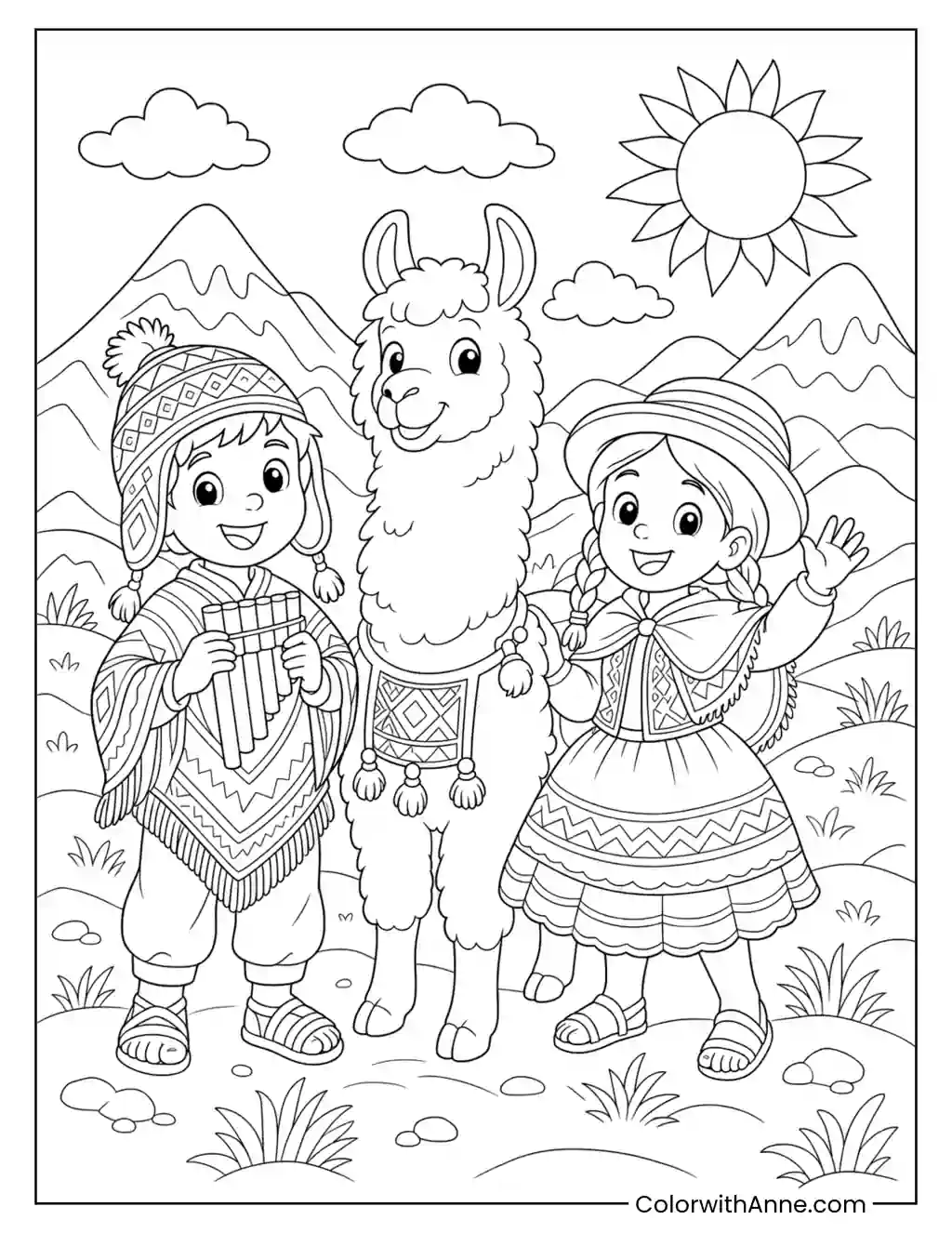
Find the Andes on a Map
Children stand beside a llama beneath mountain peaks and an open sky. The landscape gives this scene a geographic starting point as well as clothing and animal details to color.
Try earthy mountain colors, a cream or brown llama, and bright woven-looking bands on the clothing. Keep the sky pale around the peaks.
Find Peru and Bolivia on a map of South America, then look at photographs of Andean landscapes. Compare the mountain shapes and vegetation with the illustration. Choose one place to investigate more closely rather than treating the whole mountain region as a single setting.