
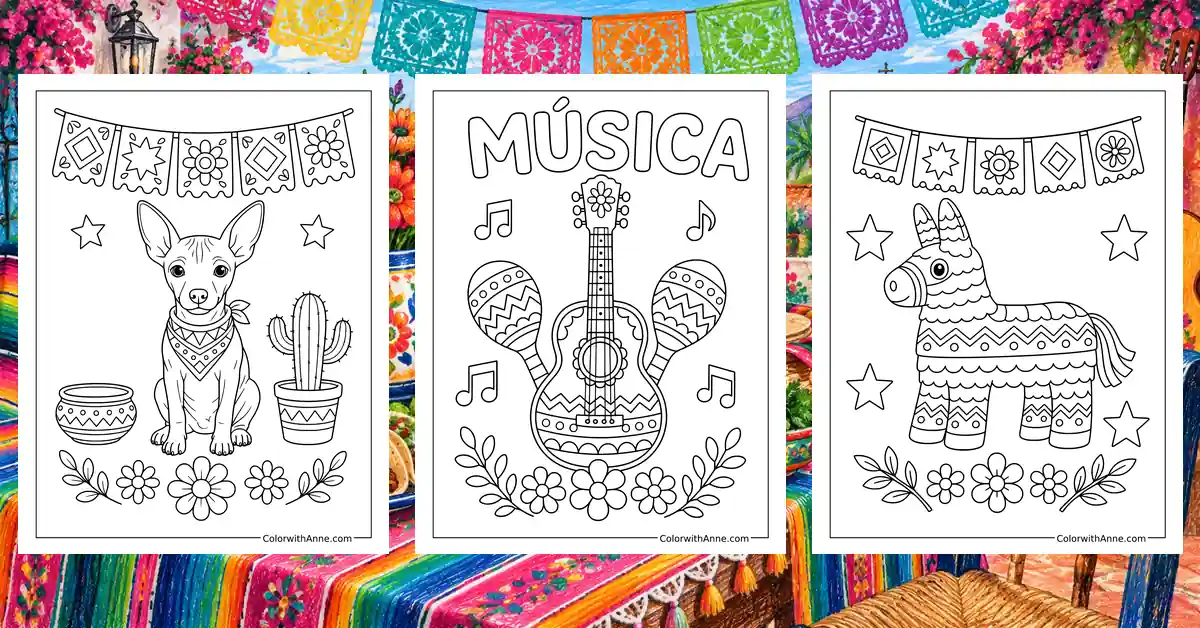
A Cinco de Mayo celebration can bring music into the street and neighbors together around food, while also prompting a question about the date itself. The occasion commemorates the Battle of Puebla, giving the gathering a historical starting point beyond the decorations someone first notices.
Cinco De Mayo coloring pages can accompany a classroom conversation or a family activity with that context in mind. A picture gives children something to work on while asking about a symbol or detail. Taking those questions seriously makes the occasion more interesting, especially when the answer leads to learning about Puebla and the people connected to its history.
Free Printable Cinco De Mayo Coloring Pages
Click any coloring page below to open the PDF, then print on US Letter or A4 paper.
Did you find what you needed?
Help us choose what to create or improve next.
Coloring Ideas for Cinco De Mayo Pages
Try one of these coloring ideas, or use them as a starting point for your own.
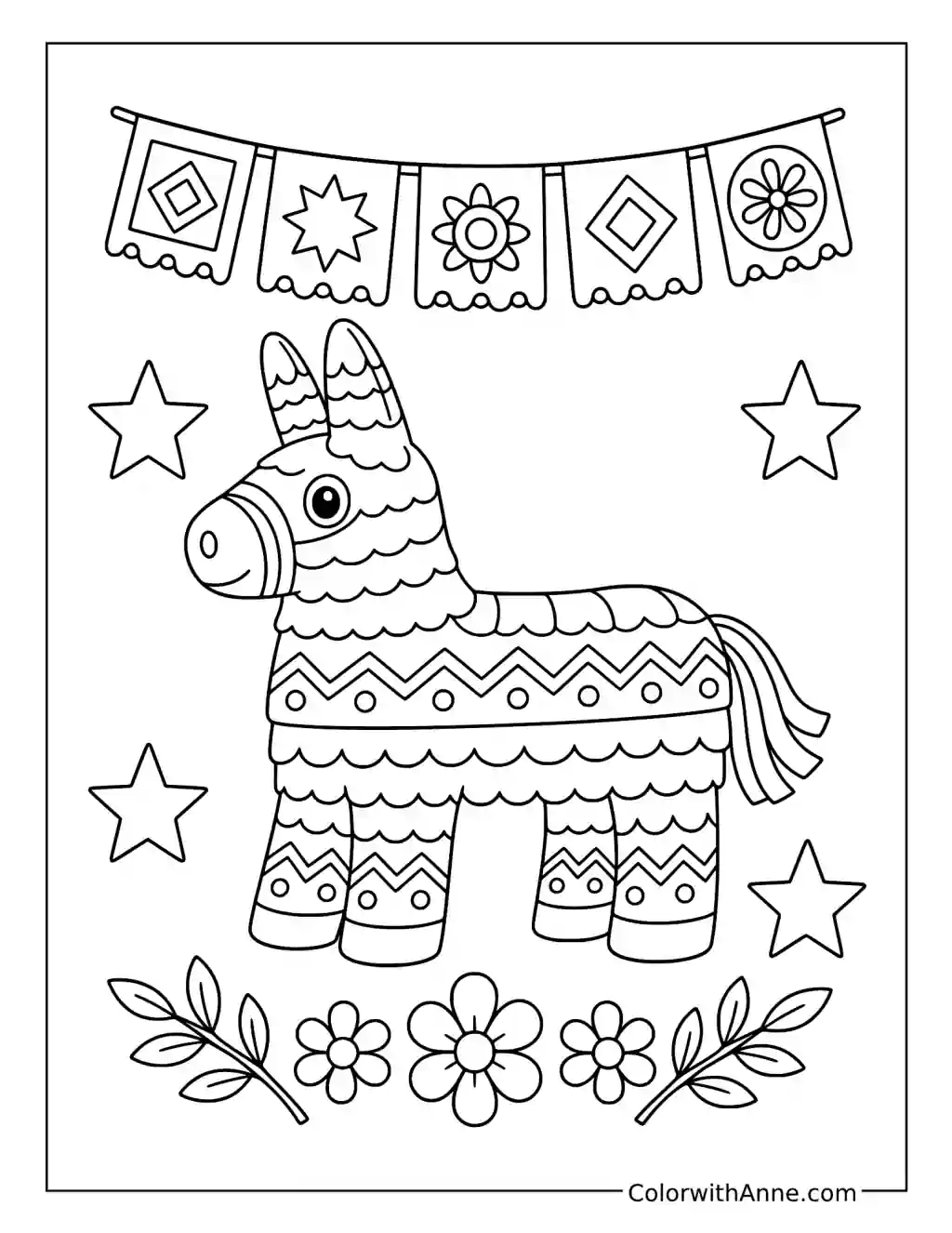
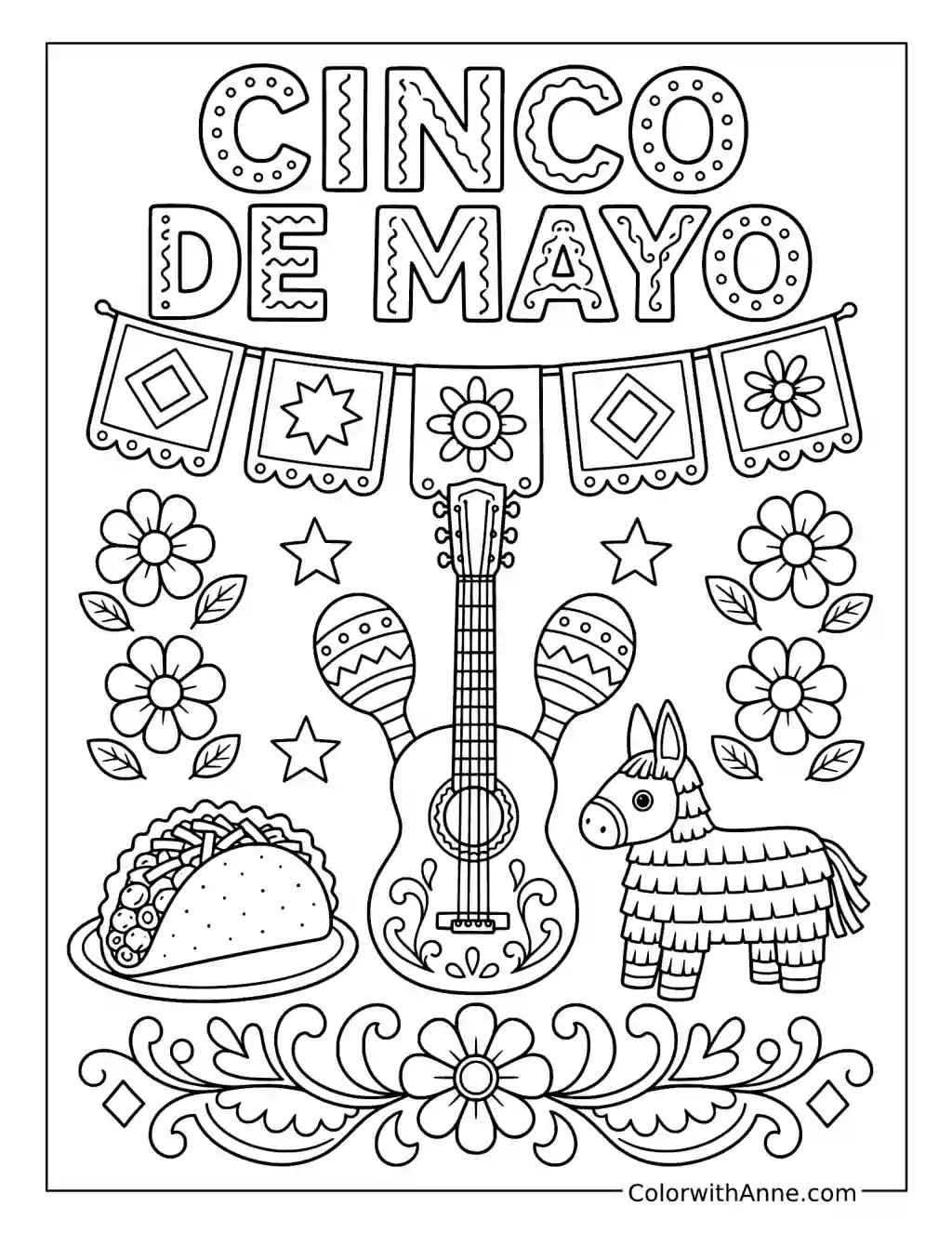
Add Some Fringe to the Donkey Piñata
The donkey piñata stands beneath patterned paper banners, with decorative bands wrapping around its body and legs. Those repeated zigzags and stripes give it plenty of character before any extra embellishment is added.
Bright pink, turquoise, yellow, and orange would suit the bands. Repeating a few colors around the body could keep the pattern lively without changing direction in every section.
For a textured version, cut narrow strips of tissue paper and snip a fringe along one edge. Attach a few strips within the larger body sections, working upward so they overlap. Leaving the face and smaller patterns colored normally keeps the paper texture from hiding the features that make the donkey recognizable.
Find Puebla on the Map
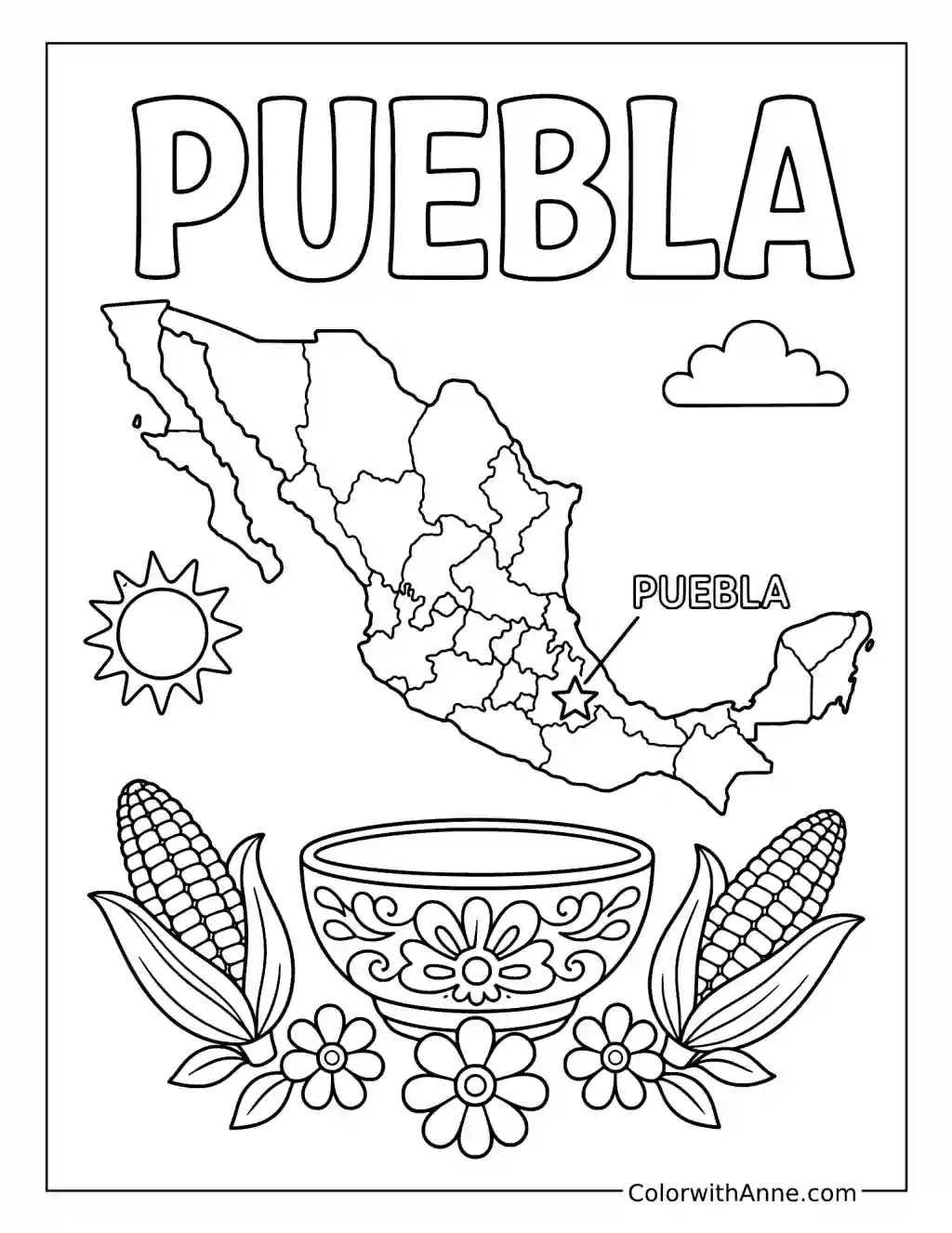
The map points to Puebla, with corn, flowers, and a decorated bowl beneath it. Puebla connects the celebration to a specific place: Cinco de Mayo commemorates the Mexican victory over French forces there on May 5, 1862.
Puebla could receive one clear highlight color while the surrounding map stays pale. Golden corn and blue pottery would give the lower part of the page a welcoming finish.
Keep a larger map nearby and locate Puebla in relation to Mexico City and the coast. Then choose one question to investigate together about the battle or the city. Starting with a place and a question gives the celebration a useful historical foundation before moving on to its decorative activities.
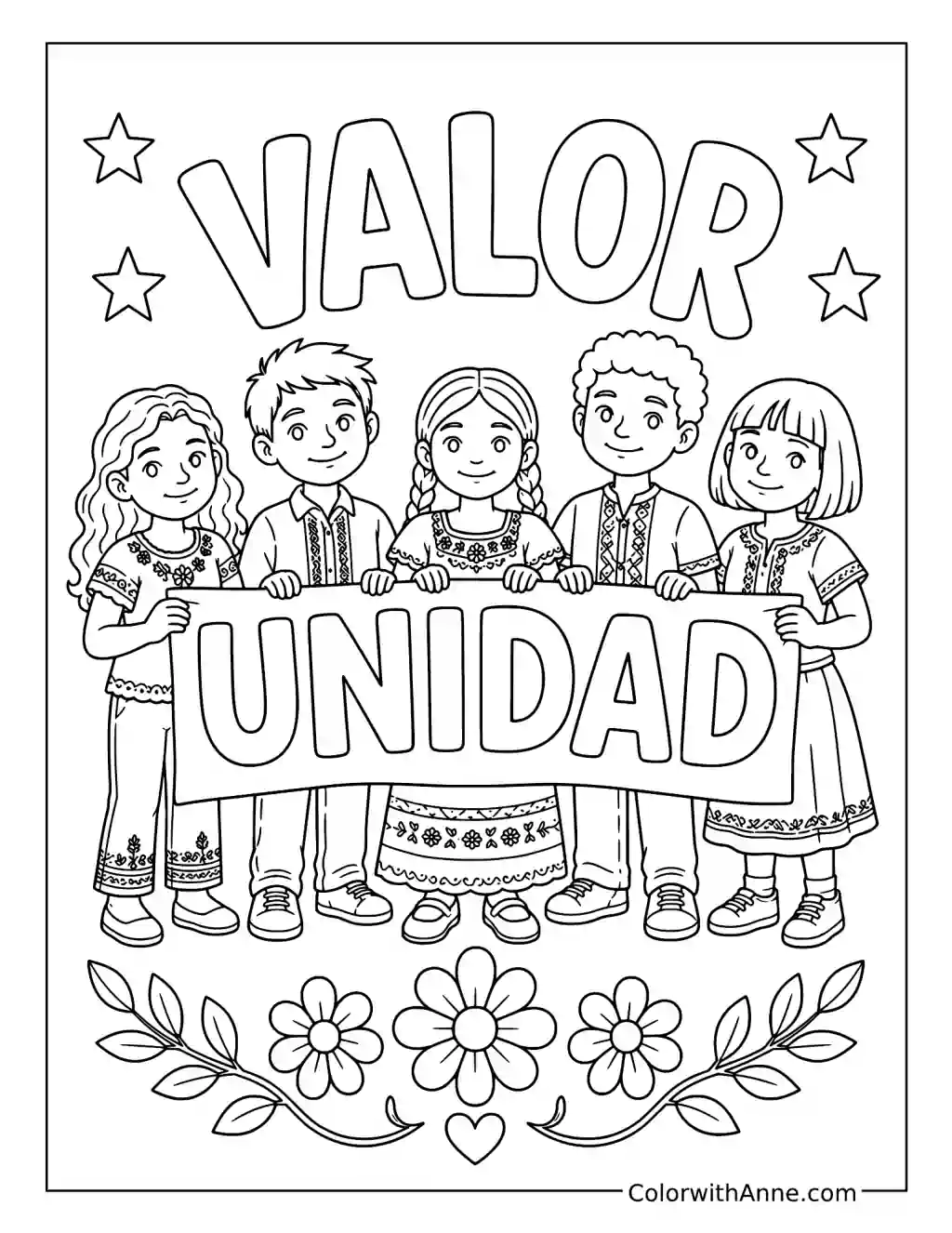
Put Courage and Unity into Ordinary Words
The children gather behind the words “VALOR” and “UNIDAD,” with flowers and stars around them. The two Spanish words give the page a clear focus on courage and unity.
The lettering could use two strong colors, with varied clothing for the children. Keeping the flowers within the same small palette would connect the border to the central message.
After discussing the words, ask for a concrete example of each: speaking up for someone, helping a group finish something, or sharing responsibility when a task becomes difficult. These examples can be written on separate slips beside the page. Specific actions make the words easier to understand than a list of admirable qualities alone.
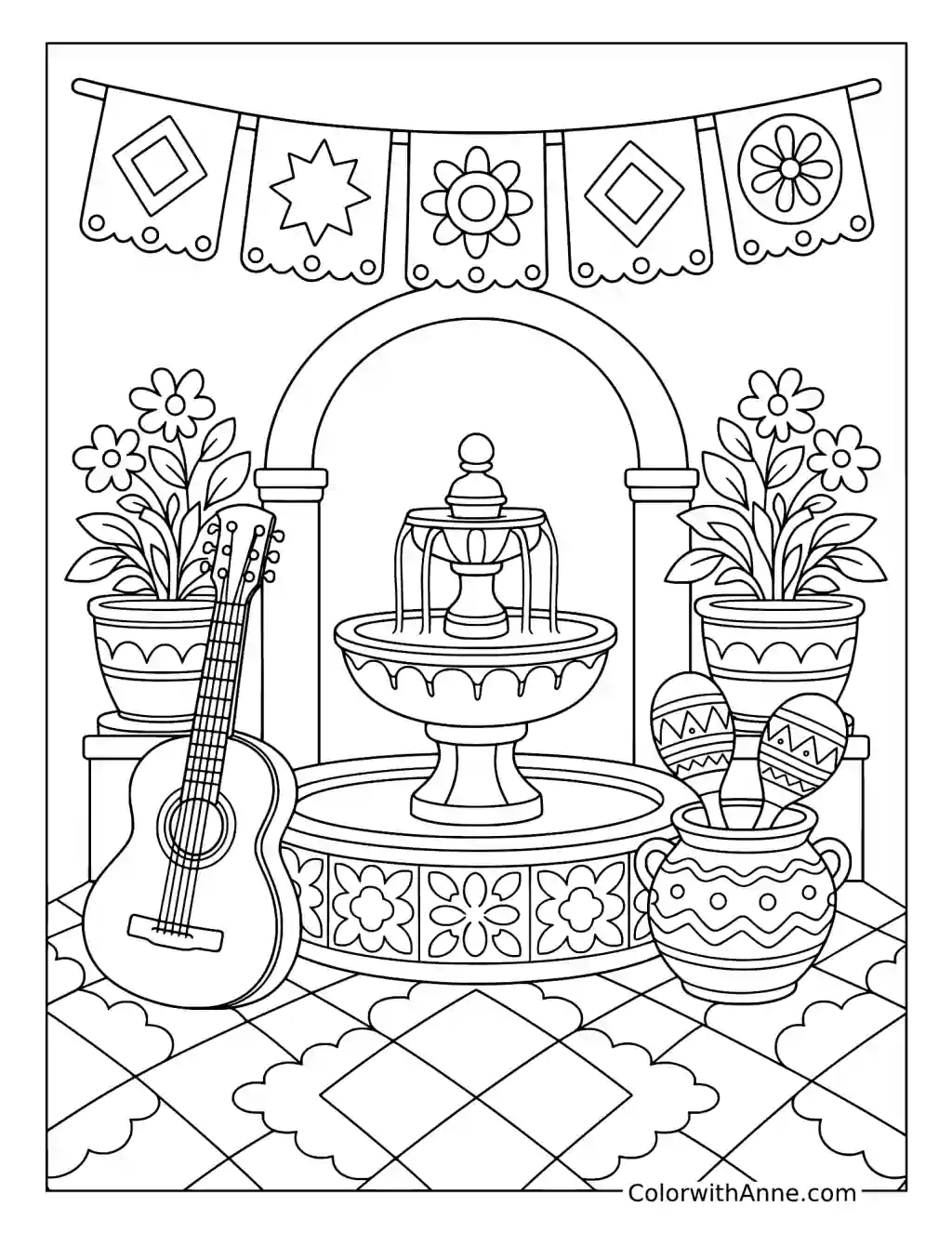
Borrow a Pattern from the Courtyard
A small fountain sits beneath an arch, with potted flowers, a guitar, and maracas around it. The patterned floor and decorated pots give this courtyard a quieter appeal than the busier celebration scenes.
Warm terracotta and cream could suit the walls and paving. Blue details on the pots would sit comfortably beside green leaves and brighter flowers.
Choose one small pattern from the picture and redraw it as a border on scrap paper. Repeat it around a rectangle, adjusting the corners as you go. That little trial can become a plan for decorating a plant pot or paper picture frame, with the courtyard providing a specific design to work from.
Watch How the Dancers Move the Fabric
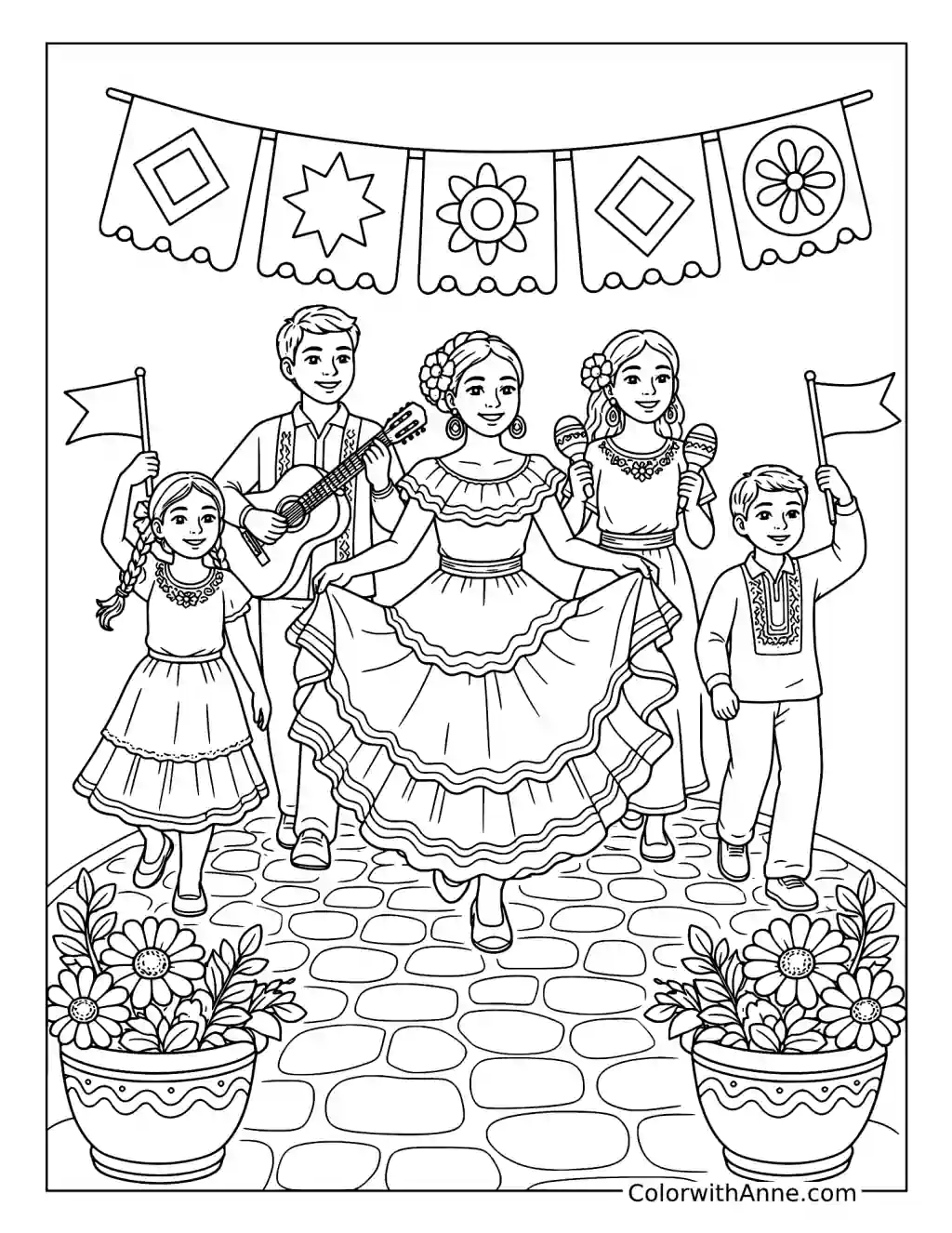
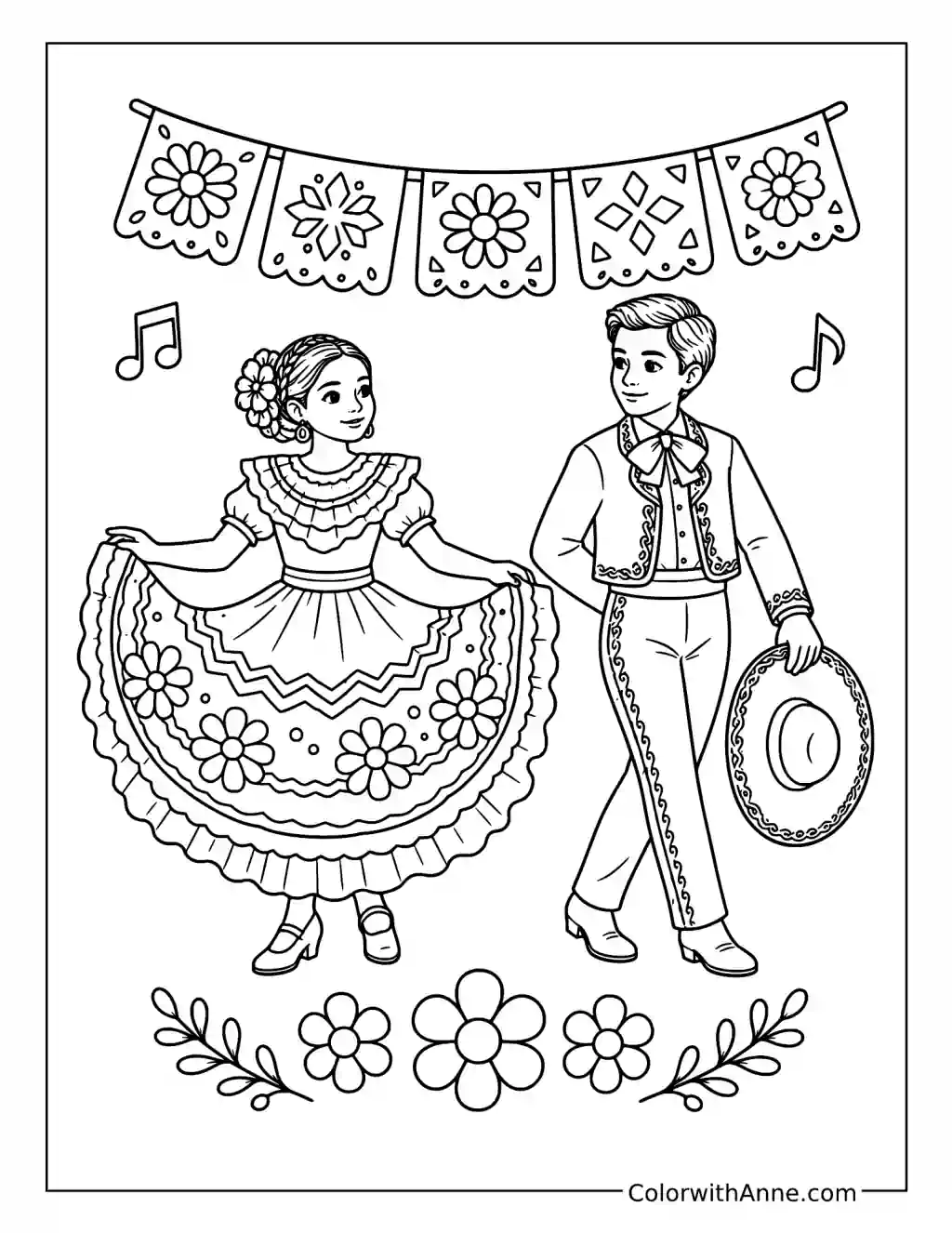
The dancers stand beneath paper banners, with the woman holding out the wide skirt of her dress and her partner carrying his hat. The ruffles make movement part of the picture even while both figures are still.
Bright ribbon bands could travel around the skirt, with a deeper shade underneath the folds. The partner’s outfit can stay more restrained, allowing its smaller trim details to show.
Watch a folklórico performance and pay attention to how the dancers handle fabric and mark the rhythm with their feet. Then return to the page and follow one ruffle from end to end. Seeing the movement first can make the drawn layers easier to understand and more enjoyable to color.
Try a Floral Tile Palette
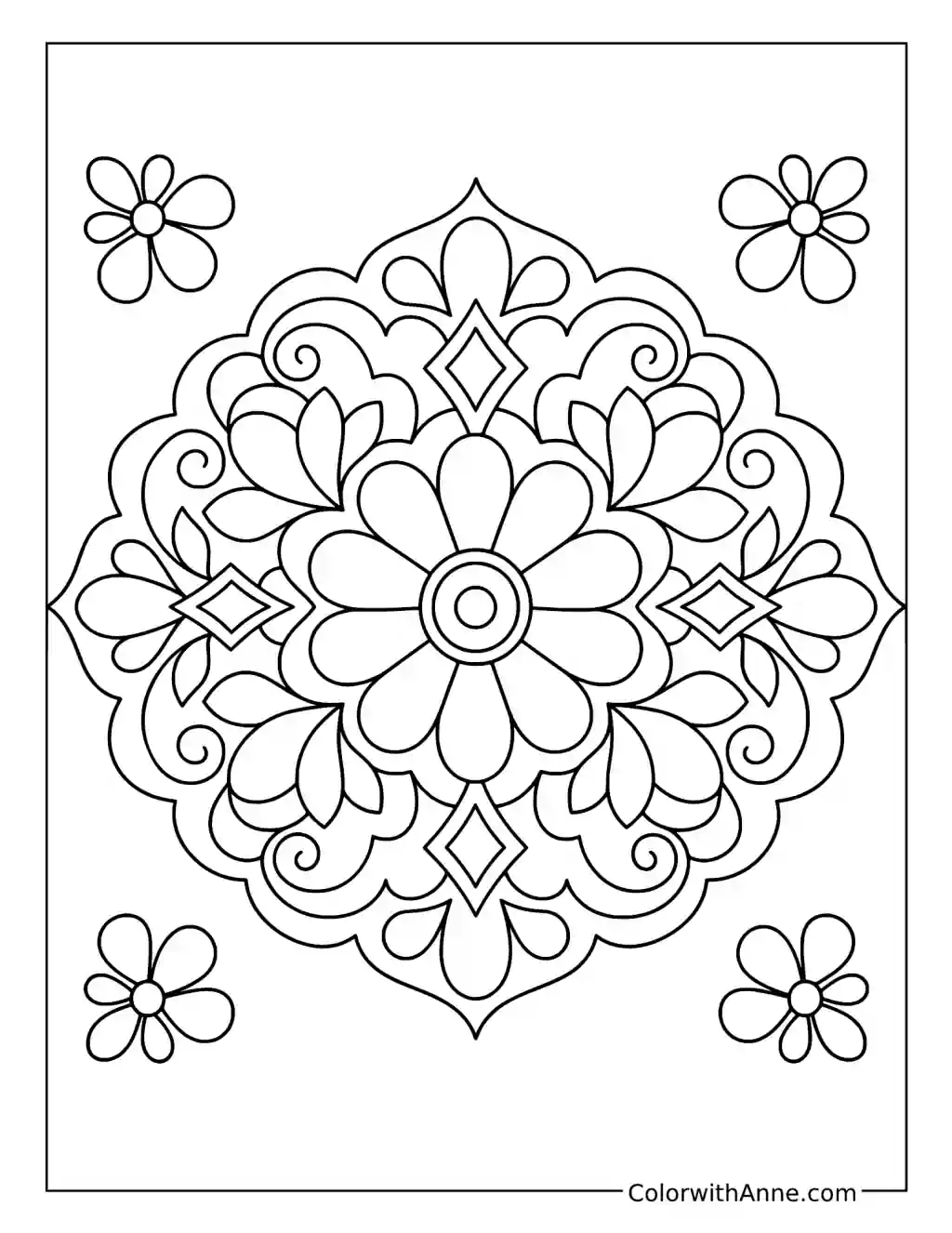
A large flower sits at the center of this rounded medallion, with leaves and petal shapes repeating outward. The design offers a comfortable change of pace from lettering, instruments, and full celebration scenes.
Blue and white with small yellow accents would give it a tile-like finish. Turquoise, coral, and cream would create a warmer alternative without needing a different color in every petal.
Place the finished design beneath a clear coaster or small transparent tray to see how it looks at a useful household scale. If only part of the pattern fits, move it around before trimming a copy. A close crop can reveal an appealing detail that was less obvious when viewing the whole medallion.
Keep Time with the Guitar and Maracas
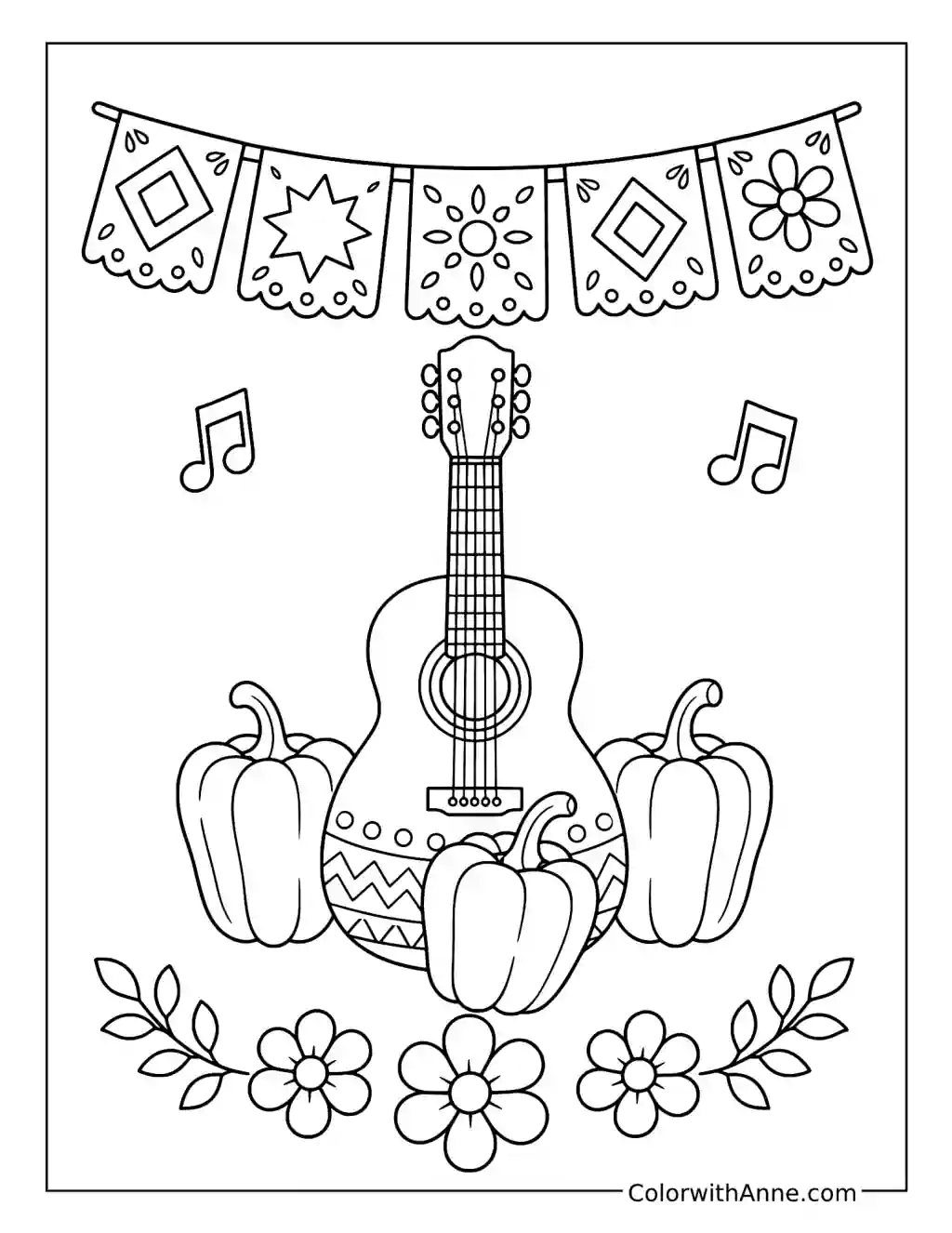
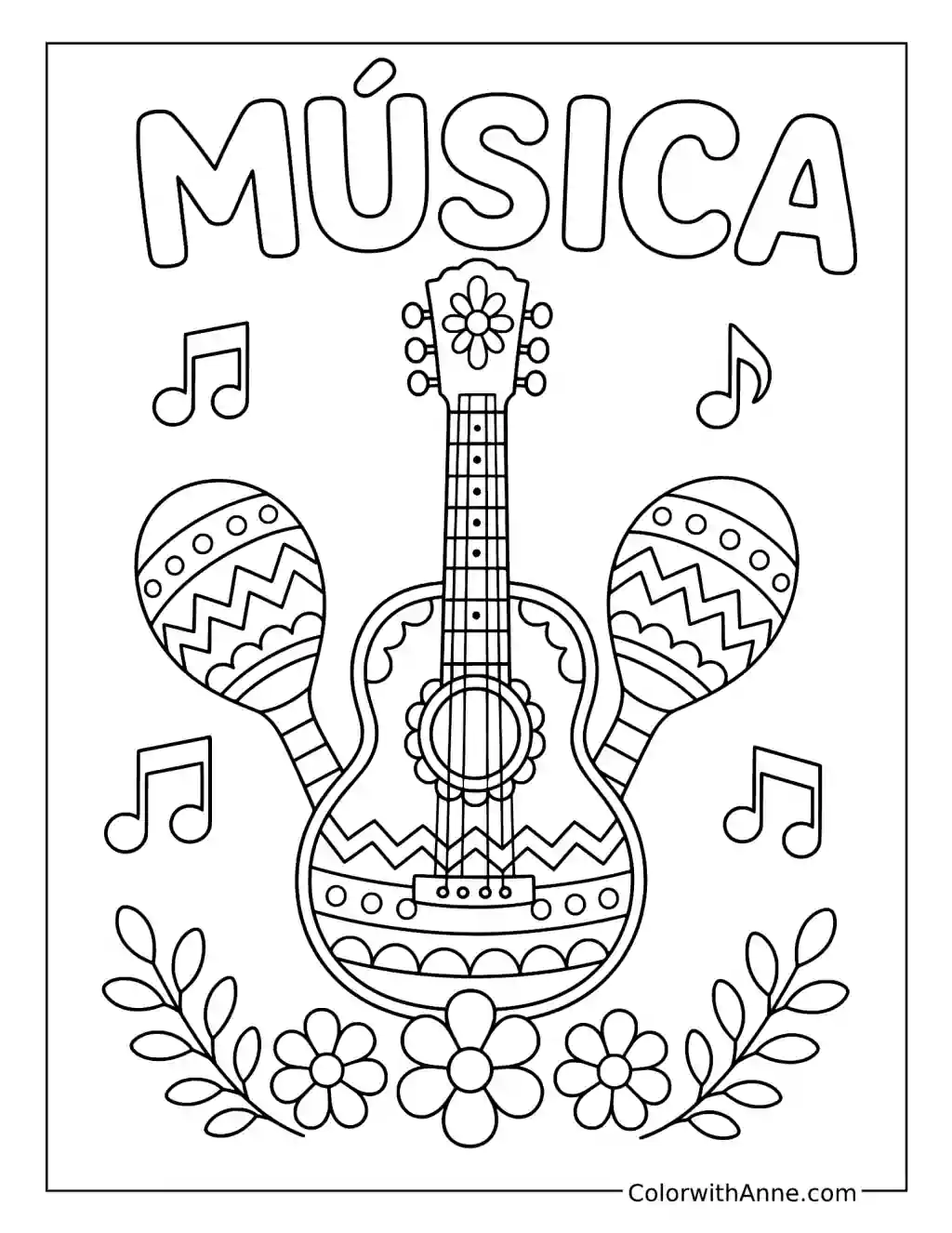
A guitar stands between two maracas beneath the word “MÚSICA,” with notes scattered around the instruments. The pairing makes this a natural page to accompany listening, especially when there is room to join the rhythm.
Warm wood colors would suit the guitar, with brighter patterned maracas. The lettering could repeat one of those colors so the instruments and word feel connected.
Make a simple shaker from a small, securely closed container and a little dry rice. Try keeping a steady beat with a recording, then leave alternate beats silent. Listening for when to join in can be as enjoyable as making constant sound, particularly when several people are playing together.
Choose One Dish from the Table
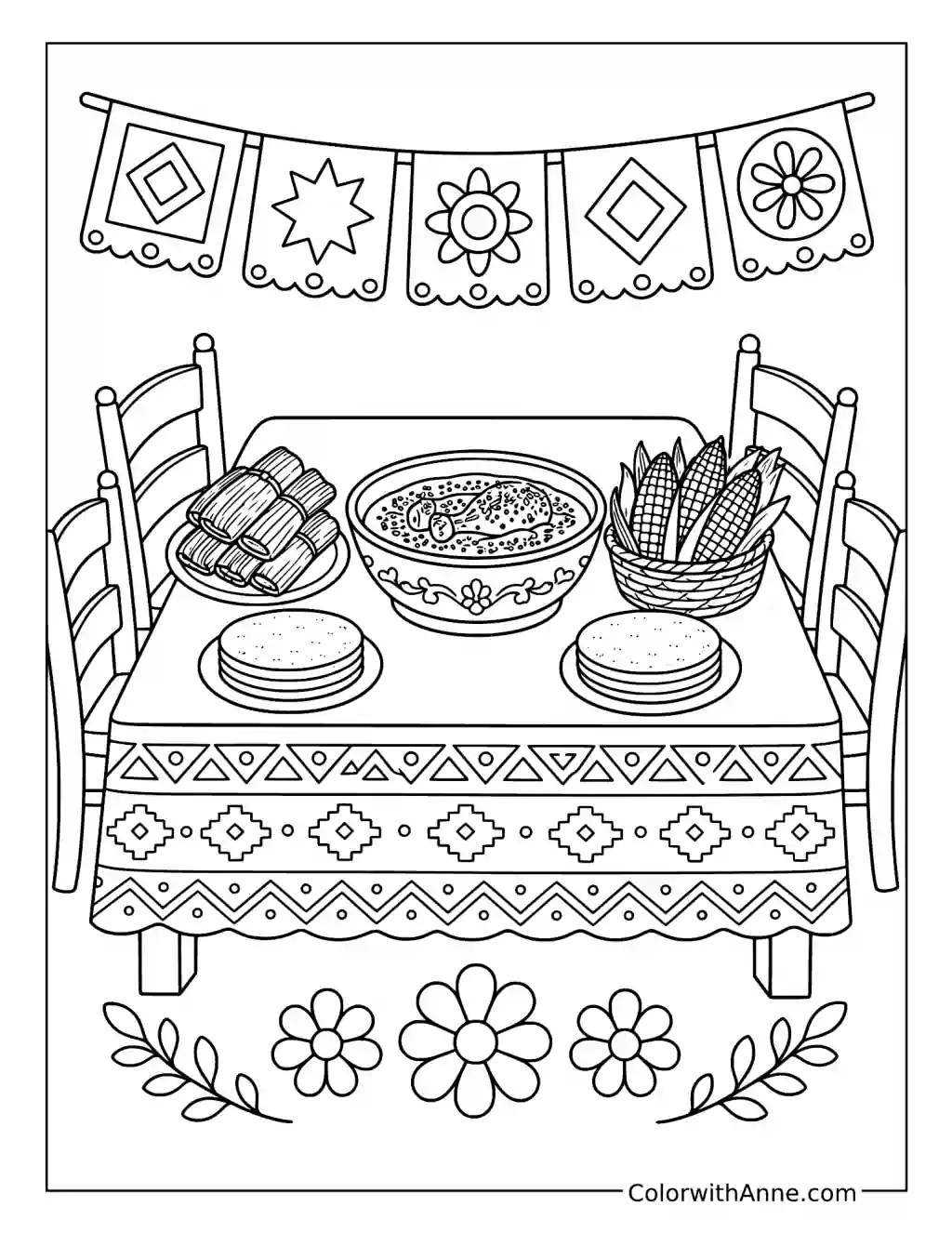
The table holds tamales, corn, tortillas, and a central bowl beneath patterned banners. The woven-looking cloth and decorated dishes make the setting feel prepared for people to sit down and spend some time there.
Golden corn and warm cream tortillas could sit beside colorful bowls. A limited red-and-blue pattern on the cloth would give the food a cheerful setting without overwhelming it.
Choose one pictured food to learn more about or prepare with someone who knows it well. Ask about the ingredients, how it is served, and any family variations. The page can sit nearby during the conversation, giving younger children something concrete to point to while the real knowledge comes from the person sharing the dish.