
Tiny diya flames flicker along doorsteps, rangoli patterns brighten the entrance, and the scent of sweets drifts from the kitchen. During Diwali, even a carefully arranged plate of ladoos can lose a few residents before the guests arrive. There are lamps to light, outfits to straighten, and familiar faces to welcome as evening settles in.
Diwali coloring pages carry that festive feeling onto paper, with room to linger over the shapes and colors associated with the celebration. Think glowing lamps, the symmetry of rangoli, and rich shades inspired by marigolds and festive clothes, each recalling a different part of the preparations.
Free Printable Diwali Coloring Pages
Click any coloring page below to open the PDF, then print on US Letter or A4 paper.
Did you find what you needed?
Help us choose what to create or improve next.
Coloring Ideas for Diwali Pages
Try one of these coloring ideas, or use them as a starting point for your own.
A Diwali Platter Worth Lingering Over
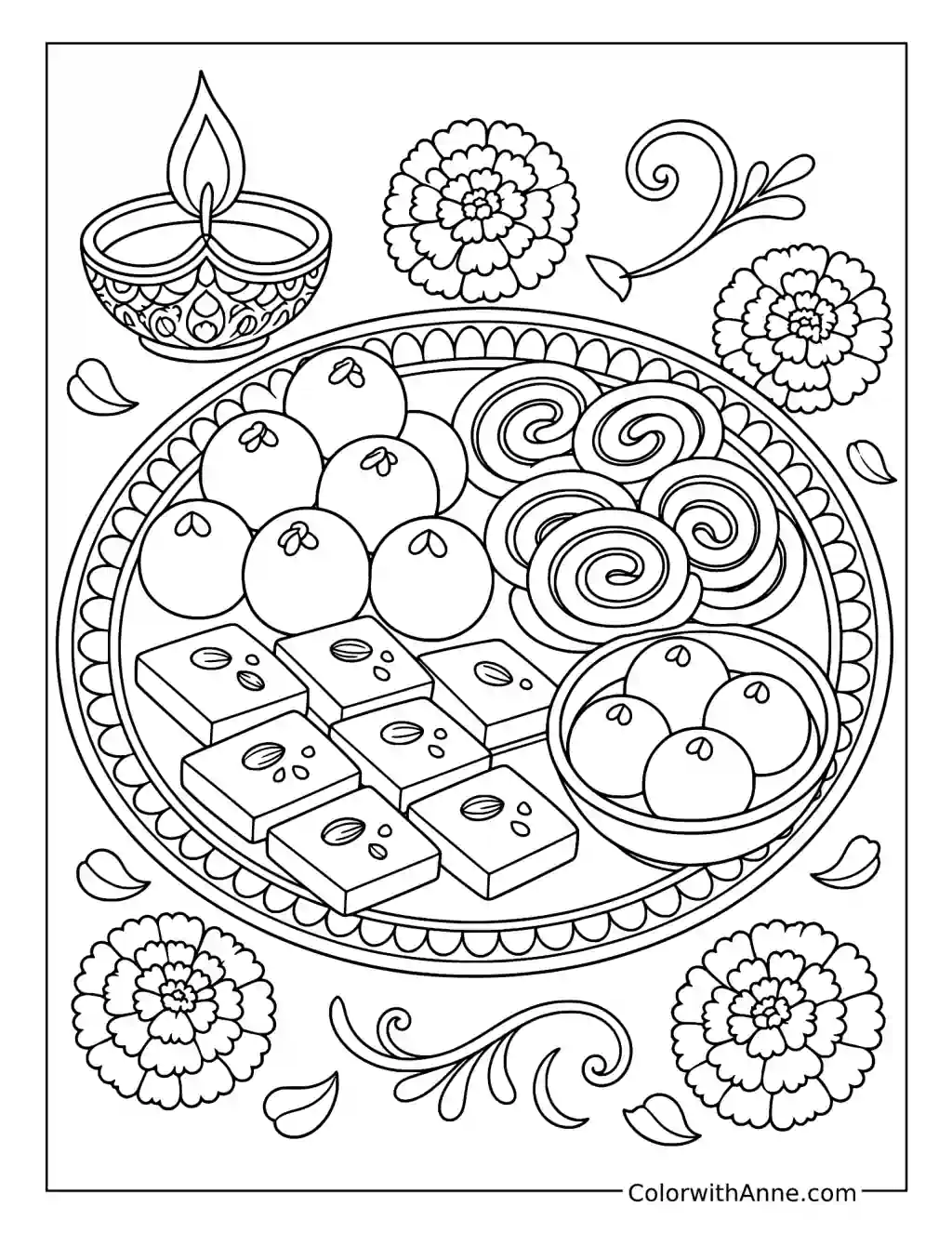
Round sweets, square pieces, and generous spirals fill this decorated platter, with flowers and a diya around its edges. The different shapes invite a little menu planning before the coloring begins. Choose shades inspired by favorite mithai: creamy ivory, warm golden yellow, pistachio green, or the caramel tones of syrup-soaked treats.
Give each group its own color family so the platter looks thoughtfully arranged. Small contrasting touches on the toppings will help distinguish the square sweets from their round neighbors.
The finished picture could sit beside a real sweets tray during a gathering. Add a separate handwritten menu underneath, naming what is actually being served. Guests may appreciate a guide, especially before the favorite pieces disappear.
Jewel Colors for the Peacock Diya Stand
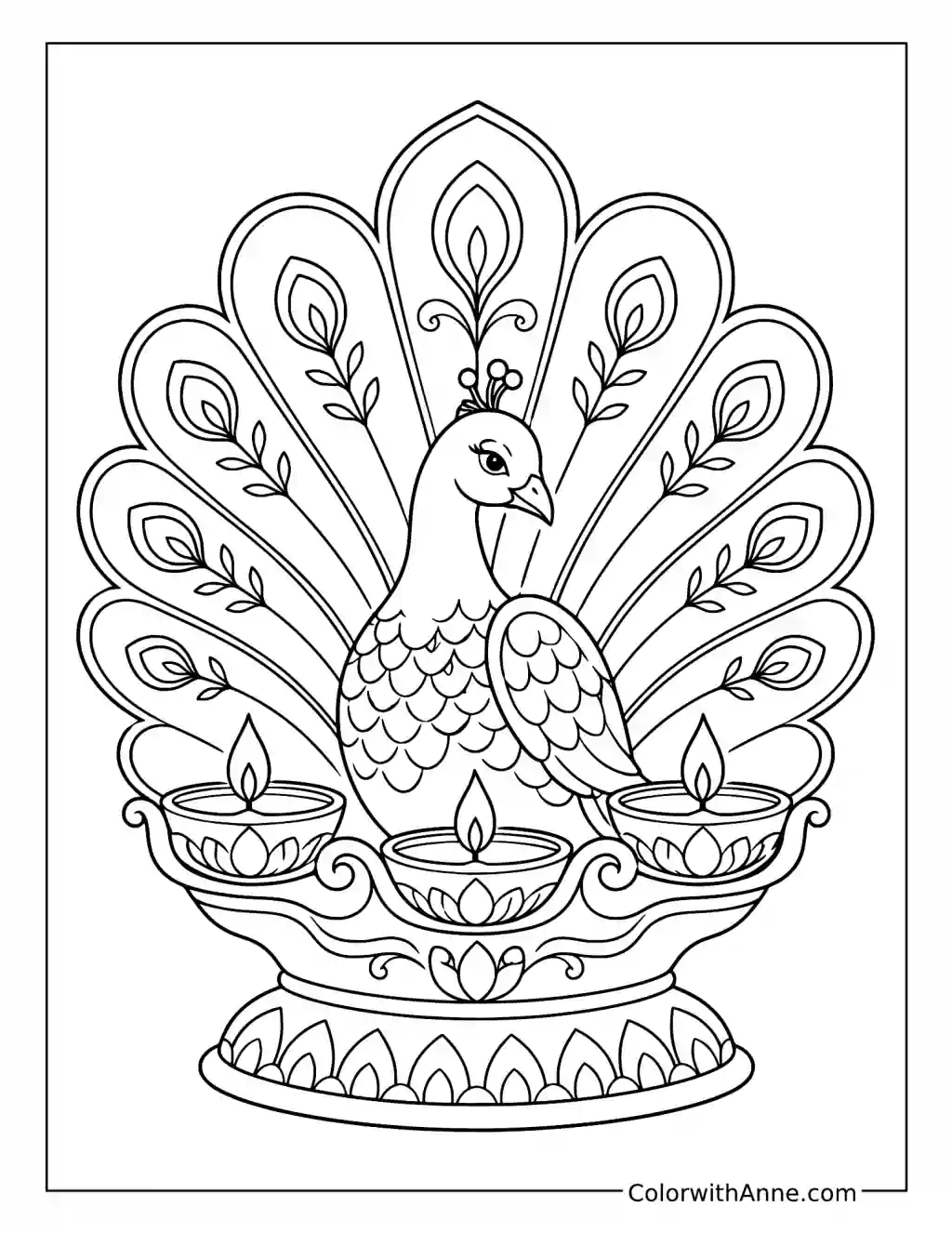
A peacock spreads its fan behind three diyas, each feather carrying a repeated decorative motif. The curved stand and patterned base give the whole picture the feel of an ornament brought out especially for the celebration.
Try turquoise and deep blue across the feathers, with emerald accents inside the repeated shapes. Warm ochre on the stand will sit beautifully beside those cooler colors. Keep the three flames in the same yellow and orange palette so they read as a connected row of lights.
For a more personal finish, borrow colors from a festive scarf or cushion at home. Place it beside the page and pick out three shades. This turns the design into a small companion to decorations already in the room.
Fireworks Above Two Excited Faces
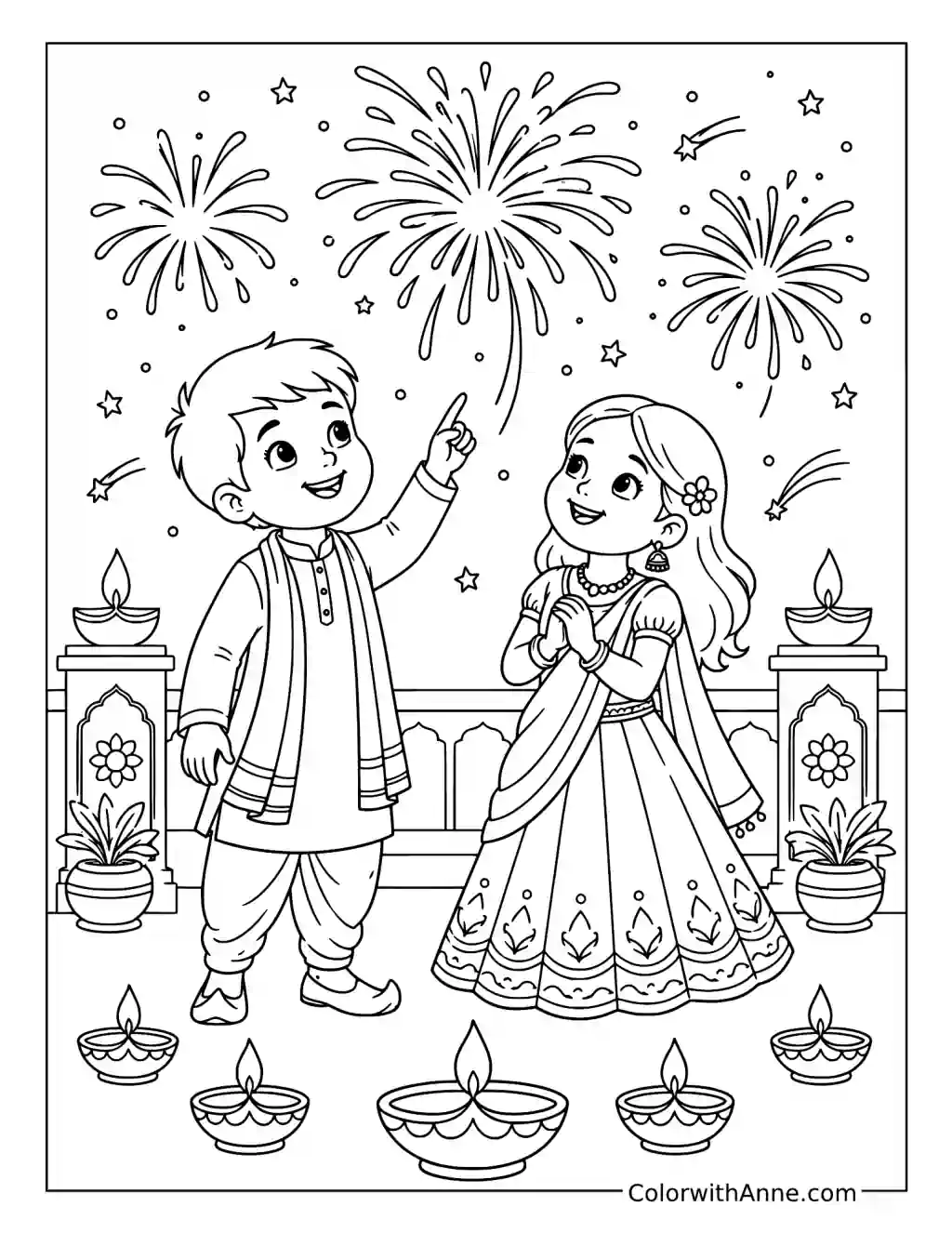
One child points upward while the other looks toward the fireworks. Below them, diyas line the foreground; overhead, broad bursts and scattered stars fill the sky. There are two kinds of light to play with here: the small, steady flames and the sprawling fireworks.
A deep indigo sky will make coral, yellow, and turquoise bursts stand out. Leave narrow pale spaces beside some of the firework lines to keep their shapes crisp against the darkness. Use warmer, quieter colors near the diyas.
Let someone else choose the colors for one burst without seeing the rest of the page. That unexpected combination can capture a little of the surprise of looking up just as another firework opens.
A Gift Exchange with a Personal Touch
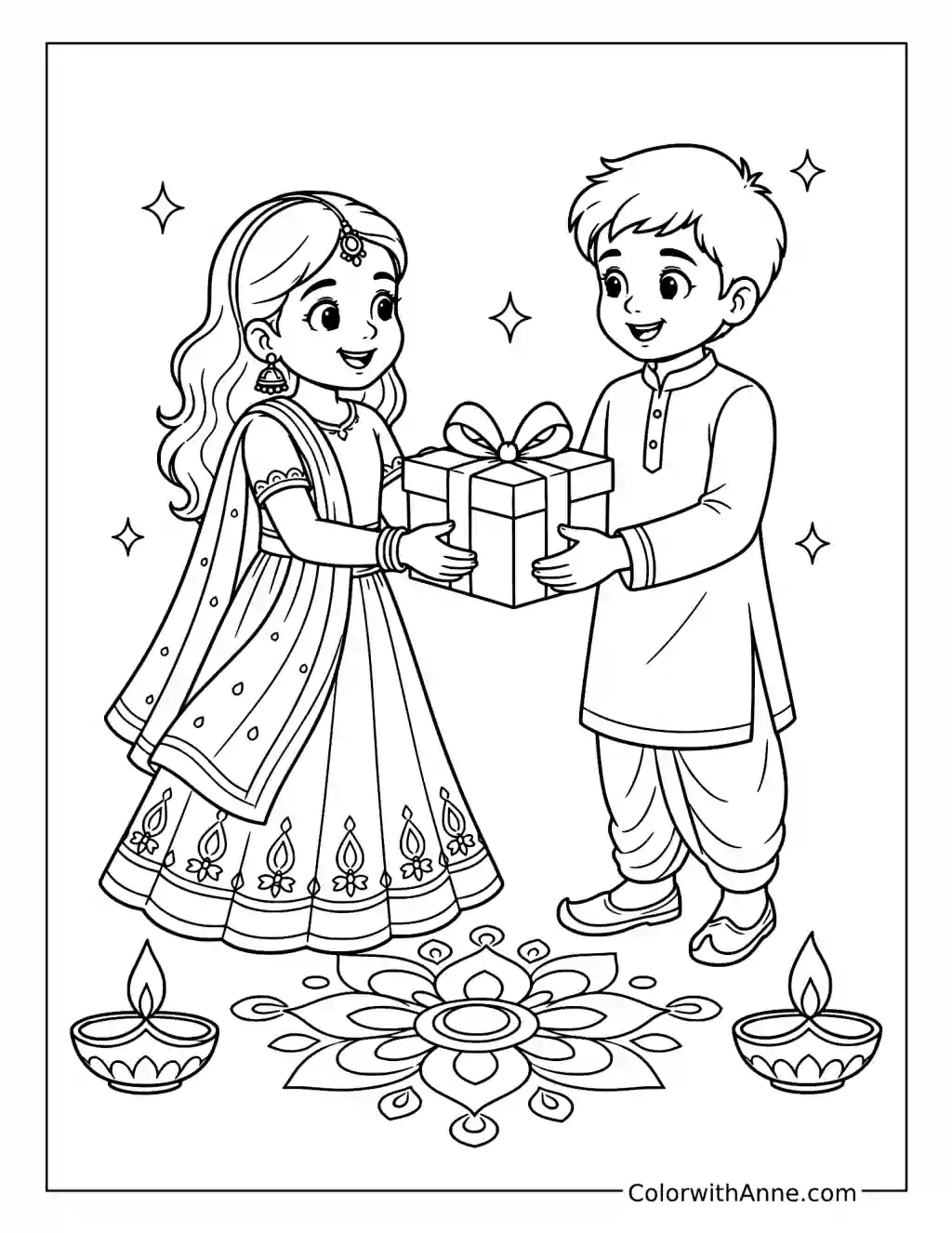
The two children hold a ribbon-tied present between them, with a floral rangoli beneath their feet and a diya on either side. Their shared grip makes the gift the natural center of the picture.
Give the wrapping a color that differs from both outfits, then repeat one clothing color in the ribbon. That small connection helps the present belong to the scene while remaining easy to spot. The border on the girl’s outfit also offers a place to echo the rangoli colors.
Turn the finished page into a gift insert by adding a short message on the back. A note naming something appreciated about the recipient makes it feel considered, even before the parcel is opened.
A Lantern Palette for the Evening
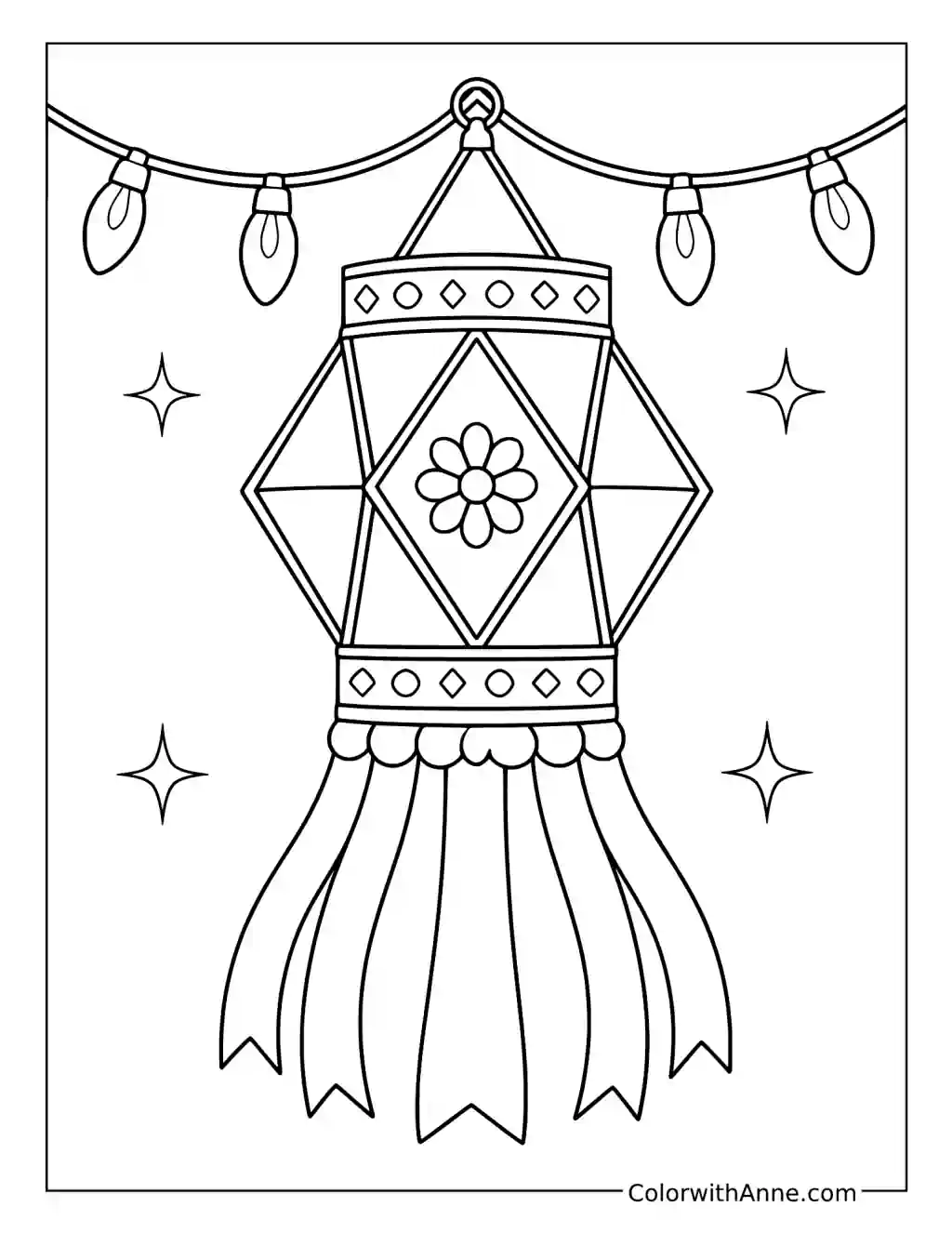
This hanging lantern has angular panels, a flower at its center, and long streamers falling beneath it. A curved string of bulbs stretches across the top of the page. The design offers a lovely chance to work with alternating colors without losing the lantern’s shape.
Choose two shades for the panels and a third for the central flower. Carry those colors down the streamers in a repeating order, then keep the bulbs softly yellow. A pale wash of color around each bulb can suggest light spilling into the surrounding space.
For a window display, mount the page on dark cardstock with a narrow border showing. The darker frame will help the lantern’s colors hold their own against daylight.
A Doorway Ready to Welcome Guests
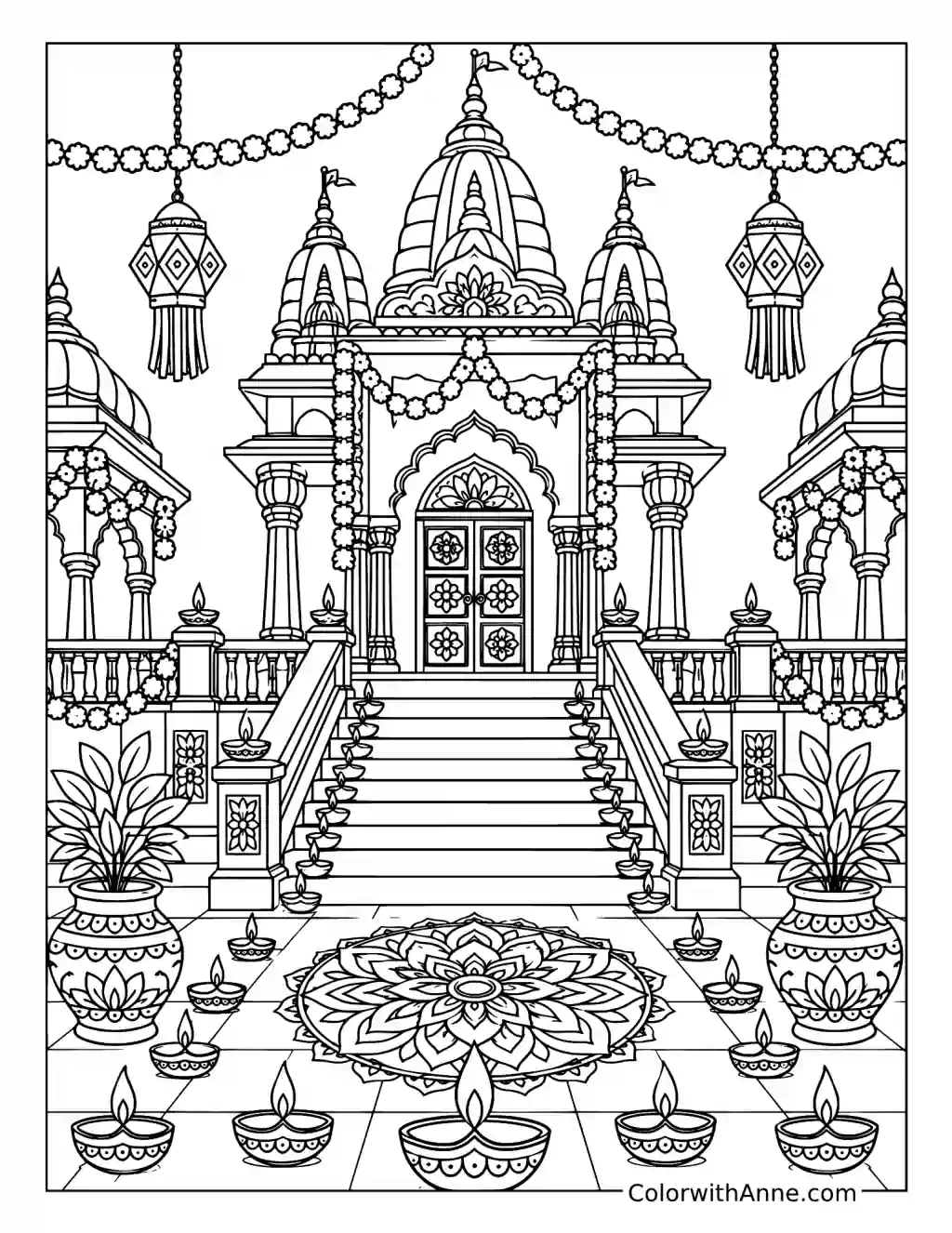
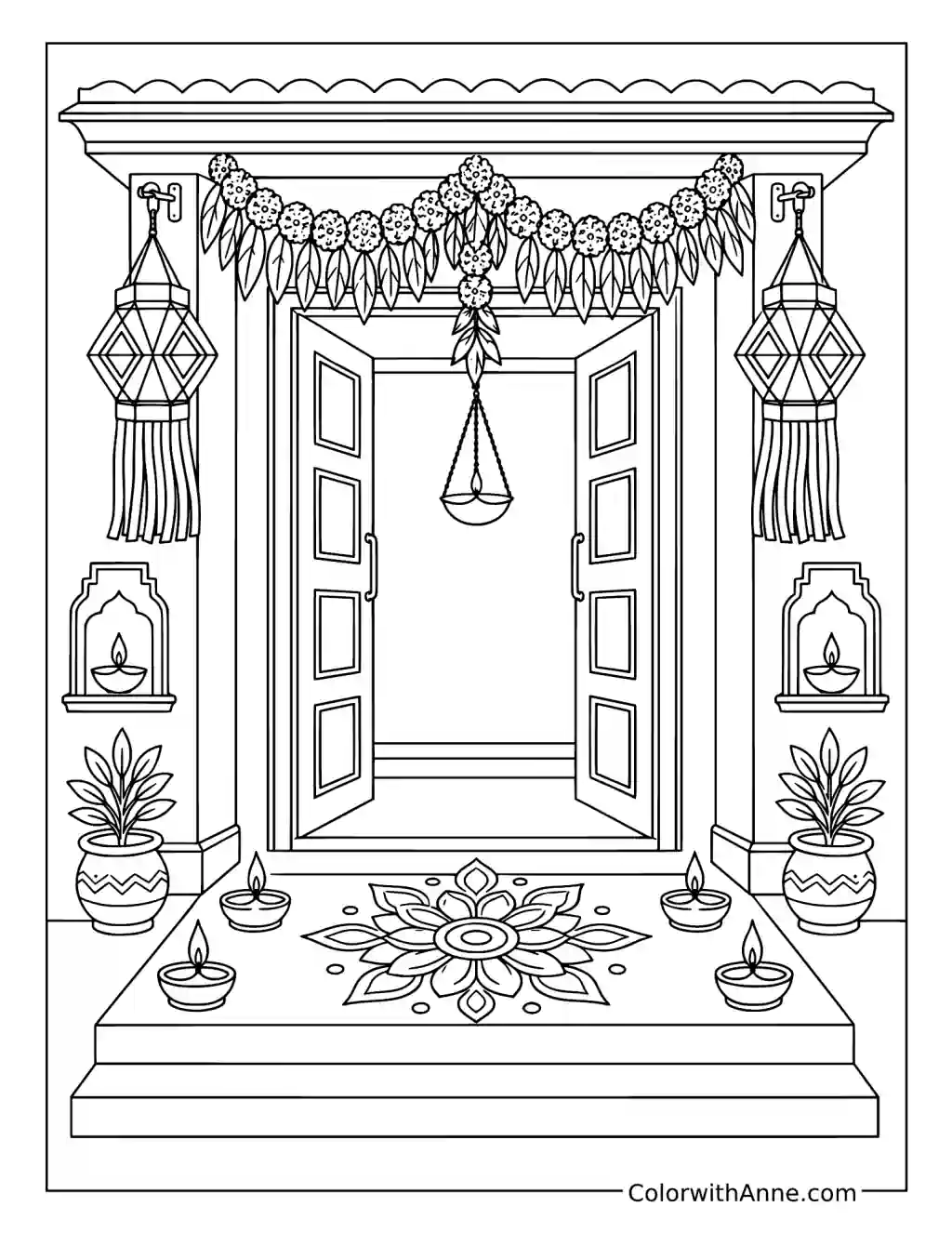
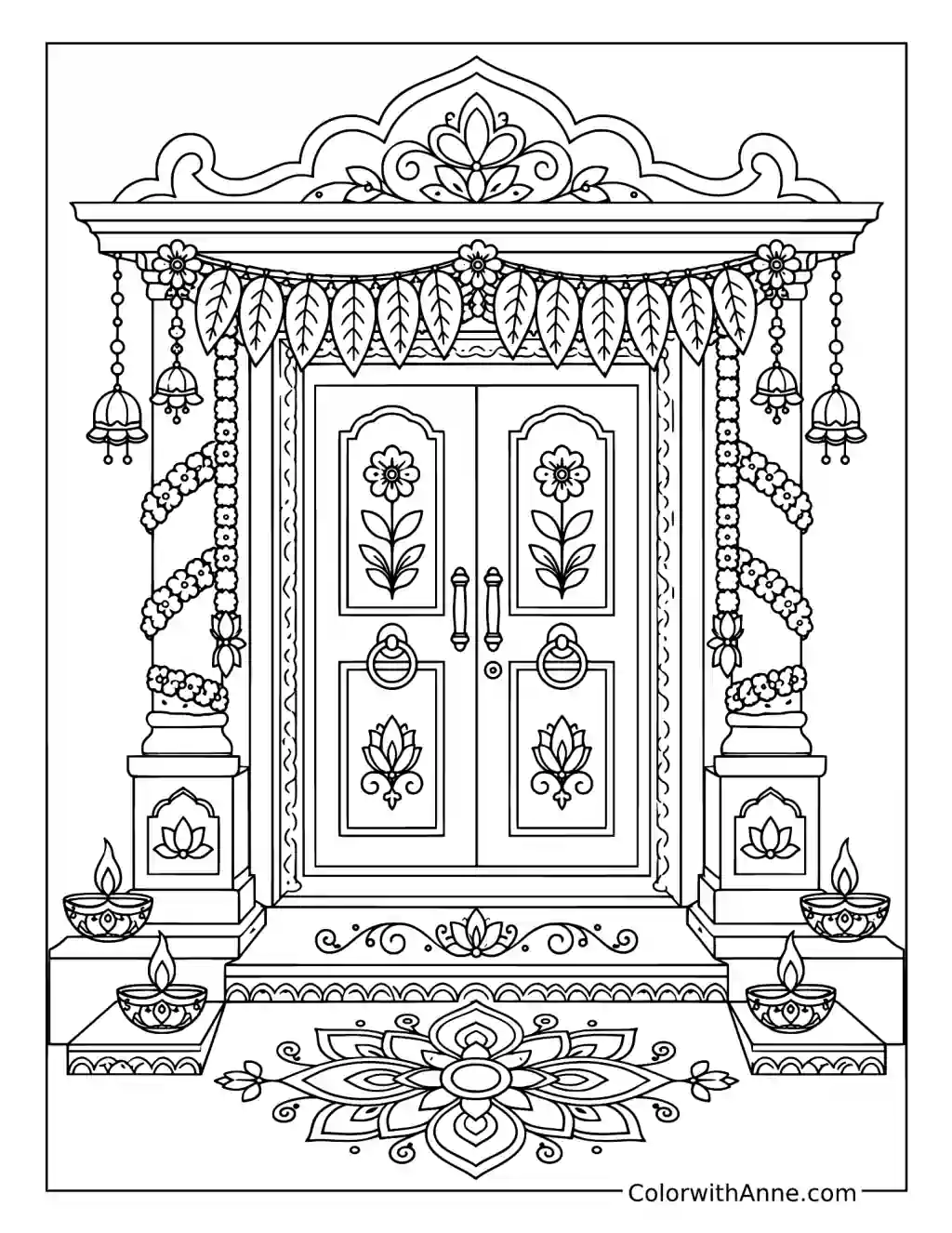
Flower garlands, hanging bells, leafy decorations, and rows of diyas surround the double doors. Even the door panels carry floral designs, so this entrance has plenty to say before anyone knocks.
Start by deciding what the doors are made of in the imagined home. Rich brown suggests wood; a painted blue or green gives the entrance a different character. Then choose garland colors that stand out against it. Repeat a few of those shades in the rangoli at the bottom to connect the upper decorations with the doorstep.
Use the picture as a planning sheet for a festive entrance of your own. Circle two details worth borrowing, perhaps a garland arrangement and a rangoli color combination, rather than trying to recreate every ornament.
A Festive Outfit Framed by Flower Garlands
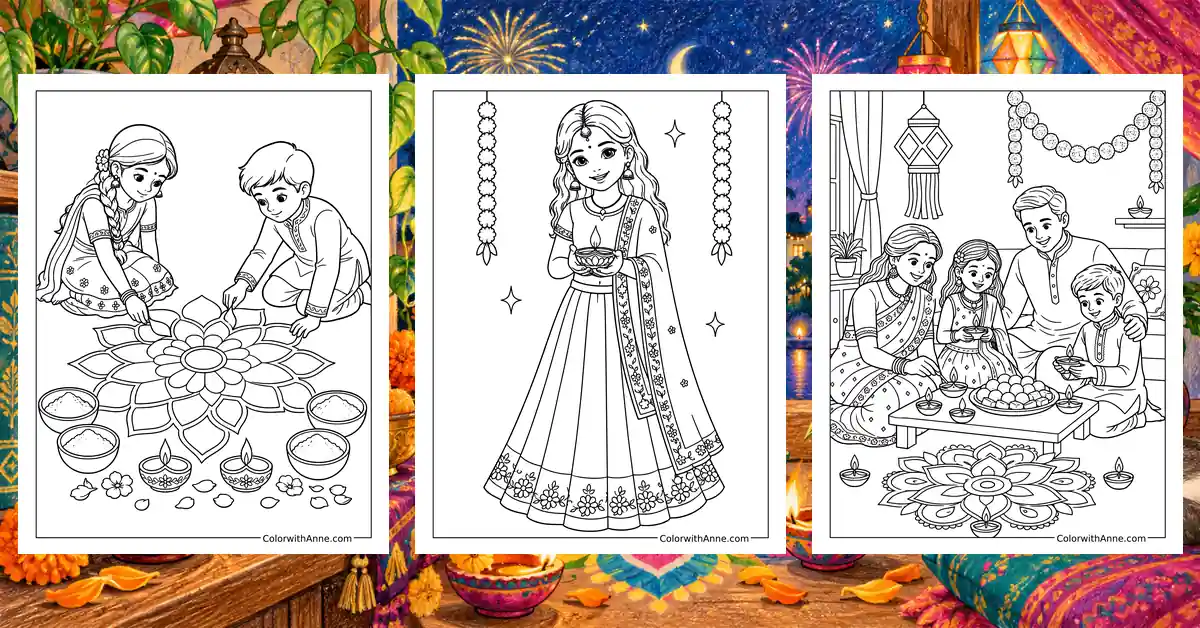
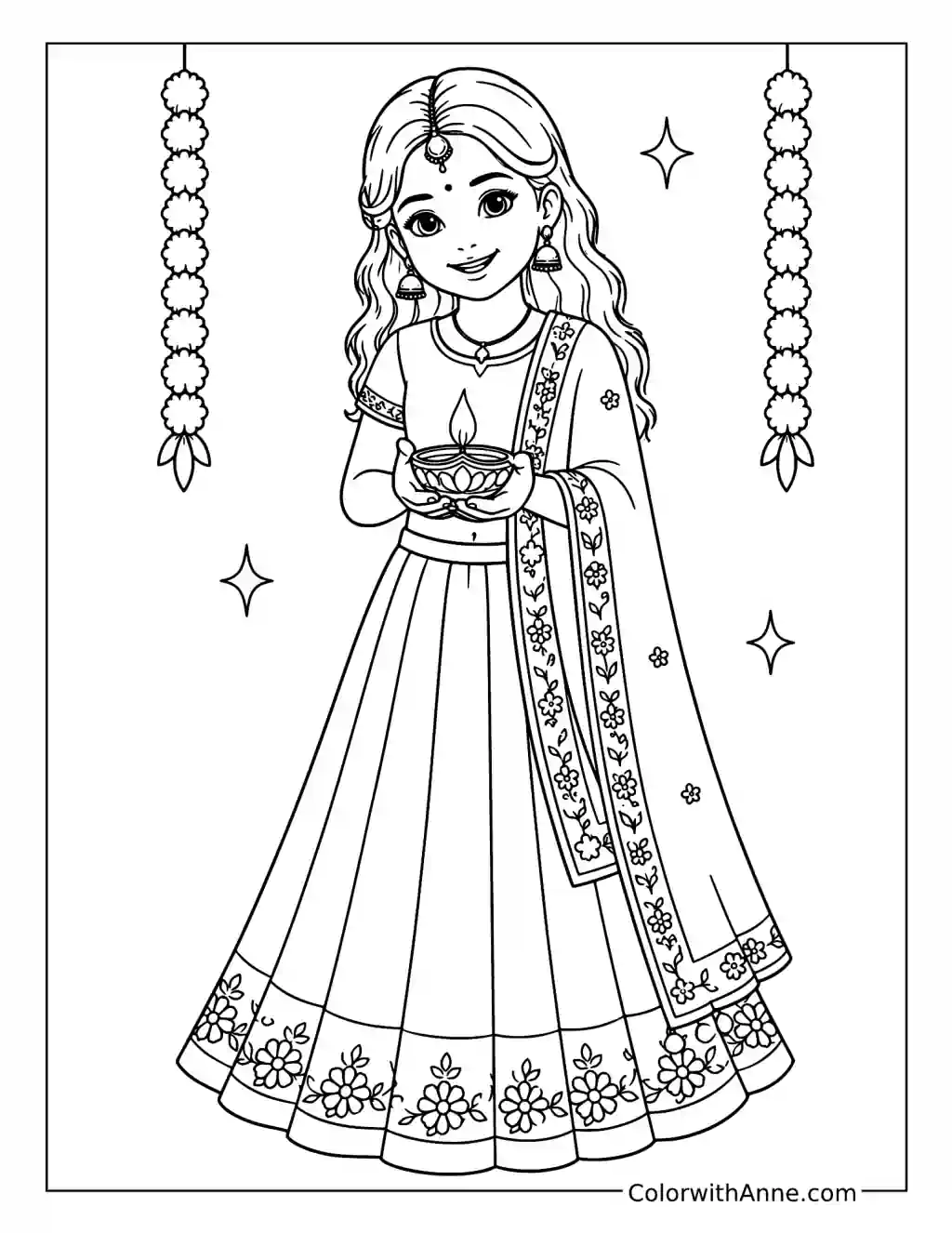
The girl holds a diya in both hands, standing between two hanging flower garlands. Her long skirt, draped dupatta, jewelry, and floral borders offer different places to develop one coordinated outfit.
Choose the skirt color first, then try a lighter shade for the dupatta. The narrow borders can carry a stronger accent, such as deep pink against cream or gold-toned yellow beside purple. Leave the jewelry distinct from the fabric so its small shapes remain visible.
Before committing to the whole outfit, make three tiny color swatches on scrap paper: fabric, border, and jewelry. Move them beside the picture and see how they look together. It is a miniature version of laying clothes out before getting dressed.
A Rangoli Made Together
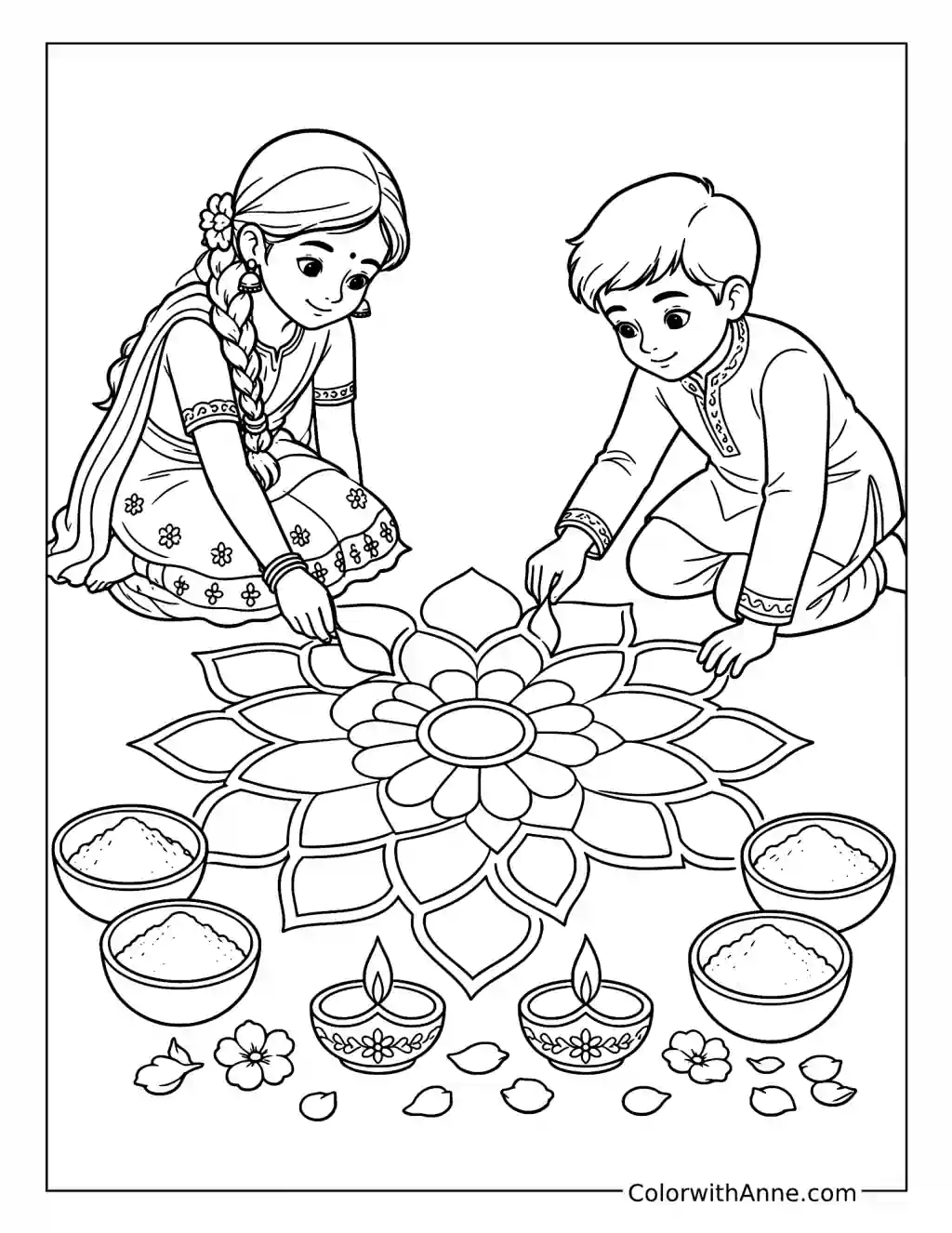
Two children kneel beside a large floral rangoli, with bowls arranged nearby and two diyas along the lower edge. The repeated petals make this picture especially suited to a shared coloring session.
Agree on a small palette, then divide the flower by rings rather than by left and right halves. One person can choose the center and inner petals while another works on the outer shapes. Match the contents of the bowls to the colors used in the rangoli, making them look like the supplies for the pattern.
After coloring, invent a smaller rangoli on a separate sheet using just one petal shape from the picture. Repeating that shape around a central circle shows how a modest starting point can grow into a full design.