
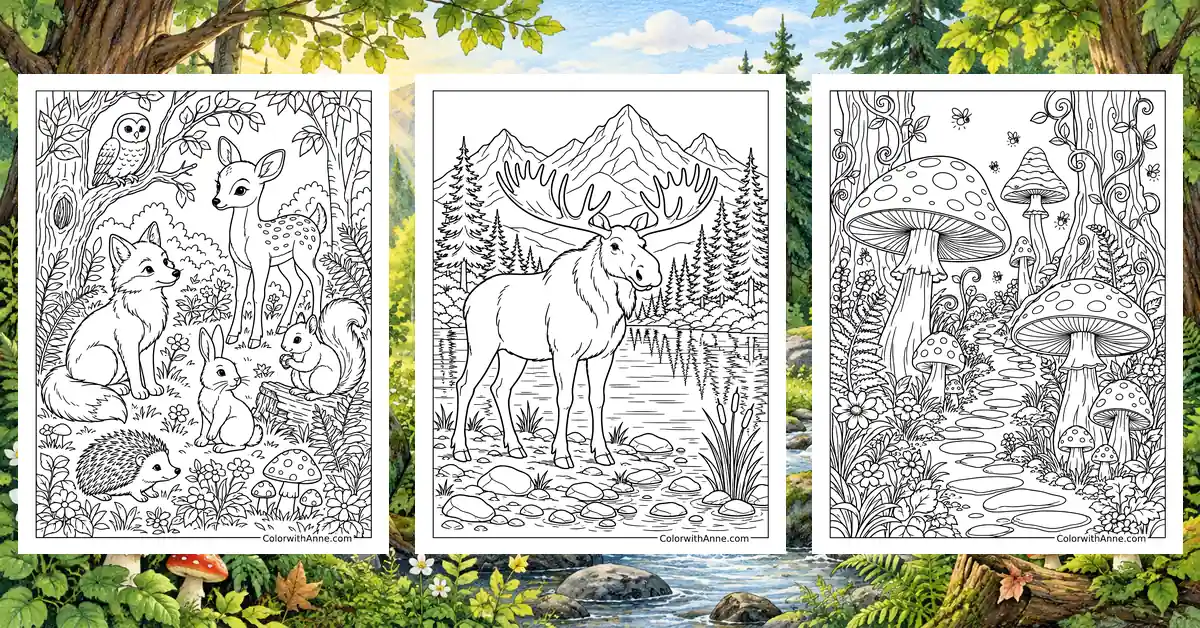
A forest walk sounds different after everyone stops talking. Leaves stir overhead, a branch shifts somewhere out of sight, and footsteps seem louder against the ground. Standing still for a moment often reveals more than walking quickly, though persuading an excited child to test that idea can take some negotiation.
Forest coloring pages can bring back the feeling of looking deeper between the trees. There is room to linger over the setting rather than hurry toward the end of a trail. A page at home may prompt memories of a particular walk, including the discovery that everyone else somehow managed to pass without noticing.
Free Printable Forest Coloring Pages
Click any coloring page below to open the PDF, then print on US Letter or A4 paper.
Did you find what you needed?
Help us choose what to create or improve next.
Coloring Ideas for Forest Pages
Try one of these coloring ideas, or use them as a starting point for your own.
Listen to the Forest From a Window
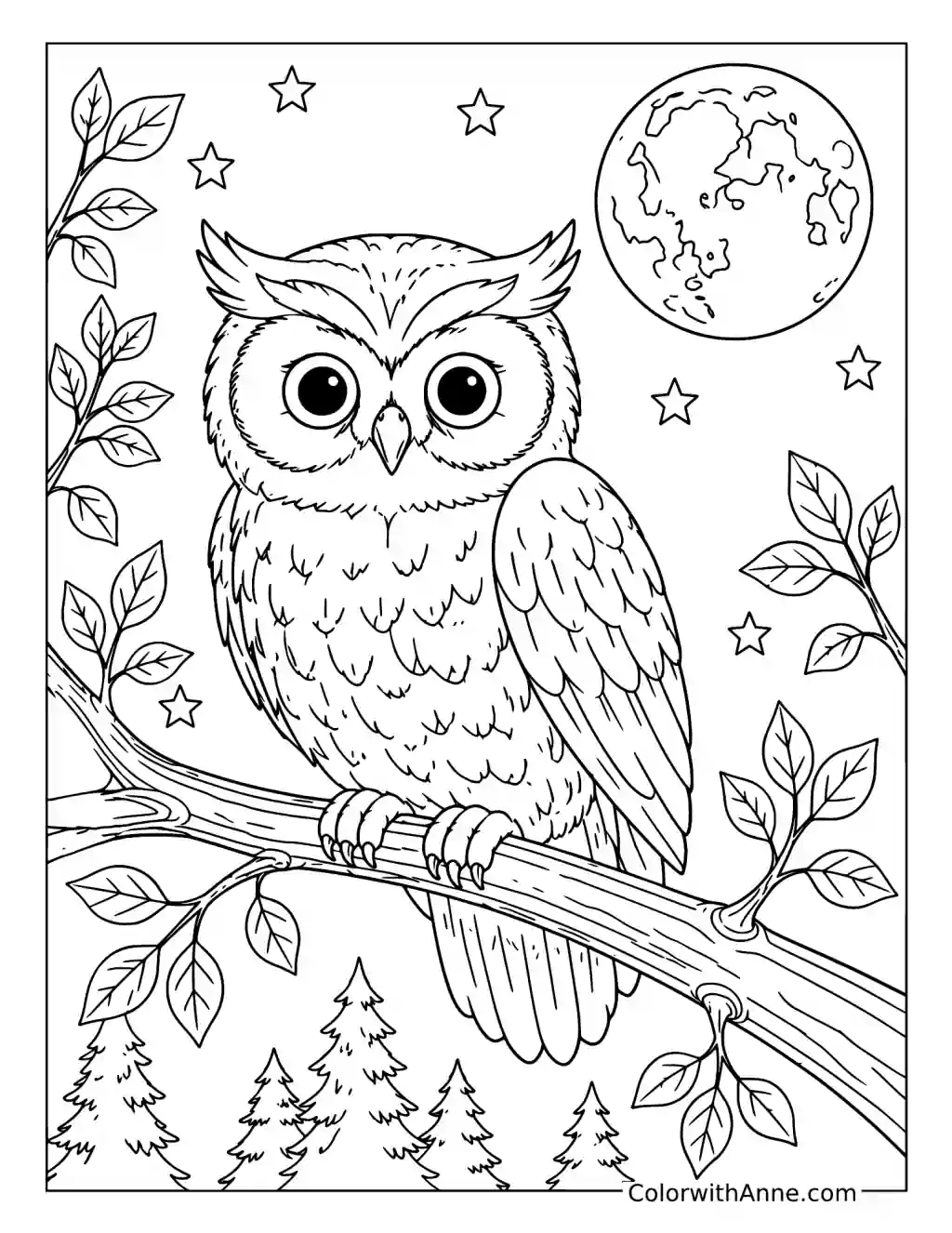
The owl sits on a branch beneath a large moon, with stars and distant treetops around it. The still scene makes a fitting companion for a quiet listening moment.
Deep blue sky and warm brown feathers could give the moon a gentle glow. A few pale feather markings would keep the owl visible against the darker background.
After dusk, listen from an open window or another comfortable spot for a minute. Notice separate sounds before trying to identify them. Return to the picture and consider which sounds could belong beyond its edges.
Hide One of the Squirrel’s Acorns
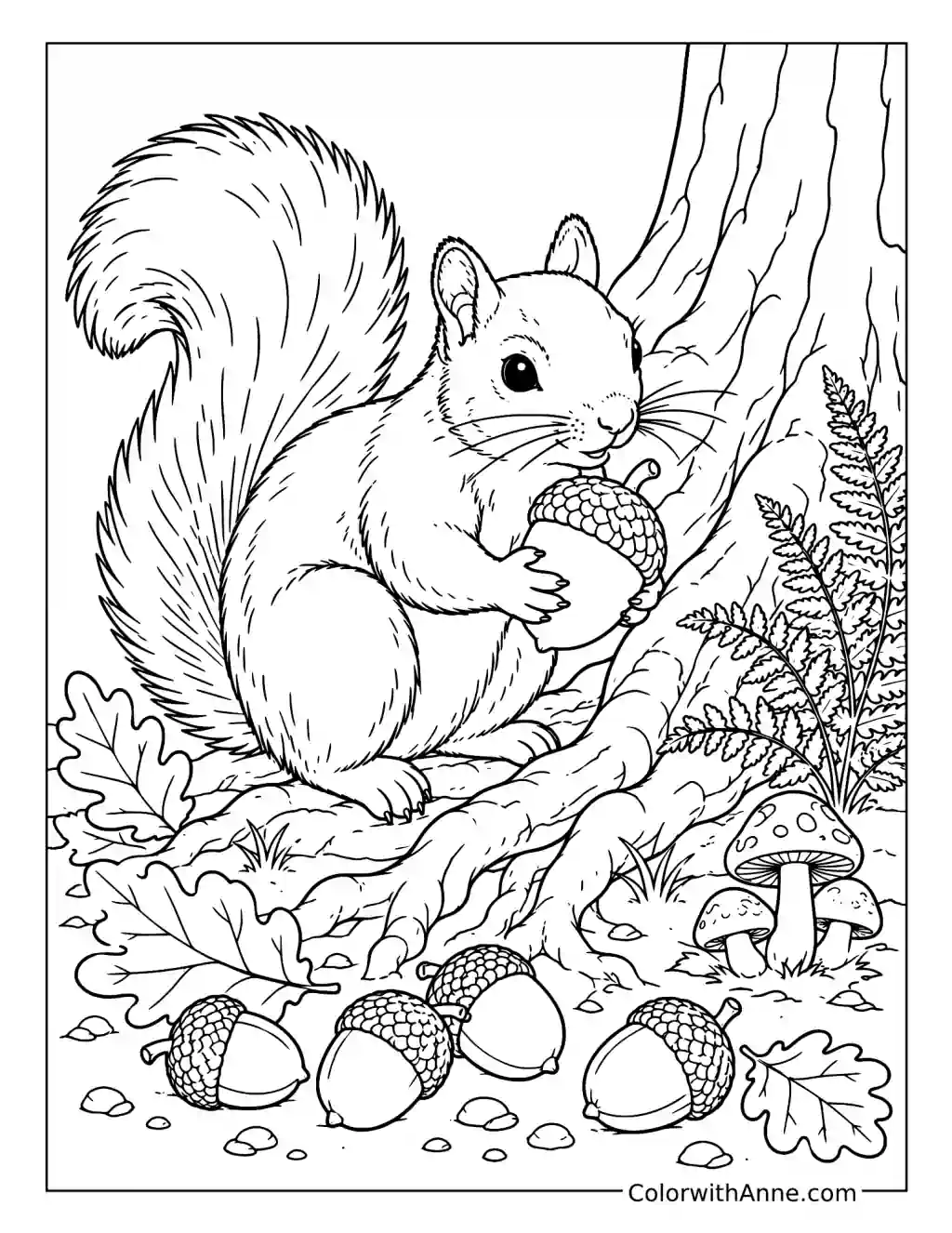
The squirrel holds an acorn above several more scattered near the roots. Those separate little shapes provide a ready-made observation game.
Russet fur with a pale tail edge could suit the woodland setting. Warm brown acorns against softer green ground would make the pieces easy to distinguish.
Study where the acorns are, then close your eyes while someone covers one with a small paper leaf. Point out which has disappeared before uncovering it. Change the hidden acorn each round, keeping the rest of the picture visible.
Furnish One Corner of the Treehouse
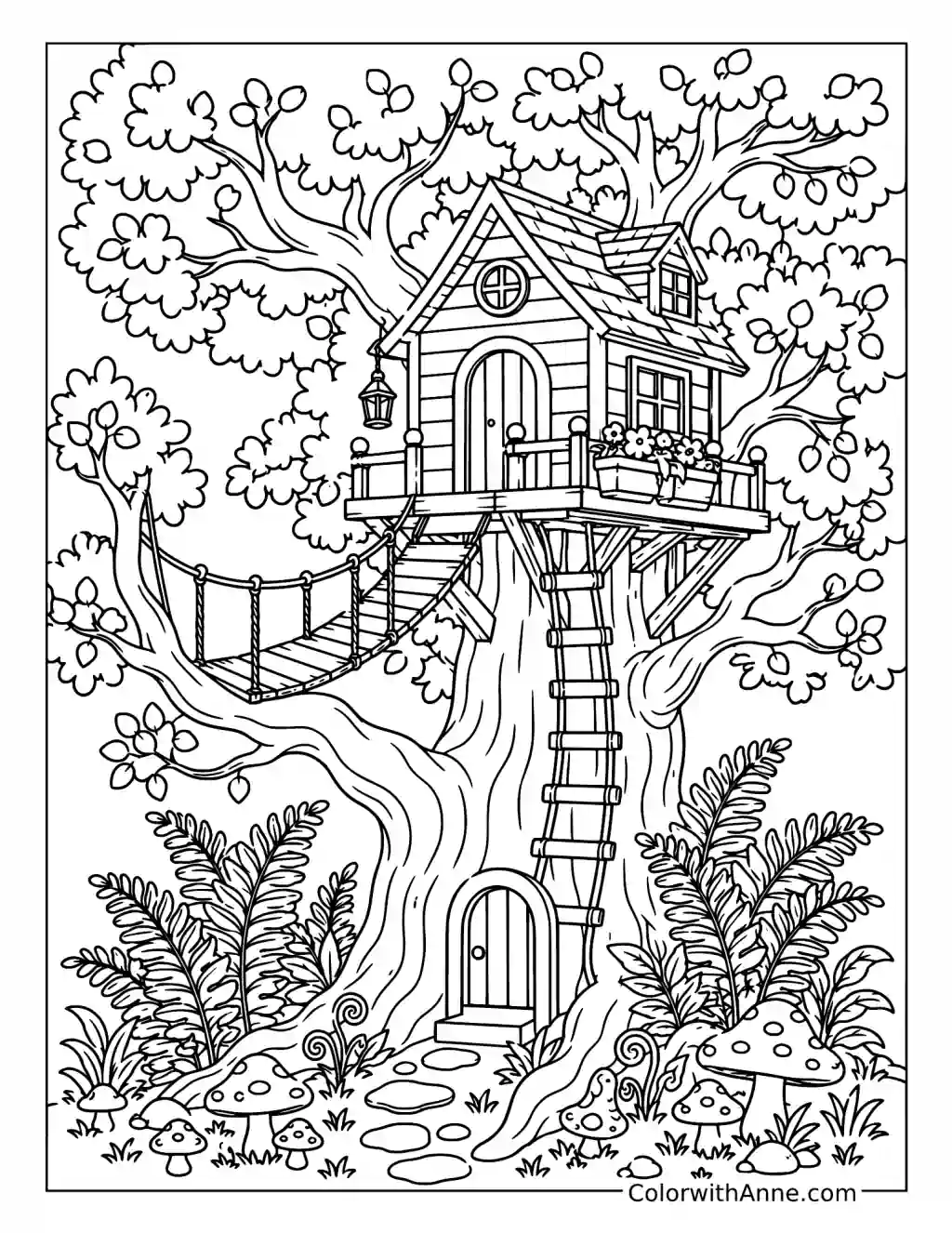
The treehouse wraps around an enormous trunk, with a ladder and curved walkway leading upward. Its windows suggest a small interior waiting to be imagined.
Honey-colored wood with mossy greens could give the structure a lived-in feeling. A little warm yellow at one window would suggest someone has settled inside.
Choose one window and add a tiny glimpse of the room beyond: a lamp, a book stack, or the back of a chair. Keep it small enough to fit the opening. One furnished corner can make the treehouse feel occupied without drawing an entire floor plan.
Bring Back One Detail From an Autumn Walk
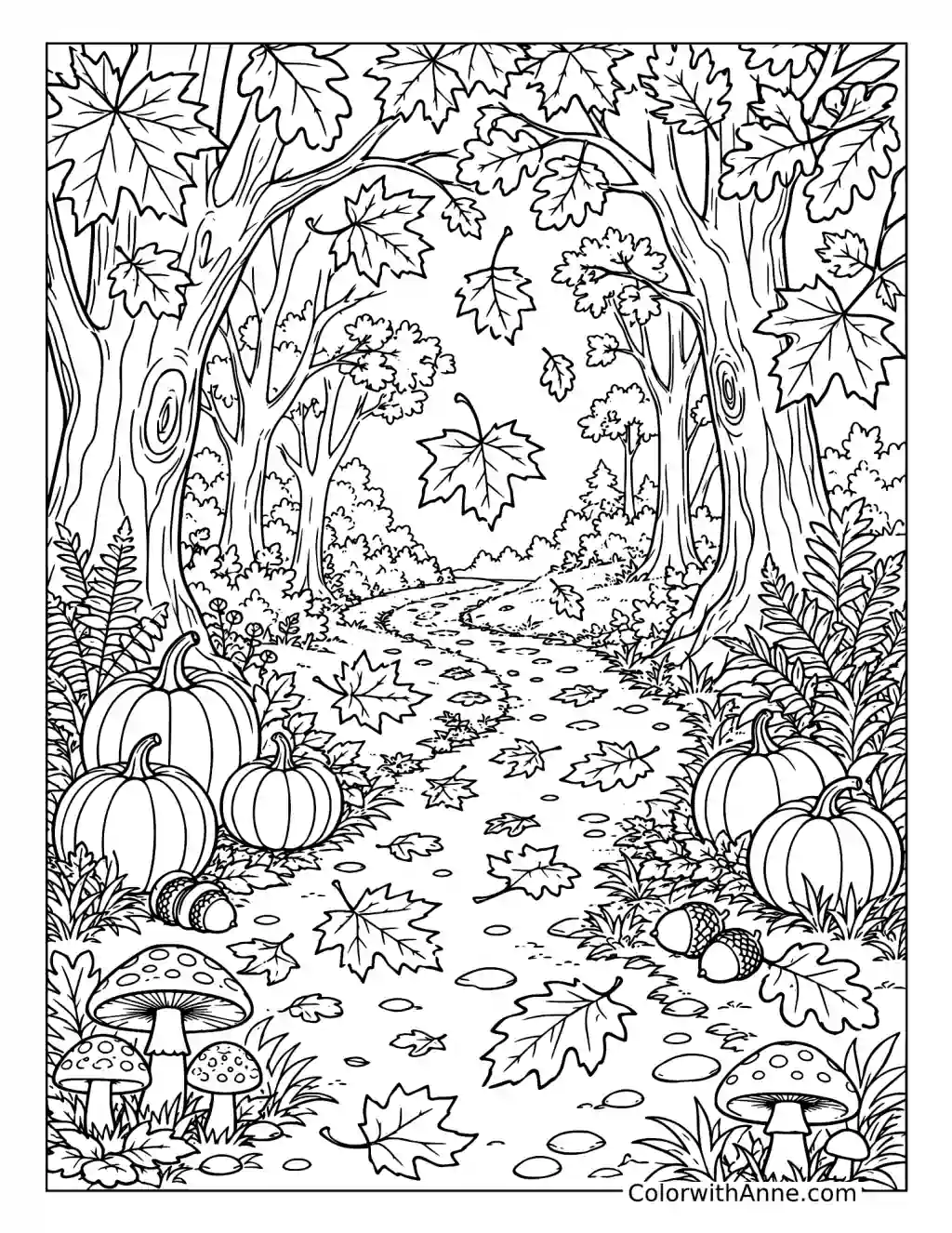
The path curves between trees beneath a canopy of leaves, with smaller plants and woodland details close to the ground. The winding route invites a slower look.
Rust, gold, and muted green could create a varied autumn canopy. A lighter path would lead the eye through the denser tree shapes.
During a local walk, notice one fallen leaf’s outline or the texture of a trunk. Sketch that detail in the margin when you return. It can become a small record of something actually observed alongside the imagined forest.
Tell a Short Campfire Story Together
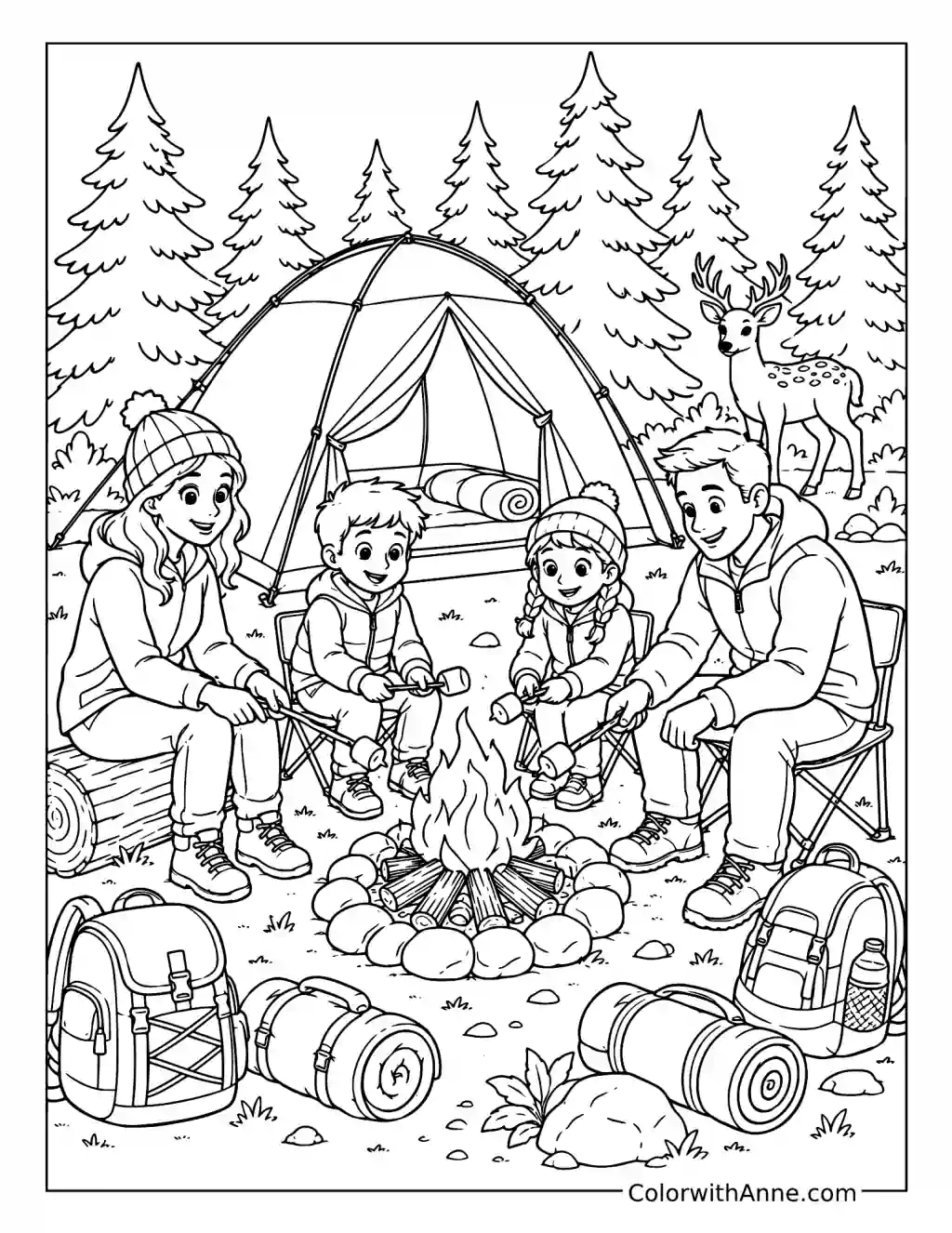
The family gathers beside the fire with a tent, backpacks, and trees around them. The seated group offers a natural audience for a short shared story.
Warm orange near the fire with cooler green trees could give the gathering a clear center. A brightly colored tent would add another welcoming point behind the family.
One person begins a forest story with a single sentence, then passes it to the next person. Continue around the group until everyone has contributed. Let the last person supply the ending, even if the story has taken an unexpected turn.
Open the Door in the Ancient Tree
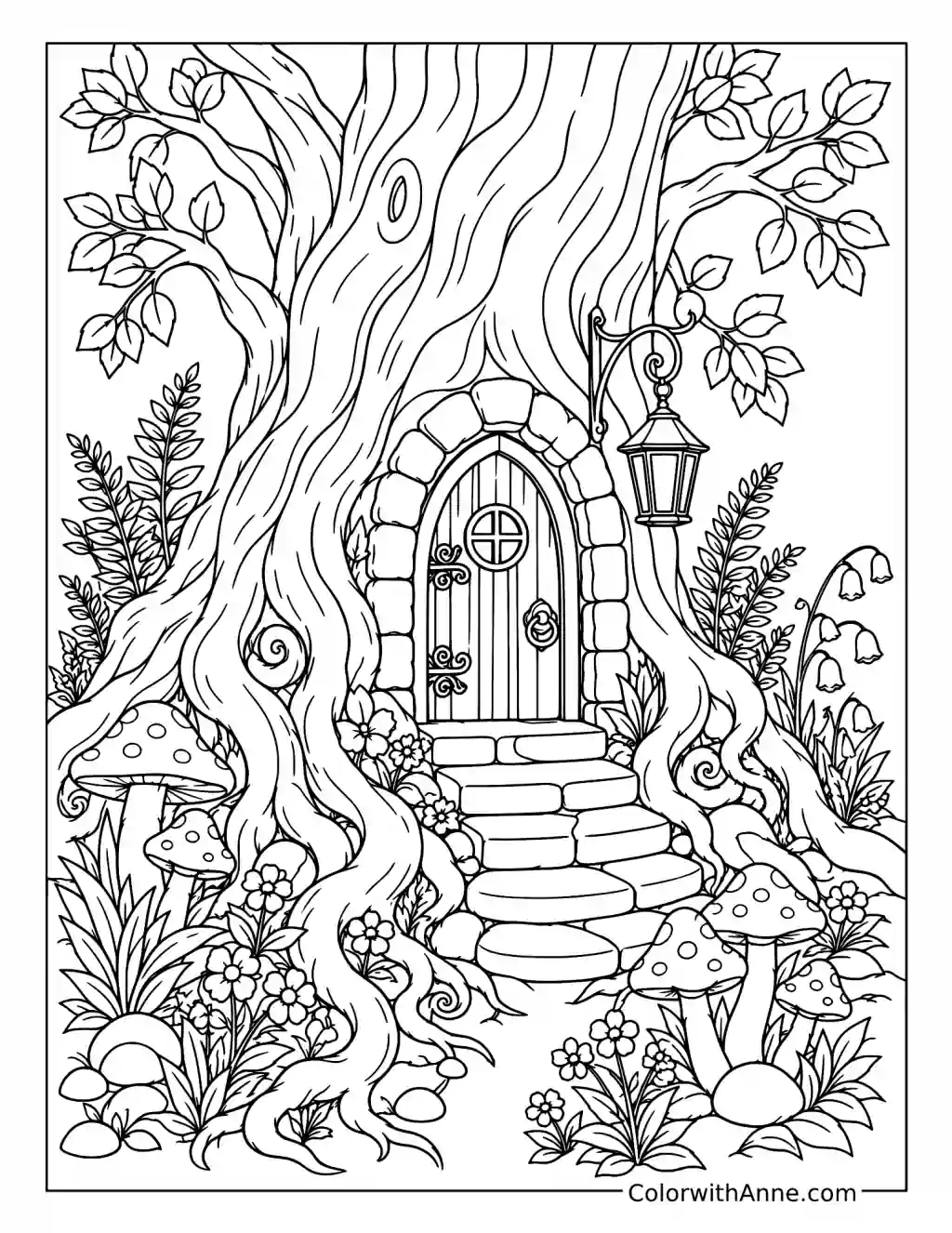
A rounded door sits among enormous roots with steps leading toward it. The little entrance is the feature that makes this woodland scene feel inhabited.
Warm brown bark and mossy greens could keep the tree grounded, while a blue or red door would make the entrance feel special. A pale window could suggest light inside.
Cover the printed door with a matching paper flap, attached along one side. Draw a tiny resident or welcoming interior on the underside. The viewer can lift the door to discover who belongs in this particular tree.
Build a Small Bridge Over a Paper Stream
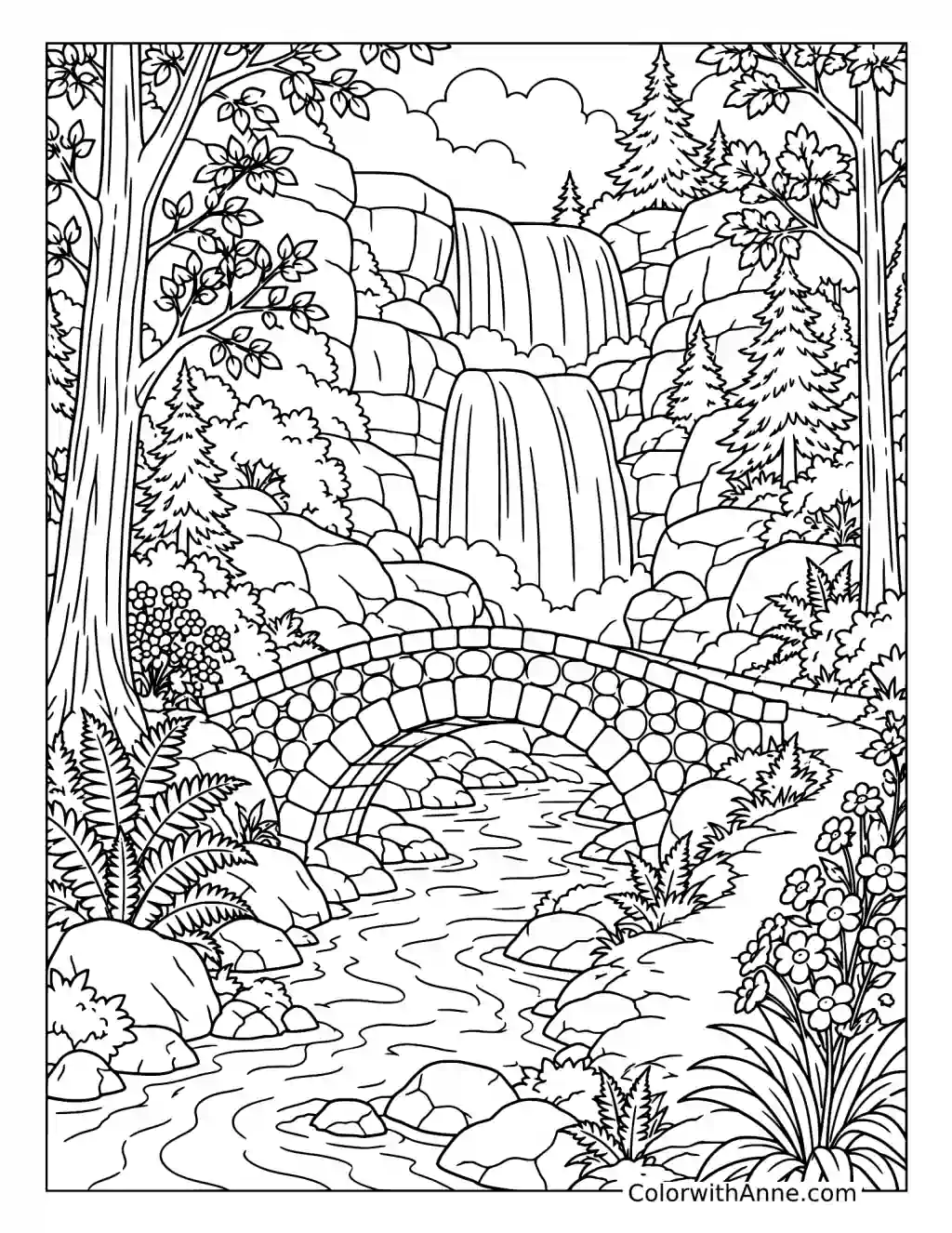
An arched bridge crosses the water below a woodland waterfall. The curved span gives the scene a clear crossing point between its leafy banks.
Cool gray stone and blue-green water could sit comfortably among several greens. Pale gaps in the waterfall would suggest the brightest moving water.
Place a curved strip of card between two small blocks above a blue-paper stream. Adjust the ends until the bridge stands steadily. A tiny paper figure can then cross from bank to bank, with the finished picture nearby as the setting.
Give the Fireflies a Little Real Glow
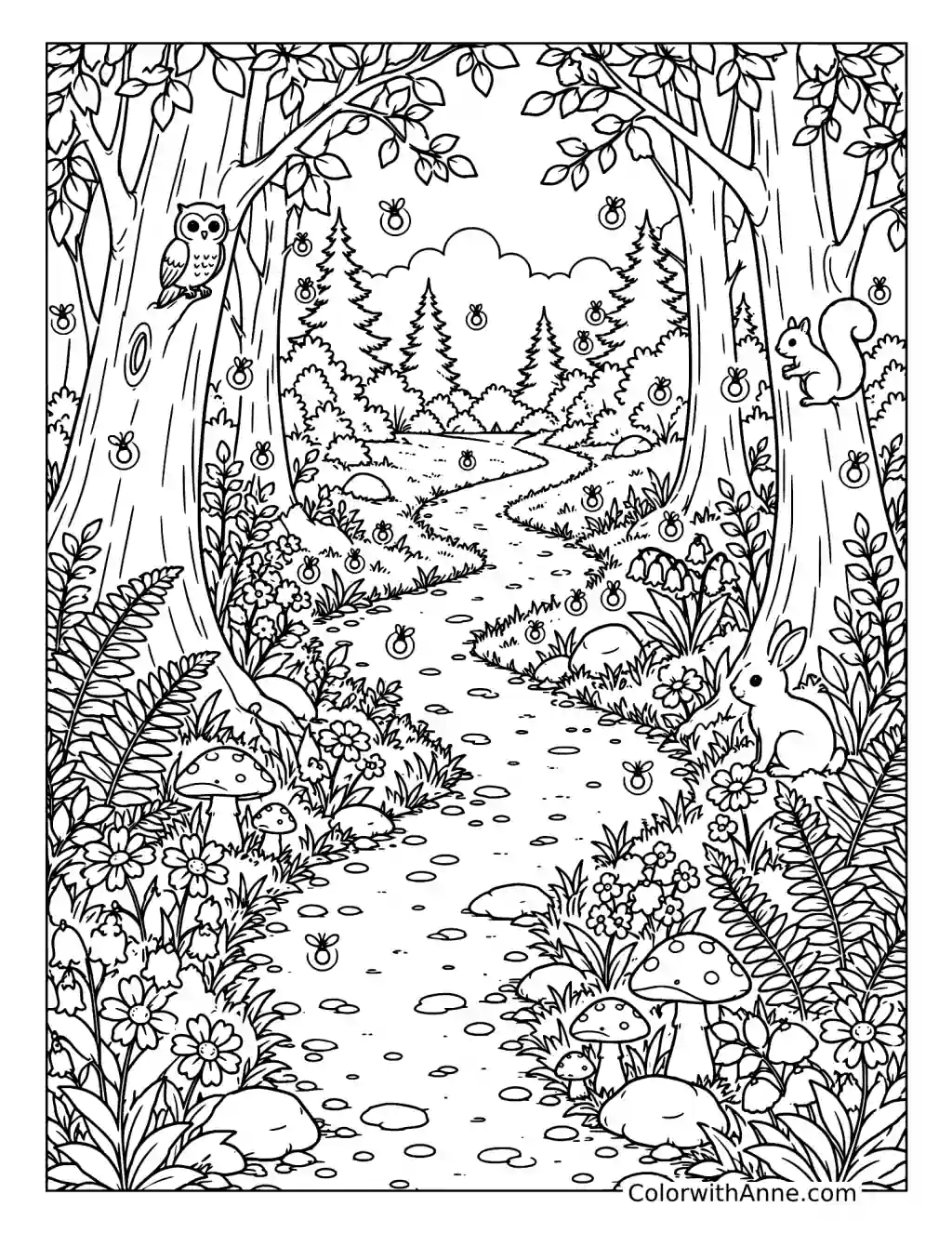
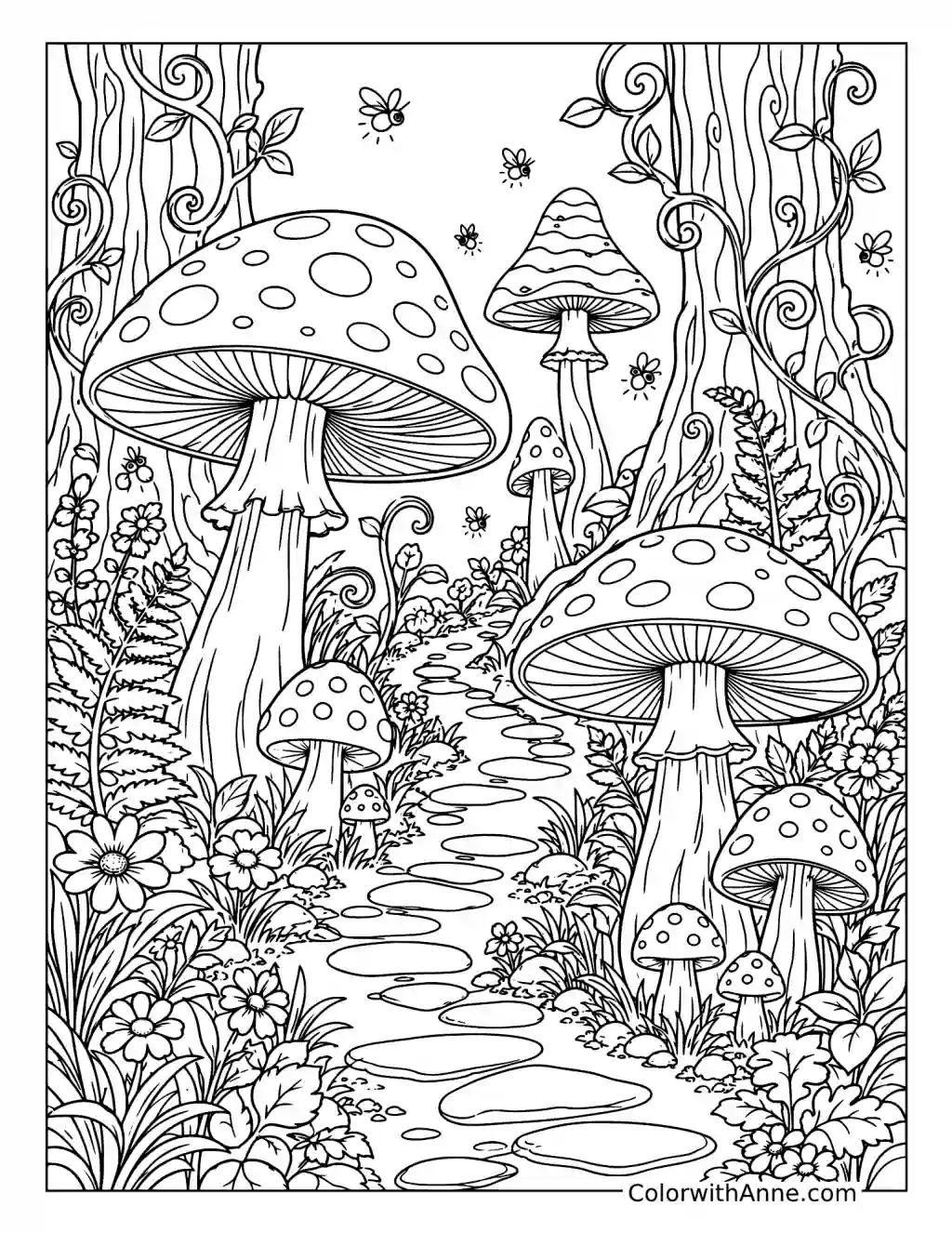
Small lights gather along the winding path between tall trees. The open route lets the tiny bright marks carry much of the atmosphere.
Deep green and blue would give the woodland a dusk-like feeling. Small pale yellow areas around selected fireflies could make their lights appear brighter against the trees.
If you have glow-in-the-dark dots, place a few over selected printed lights. Leave most of the scene colored normally. The glowing points can trace part of the path when the room is dim, preserving the picture’s quiet nighttime character.