
A cactus can sit on a windowsill for weeks looking as though nothing has happened. Then a little patch of new growth appears, and its owner suddenly checks it every morning. For a plant with such an unapproachable surface, it can inspire a surprising amount of affection.
That quiet fascination carries into Cactus coloring pages. Its outline has a personality before anything else is added, and the spines reward a closer look. Anyone who has ever turned a pot slightly toward the window will recognize the impulse to linger over it, despite receiving very little acknowledgment in return.
Free Printable Cactus Coloring Pages
Click any coloring page below to open the PDF, then print on US Letter or A4 paper.
Did you find what you needed?
Help us choose what to create or improve next.
Coloring Ideas for Cactus Pages
Try one of these coloring ideas, or use them as a starting point for your own.
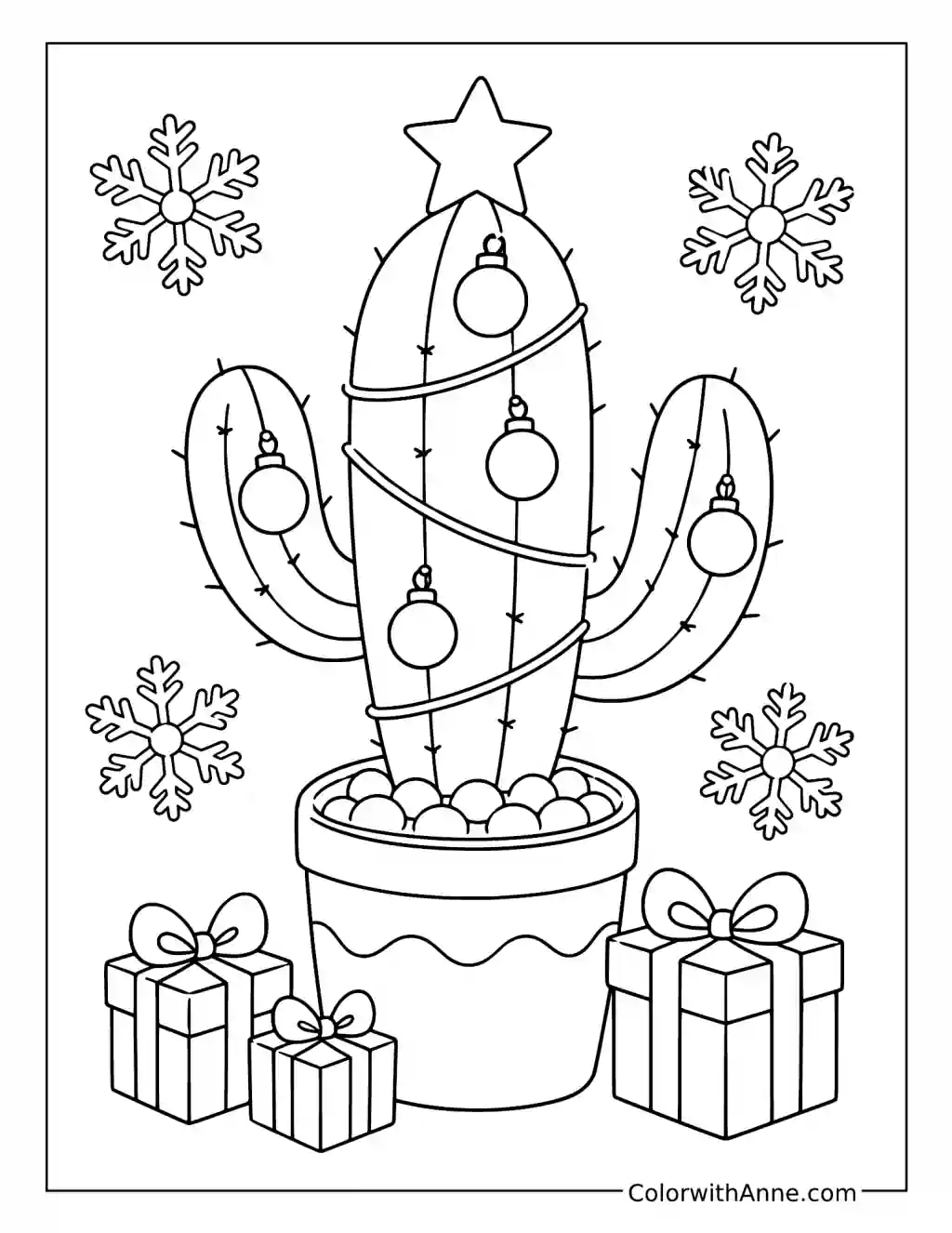
A Christmas Greeting for a Plant Lover
The tall cactus wears a Santa hat and hanging ornaments, with gifts around its pot. It makes a cheerful alternative to a conventional Christmas tree on a greeting card.
Choose the bauble colors before the cactus, letting the decorations form a coordinated little collection. Mount the finished picture on folded card and put the message inside. For someone whose windowsill is already full of plants, this particular Christmas guest should feel right at home.
Follow the Mandala’s Growing Layers
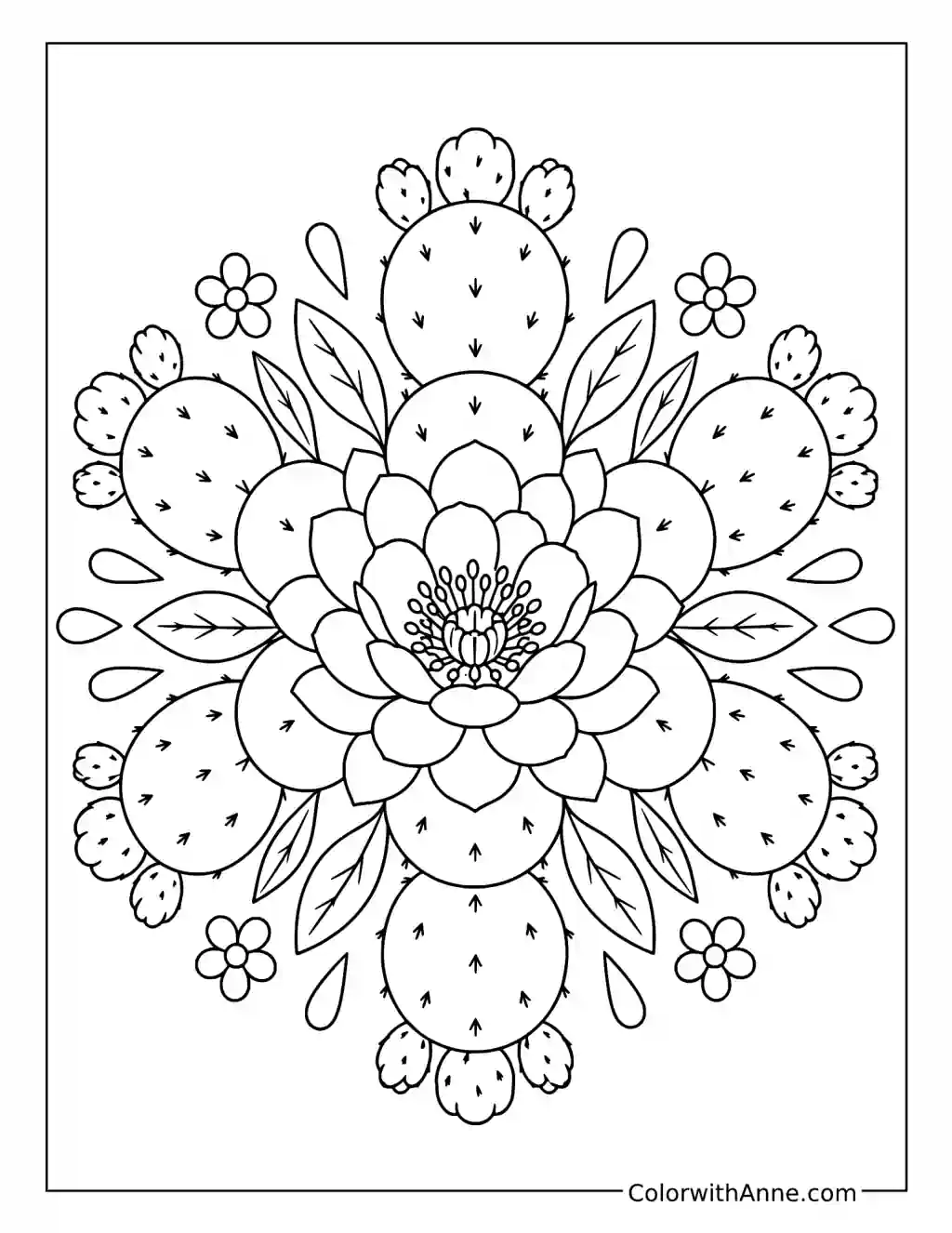
The central flower spreads into layers of petals, cactus pads, leaves, and smaller blooms. Start with one color relationship at the center and let it develop outward.
The flower could begin warm and bright while the surrounding cactus shapes become cooler. Repeat selected colors in the small outer flowers so the edge still connects to the middle. Work around each layer before moving to the next. The gradual expansion gives the page a rhythm that would be lost if every shape were chosen independently.
Arrange a Shelf like the Cactus Shop
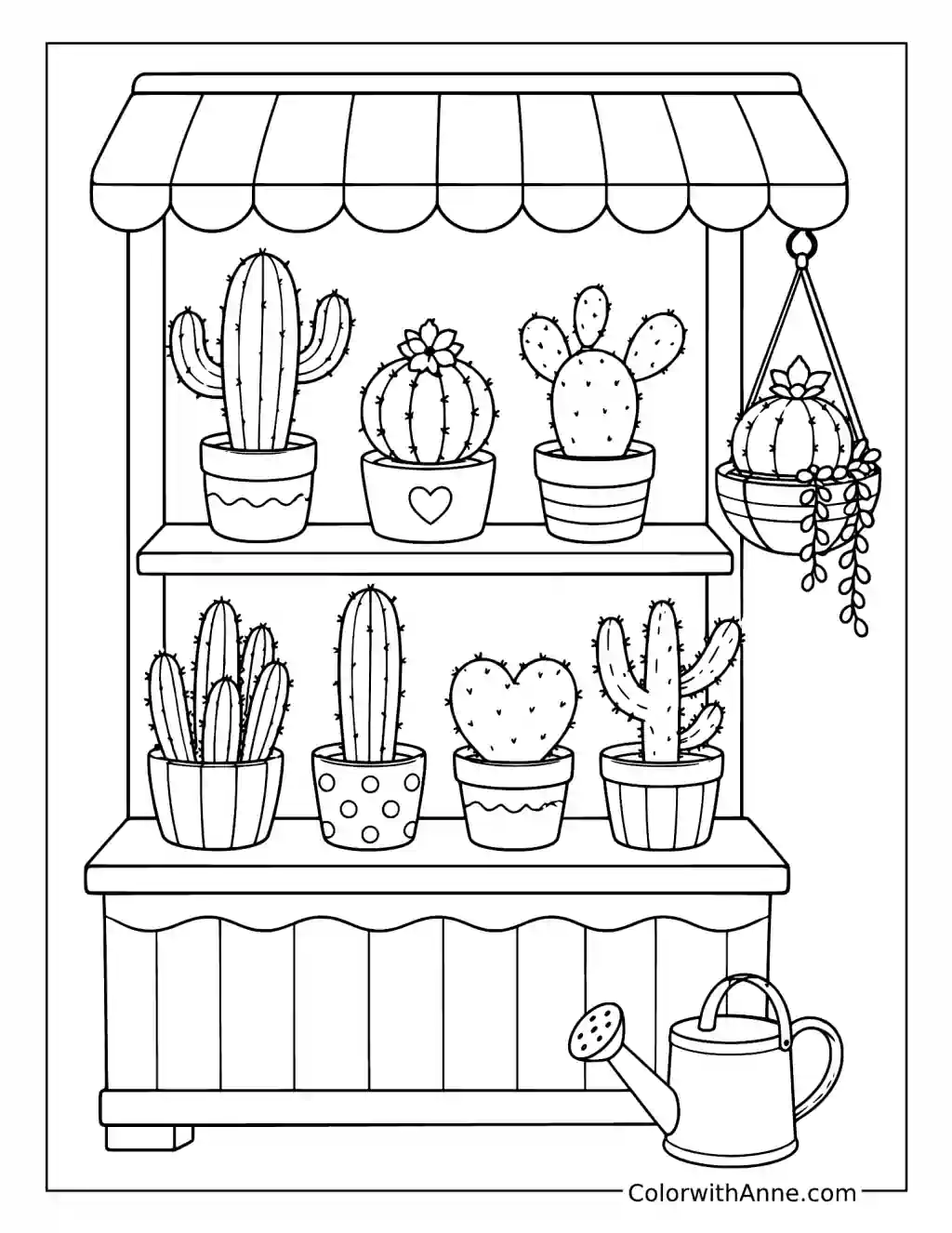
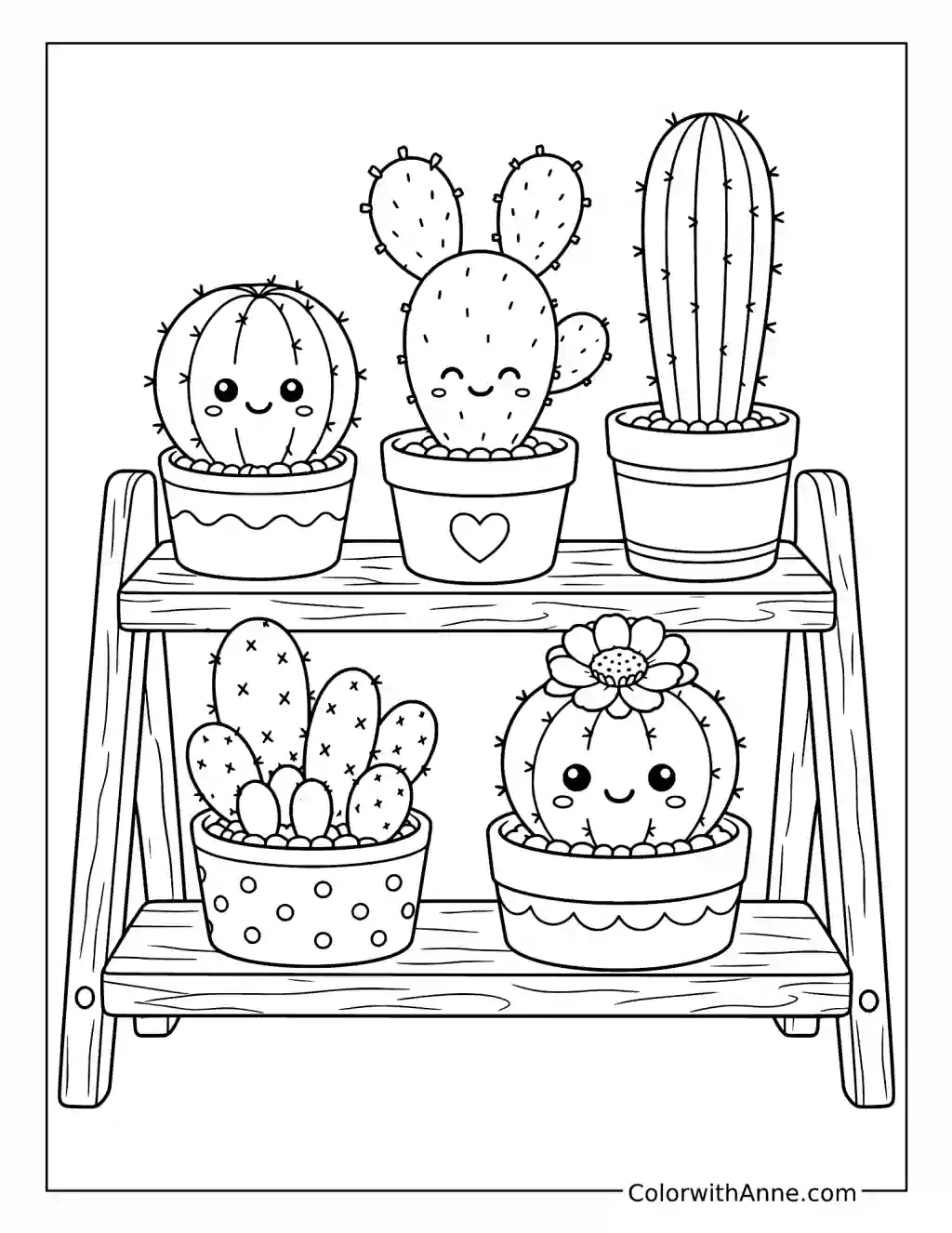
The shop display combines tall, round, branching, and hanging plants across two shelves. Look at how their heights vary before coloring the pots.
Borrow that arrangement for a shelf of plants or decorative objects already at home, keeping each plant’s placement needs in mind. Group a taller shape with a lower, broader one and leave a little visible space between clusters. The picture can help identify which arrangement feels balanced before moving everything around. Patterned pots are easier to appreciate when each has some room.
Build a Paper Desert inside a Bowl
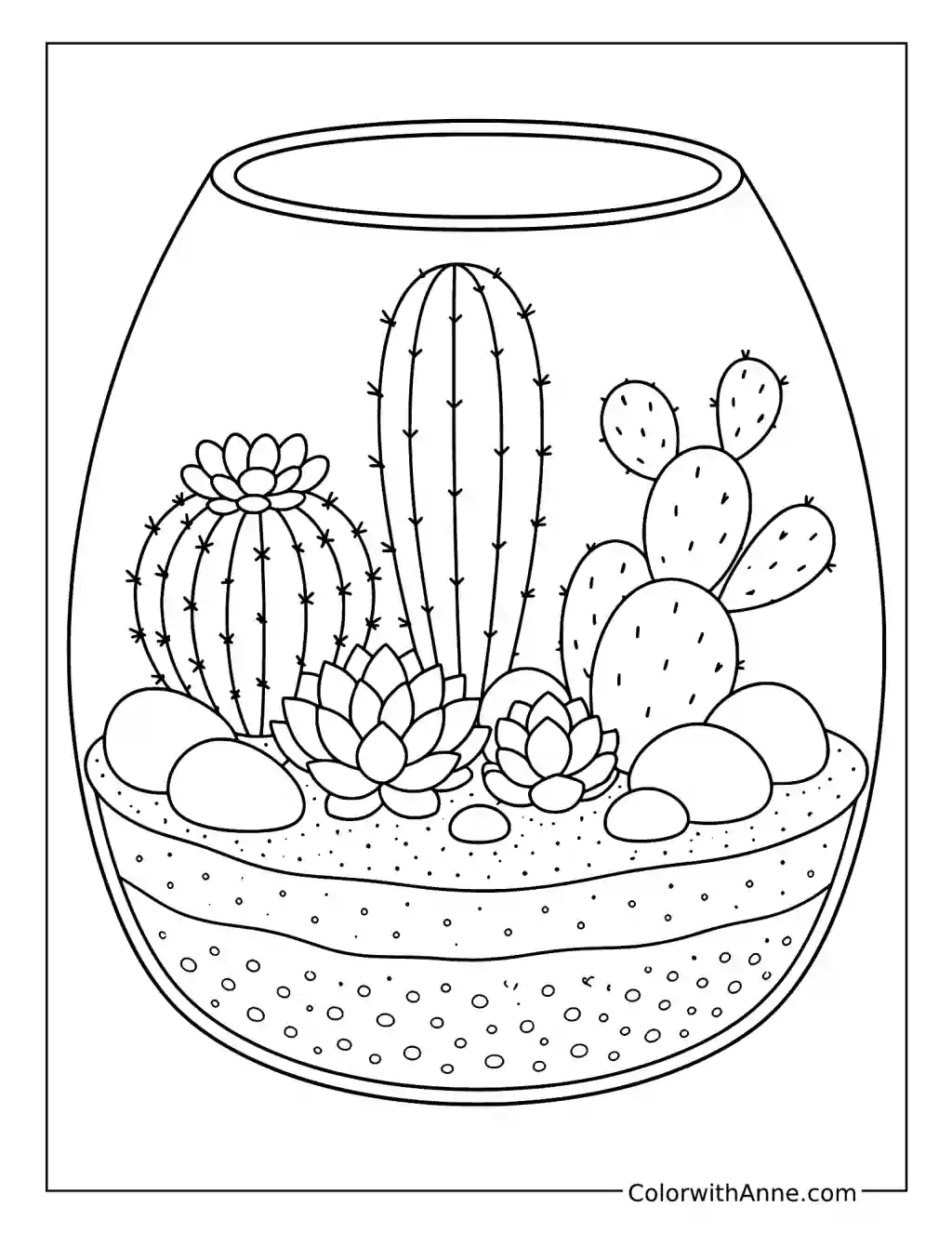
The rounded container holds several cactus forms above a layered base. Make a miniature paper version by cutting tall, round, and branching cactus silhouettes from green card.
Leave a narrow tab at the bottom of each shape, fold it, and glue the tabs onto a card circle that fits inside a clear bowl. Arrange a few clean pebbles around the bases. Color the illustrated container afterward, using the model to notice which shapes overlap and which remain visible through the glass.
Give the Desert Sunset Most of the Page
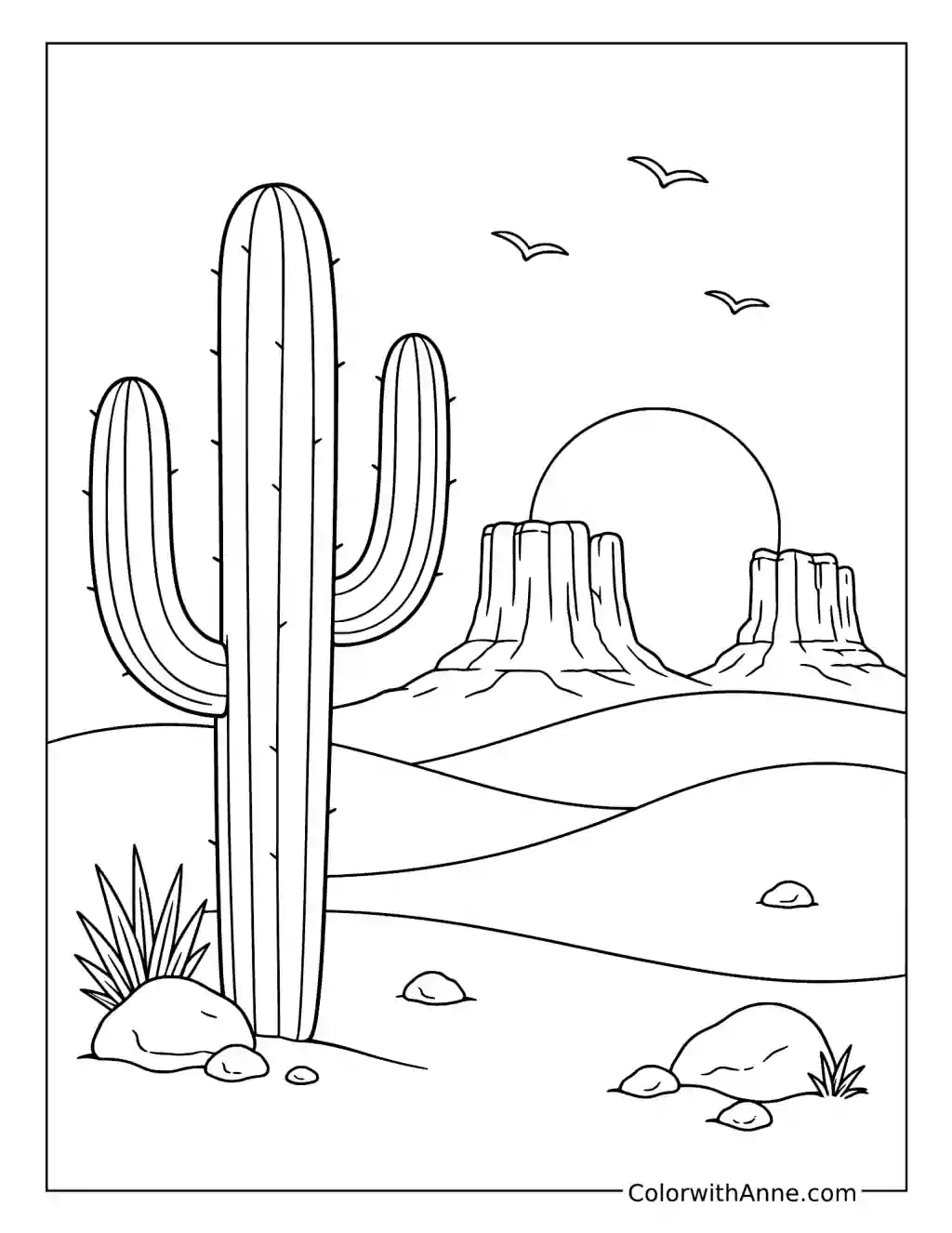
The cactus stands against open land, distant flat-topped rock formations, and a low sun. That broad sky is the main opportunity.
Choose where the warmest band of light belongs, then let the color shift gently above it. Keep the distant rocks more subdued and give the foreground cactus a stronger silhouette. The large quiet areas matter here. They allow the sunset to feel expansive, with the small birds providing a final sense of distance.
Notice the Animals around the Cactus
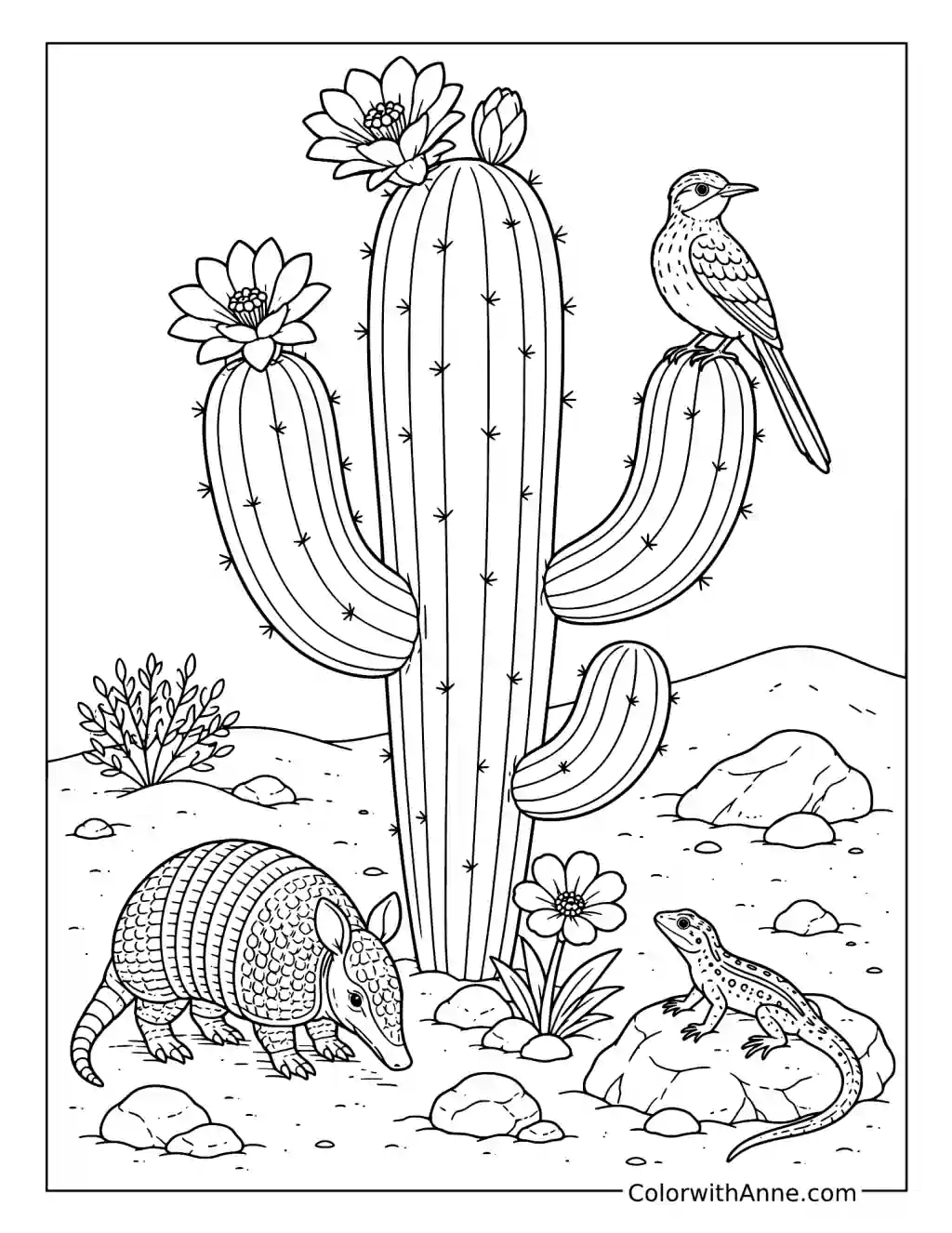
The towering cactus shares the scene with a bird, an armadillo, and a lizard. Their surfaces give the picture several distinct details to explore.
Follow the armadillo’s bands with curved marks, keep the bird’s feather sections directional, and use finer marks on the lizard. The cactus’s long ribs can remain simpler. Choose one animal to investigate further in a nature book after coloring. A closer photograph may reveal details that the illustration has reduced to a few lines.
Try the Decorative Pot’s Pattern on Paper First
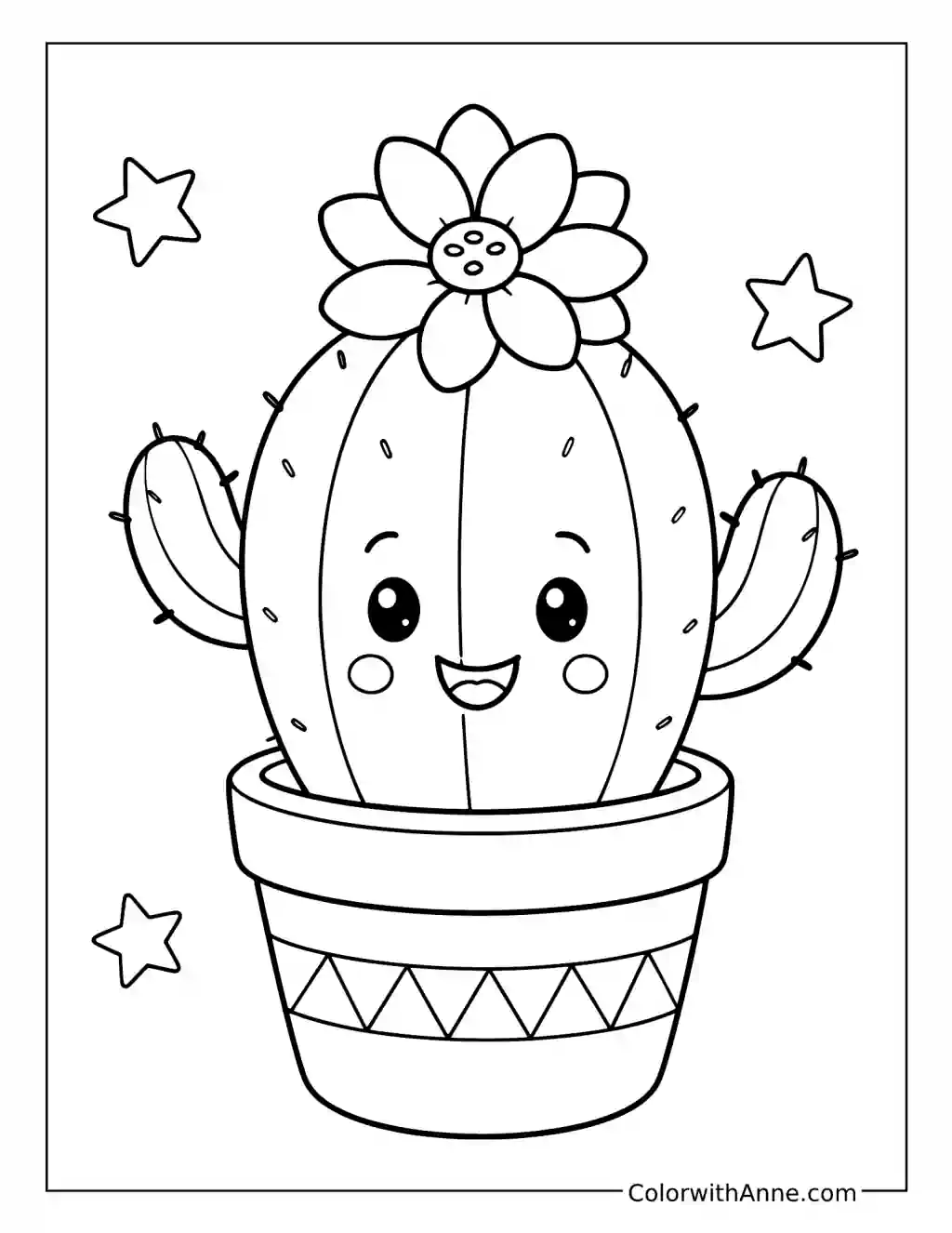
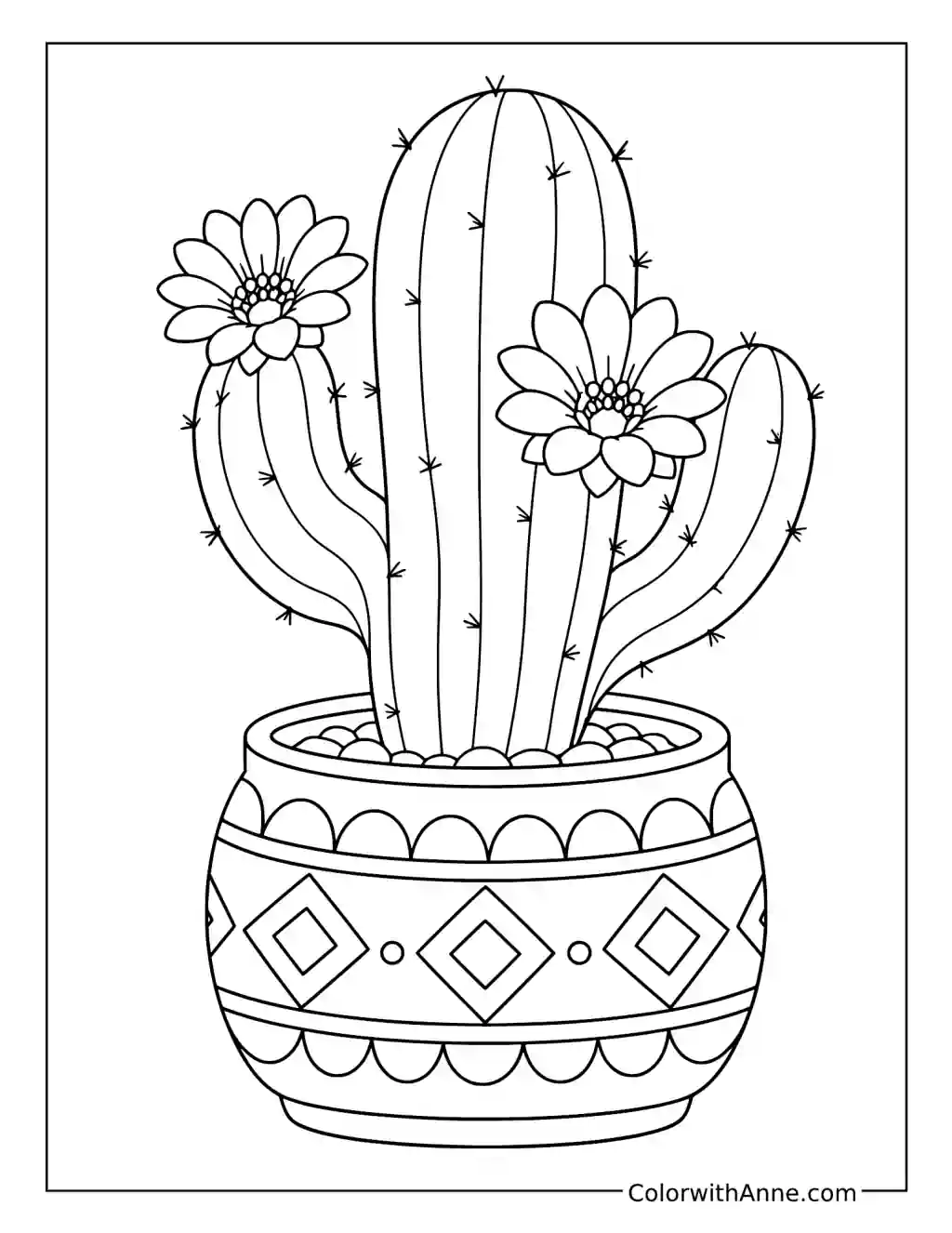
The pot’s diamonds and scalloped bands are large enough to develop into a real decoration plan. Choose the pot colors separately from the cactus greens.
Wrap a strip of scrap paper around an empty pot and sketch a similar repeating band. Check where the pattern meets at the back before deciding to paint it. The coloring page helps settle the relationship between the main pot color and its border, while the paper strip reveals whether the repeat actually fits the circumference.