
The float makes one small movement, and suddenly everyone on the bank is paying attention. A tackle box sits open beside a folding chair, with the smell of damp grass rising as the morning warms. The sandwich can wait, at least until that movement turns out to be a ripple.
Fishing coloring pages bring some of that patient anticipation indoors. They suit the stretch after a trip when muddy boots are drying and the story of the catch is already being retold. A child can remember the tug on the line while someone older recalls the one that escaped, with remarkably precise confidence about its size.
Free Printable Fishing Coloring Pages
Click any coloring page below to open the PDF, then print on US Letter or A4 paper.
Did you find what you needed?
Help us choose what to create or improve next.
Coloring Ideas for Fishing Pages
Try one of these coloring ideas, or use them as a starting point for your own.
Let the Bent Rod Carry the Excitement
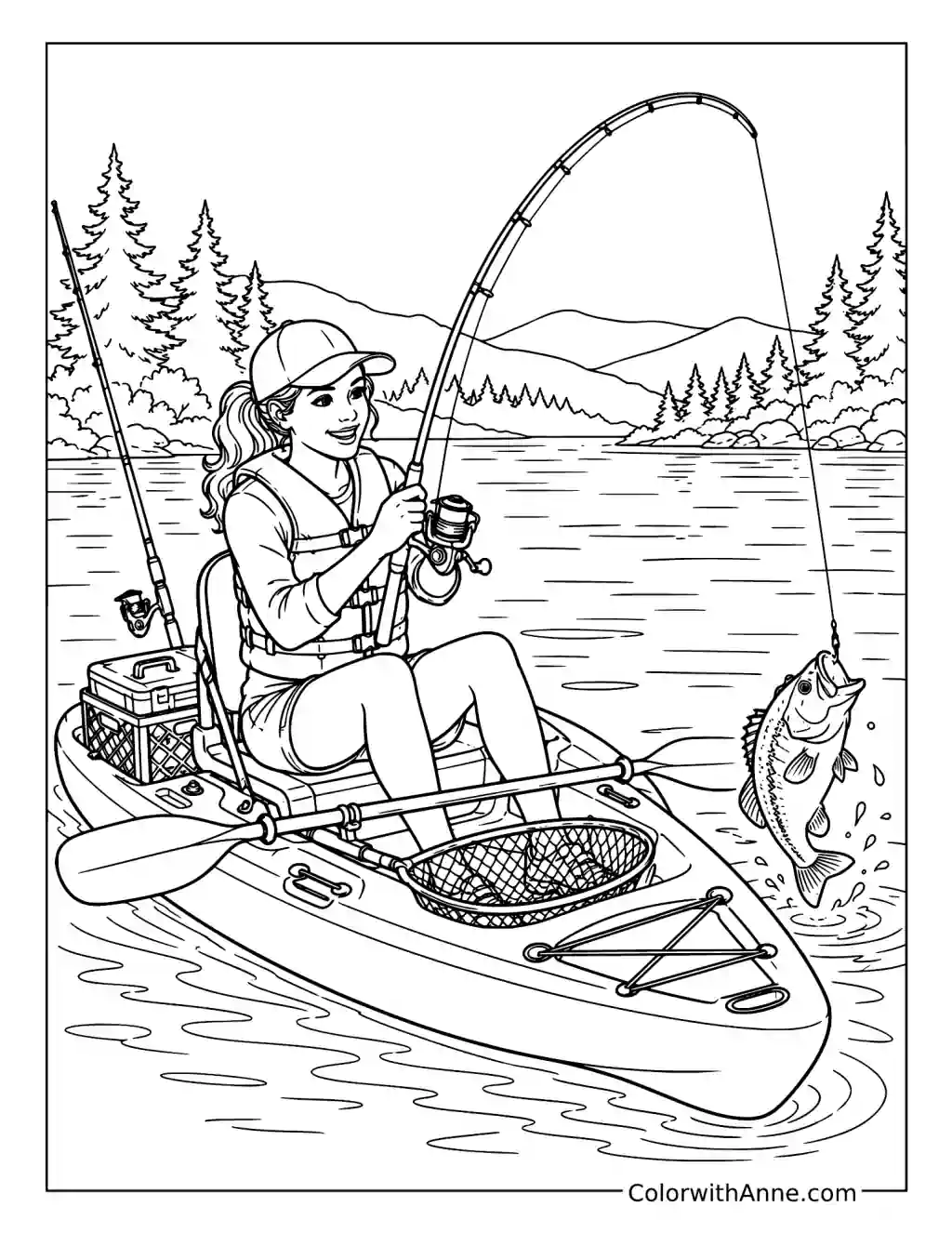
The rod curves over the kayak while the fish rises beside it. That bend explains the action before the angler’s expression does.
Keep the rod clear against the sky and water, then give the splash enough contrast to mark the moment. The kayak itself can remain a steady, solid shape underneath the movement. Try coloring the quiet lake first and the action last. The difference helps the catch feel like an interruption to an otherwise peaceful outing, which is much of fishing’s appeal.
The Angler Cannot See What the Page Shows
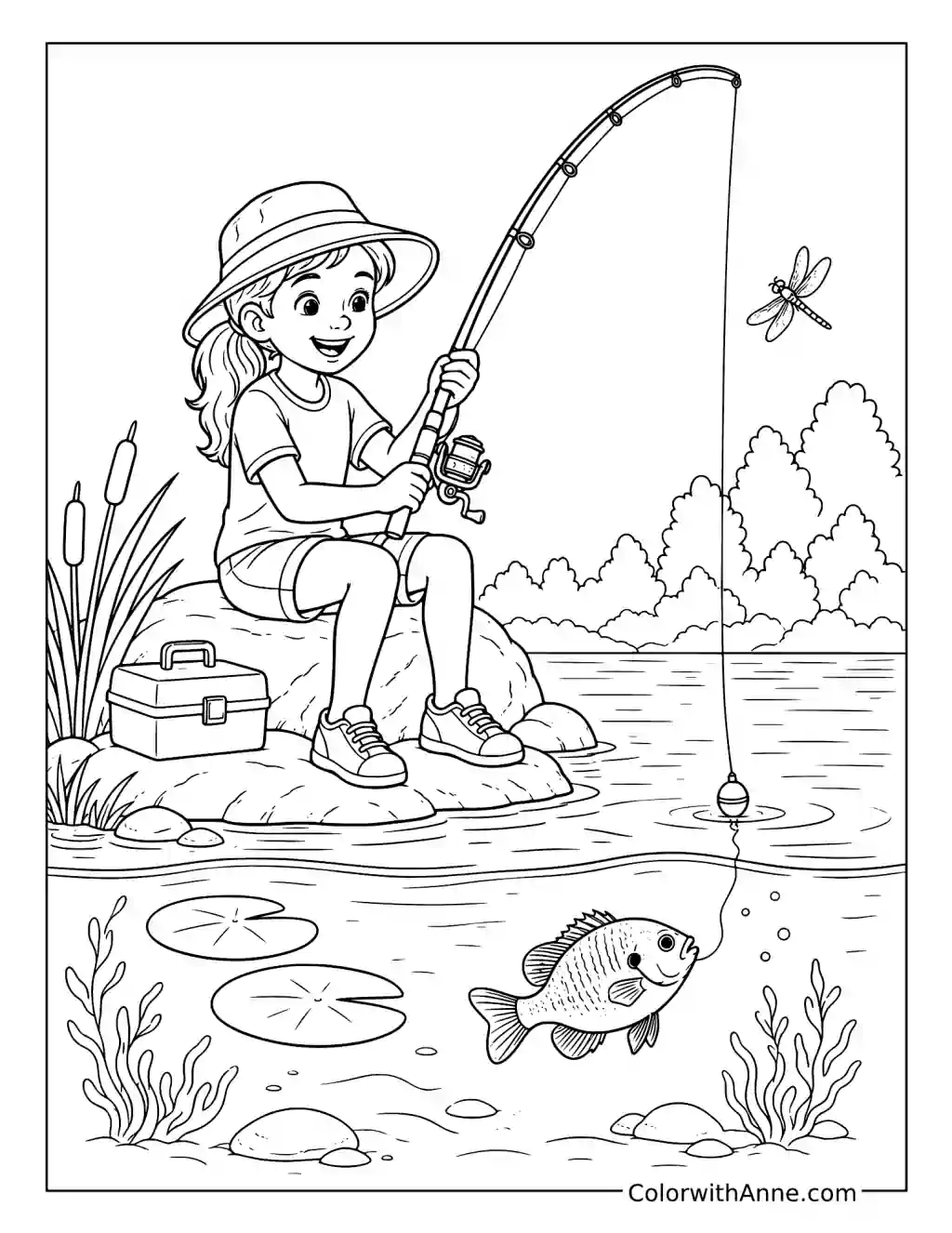
The girl waits above the water while fish and plants are visible below. The viewer knows more than the person holding the rod, and that is the picture’s small pleasure.
Treat the waterline as a change in viewpoint. Keep the bank clearer and the underwater colors softer, with the float easy to spot between them. While working, consider which fish seems nearest to the action and which appears entirely occupied elsewhere. The page does not need a guaranteed catch to be interesting.
Give the Bass Its Shape, Not Just Its Size
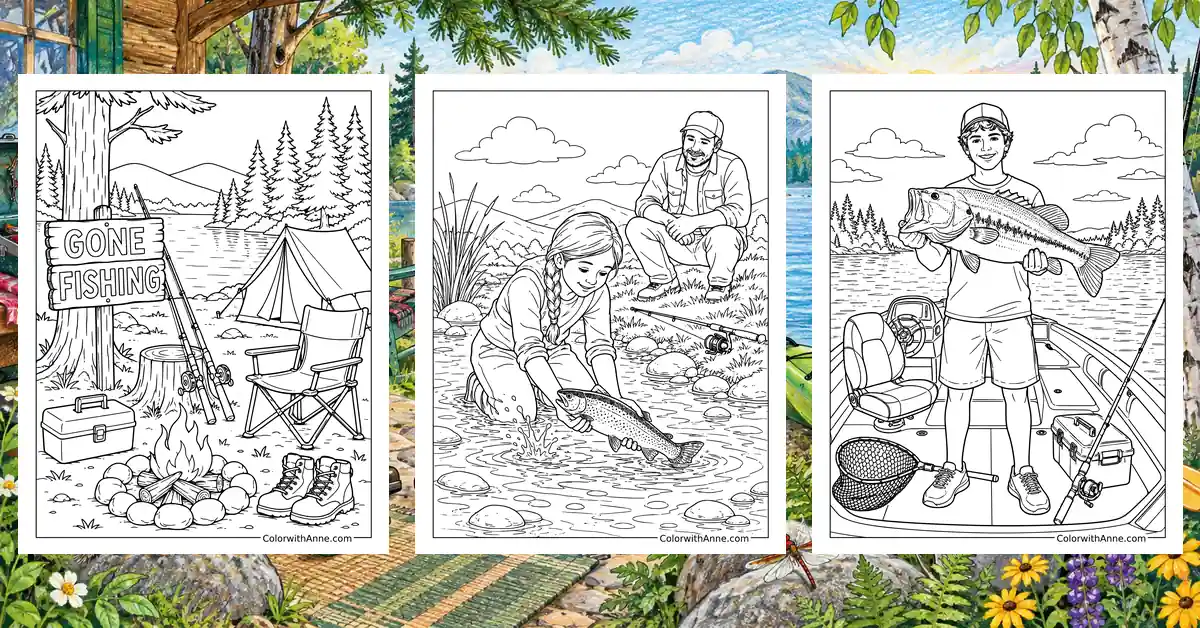
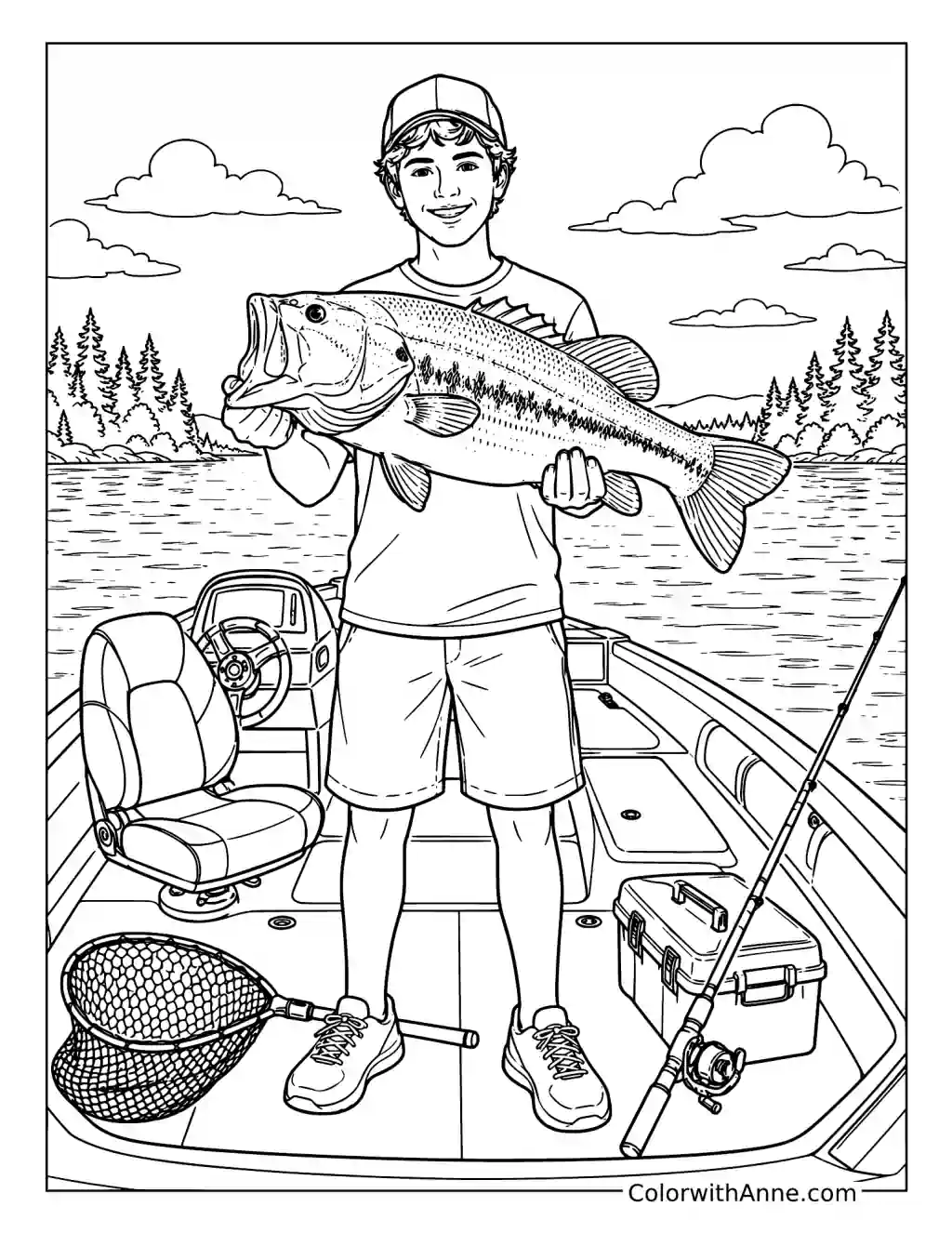
The bass stretches across the angler’s body, with its head, fins, and long flank clearly displayed. Its size attracts attention first, but the details can hold it.
Look at a bass photograph and notice how the darker upper body changes toward the underside. Carry that transition through the fish rather than outlining every scale with equal force. Keep the fins slightly distinct from the body. A convincing catch portrait depends on those changes more than on making the fish the brightest object in the boat.
Let the Existing Sign Do Its Job
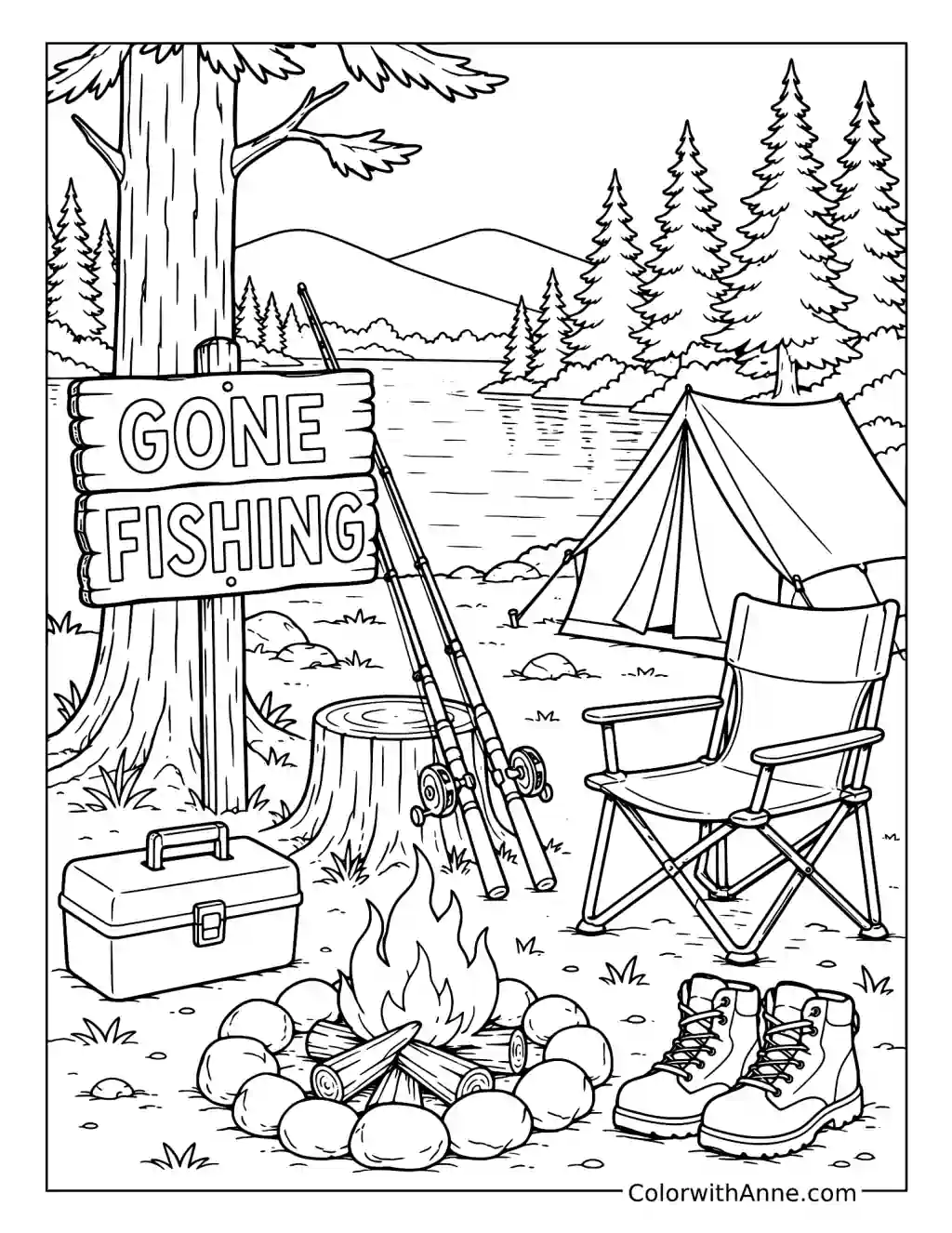
“GONE FISHING” is already written into the picture, above a camp full of equipment and a waiting chair. This is one design that genuinely wants to become a notice.
Give the lettering enough contrast to read from a little distance, then color the camp around it. The finished page can go on a cabin or room door during a fishing weekend. Nothing extra needs to be named or added. Its purpose comes directly from the sign, while the empty campsite explains where everyone has gone.
Stay with the Moment of Letting Go
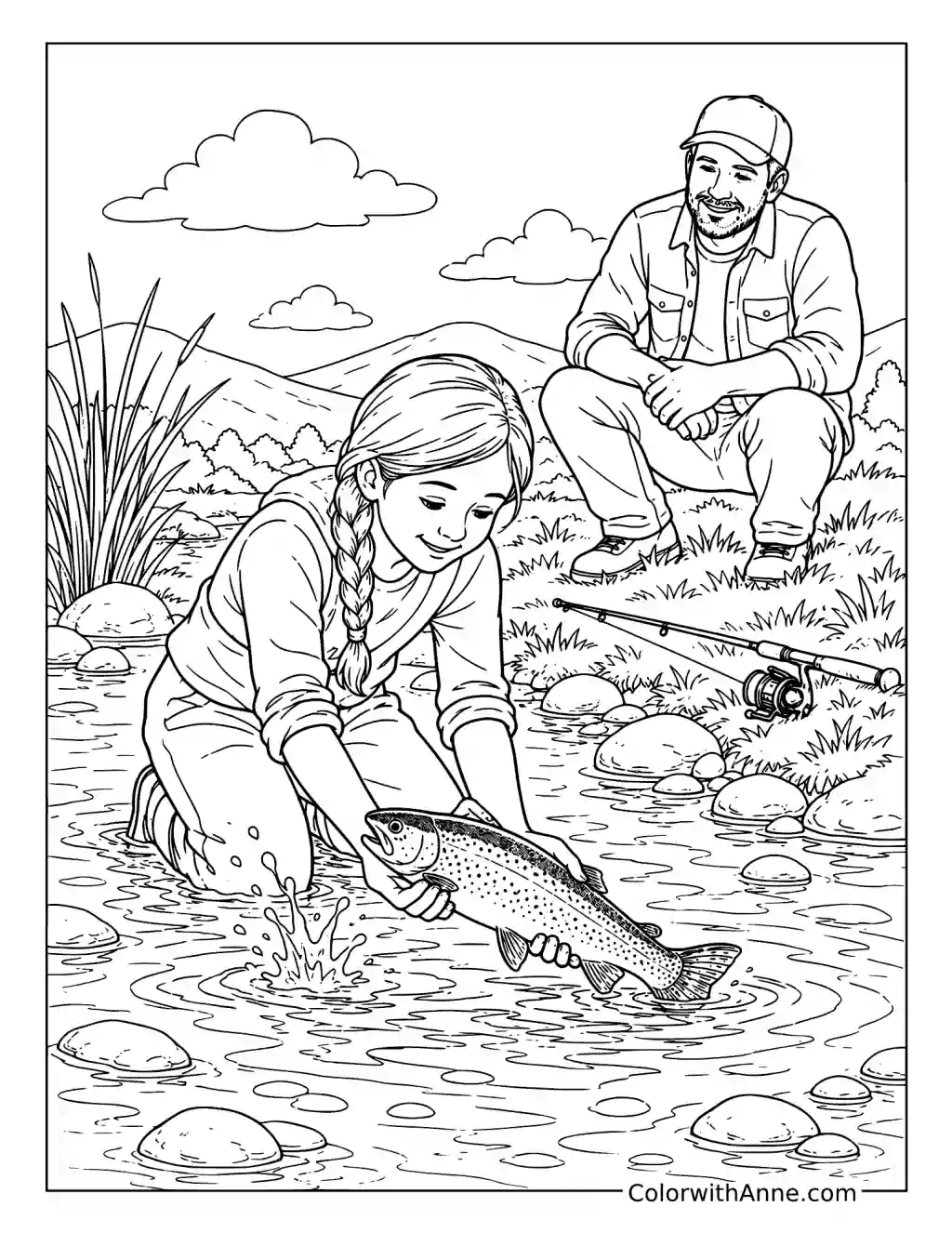
The child holds the fish near the surface, with an adult watching from the bank. This is a quieter ending than a photograph of a catch held up for applause.
Keep the hands, fish, and water clearly separated so the action remains gentle and readable. The ripples can carry most of the movement. If coloring after a real outing, talk about the part that stayed in memory: the first tug, the fish’s movement, or the moment it swam away. The page leaves room for an ending that is about the experience rather than possession.
Make the Ice Hole the Darkest Place
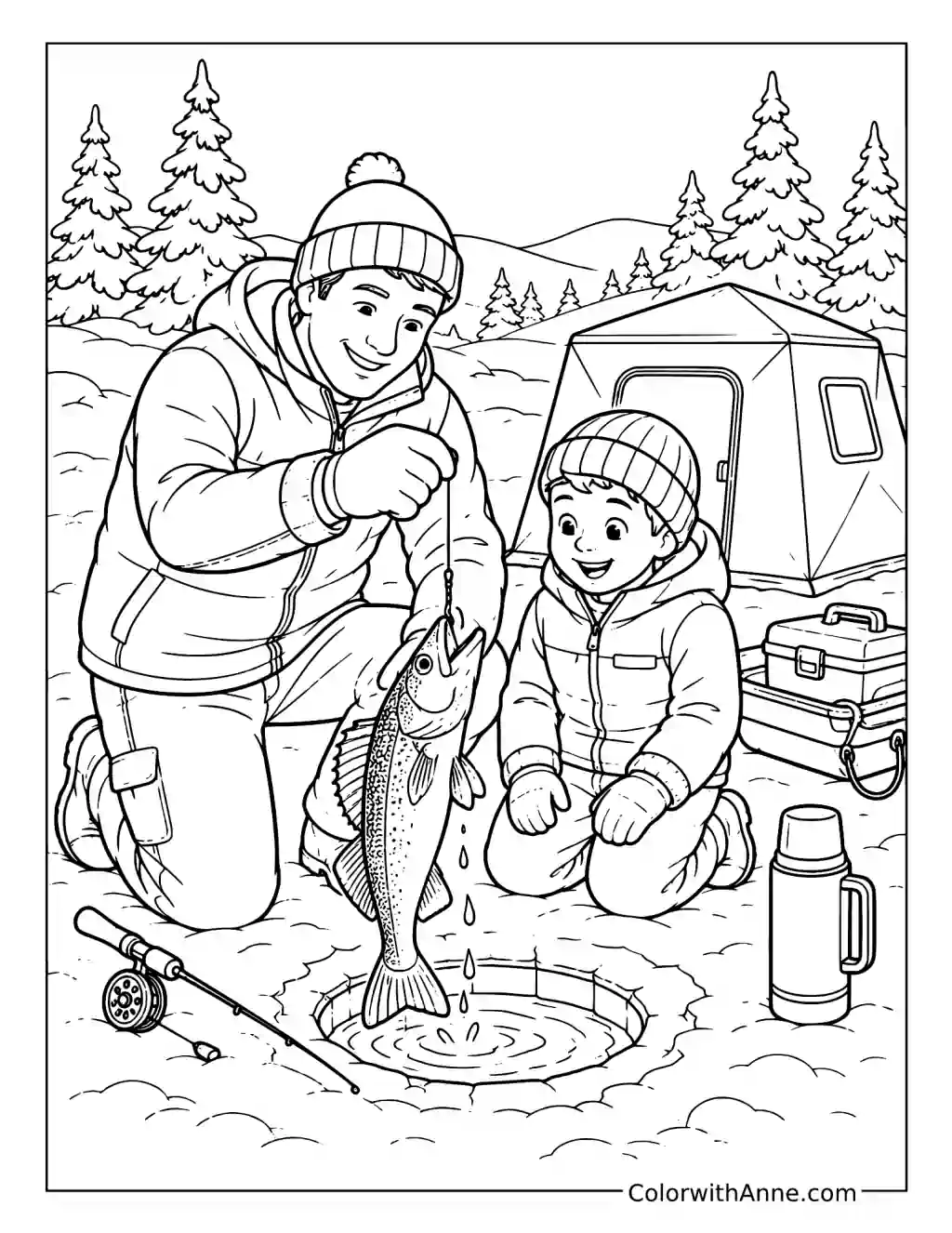
The lifted fish, bundled figures, and shelter fill the winter scene, but the small opening in the ice explains why everyone is gathered there.
Use that hole as the deepest color, with much paler ice around it. Warm accents in the clothing can hold the human excitement above the cold setting. Leave some snow untouched. The contrast gives the scene depth without requiring an elaborate sky, and makes the opening feel like a window into a different world beneath their knees.
Sort the Gear before Packing
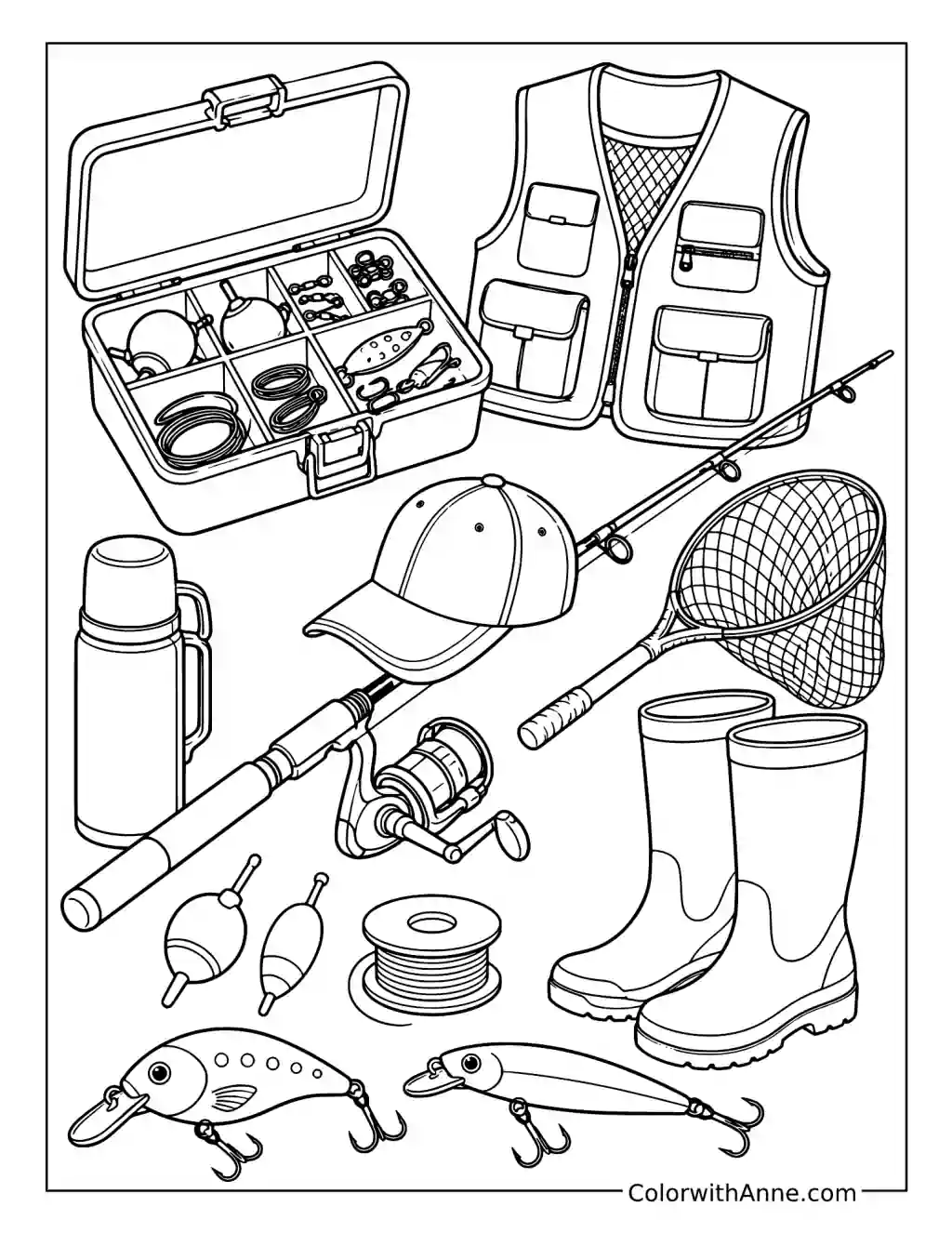
The rod, net, vest, boots, flask, and open tackle box are arranged separately, making this page more useful than a heap of equipment would be.
Use it before an outing to distinguish what you own, what someone else is bringing, and what you still need to ask about. Small check marks can stay beside the relevant items without covering them. Let a more experienced angler explain an unfamiliar piece while you color it. The drawing then supports an actual preparation rather than becoming a pretend checklist for everything shown.