
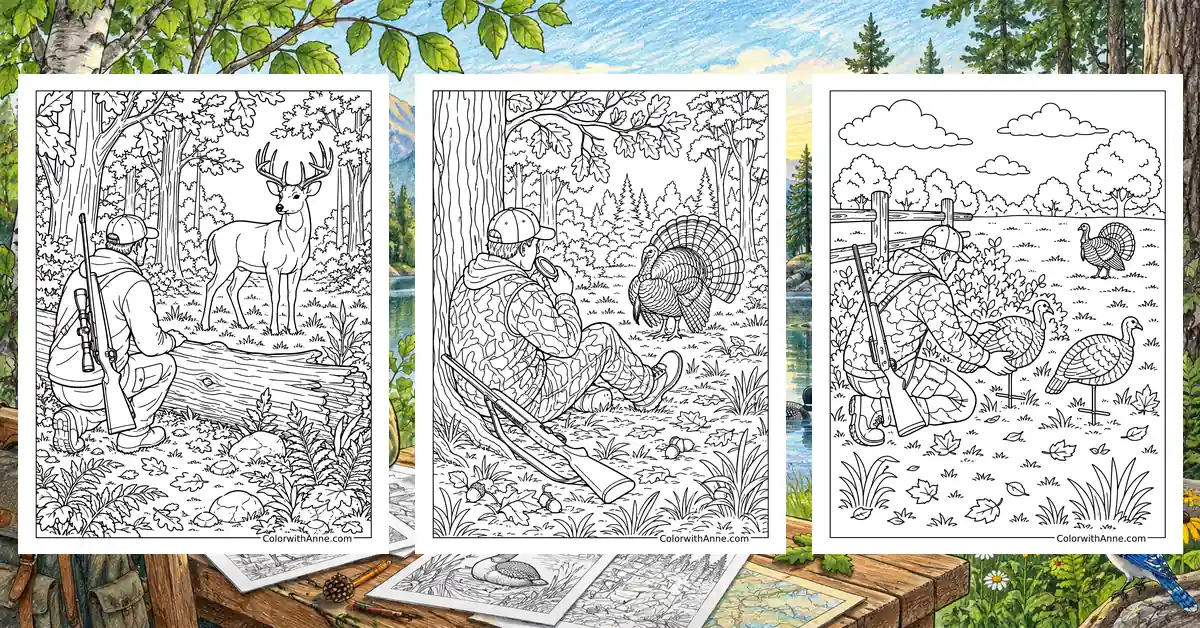
Before sunrise, a thermos clicks shut and boots settle into damp leaves. A hunting morning often begins with waiting, listening, and noticing what moved along the trail overnight. Even a squirrel rustling nearby can command everyone’s attention, briefly earning far more importance than it expected.
Hunting coloring pages bring that patient outdoor rhythm to the table, where the interest lies as much in the surroundings as in the hunt. The curve of an antler or the shape of a woodland track can recall time spent watching carefully. It is a theme for those who enjoy the woods before the rest of the day gets noisy.
Free Printable Hunting Coloring Pages
Click any coloring page below to open the PDF, then print on US Letter or A4 paper.
Did you find what you needed?
Help us choose what to create or improve next.
Coloring Ideas for Hunting Pages
Try one of these coloring ideas, or use them as a starting point for your own.
A Moose and Its Mountain-Lake Reflection
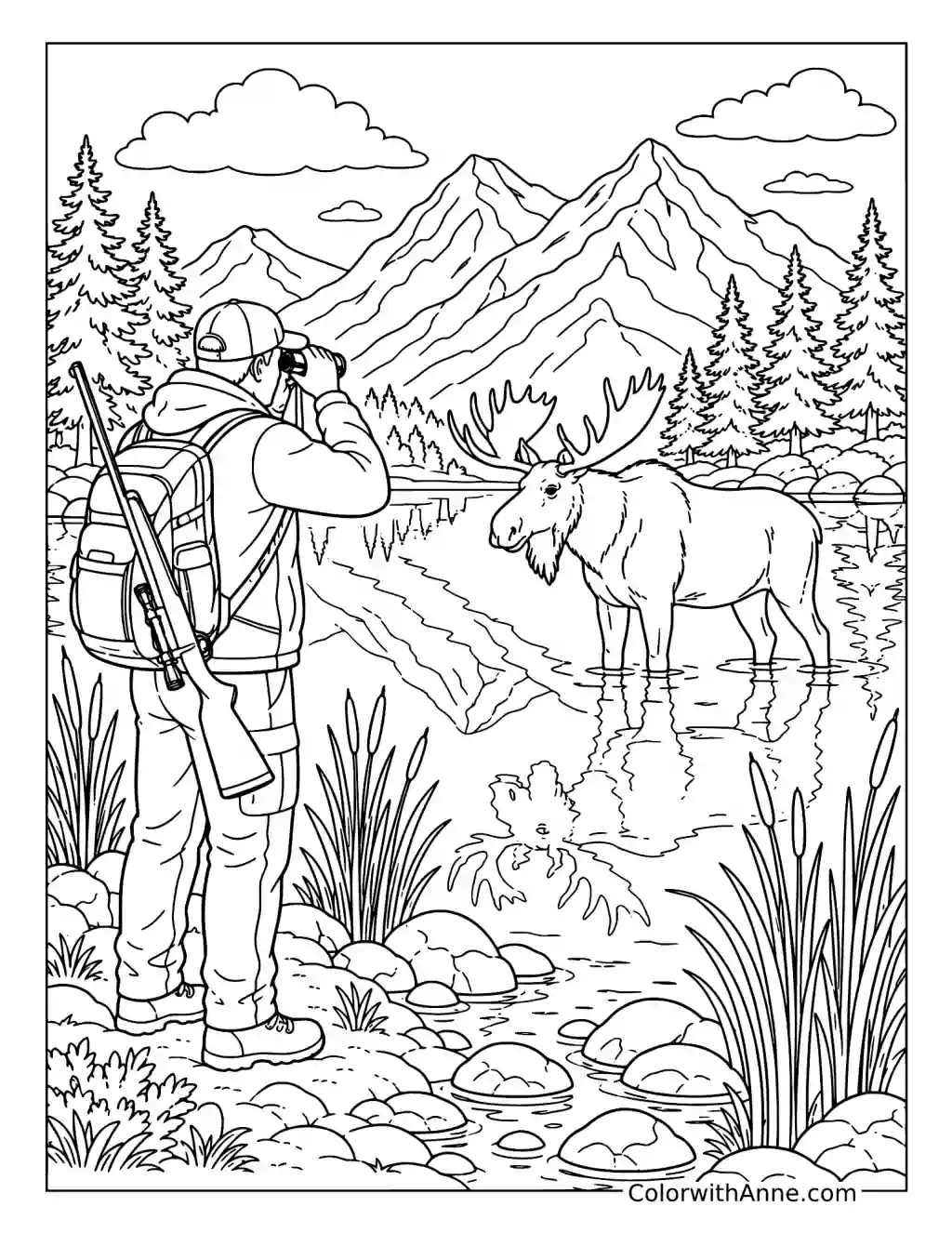
The hunter has binoculars raised, but the moose standing in the shallows is only half of this picture’s attraction. Its reflection extends into the lake, alongside the reflected mountain shapes.
Try coloring the moose and its reflection together, moving between them rather than finishing one first. Use similar colors below the waterline with a lighter touch, letting the printed ripples interrupt the shapes. The reeds and shoreline stones can stay crisp around that softer water. It is a satisfying little challenge: making the lake look still enough to reflect the scene, yet unmistakably wet.
Let the Bow Hunter Blend Into the Woods
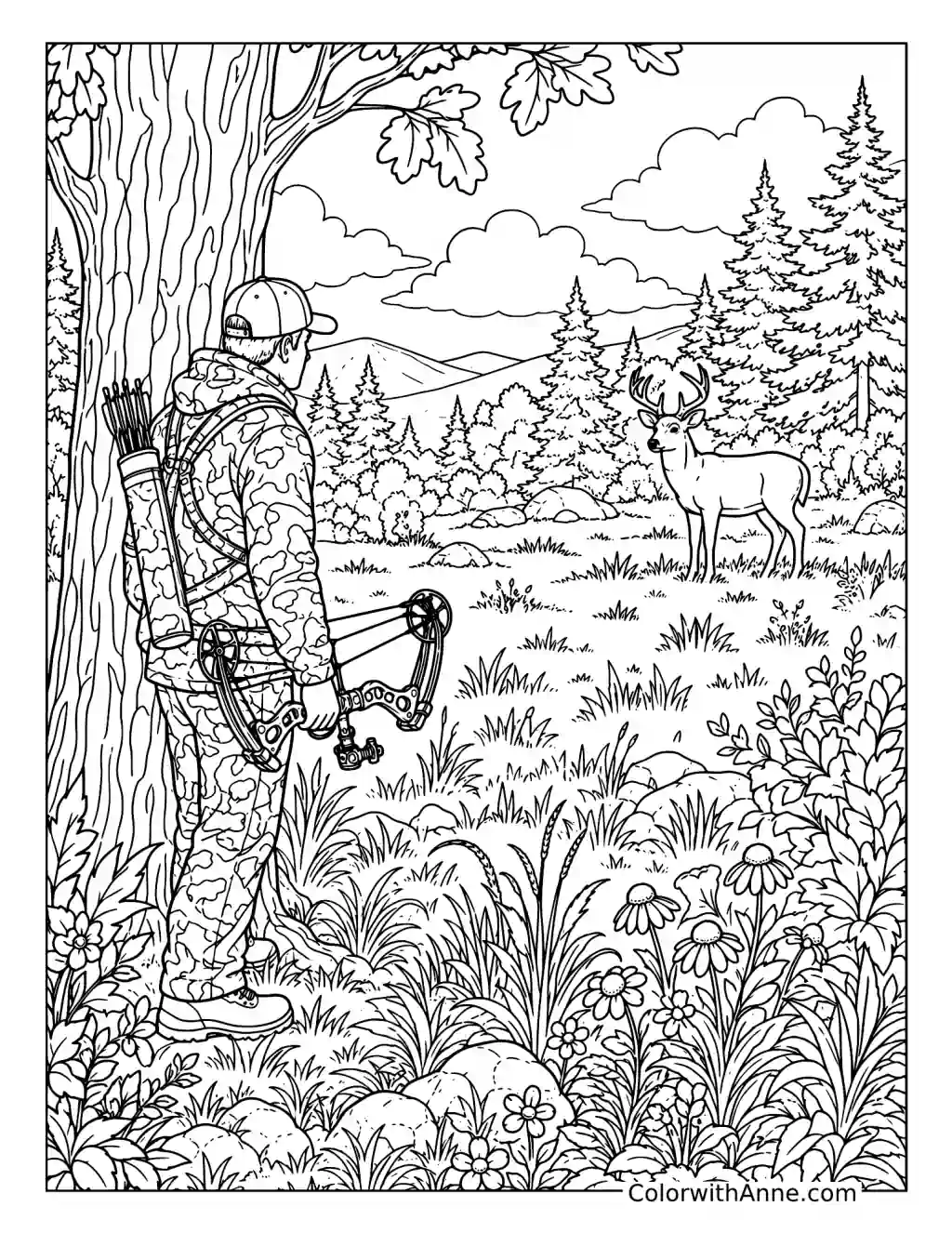
Beside a broad tree trunk, the bow hunter wears patterned clothing and holds the bow low. A deer stands farther into the clearing, framed by evergreen trees and shrubs. The picture gives camouflage something useful to do.
Choose the woodland colors first, then borrow three of them for the clothing’s irregular patches. That connection can make the hunter seem part of the surroundings without hiding the figure completely. Keep the bow’s outline clear against the plants.
Afterward, set the page at arm’s length and notice where your eye goes first. The distant deer might become more prominent than its size suggests.
Follow the Tracks Along the Creek
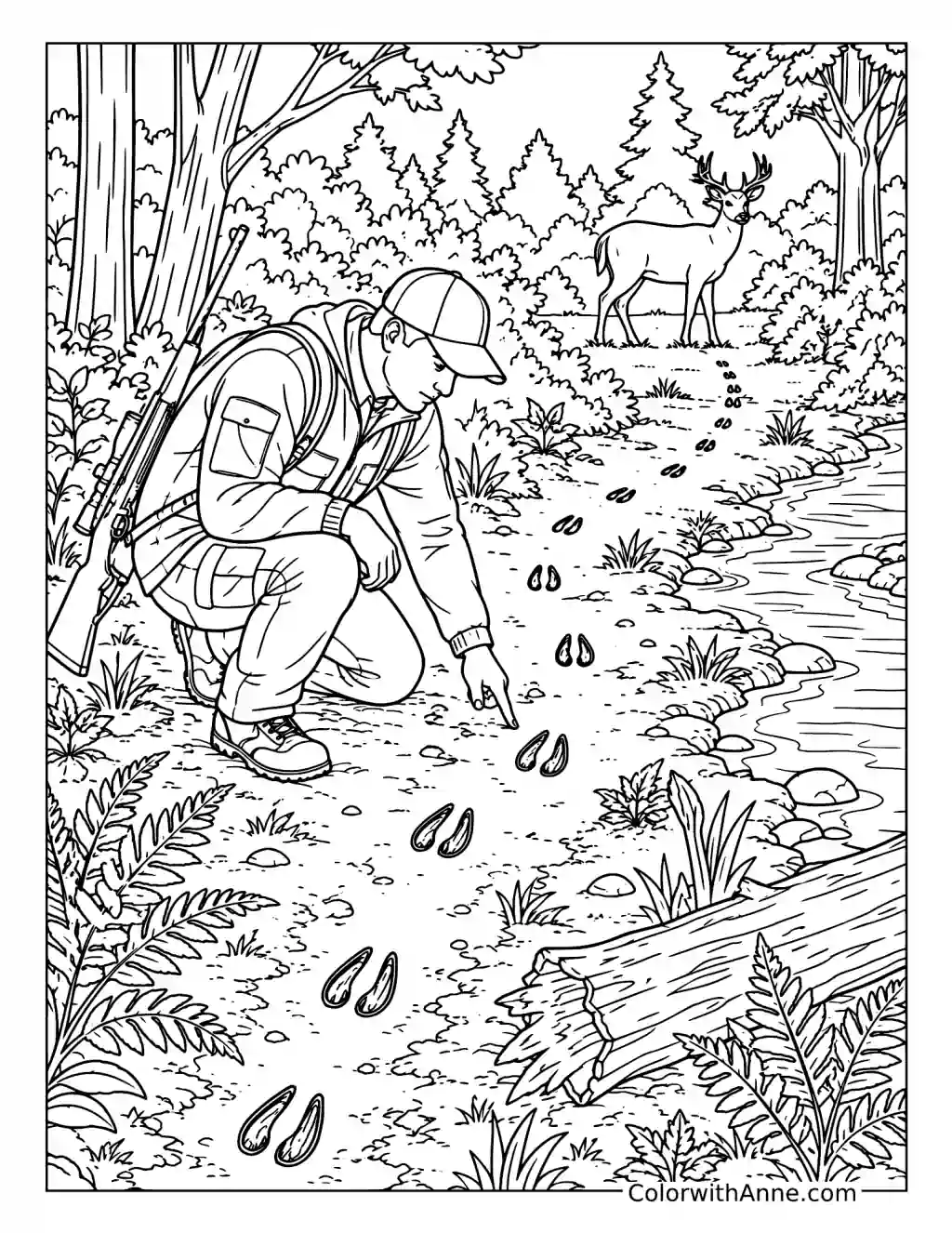
A trail of paired hoofprints leads from the foreground toward a deer in the distance. The hunter kneels beside one print, while the creek runs along the right side of the page.
Start with the tracks and follow them upward, noticing how their size changes along the route. Dark brown prints against lighter earth will keep that path readable. For a shared coloring session, one person can work on the creek while another follows the trail. The two routes meet naturally in the same landscape, giving the page a little journey before the deer itself receives any color.
Look Down From the Tree Stand
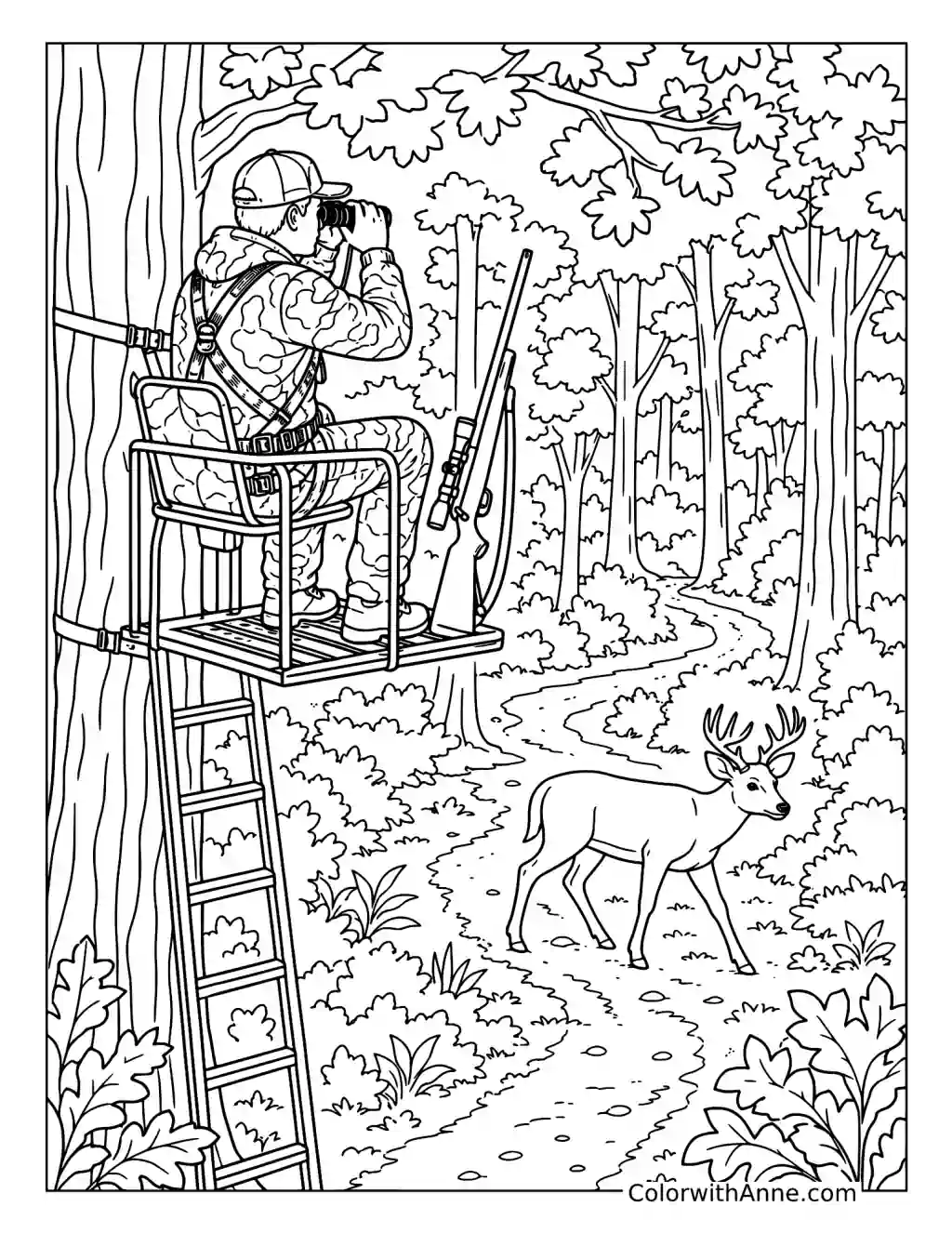
The ladder rises along the left edge to a seated hunter, with a deer on the winding path below. Branches cross near the platform, and the trees continue into the background. There is plenty here to notice beyond the equipment.
Explore the picture from two viewpoints: first follow the hunter’s gaze toward the deer, then imagine looking upward from the path. Which branches would interrupt the view?
When coloring, distinguish the stand and ladder from the trunk behind them. A restrained gray for the framework against warmer bark helps preserve the height and structure of this unusual woodland composition.
Take Your Time With the Turkey’s Tail Fan
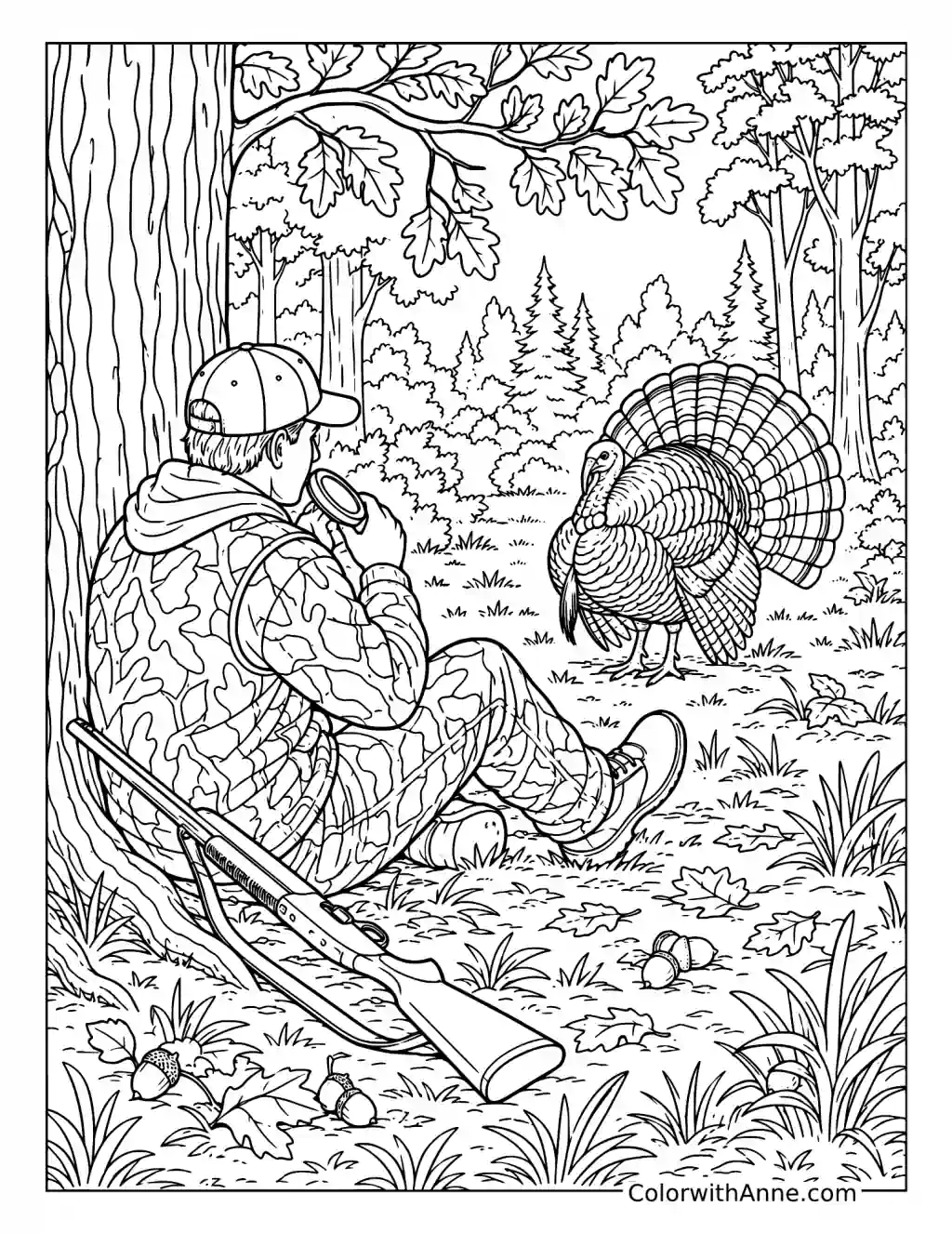
The seated hunter faces a turkey with its tail spread into a broad fan. Against the leaves, stones, and uneven forest floor, those repeated feather shapes bring a remarkably orderly pattern to the scene.
This is a good page for a short session focused on one feature. Work from the center of the fan outward, carrying the same narrow bands across neighboring feathers. Browns, copper tones, and cream can give each section definition without requiring a different color for every feather. Leave the rest for another sitting if you like; the fan offers a satisfying piece to finish on its own.
Give the Buck’s Woodland an Autumn Turn
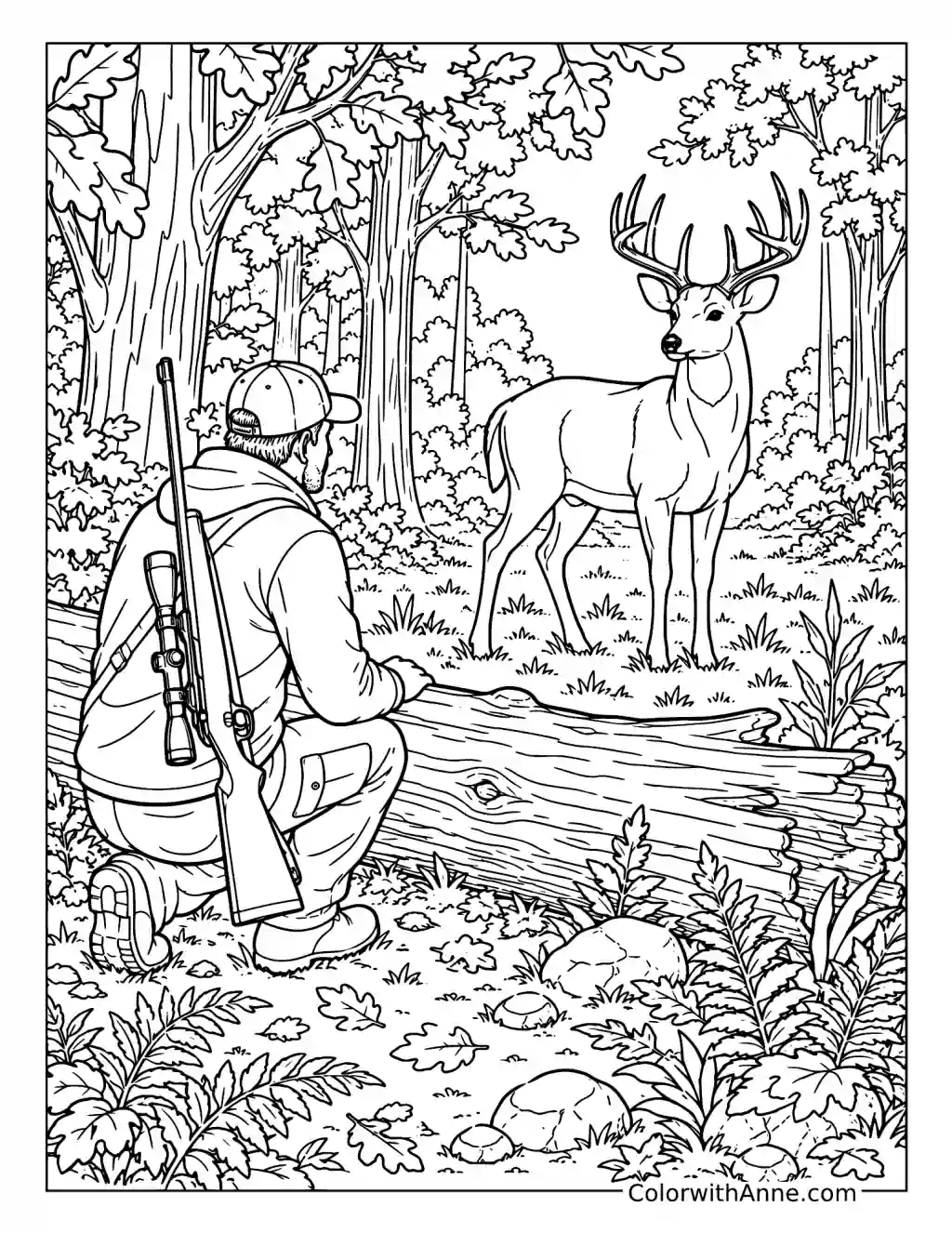
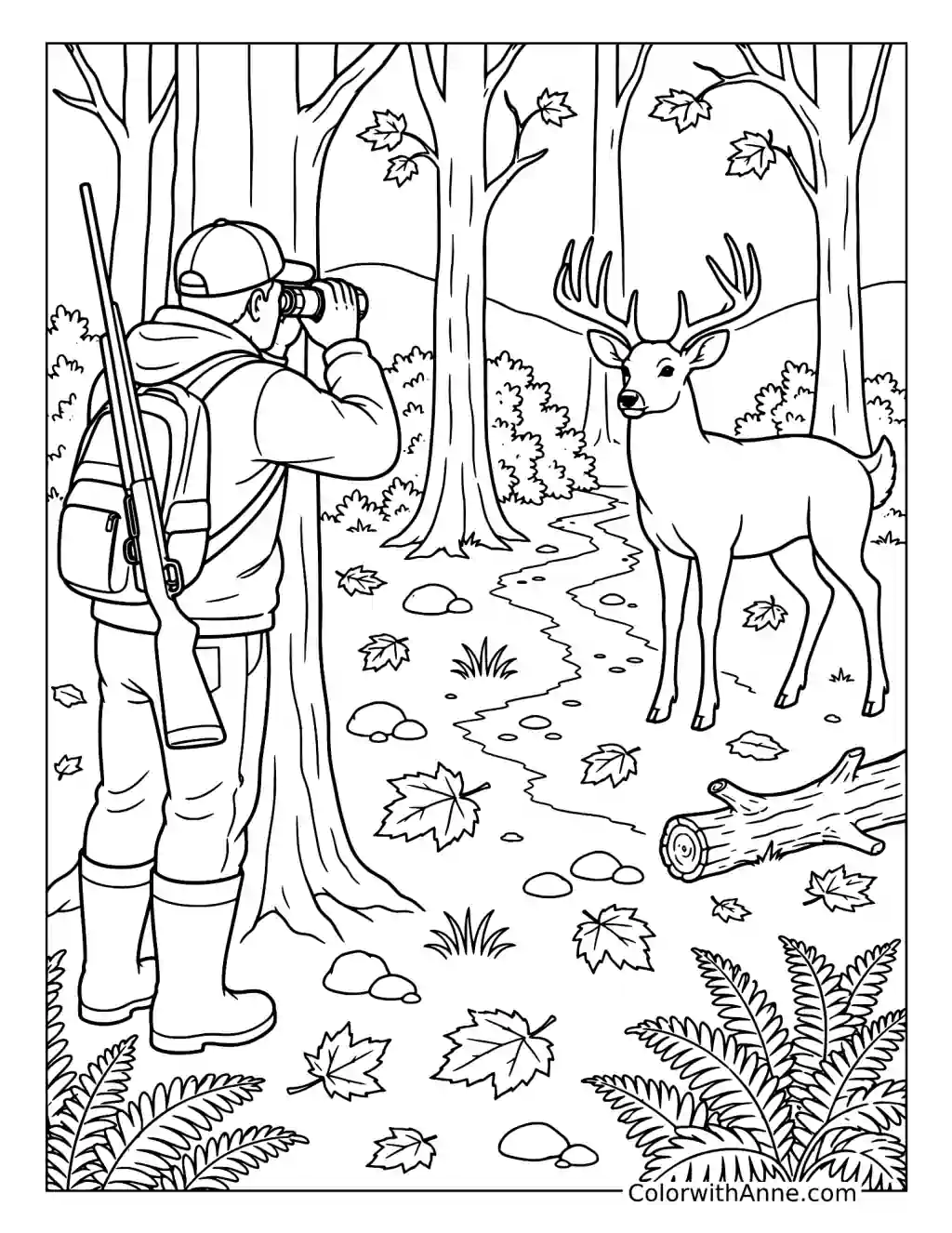
Scattered leaves lie between the hunter and the buck, with more leaves caught among the tall trunks. The open ground makes those individual shapes especially noticeable.
Try drawing inspiration from leaves collected on a walk. Set a few beside the page and look for the less obvious colors: dusty yellow, reddish brown, or green remaining near a vein. Use those variations on the printed leaves rather than making every one bright orange. The woodland will feel more lived-in, and the buck can remain the steady focal point among all that seasonal change.
Make the Elk Call Feel Far-Reaching
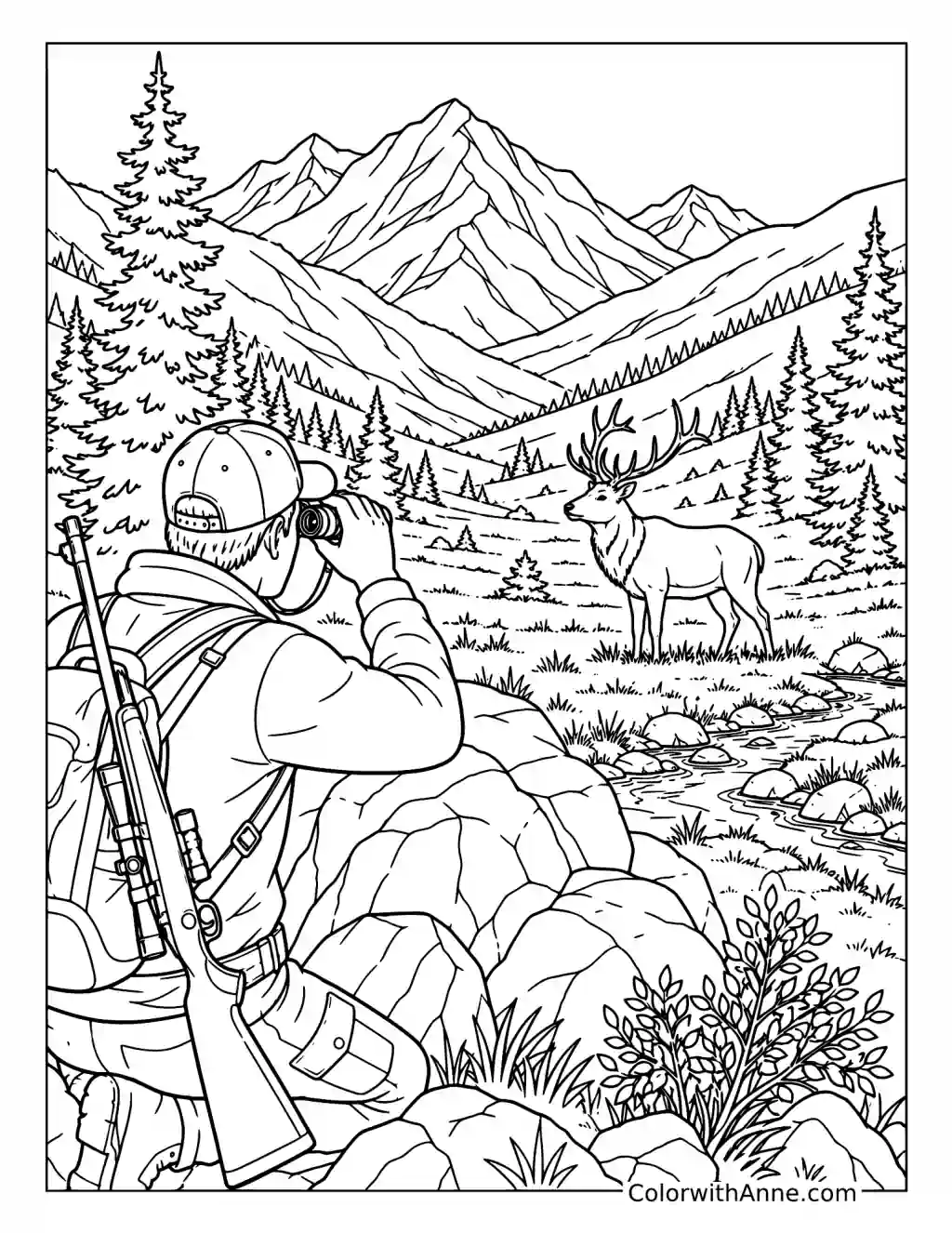
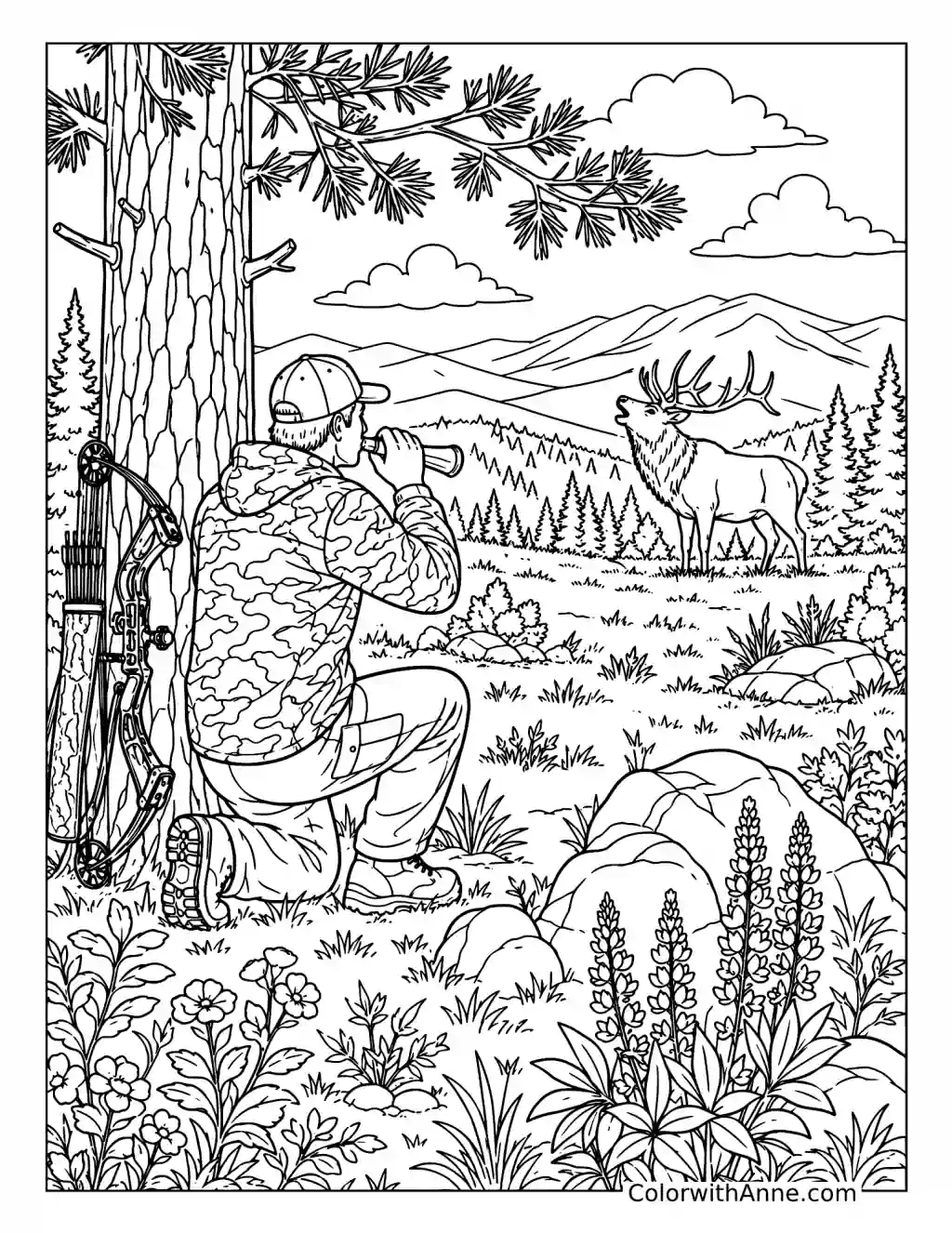
A kneeling hunter raises a call beneath pine branches, facing an elk across an open mountain landscape. Rocks and flowering plants fill the foreground, while rows of trees lead toward the hills.
The scene invites a sense of distance. Give the nearby rocks and plants the clearest colors, then soften each successive stretch of trees. Pale blue-gray mountains can leave the elk readable against the slopes.
There is no need to add sound lines. The lifted call and the space between hunter and elk already suggest a sound traveling across the valley—the kind of moment that makes a wide landscape feel even wider.
Spot the Difference Between Turkeys and Decoys
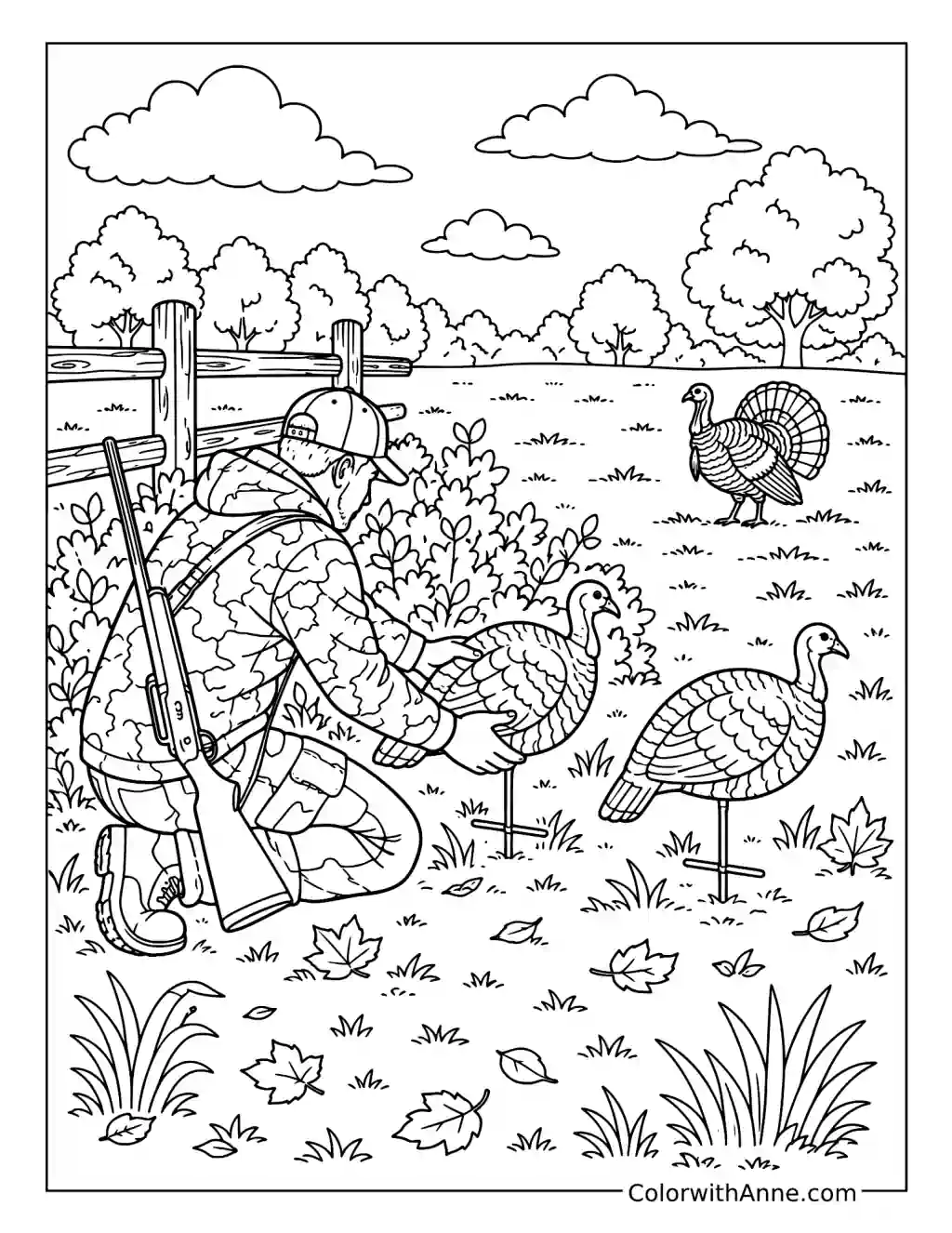
The hunter kneels beside a shrub, holding a turkey decoy, while another stands nearby on a visible support. Farther across the field, a turkey displays its fan. The fence and open grass give the scene plenty of room.
Before choosing colors, compare the three birds. Look at the supports, poses, and feather outlines to see how the drawing distinguishes equipment from wildlife. Then give the decoys closely related colors, allowing the distant turkey’s spread tail to have more variation. That small choice keeps the scene understandable while preserving the resemblance that makes the decoys part of the picture’s interest.