
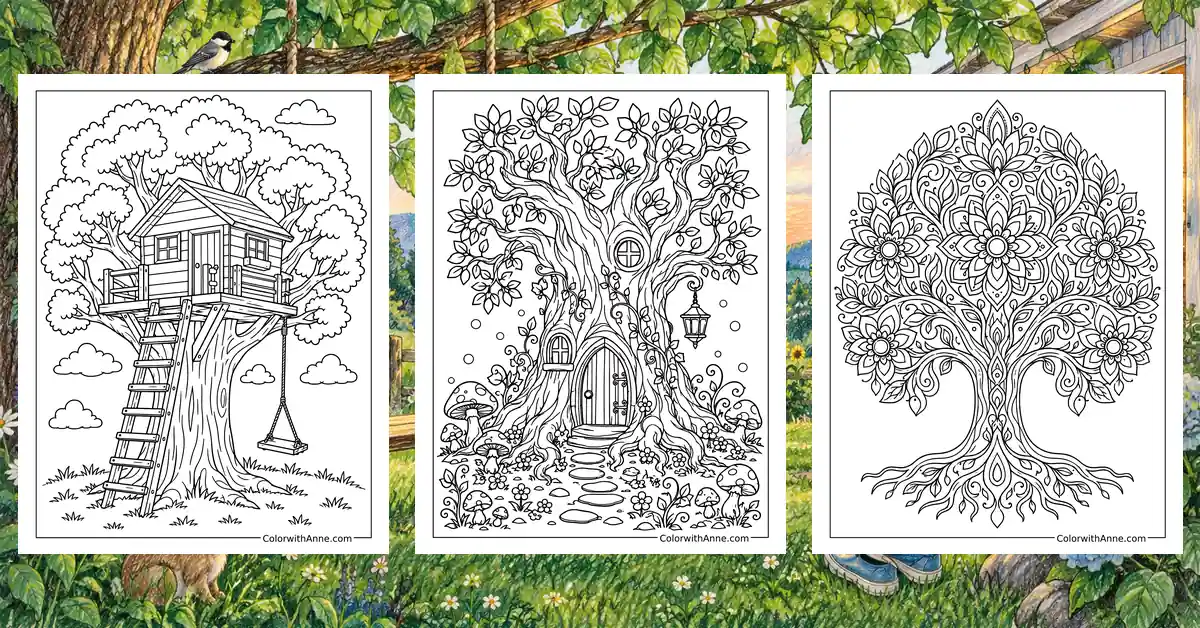
The same tree can become part of a daily routine without much notice. Its shade is the preferred place to pause on a warm walk, and its rustling leaves announce a breeze before it reaches the pavement. By autumn, that generous canopy has become a rather generous pile to rake.
Tree coloring pages invite a closer look at something usually passed on the way elsewhere. A familiar branch shape can recall the tree outside the kitchen window, or the one beside a favorite bench. On paper, there is time to notice how a trunk bends and where the branches begin to spread.
Free Printable Tree Coloring Pages
Click any coloring page below to open the PDF, then print on US Letter or A4 paper.
Did you find what you needed?
Help us choose what to create or improve next.
Coloring Ideas for Tree Pages
Try one of these coloring ideas, or use them as a starting point for your own.
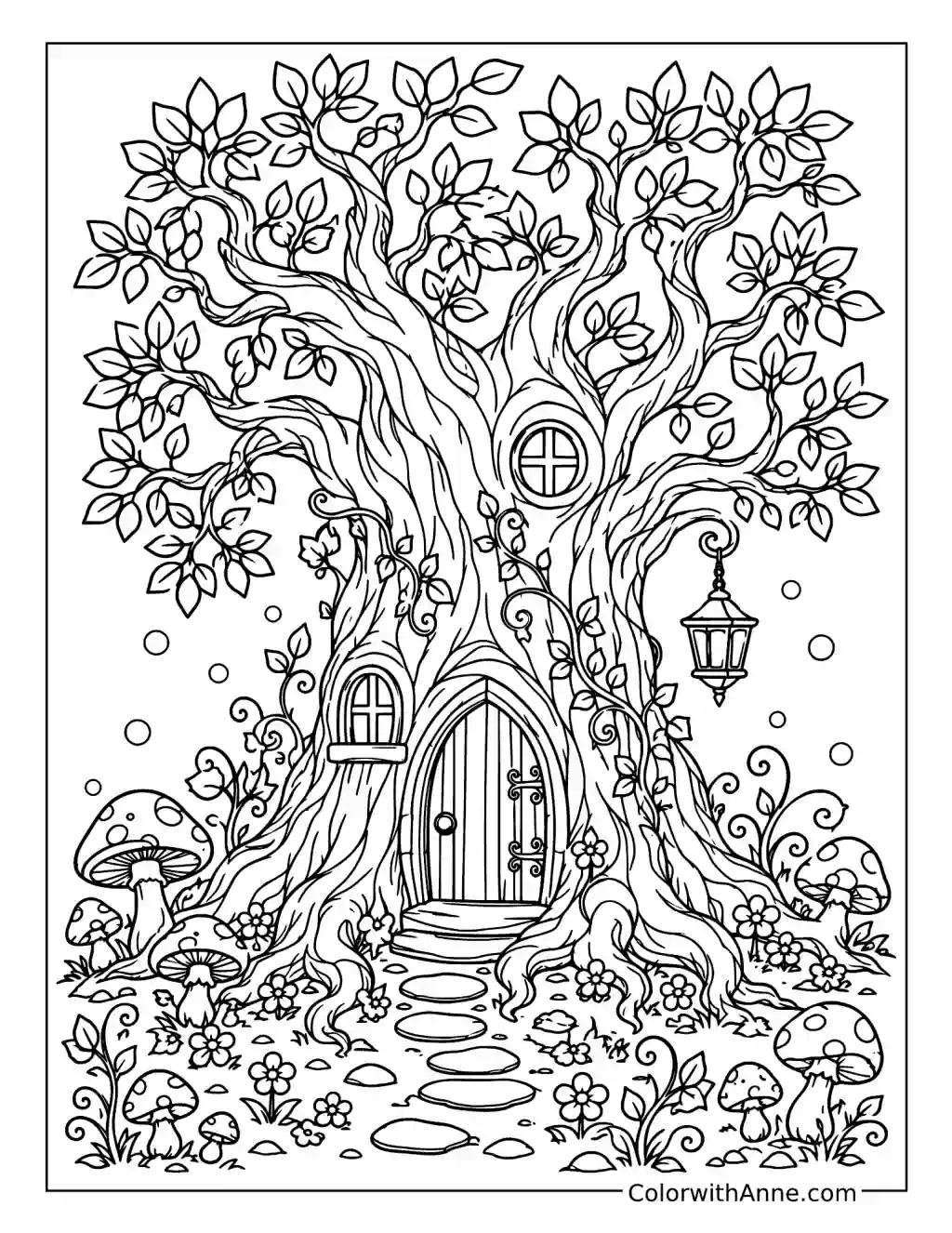
A Fairy Tree with an Address of Its Own
The stepping stones lead straight to an arched door, while a lantern hangs from a curled branch beside it. With windows tucked into the trunk and mushrooms growing around the roots, this tree already feels like somewhere worth delivering a letter.
Give the home a name before choosing its colors. “Moss Cottage” might suggest a green door and earthy mushroom caps; “Moonlight House” could have violet bark and warm yellow windows. Write the address on a separate little envelope, then slip a note inside describing what might arrive at this woodland doorstep. The picture becomes the beginning of a correspondence, with no need to draw an entire fairy village.
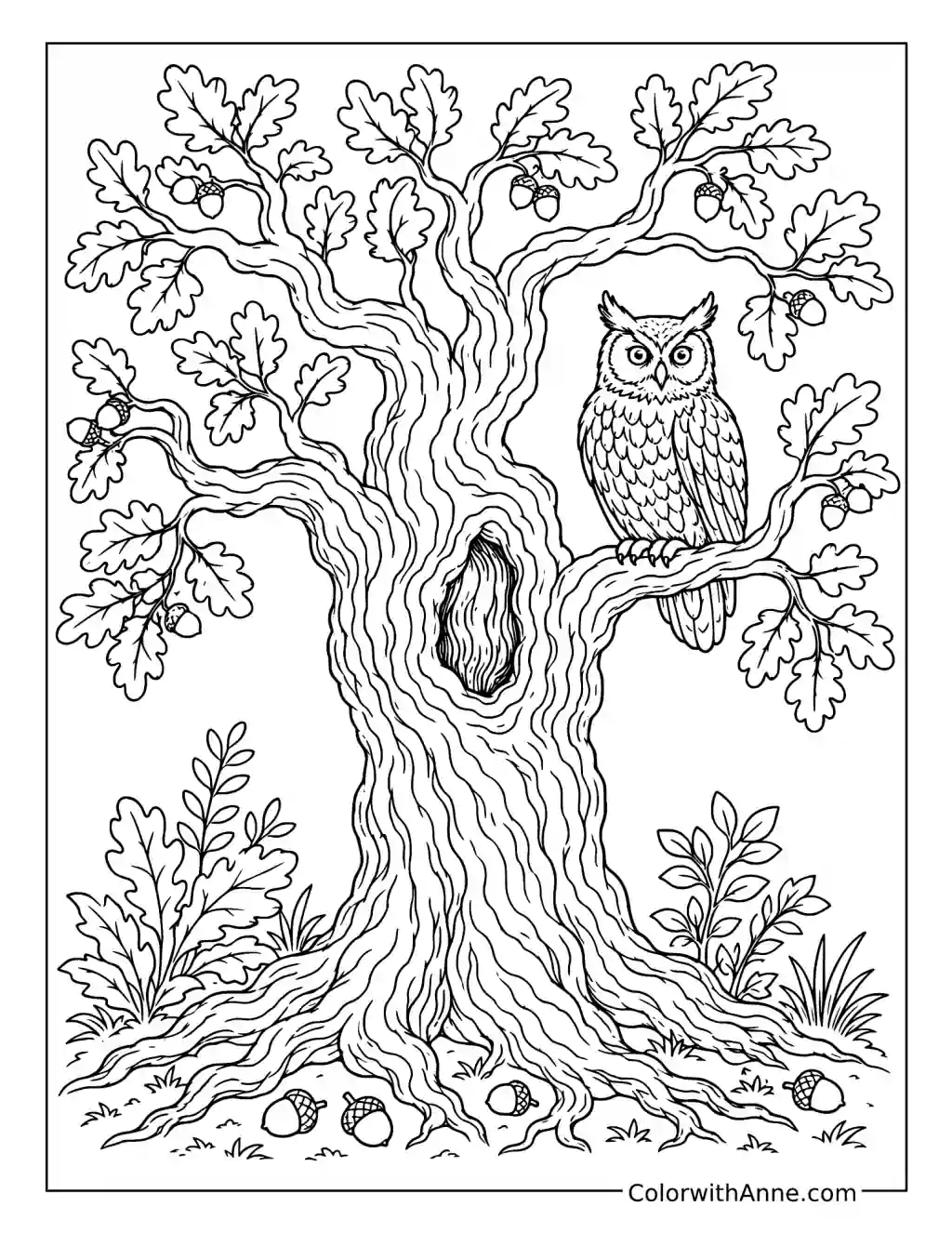
An Old Oak Worth Getting to Know
The owl has claimed a sturdy branch, but the oak deserves a closer look too. Its lobed leaves, hanging acorns, hollow trunk, and winding bark lines give this page the character of a tree that has been around for a while.
Try using it as the opening page of a small tree notebook. On the facing page, sketch a leaf or acorn spotted outdoors and compare its shape with the drawing. An actual oak leaf can help guide the greens and browns, while the owl offers room for softer feather patterns. Leave space for the date and location of the walk; those details make the page belong to a particular place.
Autumn Color, One Falling Leaf at a Time
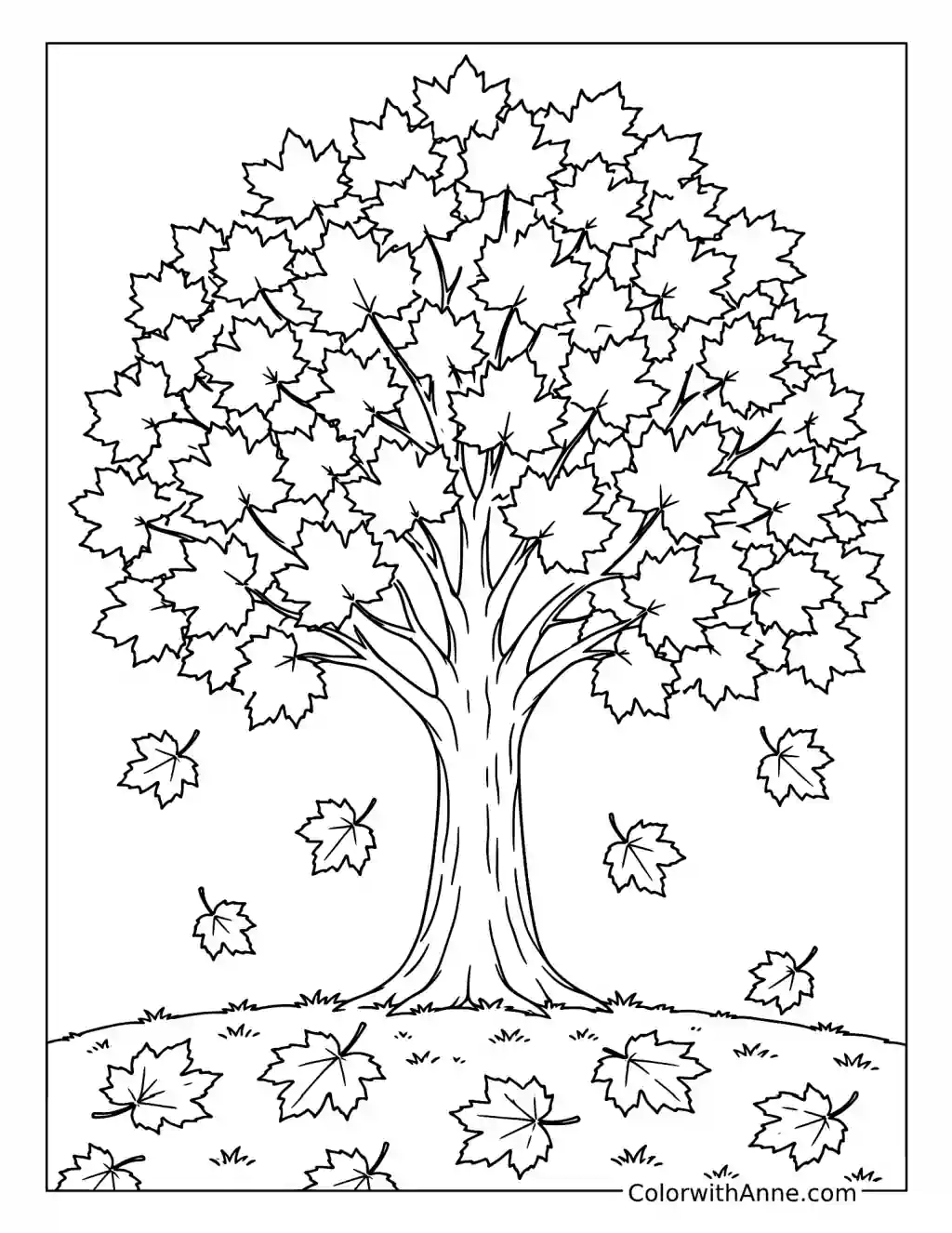
Leaves fill the crown, drift beside the trunk, and settle across the ground. That gives this autumn tree a lovely sense of movement—and plenty of evidence that raking would be an ongoing project.
Let the falling leaves guide a gradual change in color. Keep some green in the canopy, work through gold and orange on the drifting leaves, and bring deeper russet shades into the pile below. The transition can be loose, with a few unexpected colors mixed in, much like a real autumn tree.
For a more personal version, borrow the colors from leaves gathered on a walk. Arrange them beside the page while working, then notice which shades appear together most often.
Cherry Blossoms for a Spring Notebook
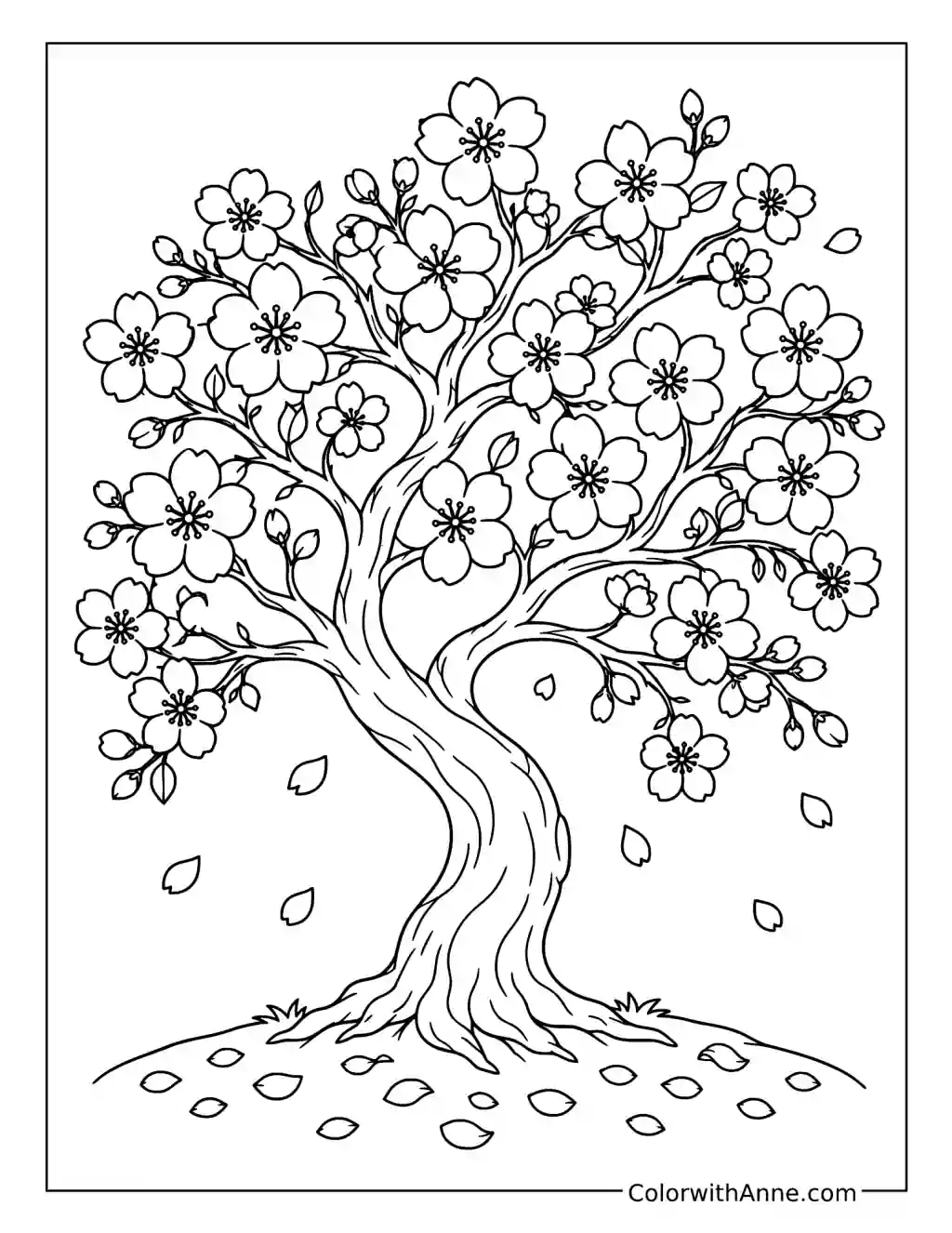
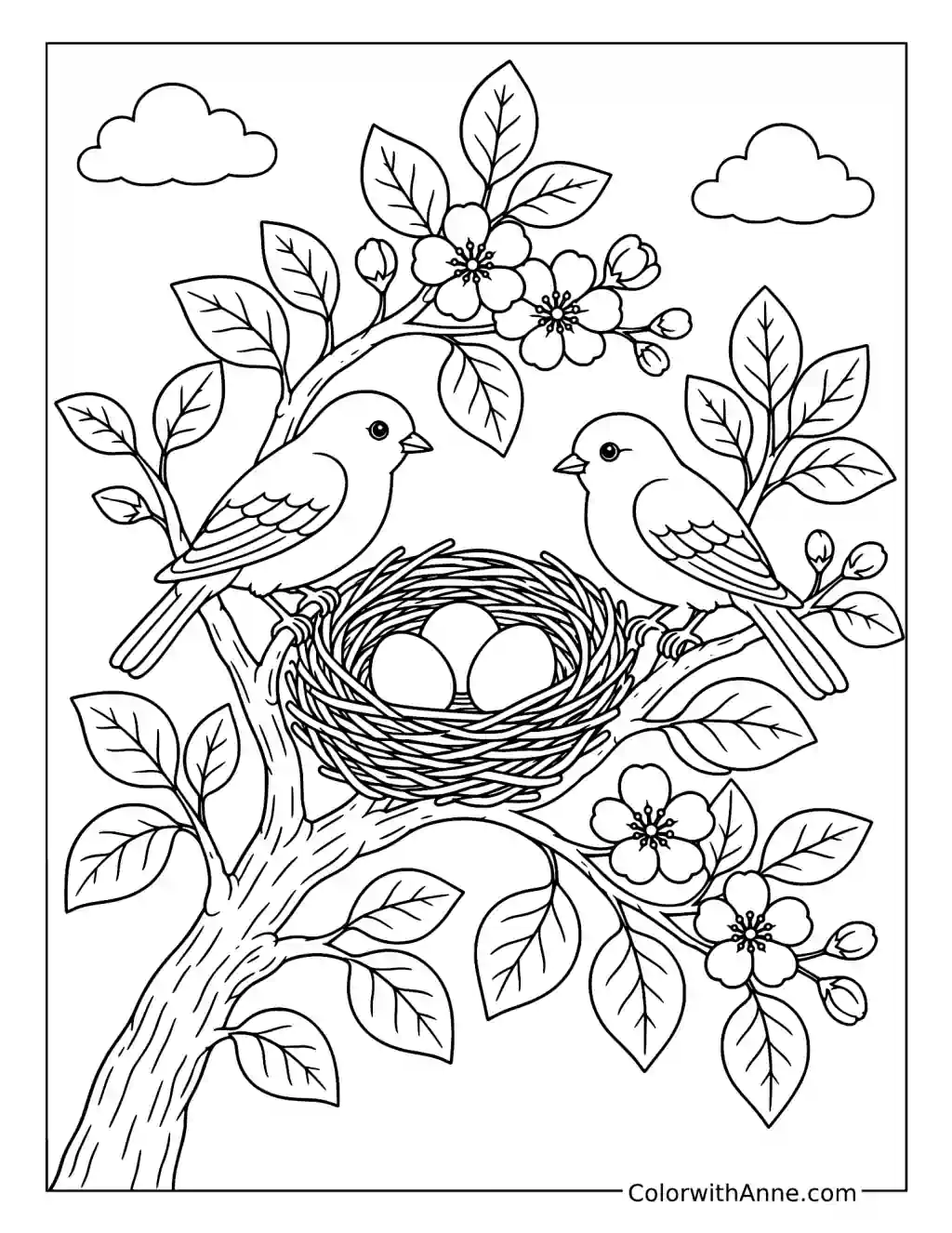
Large blossoms spread across the branches, with unopened buds between them and loose petals floating toward the ground. The drawing captures that brief part of spring when a tree seems to have traded its leaves for flowers.
Use a pale pink across most petals, then reserve a stronger rose shade for the buds and flower centers. Leaving a little white within the blooms helps keep them airy.
This page would make a fitting cover for a spring notebook. Mount it on the front and use the first entry to record a blossom sighting: the date, the weather, and whether petals were still on the branches or already gathering below. The falling petals in the picture give that first observation somewhere to begin.
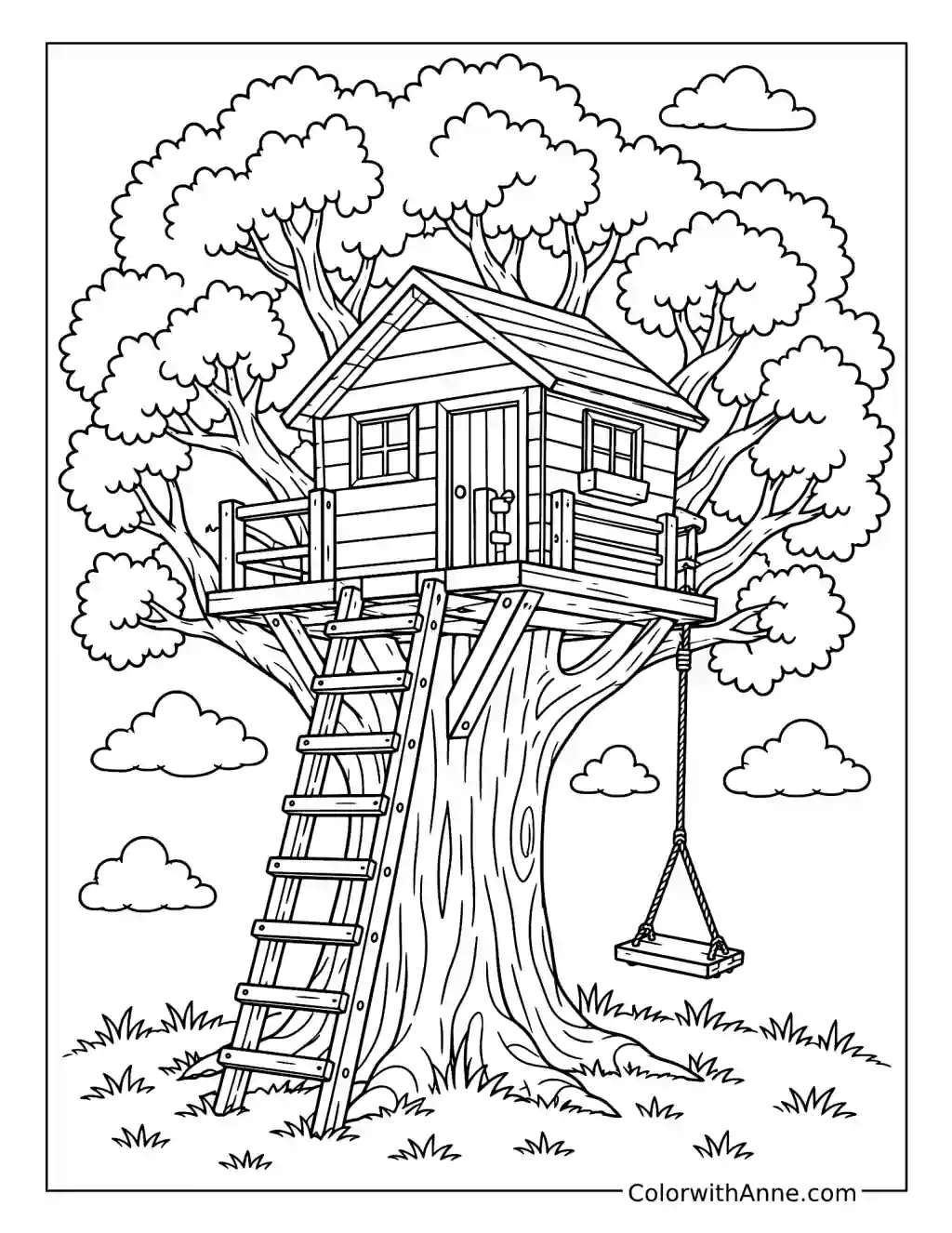
Planning an Afternoon in the Tree House
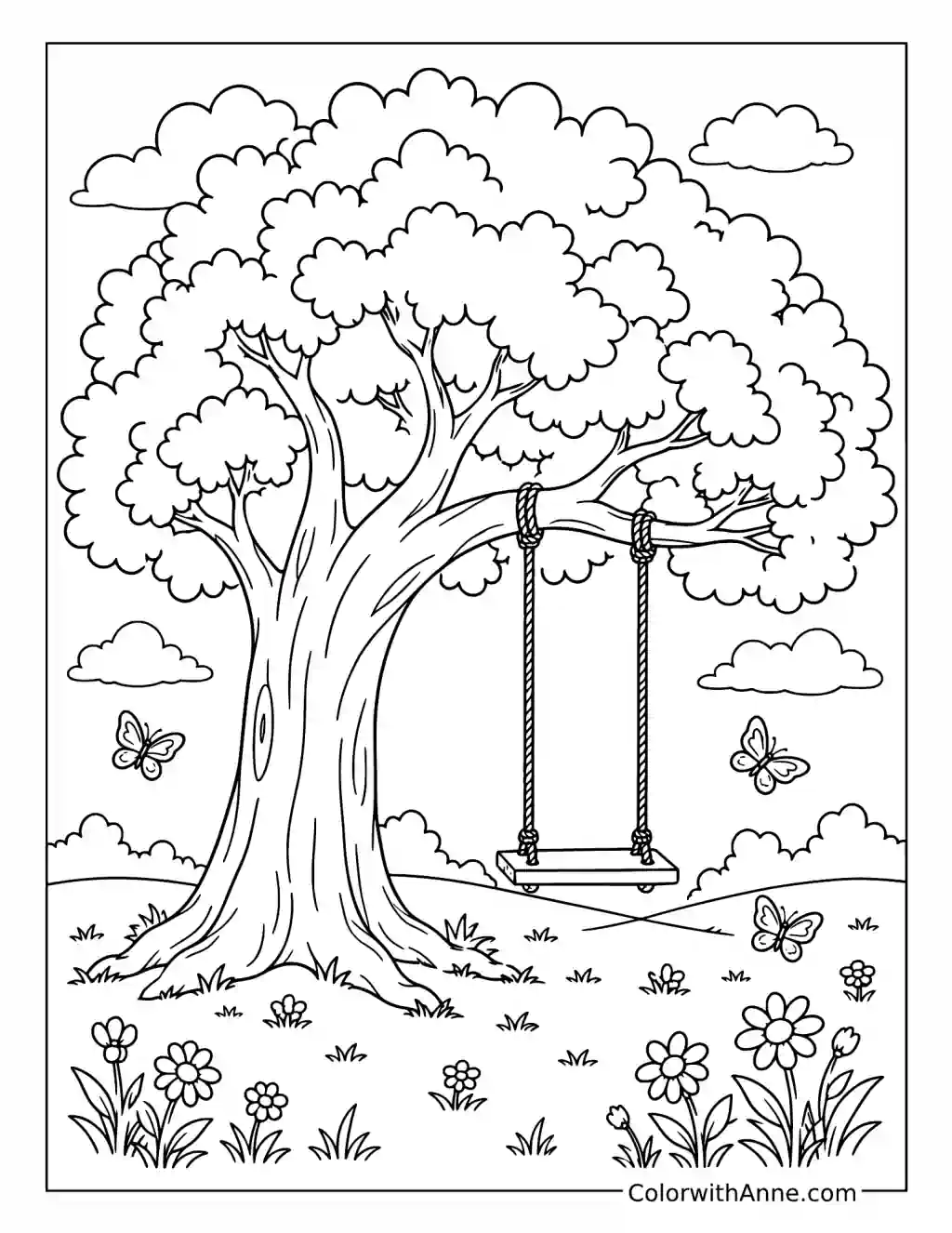
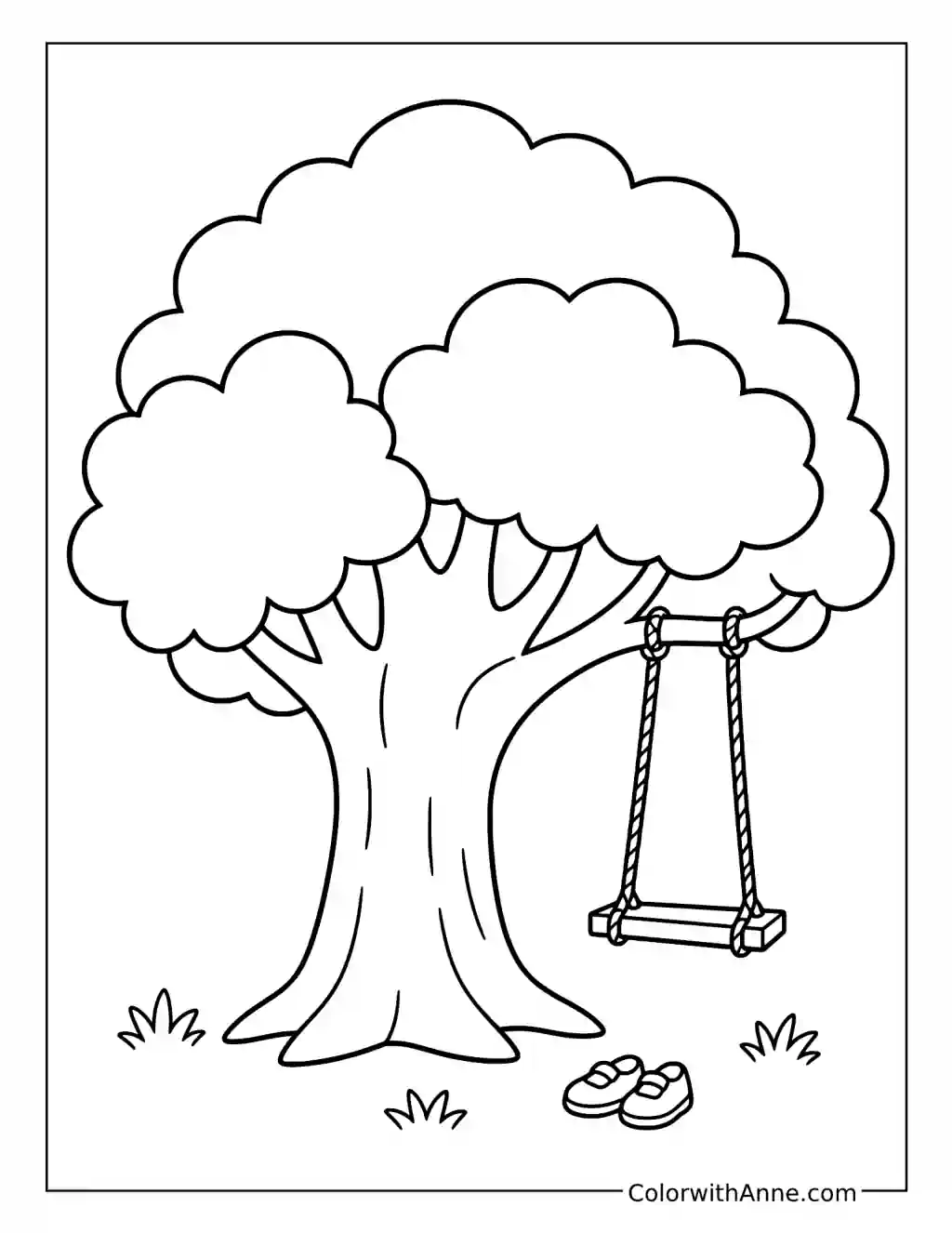
A long ladder reaches the porch of this wooden tree house, and a rope swing hangs beside the trunk. The windows and closed door leave the inside wonderfully undecided.
Choose an exterior that suits the imagined retreat: a cheerful painted door, weathered boards, or a porch railing in a favorite color. Then draw a simple floor plan on another sheet. Decide where a reading corner would fit and what could sit beneath the windows.
Keep the plan small enough to match the little house. Finding room for a cushion, a shelf, and a snack is part of the fun; the tree has already provided the swing.
A Palm Beach Postcard
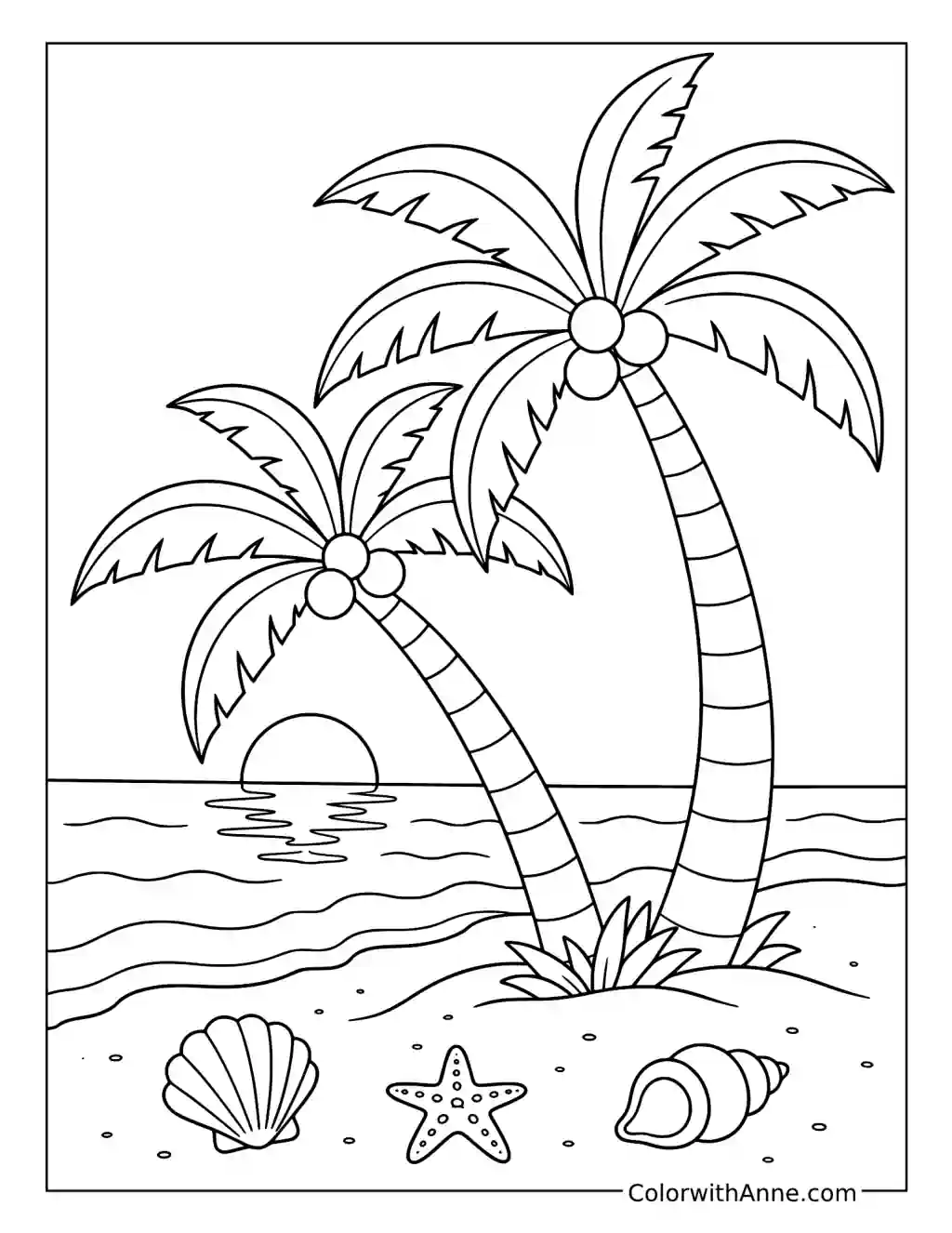
Two curved palms frame the water, with a low sun near the horizon and shells beside a starfish on the sand. The scene has the proportions of a holiday postcard, right down to the view worth sending home.
Try a sunset that carries its color into the narrow water ripples beneath the sun. Peach and coral can warm the horizon, while cooler blue farther away gives the palms a clear backdrop.
Mount the finished page on cardstock and write a short postcard message on the reverse. Invent a beach name if desired, but let the message come from the picture: a quiet shoreline, a setting sun, and a very good reason to linger.
Following the Willow into Its Reflection
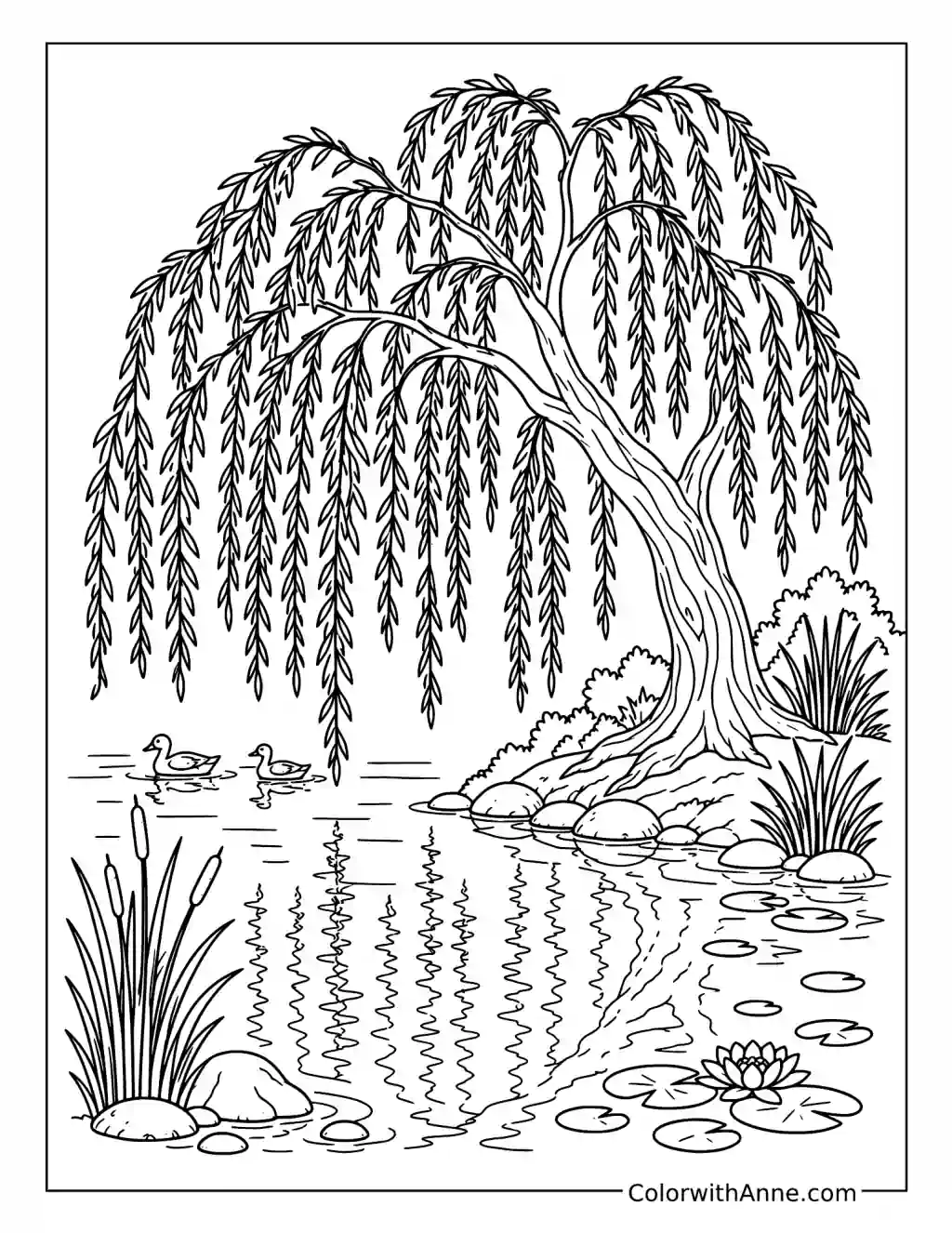
The willow’s long branches droop toward a pond where two ducks pass near the bank. Below the tree, wavy lines echo its shape in the water, with lily pads and a flower nearby.
Start with the tree, then carry a few of its colors into the reflection. Use lighter, broken marks between the water lines rather than filling the whole pond with solid green or brown. Small stretches of blue between those marks help the reflection feel rippled.
There is a satisfying little comparison to make as the page develops: the tree above is solid and rooted, while its shape below loosens into the pond. The drawing already supplies the movement.
Finding the Small Residents Among the Roots
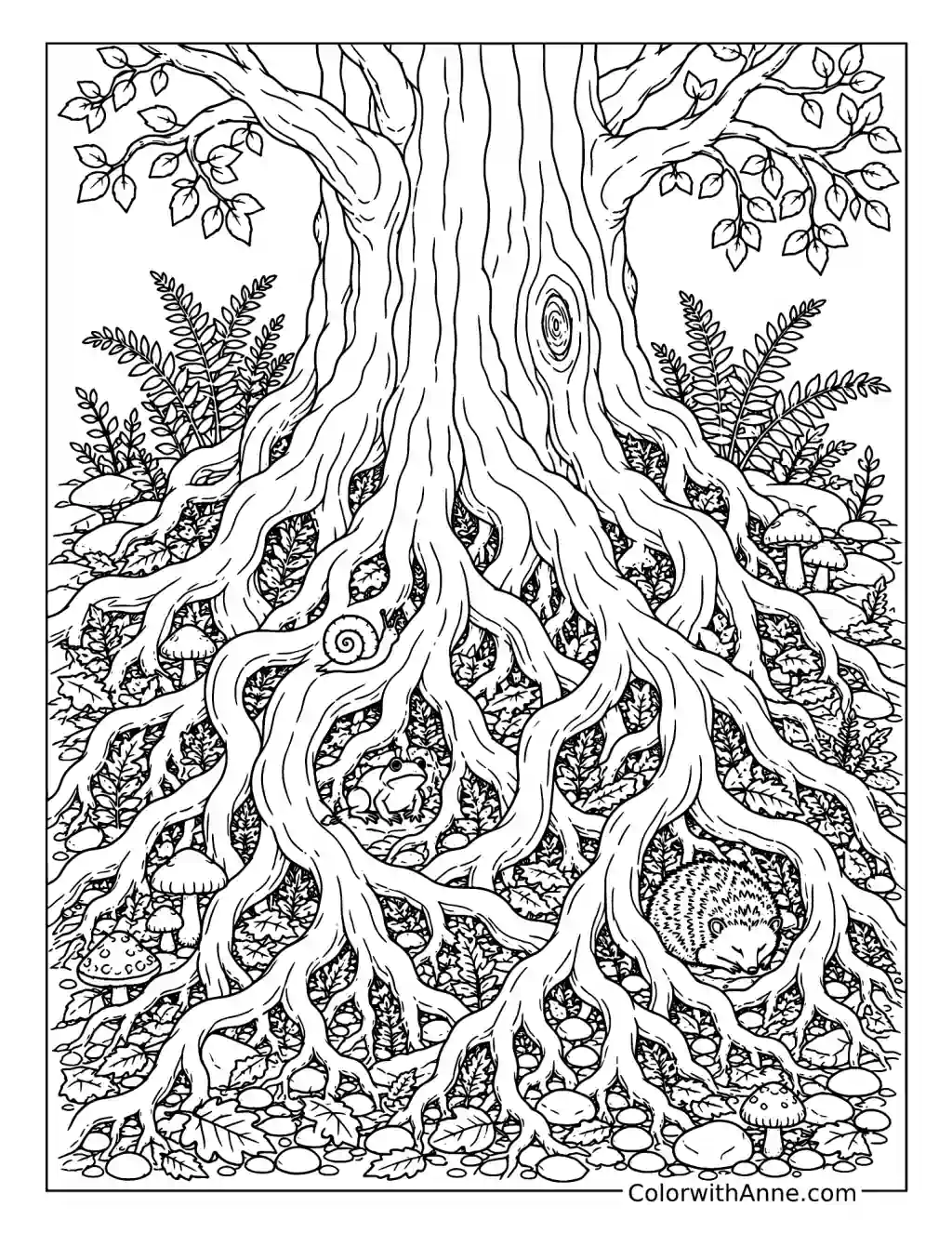
This close view of a trunk opens into a tangle of roots, with ferns, stones, and mushrooms filling the spaces between them. Look carefully and the woodland floor starts revealing its residents, including a curled hedgehog and a snail with a spiral shell.
Turn the page into a gentle spotting game. Before coloring, make a separate checklist of the creatures and natural objects actually found in the drawing. Then color the roots in related browns, allowing the smaller discoveries to emerge through their own colors.
Pass the finished picture along with the checklist. Those looping roots give the eye plenty of paths to follow, so finding everything takes a slower look than expected.