
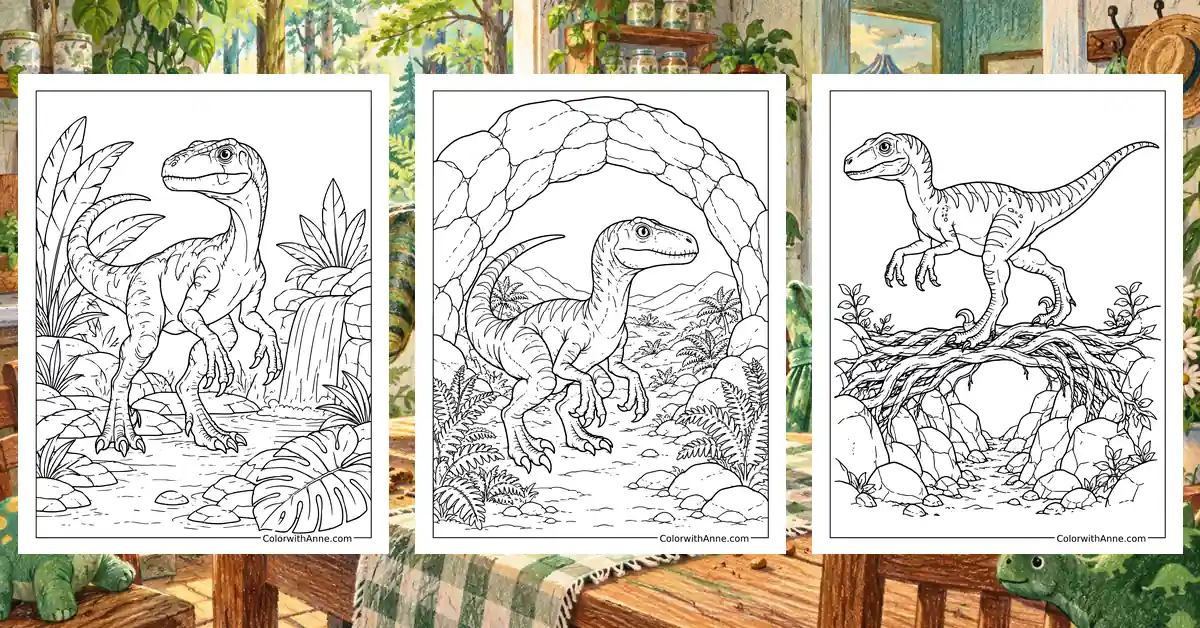
Two fingers held like claws and a cautious walk across the living room are often enough to announce a dinosaur game. Velociraptor has particular appeal for anyone who prefers a quick, alert hunter to a lumbering giant. Furniture becomes cover, and an unsuspecting cushion may find itself under close observation.
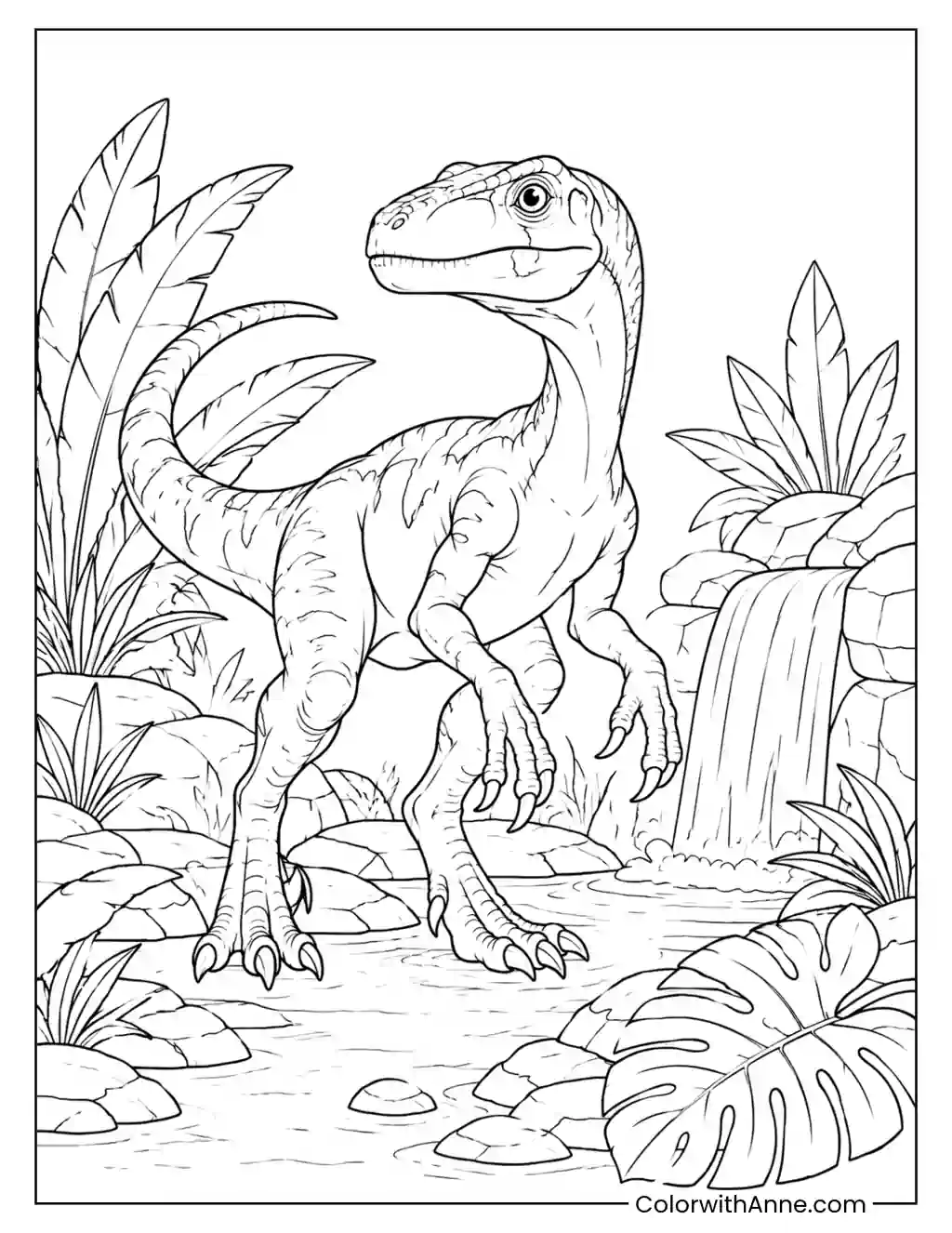
Velociraptor coloring pages give that fascination somewhere to settle once the stalking stops. The theme invites curiosity about movement, sharp claws, and the feathered appearance associated with the real animal. It is a chance to linger over a dinosaur whose reputation is much bigger than its actual size.
Free Printable Velociraptor Coloring Pages
Click any coloring page below to open the PDF, then print on US Letter or A4 paper.
Did you find what you needed?
Help us choose what to create or improve next.
Coloring Ideas for Velociraptor Pages
Try one of these coloring ideas, or use them as a starting point for your own.
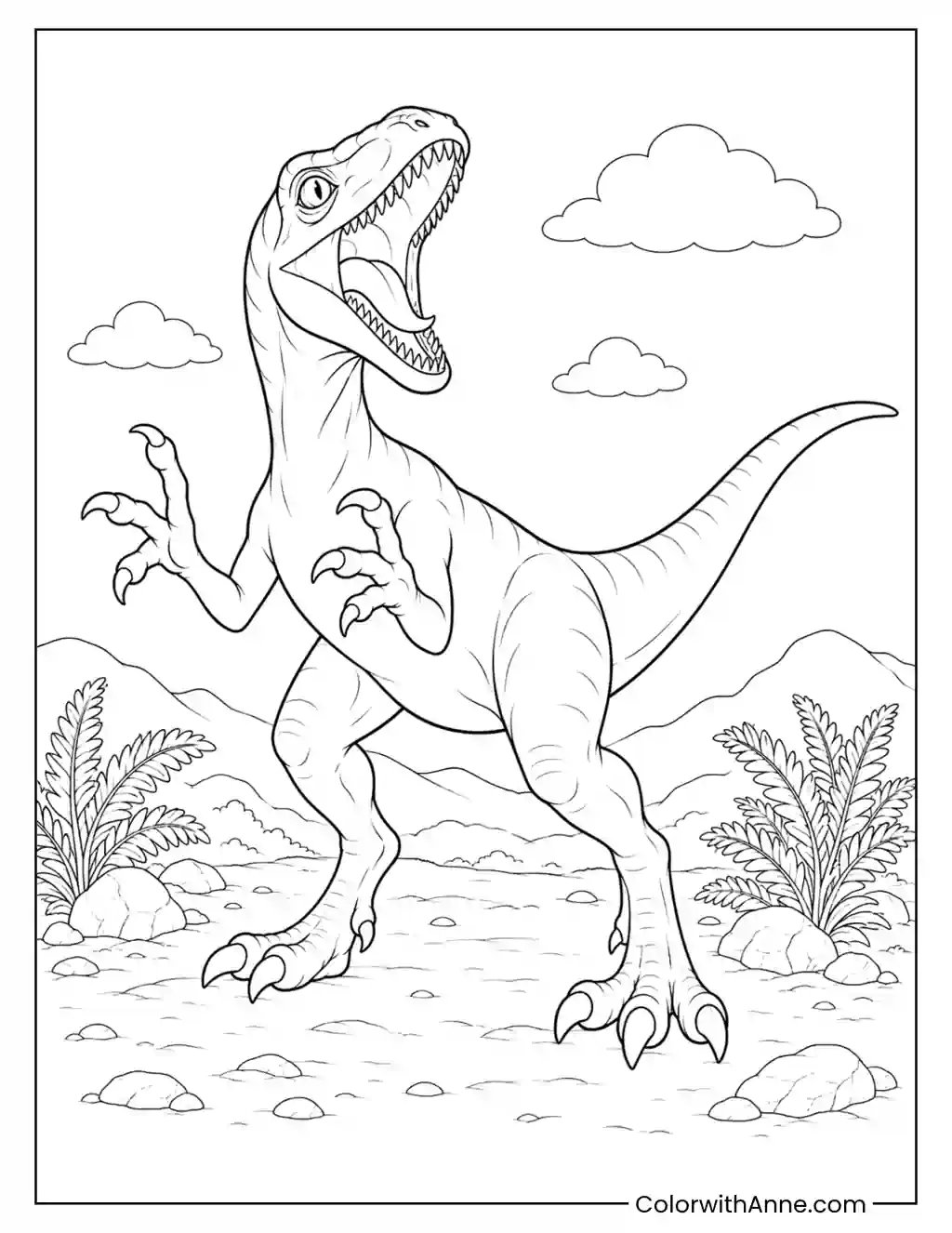
Give the Roar Some Space
The open jaws and lifted head make the roar the strongest feature of this scene. Keep the area around the mouth relatively clear, with darker color lower in the rocks and vegetation.
If you want to add a comic-book effect, place a short roar above the head, using lettering that widens outward. Let the shape of the letters follow the sound you imagine. The dinosaur already supplies the drama; the added lettering simply gives that wide-open mouth something visible to release.
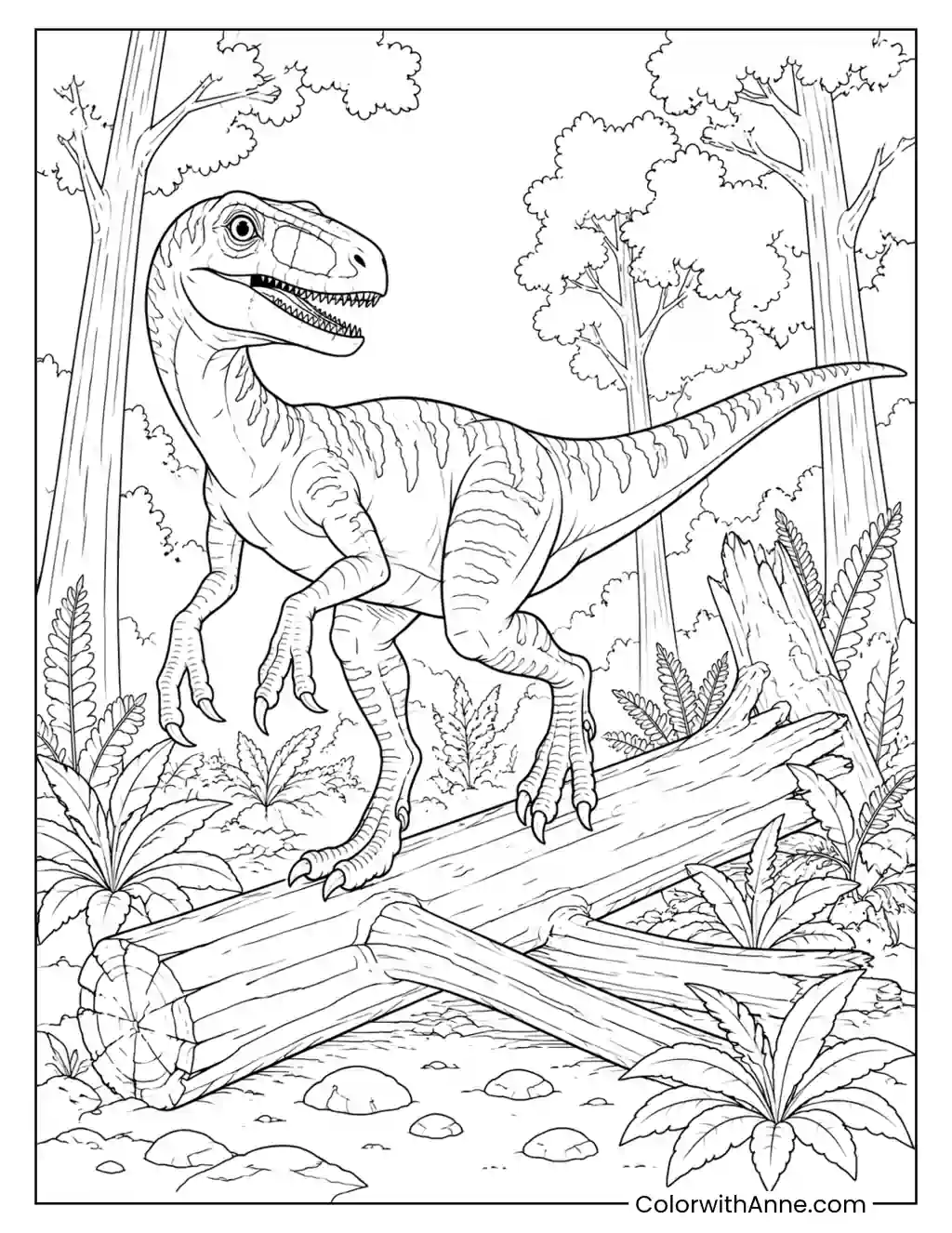
Build a Fallen-Log Route for a Toy Dinosaur
The velociraptor steps among fallen trunks, surrounded by dense plants. Follow its feet through the drawing and notice how the logs break up the ground.
On a tabletop, arrange a few clean twigs or rolled paper logs for a toy dinosaur to cross. Leave gaps wide enough to make the route interesting, then move the toy slowly through it. Back on the page, distinguish the bark from the exposed wood at the broken ends. Those details make the obstacles feel like actual fallen trees.
Use the Stone Arch as a Window into the Scene
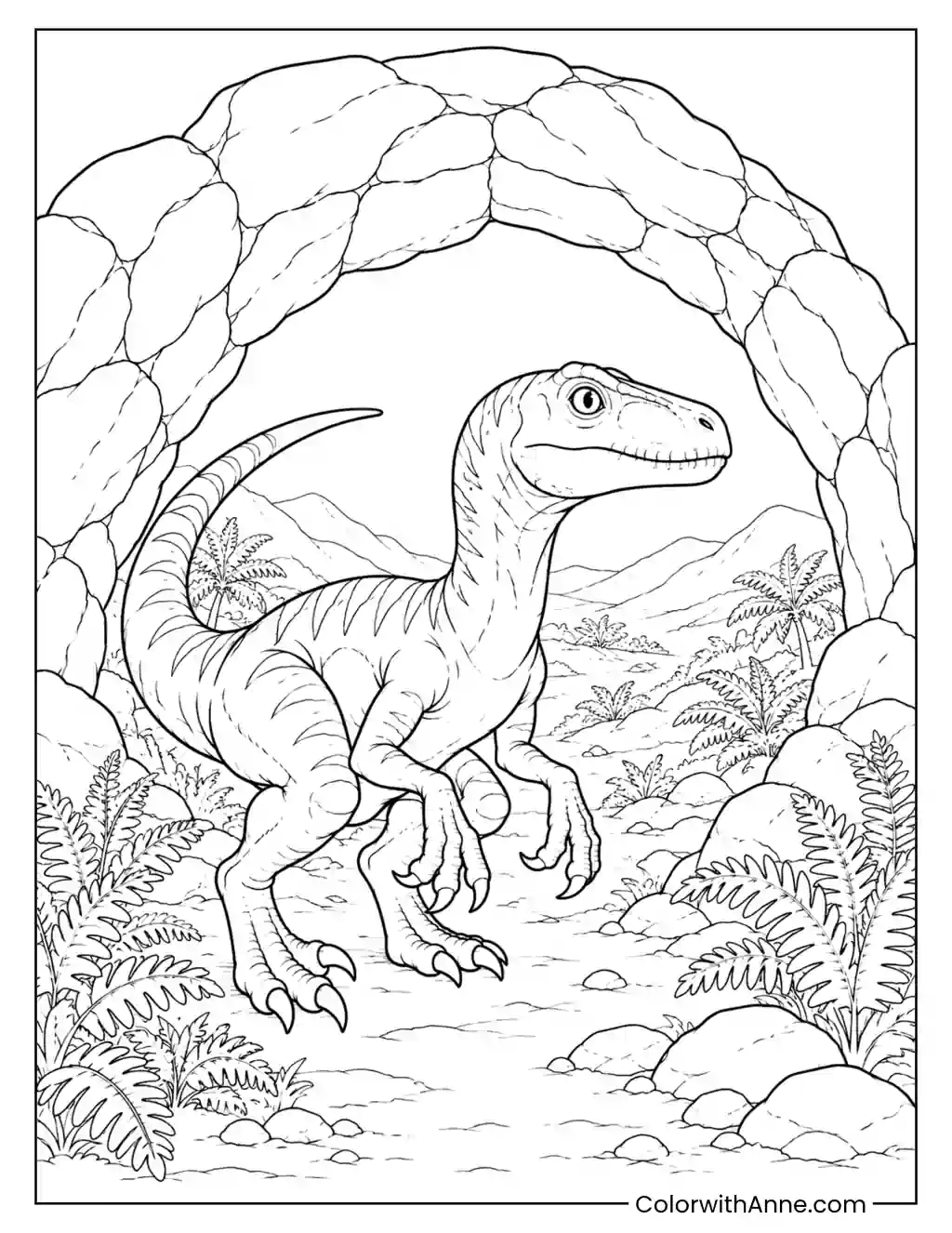
The arch curves over the dinosaur and opens onto a more distant landscape. Give the stones nearest the viewer deeper shadows, then keep the scenery beyond the opening lighter.
That simple shift makes the arch feel like a frame you could look through. Let some of the dinosaur’s color remain clear against the opening so its head does not merge with the rock. The picture’s sense of distance comes from the relationship between the near frame and the world visible through it.
Untangle the Root Bridge
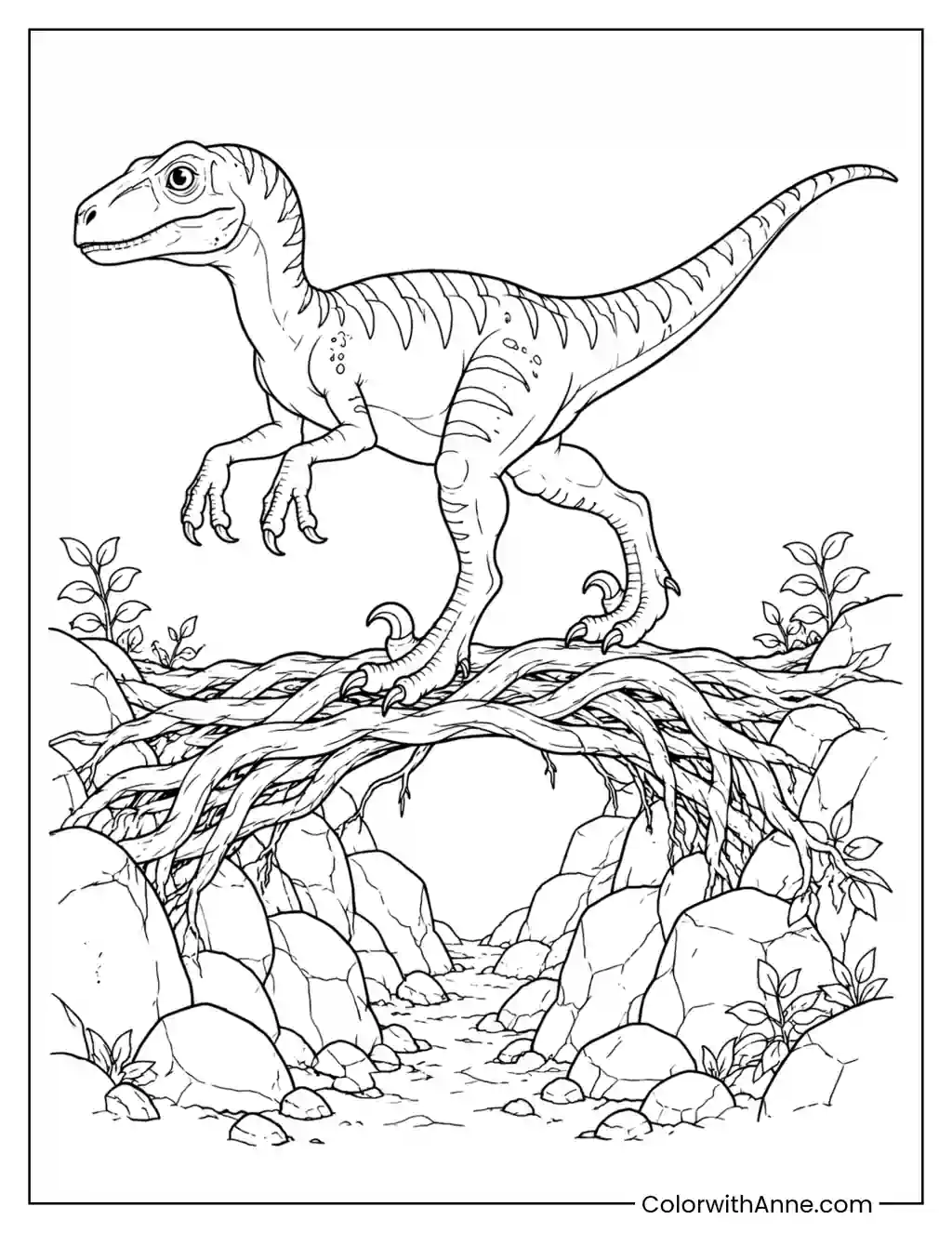
The roots twist together beneath the velociraptor’s feet, creating a bridge with plenty of overlapping lines. Before filling them in, trace a few separate roots with a fingertip.
Choose slightly different browns for neighboring strands and darken the places where one disappears beneath another. Keep the space below the bridge cooler and darker. The page becomes a satisfying untangling exercise: gradually, the busy pattern turns into a structure that seems able to support the dinosaur above it.
Decide What the Cracked Egg Is Hiding
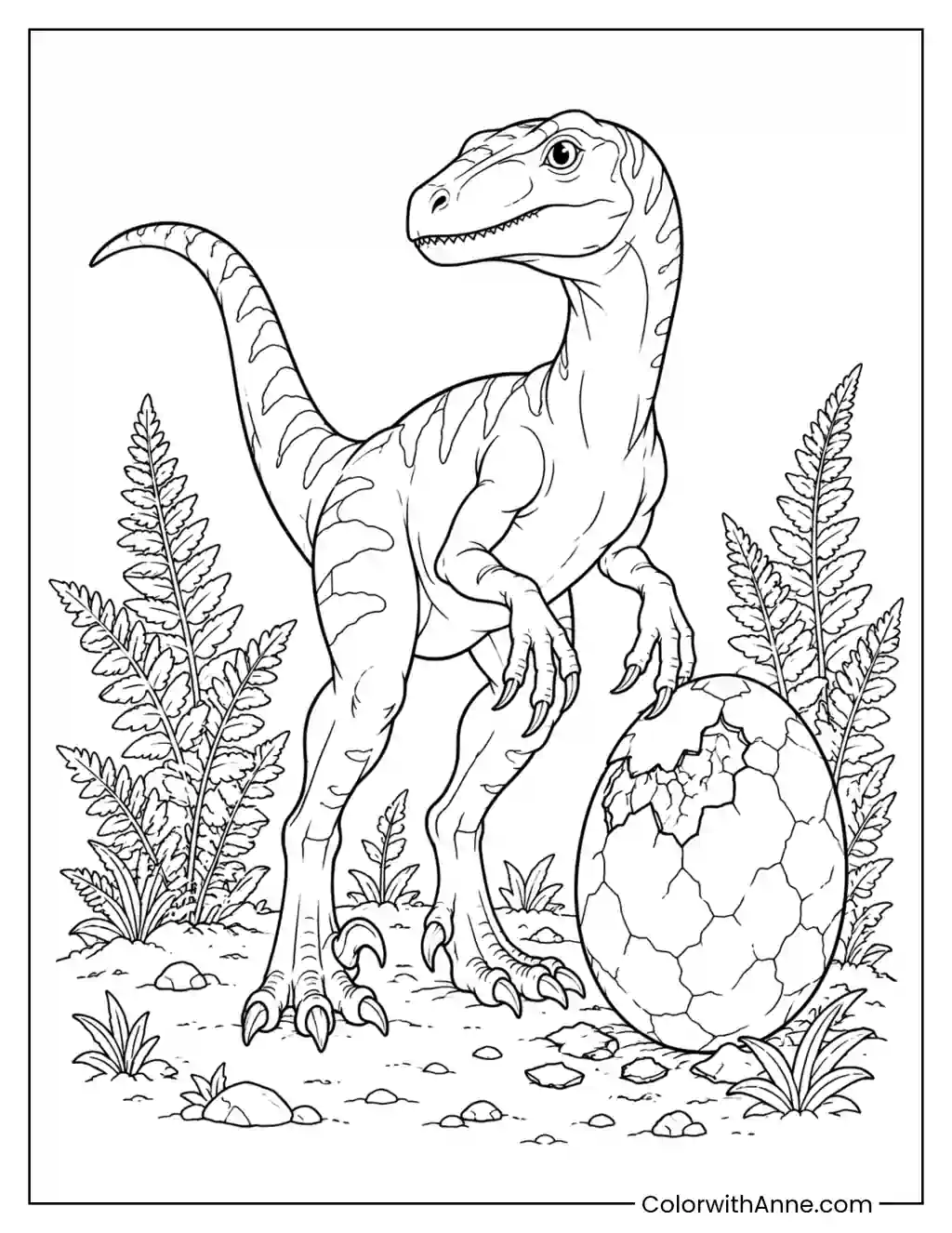
The velociraptor stands beside a large cracked egg, but the picture leaves its contents unseen. That unanswered detail makes a natural opening for a reveal.
Draw your imagined hatchling on a small piece of paper and place it beneath a hinged egg-shaped flap. It could resemble the larger dinosaur or surprise everyone with a completely different fictional creature. Color the shell’s cracks clearly so the reveal feels connected to the original picture. The story begins at the one place the drawing deliberately leaves closed.
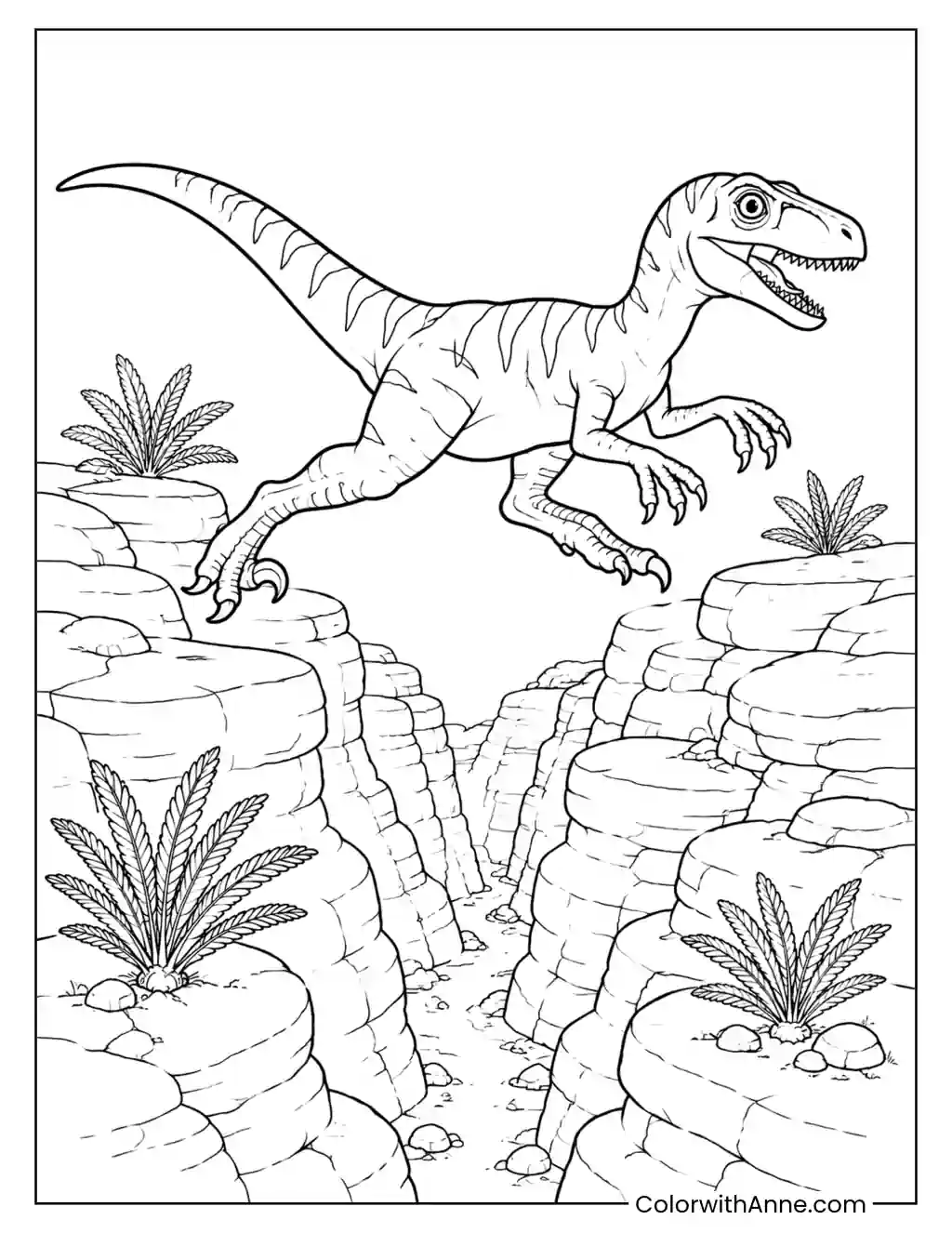
Draw the Moment after the Ravine Leap
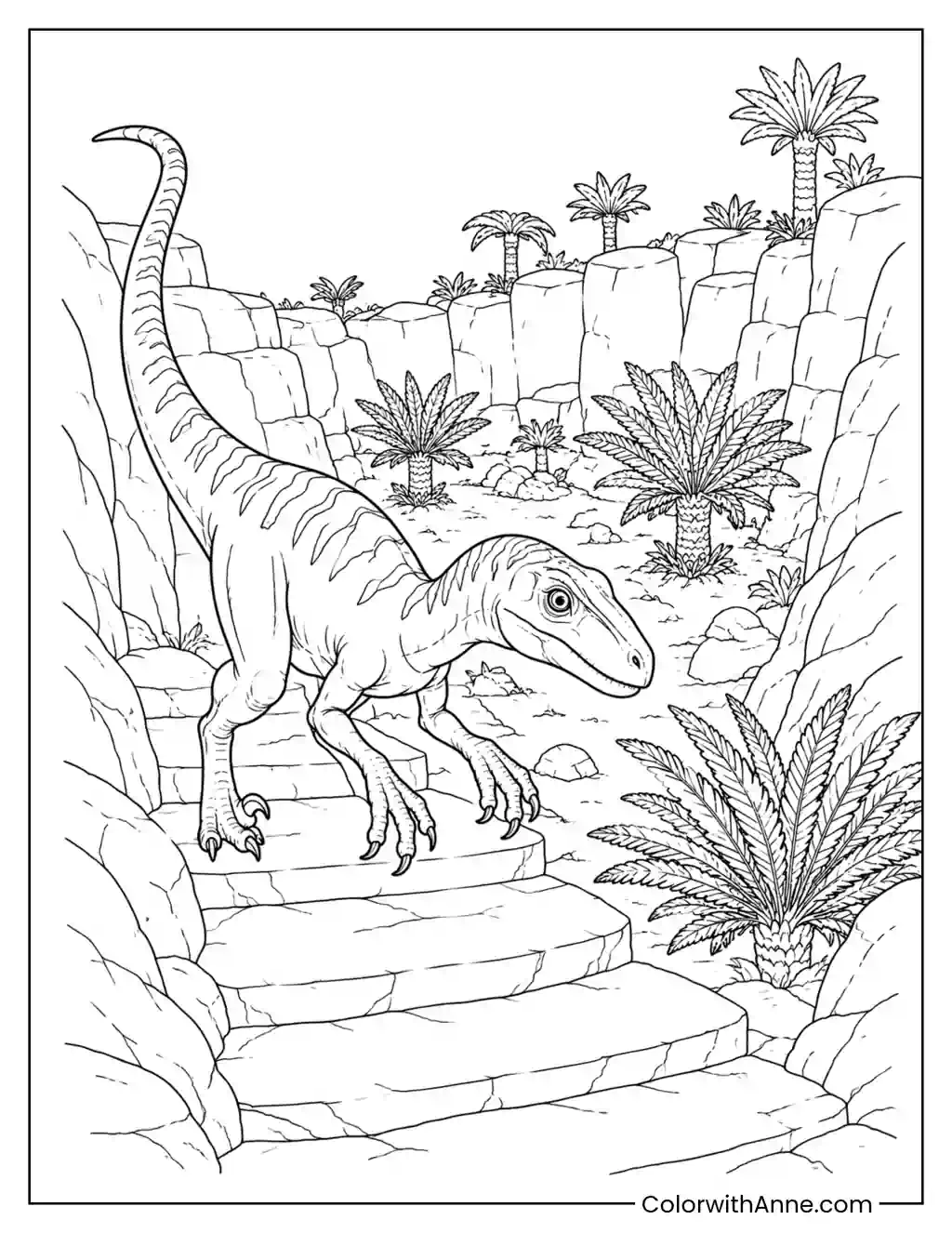
The dinosaur is suspended between rocky ledges, with its tail stretched behind it. The picture catches the jump before the landing, which is a useful place to start a short action sequence.
On a separate sheet, sketch what happens one moment later. Does a foot touch the ledge first, or does loose gravel slide under it? Keep the direction of travel consistent with the printed pose. Putting the two images together gives the leap a beginning of resolution without needing a whole dinosaur adventure around it.
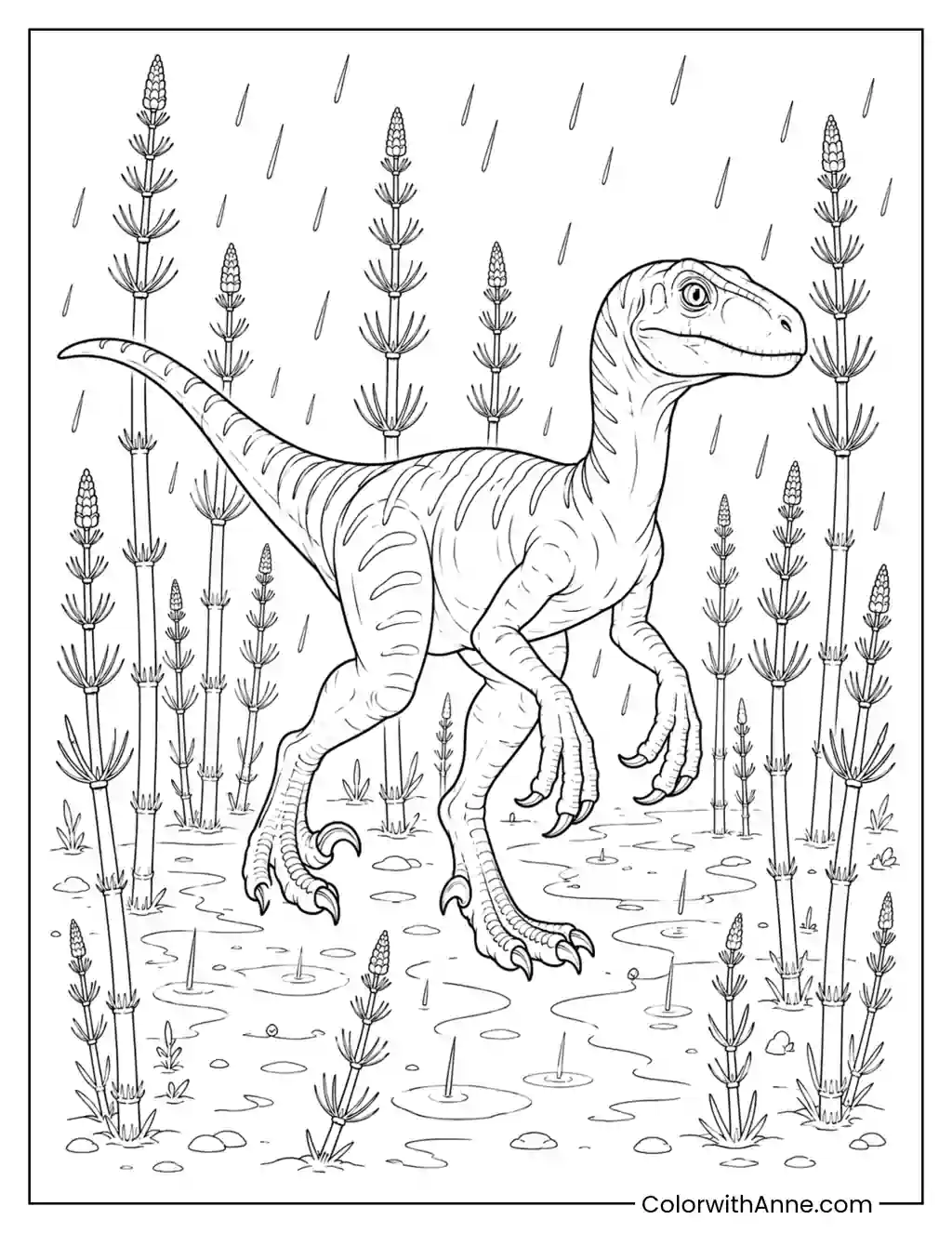
Make the Rain Change the Landscape
Rain falls through the tall plants while small ripples spread across the ground. Let the wet surfaces carry the mood: deeper tones on the rocks and soil, with a few pale reflections around the puddles.
Keep the rain lines visible by avoiding an equally dark background everywhere. The dinosaur’s back can take a softer highlight, as though the light is filtered through cloud. This scene is less about a dramatic encounter and more about making the same prehistoric world feel different because the weather has changed.
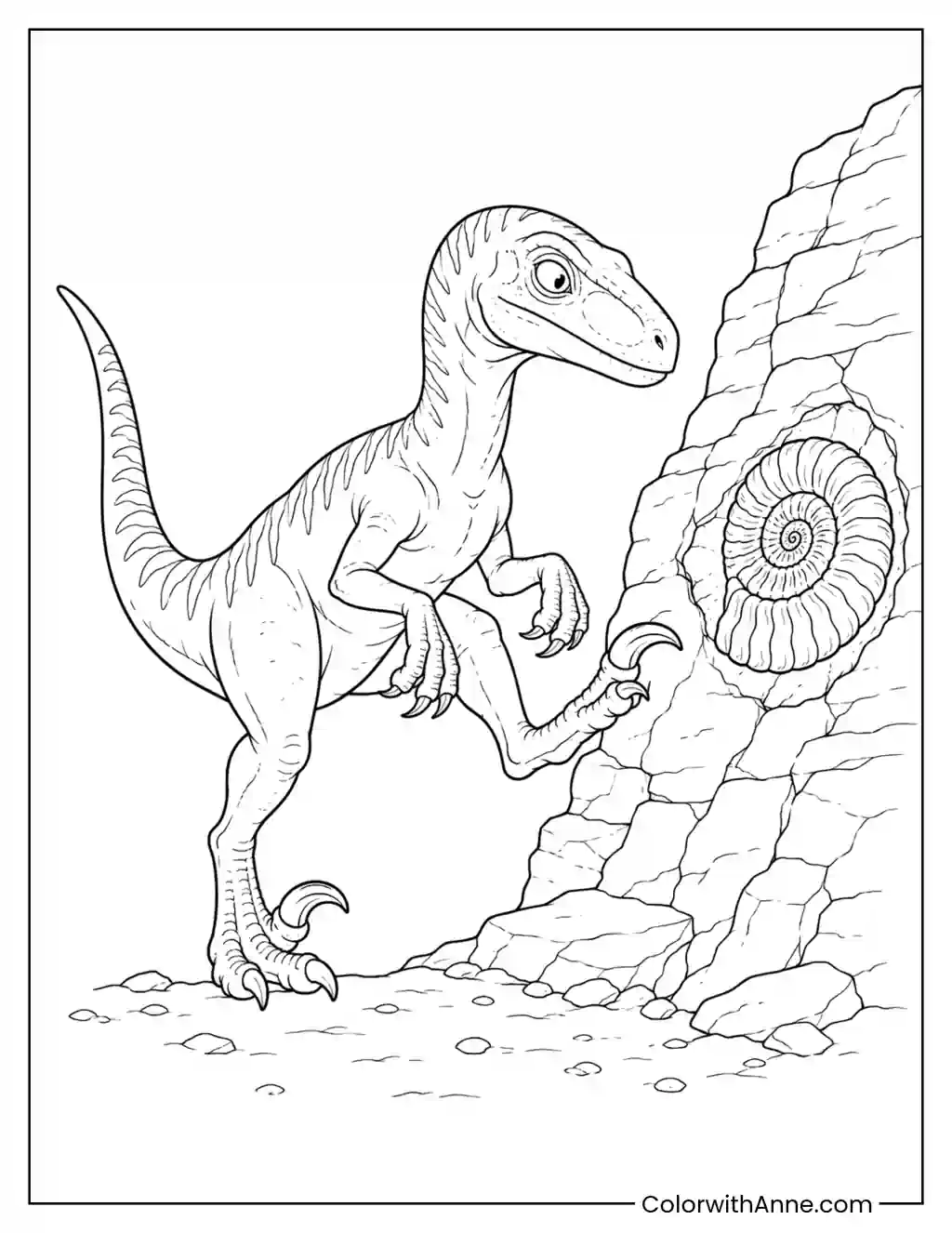
Make a Spiral Fossil Impression
The spiral fossil is set into the rock beside the dinosaur, giving the page a discovery smaller than the animal itself. Color its ridges with alternating light and shadow so the spiral feels embedded in the stone.
For a simple companion activity, coil a thin rope of modeling clay into a spiral and press it gently into a separate clay slab. Lift it away to leave an impression. The result helps explain visually why a patterned shape can remain interesting even when it is no longer the object that made it.