
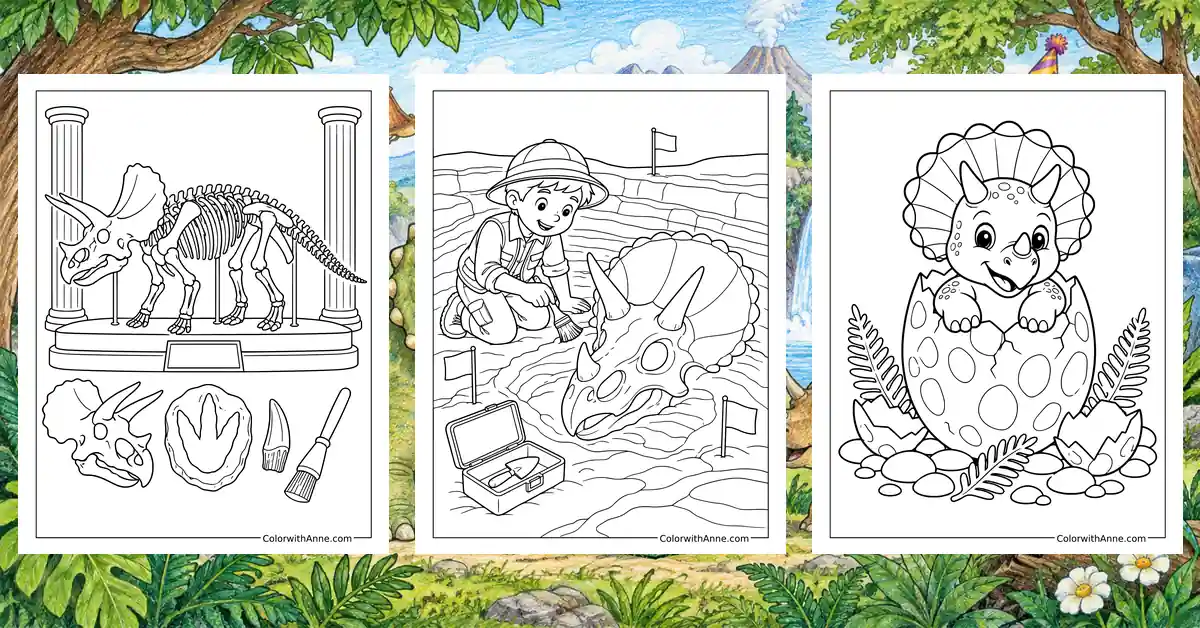
At the museum, Triceratops is the dinosaur that makes someone stop mid-step and count the horns. Back home, its toy counterpart usually turns up beside the sofa, looking impressively sturdy for something small enough to disappear under a cushion. The broad frill and three-horned face give it a presence that needs very little introduction.
Triceratops coloring pages bring that familiar fascination to a quieter afternoon. Those sweeping horns and the curved edge of the frill offer plenty to notice before the rest of the animal takes shape. Even on paper, Triceratops has the solid, slightly stubborn look of a creature unlikely to hurry for anyone.
Free Printable Triceratops Coloring Pages
Click any coloring page below to open the PDF, then print on US Letter or A4 paper.
Did you find what you needed?
Help us choose what to create or improve next.
Coloring Ideas for Triceratops Pages
Try one of these coloring ideas, or use them as a starting point for your own.
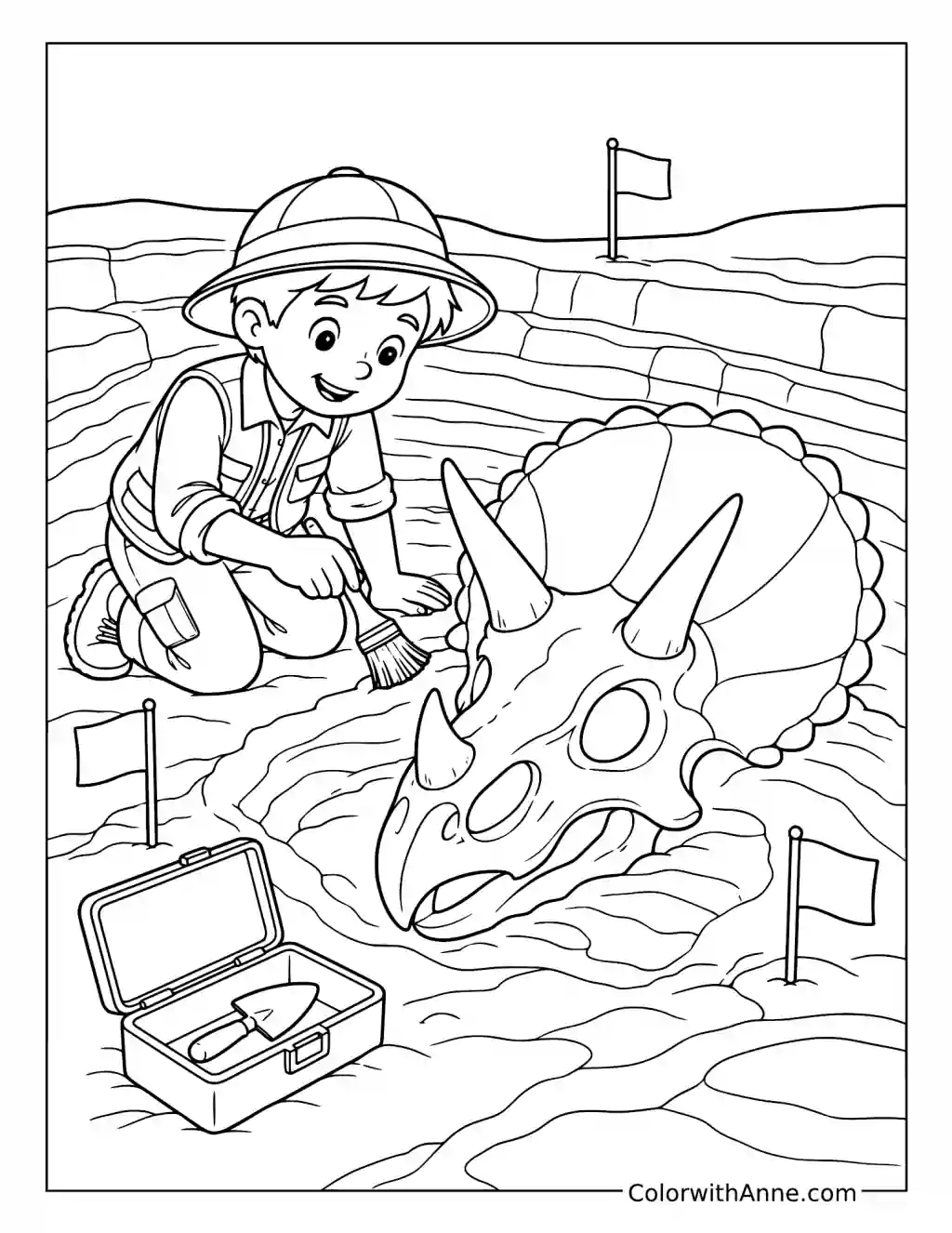
Join the Triceratops Dig
The young paleontologist is working beside an exposed skull, with a brush in hand and an open equipment case nearby. For a child who comes home with pockets full of interesting stones, this picture feels pleasantly familiar, even if the usual discoveries are considerably smaller.
Pair the page with a little tabletop excavation: hide a toy dinosaur in a shallow tray of sand, then uncover it with a soft brush. Afterward, return to the drawing and notice where the pictured brush meets the skull. That careful movement gives the activity its appeal; finding something is only half the fun.
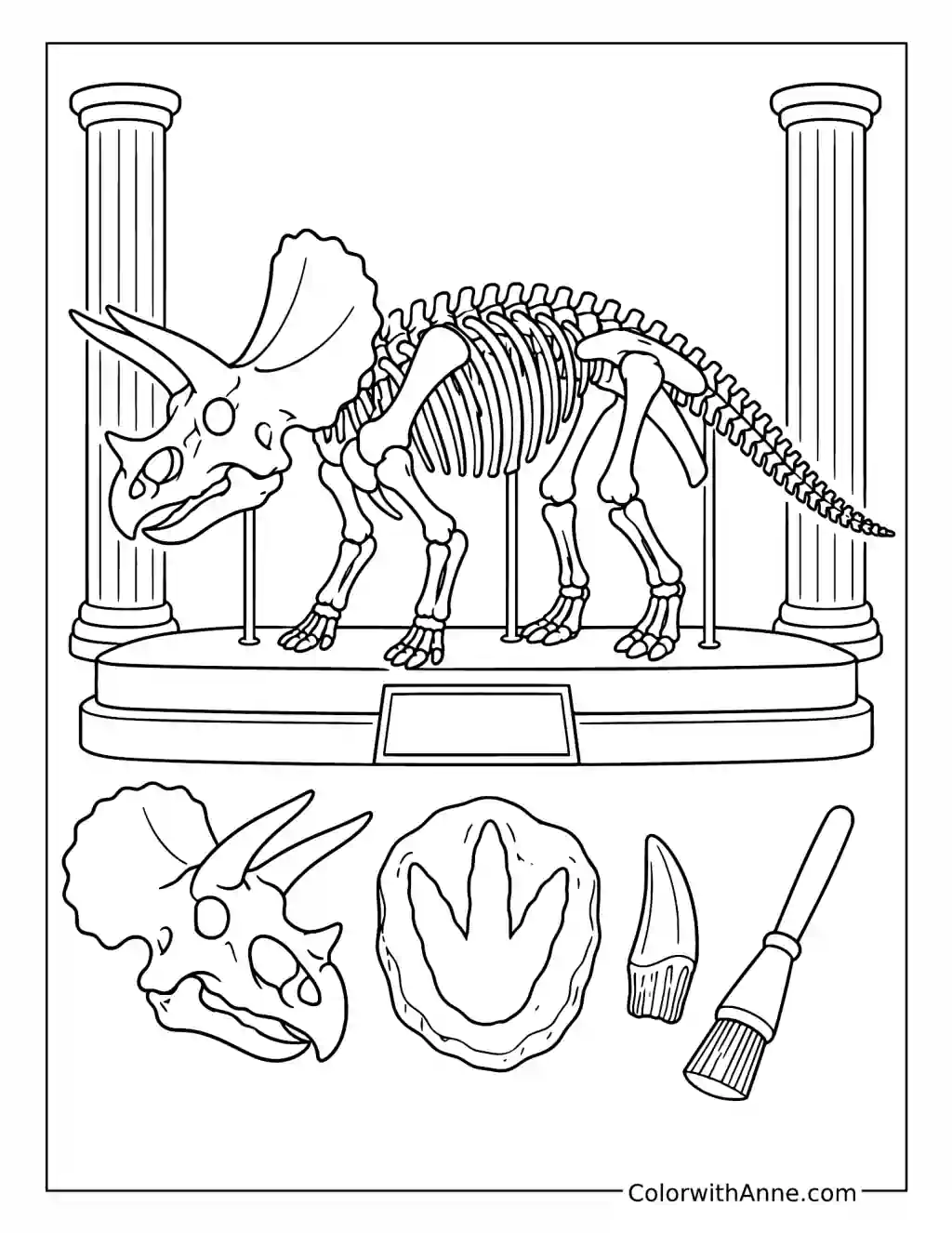
Make a Museum Label for the Skeleton
The mounted skeleton stands between two columns, with a blank display plaque beneath it. Give that plaque a proper museum job by adding “Triceratops,” then choose one feature to investigate in a dinosaur book. The ribs, horns, and long tail are all clearly visible, so there is plenty to compare.
Keep any longer notes on a separate card beside the finished page. A short observation and one question are enough to start a miniature exhibit on a bookshelf. If a museum visit is coming up, take the question along and see whether the real display answers it.
Give the Dinosaur Astronaut a Mission
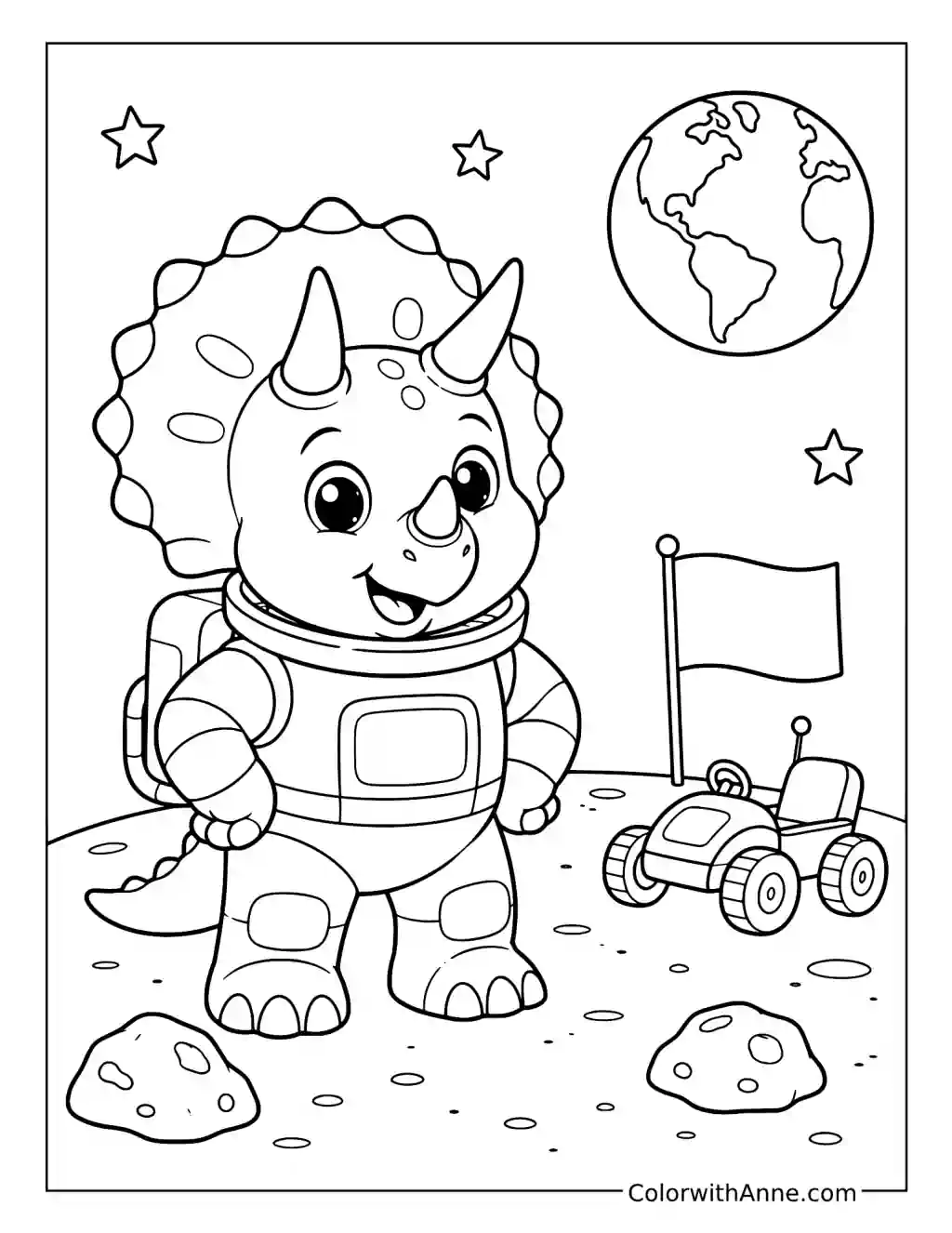
A spacesuit, a little rover, and Earth overhead put this baby Triceratops firmly in make-believe territory. The blank flag is an especially inviting detail: draw a mission emblem there, perhaps combining a three-horned face with a crescent moon.
For someone whose dinosaur toys already mingle with spacecraft, the finished picture can become the backdrop for their next adventure. Set a toy rover in front of it and decide what the astronaut has come to collect. Those horns make the helmet quite a piece of custom equipment.
Turn the Leafy Frill into a Decorative Pattern
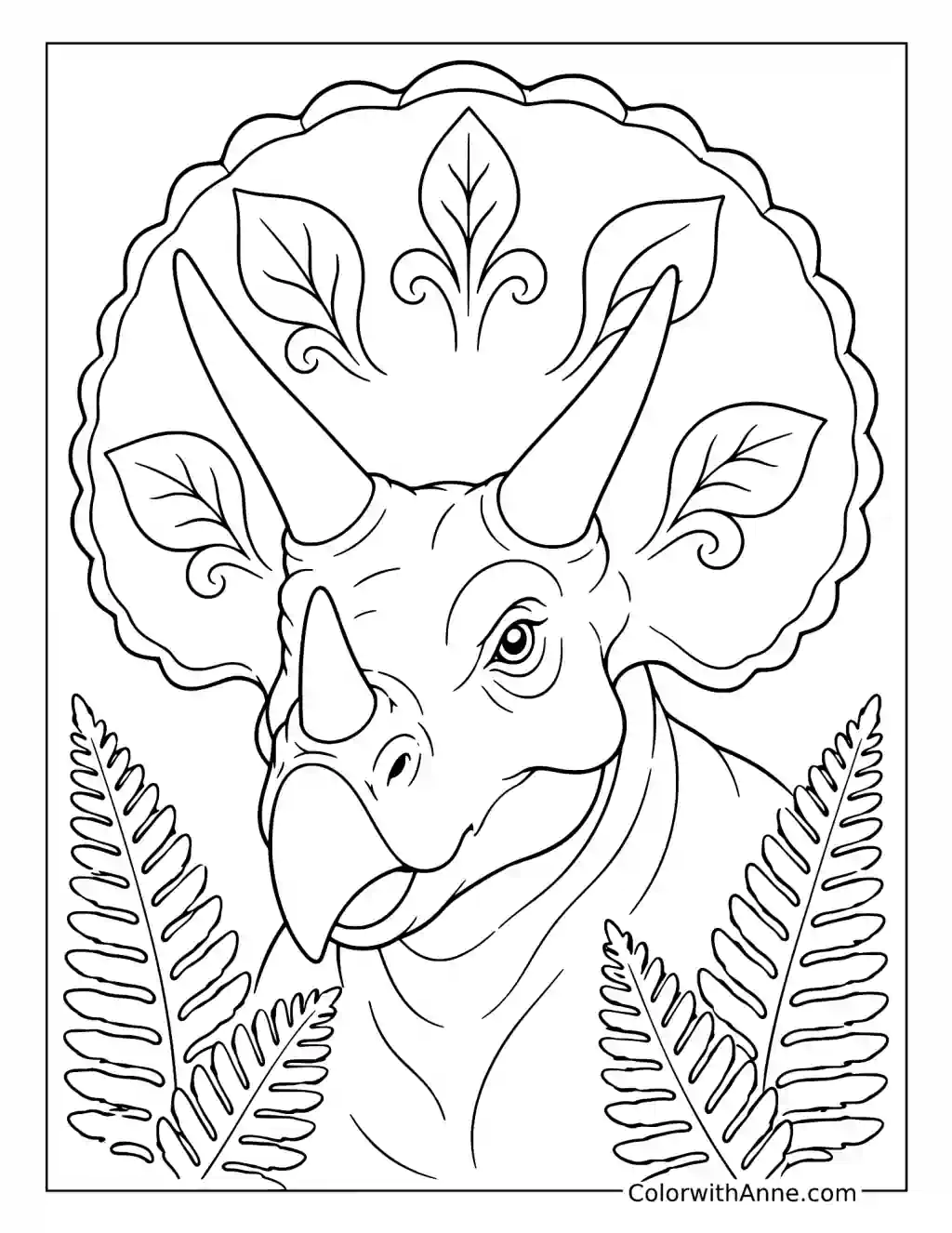
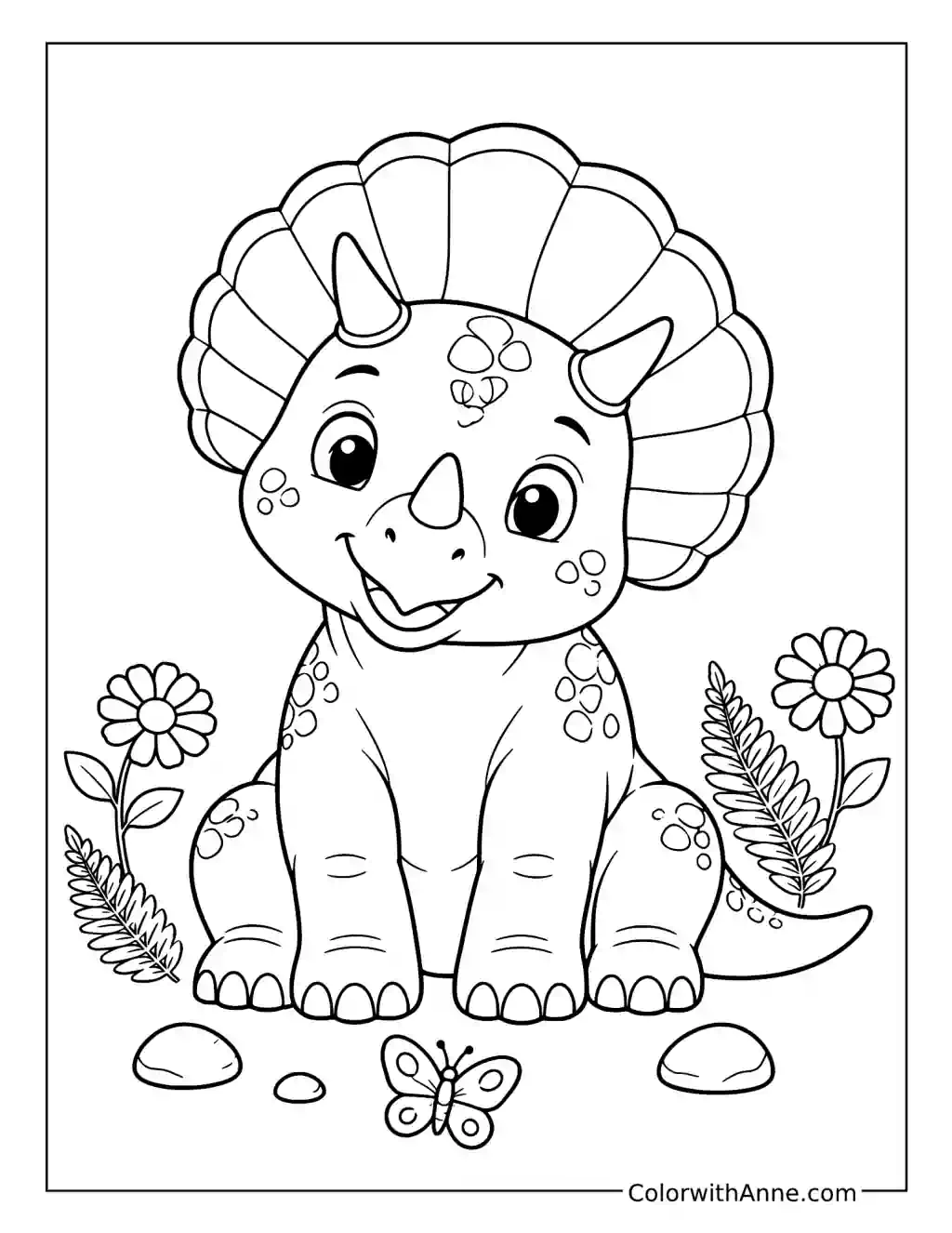
Leaf shapes decorate this Triceratops’s broad frill, while fern fronds frame the portrait from below. The drawing already has the feel of an ornamental design, so try treating the frill as one continuous pattern rather than a collection of separate spaces.
Repeat a small detail inside the leaves, such as fine veins or dots, and let the central leaf guide the arrangement. Keep the face comparatively plain so its expression remains easy to see. This is a satisfying choice when the pleasure is simply in making a pattern come together, with no extra project required.
Decide What Happens After the Standoff
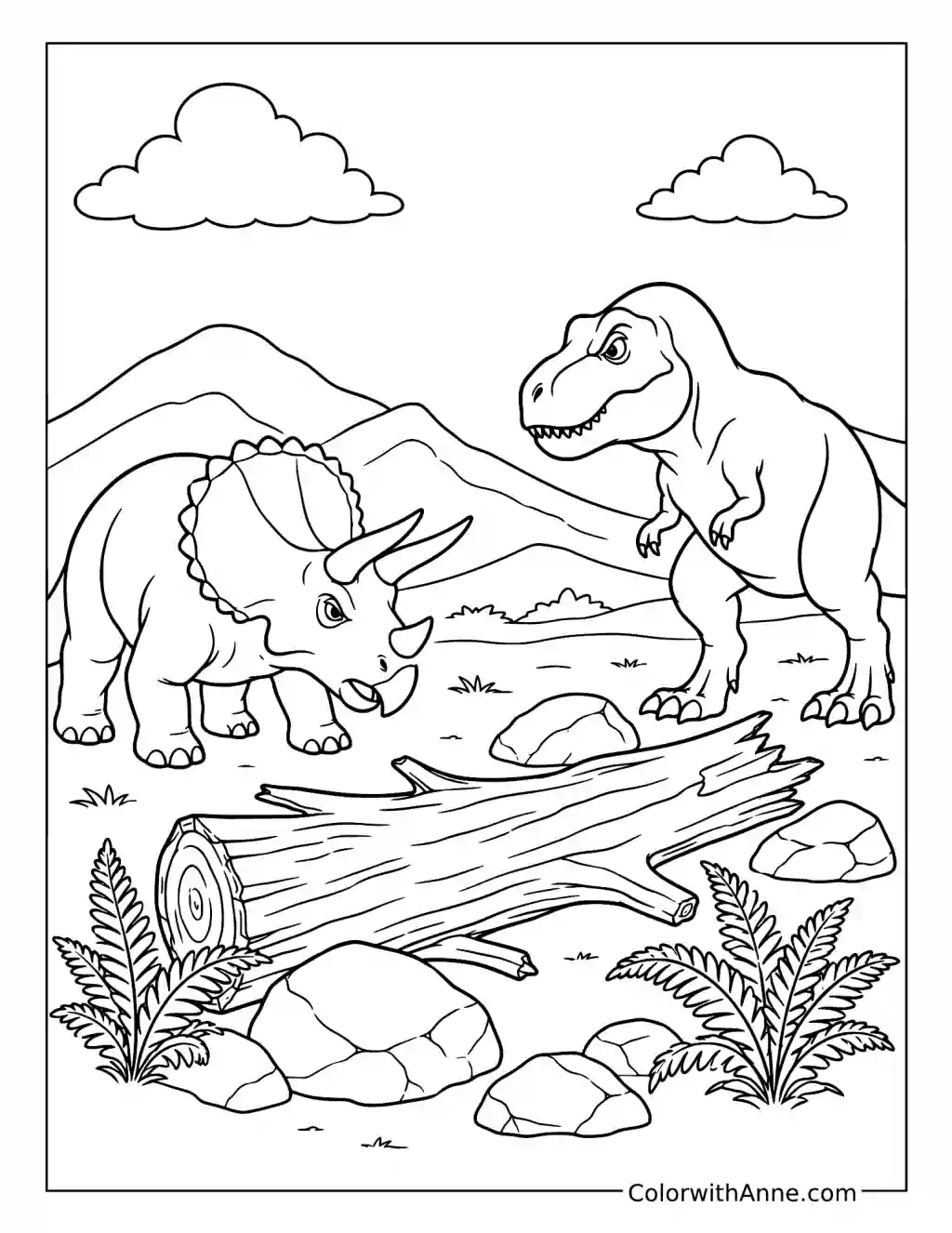
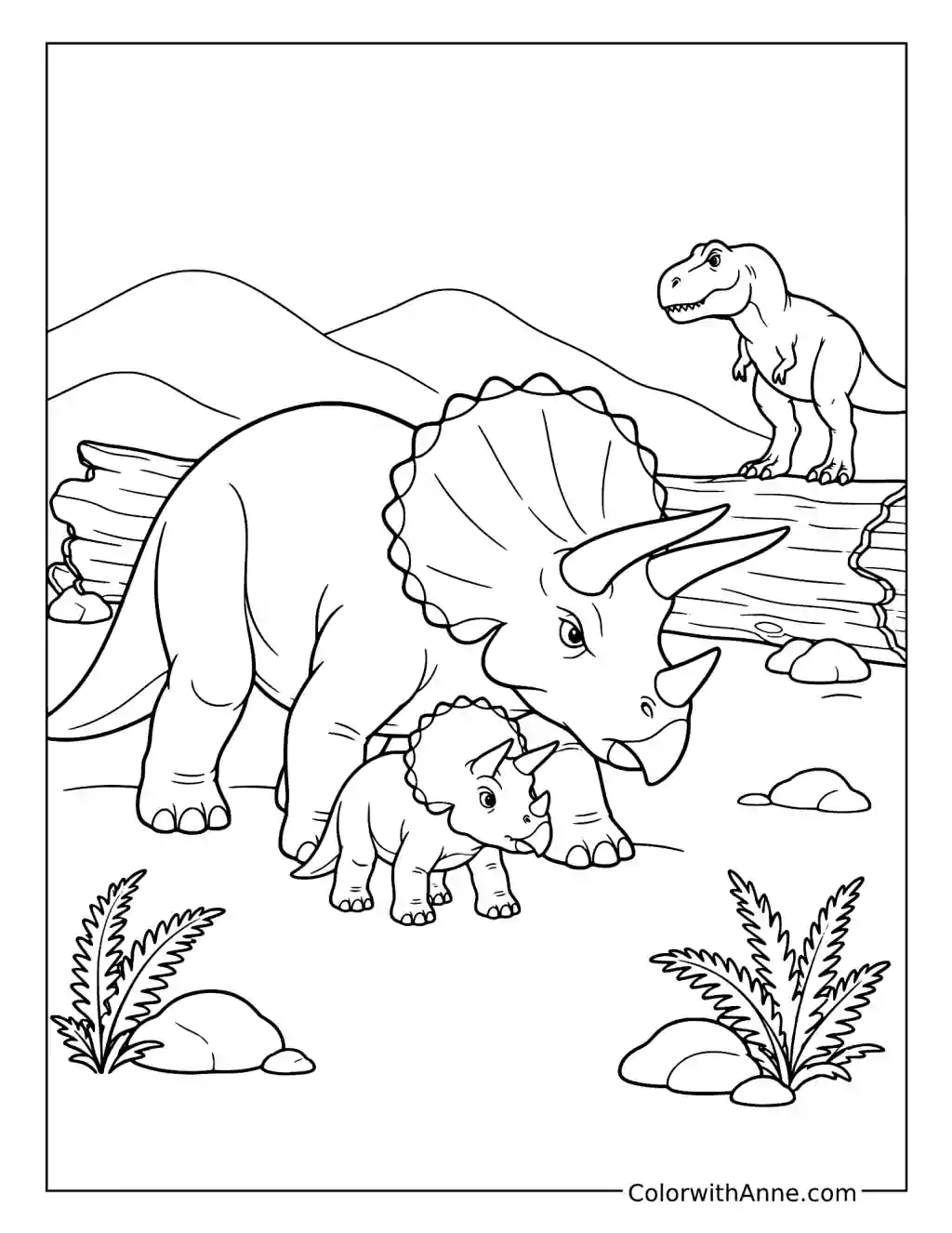
Triceratops and T. rex face each other across a rocky clearing, with a fallen log stretching through the foreground. Their poses give the scene tension before anything actually happens.
For a dinosaur fan who likes telling stories, leave the outcome open while coloring. Then sketch a small follow-up panel on another sheet: does one dinosaur retreat, does the log become an obstacle, or does something outside the picture interrupt them? Try letting posture carry the ending instead of adding speech bubbles. A turned head or a few departing footprints can say quite a lot.
Play with the Hatching Baby’s Eggshell
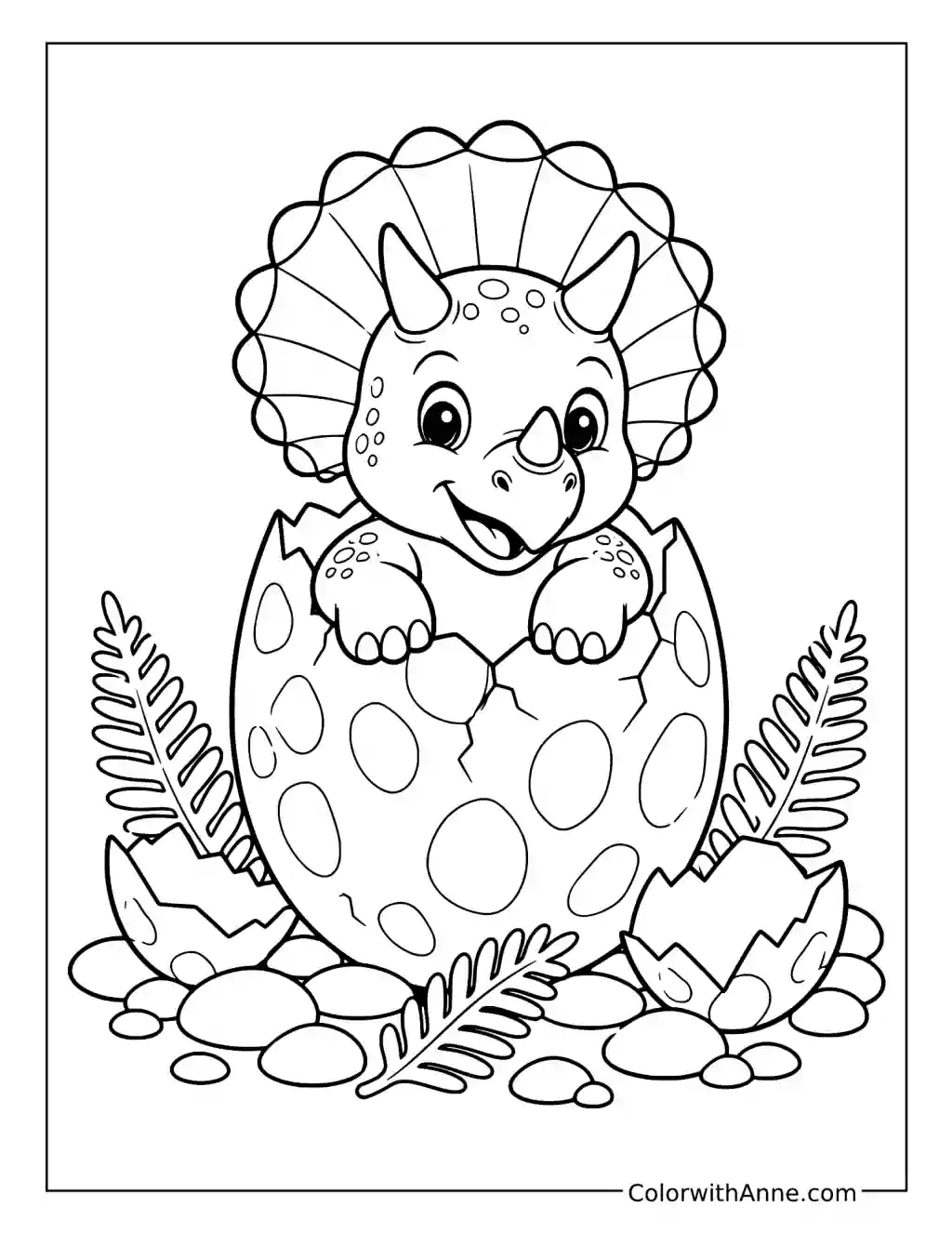
This baby Triceratops rests its front feet on the broken shell, surrounded by scattered fragments and ferns. The large oval markings on the egg offer a playful place to experiment, especially if a favorite toy dinosaur already has a distinctive pattern.
Borrow one small feature from that toy for the hatchling, then give the shell a pattern of its own. The broken pieces can repeat the same markings, making them look as though they belong to the egg. Keep the baby’s wide eyes and happy expression clear; they are what make the little arrival so engaging.
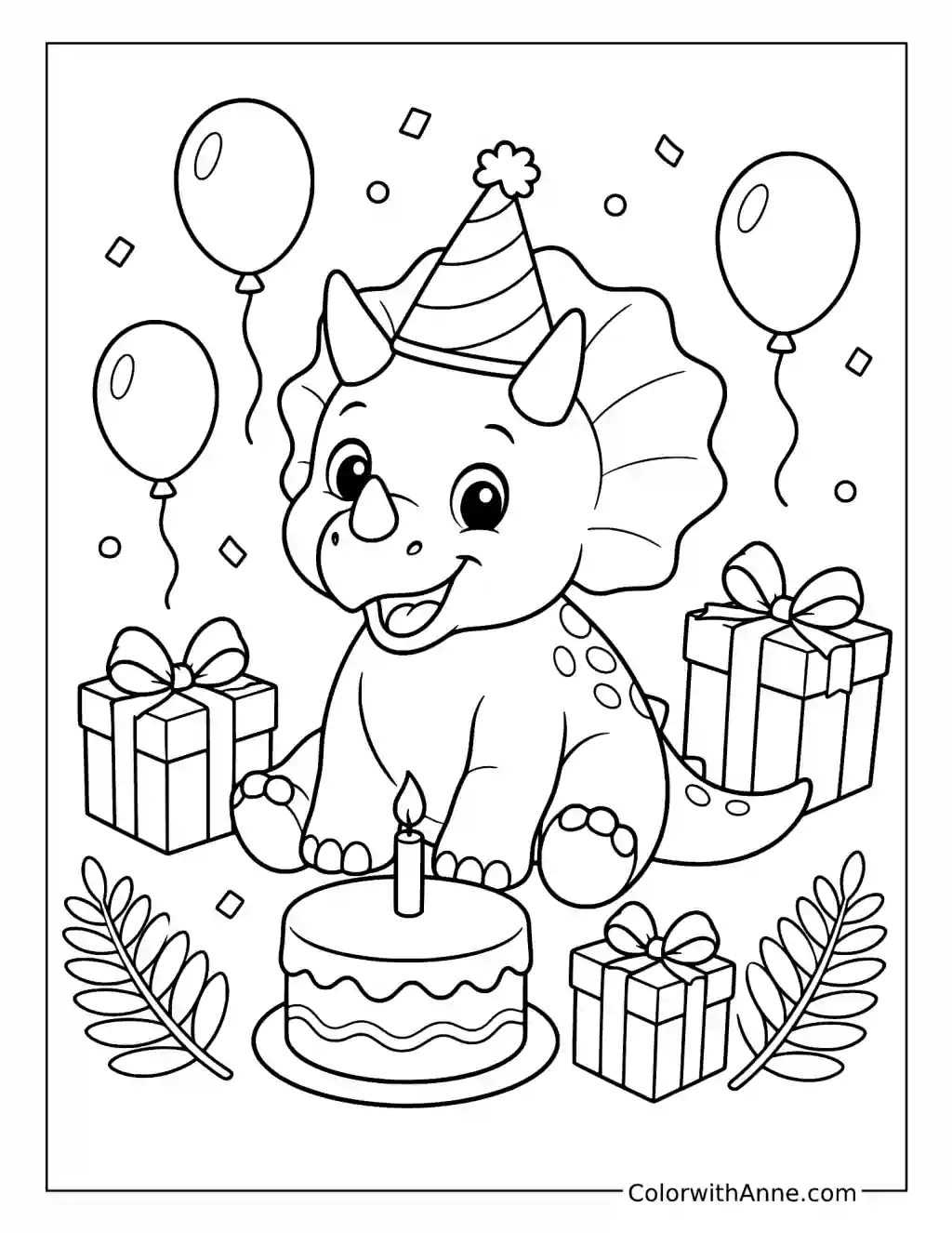
Welcome a Birthday Guest with Triceratops
The party hat, balloons, wrapped presents, and candle-topped cake make this page a natural fit for a dinosaur birthday. Add the birthday child’s name in the space above the scene, then prop the finished sheet beside the cake or snack table.
There is no need to turn preparation into another elaborate task. A child can finish the picture ahead of time while an adult handles the party arrangements. For a personal touch, let the drawn cake resemble the one being served, right down to a favorite icing pattern.
Settle into the Sleepy Woodland Scene
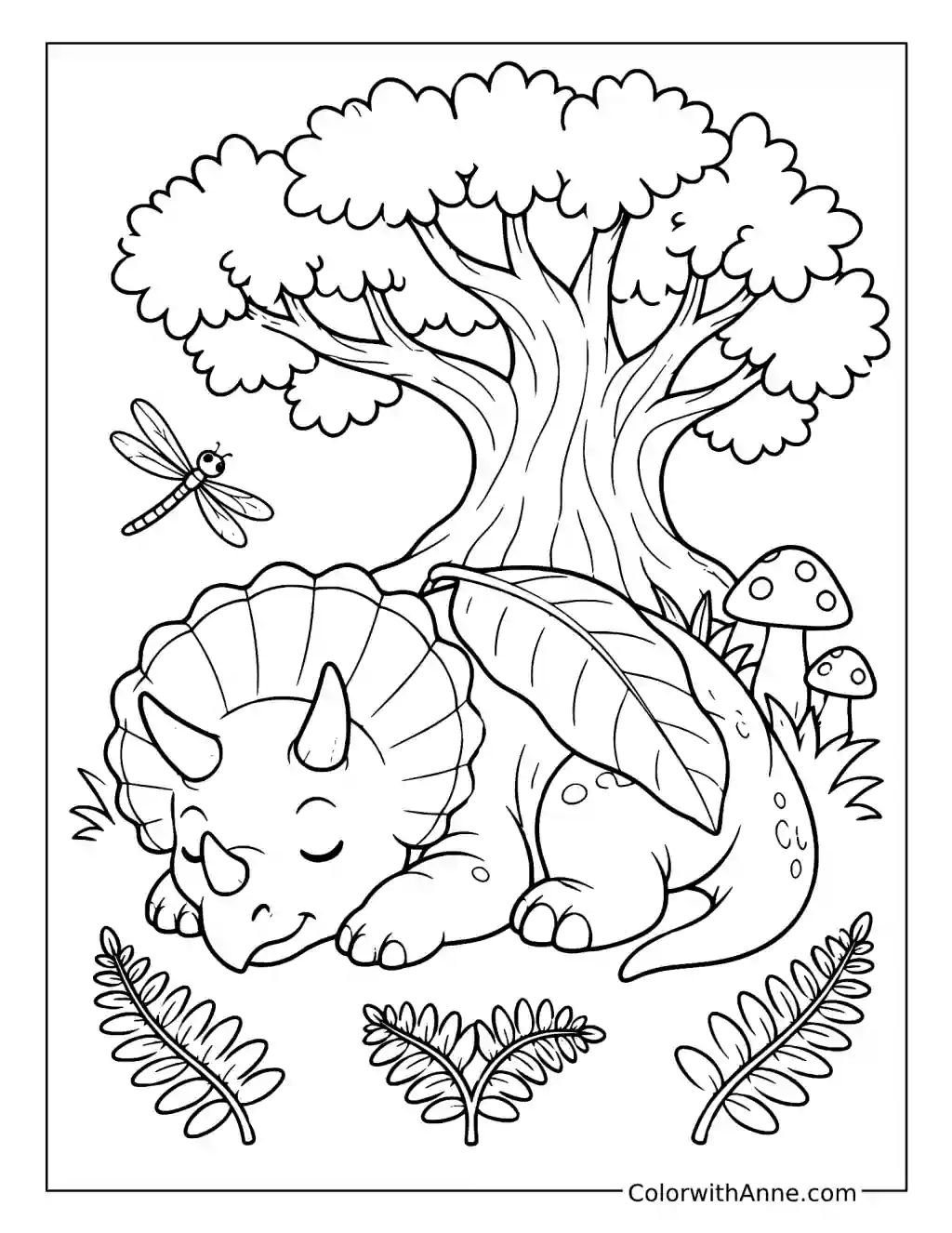
Curled beneath a leafy tree, this baby Triceratops looks thoroughly settled. Mushrooms sit beside the trunk, and dragonflies hover around the resting dinosaur. It is a good picture for the quieter end of an afternoon, when there is still time at the table but nobody particularly needs another activity with instructions.
Follow whichever part catches your attention: the folds of the sleeping body, the branching tree, or the fern leaves along the bottom. The whole page does not have to be finished in one sitting. Leaving a few branches for tomorrow suits this unhurried little scene.