
T-Rex can enter a conversation before anyone has asked for a dinosaur fact. Someone notices a large footprint on a sign, and an enthusiast is already explaining which animal it ought to belong to. An ordinary outing has become a discussion of teeth and body size.
T-Rex coloring pages have a place beside museum leaflets and well-thumbed dinosaur guides. The huge head and very small arms are a combination worth looking at twice. A familiar favorite can still leave an unanswered question, and that may keep the conversation going all the way home.
Free Printable T-Rex Coloring Pages
Click any coloring page below to open the PDF, then print on US Letter or A4 paper.
Did you find what you needed?
Help us choose what to create or improve next.
Coloring Ideas for T-Rex Pages
Try these creative ideas to make the most of your coloring sheets.
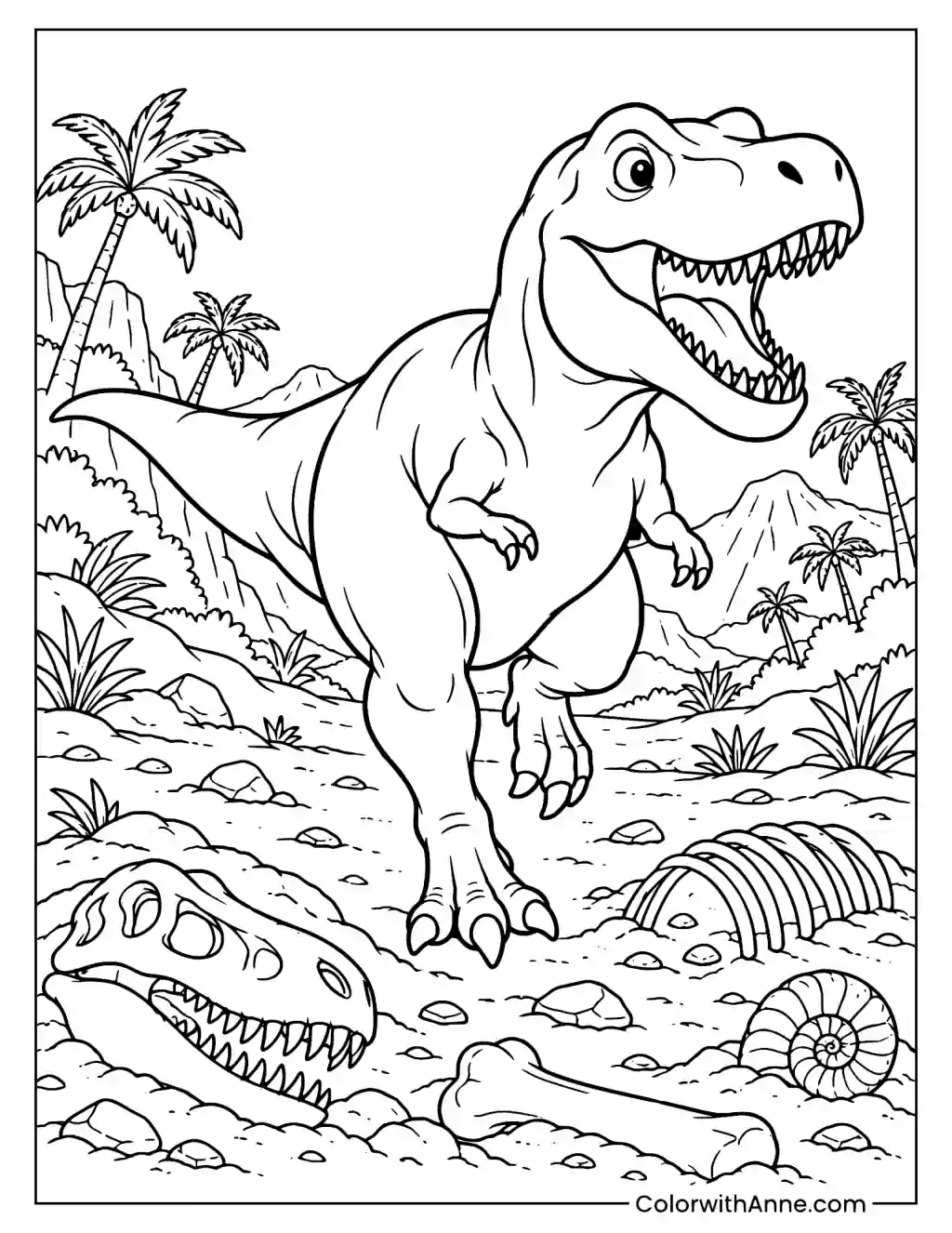
Start a Small Record of the Valley Finds
The skull, curved rib-like bones, and spiral shell shapes in this valley give a dinosaur enthusiast several finds to record. Choose one before turning the whole scene into a collection of labels.
A sandy valley with pale bones would suit a green T-Rex. On separate paper, sketch the chosen object as it appears, stopping wherever a stone or another outline hides its edge.
Write a brief note about what is visible: a curve, a row of openings, or a spiral. Then compare it with a second find. Keeping the notes close to the drawings makes it easier to notice which details belong to each object.
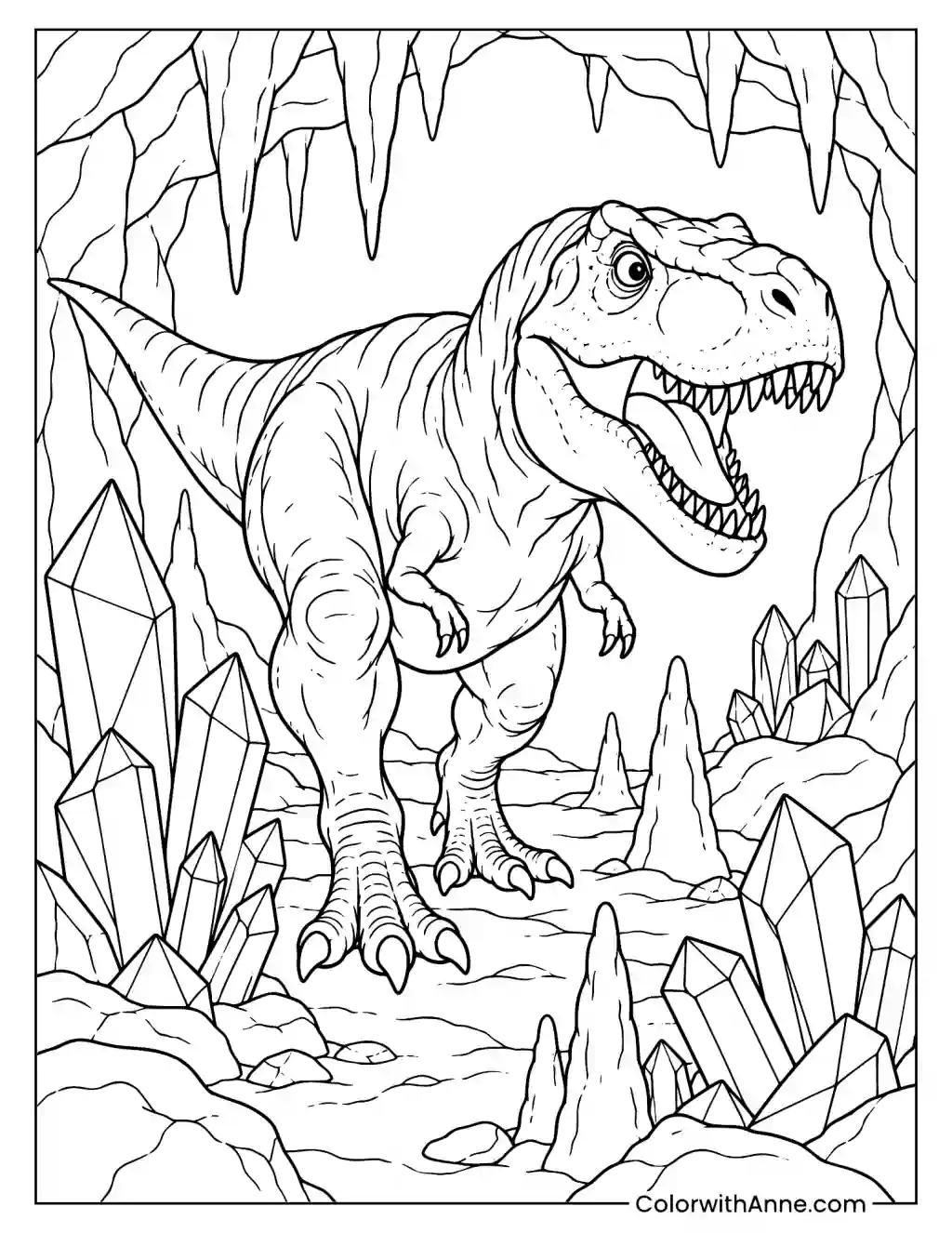
Find the Bright Face of a Crystal
The large crystals around the cave floor have several flat faces. A loosely folded piece of white paper can help show how one face catches more light than the one beside it.
Hold the folded paper near a window and turn it slowly. Choose one bright face and one darker face to use as a guide for a pair of neighboring sections in the drawing.
Pale violet crystals with one deeper purple face would sit well beside gray cave walls. Keep the smallest crystal tips lighter, then look back at the folded paper if two touching faces start to look identical. The dinosaur can remain the broad central shape between them.
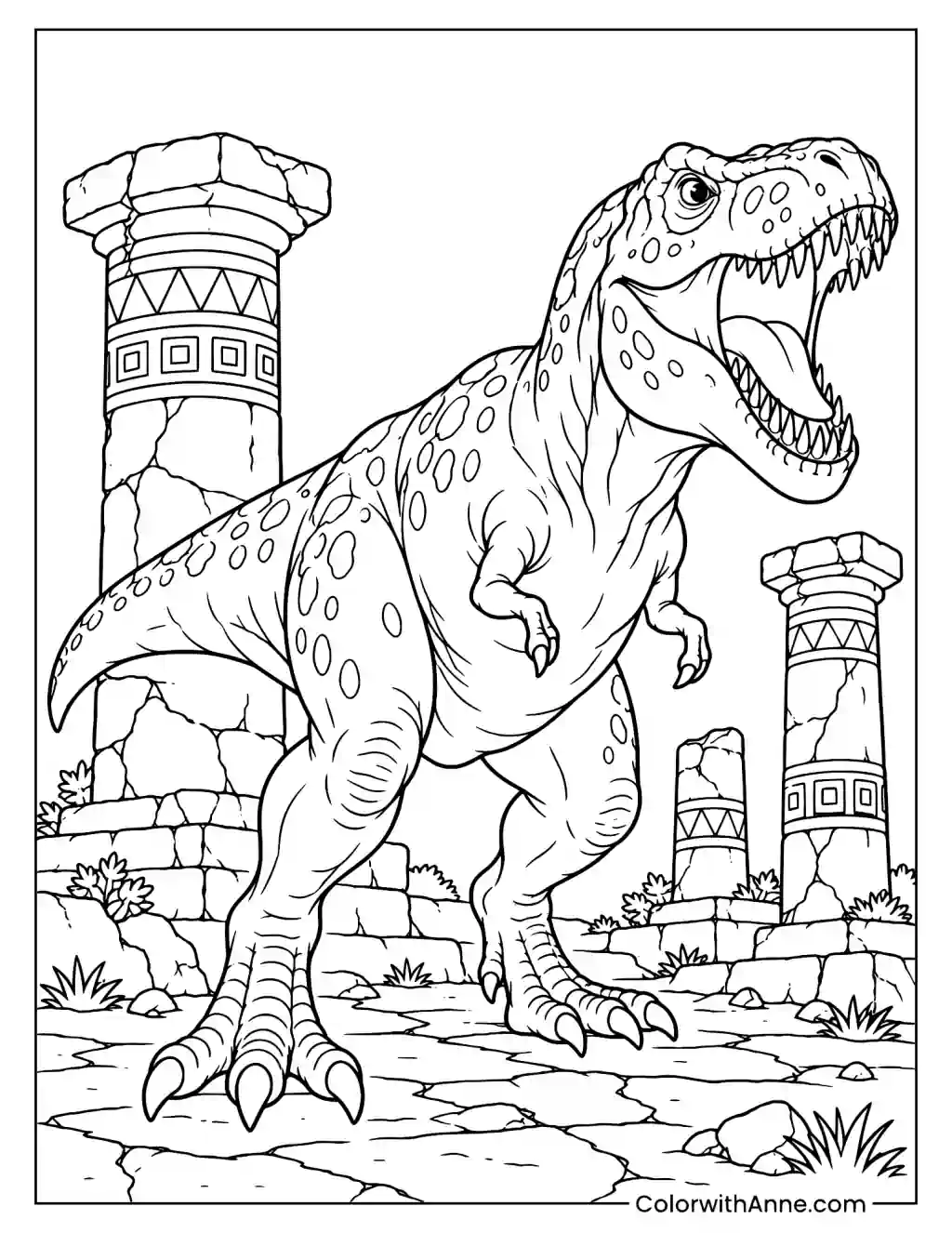
Build One Column for an Imaginary Dinosaur Hall
The decorated stone pillars place this T-Rex inside an imaginary ruin. One standing paper column beside the page could carry a short band of the same triangular or square marks.
Warm gray stone with a rusty brown dinosaur would suit the cracked setting. Roll a small rectangle of paper into a tube and fasten its overlapping edge, keeping the bottom edge level enough to stand.
Draw a narrow pattern band near the top, then add one crooked crack lower down. Place the column beside the picture and turn it until the pattern faces forward. A second plain tube could stand farther back, leaving the decorated one nearest the viewer.
Compare a Footprint with the Foot Above It
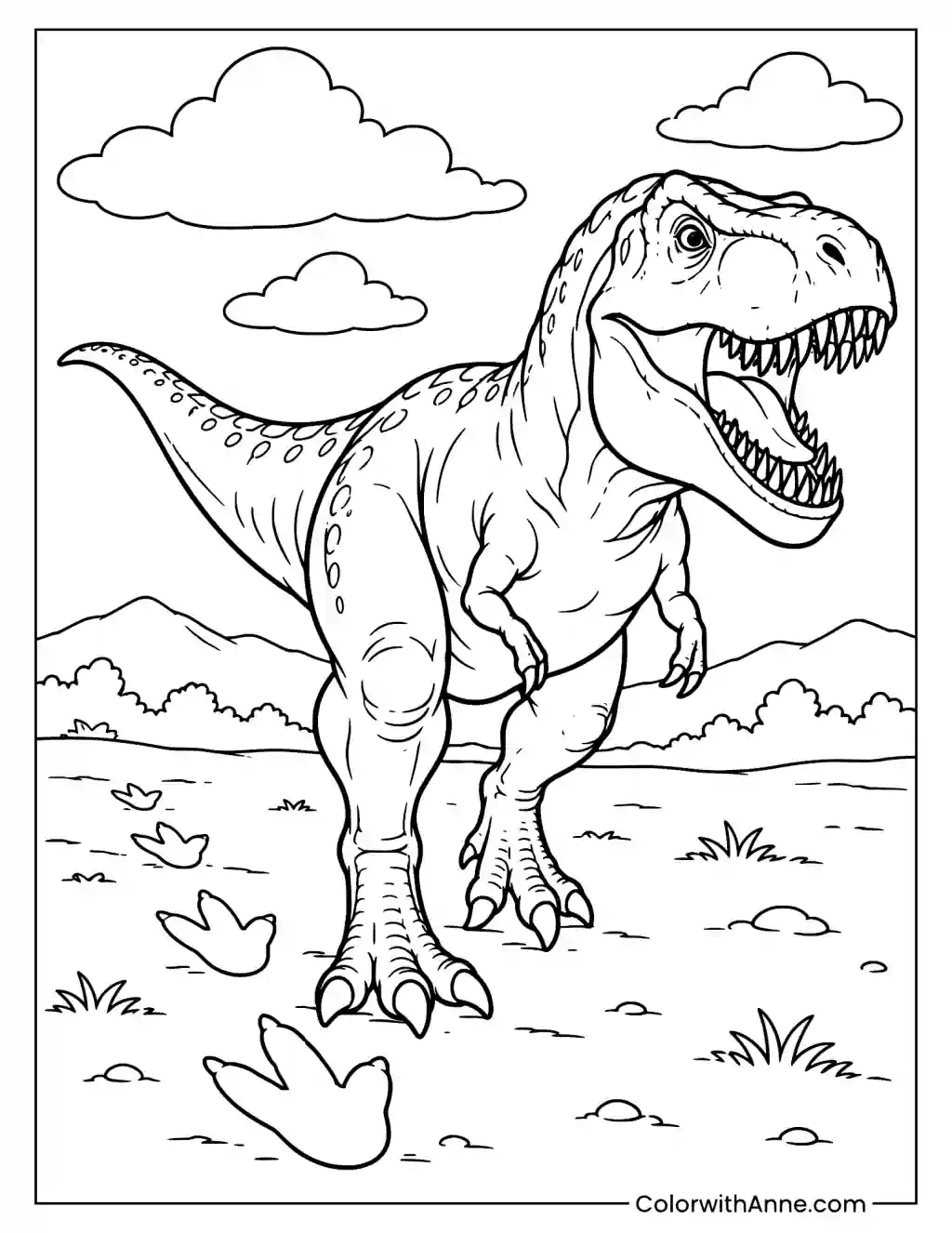
A brown dinosaur with darker brown tracks would keep the trail easy to follow across pale sand. The three-toed prints in front of this T-Rex invite a closer look at its feet.
Pick the clearest print and follow each toe outward, noticing which one reaches farthest. Use a narrow strip of paper to mark the drawn print's width and length, then compare those marks with a visible foot.
Keep the marks on the strip instead of writing measurements all over the scene. On another scrap, sketch a print with a wider middle toe and one with a narrower spread. Decide which looks closer to the one already on the ground.
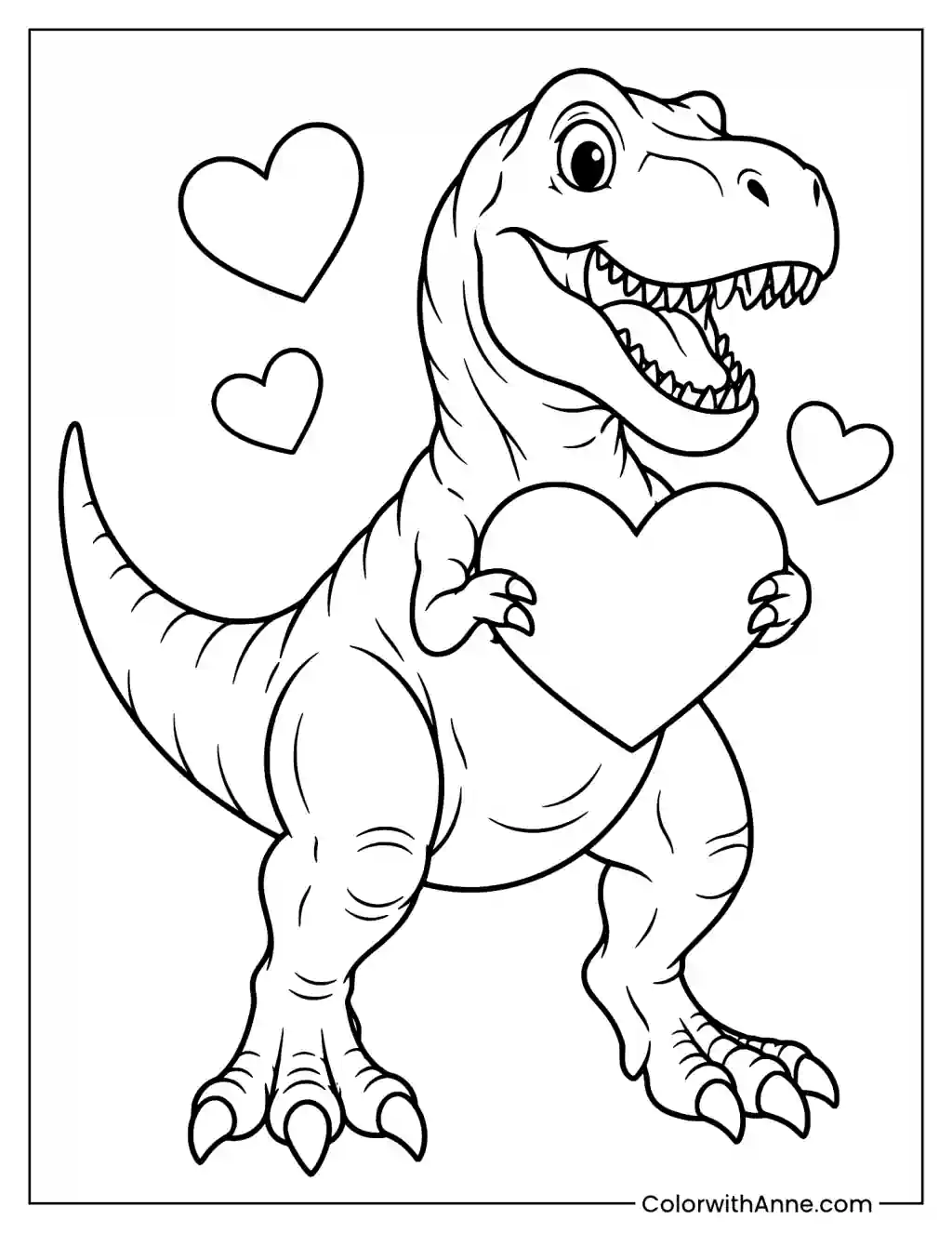
Ask What the Short Arms Could Do
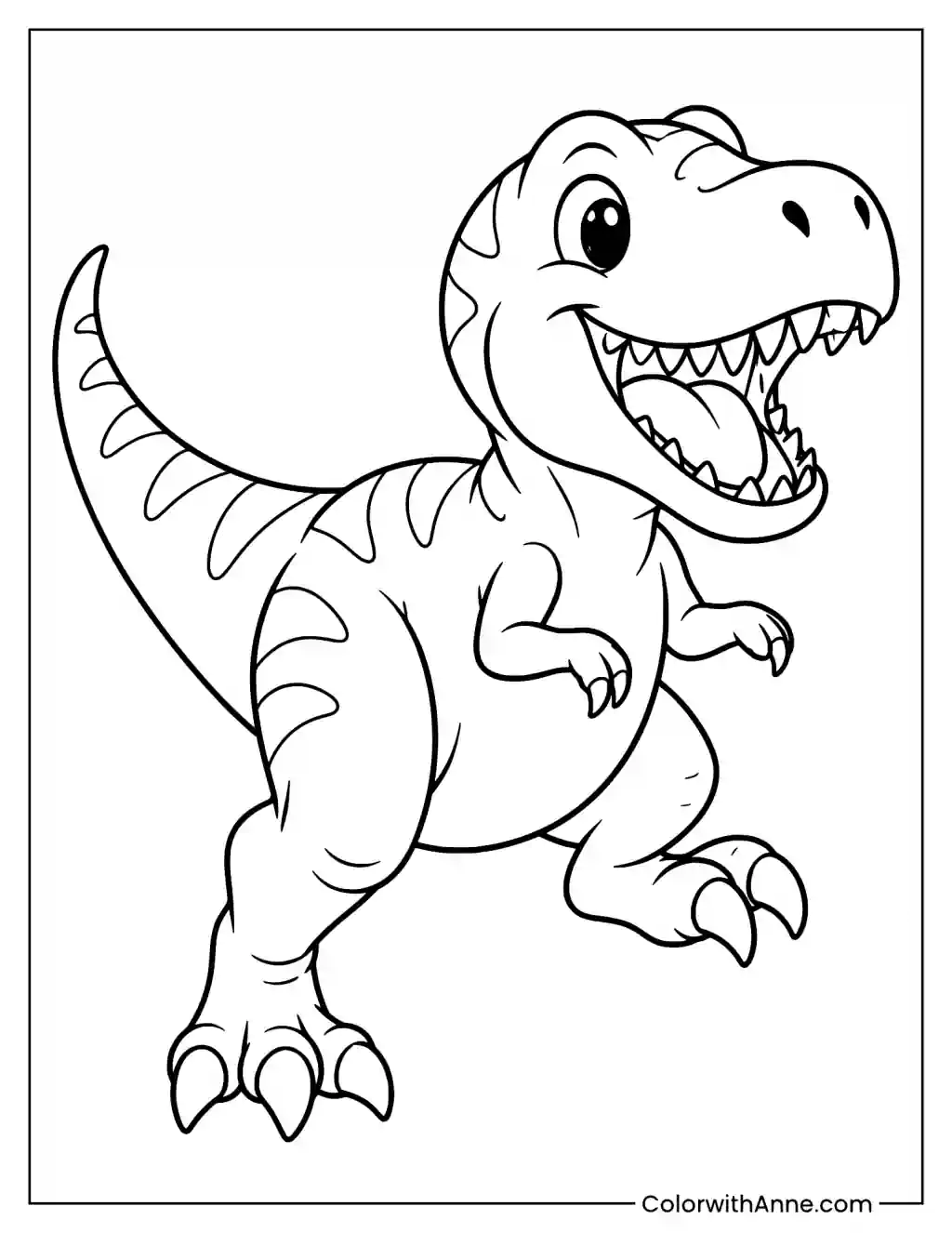
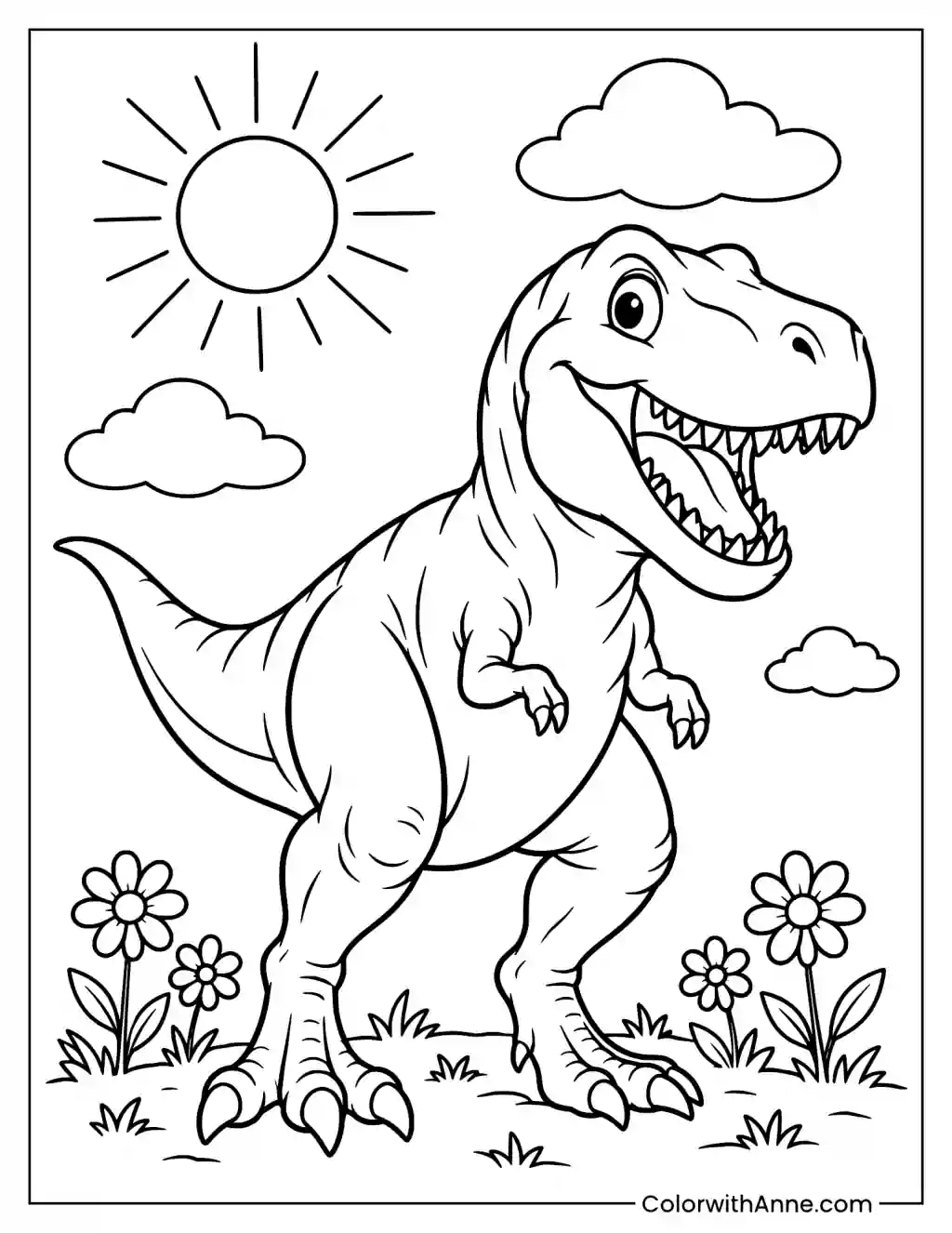
The plain background around this T-Rex leaves its short forelimbs easy to spot. Those arms can supply a good question to take along on the next museum visit: how did such a large animal use them?
A slate-blue body with a lighter belly would keep the outline clear. Write the question below the dinosaur, then look for an answer in a museum guide or a display about tyrannosaurs.
The Natural History Museum explains that the arms' uses are still debated. Keep a note of one suggested explanation and where it came from. If a later guide offers another possibility, there is room beside the first note to compare them.