
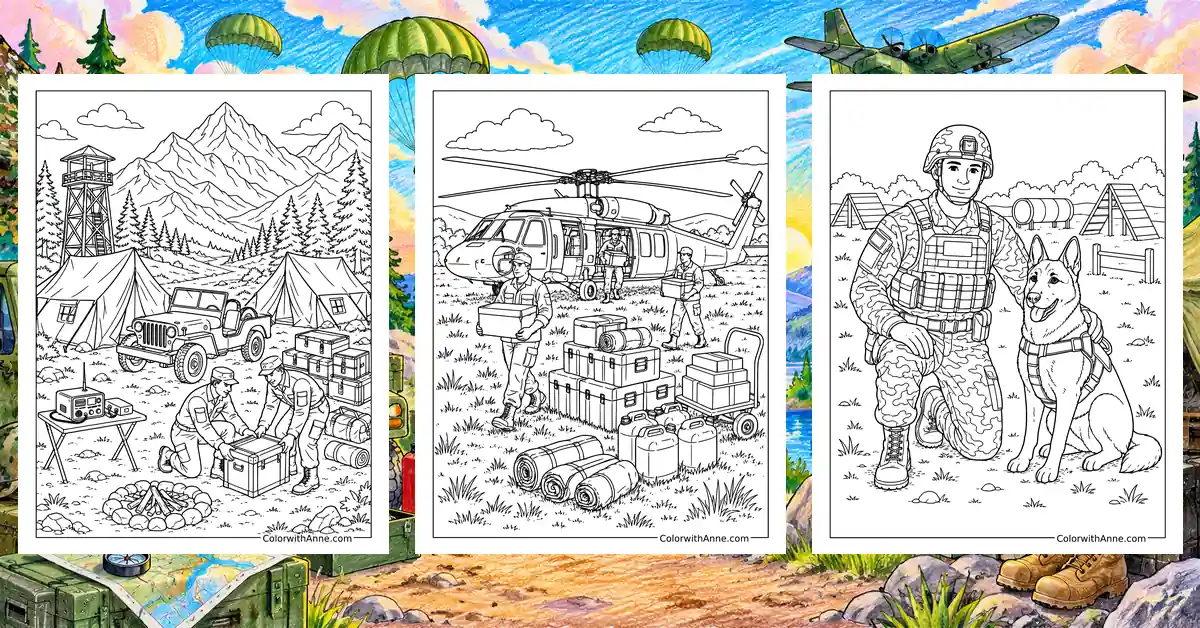
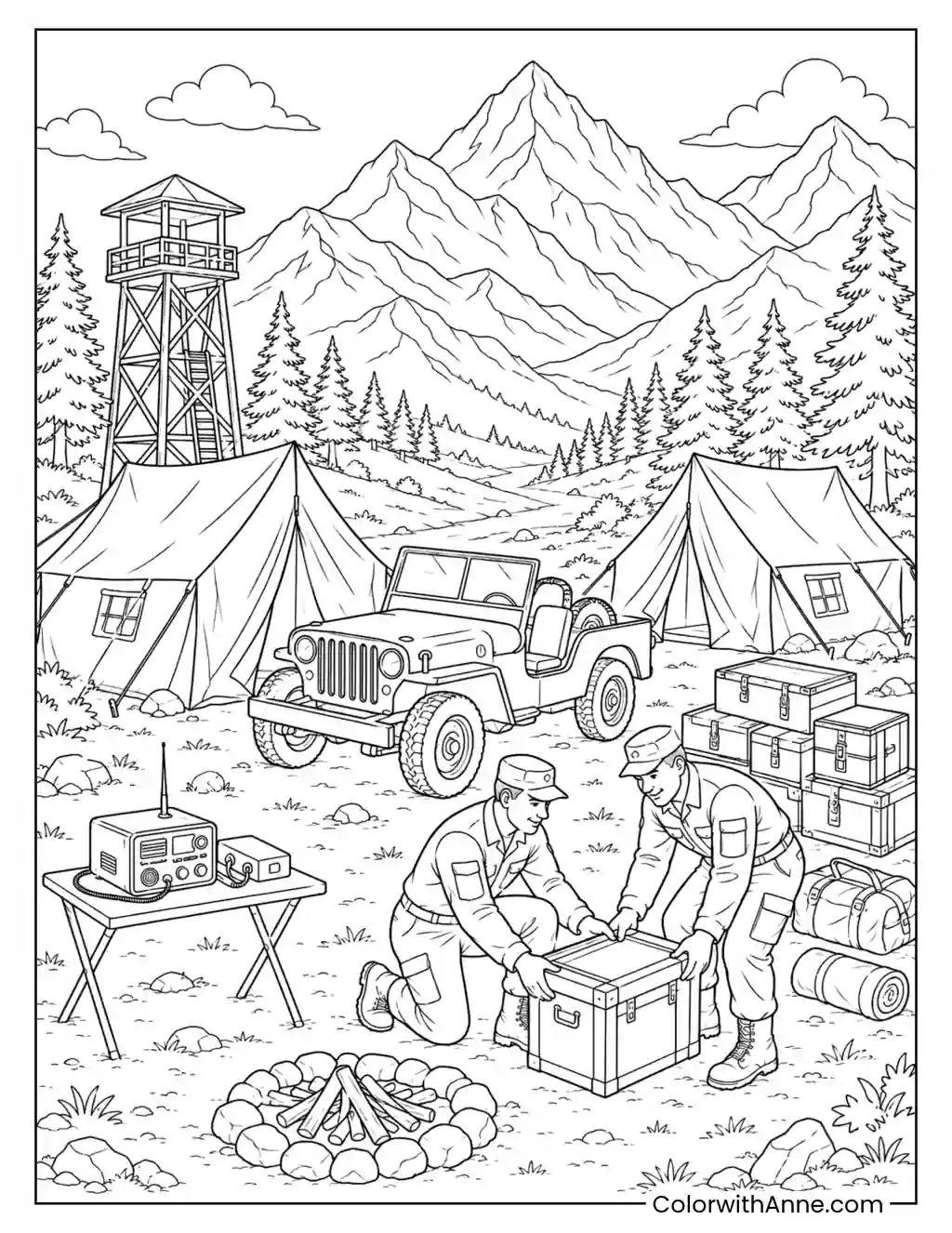
A soldier tightens a strap while someone nearby checks the equipment one more time. Boots scuff the ground, canvas folds into place, and a bag that looked full somehow makes room for another essential item. The large vehicles catch attention first, but the small practical details keep it.
Army coloring pages give curious eyes time to explore those details at the table. A vehicle’s wheels or a piece of personal gear can prompt the kind of question that deserves more than a quick answer. For a child who enjoys discovering how things fit together, the interest may begin with one very ordinary buckle.
Free Printable Army Coloring Pages
Click any coloring page below to open the PDF, then print on US Letter or A4 paper.
Did you find what you needed?
Help us choose what to create or improve next.
Coloring Ideas for Army Pages
Try one of these coloring ideas, or use them as a starting point for your own.
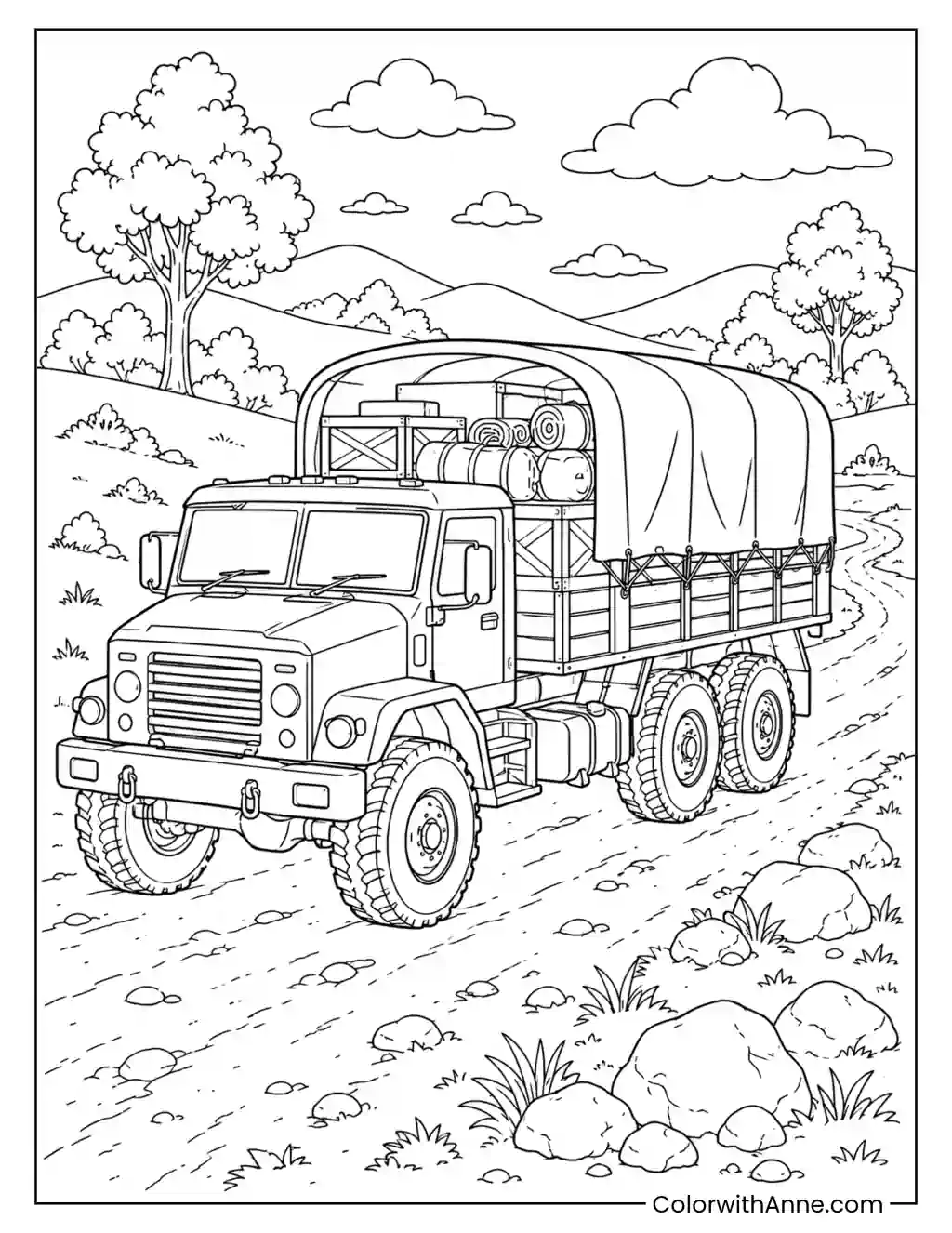
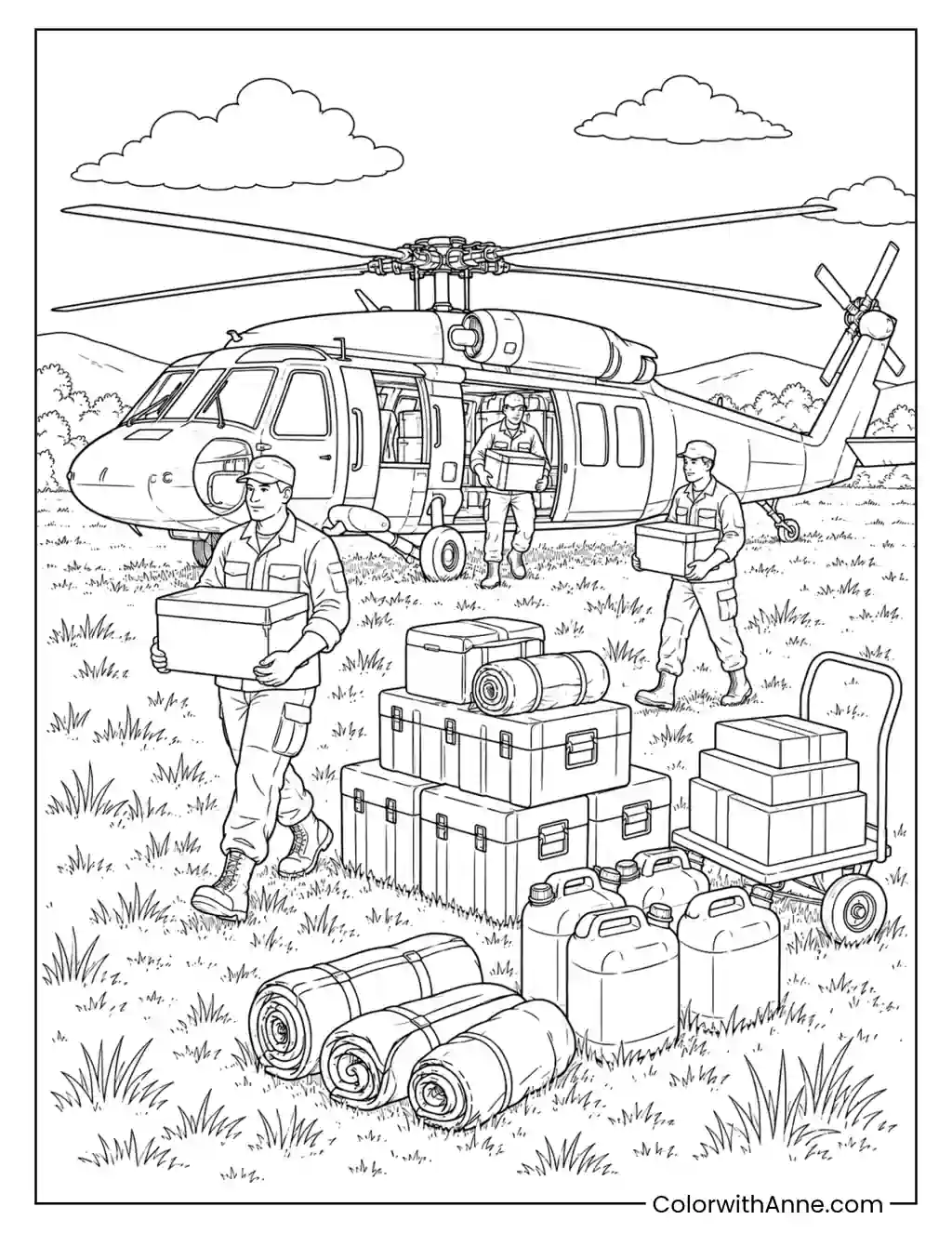
Think about How the Supply Truck Is Packed
The truck carries stacked supplies beneath its cover, with equipment secured behind the cab. It shows the working side of an army journey rather than just a vehicle on a road.
Color the load in groups so separate containers remain readable. Then consider what would need to be reached first at the destination and what could wait. For a toy-vehicle activity, load a few small blocks in a box and try unloading them in a chosen order. The picture gives the packing problem a practical context.
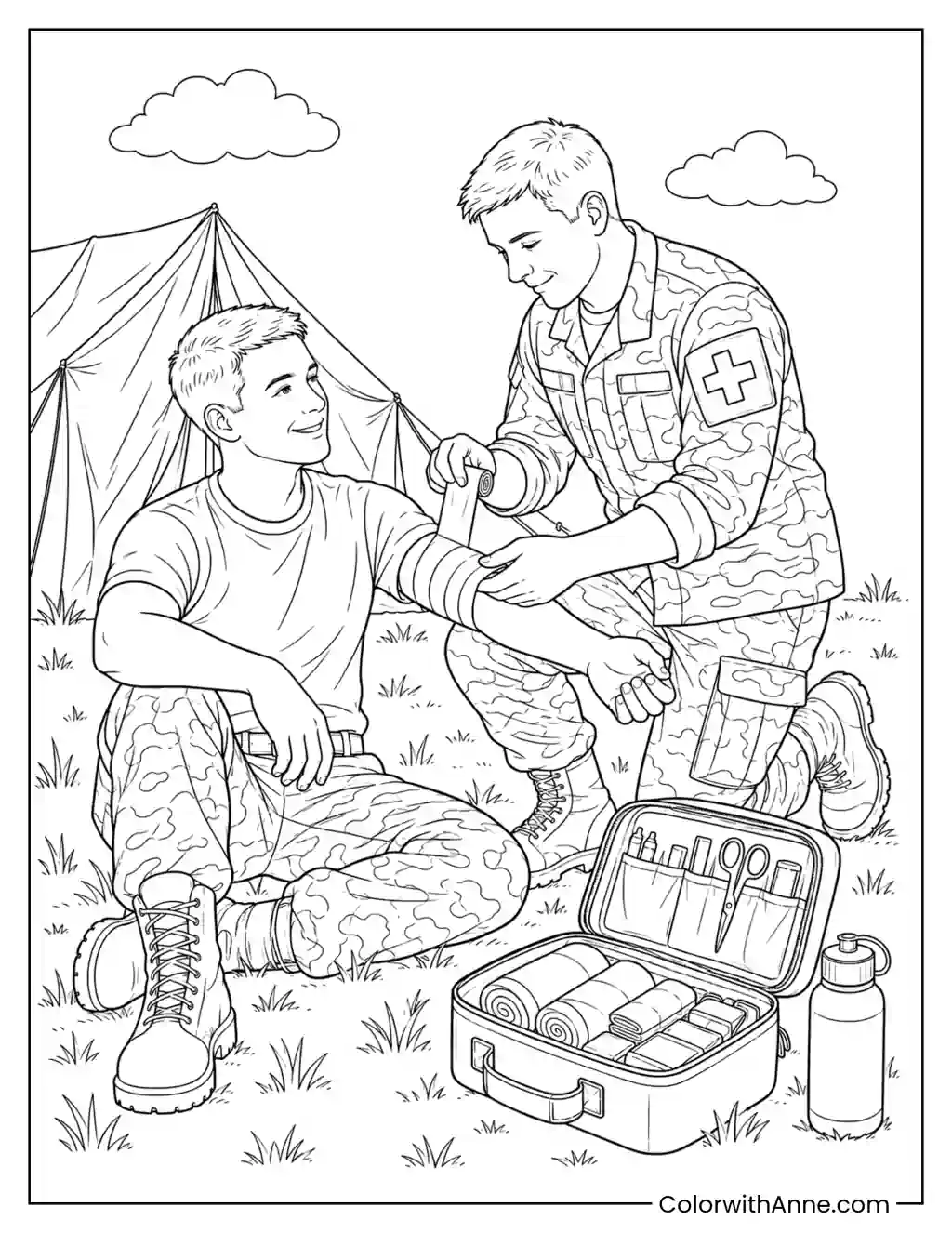
Keep the Medic’s Hands at the Center
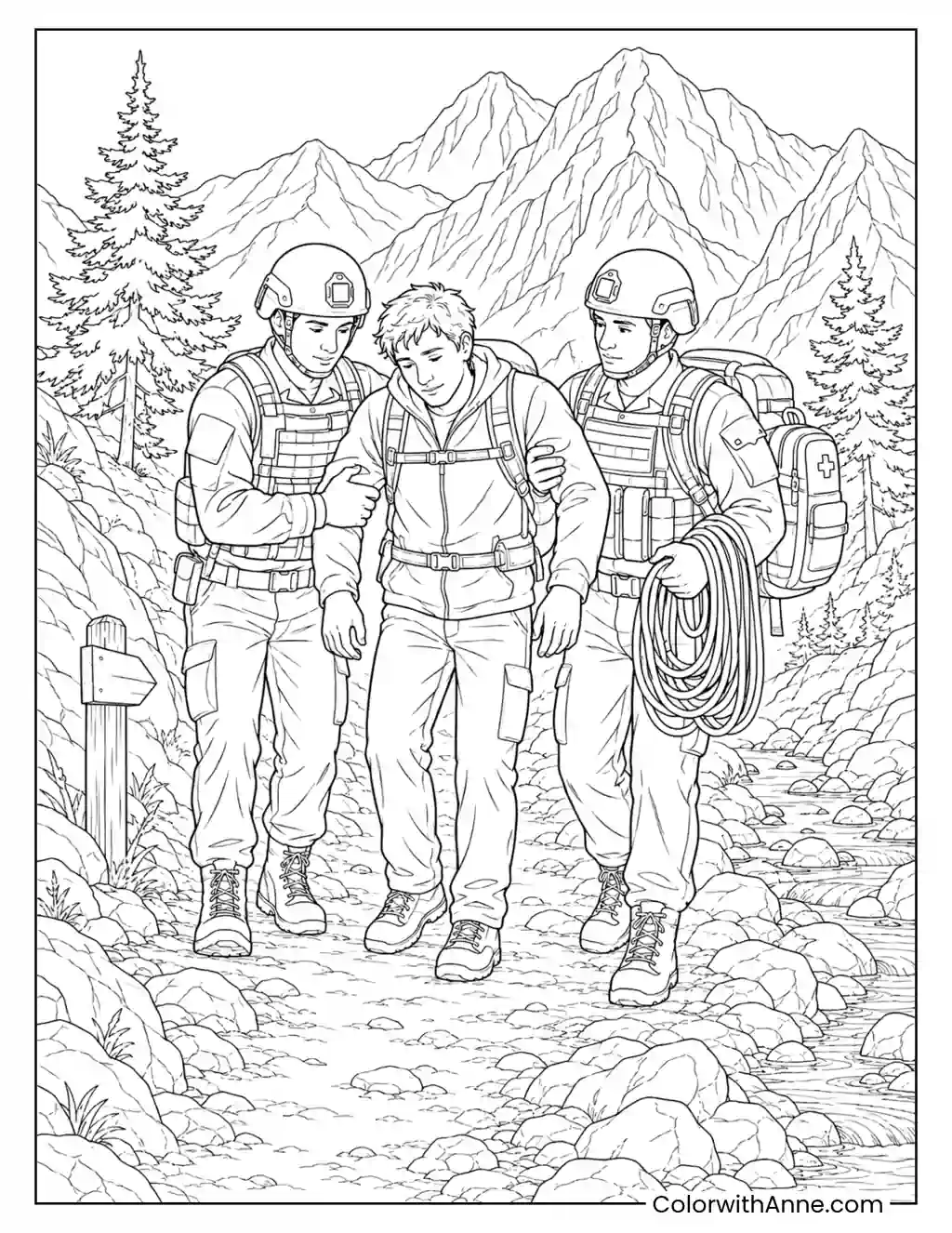
The medic attends to a seated soldier beside an open kit. Their hands and faces make the scene about care rather than equipment alone.
Give those areas clear space and distinguish the medical supplies from the darker ground. The uniforms can stay quieter around the interaction. This page can begin a conversation about the many roles within a team, including the people who help others recover. There is enough meaning in that exchange without turning the illustration into instructions for treating an injury.
Read the Landscape with the Mission Team
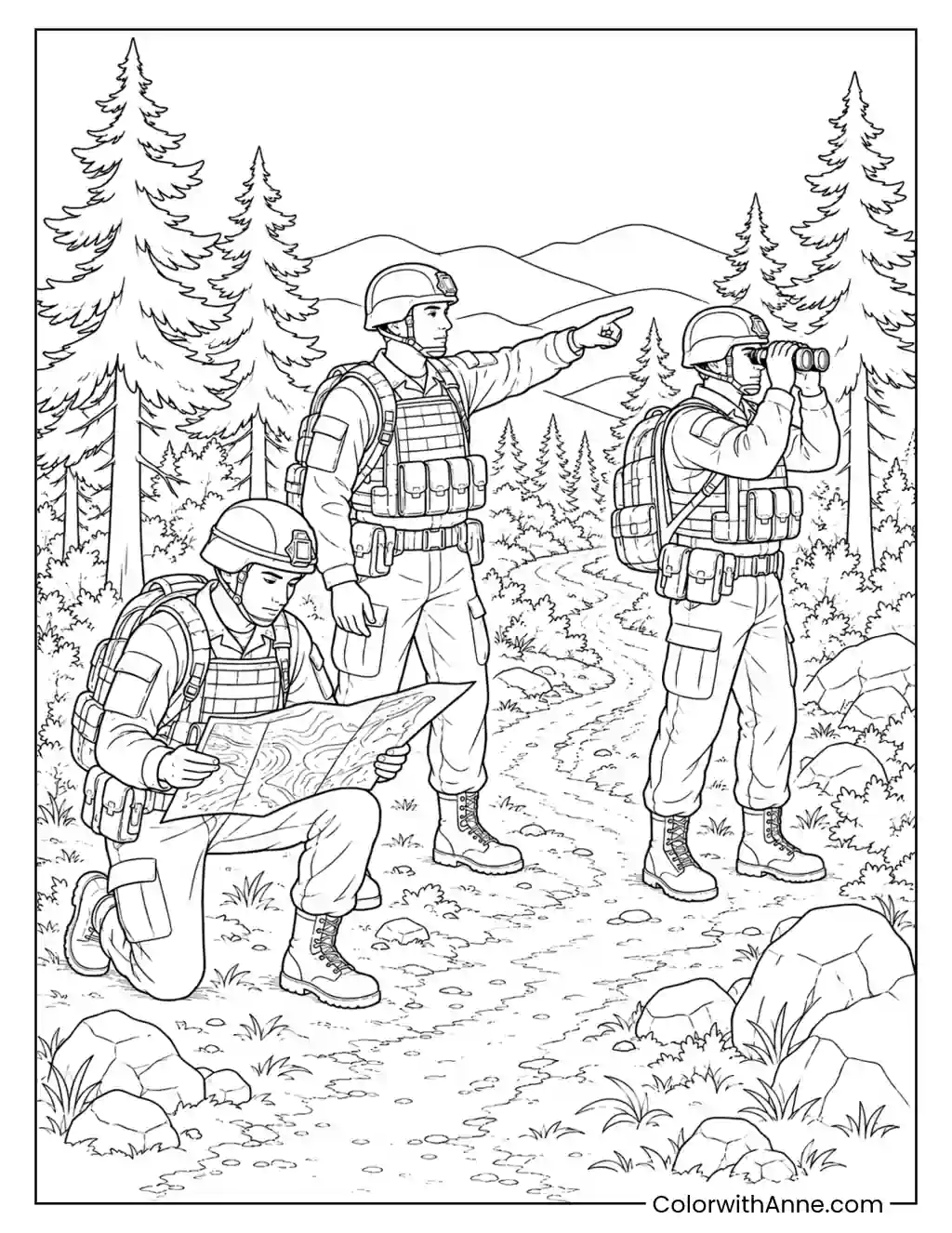
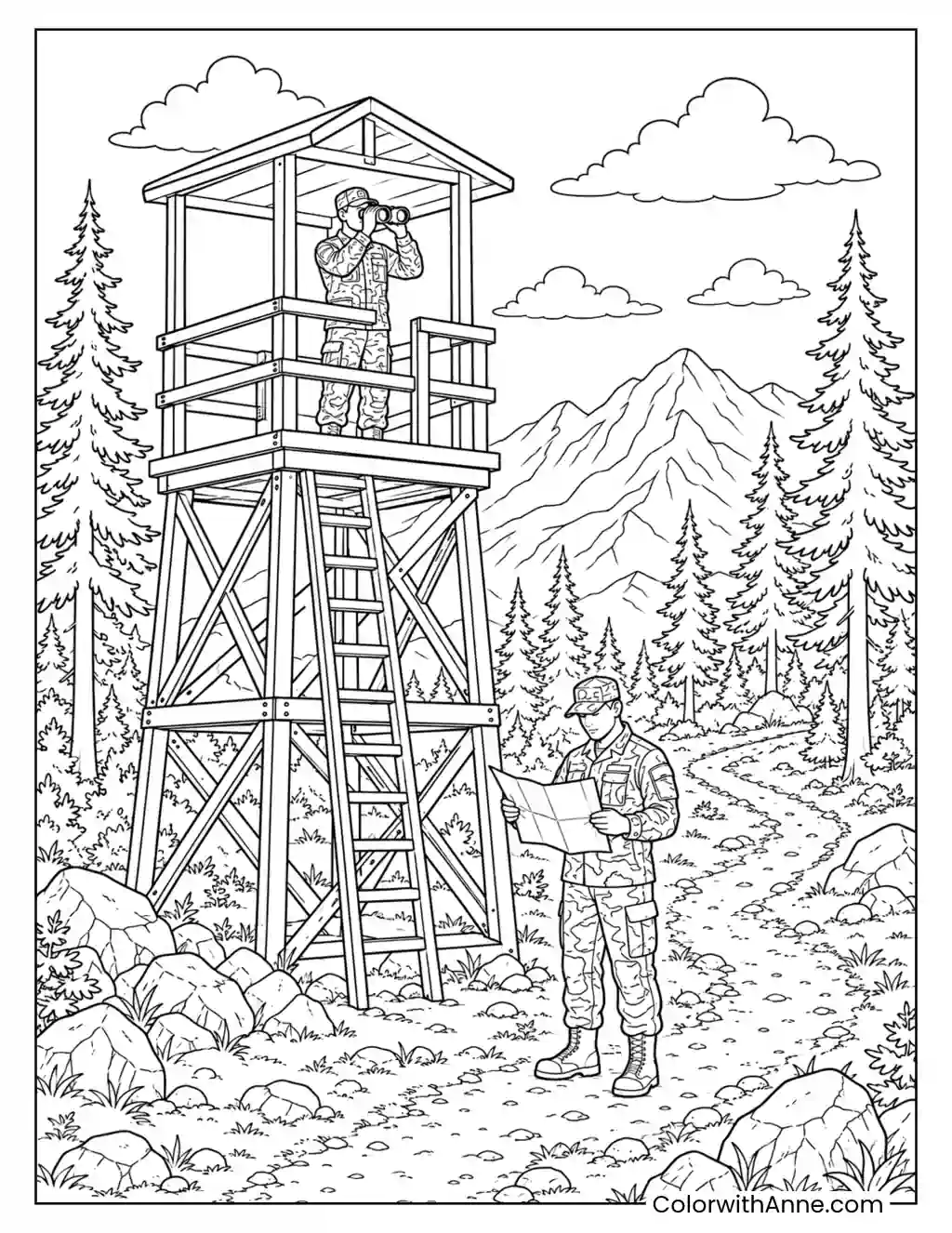
One soldier studies the map while another points ahead and a third looks through binoculars. The three actions offer different ways of understanding the same route.
Color the scene while matching each action to its purpose: reading, observing, and discussing where to go. On a family walk, a simple map can make those roles recognizable in everyday life. One person can follow the route while another watches for the next landmark. The connection is navigation, not pretending that an ordinary outing is a military operation.
Give the Soldier and Dog Equal Attention
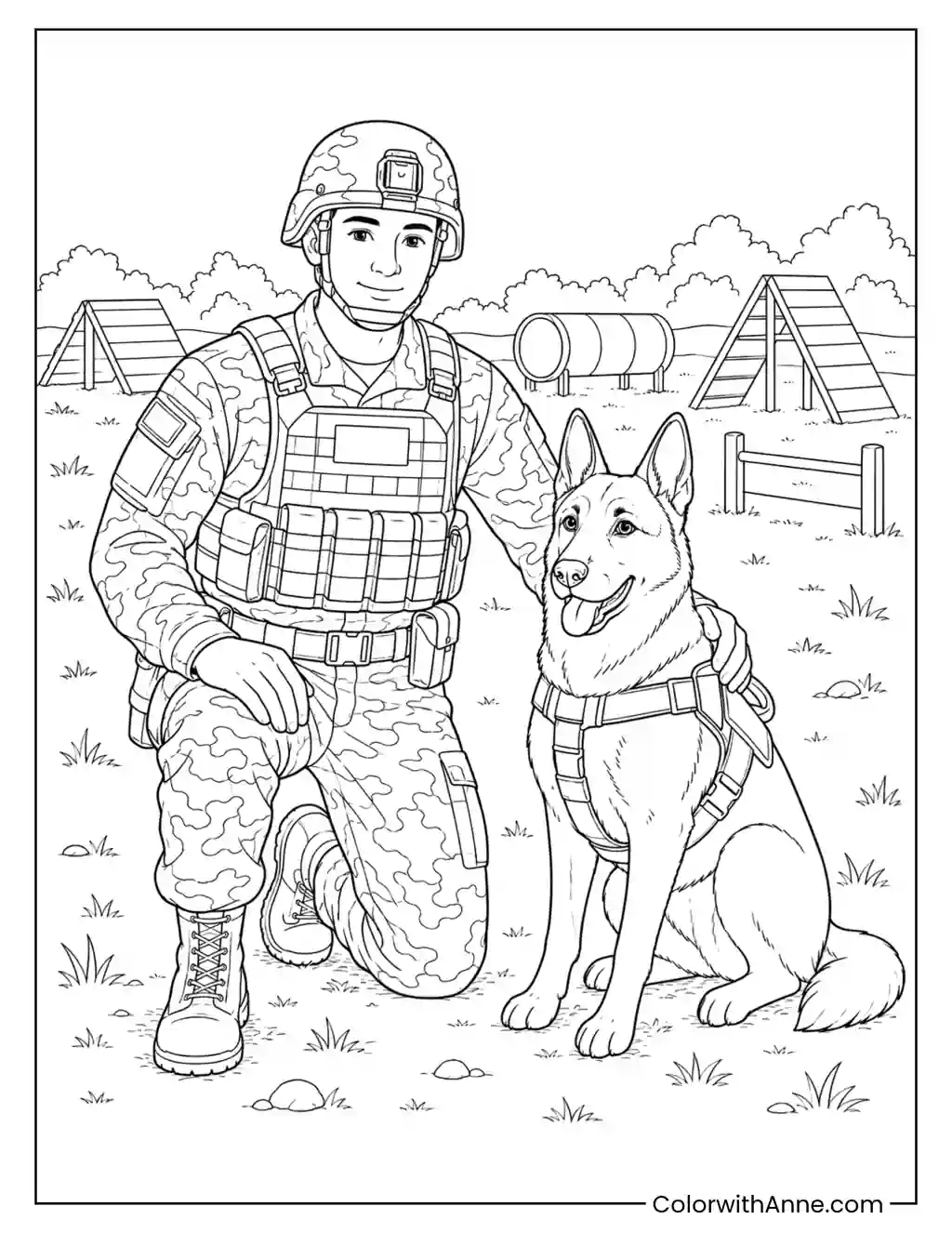
The soldier kneels beside the dog, with their heads close and the camp behind them. The relationship is the most important part of this portrait.
Work on both faces before the uniforms or tents. Keep the dog’s ears and chest markings distinct, and preserve the point where the soldier’s hand rests beside it. If making the page for someone with a connection to military dogs, a short message on the reverse can make it a considered gift. The picture’s partnership provides the reason for that use.
Make a Small Ground-Level Training Course
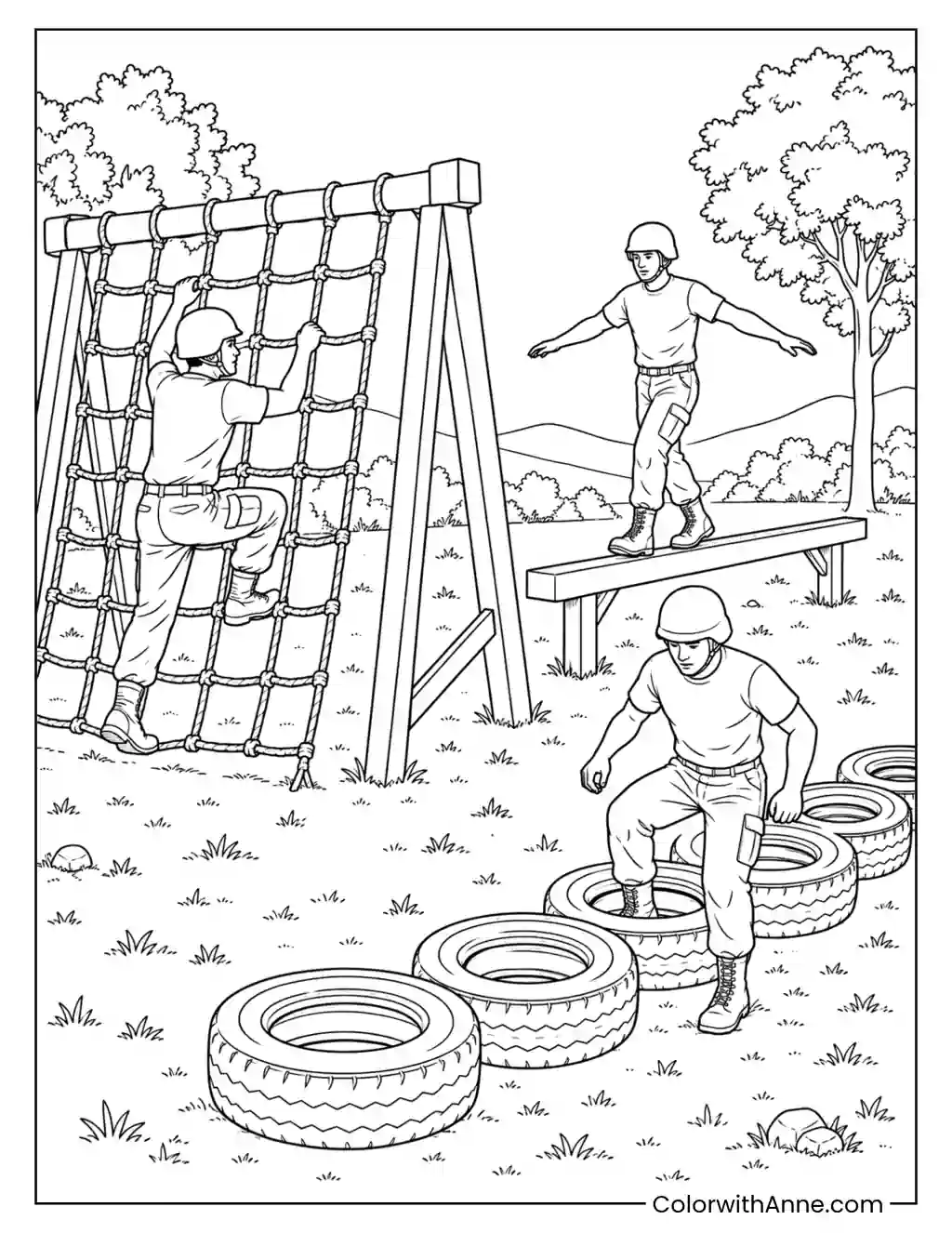
The training scene includes a climbing net, a balance section, and tires laid along the ground. The separate challenges give the page a sense of progress.
Borrow the ground-level idea for a simple indoor course: step between cushions, follow a straight tape line, and move around a few spaced markers. Try completing it steadily rather than racing. Then color the drawn course, noticing how each section asks for a different movement. A short version is enough to make the equipment feel purposeful.
Test a Folded-Paper Bridge
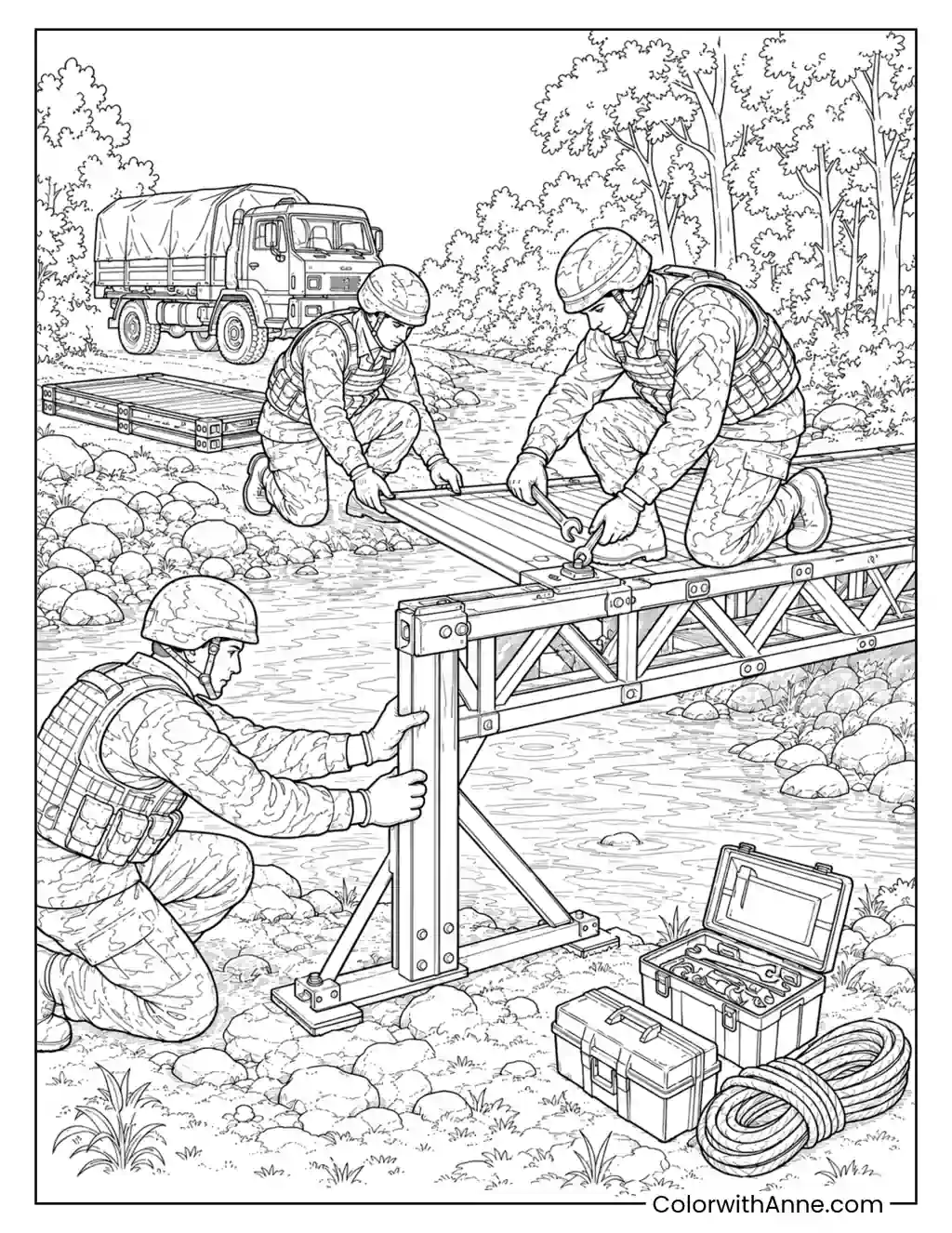
The bridge-building team works on a structure crossing the rocky channel, with supports, equipment, and a truck nearby. The repeated framework makes the engineering visible.
Try spanning two small stacks of books with a strip of paper, then fold another strip into an accordion and compare how each carries a few coins. Add the coins gradually. The experiment is small, but it makes the importance of shape easier to understand. Back on the page, the bridge’s supports become more than repeated lines to color.
See the Repair through the Open Hood
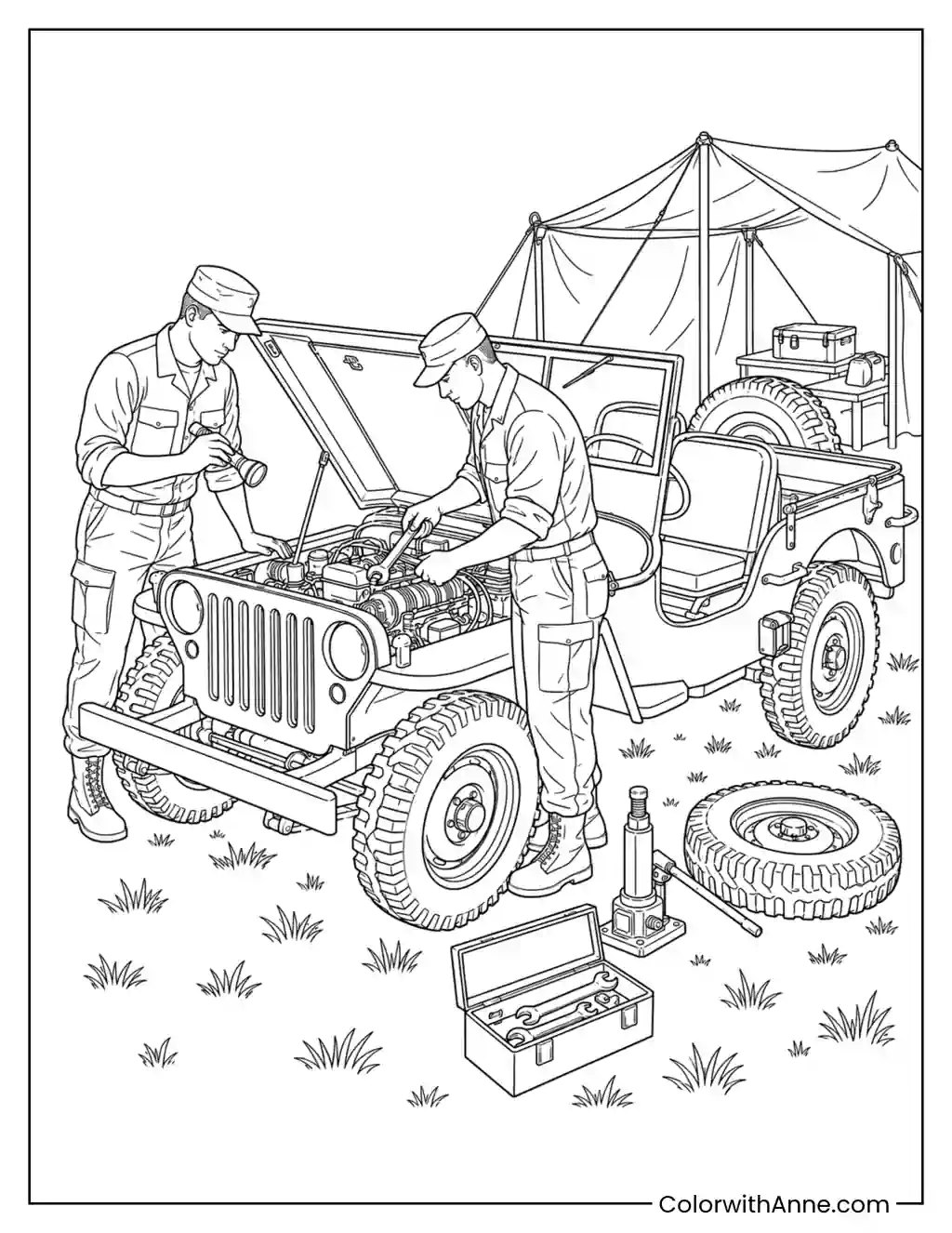
Two mechanics work beneath the Jeep’s raised hood, with tools and a spare tire beside them. The open vehicle creates a clear distinction between outer bodywork and inner machinery.
Keep the engine area deeper and more detailed than the broad exterior panels. Choose one visible tool to look up or discuss with someone familiar with repairs. Learning what that tool is for gives the scene a useful point of focus. There is no need to understand the entire engine before appreciating the work being done.
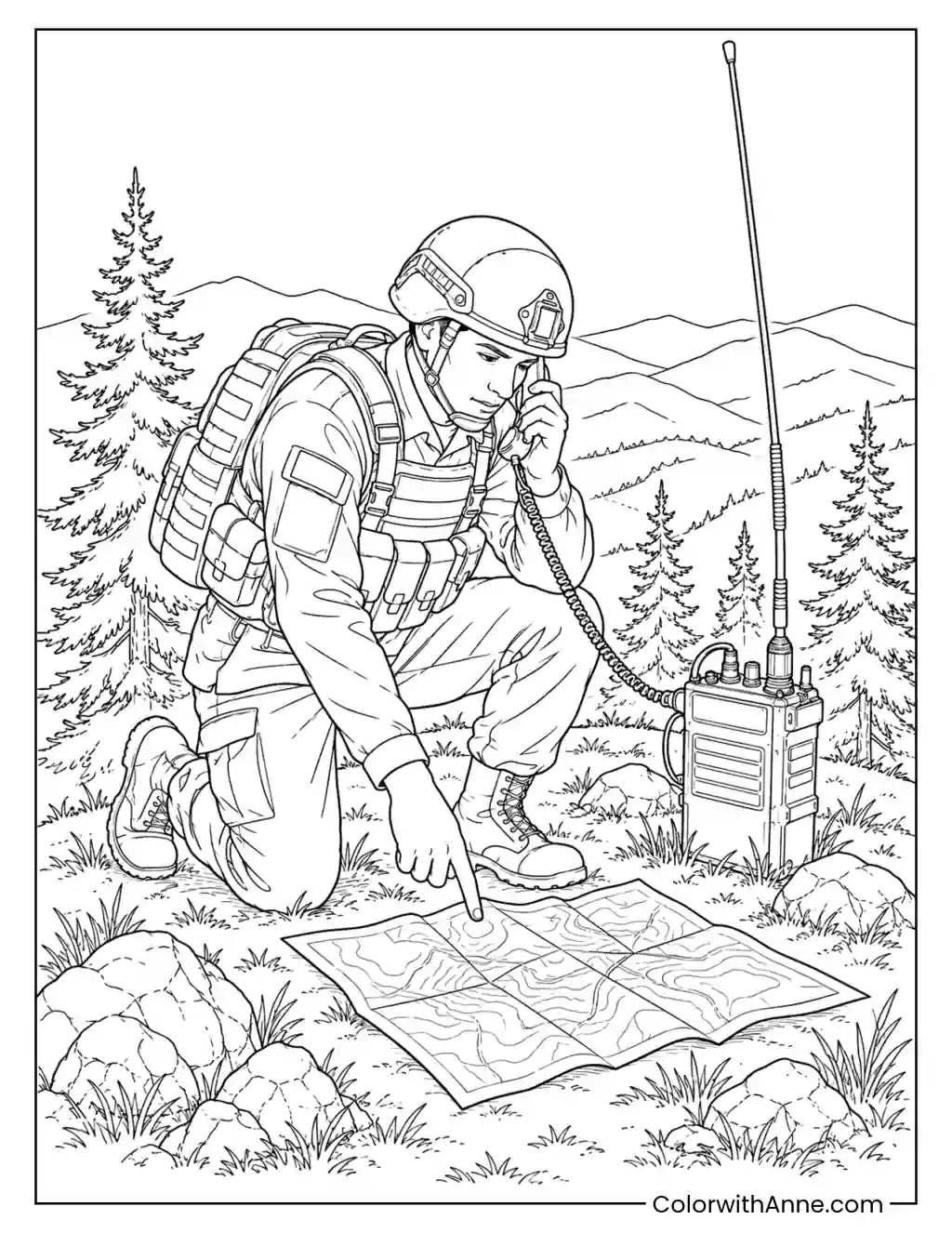
Practice a Clear Message with the Radio Operator
The operator uses a handset beside a large radio while checking a map. It is a scene about passing information accurately.
Try a short communication challenge: one person describes a simple arrangement of three objects that the other cannot see, and the listener draws it from the description. Compare the result afterward. Was “beside” clear enough, or did the message need “on the left”? The exercise connects naturally with the radio scene and shows why precise words matter when the speaker cannot point.