
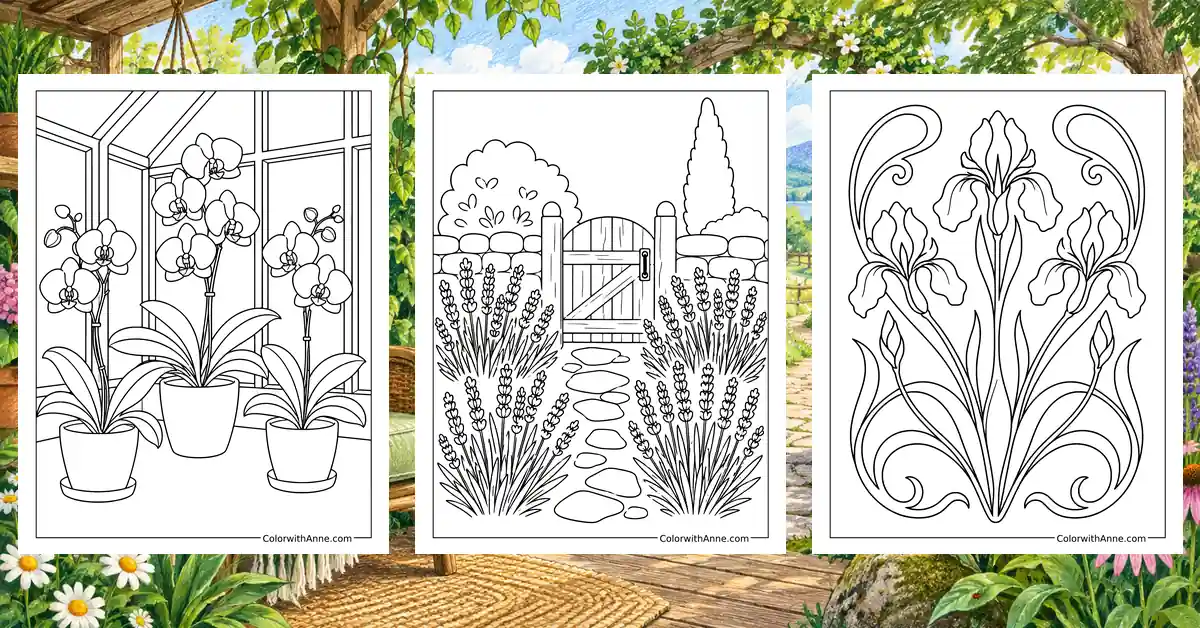
A new leaf often gets noticed on the way past, followed by an immediate return for a closer look. Yesterday, it seemed tightly folded; today, it has begun to open. Nothing else on the windowsill has changed, but the plant’s owner now has something to check again tomorrow.
Plant coloring pages draw on that pleasure of paying attention to gradual growth. Following a stem or the curve of a leaf can recall a familiar pot at home, especially one that has been moved repeatedly in search of better light. A modest plant can inspire quite an involved relationship with a window.
Free Printable Plant Coloring Pages
Click any coloring page below to open the PDF, then print on US Letter or A4 paper.
Did you find what you needed?
Help us choose what to create or improve next.
Coloring Ideas for Plant Pages
Try one of these coloring ideas, or use them as a starting point for your own.
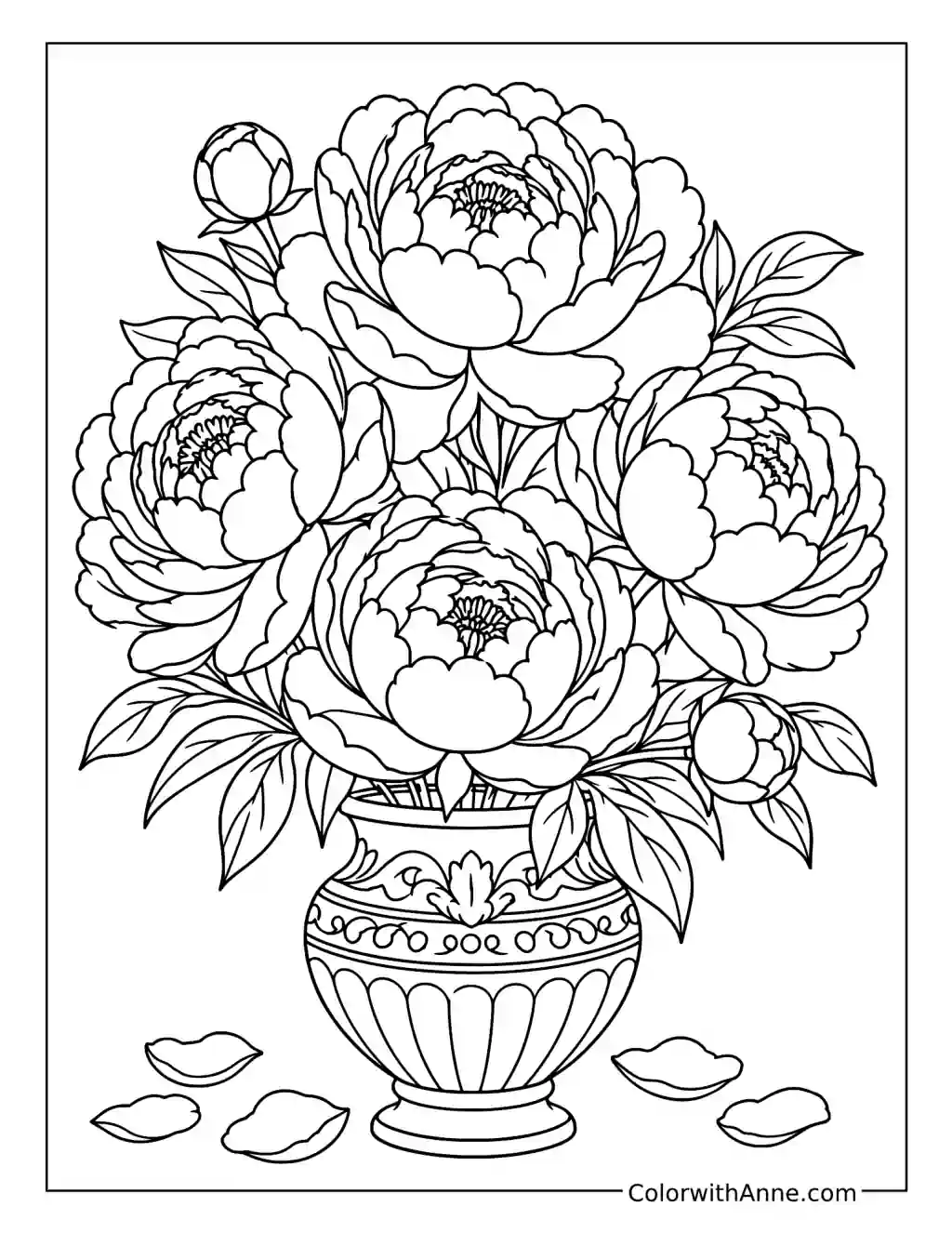
Send the Peonies With a Specific Thank-You
The full peony bouquet sits in a patterned vase, with petals below it. The arrangement is already complete enough for the front of a personal note.
Use the colored picture on folded card and write about the particular kindness being thanked: a lift, a visit, or help with something that mattered. A remembered detail makes the message worth reading. The flowers can take their time on the front, while the inside stays direct. This is one design for which a card is a natural destination.
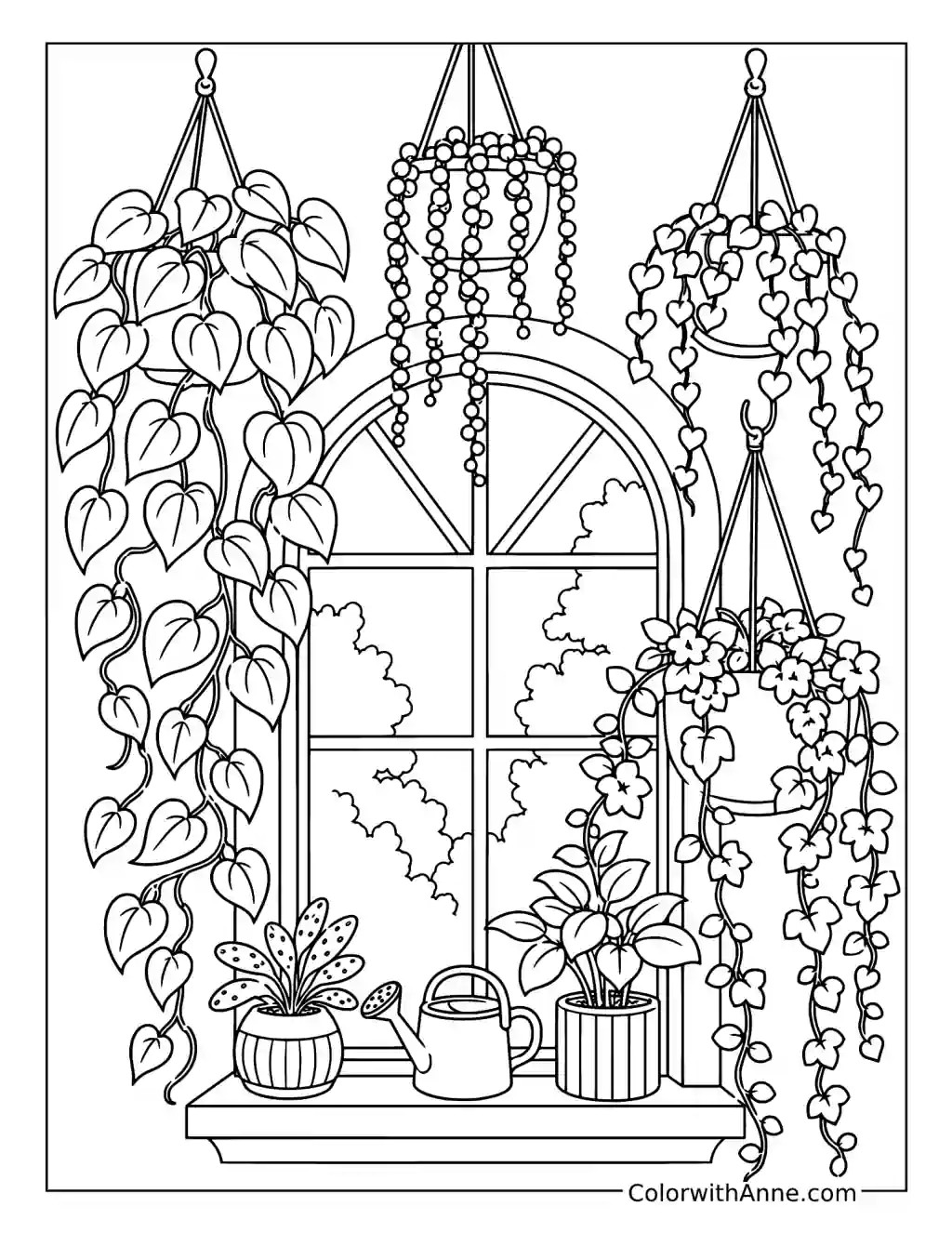
Leave Room to Open the Window
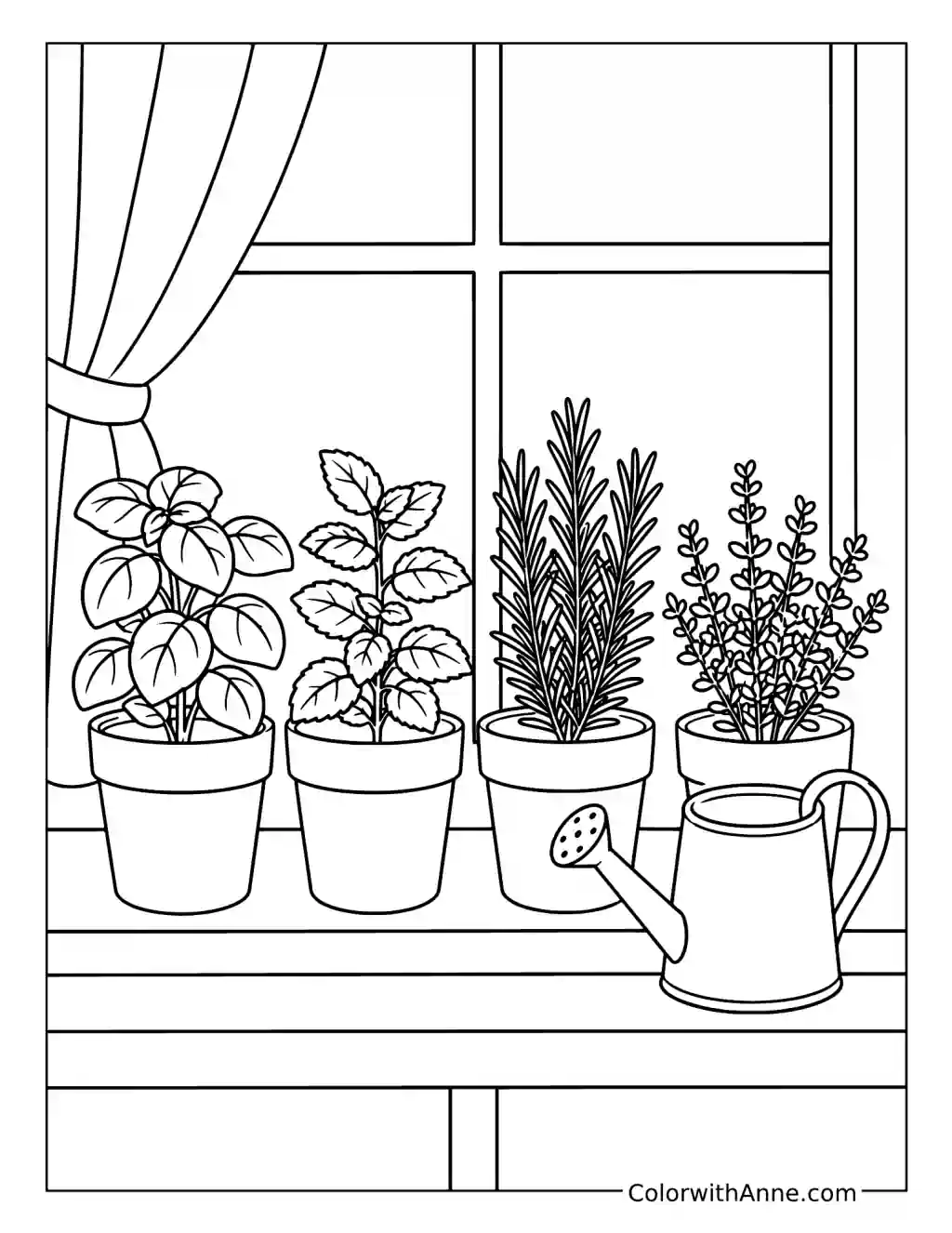
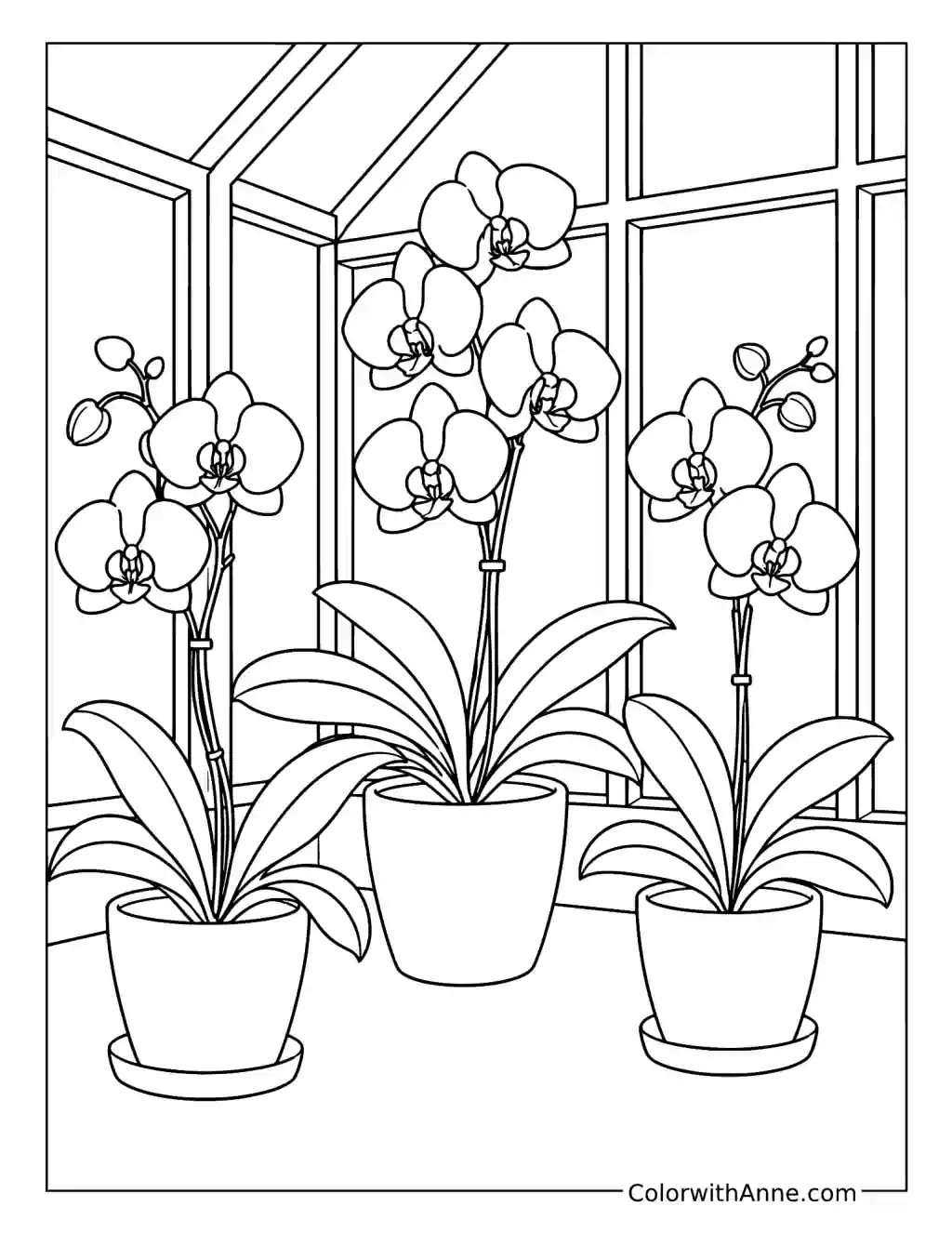
Trailing plants frame the arched window, with pots on the sill and hanging containers above. The arrangement is appealing, but a real window also has to work.
On the reverse, sketch the actual window you have in mind, including its opening direction and anything already on the sill. Try possible plant positions there before moving pots or adding hanging supports. Keep the decorative plan separate from the plants’ care requirements. The illustrated scene can inspire the atmosphere, while the measured sketch checks what will physically fit.
Give the Reading Chair Some Breathing Room
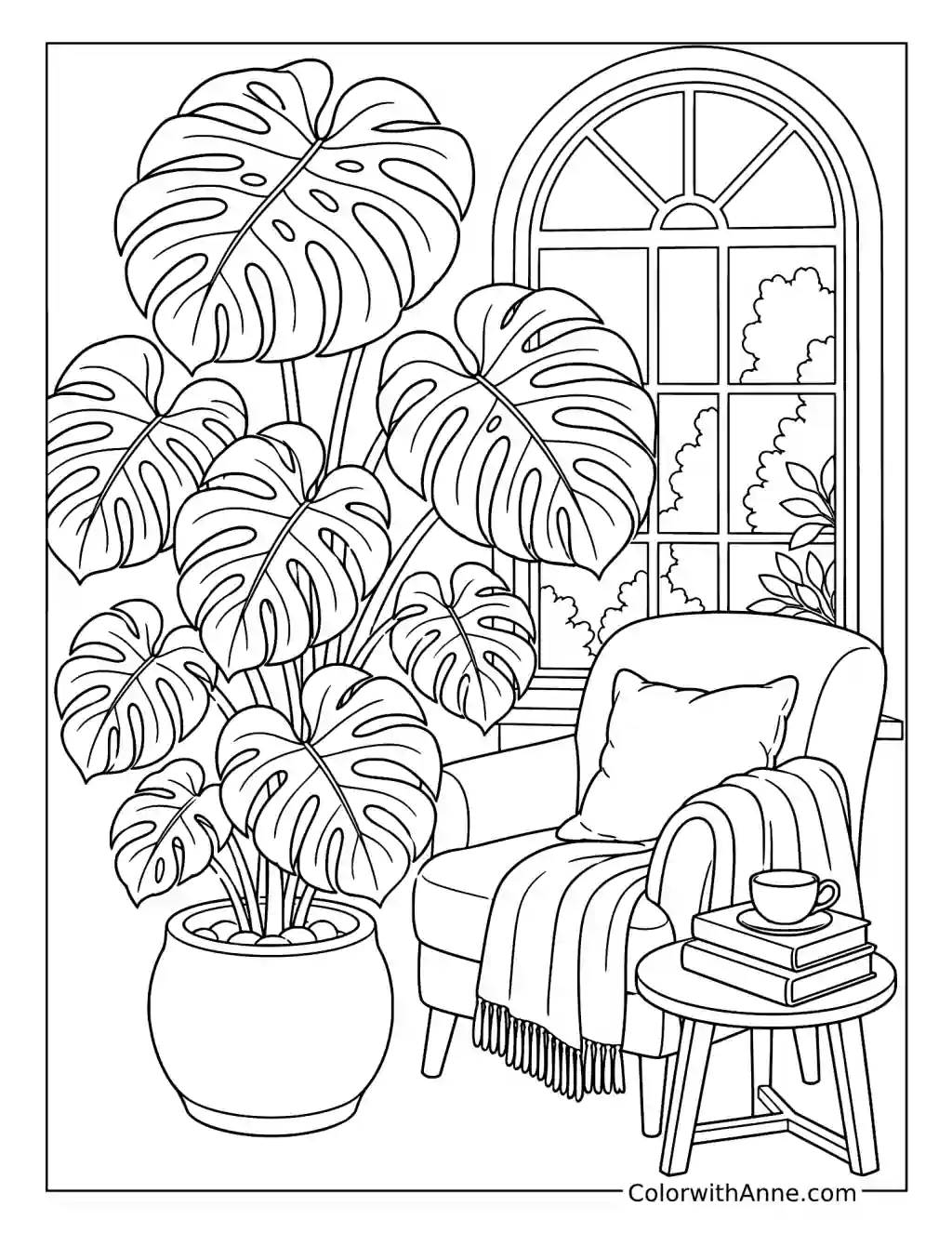
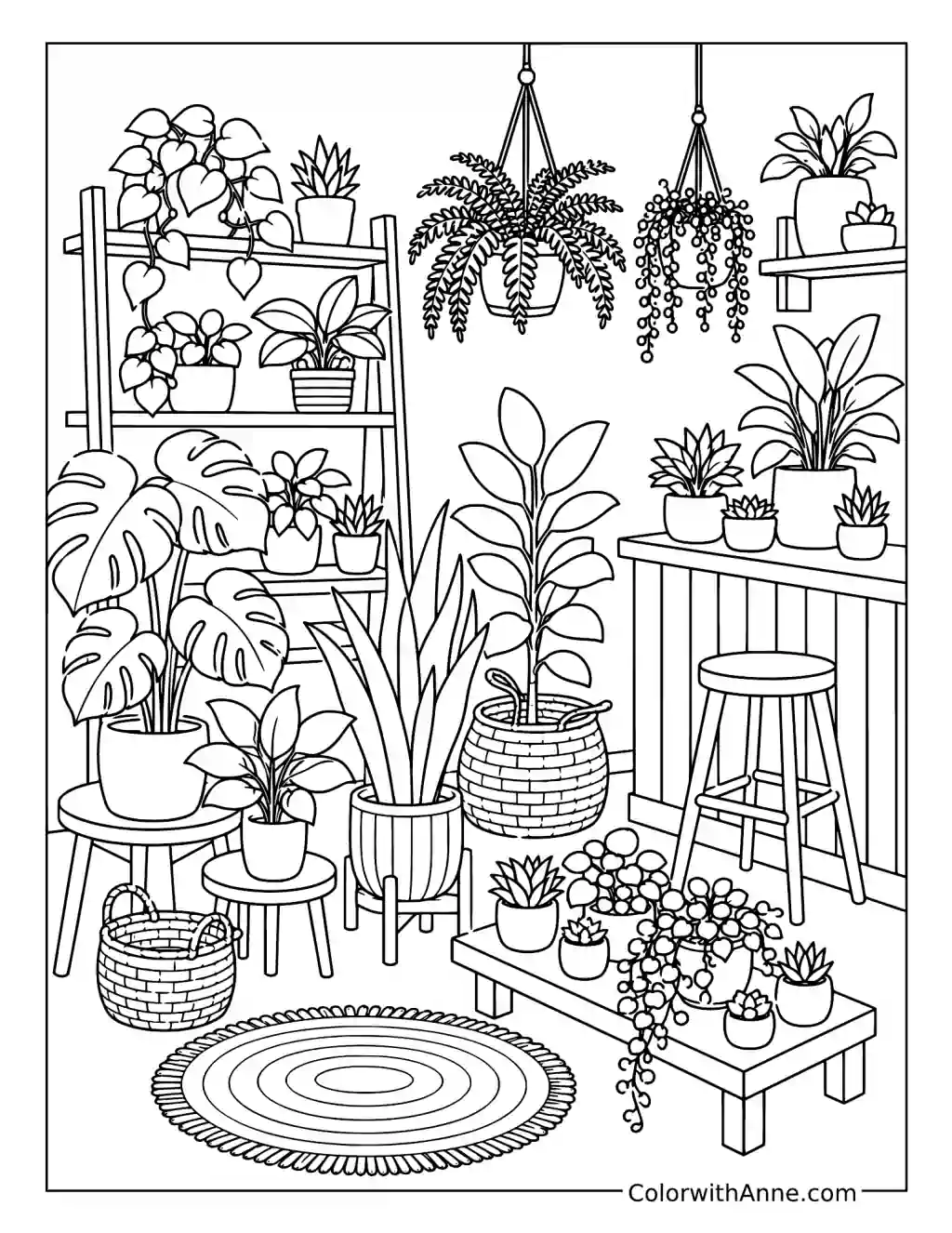
The monstera’s broad leaves sit beside a chair, blanket, and little table. The corner works because there is a place for both the plant and the person.
Use the drawing to think through an actual reading spot. Try the chair and table first, then see where the pot can sit without blocking the route or crowding the seat. A paper circle matching the pot’s footprint can test a position without moving the plant repeatedly. The final arrangement should still allow a book, a drink, and someone’s feet to find their places.
Draw the Garden Bed Before Filling It
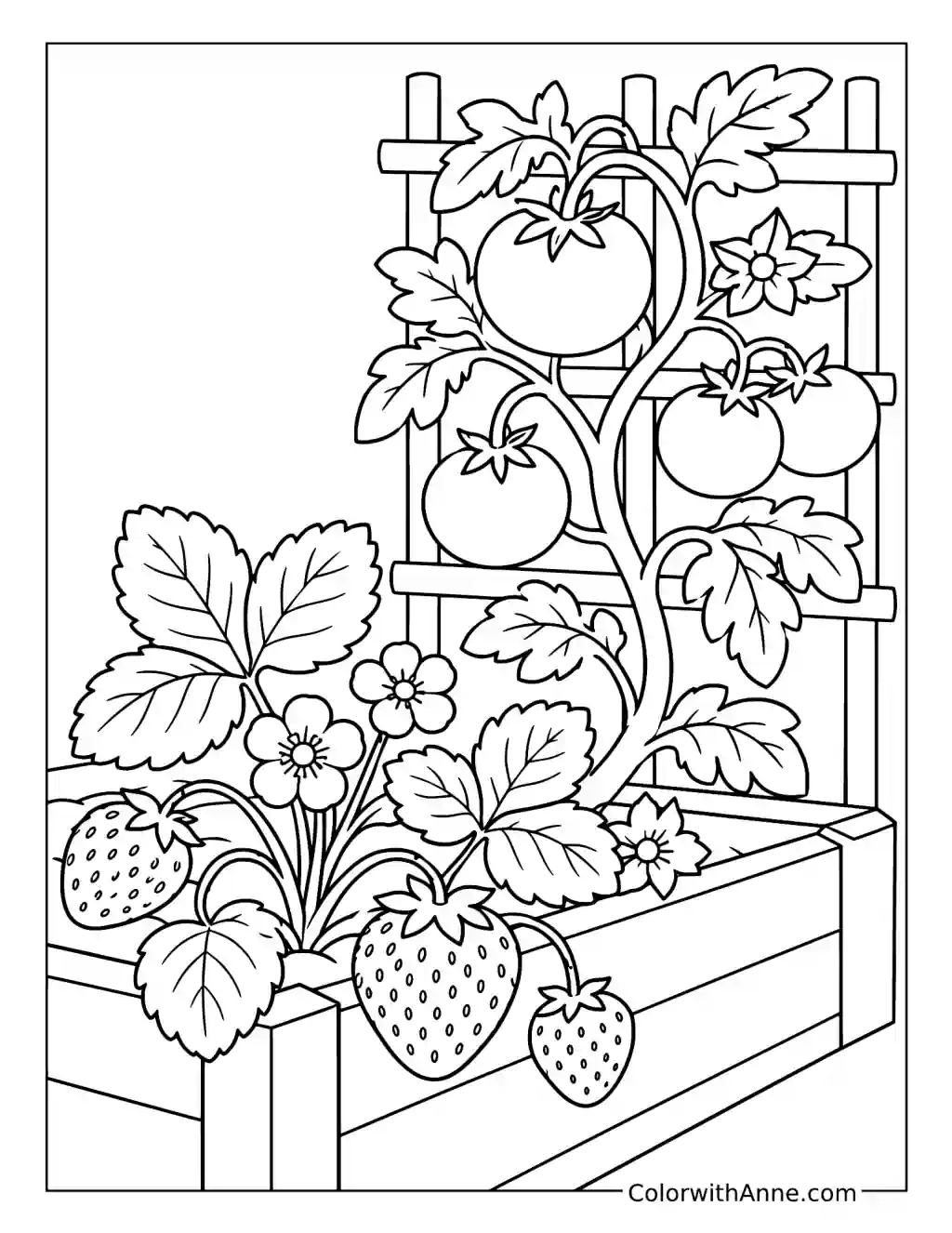
Tomatoes rise above the strawberries in this compact bed. The different heights are the useful detail to notice when imagining a small growing space.
Sketch the bed or containers actually available, then mark proposed positions with movable paper labels. Check those choices against the growing requirements of the plants you intend to use. The coloring picture can help visualize the result, but the real dimensions and care information should guide the planting. Moving labels is much easier than rearranging a crowded bed later.
Follow One Fern Frond From the Center Outward
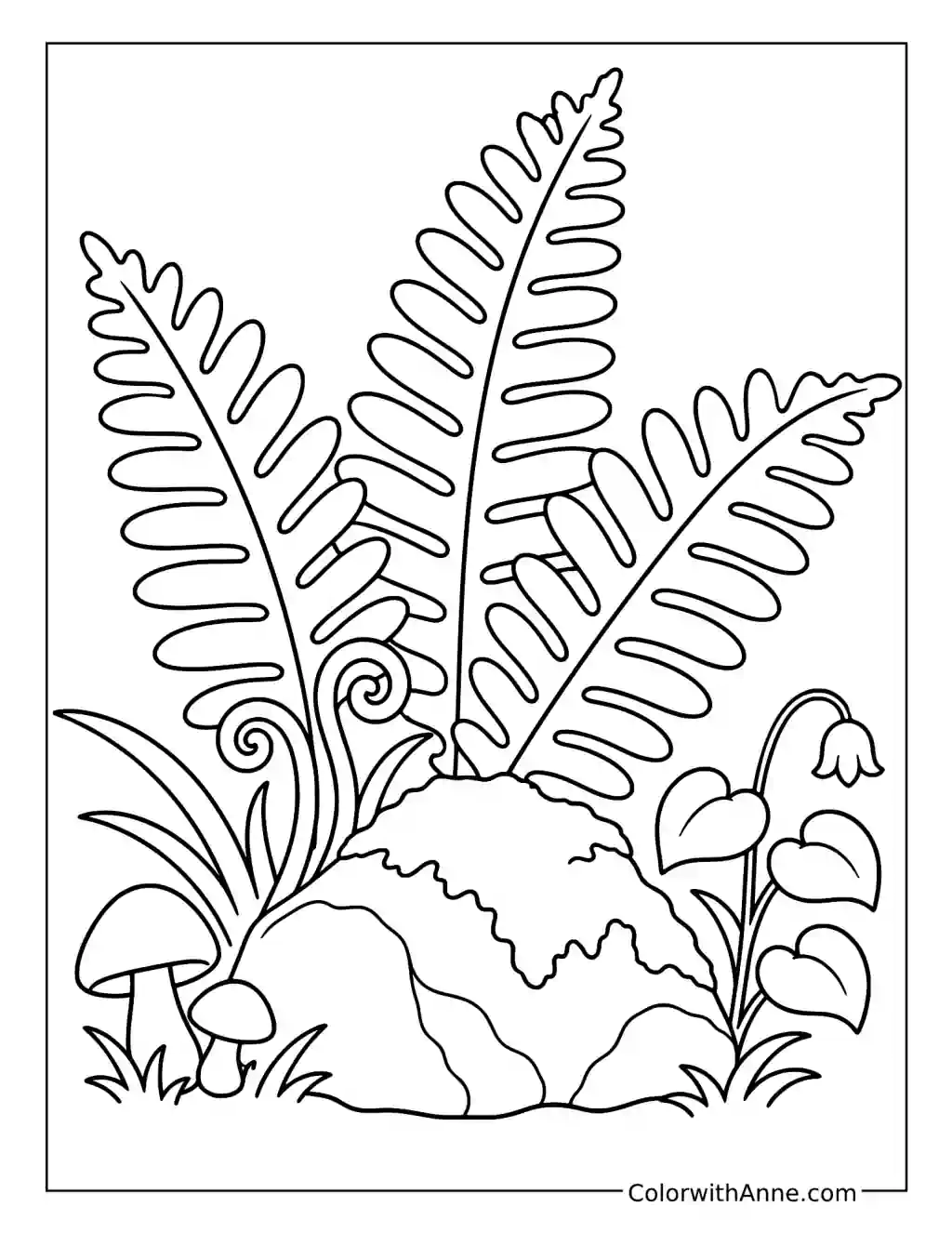
Each fern frond begins with a central curve and carries smaller shapes along its length. That structure is a useful way into botanical drawing.
Look at the page beside a real fern or photograph. Sketch just the central curve first, then add the smaller sections along it, watching how their size changes. A second attempt can follow another frond pointing in a different direction. Keep the studies beside the colored picture. The repeating structure becomes clearer once the fronds stop being treated as a mass of greenery.
Test the Pot Pattern Around a Curve
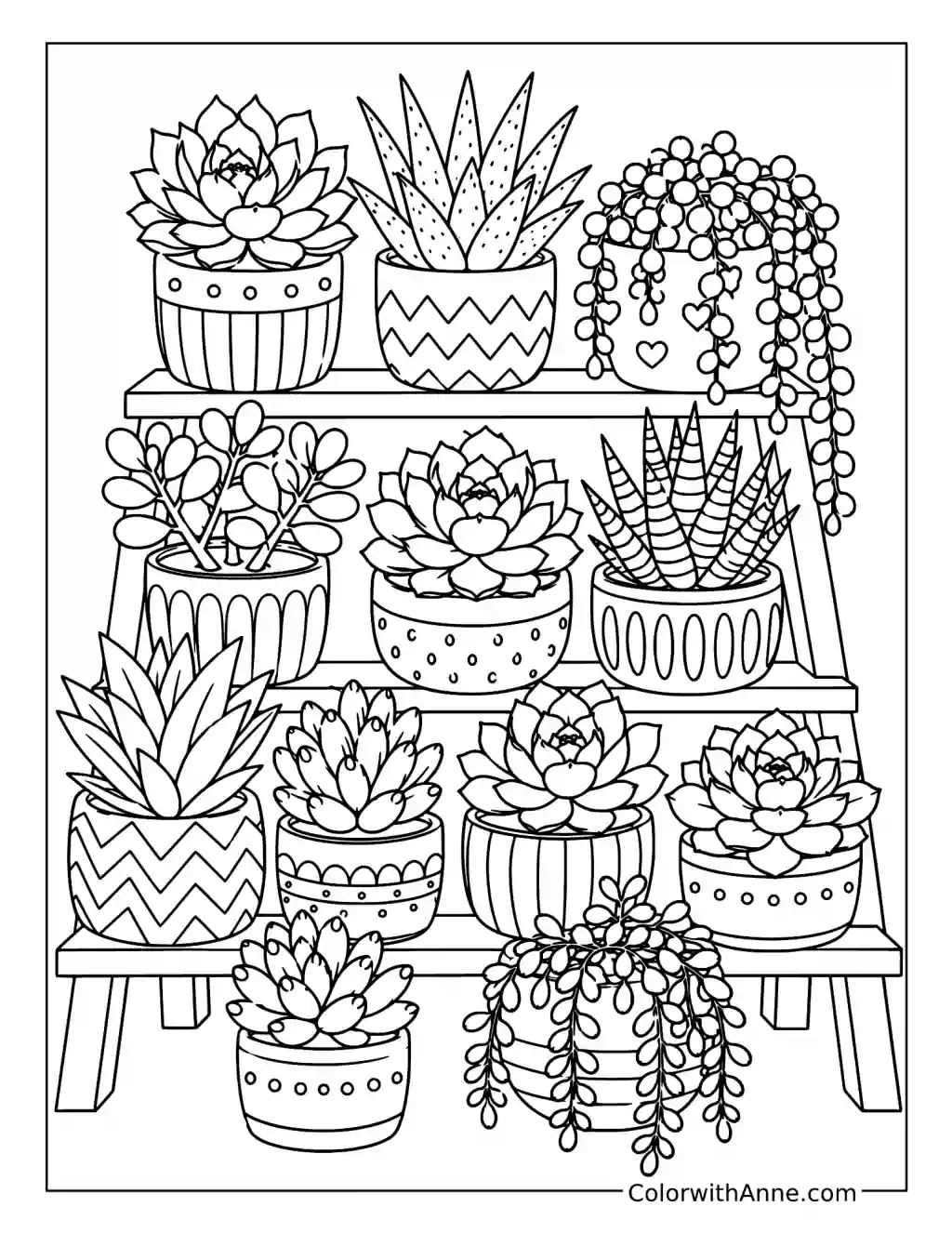
The shelves hold different succulent shapes in patterned pots. The pots are the part that can be redesigned before committing to a real painted container.
Try a related group of motifs on the page, then transfer a favorite onto a paper strip long enough to wrap around a spare pot. Join the strip loosely and turn the pot to inspect the pattern from several sides. A design that looked balanced from the front may need a different repeat around the curve. Keep the paper trial until the spacing feels right.