
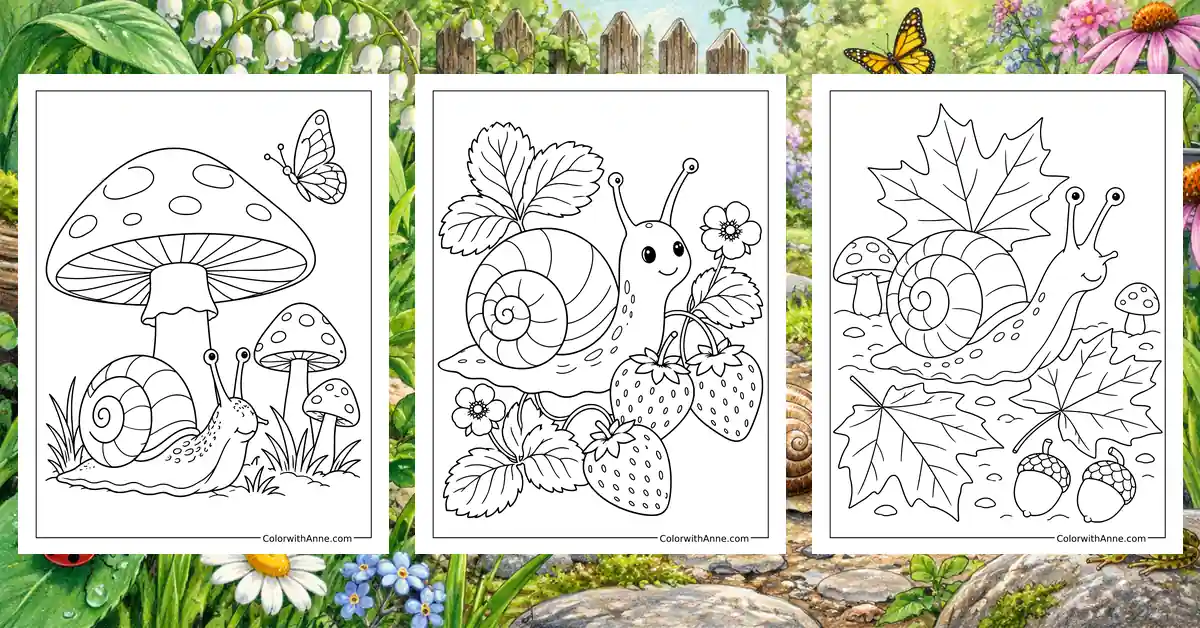
A snail crossing a garden path makes a small journey look unusually absorbing. Its feelers reach forward, its shell follows, and the distance to the next leaf seems substantial from ground level. A child crouched nearby may offer encouragement that does little to alter the pace.
Snail coloring pages allow that patient observation to continue somewhere more comfortable than the pavement. The spiral is easy to recognize, but the little face often earns just as much attention. After watching a real snail, someone may be keen to explain where it was heading, despite having considerably less evidence than confidence.
Free Printable Snail Coloring Pages
Click any coloring page below to open the PDF, then print on US Letter or A4 paper.
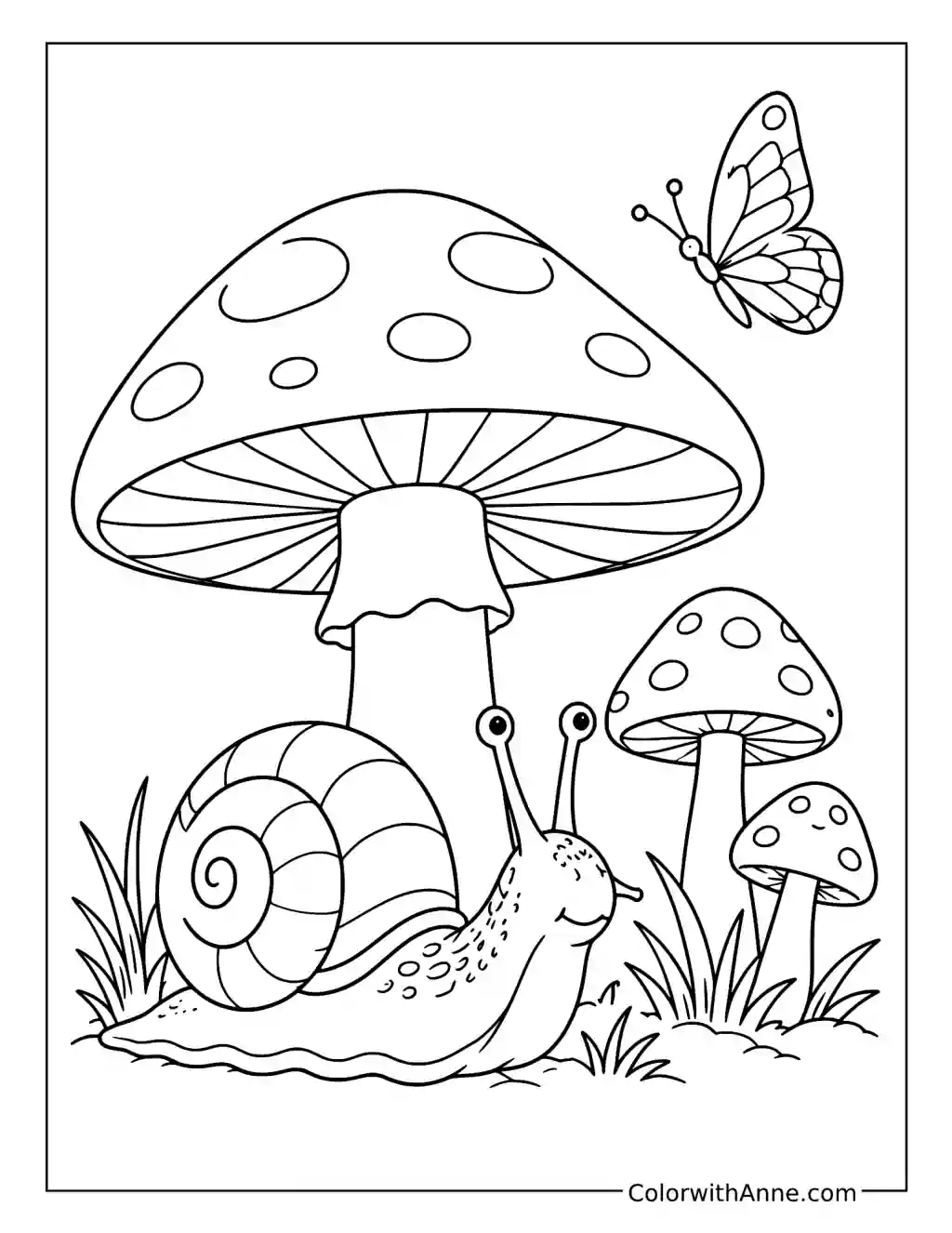
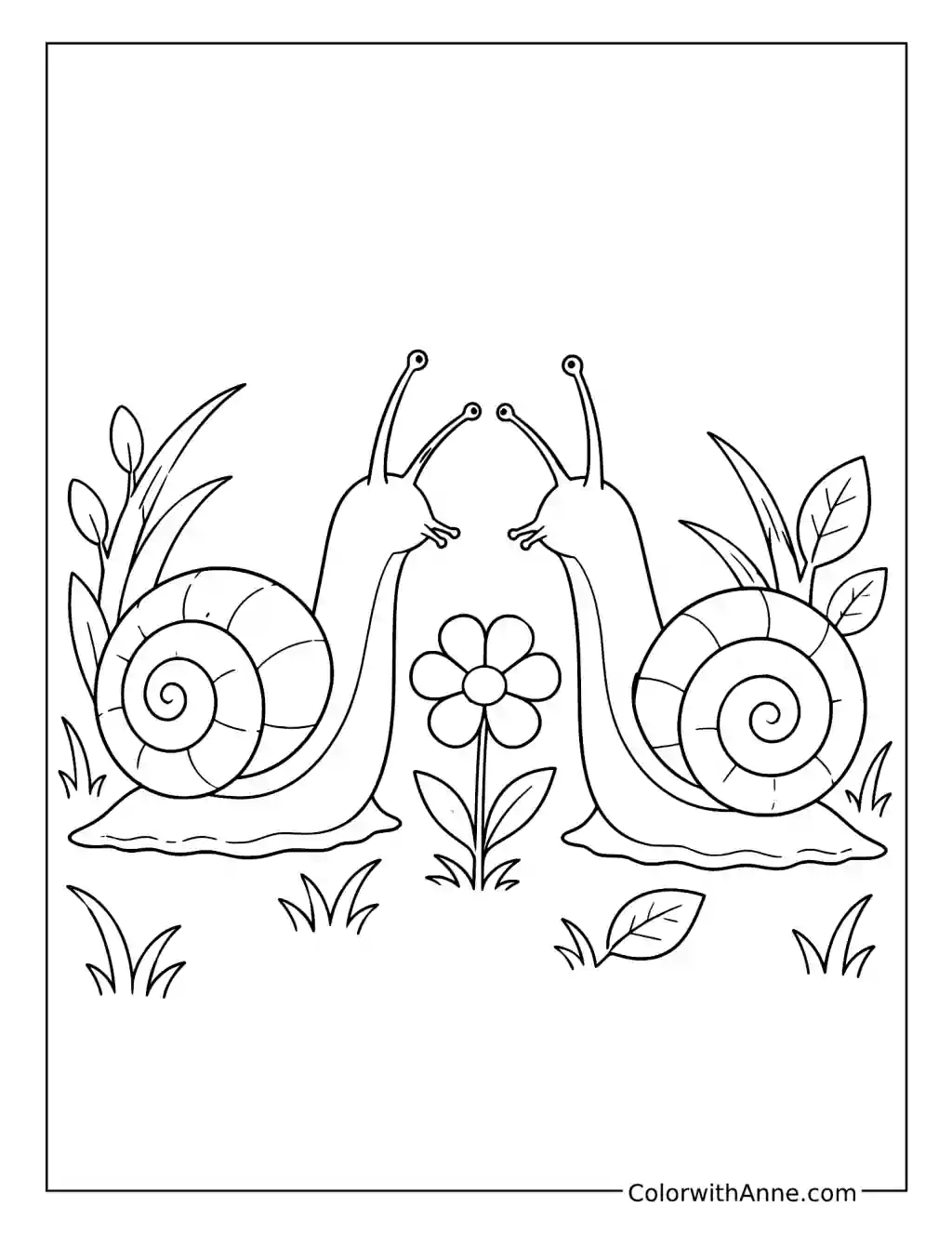
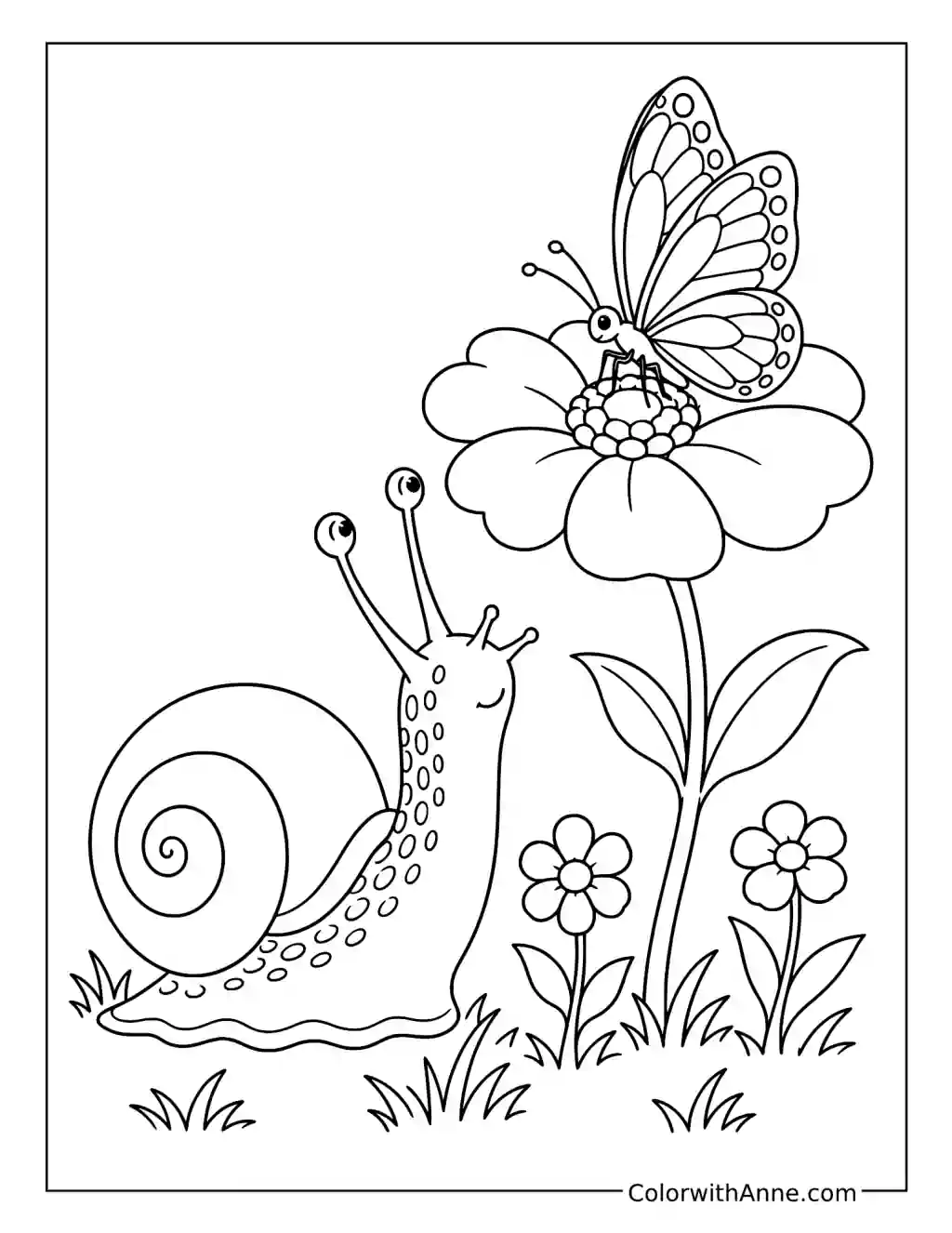
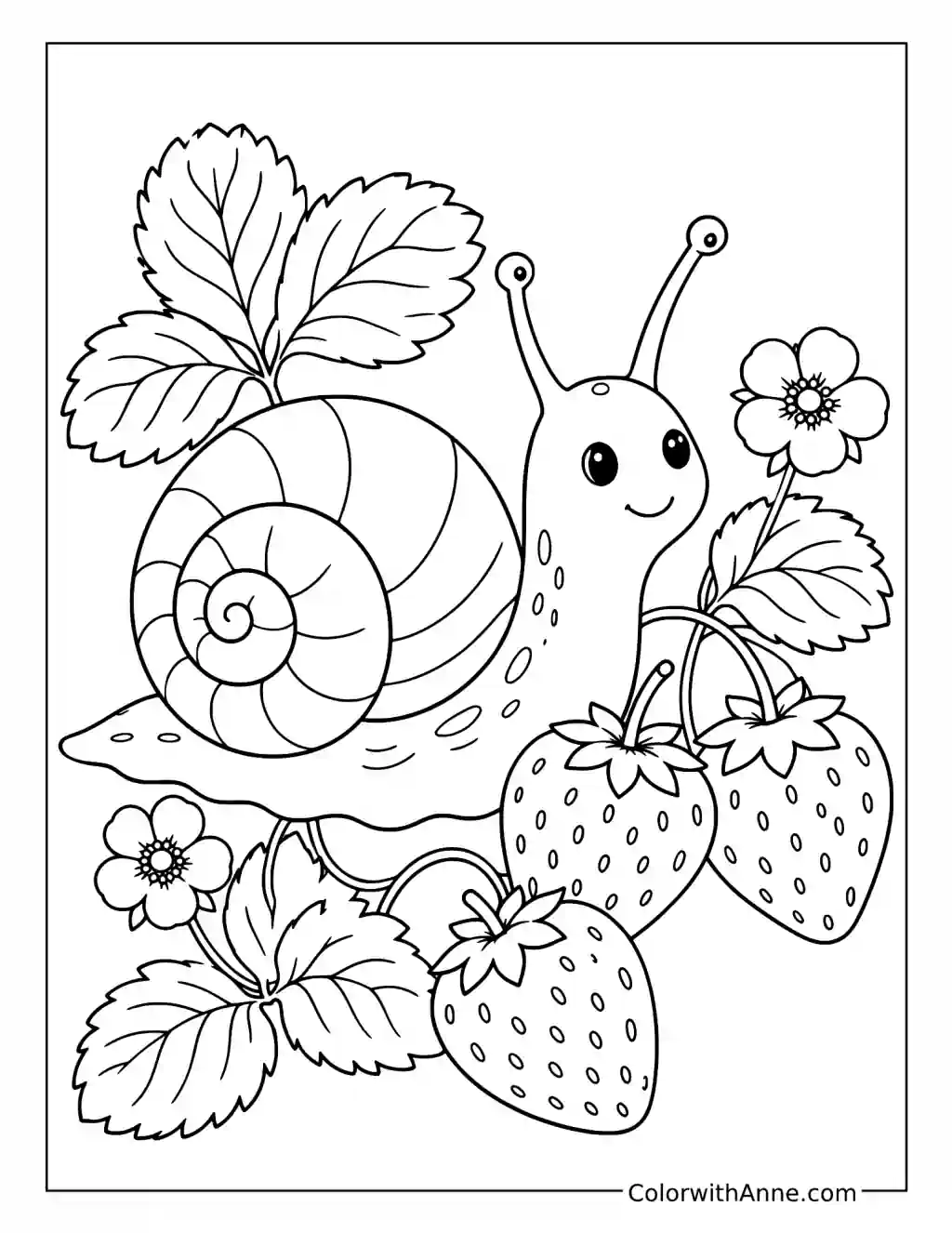
Did you find what you needed?
Help us choose what to create or improve next.
Coloring Ideas for Snail Pages
Try one of these coloring ideas, or use them as a starting point for your own.
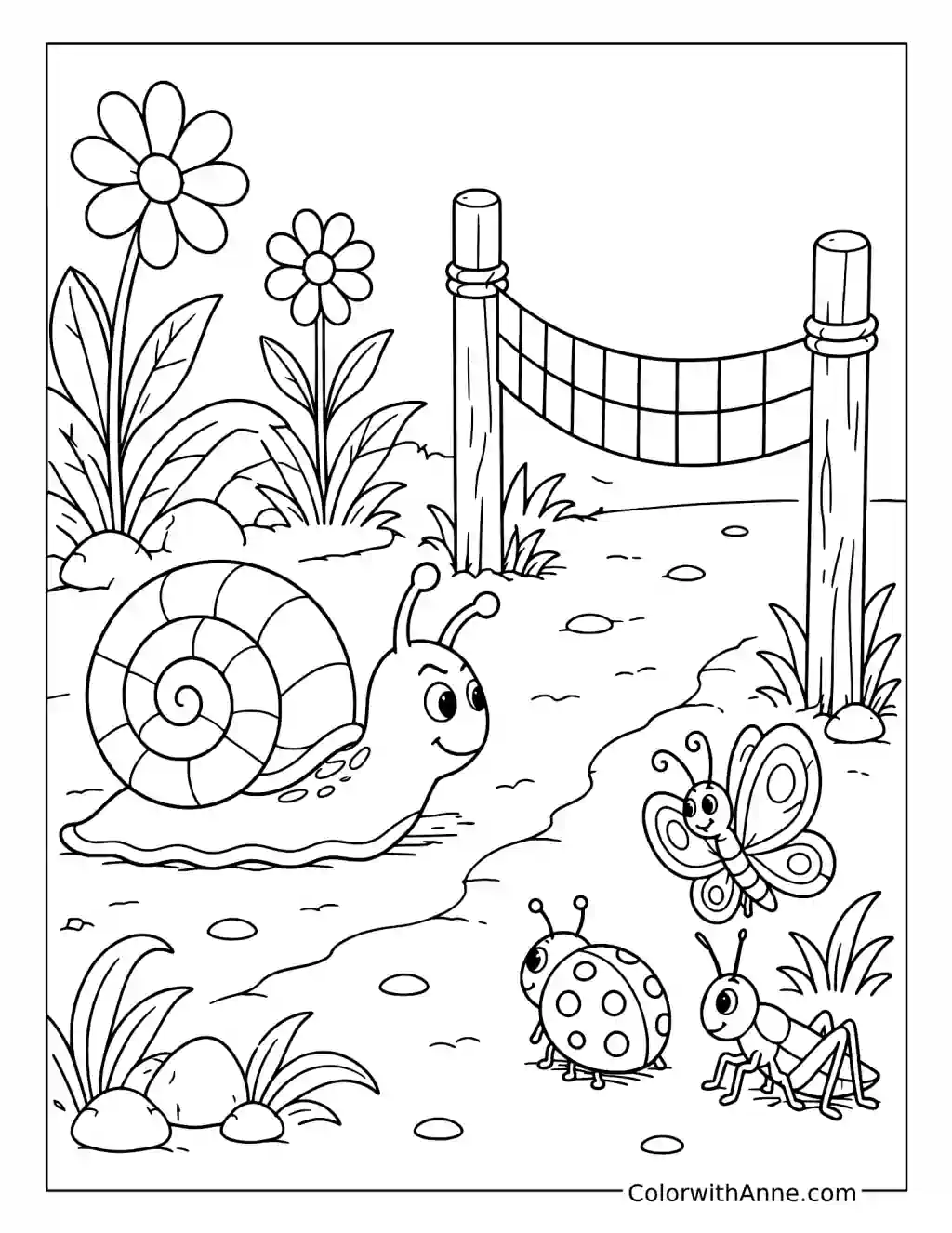
Give the Garden Volleyball Match a Next Move
The snail faces a small volleyball net while other garden bugs gather nearby. The oversized flowers make this an unmistakably miniature sporting event.
A warm brown shell and green garden could keep the setting familiar. Brighter colors on the ball and net posts would bring attention to the little court.
Choose where the ball should appear next and draw a dotted arc toward that point. Decide which character is sending it across the net. One clear movement is enough to continue the scene without adding a whole set of game rules.
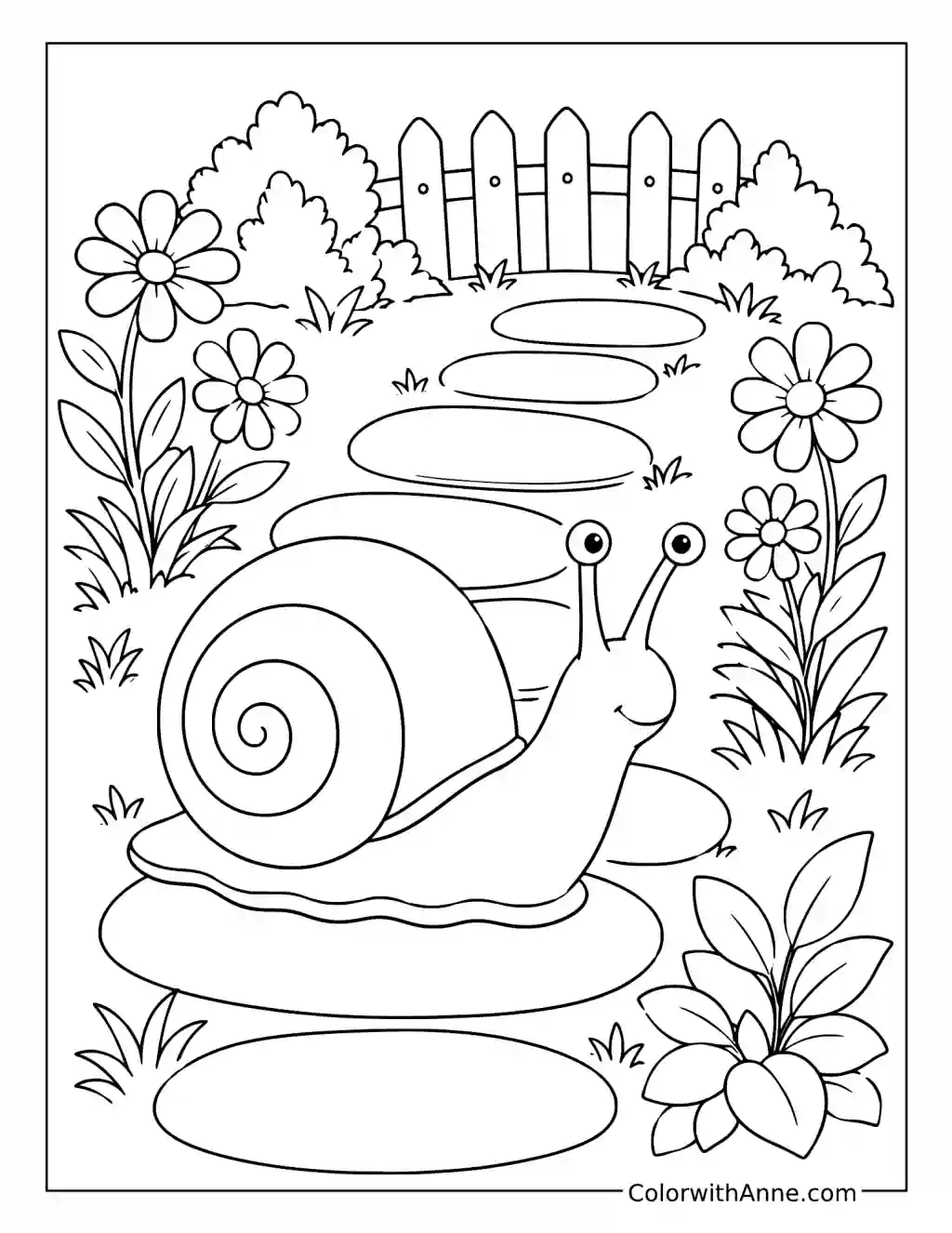
Turn the Stepping Stones Into a Short Game
The snail follows a stone path toward the garden gate. The separate stepping stones already provide spaces for a small tabletop journey.
Soft gray stones with green grass could make the route clear. A coral or golden shell would give the snail a cheerful place against the quieter path.
Use a small paper counter as the traveling snail. Take turns moving it one or two stones, deciding the move before touching the counter. Finish at the gate, then let another player choose a different starting stone for the return trip.
Follow the Leaf’s Smaller Lines
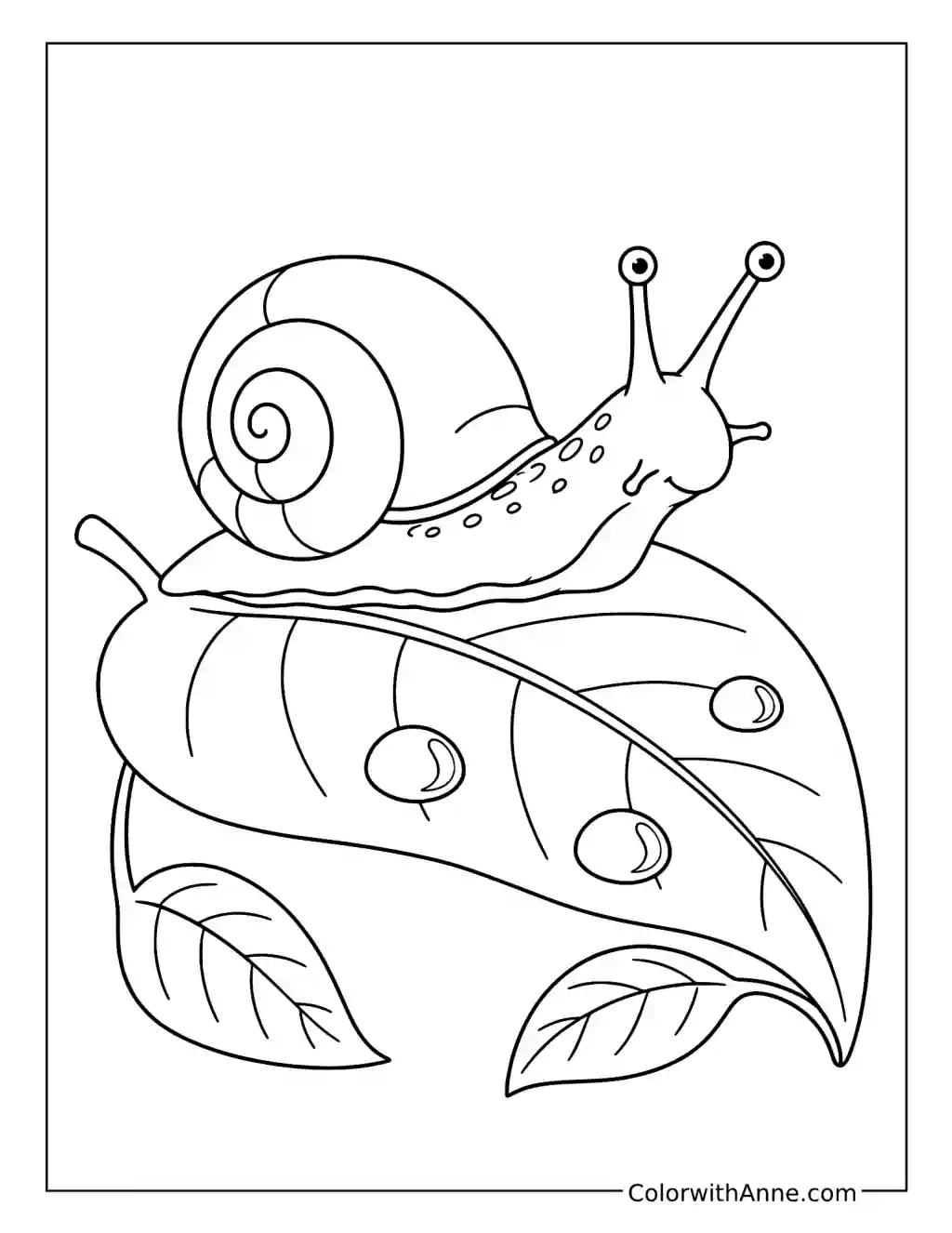
The snail crosses a broad leaf marked with branching veins and rounded drops. The large leaf gives the little traveler a landscape of its own.
Sage green with a darker central vein could make the leaf feel substantial. A warm spiral shell and pale blue drops would add contrast without filling every detail strongly.
Find a fallen leaf and look at how its smaller veins branch from the center. Compare their arrangement with the illustration. Add one observed vein detail to the printed leaf if there is room, keeping the snail’s outline clear.
Share the Flower Between Two Colorists
Two snails face each other across a single flower. Their balanced positions make this a comfortable page for two people to work on together.
Different shell colors could give each snail its own character. A shared flower color, repeated in a small shell detail, would connect the two halves of the picture.
Each person can choose a snail, then decide together who colors the flower’s petals, center, and stem. Work from opposite sides of the sheet. The central flower gives the collaboration a clear meeting point.
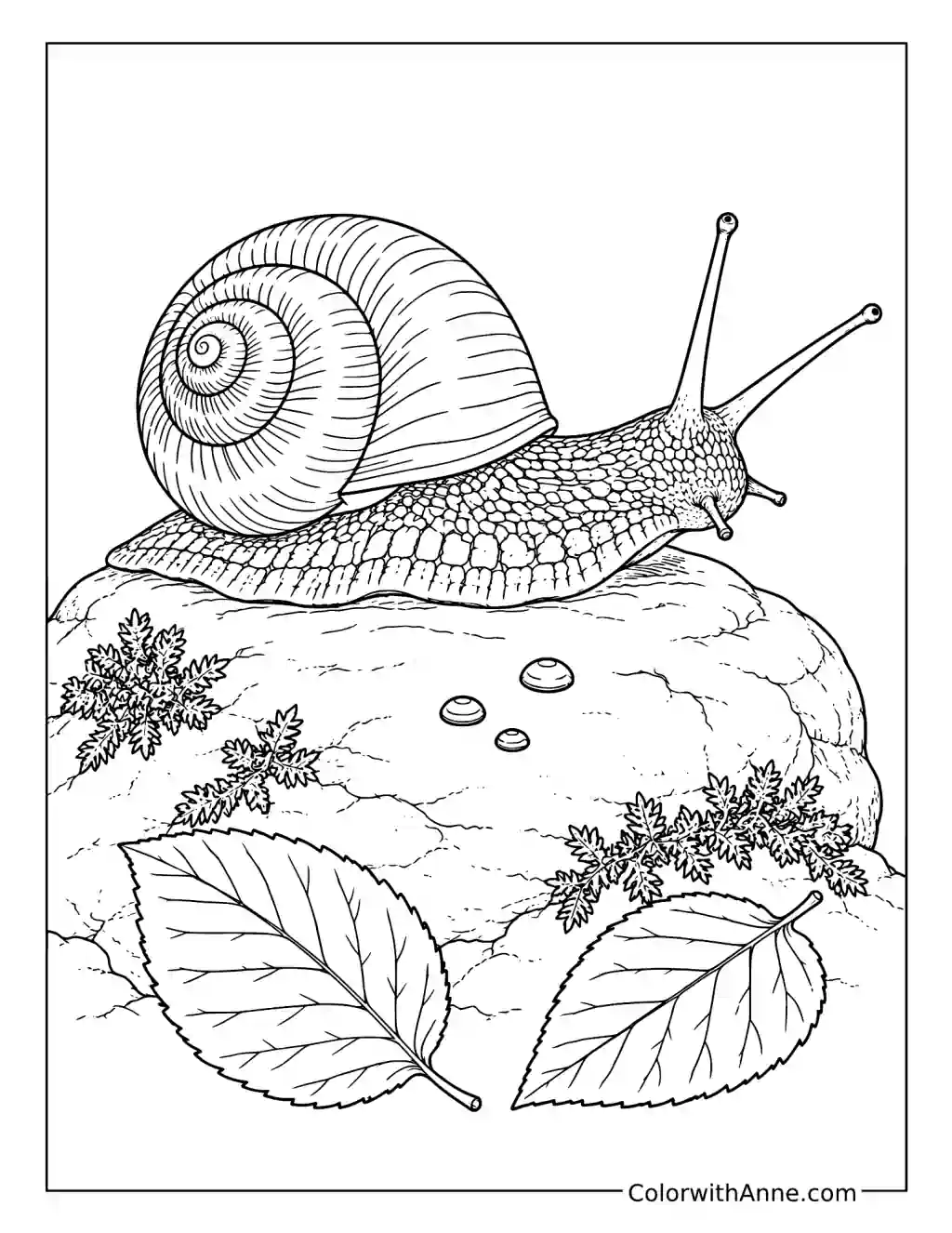
Compare the Realistic Snail’s Main Features
The snail’s textured body and finely lined shell contrast with the simpler smiling characters elsewhere in the gallery. Its stretched position makes several features easy to inspect.
Brown and cream shell bands with a soft gray body could suit the more realistic style. Muted green moss would add a little color while preserving the fine lines.
Compare the picture with a clear snail photograph. Find the shell, tentacles, and broad underside in both. Choose one feature to label in the margin, then look for how that same part is simplified in a cartoon snail.
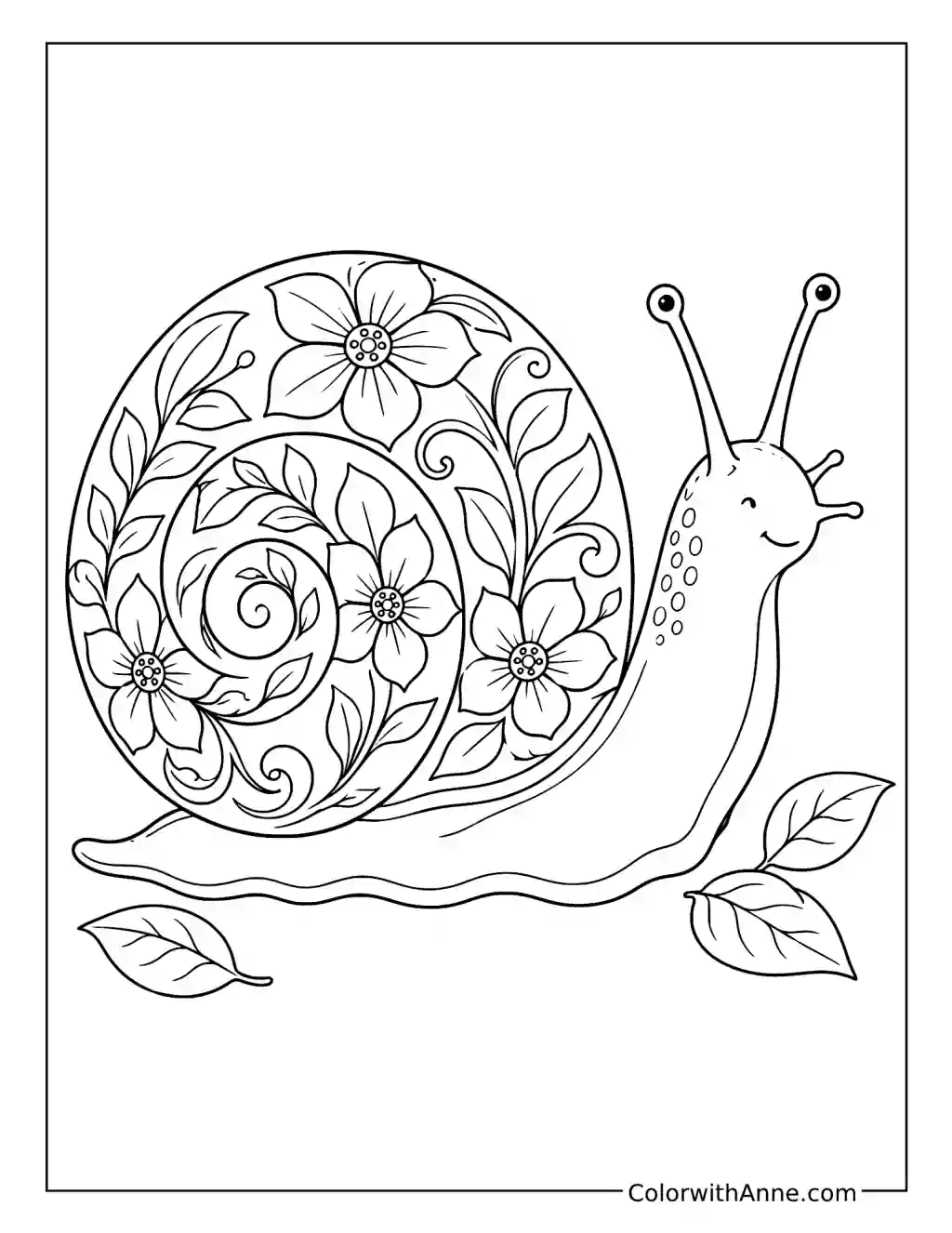
Let the Shell Become a Flower Garden
Flowers and curling leaves fill the snail’s shell, turning its spiral into an ornamental garden. The body can stay relatively simple while the shell carries the detail.
Rose, lavender, and soft green could give the floral sections a coordinated palette. A quiet cream or gray body would let those smaller patterns remain the focus.
Choose one flower as the shell’s main accent and finish it first. Repeat a little of its color in a few smaller blossoms, then work through the leaves. The repeating accent can connect the busy pattern while leaving room for variety.