
A bug crossing the pavement can bring a child to a crouch in the middle of an otherwise ordinary walk. Its progress is followed closely, especially when it encounters a crack that suddenly looks enormous. An adult waiting nearby may be informed that leaving now would interrupt something important.
That habit of looking closely belongs naturally with Bug coloring pages. A tiny creature becomes large enough on paper for its shape to hold attention without crawling out of view. The interest may continue outdoors afterward, where a patch of grass that seemed empty earlier can turn out to be surprisingly busy.
Free Printable Bug Coloring Pages
Click any coloring page below to open the PDF, then print on US Letter or A4 paper.
Did you find what you needed?
Help us choose what to create or improve next.
Coloring Ideas for Bug Pages
Try one of these coloring ideas, or use them as a starting point for your own.
Lift the Butterfly’s Wings
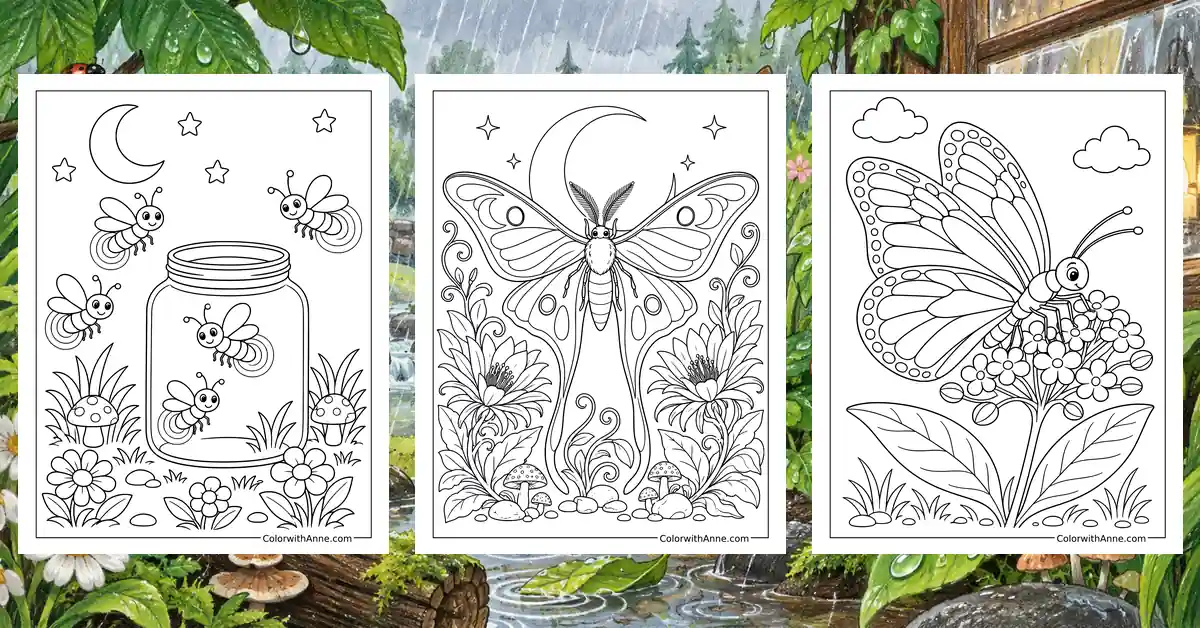
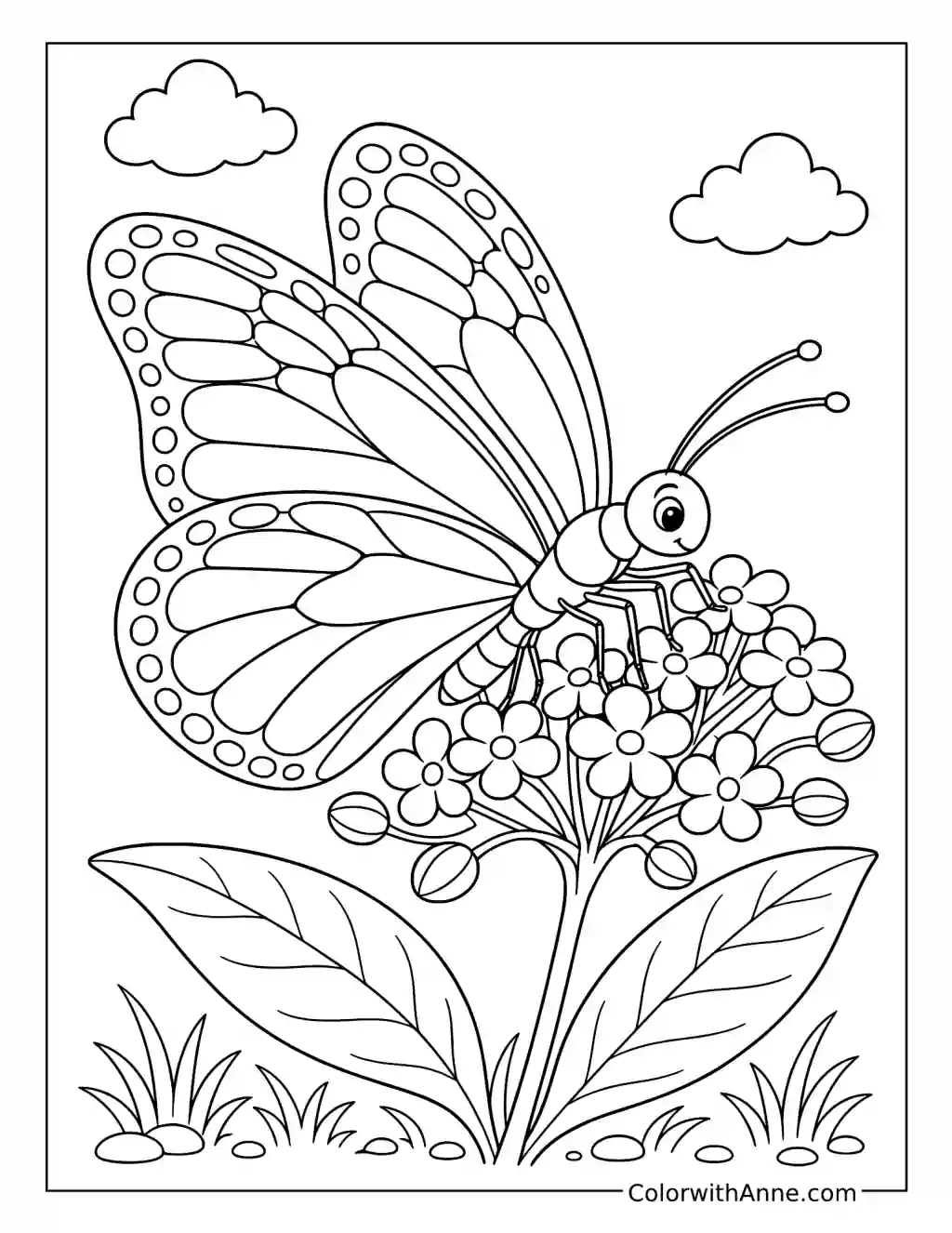
The butterfly spreads its wings over a cluster of flowers. Its clear outline makes it a good candidate for a raised paper butterfly.
Try orange wings with black borders and small pale spots. Pink flowers and green leaves will keep the butterfly distinct from the plant beneath it.
Mount the colored butterfly on thin card and cut around it. Gently crease along either side of the body, then attach only the body to a separate flower drawing or plain backing. The wings can lift slightly from the surface, preserving the pattern while giving the insect a little dimension.
Look for the Pattern in a Real Web
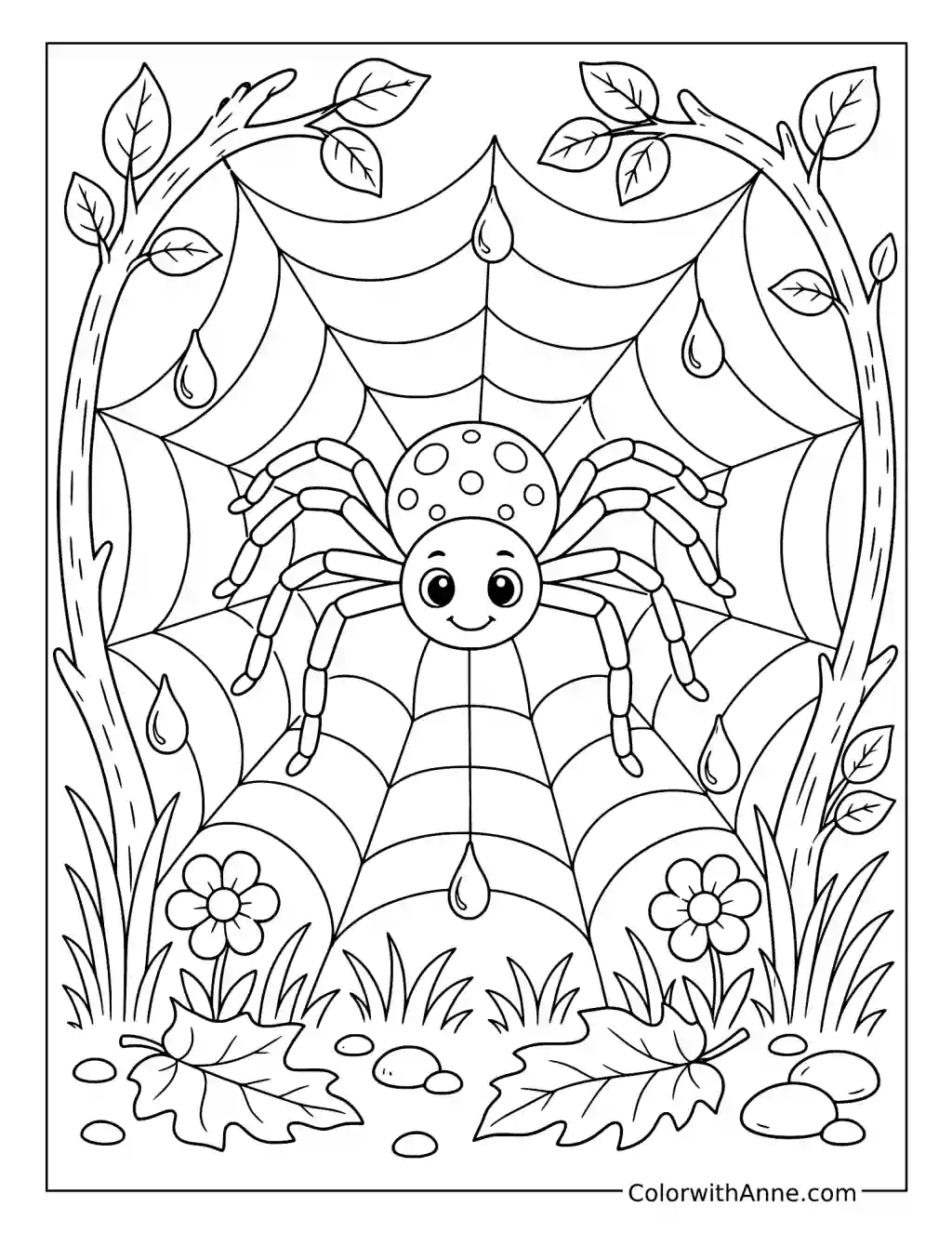
The smiling spider sits among curved web lines and hanging droplets. The web has as much to look at as the character in its center.
Use soft brown or gray for the spider and fresh green leaves around the edges. Pale blue around the droplets will help them remain visible.
If a web is visible outside, look at it without disturbing it. Notice where the long supporting lines meet and how the smaller lines connect them. Compare that arrangement with the drawing. A quick sketch of one section can capture a detail that is easy to miss when looking at the whole web.
Build a Moon Garden Around the Moth
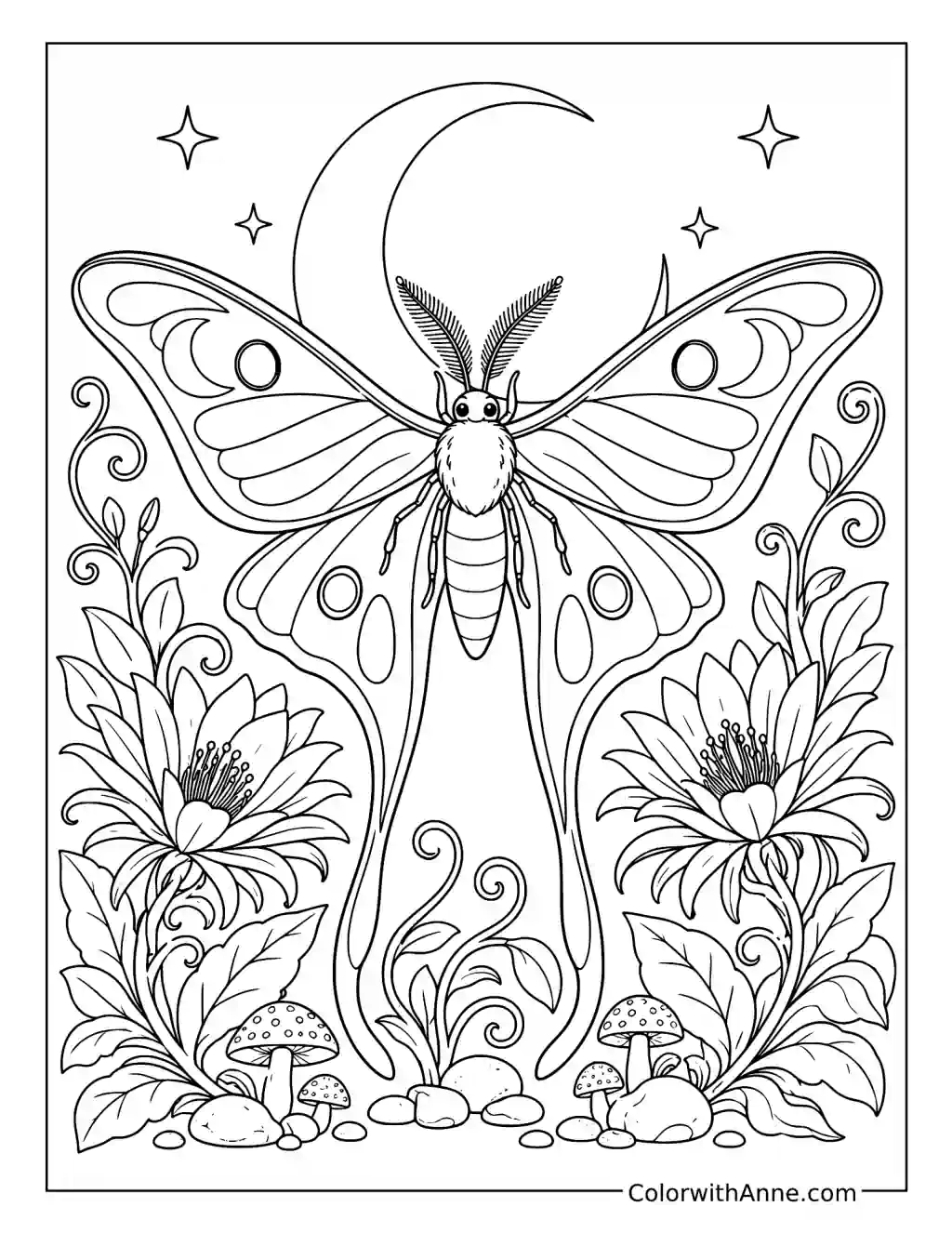
The moth stretches beneath a crescent moon, surrounded by curling plants and flowers. The long wing shapes give the nighttime garden a delicate center.
Pale green wings will stand out against a blue or violet sky. Keep the moon cream and use a few pale pink flowers among darker leaves.
Extend the garden into any open background space with simple leaf silhouettes or smaller blossoms. Let some shapes overlap the edges of the picture rather than placing every flower separately. The moth should remain the clearest shape, with the garden gathering around it.
Make a Bee That Can Visit the Sunflowers
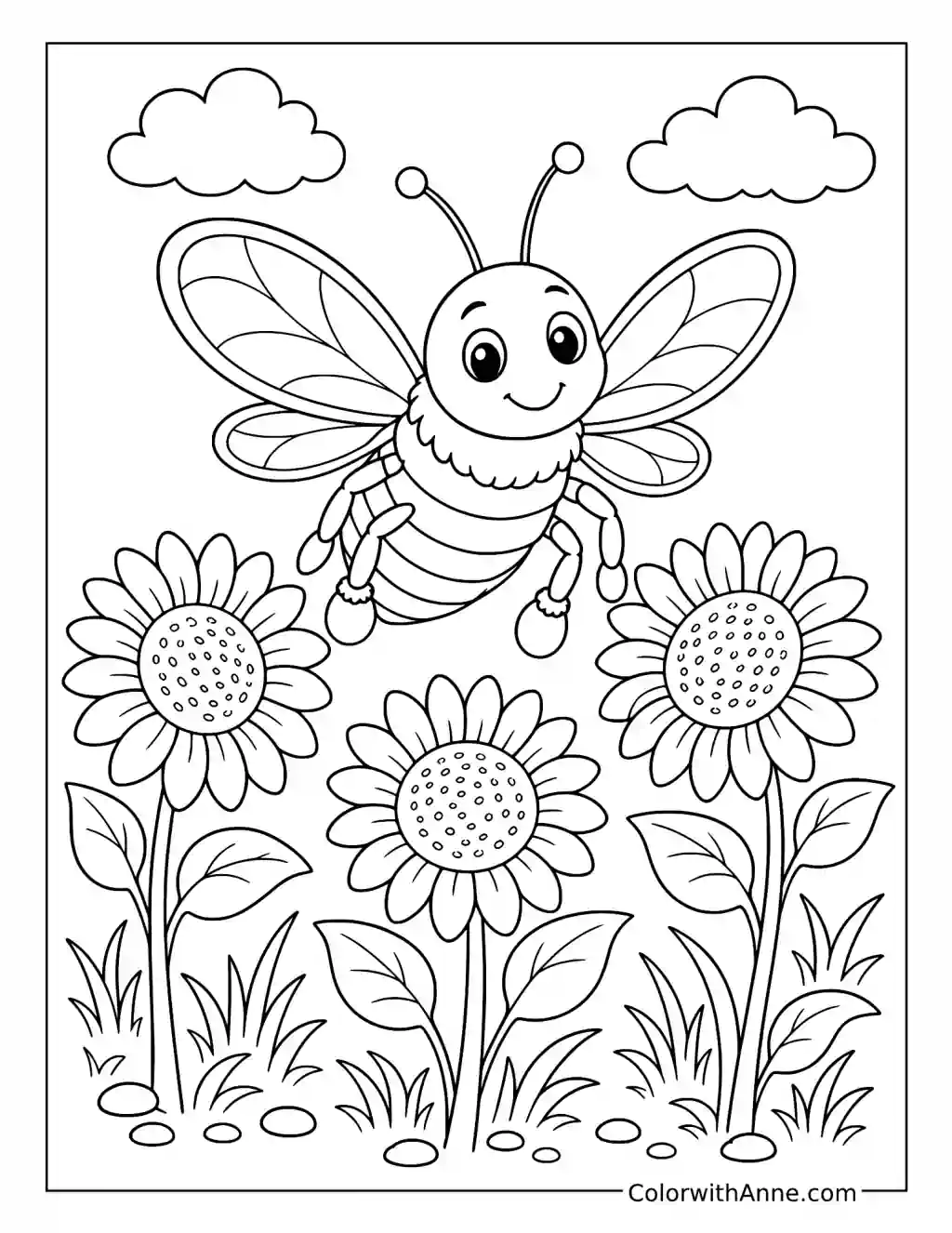
The cheerful bee hovers above several sunflower heads. A finger puppet can carry that hovering movement into a small paper garden.
Use yellow and black for the bee, pale blue wings, and golden petals with brown centers. Different greens can separate the leaves from the stems.
Mount the bee on card, cut around it, and attach a short paper loop behind the body. Slip a finger through the loop and move it above flowers drawn on another sheet. Children can invent which flower the bee visits next and what it discovers along the way.
Fill a Jar With Paper Fireflies
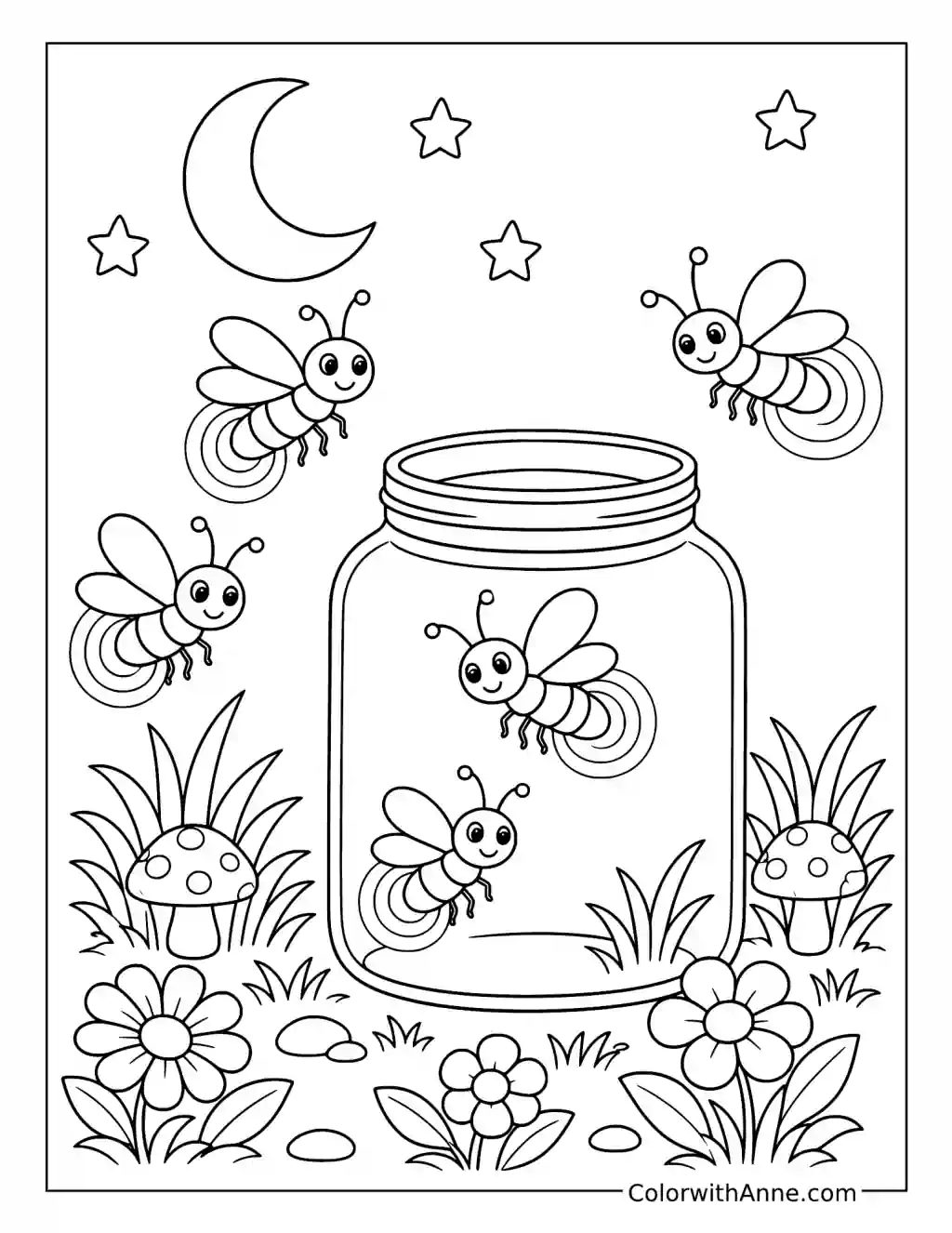
Fireflies gather inside and around the open jar beneath the moon. A paper-and-light version can bring the glow into a bedroom or reading corner.
Try yellow firefly bodies, pale blue wings, and a deep blue sky. Leave the jar mostly light so the little figures inside remain clear.
Draw small paper fireflies inspired by the page and attach them around the outside of an empty jar. Place a battery tea light inside. Try the arrangement with the room lights dimmed before fixing every insect in place; a few well-spaced shapes will remain easier to see.
Fit the Honeycomb Together
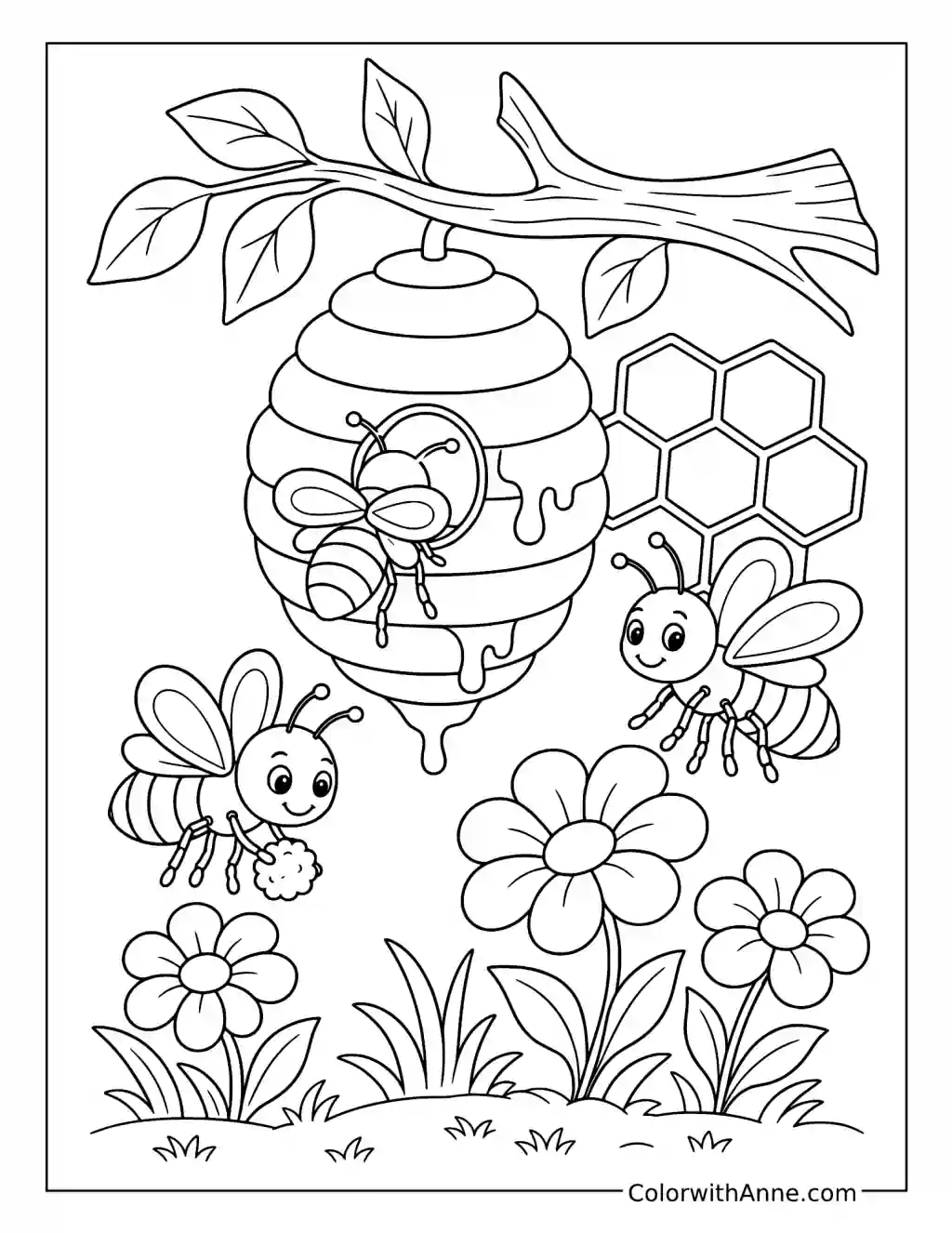
The hanging hive is surrounded by bees, flowers, and a few hexagonal cells. Those cells offer a small pattern-building project alongside the coloring.
Use honey yellow for the hive, amber inside the cells, and yellow-and-black bees. Pink or purple flowers will break up the warmer colors.
Trace one of the hexagons onto card and use it as a template for several equal-sized paper pieces. Arrange them edge to edge on another sheet. Move the pieces around before gluing, trying a narrow strip or a wider cluster. A little bee copied from the picture can hover beside the finished pattern.
Roll a Snail Shell From Play Dough
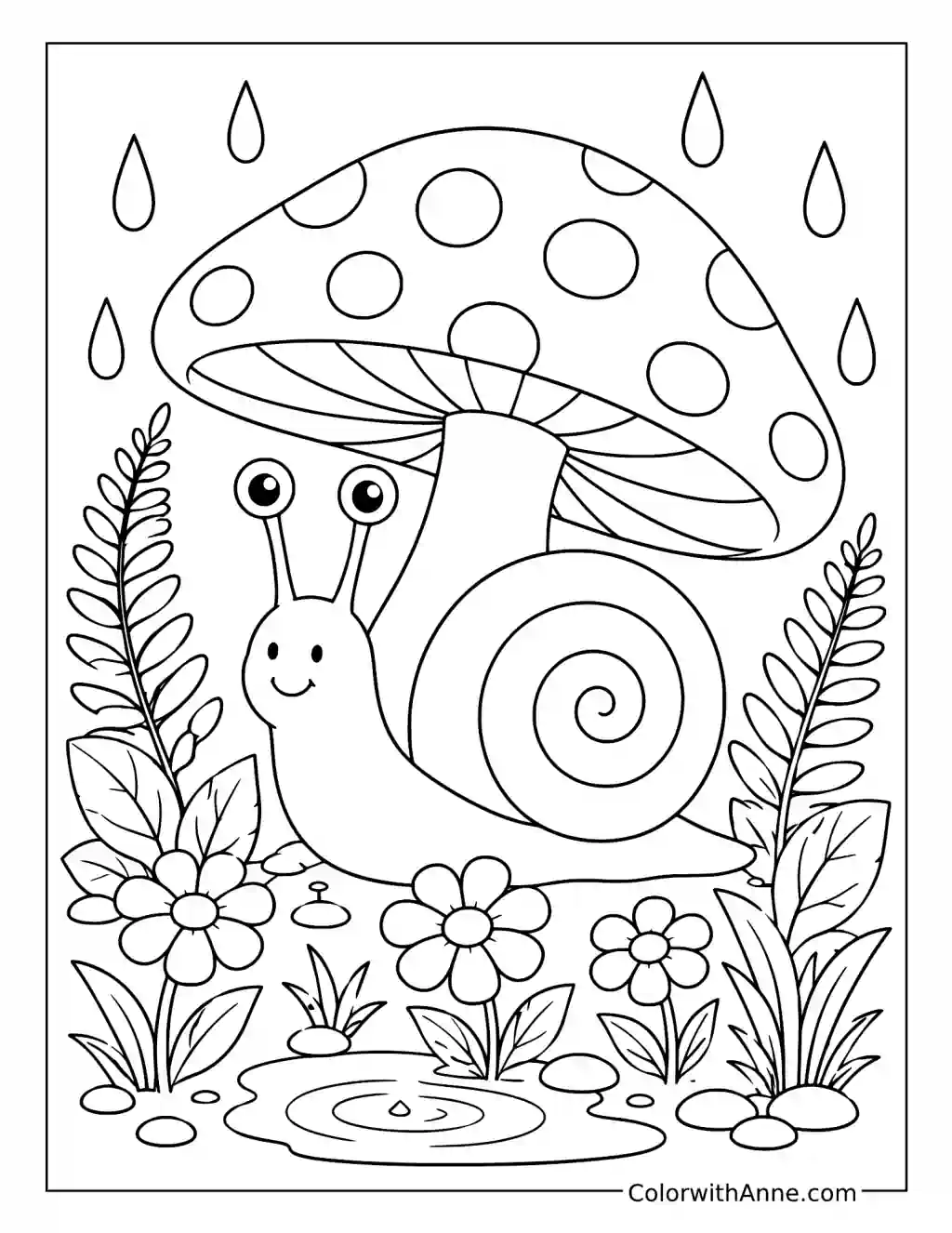
The snail shelters beneath a spotted mushroom while rain falls around it. Its large spiral shell is a shape children can build with their hands.
Try a peach or tan snail, a warm brown shell, and a red mushroom with cream spots. Light blue raindrops will keep the weather gentle.
Roll play dough into a long rope and curl it into a spiral. Add a shorter body underneath and pinch two small eye stalks at the front. Stand the model beneath a folded-paper mushroom. The printed scene can guide the proportions while the dough determines the snail’s own slightly uneven personality.
Make a Strawberry Ladybug Snack
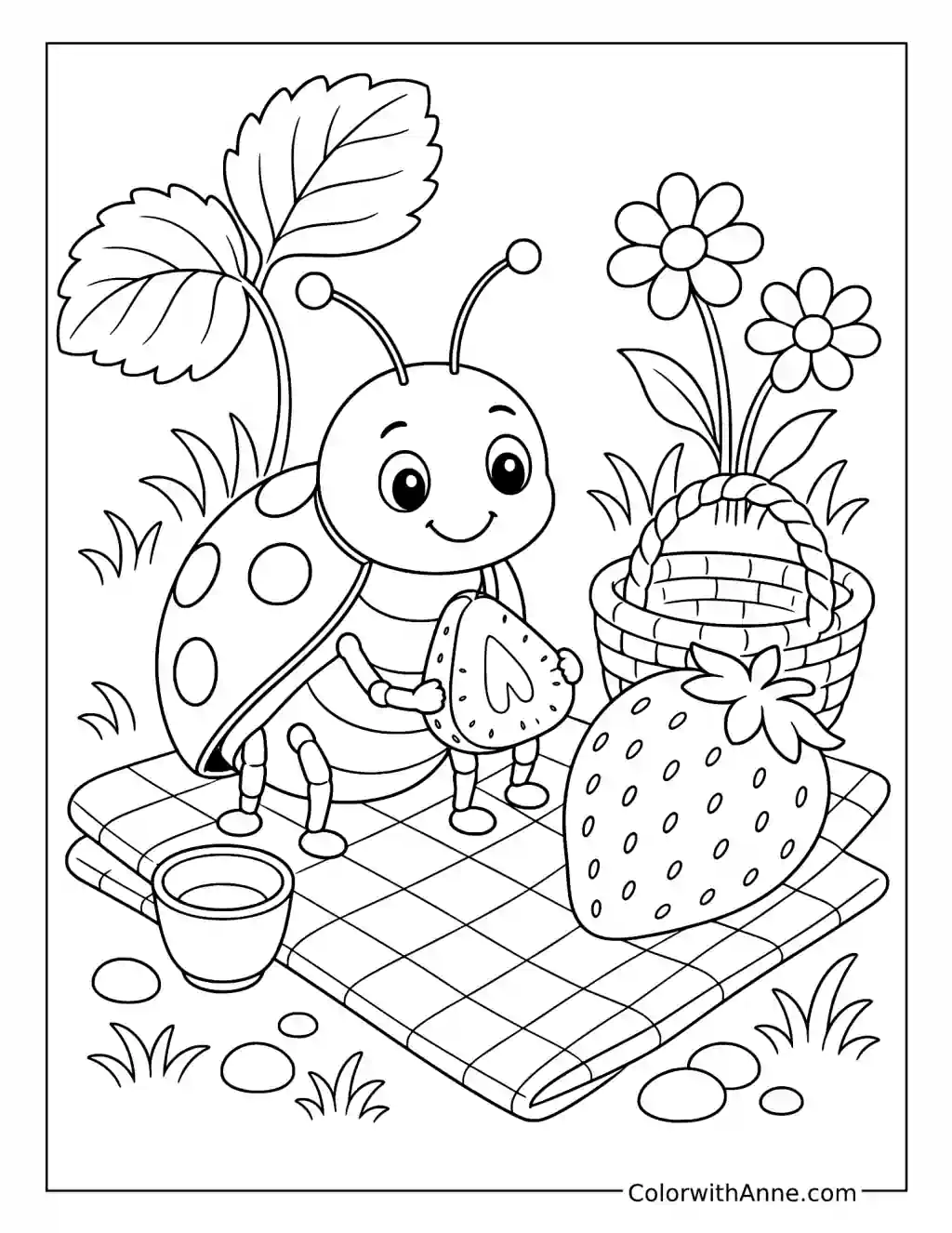
The ladybug has brought a picnic beside an enormous strawberry. The pairing suggests a snack that borrows the insect’s shape.
Give the ladybug red wing cases with black spots and a pale face. Red strawberries, green leaves, and a blue checked cloth will make the picnic bright.
Arrange halved strawberries on a plate as ladybug bodies, with a blueberry beside each for the head. Small dots of chocolate can suggest the markings. Keep the finished picture beside the plate while decorating, then let the picnic belong to the people doing the coloring.