
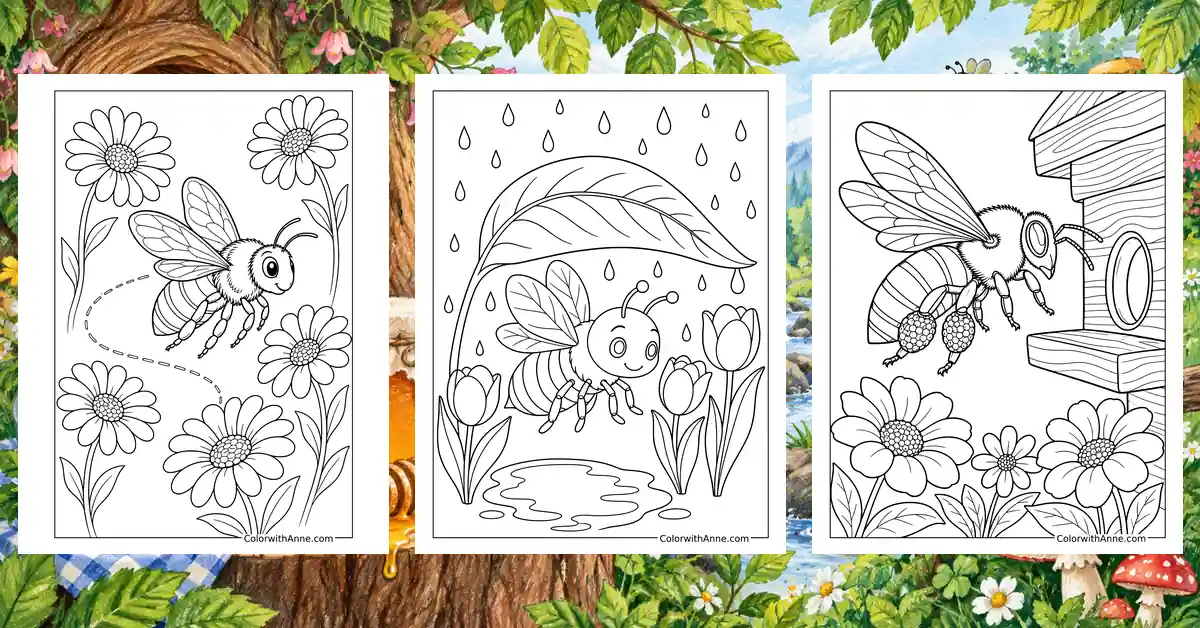
A bee working its way around a flower rarely seems concerned about the person watching nearby. It disappears into the petals, backs out, and moves on while its buzzing briefly fills the quiet. Following its progress can turn a quick look at the garden into several unplanned minutes.
Bee coloring pages offer a chance to stay with that small visitor after it has flown elsewhere. A child may remember the sound first, then wonder what the bee was carrying. The picture gives those questions somewhere to begin, especially when a flower outside is still receiving a steady stream of attention.
Free Printable Bee Coloring Pages
Click any coloring page below to open the PDF, then print on US Letter or A4 paper.
Did you find what you needed?
Help us choose what to create or improve next.
Coloring Ideas for Bee Pages
Try one of these coloring ideas, or use them as a starting point for your own.
Watch Where a Bee Lands
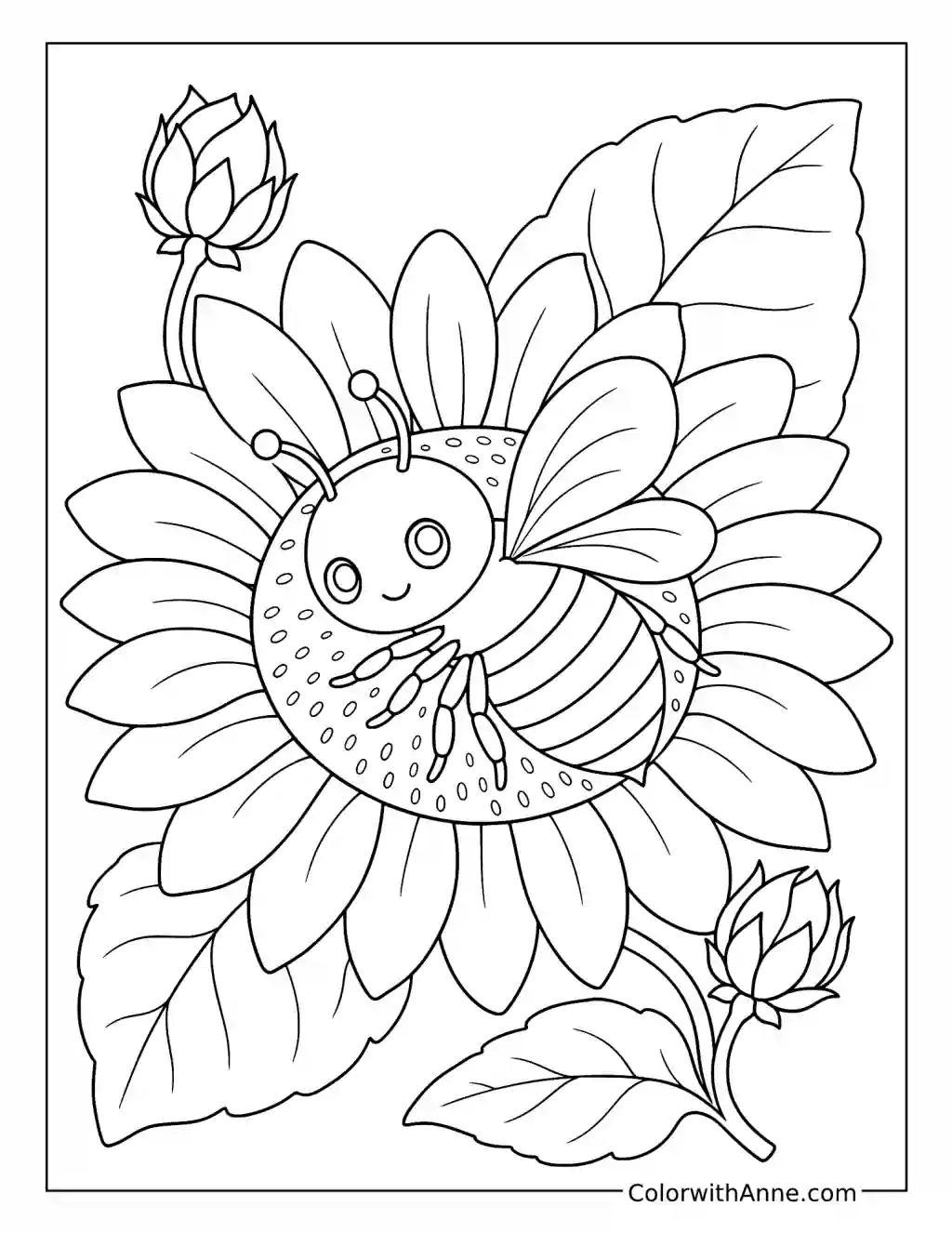
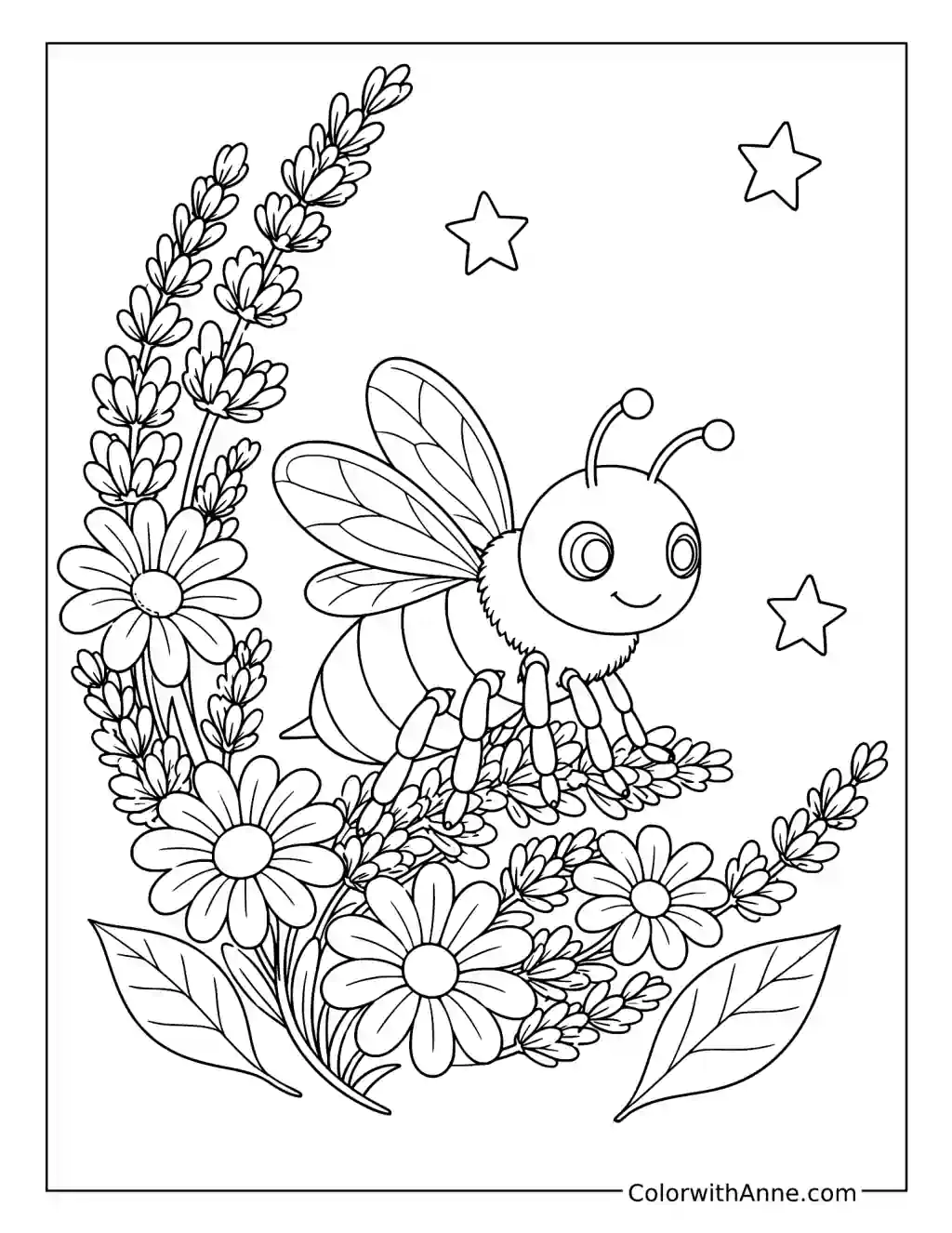
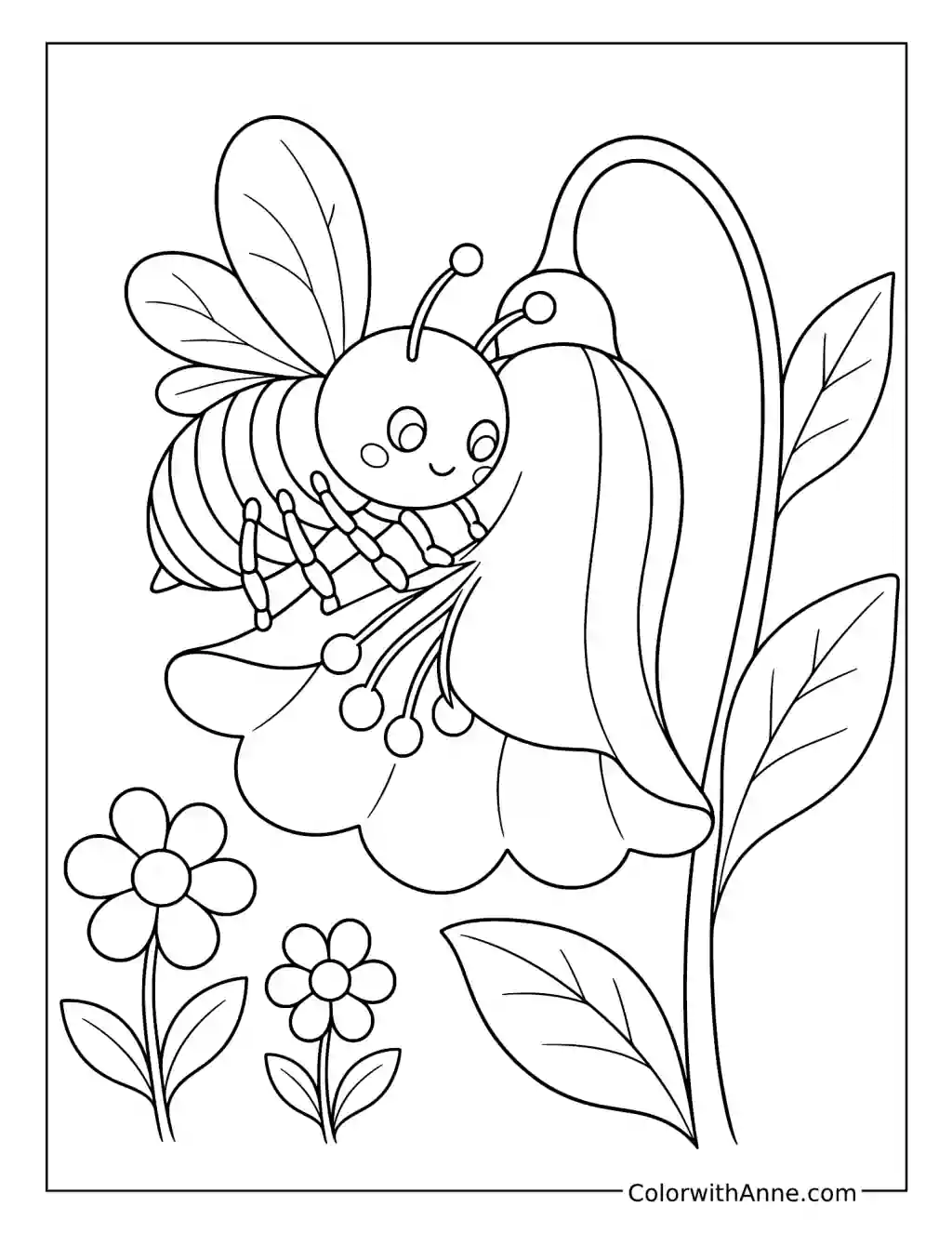
The smiling bee rests on an enormous flower, with its body close to the center. The simple pose offers a good starting point for looking at flower visitors outdoors.
Honey yellow and soft black would make the bee familiar, while pink or violet petals could provide a cheerful contrast. Pale wings would keep the flower visible around them.
Watch a flowering plant from a little distance and notice where visiting insects settle. Follow one visit with your eyes before looking for another. Compare the movement with the still pose in the picture, including which parts of the flower attract attention.
Test a Leaf Umbrella
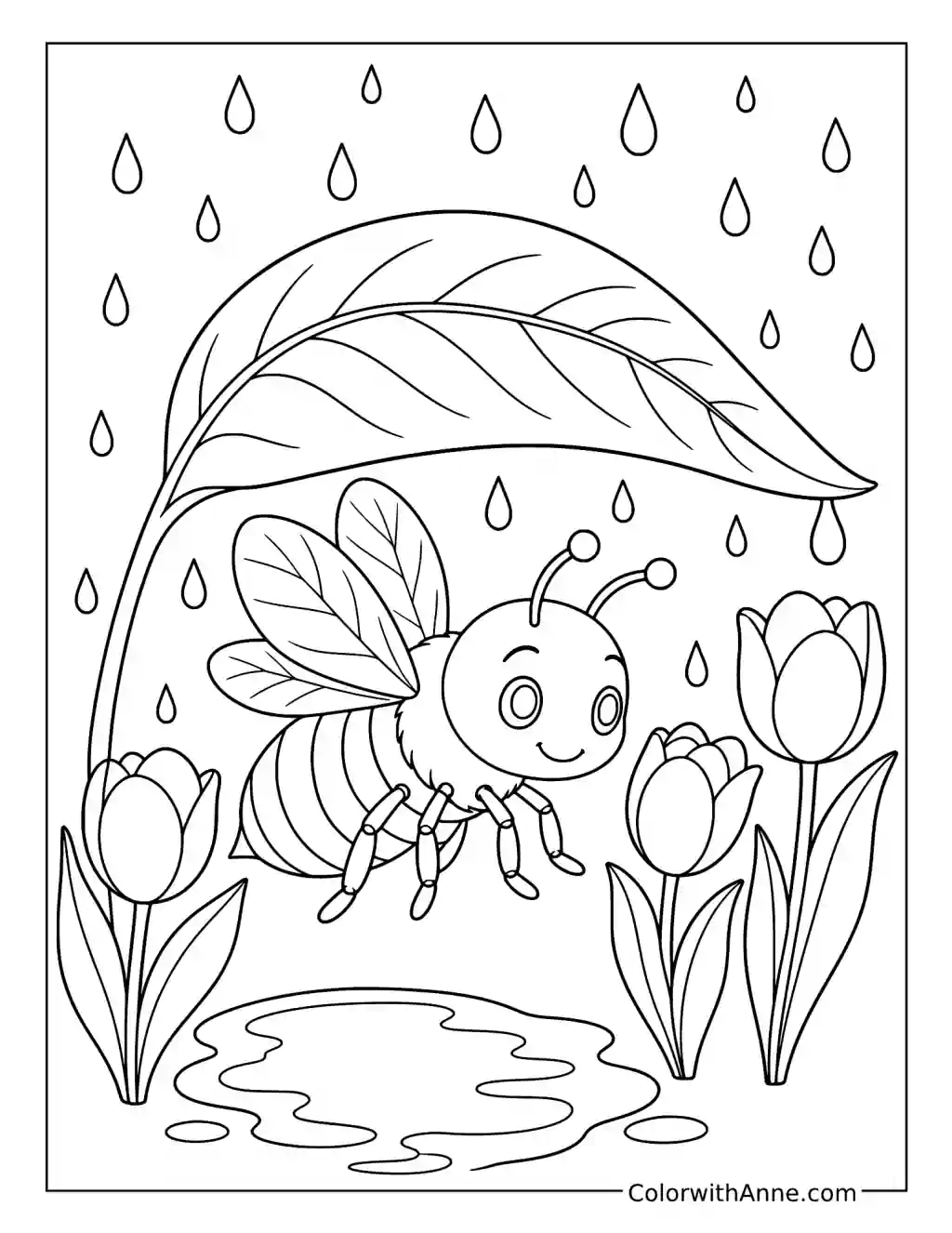
The bee shelters beneath a broad leaf while rain falls into puddles below. Its oversized umbrella gives this cartoon scene an observation to try with a real leaf.
Fresh green above the bee and cool blue around the puddles could make the shelter feel distinct. Warm yellow stripes would keep the little figure visible beneath it.
Place a fallen leaf over a sheet of paper and add a few drops of water. Watch where they collect, then gently tilt the leaf. Notice where the drops travel and compare that route with the drawn umbrella’s pointed edges.
Fit the Honeycomb Shapes Together
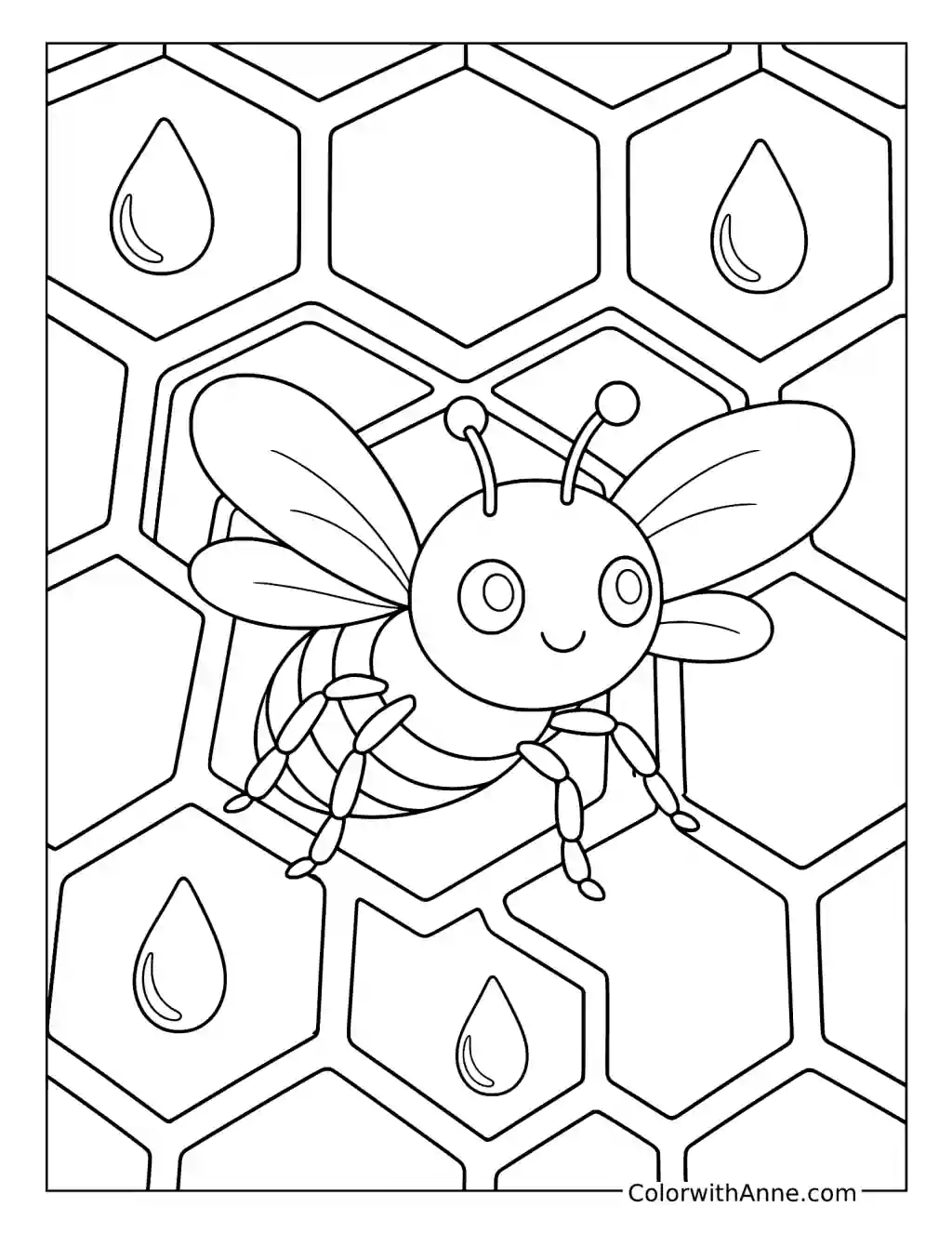
Large six-sided cells fill the background behind the bee. Their clear edges make the pattern easy to explore separately from the insect.
Amber and pale gold could give neighboring cells a warm glow. A darker striped bee with lightly shaded wings would stand apart from the geometric background.
Draw or cut several matching hexagons and try fitting them edge to edge. Begin with one in the middle and build outward. Compare the growing arrangement with the printed cells, noticing how the same shape repeats across the page.
Visit the Five Flowers in Order
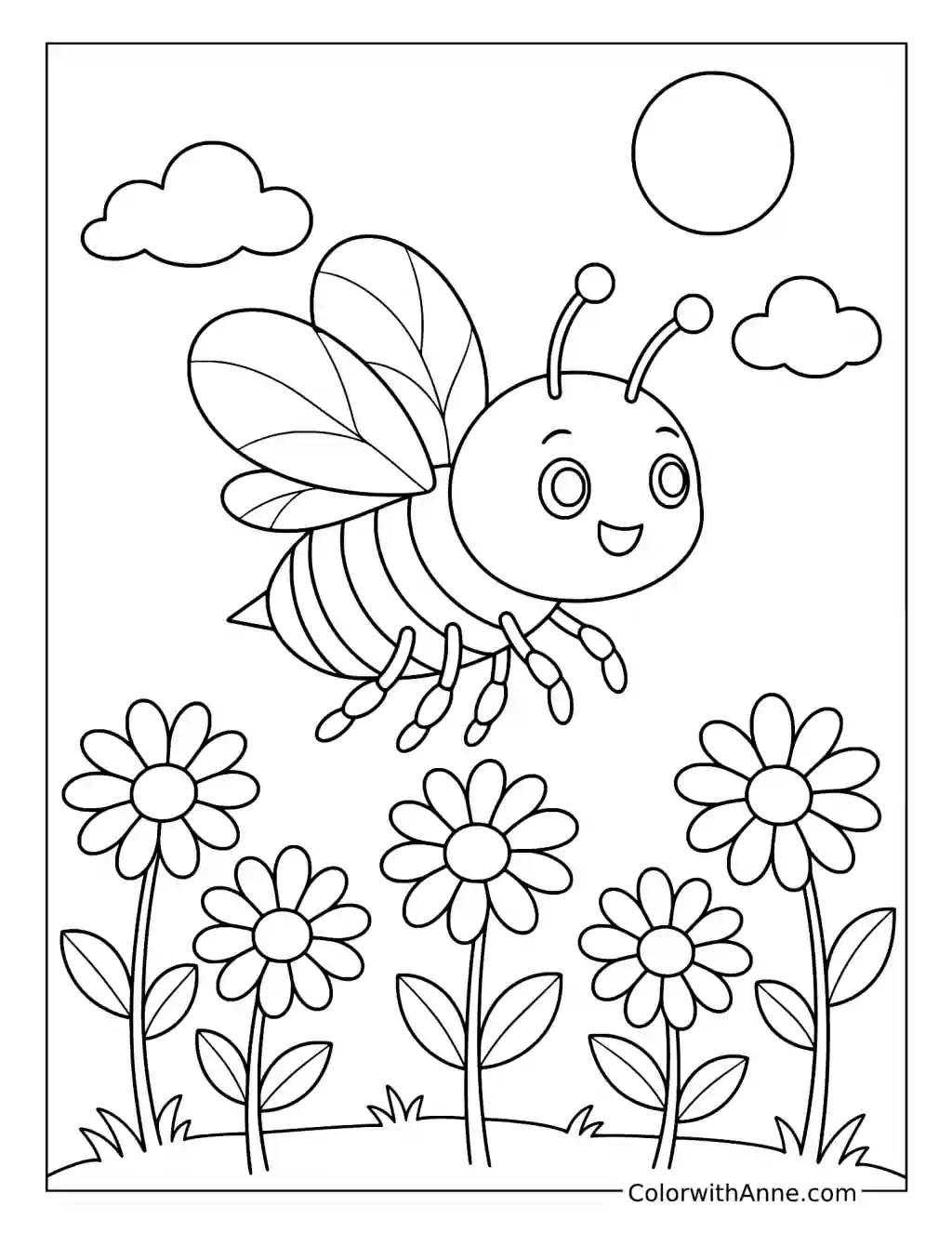
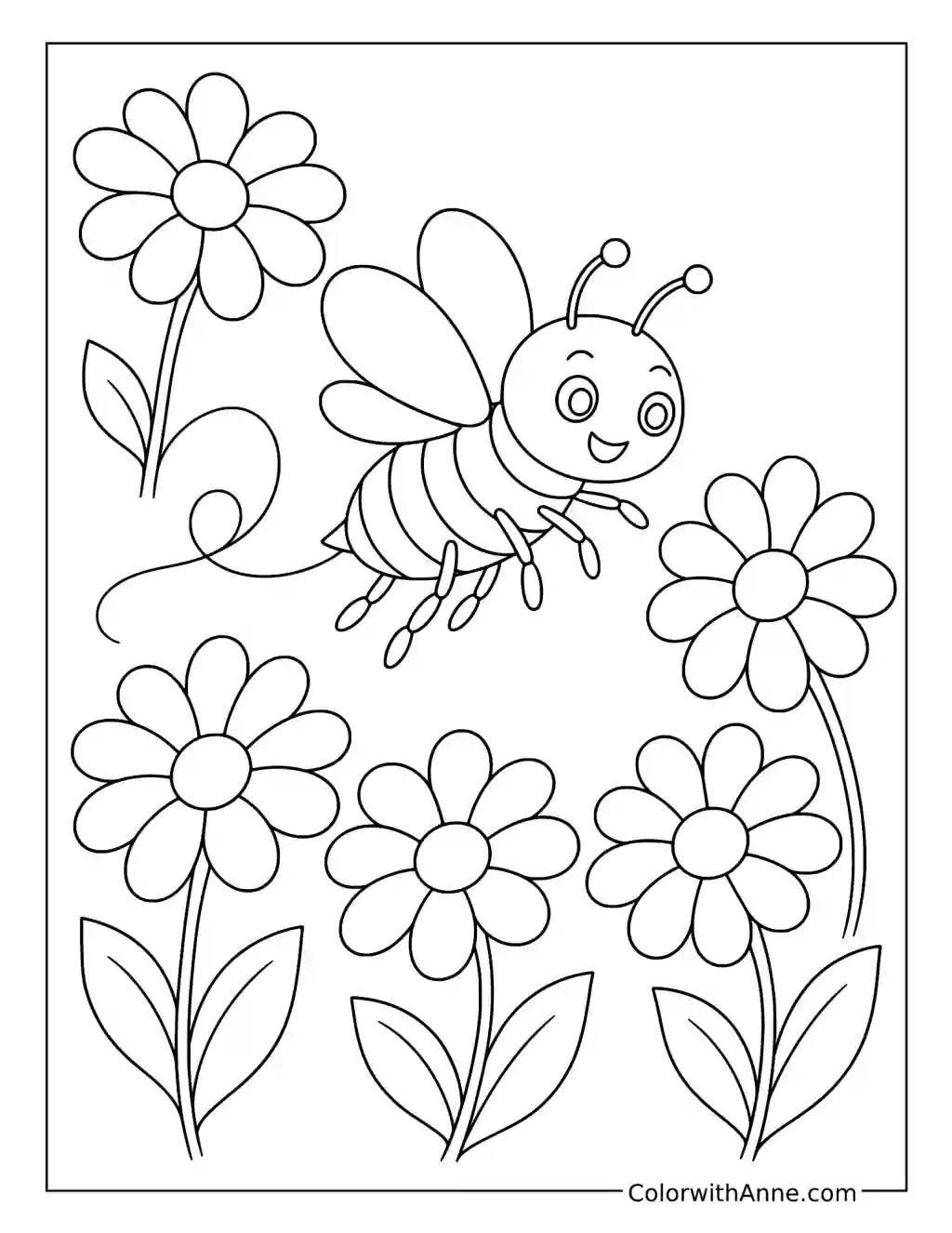
The bee flies above five flowers beneath a bright sun. Each flower is separate enough to become a stop in a short pointing game.
A mixture of pink, yellow, and violet blooms could make the flower row easy to distinguish. Softer green stems would leave the bee’s warm stripes prominent above them.
Number the flowers lightly from one to five. One person calls a short visiting order, such as “two, five, one,” while another moves a paper bee or fingertip between the correct flowers. Swap roles and invent another route.
Compare the Detailed Bee With a Photograph
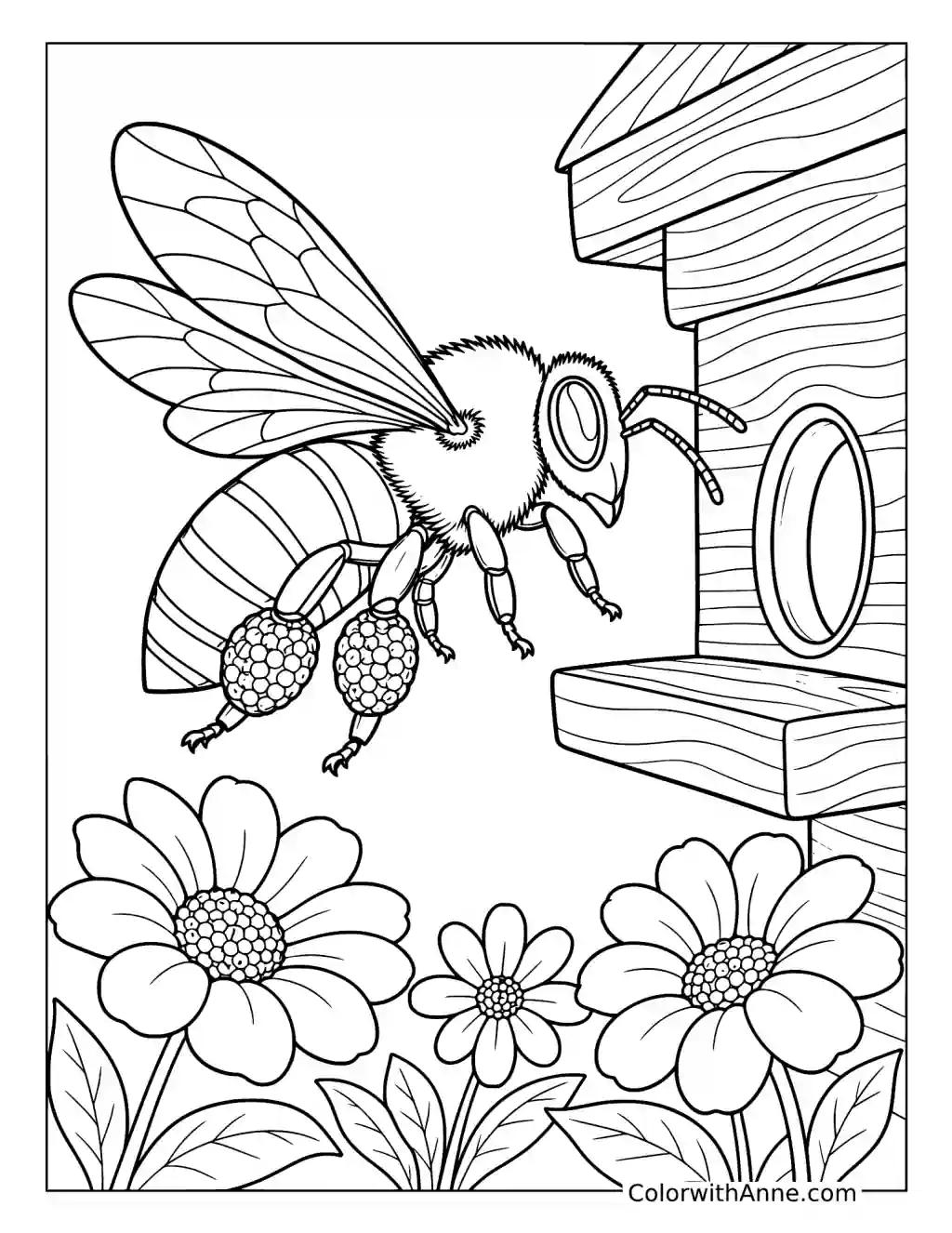
This bee has more detailed wings and jointed legs than the rounder cartoon figures elsewhere in the gallery. Those smaller lines reward a closer look.
Golden brown and charcoal could suit the insect’s textured body. A quiet wooden background and mostly pale wings would help preserve the finer outlines.
Look at a close-up bee photograph and compare the antennae, wing lines, and body sections. Choose one feature to study rather than trying to label everything. Then return to the drawing and see how the illustrator has represented it.
Follow the Dotted Flight Trail
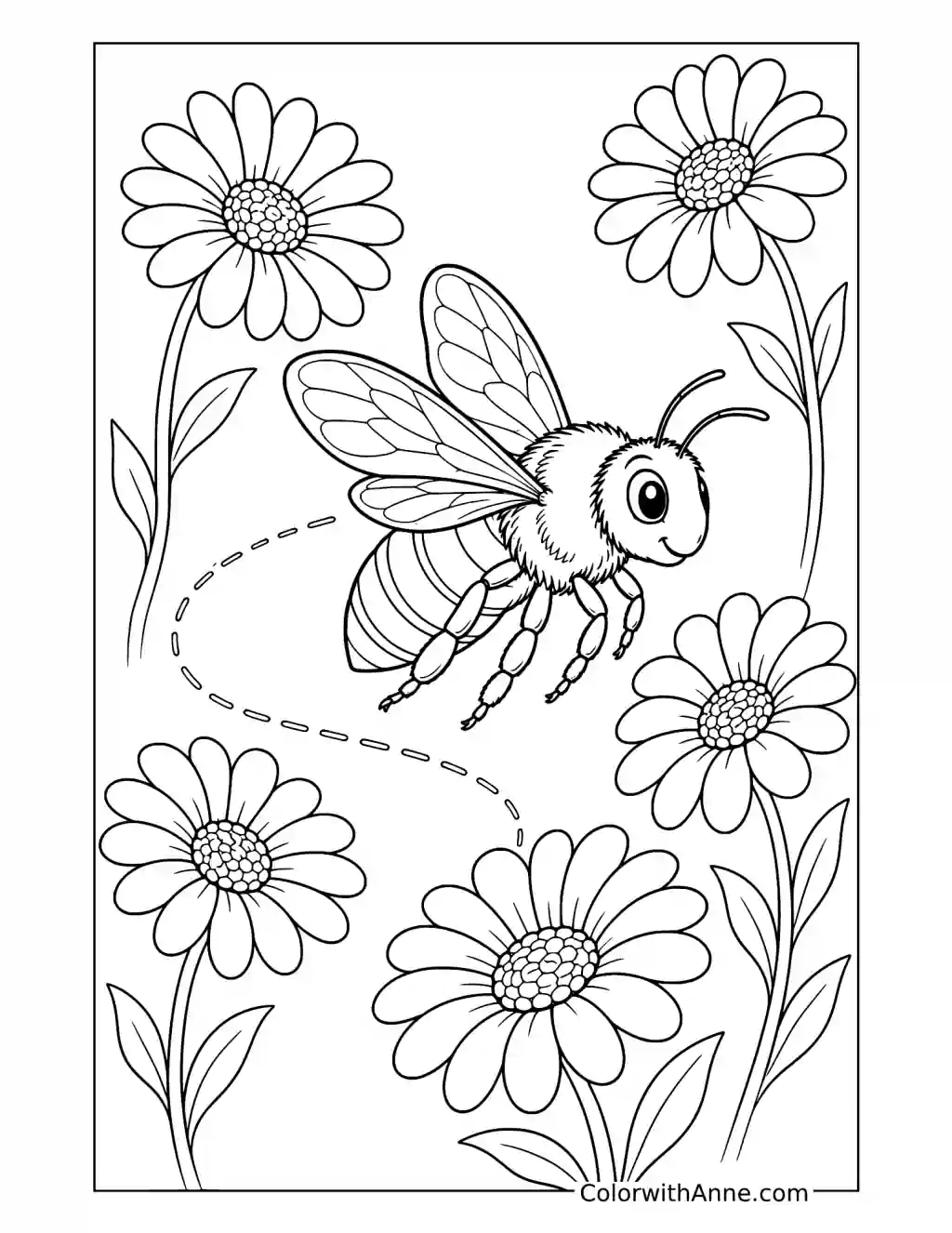
A fuzzy bee follows a dotted trail through large flowers. The existing curve gives the scene a playful route without needing another maze drawn around it.
Soft yellow and brown could emphasize the bee’s fuzzy appearance. A few strongly colored flower centers would stand out among gentler petals and leaves.
Follow the dotted line with a finger, then continue it into an open area of the picture. Choose a flower as the destination before adding the new dots. Let another person trace the complete journey once the extension is finished.
Give a Honey Gift Its Own Bee Picture
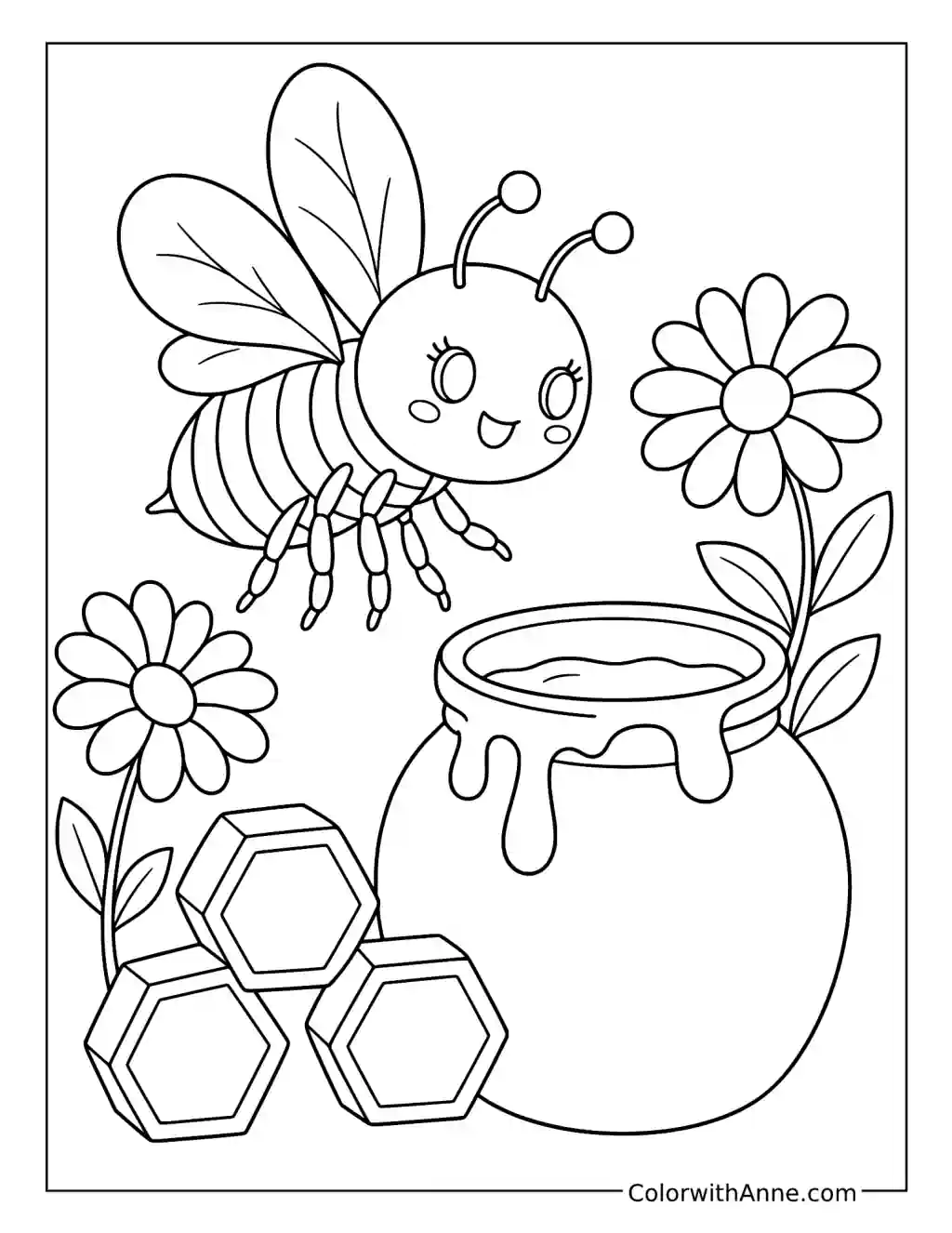
The bee hovers beside an open honey jar and a few honeycomb shapes. The jar makes this a particularly suitable picture to accompany a honey gift.
Warm amber honey with cream highlights could make the jar look inviting. Yellow-and-black stripes and a small blue accent would keep the surrounding bee distinct.
Print the design smaller if needed, mount it on card, and attach it to the gift with a short message on the back. Mention how the recipient might enjoy it, perhaps during their usual tea break. The pictured jar supplies the connection naturally.
Give the Crowned Bee One Royal Request
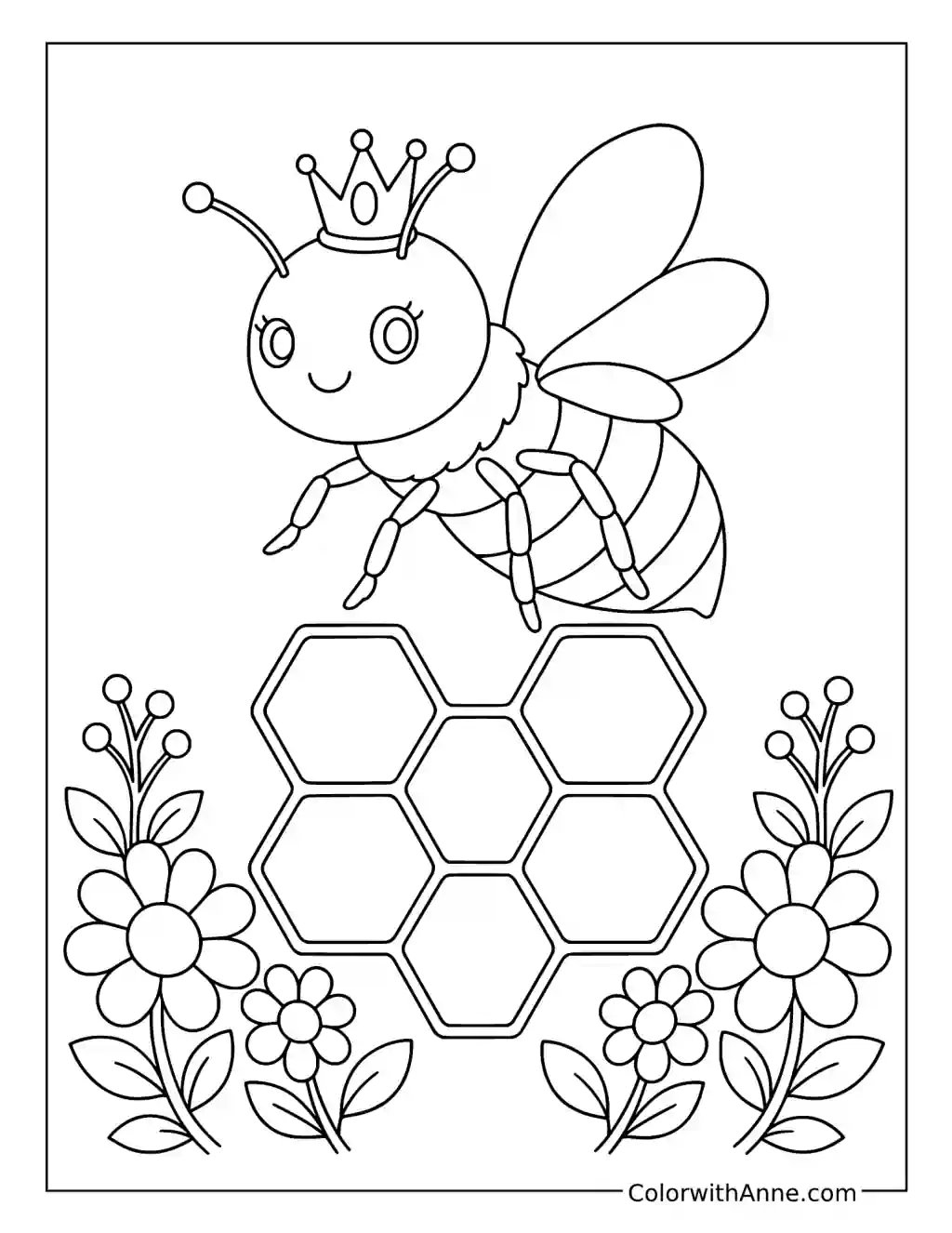
A crowned bee floats above honeycomb and flowers, looking ready to address its tiny kingdom. The open space around the head can accommodate one small request.
Gold on the crown and warm yellow stripes could connect the central details. Purple or blue flowers would add a slightly regal contrast without changing the gentle garden setting.
Add a speech bubble containing a pretend royal request. It might ask for more flowers or announce a garden celebration. Keep it to one clear idea, then decide how the other garden characters would respond.