
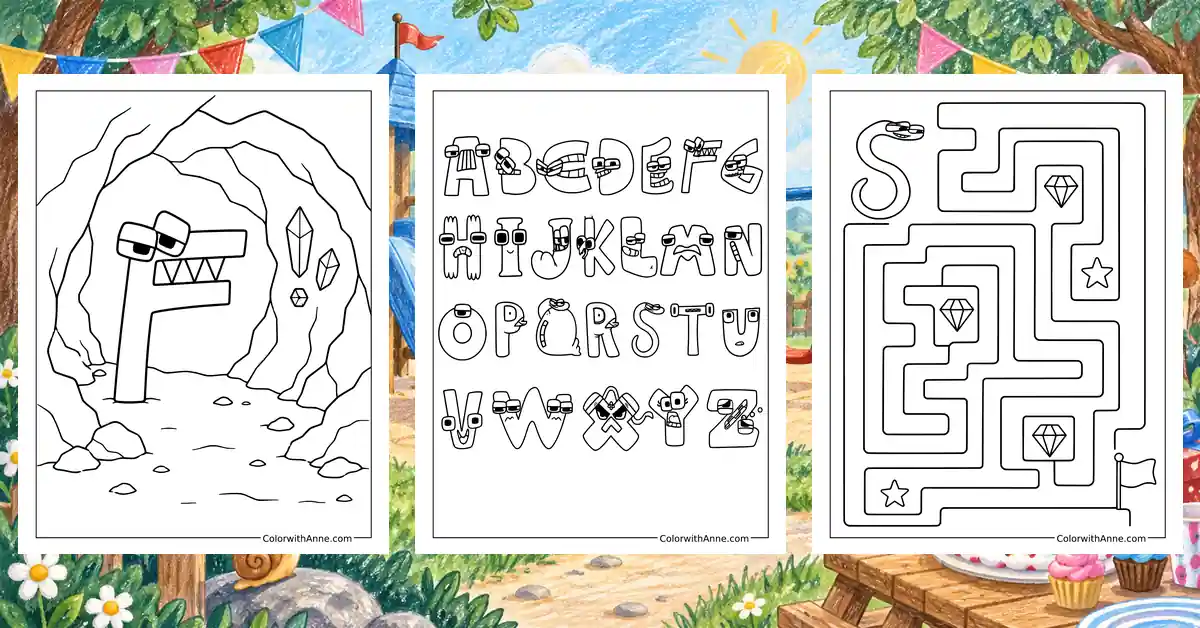
Recognizing a letter is one thing; remembering its personality is quite another. Alphabet Lore turns familiar shapes into characters with expressions and grudges, so a child may have plenty to explain about F before anyone has asked about the alphabet. Suddenly, knowing the letters comes with knowing the drama.
That lively attachment carries into Alphabet Lore coloring pages. A favorite character can be picked out immediately, followed by an explanation of why another one deserves less sympathy. The shapes remain familiar, but the faces change the experience. What began as naming letters may become a very animated account of who did what.
Free Printable Alphabet Lore Coloring Pages
Click any coloring page below to open the PDF, then print on US Letter or A4 paper.
Did you find what you needed?
Help us choose what to create or improve next.
Coloring Ideas for Alphabet Lore Pages
Try one of these coloring ideas, or use them as a starting point for your own.
Let the Punctuation Gems Do Their Job
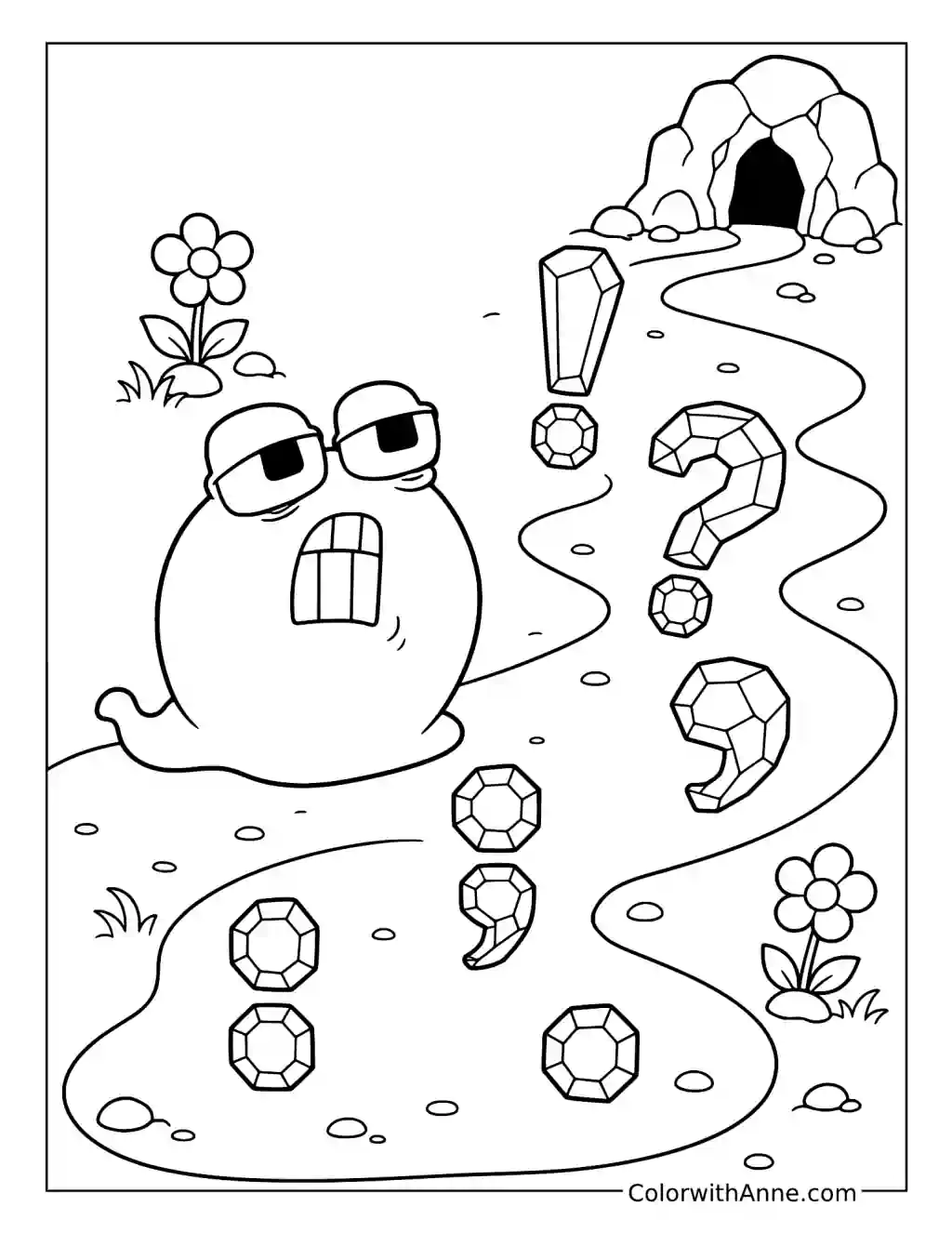
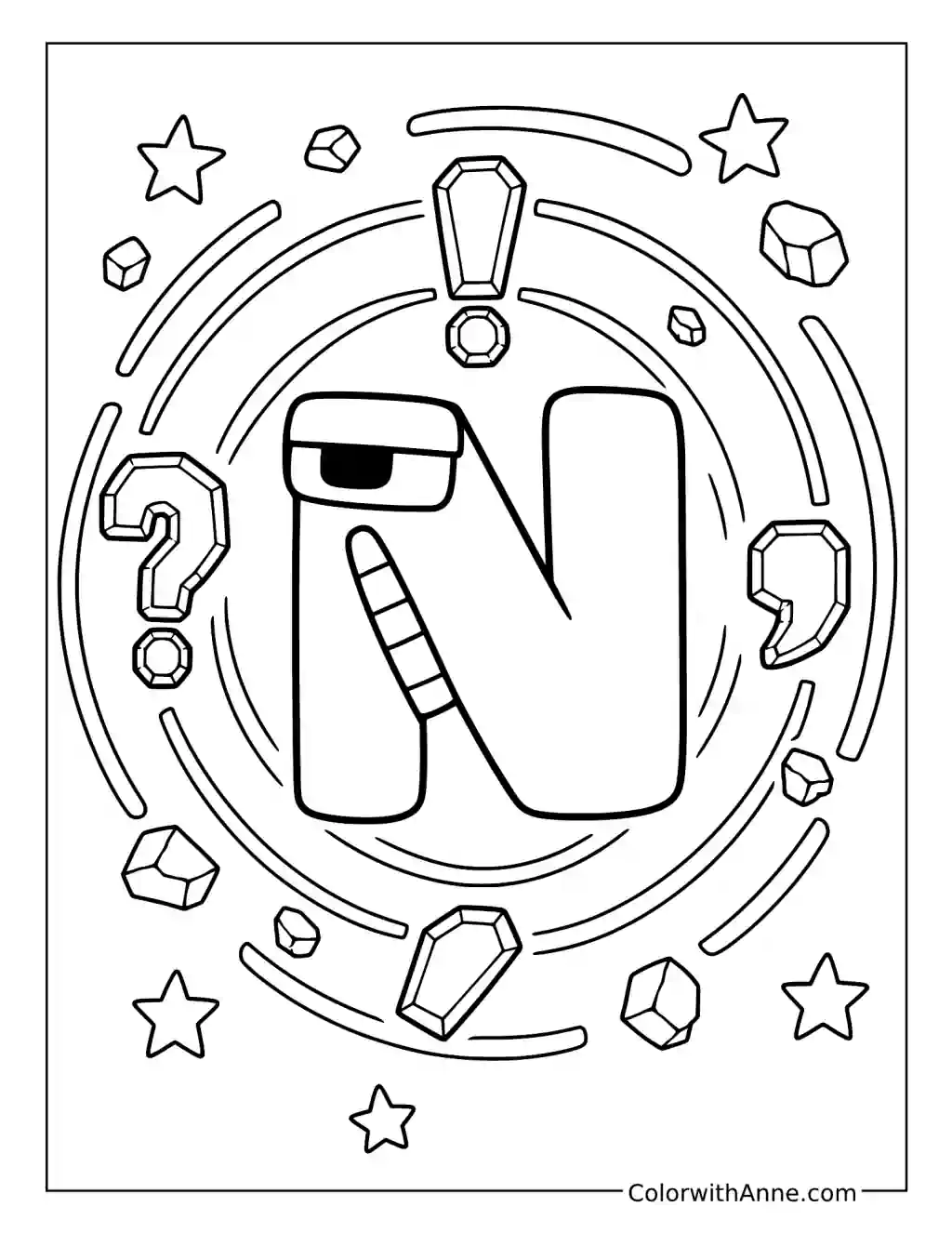
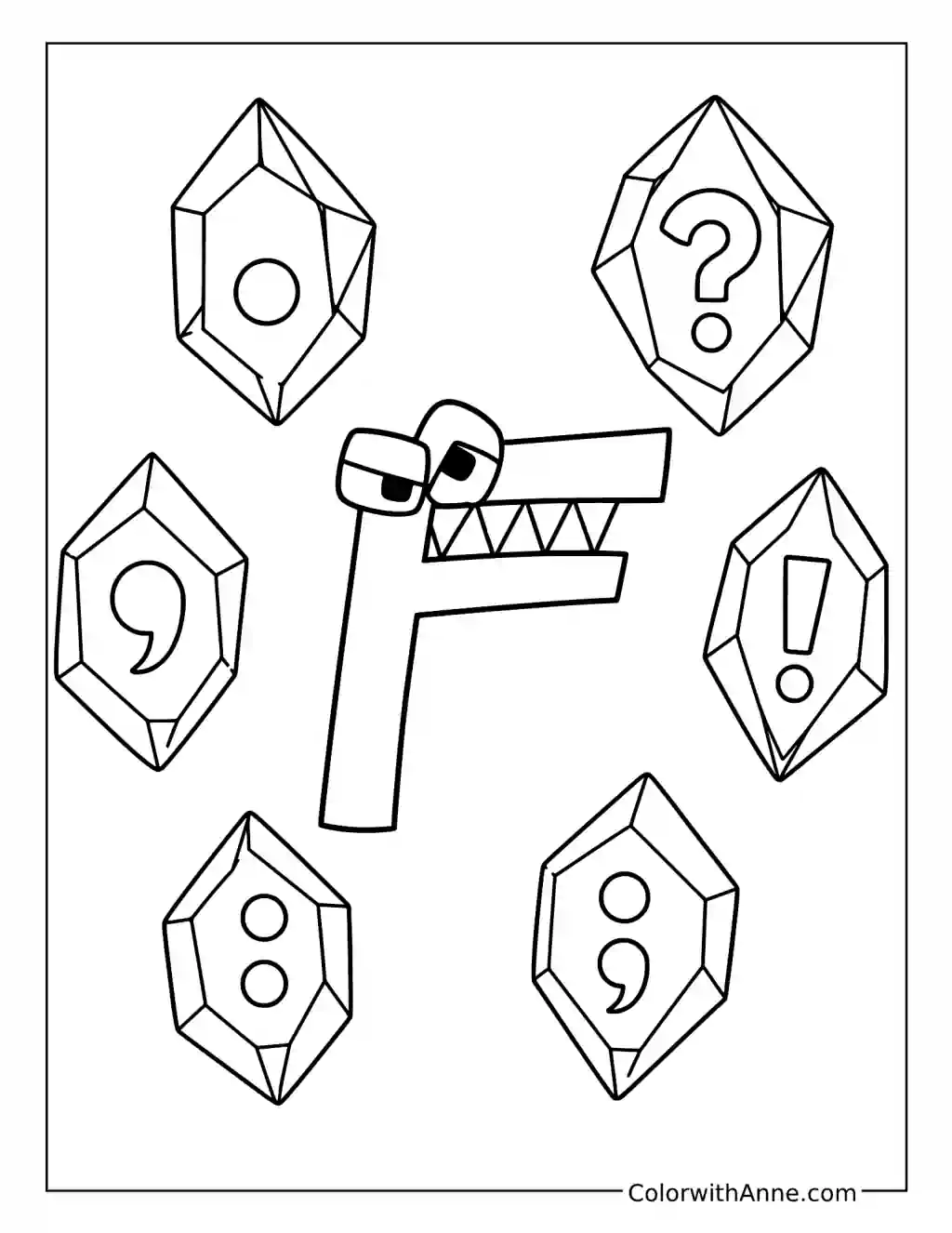
F stands among six gems containing punctuation marks. The symbols give this picture something to explore beyond recognizing the letter itself.
F’s dark coloring would stand out against jewel shades such as emerald, violet, and amber. Keeping the punctuation marks clearly visible would make the gems easier to distinguish from one another.
Choose a familiar sentence and imagine it ending with different punctuation. Say each version aloud, then point to the matching gem. The words stay the same, but their delivery changes.
Hear the Vowels in Familiar Words
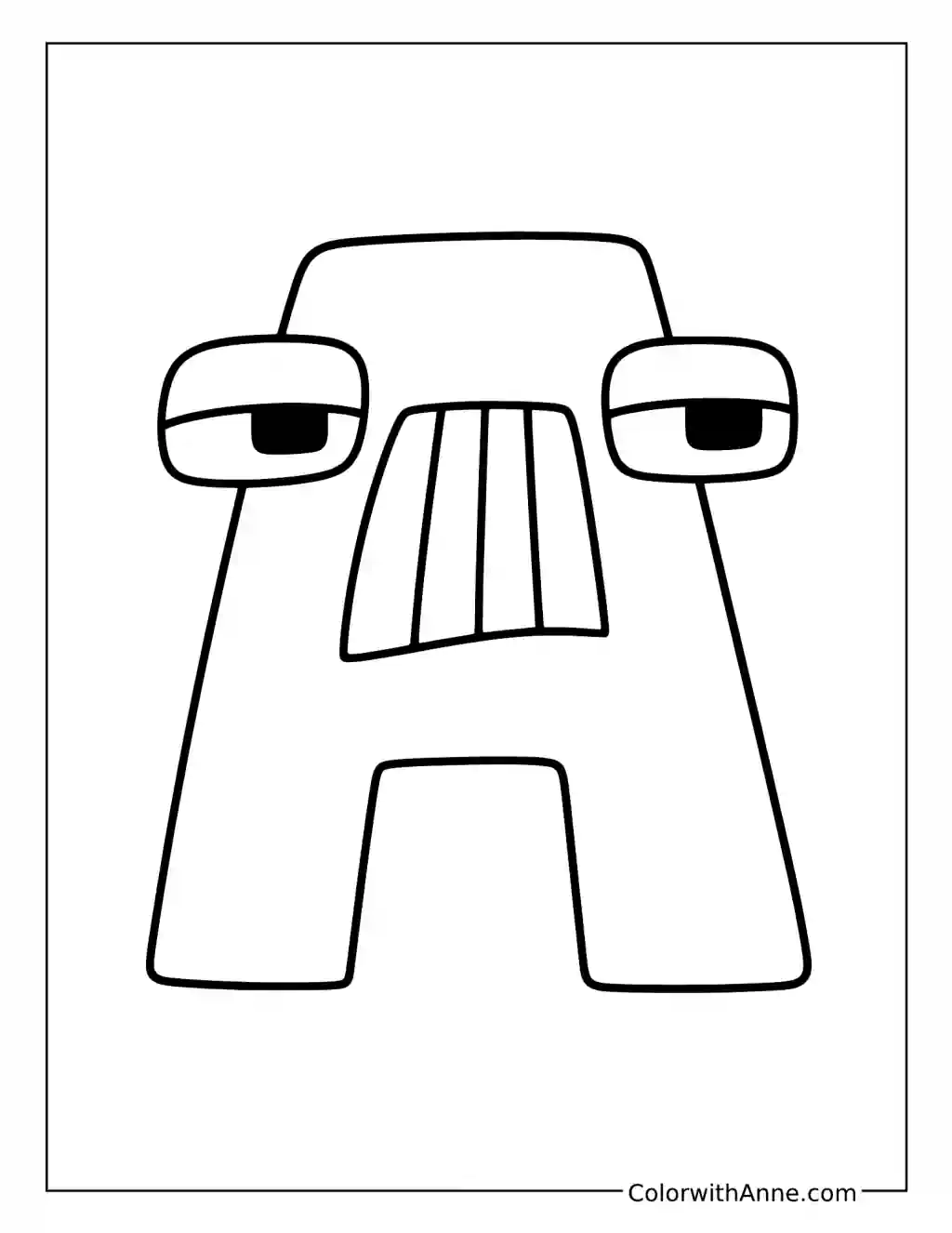
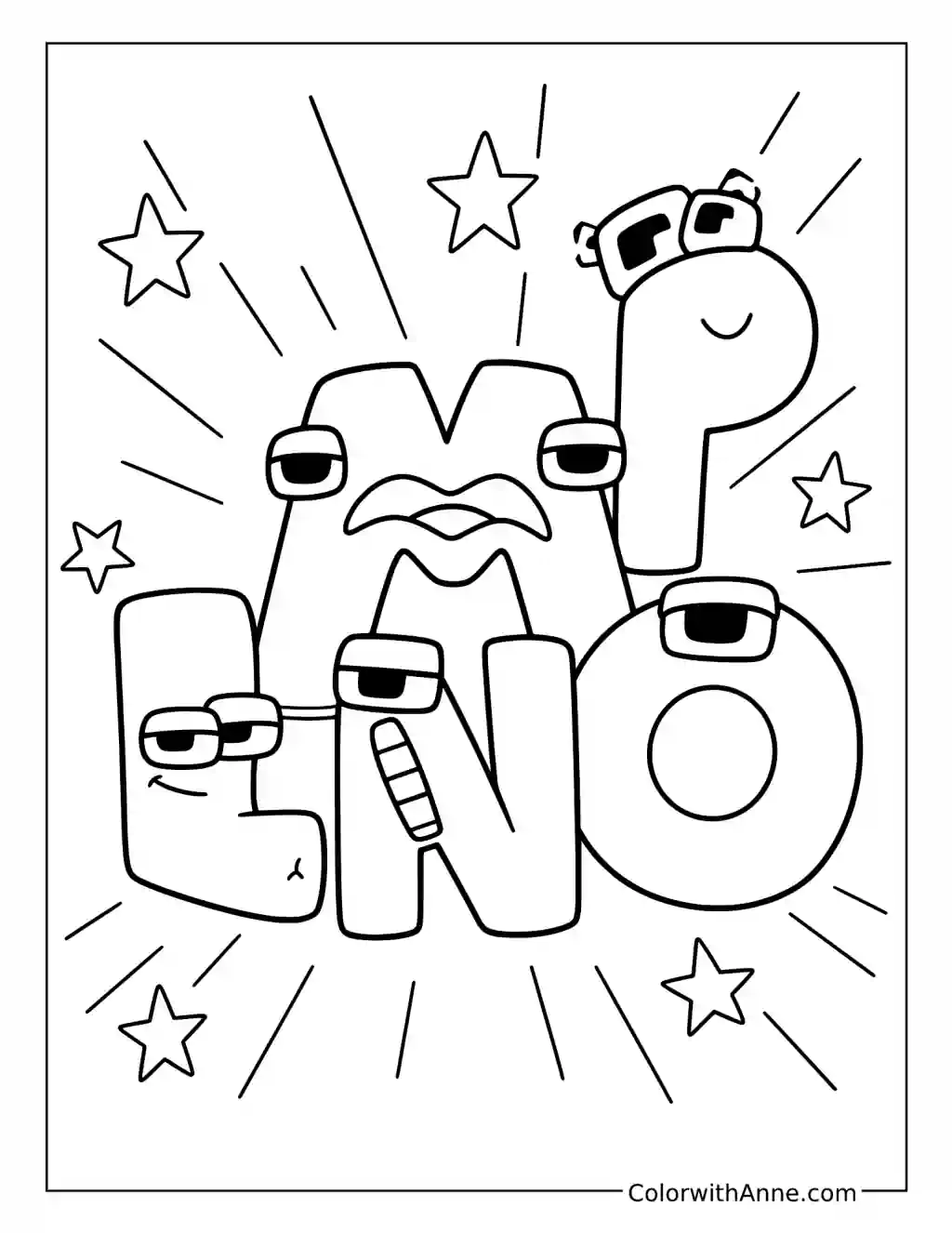
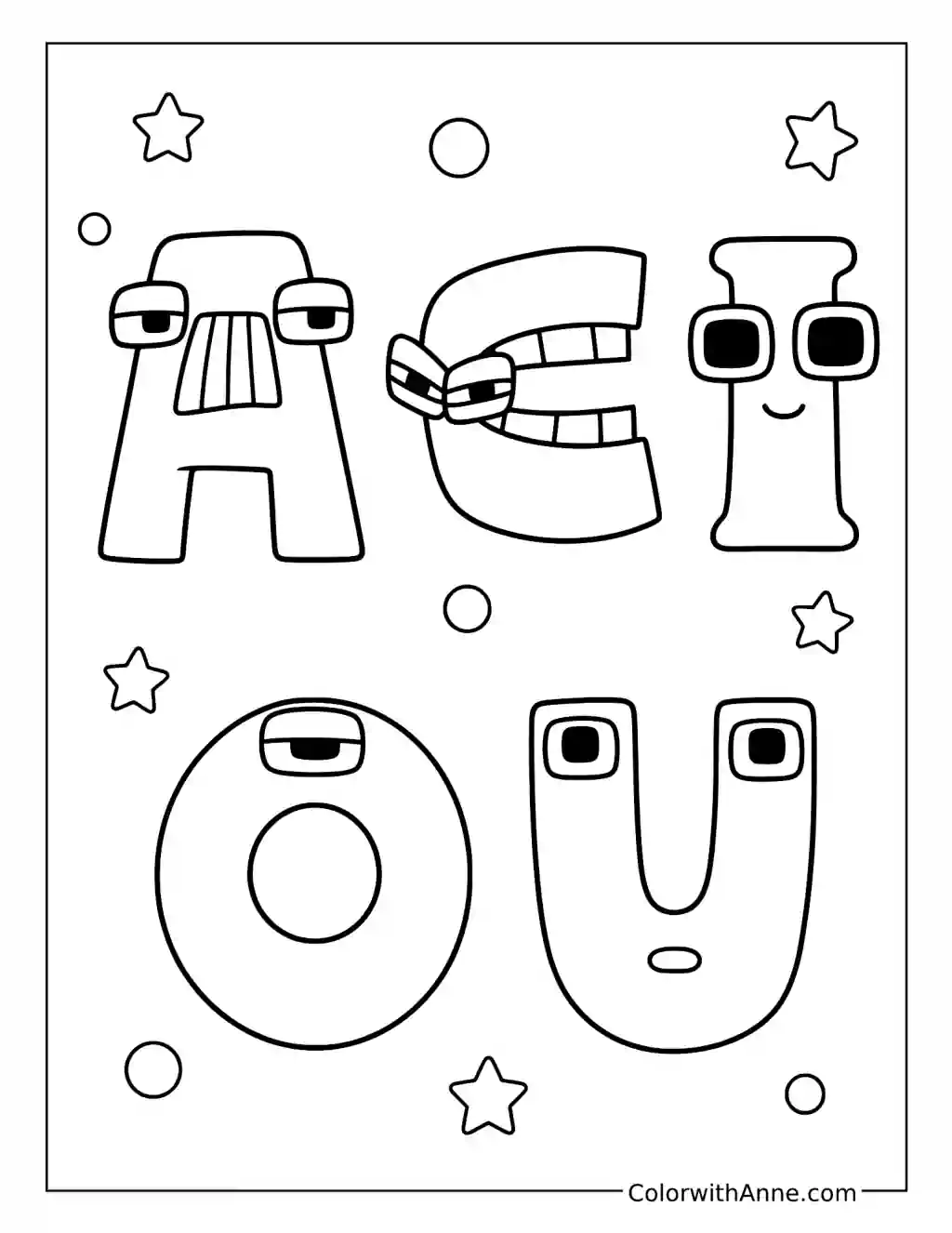
A, E, I, O, and U share the page, each with a different expression. Their faces make the vowel group feel more like a cast than a chart.
Their familiar character colors could help fans recognize them immediately. A quieter background would give the eyes and mouths room to stand out, especially where the letters have narrow spaces.
Say a few familiar words slowly and listen for their vowel sounds. Point to the letters involved, keeping the activity playful rather than trying to turn every word into a spelling test.
Find the Word Hidden in the Rescue Van
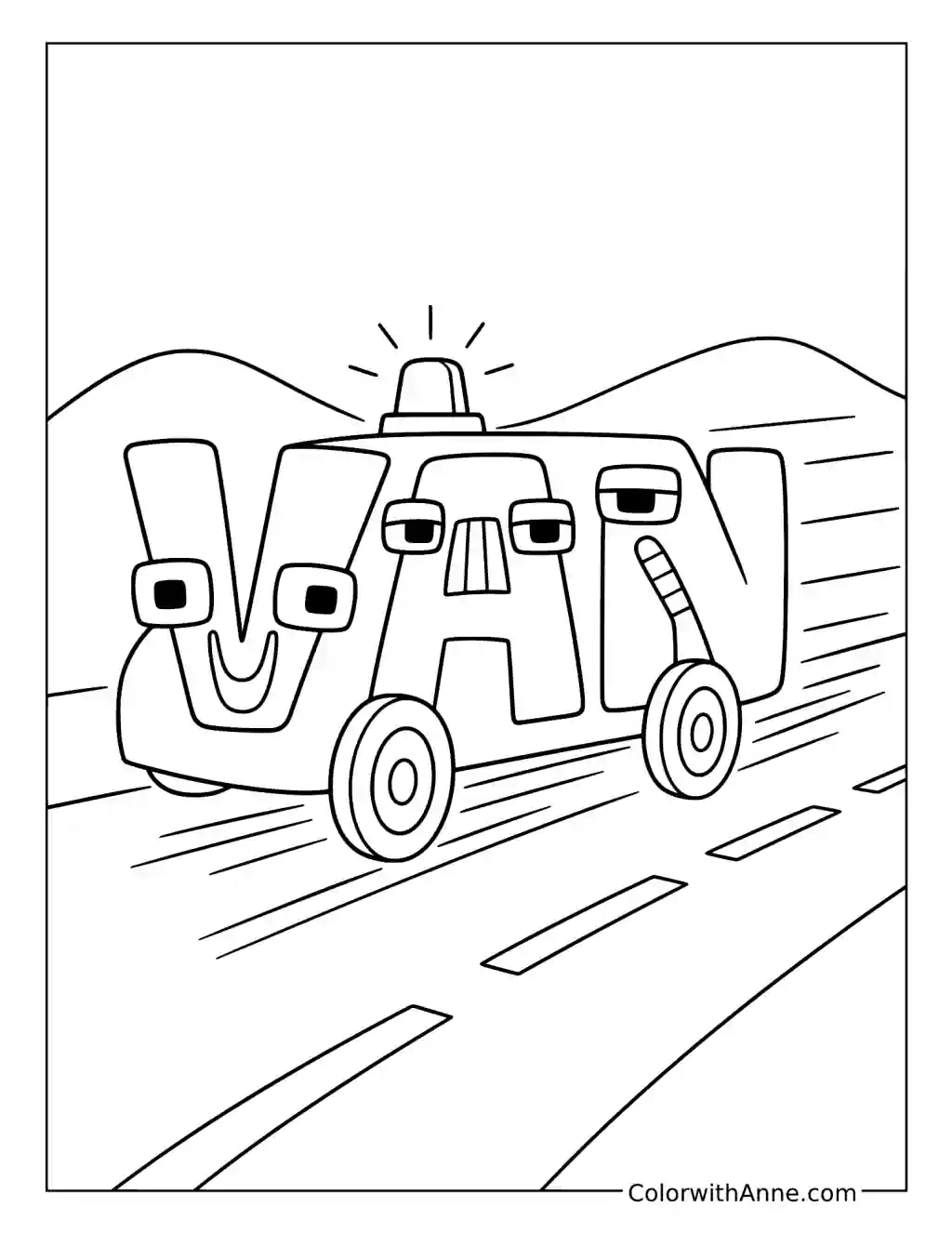
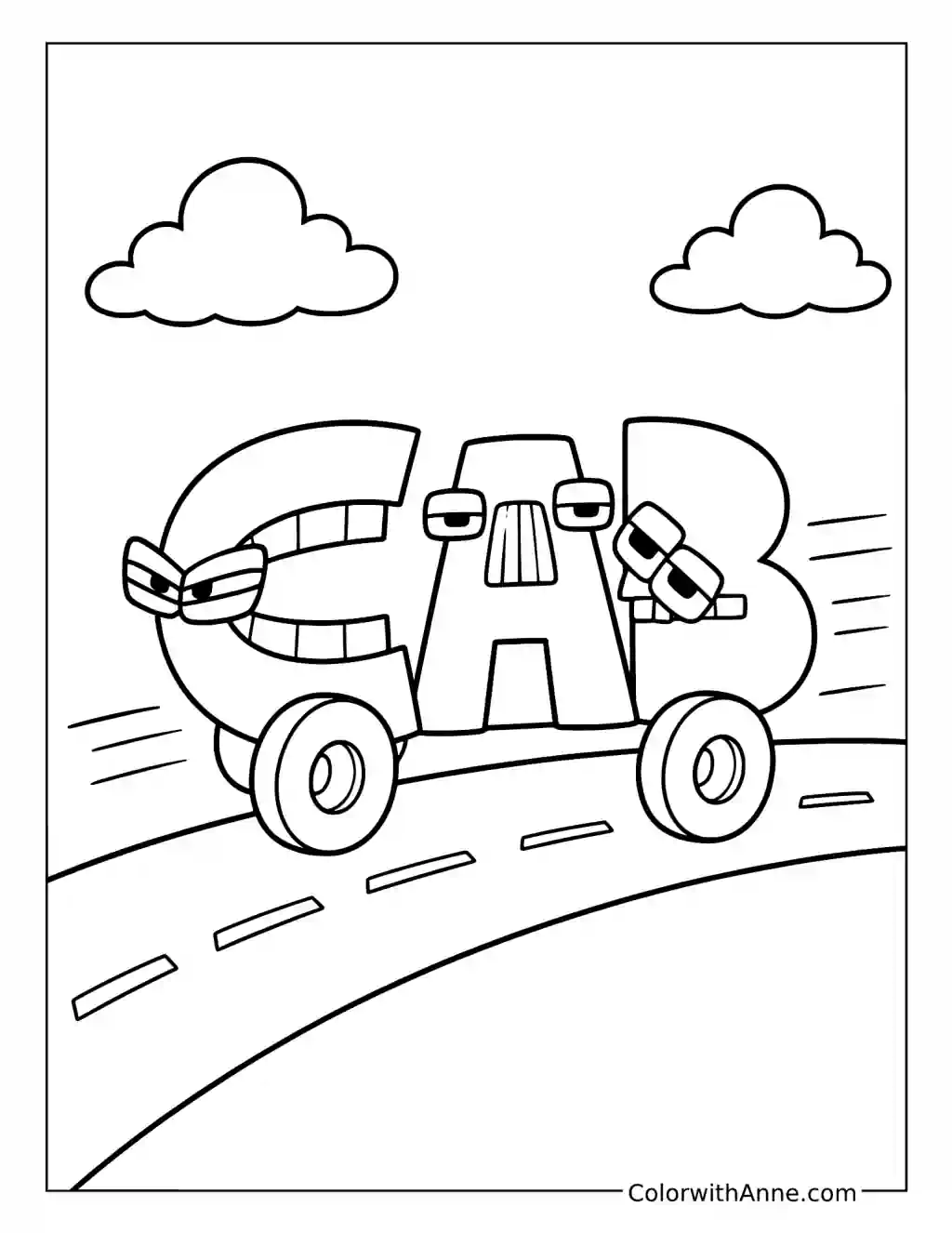
V, A, and N form a rescue vehicle, complete with wheels and a roof light. The joke is built directly into the word.
The letters could keep their individual colors while the wheels and windows receive matching shades. A bright roof light would make the rescue detail noticeable without overwhelming the letter shapes.
Cover one letter at a time and ask which one the van needs back. Then look for another short word that could become a vehicle or object through its letter shapes.
Turn K’s Garden into a Close-Looking Game
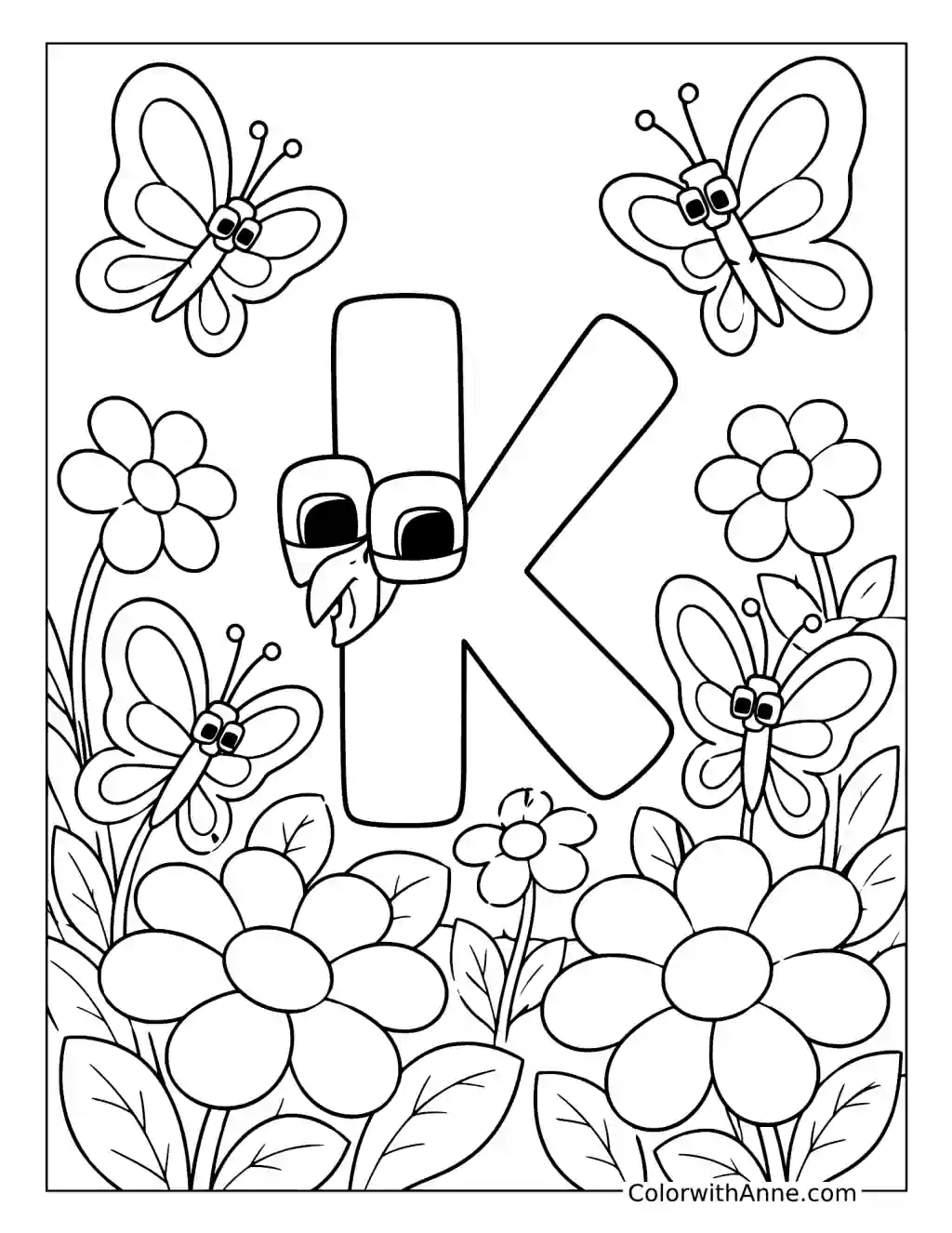
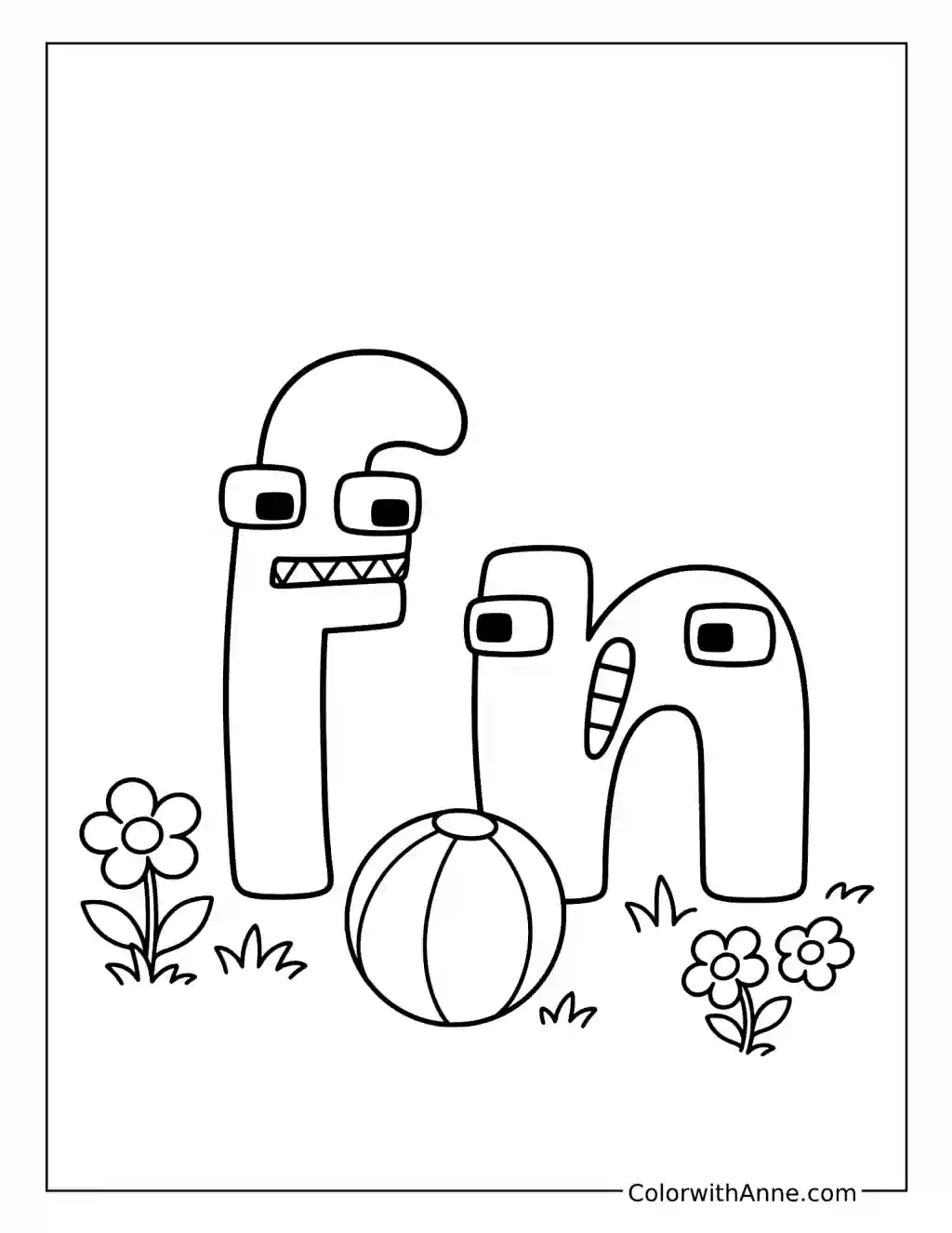
K stands among large flowers while butterflies fill the surrounding space. There is plenty to spot before the page is finished.
A strong color on K could separate the letter from softer garden shades. Repeating two or three colors across the butterfly wings would create little connections for the eye to follow.
Take turns giving a clue about one butterfly without pointing at it. Its position, wing pattern, or nearest flower can help the other person identify the right one.
Play Letter Detective Across the Whole Alphabet
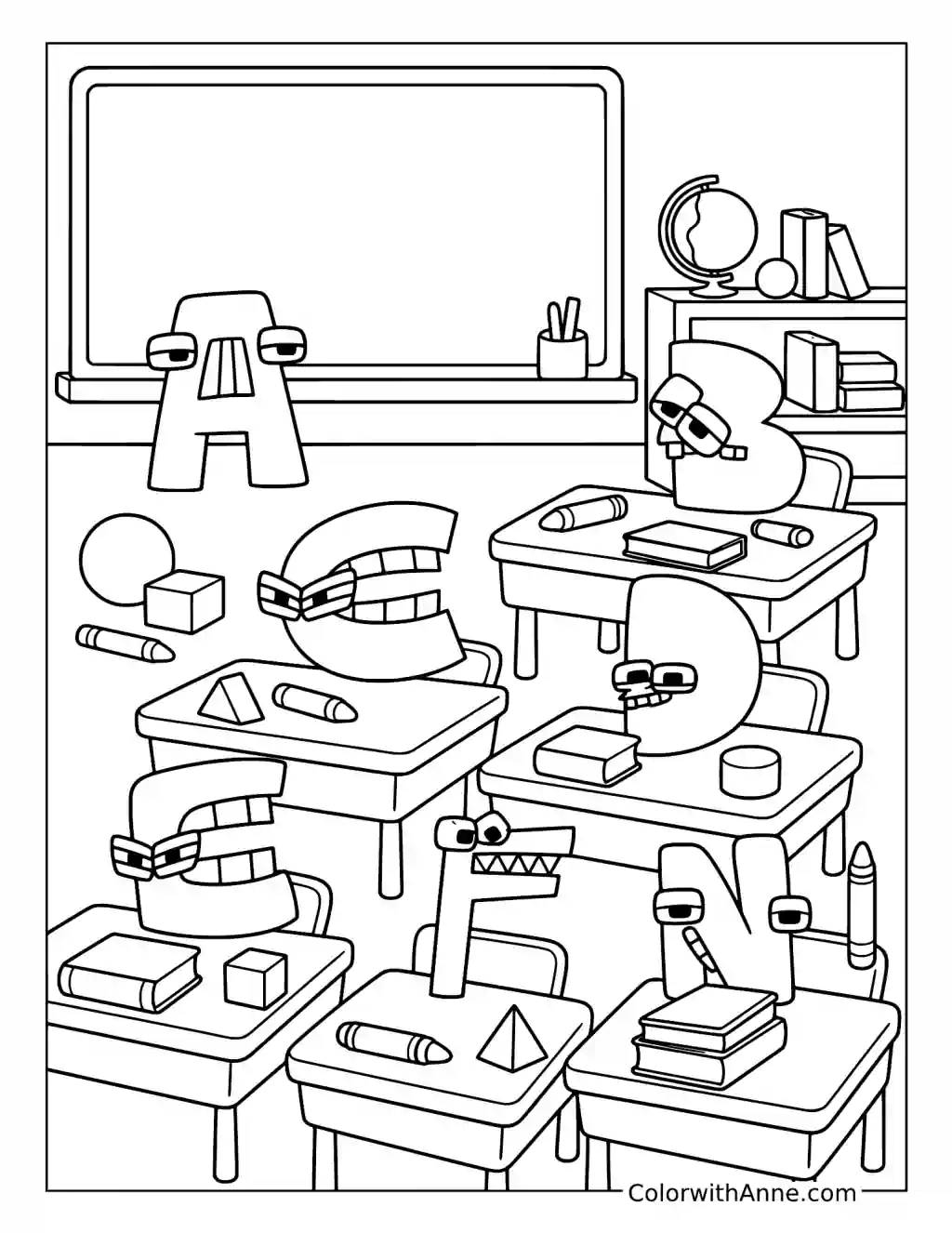
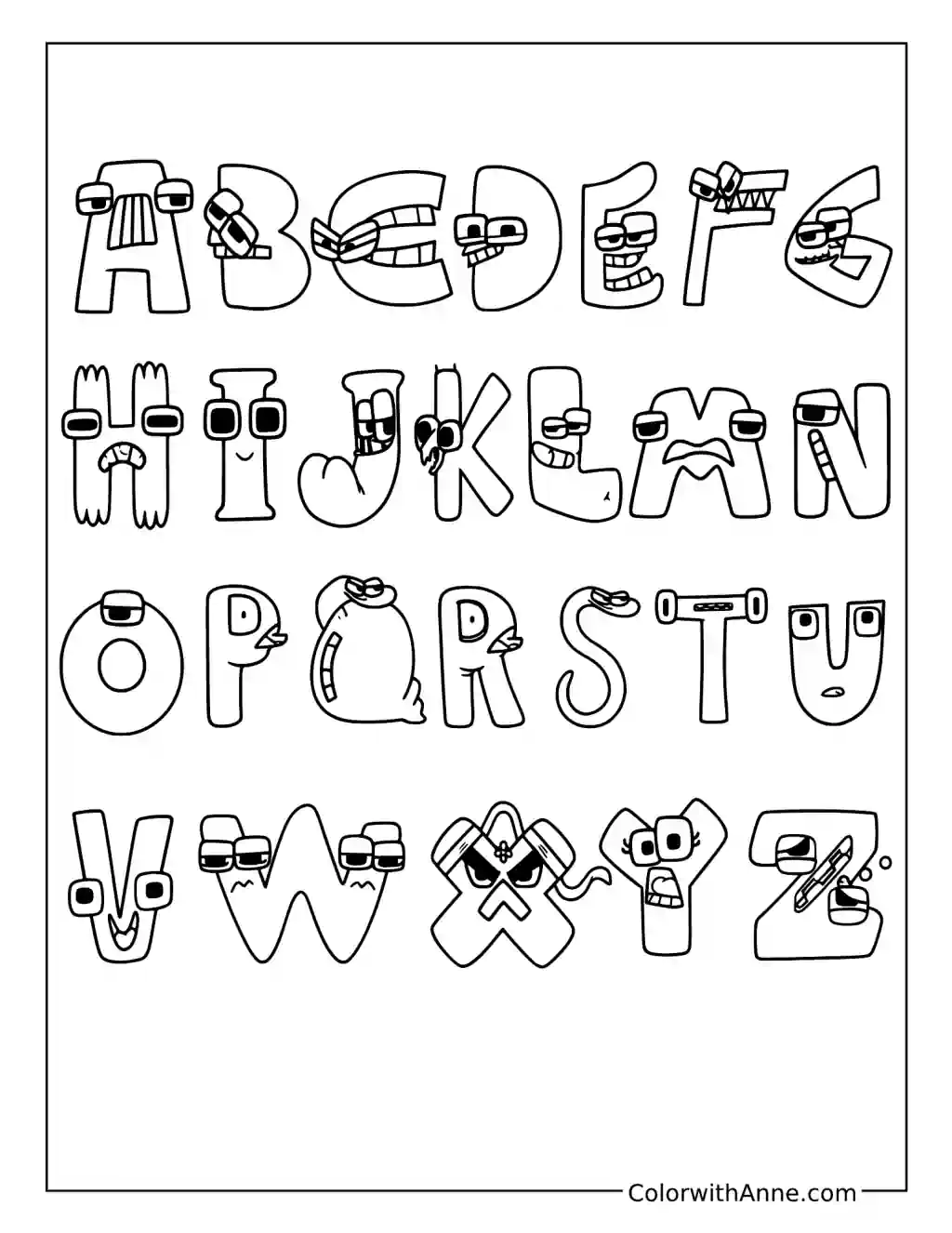
All twenty-six characters appear together, turning the alphabet into a crowded gathering of eyes, teeth, and very different personalities.
The familiar character colors would make this a useful reference page. If that feels too busy, gentle background-free coloring could keep the individual faces clear without adding more visual noise.
Ask someone to find a letter using only a description of its face or shape. Switch roles after a few turns, and save the obvious clues for when someone needs help.
Plan S’s Route Before Coloring the Maze
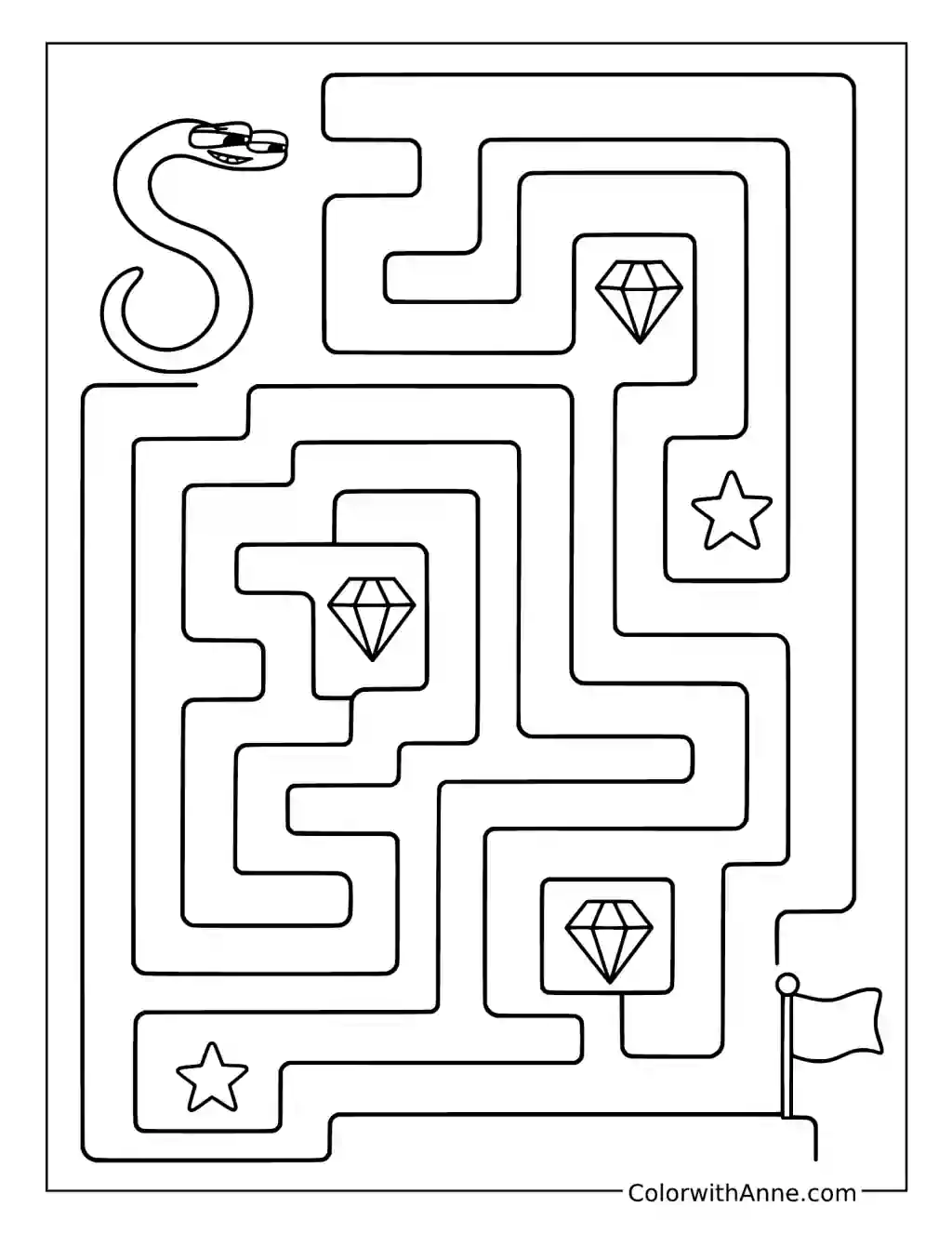
S waits beside a maze containing gems, stars, and a small flag. The route matters here as much as the decoration.
A pale color through the successful route could make it visible without hiding the maze walls. Brighter gems would provide landmarks, while the remaining passages could stay mostly white.
Trace the route with a fingertip first. Decide whether the goal is simply reaching the flag or finding a path past particular objects, then test whether that extra challenge is possible.
Look for Z’s Face in the Landscape
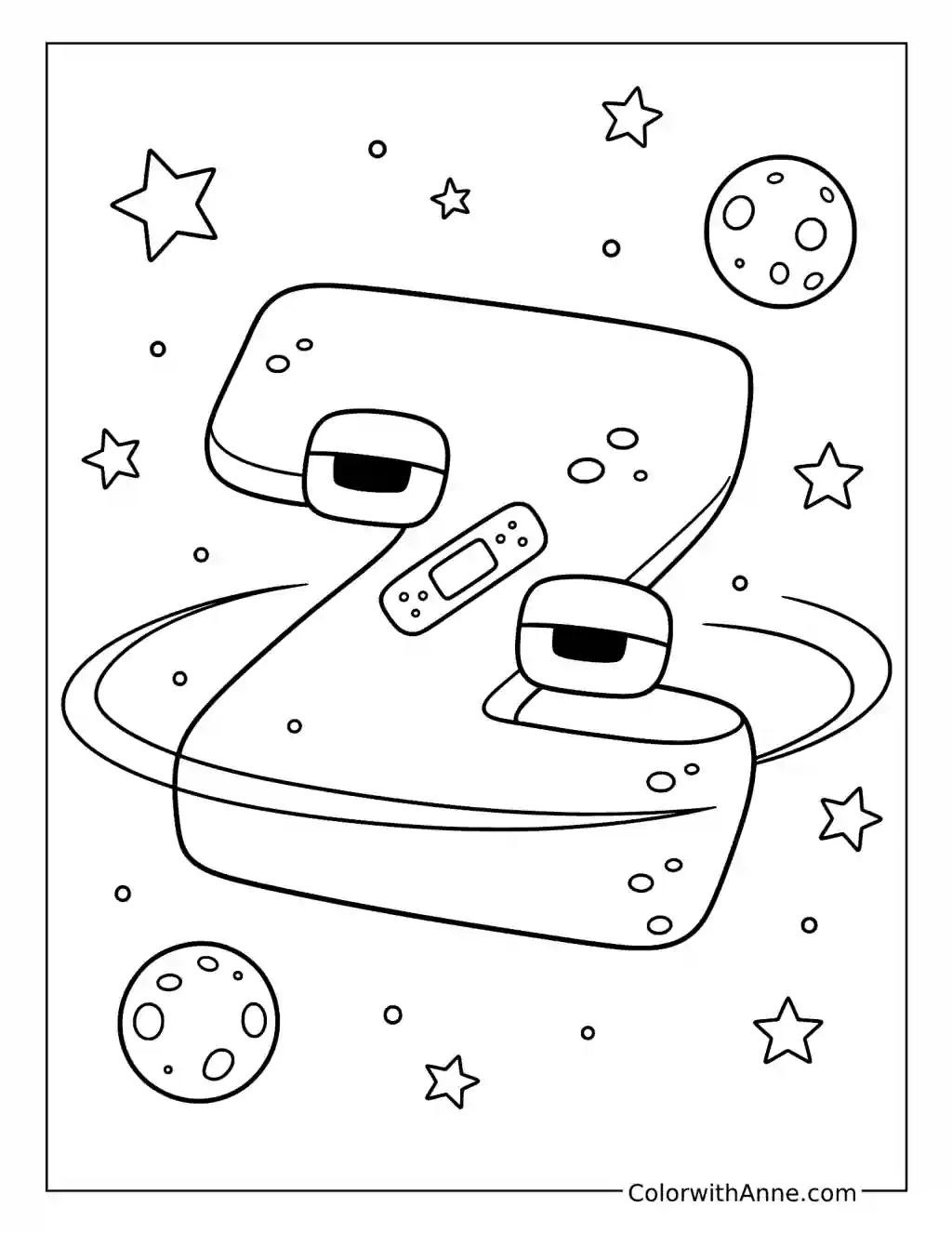
Z fills the page as a planet surrounded by stars and smaller worlds. Its enormous scale changes the way a familiar letter is seen.
Deep blue or violet space could surround a lighter Z, helping the face remain visible. A few pale stars would provide contrast without requiring every small shape to become a different color.
Rotate the page slowly and notice when Z reads as a letter and when it feels more like a landscape. It is a playful example of one shape doing two jobs.
Light F’s Cave from the Gem
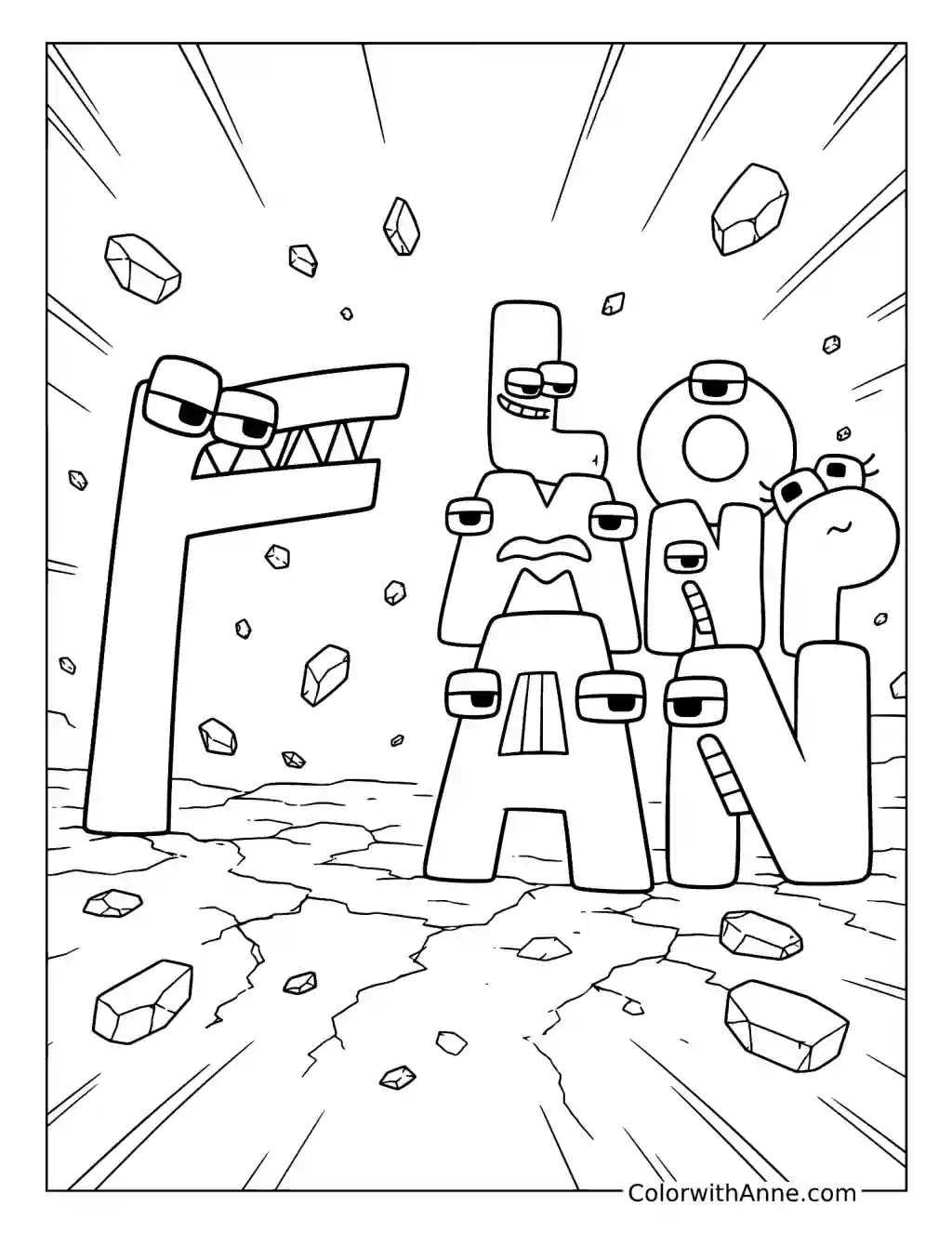
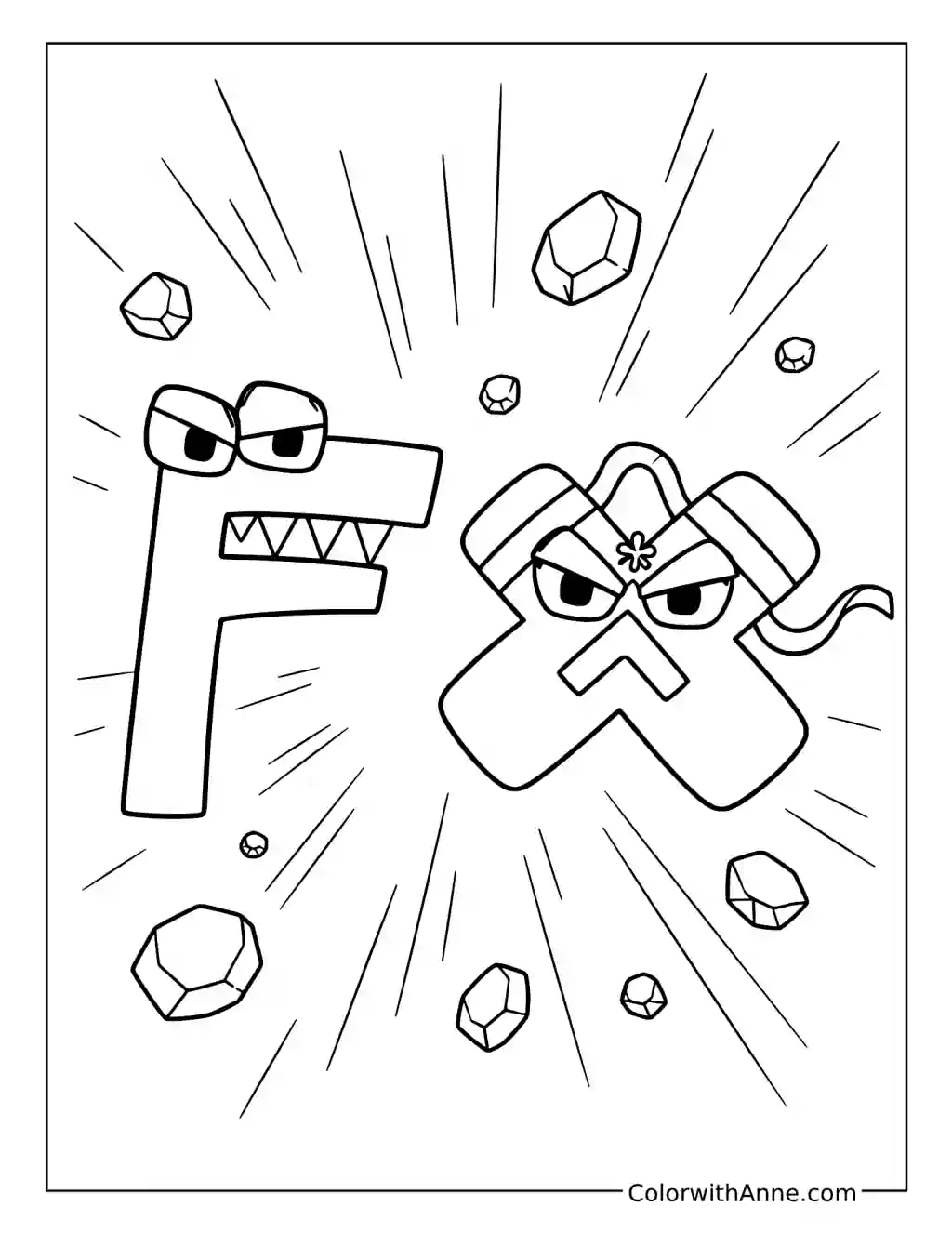
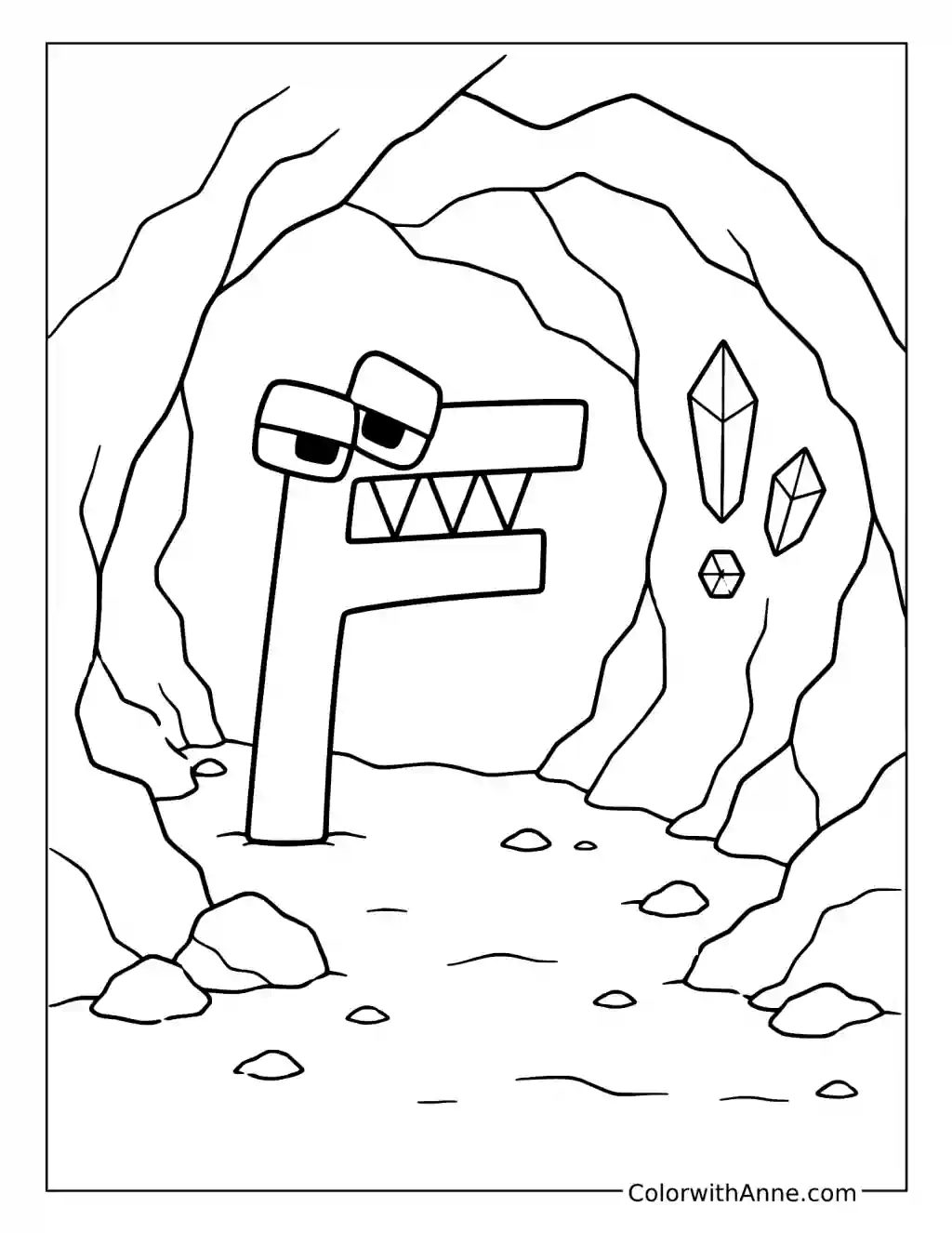
F stands inside a rocky cave with a gem nearby. The enclosed setting gives the character a more dramatic entrance than a plain background would.
A cool blue gem could suggest the cave’s main light source. Nearby rock edges might pick up a little of that color, with deeper gray further away to strengthen the effect.
Imagine the picture as a paused scene. Before adding any words, decide whether F has just discovered the gem or is guarding it; the lighting can support either reading.