
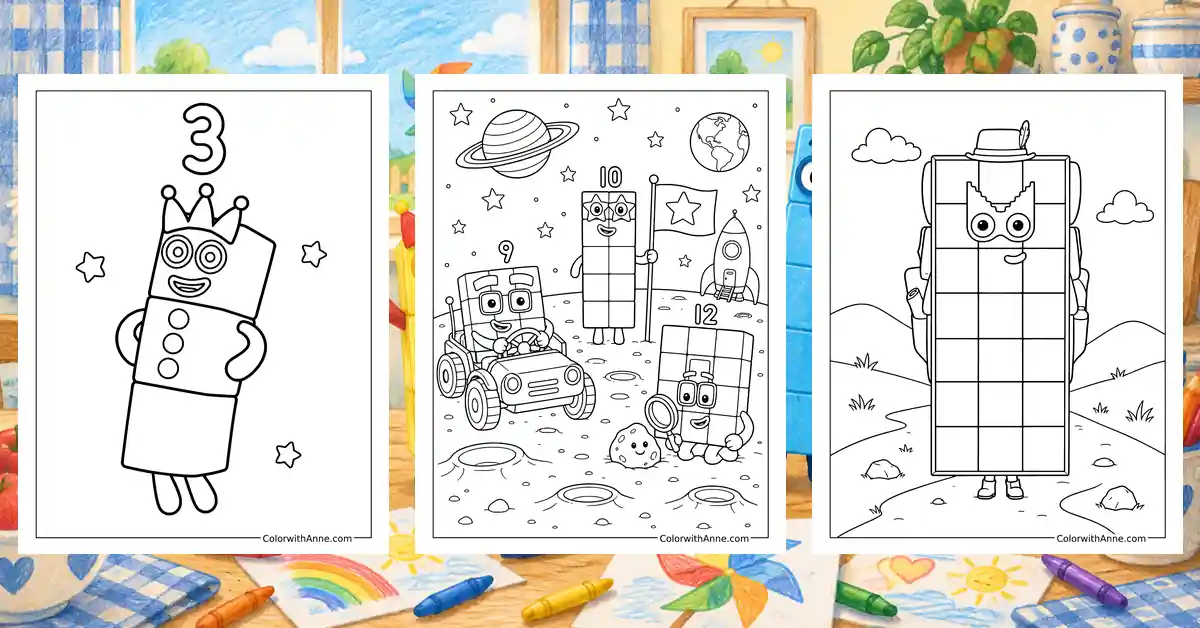
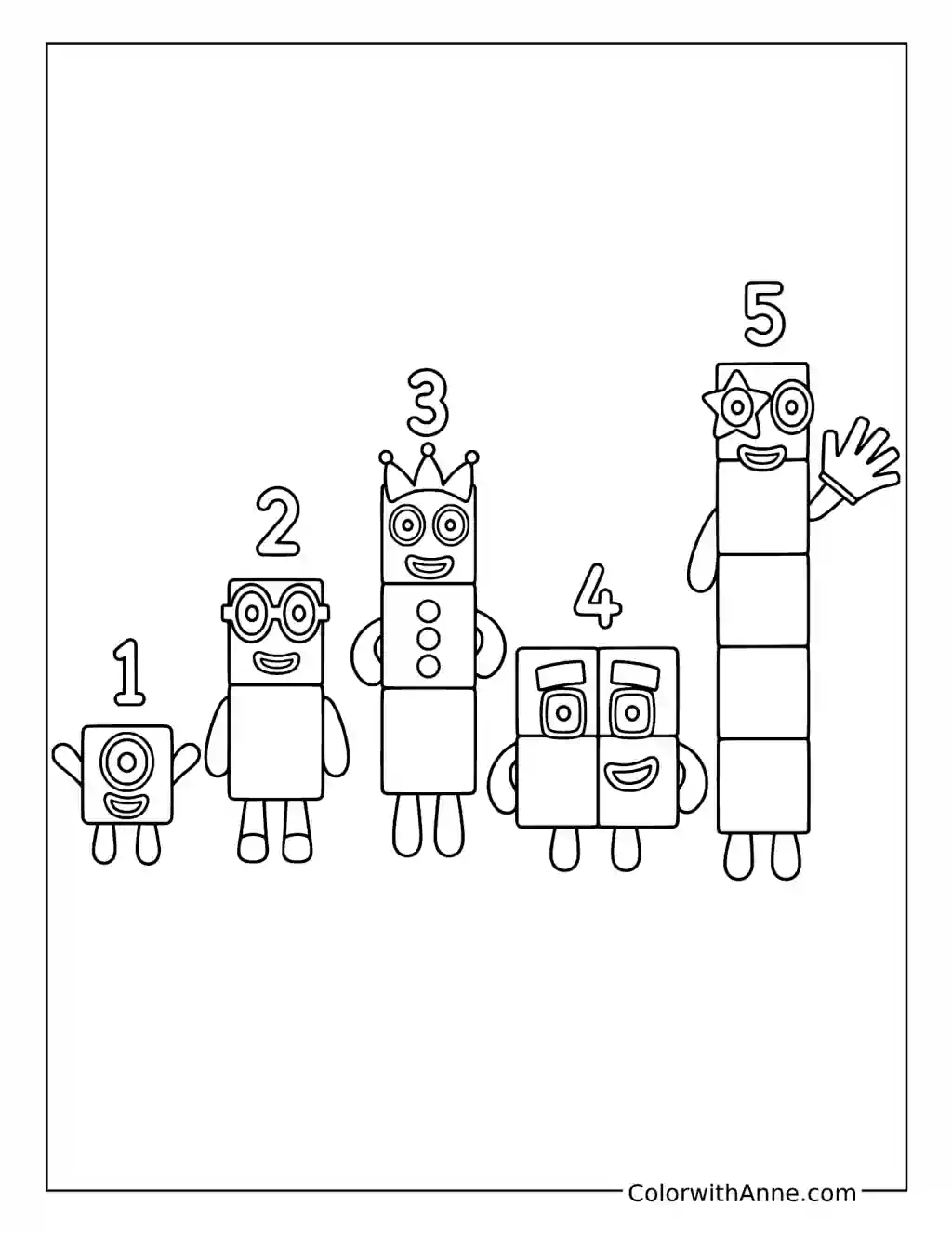
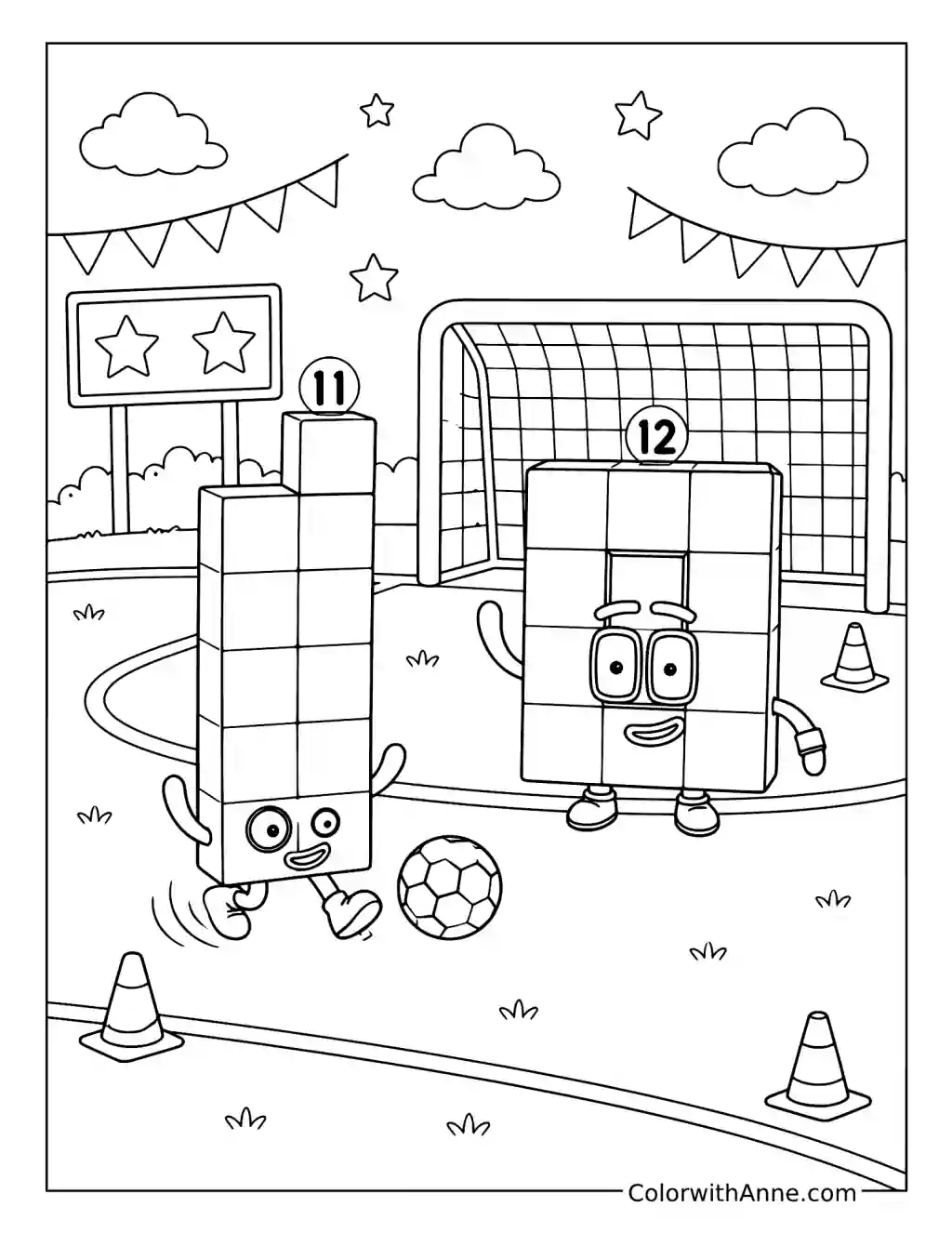
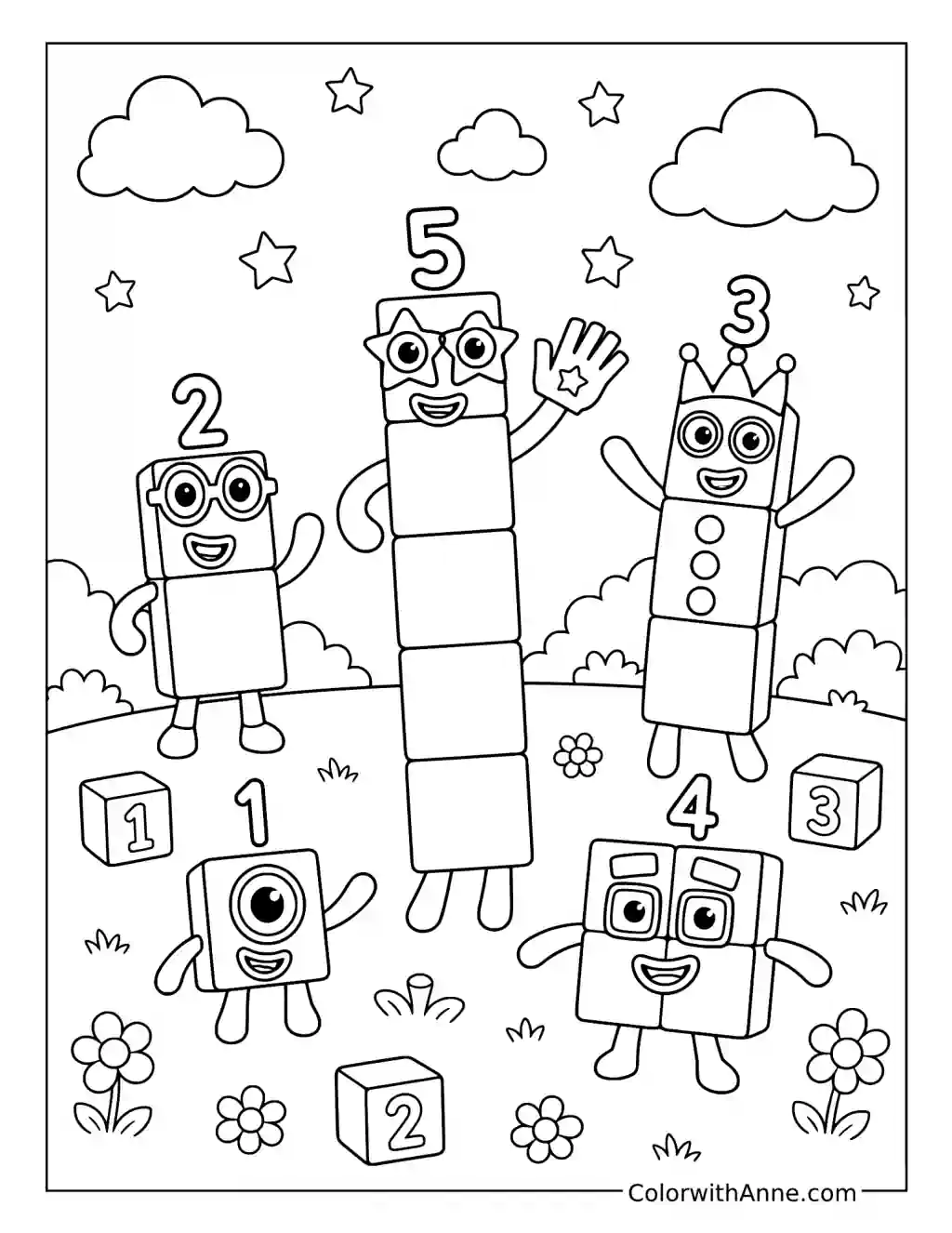
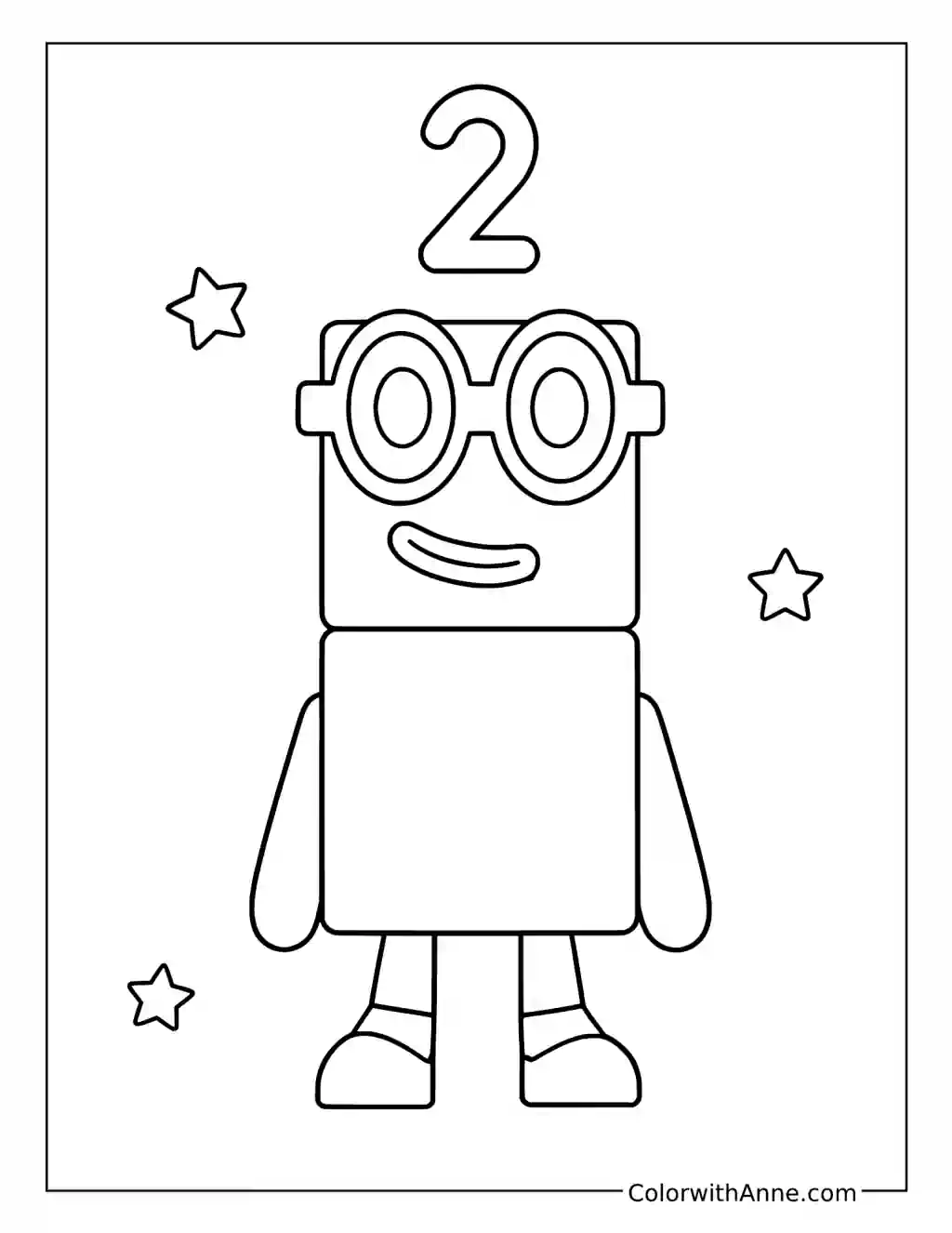
One never stays alone for long when the Numberblocks are around. Two arrives with a friend, Three brings a little showmanship, and Four finds comfort in being square. Their cheerful habit of snapping together makes counting feel surprisingly social, especially when a simple addition turns into someone entirely new.
Numberblocks coloring pages bring that familiar number-loving energy to a quieter moment at the table. For children who recognize the characters before they recognize every numeral, the theme offers plenty to talk about: who is taller, how many blocks make a friend, and why Four looks so neatly arranged.
Free Printable Numberblocks Coloring Pages
Click any coloring page below to open the PDF, then print on US Letter or A4 paper.
Did you find what you needed?
Help us choose what to create or improve next.
Coloring Ideas for Numberblocks Pages
Try one of these coloring ideas, or use them as a starting point for your own.
Find Two Fives inside Ten
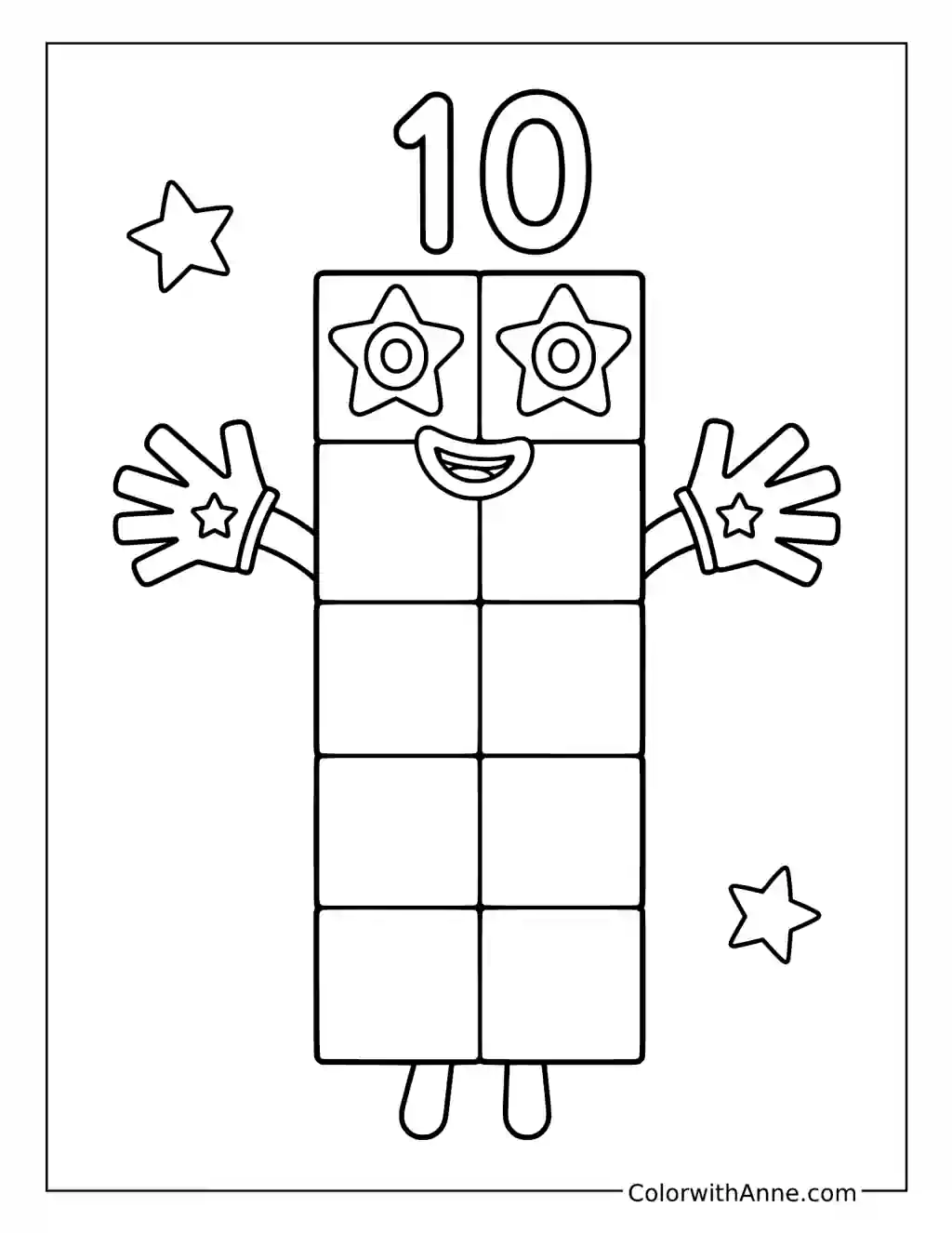
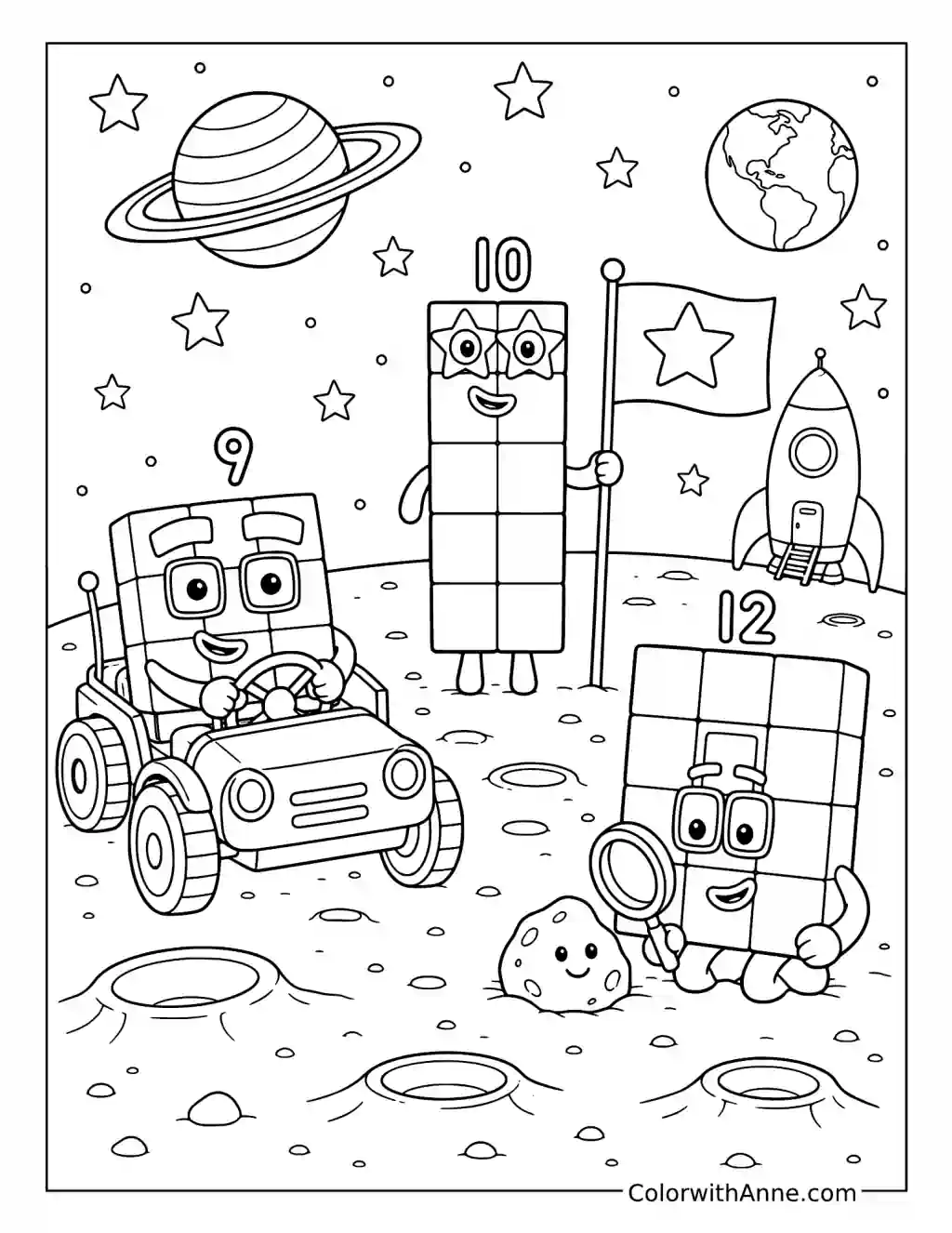
Ten’s body forms two columns of five squares. That clear arrangement offers more than a chance to count upward to ten.
Place five counters beside each column and count the groups separately before combining them. You can lightly distinguish the two columns while coloring, keeping Ten’s face clear above them. The page makes five plus five visible as a complete shape. A child can return to the two groups whenever the total feels too large to keep track of all at once.
Build Nine’s Square
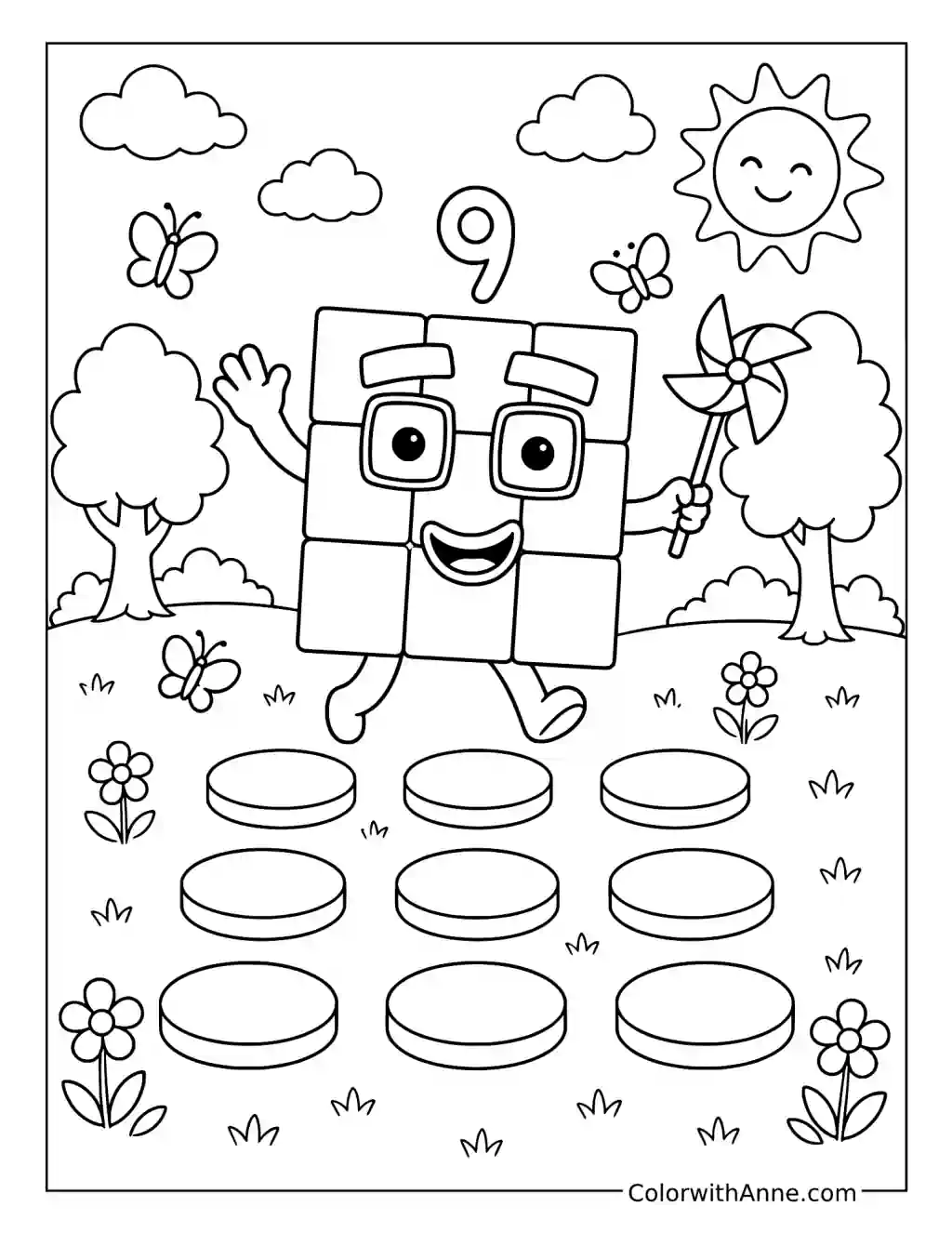
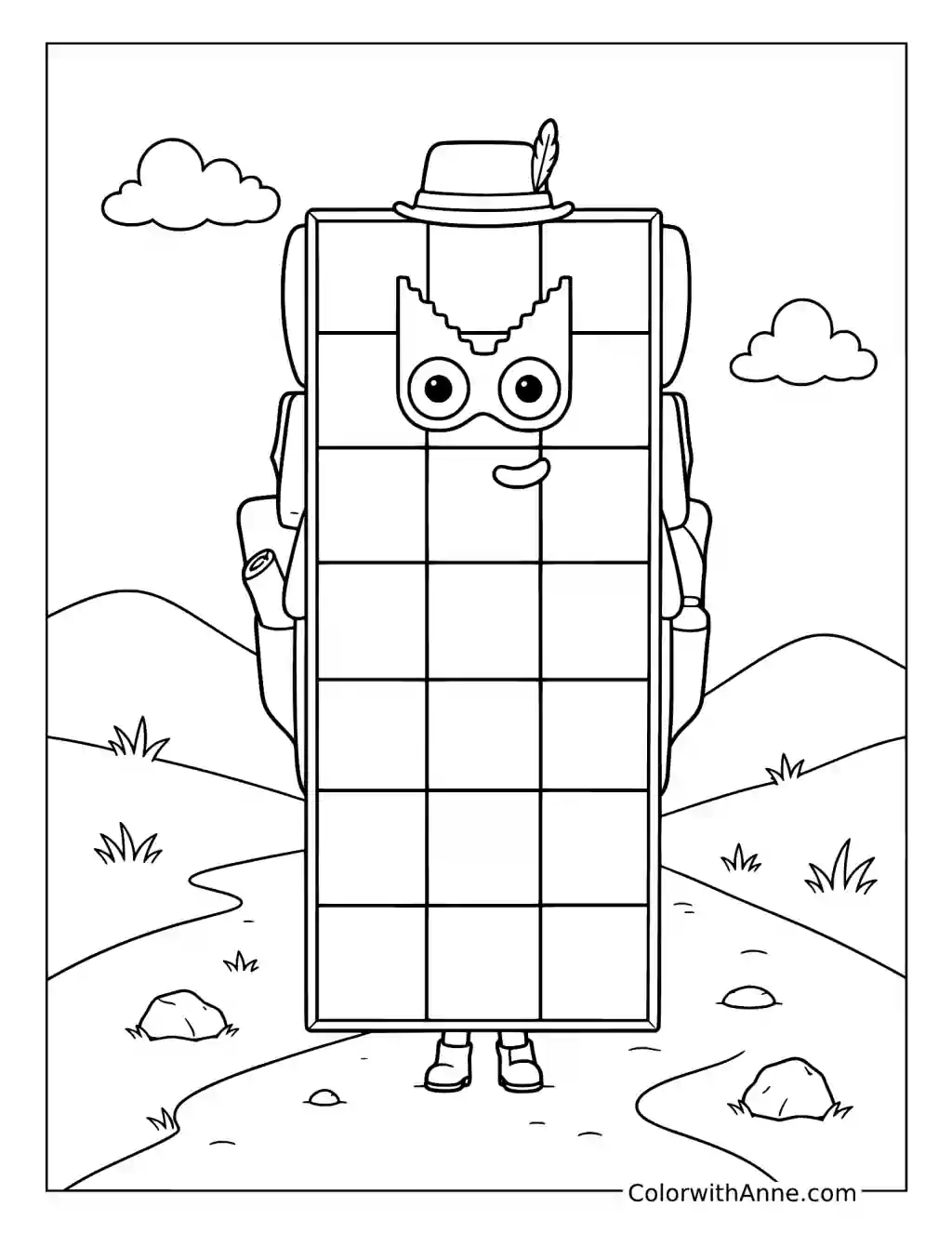
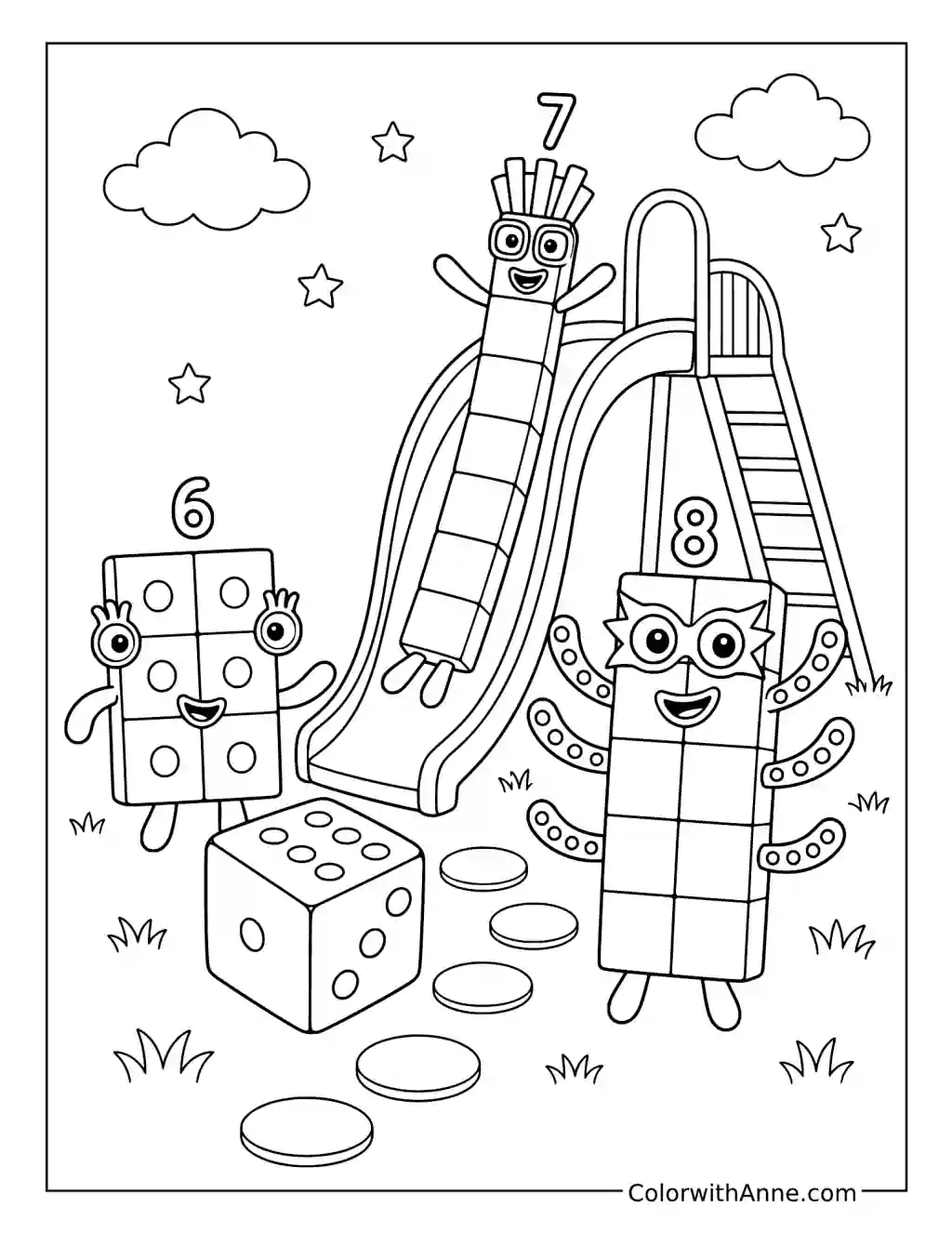
Nine’s three-by-three body gives this park scene a useful center. The square arrangement is something a child can build as well as recognize.
Set out nine counters in three rows of three, then compare them with the character. Move the counters into a long line and count again. The number stays nine even though the shape changes. Return to the page and follow one row at a time while coloring. The activity connects Nine’s appearance with a real arrangement that can be handled and rearranged.
Find the One-Block Difference
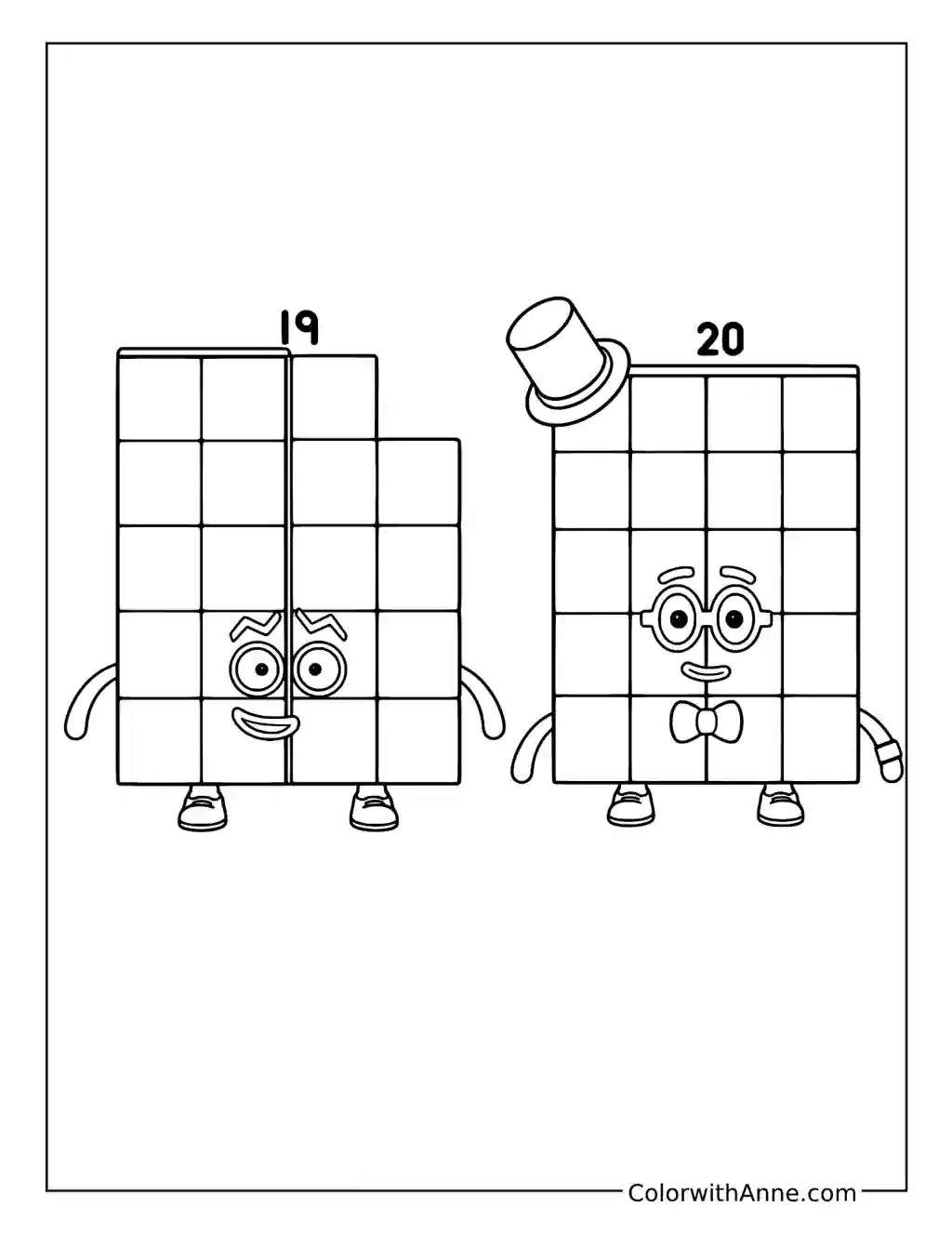
Nineteen and Twenty stand side by side, making their nearly matching bodies easy to compare. The incomplete top row is the useful detail to investigate.
Build Twenty’s rectangular arrangement with twenty small blocks or counters, then remove one from the top row to resemble Nineteen. Put it back and say what changed. Keep the two printed characters distinct while coloring, but notice how much of their structure is shared. One additional block explains the difference more clearly than simply repeating the two number names.
Match Six with the Dice Pattern
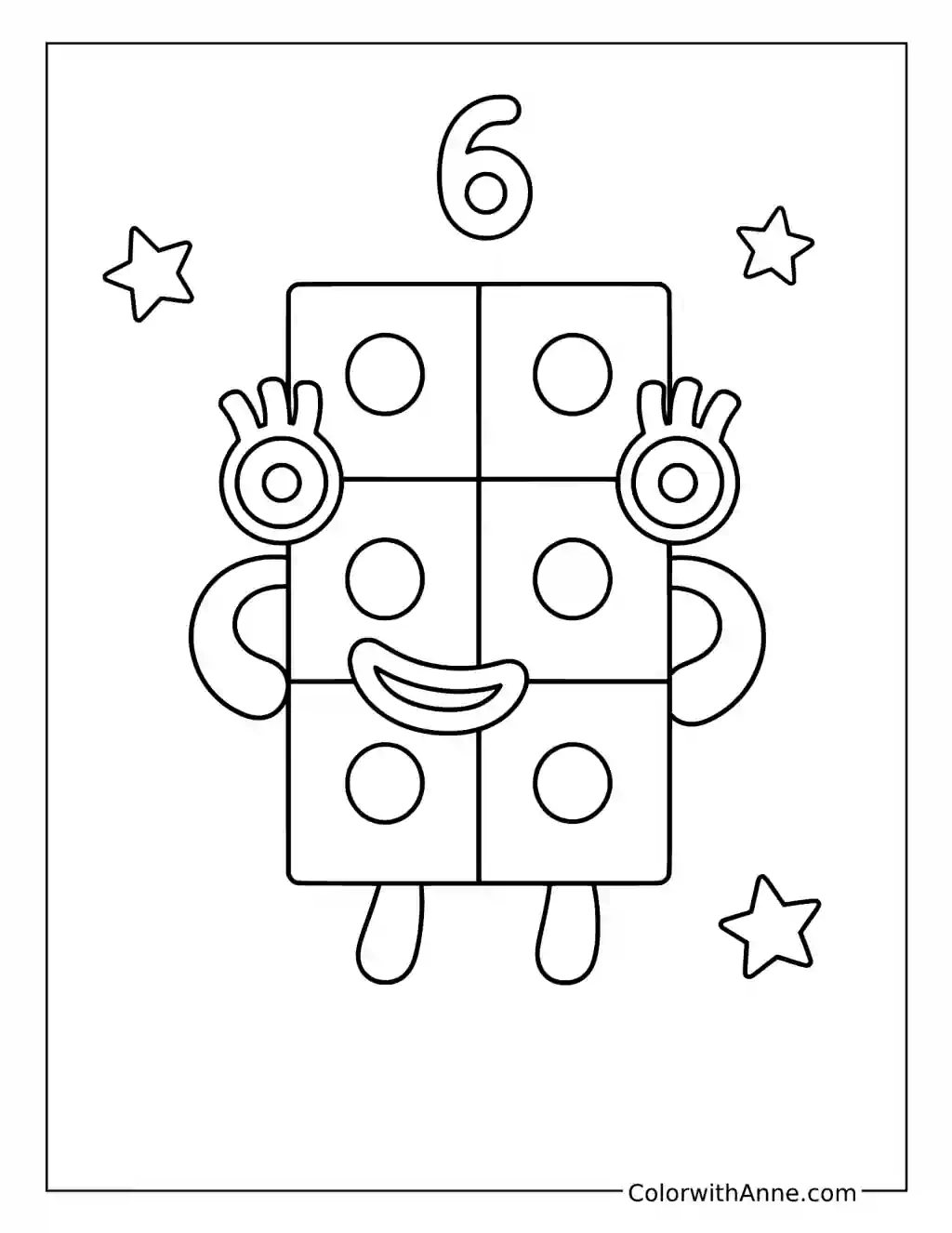
Six has six dots arranged across its body, giving the number a familiar dice-like pattern.
Find the six on a real die and compare the dots with the page. Count them first, then practice recognizing the arrangement without touching each dot. Color the body and leave the dots clearly separated from it. During a simple dice game afterward, pause whenever six appears and see whether it is spotted immediately. The character gives the pattern a friendly identity to remember.
Give Five a Proper High Five
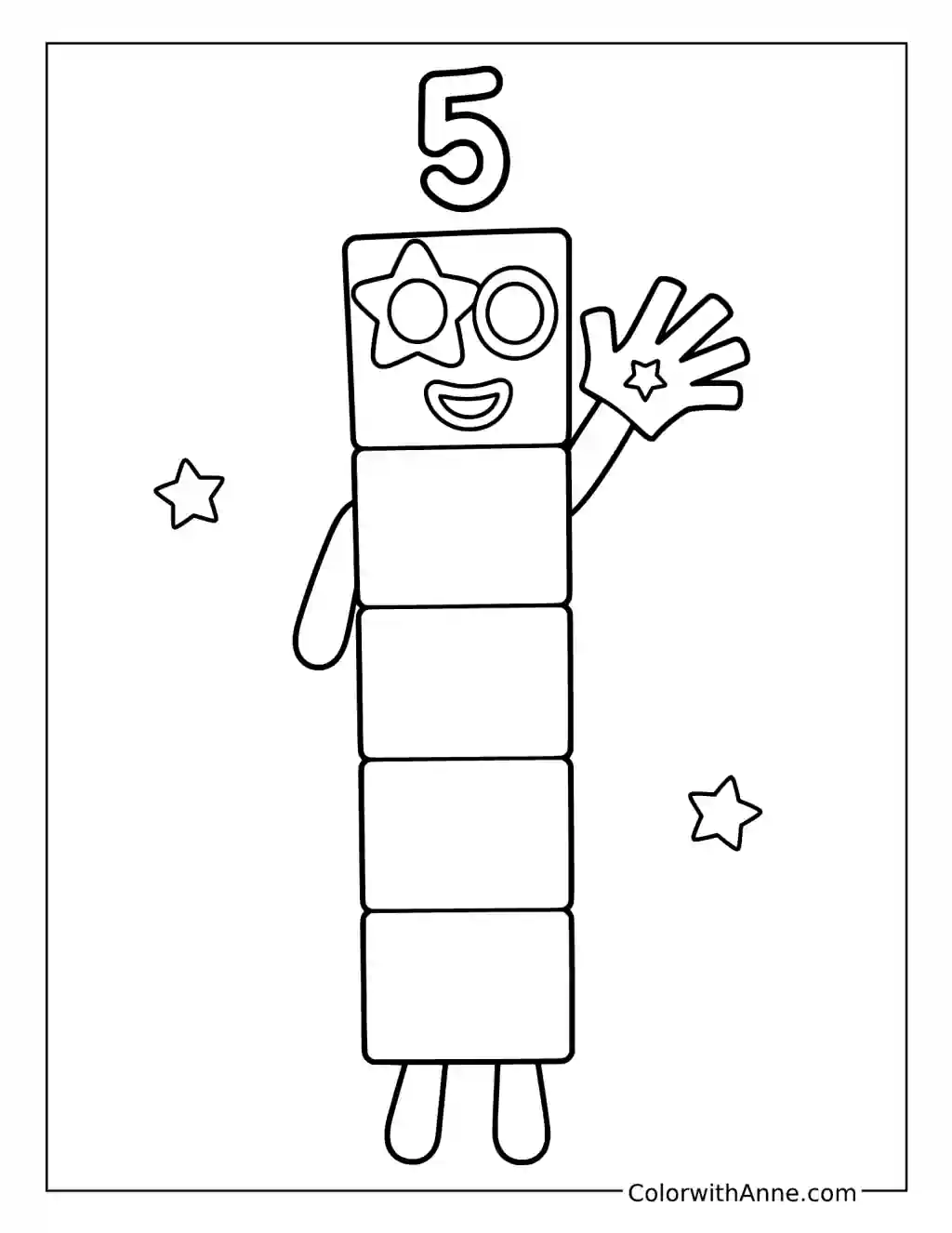
Five’s raised hand makes the number easy to connect with something already attached to the reader: five fingers.
Hold up a hand and touch one printed square for each finger. Then place five small objects in a row beneath the page and match them again. The objects can be buttons, blocks, or another familiar set. Finish the character and celebrate with an actual high five. The same quantity has appeared as fingers, squares, and separate objects, with the greeting bringing them together.
Carry Seven’s Rainbow down the Body
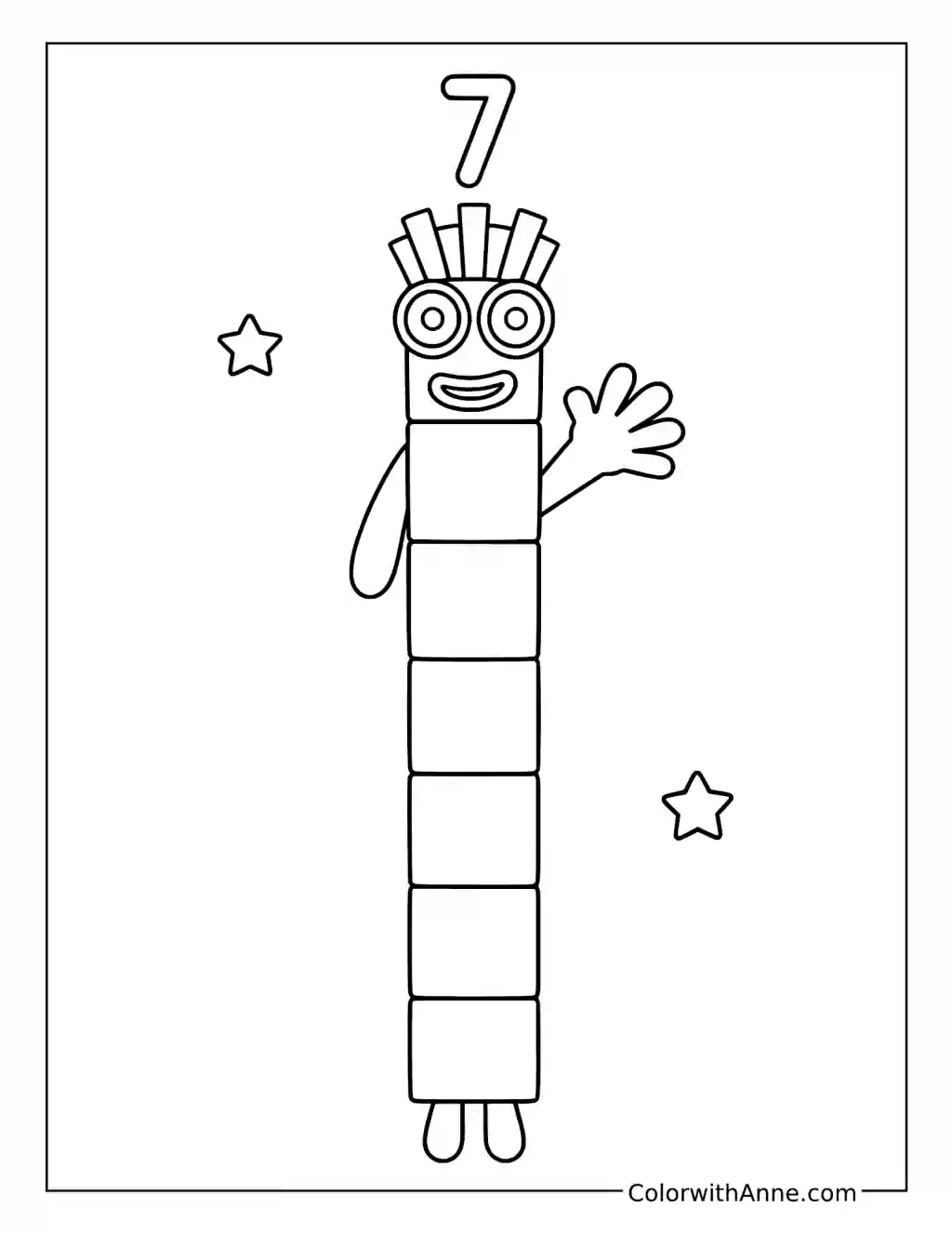
Seven’s tall stack offers a place for the rainbow colors that make the character so recognizable.
Work through the squares in rainbow order, counting one block as each new color is added. Keep the boundaries clear so the stack remains seven separate units. Afterward, find seven things nearby and arrange them from one end of the page to the other. The rainbow gives the counting a memorable sequence, while the collected objects show that seven does not have to look like a tower.
Make Four in More than One Arrangement
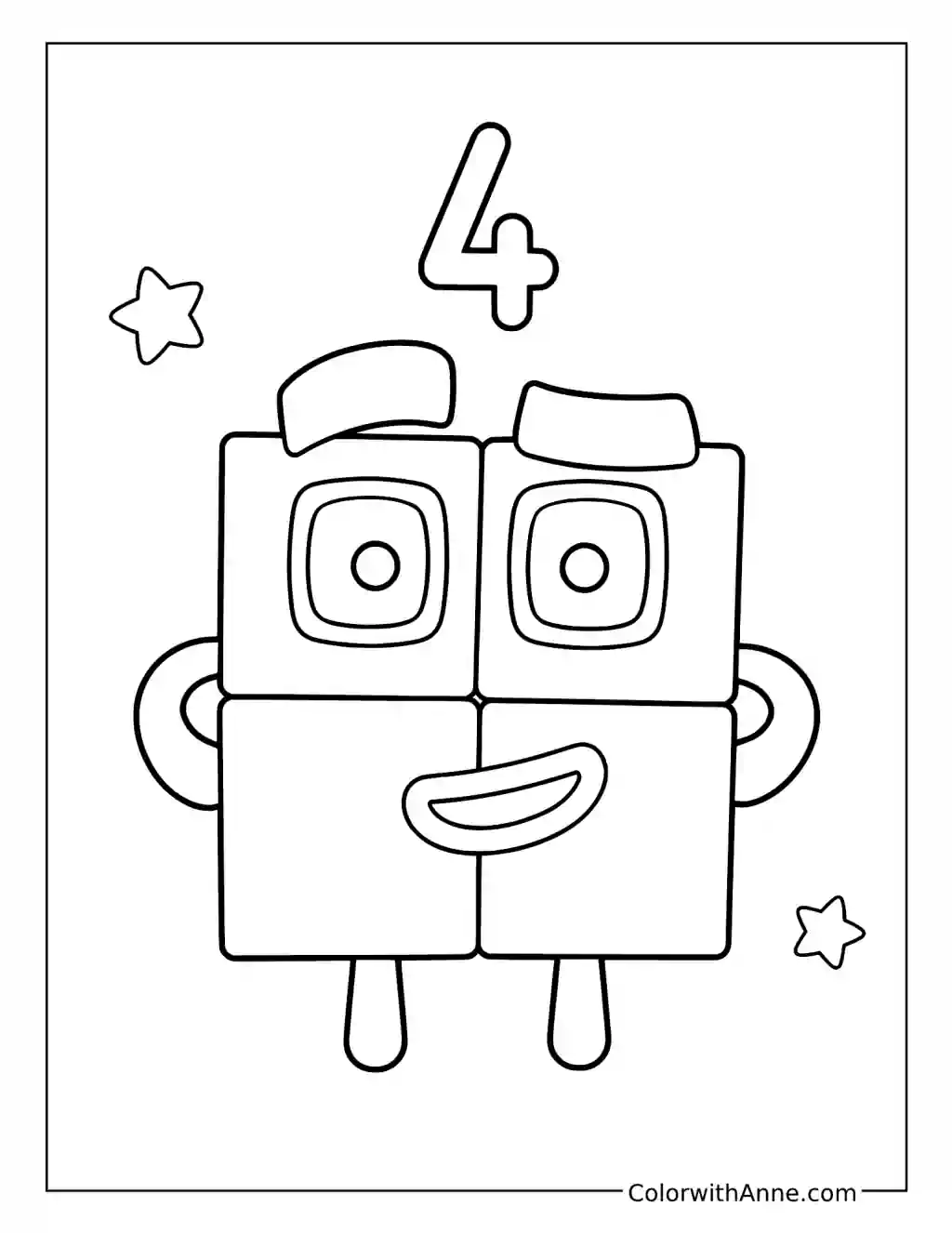
Four’s two-by-two body is a compact square, with each block easy to find. Start by recreating that shape with four counters.
Move them into a row, then into two pairs with a gap between them. Count after each change and return them to the square. While coloring Four, a child can connect the familiar character with all three arrangements. The number remains steady even when its objects occupy very different amounts of space.
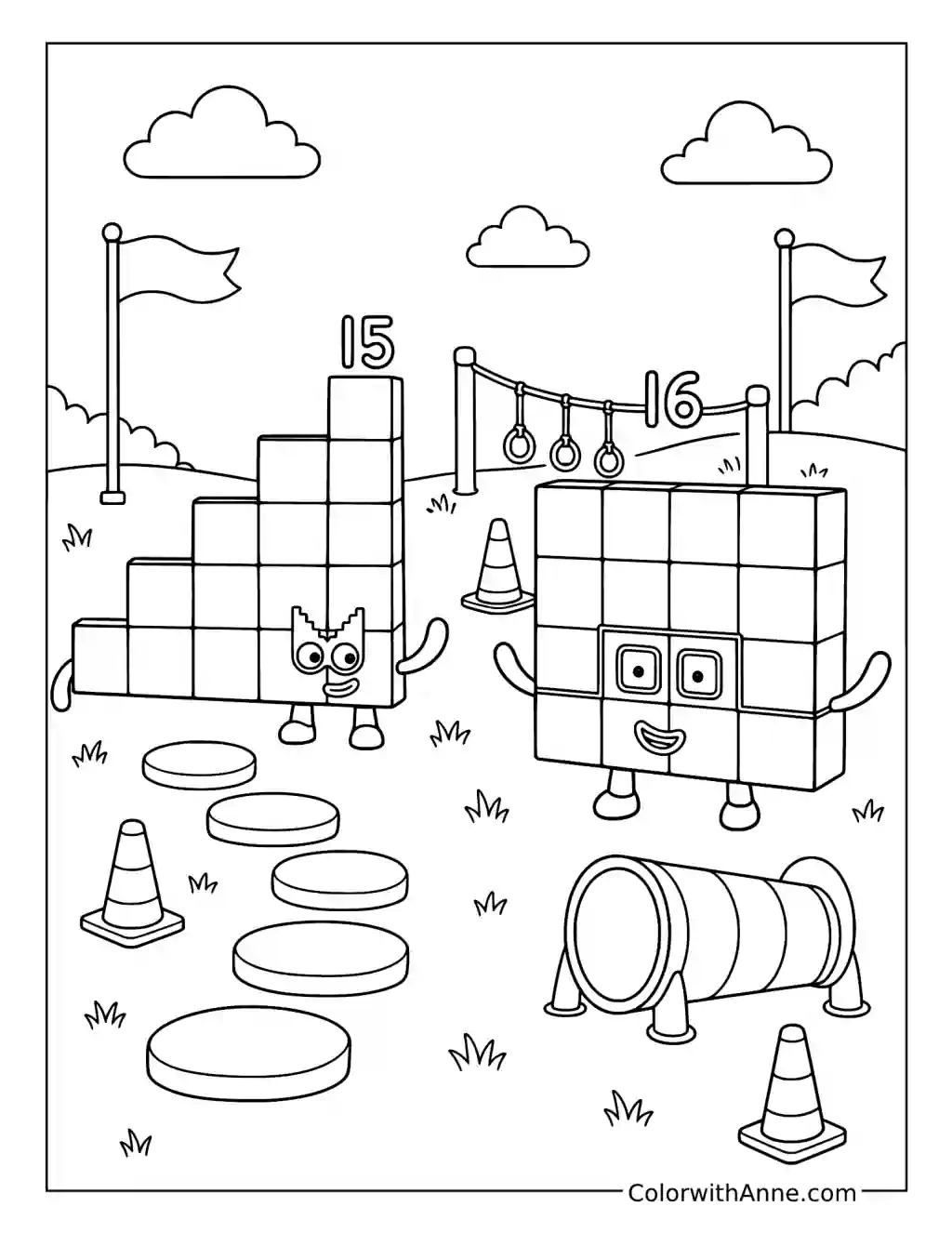
Climb Fifteen’s Number Staircase
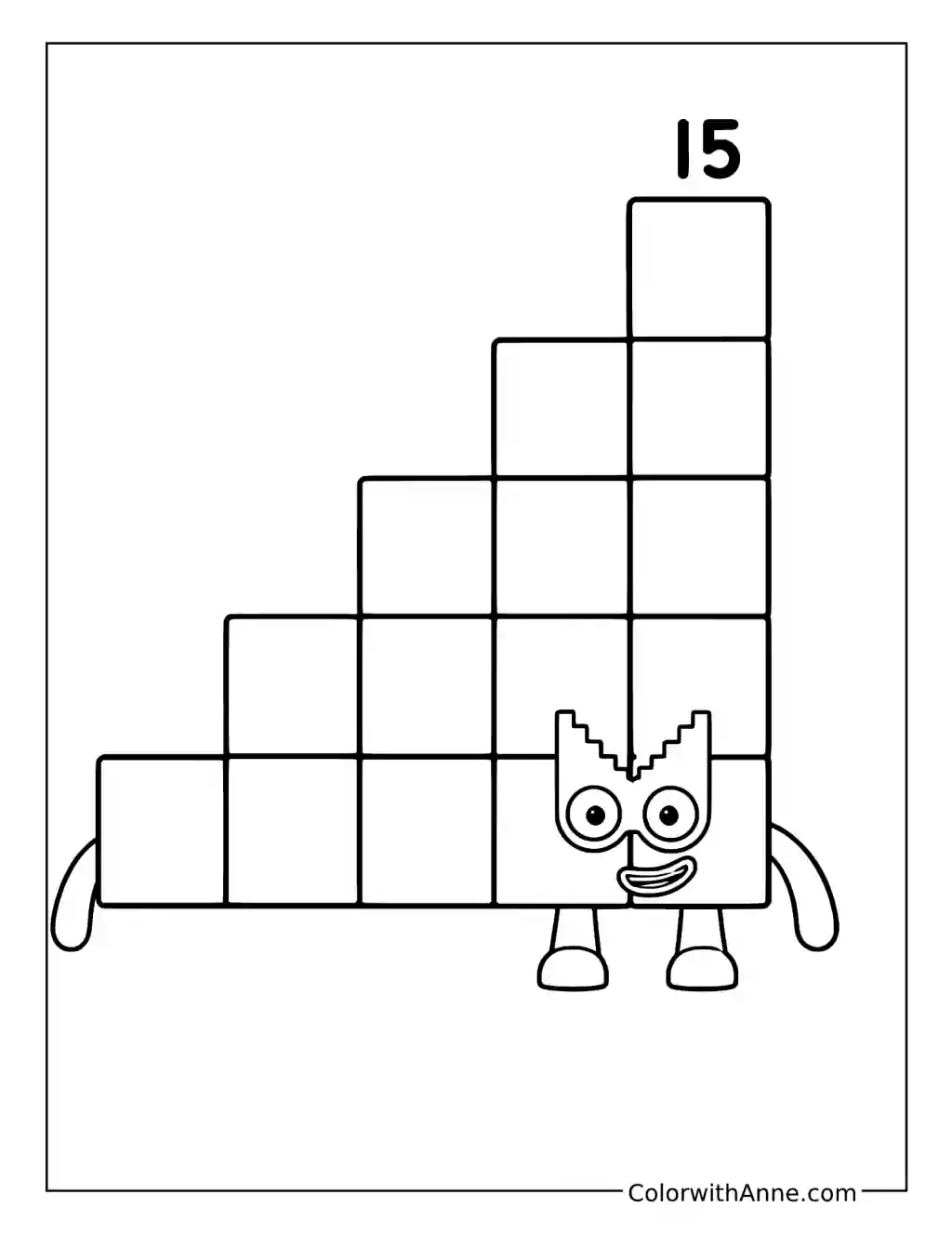
Fifteen’s staircase has levels containing one, two, three, four, and five blocks. Its shape is particularly good for discovering how smaller groups combine.
Give each level its own color and count the blocks within it before moving upward. Then add the groups together, using counters if helpful. Build a matching staircase with small blocks and compare it with the picture. The finished design becomes a visible reminder that fifteen can be assembled from several manageable parts rather than counted as one long sequence.