
An apple crunches at snack time, an ant crosses the picnic blanket, and suddenly A has turned up twice before lunch. Learning a letter feels more familiar when it belongs to things a child can taste, spot, or say out loud. Even a trip down the grocery aisle offers a little alphabet hunting between the usual requests for snacks.
Letter A coloring pages bring that recognition to the table. The pointed capital A and rounded lowercase a give children two shapes to get acquainted with. Add a name beginning with A beside the page, and the letter has someone familiar attached to it, too.
Free Printable Letter A Coloring Pages
Click any coloring page below to open the PDF, then print on US Letter or A4 paper.
Did you find what you needed?
Help us choose what to create or improve next.
Coloring Ideas for Letter A Pages
Try one of these coloring ideas, or use them as a starting point for your own.
Bring Apples to the Alphabet Table
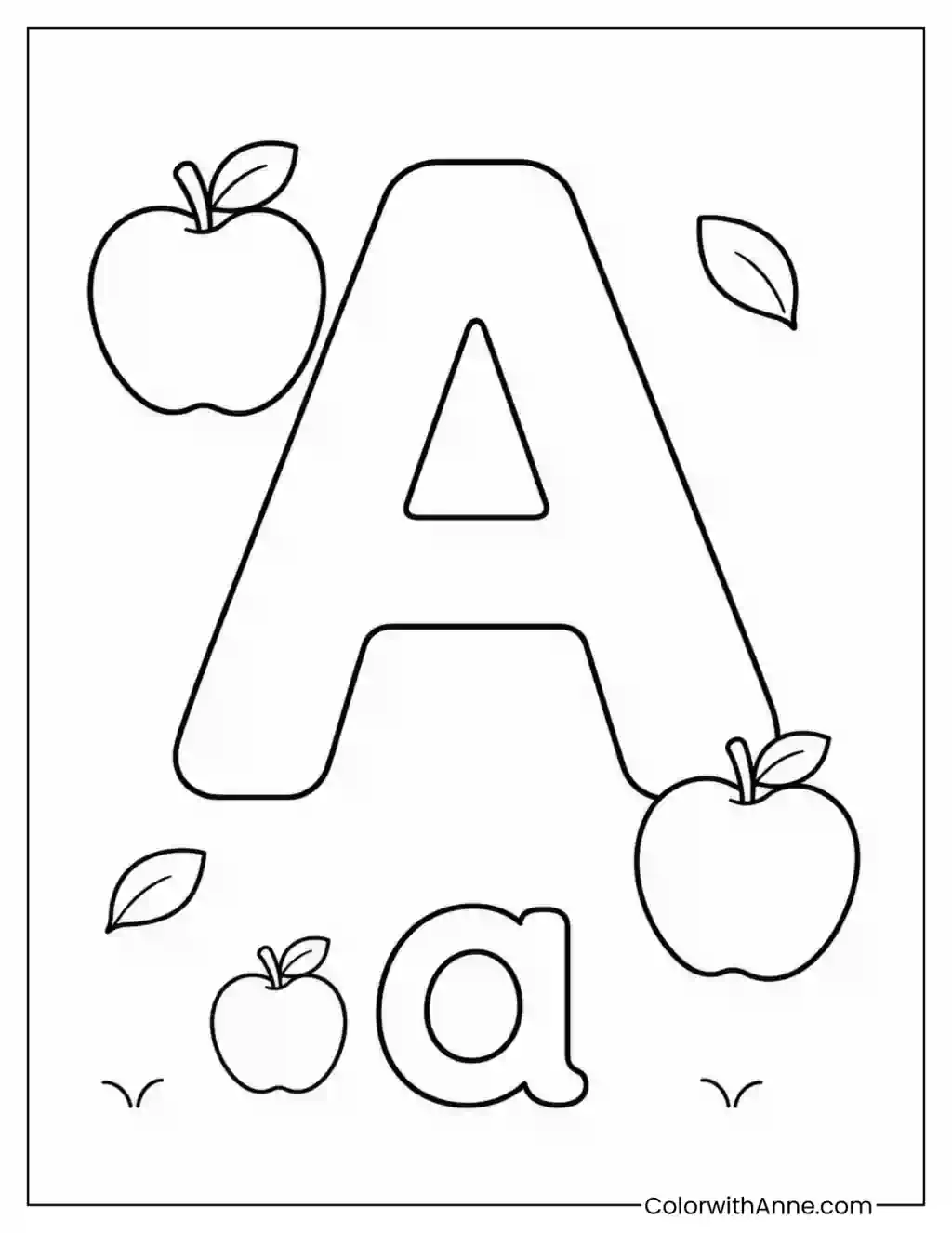
Three apples surround a large capital A and a smaller lowercase a. It is a good page to bring out at snack time, when the word “apple” has something crunchy and familiar behind it.
Set a real apple beside the picture and look closely before choosing its colors. The skin might have yellow patches, tiny speckles, or a rosy side rather than one solid red. Let the pictured apples borrow those differences, then count them together.
Afterward, point to the two letters and find A at the beginning of “apple.” A small discovery tends to stick when it comes with an actual bite.
Give the Alligator an A Name
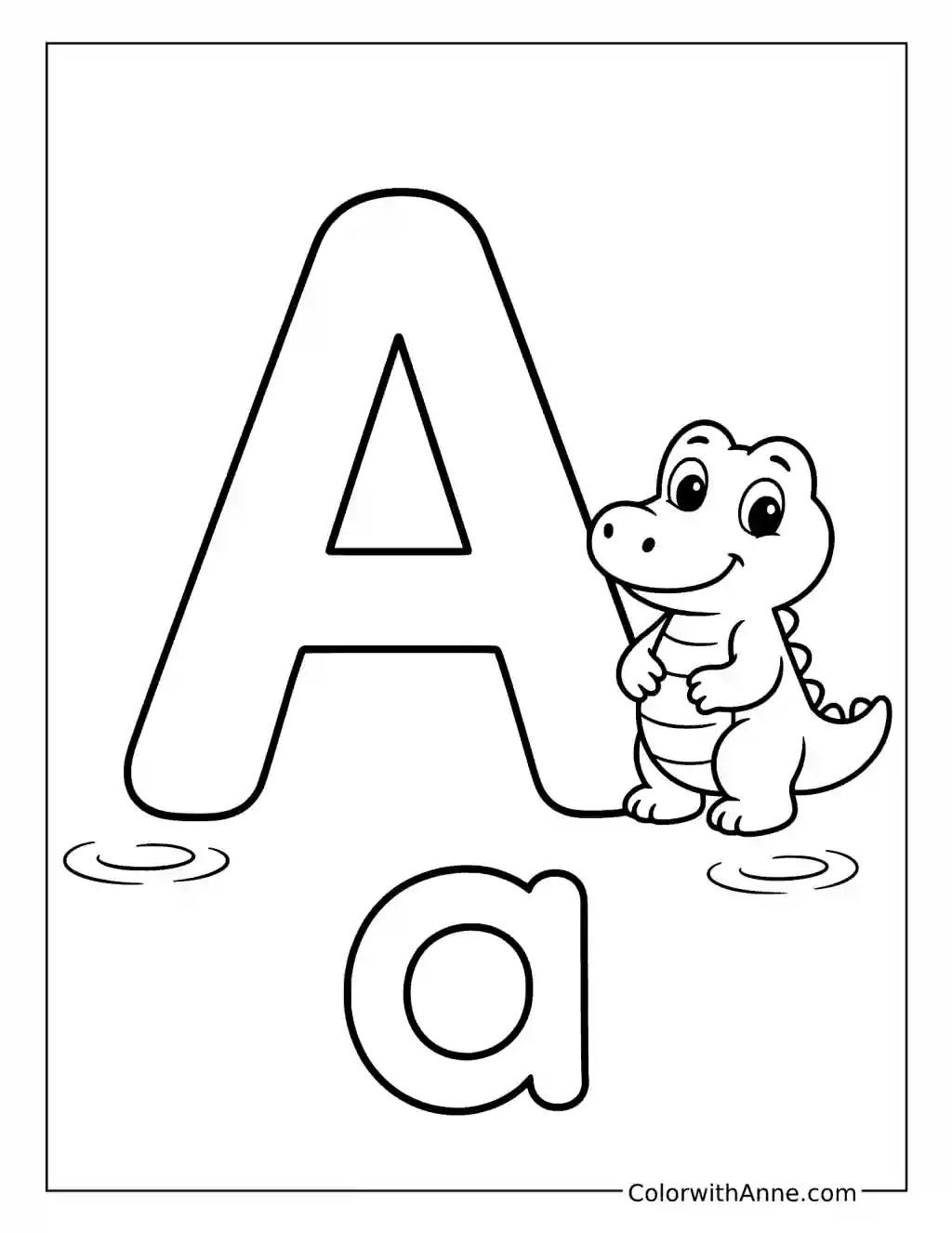
The little alligator stands beside the capital A with a broad smile and a curved tail. Below them sits lowercase a, giving this cheerful character both versions of its initial.
Invite a child to name the alligator using another A word or name. Archie, Ava, or Alex could work; write the chosen name in the open space and circle its first letter. Now A belongs to someone, rather than being a shape to remember.
For a playful introduction, let the child describe their newly named alligator in one sentence. Perhaps Archie likes apples. The added sentence is their invention, and the smiling face already provides a willing listener.
Let the Bear and Rabbit Help Sort Animal Names
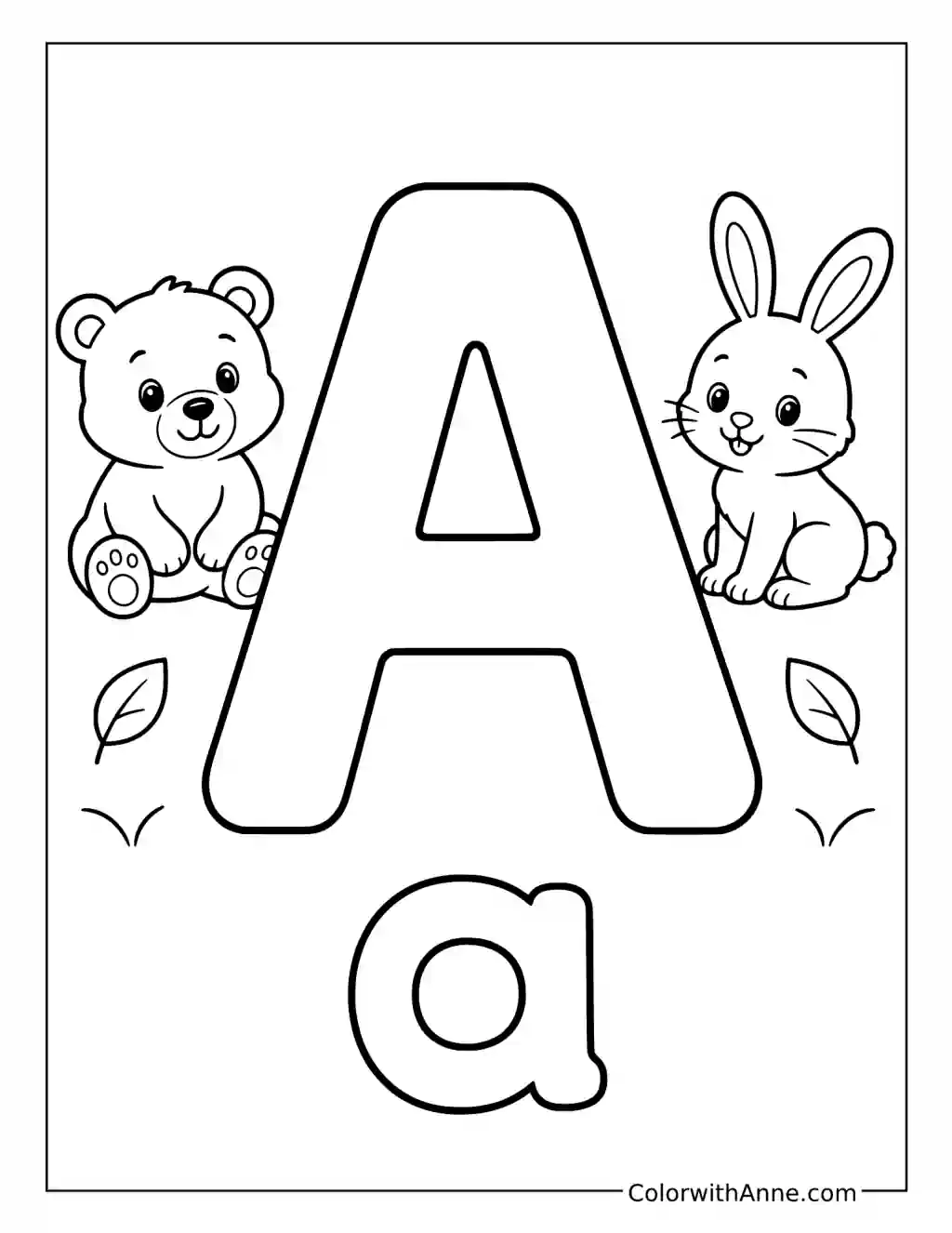
A bear and rabbit sit on either side of the large A, with lowercase a underneath. Neither “bear” nor “rabbit” begins with A, which gives this picture a useful little question: where does the letter belong?
Start with “animal,” then say the two animal names aloud. The word “bear” has an a tucked inside it; “rabbit” does, too. Write both words beneath the picture and let a child find the hidden letter.
This makes a gentle next step after learning “A is for apple.” Letters turn up in the middle of words as well, and these two companions offer a reason to look beyond the beginning.
Follow the Airplane Around Lowercase a
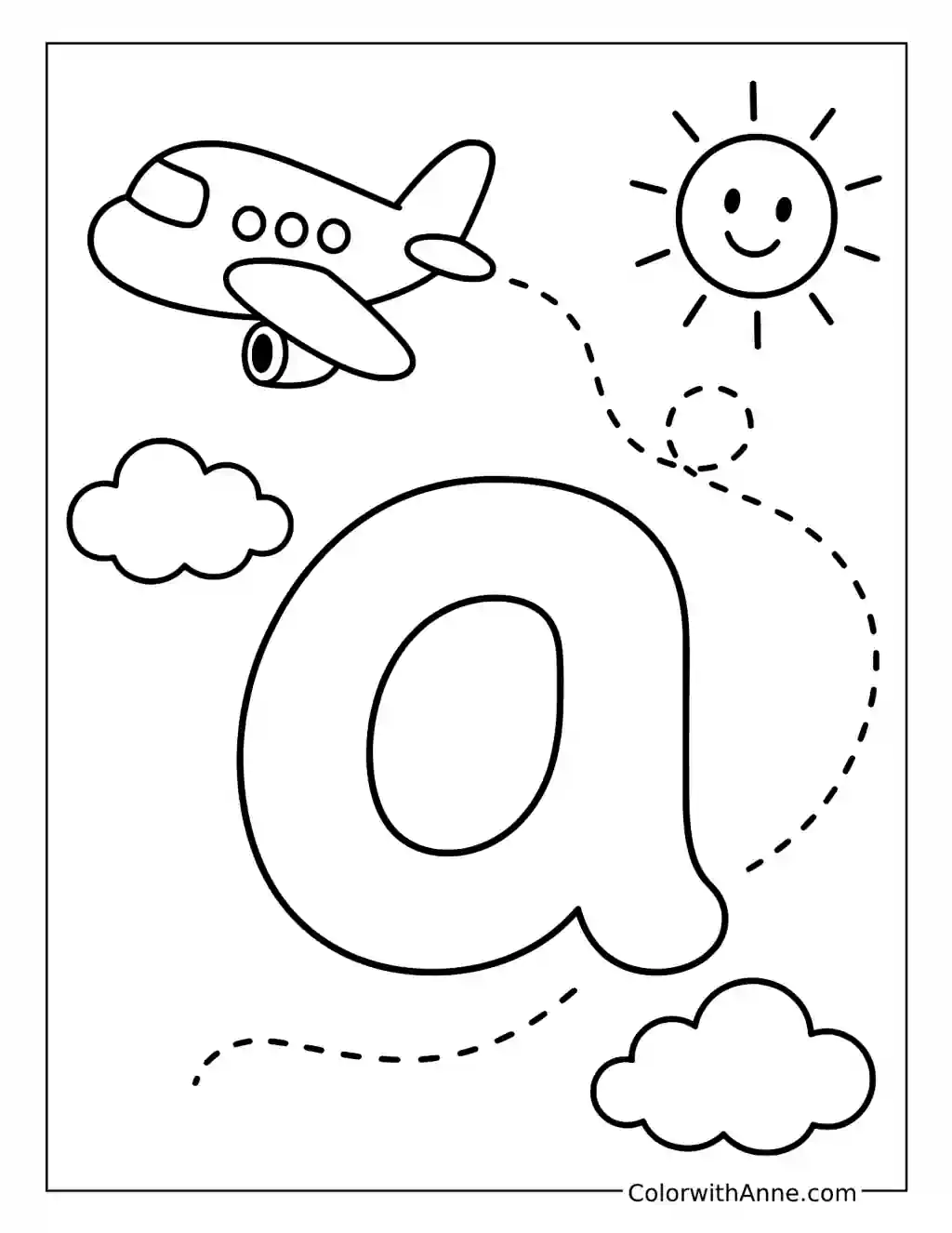
An airplane flies above a large lowercase a, leaving a dotted trail that curls between the clouds. The smiling sun looks quite content to watch it pass.
Before coloring, follow the flight path with a fingertip. It is an inviting way to explore the page’s curves, especially beside the round body of the lowercase letter. Then trace the letter’s outline separately, noticing where its shape differs from the airplane’s wandering route.
For a child interested in travel, add the name of somewhere they would like to fly in the blank space. Ask whether that place has an a in its name. The alphabet suddenly has a destination.
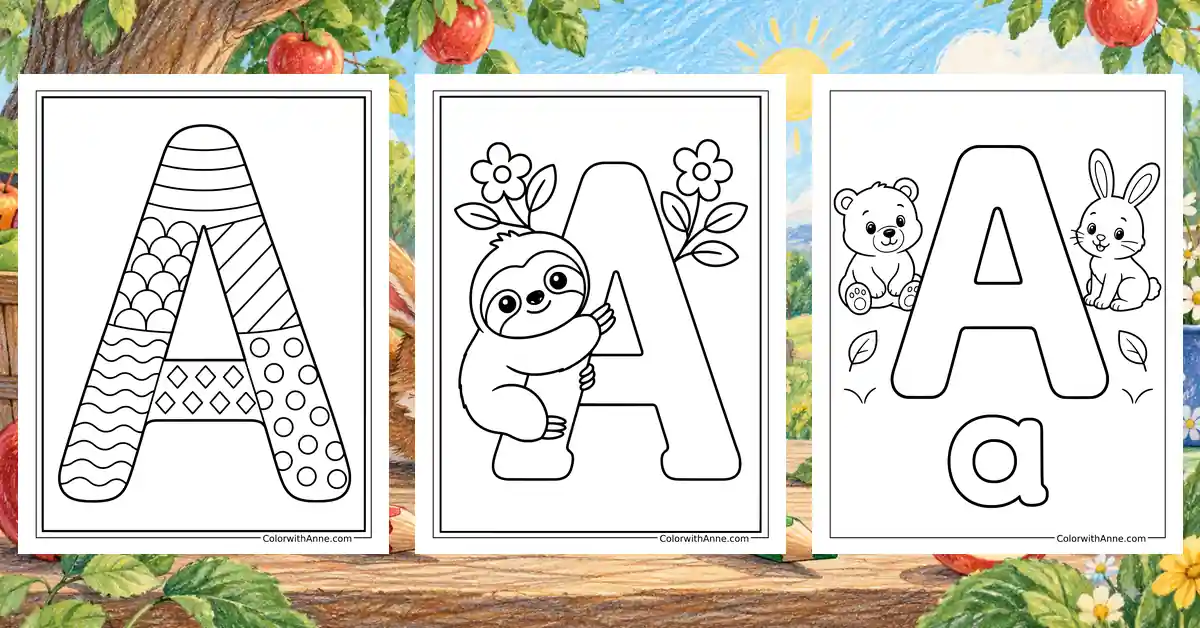
Turn the Patterned A into a Guessing Game
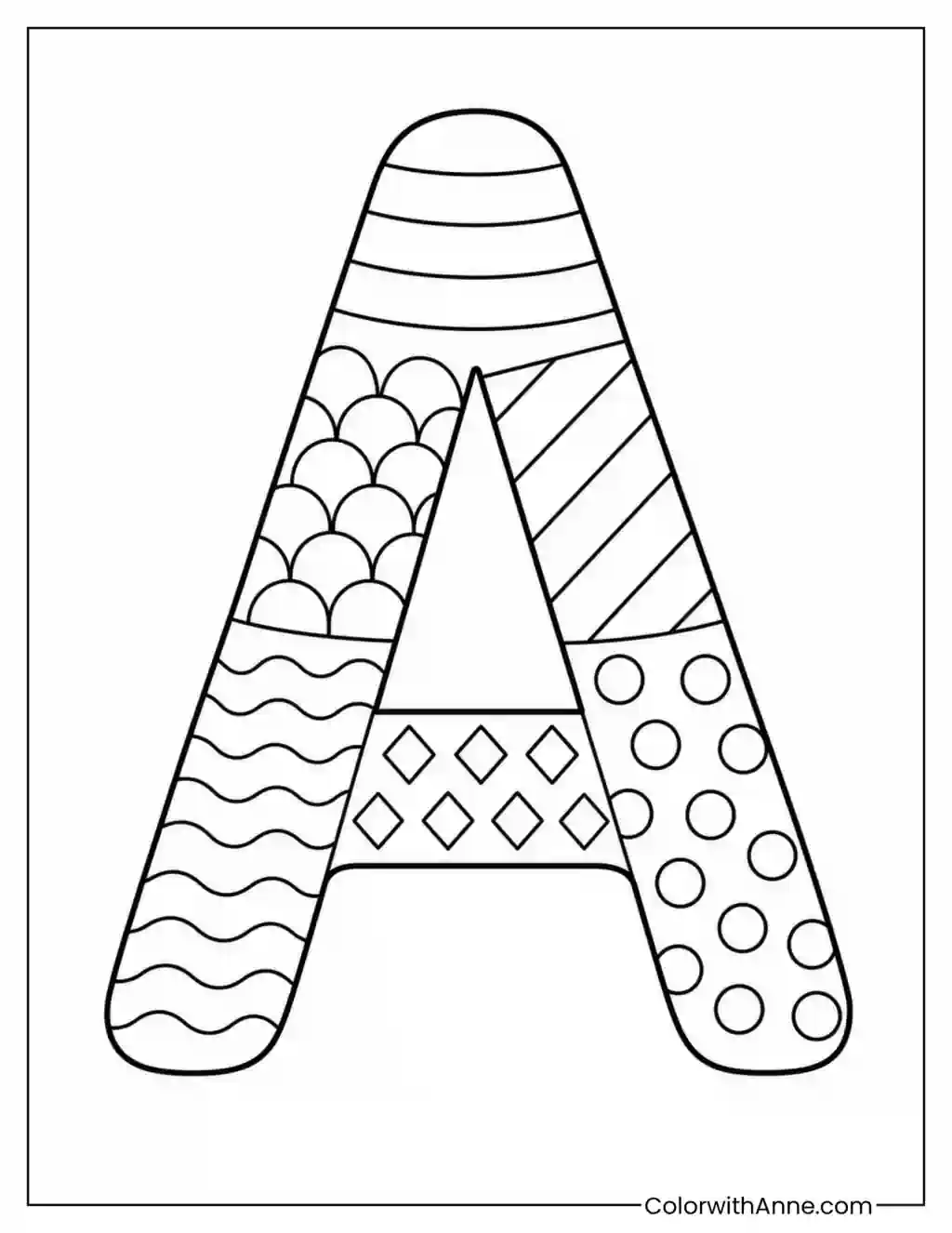
This tall A is divided into bands of stripes, overlapping scallops, waves, diamonds, and circles. Each section offers a different pattern to notice, so the letter can become a small guessing game.
One person describes a section without pointing: “Find the part with wavy lines,” or “Which part has diamonds?” The other finds it and chooses its color. Switch roles after a few turns so the child gets to give the clues, too.
For the striped sections, try a repeating sequence such as red, yellow, red, yellow. Pause before the next stripe and ask what comes next. The picture gives that prediction somewhere visible to land.
Explore the Anchor’s Underwater Job
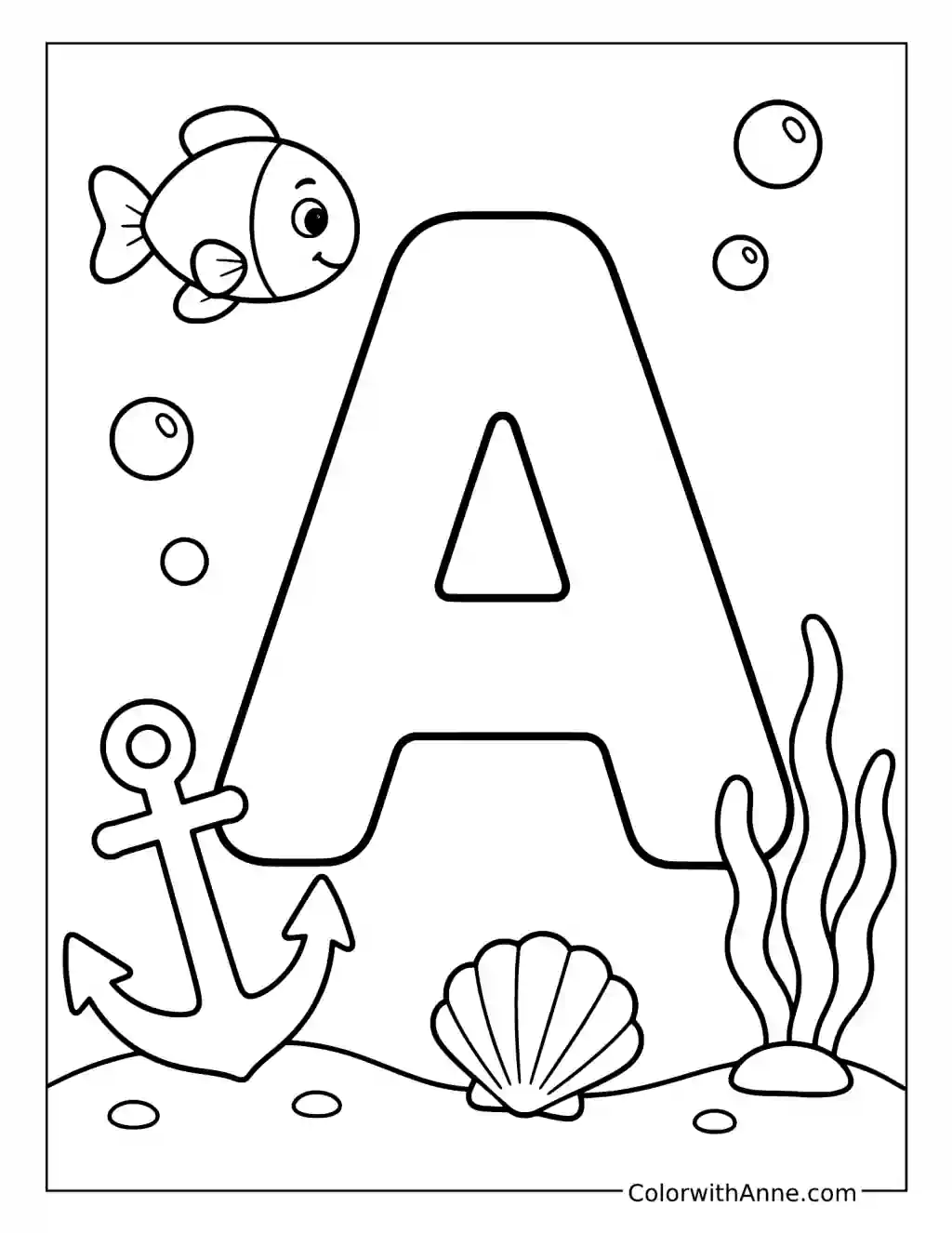
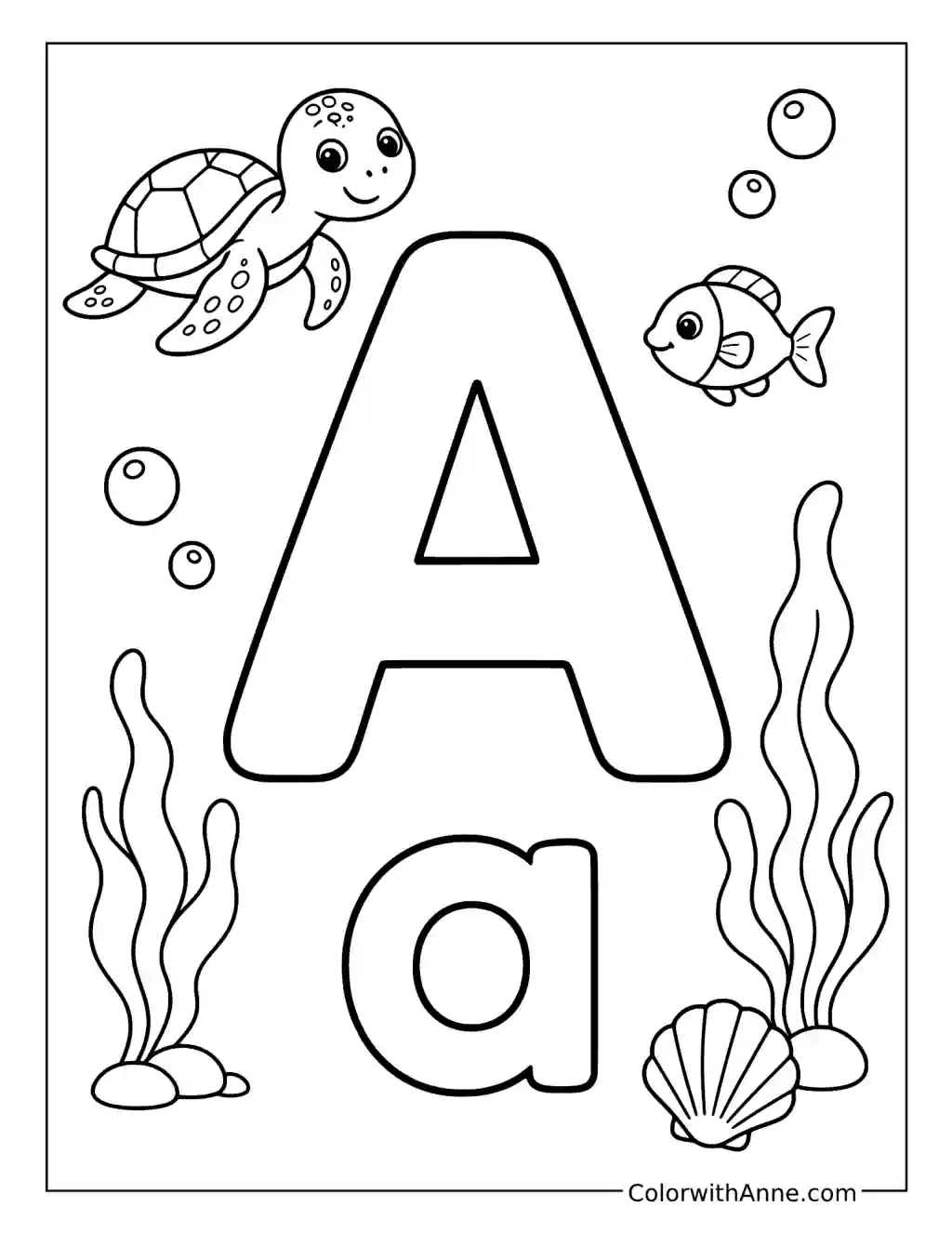
The anchor rests near the bottom of the A, surrounded by a shell, pebbles, seaweed, bubbles, and a fish. It gives “A is for anchor” a setting that helps the word make sense.
Talk about how an anchor helps hold a boat in place, then invite a child to draw the boat it might belong to on a separate sheet. Put the boat picture above this one, with a length of string laid between them to suggest the connection from the surface to the seabed.
Keep “anchor” written beside the pictured object. That way, the unfamiliar word stays attached to something the child has examined and imagined using.
Take the Acorn Page on an Autumn Walk
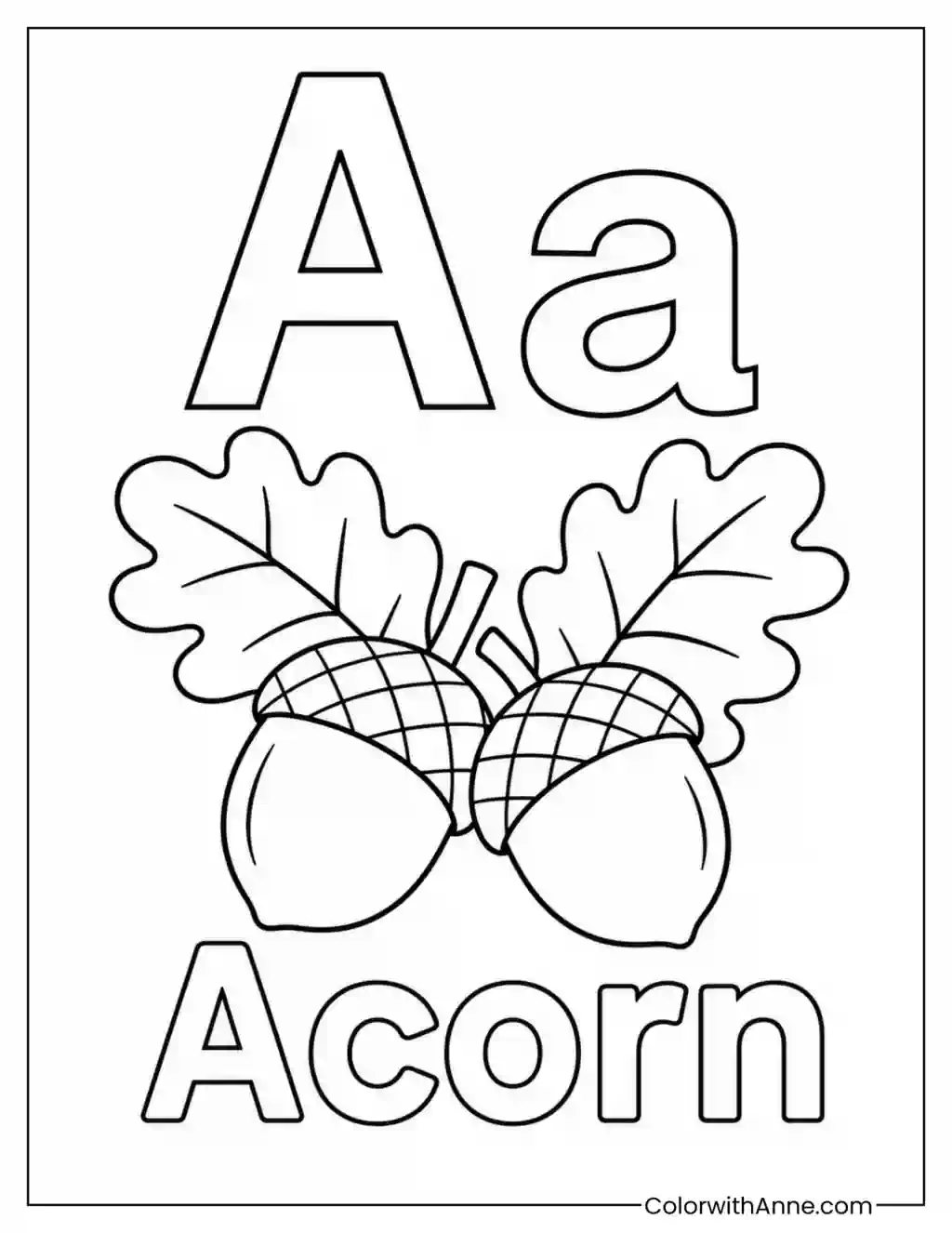
Two acorns sit beneath uppercase A and lowercase a, with lobed oak leaves behind them. The word “Acorn” appears along the bottom, making this page especially useful before or after a walk near oak trees.
Look for fallen acorns and leaves, then compare them with the drawing. Notice the little cap on each acorn and the leaf’s rounded lobes. A real specimen beside the page gives children something more interesting to work from than a suggested brown and green.
Back at the table, find the capital A in “Acorn.” Add the date and place of the walk in the margin, and the finished page becomes a record of where that word first came to life.
Make the Floral A a Personal Initial
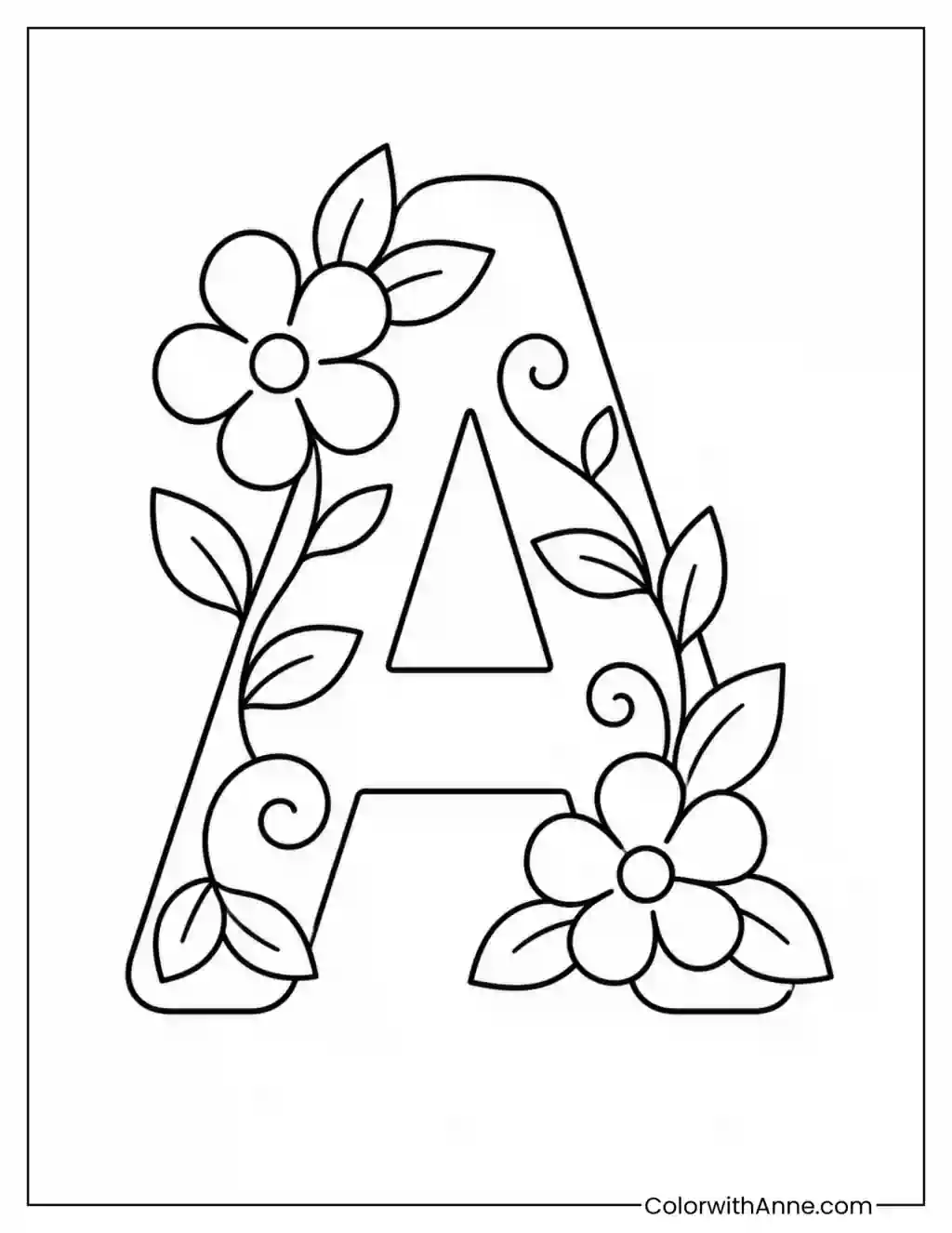
Flowers and leafy stems curl around this capital A, with blossoms near the upper left and lower right. The letter feels suited to a name: Amelia, Arlo, Alice, or another familiar person whose initial matches.
Let that person’s favorite flower colors guide the blossoms, then write their name neatly in the space below. If the child is making their own initial, invite them to choose what feels like theirs, even if that means blue petals.
Place the finished page on a bedroom door or beside a desk. The decorated A then has a clear purpose, marking a little corner that belongs to its namesake.