
The glass of water trembles, and suddenly everyone watching Jurassic Park remembers why that quiet moment matters. The film can make a distant footstep feel more alarming than anything already on screen. Even after several viewings, a familiar scene has a way of persuading someone to put their snack down.
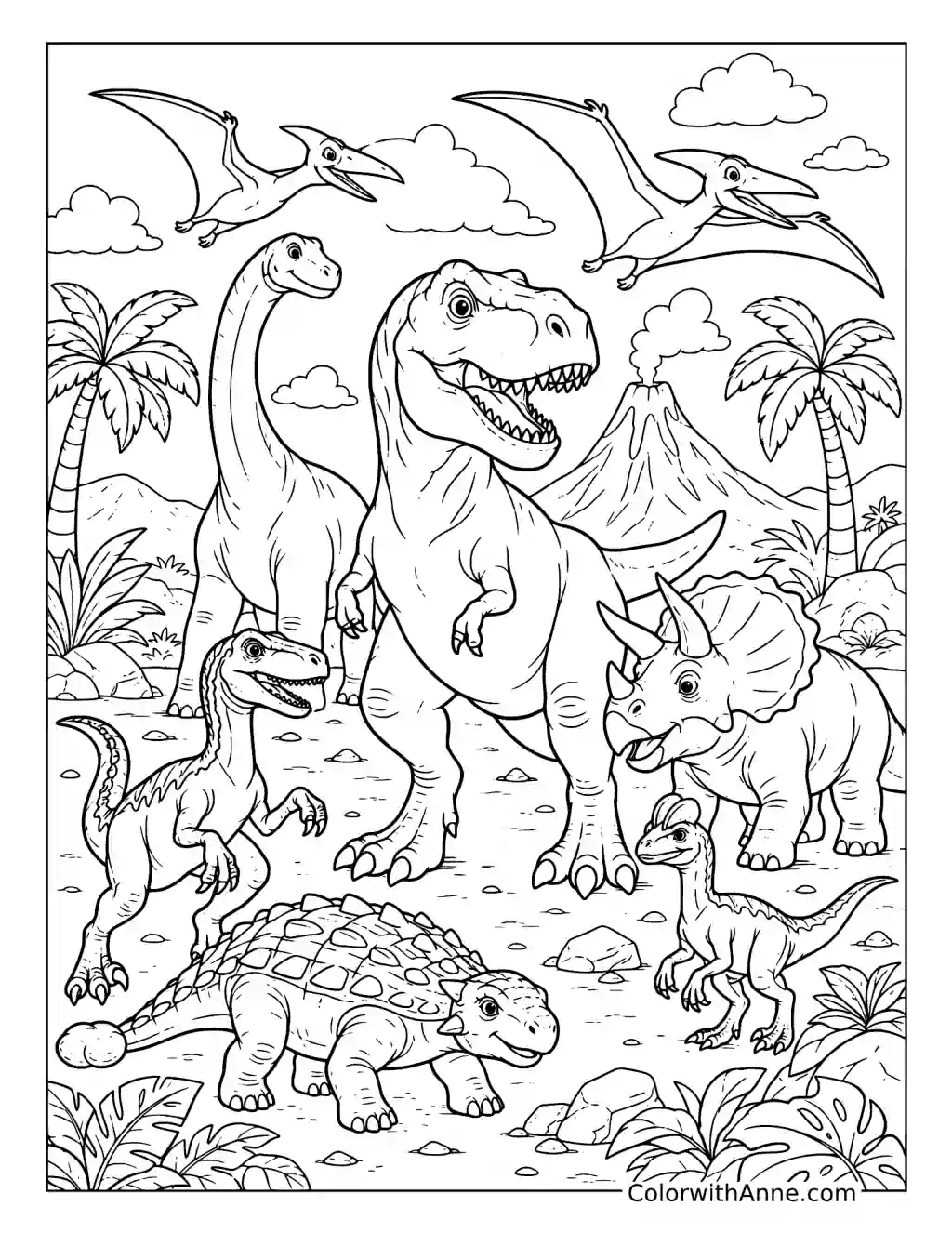
Jurassic Park coloring pages give dinosaur fans a more leisurely return to that fascination. Away from the suspense, there is time to appreciate the shapes that made the animals so memorable. A page may prompt an old discussion about which dinosaur stole the scene, with the T. rex usually receiving a very confident nomination.
Free Printable Jurassic Park Coloring Pages
Click any coloring page below to open the PDF, then print on US Letter or A4 paper.
Did you find what you needed?
Help us choose what to create or improve next.
Coloring Ideas for Jurassic Park Pages
Try one of these coloring ideas, or use them as a starting point for your own.
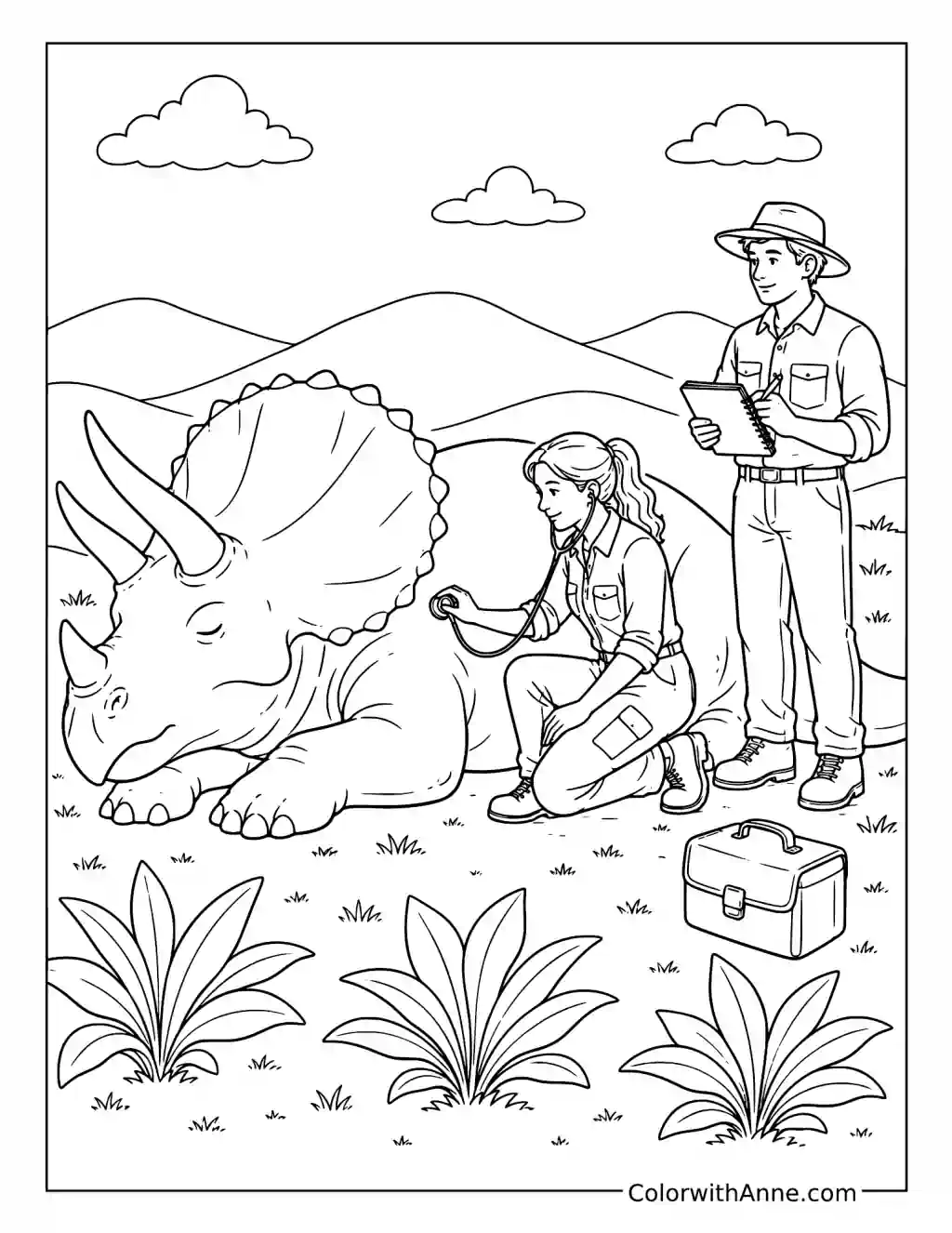
Pause the Adventure for Ellie’s Triceratops Visit
Dr. Ellie Sattler kneels beside a resting Triceratops while another person stands nearby. The equipment on the ground shifts attention from spectacle to care.
Dusty brown or olive skin could suit the Triceratops, with softer earth colors around it. A clearer accent on Ellie’s clothing would help the human figures remain visible beside the enormous dinosaur.
Use the picture to notice how differently the people and dinosaur occupy the space. Ellie’s close attention gives this scene its interest; it does not need an added chase.
Make the Gates Feel Enormous
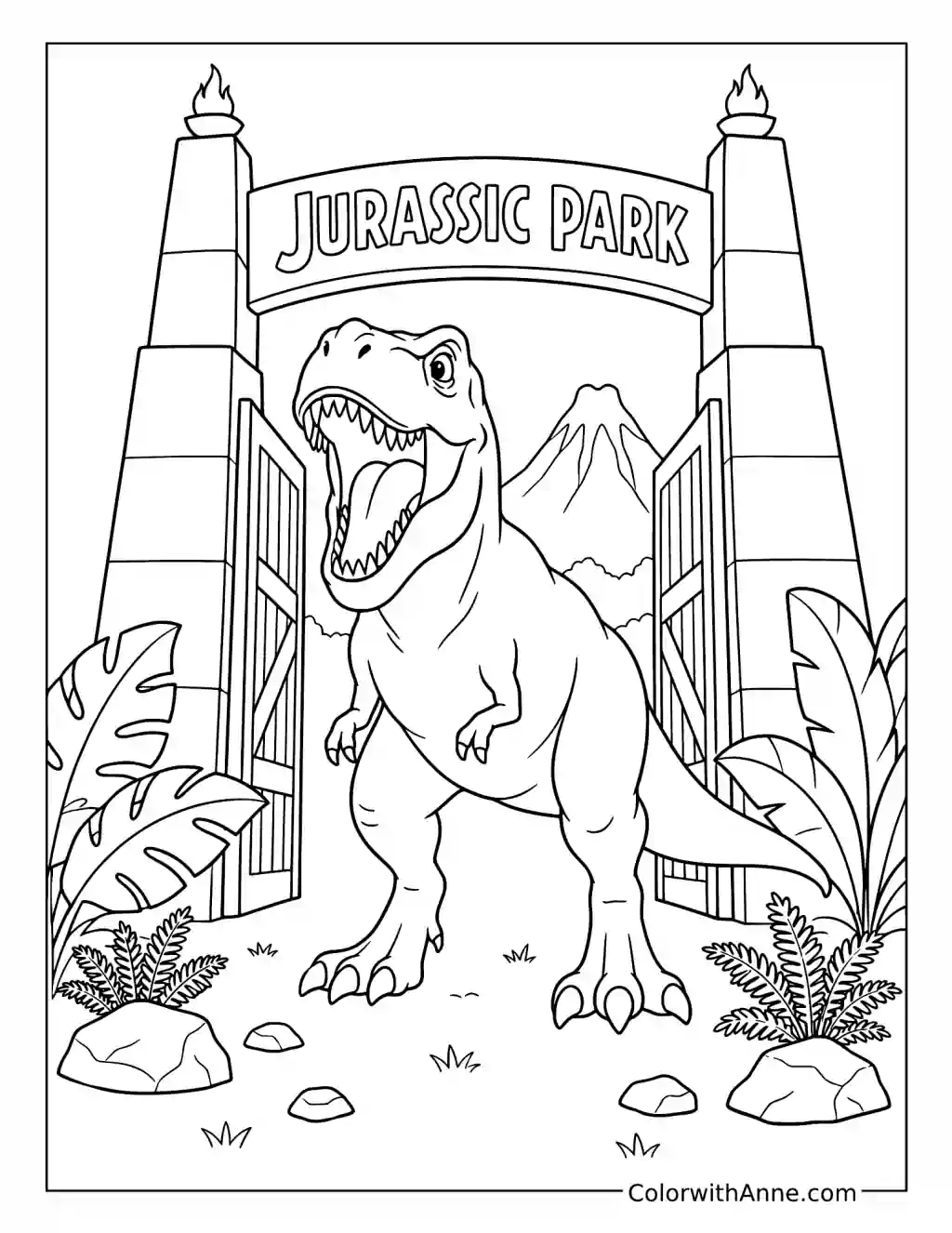
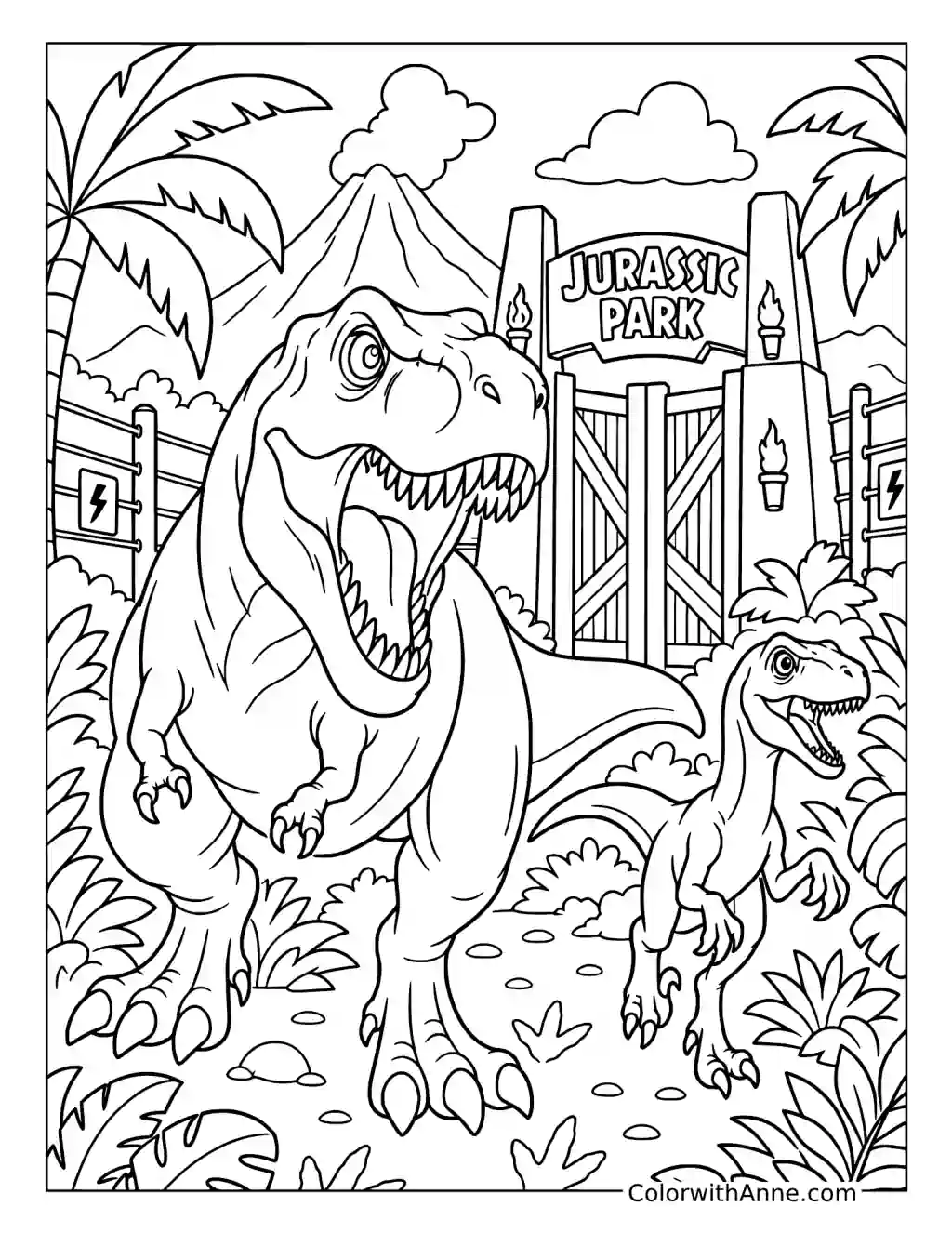
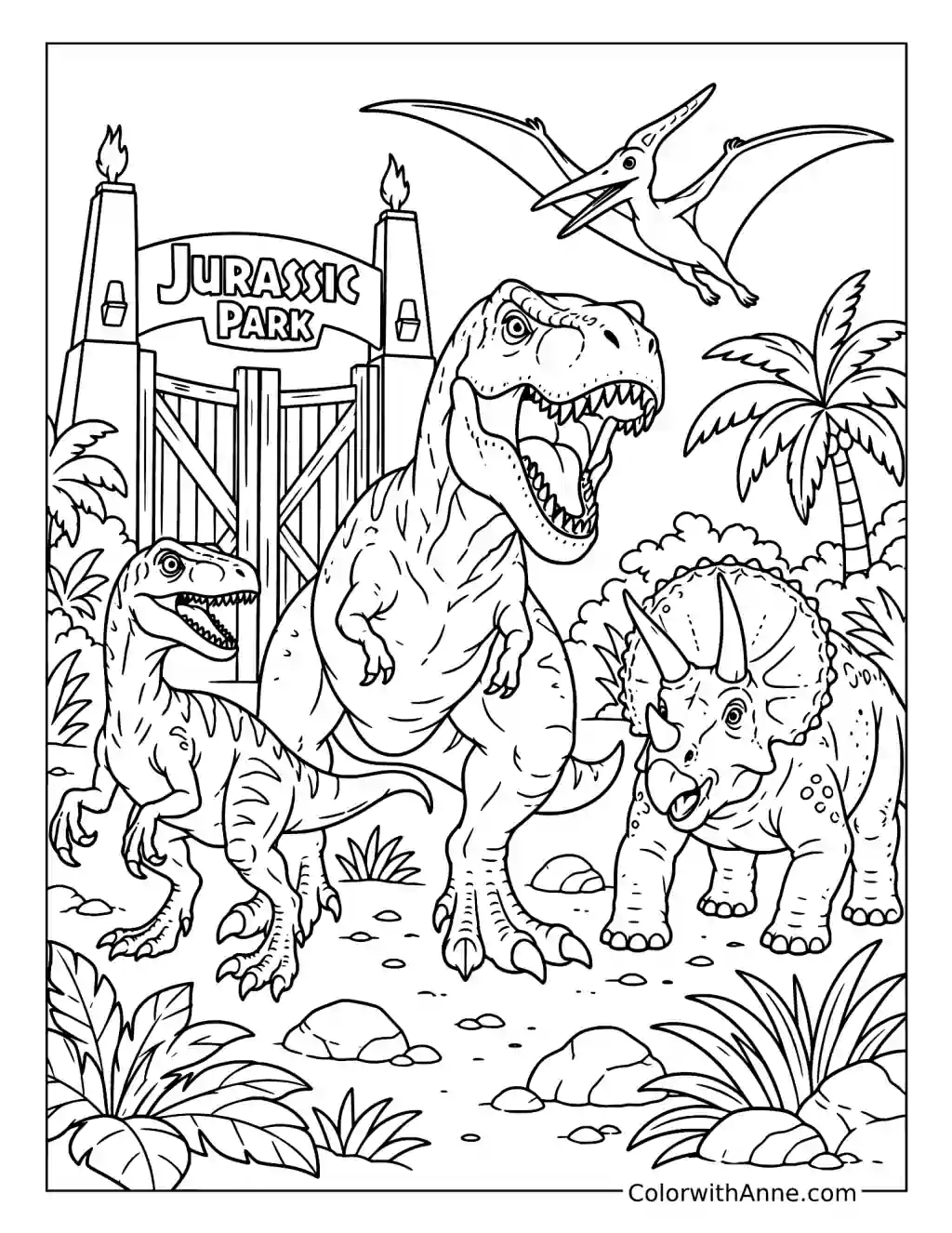
A roaring T. rex stands beneath the Jurassic Park entrance, framed by tall stone pillars. The sign makes this an unmistakable arrival scene.
Warm gray pillars could frame an olive or brown dinosaur, with darker greenery near the lower corners. A lighter opening behind the T. rex would help its head stand out.
Imagine this as the park’s entrance poster. Keep the sign readable and let the dinosaur remain the main attraction; extra lettering would have a difficult time competing with those teeth.
Put the River Between the Viewer and Spinosaurus
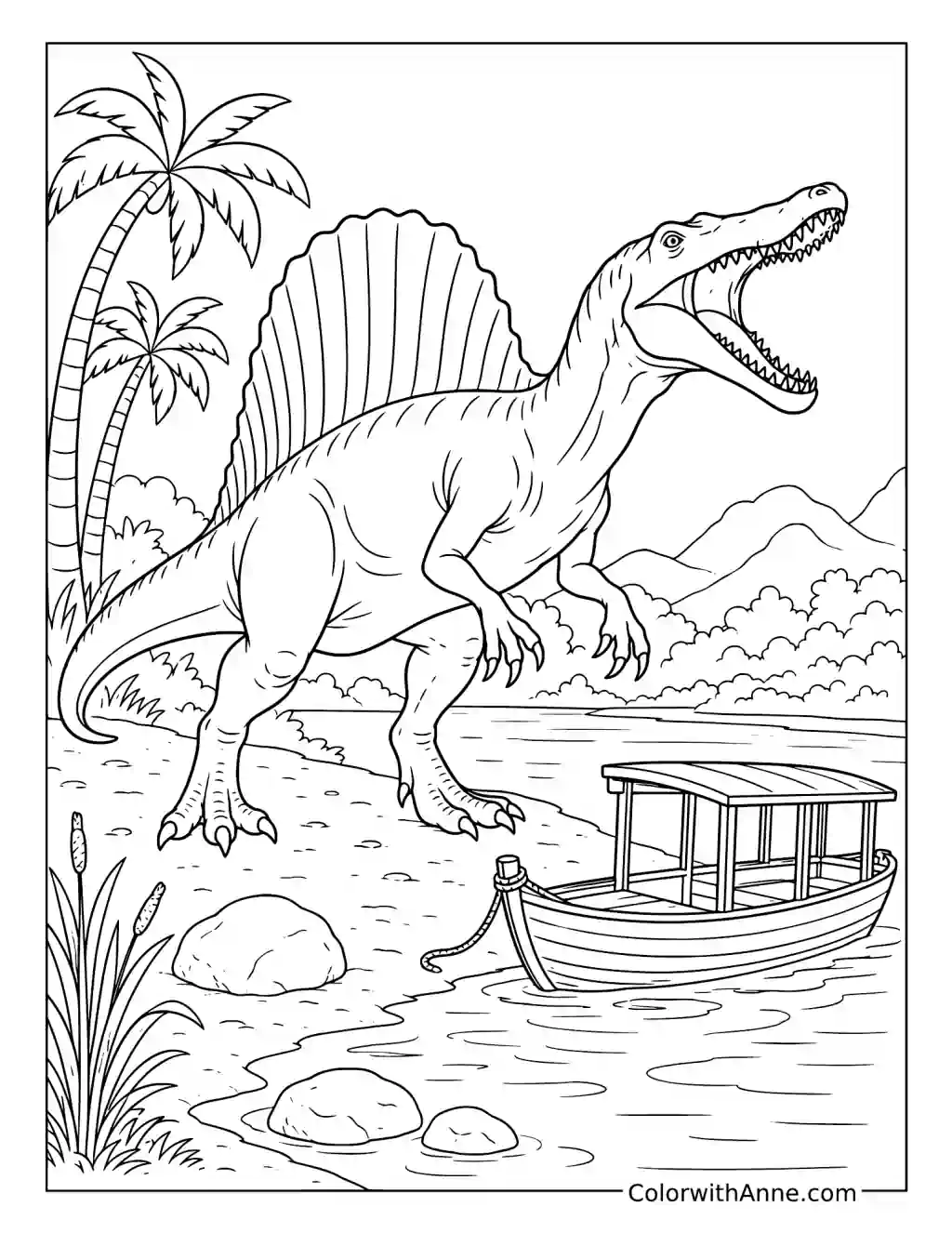
Spinosaurus stands on the riverbank beside a small boat. That little vessel makes the dinosaur’s size feel considerably less theoretical.
A rust-colored sail against muted green skin could create a strong silhouette. Cooler blue water would separate the foreground from the bank without making the river seem more important than the dinosaur.
Look at the picture from the boat passenger’s imagined viewpoint. The gap between boat and bank already supplies tension, so the scene can stay effective without adding more danger.
Look Around the Visitor Center Before Moving On
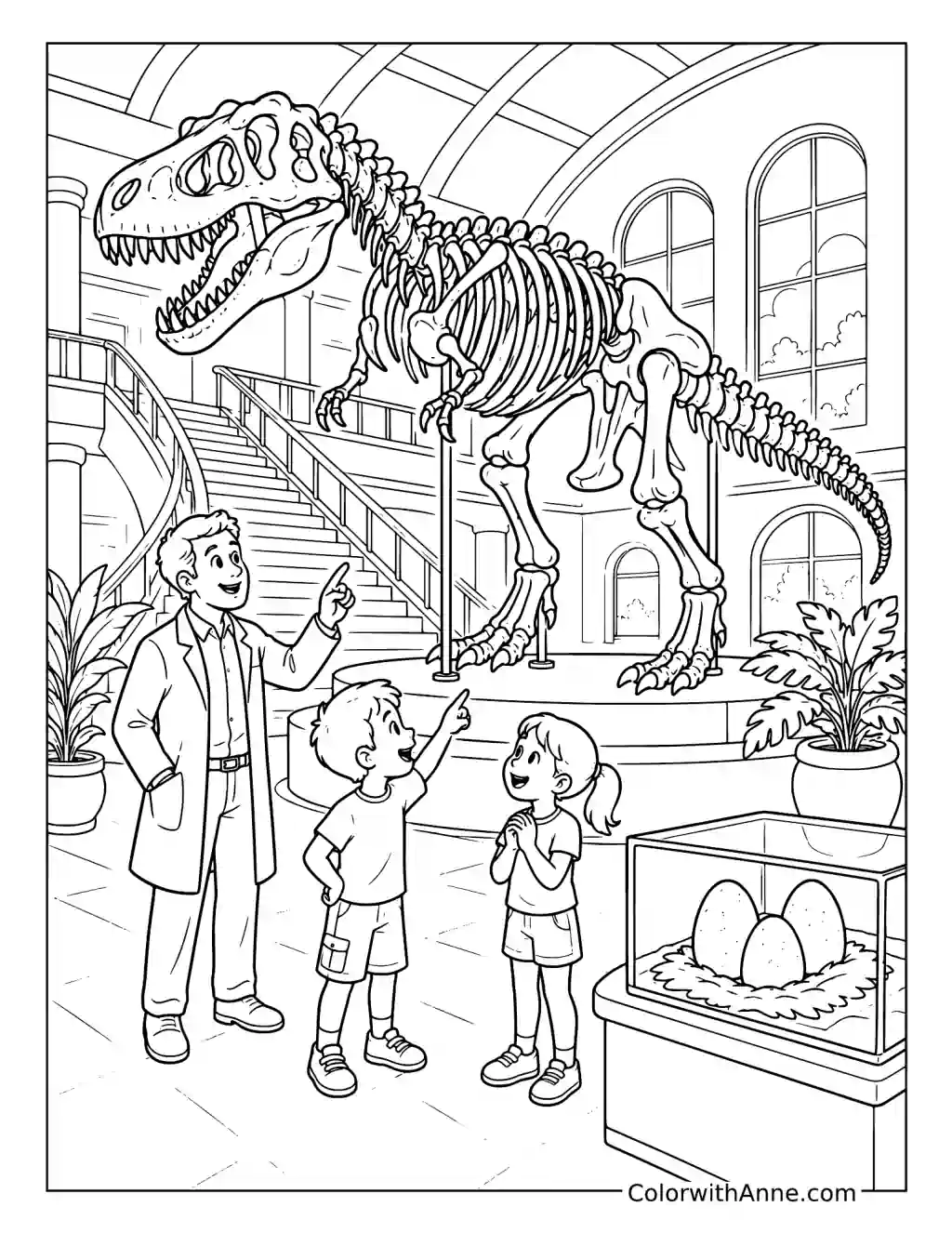
Visitors look up at a towering dinosaur skeleton, with an egg display nearby. The room offers a quieter kind of discovery than the outdoor encounters.
Pale bone against a cooler interior could make the skeleton easy to follow. The visitors’ clothes could carry the brighter colors, helping the eye move between the display and its audience.
Trace the skeleton visually from skull to tail. On a future museum visit, try the same slow look before reading the label; the shape often raises the most interesting questions.
Follow the Brachiosaurus All the Way Up
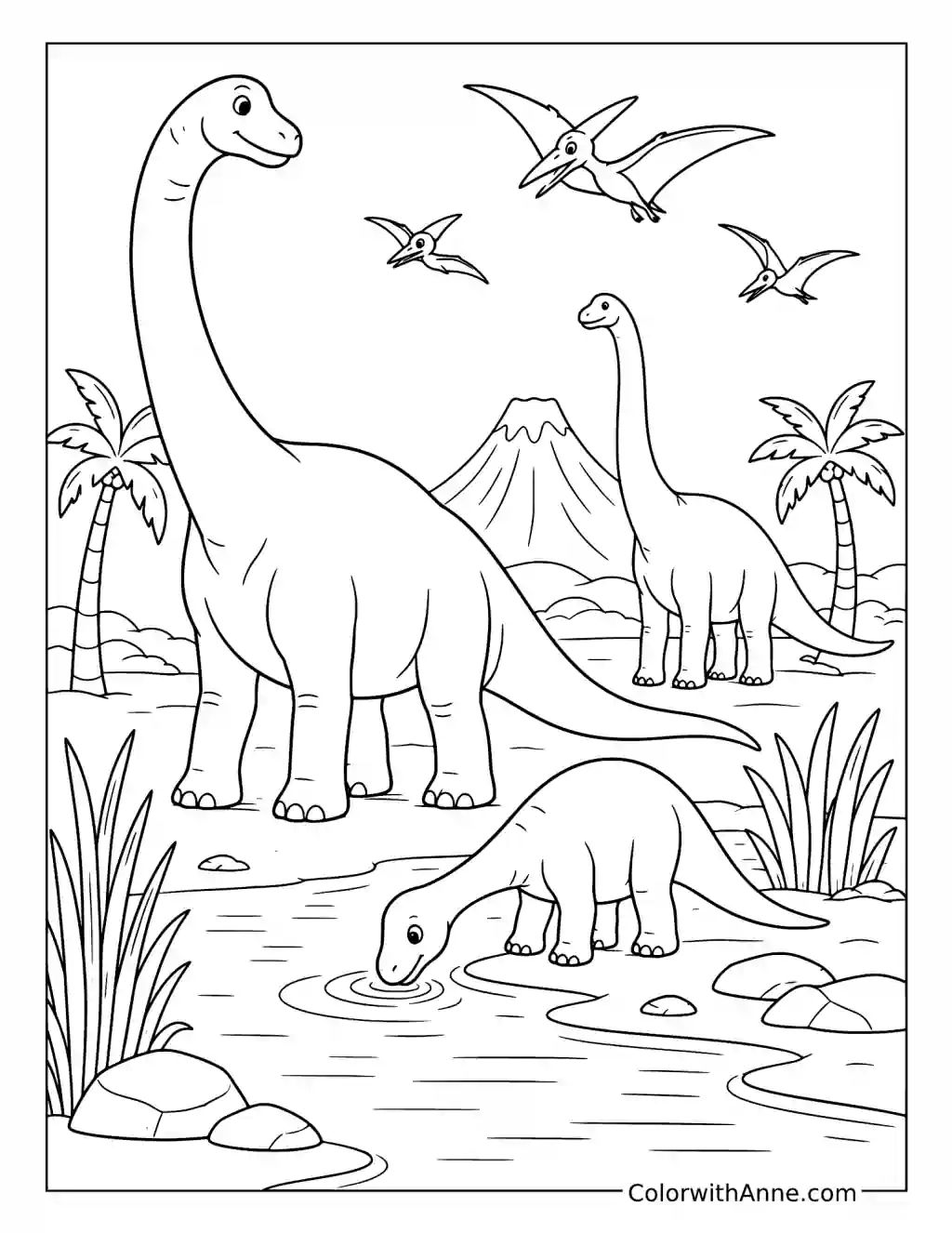
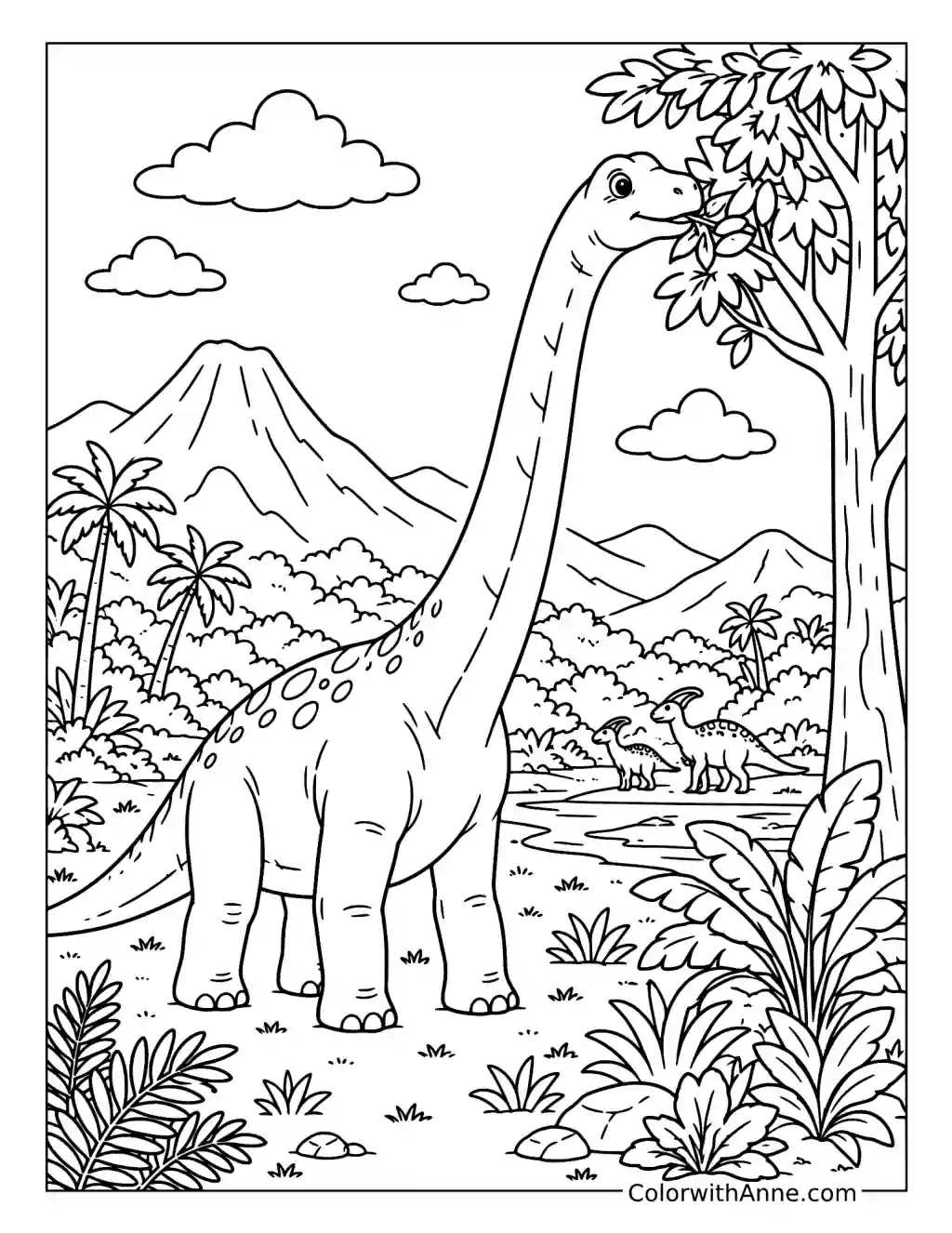
The Brachiosaurus reaches into the treetops, stretching the scene vertically. Its meal is far above the smaller plants near its feet.
A warm gray dinosaur could sit comfortably among several greens, with the highest leaves slightly brighter. A pale sky would leave enough contrast for the long neck to remain clear.
Start looking at the feet and follow the neck toward the leaves. Notice how the picture leads the eye upward; it is a good reminder that a dinosaur scene can hold attention without a roar.
Find the Raptors Before They Find Anything Else
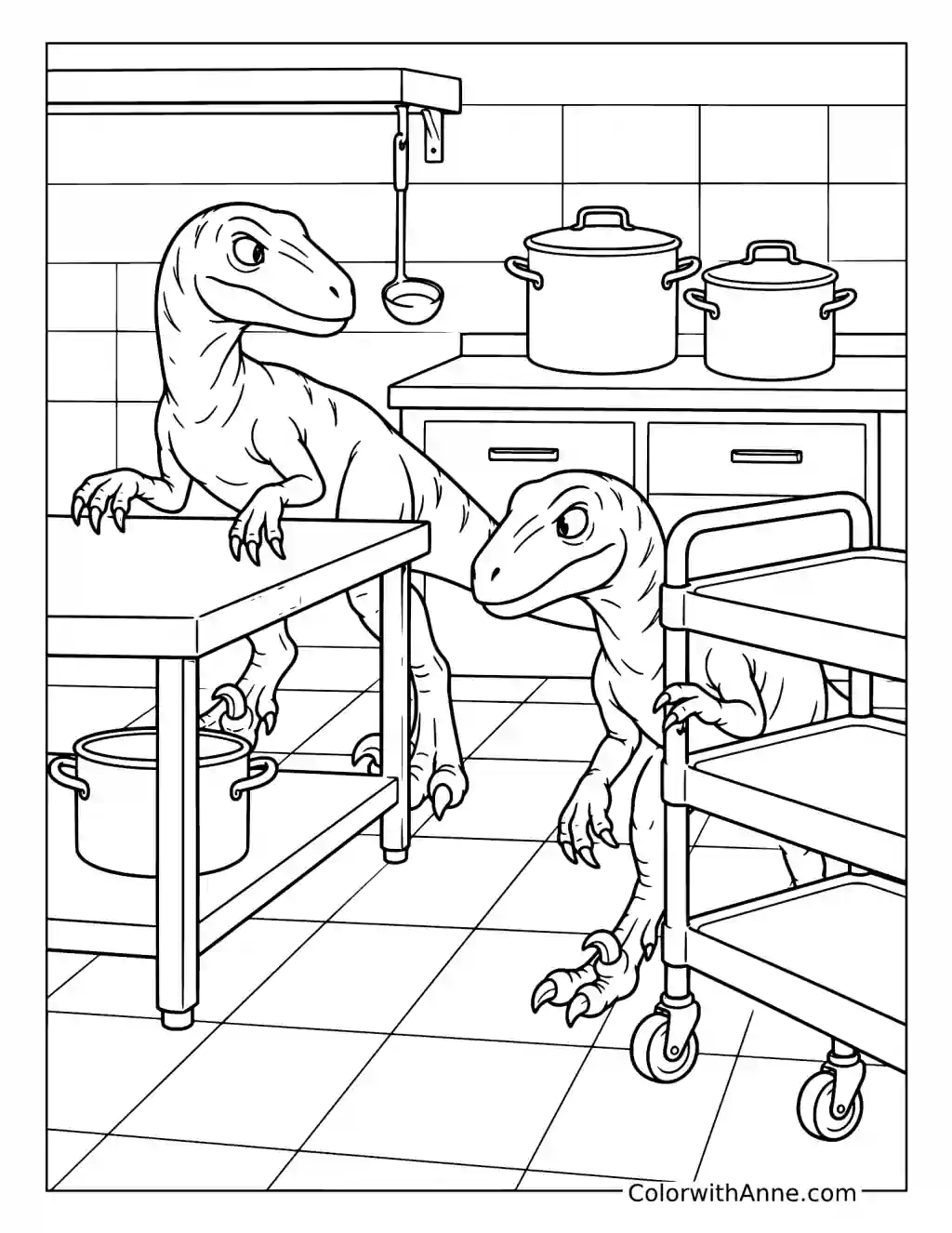
Two Velociraptors move among stainless-looking counters and kitchen equipment. The familiar setting makes their presence feel particularly wrong.
Cool grays could establish the kitchen, with brown or green raptors interrupting the hard surfaces. A few restrained reflections on the counters would suit the room without filling every surface with shine.
Try a silent spotting game with someone who knows the film: point out the details that make the kitchen recognizable before naming the scene. The counters and equipment do much of the work.
Let the Rain Set the Mood
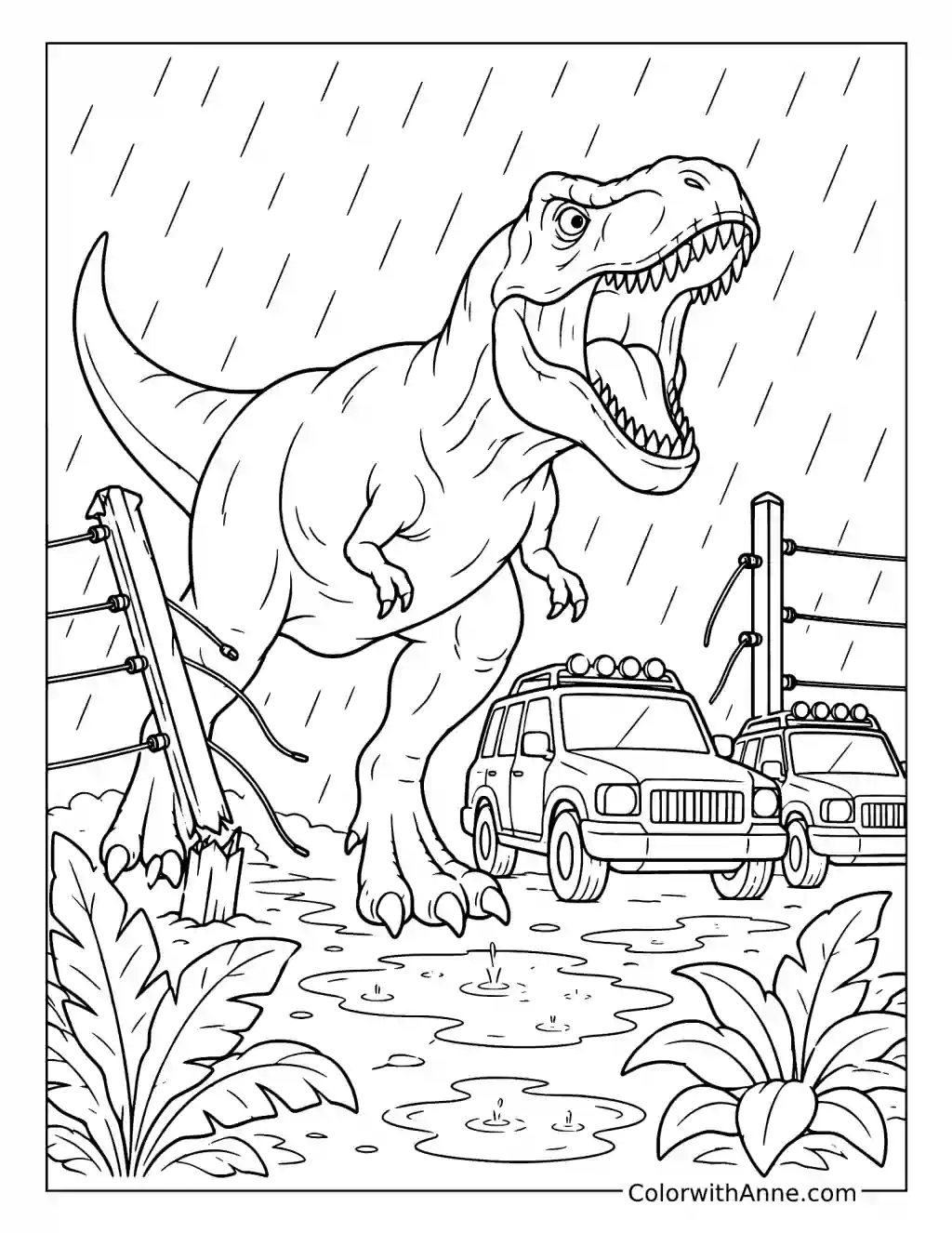
Rain falls around a T. rex, a vehicle, and the broken enclosure. This picture already contains the ingredients of a distinctly bad night at the park.
Blue-gray weather and a dark green dinosaur could establish the storm. A small amount of warmer color on the vehicle would give the eye somewhere to land among the rain and foliage.
Choose one area where light seems to reach the dinosaur and let the rest stay subdued. The scene will feel more convincing if every tooth, leaf, and raindrop is not equally bright.
Keep the Hatching Raptor at the Center
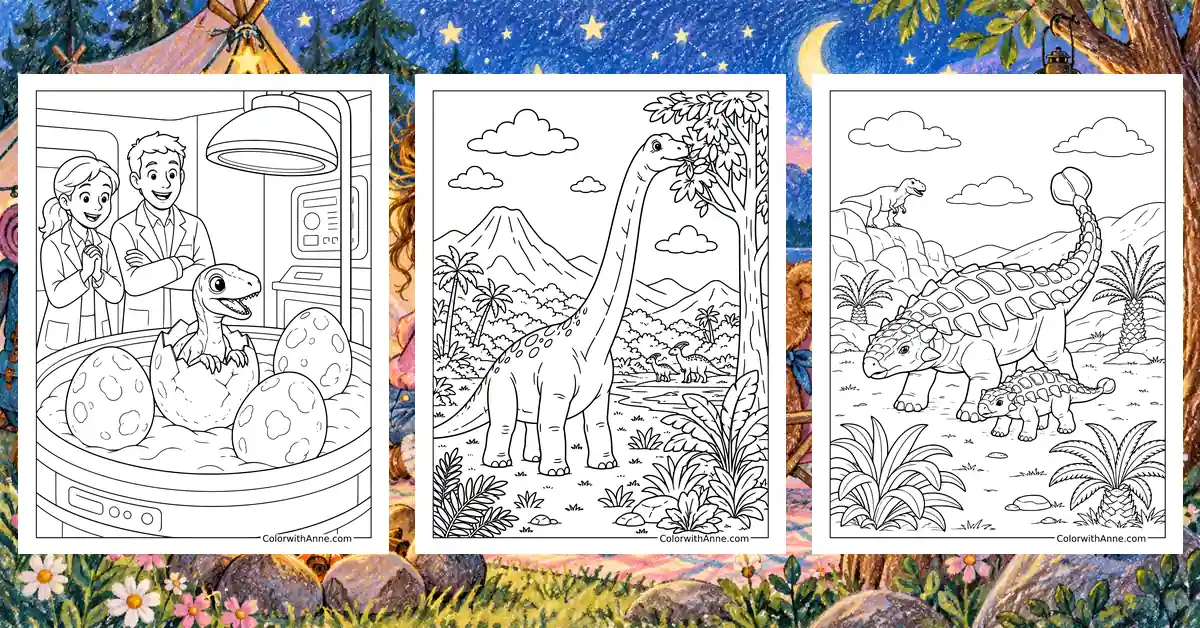
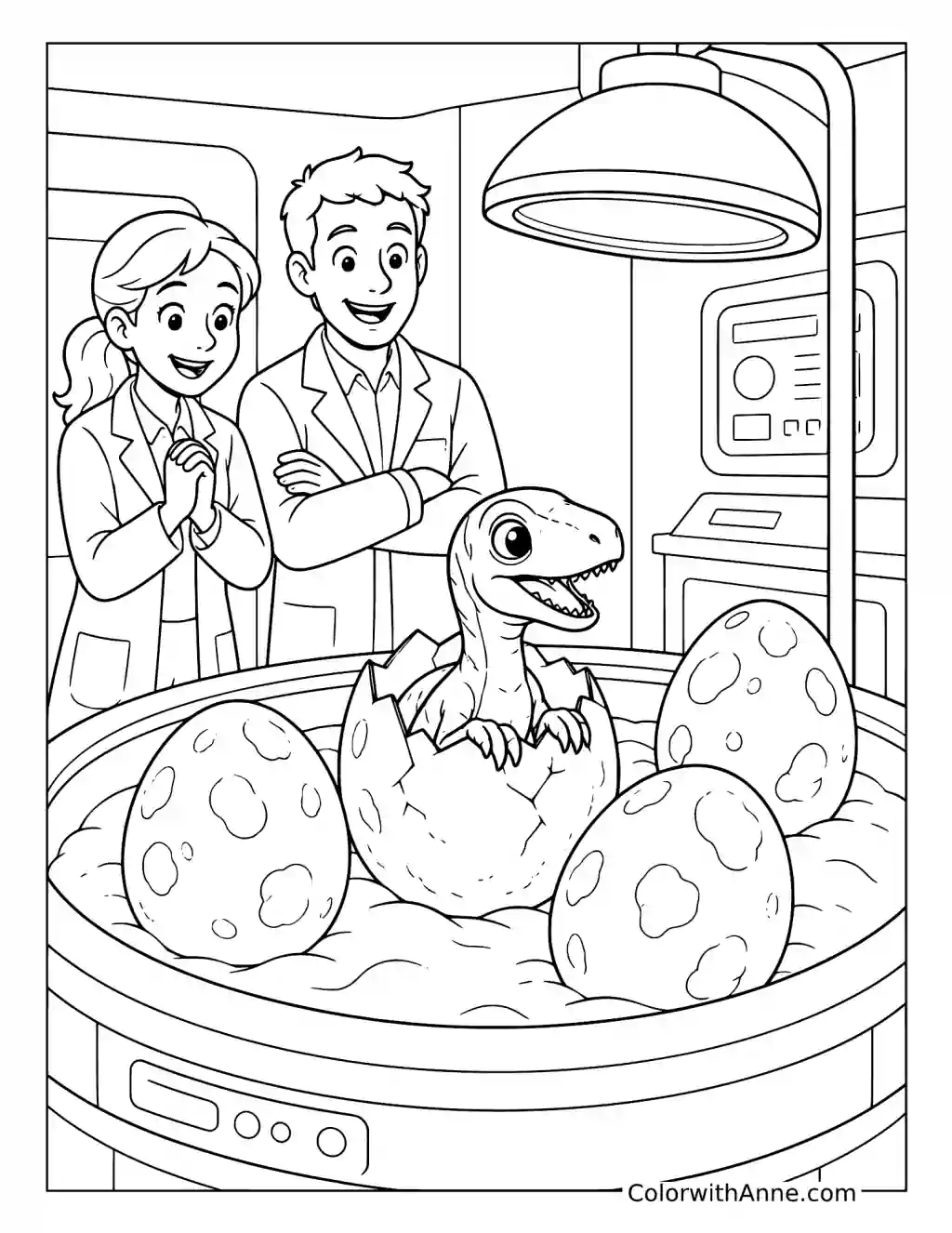
A baby raptor emerges from its egg while two observers watch beside the laboratory equipment. For once, the smallest dinosaur gets everyone’s attention.
Cream shells with soft brown markings could surround a muted green hatchling. Cooler laboratory colors would make the egg feel warmer and more central without needing a dramatic background.
Notice the contrast between the fragile shell and the substantial equipment around it. That is enough of a story for this page: something tiny has become the most important thing in the room.