
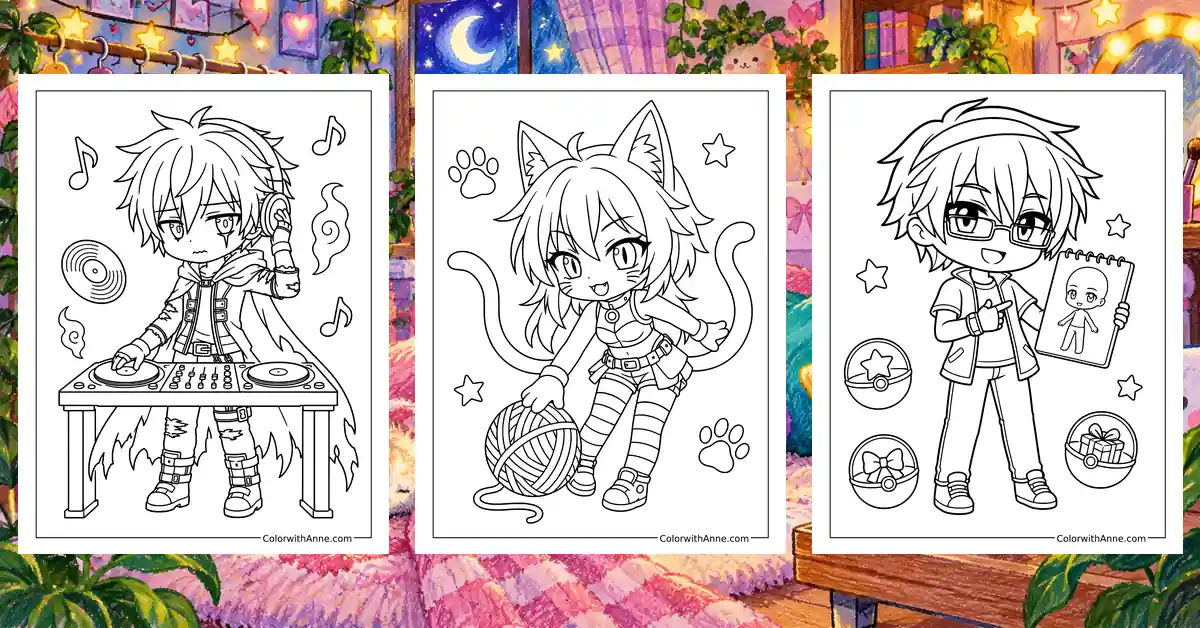
The hairstyle looked right until the character tried on a different outfit. Now the eyes need changing, too, and the friend waiting to see the finished Gacha Life character will have to wait a little longer. Anyone who enjoys the character editor knows how easily a small adjustment becomes an entire afternoon.
Gacha Life coloring pages carry that same interest in appearance and personality onto paper. An expression can help a fan decide whether a character is shy, mischievous, or quietly planning something. Before long, there may be a whole explanation for the look, complete with friendships that need explaining as well.
Free Printable Gacha Life Coloring Pages
Click any coloring page below to open the PDF, then print on US Letter or A4 paper.
Did you find what you needed?
Help us choose what to create or improve next.
Coloring Ideas for Gacha Life Pages
Try these creative ideas to make the most of your coloring sheets.
Plan the DJ’s Entrance
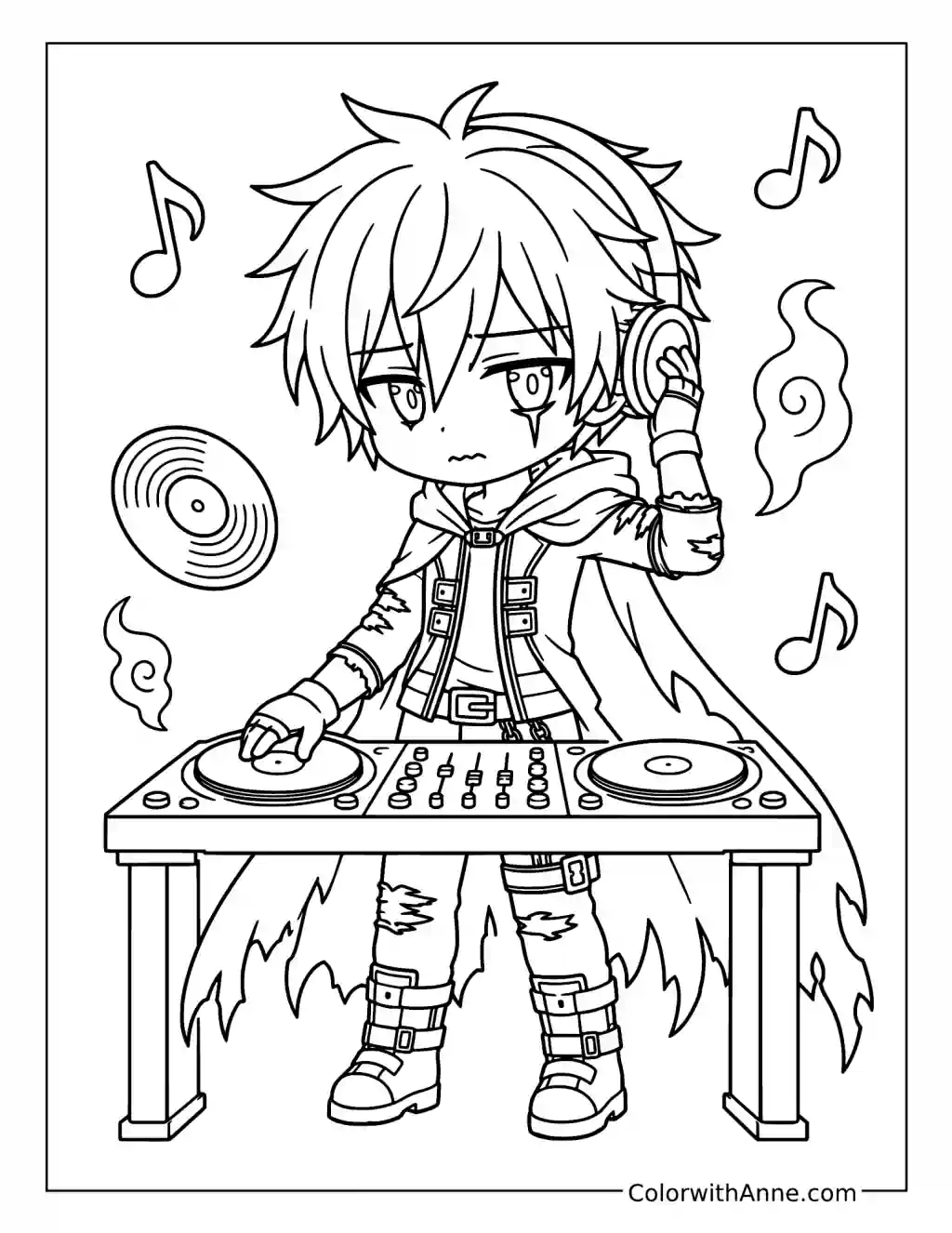
Phantom works behind the DJ controls with headphones on and music notes around him. The booth, layered outfit, and raised hand give the character plenty to do before an audience is even drawn.
Dark clothing with violet or electric blue accents would suit the scene. A few brighter controls could echo the headphone details without making every button equally prominent.
Use the illustration as the starting frame for a character entrance. Sketch three quick views: a hand reaching for the controls, the booth lighting up, and the full character appearing. Deciding when the music would begin makes the little sequence more purposeful, and gives a Gacha edit or comic a clear opening to build from.
Settle an Original Character into the Café
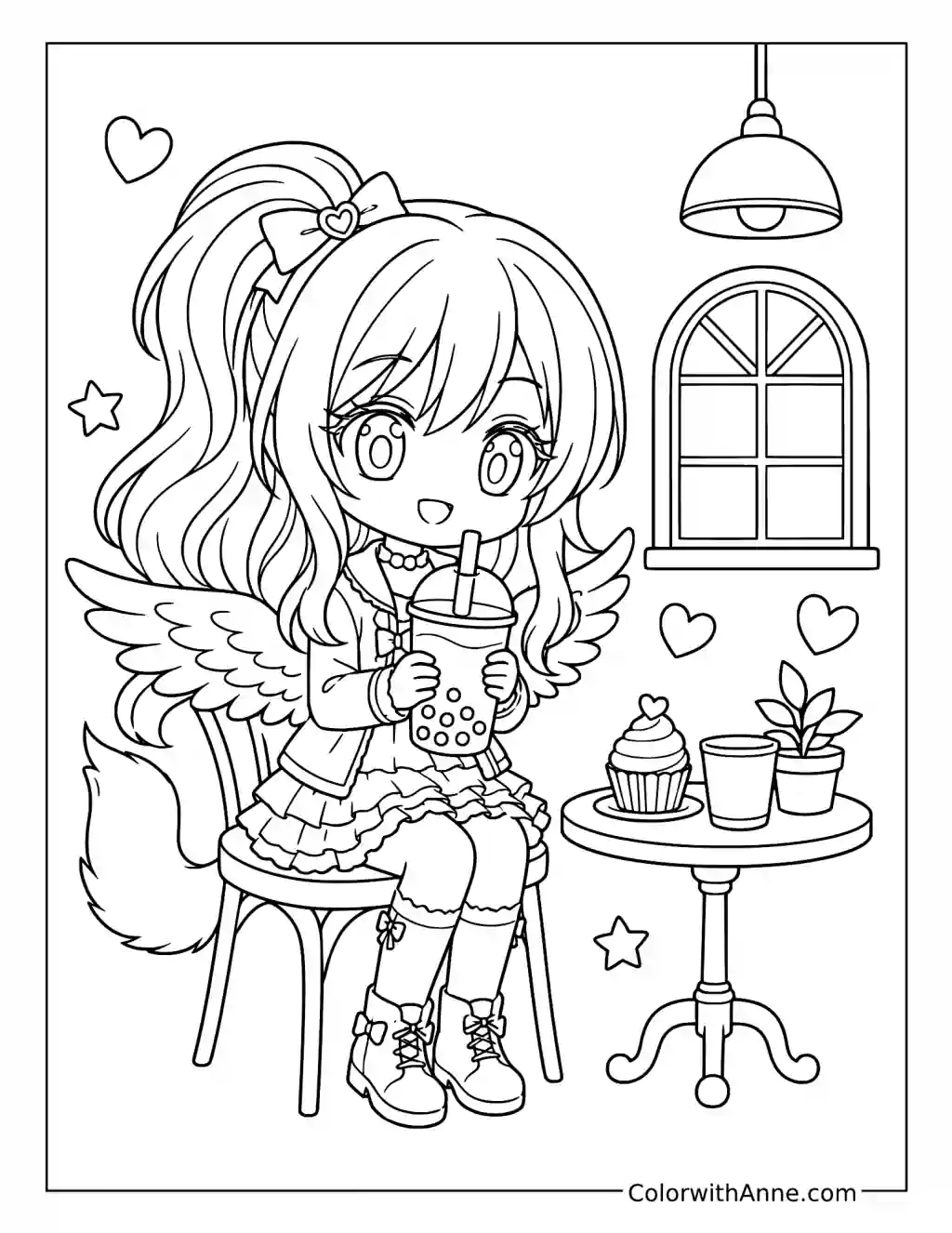
The winged girl sits with her bubble tea beside a little table, with a cupcake, plant, and hanging lamp nearby. Her wings have found room behind the chair, which seems a useful detail for any café hoping to welcome her regularly.
Soft peach, cream, and sage green would make the café feel comfortable. A stronger hair or outfit color could give the character her own presence within it.
For an original character, decide what makes this their usual café stop. Perhaps they draw there after school or always choose the same corner for meeting a friend. Add one small clue to the scene, such as a sketchbook or folded note. A specific habit can tell more about a character than a long list of personality traits.
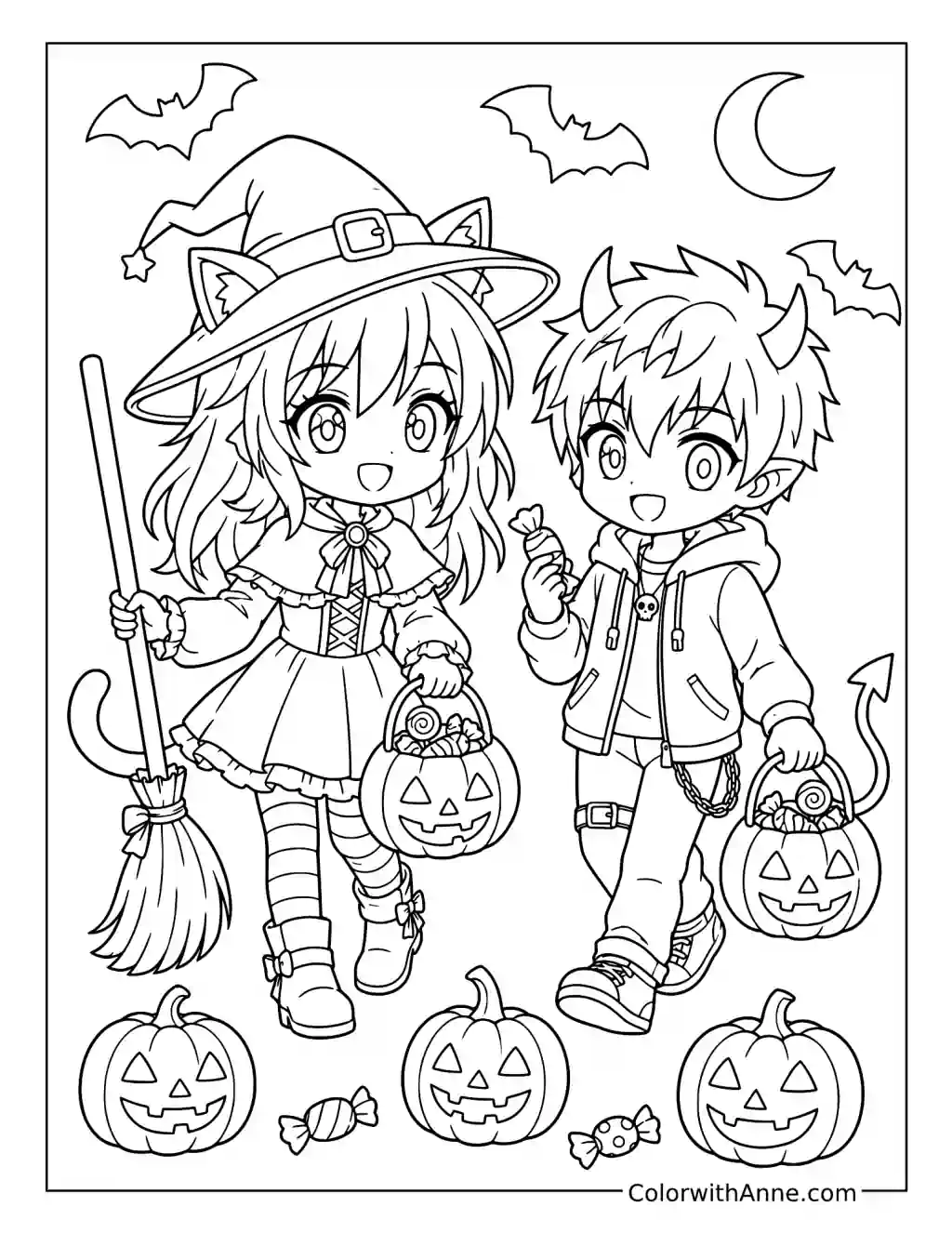
Coordinate the Halloween Pair
The cat-eared witch and horned boy stand among pumpkins with their treat bags ready. The broom, pointed hat, and little tail give each costume a clear identity without needing a crowded Halloween setting.
Purple and orange would suit the witch, with black and red for her companion. Repeating one small accent across both outfits could make them feel deliberately coordinated.
Try planning matching costumes around things already available: a dark outfit, a paper hat, or simple ears attached to a headband. Use the page to work out the color connection before making the accessories. Two different characters can look like a pair through one shared detail, without requiring identical costumes.
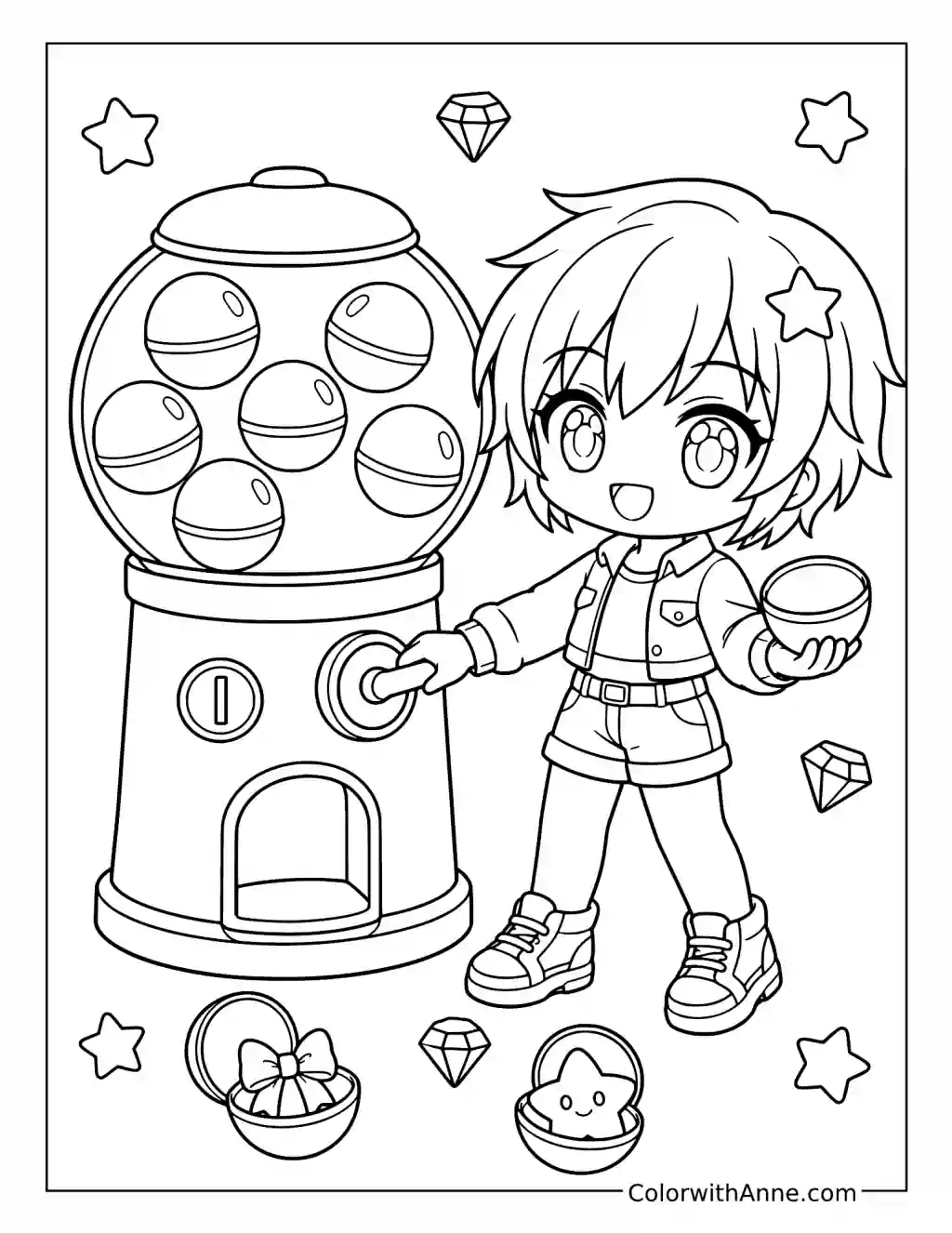
Let the Capsule Choose an Accessory
The character turns the capsule machine’s handle while little surprises wait below it. The rounded capsules and small objects make this a cheerful picture of the moment before finding out what has appeared.
Bright capsules would look lively against a simpler machine color. Try red and cream for the cabinet, with blue, yellow, or pink among the smaller surprises.
Make a few tiny accessory drawings and fold them into a bowl. Pick one without looking, then work it into an original character design. A star clip, unusual bag, or pair of oversized glasses can become the starting point. The random choice gives the character a small surprise to respond to, just like the machine in the picture.
Show the Moment the Magic Takes Over
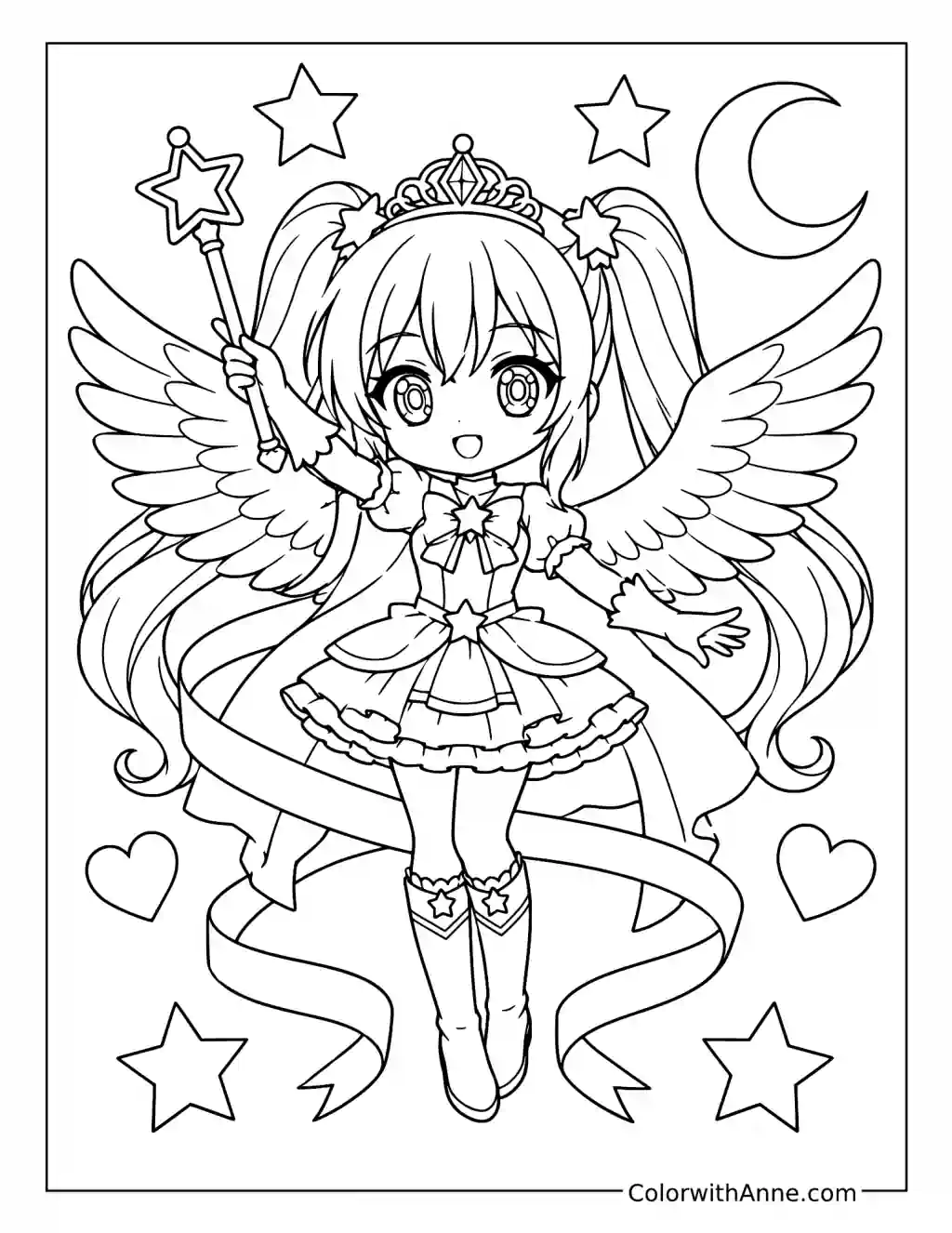
The magical girl floats among ribbons, stars, and hearts, with her wings spread and a crown above her hair. The outfit has enough movement to feel as though the transformation has only just finished.
Pink, lilac, and pale gold would give a soft magical palette. A brighter jewel or ribbon detail could become the one feature that connects all the separate pieces.
Draw a simpler everyday version of the character beside the page. Keep two recognizable details in both forms, such as the hairstyle and a favorite accessory, then change the rest. Those shared features help the transformation feel like something happening to one person, rather than the arrival of an entirely unrelated character.
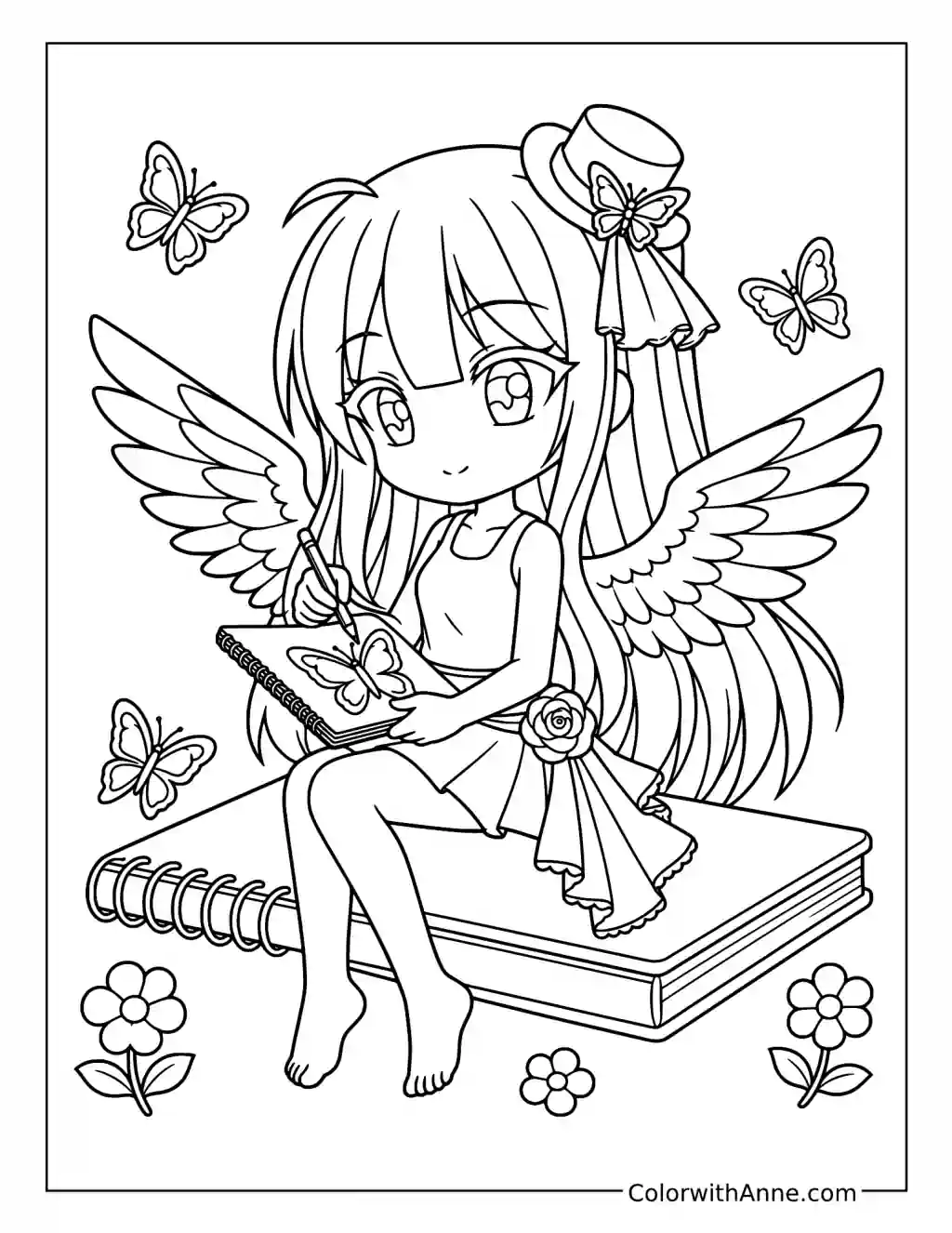
Leave a Butterfly in Midori’s Sketchbook
Midori sits on a stack of books with her sketchbook open and butterflies drifting nearby. The little drawing space in her lap gives this picture an inviting place to add something of your own.
Gentle greens and cream would suit the setting, with brighter butterflies above. The wings can repeat a few of those colors while the book pages remain mostly light.
Choose one butterfly from a photograph or nature book and make a small study of its wing markings. Then add a simpler version inside Midori’s open sketchbook. Working larger first makes the tiny drawing easier, and the finished page quietly shows what she has been paying attention to.
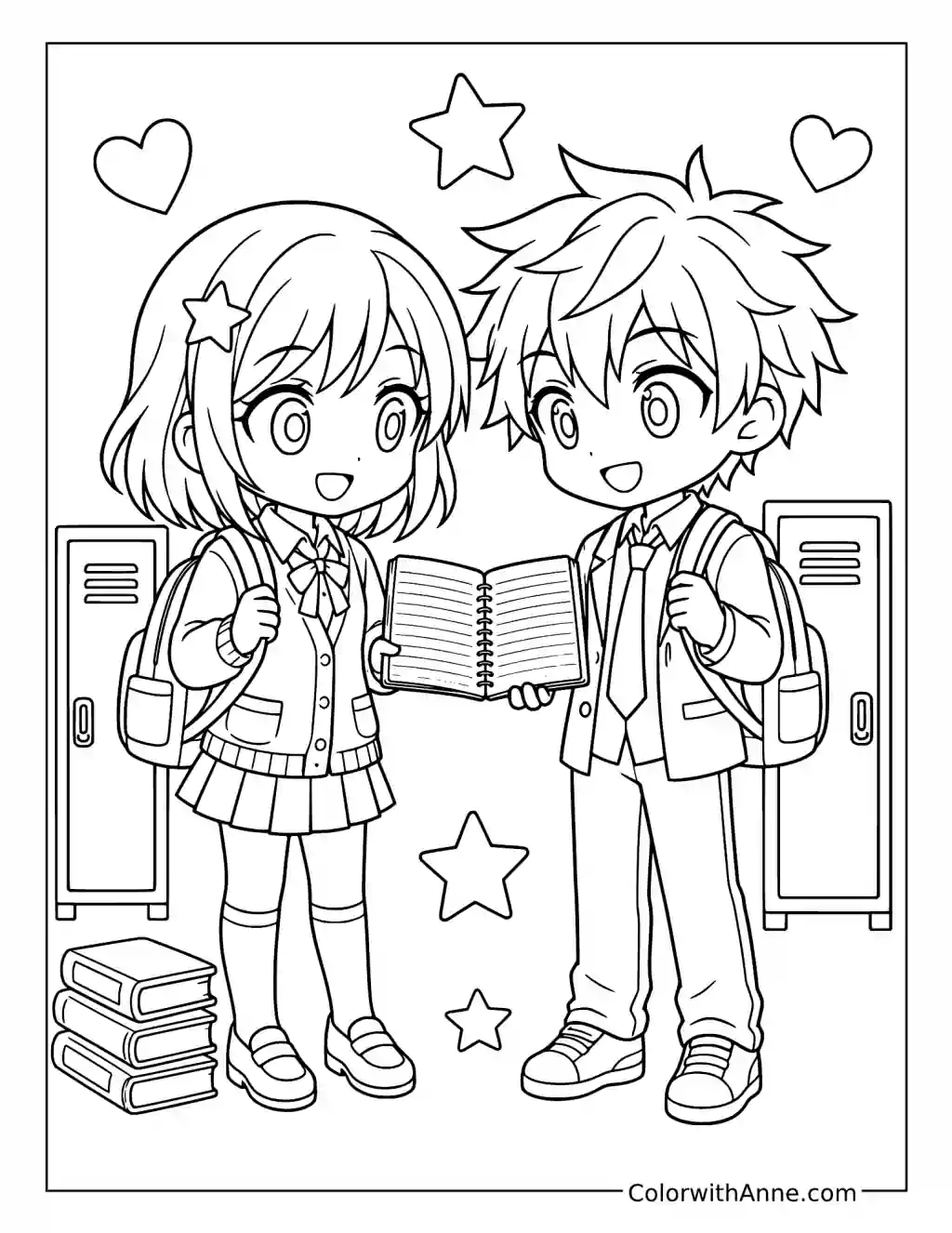
Put Something Real in the Shared Notebook
The two school friends stand beside the lockers with an open notebook between them. Books on the floor and the matching school setting make this feel like a conversation fitted into an ordinary day.
The uniforms could share a color while their hair and accessories remain different. A bright notebook cover would give the shared object a little extra character.
For a school friend, turn the blank pages into a small personal detail: a drawing of a club activity, a shared joke shown as a doodle, or a plan for something enjoyable after class. The finished picture can accompany a note. That tiny addition makes the friendship specific without needing to rewrite the whole scene.
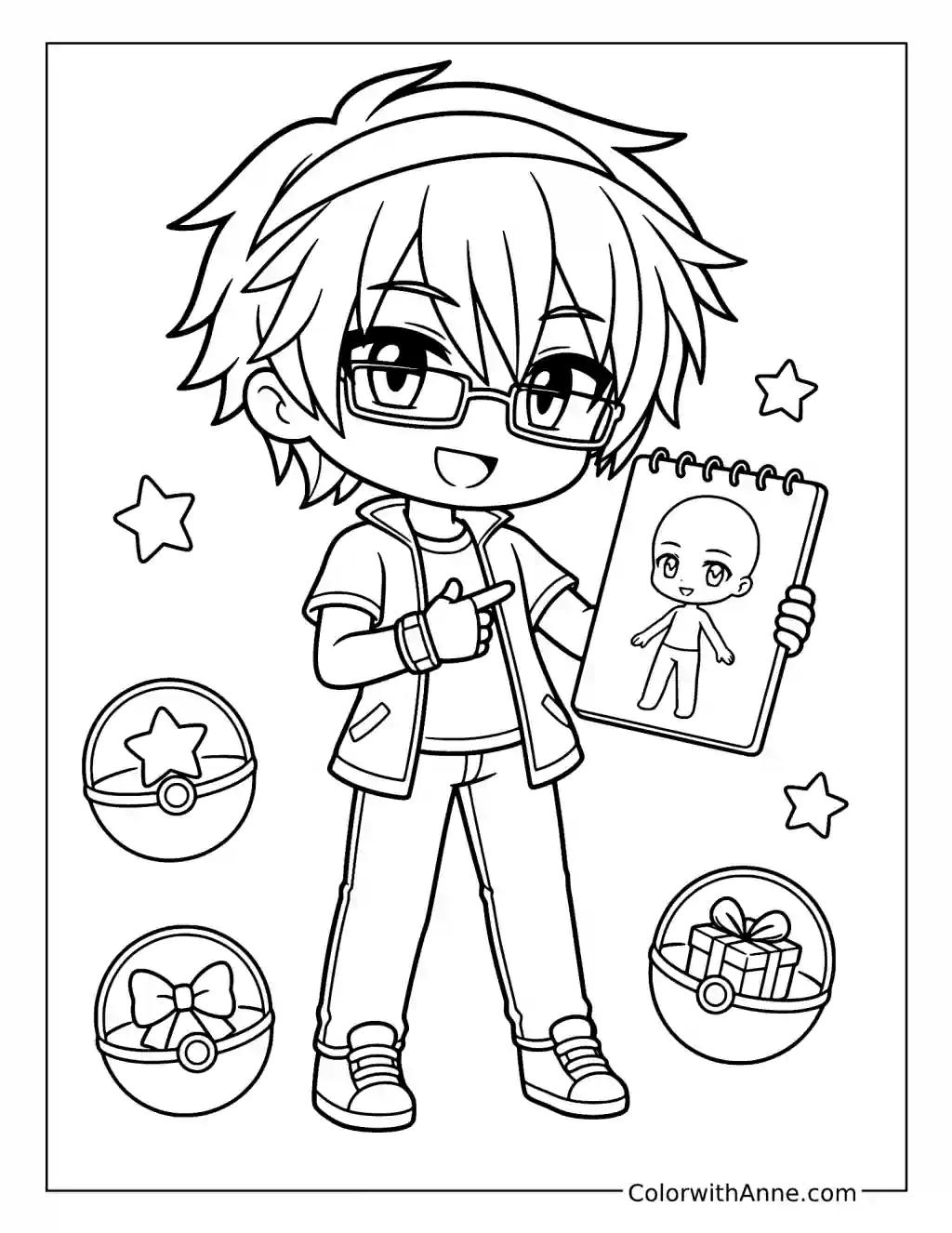
Work Out an Avatar Before Opening the Creator
Luni holds a character drawing with small outfit and character ideas around him. The page puts the making process in the picture, which makes it especially fitting for someone planning an original avatar.
Choose a main color and one accent before filling the outfit. Keeping a little neutral space between them can make the accessories easier to distinguish.
Sketch a small avatar beside the page and decide on its most recognizable feature first. It might be a silhouette, hairstyle, or unusual accessory. Add other details only when they support that choice. The sketch can become a useful reference when recreating the character digitally, especially if several similar versions have begun to blur together.