
Someone has announced the last match of the evening, but the headset stays on after it ends. A teammate wants another round, and there is a narrow defeat that apparently needs correcting. Call of Duty has a way of making the clock beside the screen seem less persuasive than the people in the lobby.
Call Of Duty coloring pages offer a change of pace once the controller is finally set down. Familiar military gear can bring back a favorite mission without requiring another attempt. The match may be over, though the discussion about what everyone should have done differently can continue for quite a while.
Free Printable Call Of Duty Coloring Pages
Click any coloring page below to open the PDF, then print on US Letter or A4 paper.
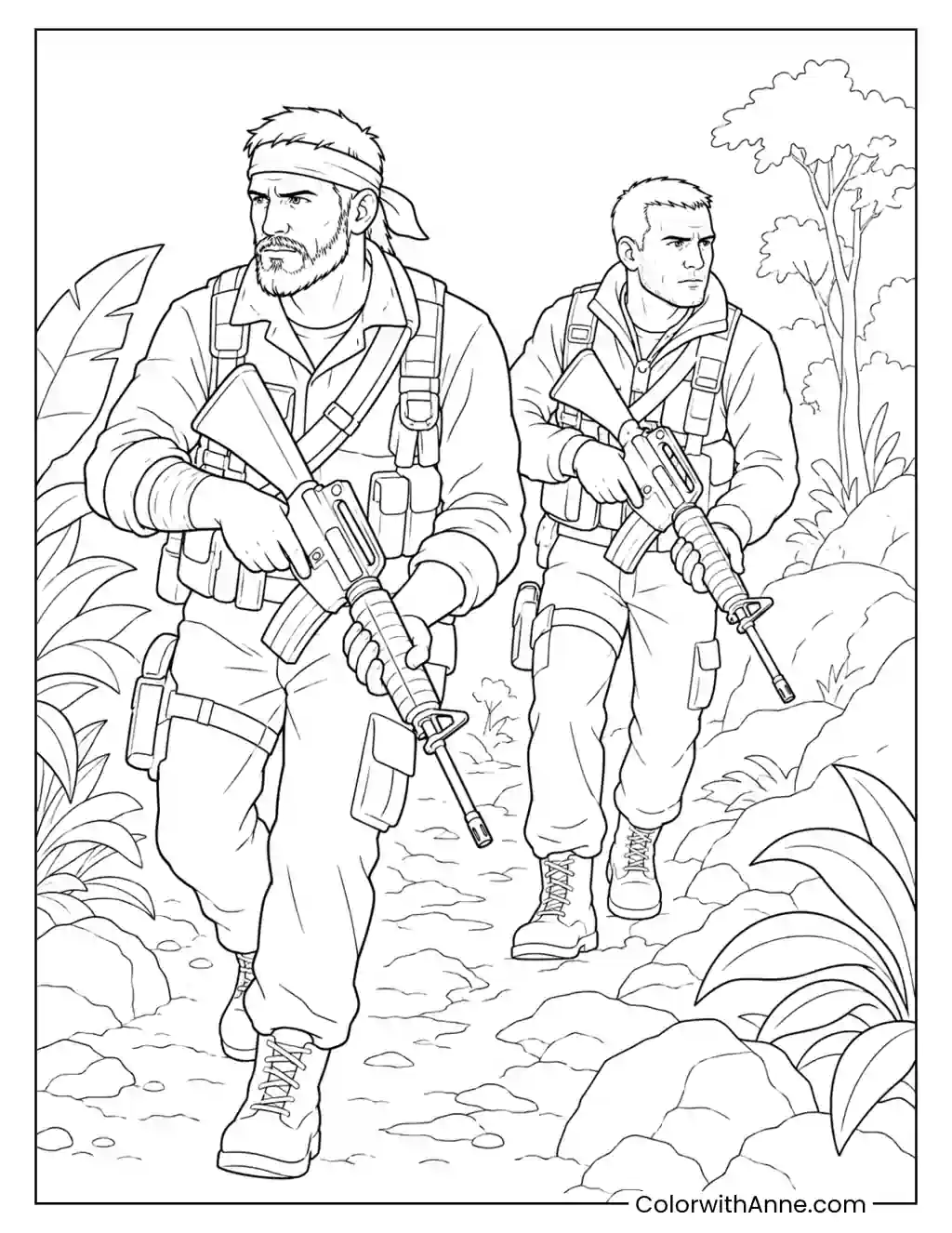
Did you find what you needed?
Help us choose what to create or improve next.
Coloring Ideas for Call Of Duty Pages
Try one of these coloring ideas, or use them as a starting point for your own.
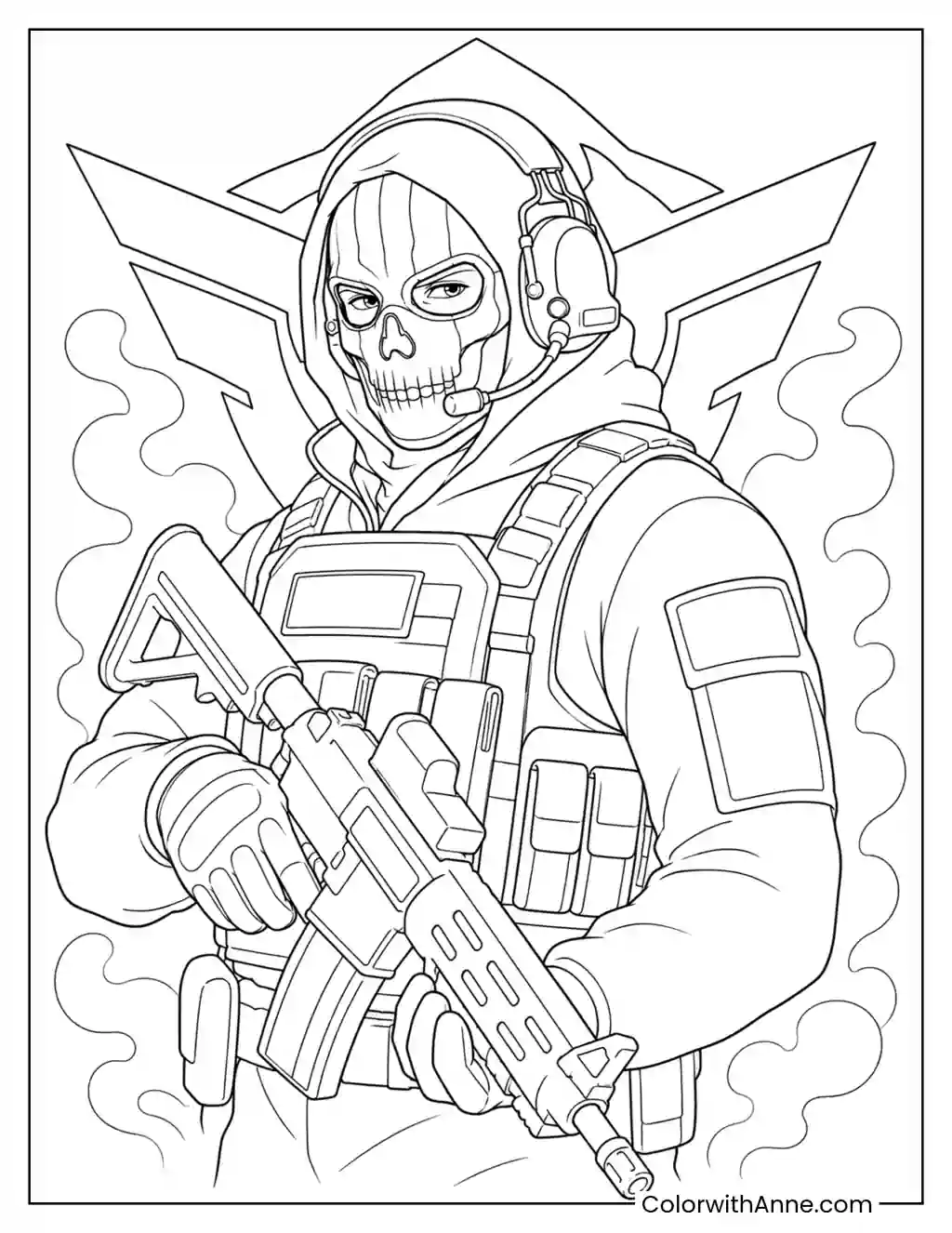
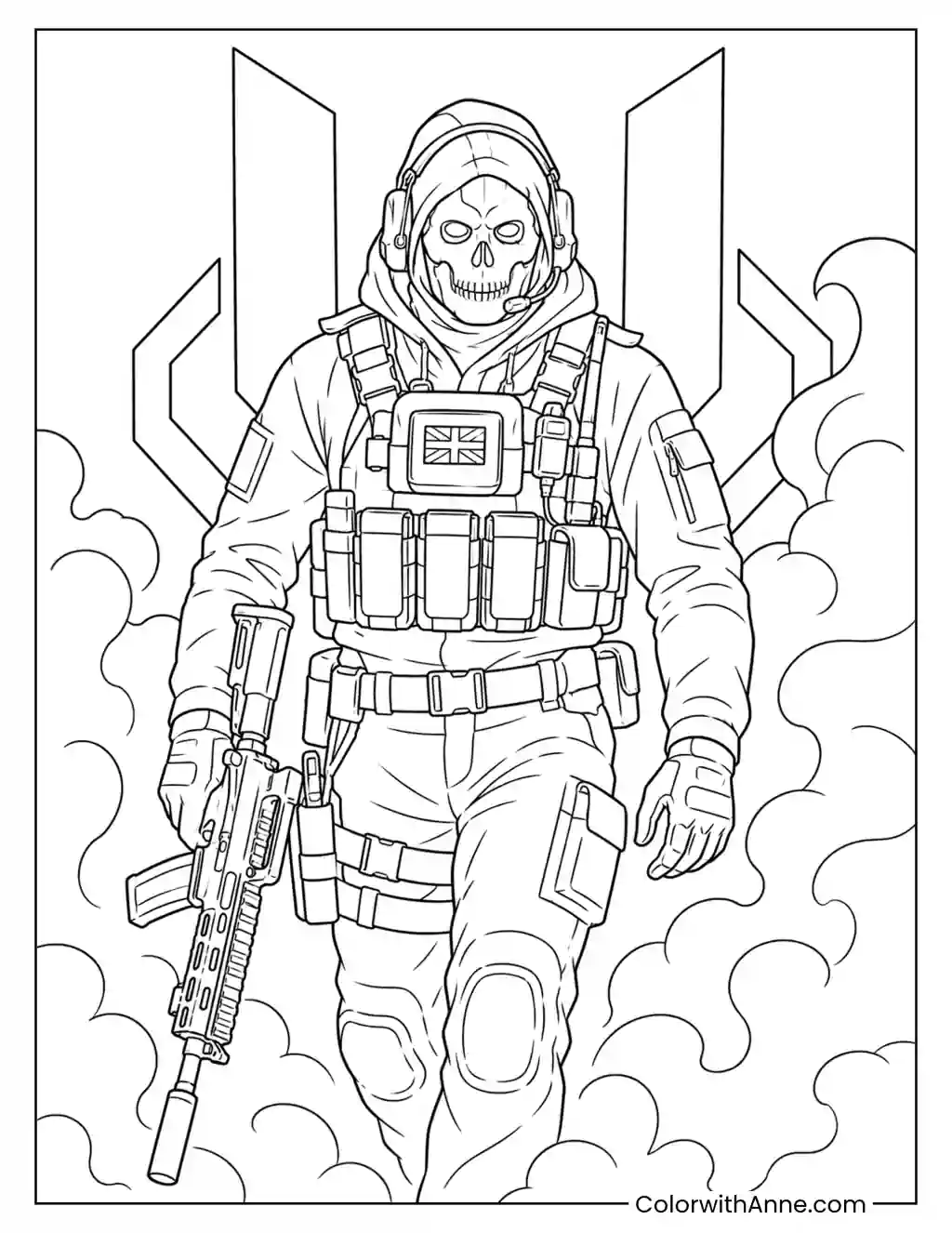
Keep Ghost’s Skull Mask in Focus
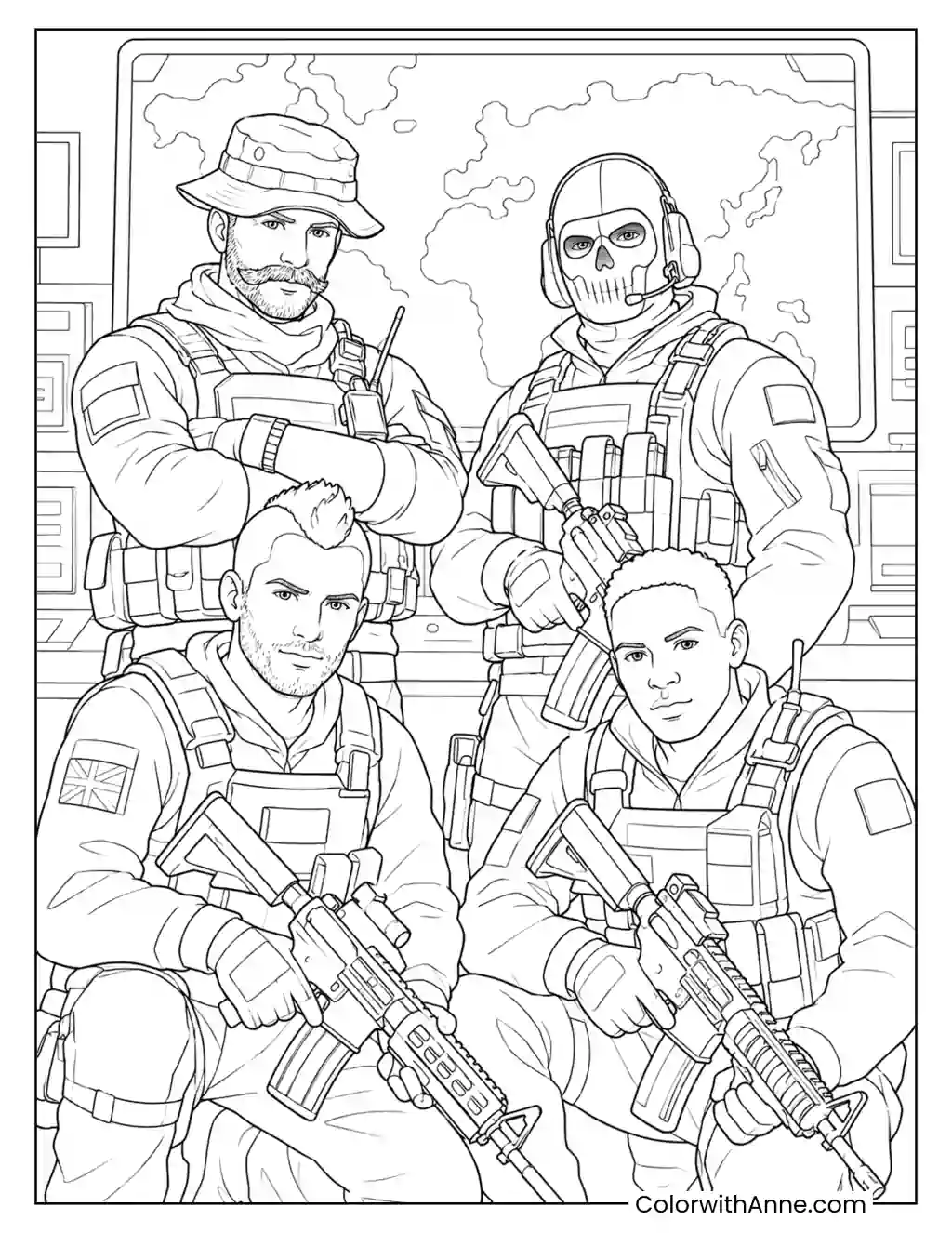
Ghost’s skull mask fills the center of this portrait, surrounded by his hood, headset, and equipment. The recognizable face covering can carry the design without a complicated background.
Use charcoal clothing, gray equipment, and pale bone-colored markings on the mask. Keep the darkest areas beside the lighter facial shapes.
For a compact fan display, mount the finished portrait on dark card with a narrow border. Leave the mask unobstructed by extra lettering. The headset and hood already provide a strong frame around it.
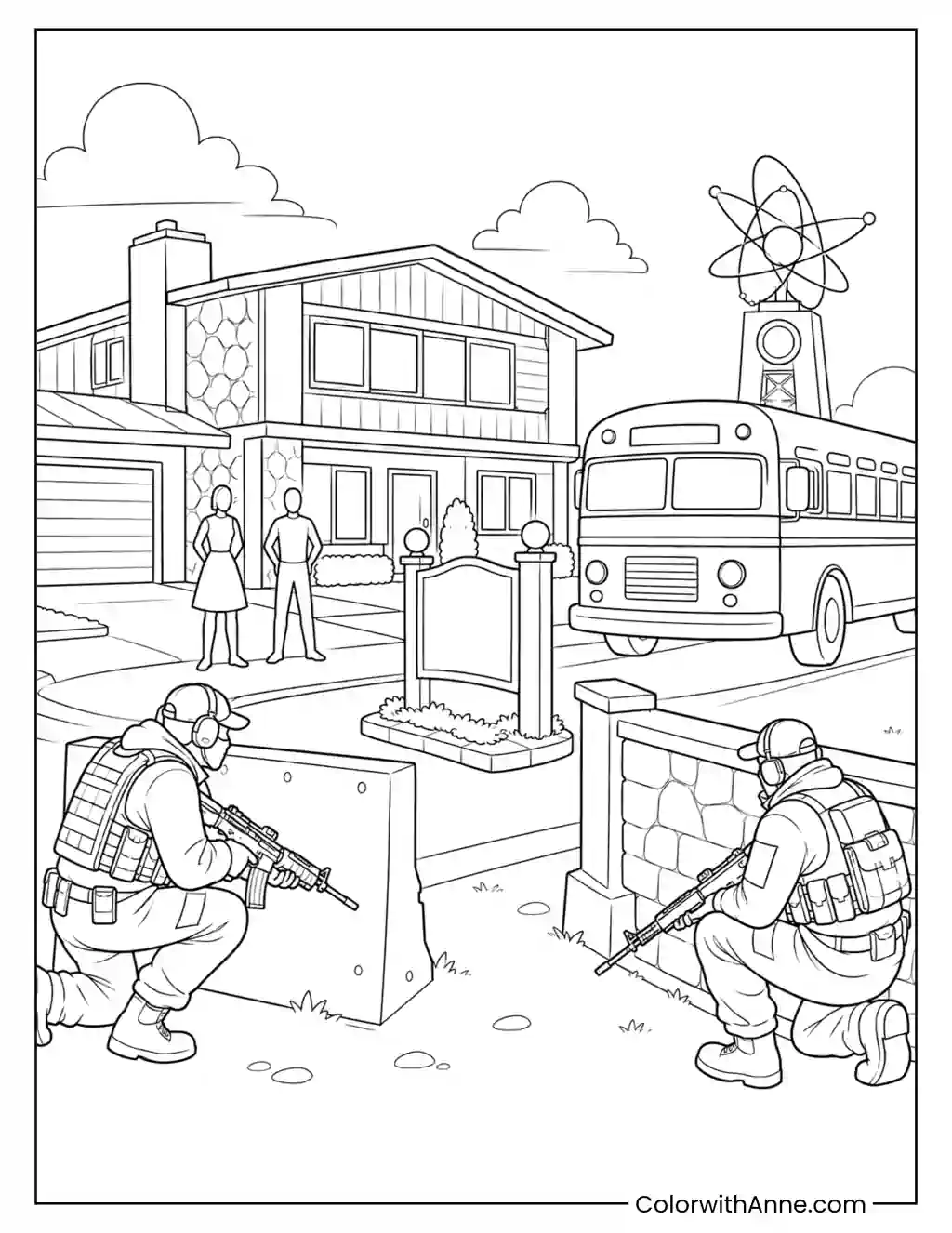
Rediscover Nuketown’s Familiar Shapes
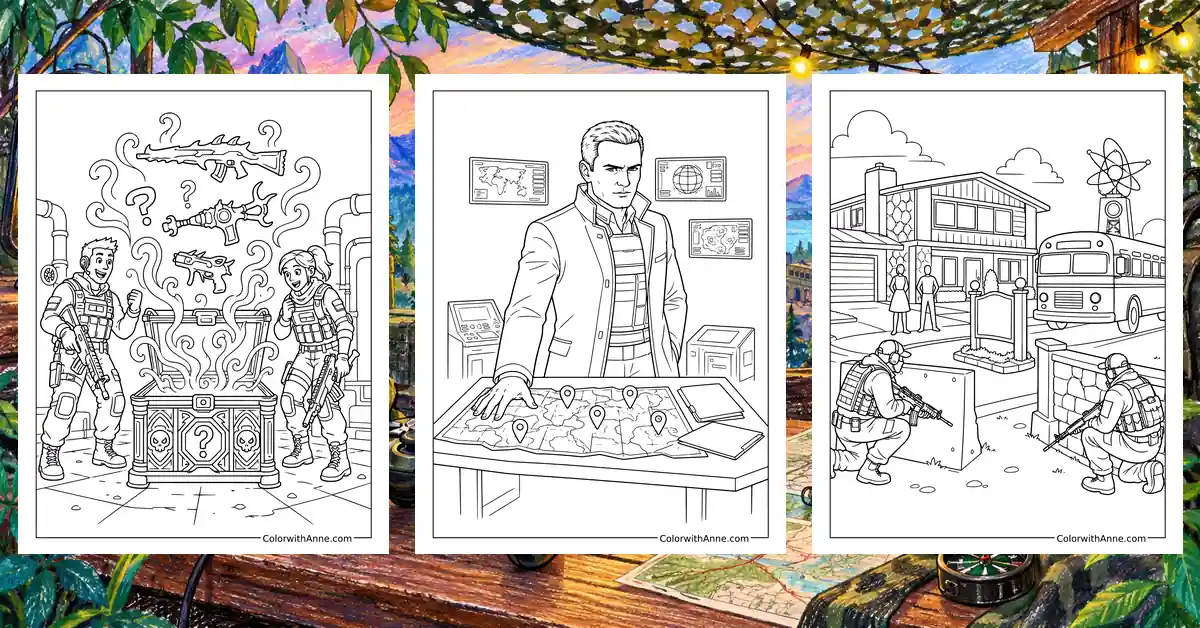
The bus, houses, roadside sign, and foreground barriers give this scene its recognizable setting. There is plenty for a longtime player to notice beyond the two figures nearest the viewer.
Try faded turquoise buildings, a yellow bus, and subdued gray barriers. Keep the background lighter than the foreground figures.
Compare the picture with a remembered view of Nuketown, or a screenshot from a version you have played. Which landmark made the location recognizable first? Concentrate on those architectural details when finishing the scene.
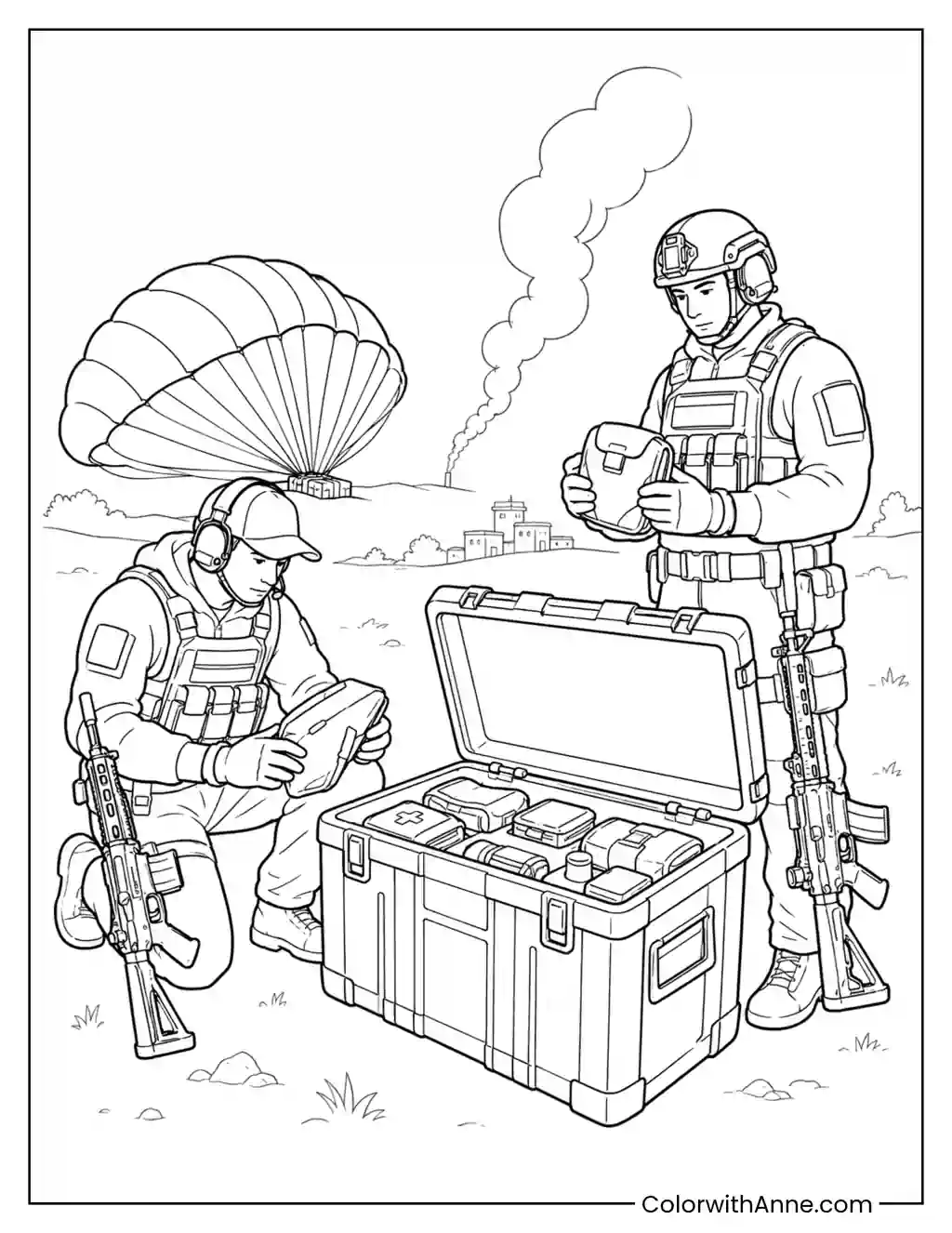
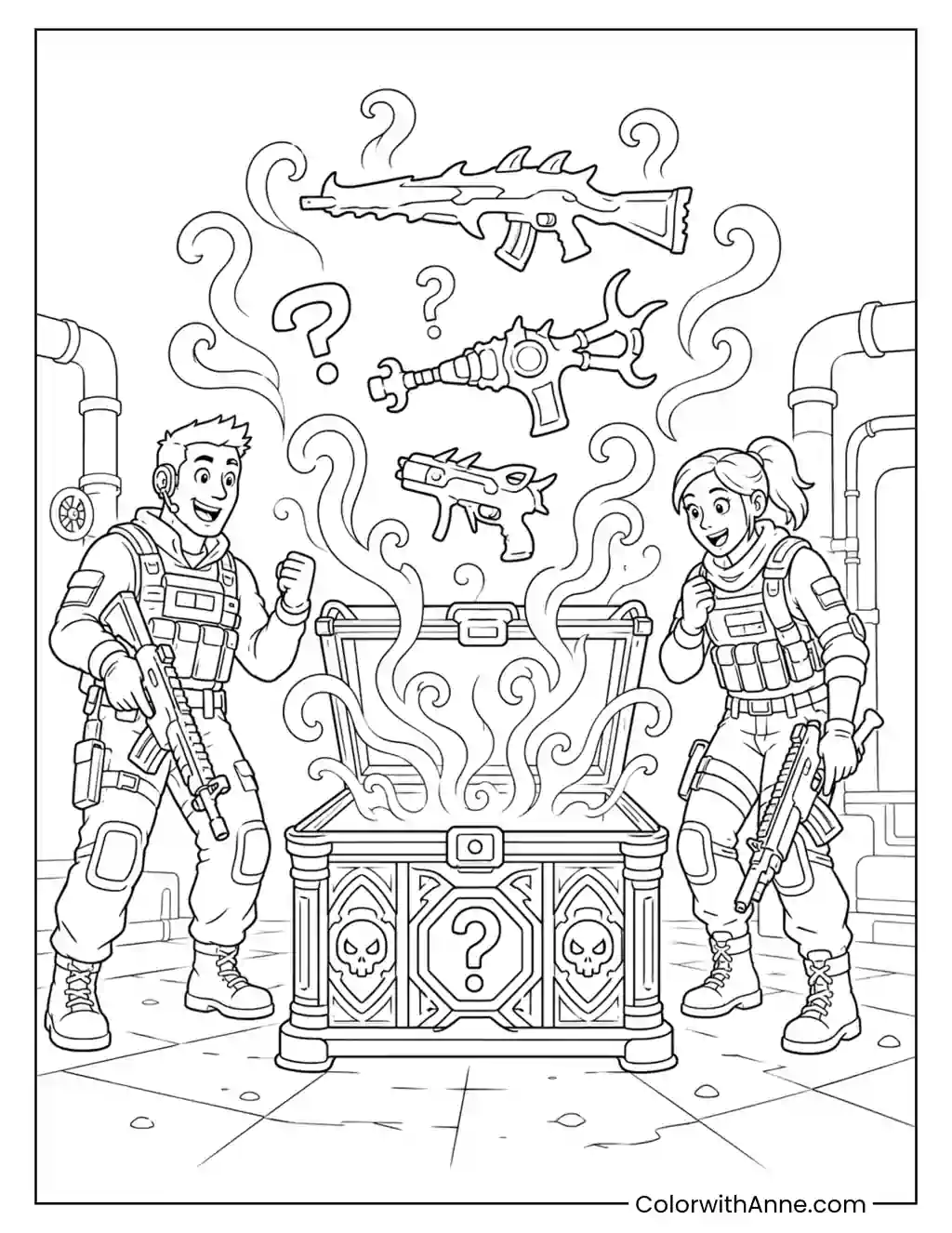
Put a Lid on the Loadout Crate
The open equipment crate sits between two operators, with its contents exposed. Its hinged lid makes a small paper addition feel particularly appropriate.
Choose olive and gray equipment, a darker crate interior, and contrasting clothing details. Keep the crate’s edges clear.
Cut a card rectangle slightly larger than the opening and attach one edge with tape. Fold it down to conceal the contents, then lift it for the reveal. Decorate the outer lid with a simple fictional supply label.
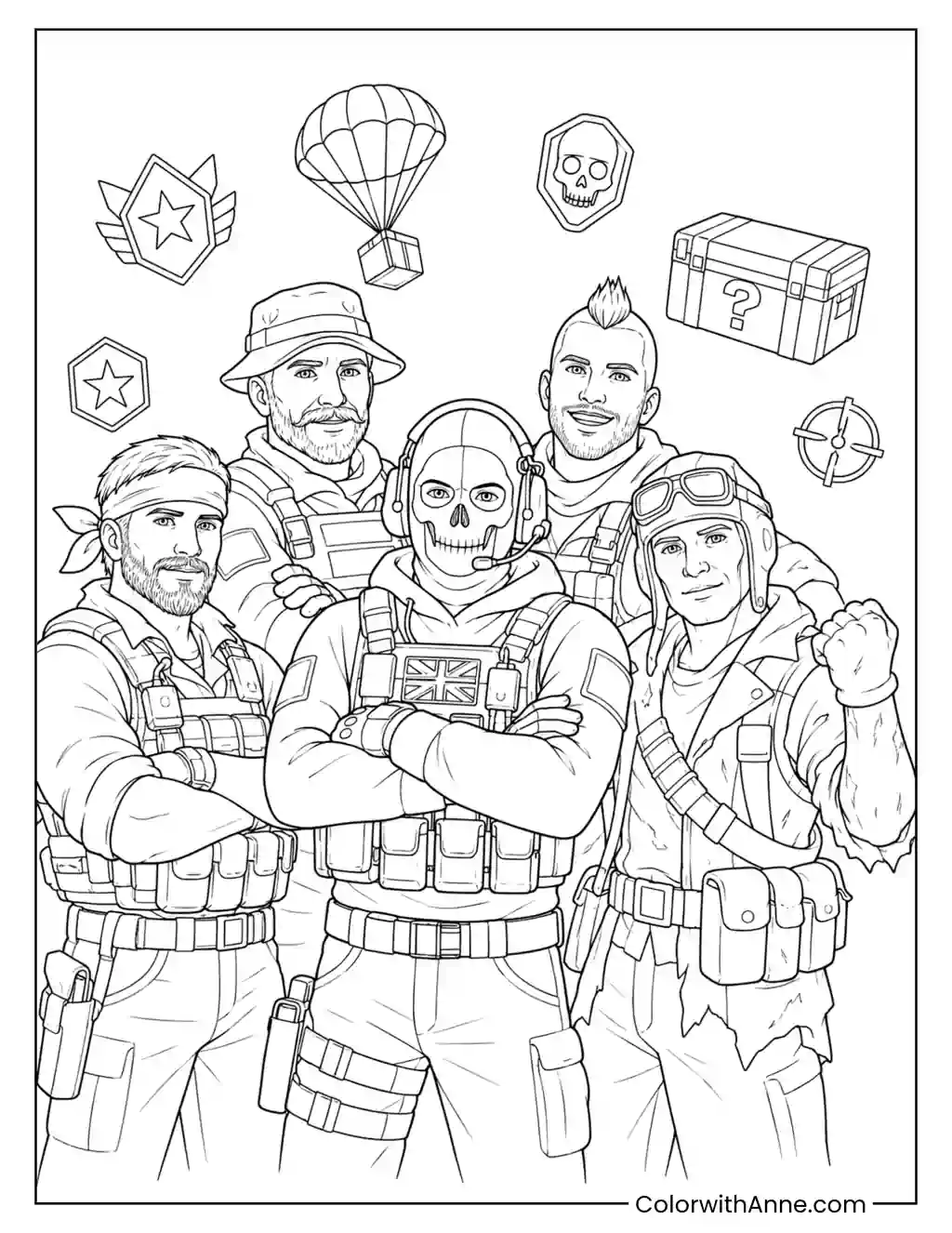
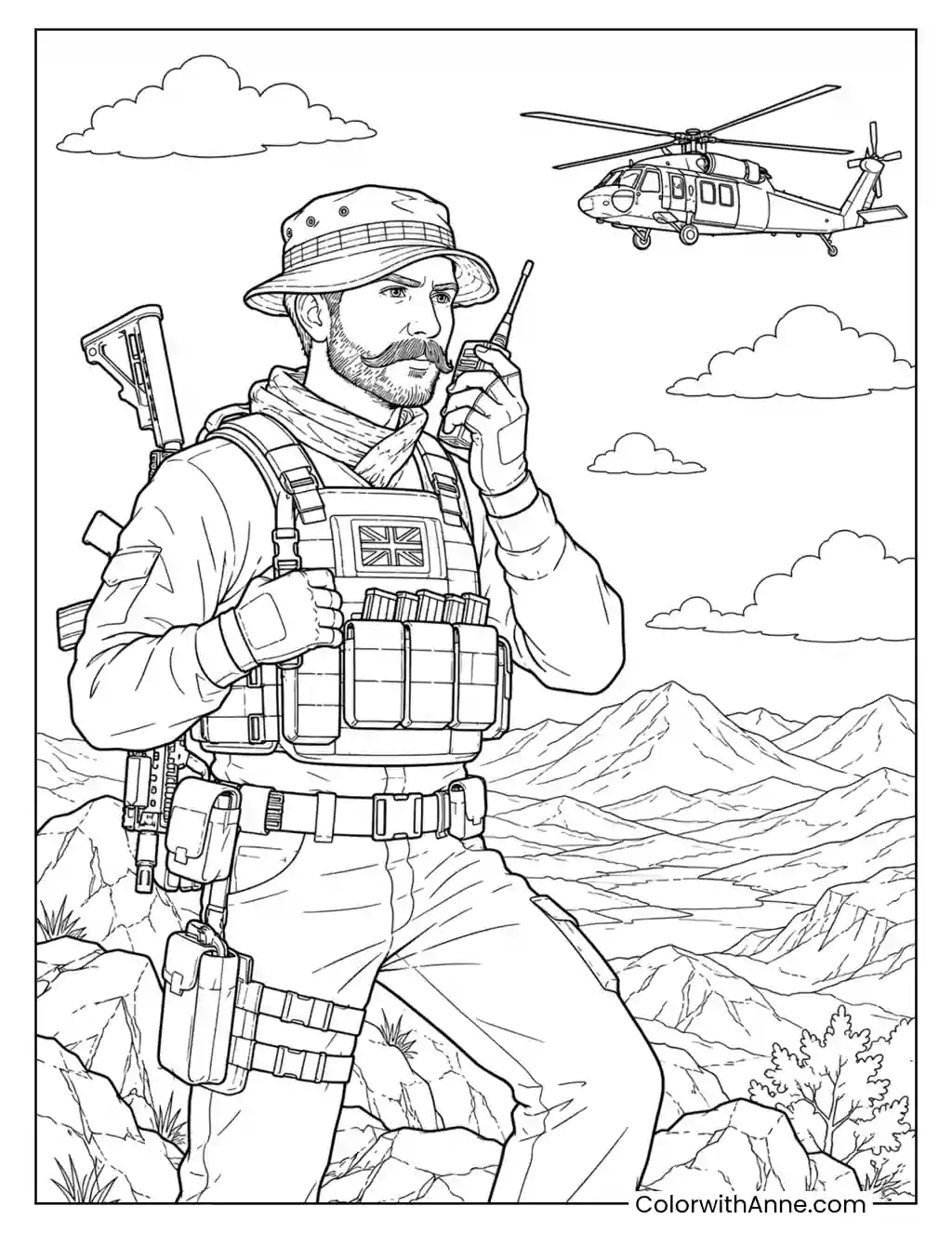
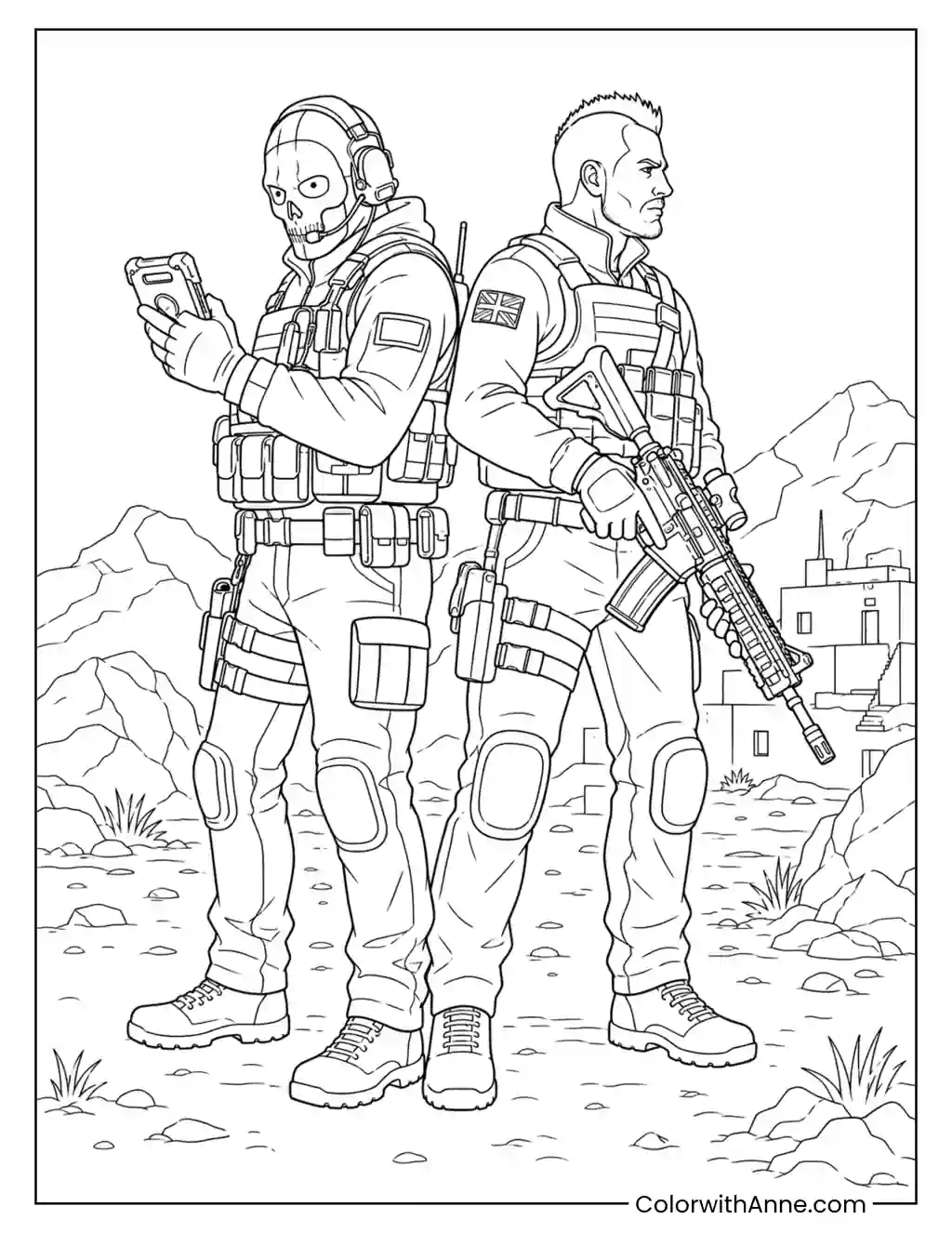
Share the Task Force 141 Portrait
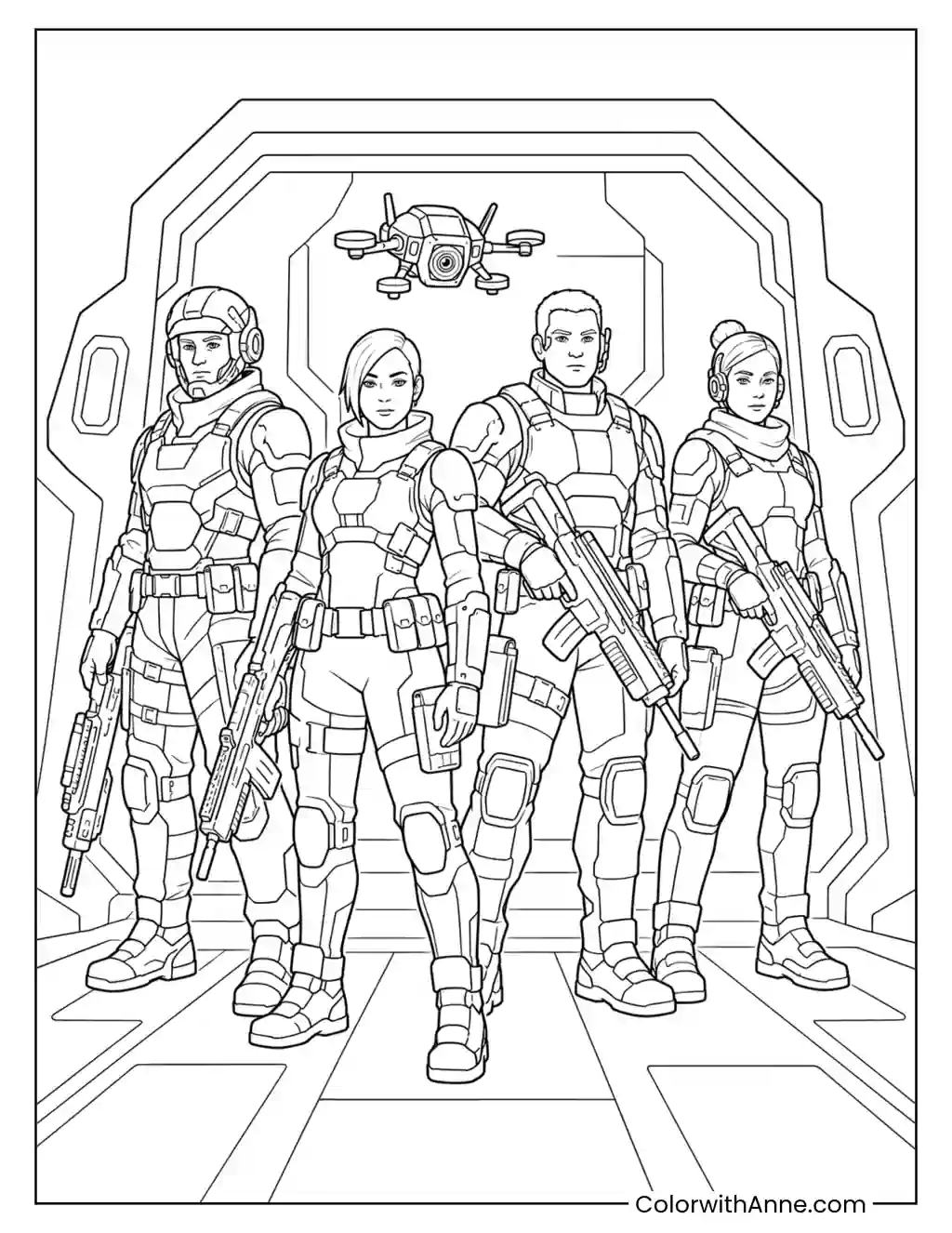
Price’s hat and Ghost’s mask give this group portrait immediate points of recognition. The overlapping figures make a satisfying shared page for fans who each have a favorite team member.
Use related muted greens and browns across the equipment, with small differences in clothing. Preserve the contrast around Ghost’s mask.
Let each person choose one figure to color, agreeing on the shared background beforehand. Compare the details used to recognize the characters: headwear, hairstyle, face covering, or expression. The team can look coordinated without every section receiving the same treatment.
Give the Parachute Scene a Game-Screen Finish
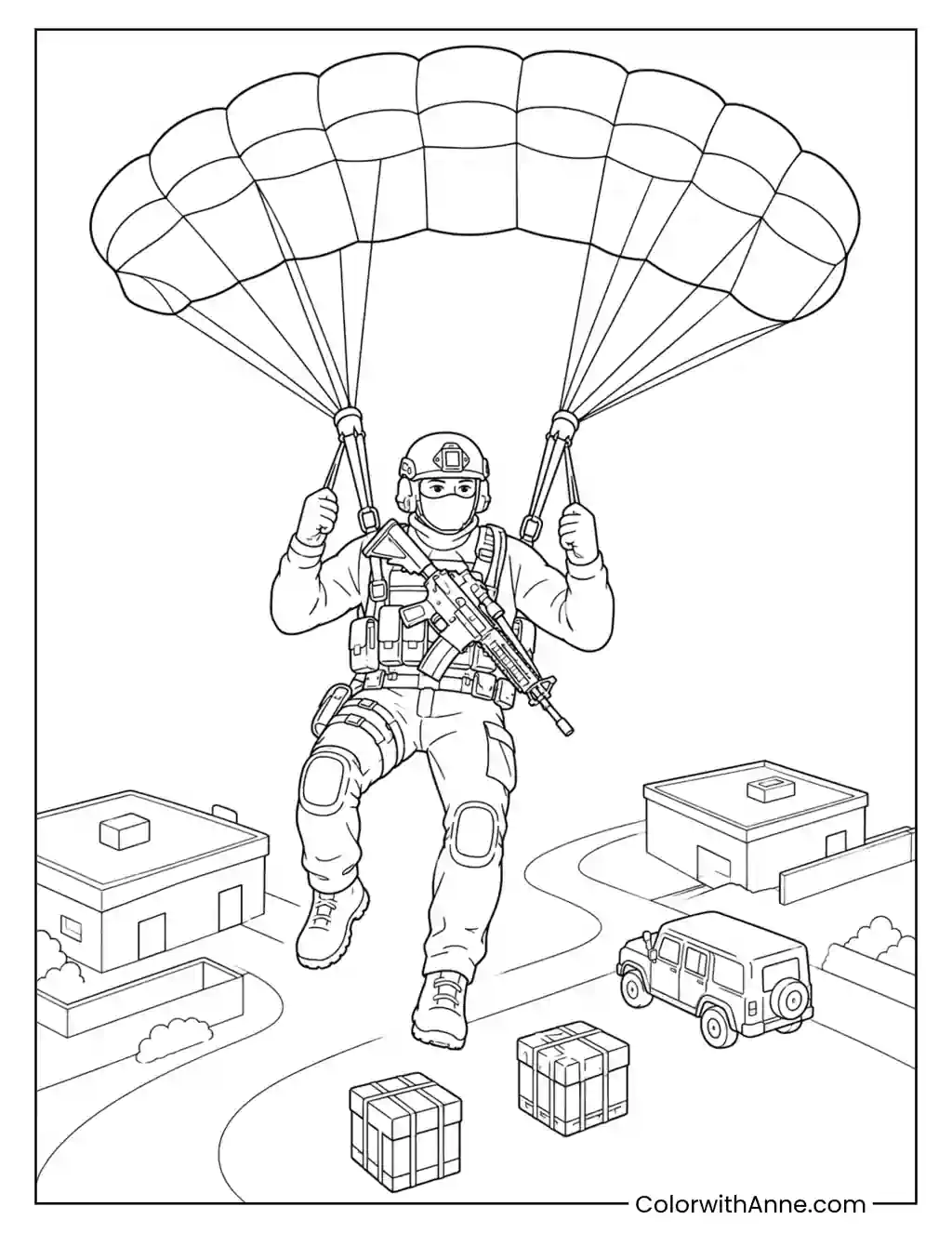
An operator descends beneath a broad parachute above buildings, vehicles, and supply crates. The open sky leaves room for a little interface-inspired fan art.
Try a pale canopy, gray buildings, and muted equipment colors. A small bright accent can distinguish the descending figure.
Add a fictional match timer and your own player name in the upper corners. Keep both small enough to leave the canopy readable. The page can resemble an imagined game screenshot without needing a full border of statistics.
Set Makarov’s Command Room Apart
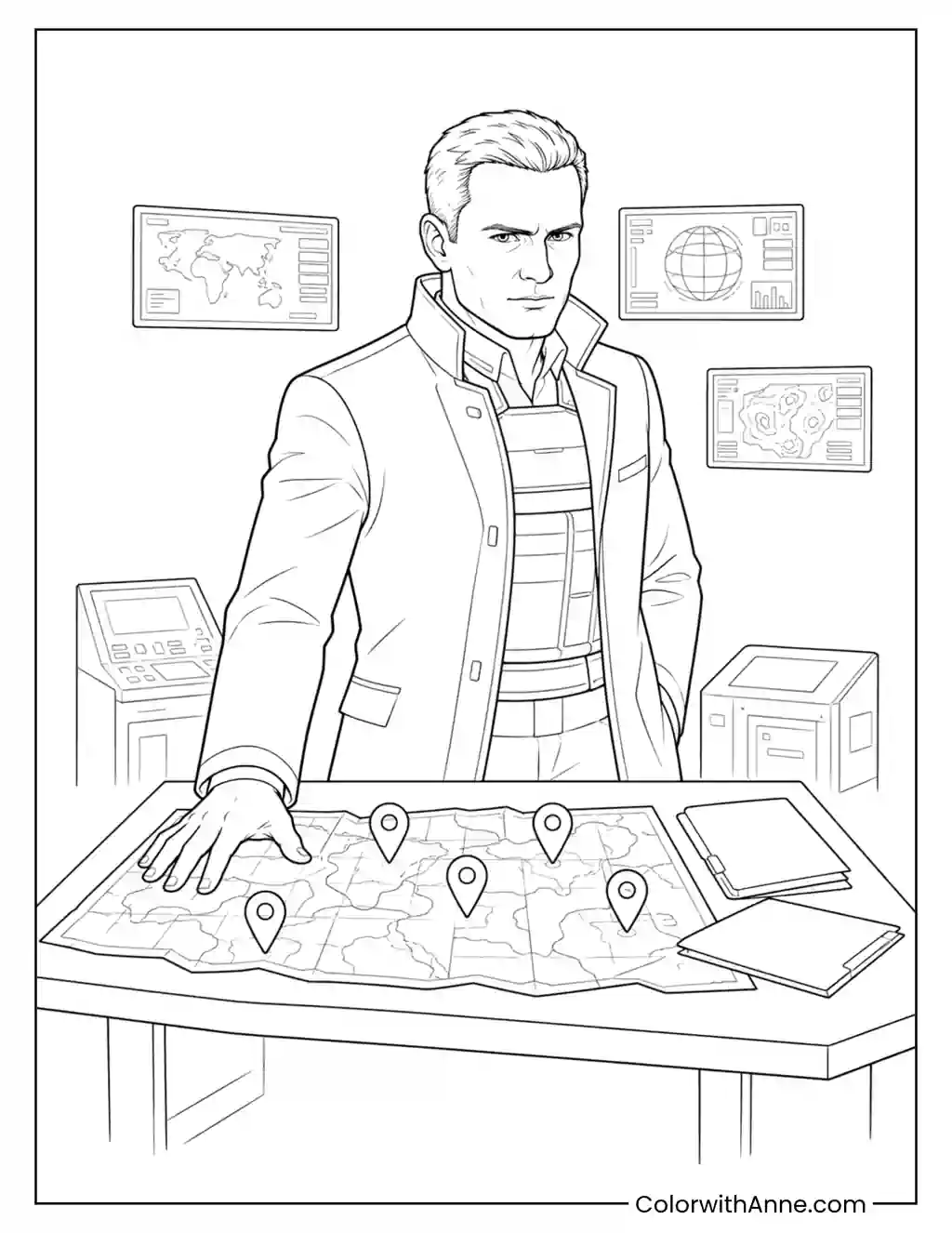
Makarov stands over a map table with screens behind him. The enclosed room offers a different atmosphere from the outdoor operator portraits.
Use a dark suit, cool gray furniture, and muted blue-green screens. A little red on selected display details will draw attention to the equipment.
Choose which screen should appear to be lighting the room, then repeat a faint trace of its color on the nearby tabletop. That single light source can give the command-room scene a deliberate mood without adding an invented battle outside it.
Roll for the Mystery Box Reward
Question marks and floating equipment rise above the Mystery Box while two figures watch. The uncertain result is the useful part to borrow for a small fan game.
Try weathered brown wood, bright question marks, and pale green or violet light rising from the box.
Write six fictional reward ideas on a numbered list, then roll a die to discover which one appears. Draw the result on a small card and place it above the printed box. Change the list when everyone has seen the possibilities.
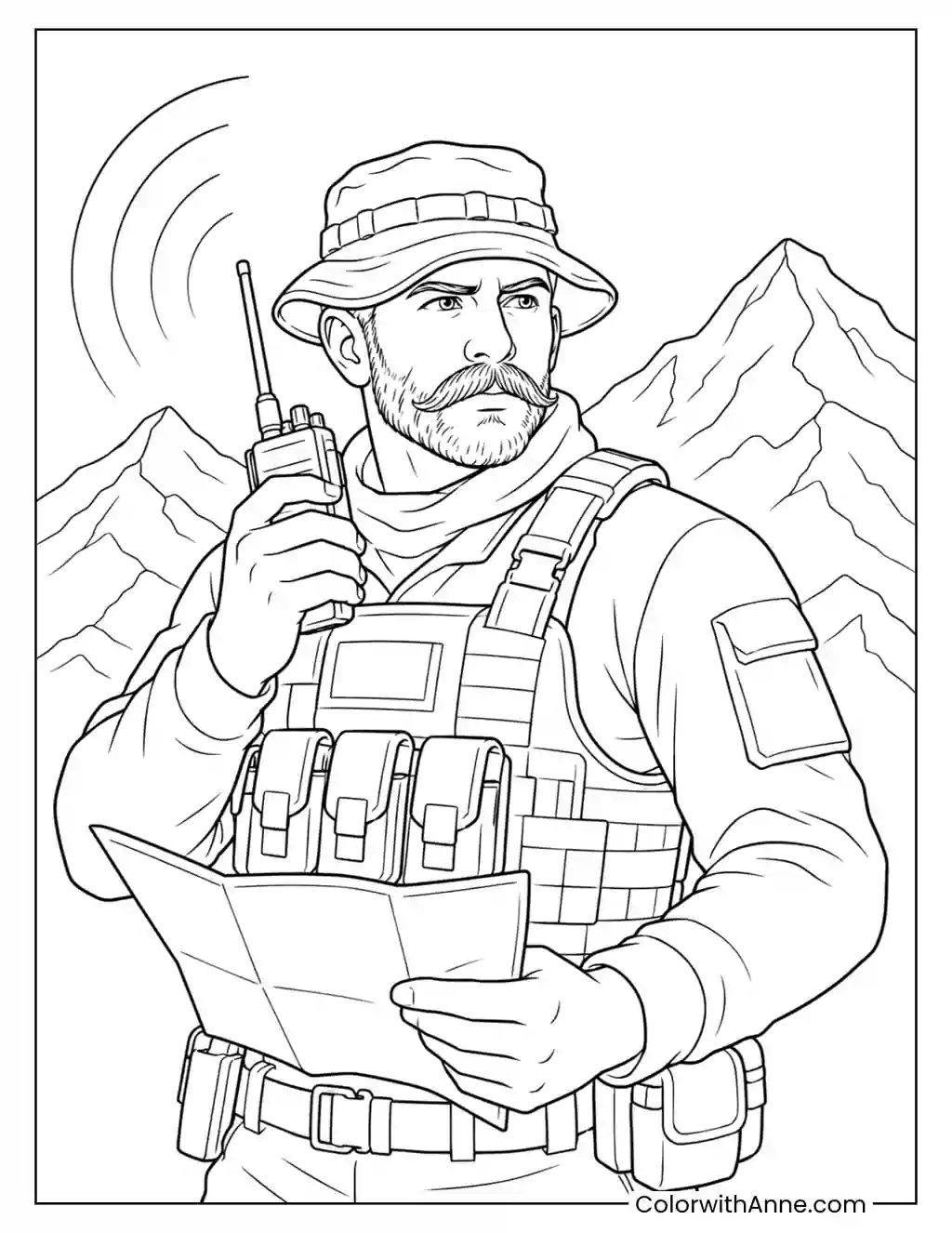
Let Price Check the Game-Night Kit
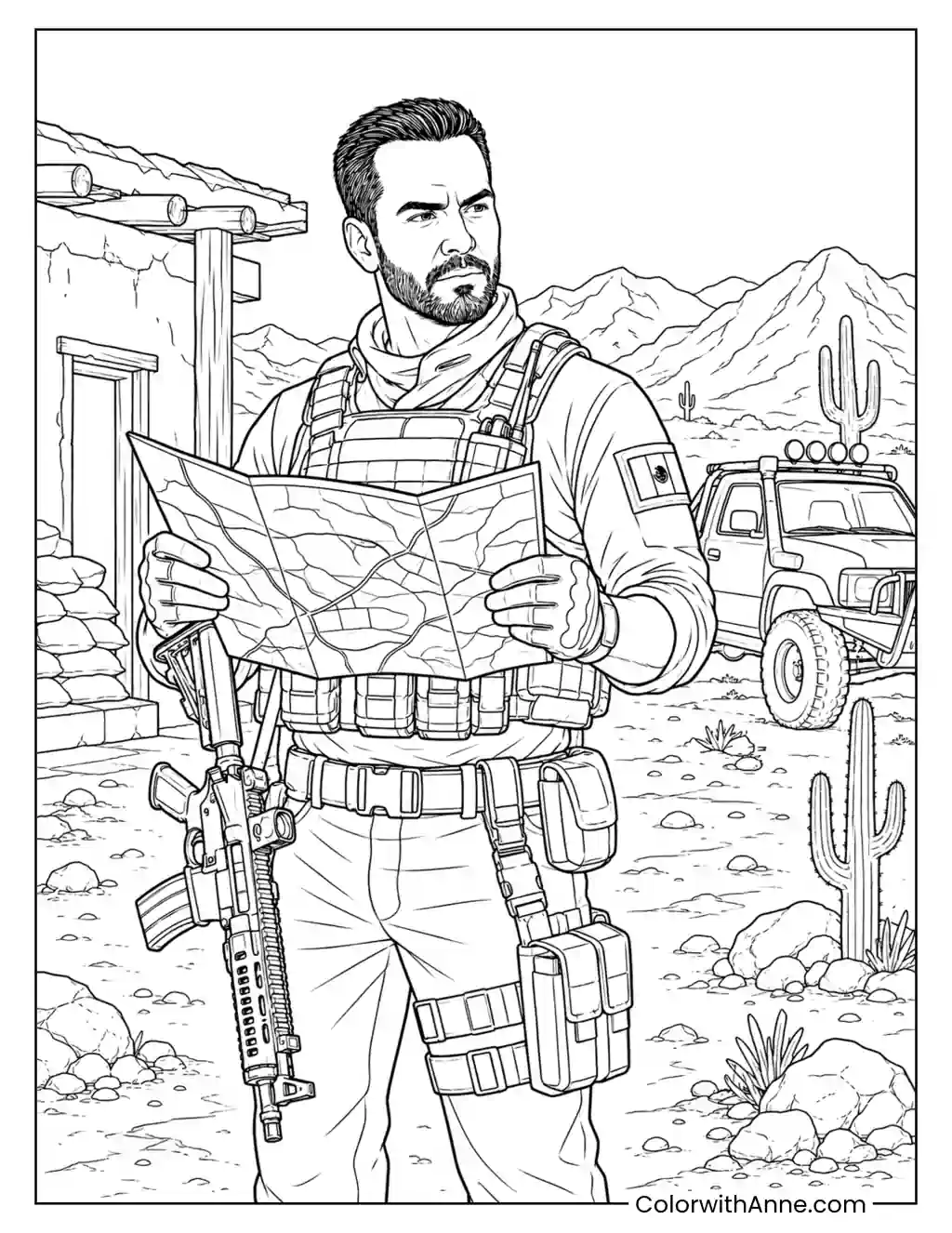
Price studies a clipboard with his radio and equipment close at hand. The pose suits a slightly more ordinary pre-session checklist.
Use a muted brown hat, olive clothing, and dark gray equipment. Leave the clipboard paper pale.
On the back, list the few things that usually delay your group’s gaming session: a controller needing charge, an unfinished update, or a headset left elsewhere. Check them before the agreed start time. Price’s paperwork finally has a job beyond looking official.