
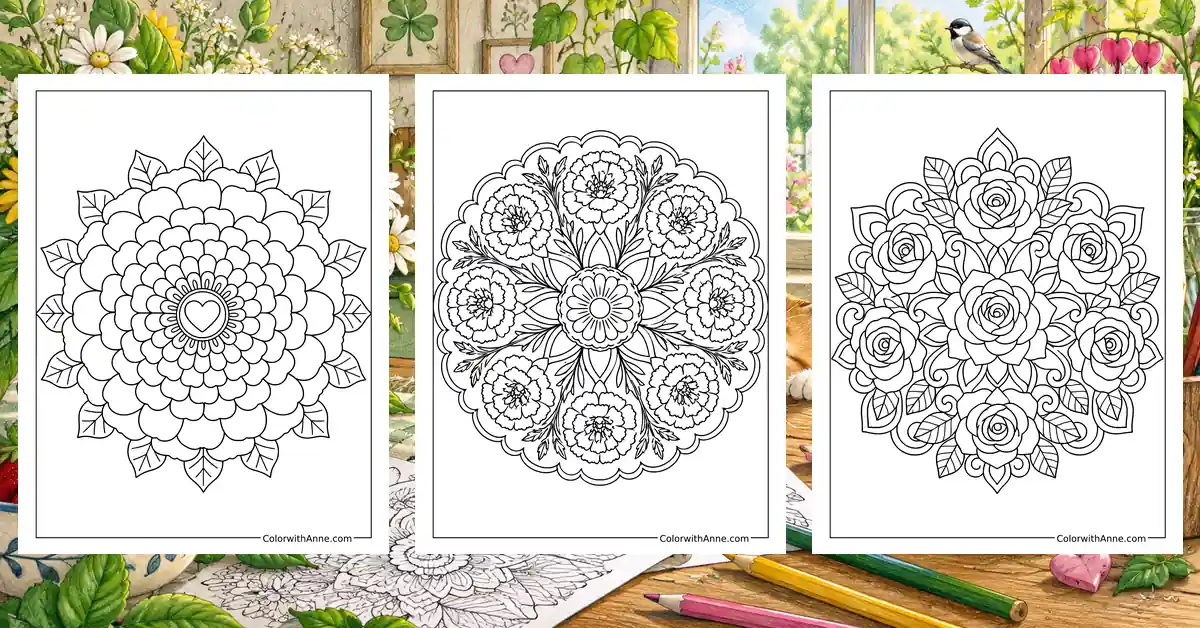
A flower mandala has the orderly charm of a carefully arranged bouquet: petals spreading outward, shapes finding their partners, and every bloom staying exactly where it belongs. It brings to mind turning a vase on the kitchen table until the flowers look just right, except these arrangements never lean toward the window or scatter petals beside the toast.
These flower mandala coloring pages bring that floral rhythm onto paper, with attention drawn to the relationship between each petal and the whole pattern. A few quiet minutes at the table can turn into a longer look, following the flowers outward from the center.
Free Printable Flower Mandala Coloring Pages
Click any coloring page below to open the PDF, then print on US Letter or A4 paper.
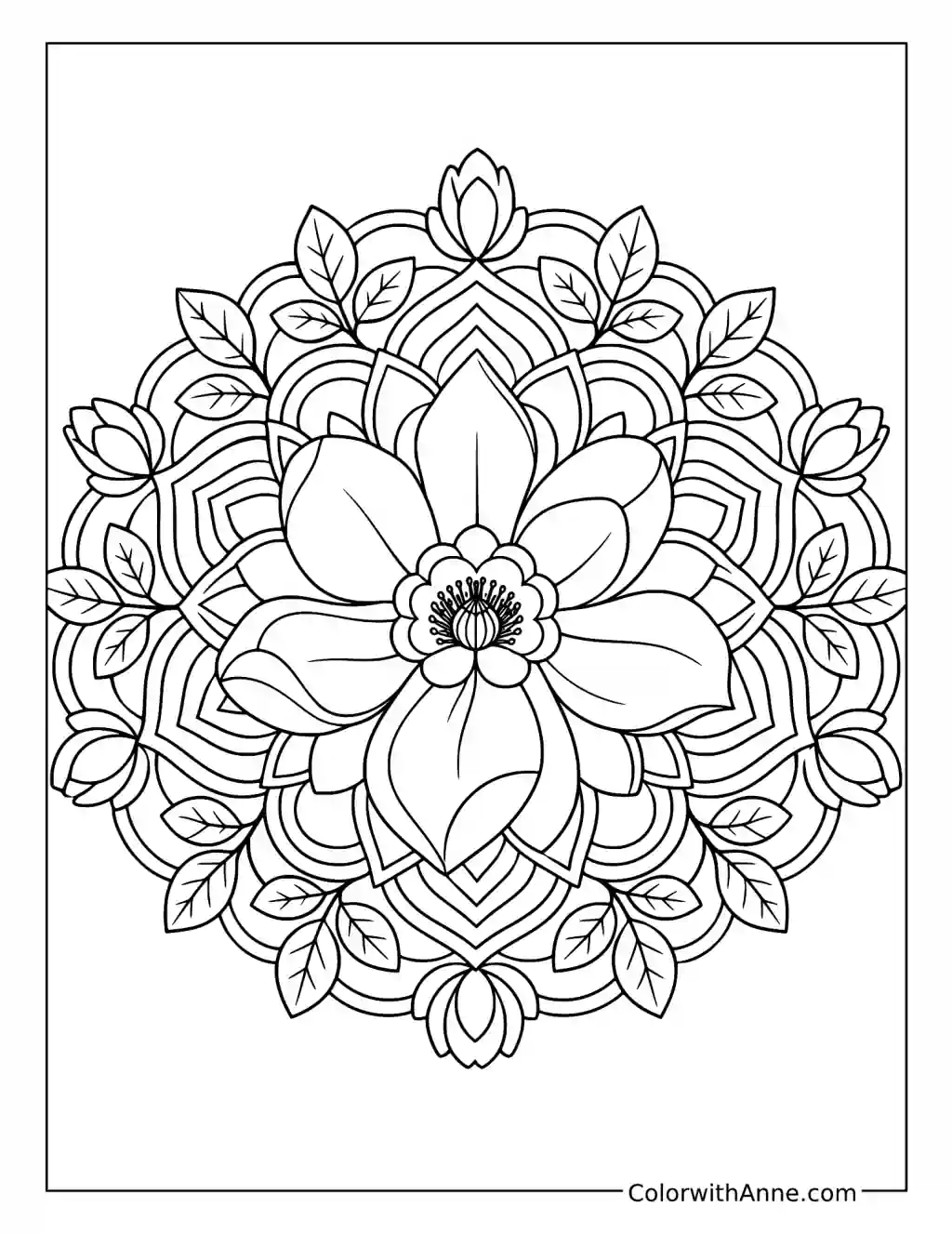
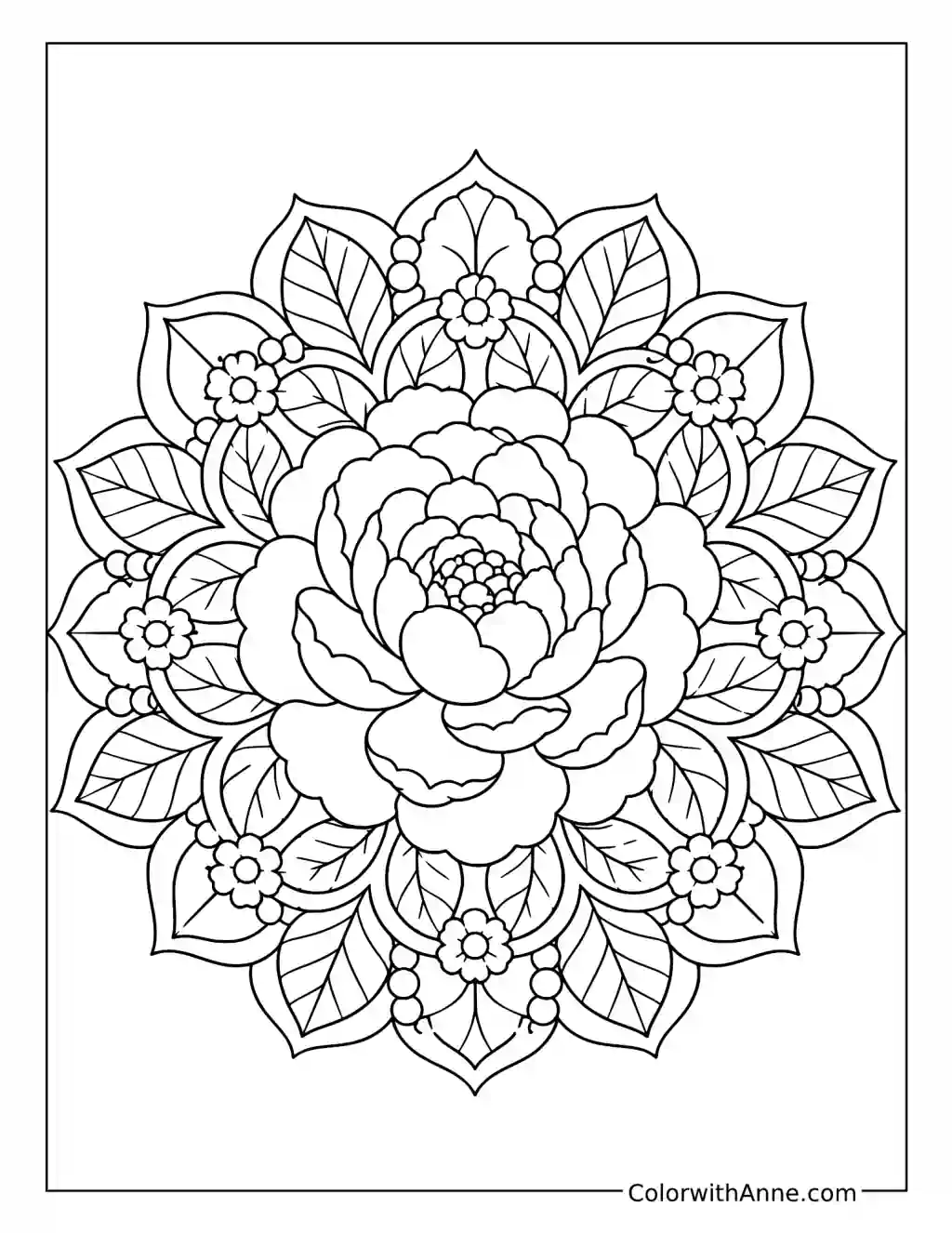
Did you find what you needed?
Help us choose what to create or improve next.
Coloring Ideas for Flower Mandala Pages
Try one of these coloring ideas, or use them as a starting point for your own.
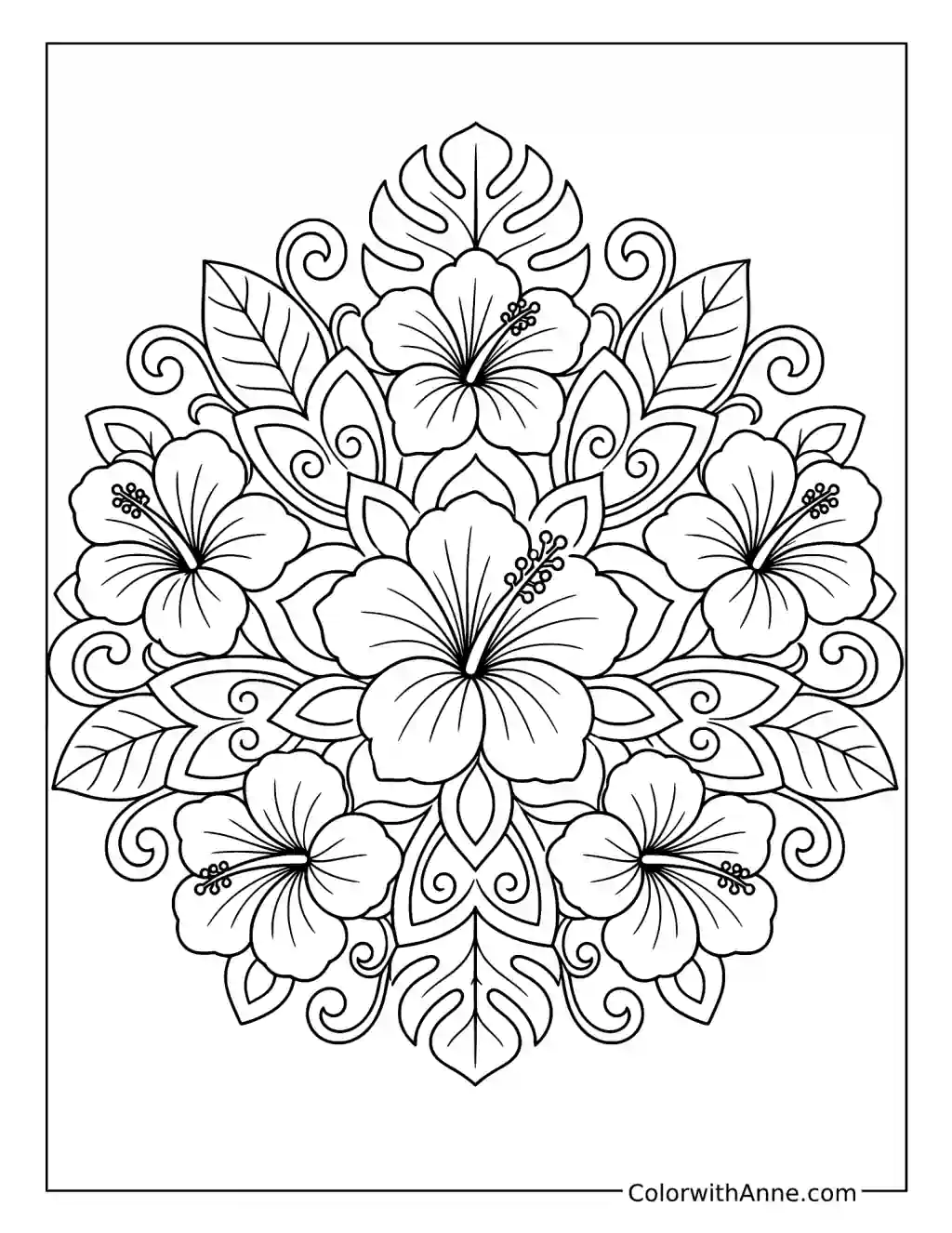
Bring a Tropical Bouquet to the Hibiscus Mandala
A large hibiscus anchors the center, surrounded by smaller blooms, broad leaves, and curling flourishes. Treat the arrangement like flowers gathered for a summer table: choose a rich coral for the central bloom, then let the surrounding flowers move between pink and orange.
The leaves offer a different kind of interest. Try two greens, using the darker one on selected sections divided by the veins. Keep the curling shapes lighter so they weave through the flowers without taking over. A narrow-tipped marker is useful for the projecting flower centers, where a small accent can stand out against the petals.
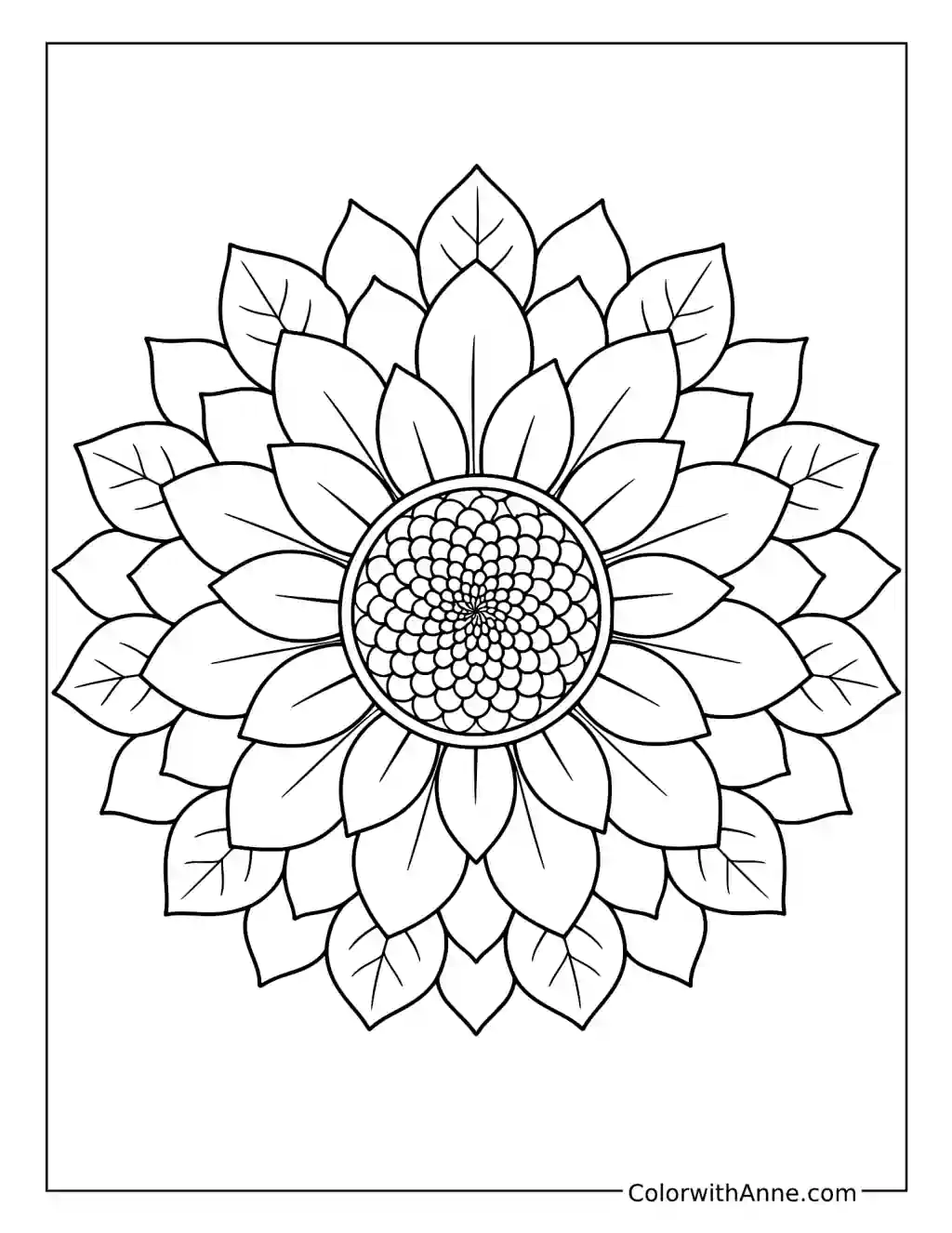
Make the Sunflower’s Center Part of the Show
The sunflower’s tightly packed center deserves a closer look before the yellow petals get all the attention. Its small enclosed shapes offer room for a mosaic of ochre, brown, and a few lighter golden tones.
Work through those shapes in loose clusters rather than trying to establish a strict sequence. The slight variation can suggest the texture of a real sunflower head. Around it, keep the petals mostly golden, with amber near their bases, and give the outer leaves cooler greens. The contrast lets the center feel richly detailed while the rest of the flower stays open and sunny.
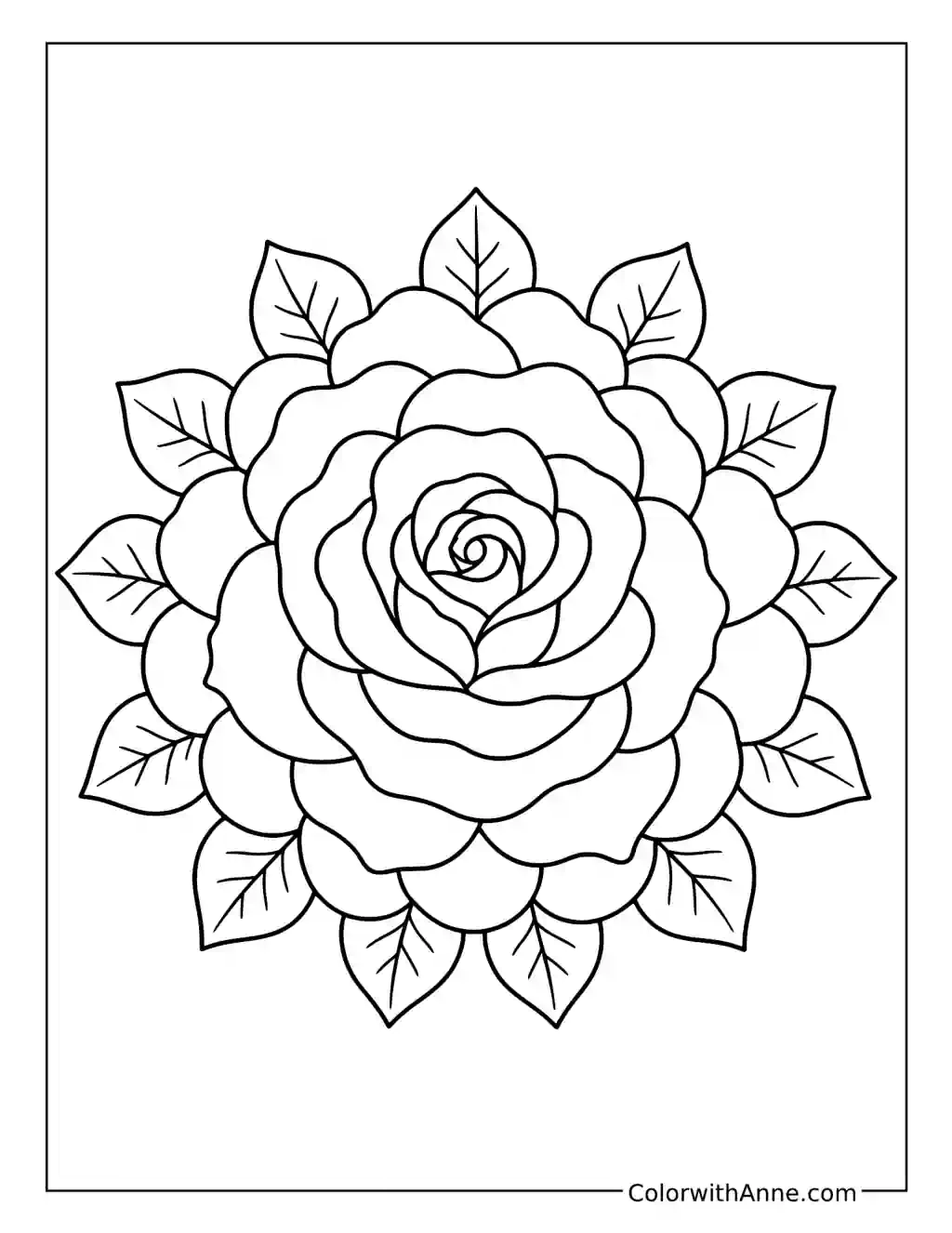
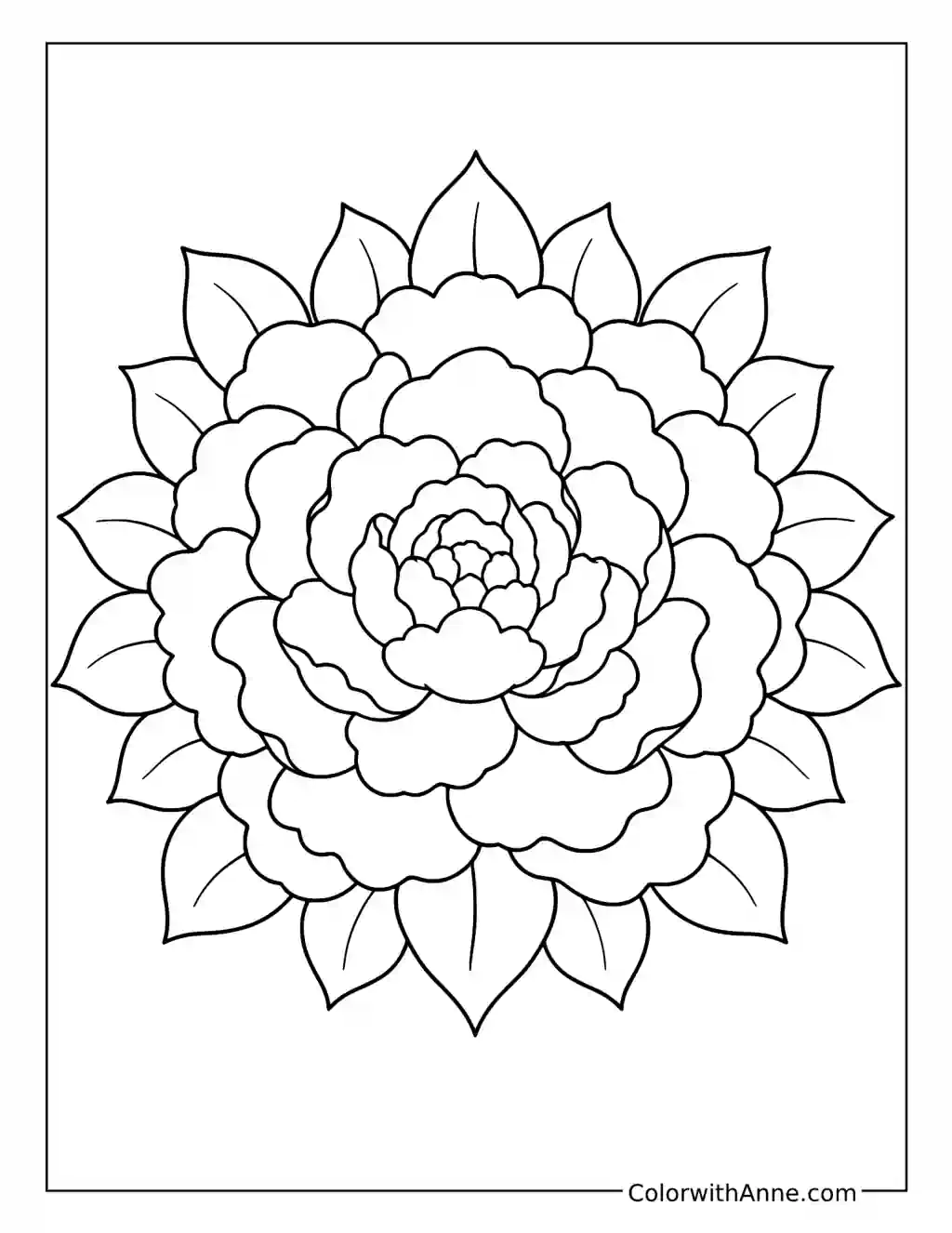
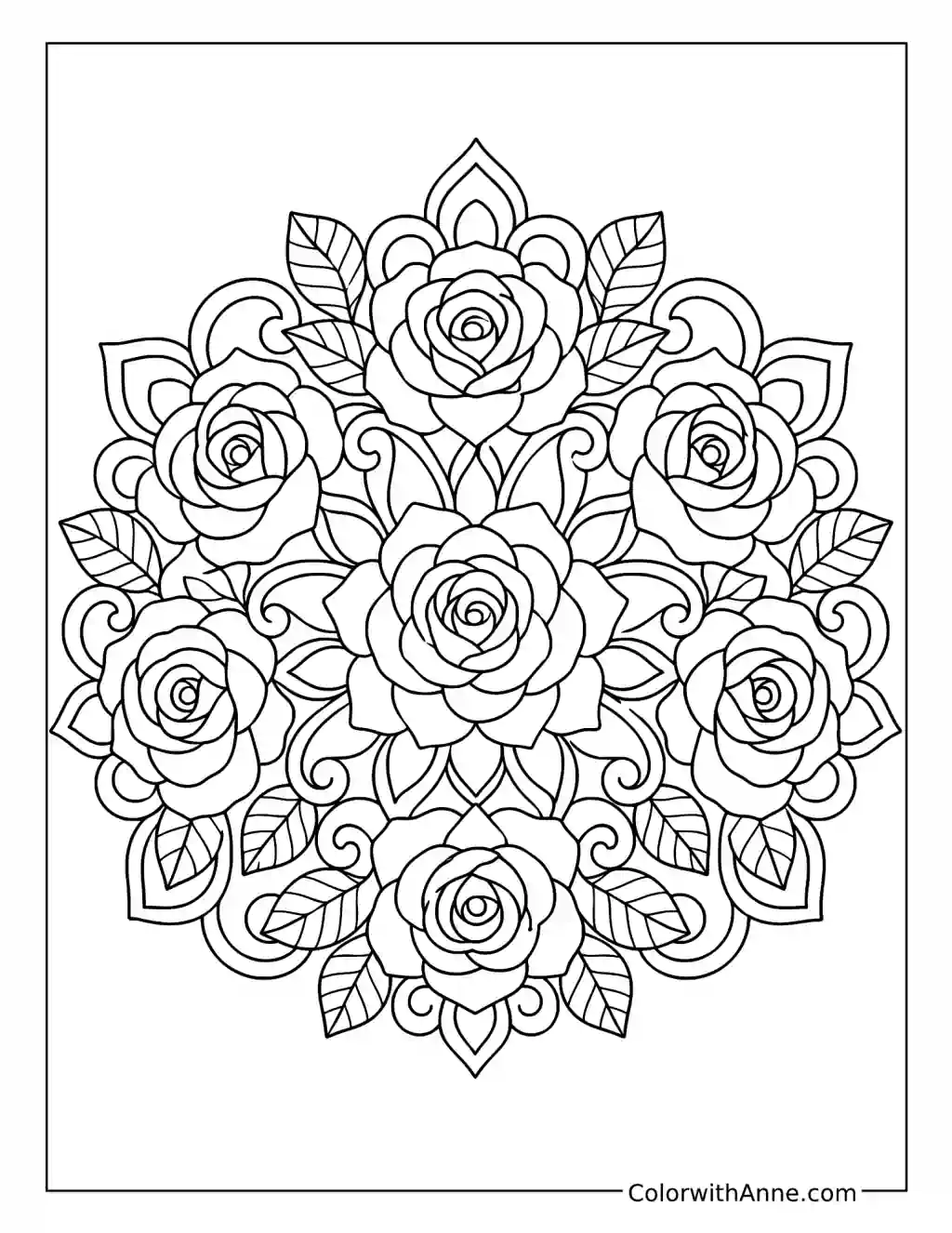
Borrow a Favorite Rose’s Colors
One rose fills this design, opening from a tightly curled center into broad, overlapping petals. If there is a rose in your garden, a bouquet on the table, or a flower photograph you love, use it as a color reference.
Look for more than the obvious pink or red. Notice where the petals become pale, where folds look darker, and whether the edges carry a slightly different hue. Bring a few of those differences onto the page, leaving some broad surfaces light. The surrounding leaves can stay understated, giving the rose the presence of a single bloom saved from a memorable bouquet.
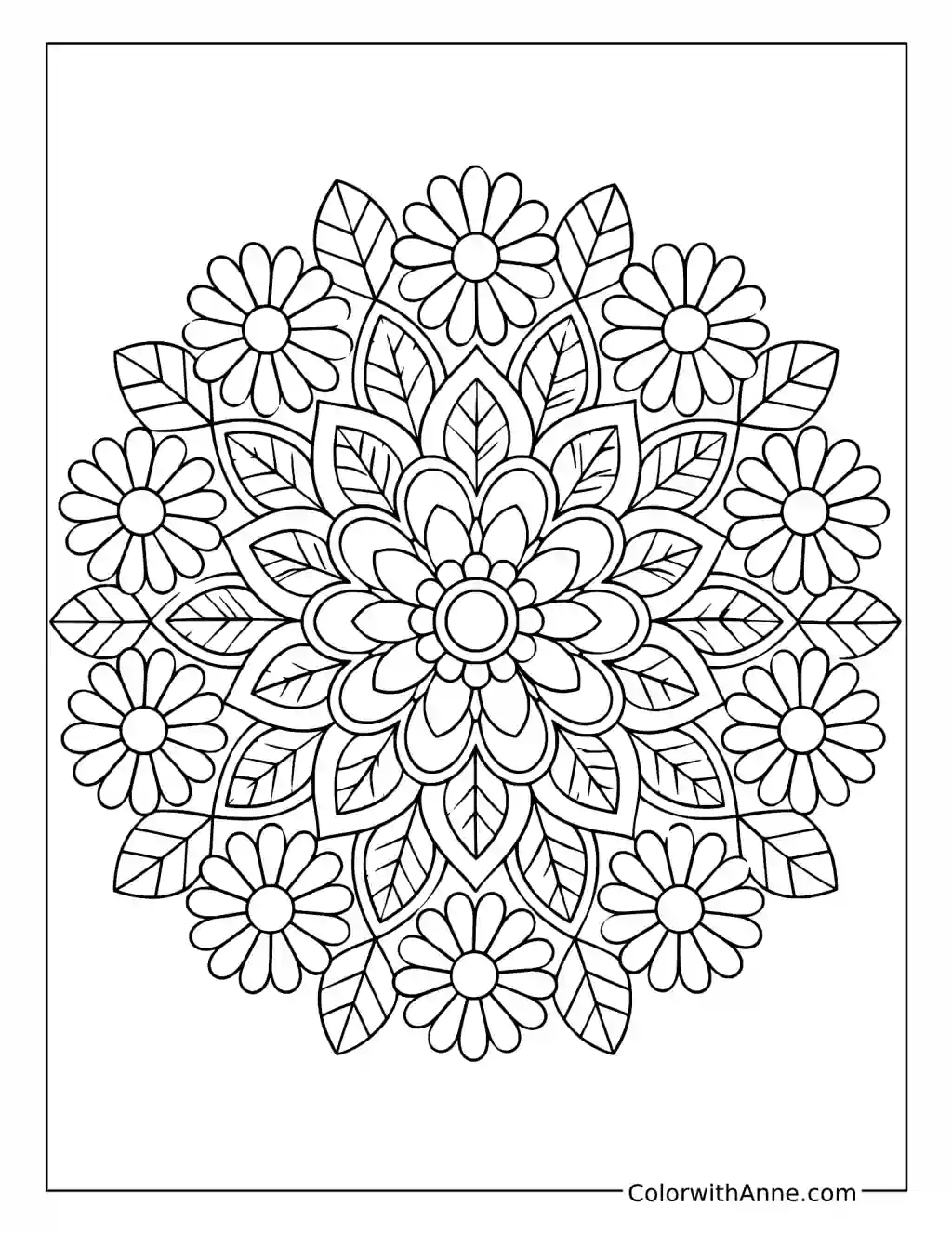
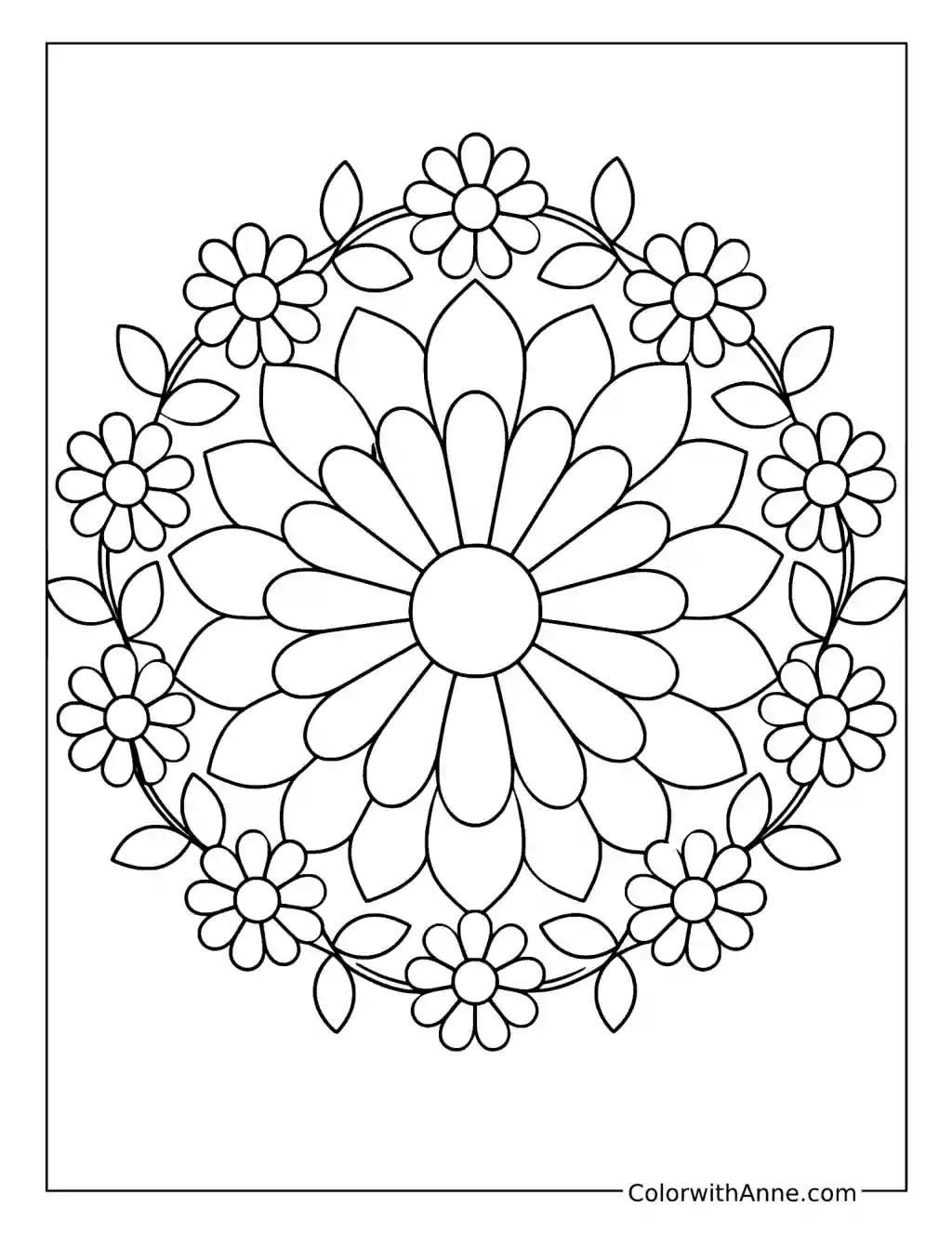
Let White Petals Shine in the Daisy Chain
Small daisies form a ring around a large central flower, with leaves tucked between them. Try leaving the outer daisy petals white and coloring their centers yellow. Green leaves beside the untouched petals will help the little flowers emerge clearly from the paper.
The central bloom can carry a gentle color of its own, such as pale blue or lavender, while its round center repeats the yellow. Leaving white areas deliberately takes a little restraint when the markers are already uncapped, but it gives this design the fresh look of daisies gathered along a garden path.
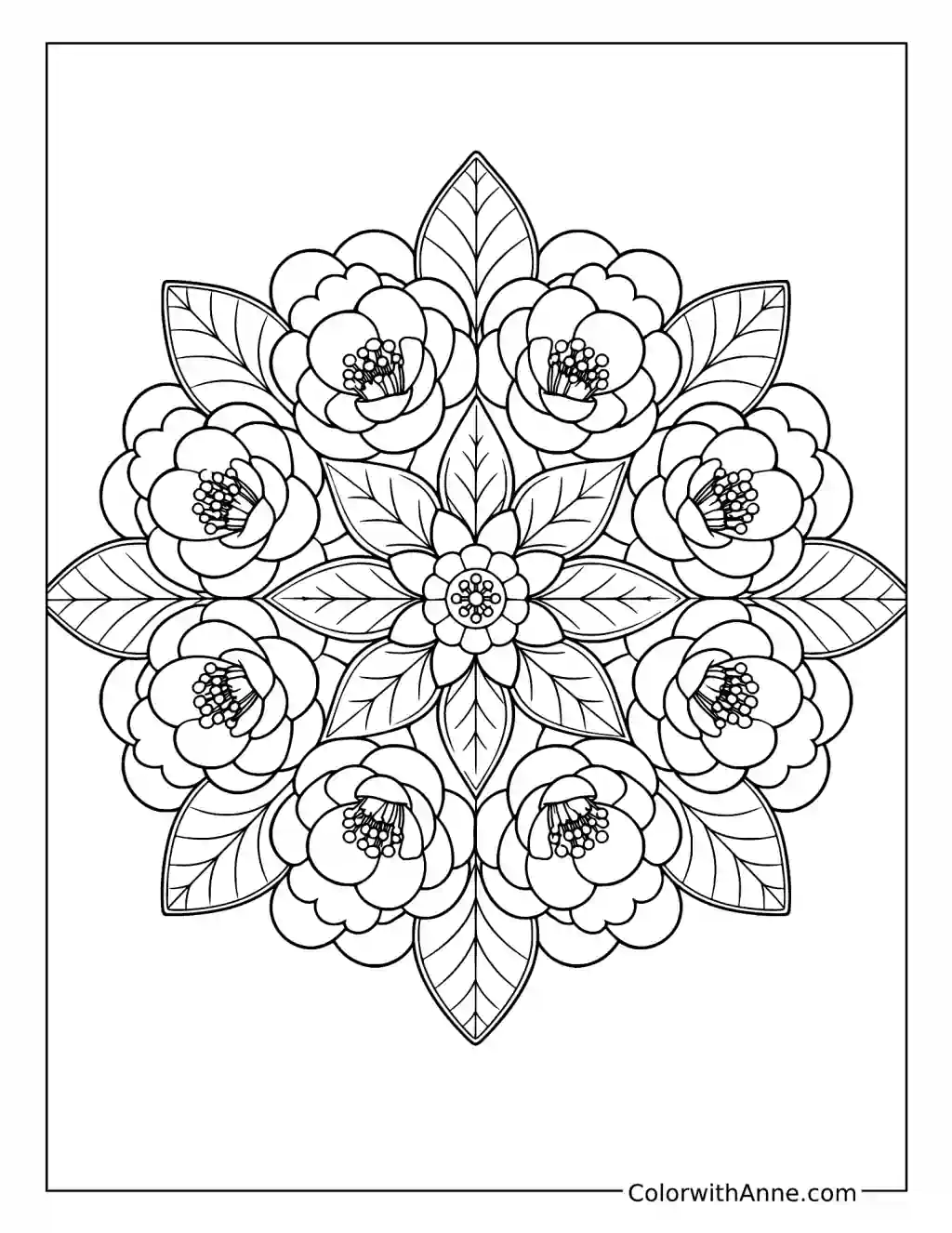
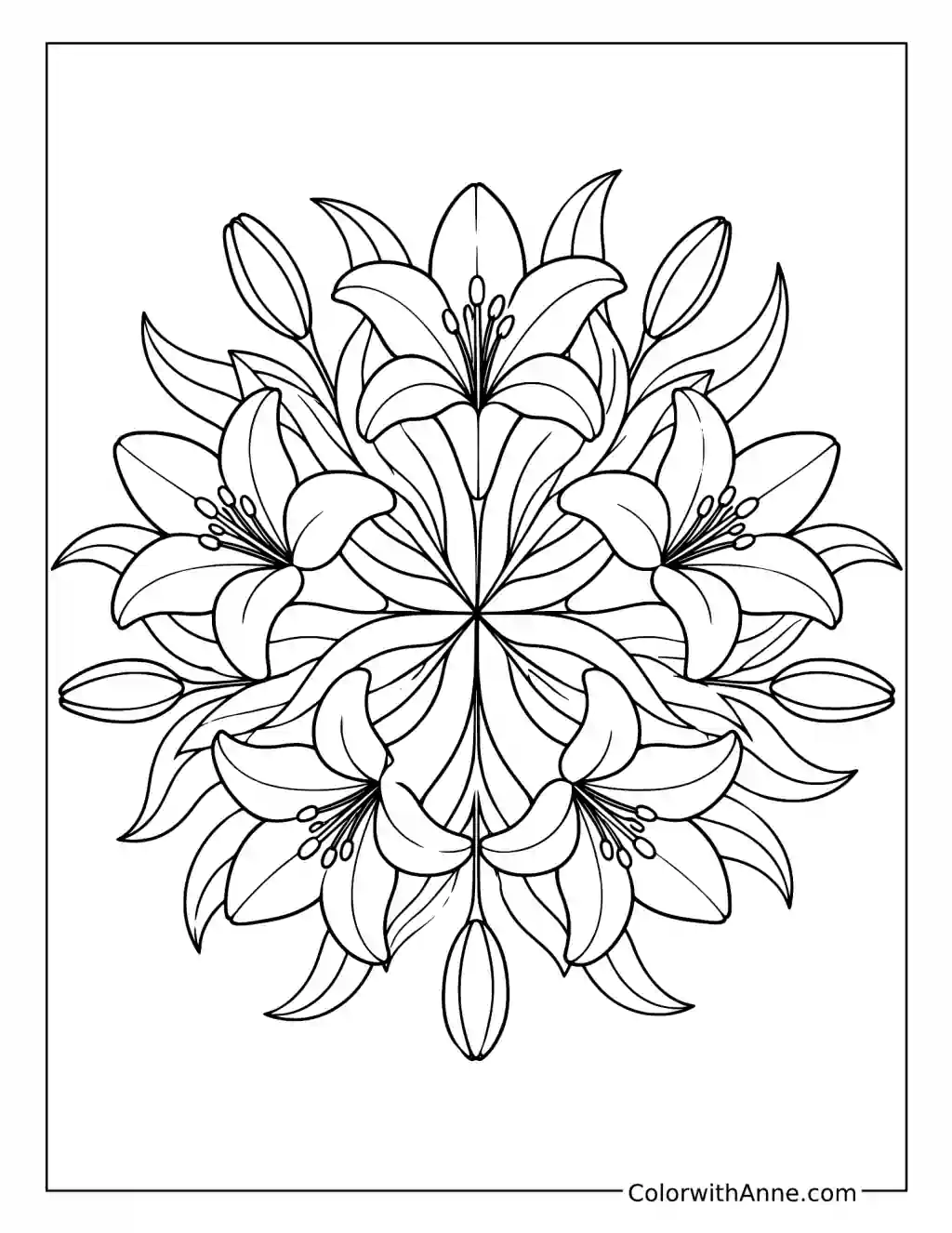
Follow the Curves of the Lily Star
The lilies turn around the center with long petals, curling tips, and visible stamens. Their sweeping shapes invite a different approach from coloring a mandala ring by ring: finish one complete lily, then move to the next.
Try a pale petal color with a stronger stripe following the existing line through its length. Leave the curled tips lighter so the shapes remain easy to distinguish where they overlap. Before starting another flower, rotate the page until it sits comfortably in front of you. That small adjustment makes following each curve easier and gives every lily its own moment of attention.
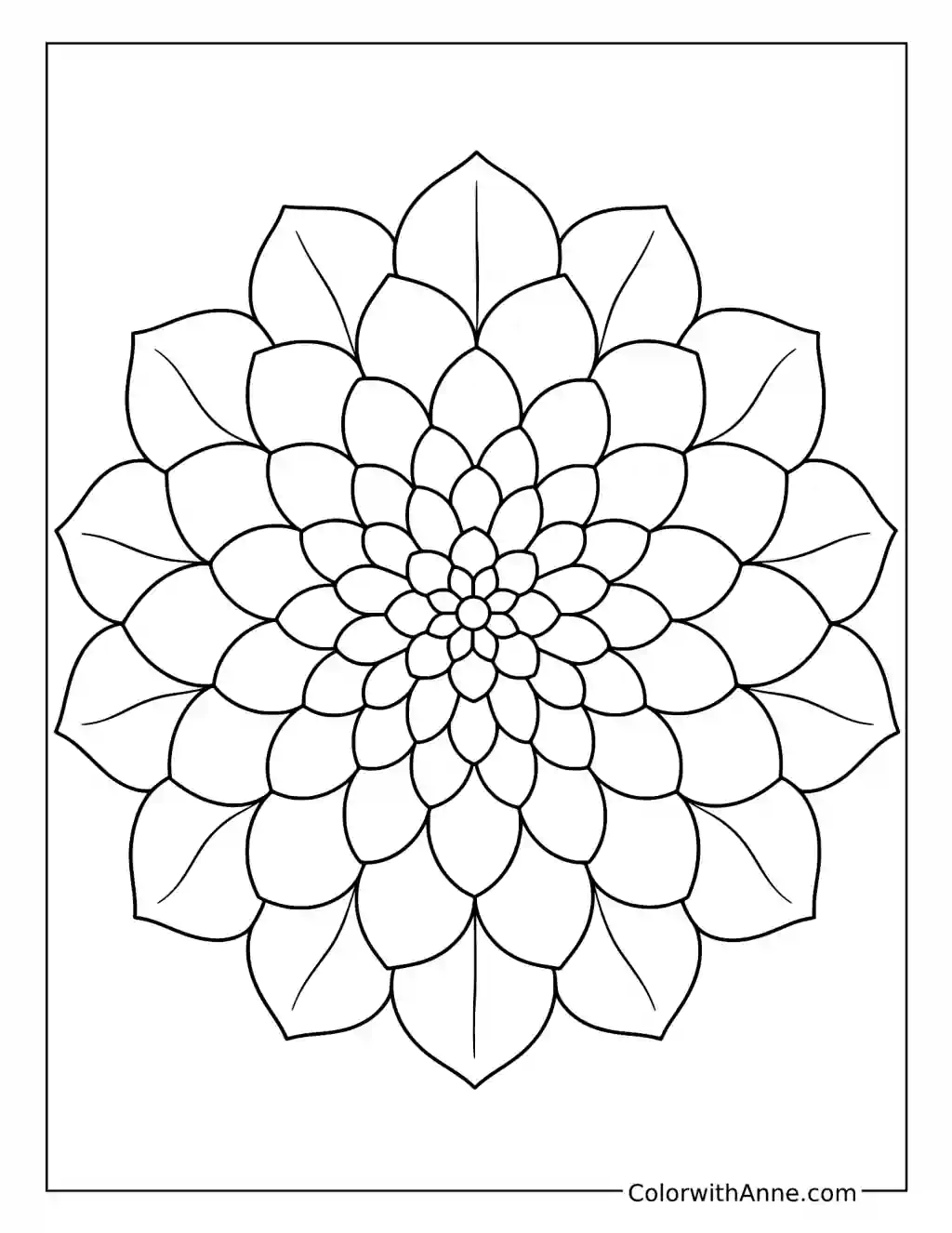
Play with Alternating Petals in the Geometric Dahlia
Rows of pointed, overlapping petals expand from a small floral center. With no leafy border competing for attention, this dahlia offers a clear place to explore how color changes the pattern itself.
Choose two colors and alternate them around one row, then reverse their order in the next. Test the arrangement near the center before carrying it outward. Some petals may begin to look like spokes, while others seem to sit behind them. Keep the palette consistent until the outer edge, then step back from the table to see the larger pattern that the individual petals have created.
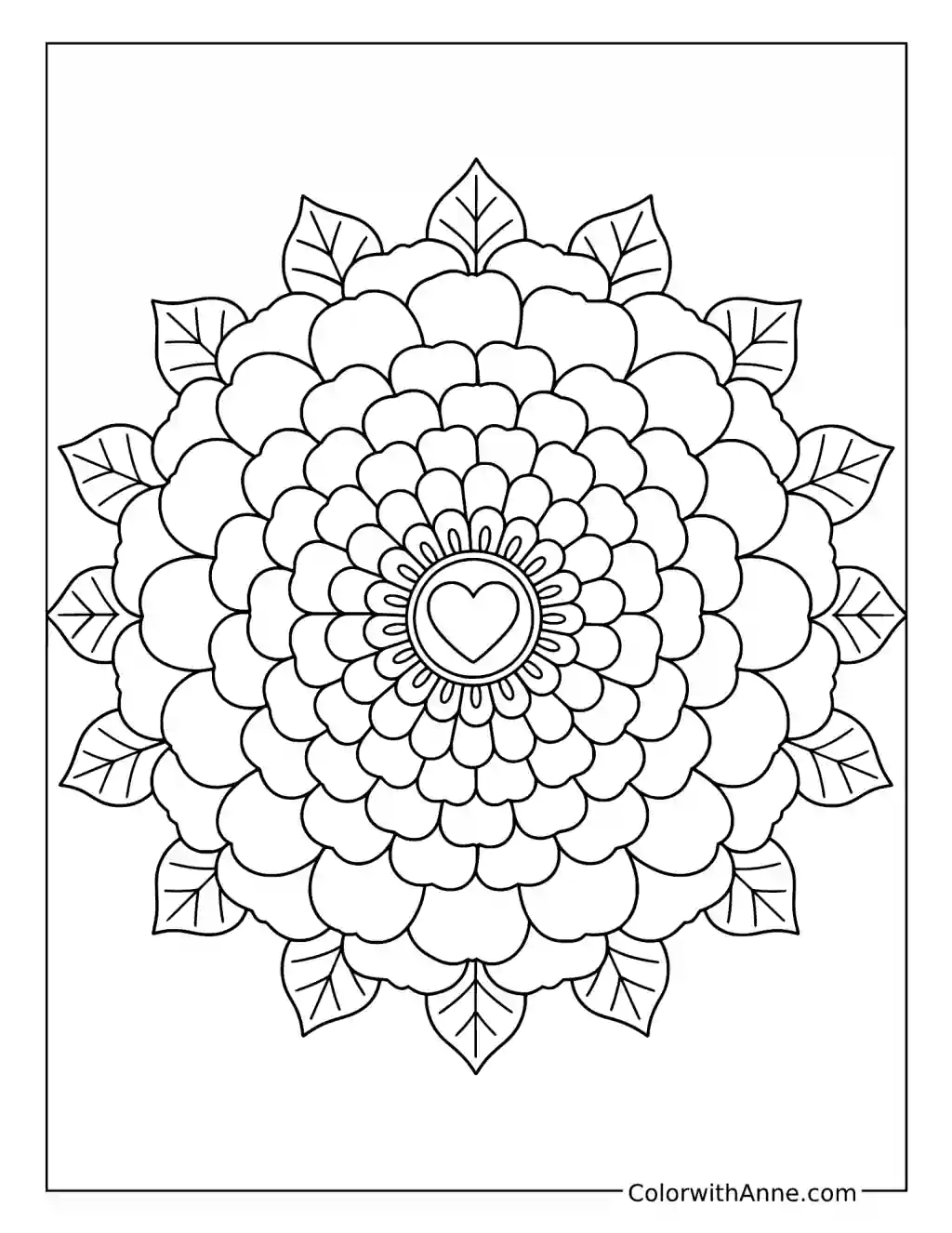
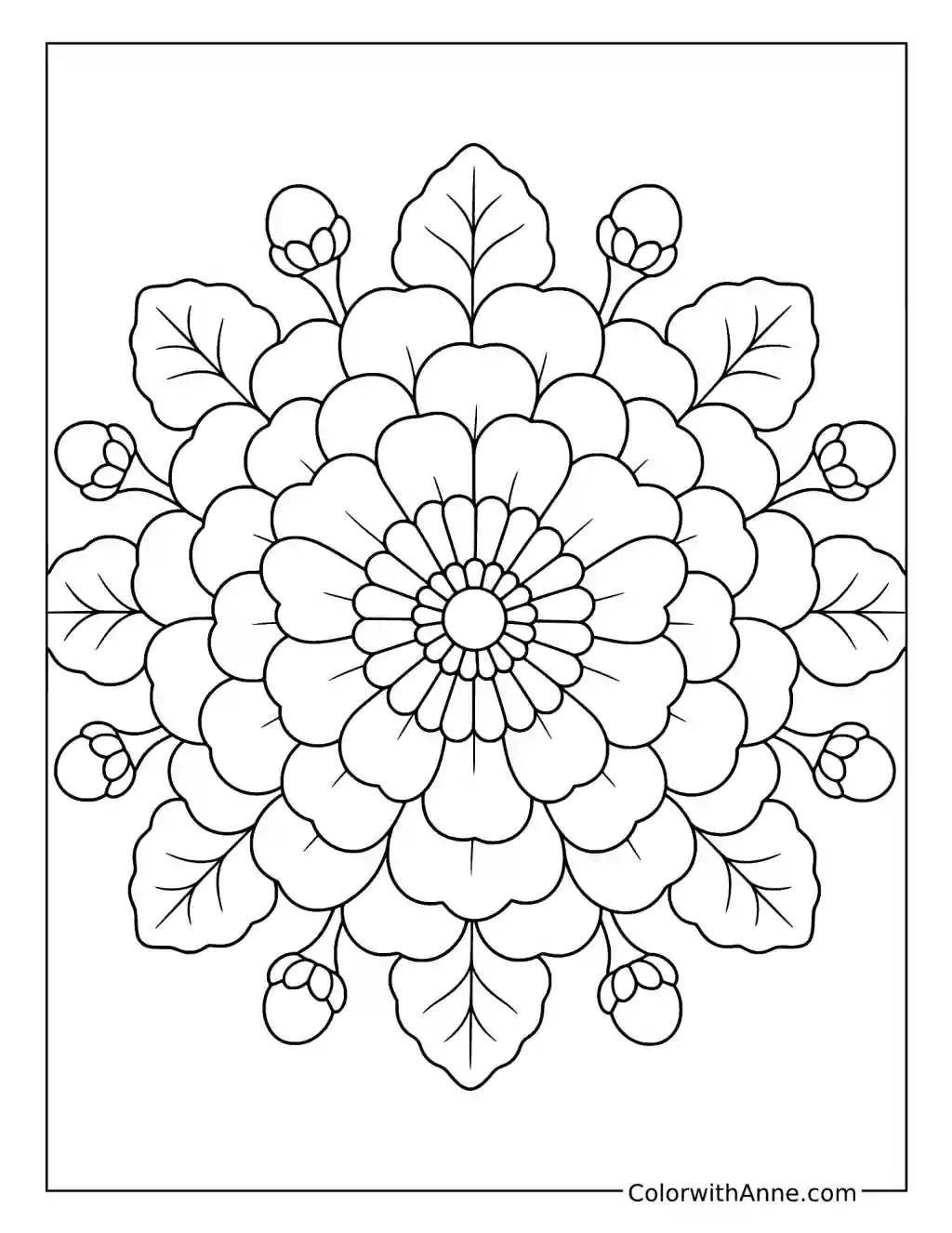
Make a Heart-Centered Zinnia for Someone
A small heart sits at the center of this zinnia, surrounded by tightly arranged petals and an outer border of leaves. It is a fitting design for a handmade note that feels personal without needing a long message.
Choose colors with the recipient in mind: shades from their garden, a favorite scarf, or flowers they often buy. Give the heart one clear accent and repeat it sparingly farther out, keeping it connected to the bloom. Once finished, mount the page on folded cardstock and write your message inside. The flower can do the decorating; a few sincere words are enough.
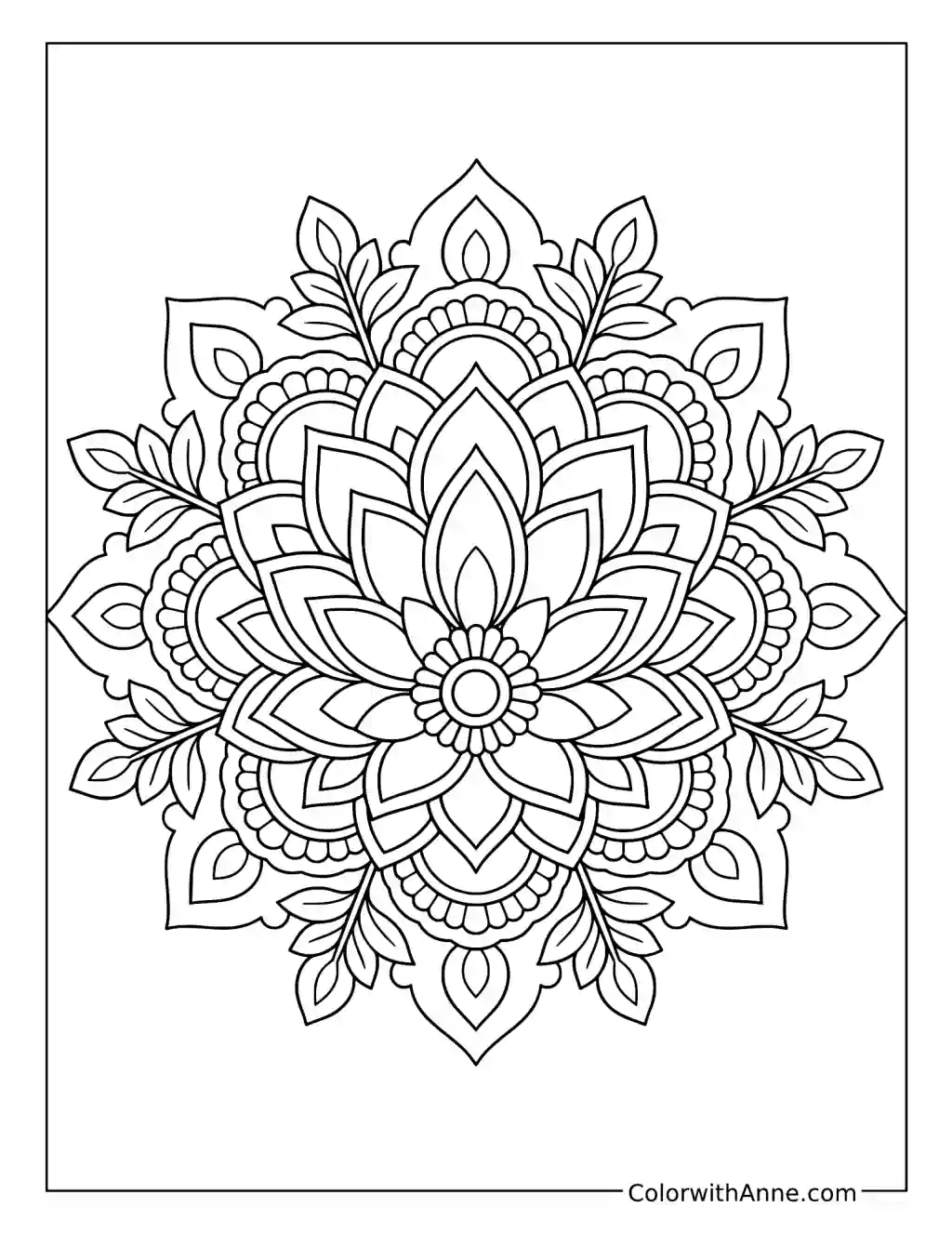
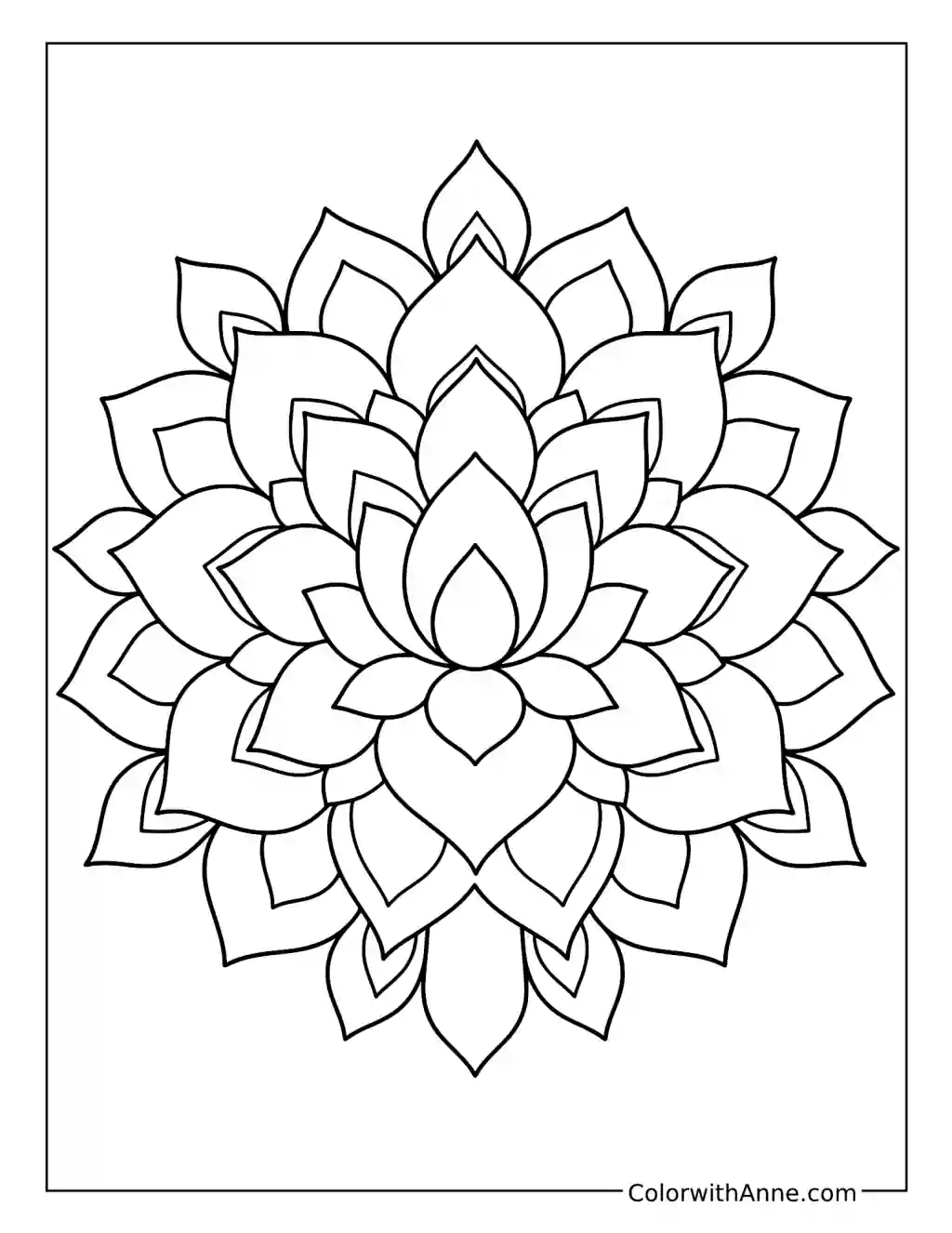
Build the Refined Lotus One Layer at a Time
Nested pointed petals give this lotus a clear sense of layers, with smaller shapes gathered at the center and broader ones opening outward. Choose three related shades, such as pale pink, rose, and burgundy, and decide which layers will receive each one.
Complete a layer before moving outward, taking care to find its matching petals around the design. If the coloring happens over several short sittings, note the chosen shades on a scrap of paper so the arrangement is easy to resume. Keep a few narrow inner shapes pale; those small spaces can help separate the richer colors around them.