A first letter often matters because it belongs to someone. A child spots it at the start of a name, then notices it again on a book or a familiar sign. Little by little, the alphabet becomes part of the day rather than a row of marks to remember all at once.
Alphabet coloring pages offer a relaxed place for those discoveries to continue. A favorite letter can have its own moment, with time to notice its shape and say a familiar word together. The pleasure comes from recognizing something that was new a short while ago, then finding it again beyond the page.
Free Printable Alphabet Coloring Pages
Click any coloring page below to open the PDF, then print on US Letter or A4 paper.
Did you find what you needed?
Help us choose what to create or improve next.
Coloring Ideas for Alphabet Pages
Try these creative ideas to make the most of your coloring sheets.
Find an A beside a Familiar Apple
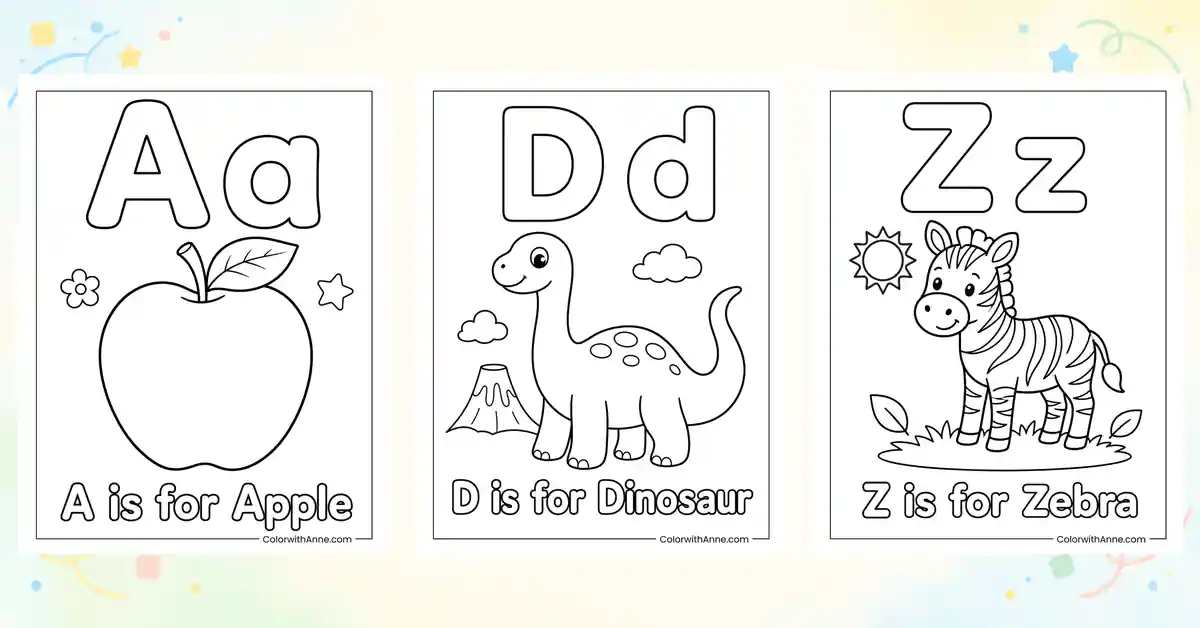
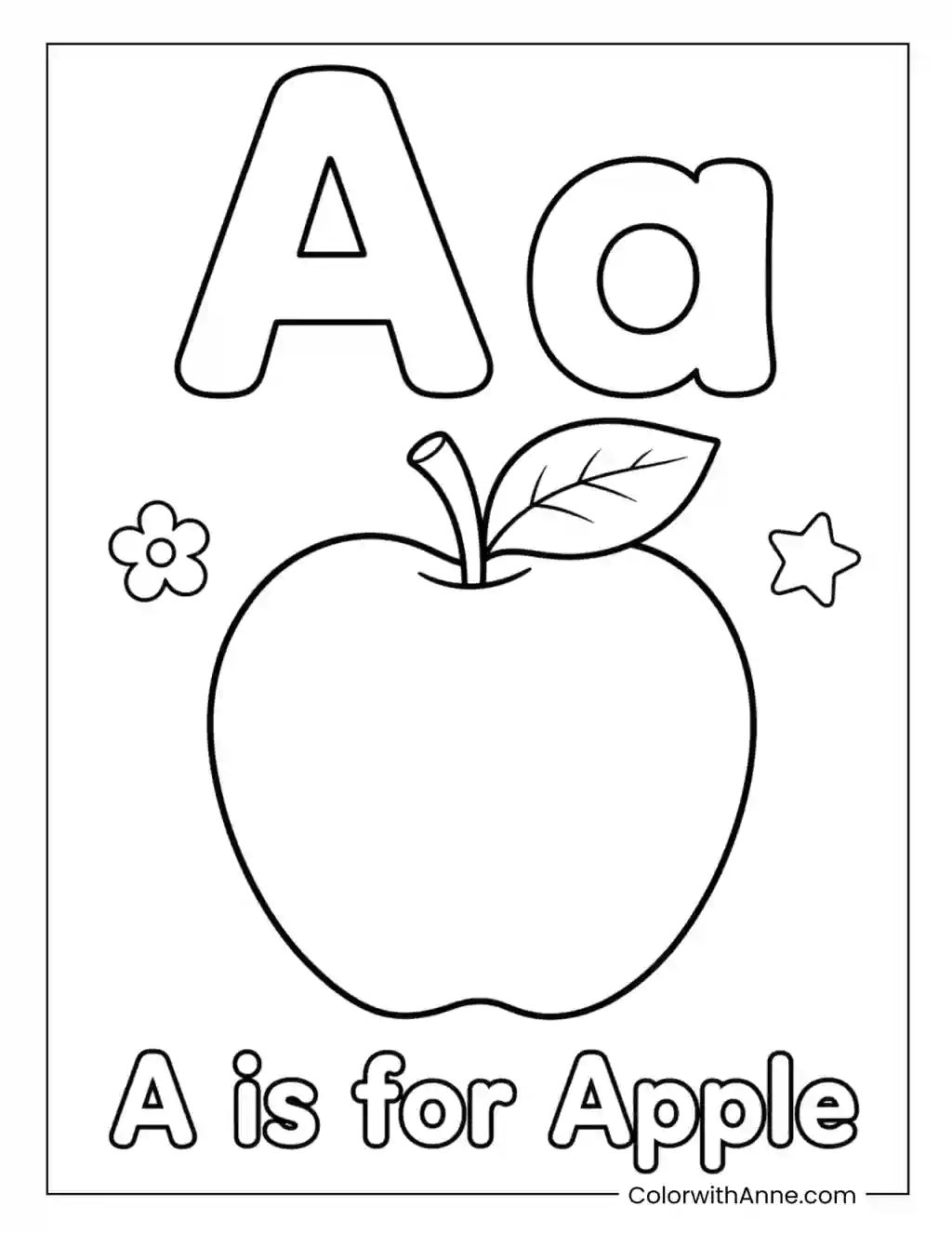
An apple makes a friendly place to begin. The large fruit sits below a capital A and a lowercase a, with a single leaf, a small flower and a star around it. The line at the bottom gives the same pairing again in words.
A red or green apple and a fresh green leaf keep the picture familiar. Give both large letters one shared color, even though their shapes look quite different from each other.
Set the finished page near a bowl of apples for a little everyday connection. Point to the fruit, say its name, then find the A in the printed word. The real object makes the letter feel less far away.
Take D on a Dinosaur Search
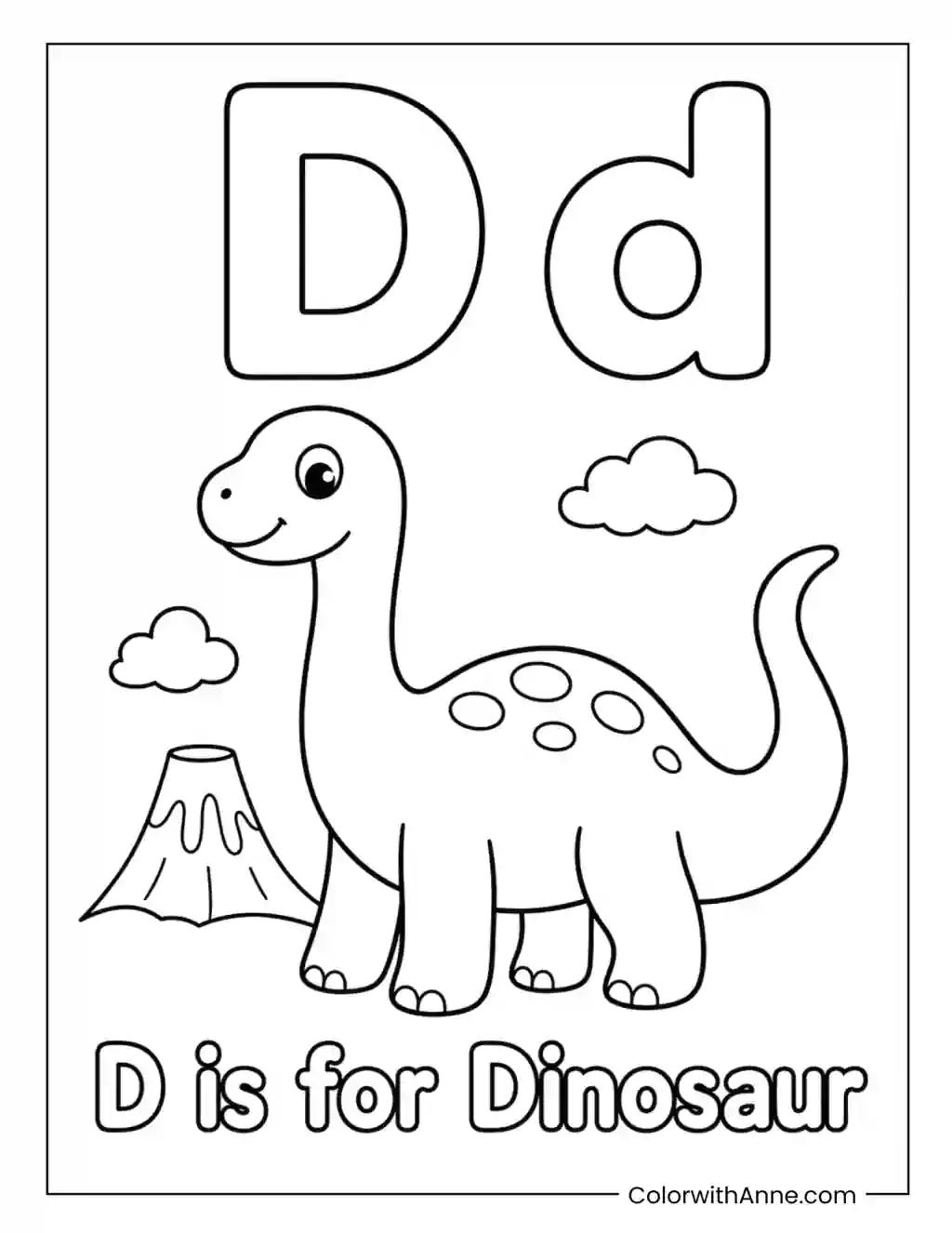
Bring a favorite dinosaur book to the table for a little letter hunt. This page offers a smiling long-necked animal beneath a capital D and a lowercase d. Find the matching letter in the book's title or a short caption before returning to the picture.
Oval spots follow the dinosaur's back toward its curling tail, with a small volcano behind its legs. The two clouds and broad sky leave plenty of space around the animal's raised head.
Green with orange spots gives the dinosaur a playful look. Let the two large letters share another bright shade, then leave the page inside the book as a cheerful reminder of the D that turned up there.
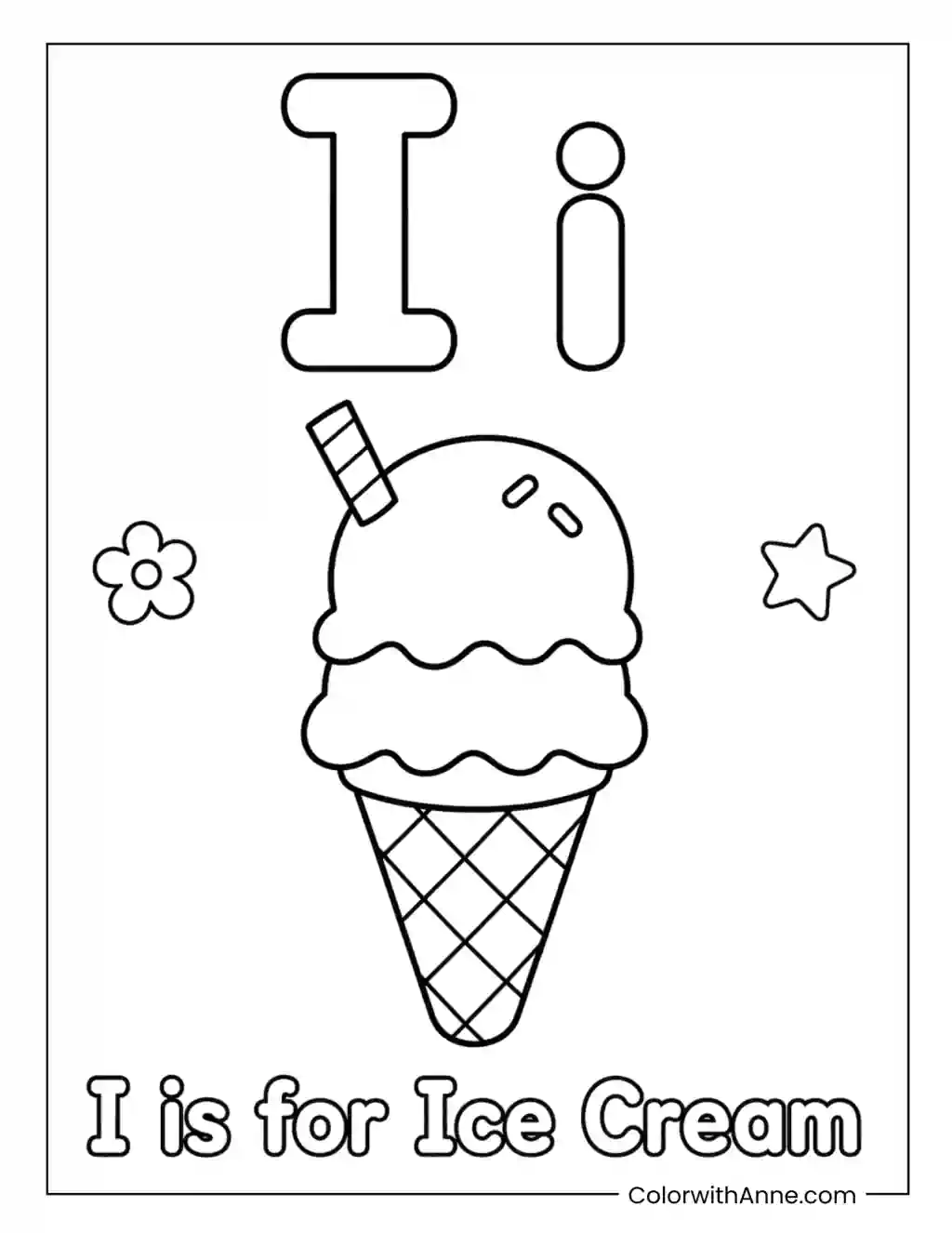
Choose Two Flavors for the Letter I
Which two flavors belong in this cone? Two scoops sit under a tall capital I and a dotted lowercase i. A small wafer sticks out of the top, and the cone has a neat crisscross pattern beneath the wavy edges of the ice cream.
A pink scoop above a pale yellow one can suggest strawberry and vanilla. Or choose two completely invented flavors, keeping the wafer and cone a warm golden shade beside them.
The flavor choices can become the day's small conversation. Give each scoop a name and decide which one would be tasted first. Then look back at the short word at the start of the caption, where the same I introduces the treat.
Count the Eggs in N's Nest
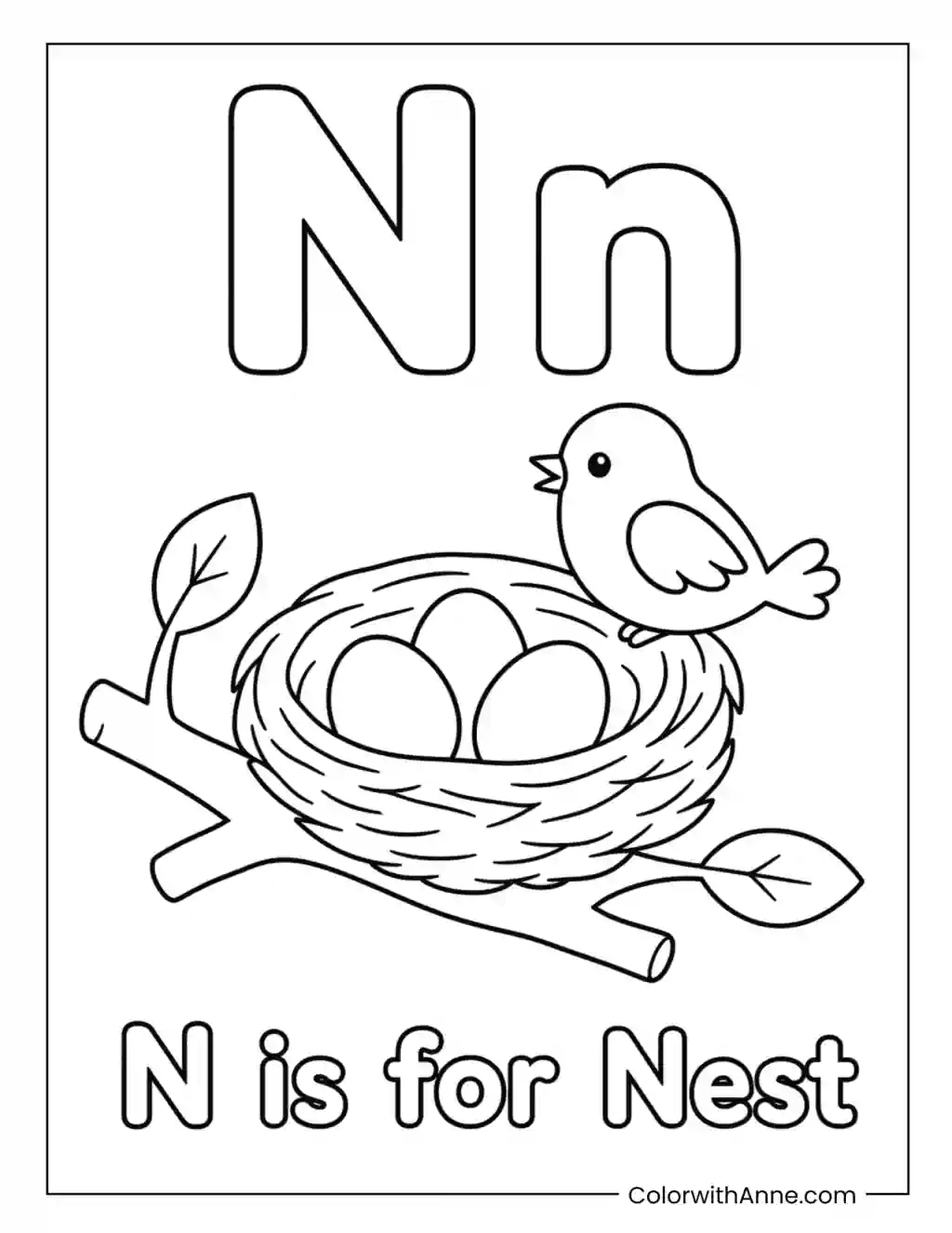
A springtime book makes a natural companion for this little nest. Three eggs sit inside its deep curved sides, and a bird stands at the rim with its beak open. A leafy branch holds the whole scene below a capital N and a lowercase n.
Count the eggs together, then look for N at the start of Nest in the caption. The large letters above and the smaller printed word offer two places to find the same familiar beginning.
Pale blue eggs stand out against a warm brown nest. Leave time for the many curved lines around them, noticing how they gather into a snug shape beneath the bird's feet.
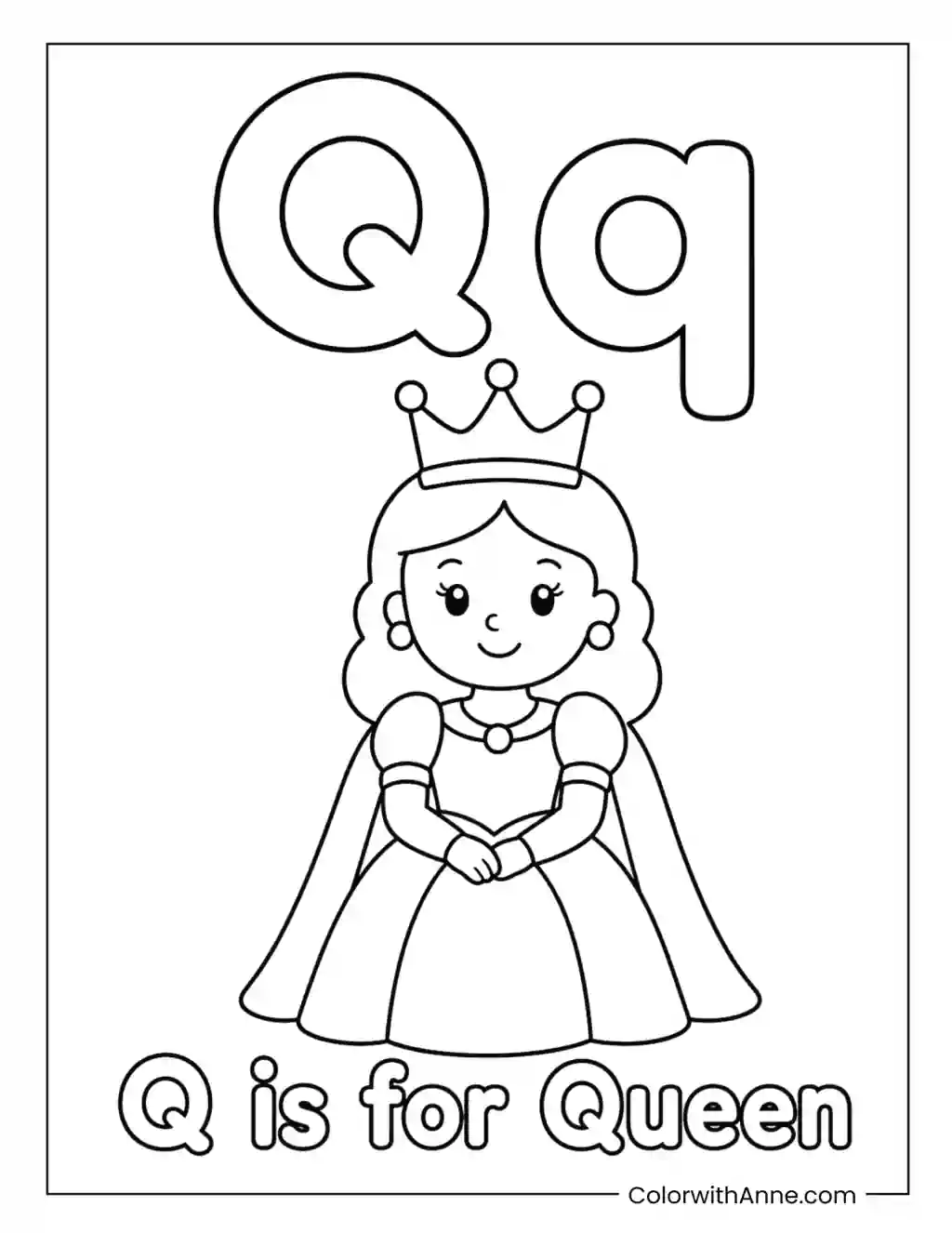
Give Q a Storybook Queen
A crown makes this letter's companion easy to recognize. The queen sits beneath a capital Q and a lowercase q, with her hands folded over a wide gown. Round earrings and a necklace echo the little circles at the points of her crown.
Try a deep purple gown with a golden crown, or choose colors from a favorite fairy tale. The cape and puffed sleeves offer a few larger spaces around the smaller jewelry details.
Keep the page nearby during a story with a queen in it. Compare this simple portrait with the book's illustration, noticing a different crown or dress. The word Queen at the bottom can connect the familiar story role to its first letter.
Let U Join a Rainy Day
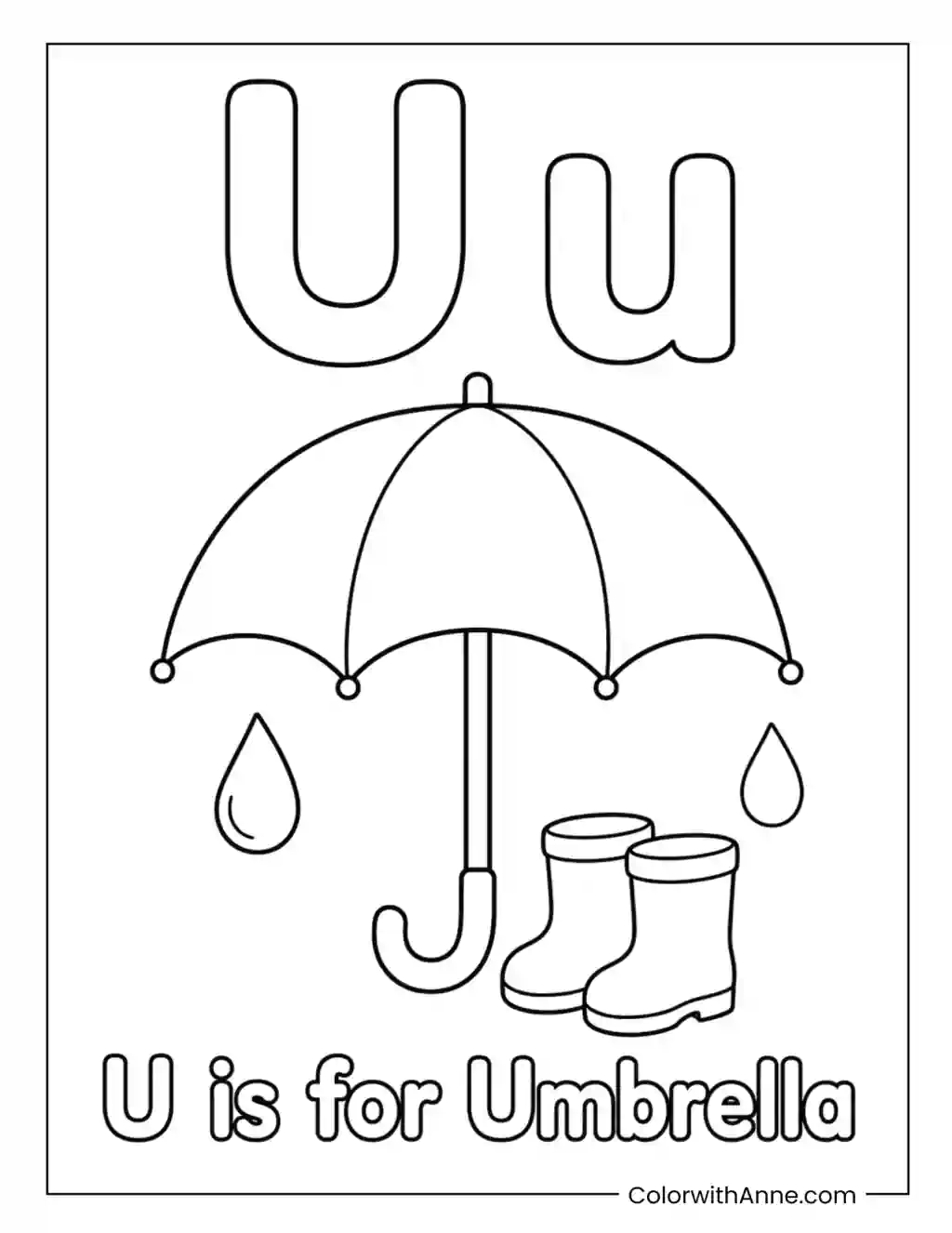
Rain on the window gives this umbrella page its moment. An open canopy stretches beneath the large U and u, with two boots beside its curved handle. Two big drops float at either side, leaving broad spaces around the simple rainy-day objects.
The canopy can wear alternating yellow and blue panels, with boots in a bright matching color. Give the large letters the same yellow so they feel connected to the umbrella below.
Compare the finished picture with the umbrella or boots kept by the door. Notice a different handle, a taller boot or another color. Saying Umbrella while finding its printed first letter turns a familiar piece of weather gear into the day's small discovery.
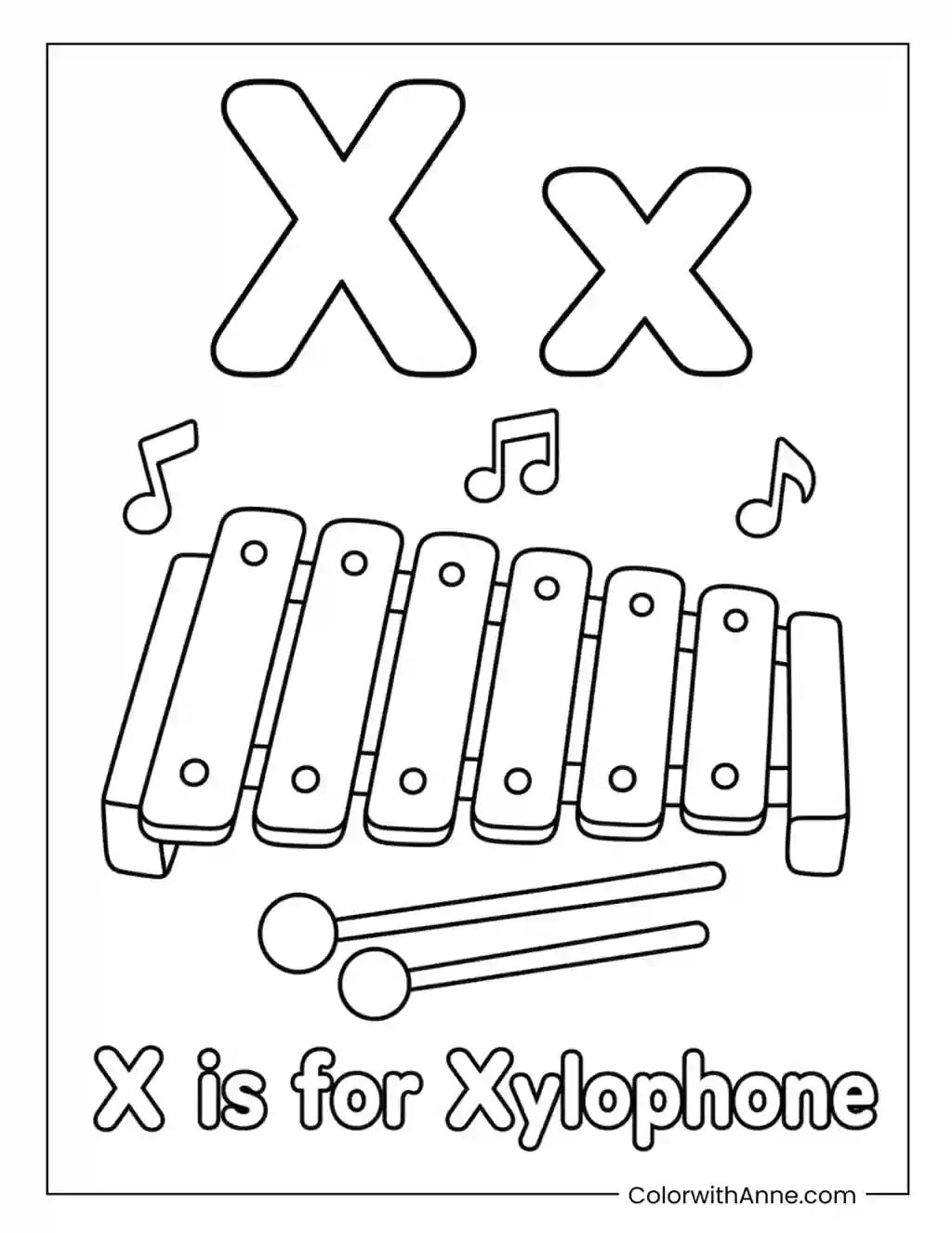
Bring a Little Music to X
A short music break gives this X a lively introduction. Set the page beside a toy xylophone and tap a simple rhythm, then look for the matching objects in the drawing. Two round-headed beaters rest below the row of bars, with notes floating above.
The capital X and its smaller partner share the same crossed shape. Notice how they differ in size, then find X again at the start of Xylophone in the caption beneath the instrument.
Each musical bar can have a different bright color, while both letters share one favorite shade. The little floating notes finish the picture with a sense of sound, even when the real instrument has gone quiet.
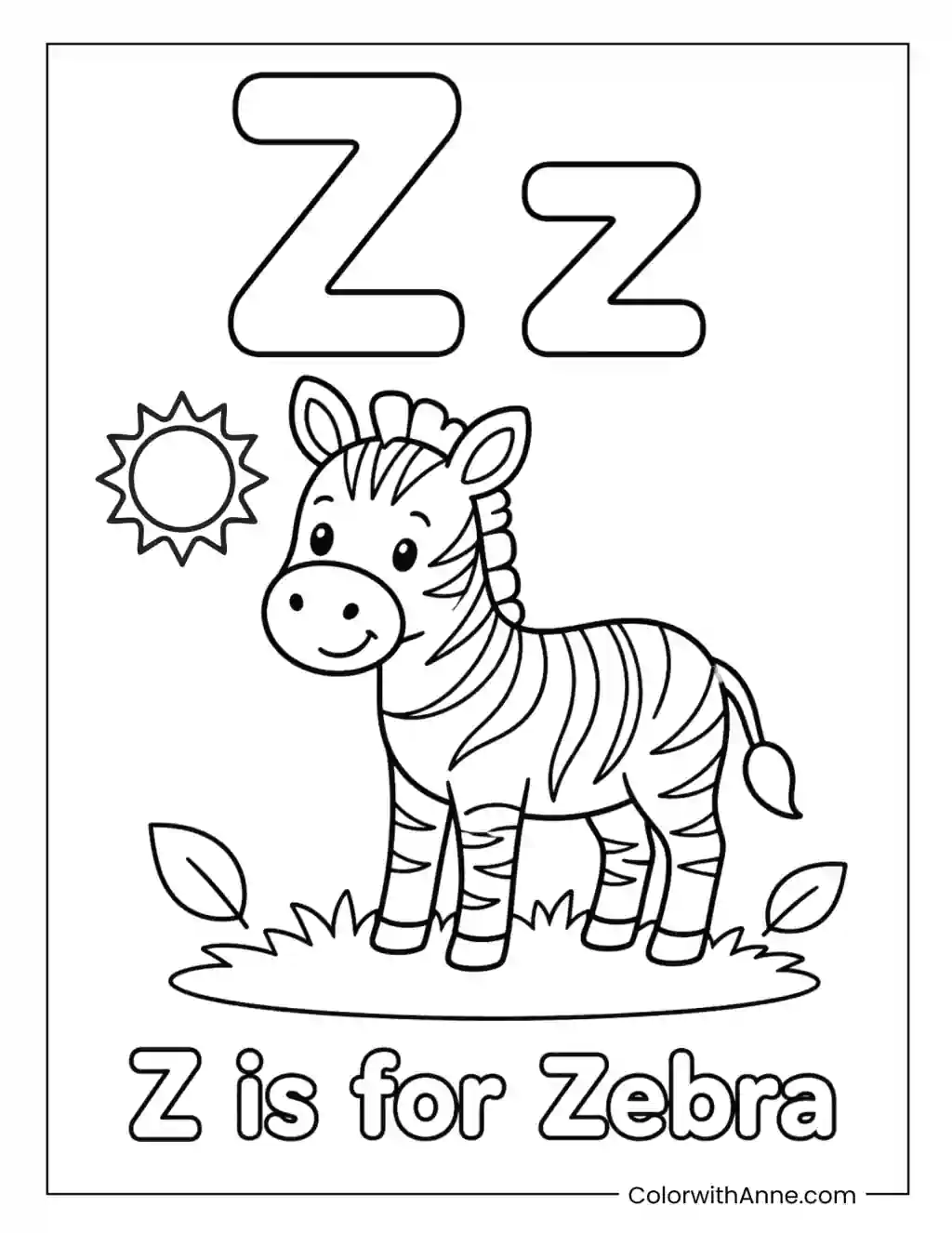
Finish the Alphabet beside a Zebra
Z has a striped companion waiting at the end of the alphabet. The zebra stands beneath a large Z and a smaller z, with a sun above its shoulder and leaves around its feet. The short upright mane and curved tail add detail to the animal.
Black stripes against a mostly white coat give the zebra its familiar contrast. A warm yellow sun and green grass can surround the bold shapes without making the letters hard to see.
Place the finished page at the back of a folder of letter pictures. Looking from the first page to this last letter can become a satisfying way to revisit favorites, with the cheerful zebra marking how far the collection has grown.