
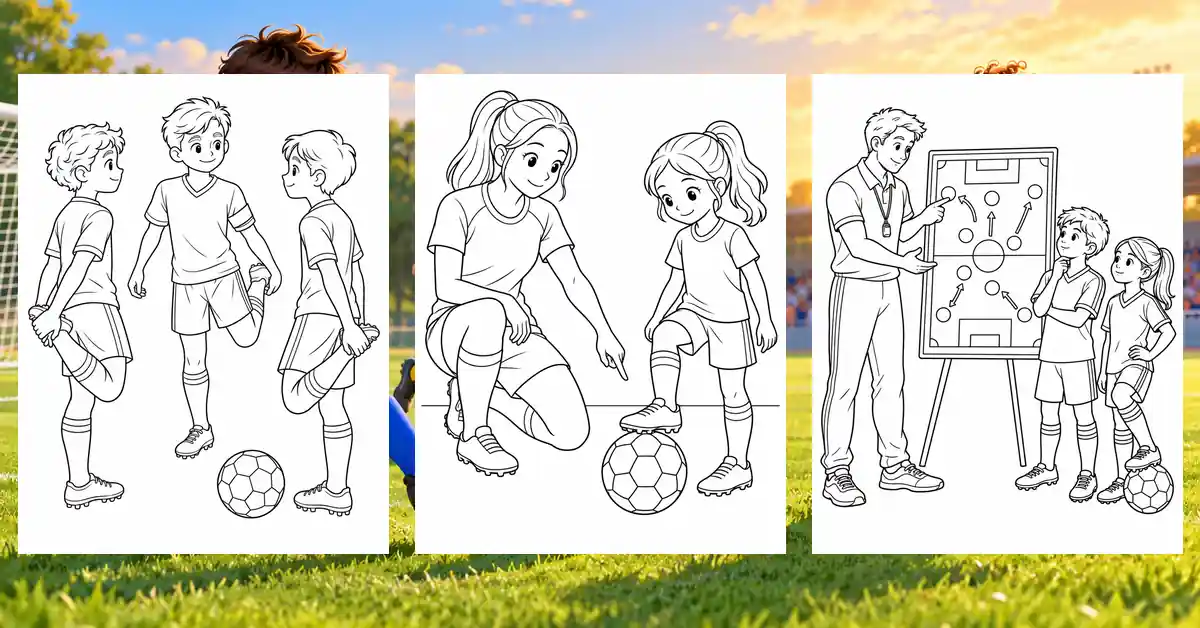
A ball at someone’s feet can turn a patch of grass into a place to practice, share a laugh, or try a new move together. Soccer coloring pages follow those small moments around the game, from a warm-up circle to a goalkeeper preparing to send the ball downfield.
Some scenes pause over the details behind a match: friends fastening a goal net, a coach drawing a play, or a player testing a rebound net. Others catch a ball in motion between teammates. Each picture offers its own moment to notice, with uniforms, equipment, and expressions ready for a personal touch.
Free Printable Soccer Coloring Pages
Click any coloring page below to open the PDF, then print on US Letter or A4 paper.
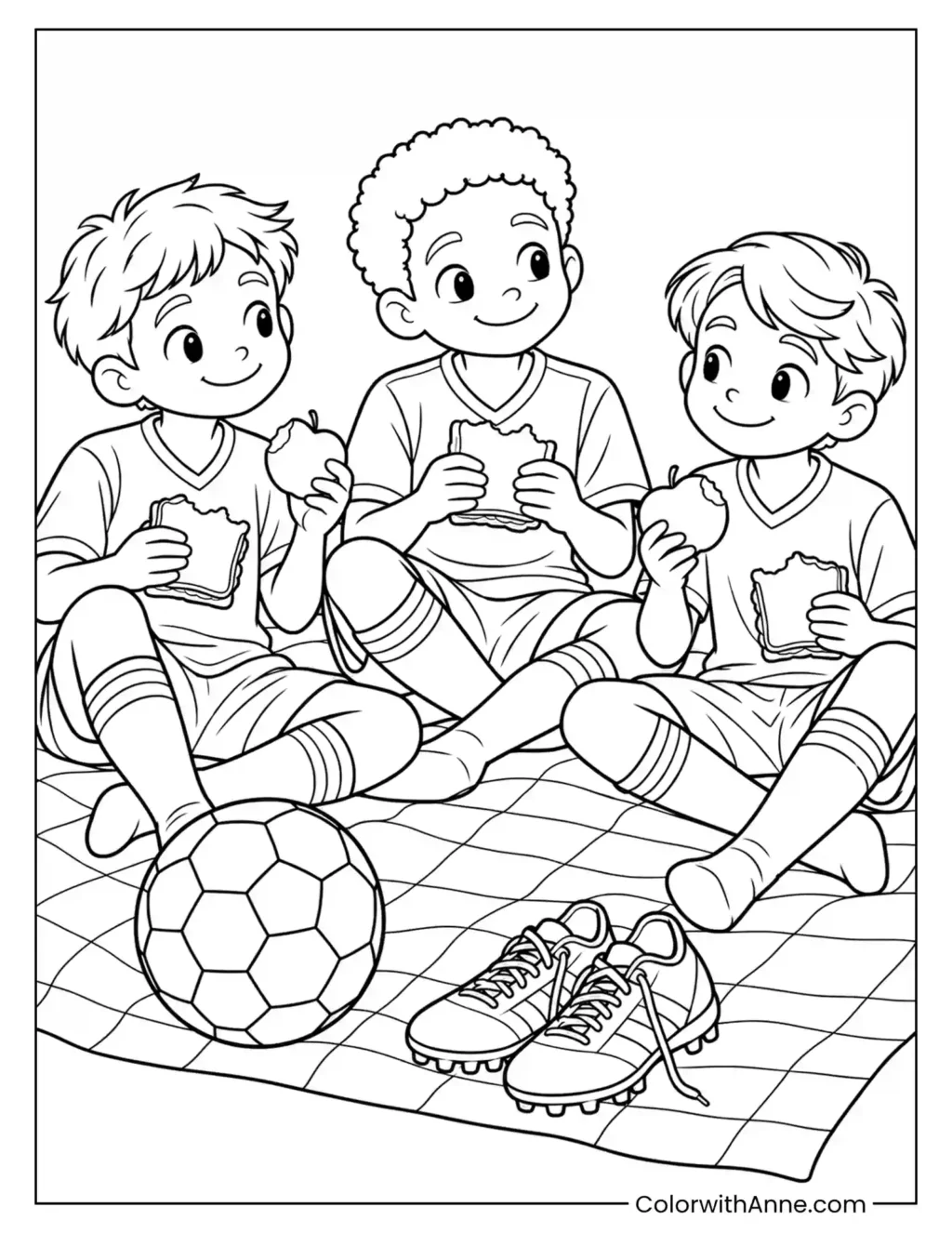
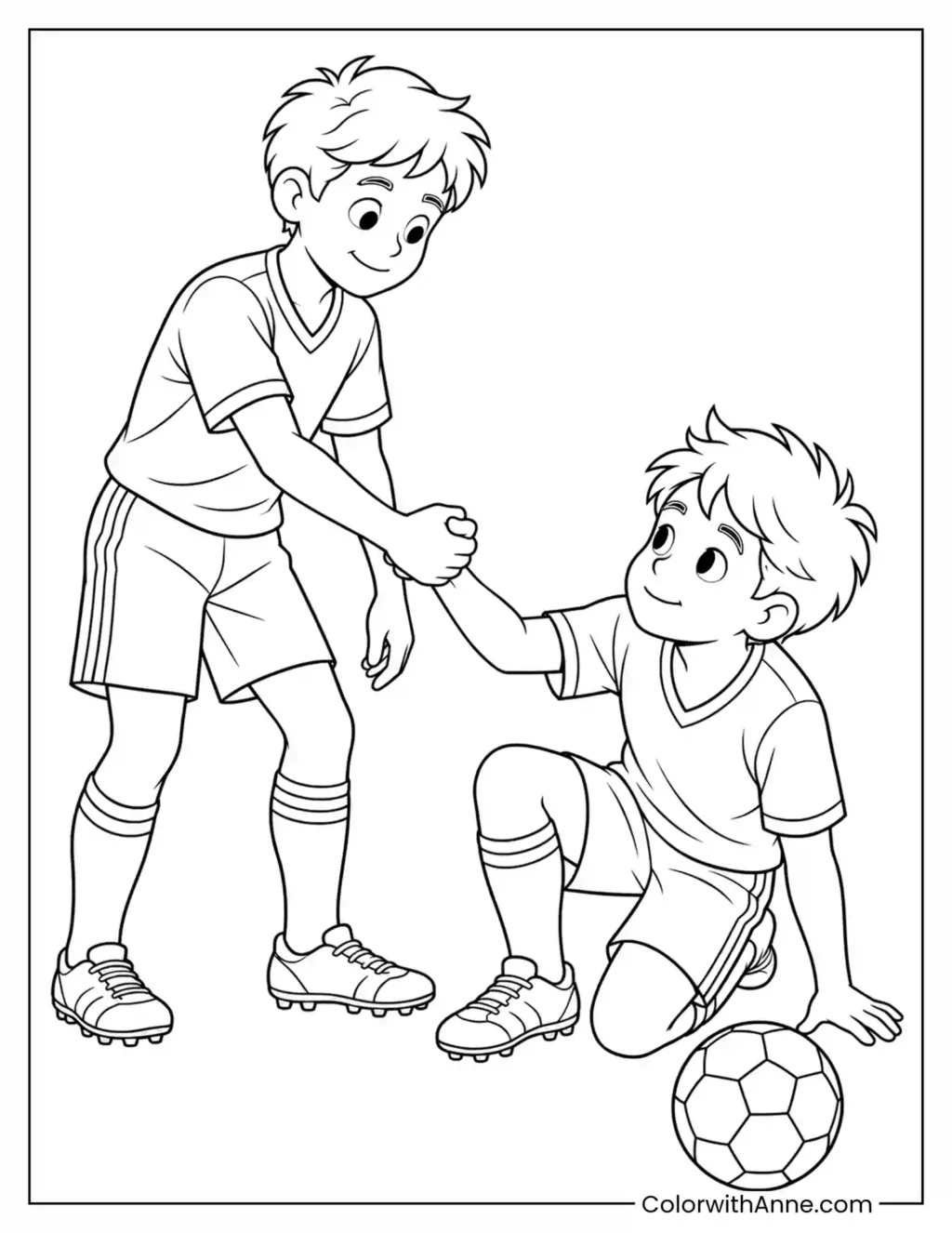
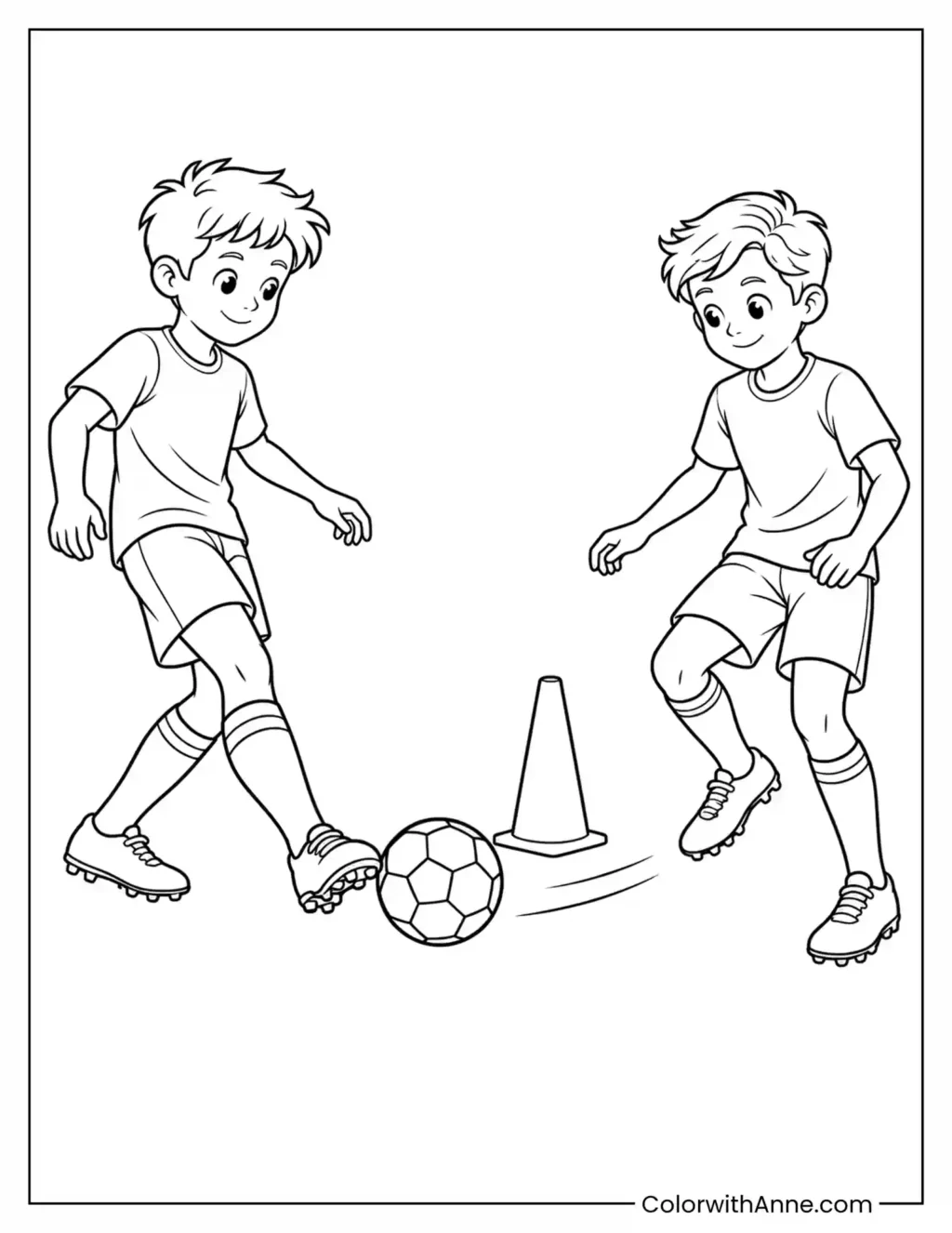
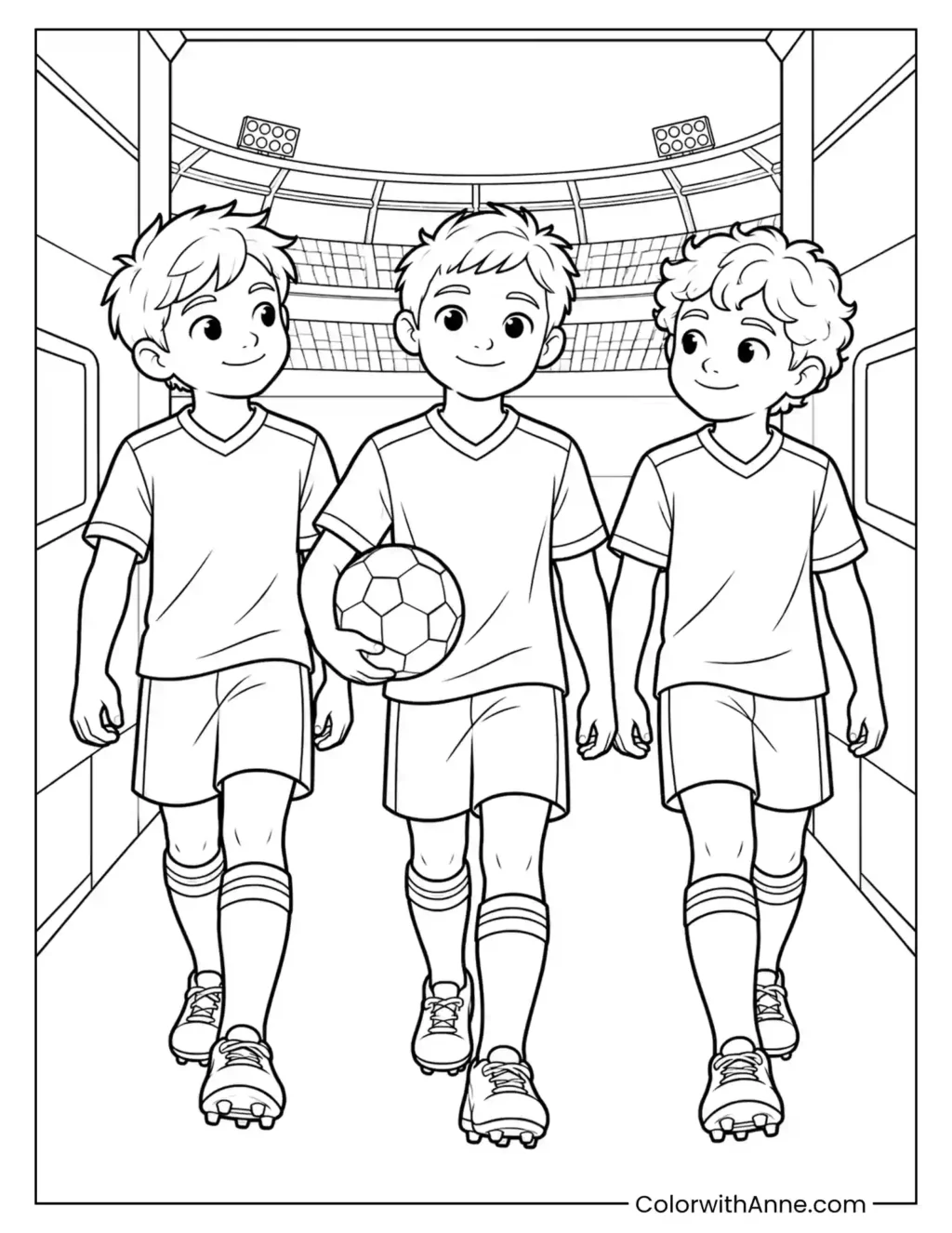
Did you find what you needed?
Help us choose what to create or improve next.
Coloring Ideas for Soccer Pages
Try these creative ideas to make the most of your coloring sheets.
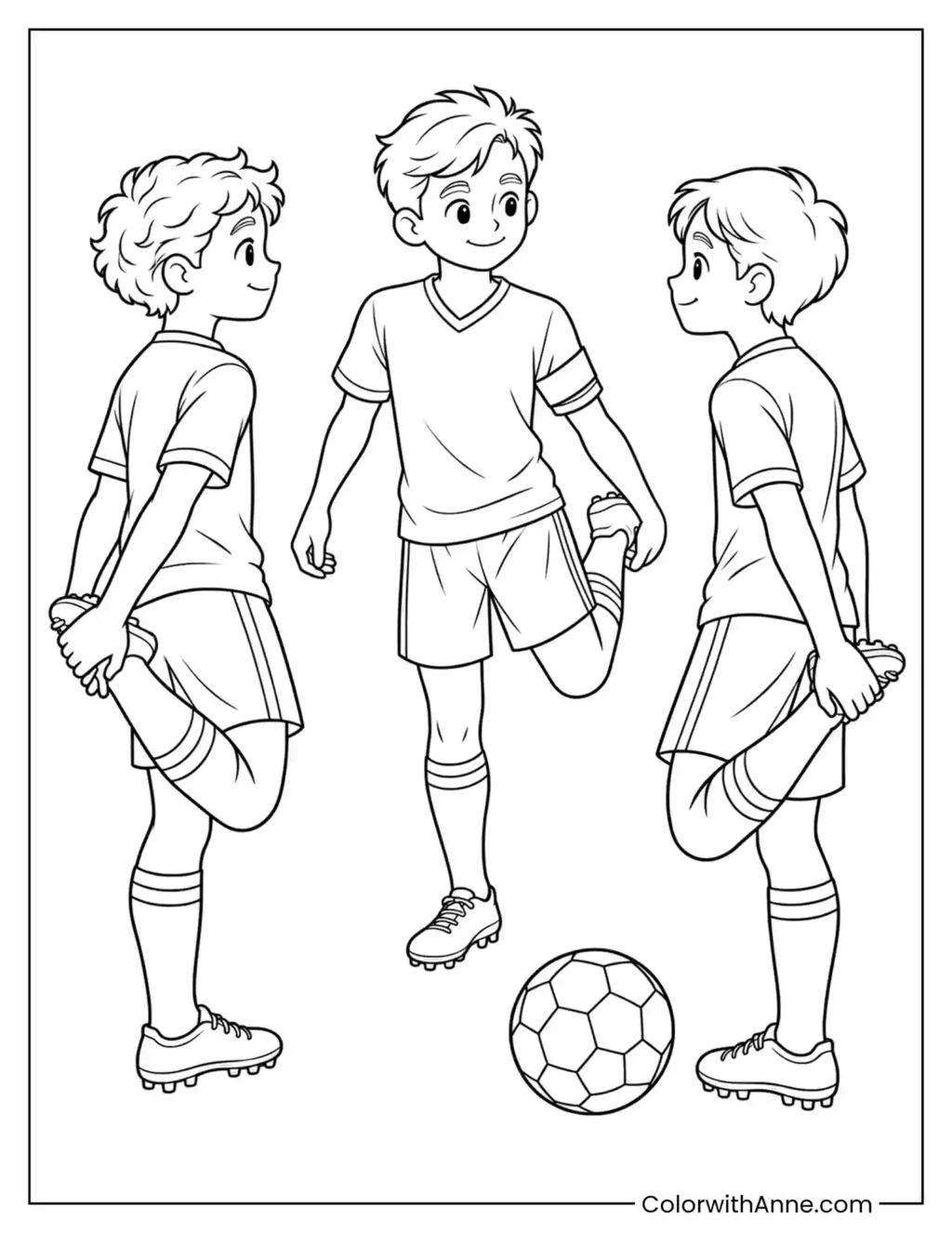
Warm Up Together
The three players form a loose circle around the ball, each stretching one leg before practice. Give their shirts related colors, then vary the shorts or socks to make each teammate easy to distinguish. A small repeated stripe can tie the group together.
Leave alternating panels on the ball white and color the others in a favorite team shade. The simple ball shape makes a useful focal point without adding anything to the open background.
A light ground shadow beneath each shoe can suggest the players are standing together. Keep the space around their raised feet clear so the stretching poses remain easy to read.
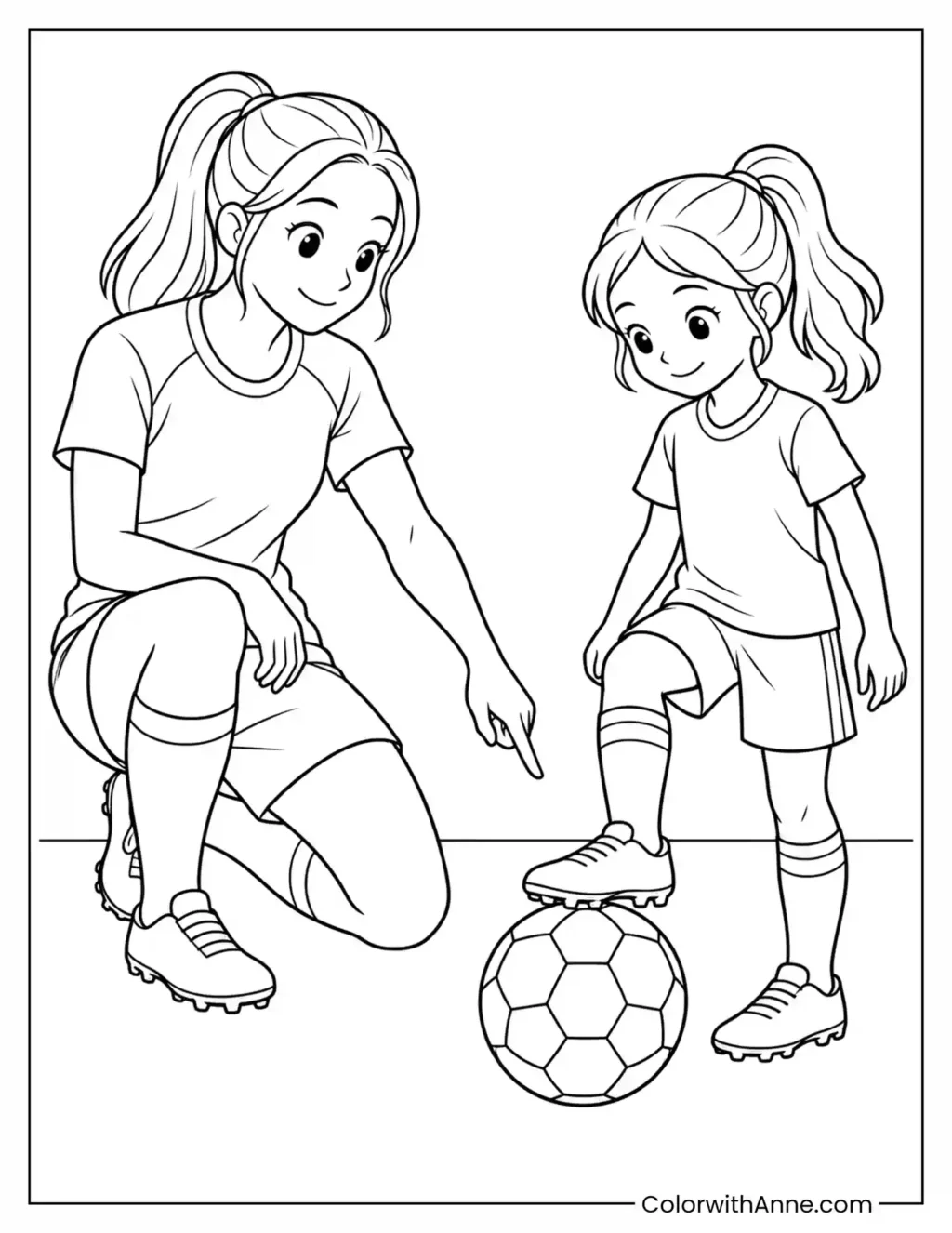
Balance the Ball
A coach kneels beside a young player who rests one foot on the soccer ball. Use different shirt colors for the two figures, with a small matching accent on their shoes or socks to connect them as a pair.
Color the ball in alternating light and dark panels. A fine-tip marker can follow the narrow seams, while the broad shapes leave room for softer color. Keep the coach’s pointing hand distinct from the line behind it.
The background is mostly open, so a pale strip of green below the figures is enough to suggest a field. Let the player’s balanced foot and the ball remain the center of attention.
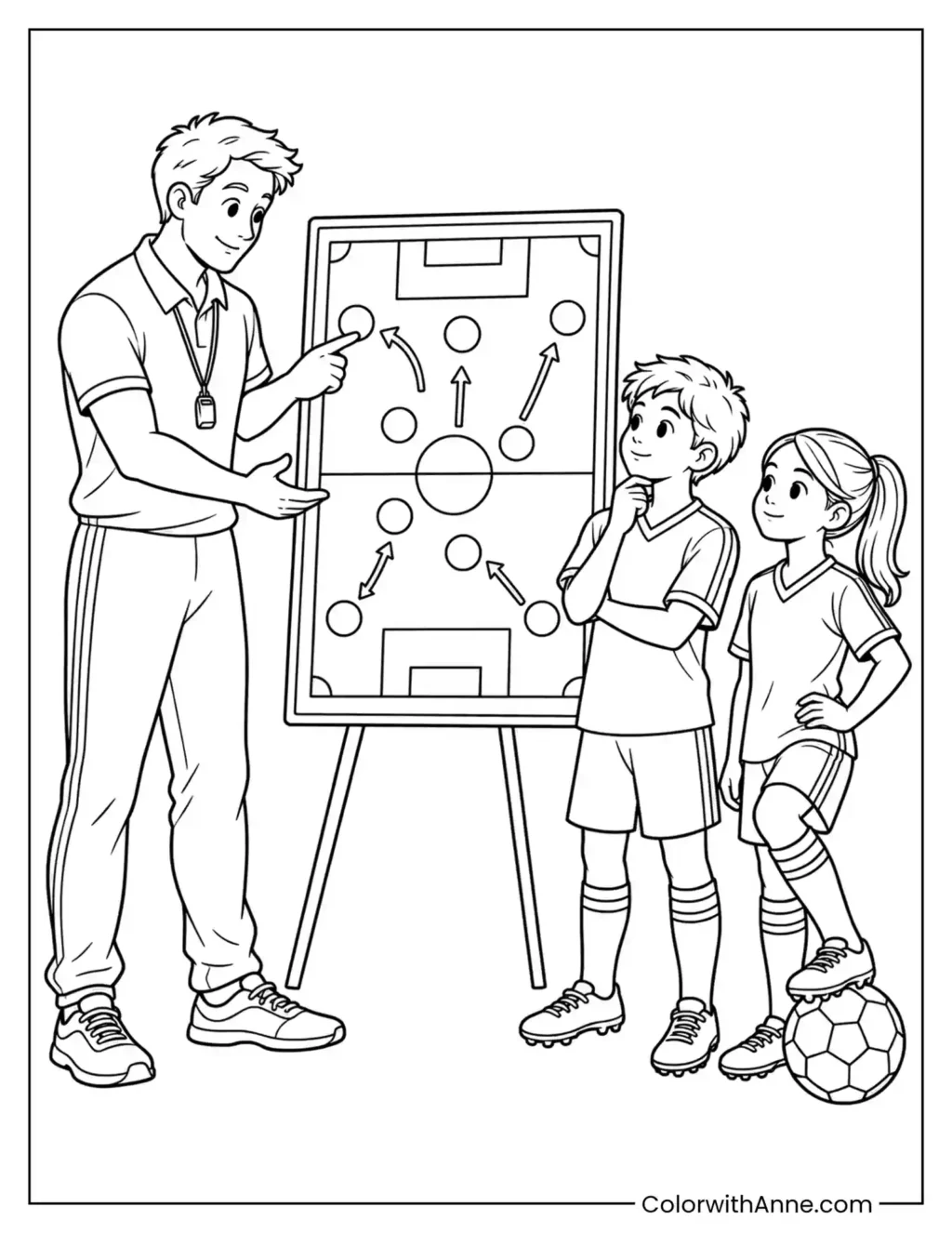
Follow the Coach’s Play
The coach points to a board filled with circles and arrows while two players listen. A dark frame and a pale board surface keep the play diagram readable; use two contrasting colors for the circles and arrows inside it.
Give the coach and each player a different shirt color, repeating one shade on the shoes or socks. Leave the small hands around the board clear so their gestures remain visible.
A quiet color on the ball beside the players can echo one of the diagram’s accents. Keep the open background light, allowing the board and the group gathered around it to tell the story.
Aim for the Target
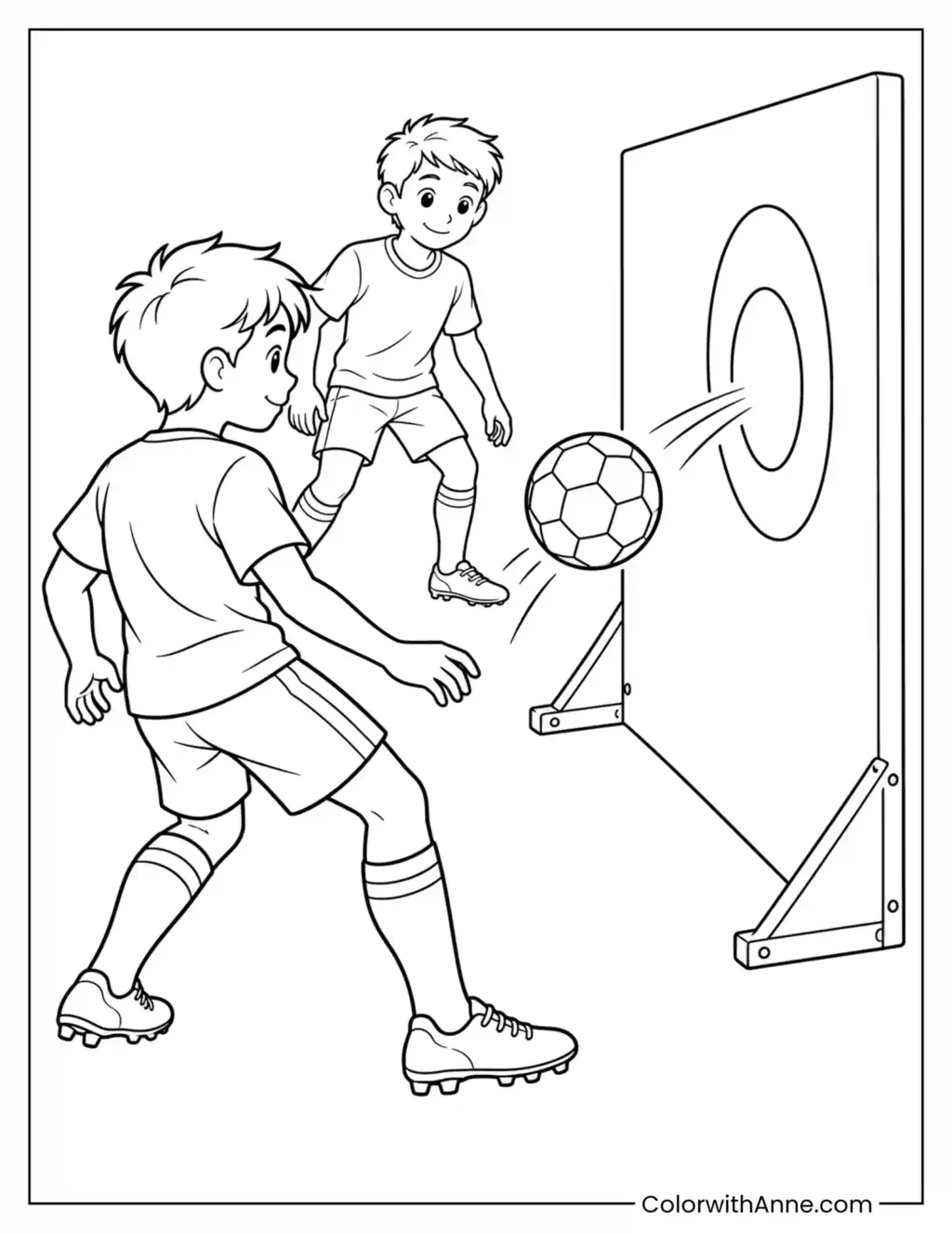
Two friends practice a pass against a standing target board. A bright color around the outer target can draw the eye toward the ball, while a paler center keeps the curved outlines easy to follow.
Choose two different uniform colors for the players and repeat one on the ball’s panels. The short marks beside the ball suggest movement; leaving white space around them helps preserve that sense of action.
The board’s legs and supports can be a muted gray or brown. A light ground color beneath the players brings the scene together without filling the large blank space behind them.
Fasten the Goal Net
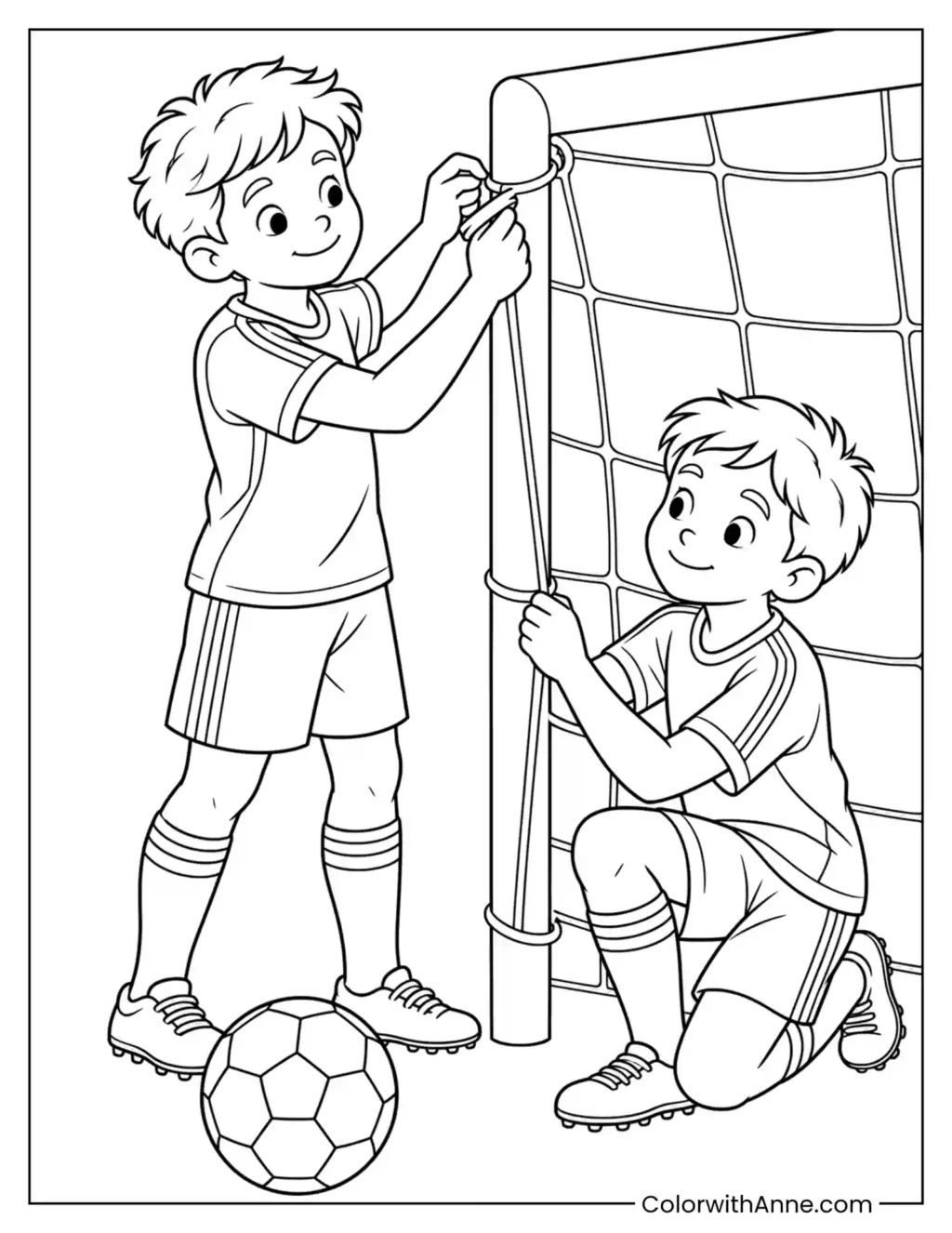
Two friends work together beside a goal, one standing and the other kneeling by the post. Give them different shirt colors and use a shared accent on their socks or shoes to show they belong to the same team.
A pale gray goal frame can stand apart from the net. Follow only a few of the net’s lines with a fine-tip marker, or leave the grid white so the small spaces do not become crowded.
Color the ball in a simple two-tone pattern near their feet. A small patch of green beneath the goal gives the scene a setting while keeping attention on the players’ hands.
Send the Ball Downfield
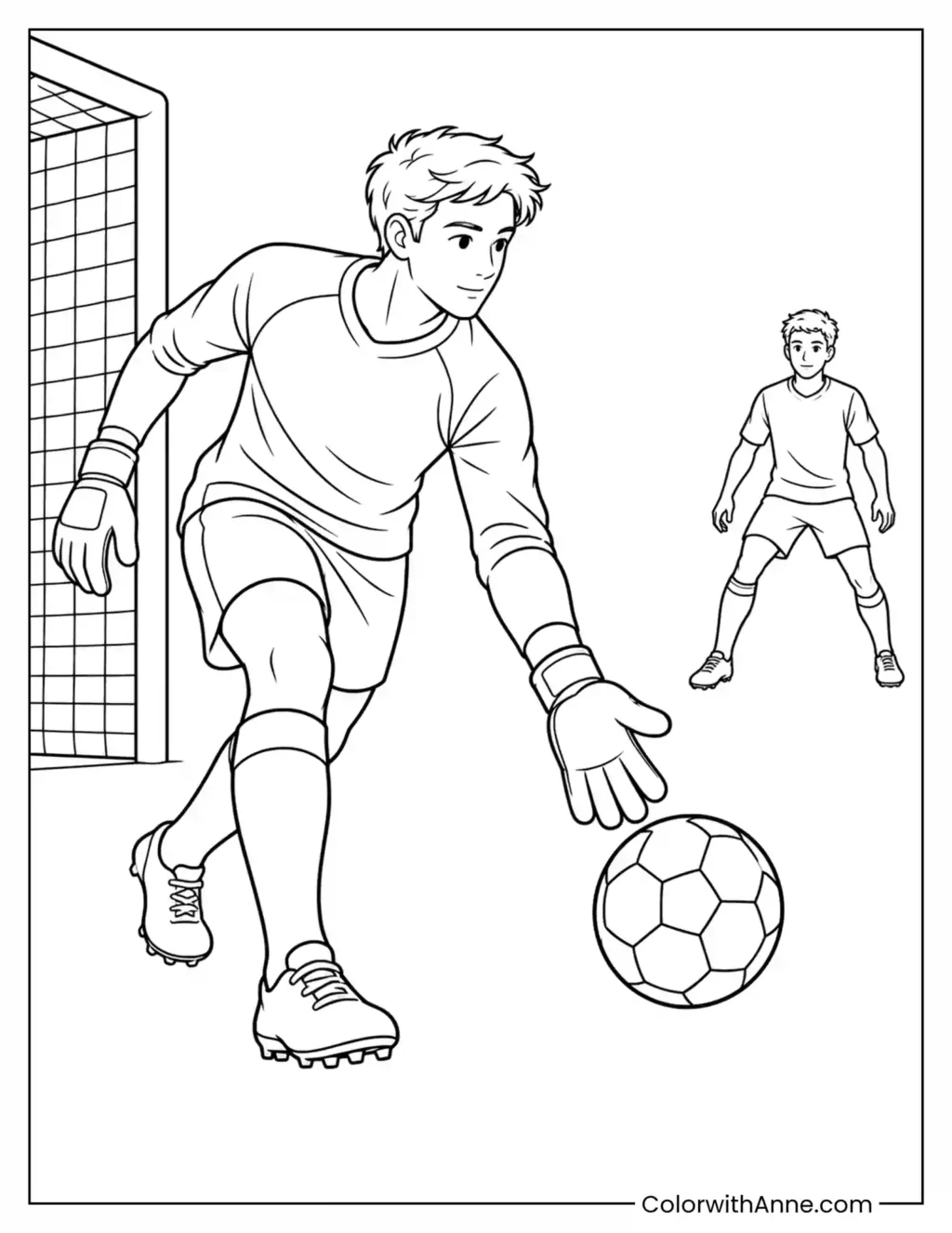
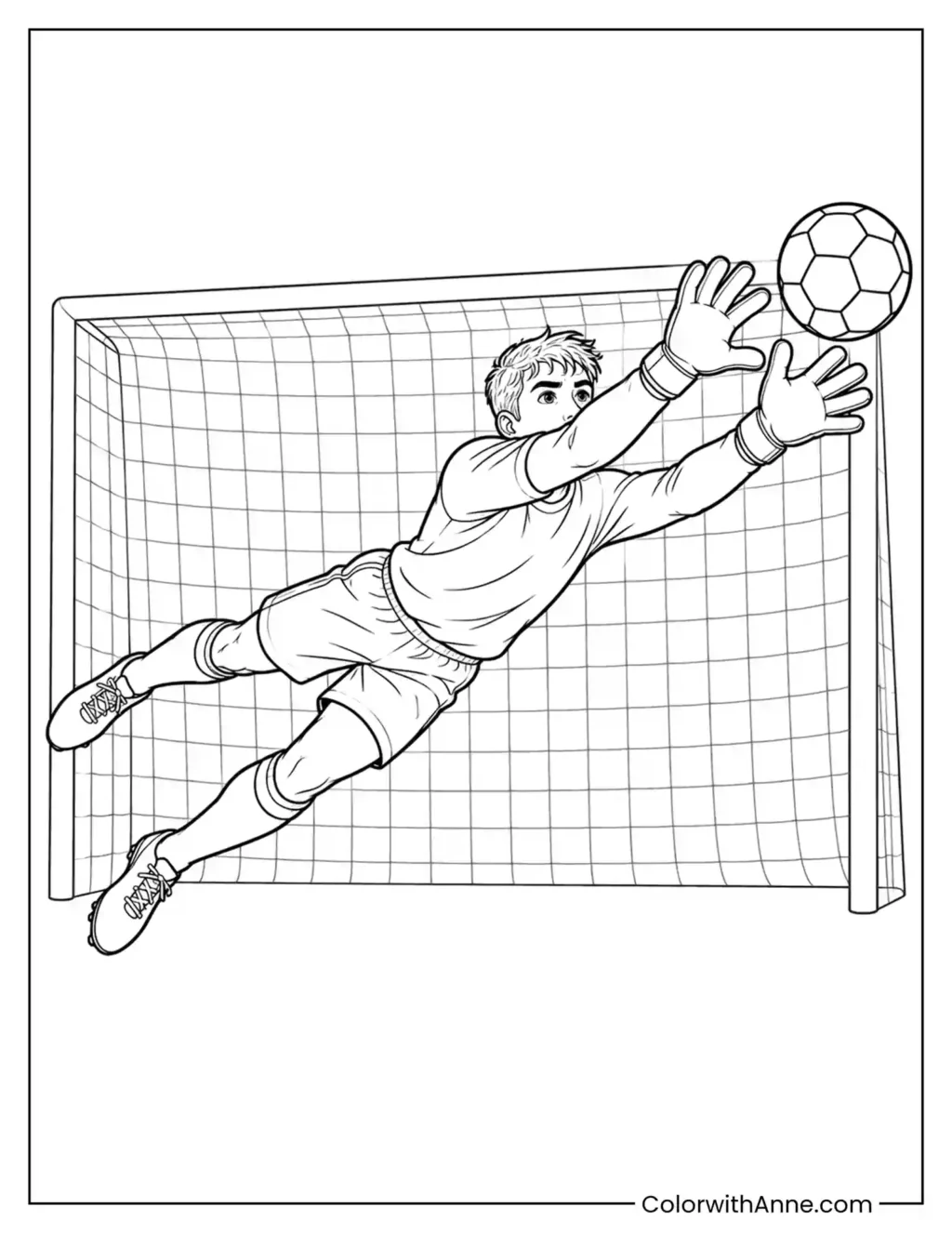
The goalkeeper leans forward with one gloved hand extended toward the ball, while another player waits farther back. Use a strong color on the goalkeeper’s shirt and a quieter shade on the distant uniform to separate their positions.
Give the gloves a contrasting color and keep the narrow wrist bands visible. The ball can repeat a little of that accent in alternating panels, leaving the remaining panels light.
A pale shade on the goal frame and net keeps their lines visible without competing with the figures. Leave most of the background white, or add a subtle green beneath the shoes and ball.
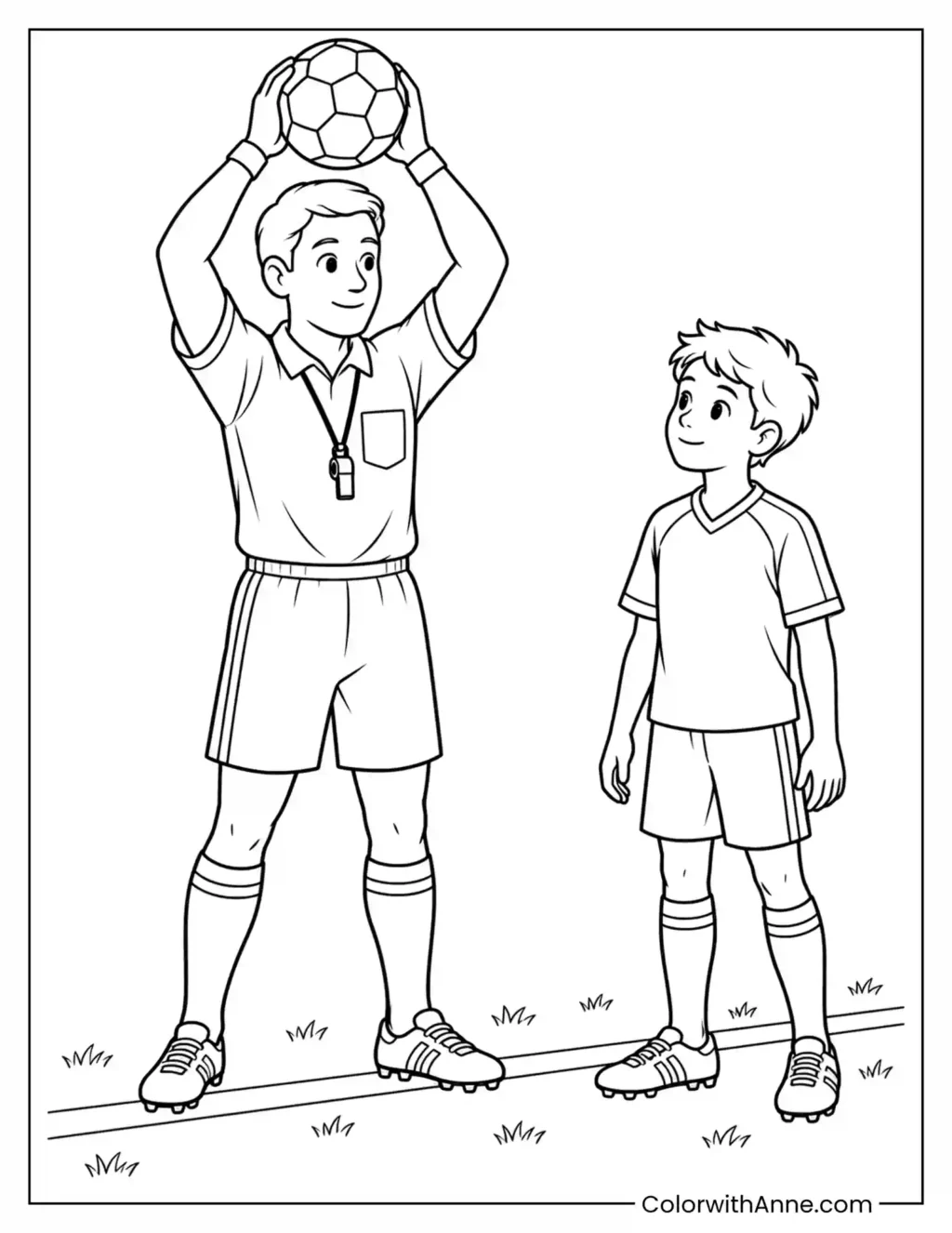
Practice a Header
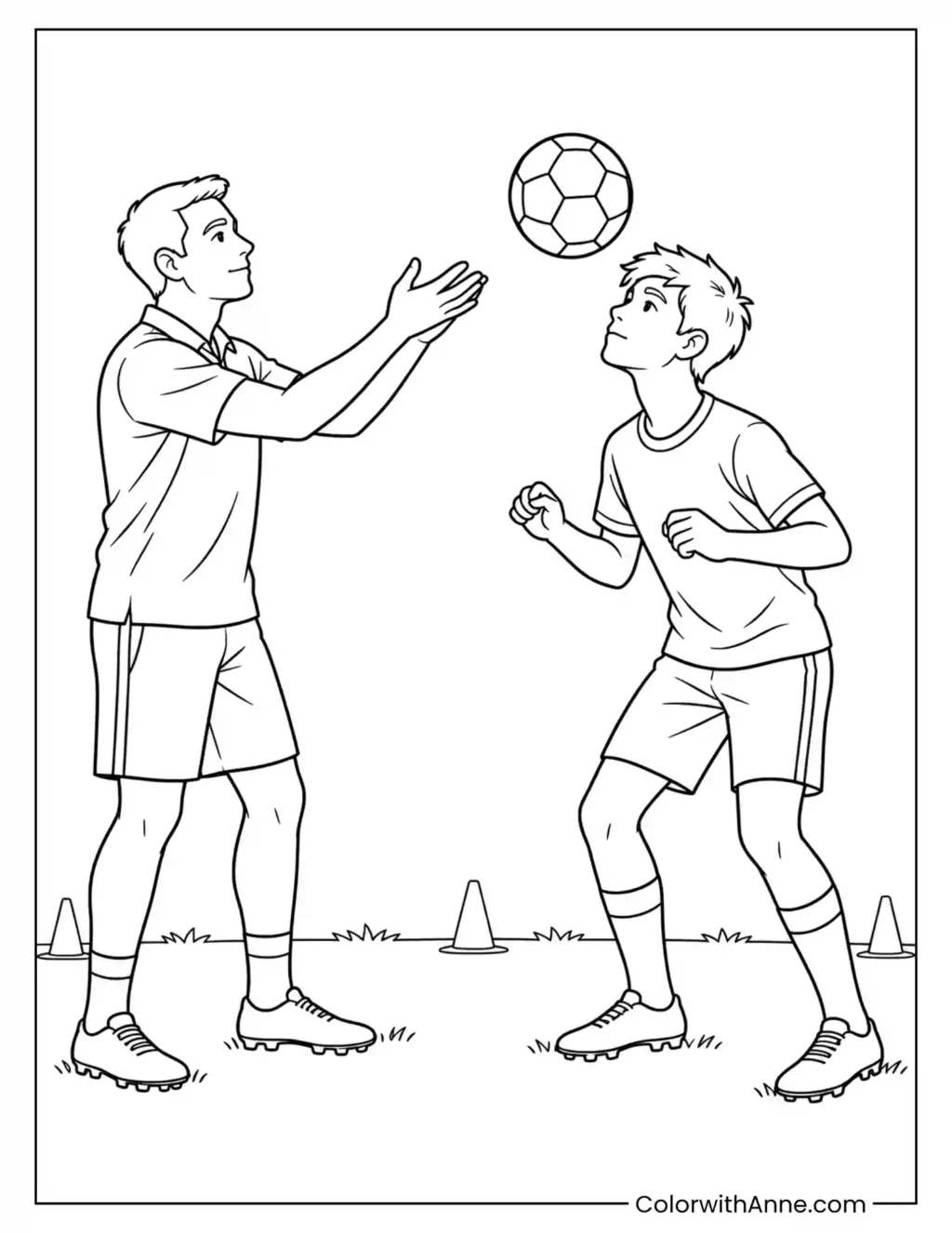
A coach lifts both hands as a player prepares to meet the ball overhead. Give their shirts different colors so the two poses remain distinct, and repeat one shade in a stripe on the player’s socks.
Color the ball in alternating panels, leaving a few sections white. The open space around it helps show its position above the player; a very pale sky can be added without crowding the scene.
Use a warm accent on the small training cones and two gentle greens for the grass. A slight shadow beneath each pair of shoes can anchor the figures while keeping the practice scene light.
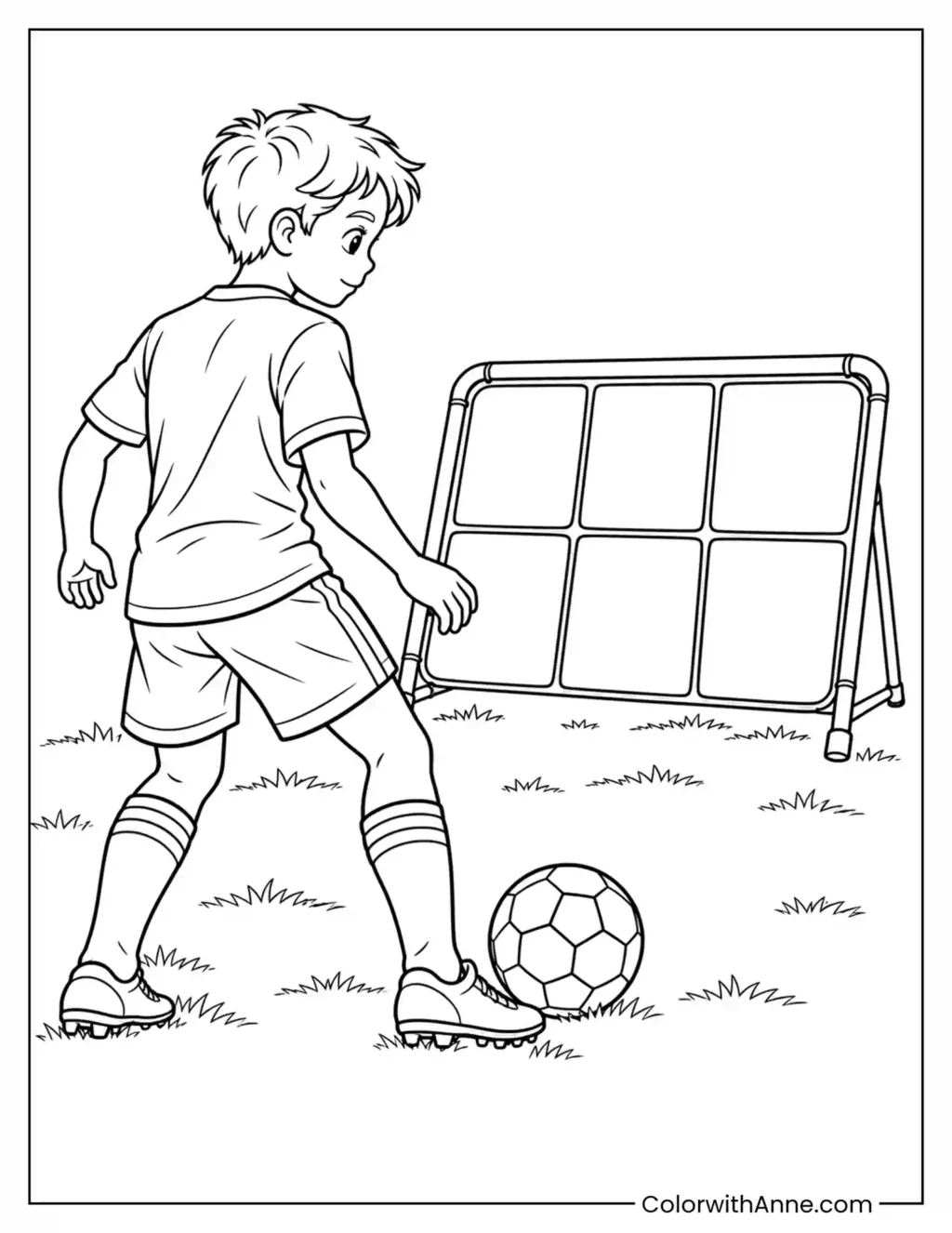
Work With the Rebound Net
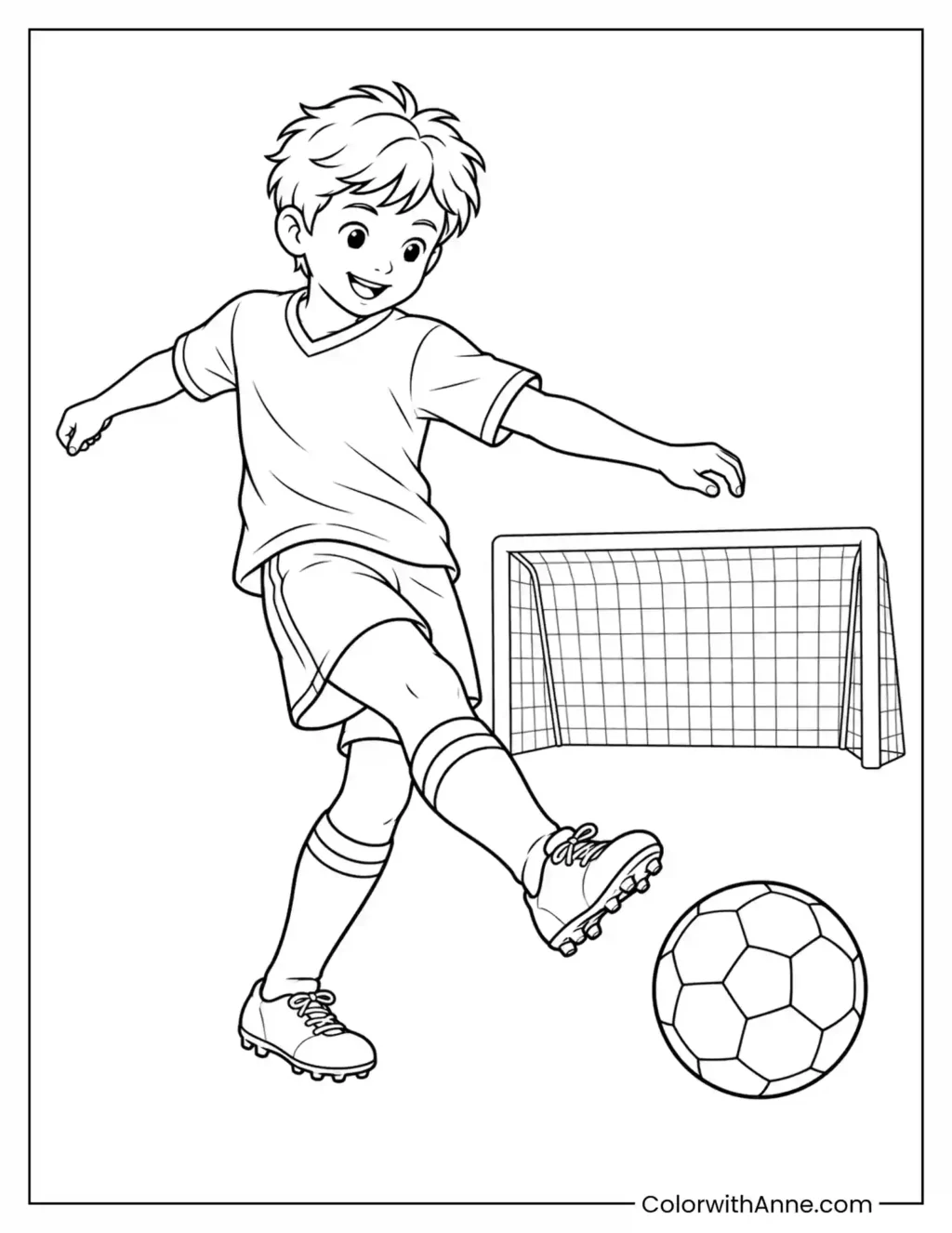
The player faces a small rebound net with a ball close to his feet. A vivid shirt can be the main accent, balanced by a quieter color on his shorts and the frame of the net.
The net is divided into broad rectangular sections. Keep those sections pale and use a darker shade on the outer frame, so the grid remains visible without overpowering the player or ball.
Color alternate panels on the soccer ball, then repeat that accent in a stripe on the socks. Small green strokes around the drawn grass can suggest the practice field while leaving the background open.