
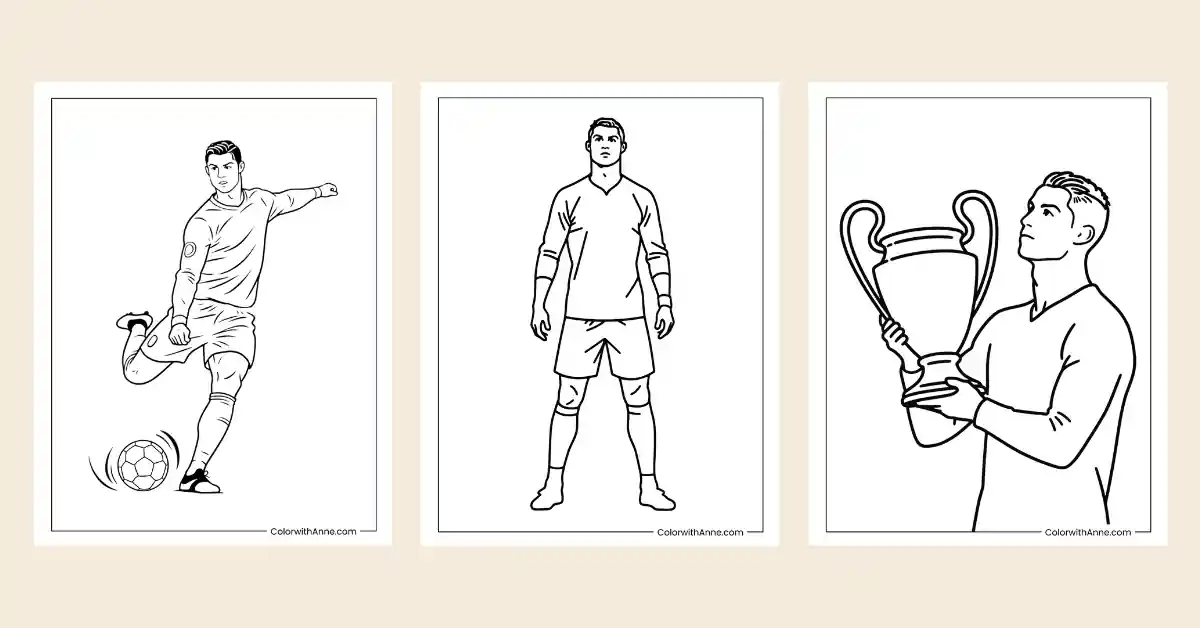
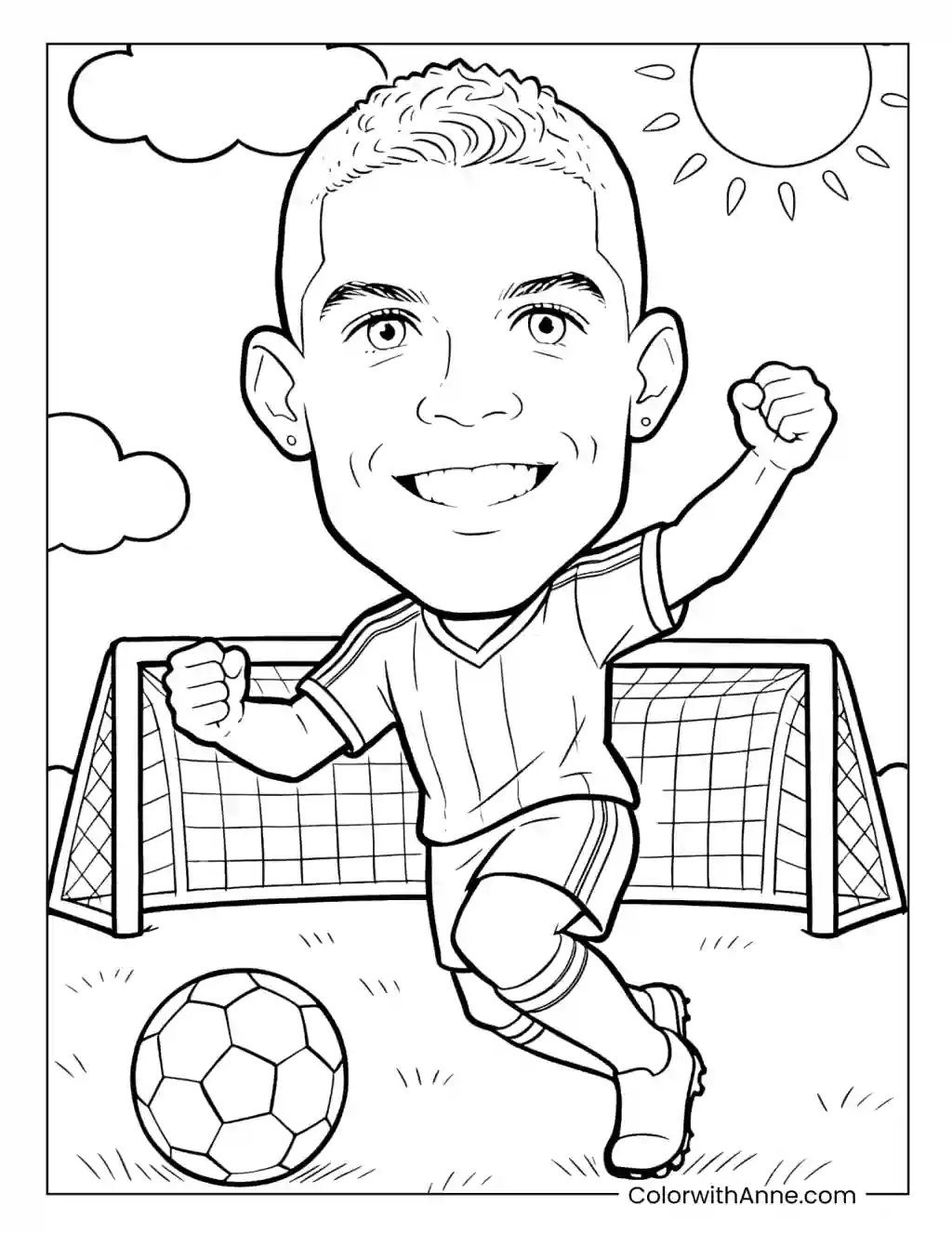
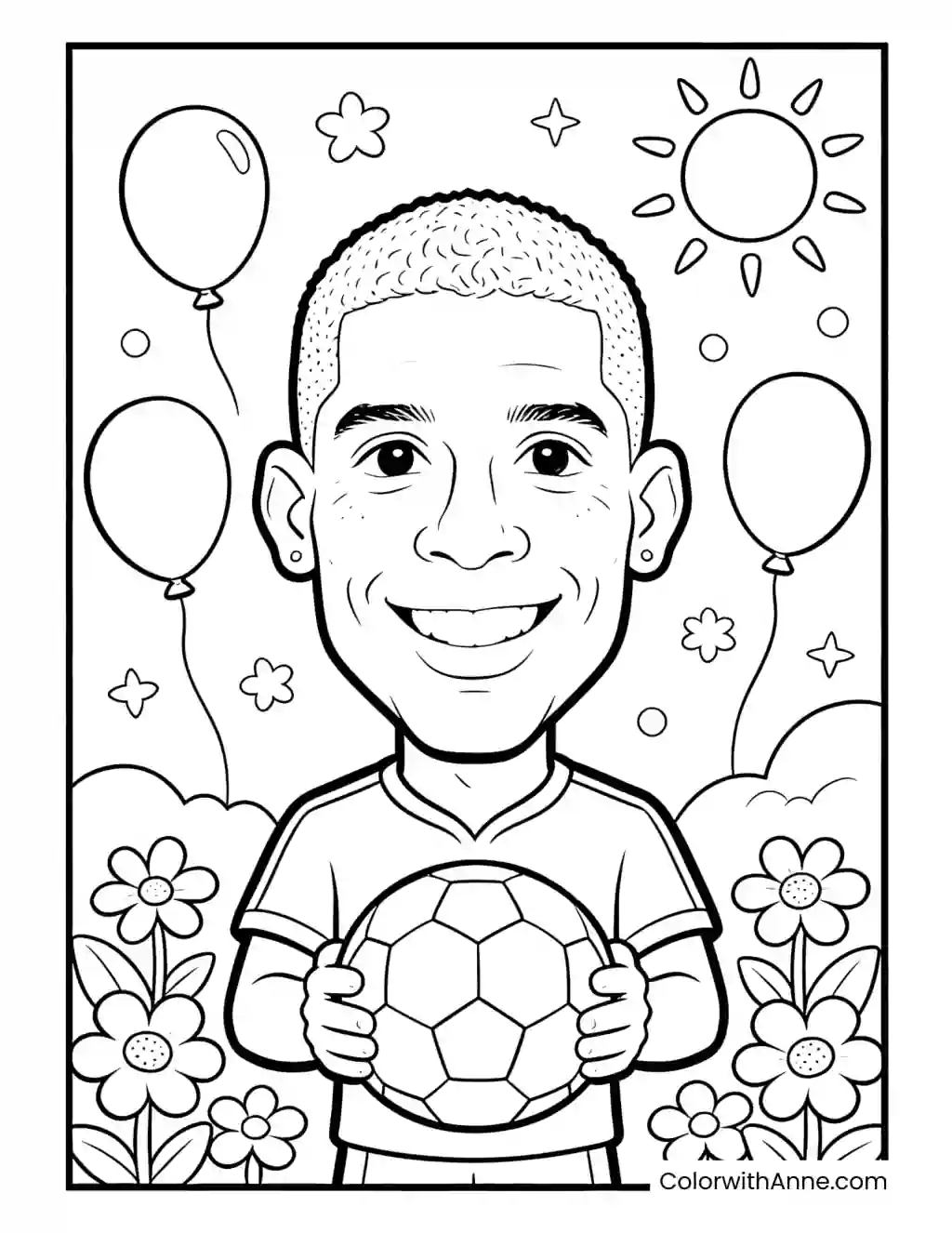
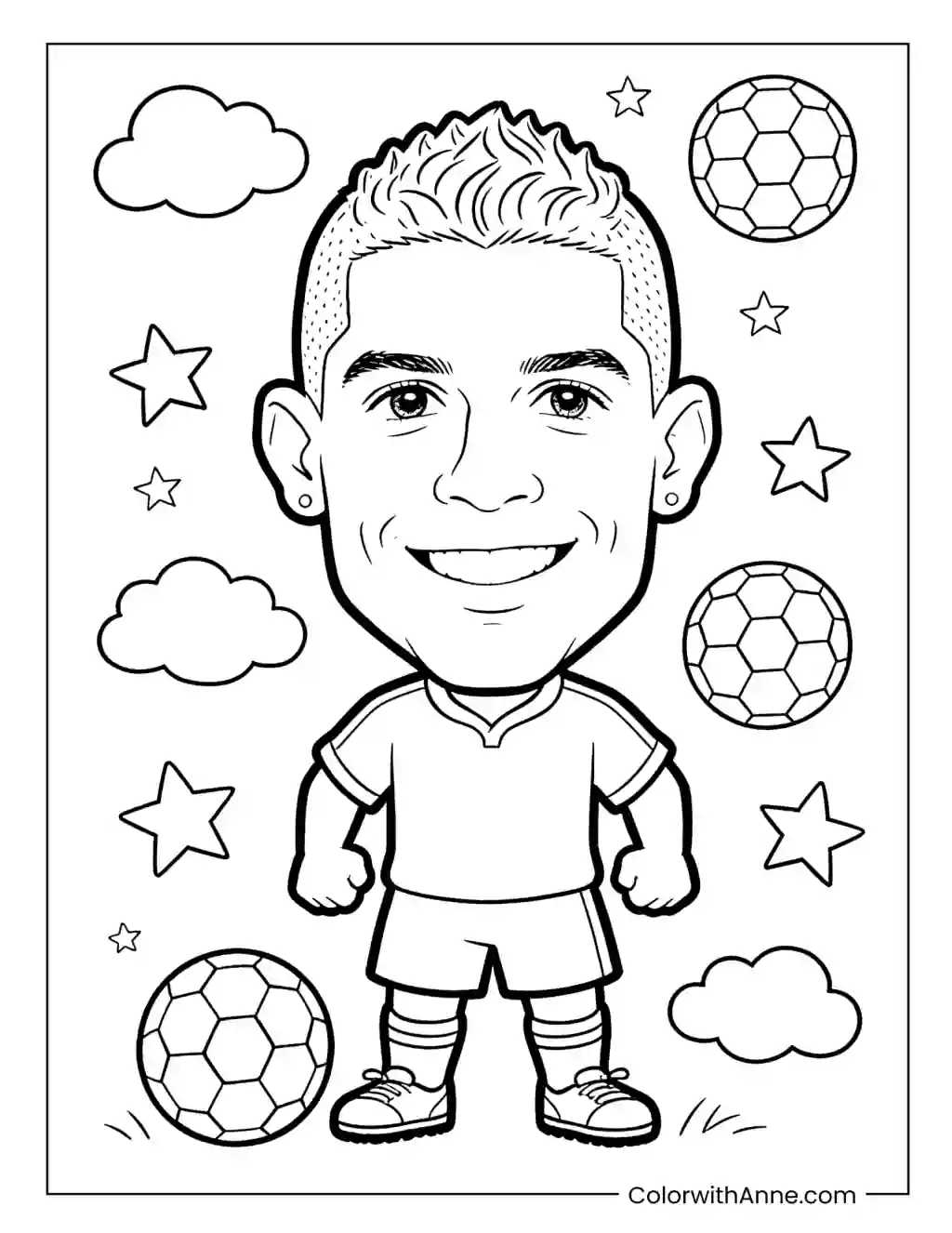
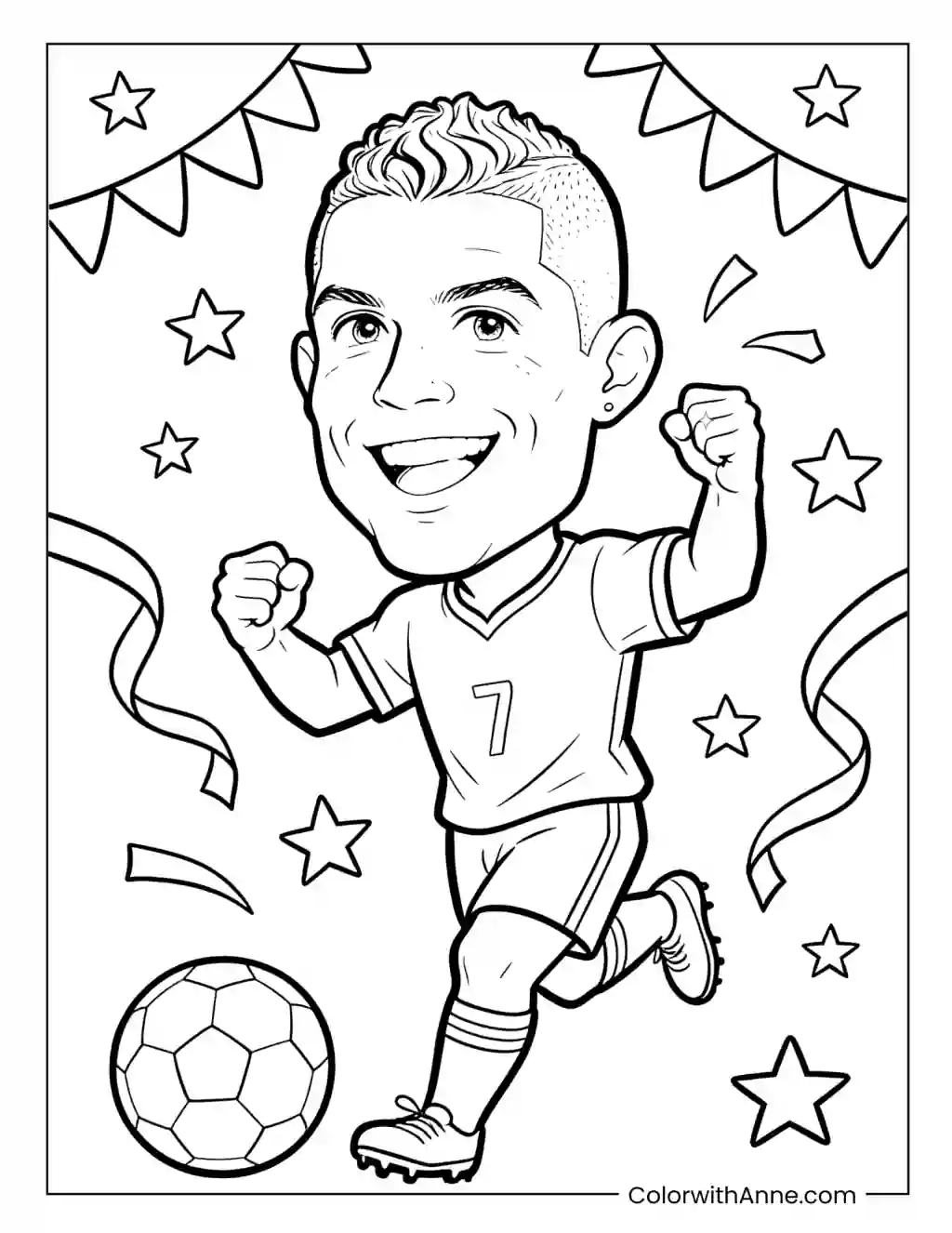
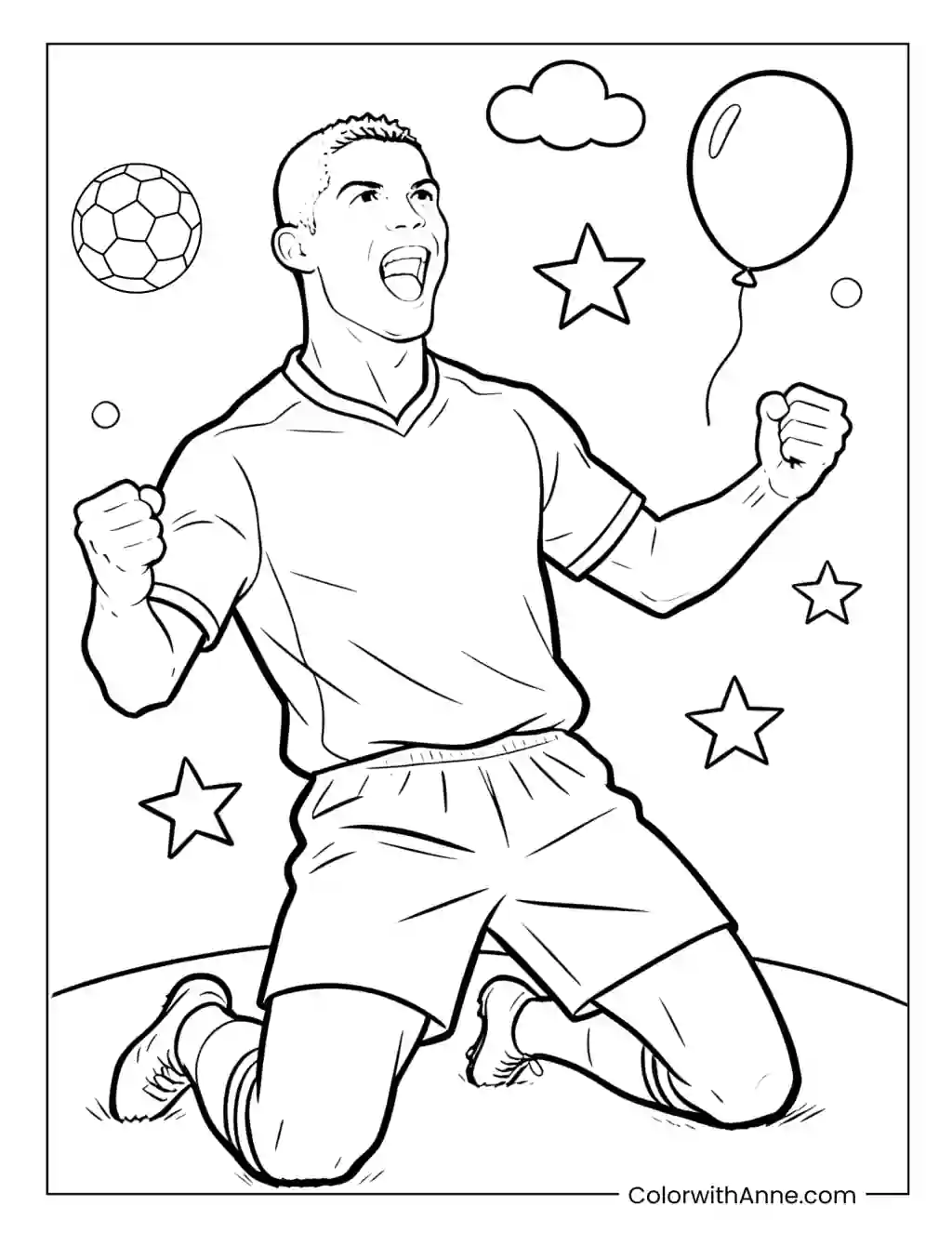
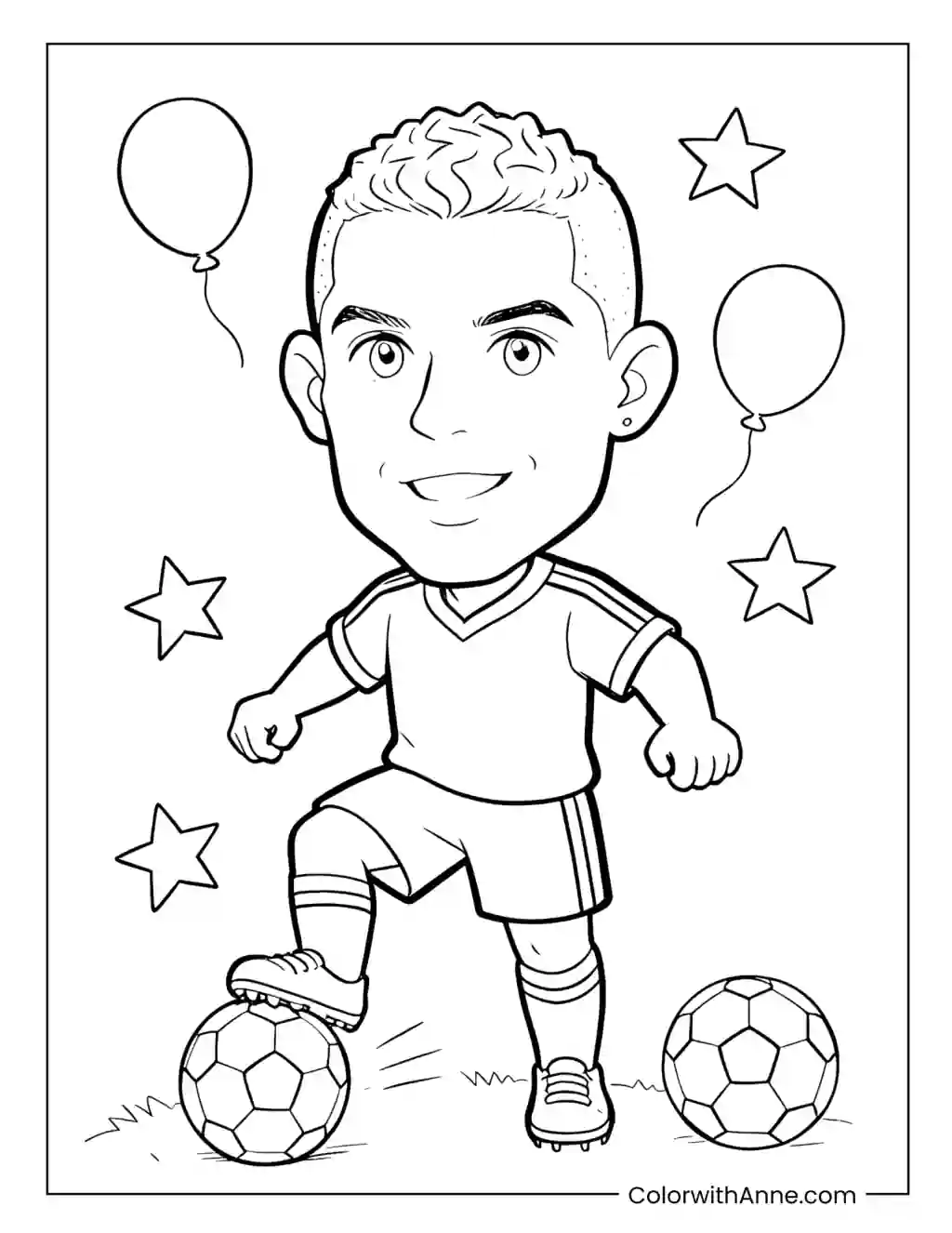
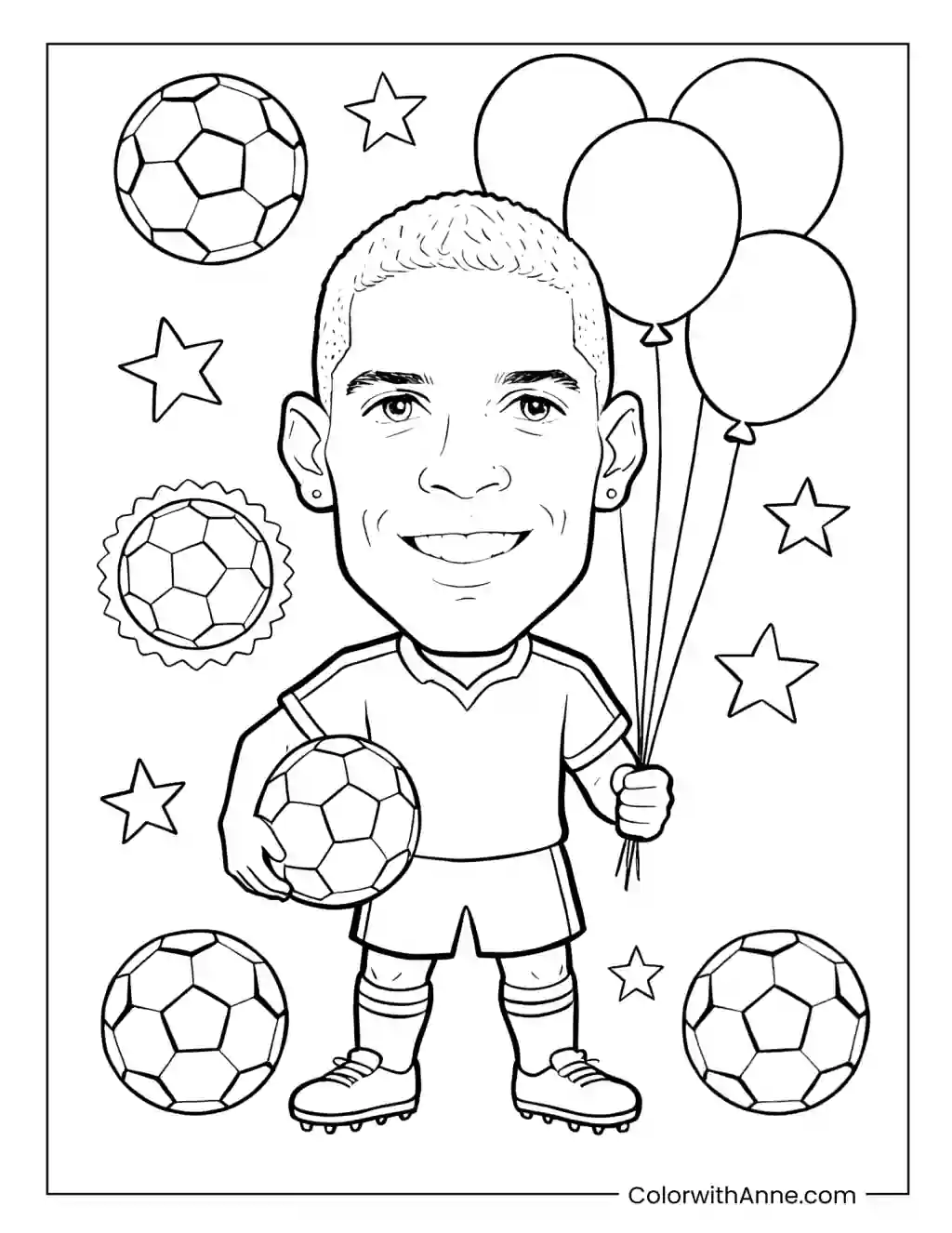
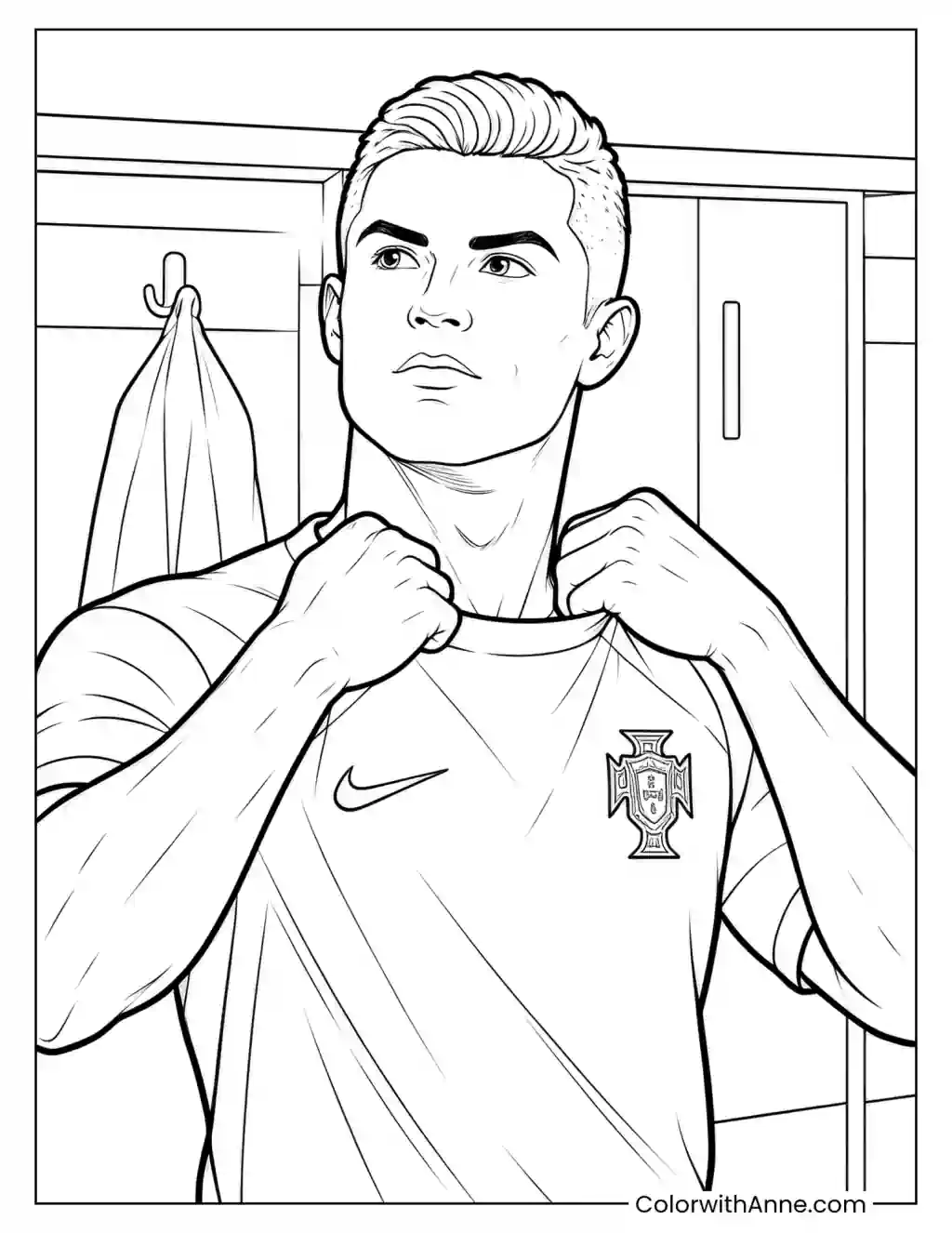
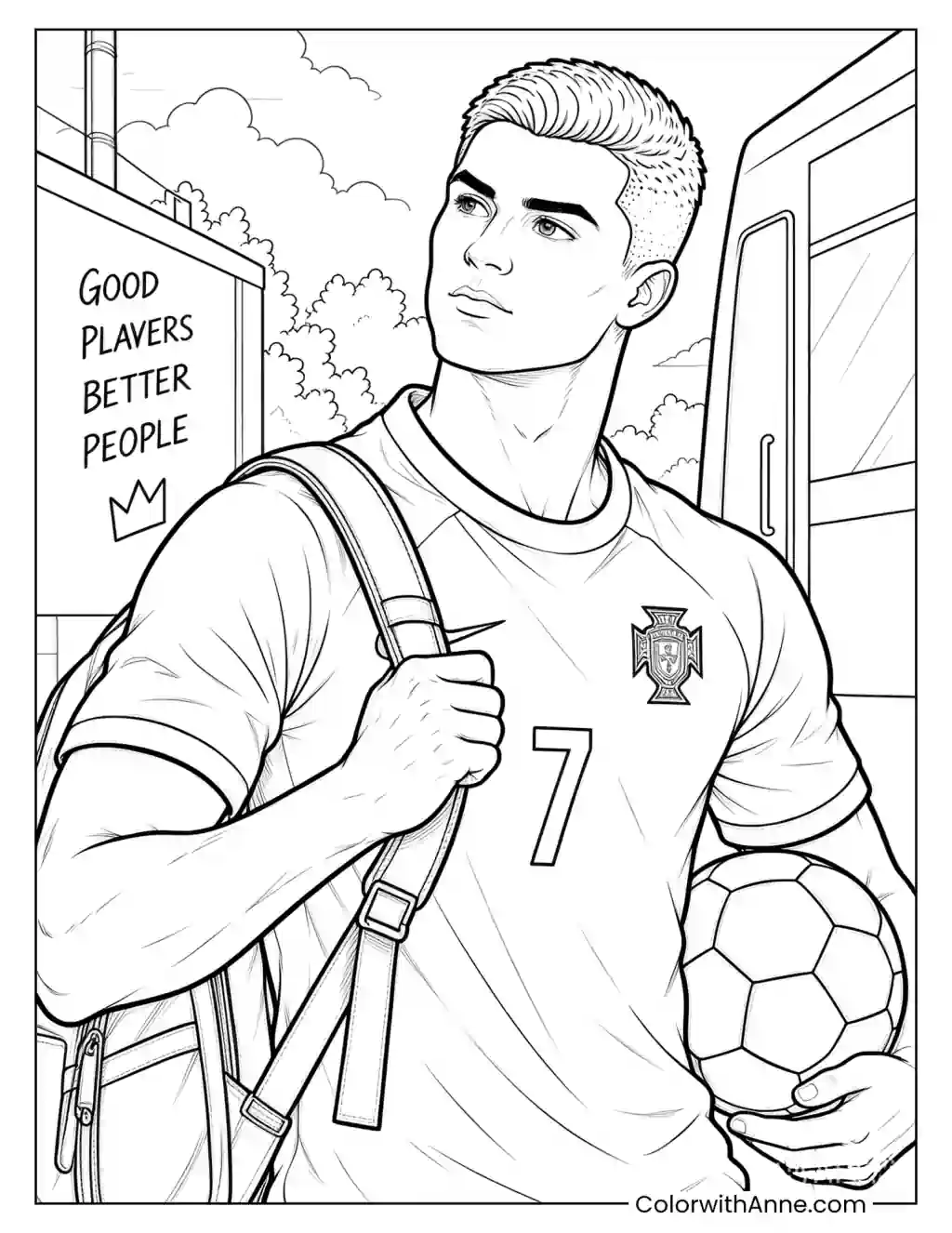
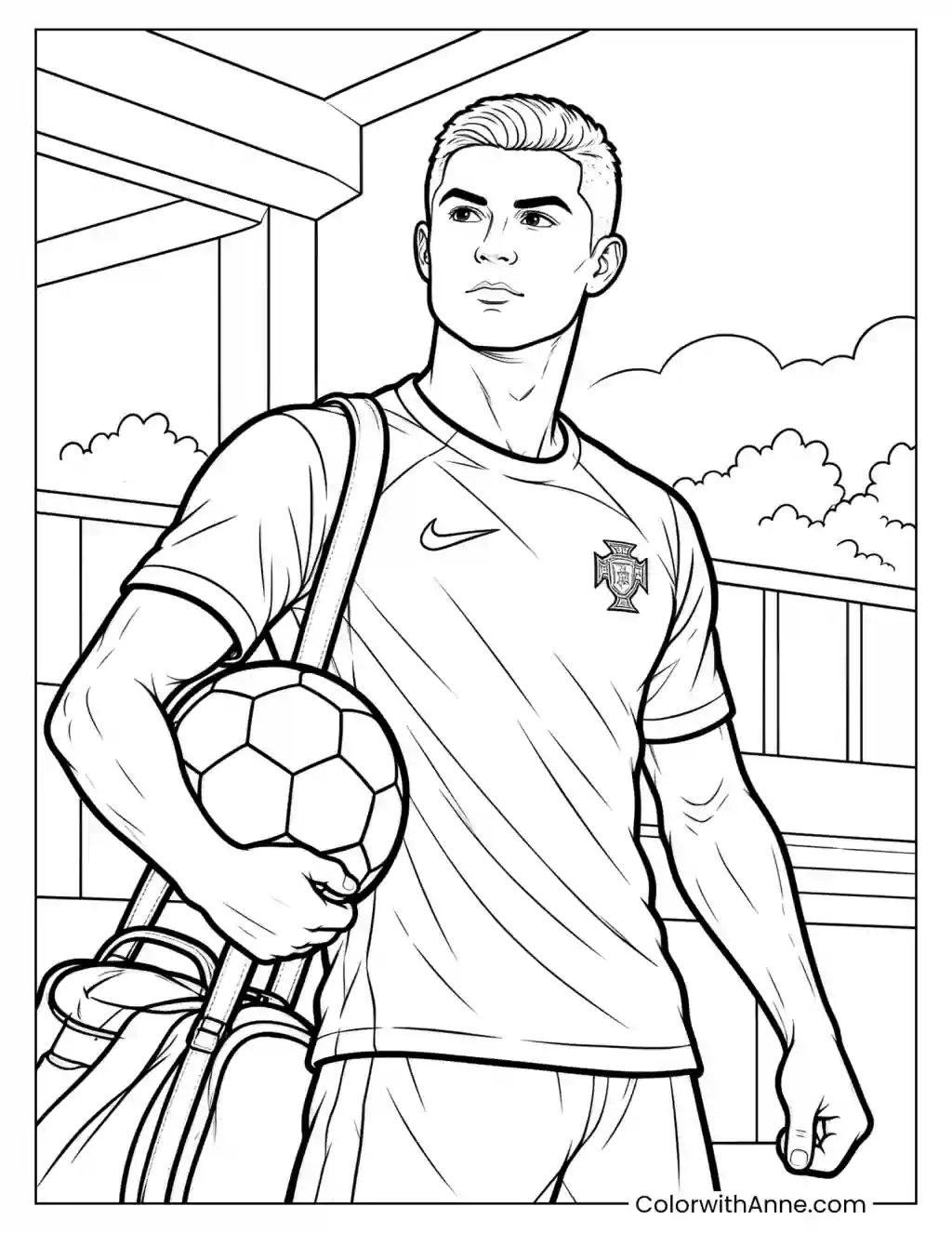
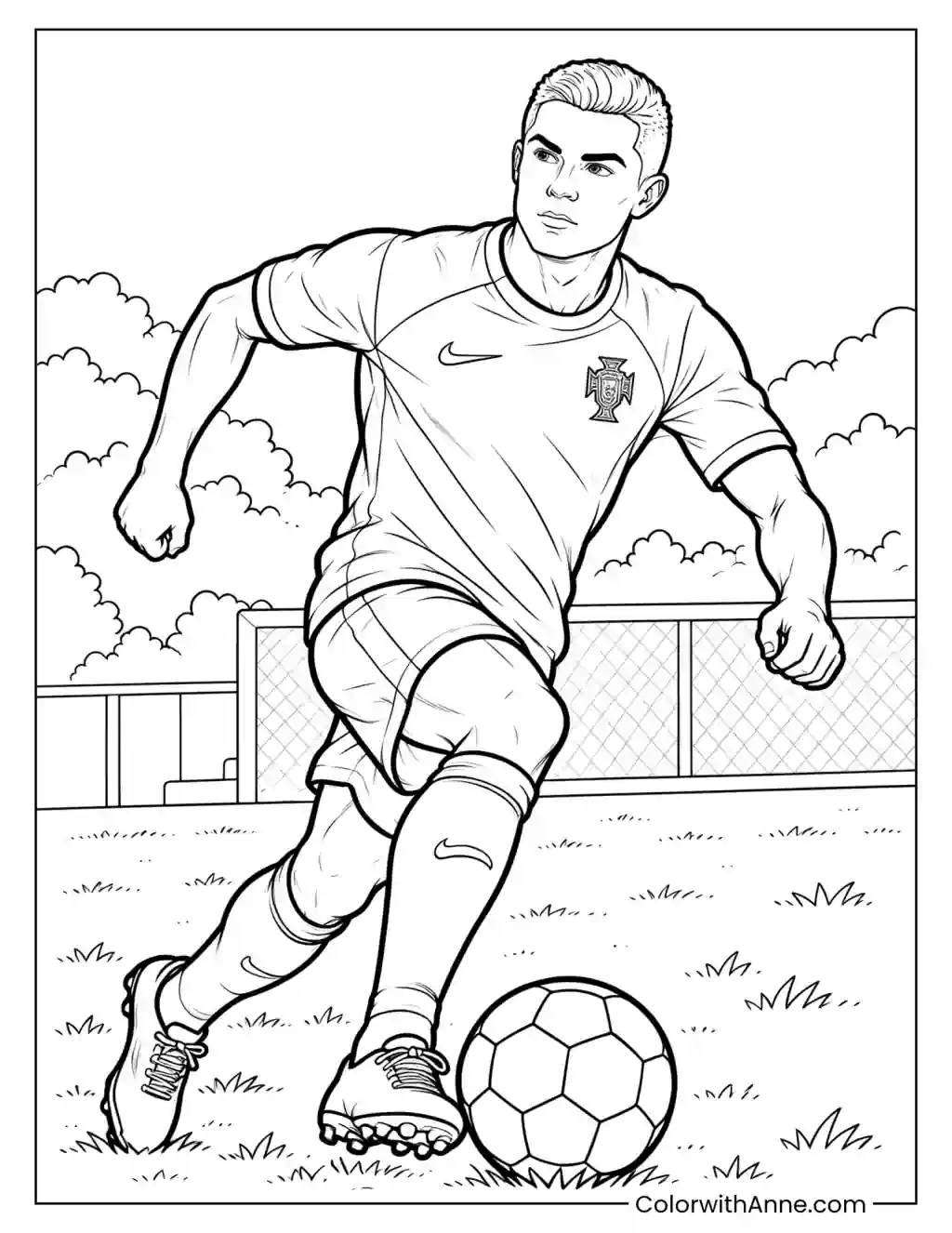
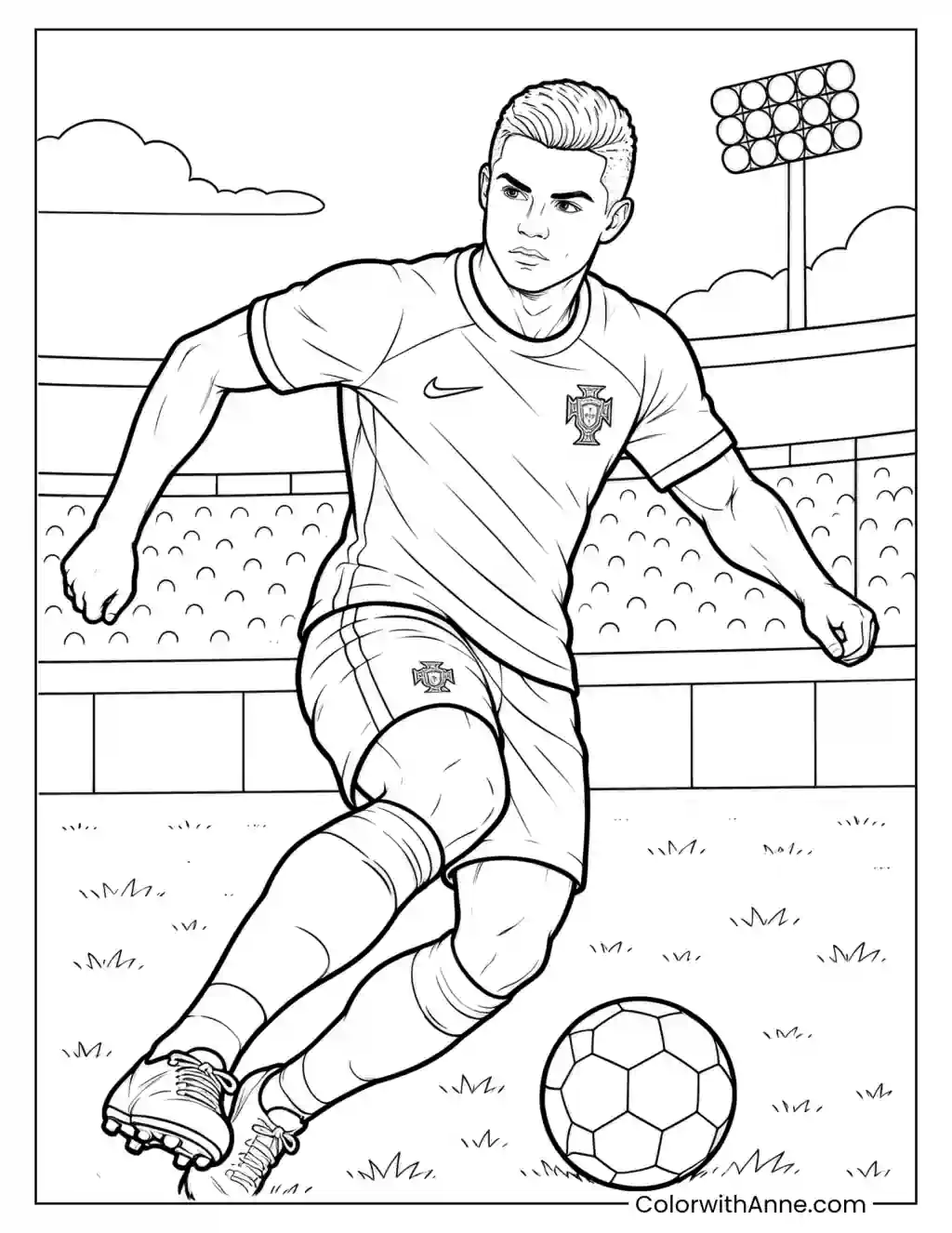
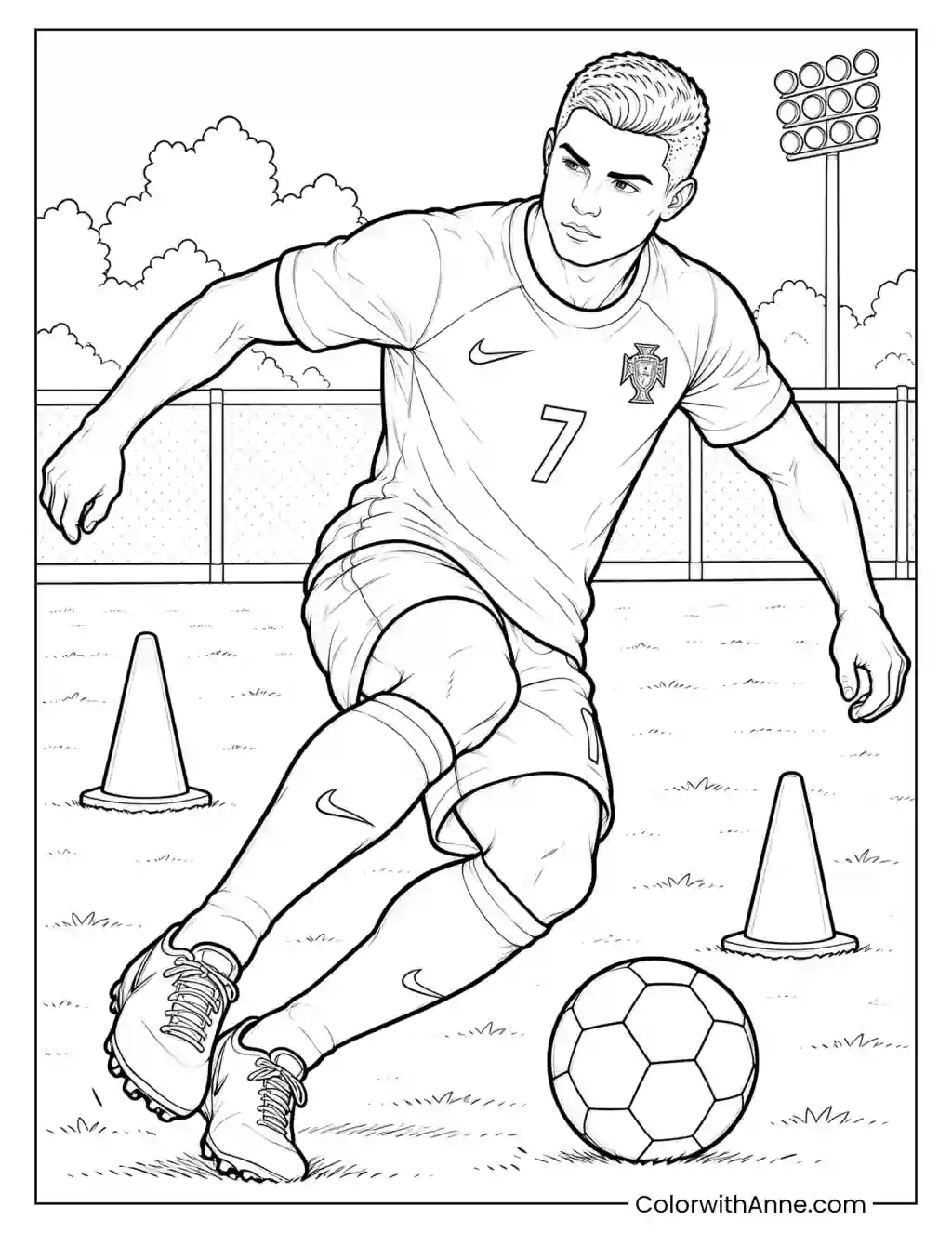
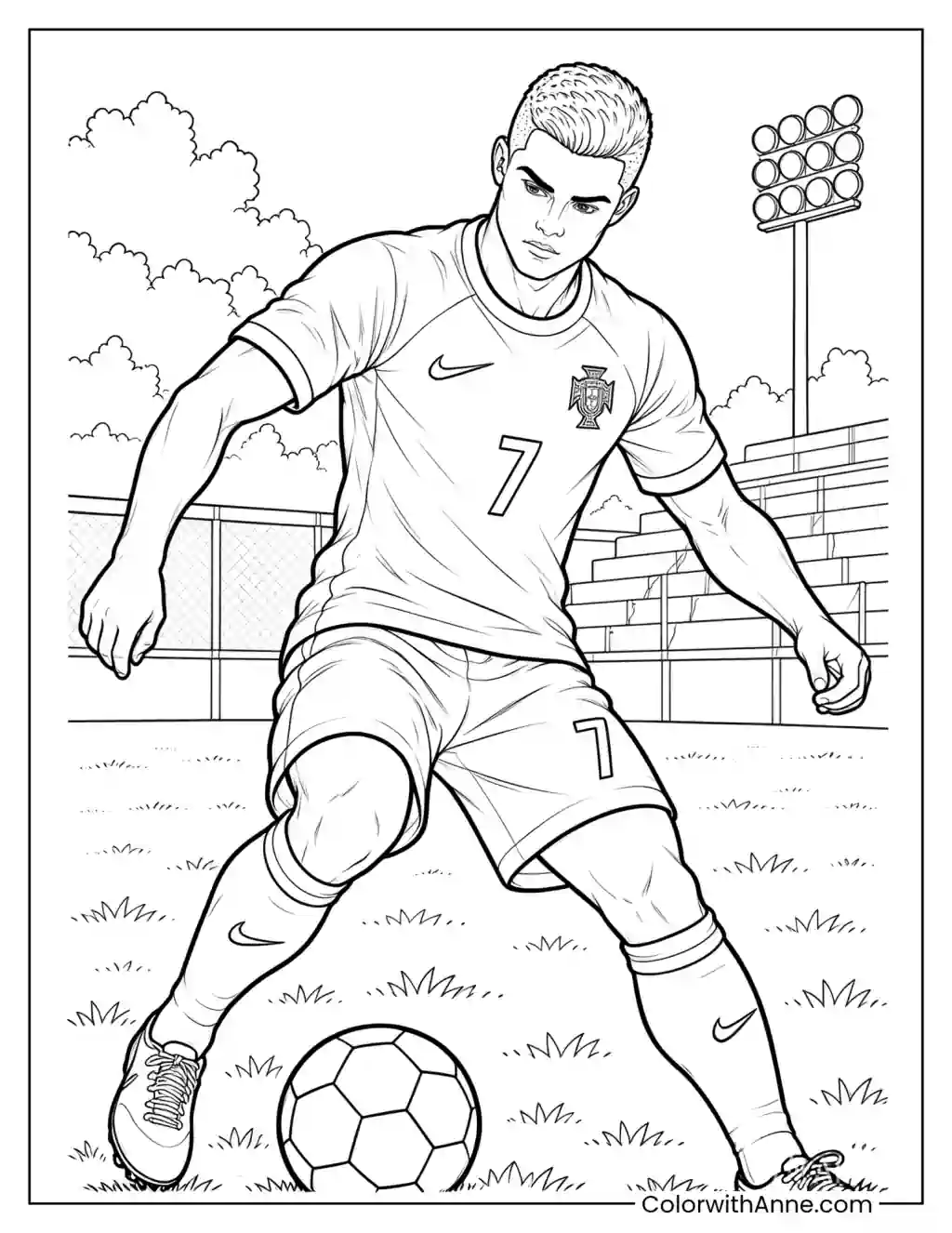
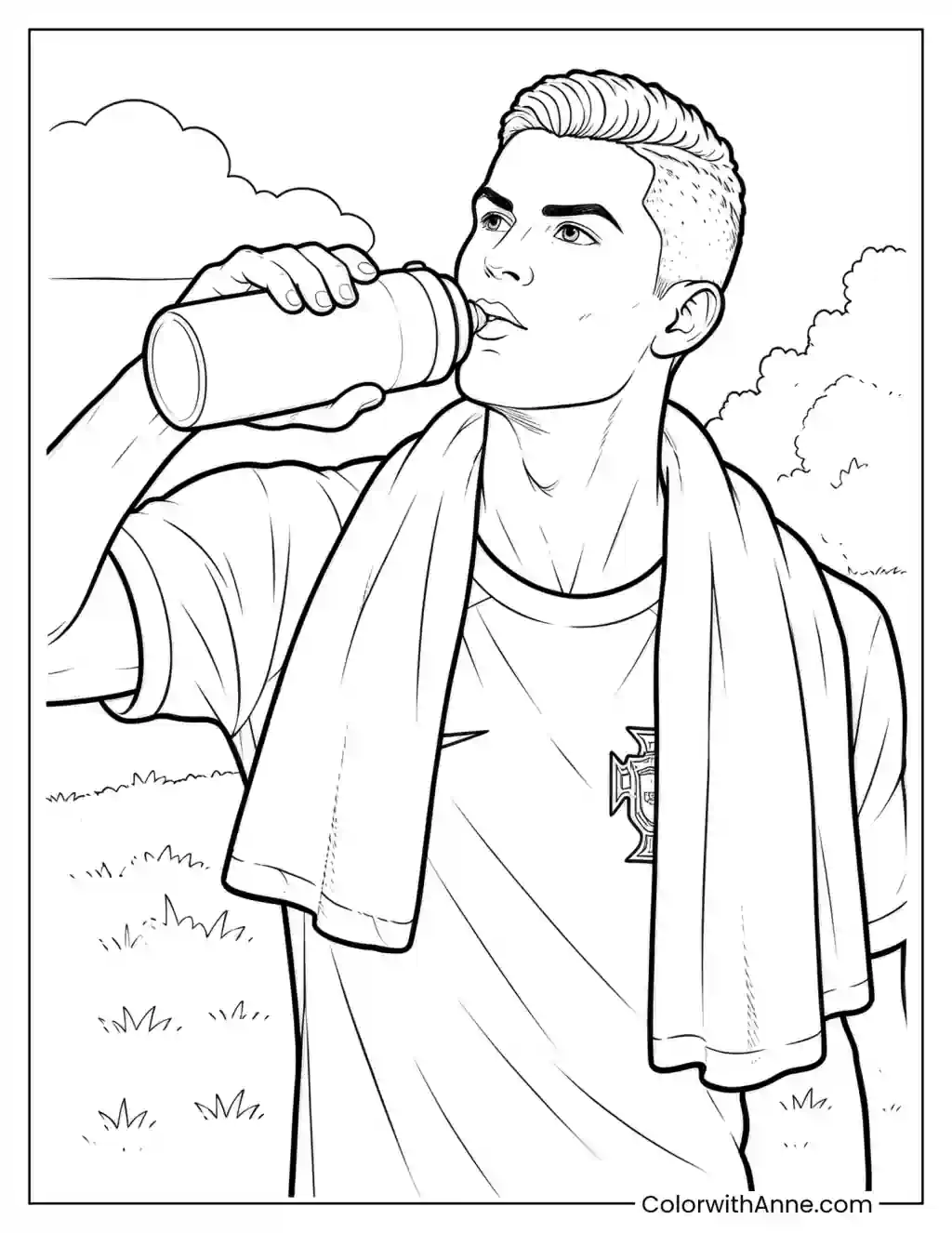
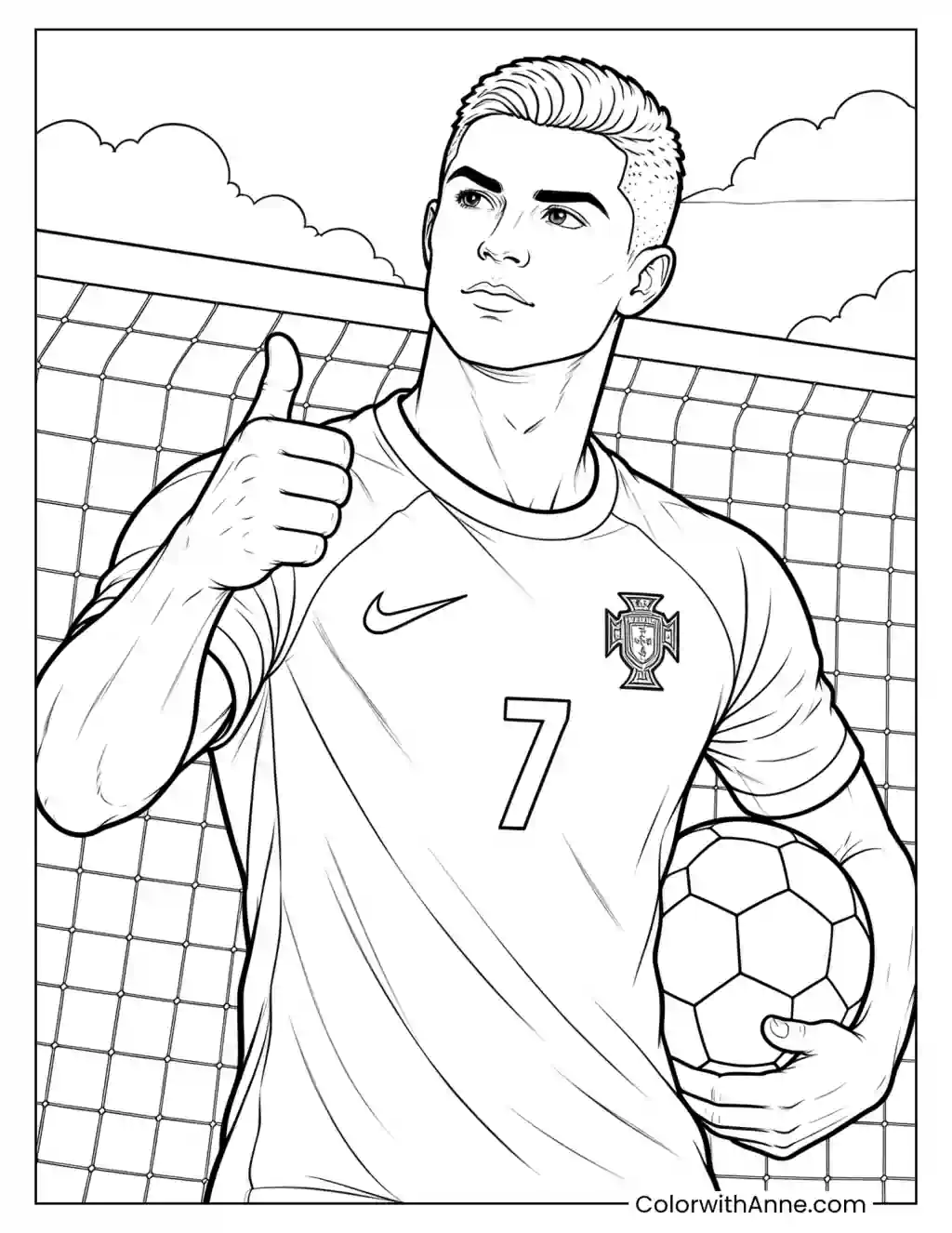
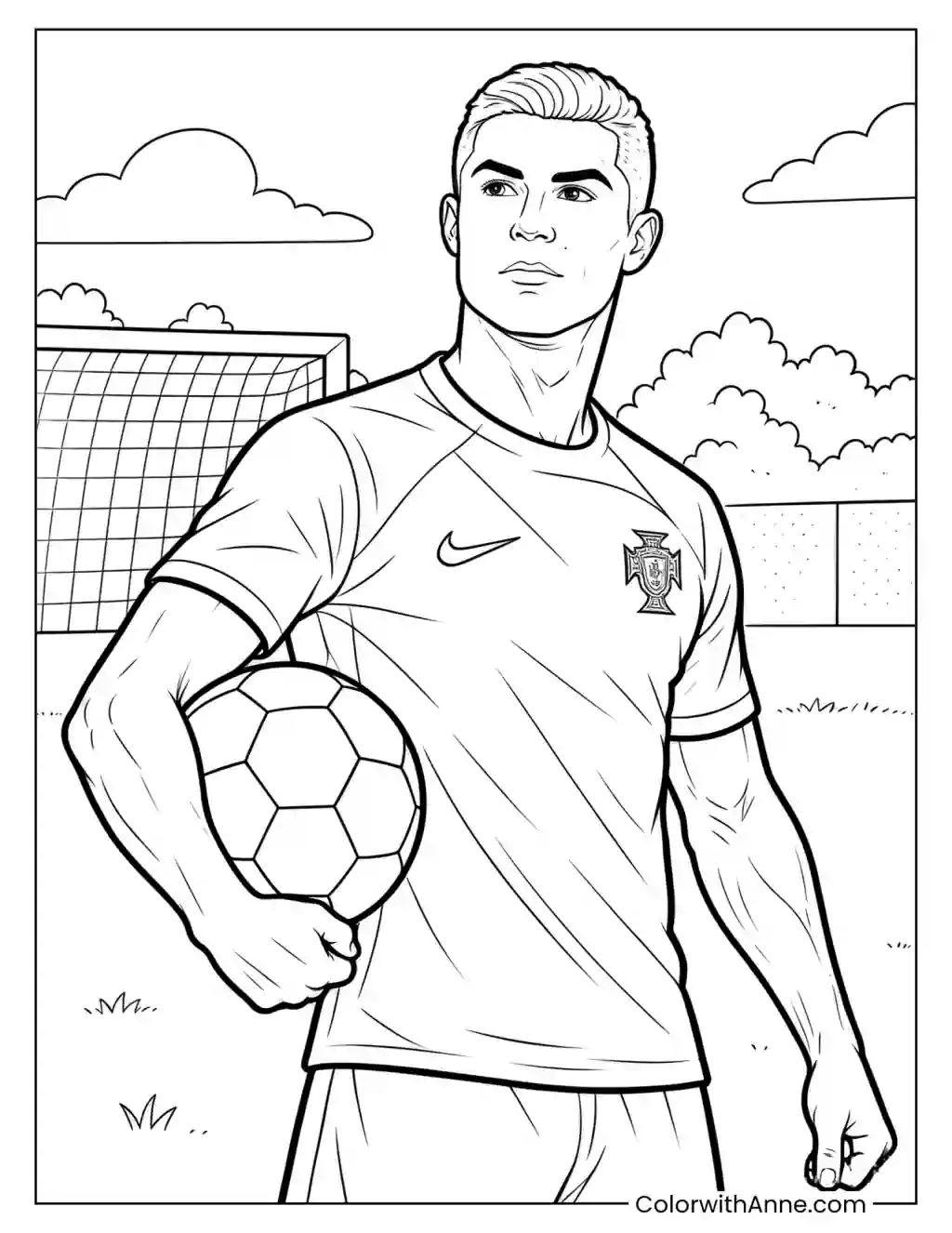
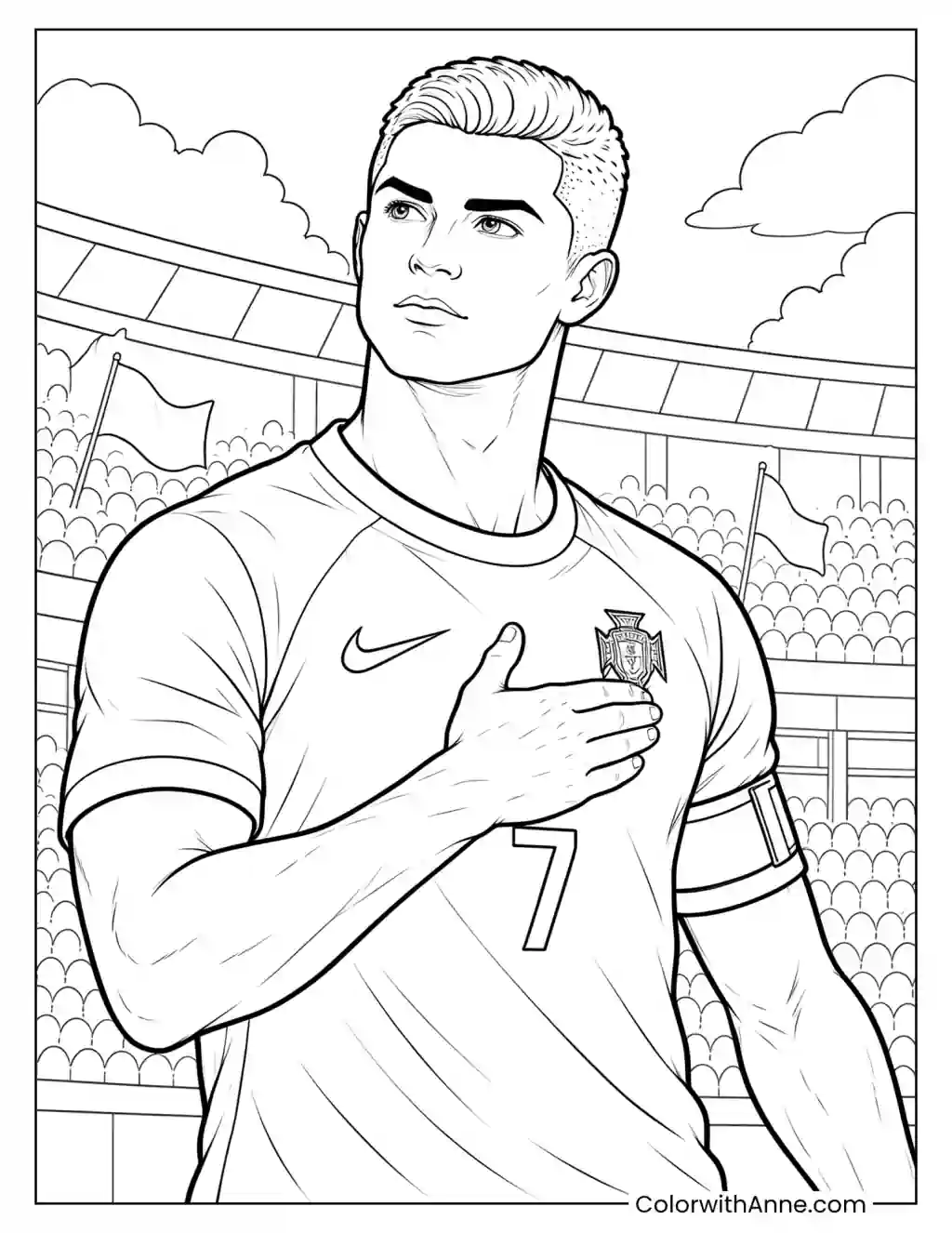
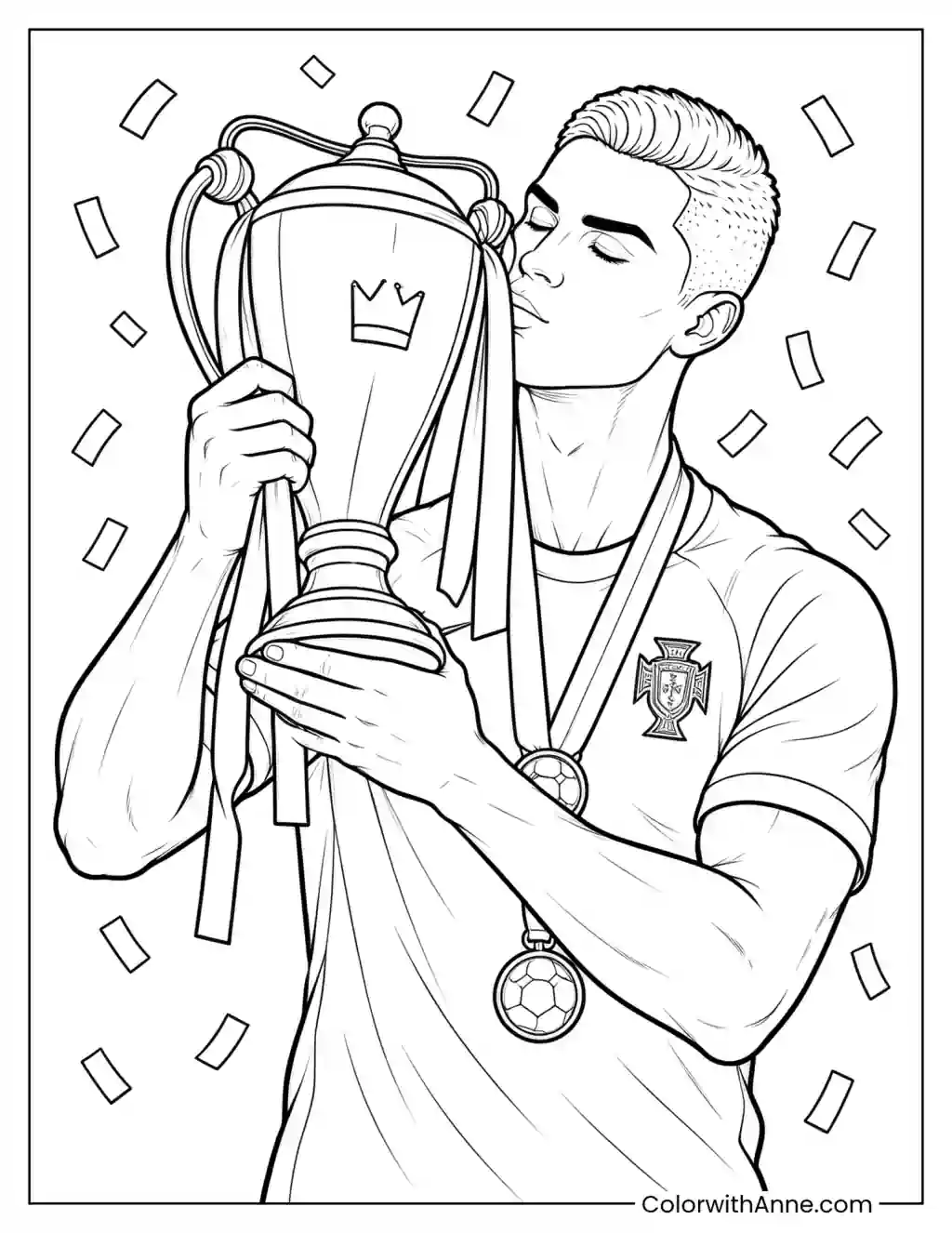
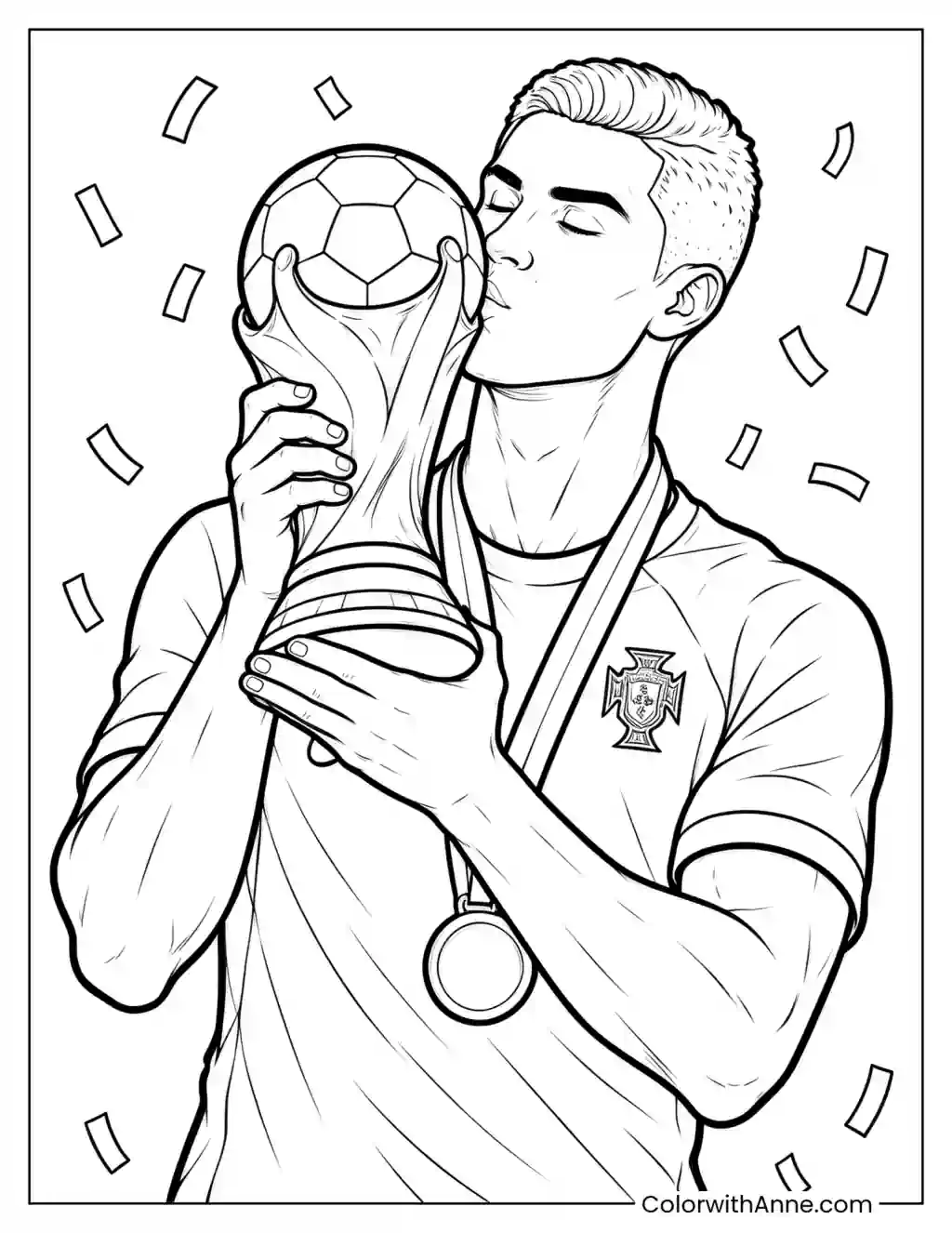
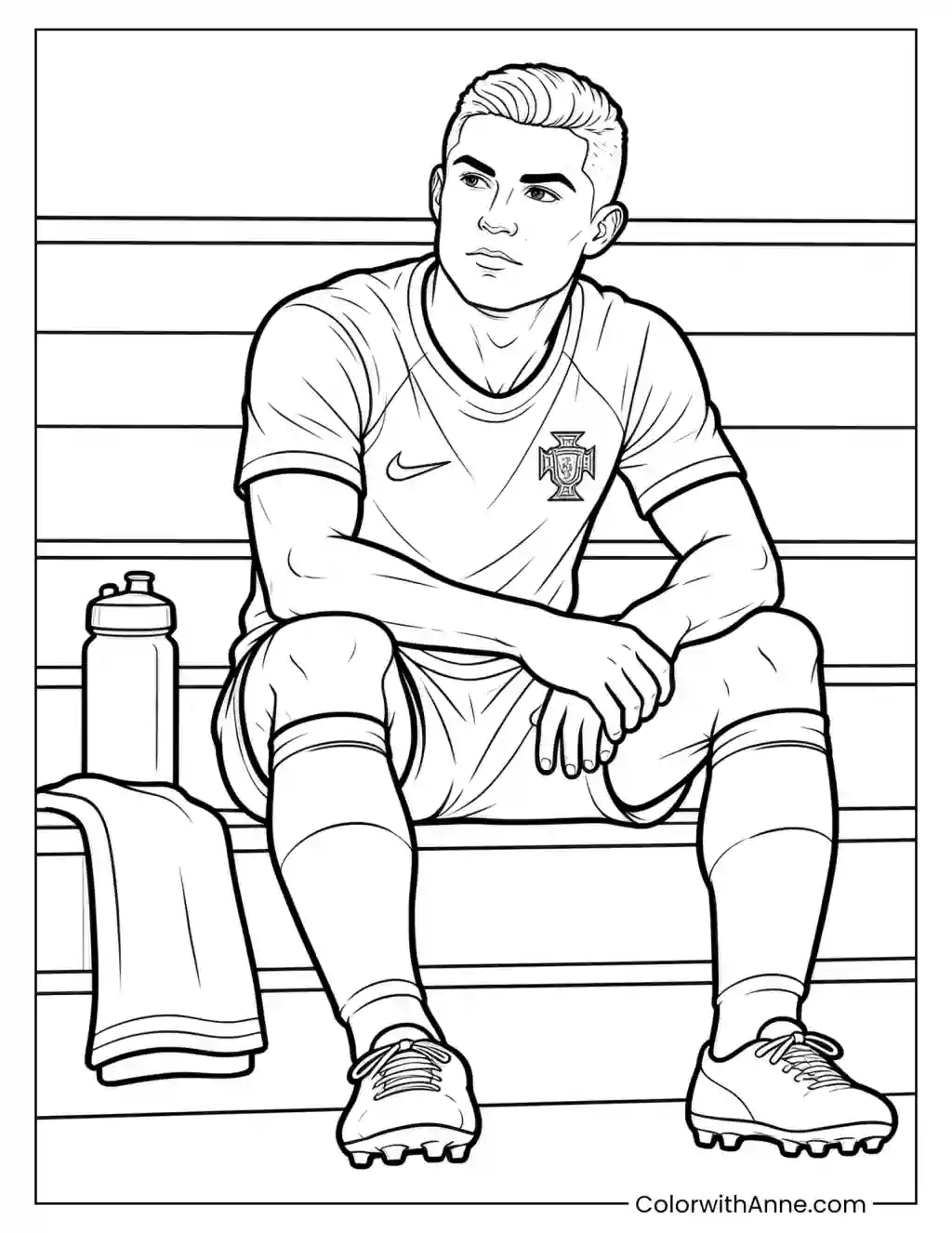
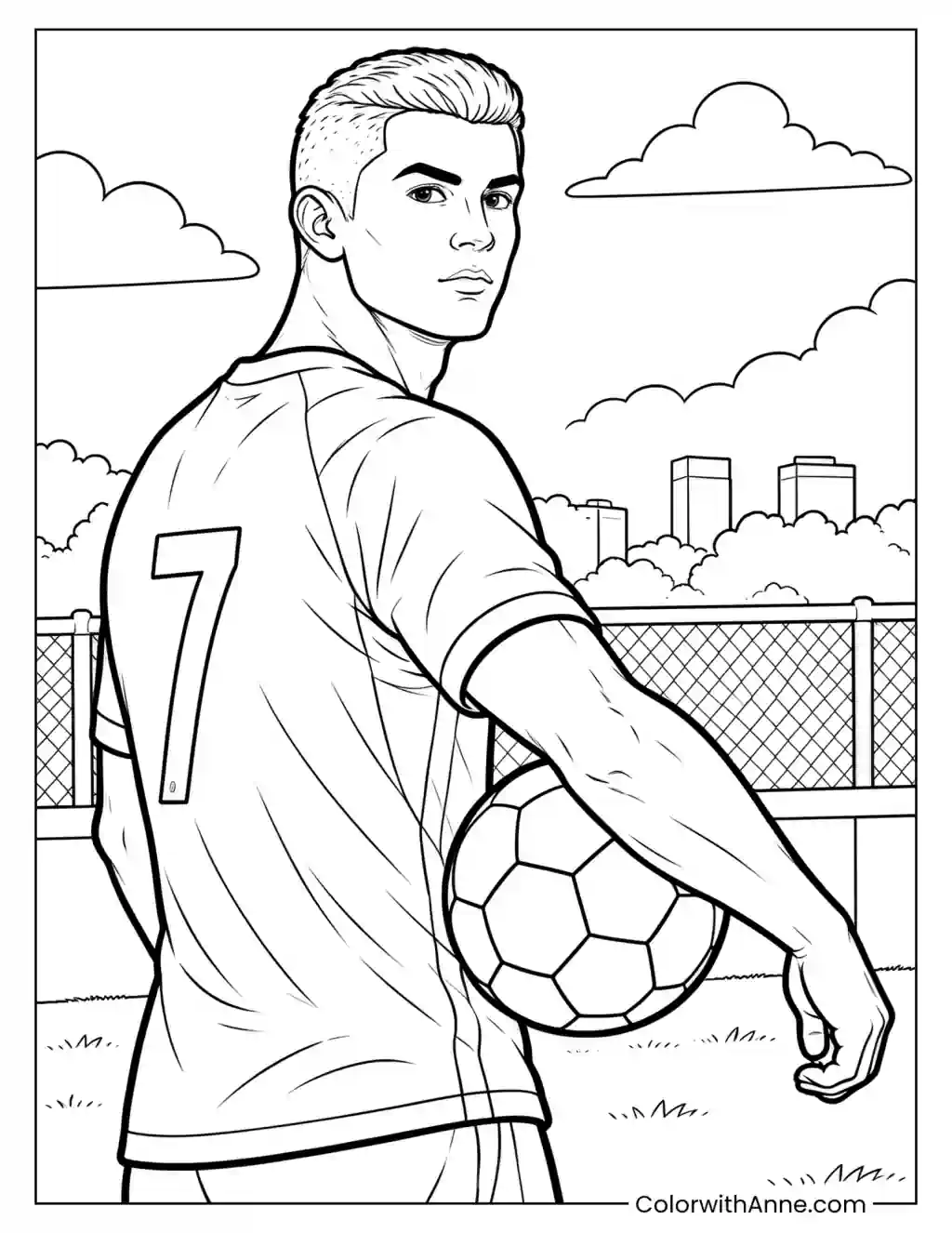
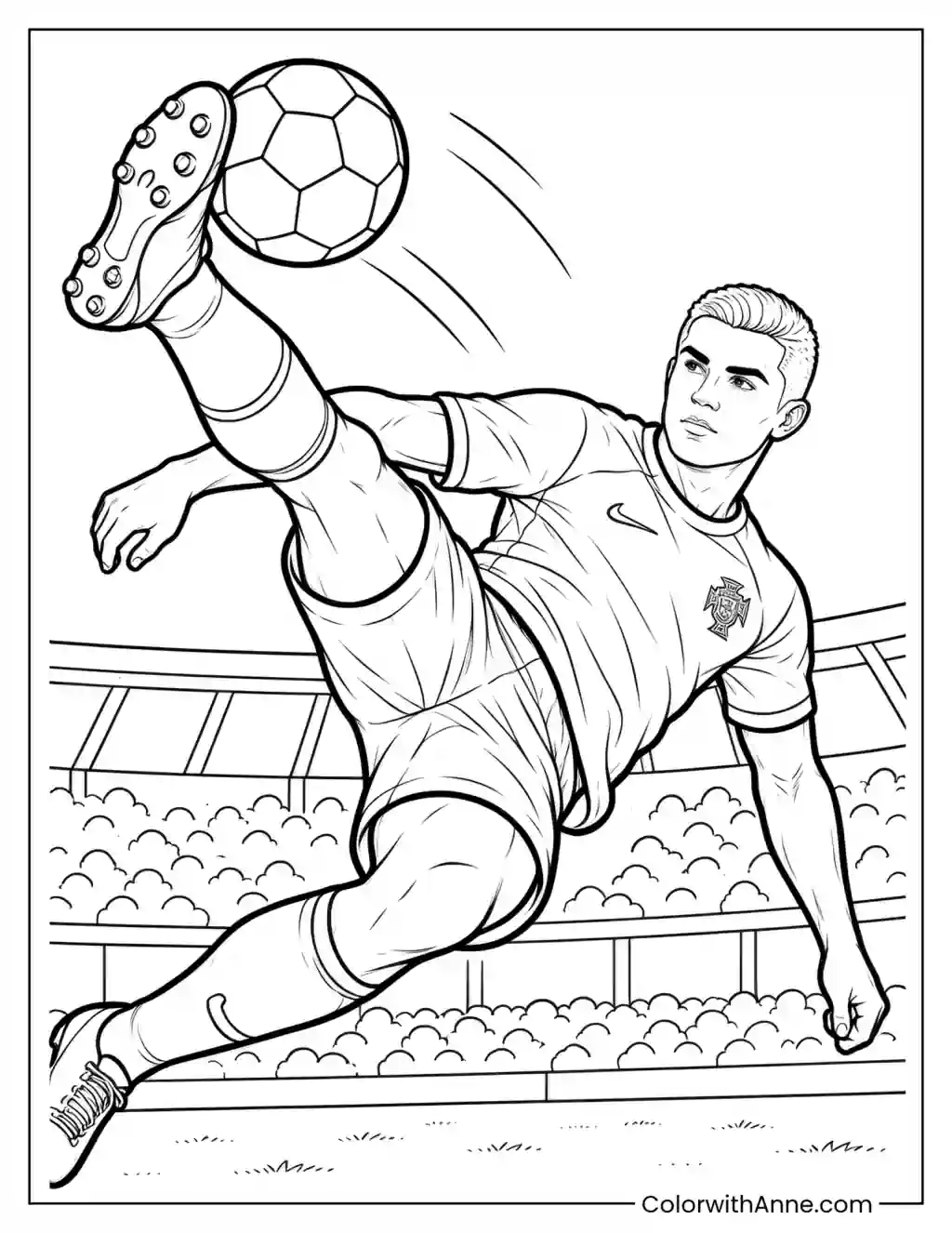
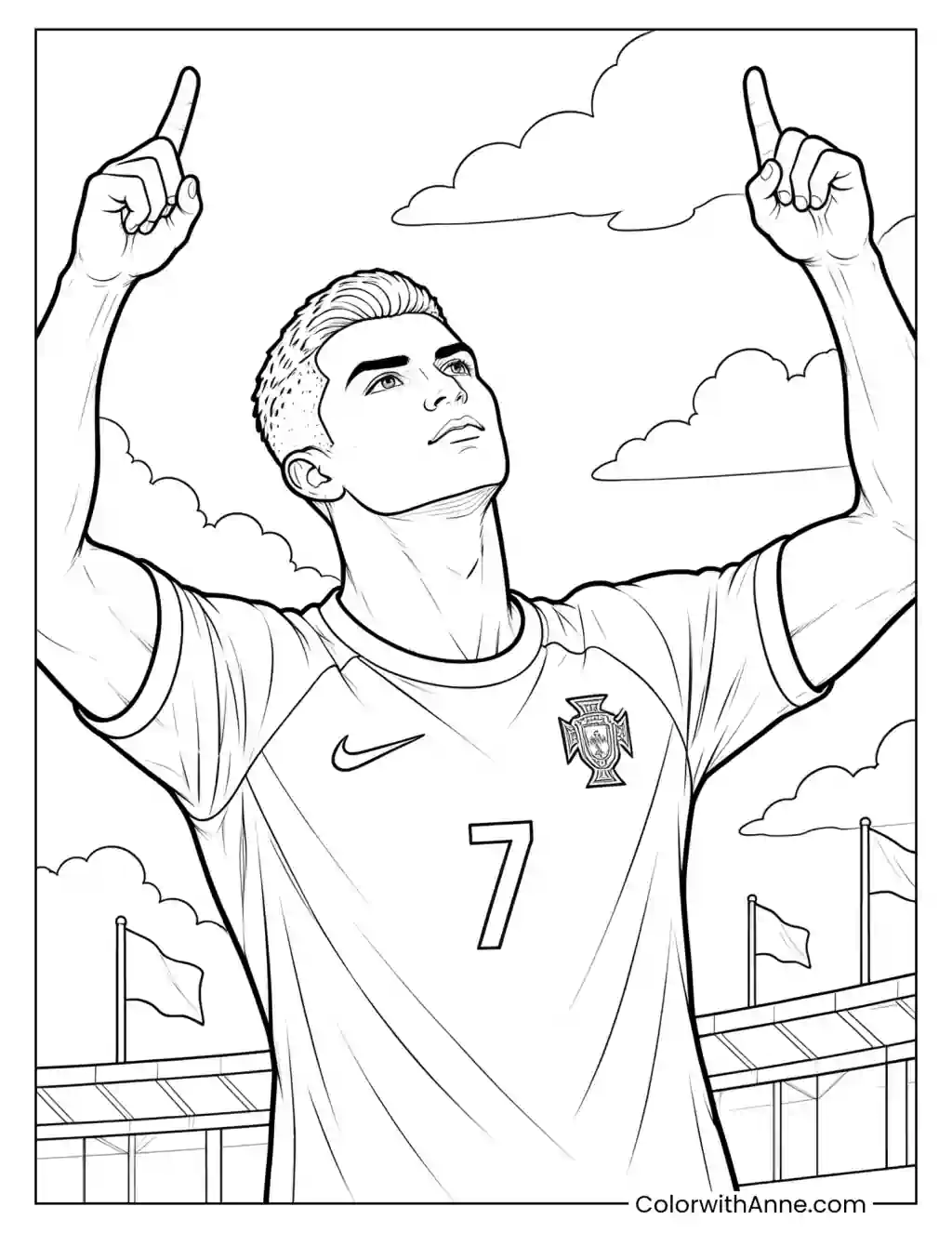
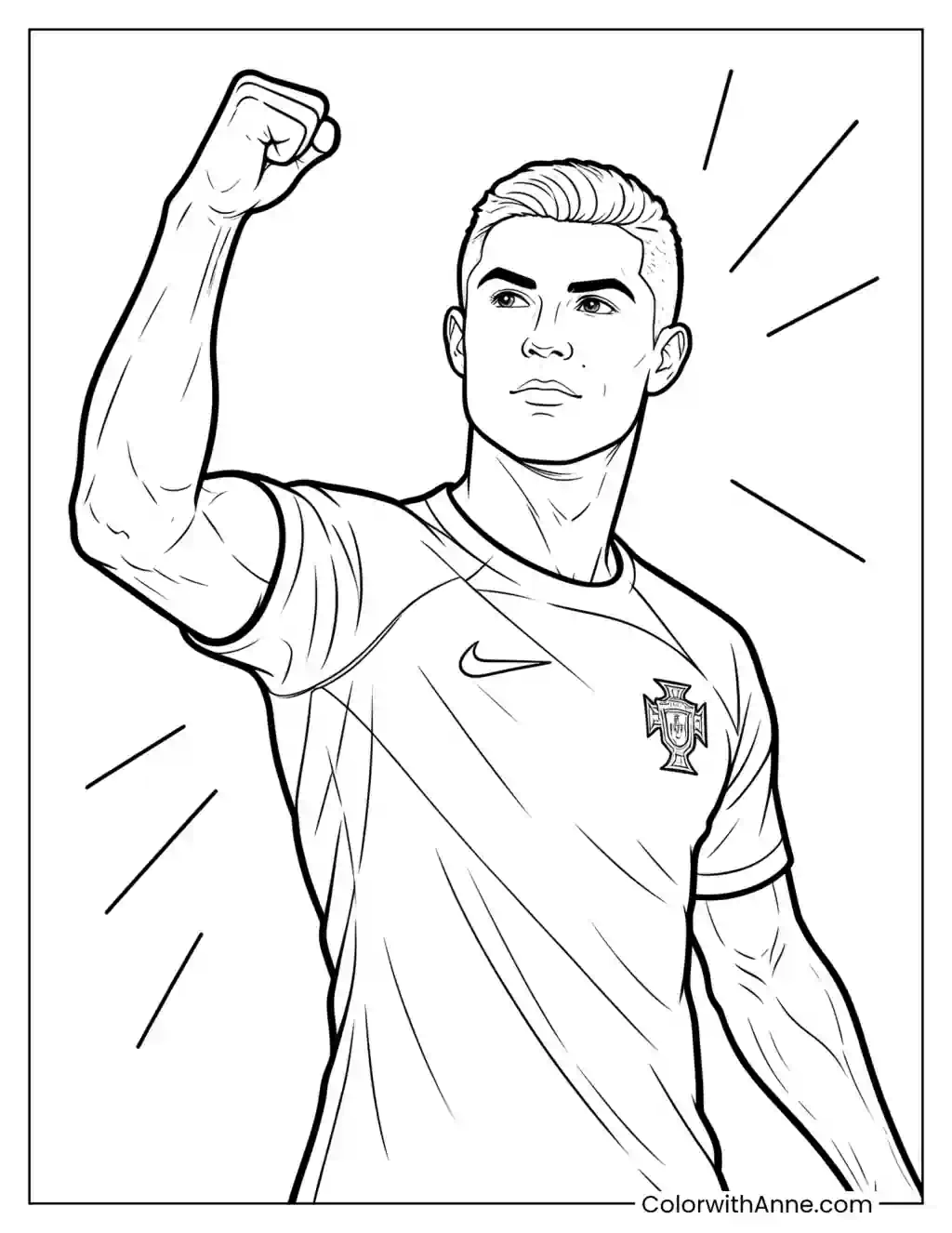
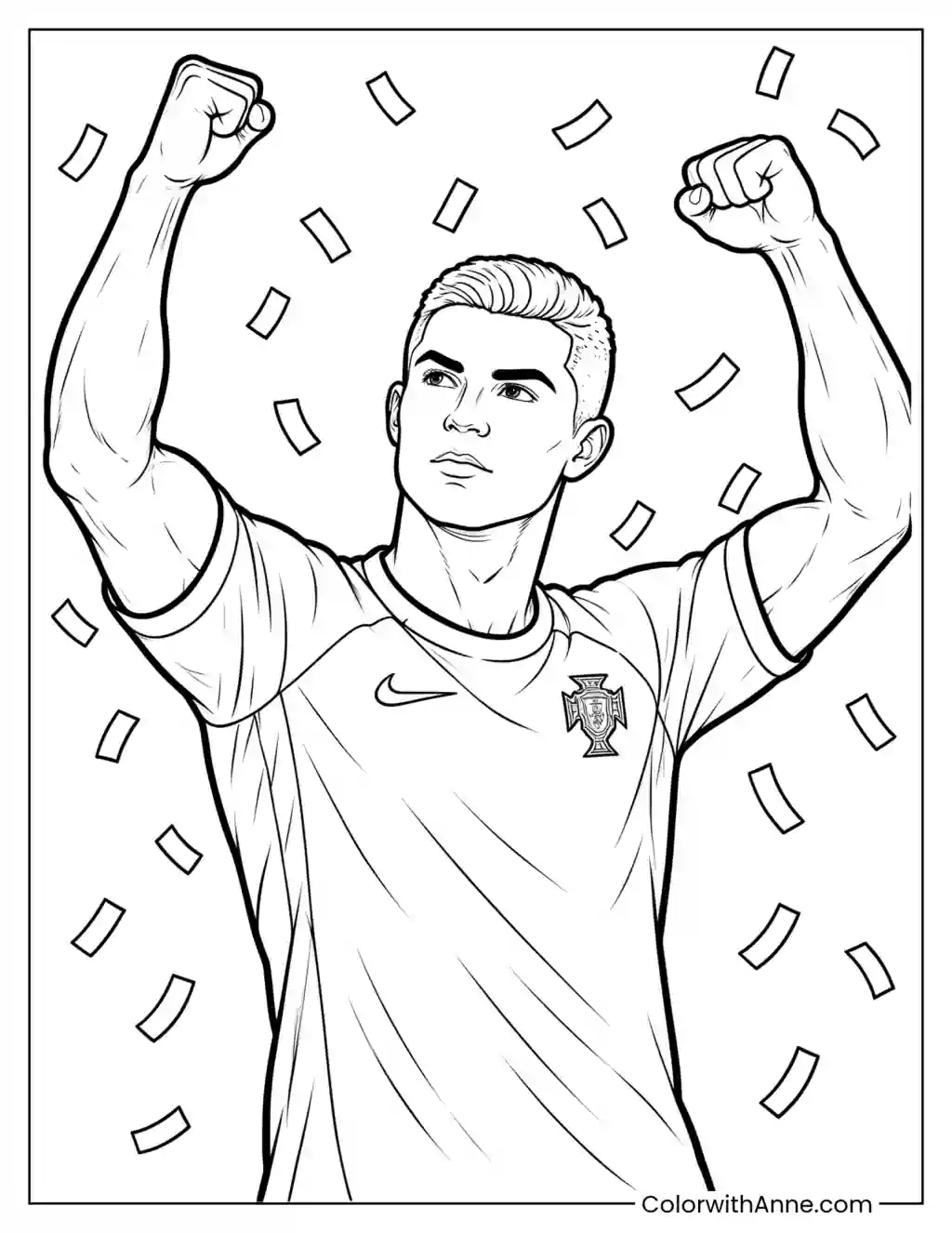
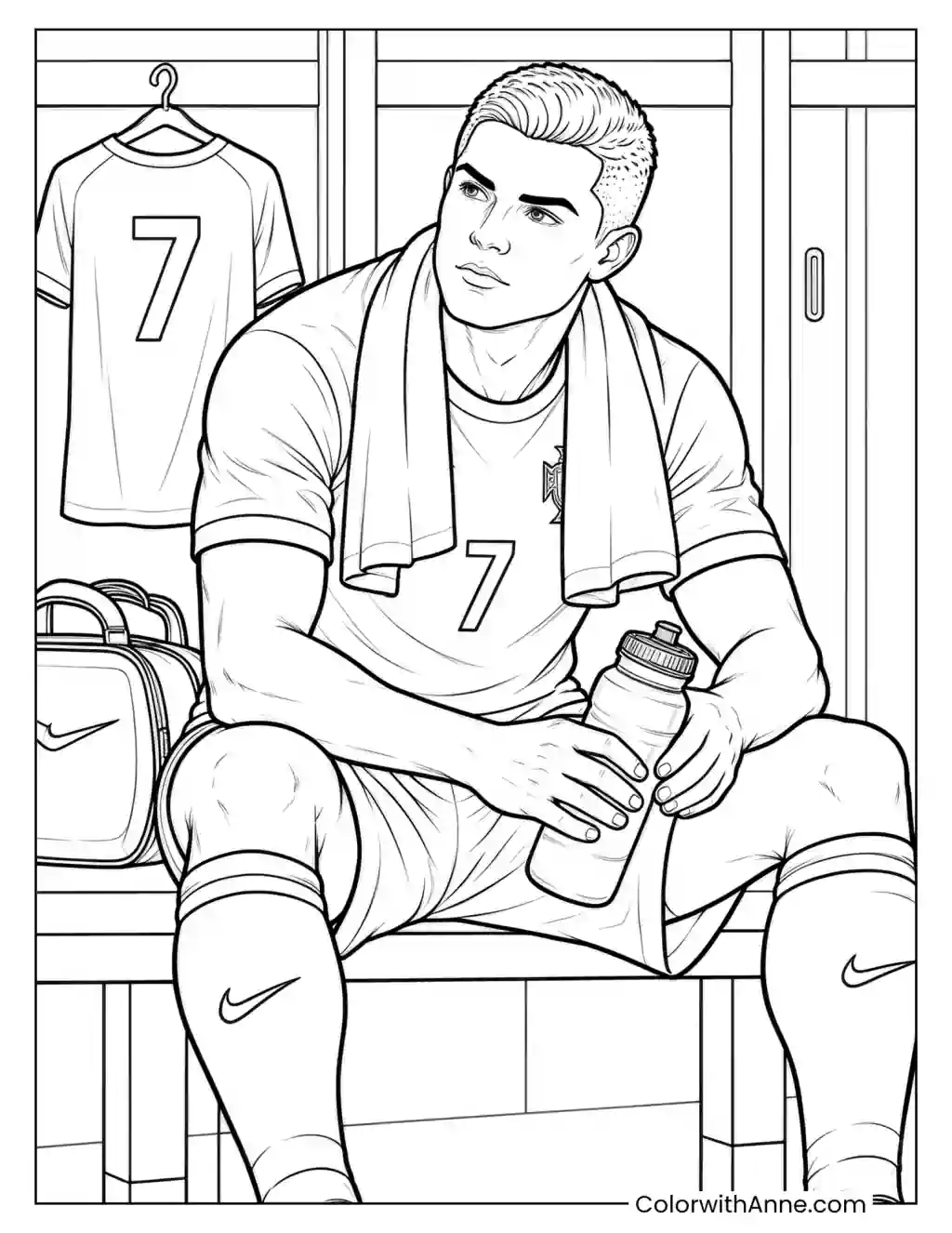
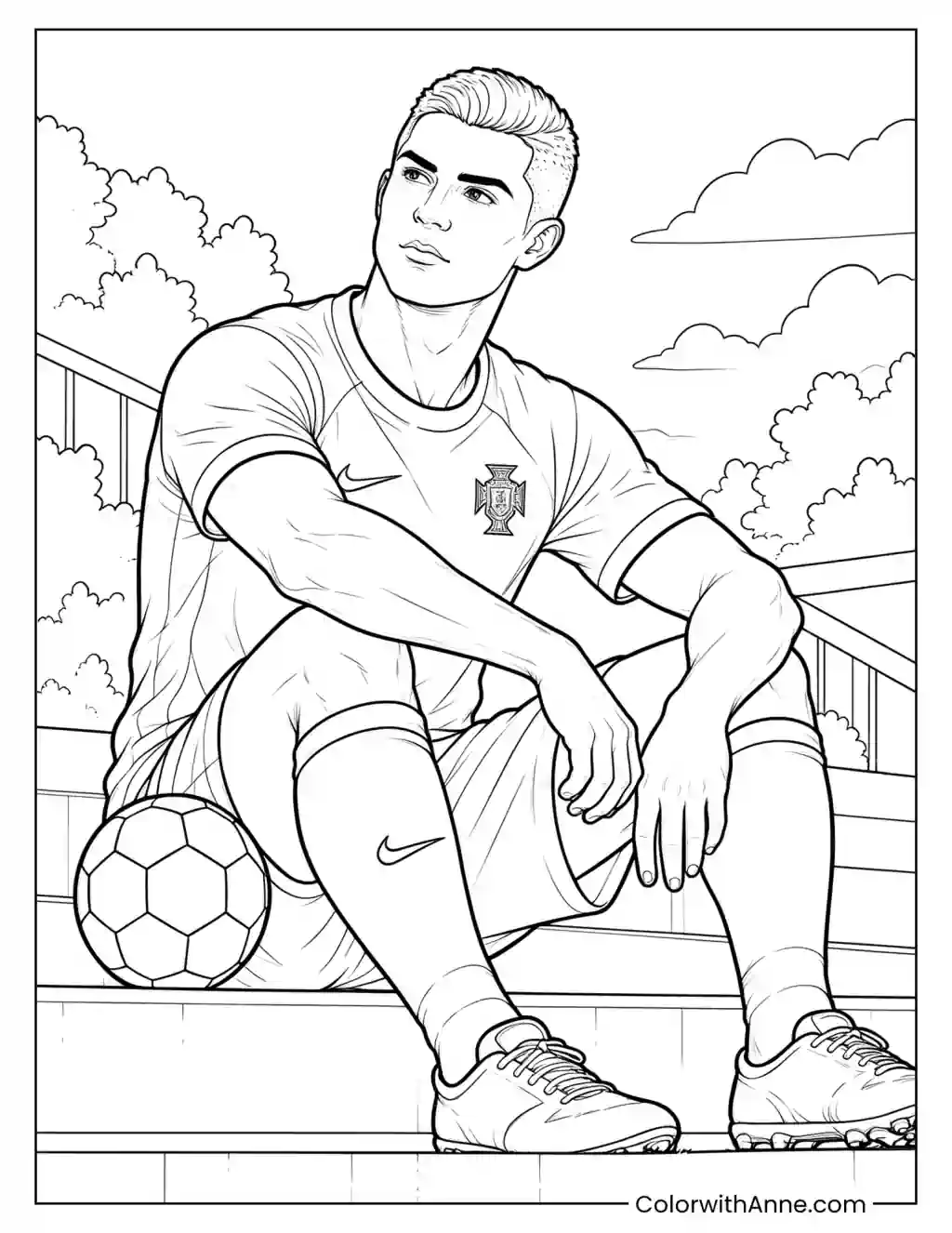
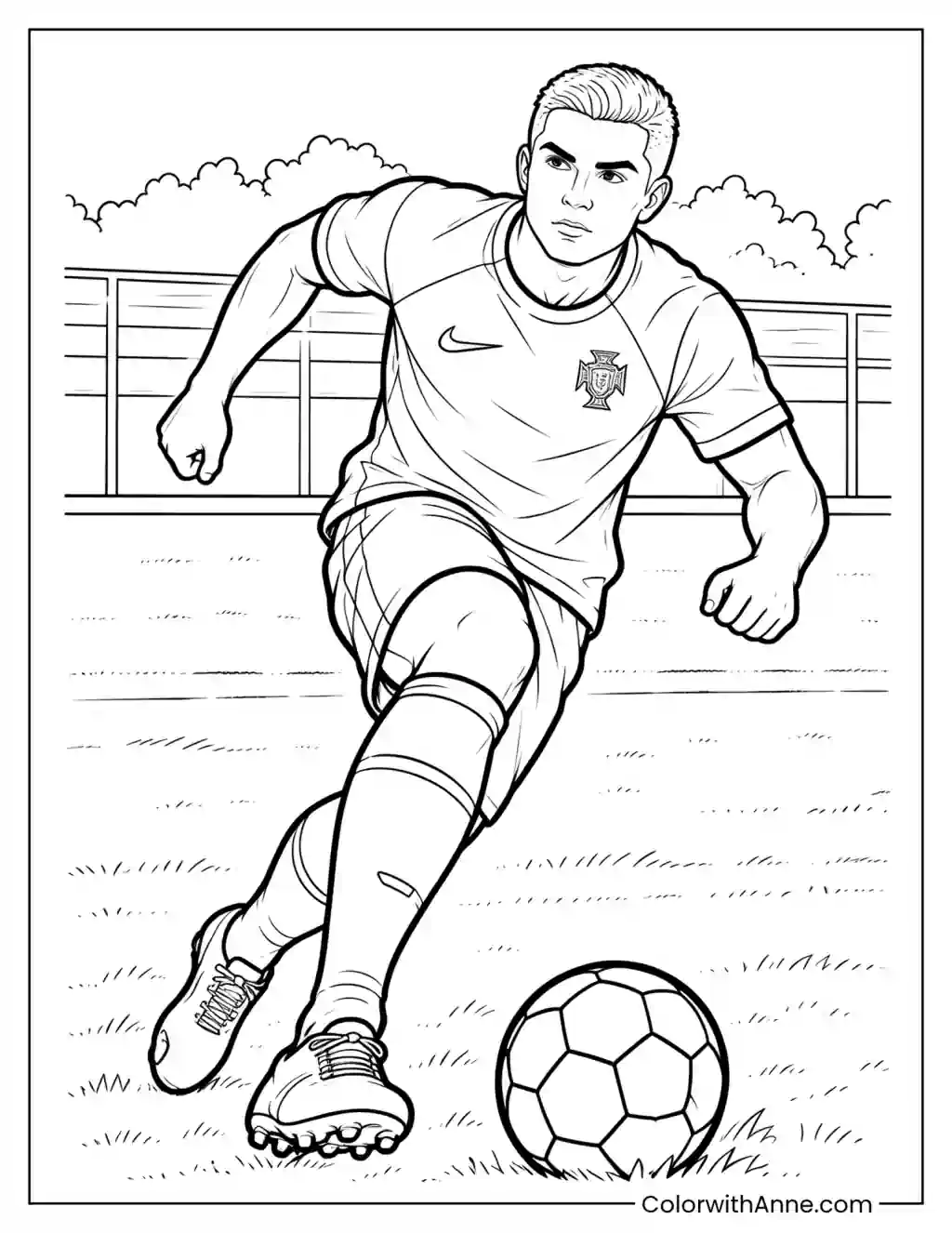
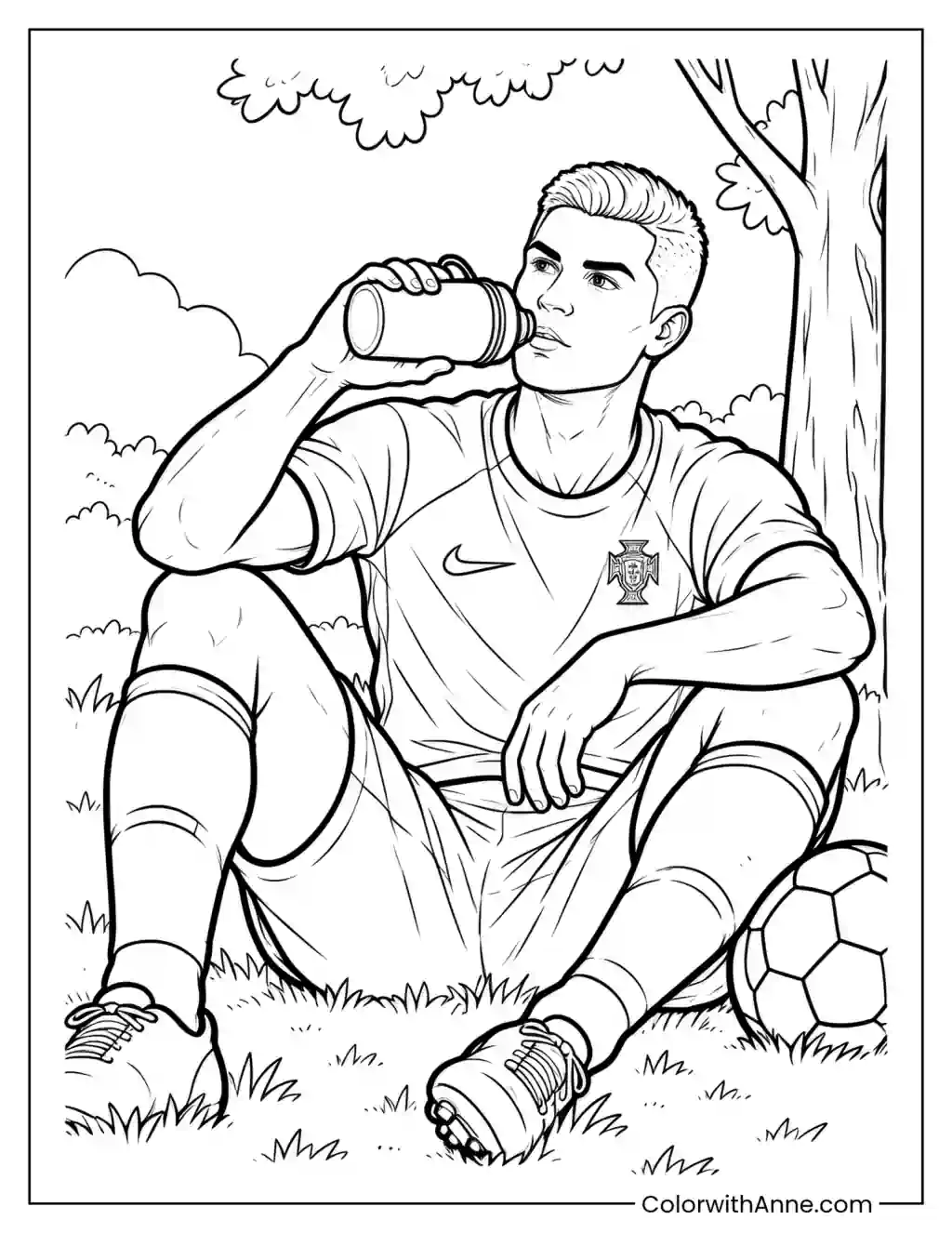
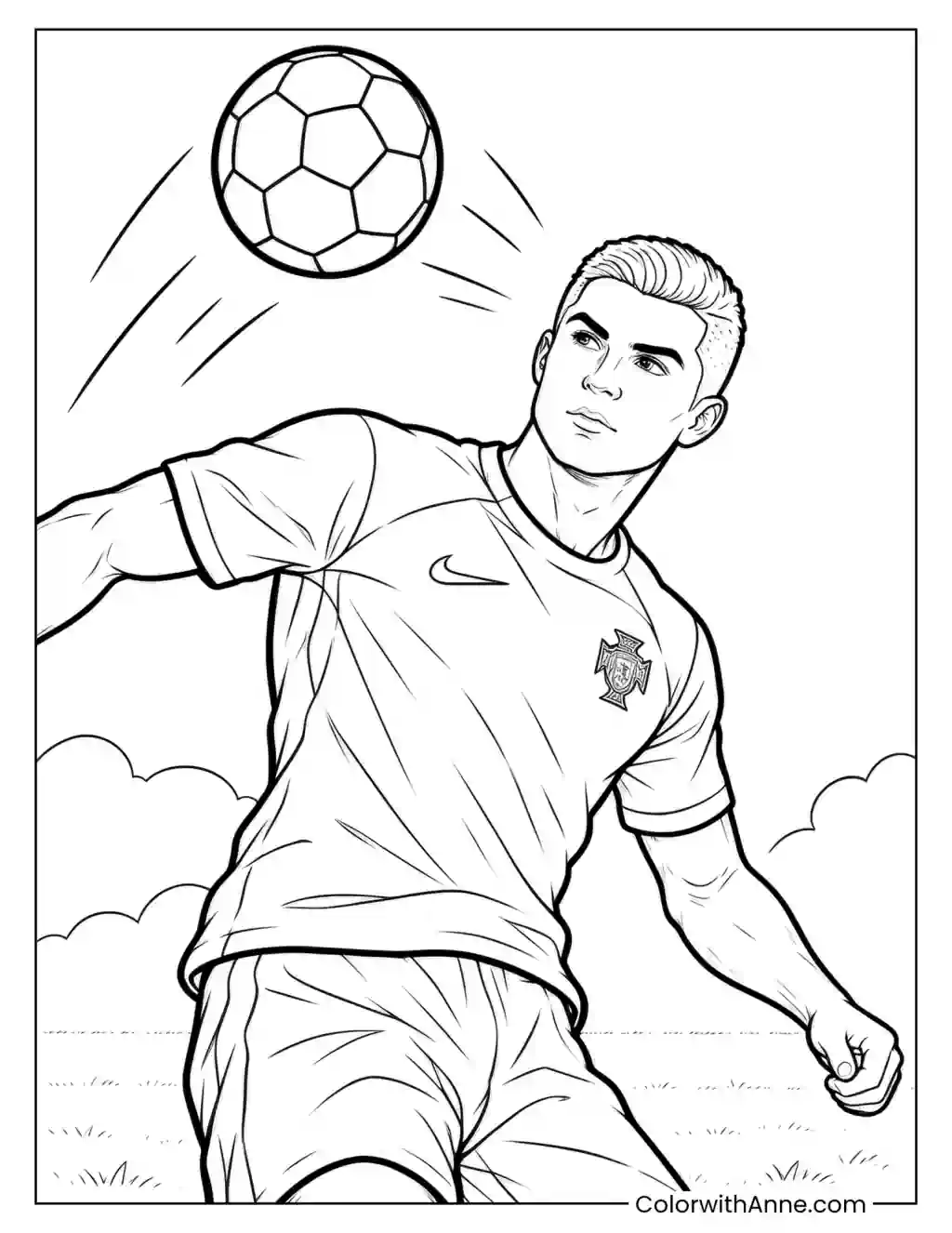
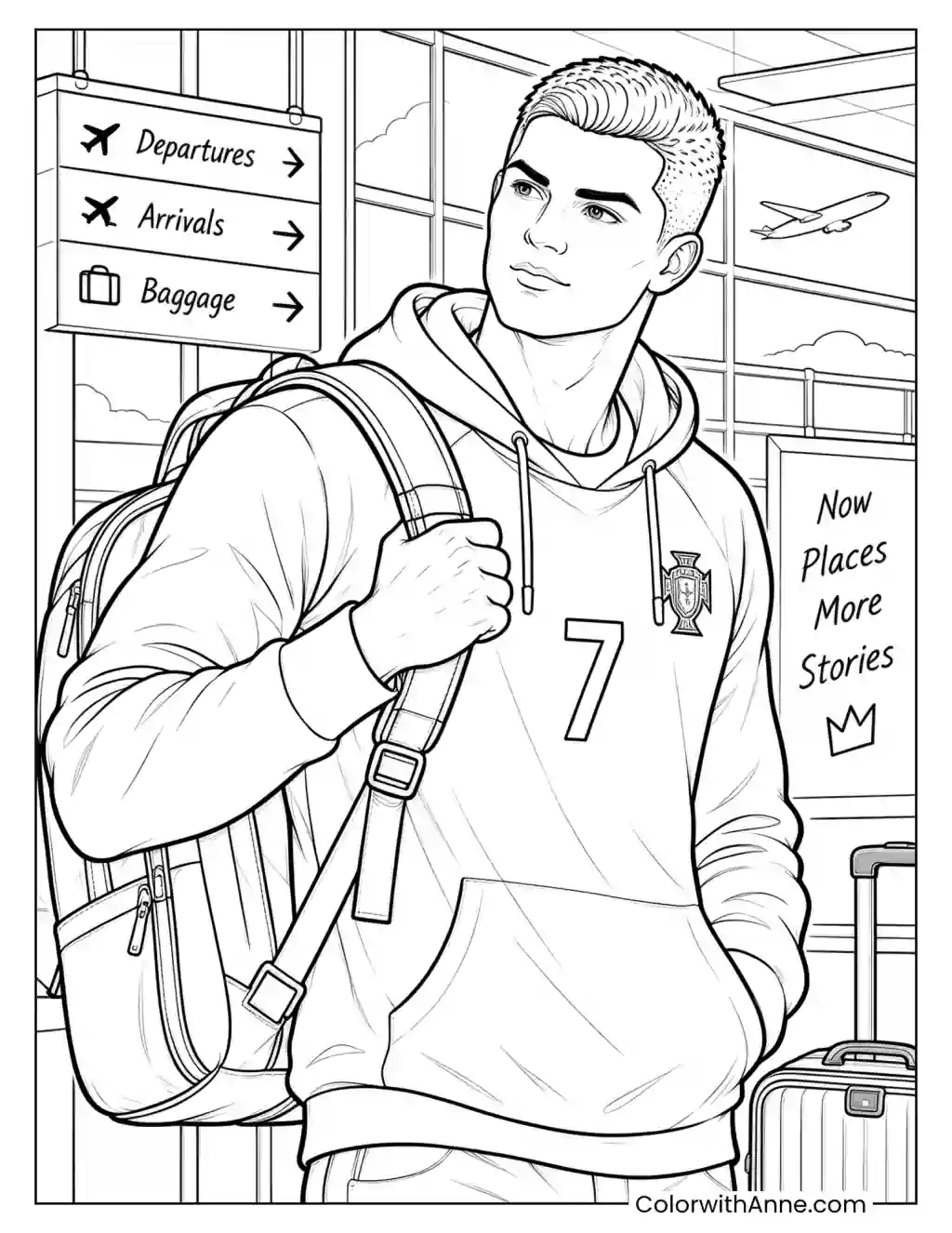
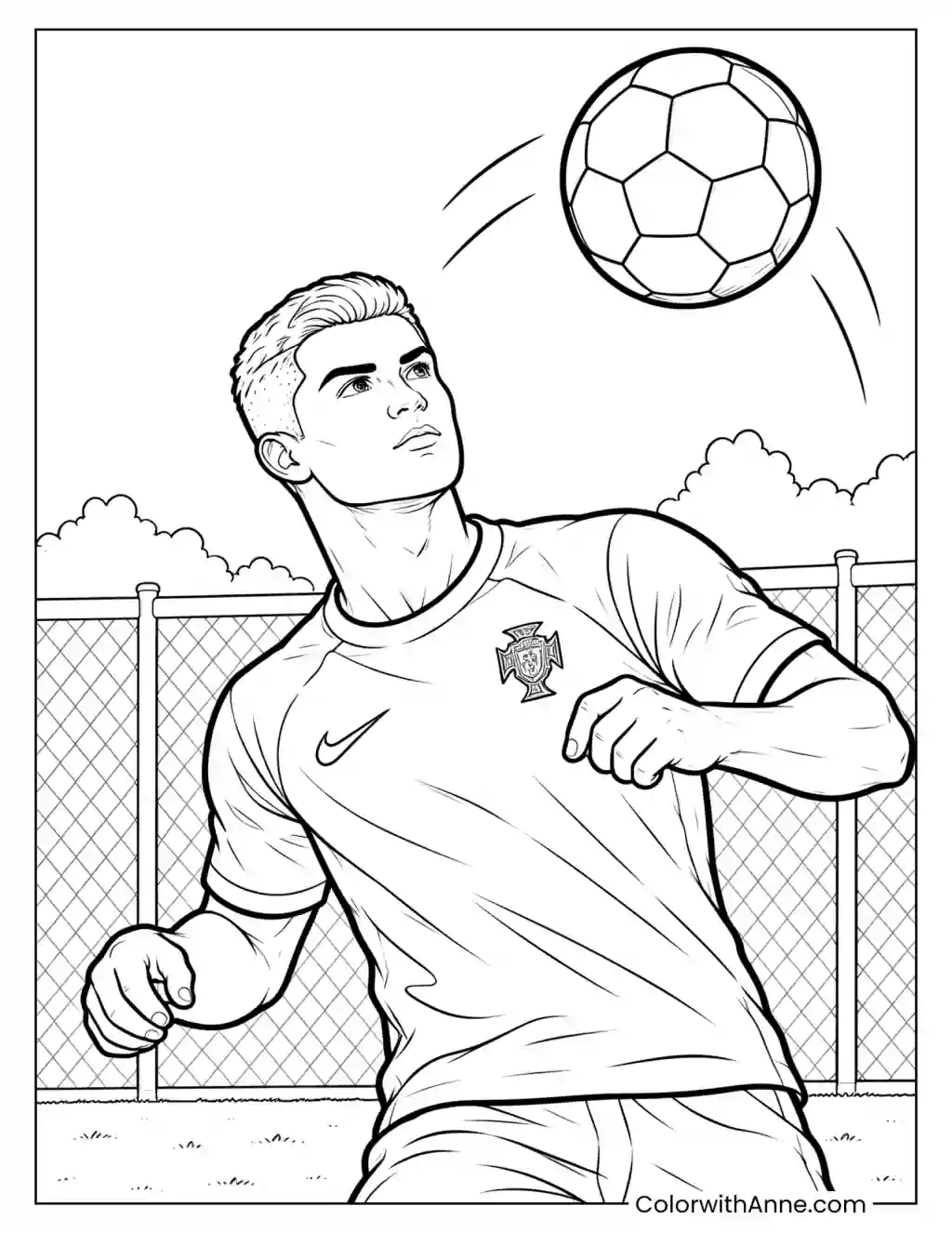
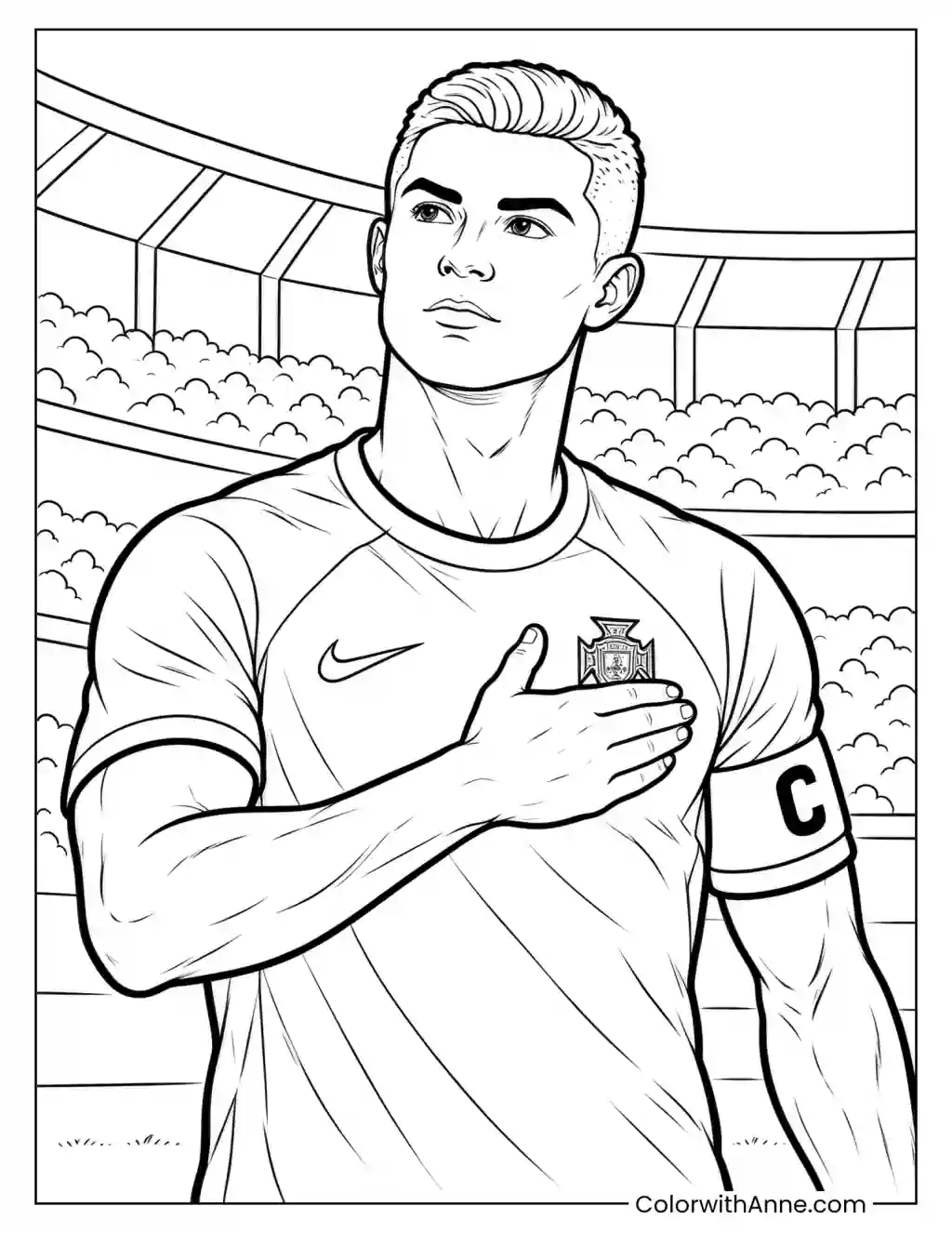
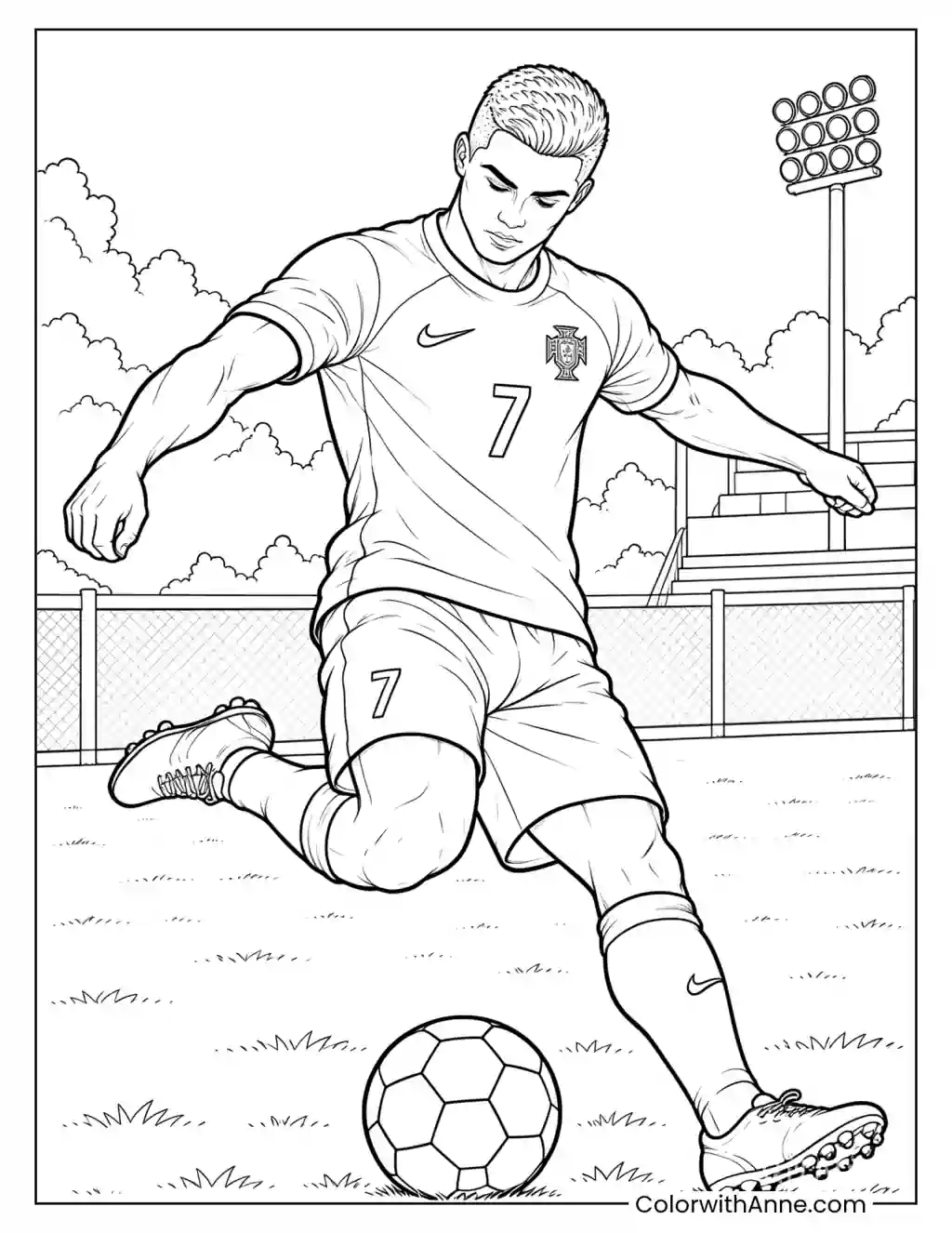
Cristiano Ronaldo coloring pages bring soccer practice, match day, and goal celebrations to the coloring table. Choose a portrait or an action scene, then give the jersey and ball your own colors.
Each picture opens a printable PDF. Pick a page with broad shapes for a short coloring break, or settle into a more detailed design when you have time to follow the smaller lines.
Free Printable Ronaldo Coloring Pages
Click any coloring page below to open the PDF, then print on US Letter or A4 paper.
Did you find what you needed?
Help us choose what to create or improve next.
Coloring Ideas for Ronaldo Pages
Try these creative ideas to make the most of your coloring sheets.
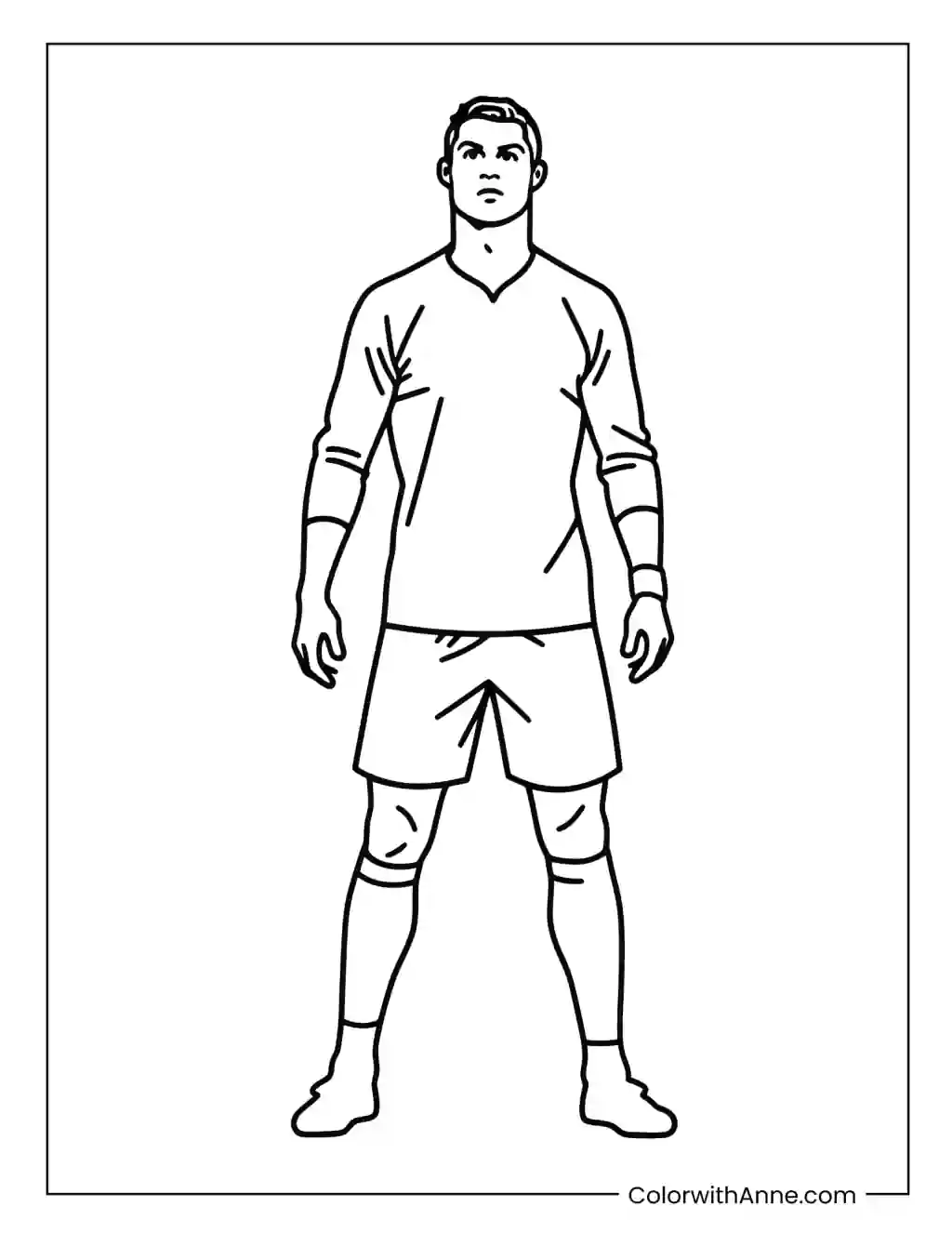
Choose a Clear Jersey Palette
Pick two main colors for the jersey before starting. Repeat one of them in a small nearby detail so the colors feel connected.
Keep the number easy to read. Leave its interior pale while adding color around it, or use a darker number against a light shirt.
Use light pencil pressure for the first layer. You can deepen a fold near the edge while leaving the center of the fabric brighter.
Let the Soccer Ball Stand Out
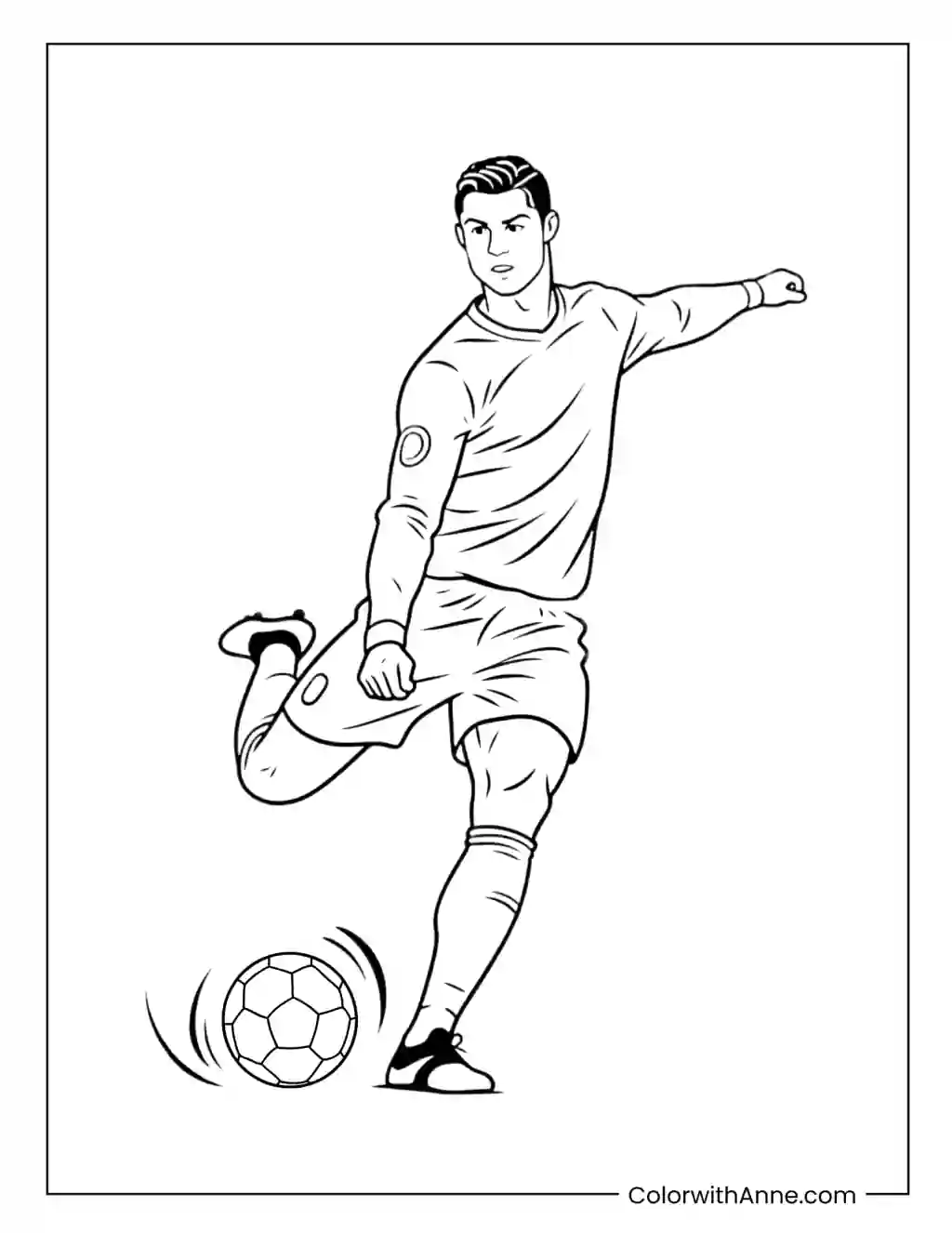
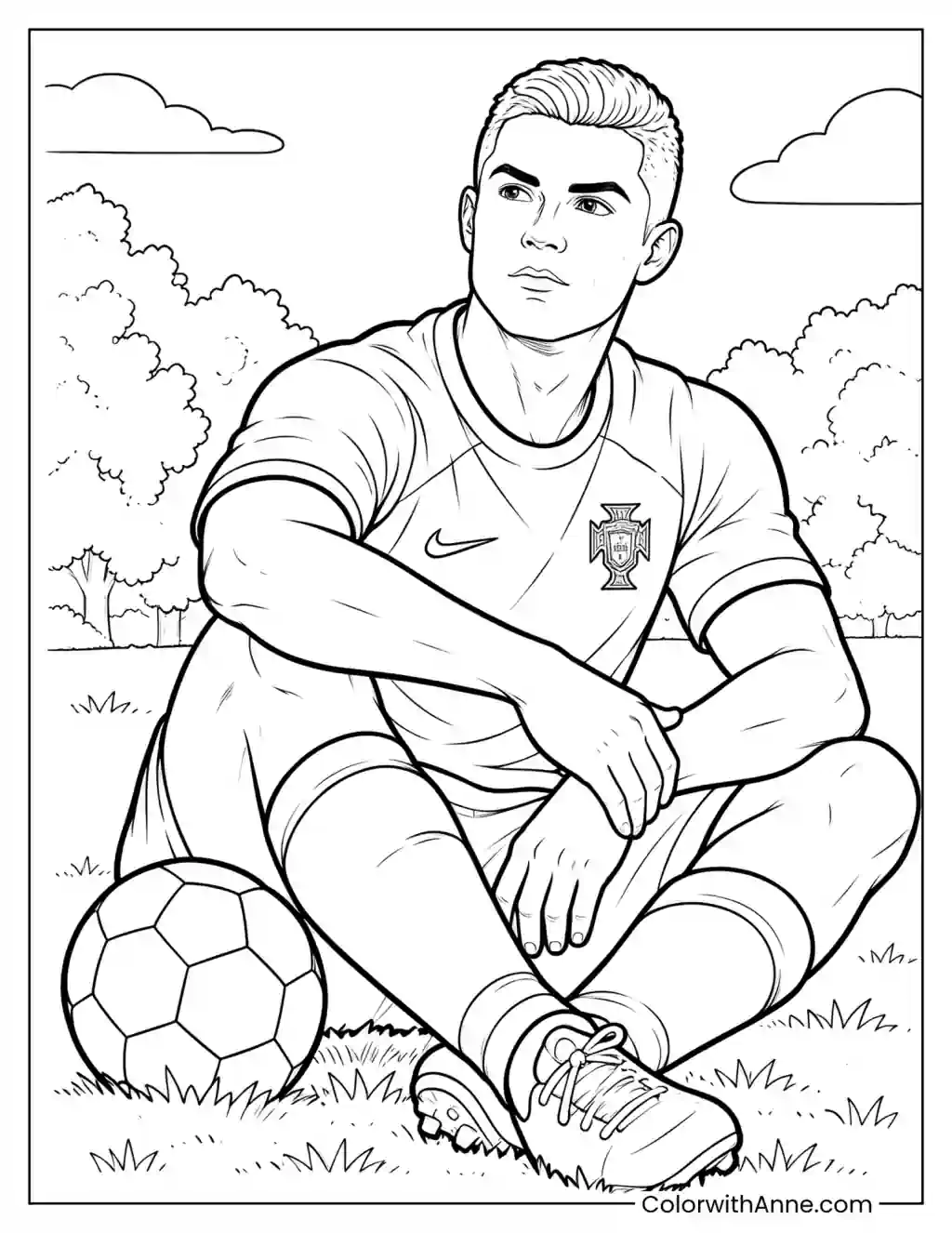
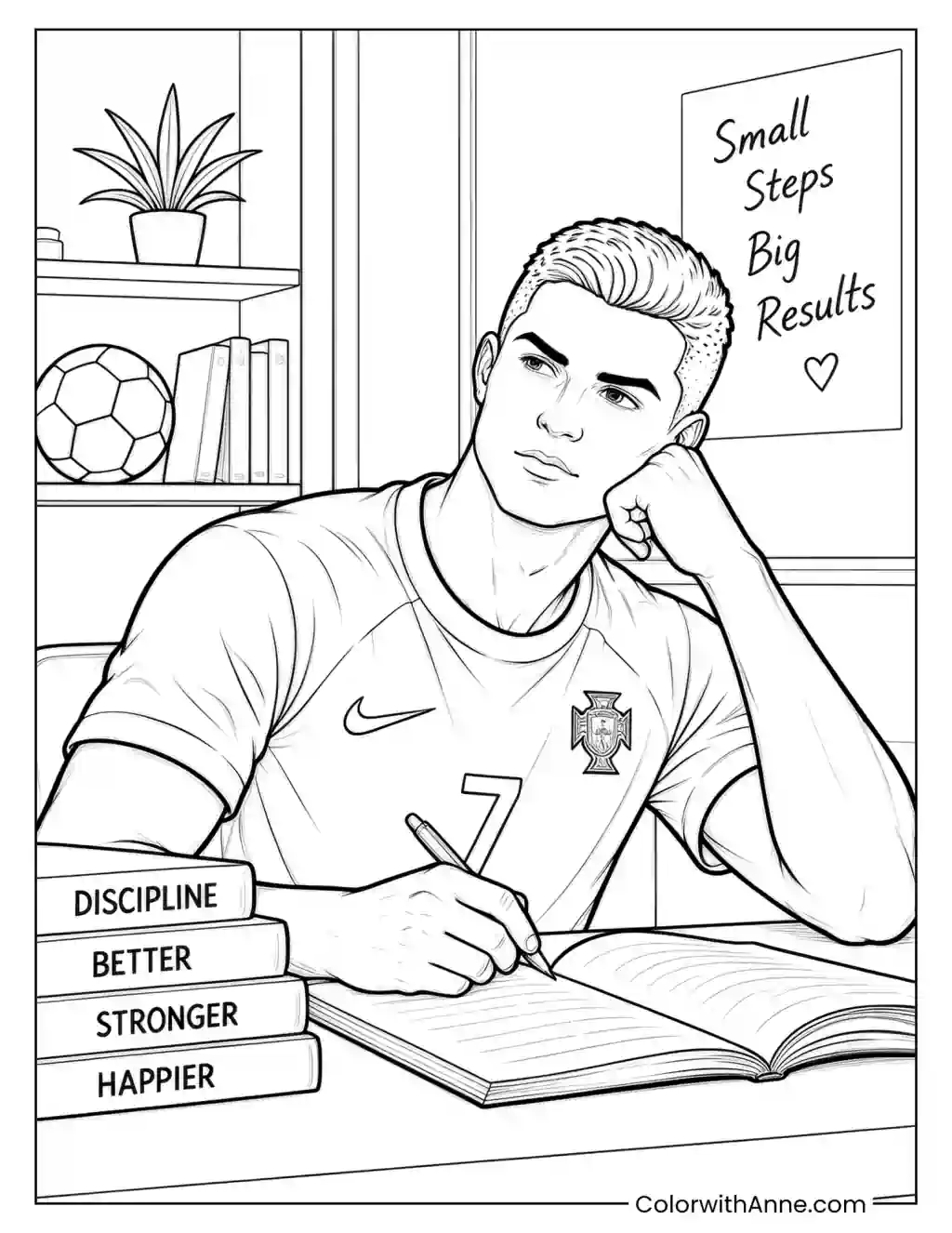
Start with the ball on this sheet. Alternate light and dark panels, following the drawn edges as you move around its surface.
Try a familiar black and white ball, or replace black with navy or deep purple. Leave a small bright area to suggest reflected light.
Keep the nearest jersey color different from the ball. That small contrast makes the sporting detail easier to see from across the table.
Give the Action a Direction
Follow the pose of the player before choosing a background color. Let the direction of the legs and arms guide a few broad pencil strokes around the figure.
Use one strong color for the uniform and a quieter color for the surrounding space. The figure can remain the clearest part of the page.
Add any extra motion marks lightly in the empty space. Stop before they cross the original outline or hide the ball.
Try a Warm and Cool Pair
Choose a warm color for one part of the outfit and a cool color for another. Orange and blue or red and green can make an energetic pairing.
Test your colors on a spare corner of paper. A light first layer gives you room to adjust the balance before filling larger shapes.
Repeat the smaller accent color once elsewhere on the page. A few deliberate touches can be more effective than many competing colors.
Keep the Portrait Simple
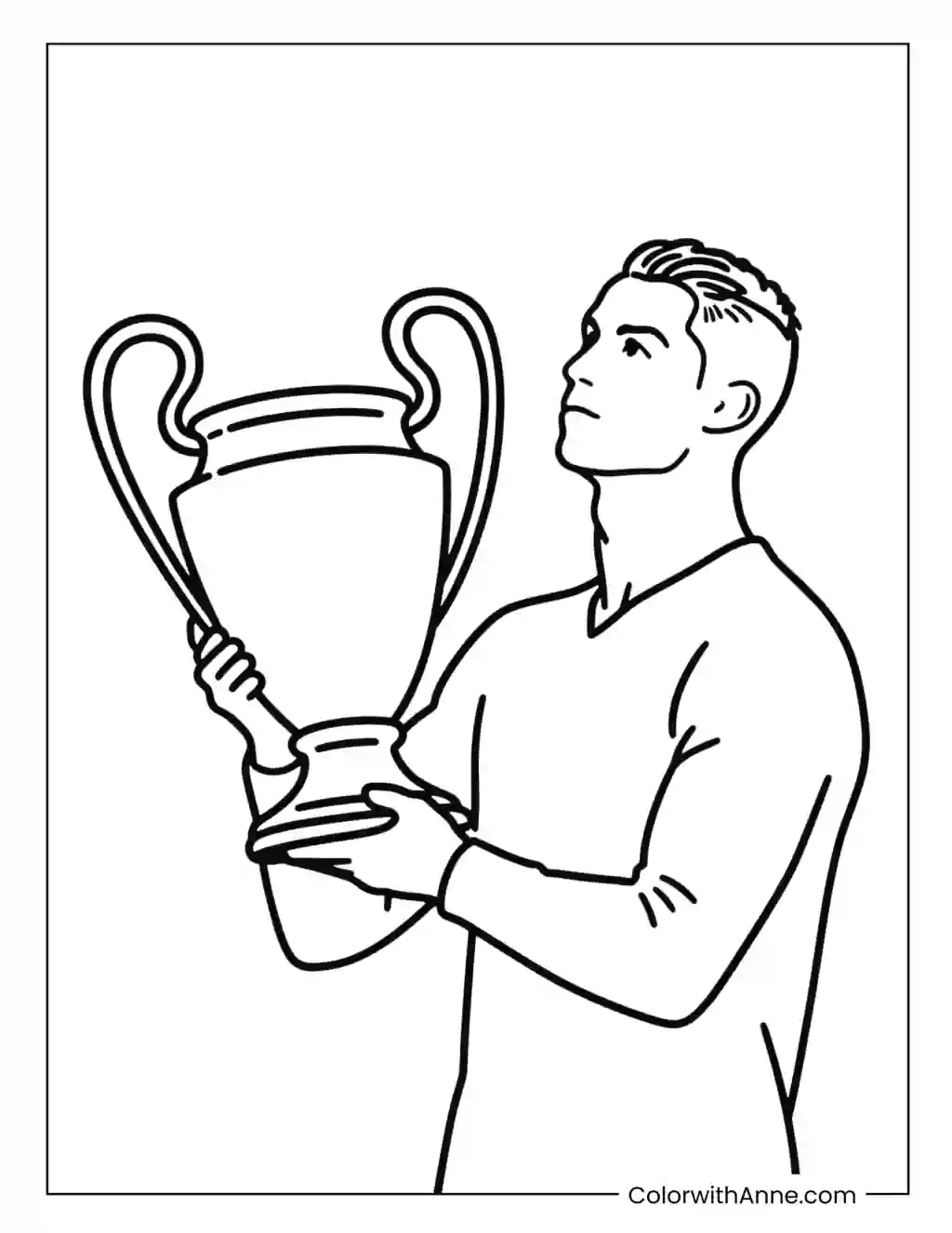
Begin with the face and hair on this sheet, working gently around the smaller features. Leave enough white space that the expression stays easy to read.
Use two related pencil colors for the hair instead of pressing harder with a single dark pencil. Follow the direction of the printed strokes.
Keep the clothing or surrounding shapes simpler than the face. A quiet background gives the portrait some breathing room.
Build a Match Day Mood
Choose the mood before you start: a bright afternoon, an evening match, or a celebration in your favorite team colors. Let that choice guide the palette.
Color the player first and the surrounding areas second. This makes it easier to choose a background that supports the finished uniform.
Keep one small accent bright. It can echo a jersey color or add a playful detail without filling every empty patch of paper.
Use a Limited Color Challenge
Set out three colored pencils for this page and see how far they can go. Use different pressure levels to create lighter and darker versions of each color.
Choose one pencil for most of the uniform, one for smaller details, and one for the surrounding space. The limited choices can make a busy sheet feel calmer.
Leave selected areas white on purpose. The paper itself gives you another value and keeps the darkest details clear.
Finish with Small Shadows
After the main colors are in place, look for edges where a small shadow would help separate neighboring shapes. Add a narrow strip rather than a heavy outline.
Use a related darker color on clothing and a soft gray near the ball. Keep the shadow on the same side of each rounded shape.
Step back before adding more. A few light finishing marks are enough, especially when the original drawing already contains fine detail.