
A police officer helping a lost child does something far less noisy than a television chase: listens carefully, asks a few questions, and helps work out what happens next. The uniform is recognizable, but the calm manner may be what the child remembers once a familiar adult finally comes into view.
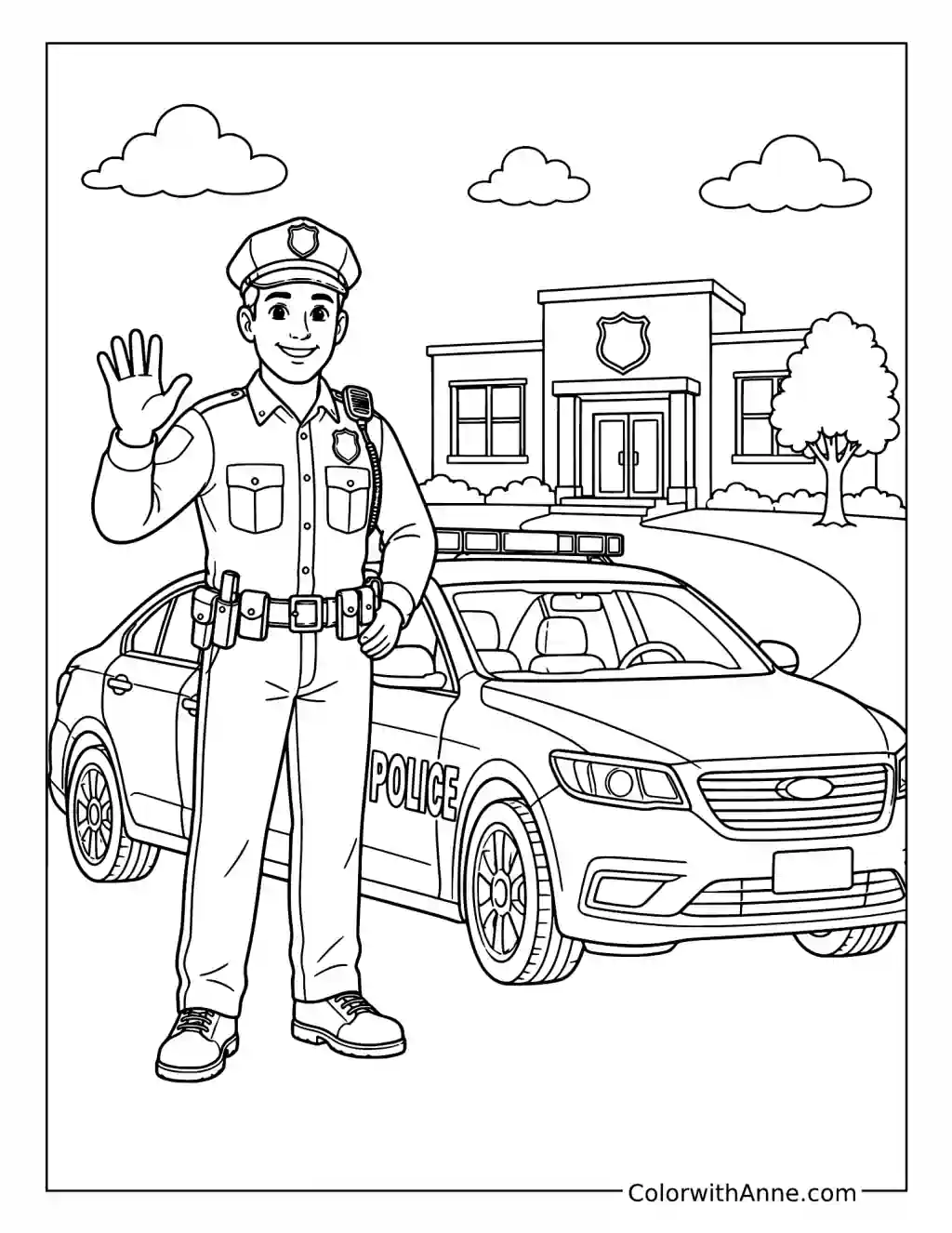
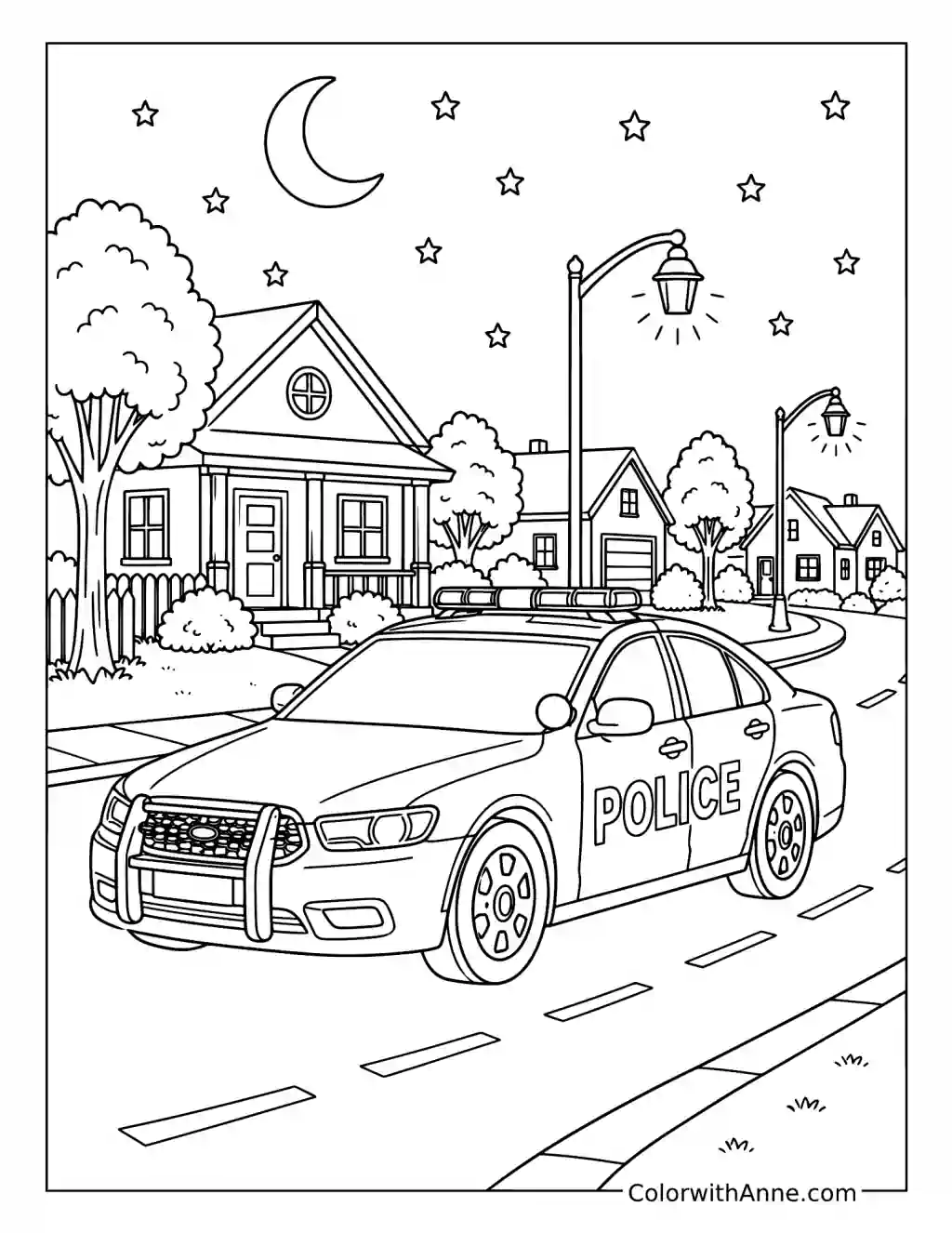
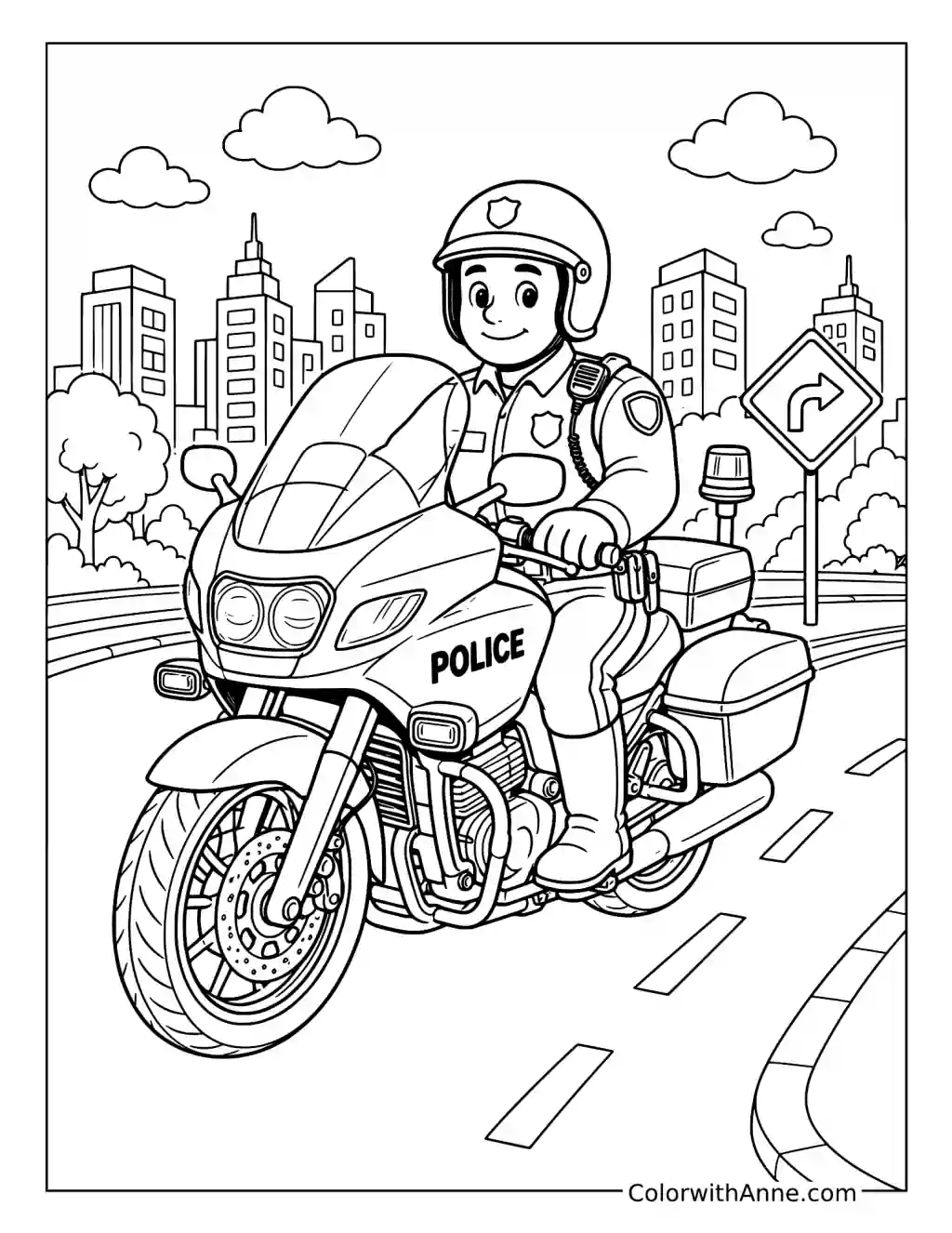
Police coloring pages can bring that human side of the job into a conversation at home or school. A child may begin with an interest in the patrol car, then ask what the person driving it actually does. Familiar examples make the role easier to understand than the flashing lights alone.
Free Printable Police Coloring Pages
Click any coloring page below to open the PDF, then print on US Letter or A4 paper.
Did you find what you needed?
Help us choose what to create or improve next.
Coloring Ideas for Police Pages
Try one of these coloring ideas, or use them as a starting point for your own.
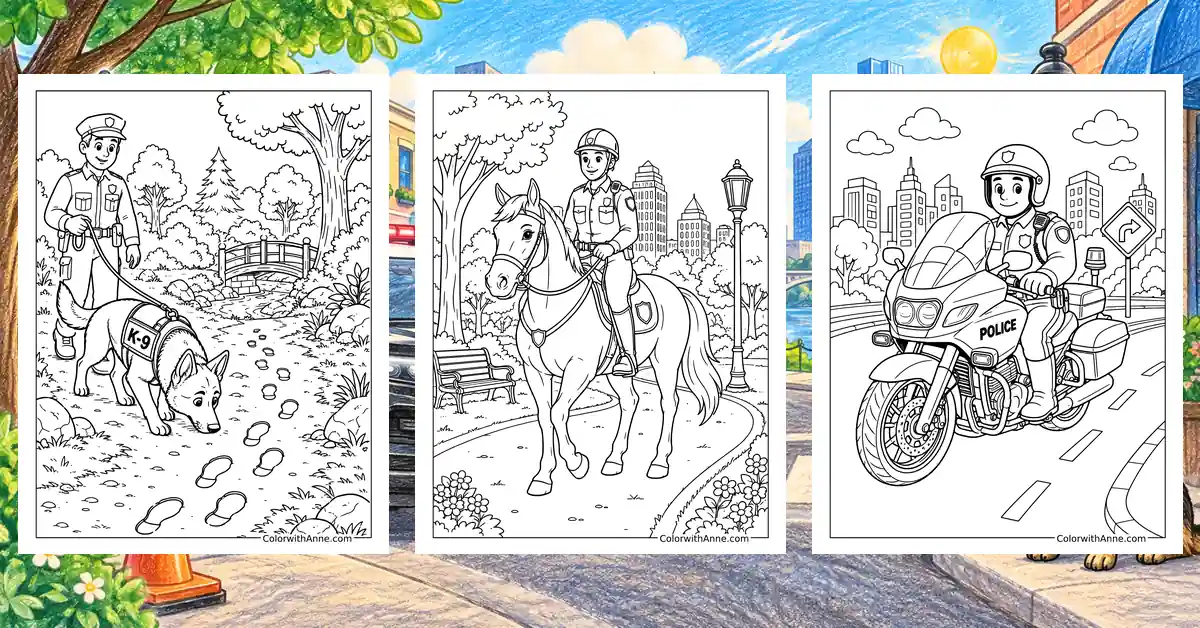
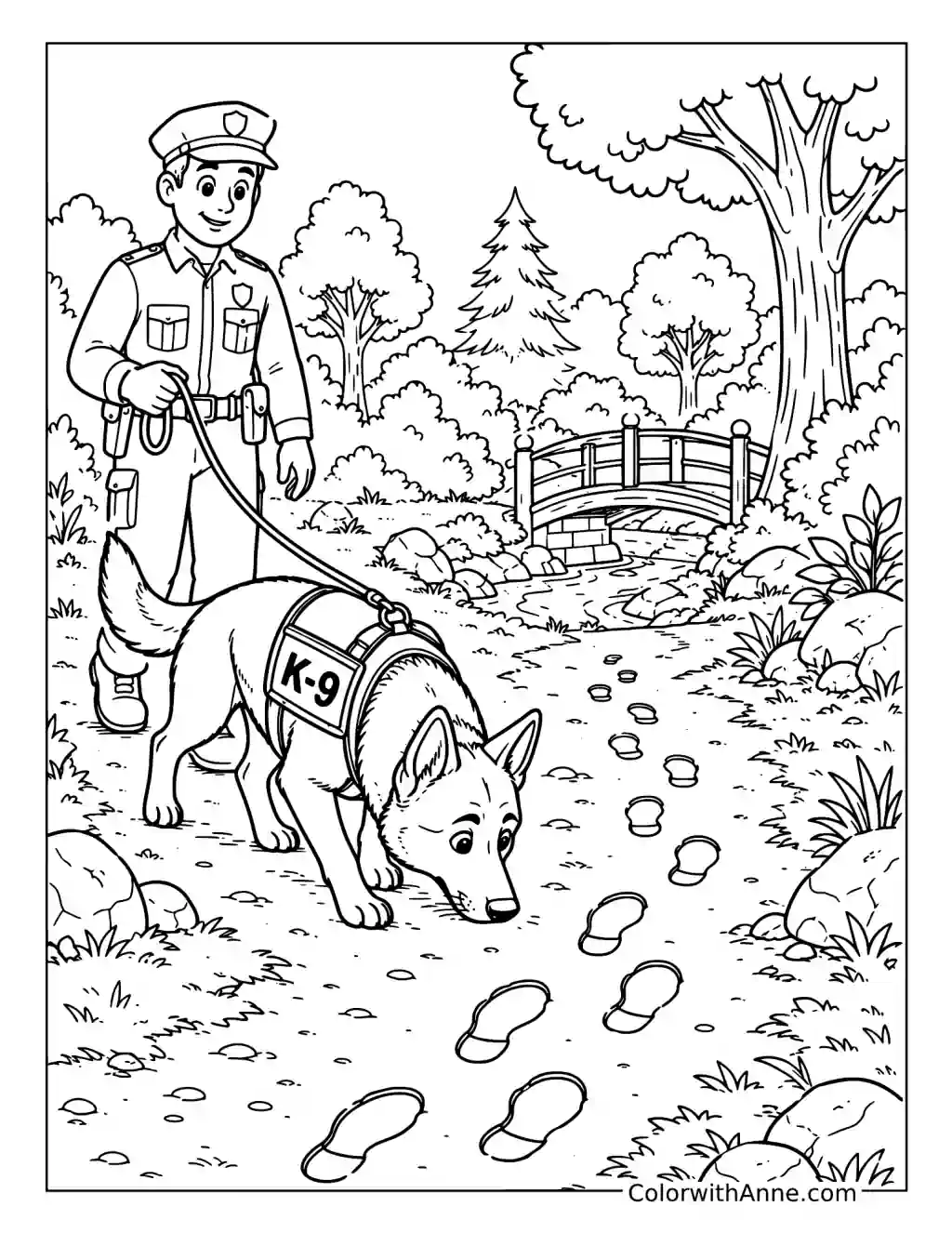
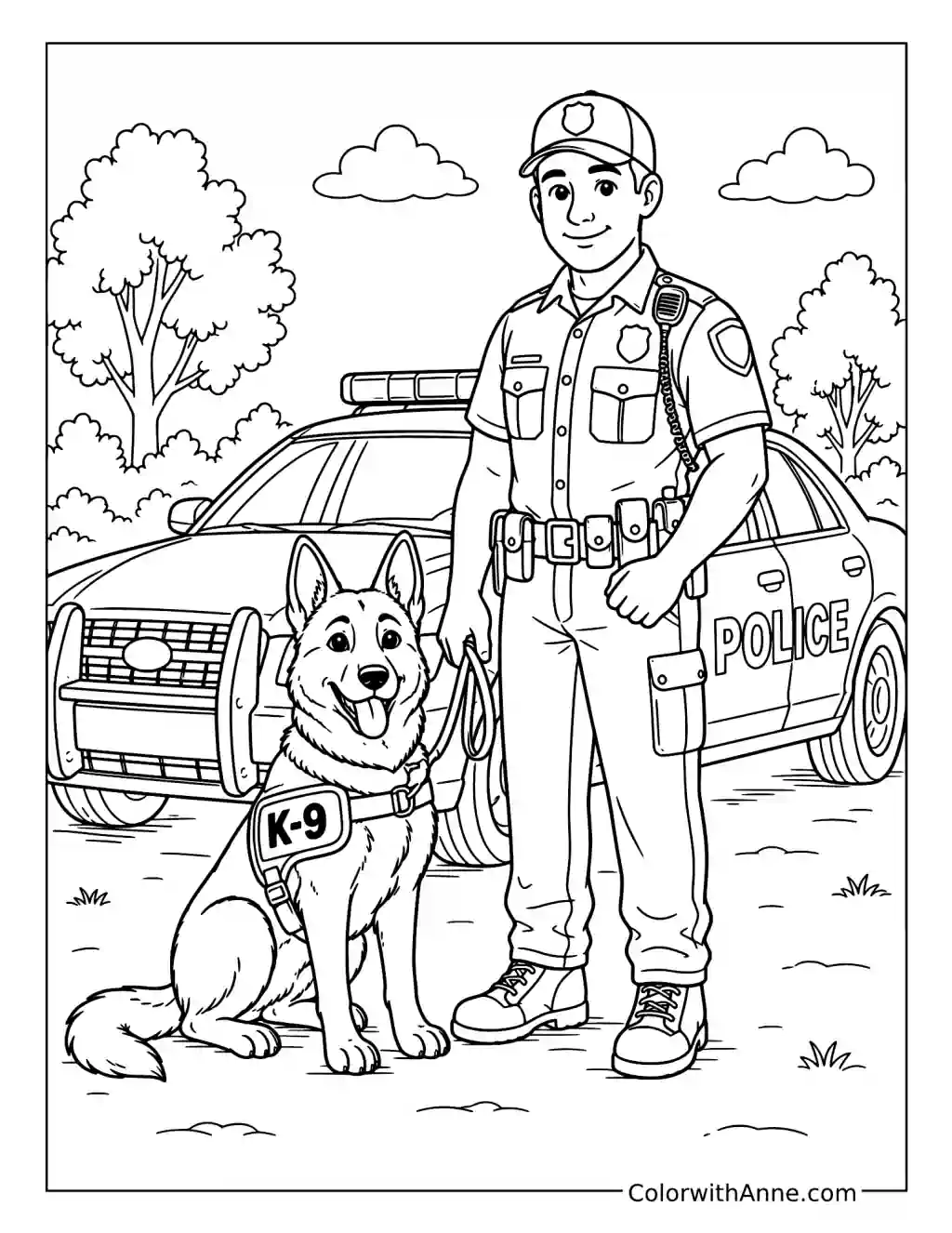
Follow the K-9’s Footprint Trail
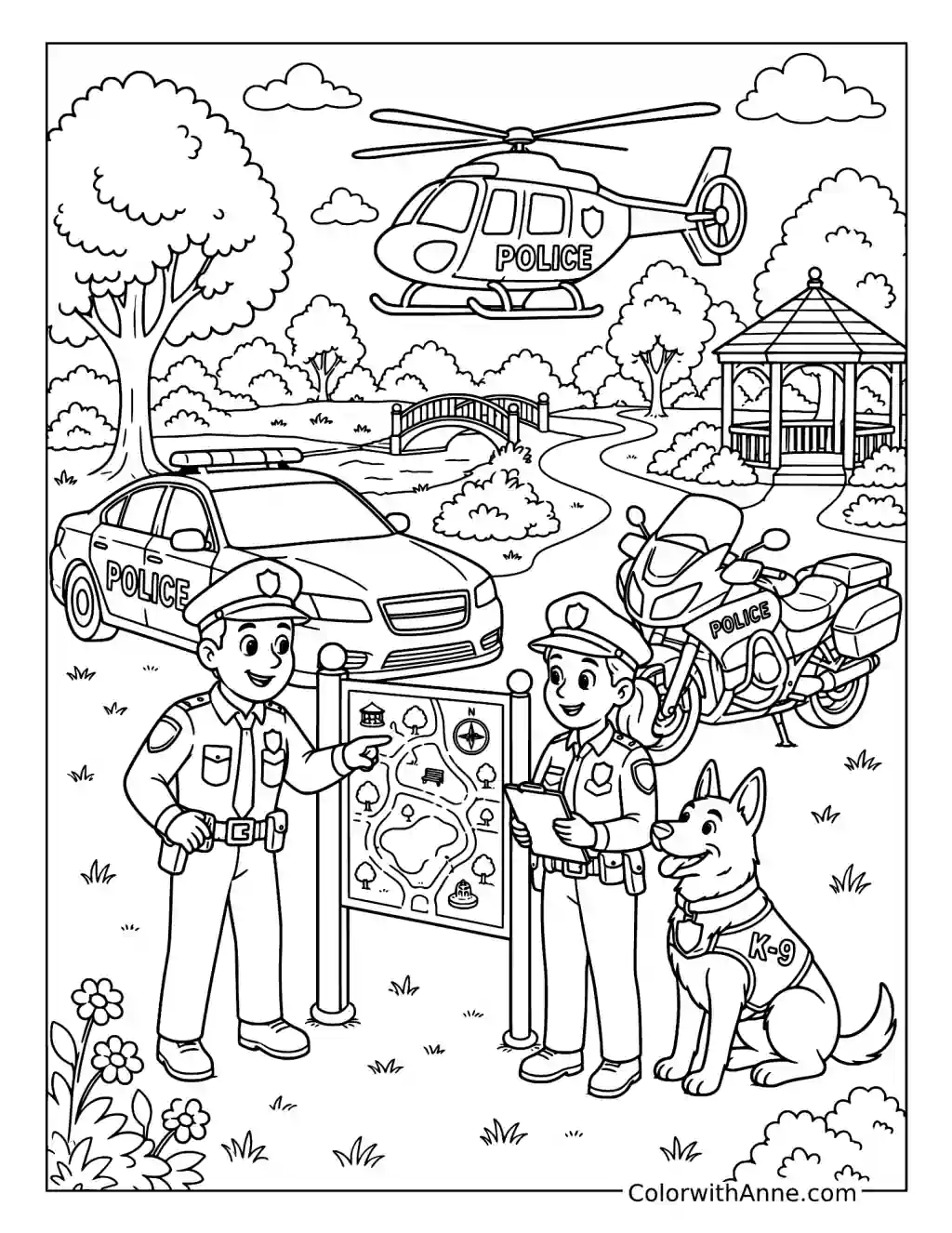
The dog lowers its nose toward a trail of footprints while the handler follows through the park. The winding path makes the search easy to imagine, especially where the next print disappears among the leaves.
Brown and black could suit the dog, with a blue uniform for the handler. Darker footprints on a pale path would keep the route visible.
Make a small trail indoors with paper footprint shapes. Include one place where the trail changes direction and a familiar toy at the end. Another person can follow the prints in order, then take a turn arranging the next route. The game grows naturally from what the dog is already doing in the picture.
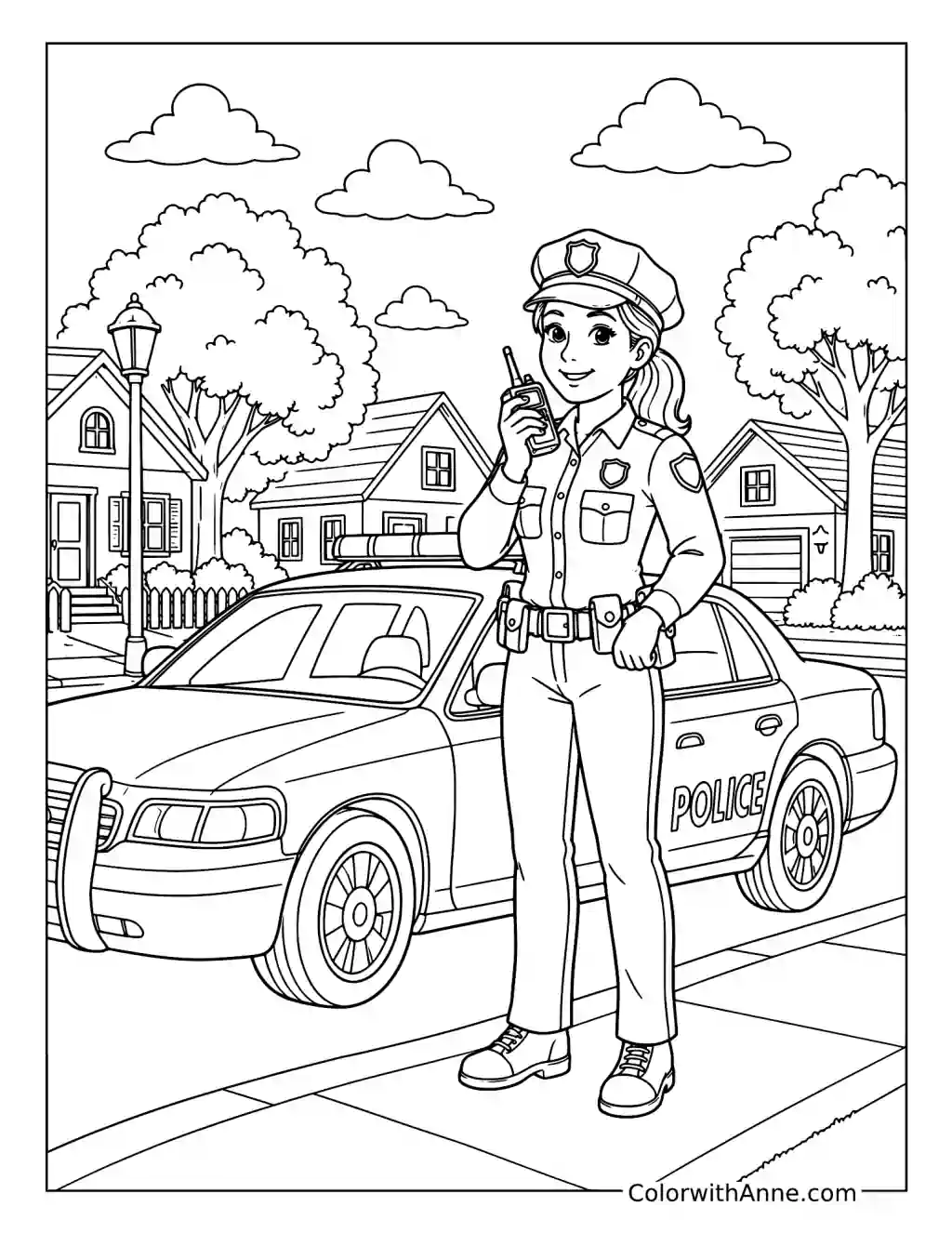
Send a Clear Message on the Radio
The officer holds a radio beside the patrol car, with houses and trees behind her. The scene pauses on communication, giving the small object in her hand as much importance as the larger vehicle.
Navy clothing and a black-and-white car would be familiar choices. The houses could stay in softer colors, with a small bright badge detail on the uniform.
Try a pretend radio game using objects in the room. One person describes where a toy has been left without pointing, while the other tries to find it. Details such as “beside the blue chair” or “under the low shelf” make the message useful, showing how a short description can be clearer than a long, uncertain one.
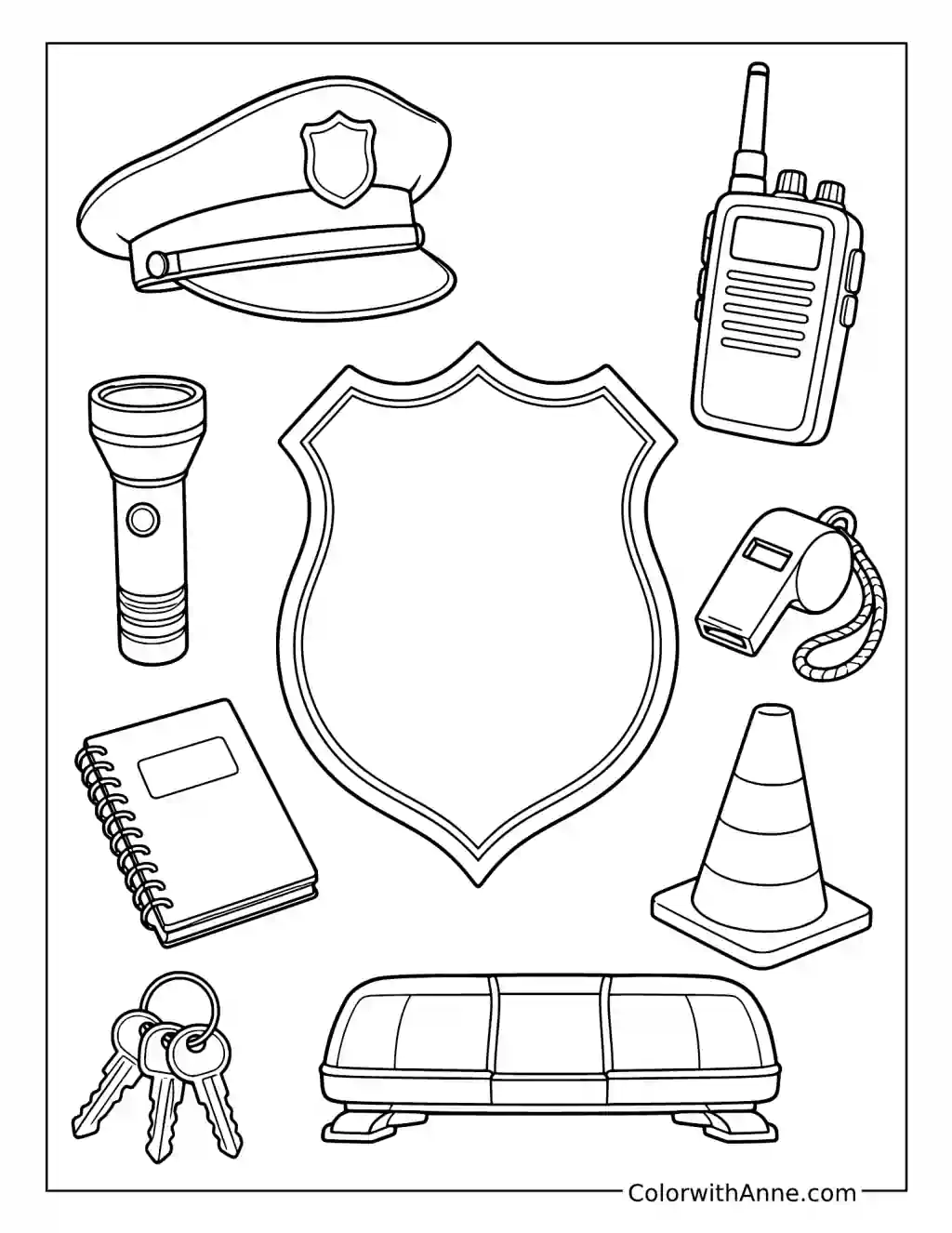
Make a Badge for a Pretend Case
A large blank badge sits among a hat, radio, flashlight, notebook, and other equipment. The separate objects make this page especially appealing to children who enjoy sorting out what belongs in a role-play kit.
Gold or silver would suit the badge, with a navy hat and dark radio. Small gray details could distinguish the metal pieces without making the whole page equally bright.
Mount the badge on card for a pretend police game, then pair it with a small notebook. Begin with a simple missing-toy case: what has disappeared, where was it last seen, and who remembers seeing it? The equipment on the page can help children decide what their imaginary investigation needs before the search begins.
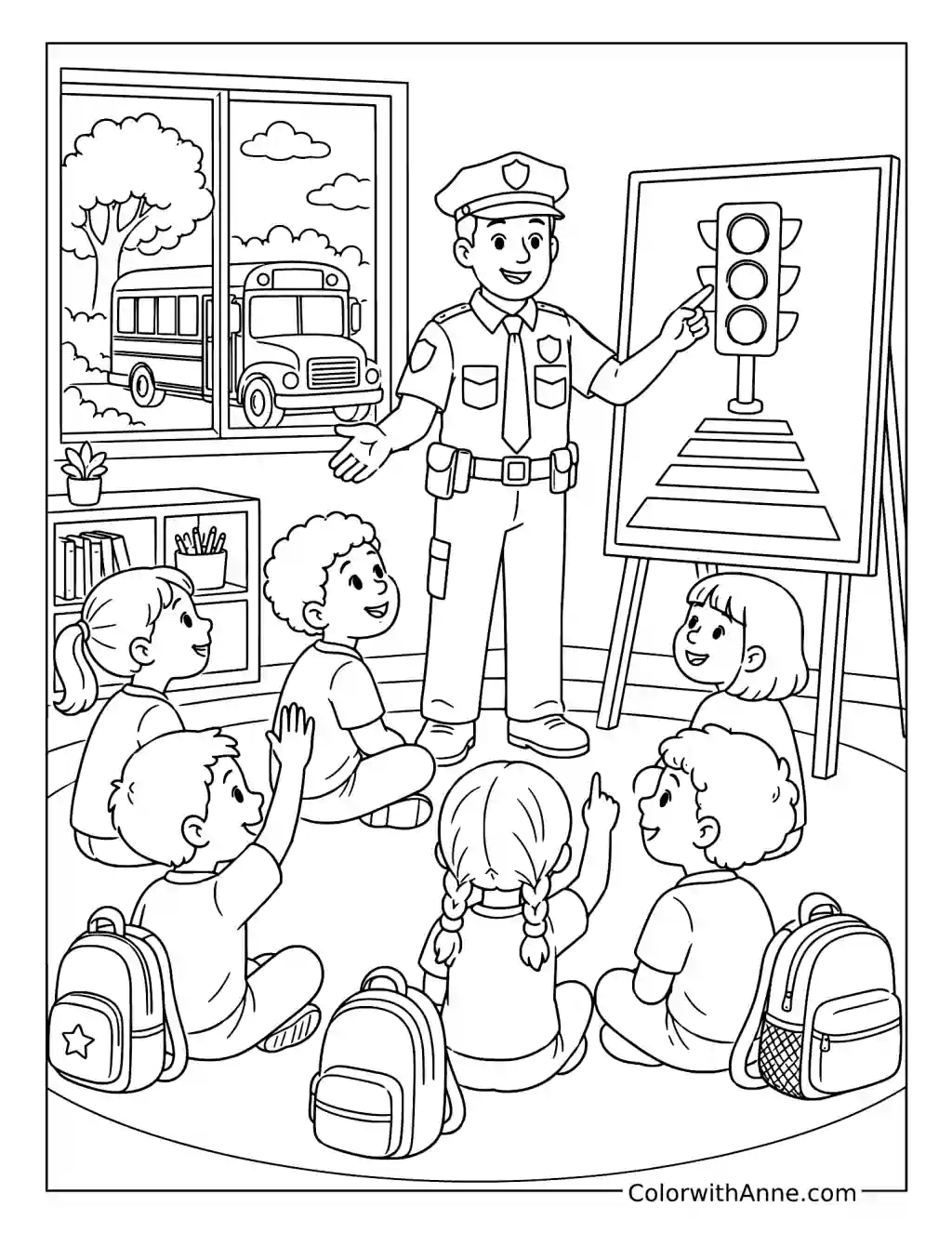
Bring the Traffic Lesson onto the Table
The officer stands beside a traffic-light and crossing diagram while the children listen. Their school bags and the nearby bus make the lesson feel connected to the journeys they take every day.
A blue uniform could stand against warm school and pavement colors. Red, amber, and green belong in the traffic-light diagram, with clear pale crossing stripes below.
Use a toy car, a small figure, and paper road markings to talk through a familiar local crossing. Let an adult guide the sequence using the signals and rules the child actually encounters. Moving the pieces slowly gives everyone time to ask questions, and the picture can remain beside the model as the lesson’s starting point.
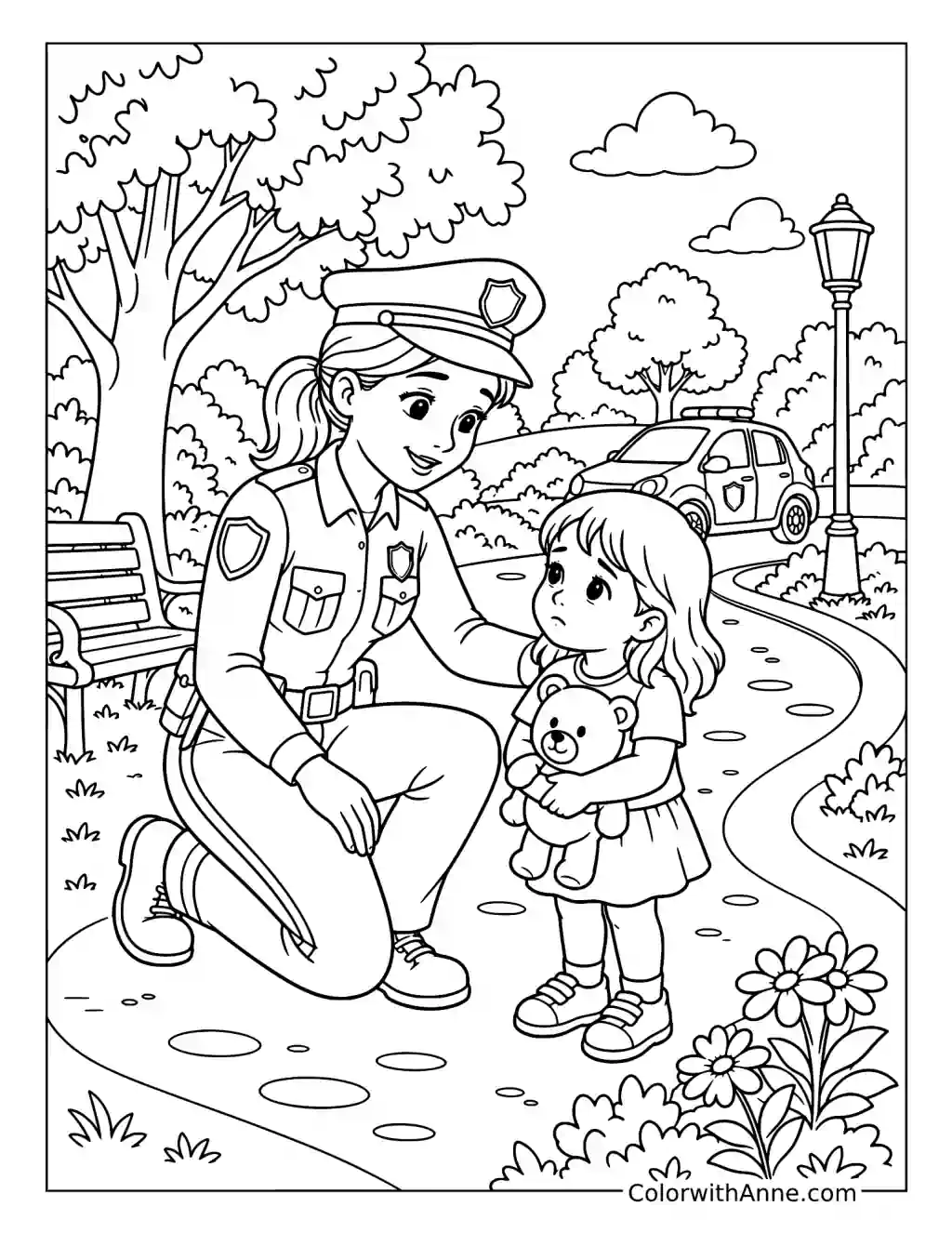
Help Describe the Missing Teddy
The officer kneels beside a young child holding a teddy bear on the park path. Getting down to the child’s height makes the scene feel attentive, with room for a conversation.
Soft brown could suit the teddy, with a brighter outfit for the child. A quieter green background would keep the two faces and their gestures easy to see.
Use a toy bear for a simple describing game. One person pretends it has gone missing and explains its color, size, and most recognizable feature. The listener chooses it from several toys. It is a practical way to rehearse asking for help with something small, while the picture supplies a patient person to imagine listening.
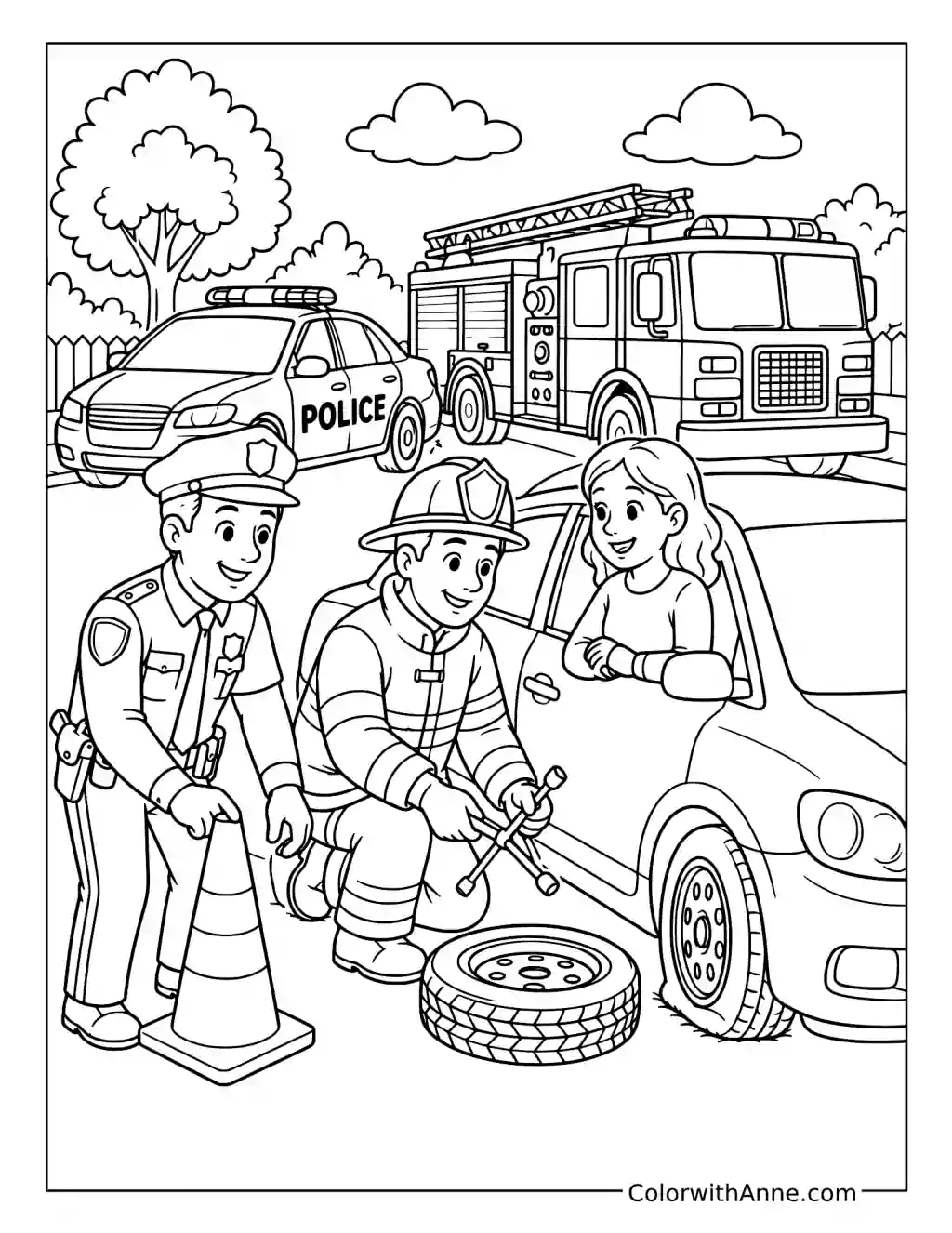
Open a Repair Bay for the Toy Cars
The officers help beside a car with a spare wheel on the ground, while its driver watches nearby. The scene gives the vehicles a practical problem to solve before anyone continues the journey.
Silver or blue would suit the car, with darker tires and a few warm colors in the background. The uniforms can stay in a consistent navy.
Set up a small repair bay for toy vehicles using two paper cones and a marked parking space. Sort a few loose toy wheels or drawn wheel shapes by size, then match a spare to each vehicle. The picture provides the reason for the task, and the matching game keeps the pretend repair manageable.
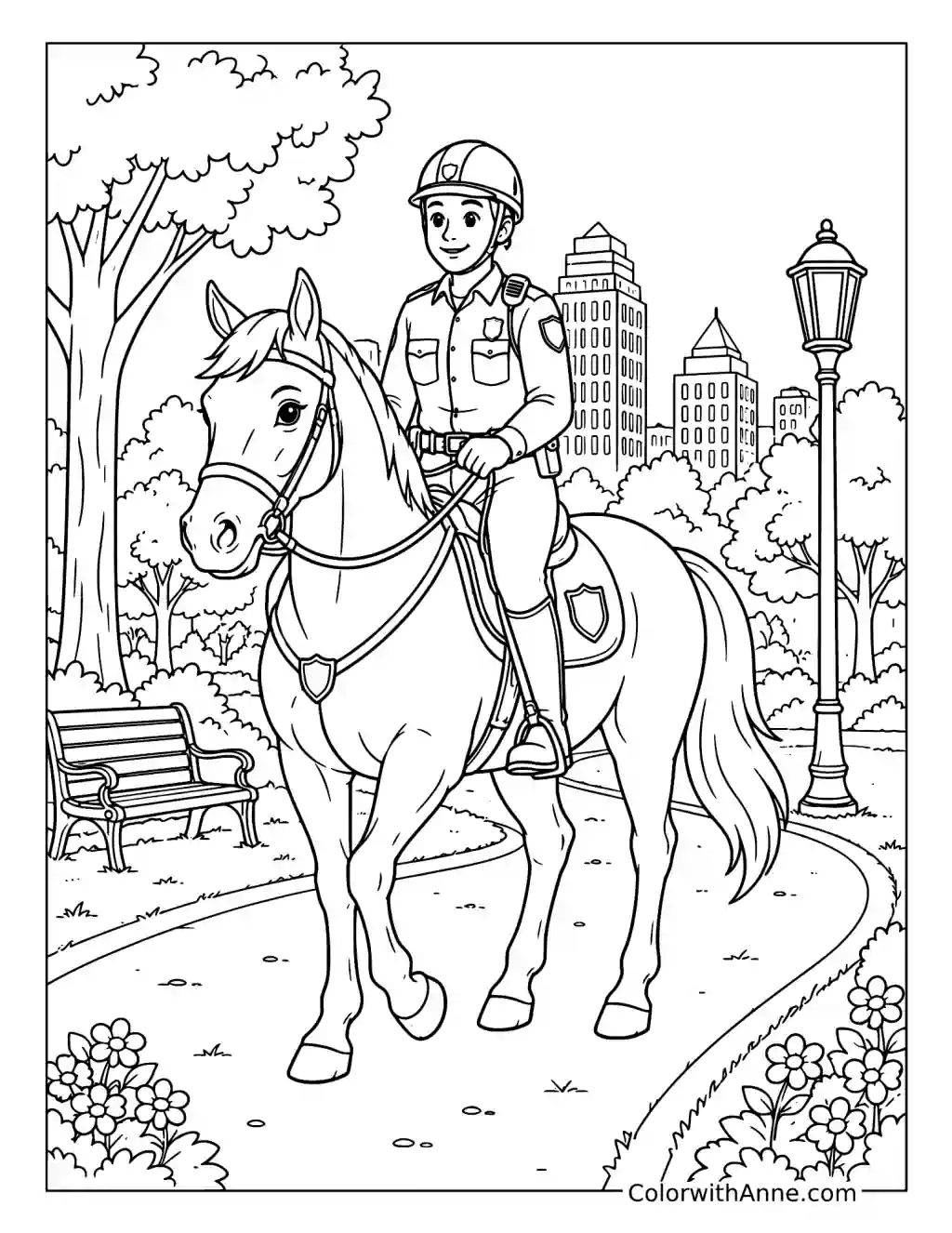
Plan a Patrol Through the Park
The mounted officer rides past a bench and trees, with the horse’s long legs taking up much of the page. The park setting gives this patrol a slower, more open feeling than the road scenes.
A chestnut, bay, or gray horse would work well, with darker tack and a blue uniform. Soft greens could keep the surrounding park light.
Draw a small park map with a gate, a bench, and a pond, then move a toy horse or counter through it. Give the patrol one reason to visit each place, such as meeting someone at the entrance or checking a reported lost bag near the bench. The route becomes a little story with recognizable stops.
Practice the Crossing Everyone Knows
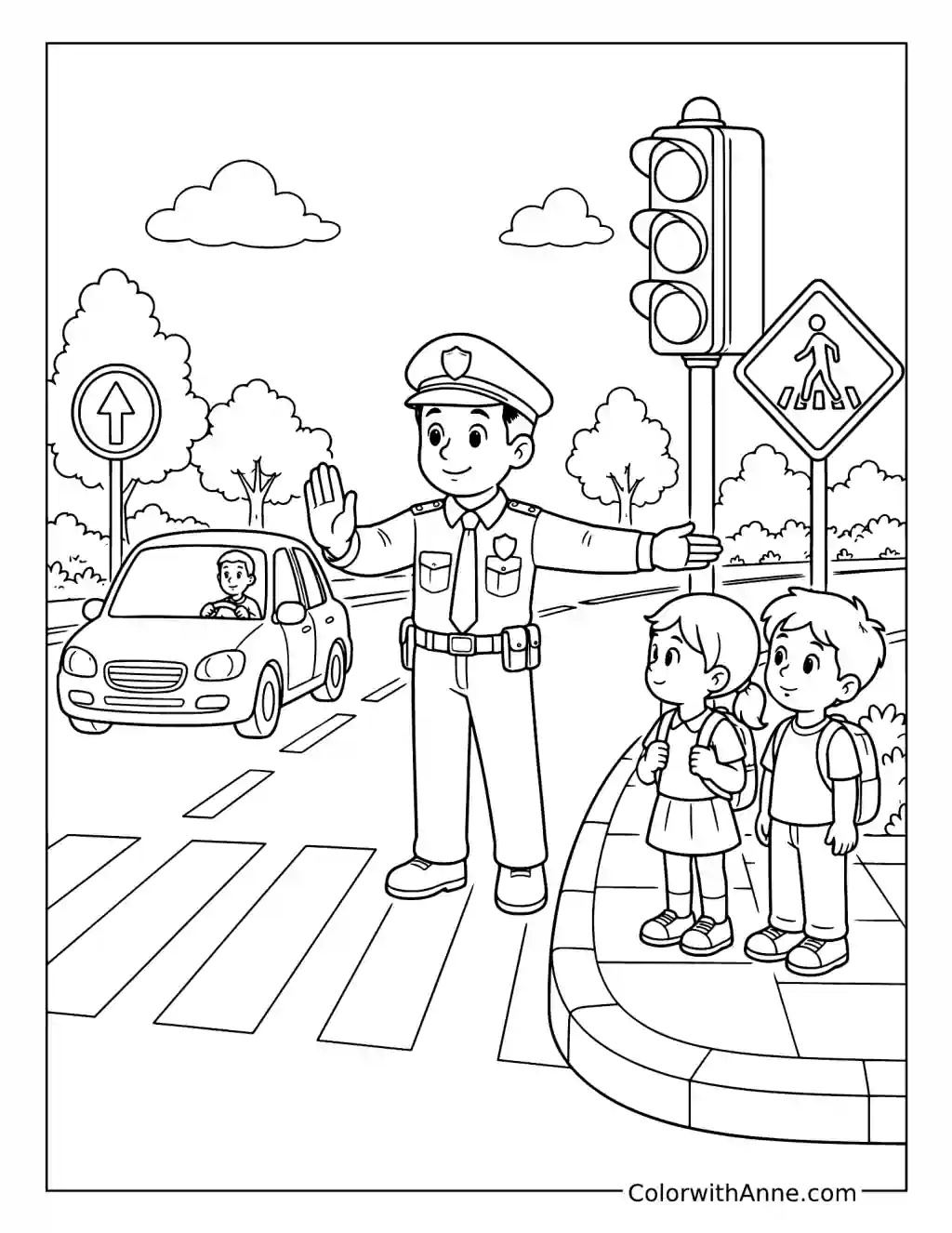
The officer stands at the crossing while children wait at the edge, with traffic lights and a school sign nearby. The bold road markings make the layout particularly clear.
White crossing stripes could stand against gray road, with brighter clothing on the children. Keep the traffic lights distinct and the surrounding buildings fairly soft.
After coloring, talk through the crossing used on a regular school or neighborhood walk. Ask an adult to explain where the family waits and which local signal they follow. Pointing to the corresponding parts of the picture can help connect the discussion with the actual place, ready to revisit together on the next ordinary journey.