
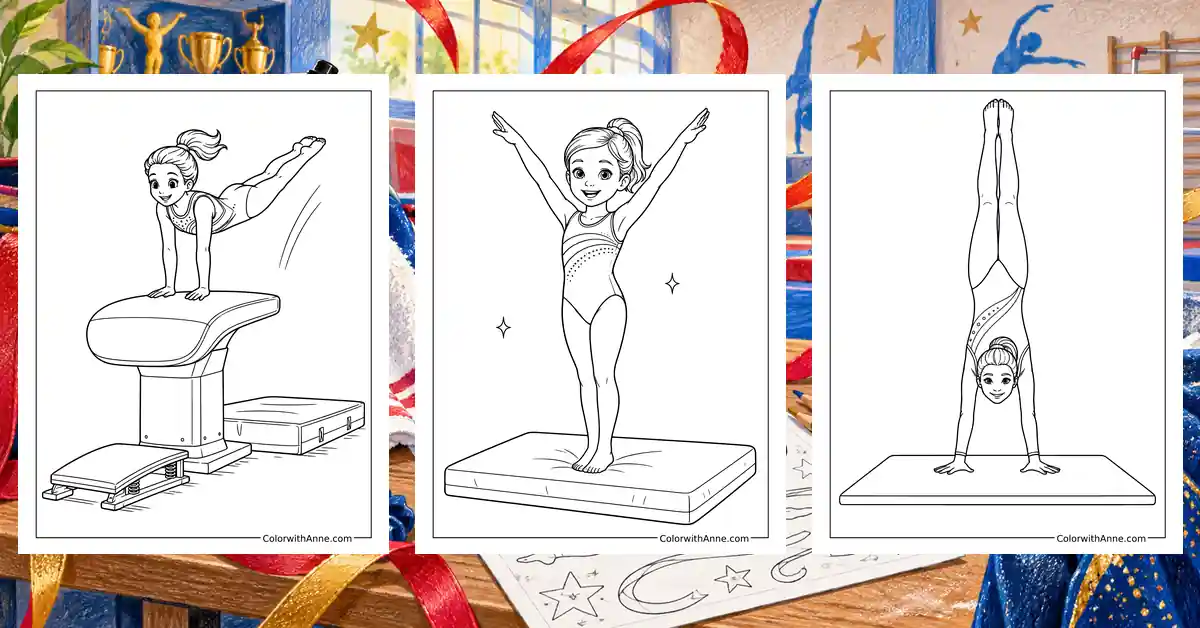
Before a gymnastics routine begins, there is often a small moment of stillness. A gymnast adjusts their position, looks ahead, and prepares to move. Then something practiced countless times has to happen in sequence, while everyone watching seems to hold their breath until the landing is finished.
Gymnastics coloring pages can feel especially familiar to children who know that mixture of concentration and anticipation. A page tucked into a gym bag offers something quiet between sessions or after practice. It may also start a conversation about a skill that finally worked, which usually deserves a more detailed explanation than the ride home allows.
Free Printable Gymnastics Coloring Pages
Click any coloring page below to open the PDF, then print on US Letter or A4 paper.
Did you find what you needed?
Help us choose what to create or improve next.
Coloring Ideas for Gymnastics Pages
Try one of these coloring ideas, or use them as a starting point for your own.
Draw the Ribbon’s Next Loop
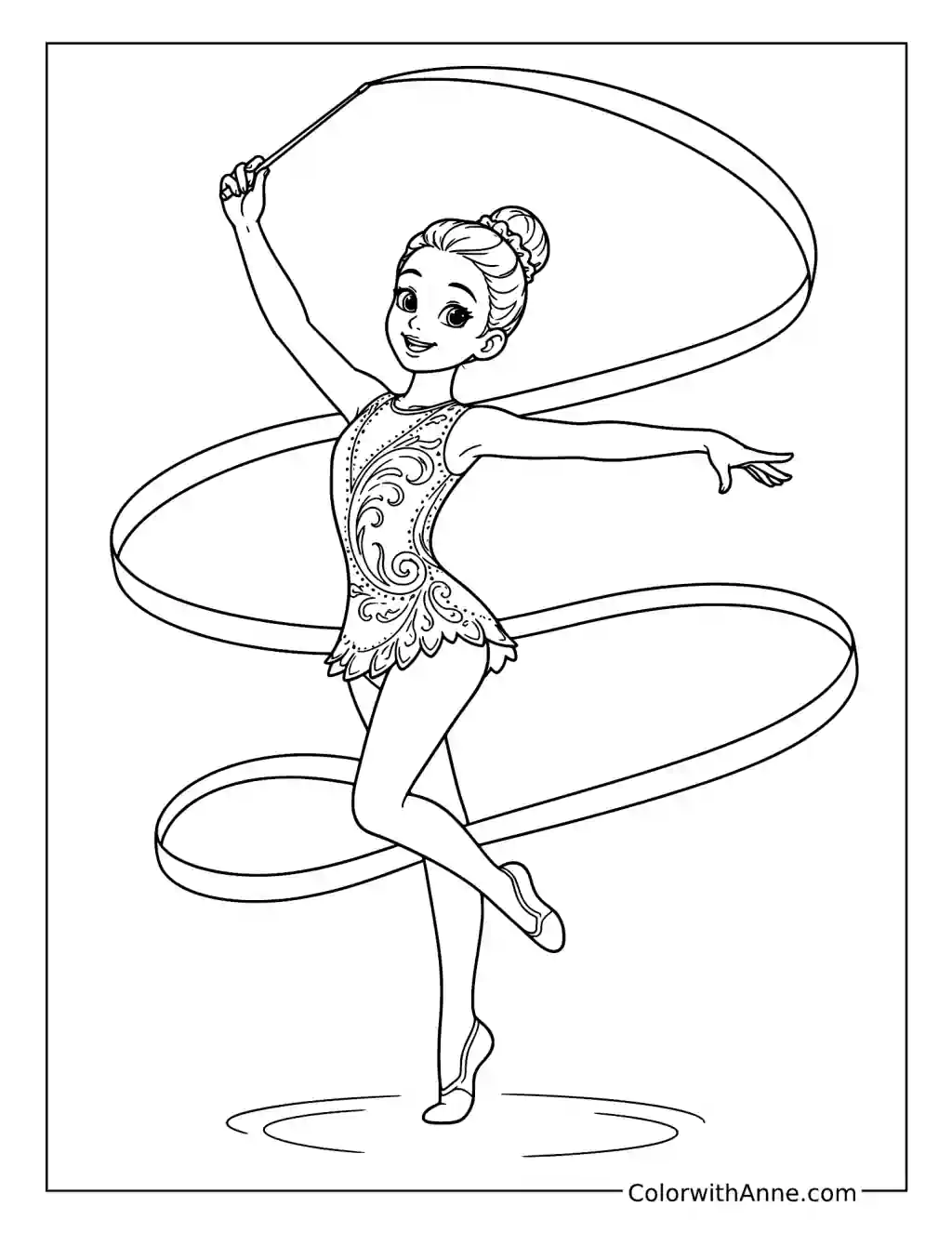
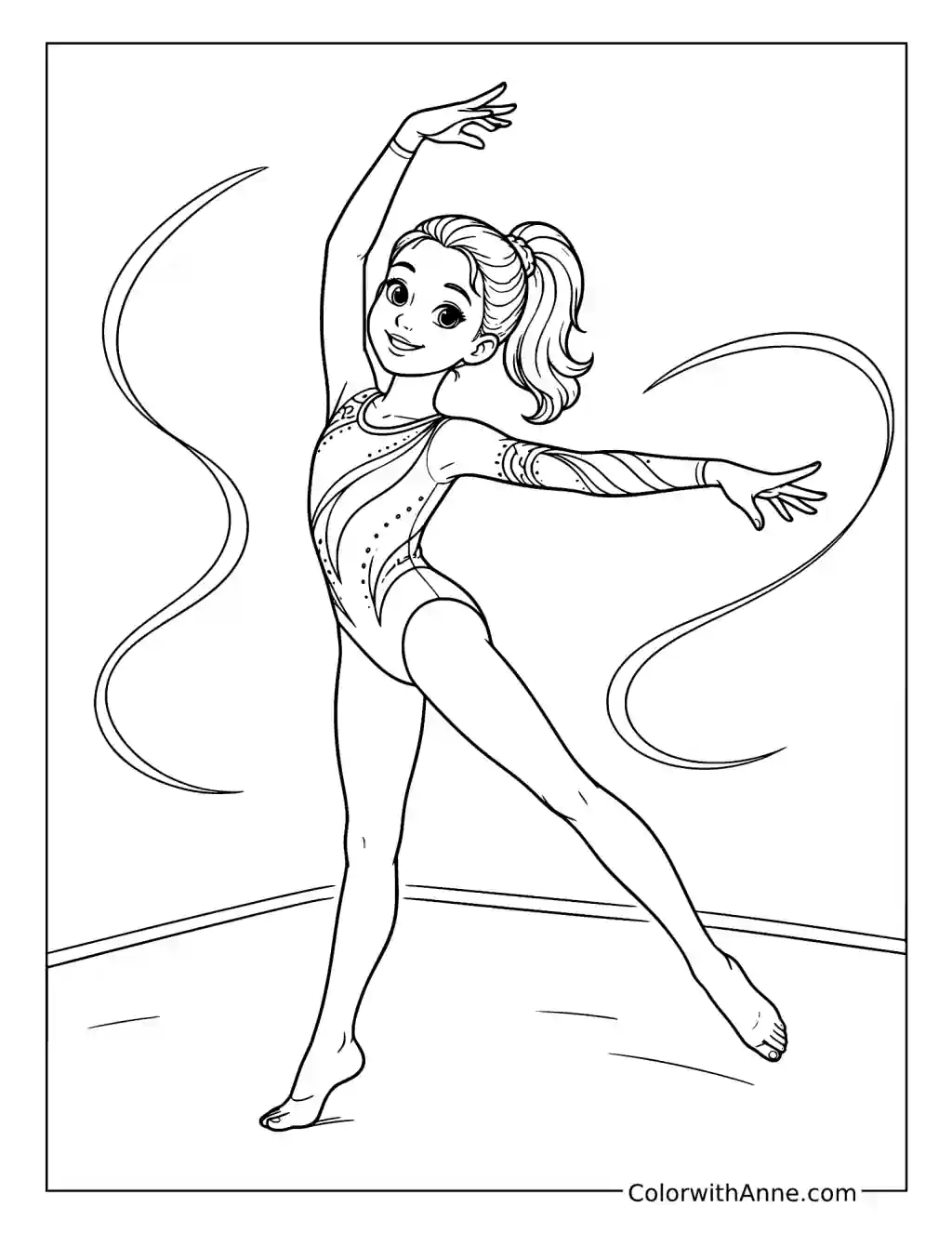
The ribbon sweeps around the gymnast in large, flowing loops. Follow its route from the hand before deciding where another turn might travel.
A coral ribbon against a blue leotard will keep the movement easy to follow. Leave the surrounding space mostly white.
On a separate sheet, play a short piece of music and draw one continuous line along with it. Let slower passages produce broad curves and quicker passages make smaller loops. Compare the result with the ribbon in the picture, then try the same music again with a different starting point.
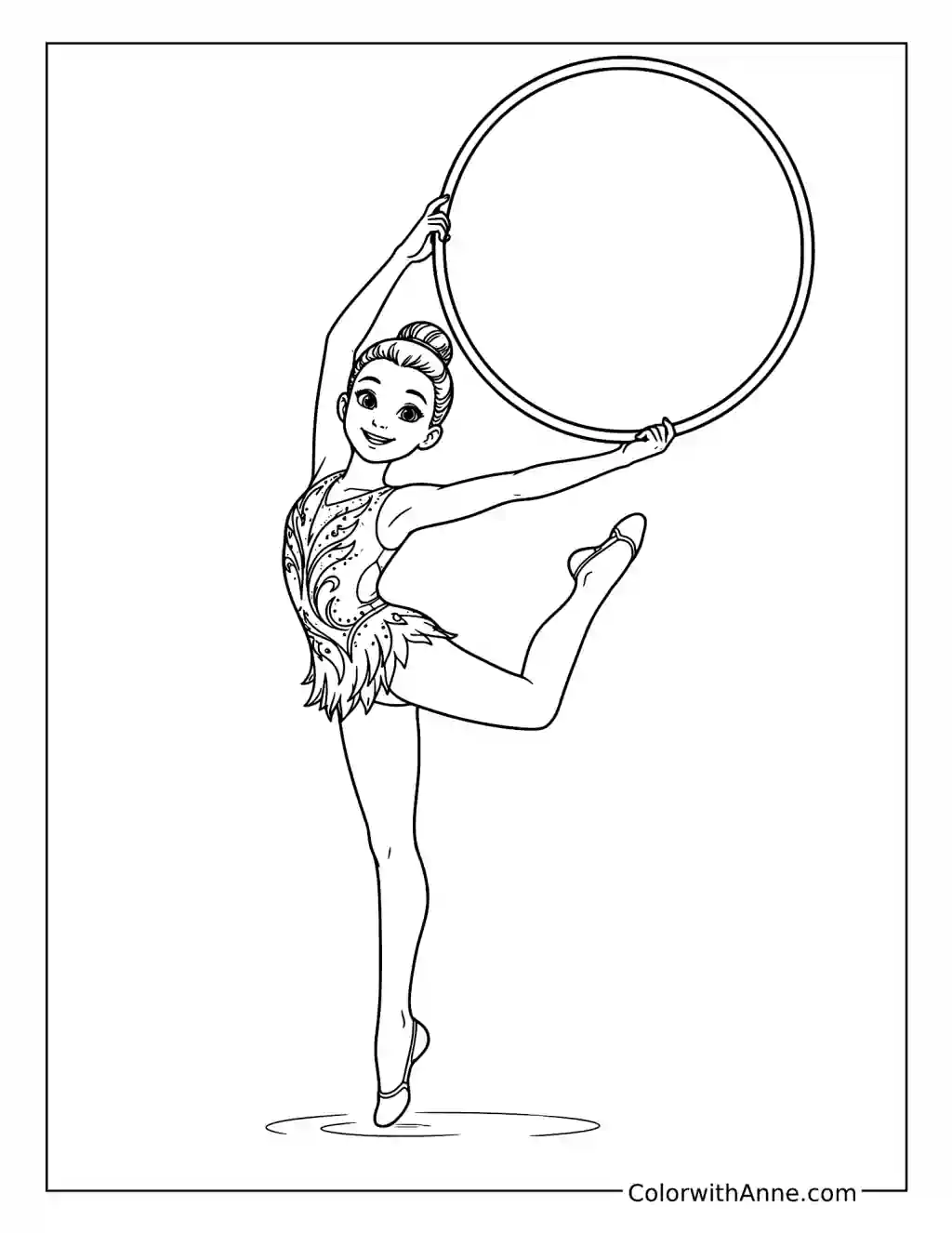
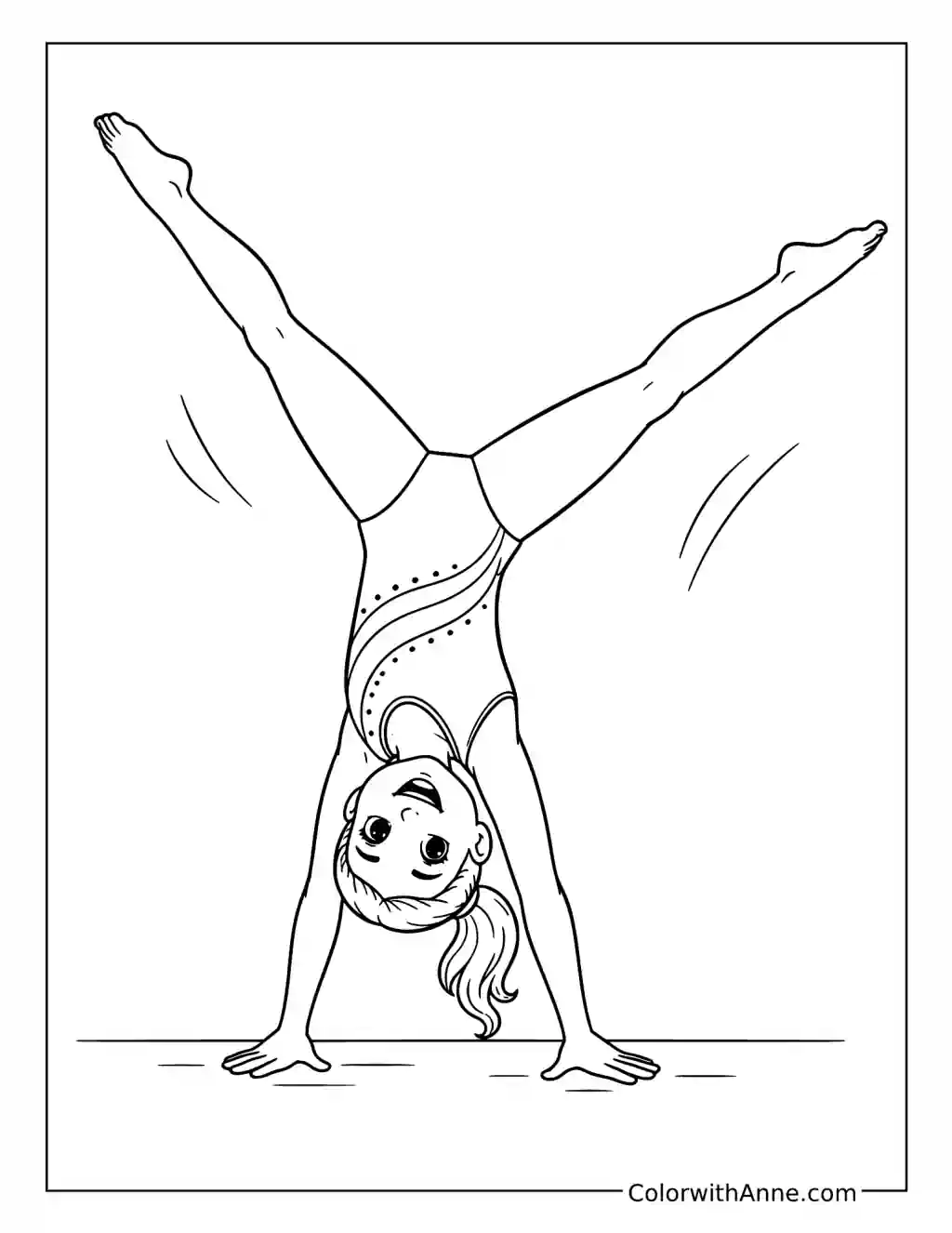
Plan a Leotard for a Split Leap
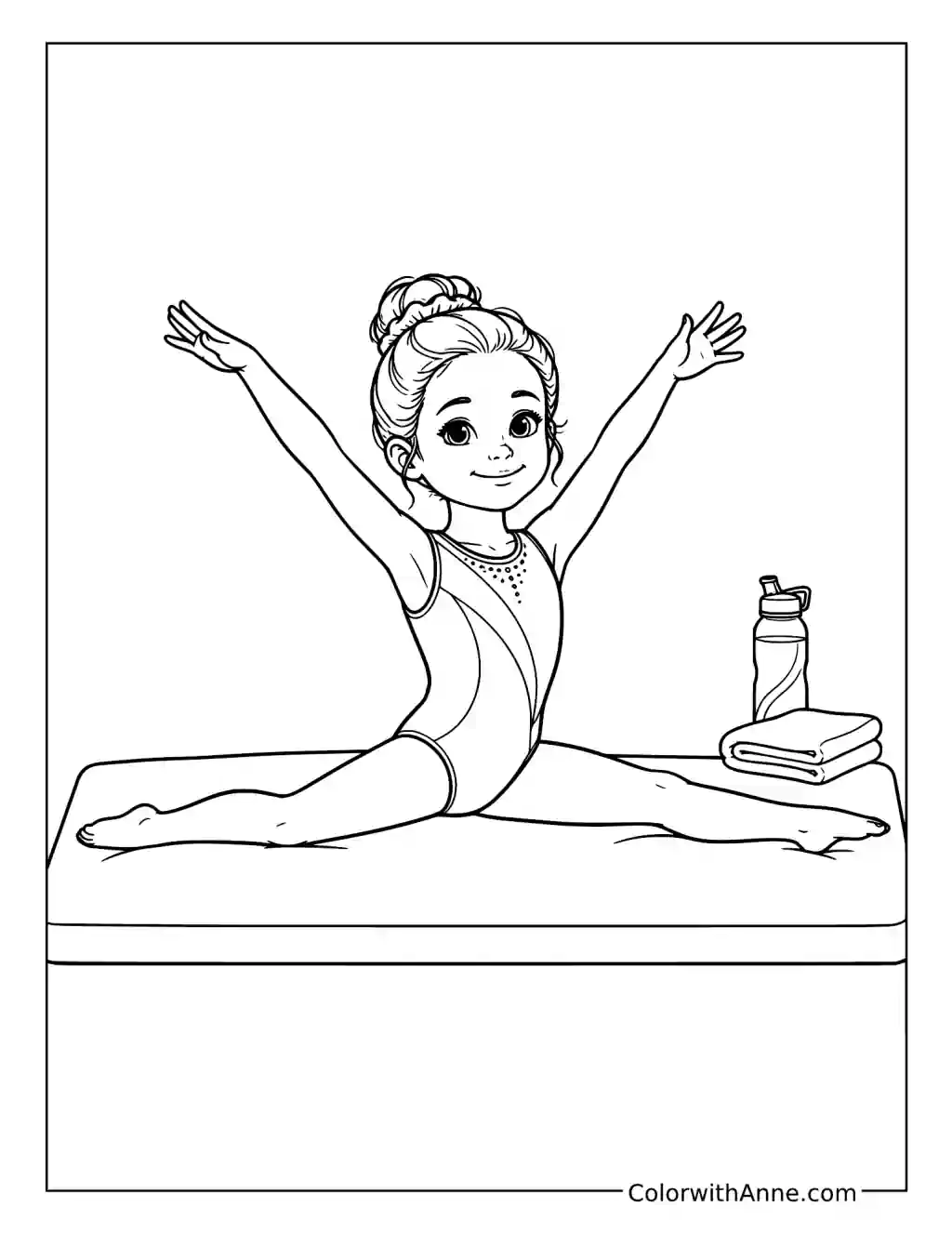
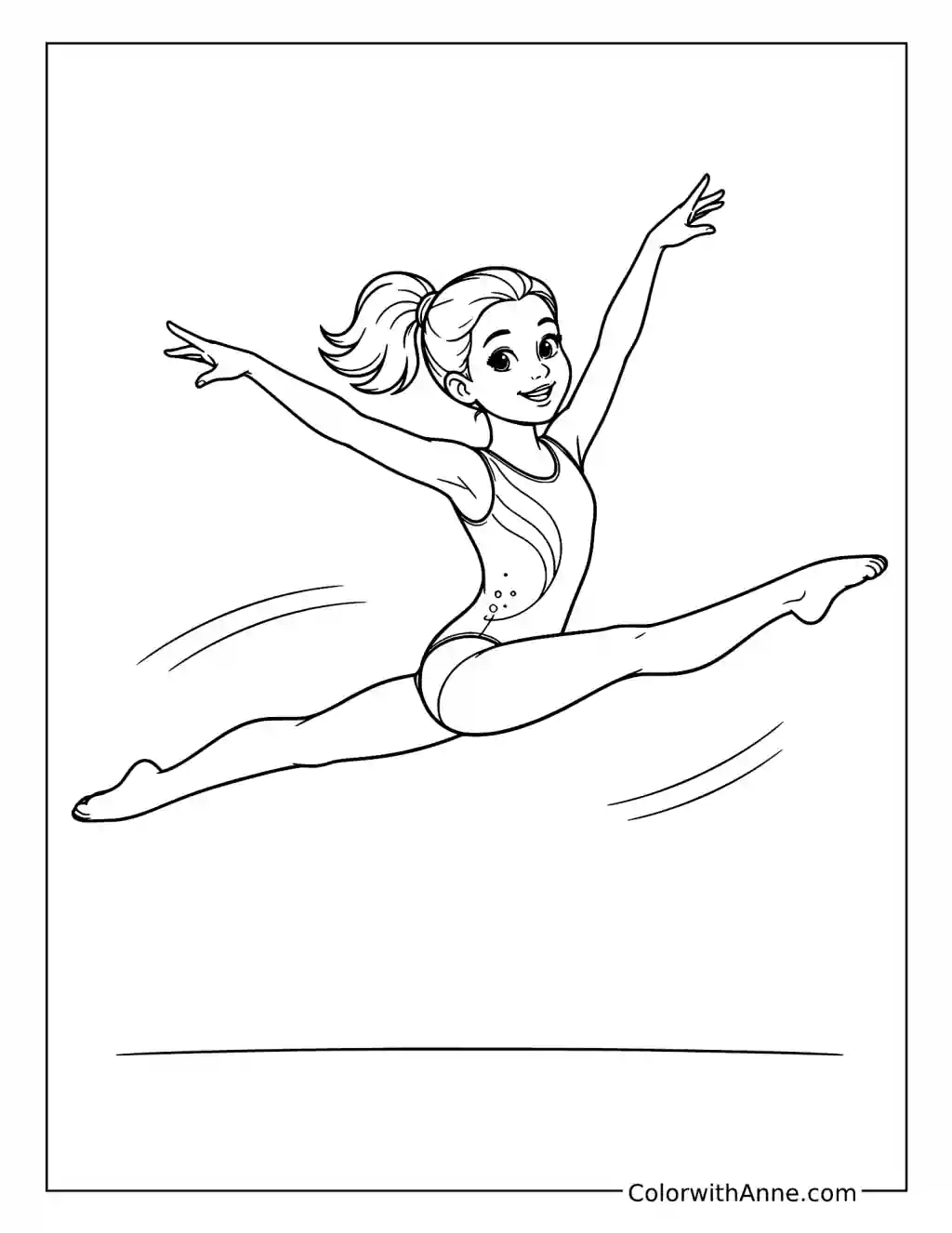
With arms extended and legs stretched across the page, this gymnast gives the leotard a clear outline. It is a useful shape for trying a costume idea that still reads clearly during movement.
Choose one main color, then add a contrasting neckline or side panel. Two colors are enough to make a deliberate design.
Sketch a small swatch beside the picture showing any pattern you would add: scattered stars, curved stripes, or a simple burst. Check that it follows the garment rather than spreading onto the skin. The finished outfit should feel like one design from shoulder to hip.
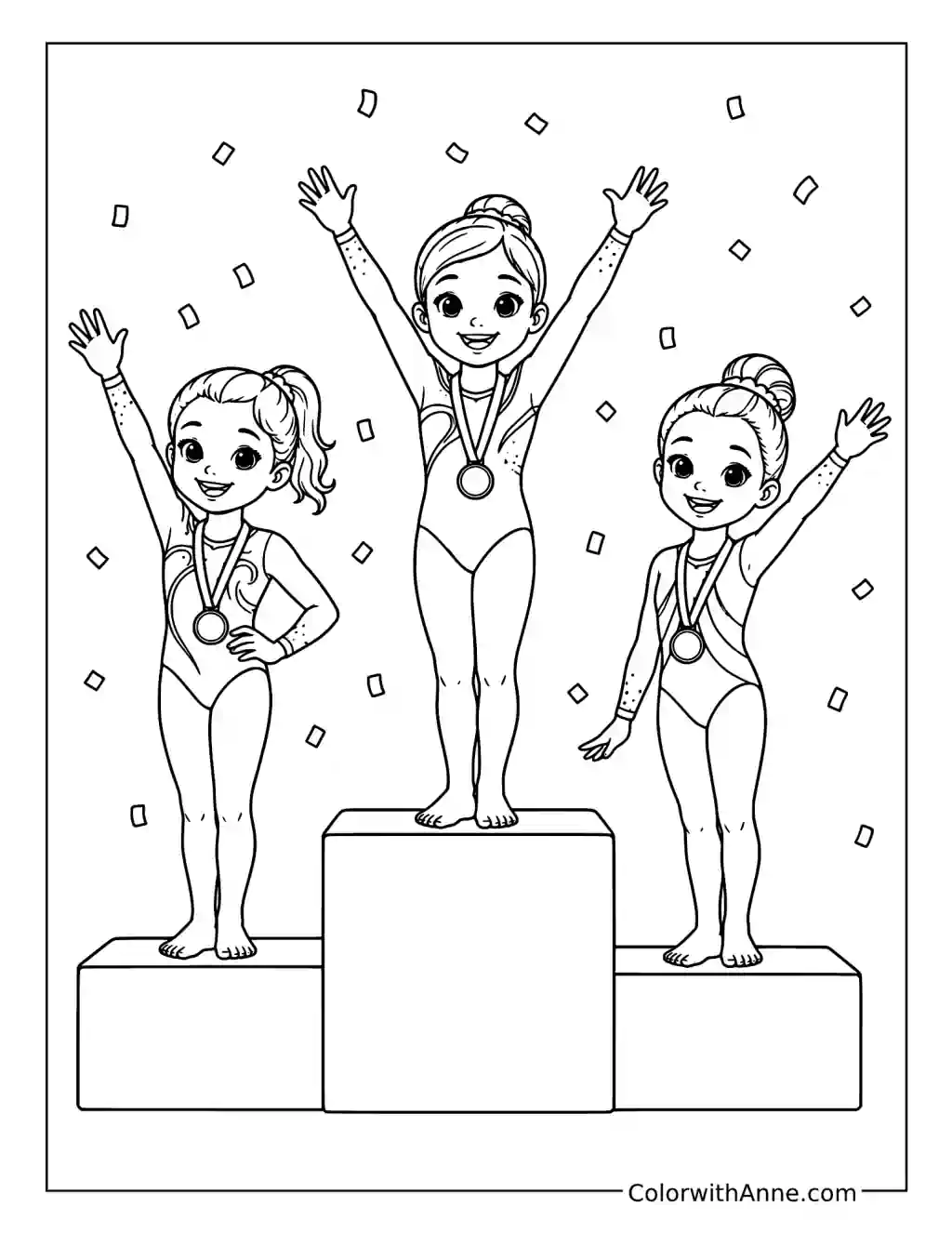
Practice the Finish Without the Flip
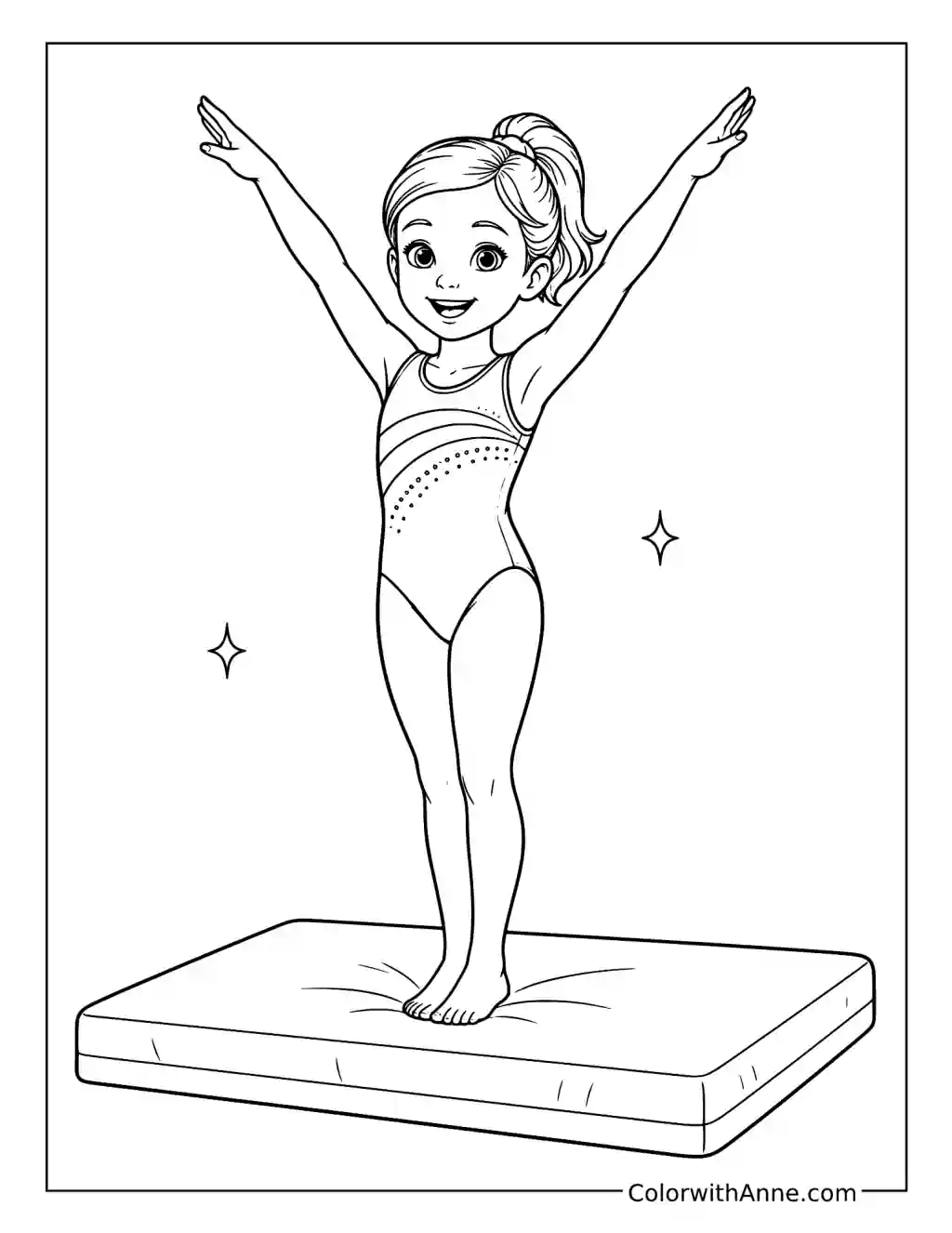
Feet together and arms raised, this gymnast has reached the finishing moment. It is a recognizable pose even without seeing the routine that came before it.
Try a purple leotard with a yellow accent and a blue landing mat. Keep the little sparkle shapes bright.
Make the finish part of a freeze game. Move around the room to music, then stop in a comfortable standing pose with arms raised when it pauses. No jumping is needed. Take turns controlling the music; holding still while someone delays the next song can be surprisingly challenging.
Design a Matching Pair of Clubs
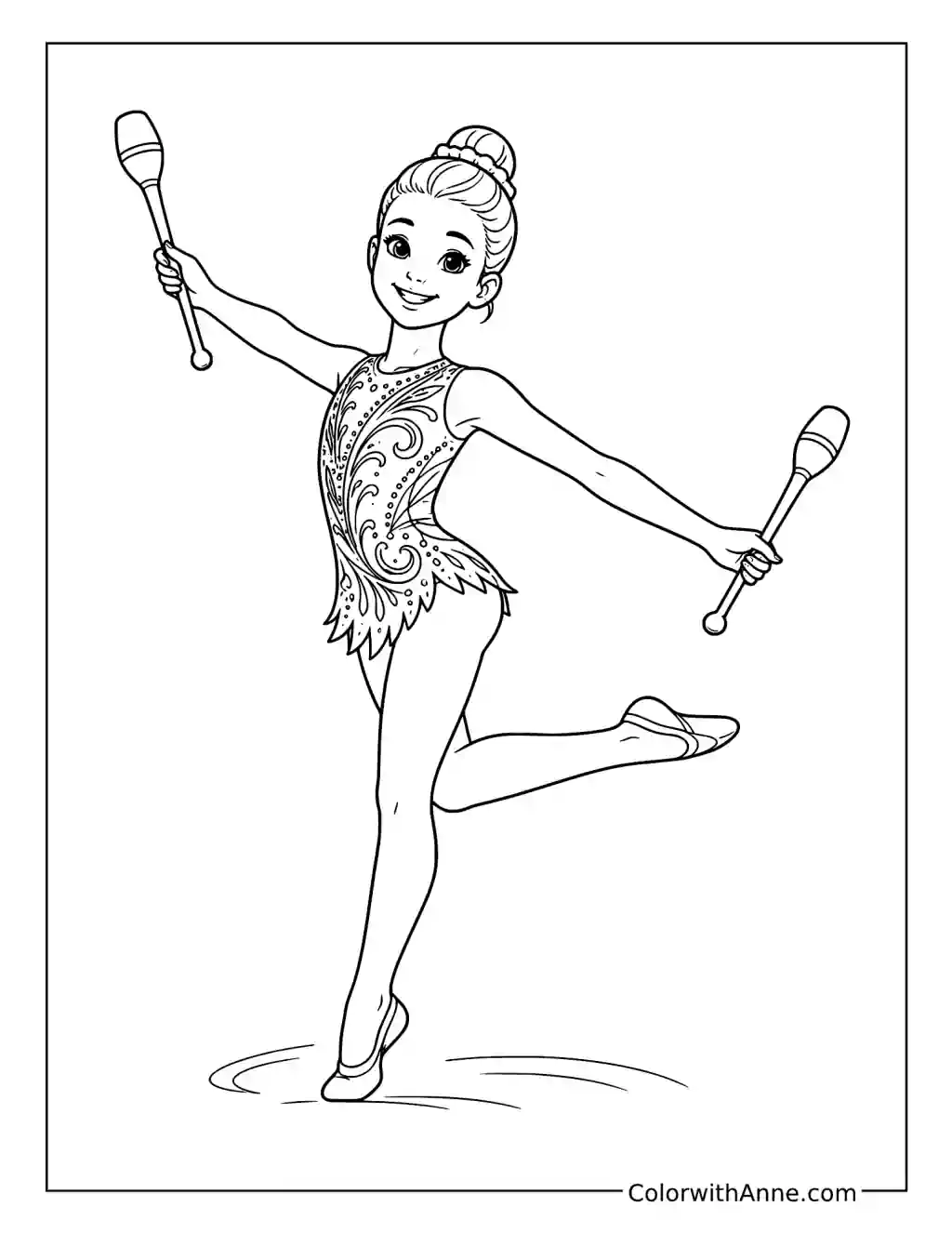
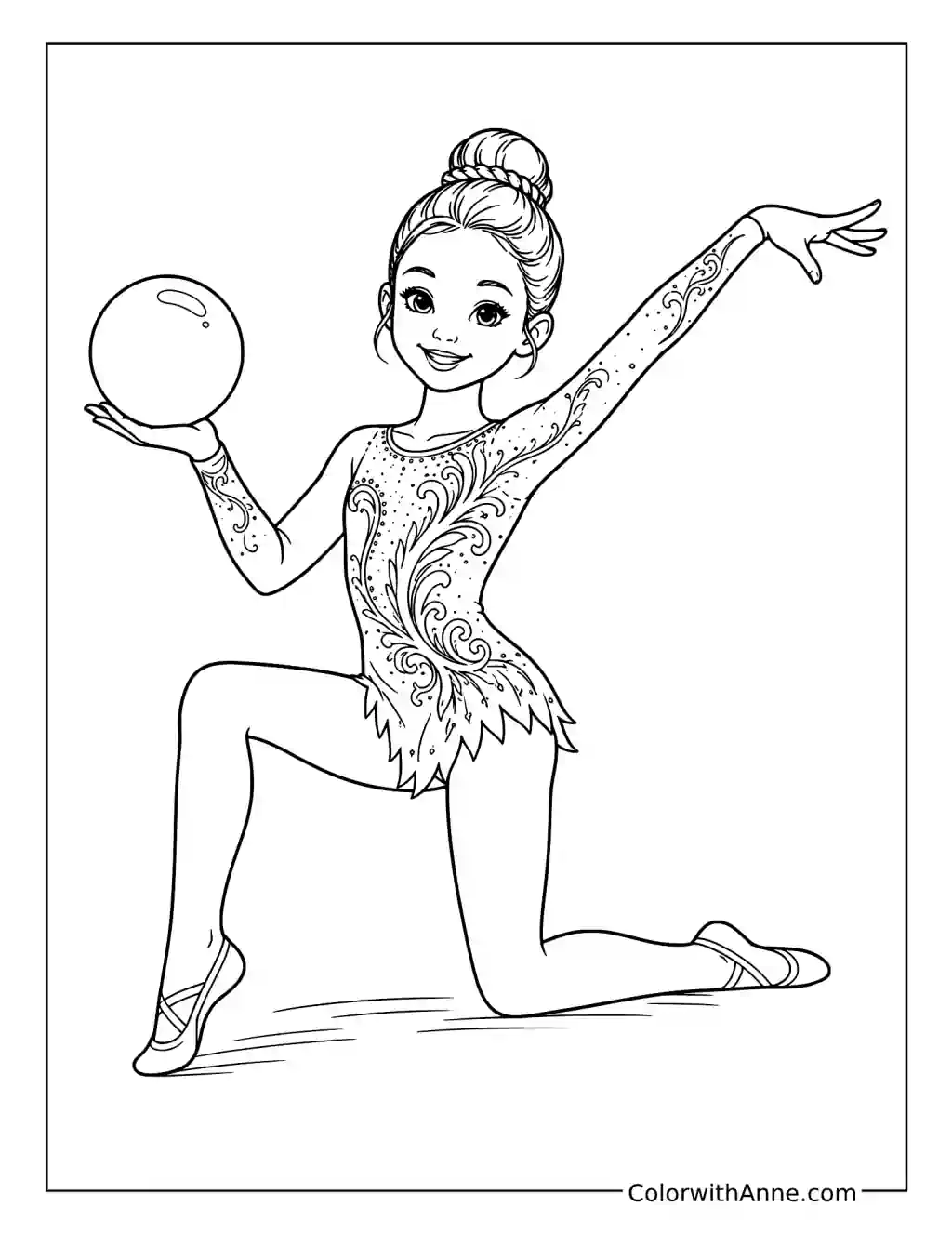
The gymnast holds a club in each hand, giving a small design challenge: make the pair look related while keeping each one easy to distinguish.
Use matching colors on both clubs, perhaps turquoise handles with pink ends. Repeat a little of that pink in the leotard.
Draw two larger club outlines on scrap paper and plan a pattern across them. They could match exactly, or reverse the same two colors. Place them side by side to check the result before adding the pattern to the smaller equipment in the picture.
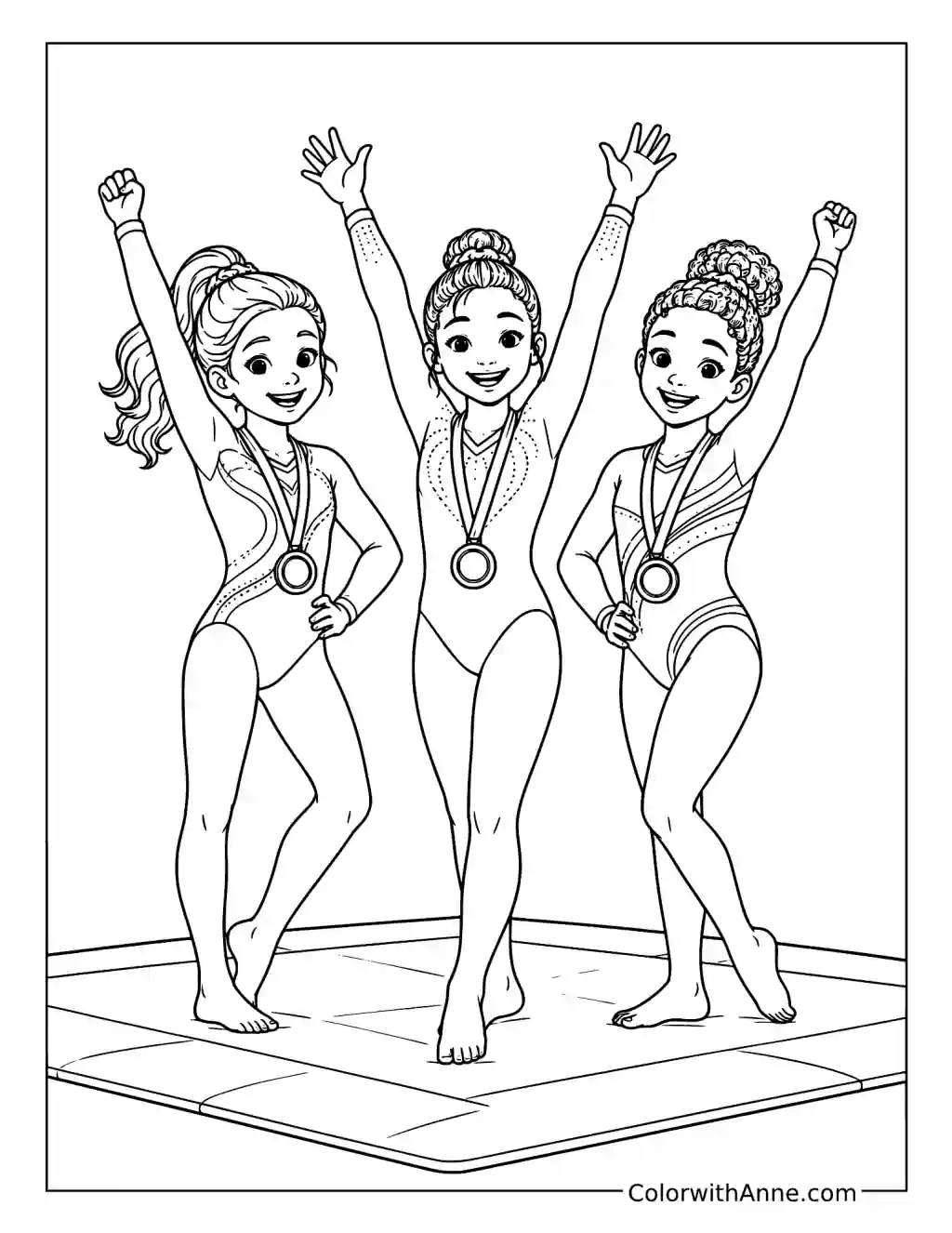
Thank the People Behind the Medals
Three gymnasts raise their arms with medals around their necks. The shared celebration makes this a fitting page for remembering the people who help a team through ordinary practice days.
Give the leotards a coordinated palette, changing one detail on each outfit. Gold-colored medals will stand out against darker necklines.
If a child belongs to a gymnastics group, add a short thank-you on the back for a coach or teammate. Mention something specific, such as patiently explaining a movement or cheering during a nervous moment. Deliver it after practice, when the person it celebrates is actually there.
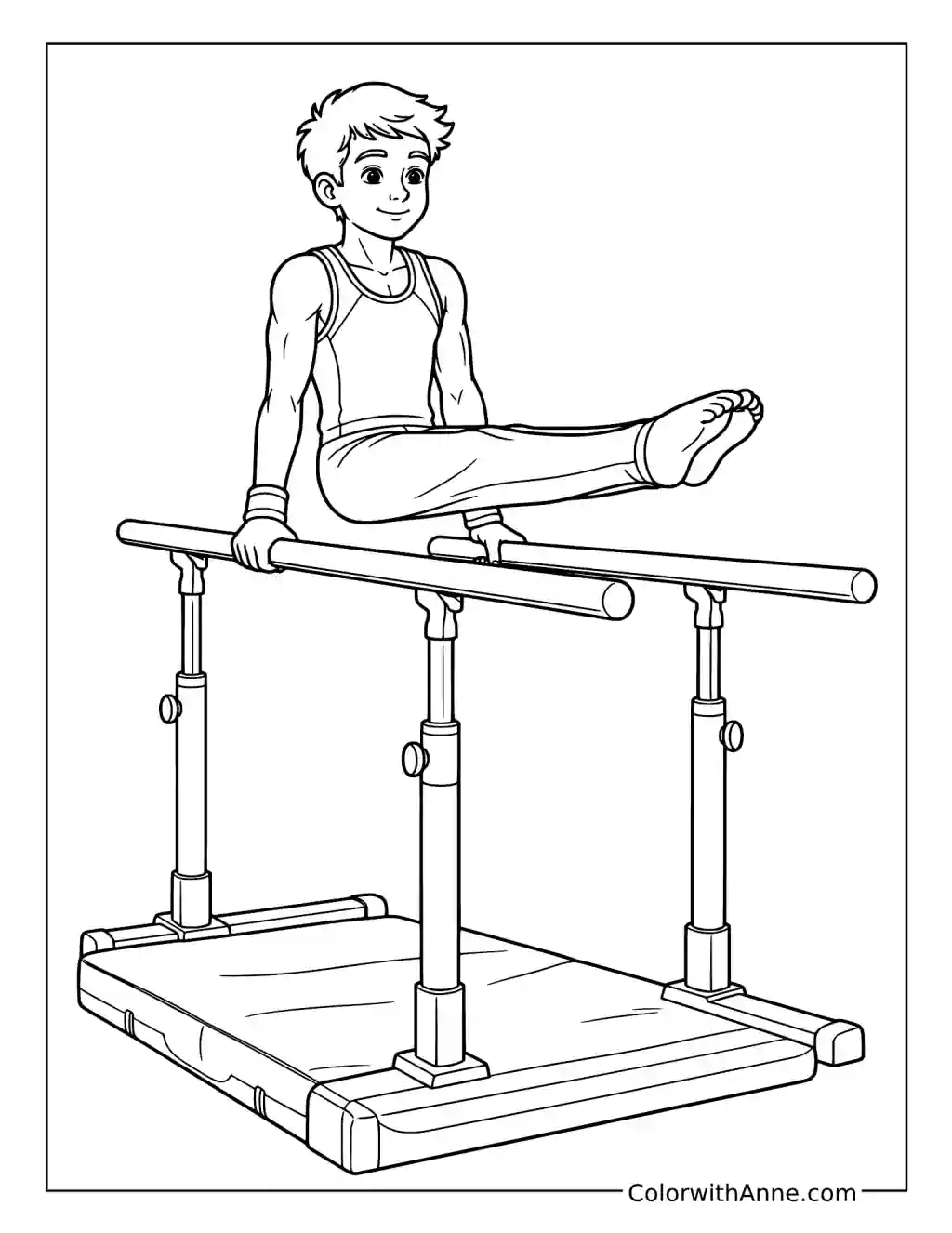
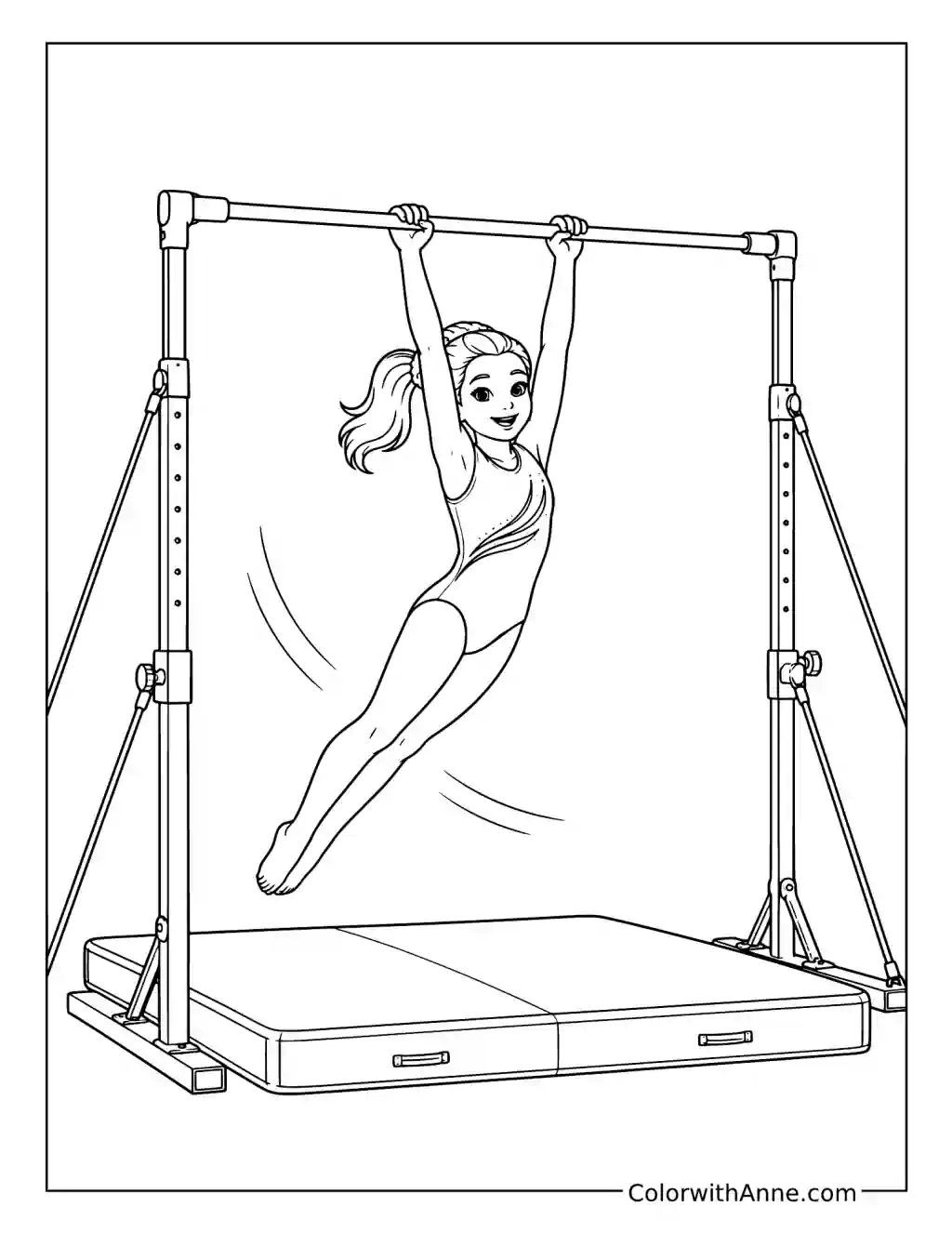
Spot the Uneven Bars During a Meet
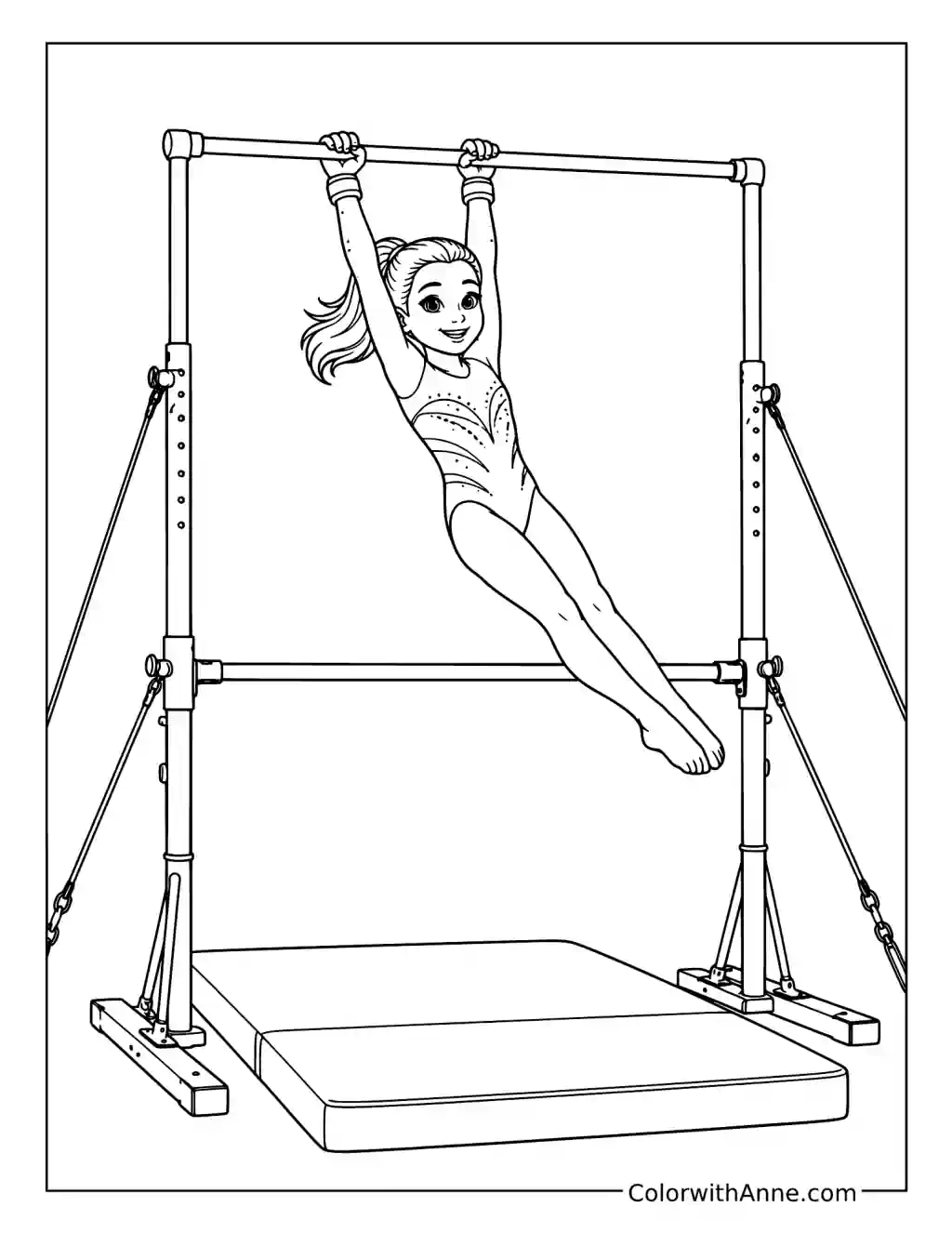
The gymnast hangs from the higher bar while the lower one sits across the frame. Noticing those different heights gives a new viewer something concrete to recognize during a competition.
Use silver-gray supports, tan bars, and a bright leotard. A blue mat will separate the equipment from the floor.
Keep the page nearby while watching an uneven-bars routine. Look for the gymnast moving between the two bars, then pause the replay to locate each one. Compare the pictured position with a moment on screen. There is no need to understand the scoring to begin noticing how the apparatus is used.
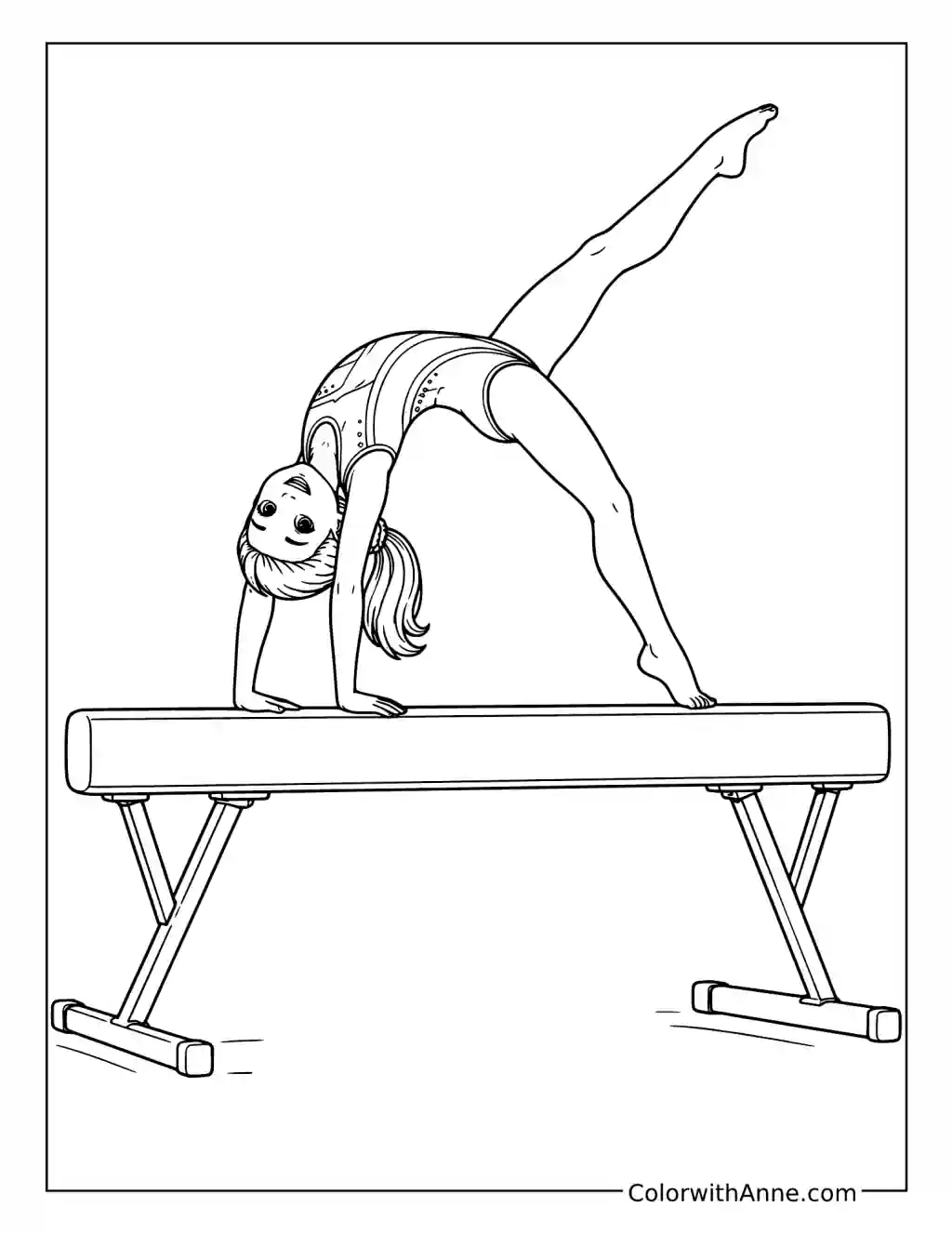
Bring the Balance Line Down to the Floor
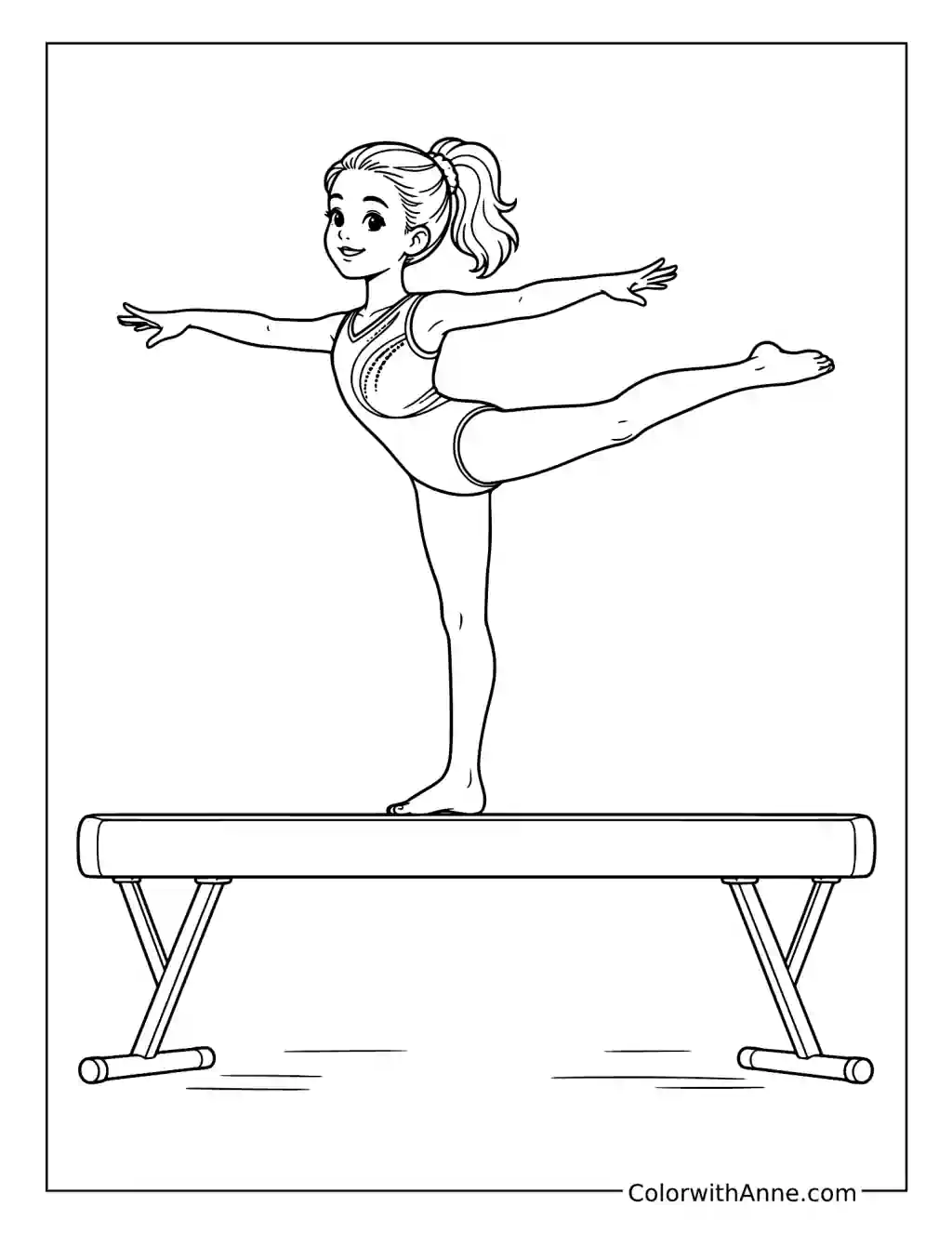
One leg extends behind the gymnast while her arms reach outward above the narrow beam. The picture draws attention to how little space the apparatus provides.
A teal leotard, tan beam, and gray supports make a clear combination. Keep the background simple around the extended limbs.
Make a short line on the floor with removable tape. Walk along it normally, turn at the end, and return without stepping away from the line. Keep both feet close to the floor rather than copying the raised-leg pose. A second, gently curving route adds a different challenge.
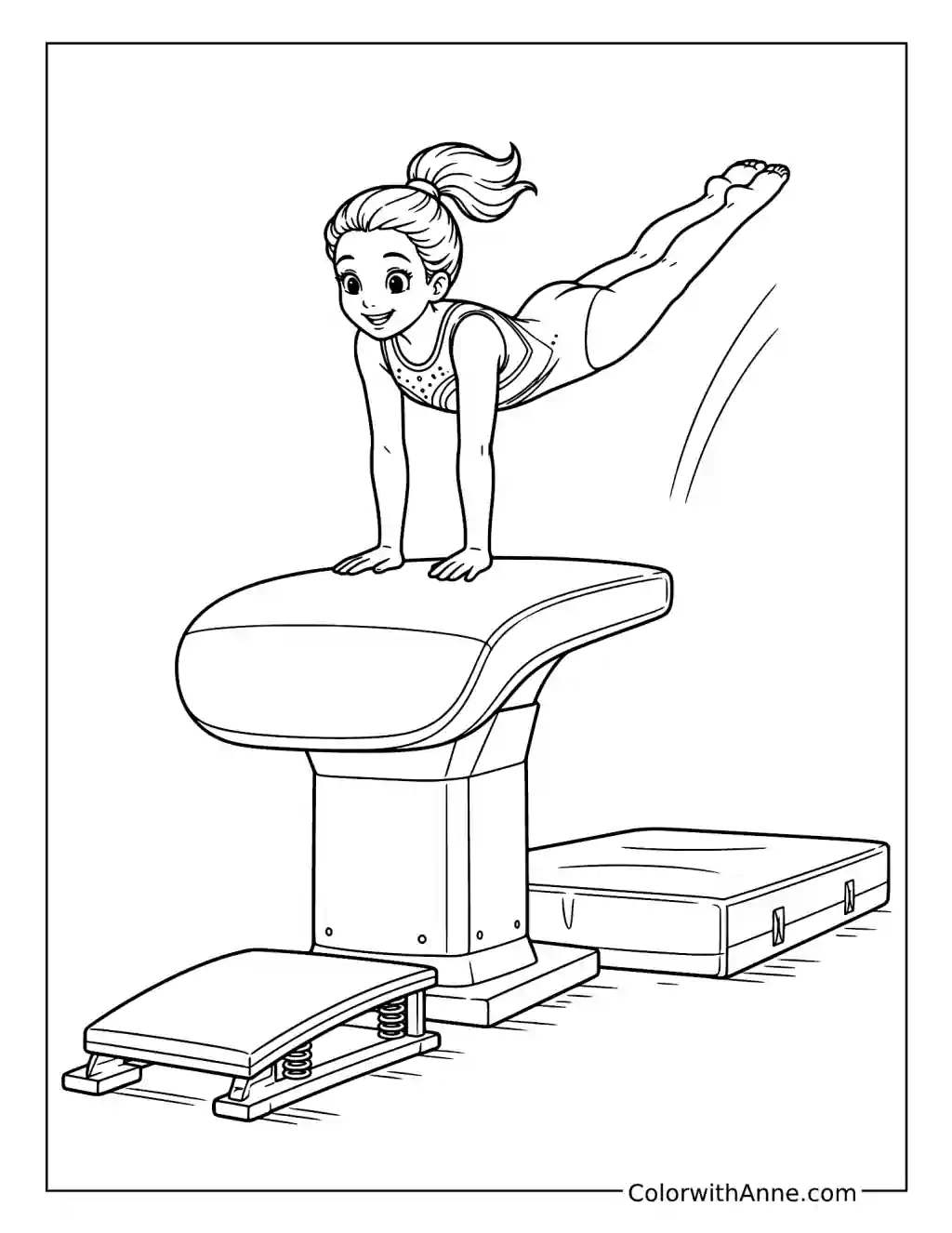
Draw What Happens Before and After the Vault
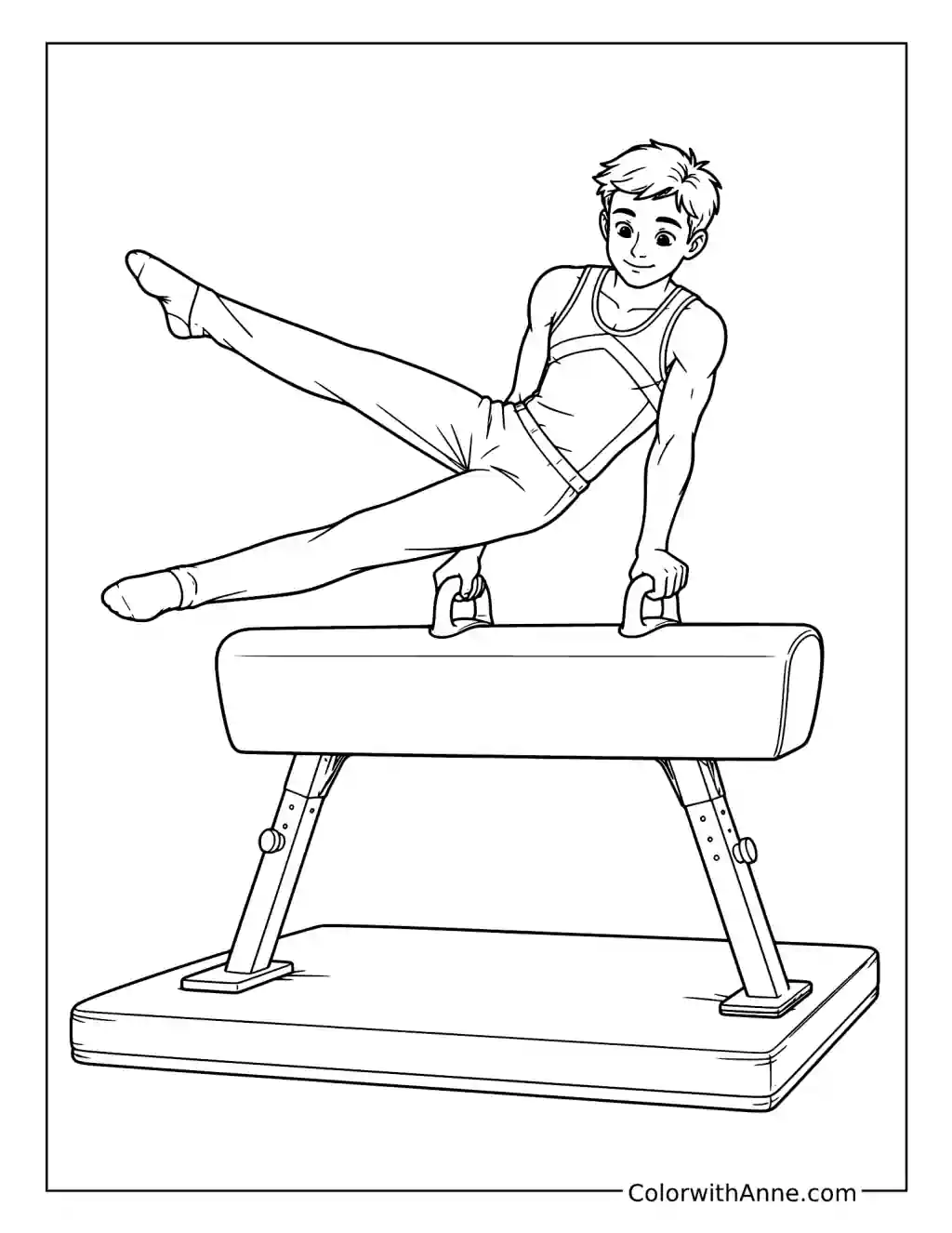
The gymnast’s hands meet the vaulting table while the springboard waits behind her. This is one instant in a movement, making it a useful middle picture for a short sequence.
Choose a red vaulting table, blue mats, and a contrasting leotard. Gray equipment legs will keep the supports unobtrusive.
On separate paper, draw three boxes labeled “before,” “during,” and “after.” Use the coloring design to guide the middle box, then sketch an approach and a finish in the others. Stick figures are enough; the aim is to show the order, not recreate a gymnastics manual.