
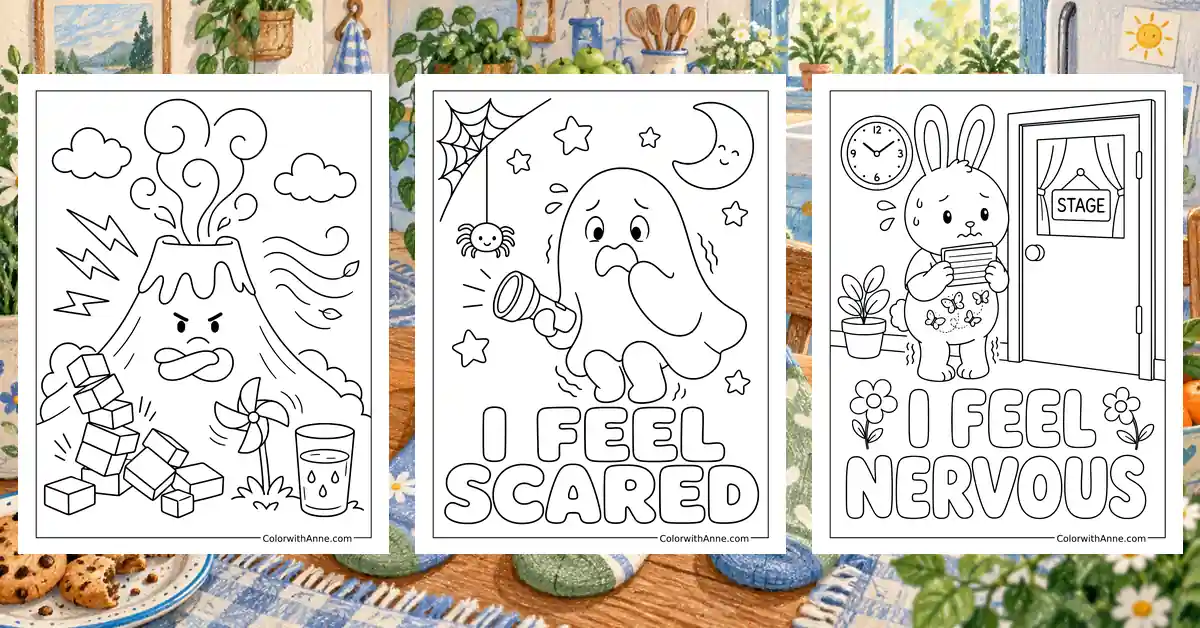
A child asked how the day went may answer with a shrug, even when plenty happened. Recognizing a face that looks disappointed or excited can be easier than finding the right description immediately. Sometimes the feeling becomes clearer only after there is something to point toward.
Emotions coloring pages can make room for that recognition without turning the conversation into a test. A child may choose an expression that feels familiar or talk about why another one seems different. The page can sit between two people while they work, leaving time for an answer that would not arrive on demand.
Free Printable Emotions Coloring Pages
Click any coloring page below to open the PDF, then print on US Letter or A4 paper.
Did you find what you needed?
Help us choose what to create or improve next.
Coloring Ideas for Emotions Pages
Try one of these coloring ideas, or use them as a starting point for your own.
Leave Room for a Sad Day
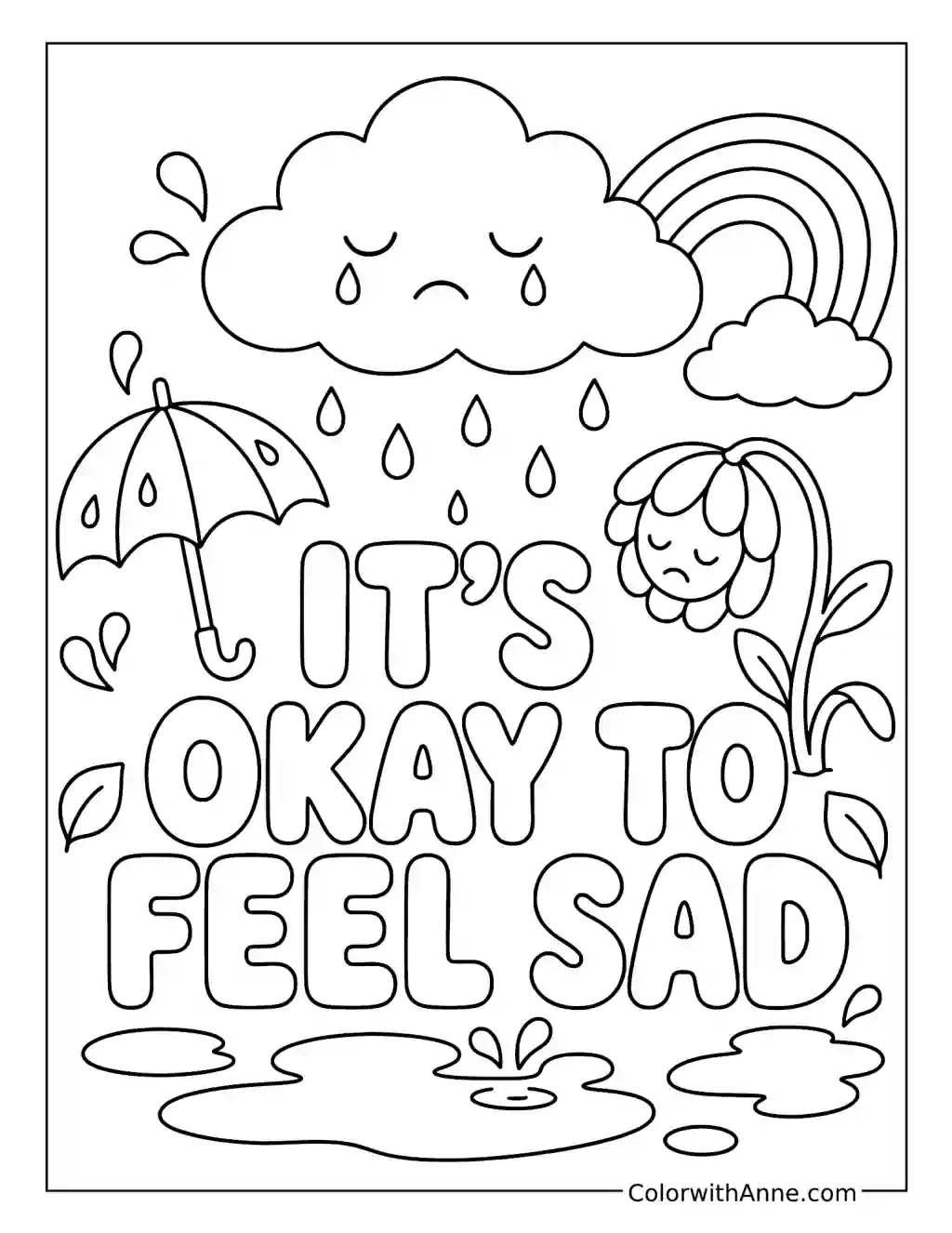
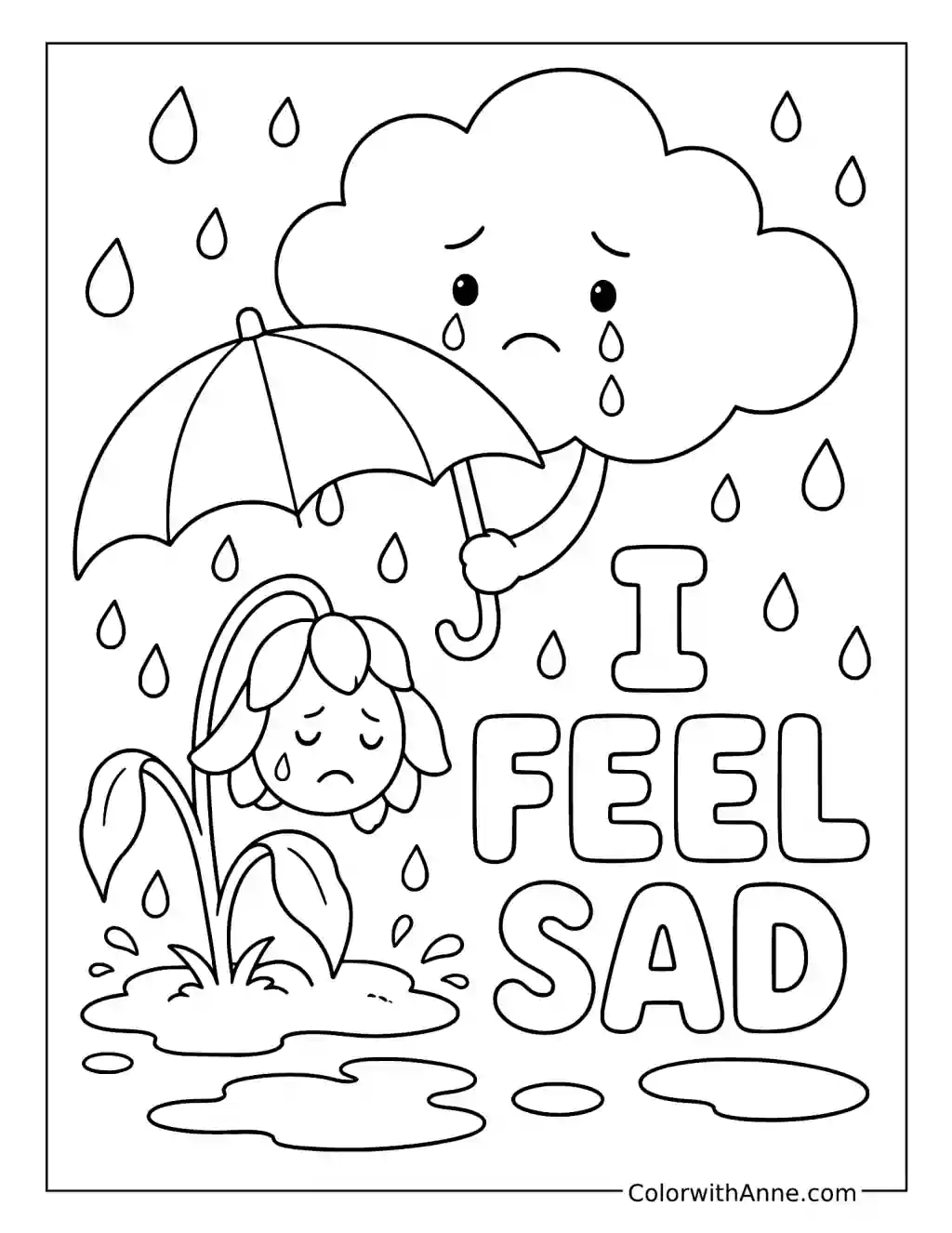
A tearful cloud hangs above the words “IT’S OKAY TO FEEL SAD,” with rain, an umbrella, and a drooping flower around them. The message gives the feeling space without asking it to disappear immediately.
Blue and gray might fit the mood, but warmer colors belong here too. Let the person coloring choose what feels right instead of assigning sadness a required palette.
This can be a page to work on beside someone after a disappointment. Offer company and an opening to talk, then follow their lead. A quiet, specific question about what happened may be easier to answer than a broad request to explain all their feelings, and coloring can continue while the conversation finds its pace.
Agree on What a Break Looks Like
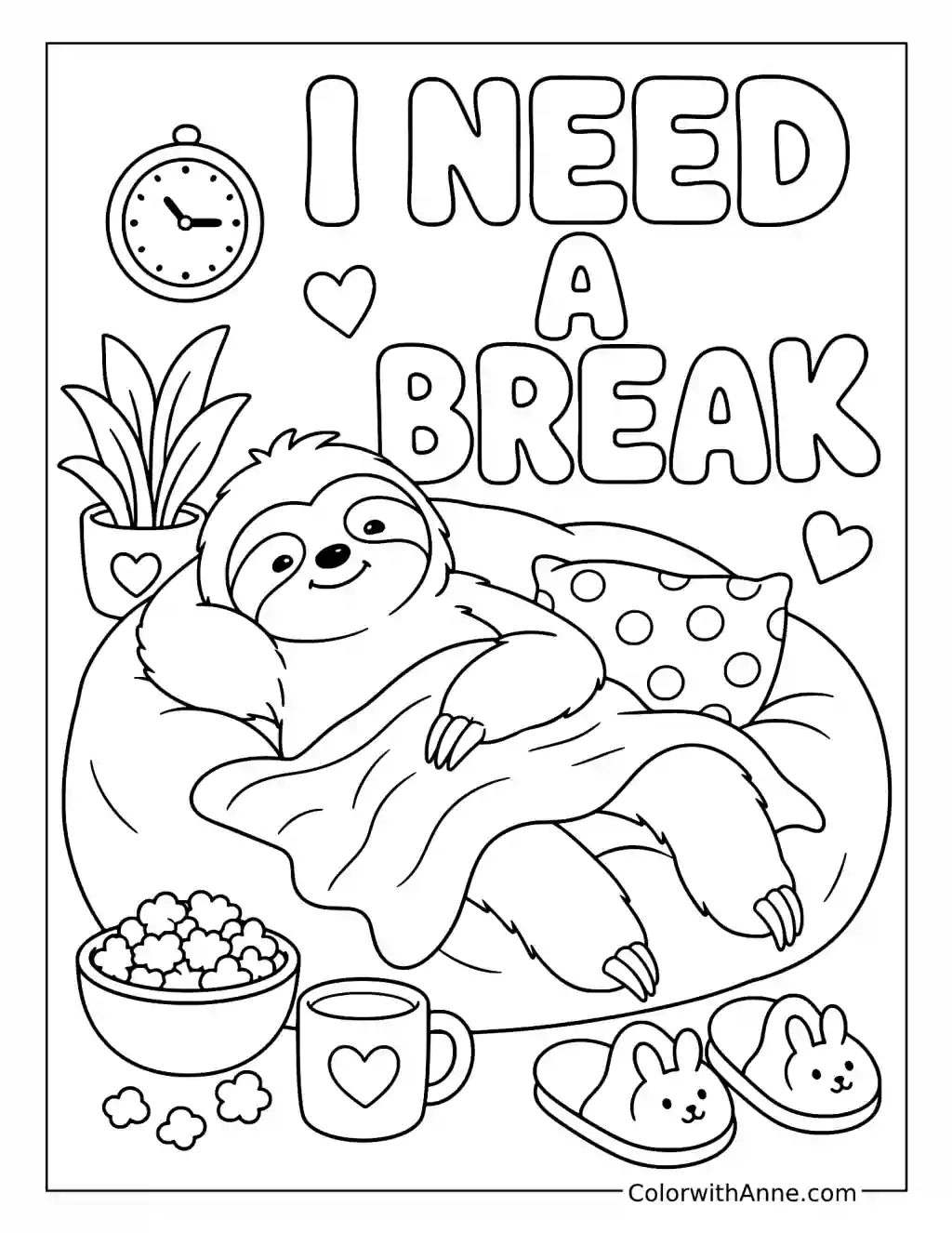
The sloth rests beneath a blanket with snacks, a mug, and a clock nearby. The words “I NEED A BREAK” make the request clear, while the picture gives resting a wonderfully unhurried representative.
Soft green, warm brown, or lavender would suit the scene. The blanket could carry a comforting favorite color, with the smaller objects kept fairly simple.
At home, discuss what a workable break means before using the page as a signal. It might mean a few quiet minutes, a drink of water, or time away from a noisy activity. Agreeing on the meaning together makes the words more useful when someone later finds them difficult to say aloud.
Give the Angry Bear Some Useful Words
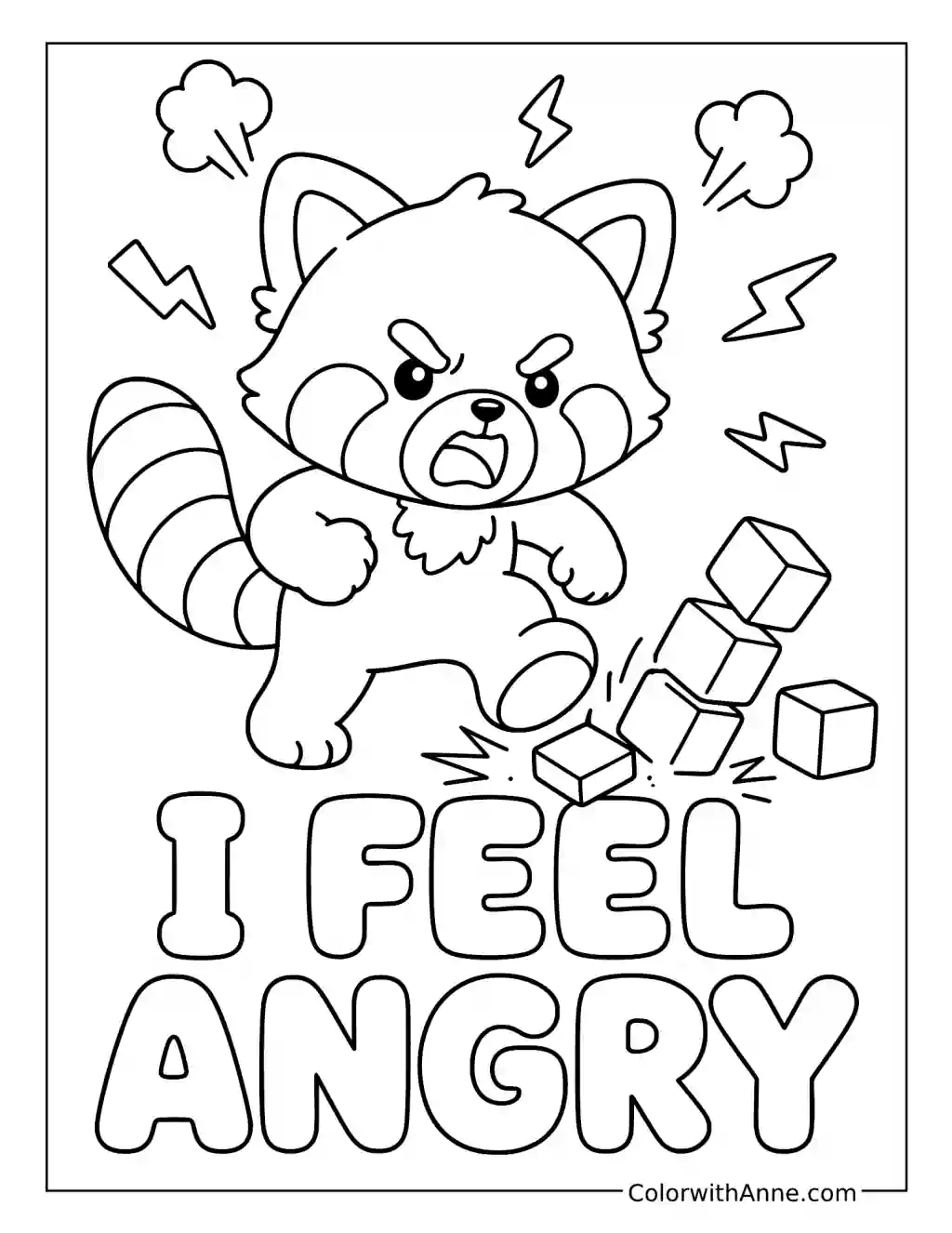
The bear clenches its paws beside scattered blocks, with sharp marks around its head. The expression is unmistakable, even before the large words beneath it name the feeling.
Red or orange could match the heat of the scene, although a purple or blue bear would work just as well. The blocks can use a few ordinary toy colors.
When everyone is calm, use the picture to practice one sentence that could help in a frustrating moment. “Please give me some space” or “I wanted another turn” says more than the bear’s clenched paws can. Let the child choose wording they would actually use, then keep the phrase available for another day.
Find the Question the Confused Owl Needs
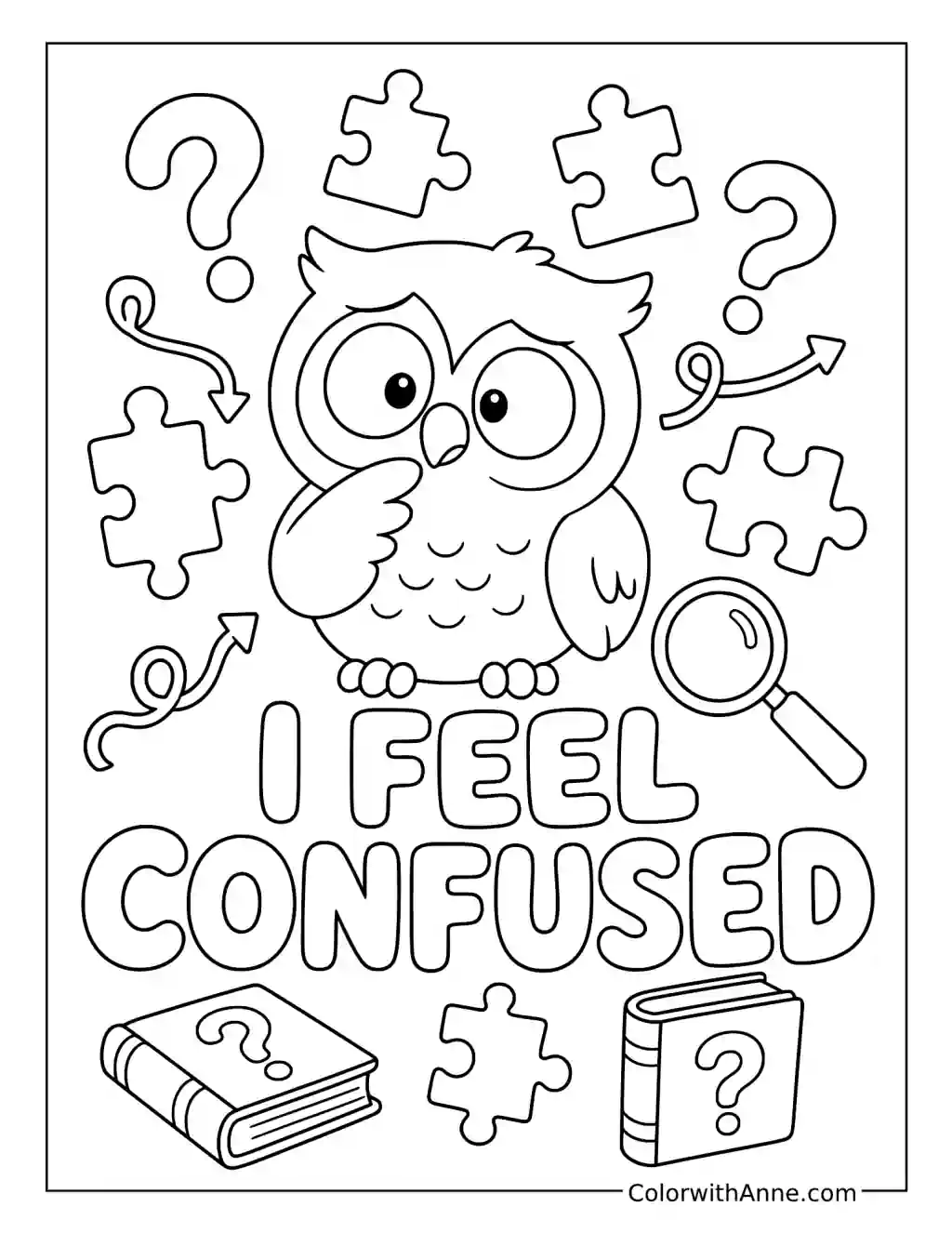
The owl sits among puzzle pieces, question marks, a magnifying glass, and a book. Its wide eyes suggest there is plenty of information available, but it has not quite arranged itself into an answer.
Warm brown feathers could sit against cool blue puzzle pieces. One brighter color on the magnifying glass would bring a small playful detail into the page.
Turn a familiar game into a practice round for asking clear questions. Explain one part incompletely, then help the listener identify what is missing: where to start, whose turn comes next, or what counts as finishing. The aim is to find a useful question, giving confusion something practical to do besides becoming frustration.
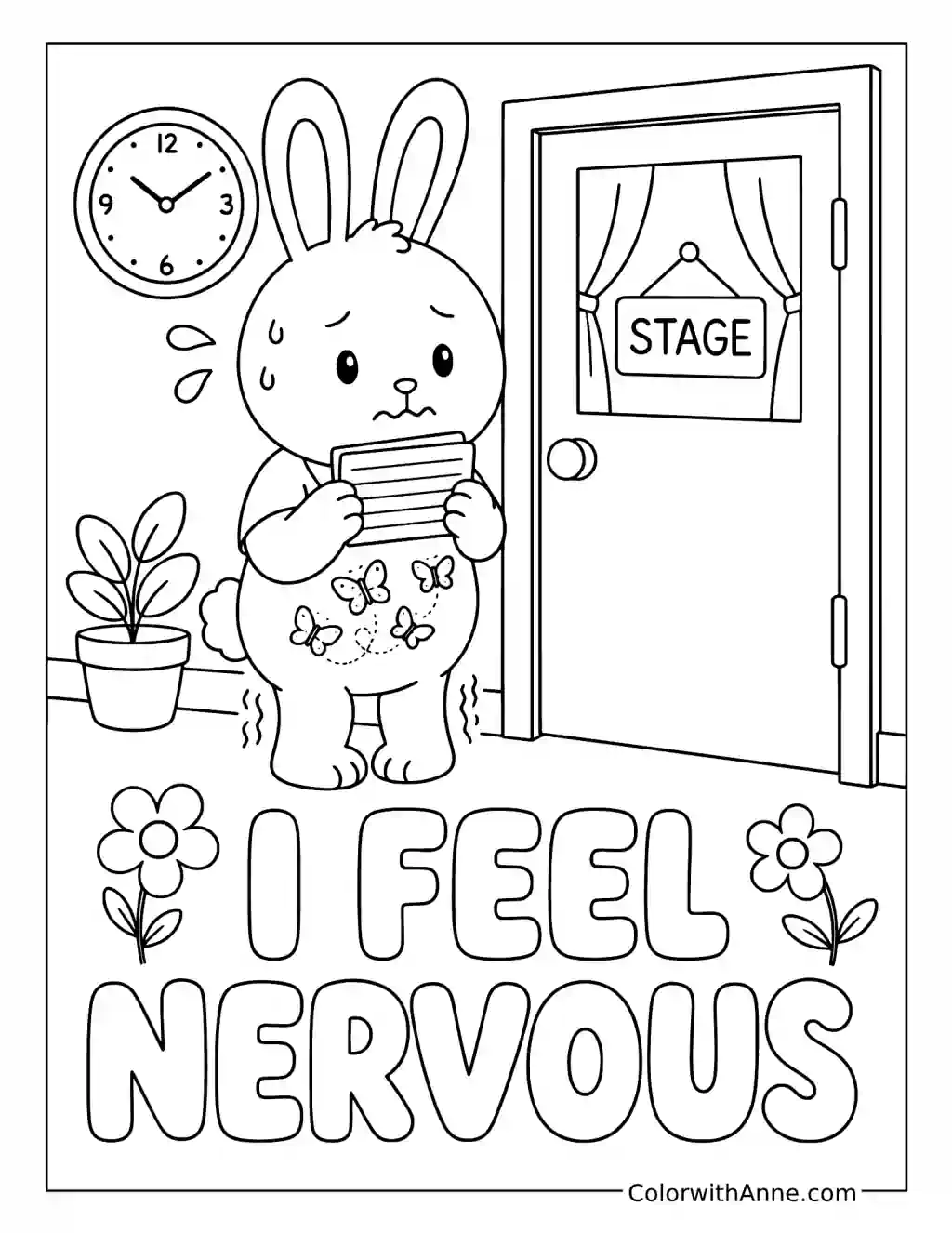
Practice the Rabbit’s First Few Words
The rabbit waits beside a stage door, holding a small card while a clock hangs nearby. The tight expression and little marks around its face catch that uncomfortable stretch just before something begins.
A soft gray or cream rabbit would suit the scene. The card could stay pale, with a warm-colored outfit against the cooler doorway.
If a reading, presentation, or performance is coming up, rehearse only the first sentence beside this page. Practice walking into place, looking up, and beginning. Starting with a small piece gives the rehearsal a clear shape, and the card in the drawing offers a natural reminder that having a prompt is perfectly ordinary.
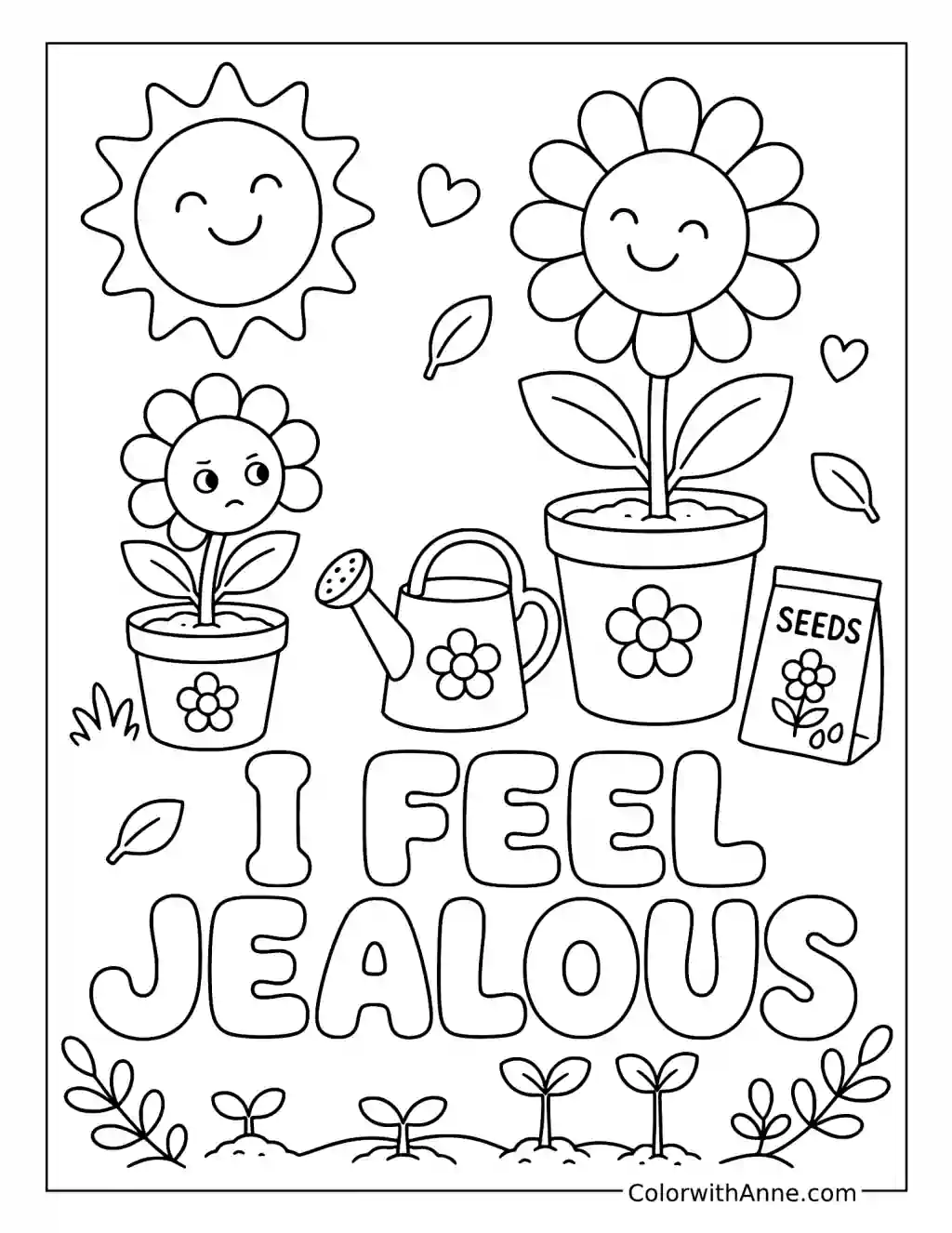
Talk About the Flower That Grew Taller
The potted flowers have grown to different heights, with the tallest bloom drawing attention beside the words “I FEEL JEALOUS.” The comparison is visible before anyone needs to explain the feeling.
Different flower colors could give each plant its own appeal. The smaller blooms do not need duller shades; bright pink or yellow can belong in any pot.
The flowers offer a gentle way to begin a conversation about wanting something another person has. Talk about what the smaller flower might wish for, then leave room for any real example that follows. Acknowledging the wish first can make the discussion feel less like being told to stop comparing.
Rebuild One Part with the Robot
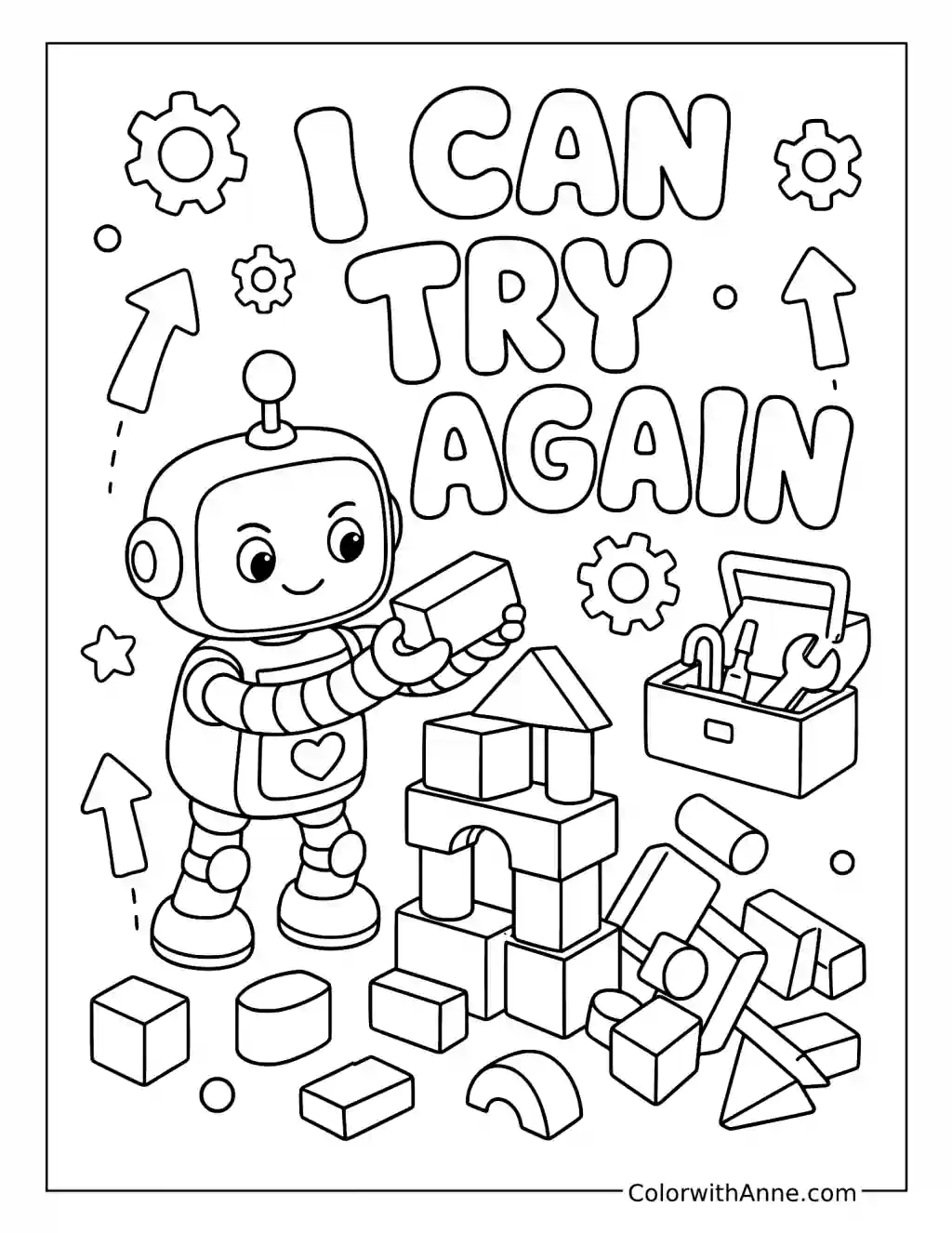
The little robot works among building blocks beneath “I CAN TRY AGAIN.” Some pieces are stacked and others lie nearby, leaving plenty of room for another attempt without pretending the first construction went perfectly.
Silver or pale blue would suit the robot, with bright blocks around it. A warm color on the face or chest could make the mechanical character feel friendly.
Choose a small building challenge and deliberately leave time to revise it. If a tower falls, change one thing, such as widening the base, before rebuilding. The picture can stay beside the activity as a reminder of the next attempt, with a pause available when the builder has had enough for the moment.
Offer the Embarrassed Face a Kind Response
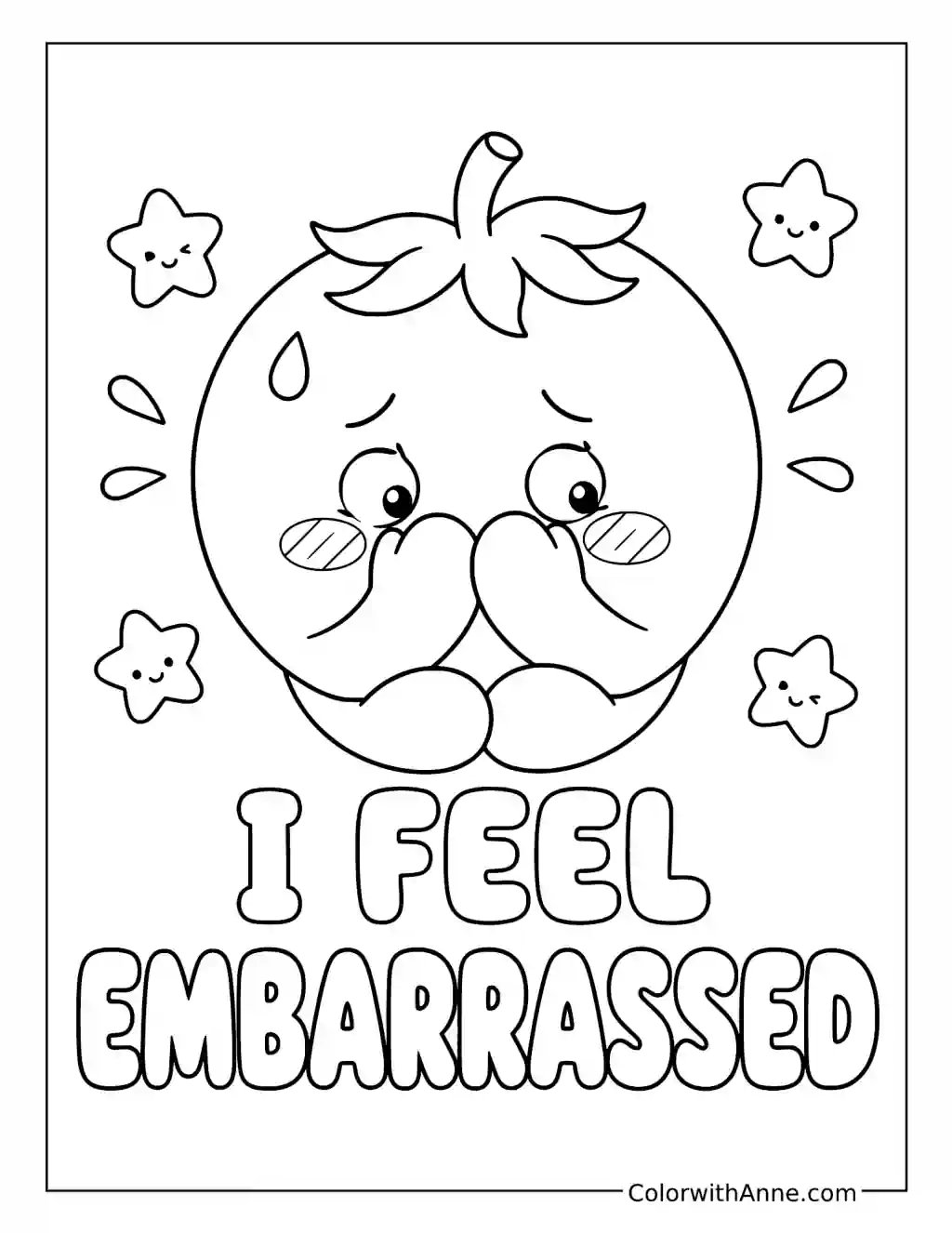
The round face looks downward with flushed cheeks, surrounded by small stars and uncomfortable little marks. It catches the wish to become less noticeable after something awkward has happened.
Pink cheeks could sit against a softly colored face and background. The surrounding shapes can stay light, keeping the expression gentle rather than making it feel more dramatic.
Use a made-up everyday mishap, such as dropping a tray or forgetting a line, to practice how someone nearby could respond. Offering help or quietly changing the subject may suit the moment better than making a big reassuring speech. Let children suggest what they would appreciate if the embarrassed person were them.