
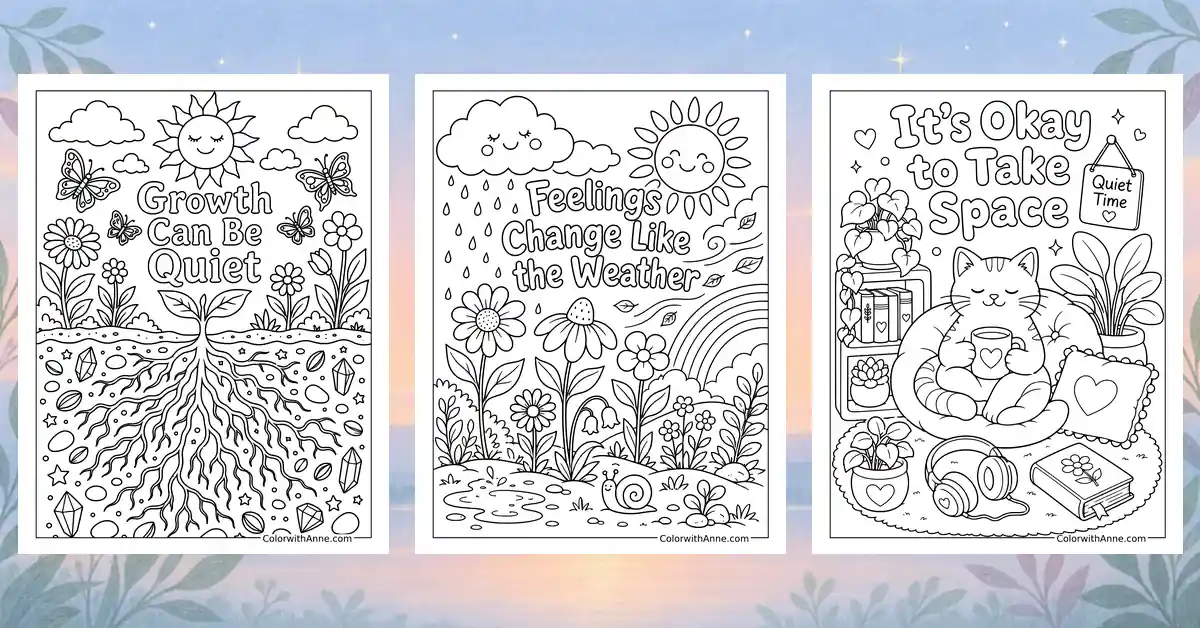
After a demanding day, even choosing what to do next can feel like another job. A page and a few markers offer a modest place to begin, without needing the evening to become productive. The phone can stay facedown for a while; there is already something close enough to hold attention.
Mental Health coloring pages can accompany that personal pause or become a way to open a conversation with someone trusted. A word or image may feel relevant without requiring an immediate explanation. Finishing is optional, and so is sharing. Sometimes having an ordinary activity alongside a difficult conversation makes the silence more comfortable.
Free Printable Mental Health Coloring Pages
Click any coloring page below to open the PDF, then print on US Letter or A4 paper.
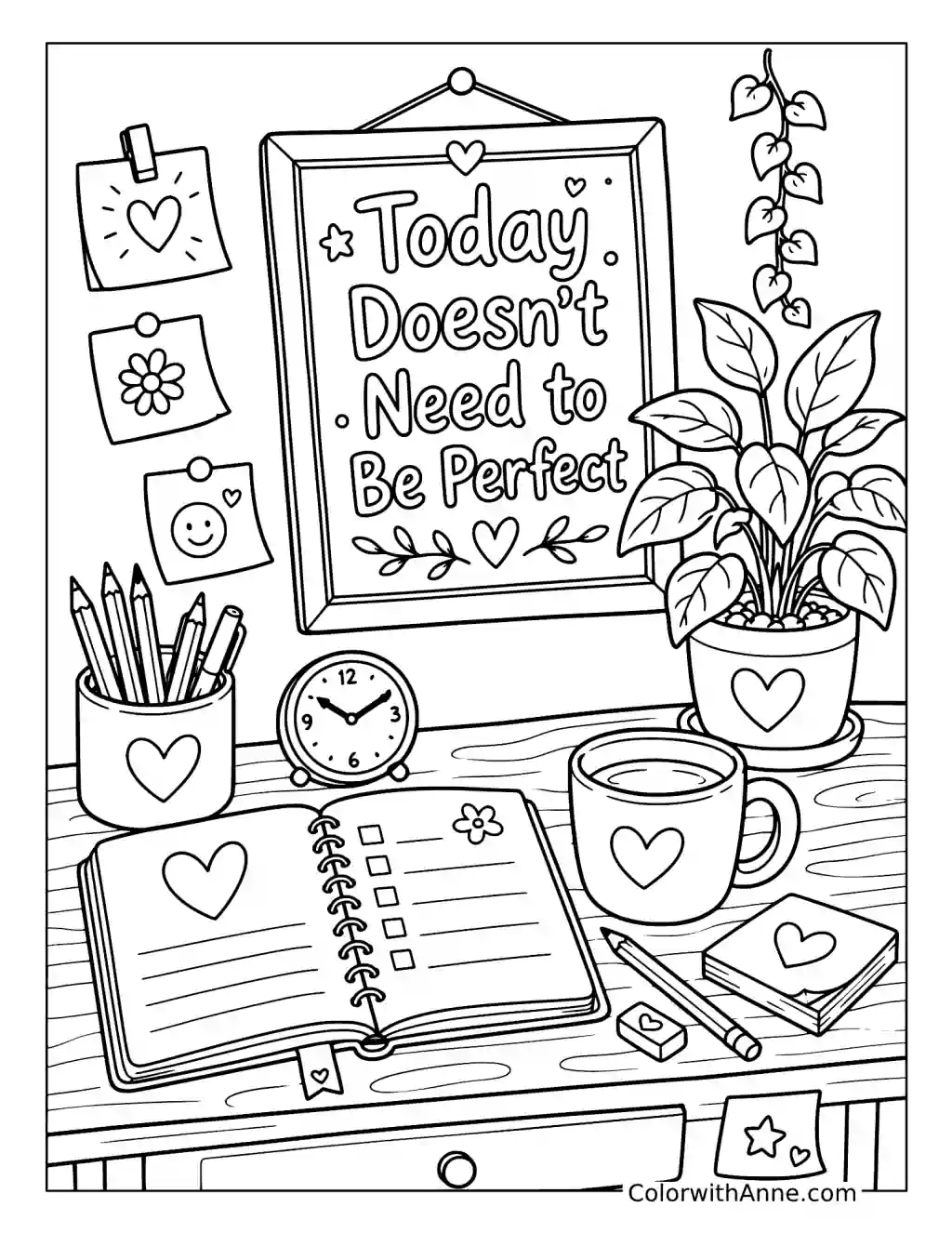
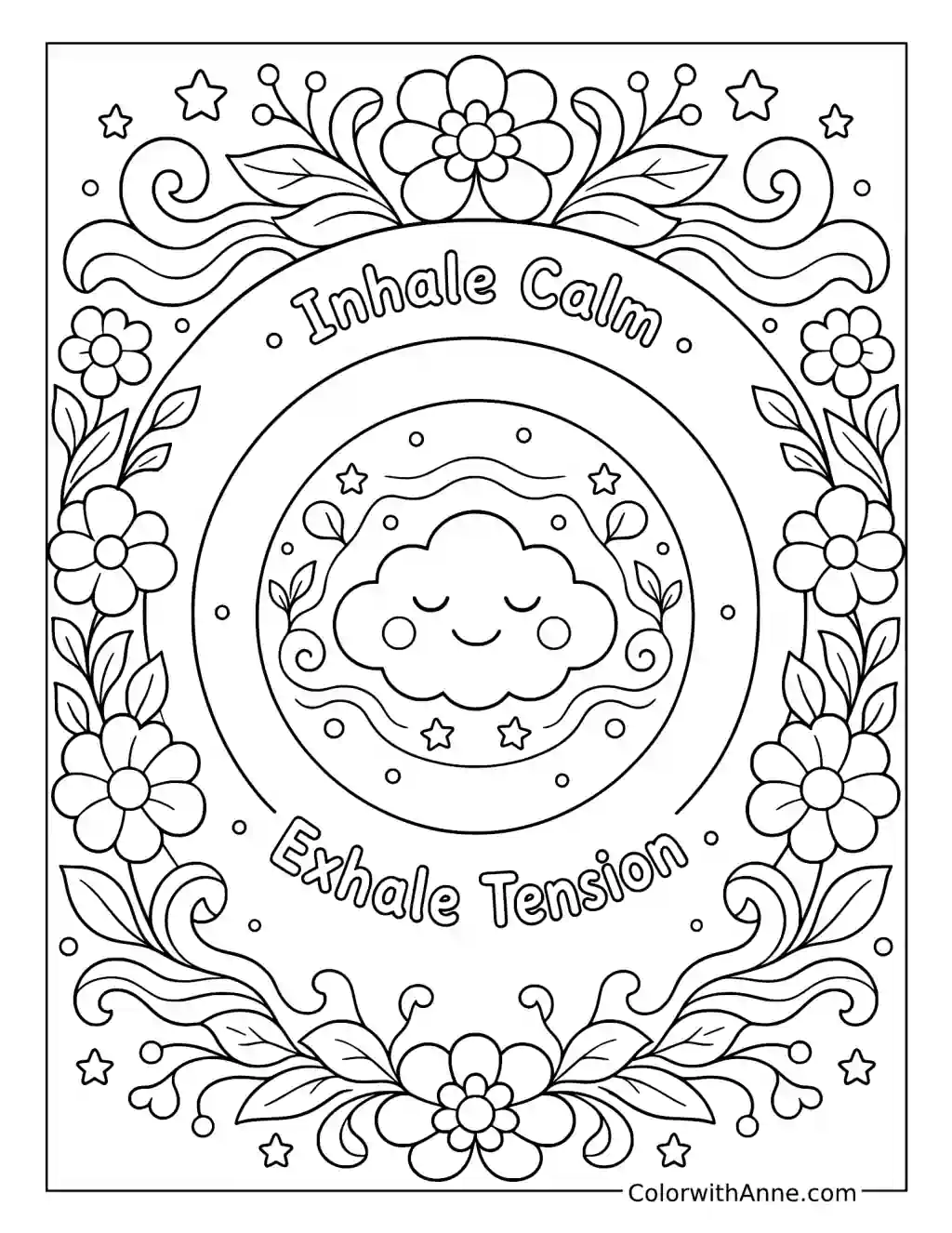
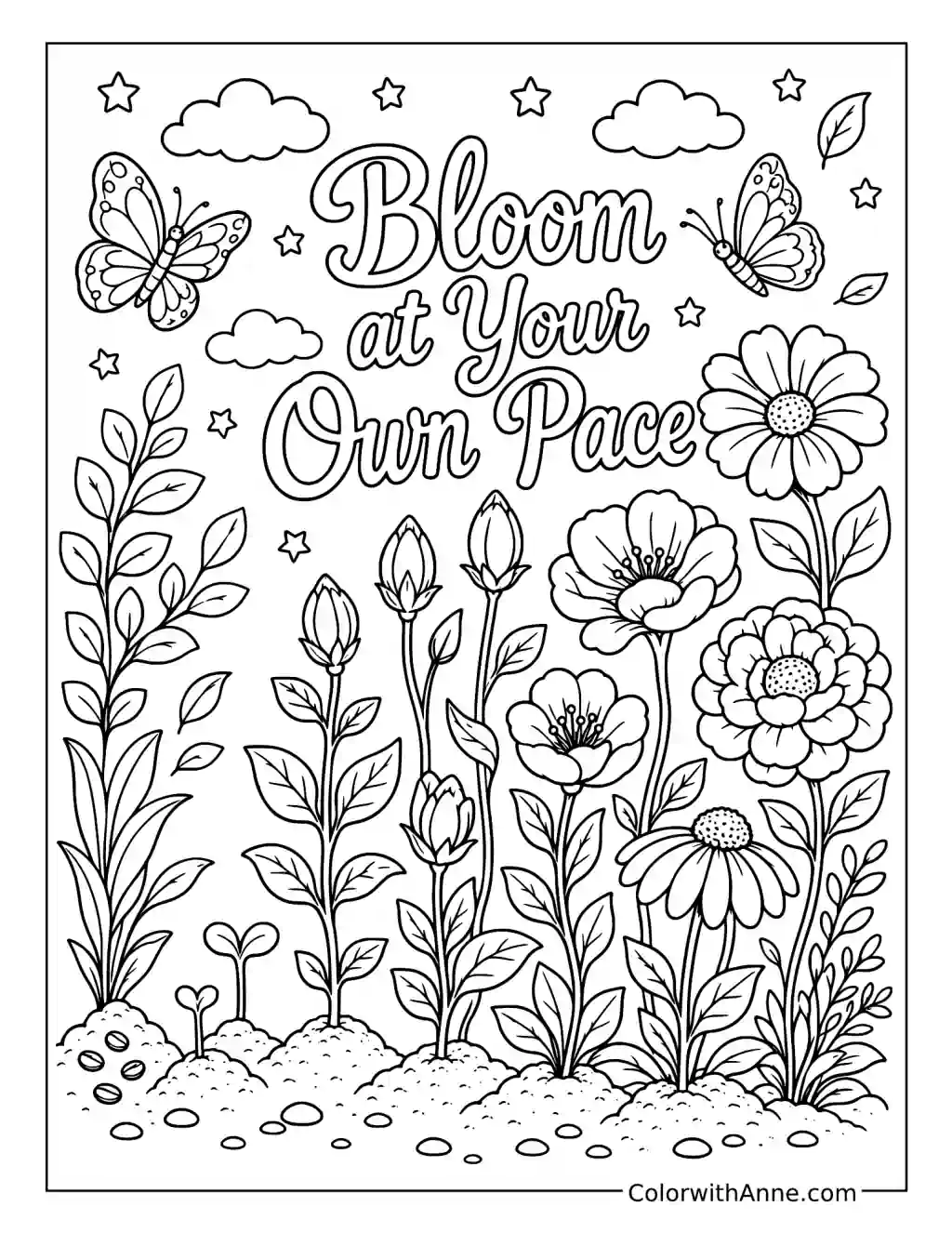
Did you find what you needed?
Help us choose what to create or improve next.
Coloring Ideas for Mental Health Pages
Try one of these coloring ideas, or use them as a starting point for your own.
Give the Garden a Welcoming Boundary
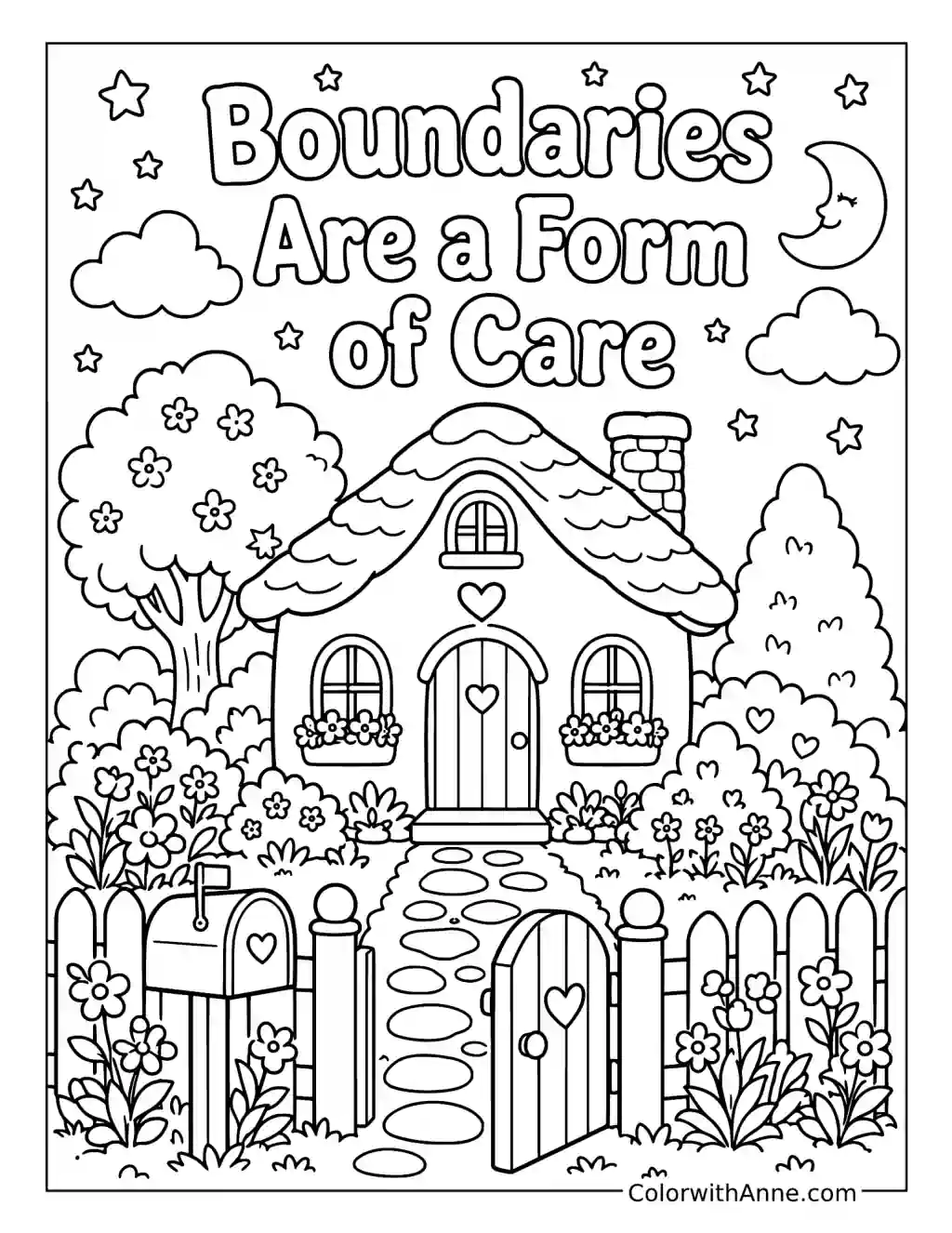
Choose a clear, contrasting color for the picket fence so its outline remains easy to follow among the flowers. Repeat that color on the open gate, then use a favorite welcoming shade for the cottage door. The fence defines the garden while the stepping stones lead toward an entrance—a useful detail to linger over alongside “Boundaries Are a Form of Care.”
Make the Toolbox Personal
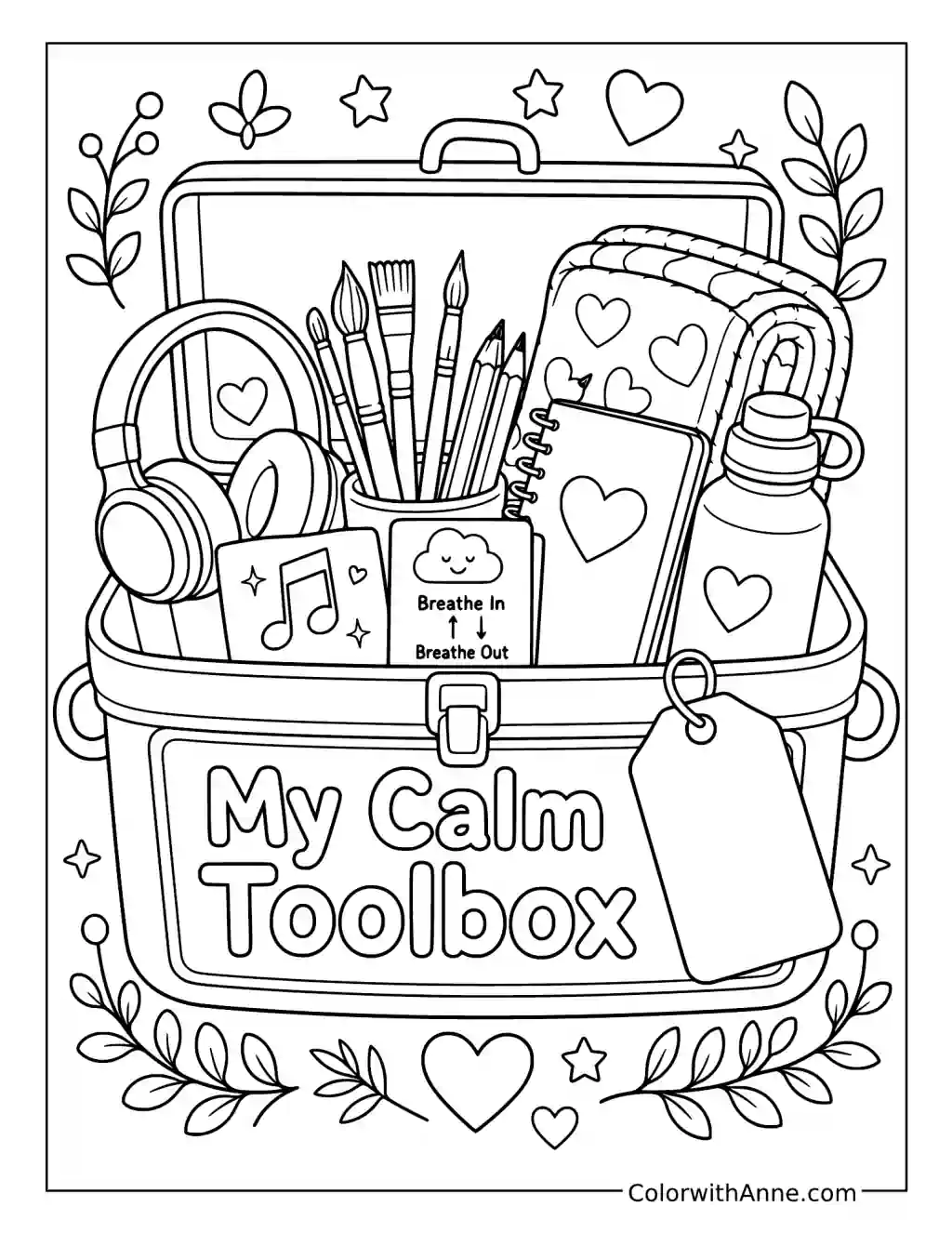
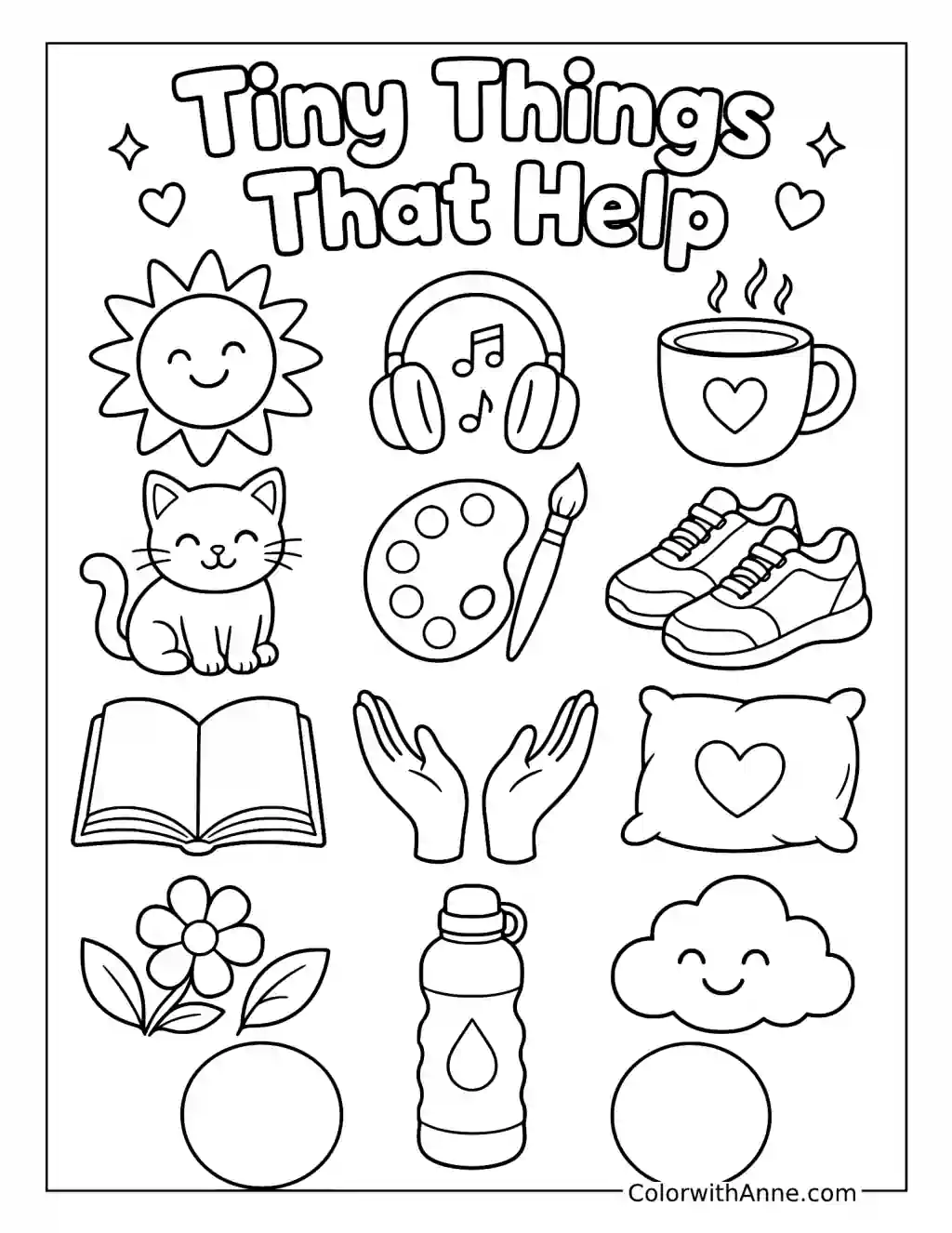
Pick out the toolbox items you would actually reach for during a quiet moment, such as the headphones, notebook, or paintbrushes. Give those items your favorite colors, and use softer shades for the others. Beside the page, jot down one specific way you would use a highlighted item: a song to play, something to sketch, or a few words to write. Let your own preferences shape this calm toolbox.
Let Some Thoughts Stay Unfinished
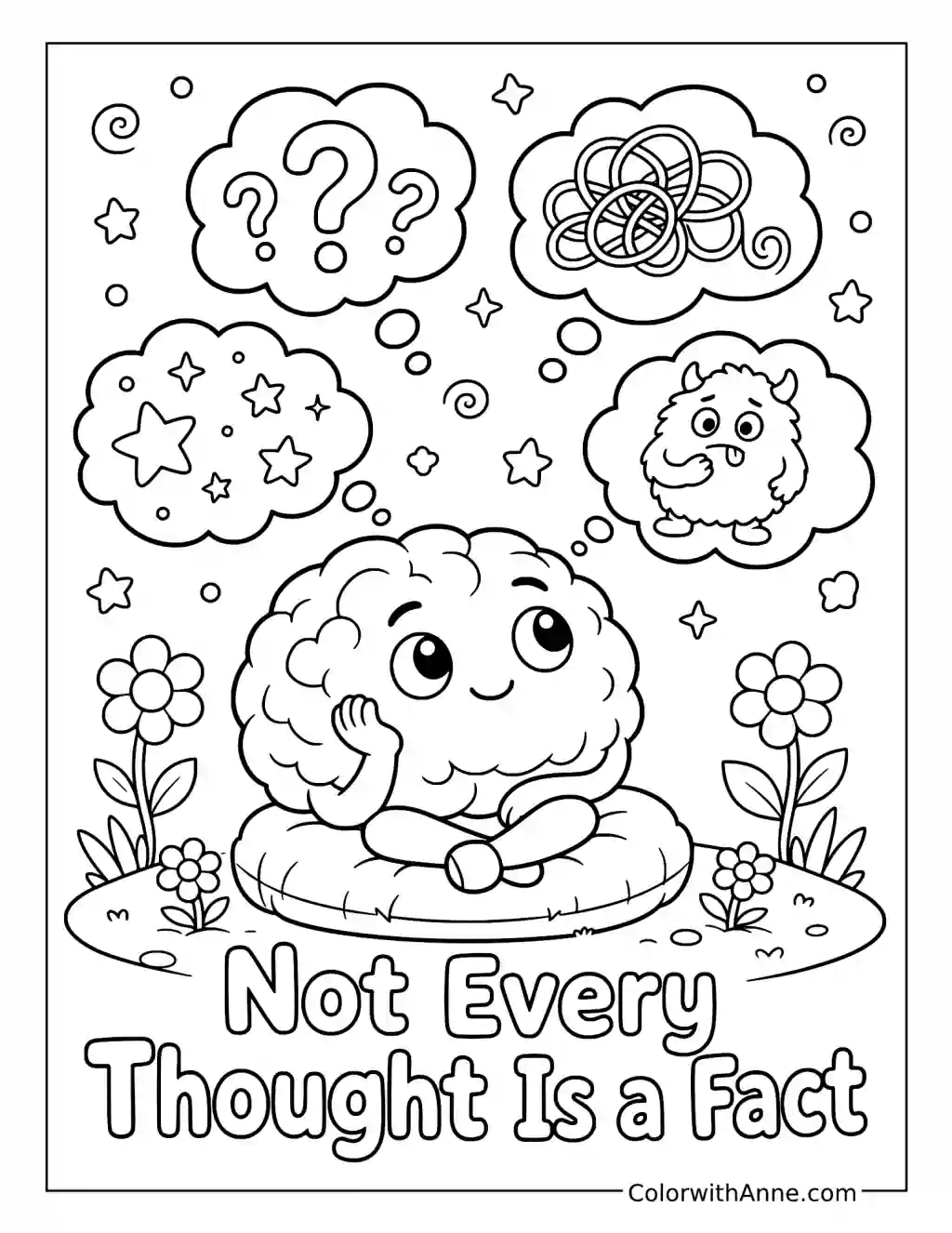
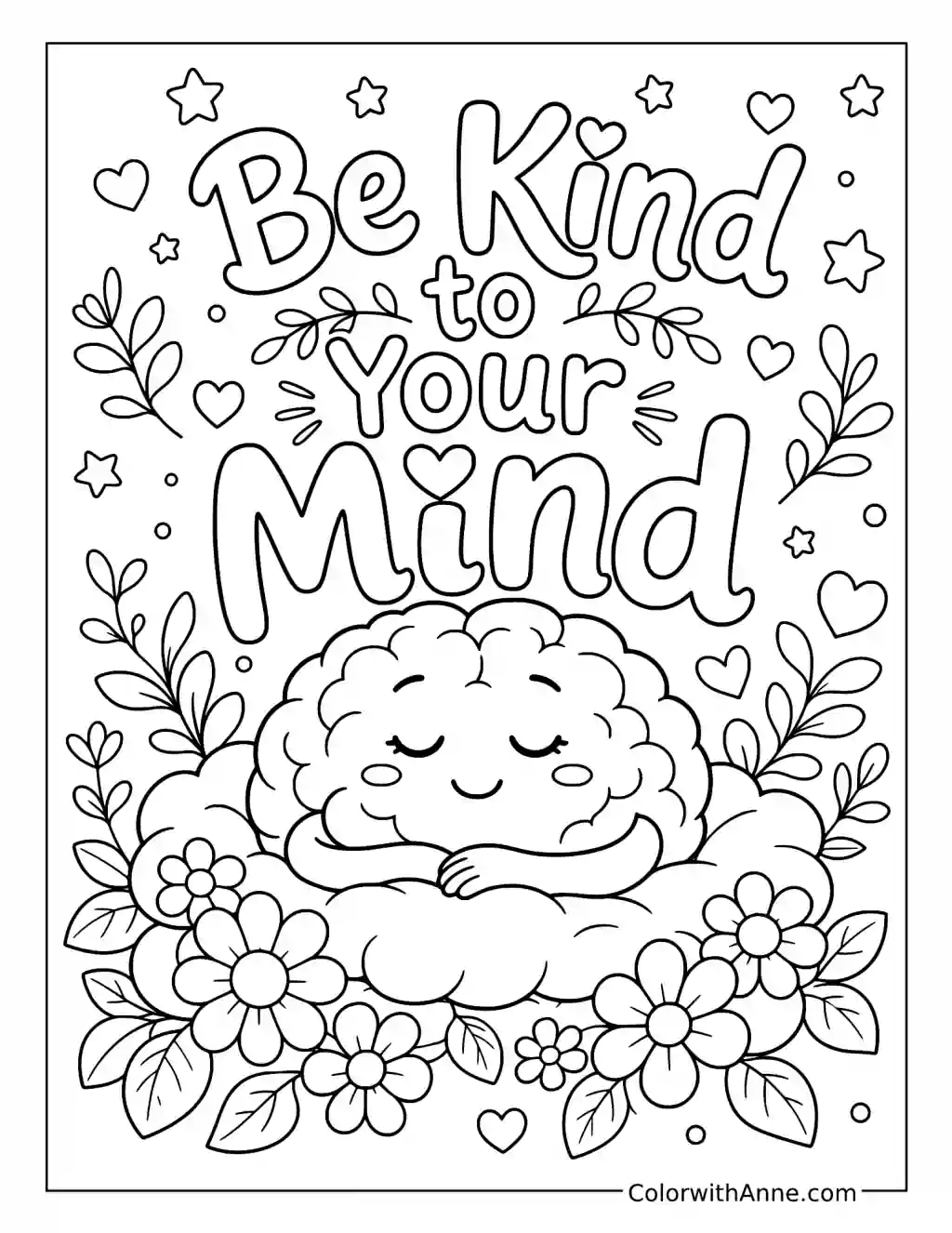
Around the thoughtful brain, give the question marks, loops, and spirals light touches of pencil color, leaving some thought bubbles partly white. Color the cushion more fully to create a solid resting place beneath the character. You can leave the bubbles unfinished on purpose: alongside “Not Every Thought Is a Fact,” they offer a small way to practice leaving a question unresolved.
Build a Break into the Page
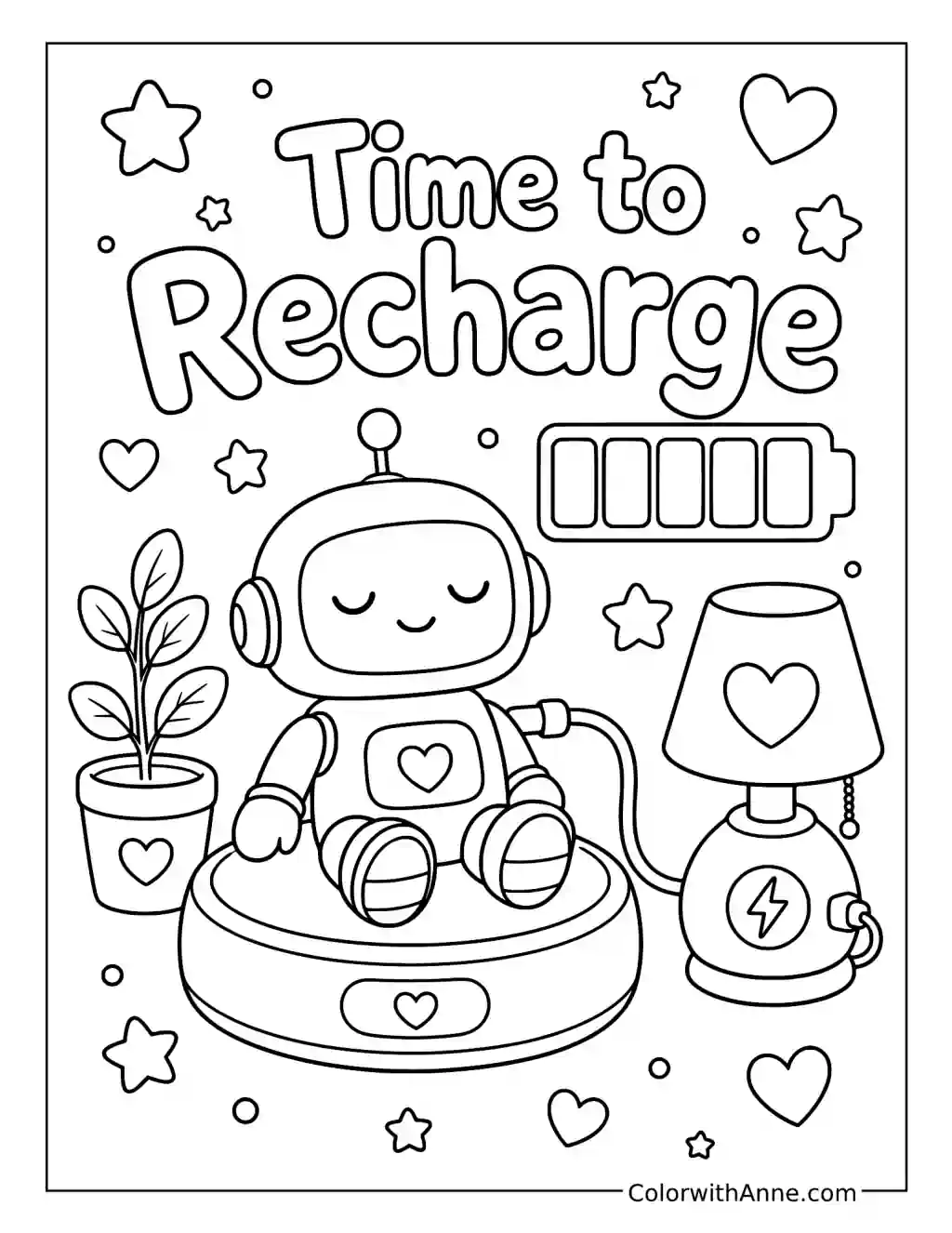
Color the resting robot and its charging platform first, saving the battery symbol for later. When you reach it, set your supplies down and take a break of your own. Return whenever you feel like it, then choose a color for the battery and continue with the surrounding details. The robot’s recharge message becomes a natural stopping point within the coloring session.
Bring the Hidden Growth into View
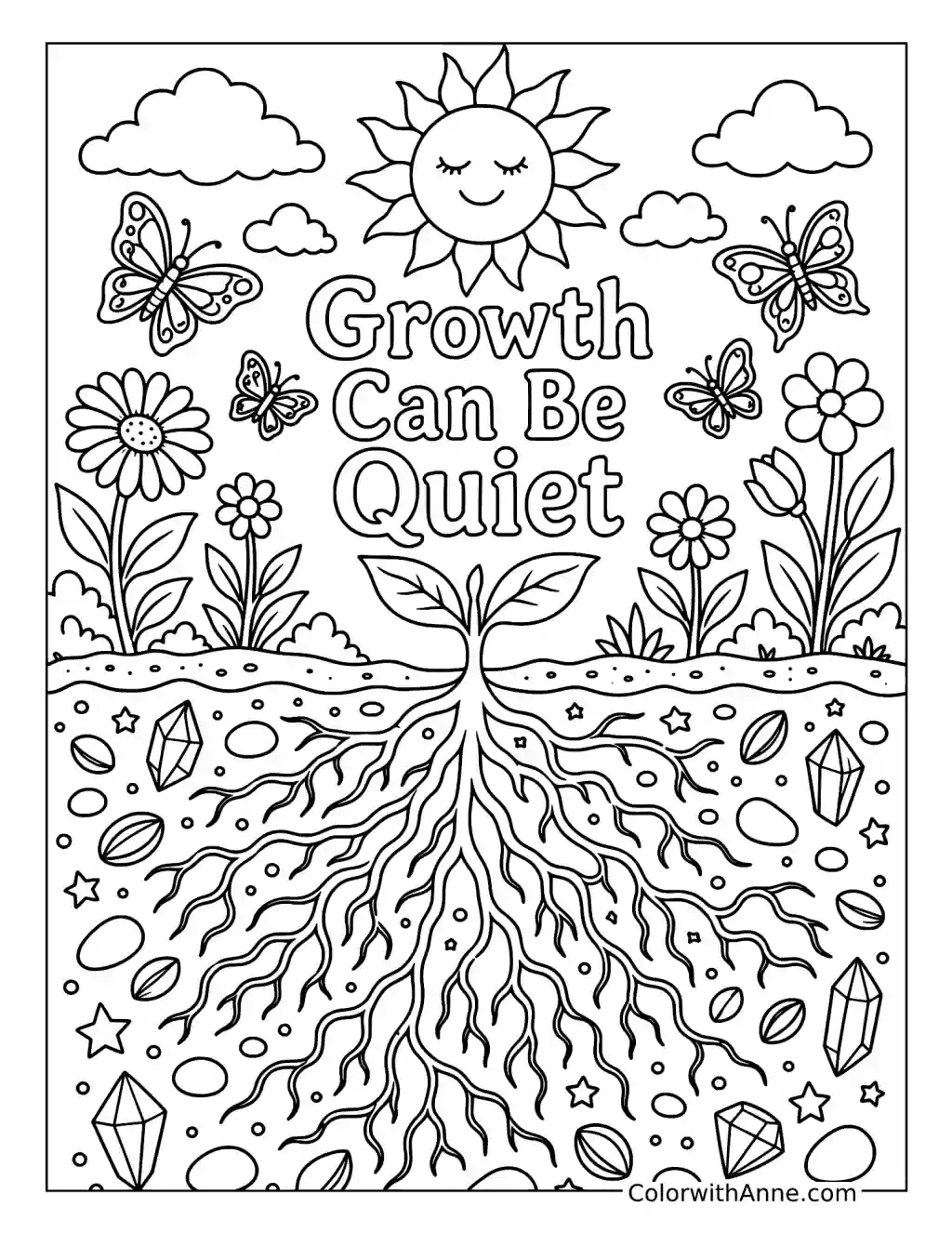
Make the seedling’s underground roots the brightest part of the page. Follow their branching shapes with a rich gold or copper pencil, keeping the surrounding soil pale enough that each root remains visible. Use gentler greens above ground. This shifts attention toward the spreading growth beneath the surface and gives “Growth Can Be Quiet” a visual emphasis.
Give Every Feeling a Place at Tea
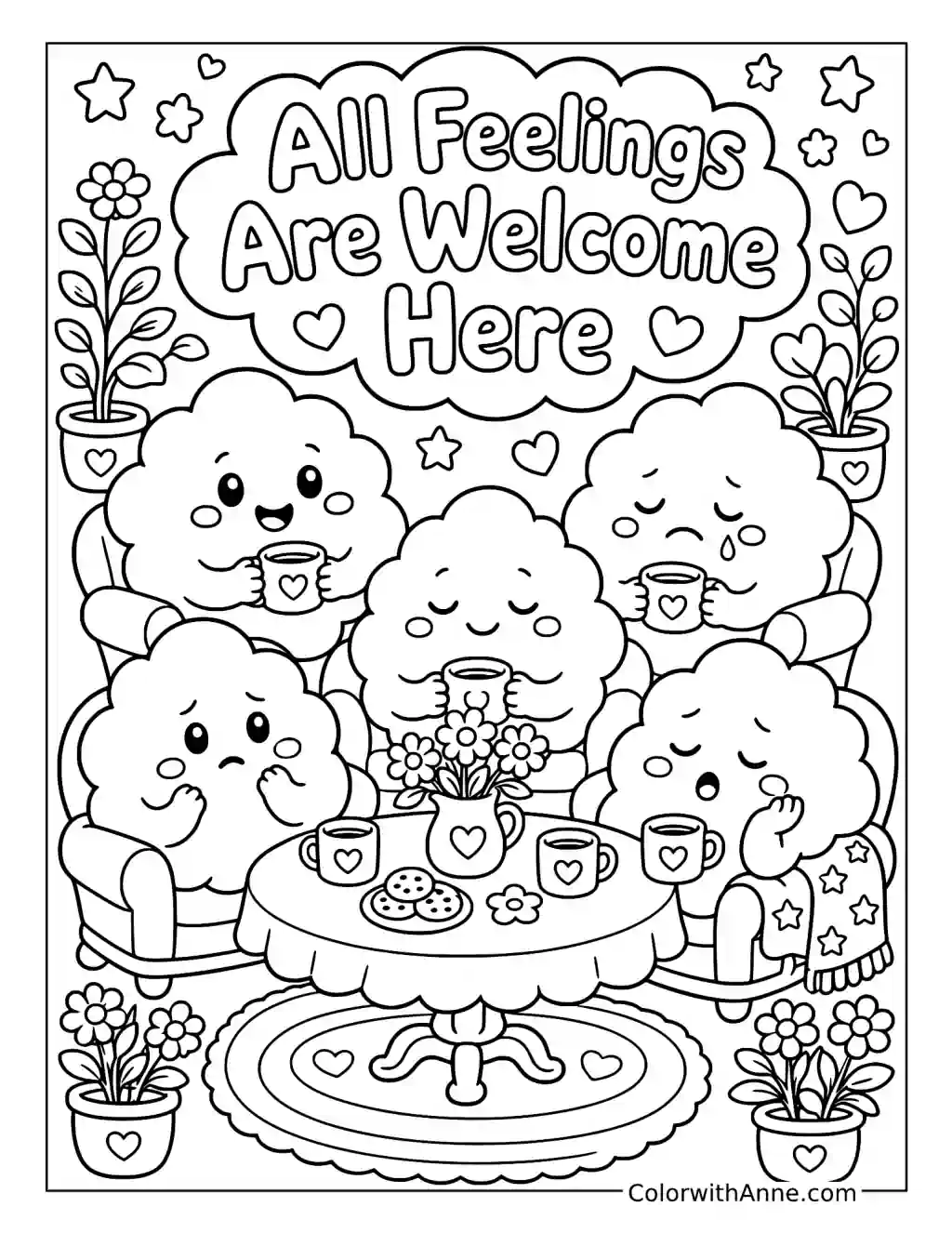
Choose a different color for each of the five emotional clouds, without needing to assign a particular color to sadness, worry, or happiness. Repeat each cloud’s color on its tea cup, giving everyone a little place setting of their own. Finish the shared table and rug in colors that work with all five guests. Every expression gets the same care and a place in the gathering.
Color the Space Between Rain and Sunshine
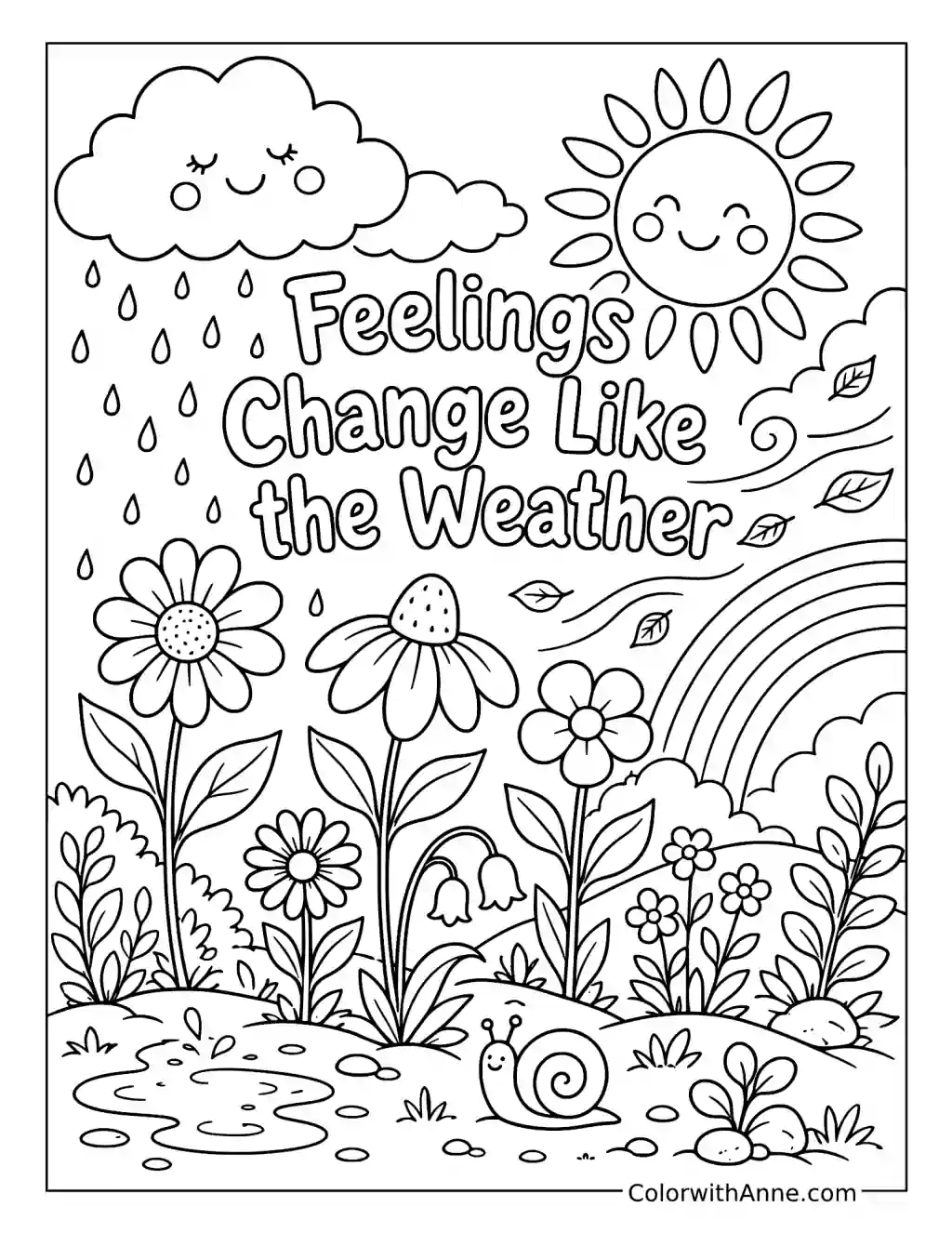
Use a pale blue wash of pencil near the raining cloud and a soft yellow near the smiling sun. Let the colors meet gradually across the open background, with a little overlap where space allows. Keep both the rain and sunshine visible rather than making the whole scene one kind of weather. Their shared garden leaves room to explore what a mixed-feeling day might look like.
Make a Quiet-Time Marker
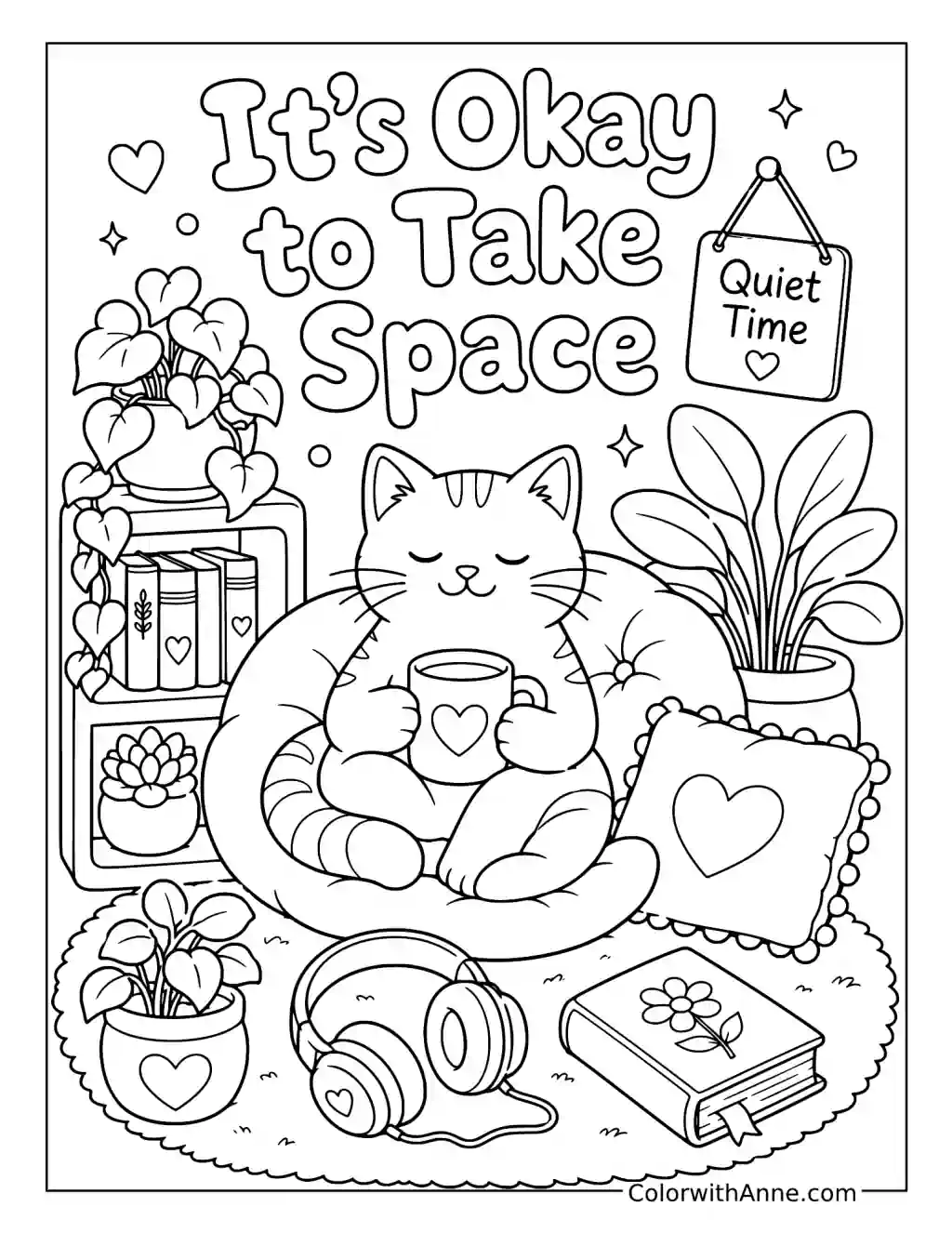
Give the cat’s “Quiet Time” sign a bold color that stands out from the books and plants around it. Carry a touch of that color into the heart on the mug to tie the sign to the cat’s cozy pause. Display the finished page beside your own reading spot; if you share the space, you can agree that putting it out means you would like some uninterrupted reading time.