
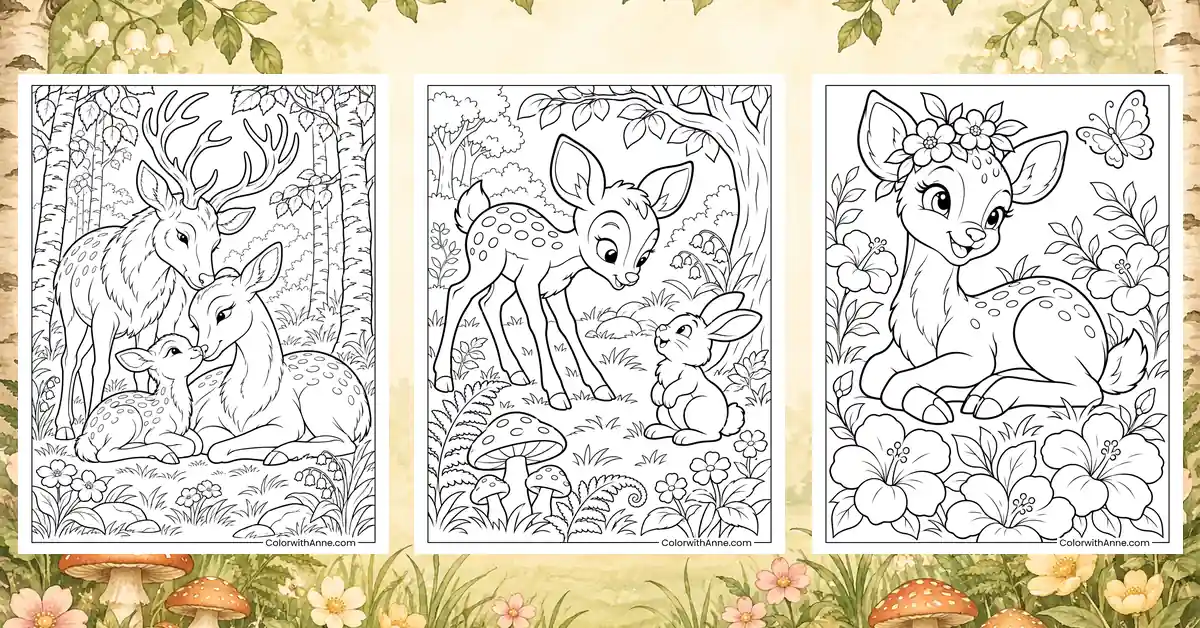
A flicker of movement beyond the garden fence turns an ordinary walk into a pause. A deer lifts its ears, watches for a moment, then steps out of sight. Even after it disappears, the shape of those ears and the lightness of its steps can linger longer than the rest of the morning.
The deer is gone, but the picture is still there to finish. Start with the coat — warm browns, or a shade no real deer has ever worn — and then decide what kind of light the woodland holds: the green of deep shade, or the pale gold of a clearing. The colors you choose are the morning you remember.
Free Printable Deer Coloring Pages
Click any coloring page below to open the PDF, then print on US Letter or A4 paper.
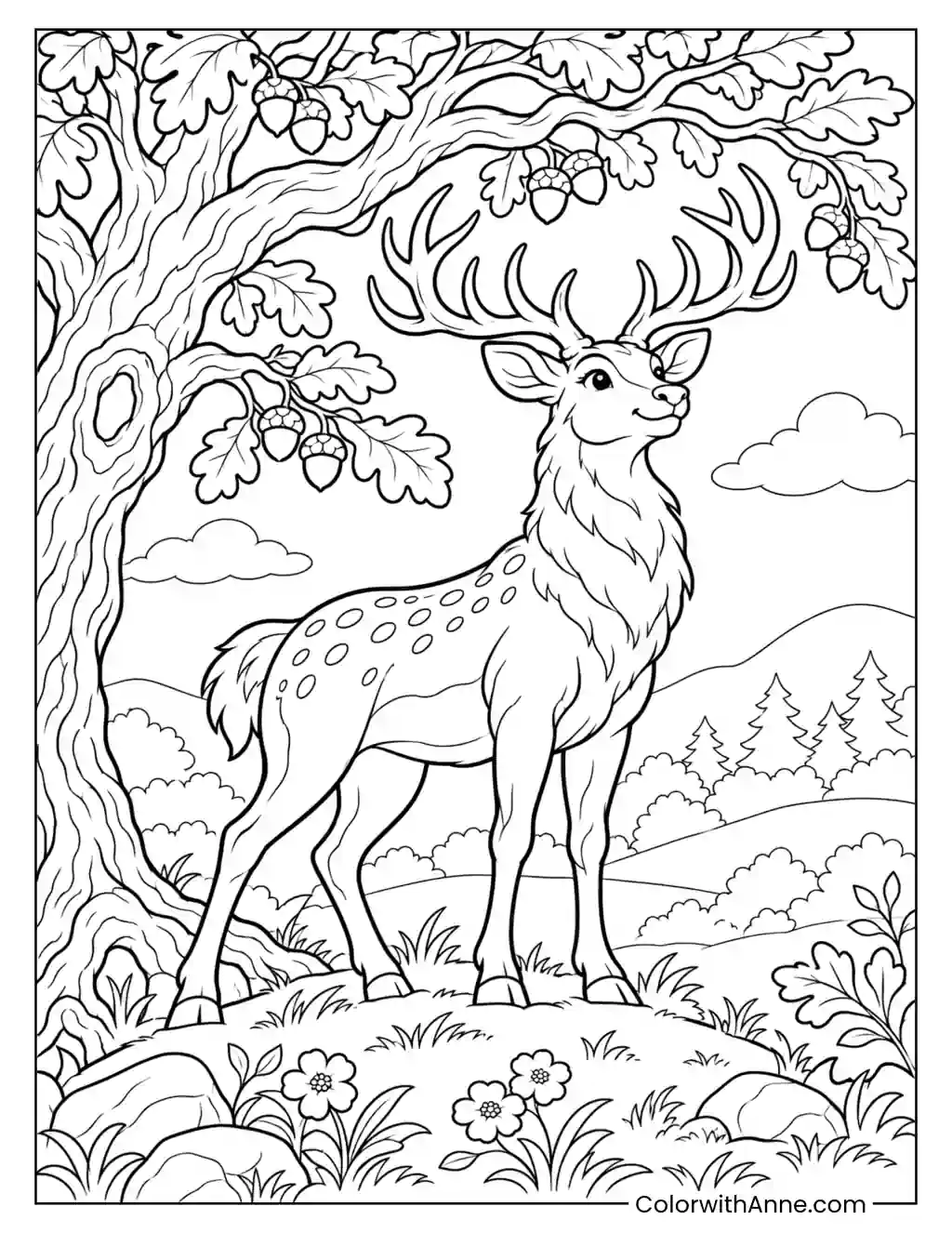
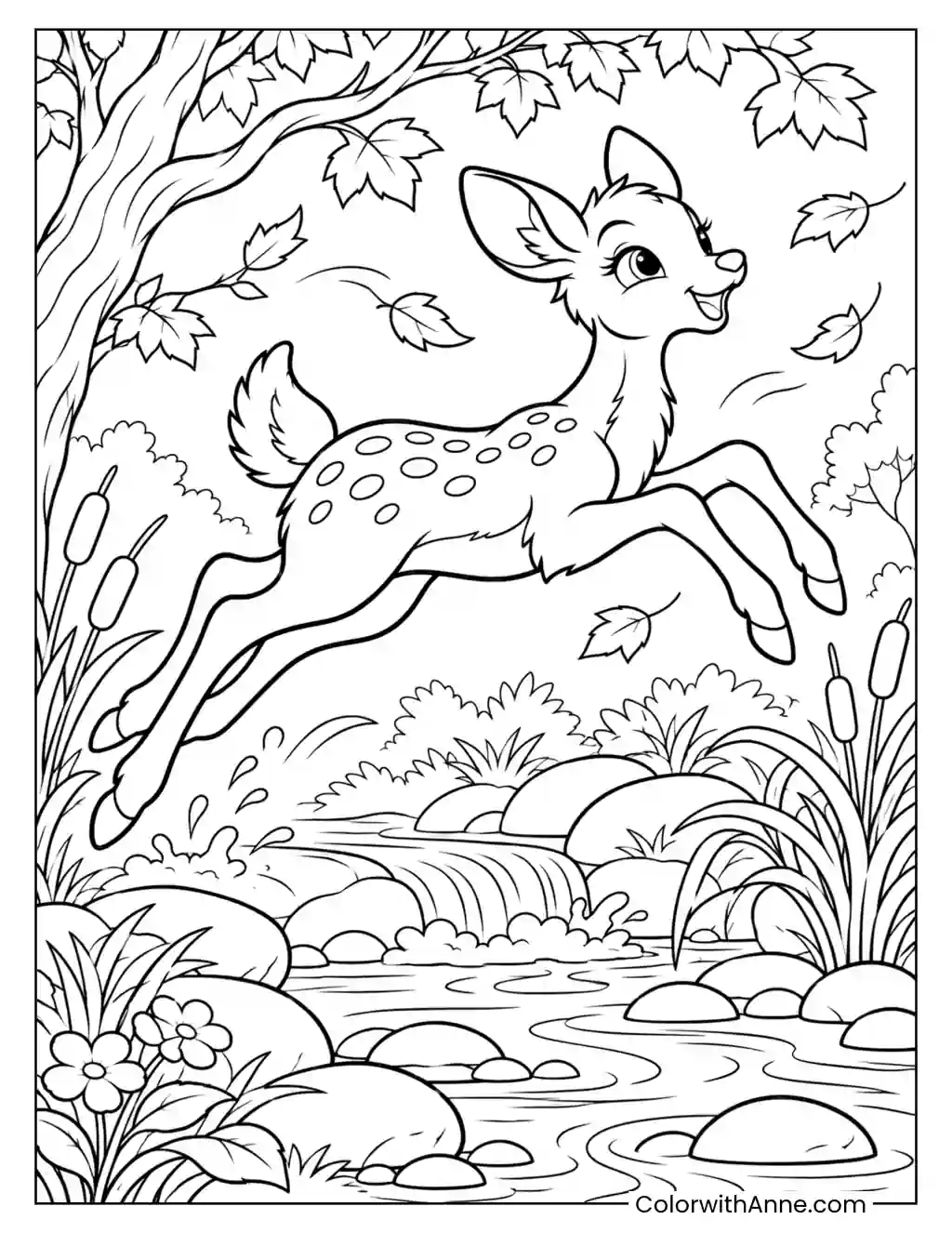
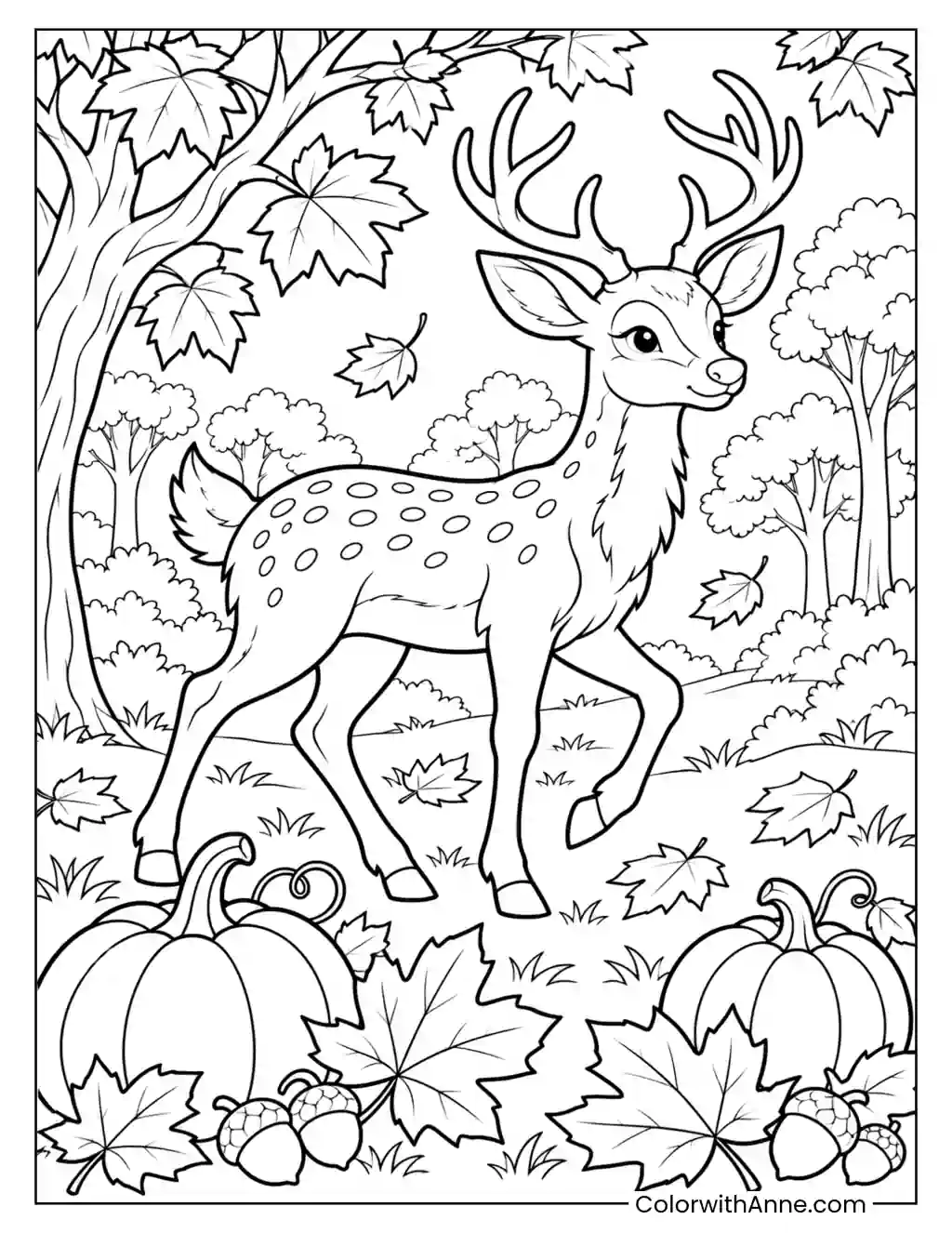
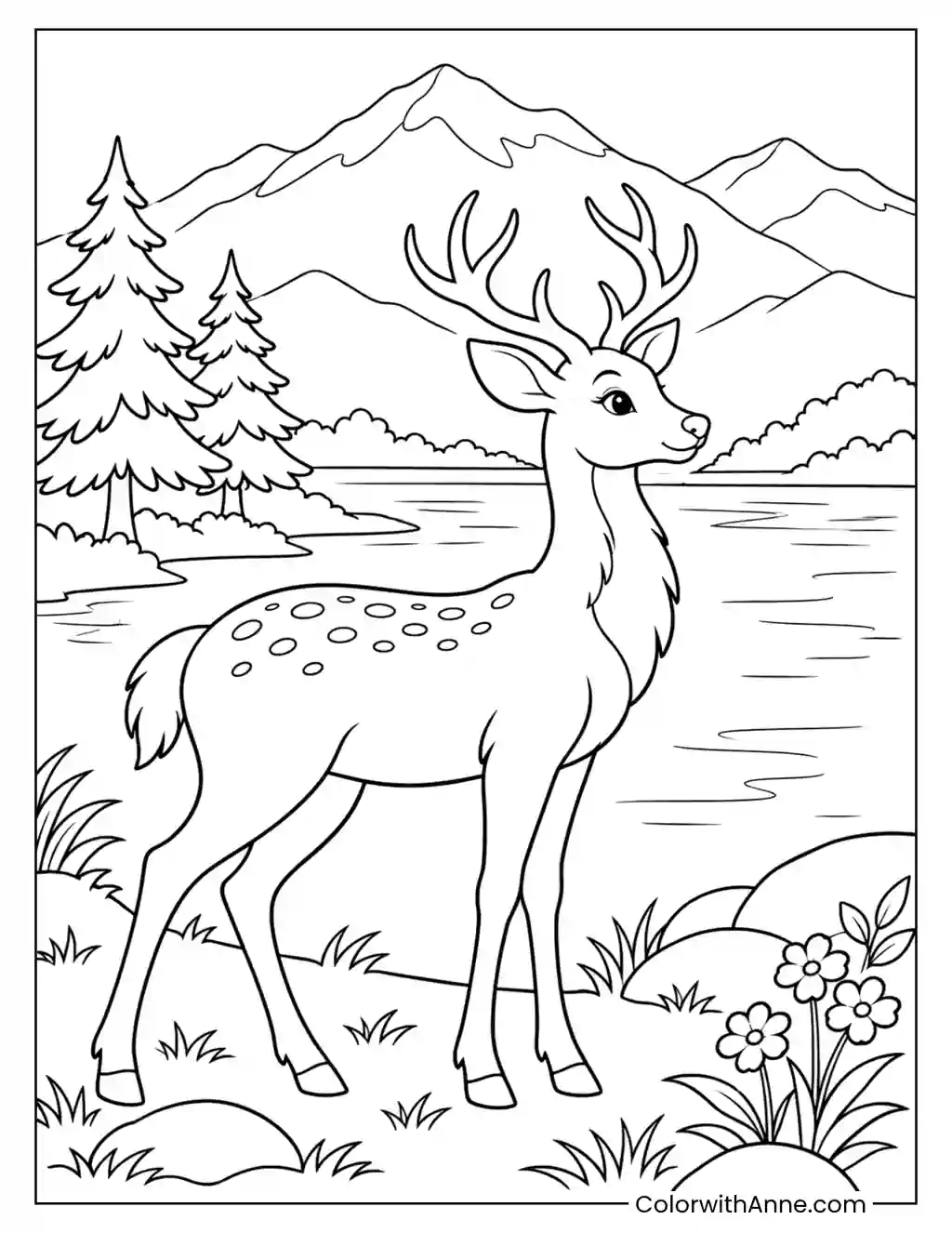
Did you find what you needed?
Help us choose what to create or improve next.
Coloring Ideas for Deer Pages
Try these creative ideas to make the most of your coloring sheets.
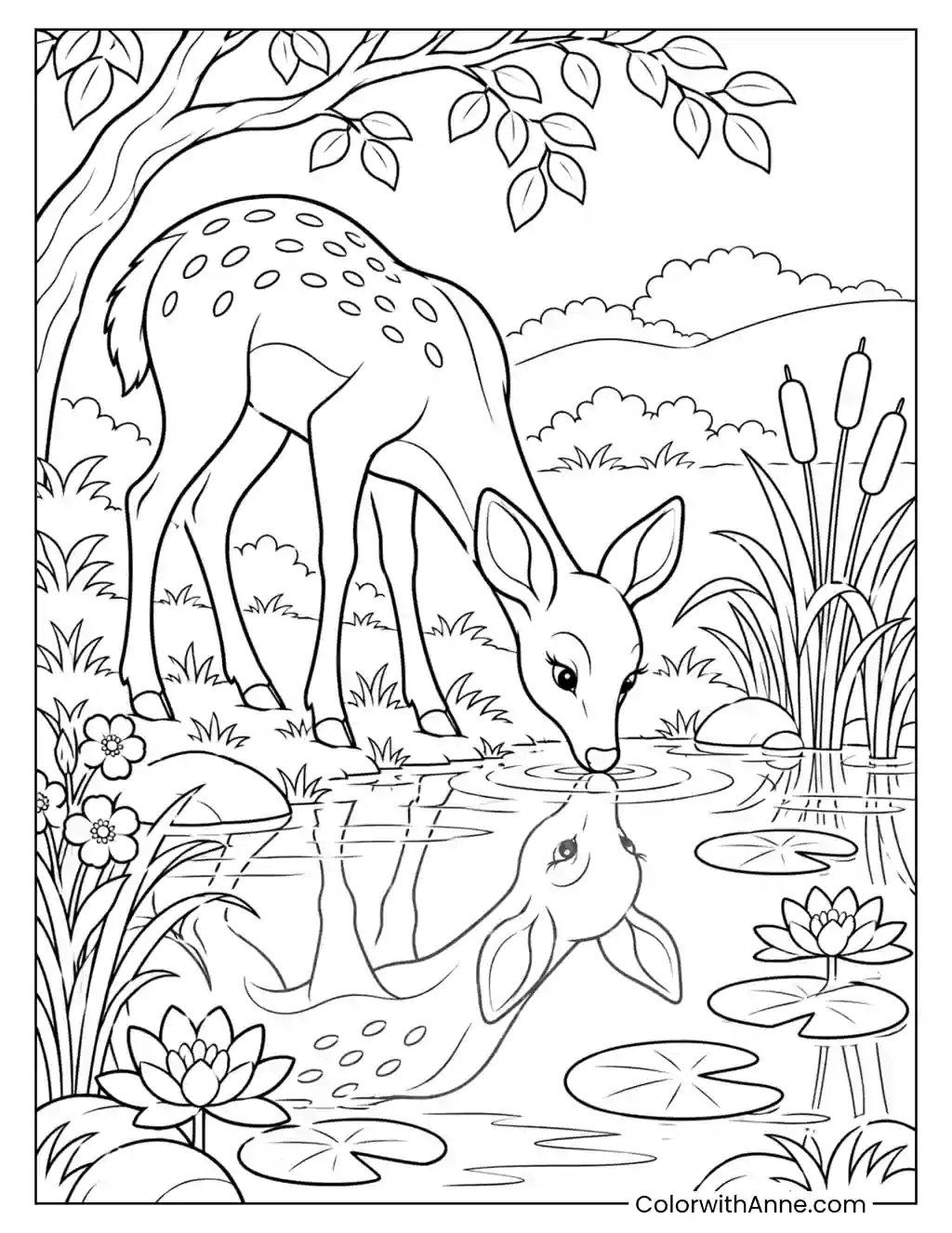
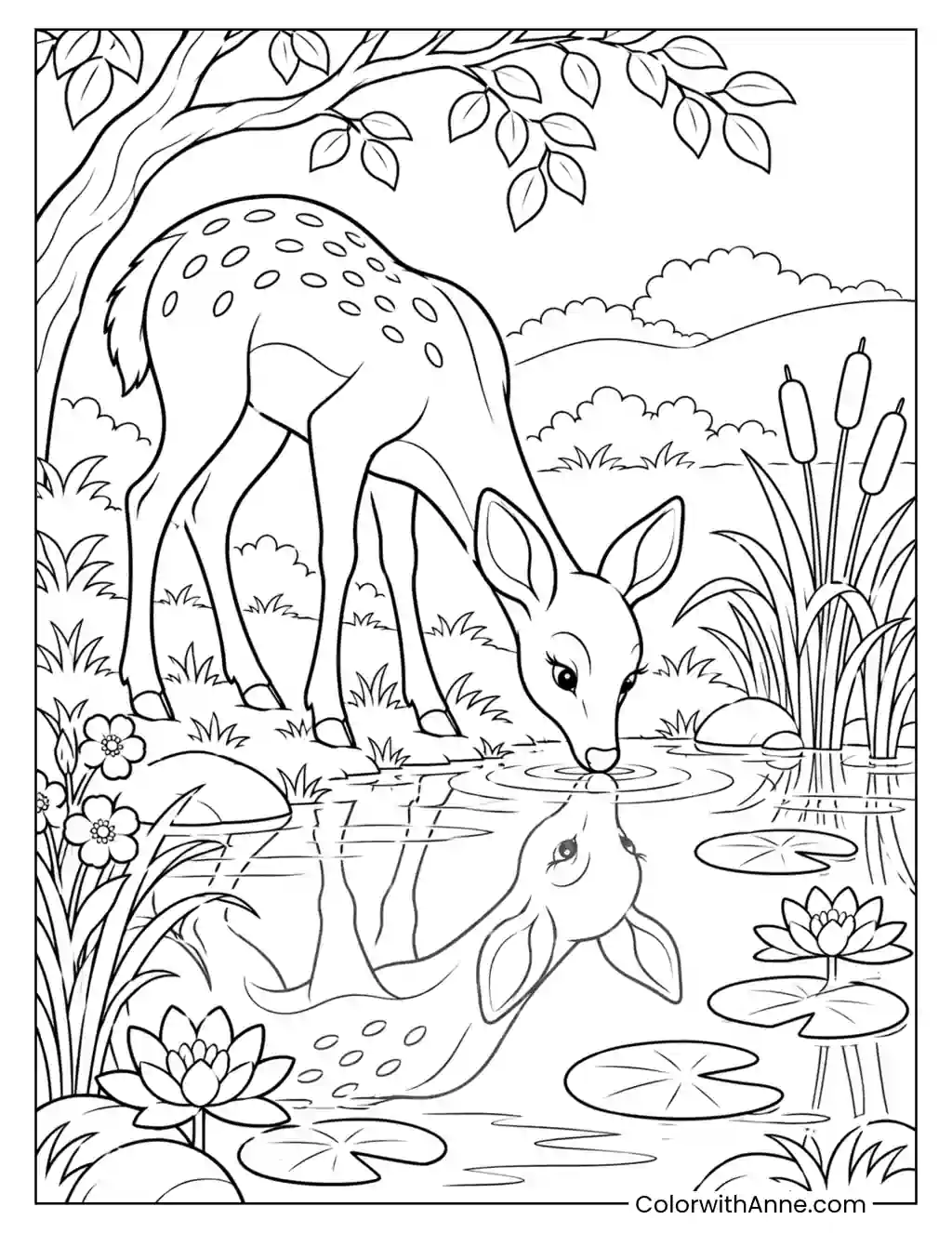
Give the Reflection a Watery Finish
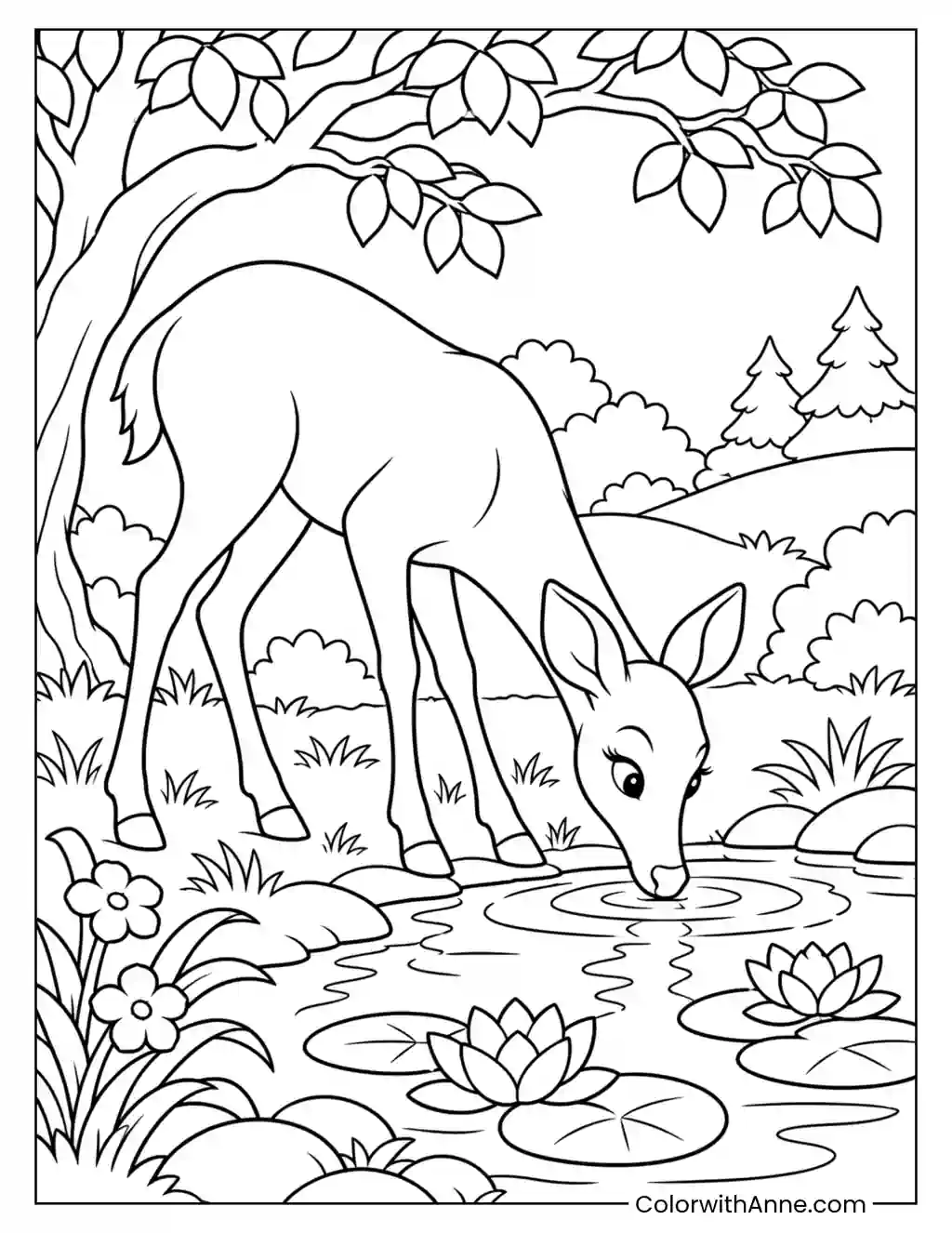
Color the drinking deer first, then repeat its coat and spot colors in the upside-down reflection below — but lighter. Use softer crayon pressure for the reflected shapes, and carry a few pale blue horizontal strokes across them. Leave narrow white gaps beside the ripple lines, so the lower deer reads as an image in moving water, not a second animal.
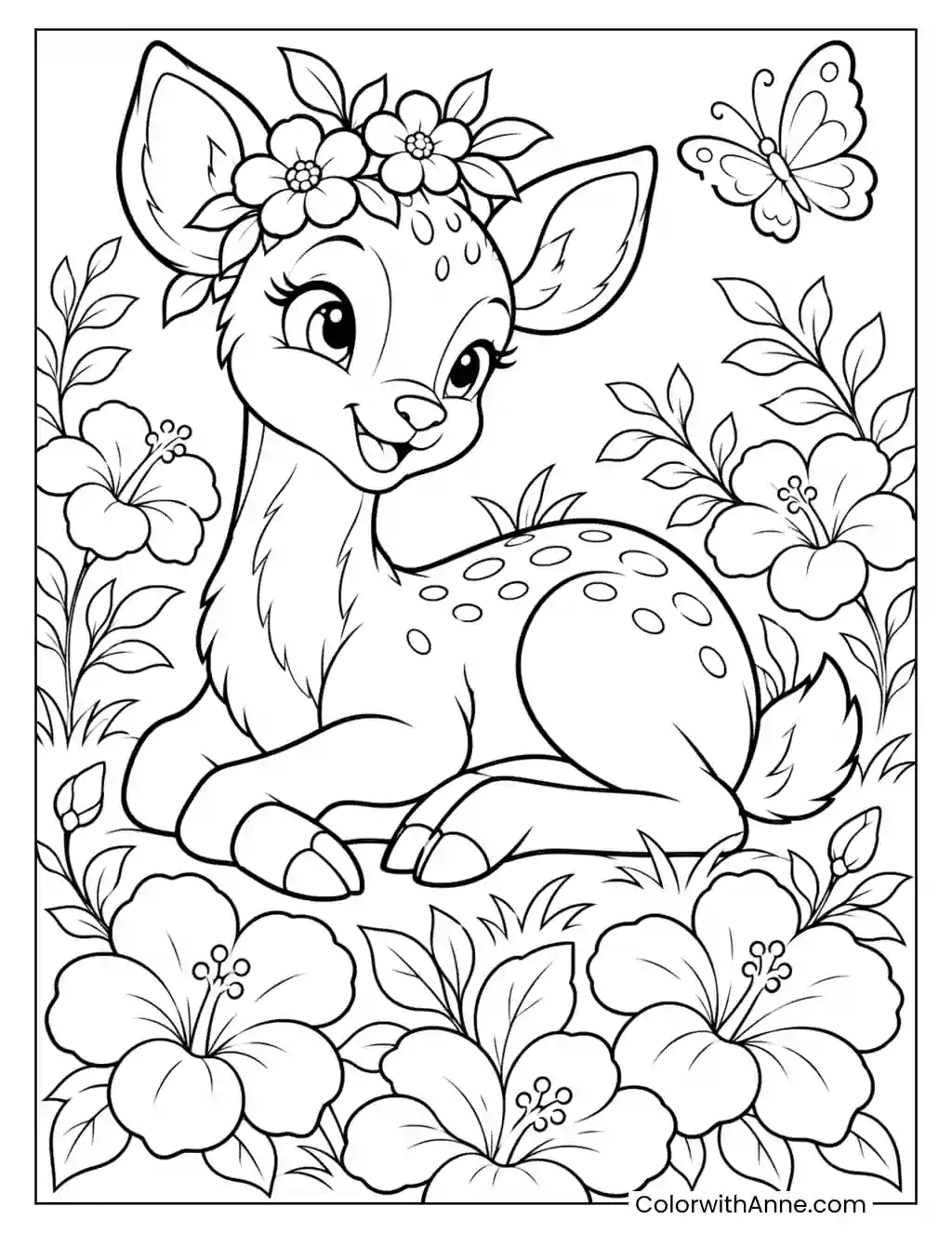
Make a Flower-Crowned Birthday Greeting
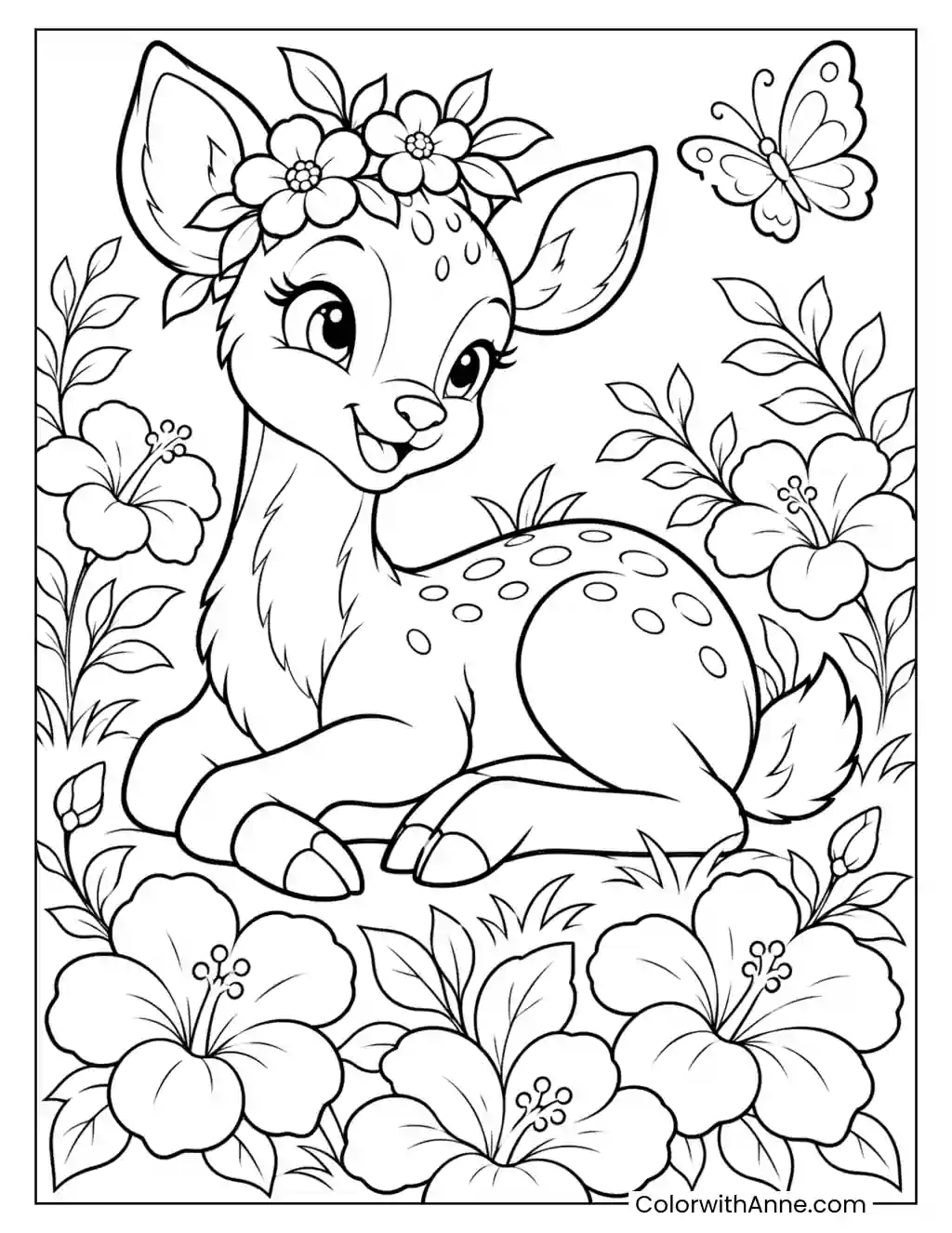
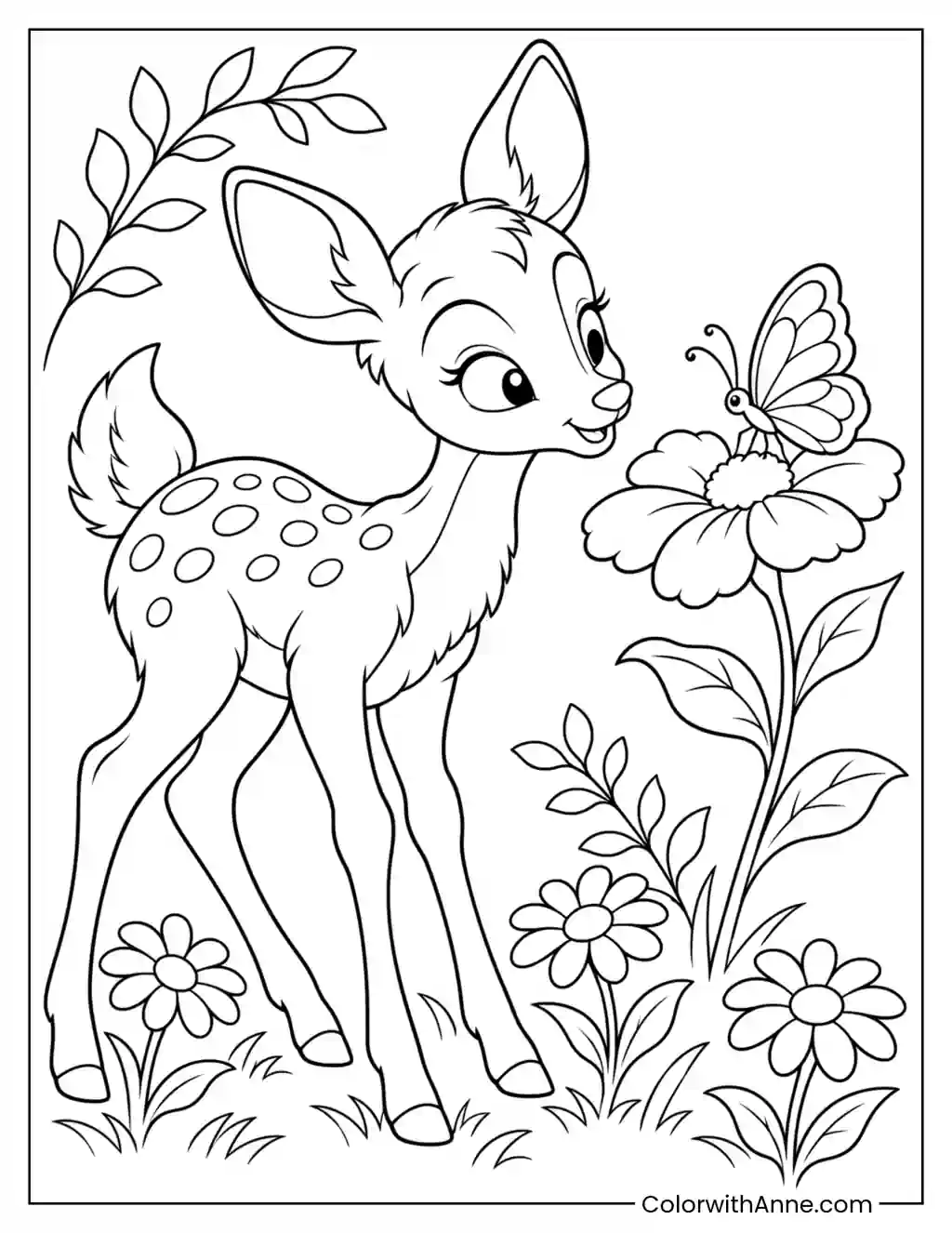
Pick a birthday person’s favorite colors for the fawn’s two crown flowers, then echo them in the surrounding blossoms and the butterfly. Keep the coat a quieter shade so the floral frame does the talking. Write a birthday message on the back and slip the finished page into a large envelope — a greeting they can prop up and keep.
Play a Woodland Spotting Game
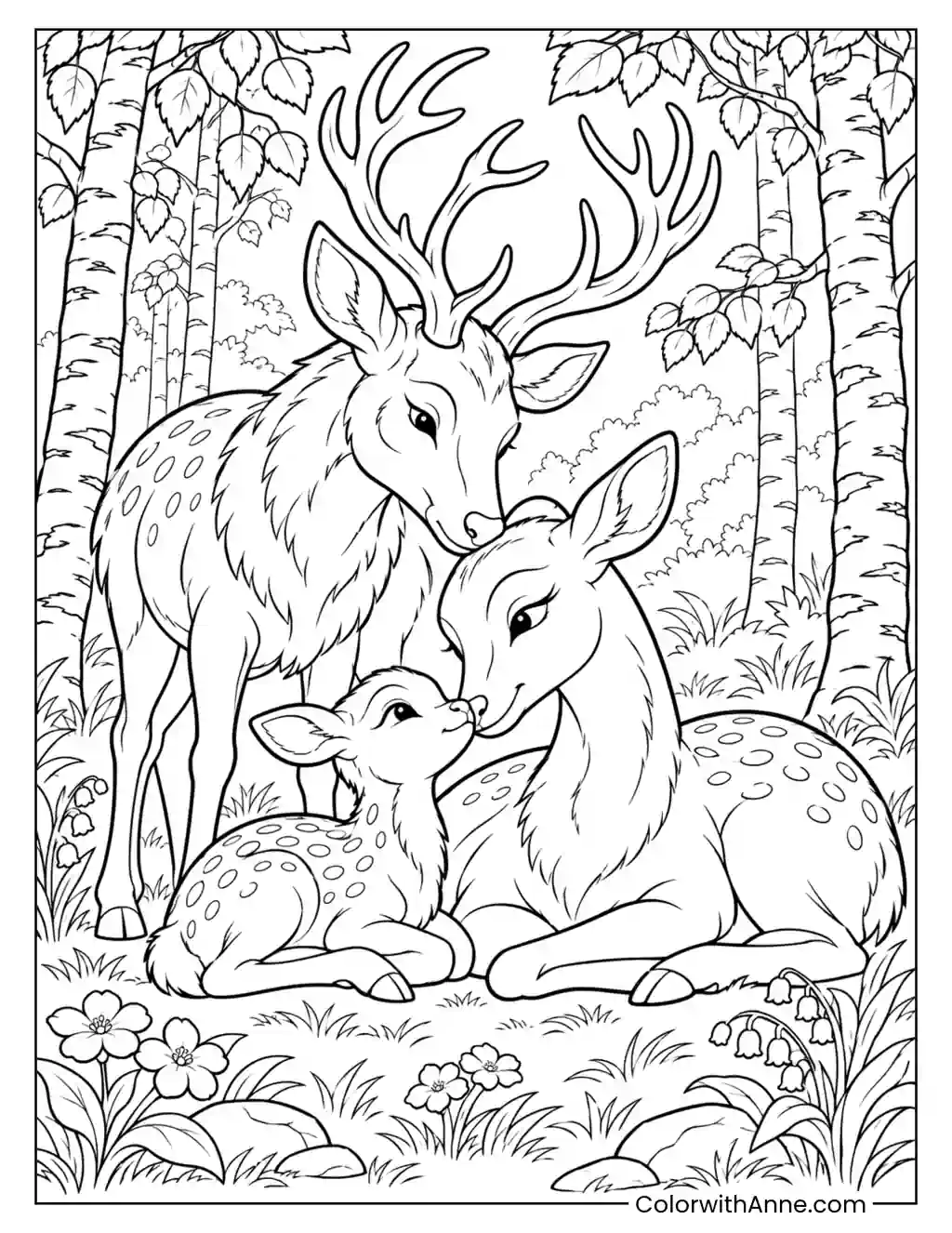
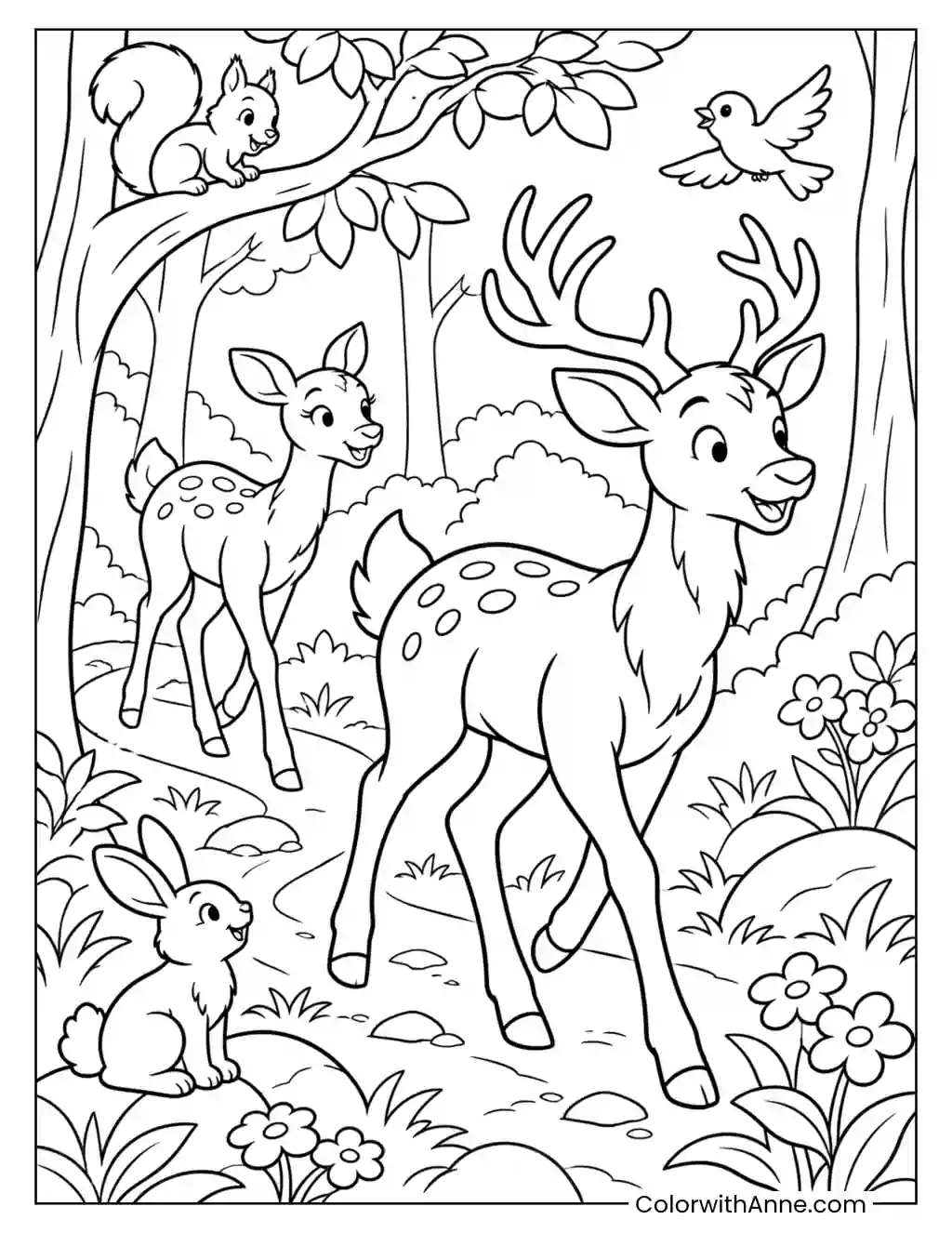
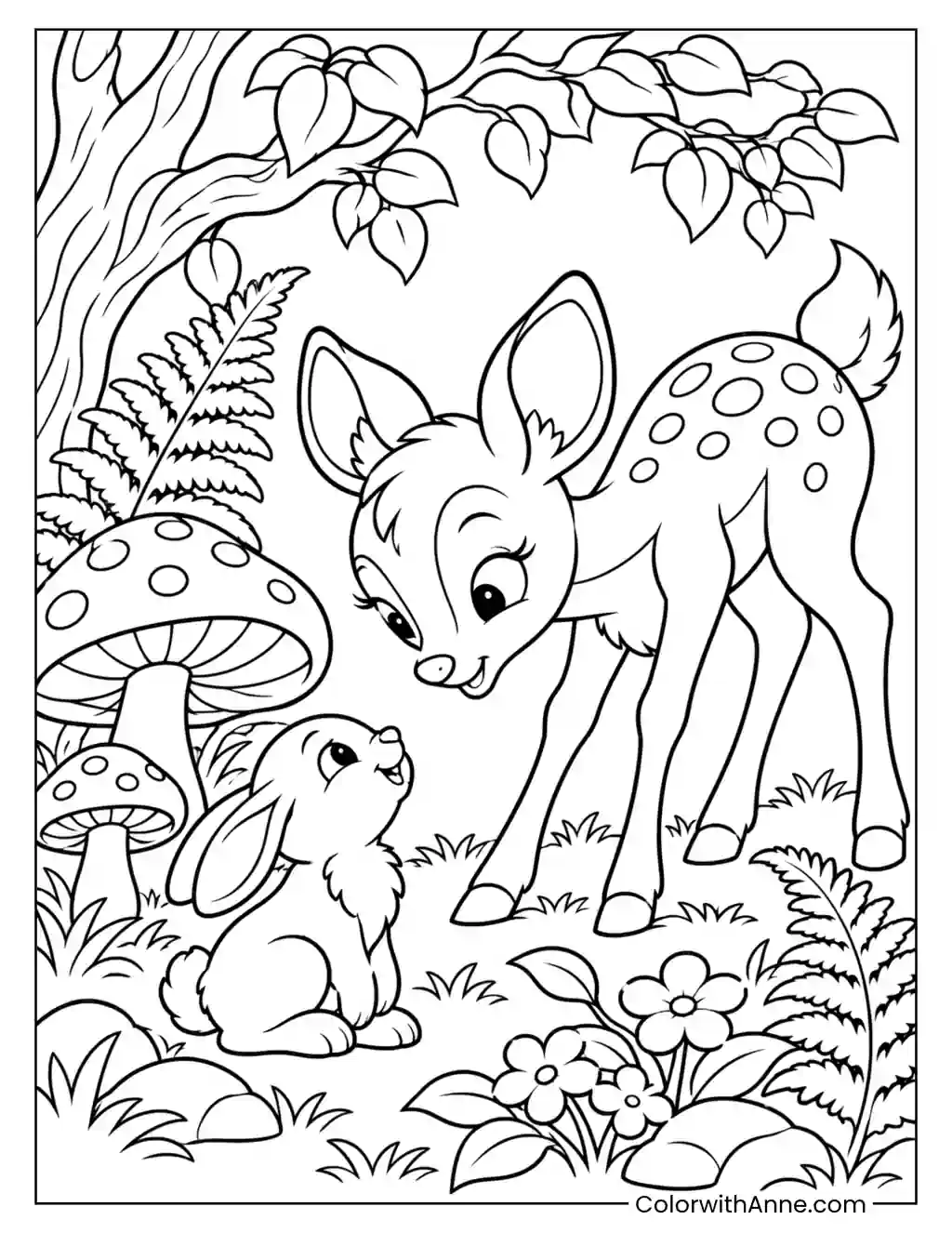
Color the two deer and their woodland neighbors, giving the rabbit, squirrel, and bird colors of their own. Then invite someone to find an animal from a location clue: above the antlers, on the overhead branch, beside the path. Swap roles, and make the next clue about a color or a body part instead — a white tail, a striped back.
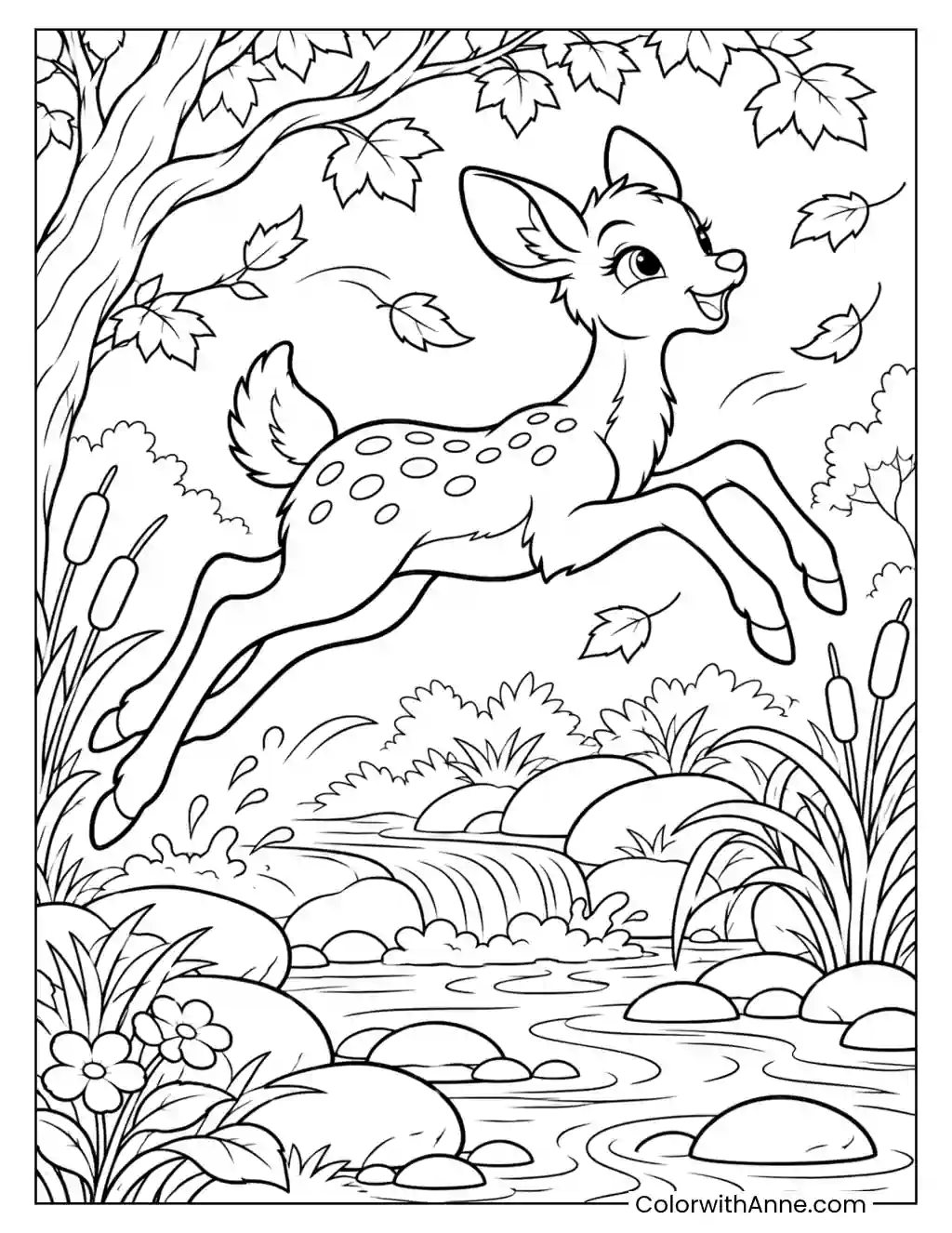
Tell What Happens After the Jump
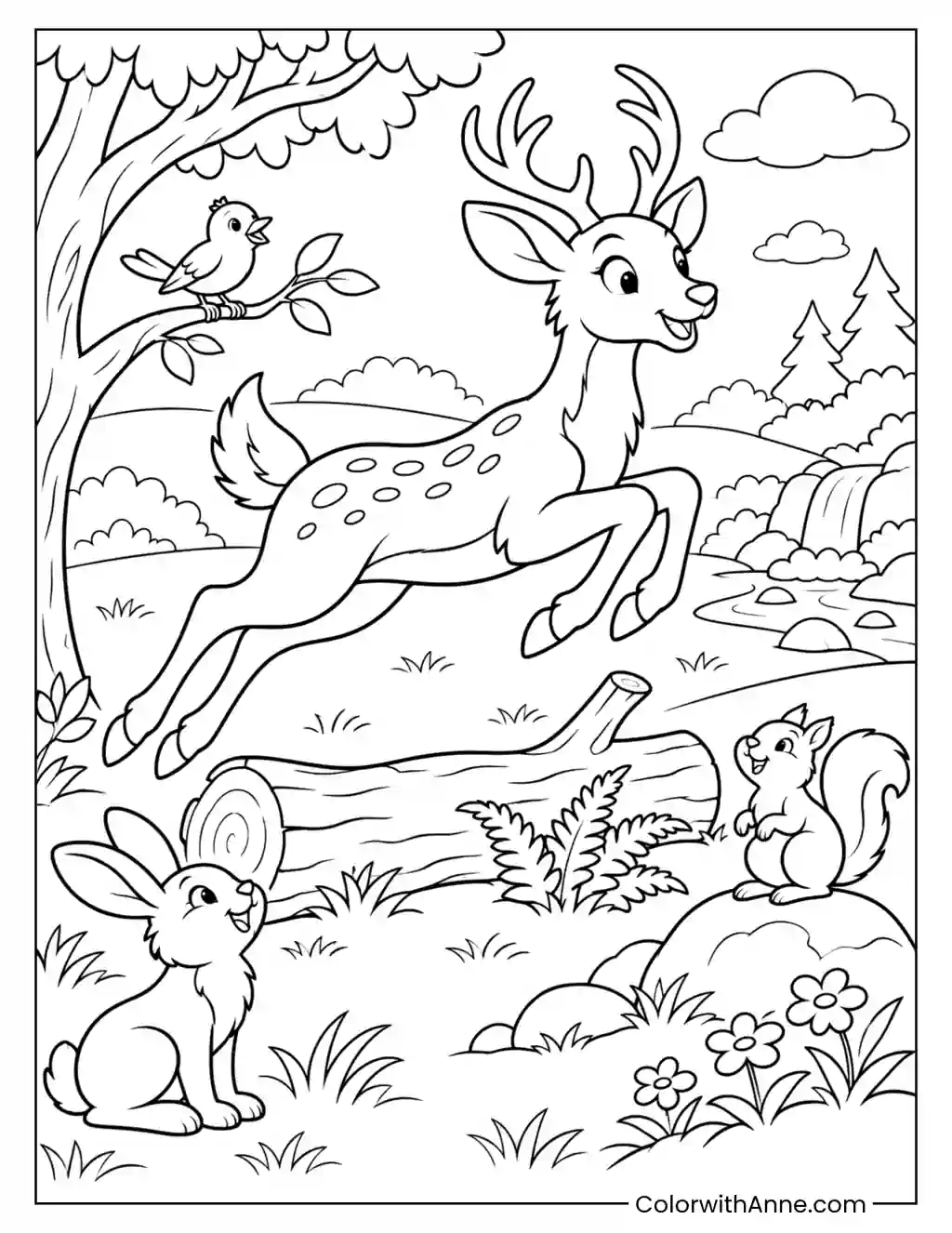
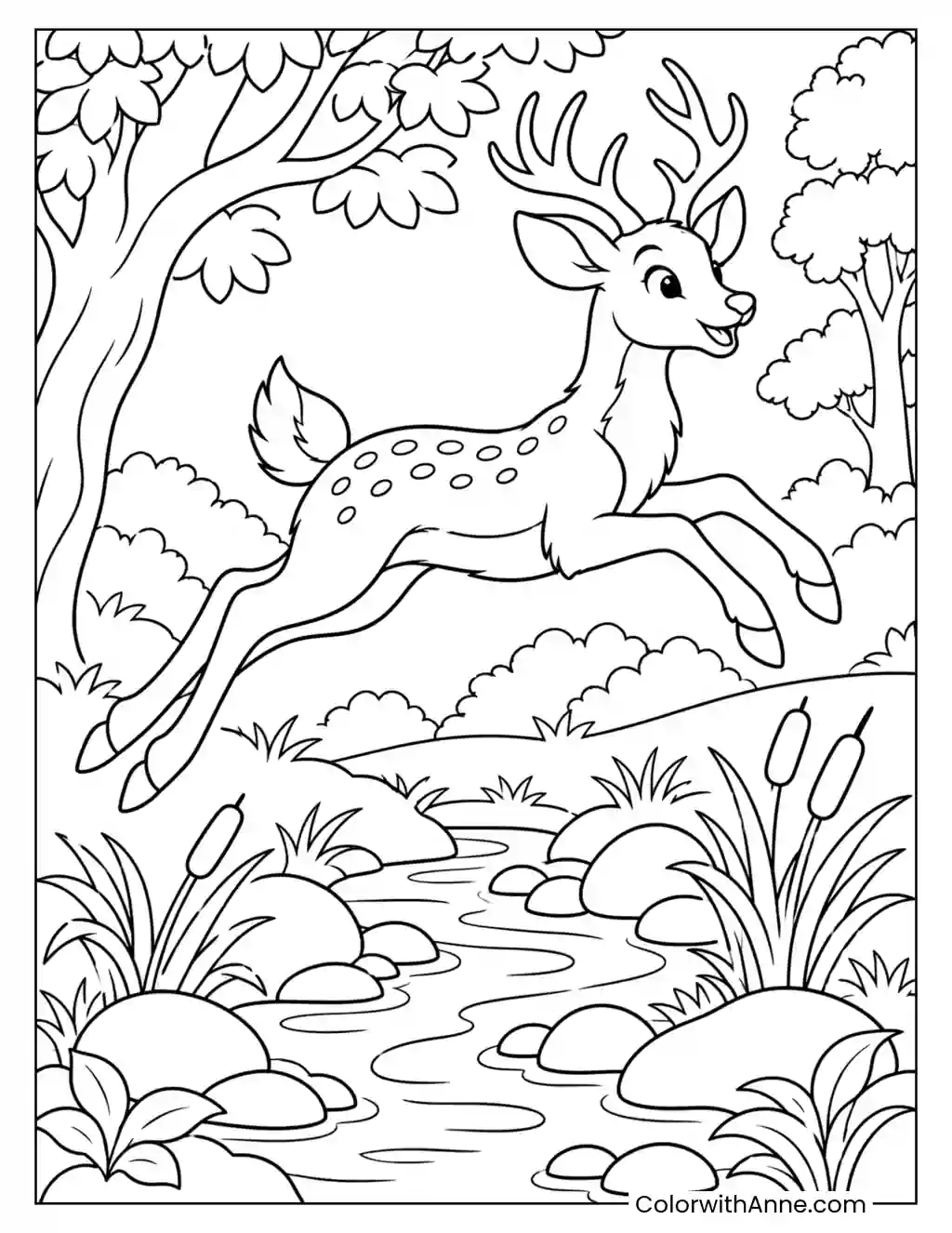
Color the airborne stag and the fallen log, then let the rabbit, the squirrel, and the perched bird be three witnesses to the leap. Take turns telling what each one noticed — and what happens when the stag lands. Write a short ending on the back: does the deer stop beside the stream, or keep going beyond the scene?
Borrow Colors from a Real Strawberry
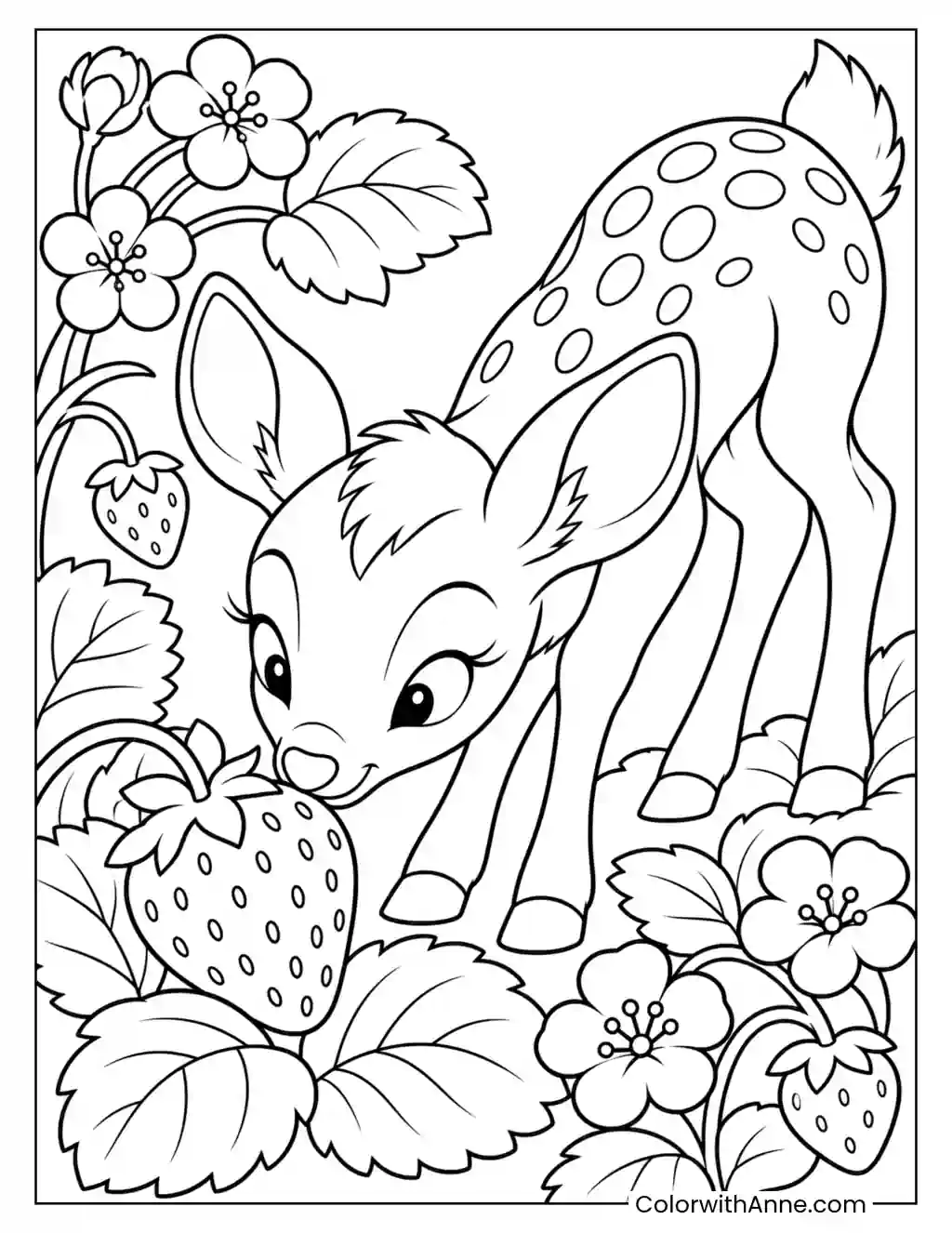
Set a real strawberry — or a close-up photograph — beside the page. Study the surface, the seed colors, the leafy top before you color the large berry near the fawn’s nose. Try a darker red along one side and a small lighter patch on the other. Use the smaller hanging berries to try different stages of ripeness, from green to deep red.
Nestle the Sleeping Fawn into the Grass
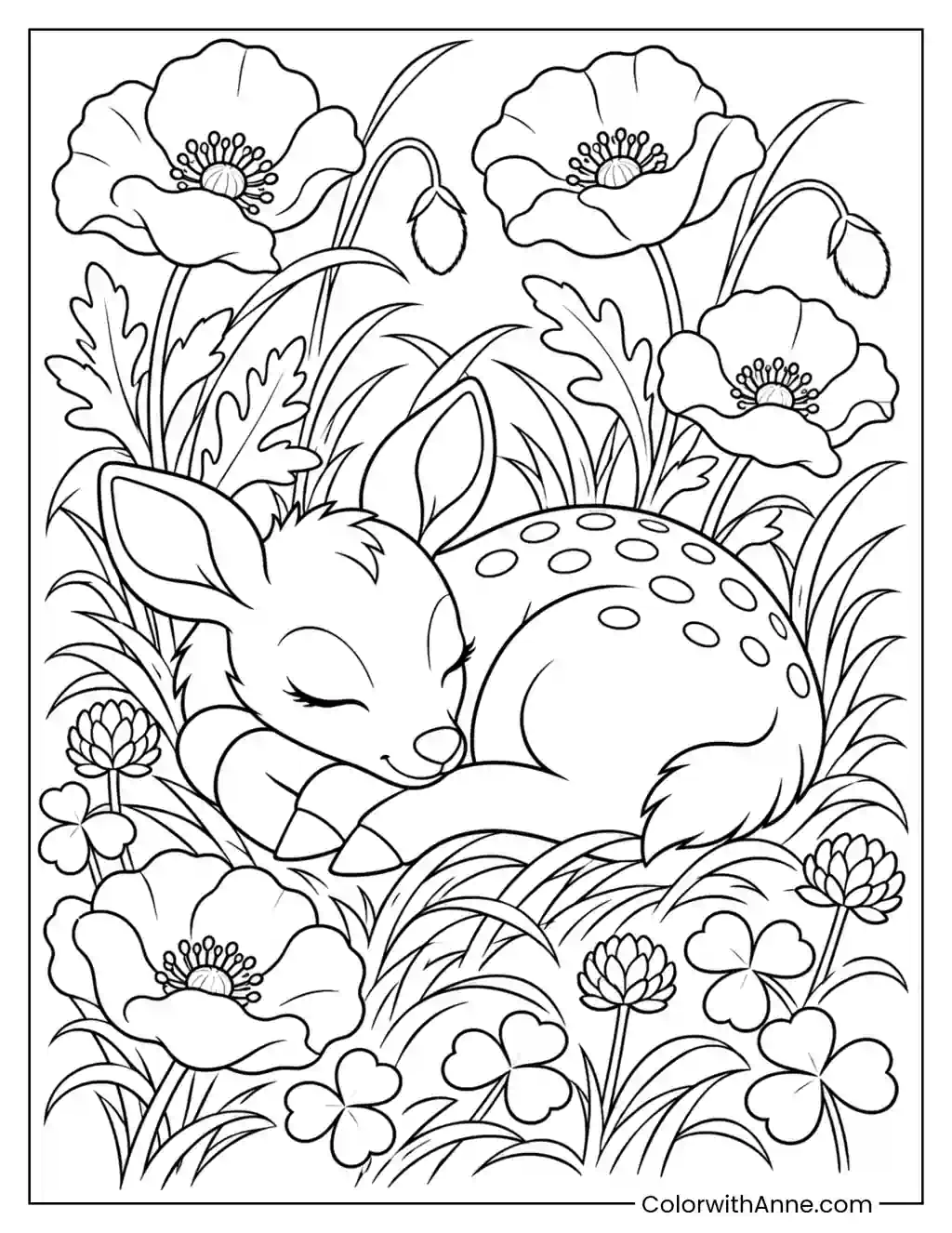
Follow the long grass blades with strokes from base to tip, switching between light and dark greens where the blades overlap. Keep the curled fawn a warm, lighter brown with pale spots. The darker grass pressed close around its folded legs and rounded back is what makes the little resting place feel tucked into the meadow.
Bring the Autumn Walk onto the Wall
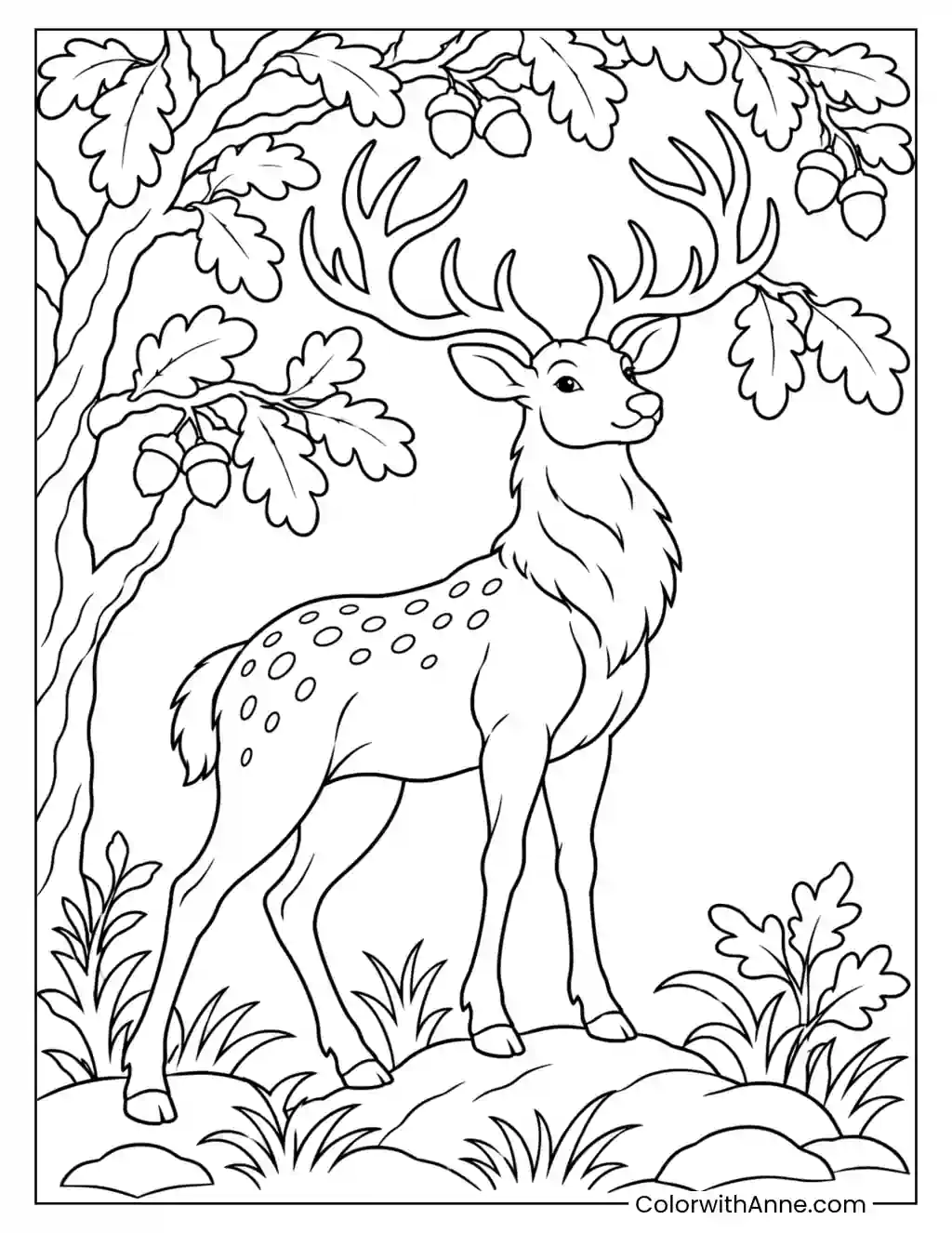
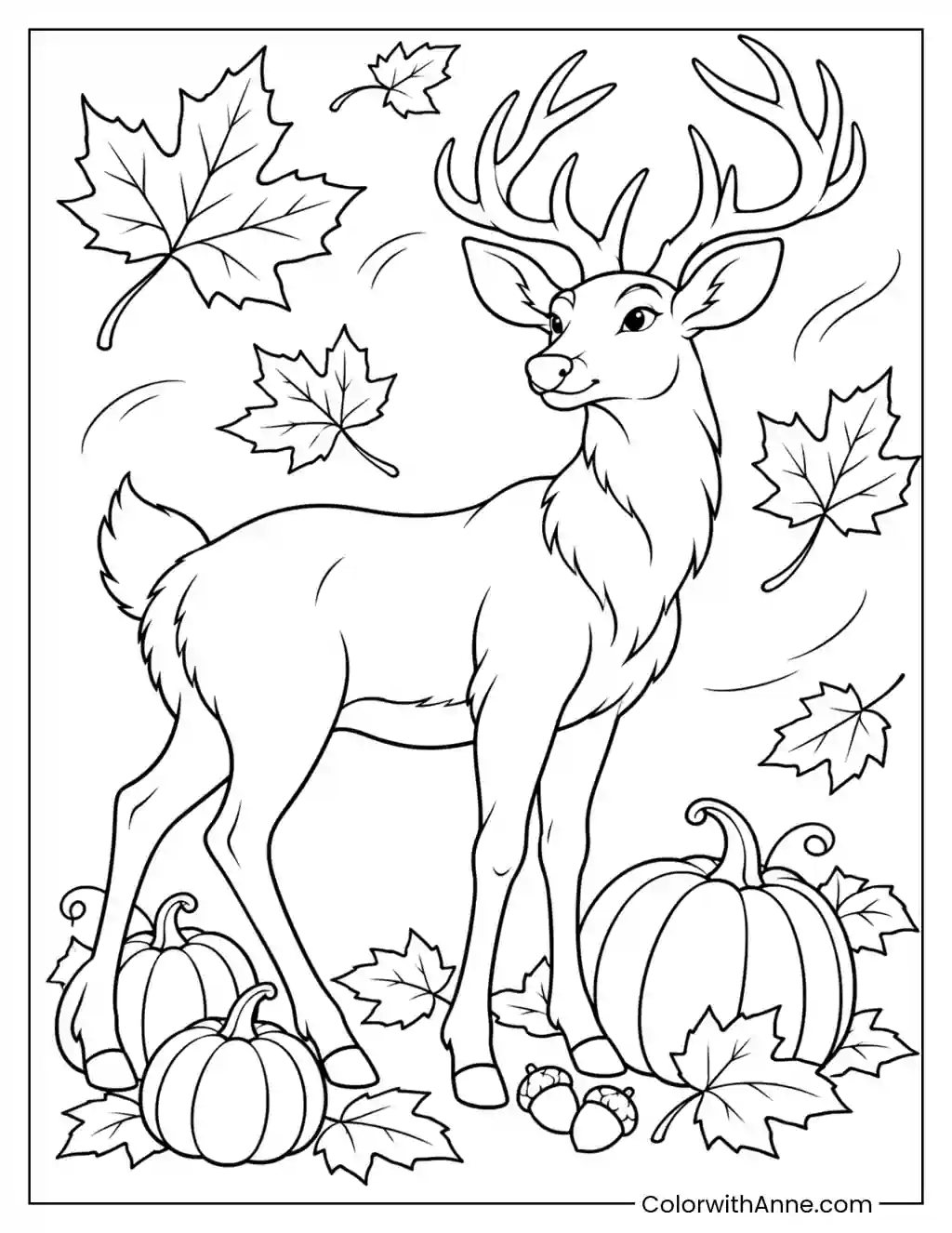
After an autumn walk, color the maple-shaped leaves around the stag with the colors you actually noticed. Let some stay partly green while others turn yellow, orange, or red, and give the pumpkins their own warm shades. Hang the finished page near the entryway — a seasonal reminder of that day’s walk, in the colors of that day.
Let the Paper Become the Snow
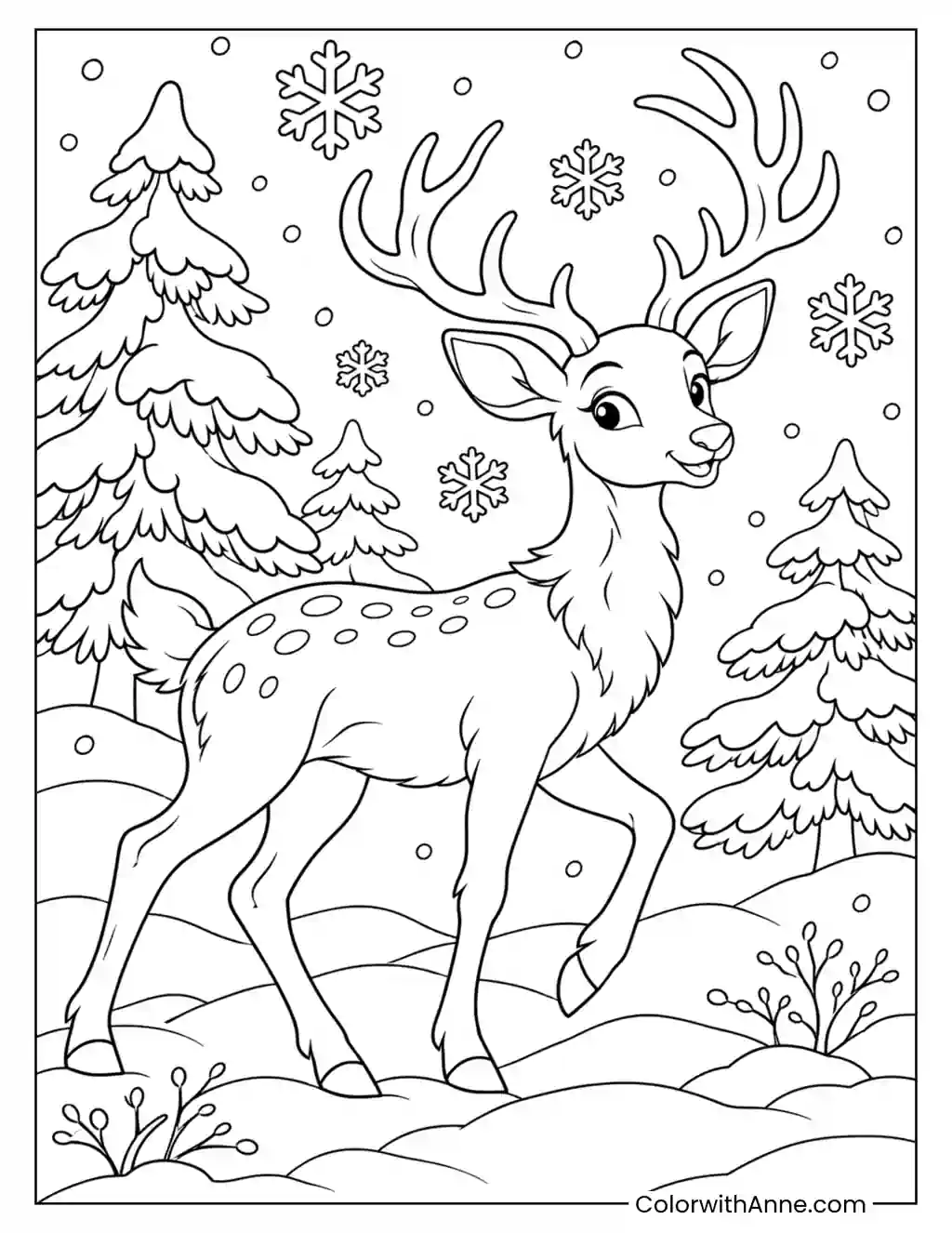
Leave the snow-covered pine boughs, the falling flakes, and most of the snowbanks white — let the paper do the work. Color only the exposed needle tips deep forest green, and fill the sky with a pale blue, working carefully around the flakes and small circles. Add just a thin blue shadow beneath a few snowbank curves. The untouched paper will carry most of the winter.