
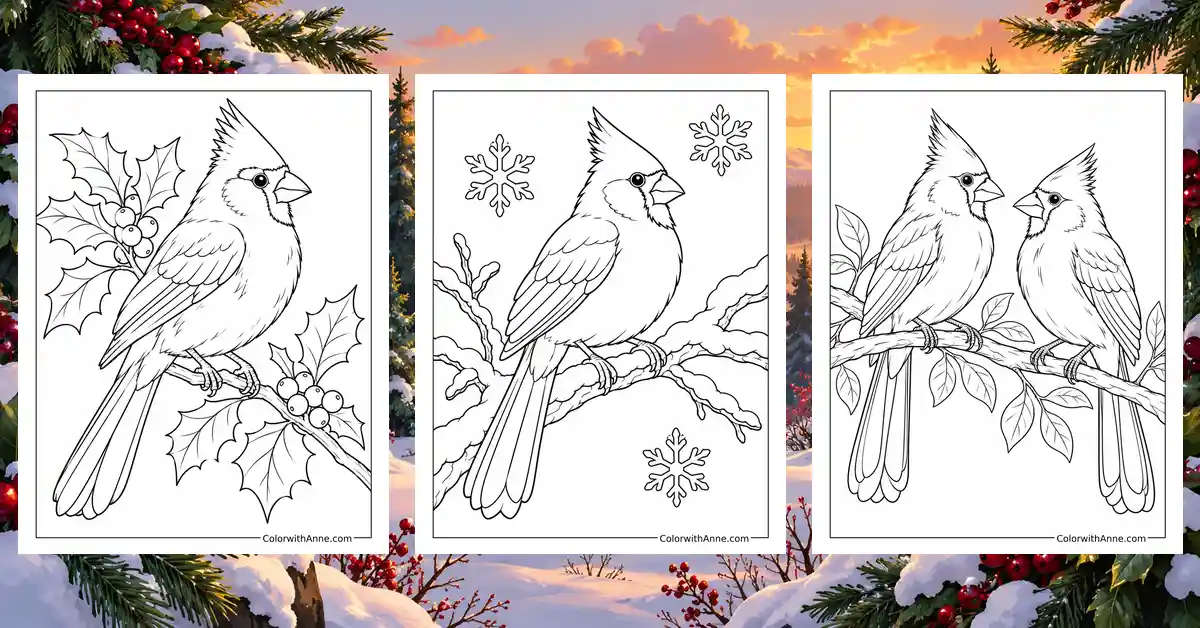
A flash of red outside the window can interrupt breakfast surprisingly quickly. The cardinal lands, turns its crested head, and suddenly someone is asking everyone else to come look without scaring it away. Against bare winter branches, that small visitor is wonderfully difficult to overlook.
Cardinal coloring pages give bird lovers a little longer to appreciate those familiar features. The pointed crest and sturdy beak have character even without the brilliant red that first caught everyone’s attention. Someone who keeps a feeder nearby may recognize the silhouette immediately, then glance outside to see whether the breakfast guest has returned.
Free Printable Cardinal Coloring Pages
Click any coloring page below to open the PDF, then print on US Letter or A4 paper.
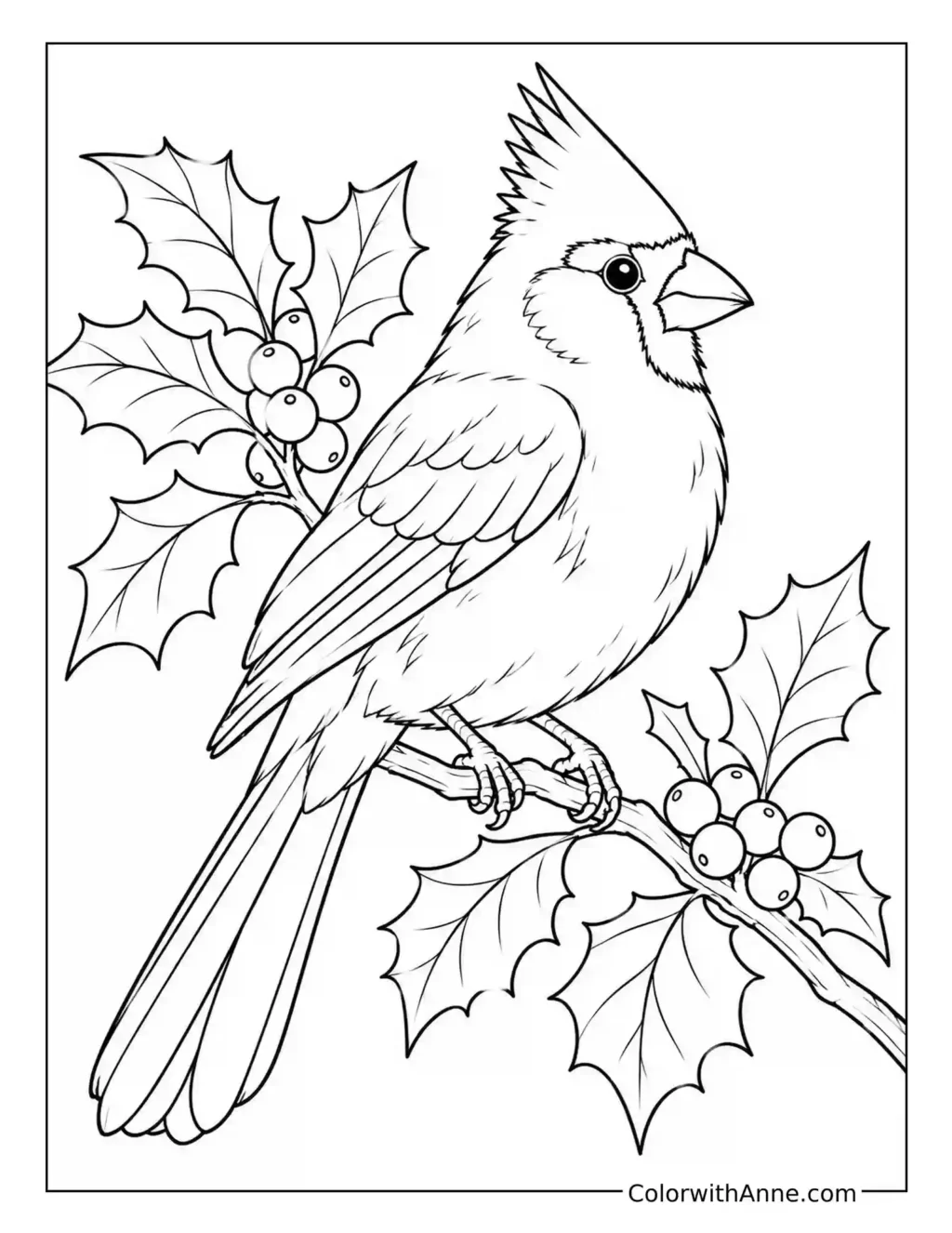
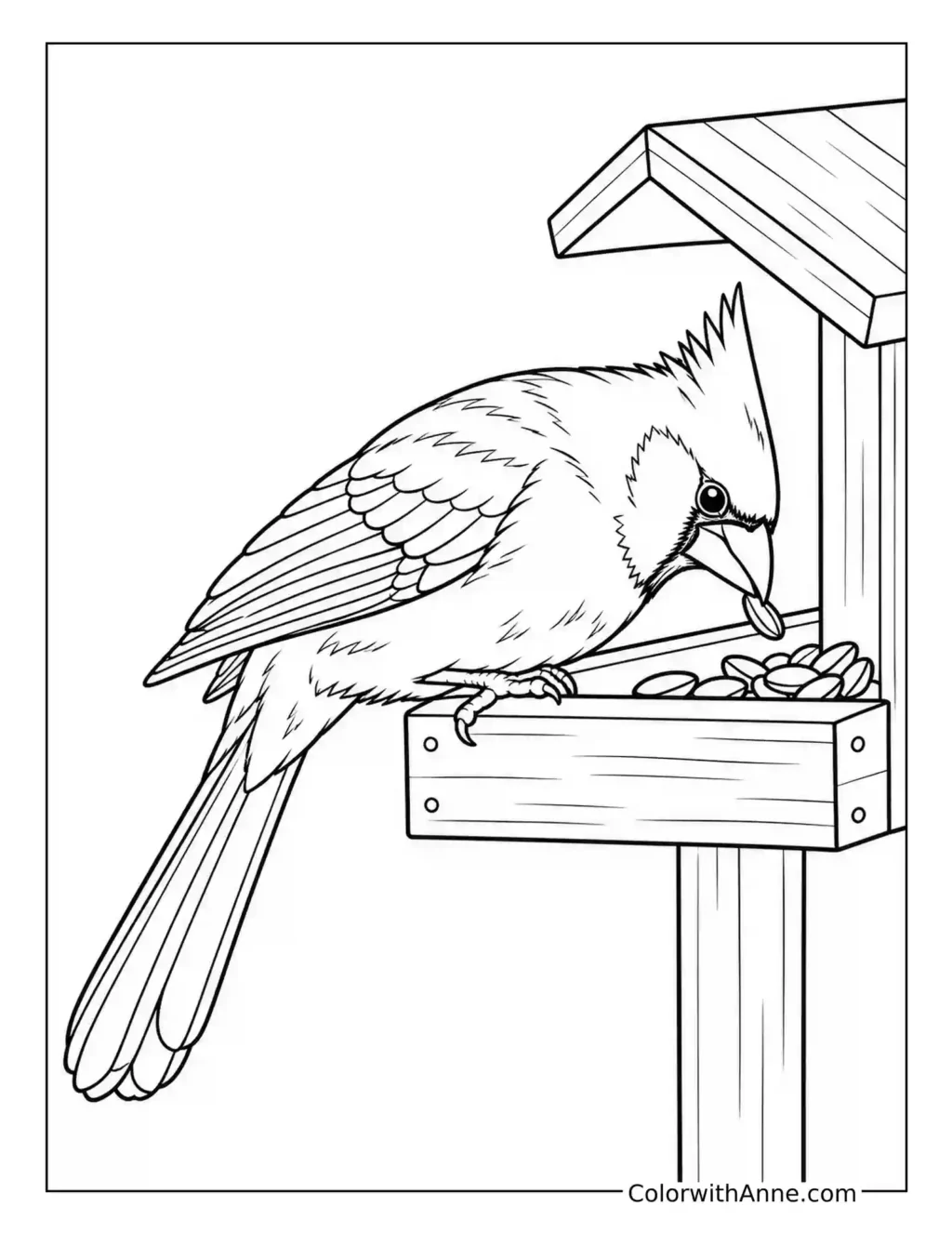
Did you find what you needed?
Help us choose what to create or improve next.
Coloring Ideas for Cardinal Pages
Try these creative ideas to make the most of your coloring sheets.
A Winter Card with One Bright Visitor
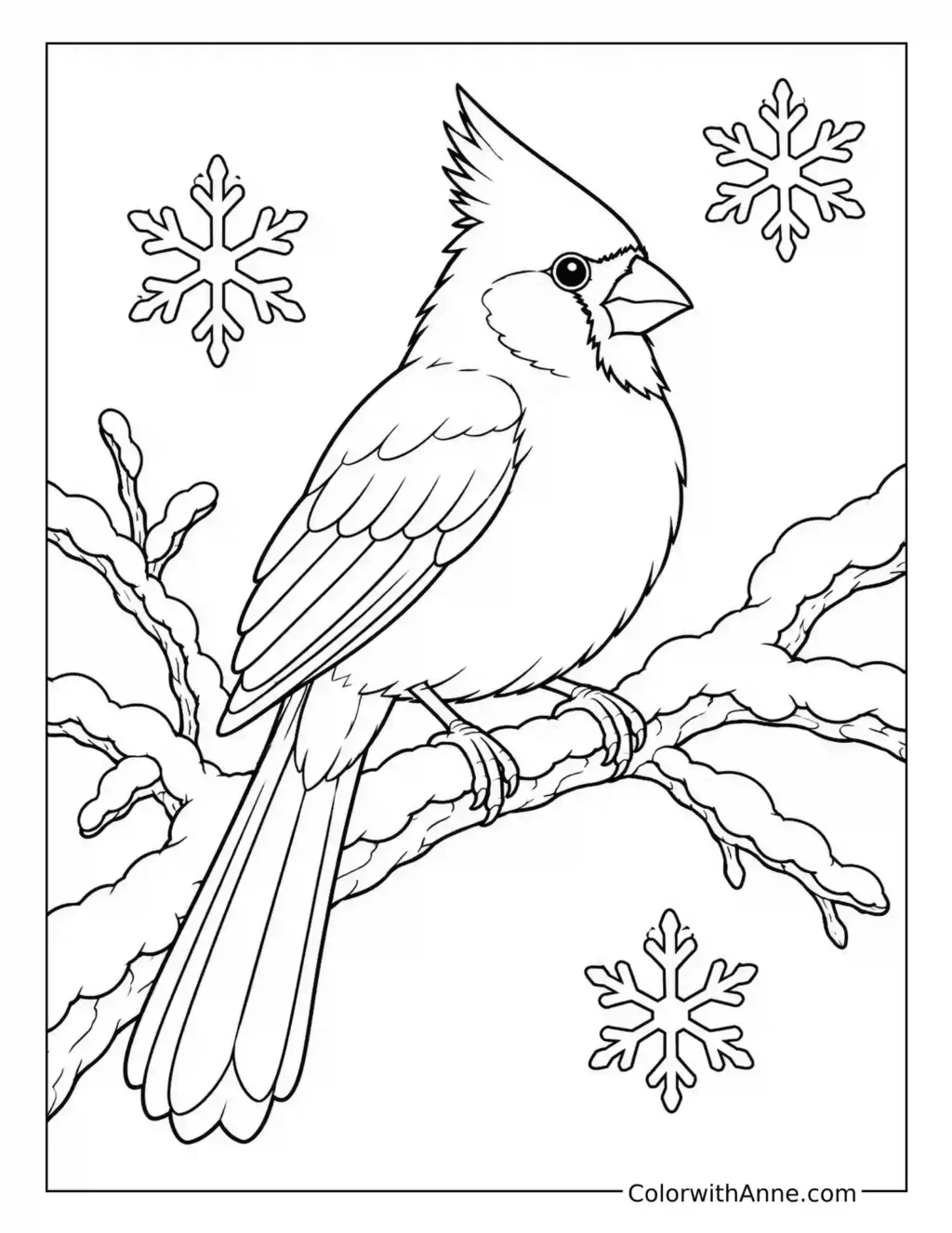
The cardinal sits on a snow-covered branch with snowflakes around it. The picture has enough winter detail to become a seasonal card without needing extra decorations along every edge.
A strong red bird against pale blue shadows will keep the snowy scene clear. Leave the snow mostly white, adding a little cool color where it rests against the branch.
Mount the finished picture on folded card and write a short winter greeting inside. Choose someone who enjoys watching birds from the window. A small note about a bird recently spotted outside will make the greeting feel connected to an ordinary moment you wanted to share.
Keep Watch beside the Birdbath
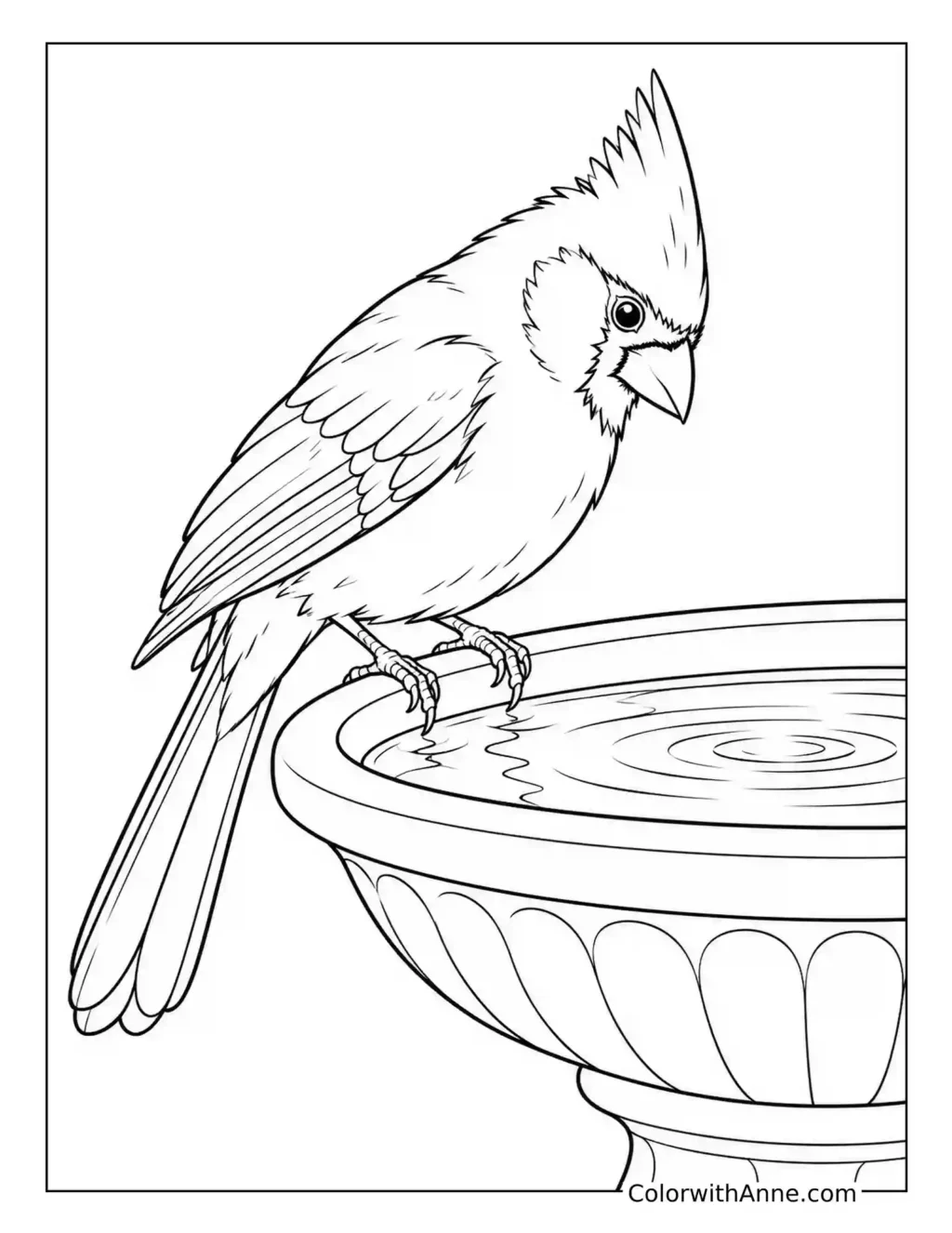
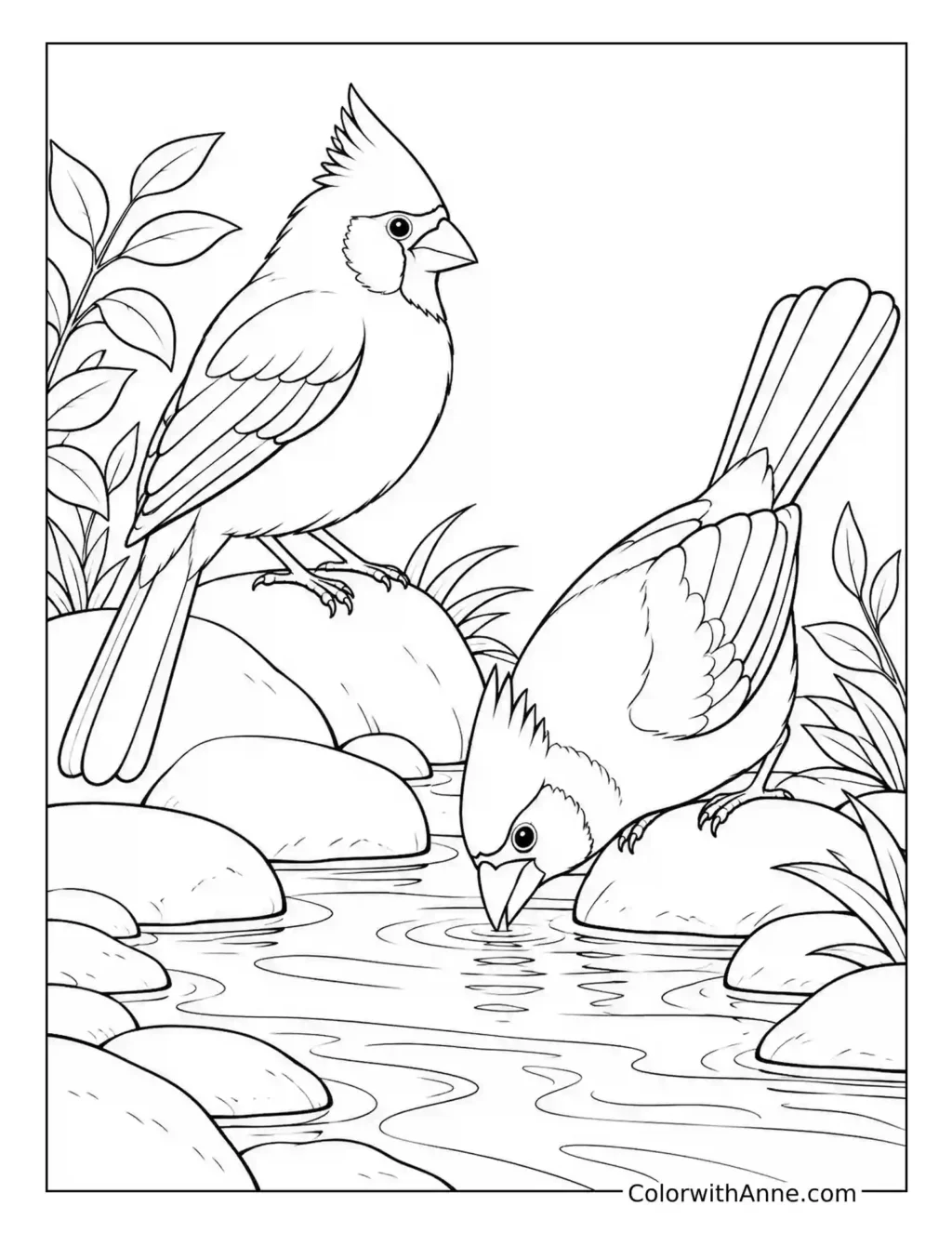
The cardinal stands on the birdbath rim above rippling water. Those rings suggest a moment just after something disturbed the surface, leaving the rest of the visit open to observation.
Try warm gray stone with pale blue water and a bright red visitor. Leave narrow white gaps between the ripples rather than filling the whole basin evenly.
Watch a garden birdbath from indoors or a quiet distance, noting whether visitors drink, splash, or simply pause at the edge. Add the date and one observed action beneath the finished picture. Several visits may produce a small record of how differently birds use the same place.
Two Cardinals, Two Different Coats
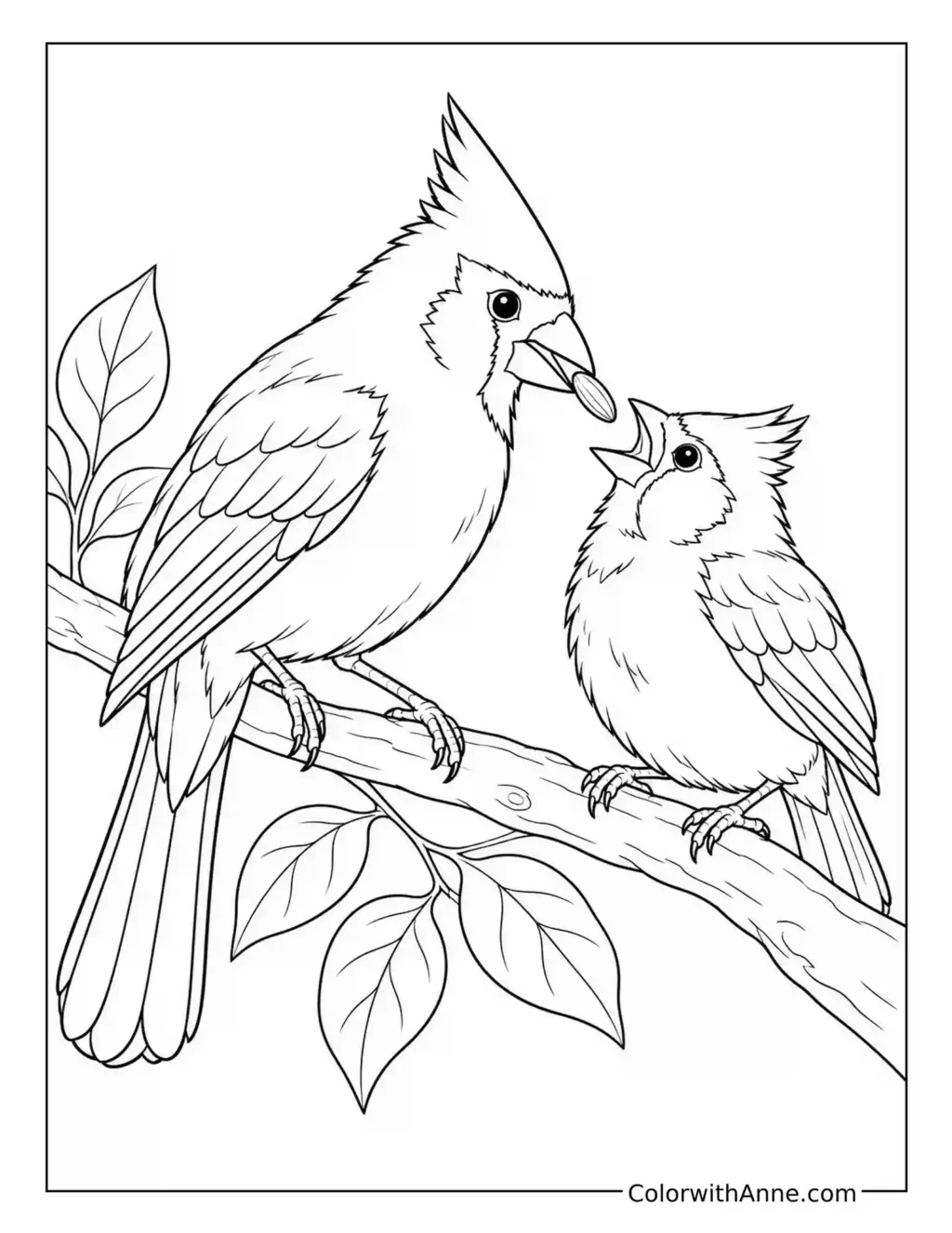
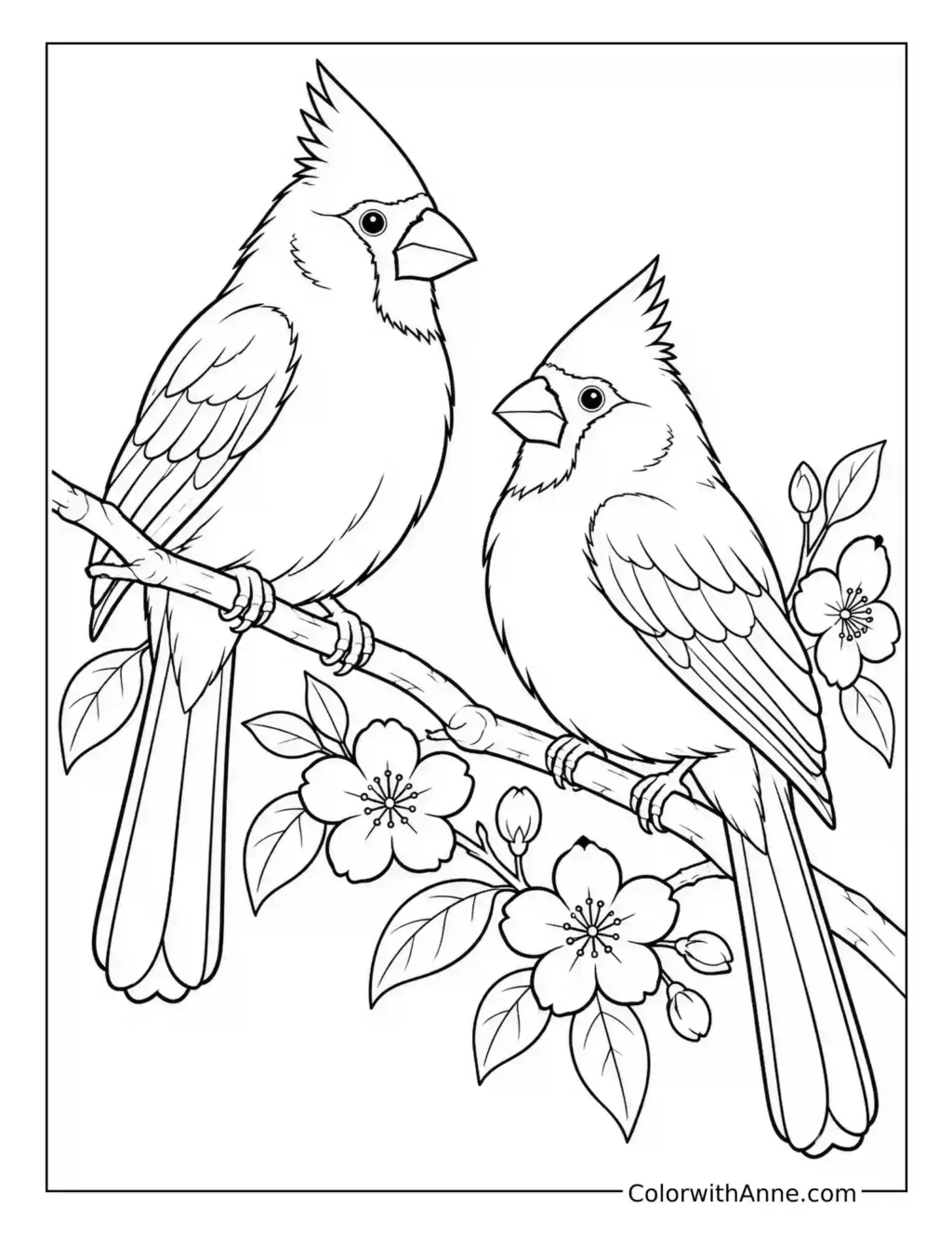
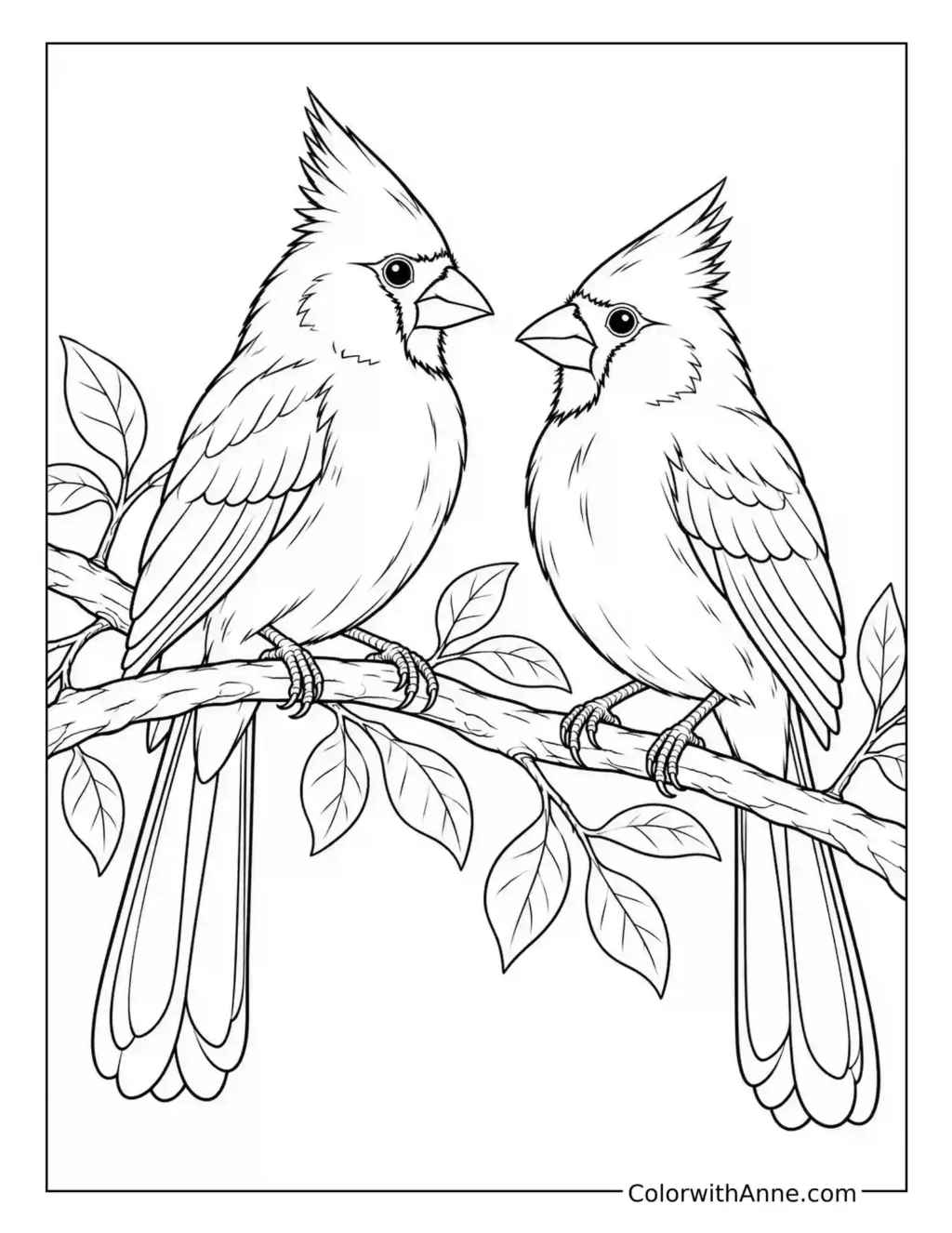
The two birds face each other on a leafy branch, making this a useful page for exploring two cardinal color palettes. They can share a setting while remaining easy to tell apart.
Try vivid red on one bird and warm tan with reddish wing and tail accents on the other. Keep the leaves in a small range of greens so the differences remain visible.
Use a bird guide or a clear reference photograph while choosing the feather colors. Add two small color swatches beneath the picture, recording the shades used for each bird. The finished pair can become a reference for future cardinal drawings rather than needing every bird to receive the same red coat.
Sunflowers That Echo the Wings
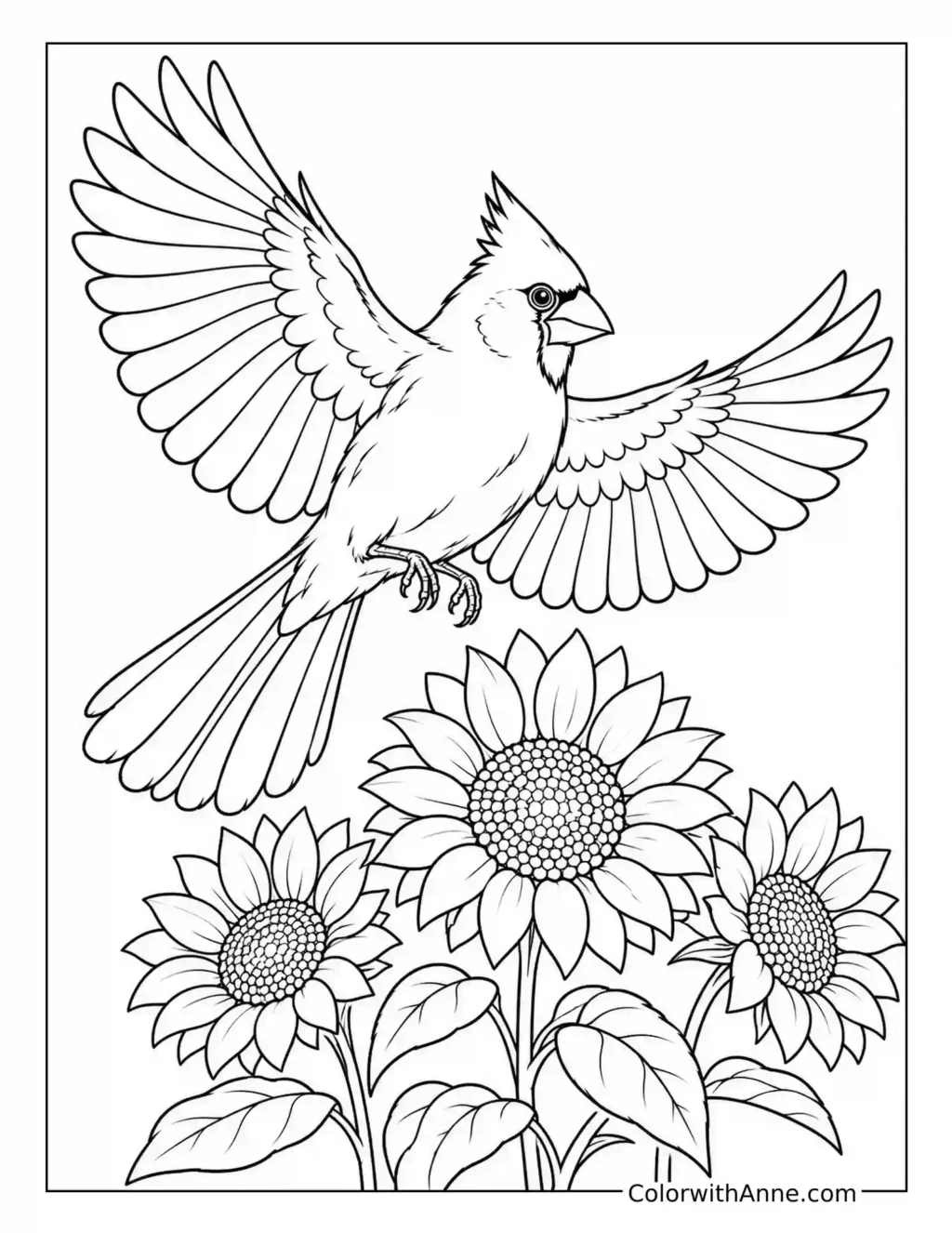
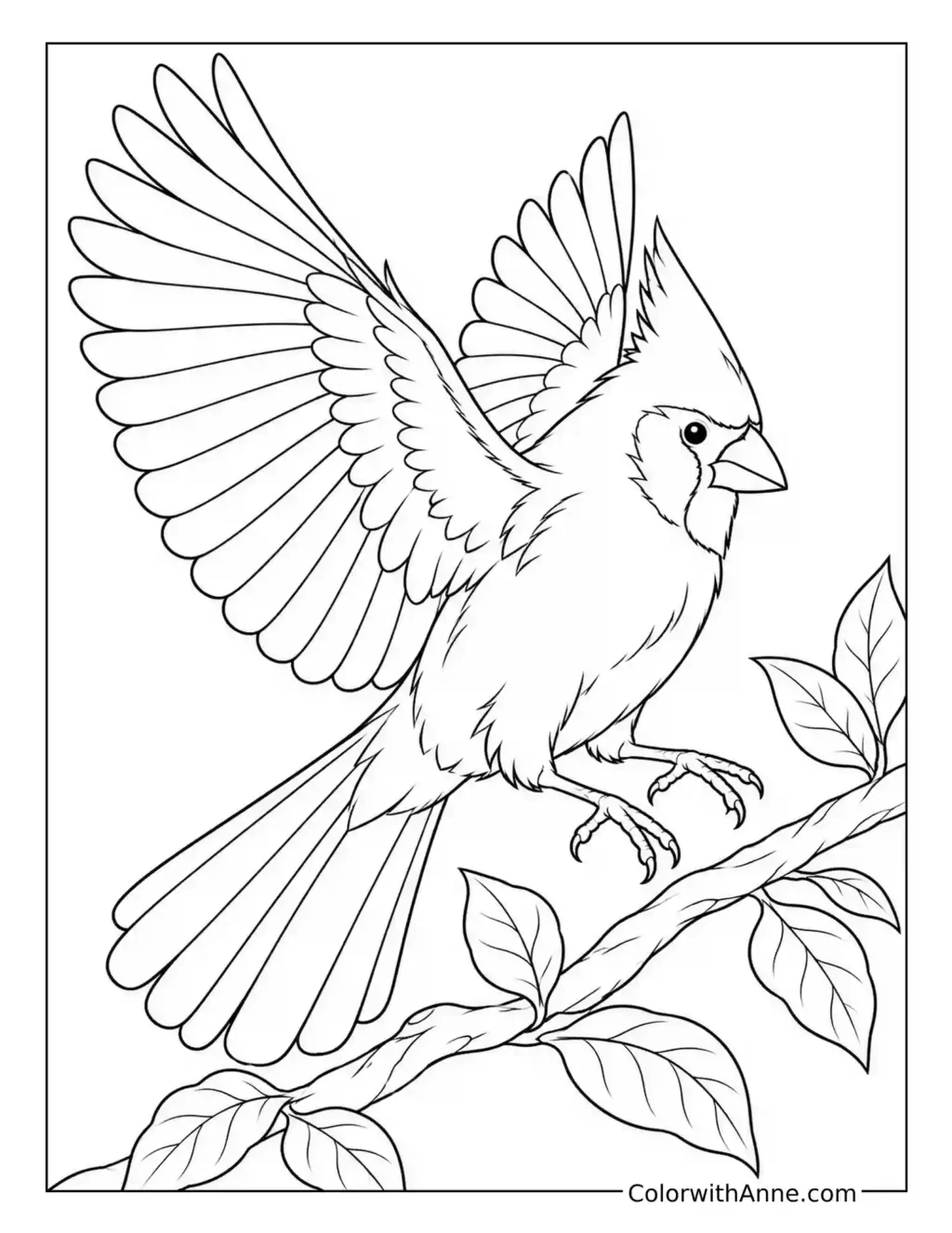
The flying cardinal rises above the sunflowers, giving the page two strong shapes to work around: spreading wings and open flower heads. Both deserve room without competing for every bright color.
Golden petals and warm brown centers will sit naturally beneath red feathers. A very light background can preserve the spaces around the wing tips.
Repeat a little orange-red in just a few sunflower petals, then carry a touch of golden color into the bird’s surroundings. Step back before adding more. Those small echoes may connect the whole picture more effectively than giving every flower a different color.
A Small Moment between Parent and Fledgling
One cardinal offers a seed to the fledgling beside it. The small space between their beaks holds the main action, so it is worth keeping that area clear.
Use a stronger feather color on the adult and softer browns with muted red accents on the younger bird. Quiet green leaves will frame the exchange without drawing attention away from it.
On a separate sheet, draw what might happen immediately afterward: the young bird swallowing the seed, changing its footing, or waiting for another offering. Place the drawings together as two moments from the same visit. A short caption beneath each can tell the story without giving the birds human dialogue.
A Pinecone beside the Picture
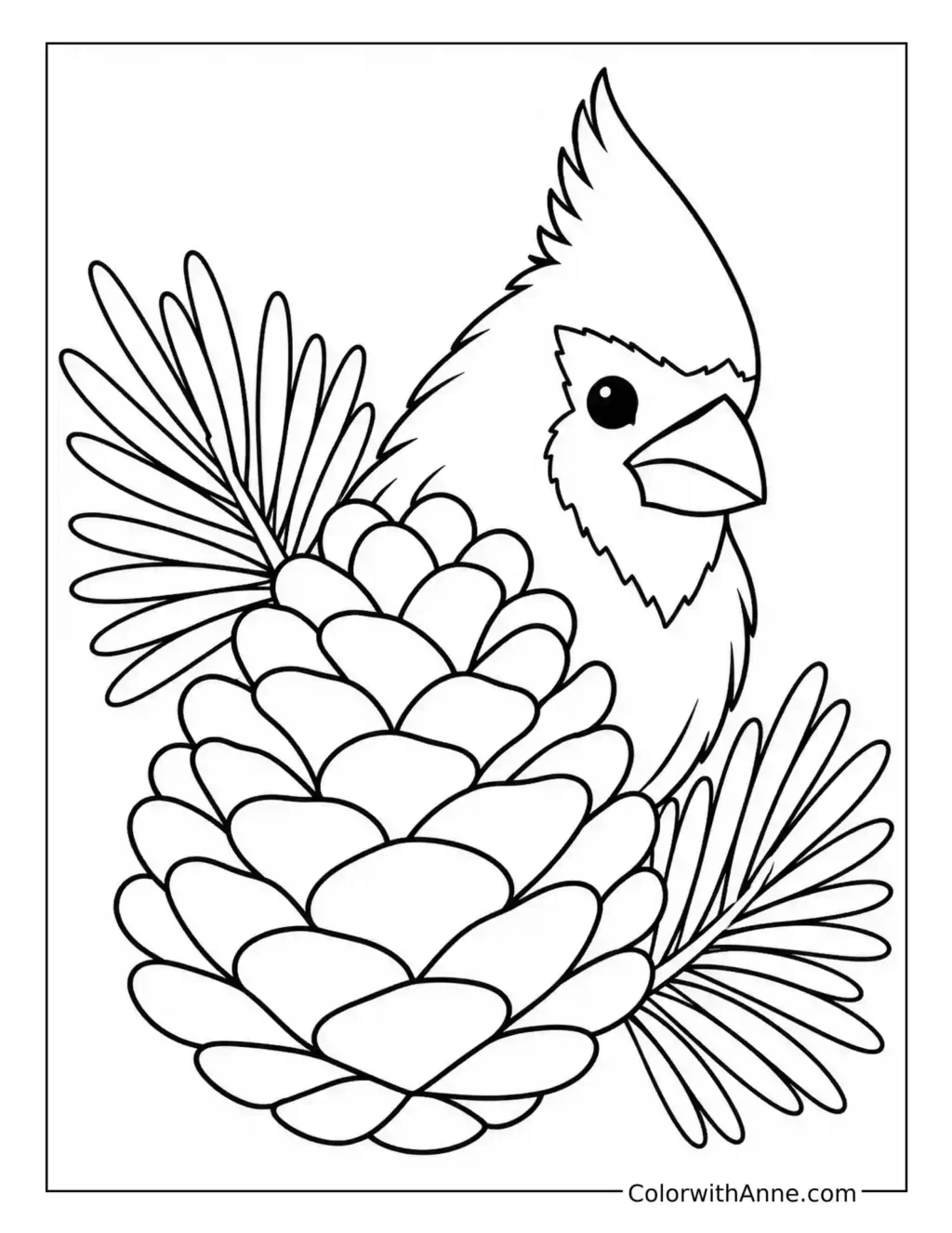
The cardinal peeks beside a pinecone and surrounding needles. The overlapping scales offer a different texture from the bird’s layered feathers, even when both use only a few colors.
Choose several close browns for the cone and muted green for the needles. A brighter bird will remain visible among those quieter woodland shades.
Set a fallen pinecone beside the page and turn it slowly, noticing which scales catch the light and which hide in shadow. Borrow that pattern for a few printed scales before completing the rest. The real cone can guide the shading without needing every small section to become equally detailed.
Rain That Still Looks Like Water
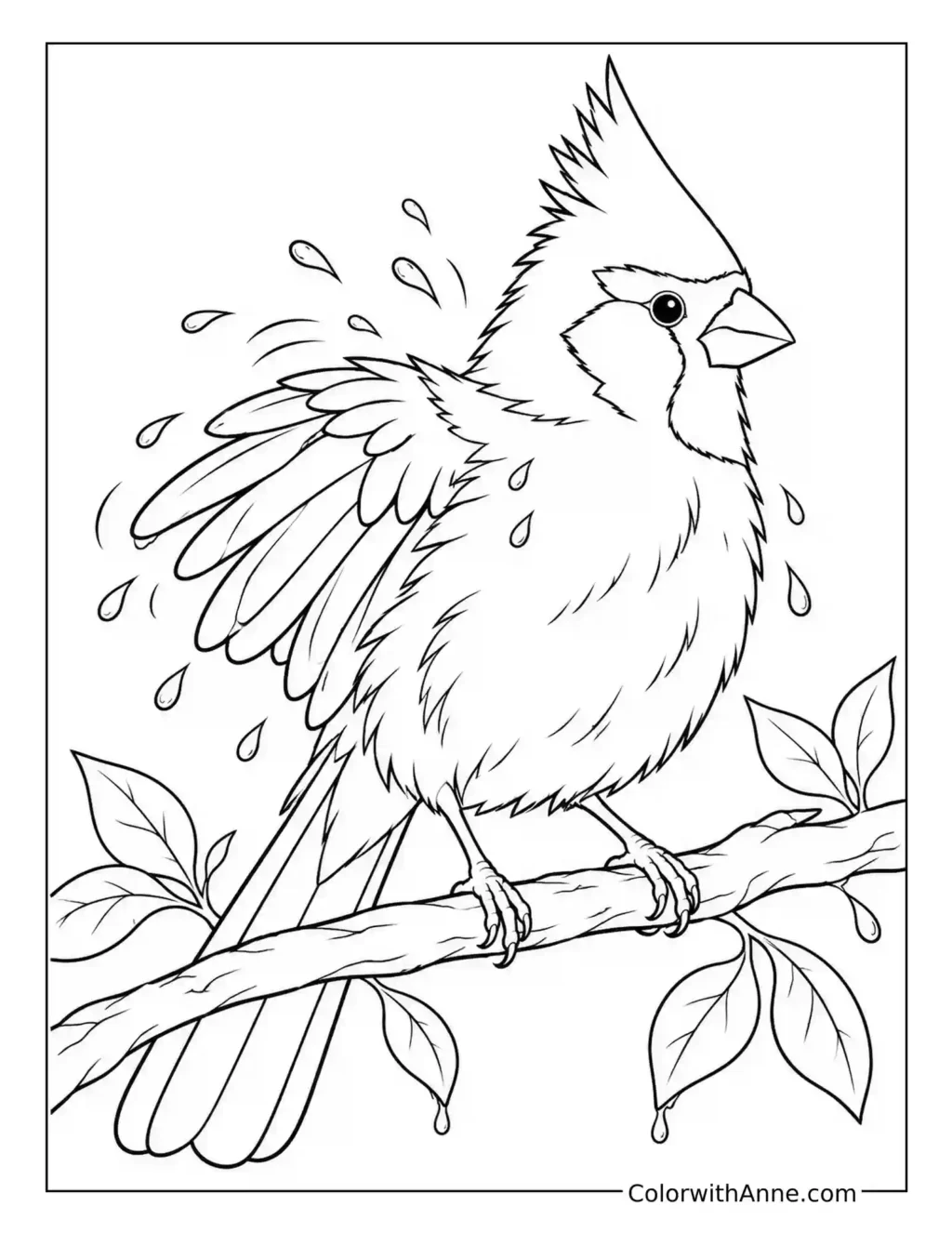
The cardinal shakes droplets from its feathers while holding its place on the branch. The scattered water gives the picture movement without needing a busy background.
Use deeper red beneath overlapping feathers and lighter red along the outer edges. Keep the droplets mostly white, with a faint blue touch on only one side.
Add a pale wash of gray-blue around selected parts of the bird, leaving clear space around the flying drops. Compare the result before coloring any more water. A few visible edges can suggest the whole shower while preserving the quick, bright feeling of droplets in motion.
The Snail Has the Cardinal’s Attention
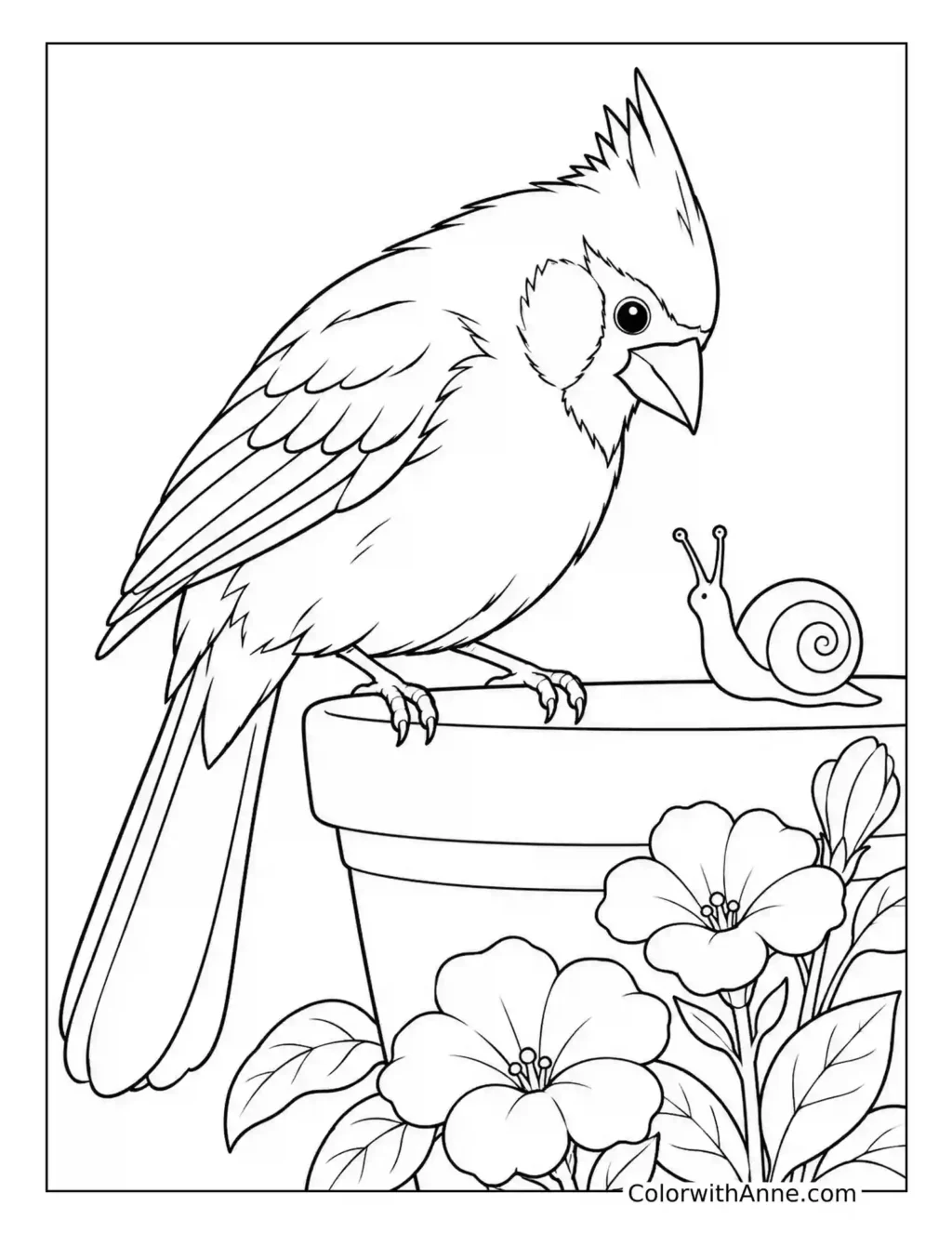
The cardinal watches a snail on the flowerpot rim. It is a small garden encounter, with the bird’s attention making the much smaller creature worth a closer look.
A terracotta pot and soft brown shell will suit the setting. Keep the cardinal brighter, then use a slightly stronger shell pattern to help the snail remain noticeable.
Draw a second little scene on another sheet showing the same pot later in the day. Decide where the snail has moved and whether the bird is still nearby. Repeat the pot’s colors and markings so the two pictures clearly belong to the same garden.