
The word waddle fits a duck making its way along a path. Those broad feet give every step a definite little swing. Then the same bird reaches the water and moves away with far less fuss than the people walking beside the pond.
Duck coloring pages suit an affection built on those everyday encounters. The birds belong to ordinary outings: a walk after lunch, a visit to the park, or a moment spent waiting for one to finish crossing the path. A pair of webbed feet has a way of setting the pace for everyone behind it.
Free Printable Duck Coloring Pages
Click any coloring page below to open the PDF, then print on US Letter or A4 paper.
Did you find what you needed?
Help us choose what to create or improve next.
Coloring Ideas for Duck Pages
Try these creative ideas to make the most of your coloring sheets.
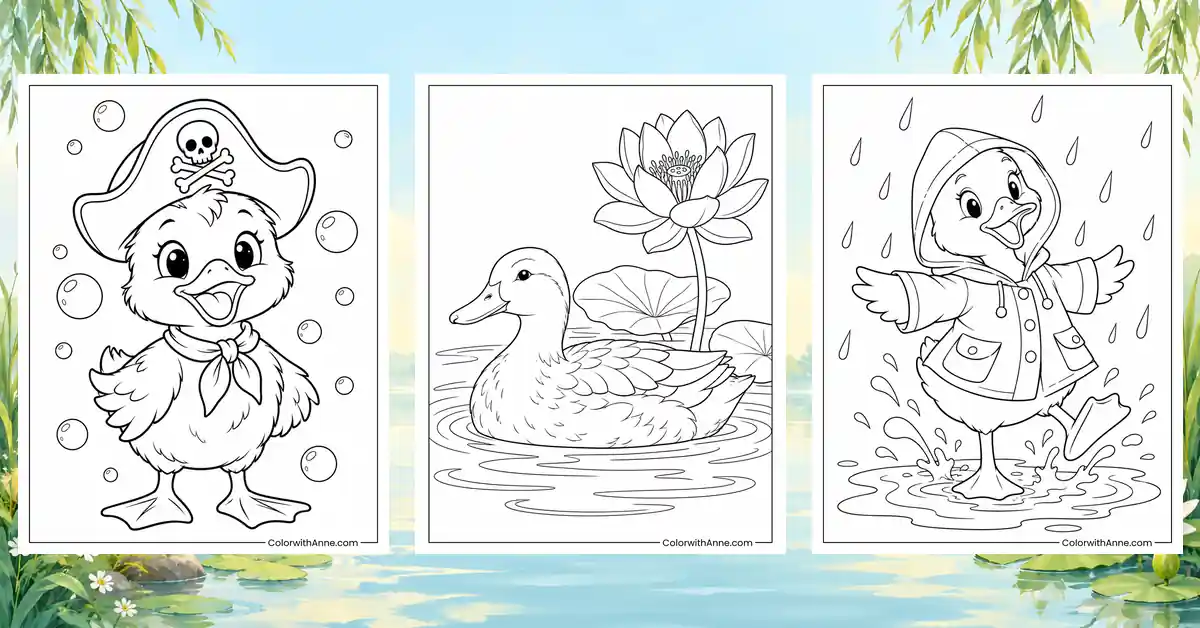
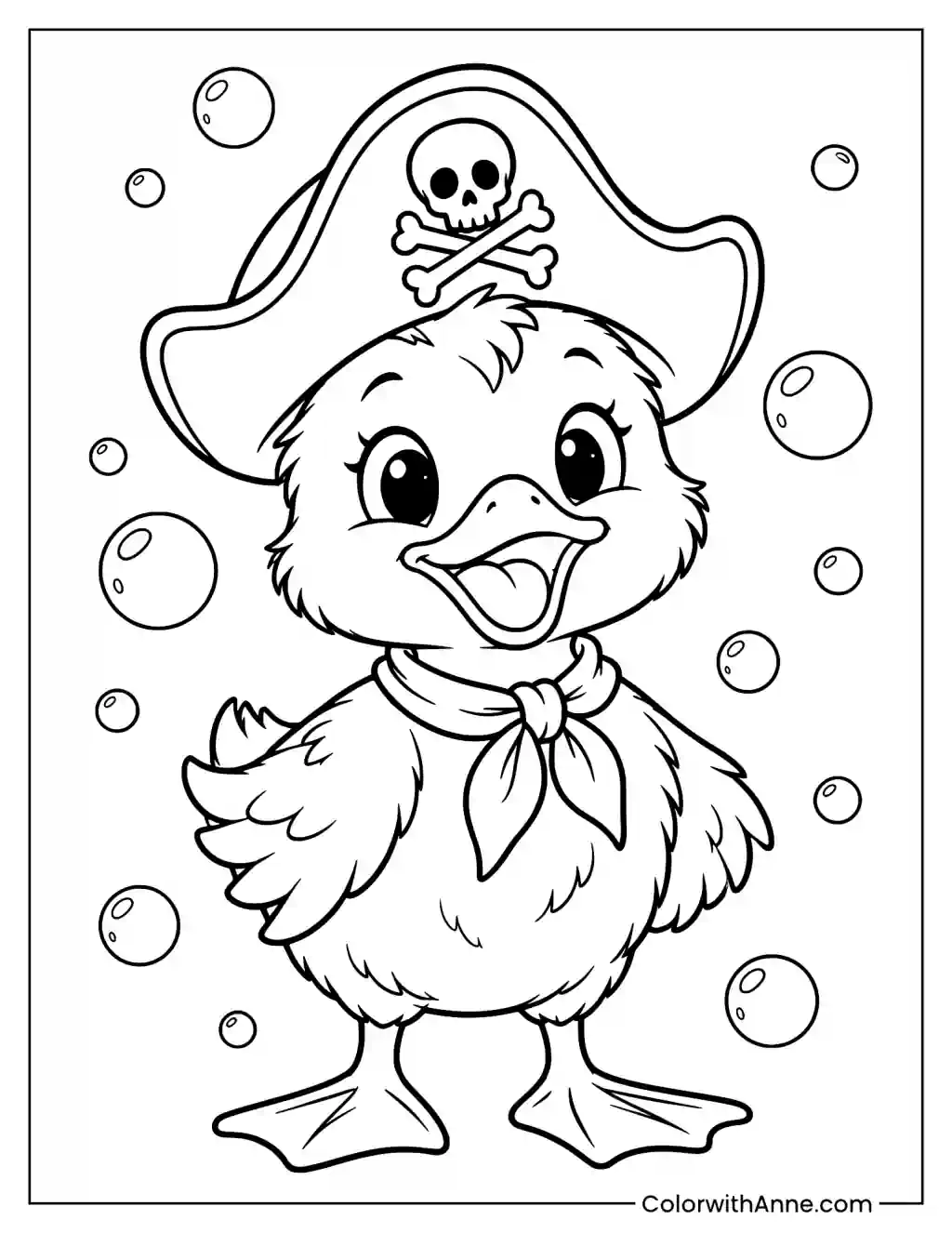
Give the Pirate Hat a Worn Edge
A black hat with a charcoal brim would suit a cream skull emblem and a red neckerchief. Keep the duckling yellow so the hat stays easy to pick out above its face.
You could give the brim a few pale, uneven patches near its outer edge, as though the cloth has been rubbed there. Leave the skull and crossed bones clear in the middle, with more of the dark color around them.
Let one worn patch be longer than the others, following the curve of the brim. Stop before the light marks form a complete border. A few gaps of dark cloth between them will keep the edge irregular, while the tied neckerchief can stay in one smooth color.
Keep the Feather Rows Different from the Pond
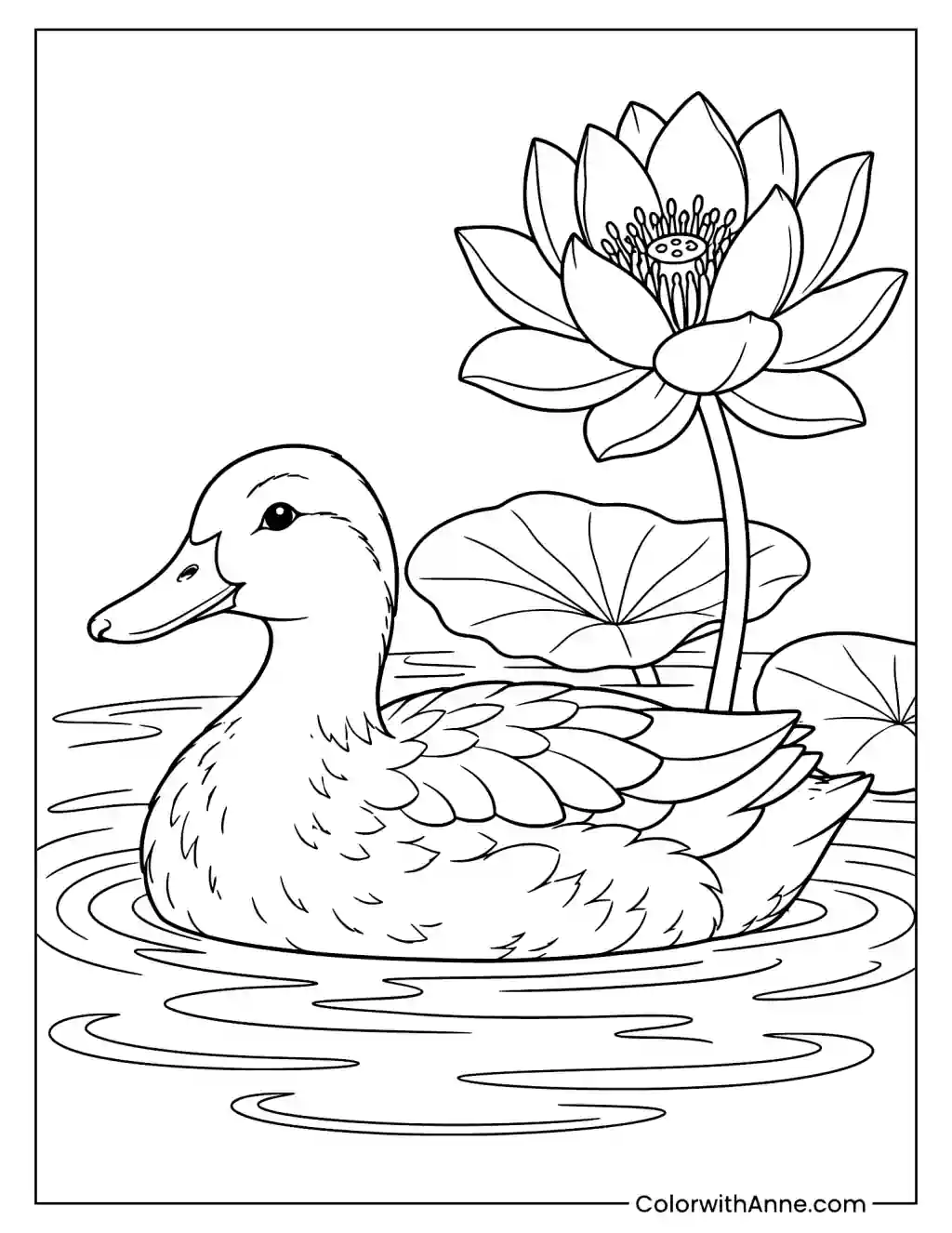
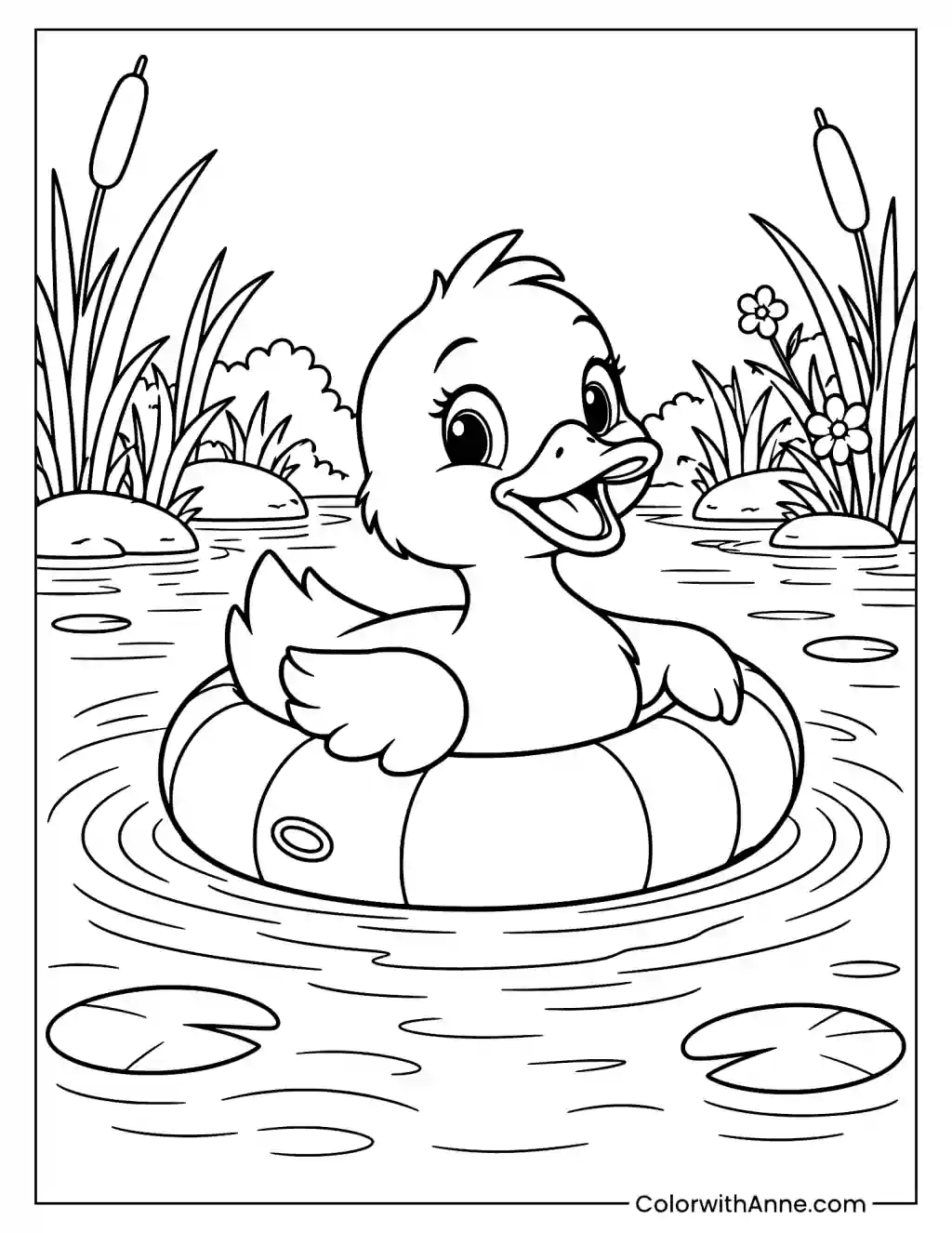
This duck's layered feathers and the long ripples around its body call for different kinds of marks. The wing has small overlapping sections, while the water spreads in broader lines across the page.
Try a warm brown duck with pale feather edges, green leaves, and a pink flower. A light blue pond can stay quieter around those separate shapes.
Work through one feather row at a time, leaving a narrow pale edge where it overlaps the row below. In the water, change to longer strokes that follow the printed ripples. Keep a few strips of white between them, then return to the wing and check that its smaller divisions still look crisp beside the wider marks.
Leave the Snow White beneath the Winter Clothes
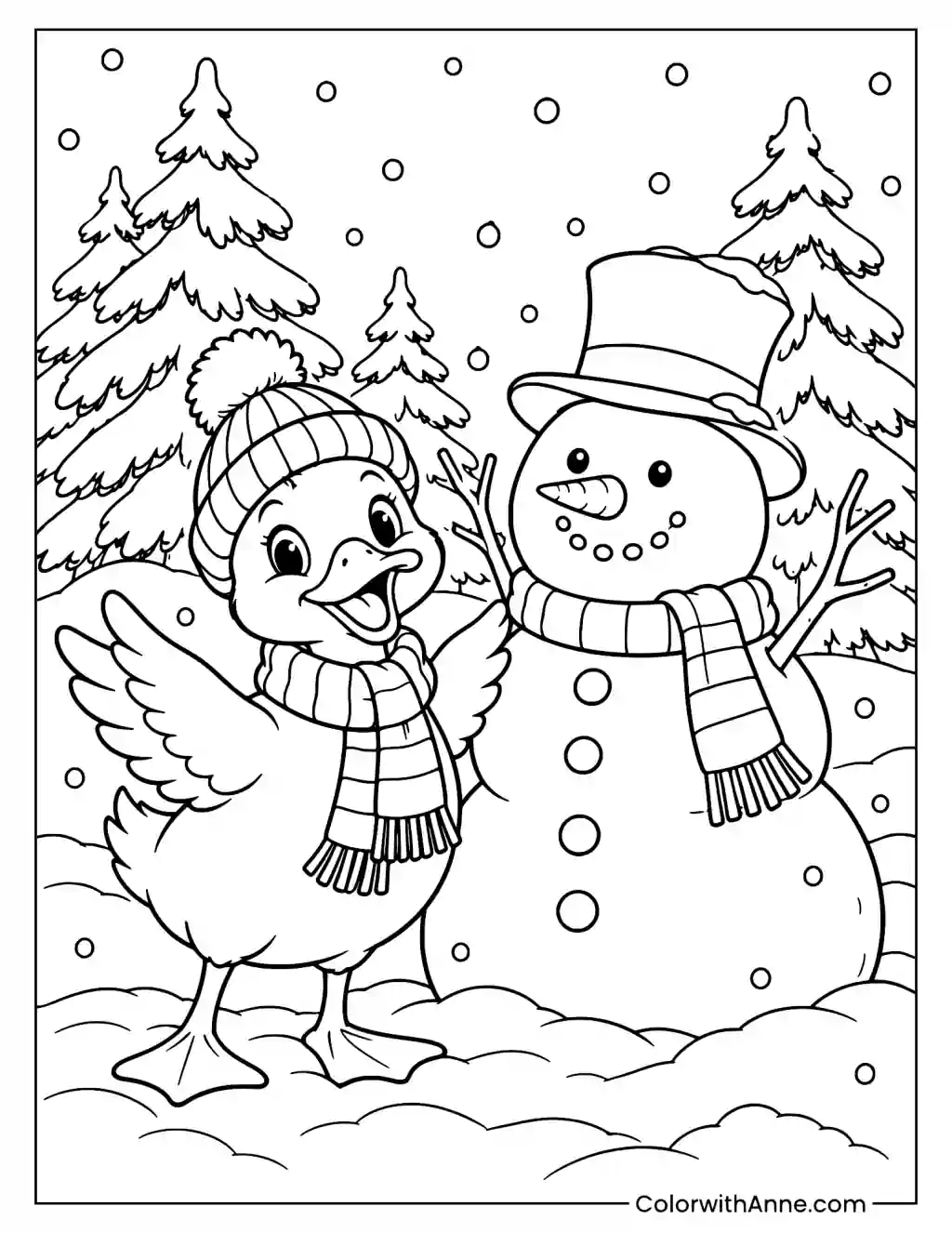
The snowman's round body and the mounds beneath the pair can share the white of the paper. Give their edges a little attention where one snowy shape meets another.
Add a narrow pale blue shadow under the snowman's hat and beneath each round section. The snow on the trees can keep the same light touch, with darker marks reserved for the branches that show between the white caps.
A rusty red duck scarf and golden knit hat would sit warmly beside a blue-striped scarf on the snowman. Keep those clothes stronger than the snow shadows. If a blue edge starts to look like a stripe, soften or shorten it before carrying the same idea onto the next mound.
Leave a Few Webbed Footprints behind the Splash
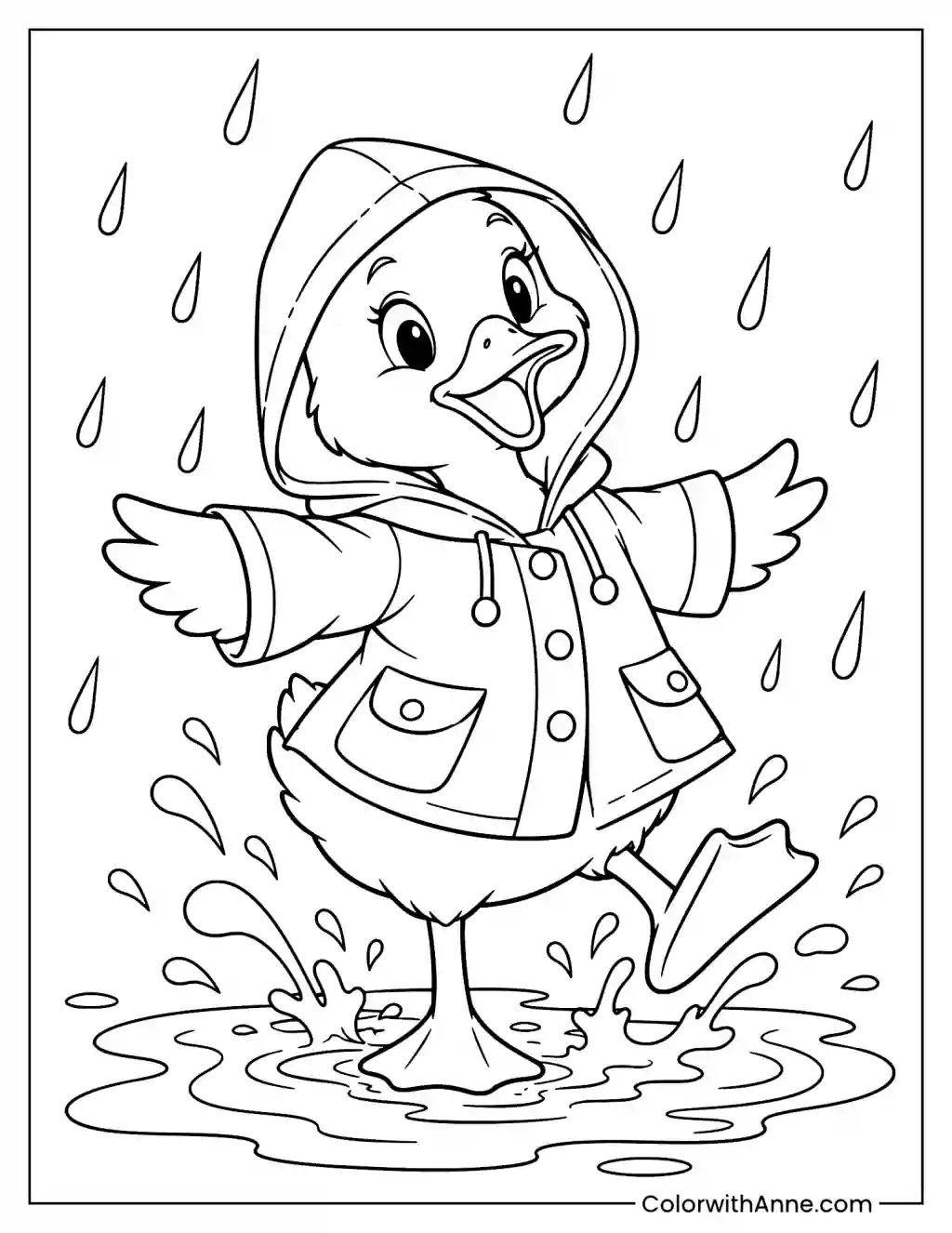
Try a yellow raincoat with orange feet and a pale blue puddle. The lifted bare foot gives this duck a good starting point for a little trail of webbed prints of your own.
Copy the shape of the planted foot onto spare paper first, keeping its spreading toes joined by one outline. Then you could draw two or three smaller versions leading back from the puddle toward the edge of the page.
Light brown prints can look faint beside the darker splash marks. Turn each one slightly instead of placing them in a perfectly straight row. Let the last print near the puddle break into a few shorter marks, as though its edge has become mixed up with the water.
Set Up a Waiting Place for Toy Animals
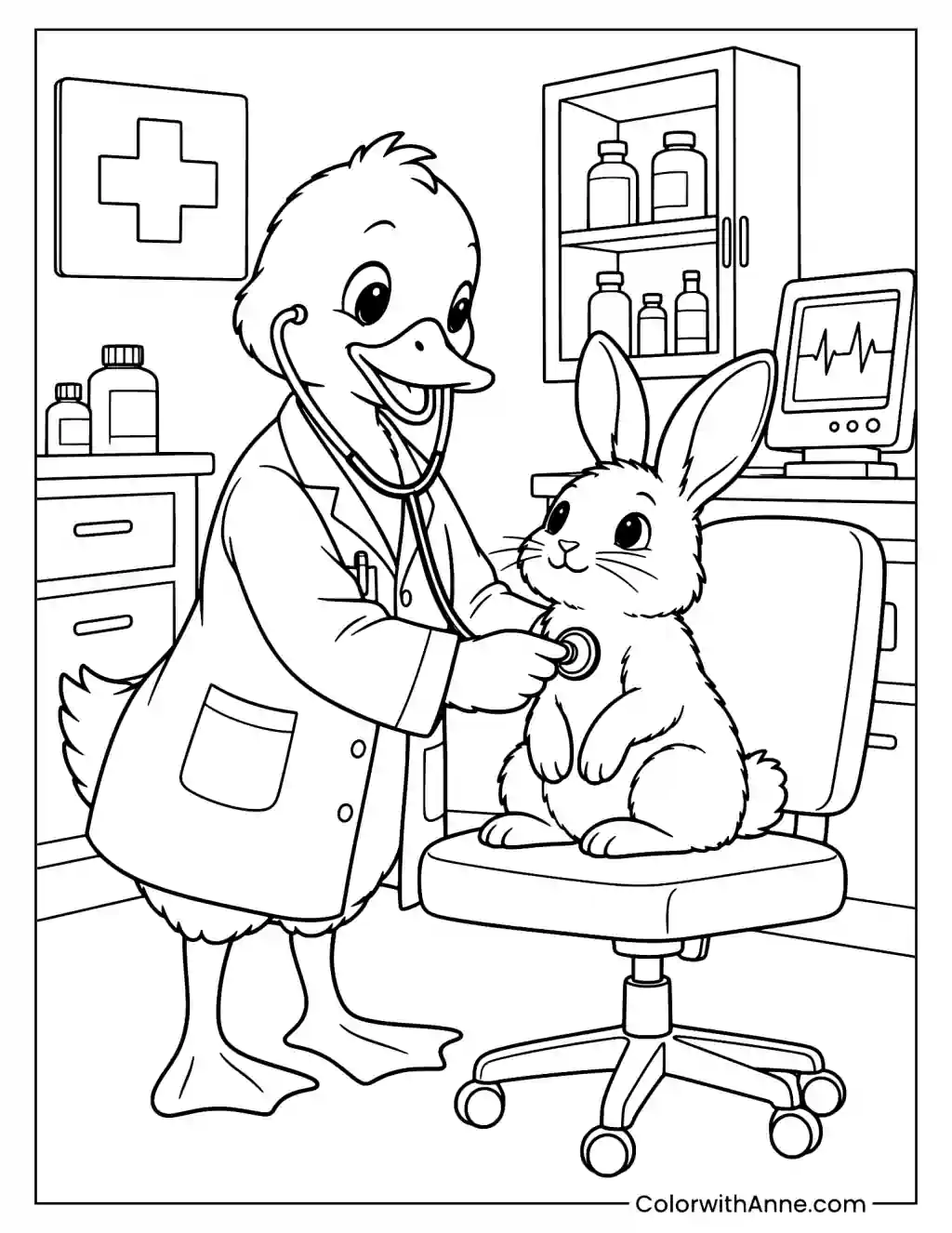
The duck with a stethoscope and the seated rabbit would suit the backdrop of a toy animal clinic. Prop the finished page behind a little waiting place made from an empty box or a folded cloth.
Try a pale green coat with a gray rabbit and a blue seat. Keep the stethoscope dark enough to follow between the duck's neck and the rabbit.
Choose two or three small toy animals to wait beside the picture. A separate slip can record their names and the order of their turns. One child can call the next name and welcome the toy, while another brings it forward and introduces it. Swap roles before calling the next visitor.