
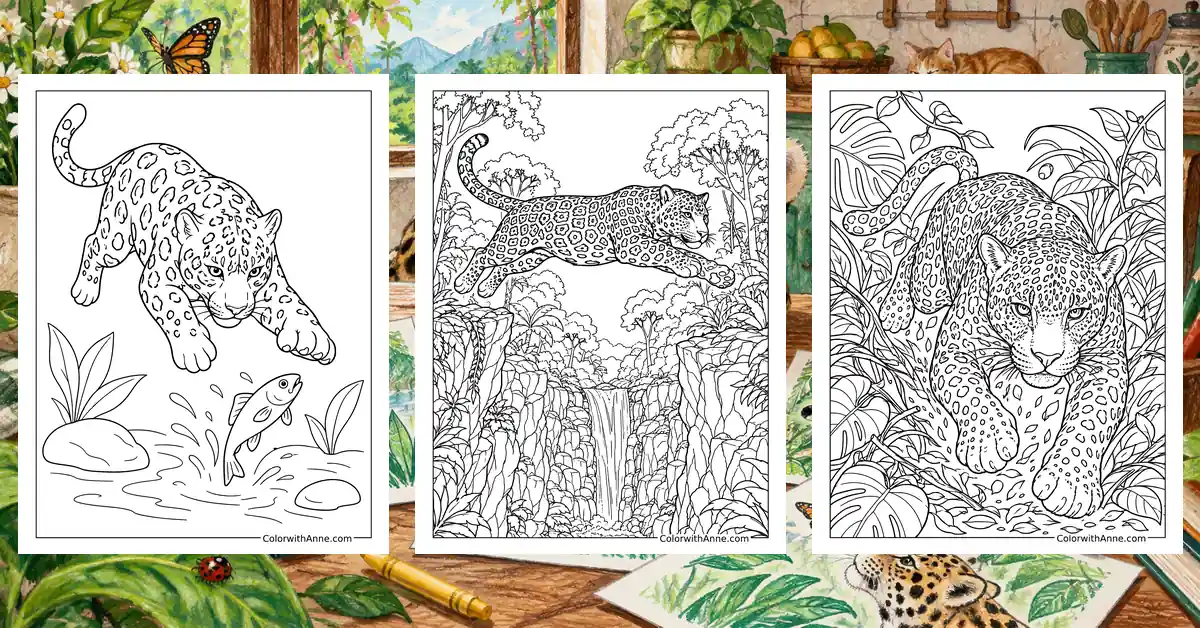
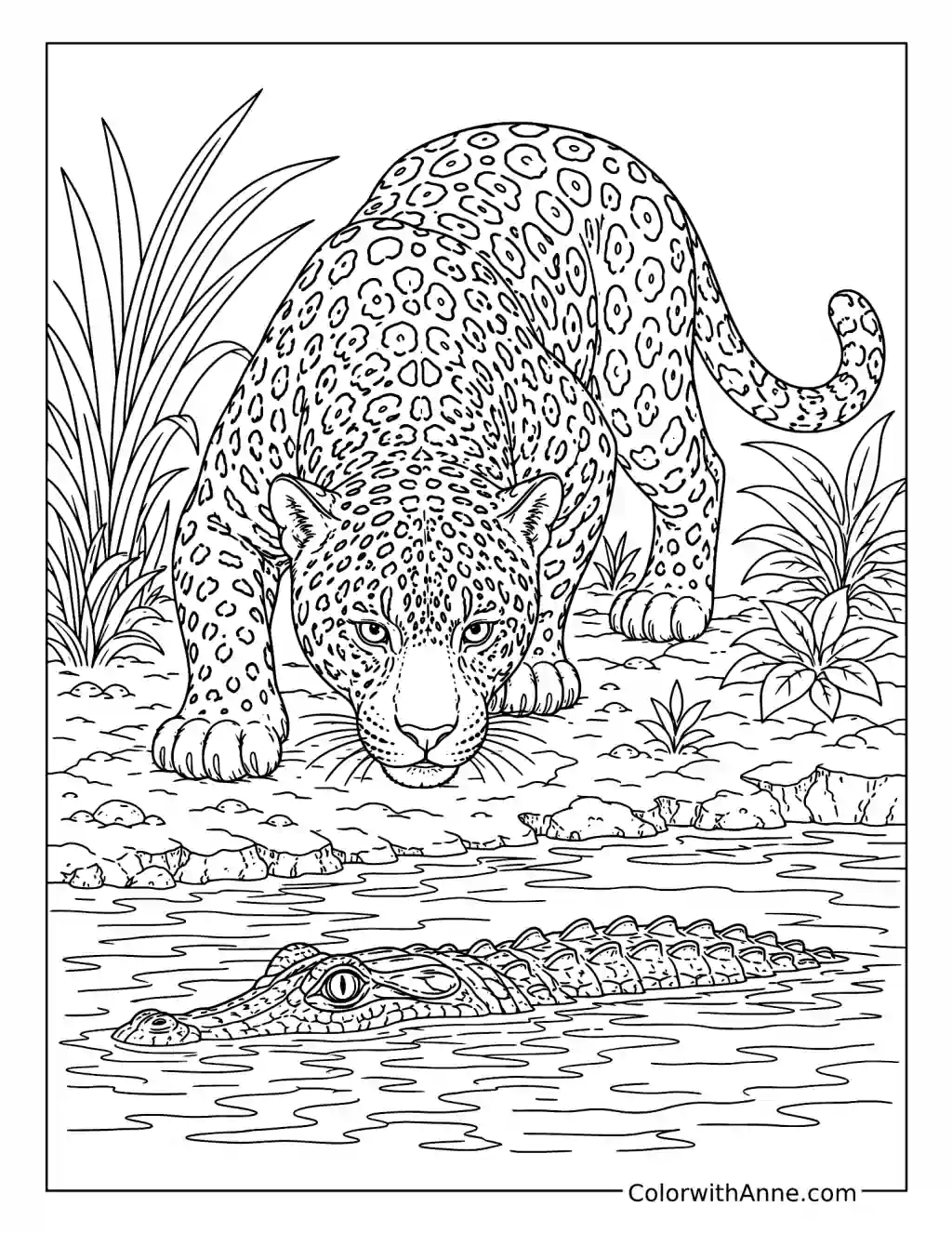
Along a rainforest river, leaves drip after a shower and the water laps against tangled roots. A jaguar pauses at the bank, its spotted coat breaking up the outline of its body among the shadows. Those broad paws look perfectly at home in the mud, with none of a house cat’s objections to getting wet.
Jaguar coloring pages bring that quiet presence onto paper. The rosettes draw the eye first, but the rounded ears and steady gaze give the animal its character. There is something absorbing about that combination of intricate markings and an unhurried expression, as though the forest can wait another moment.
Free Printable Jaguar Coloring Pages
Click any coloring page below to open the PDF, then print on US Letter or A4 paper.
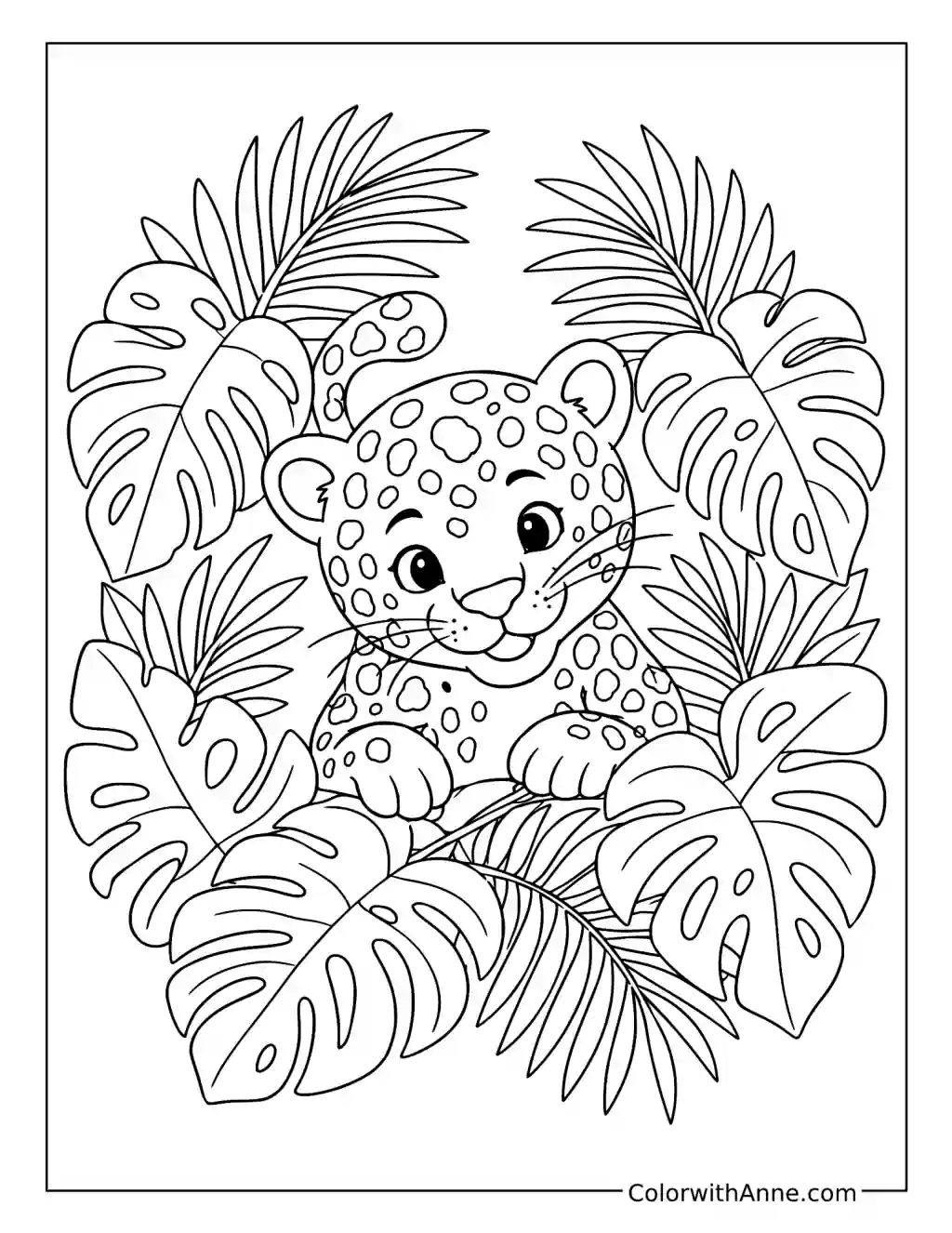
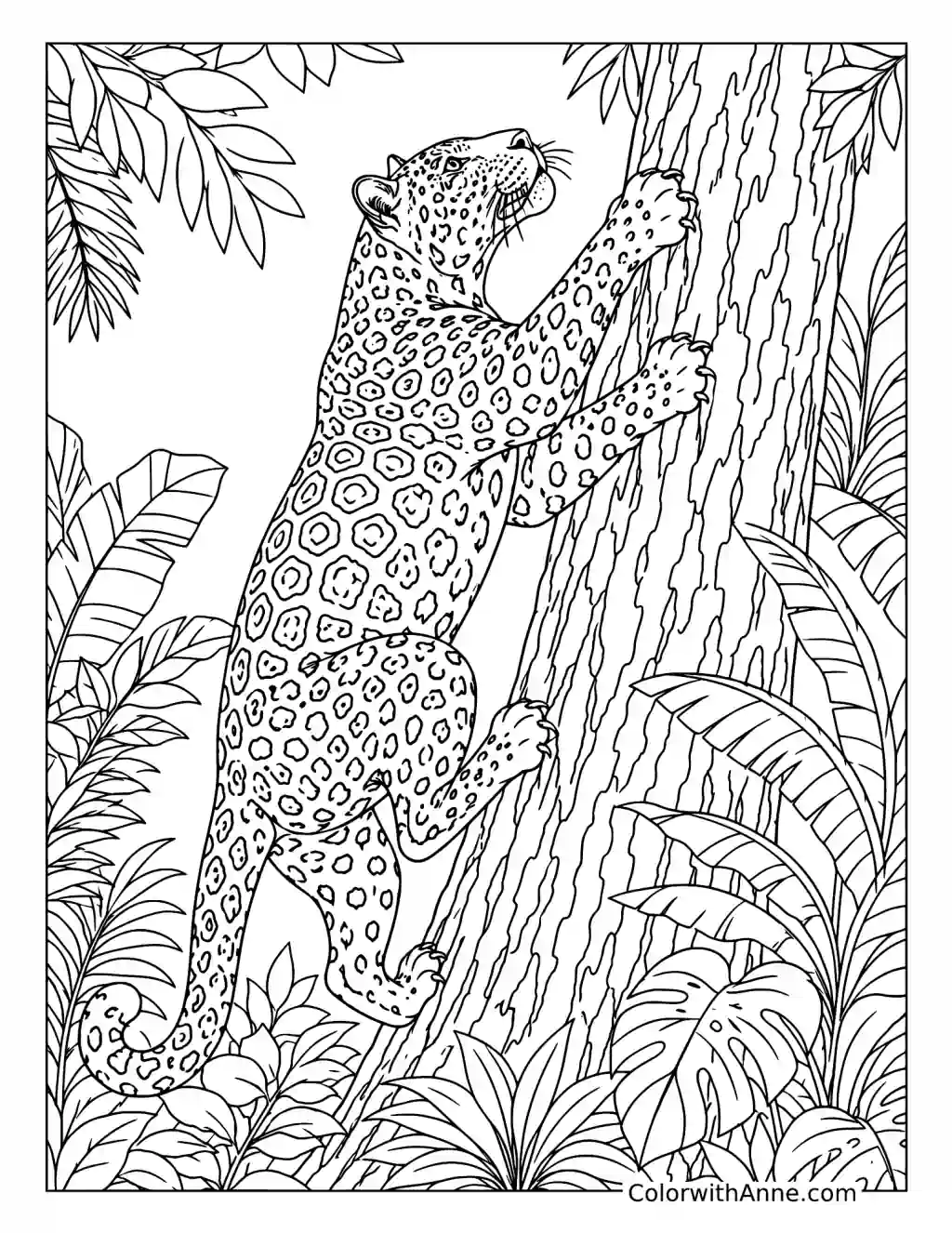
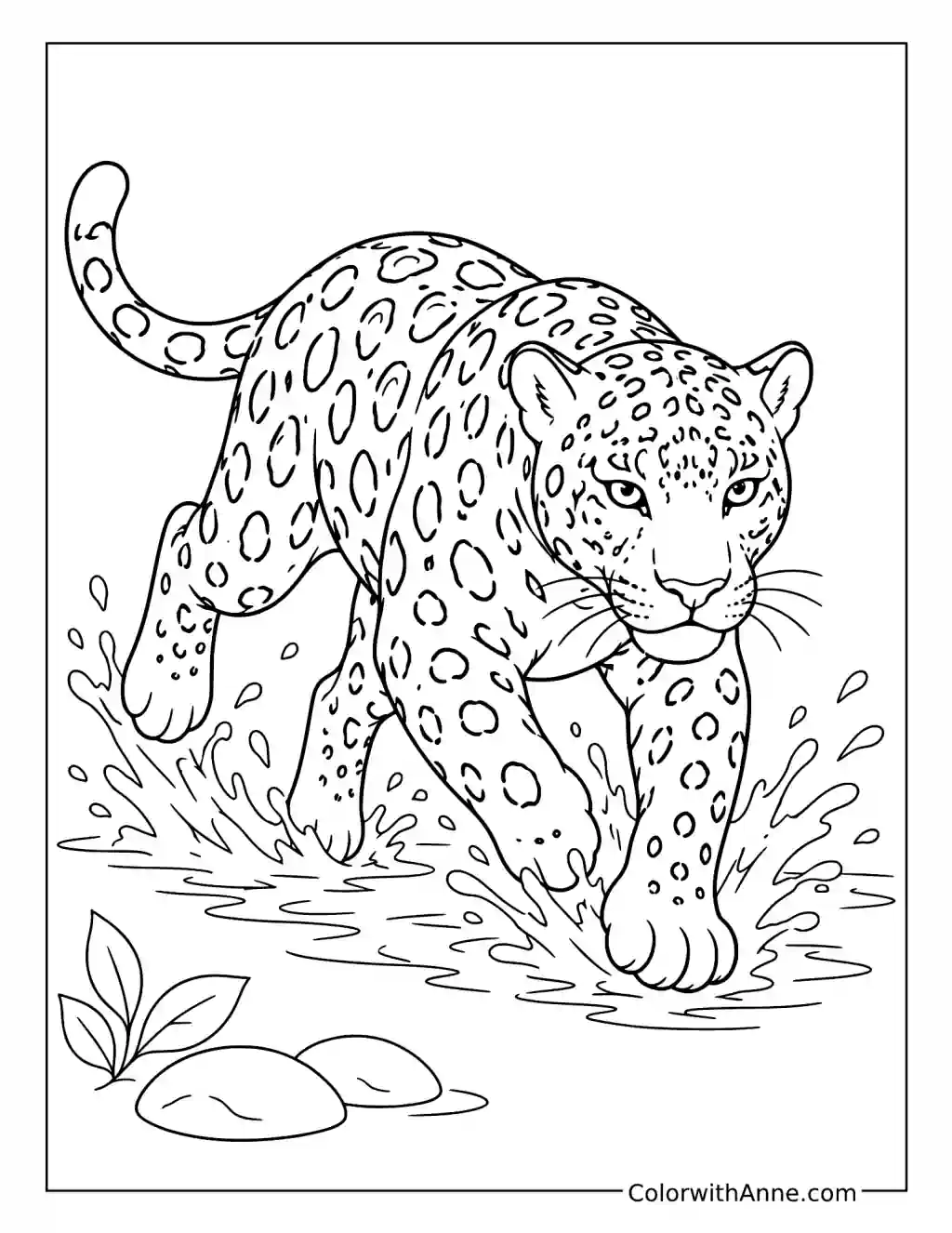
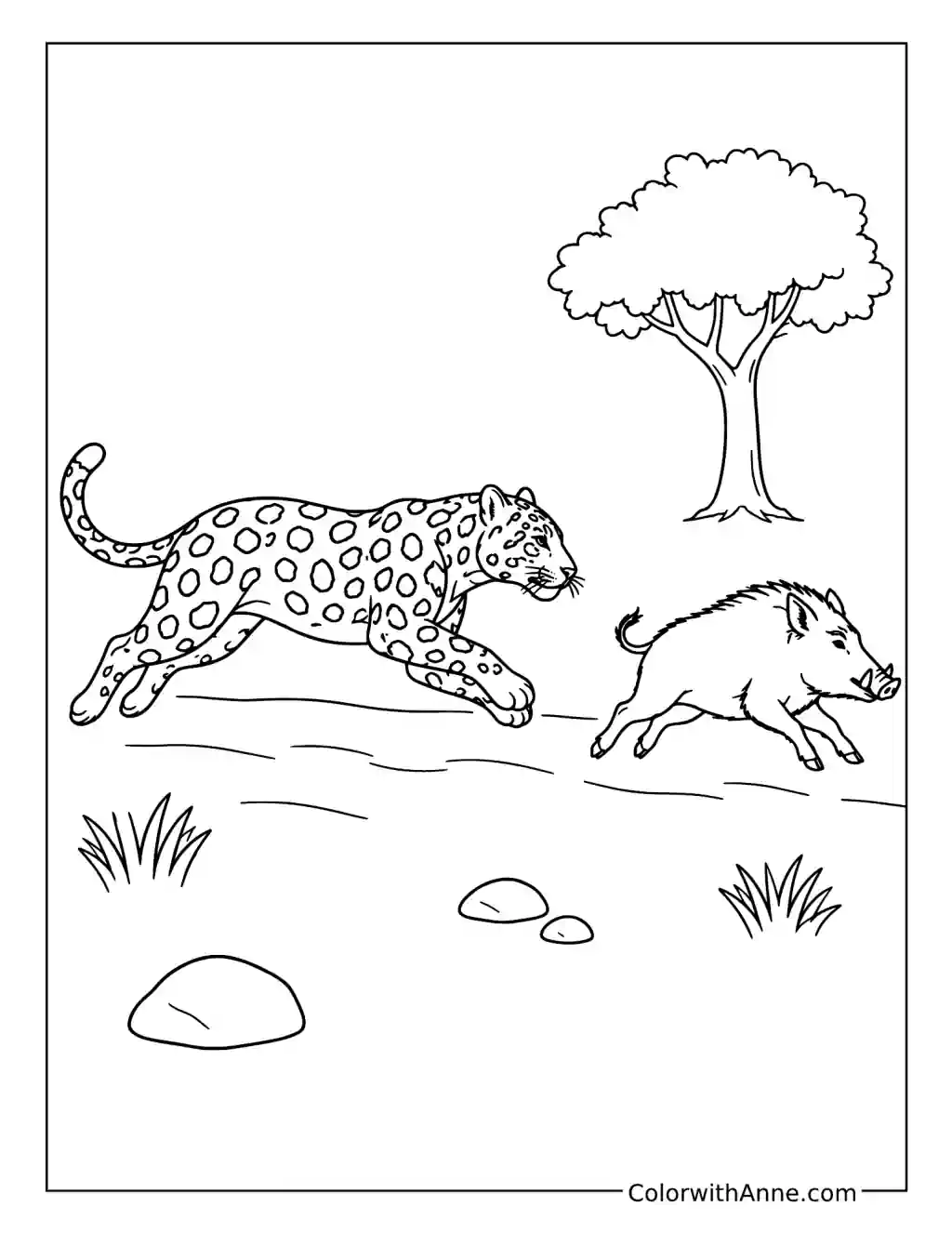
Did you find what you needed?
Help us choose what to create or improve next.
Coloring Ideas for Jaguar Pages
Try one of these coloring ideas, or use them as a starting point for your own.
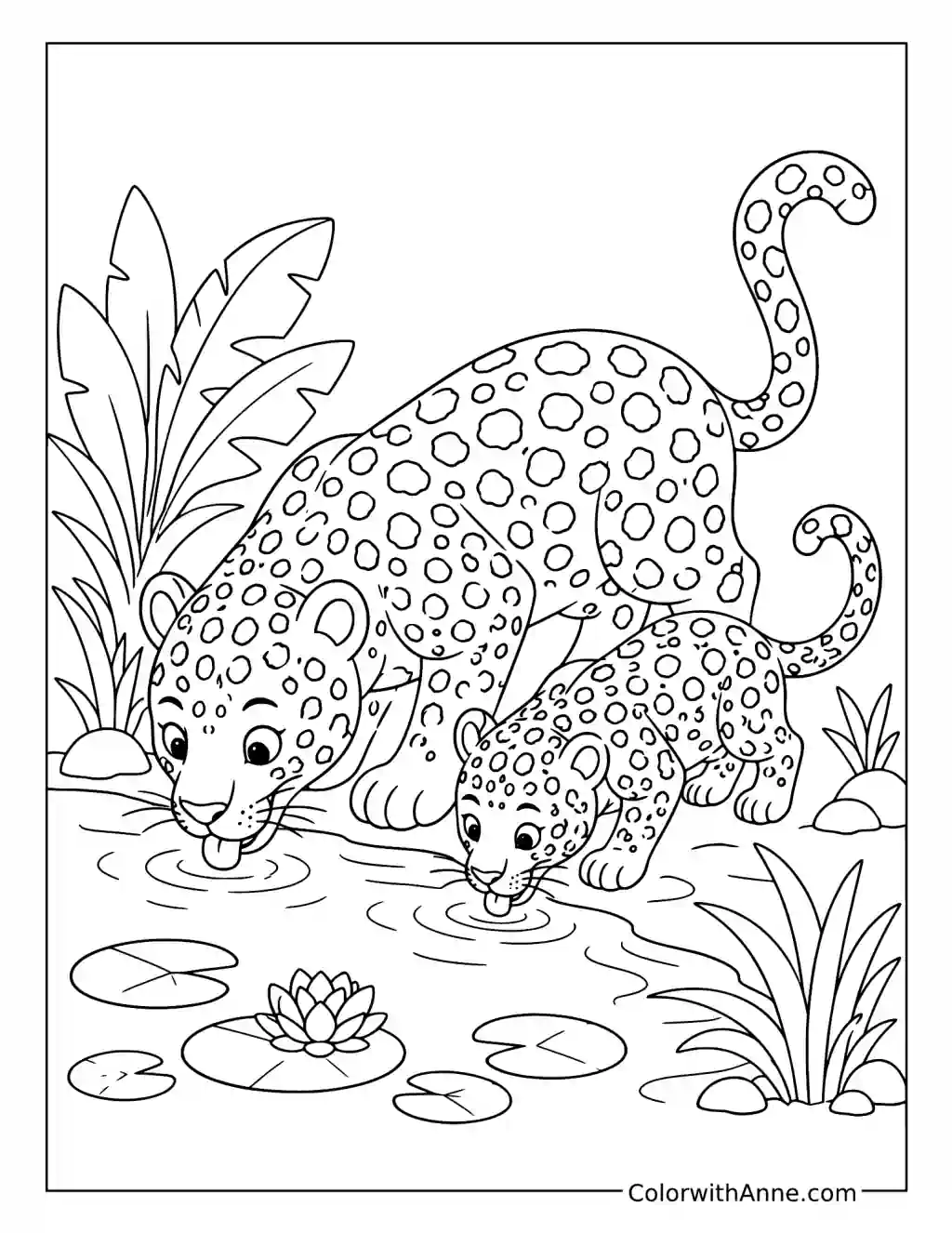
Share the Pond with a Mother Jaguar and Cub
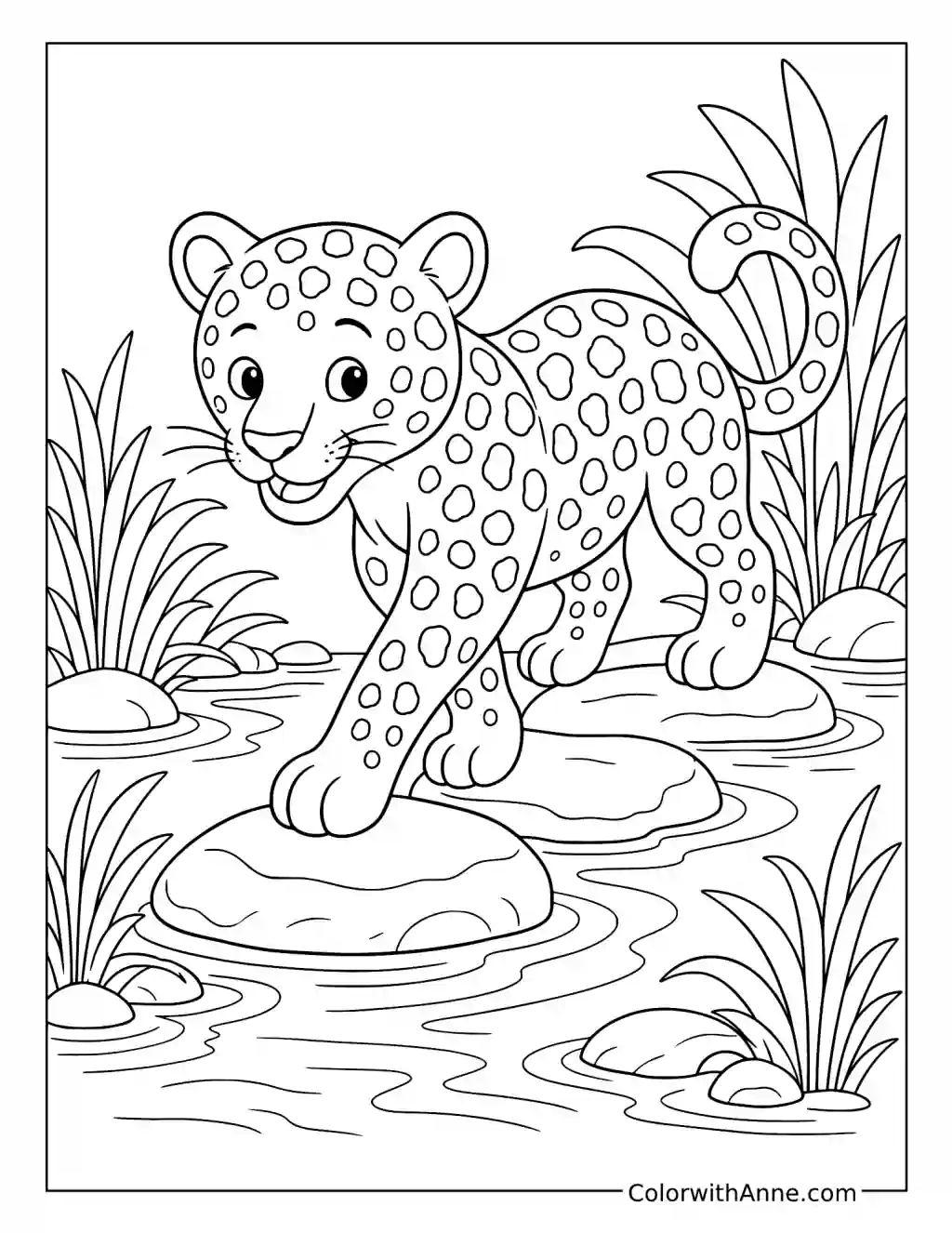
The mother and cub lower their heads to the same pond, with ripples around their mouths and a flower among the floating leaves. It is a companionable picture to work on with someone else: each person can take one jaguar, then finish the water together.
Choose one small marking to echo between the two coats, while allowing the rest to differ. The cub does not need to be a miniature copy of its mother. Keep the ripples visible around both faces so their shared pause at the water remains the center of the scene.
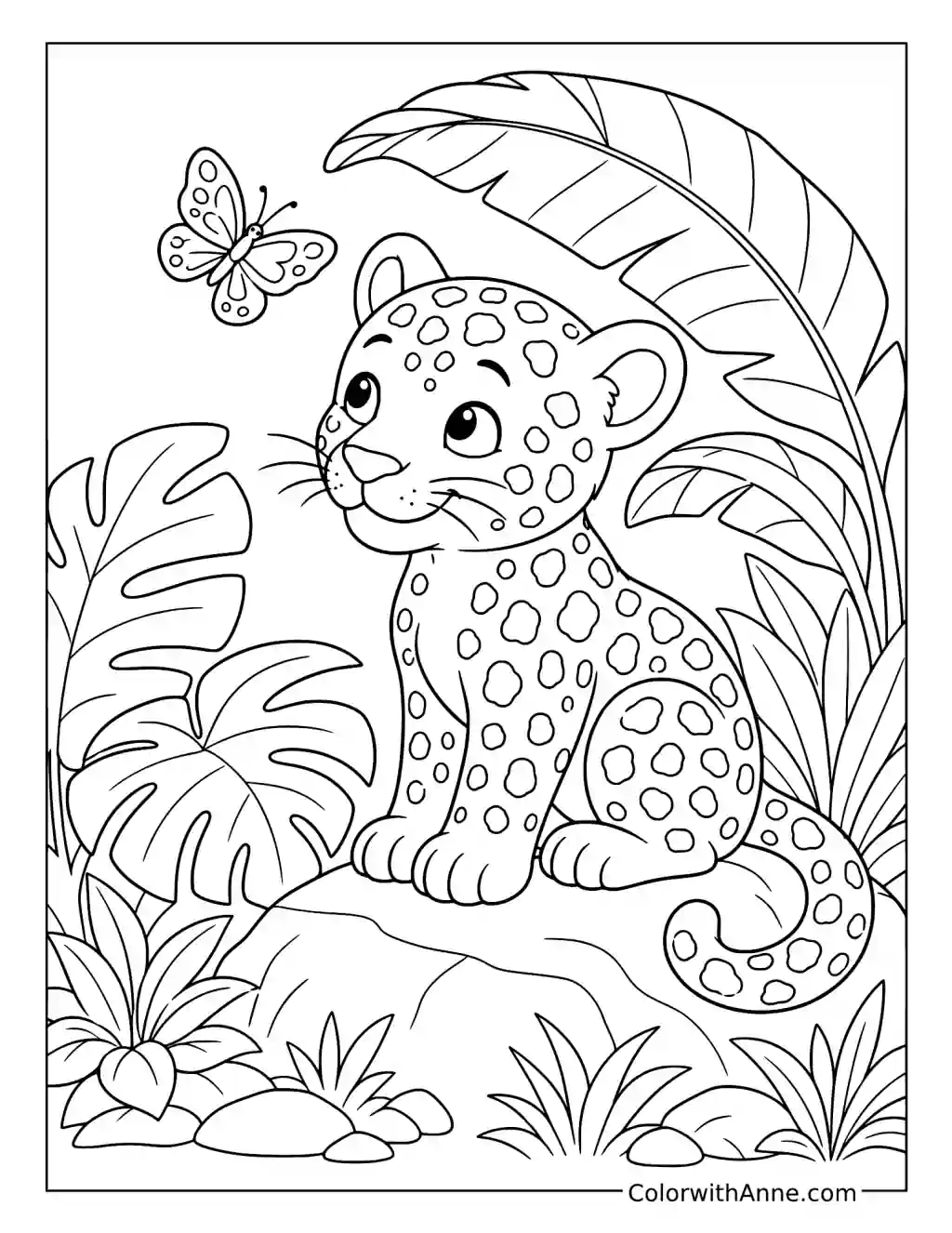
Follow the Cub’s Gaze to the Butterfly
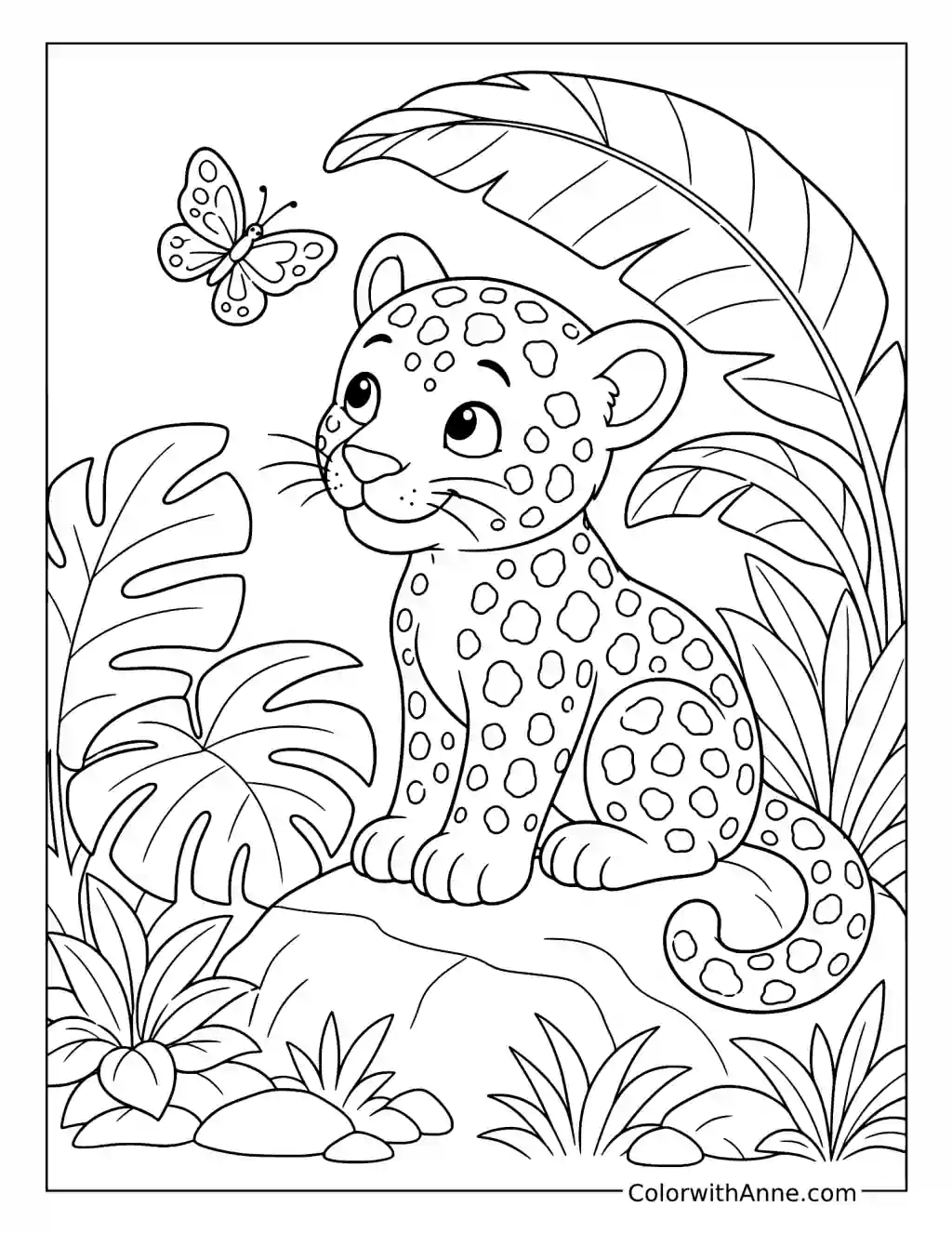
The cub sits on a rock beneath broad leaves, looking toward a butterfly. That small encounter gives the picture its charm; the butterfly occupies very little space but has the cub’s full attention.
Look through a butterfly photograph from a walk or garden visit and borrow a simple wing marking. It does not have to identify a particular species. A few repeated dots or bands will give the wings definition. Keep the nearby foliage quieter, then check whether your own eye follows the cub’s gaze. The smallest subject can still become the first thing someone notices.
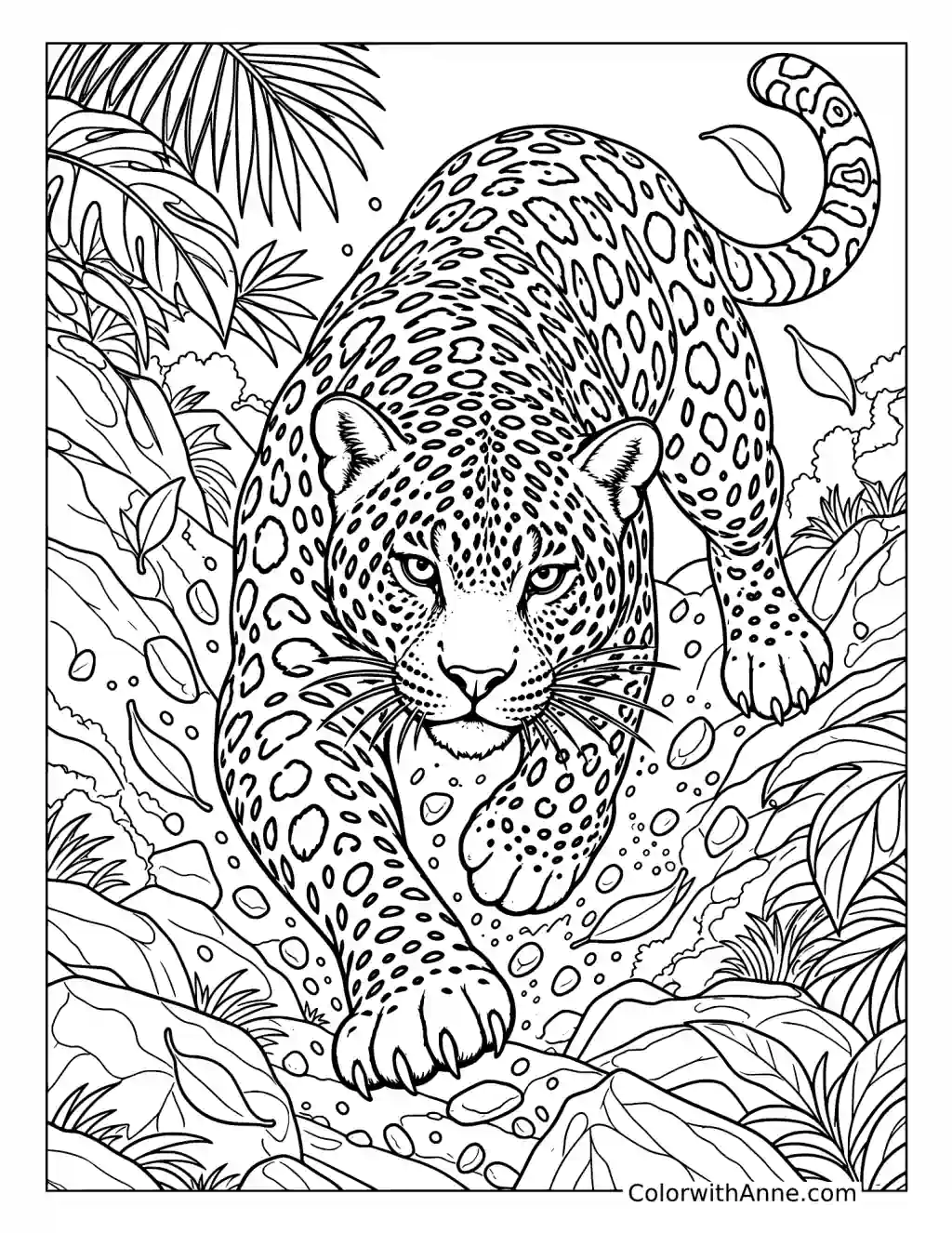
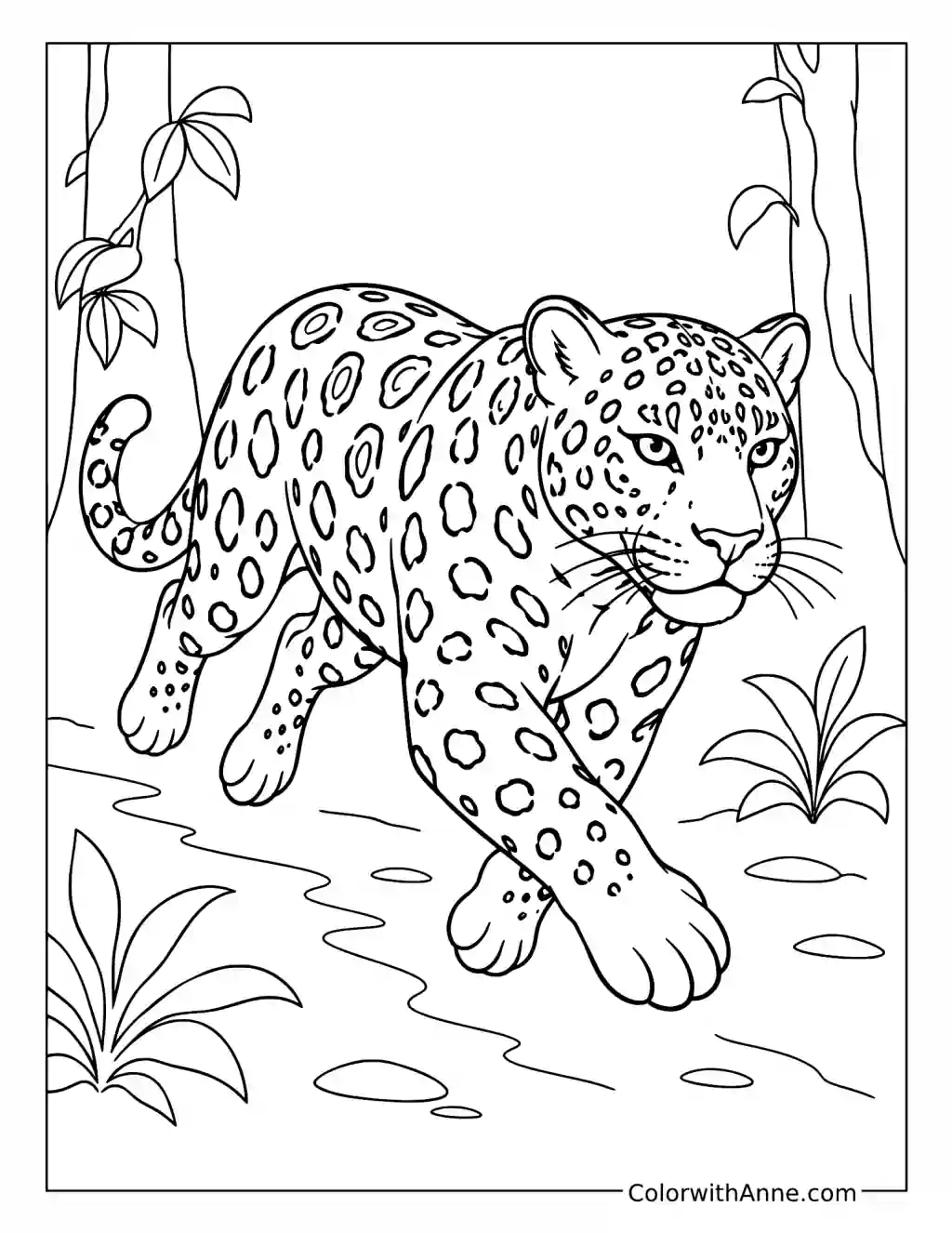
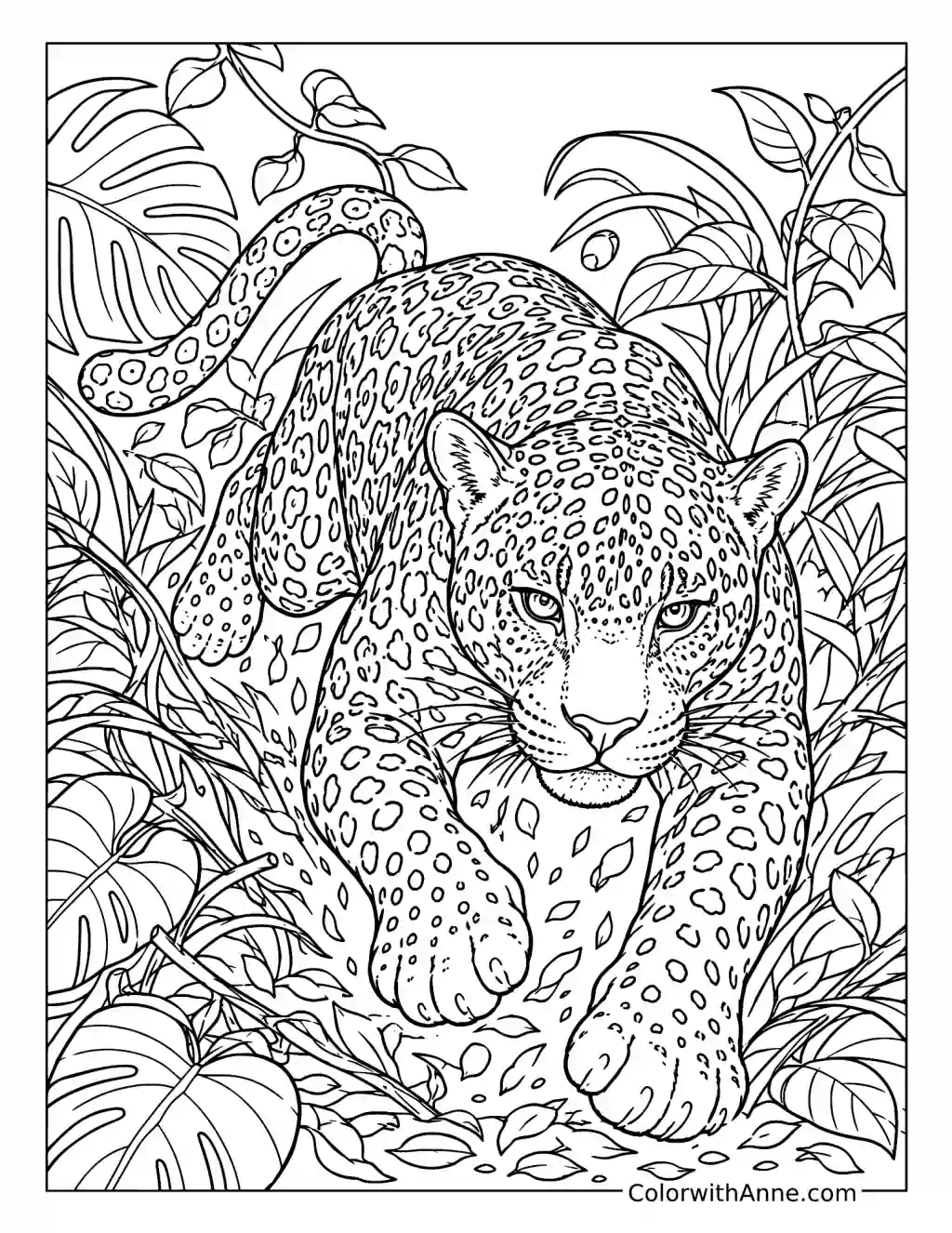
See How Well the Stalking Jaguar Blends In
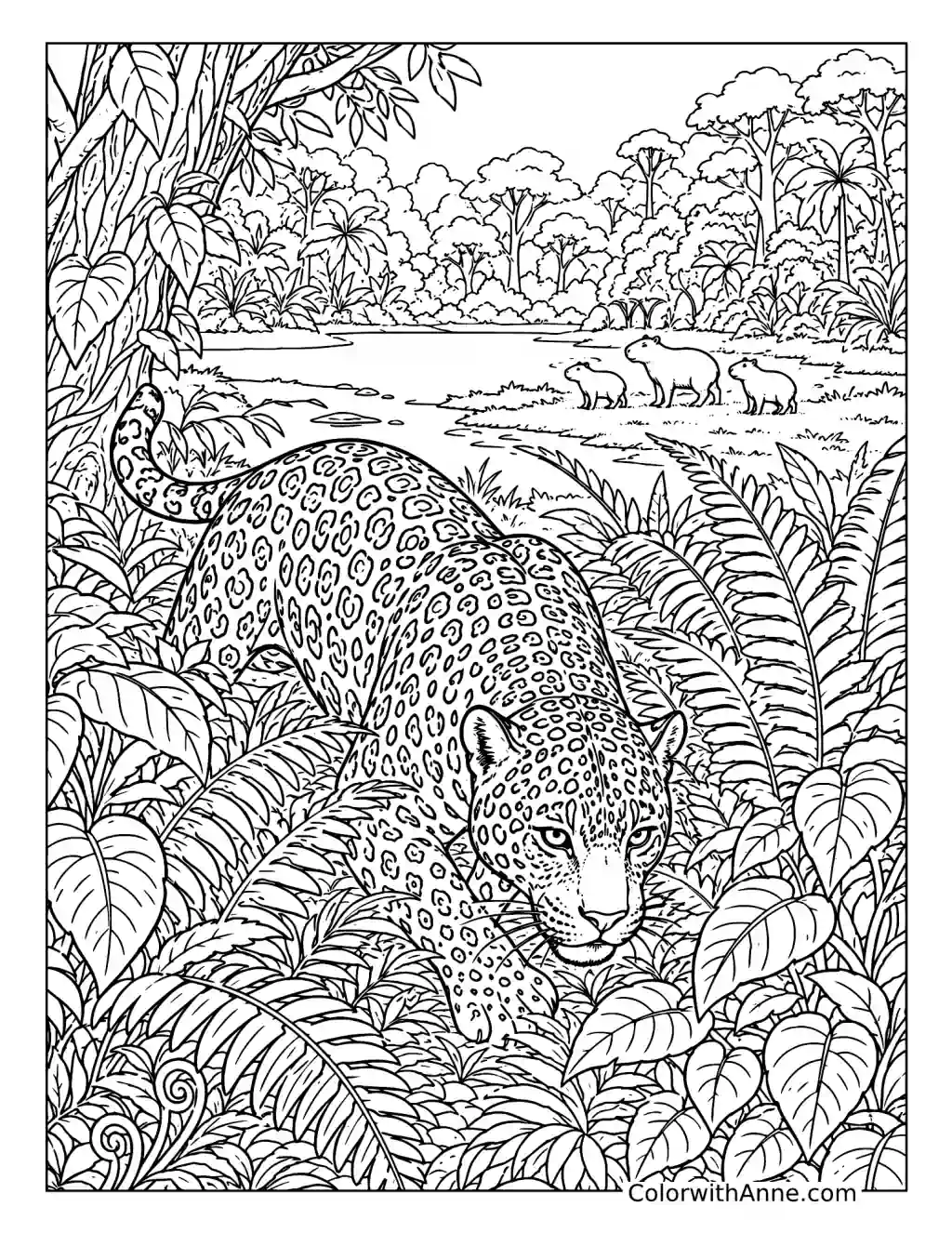
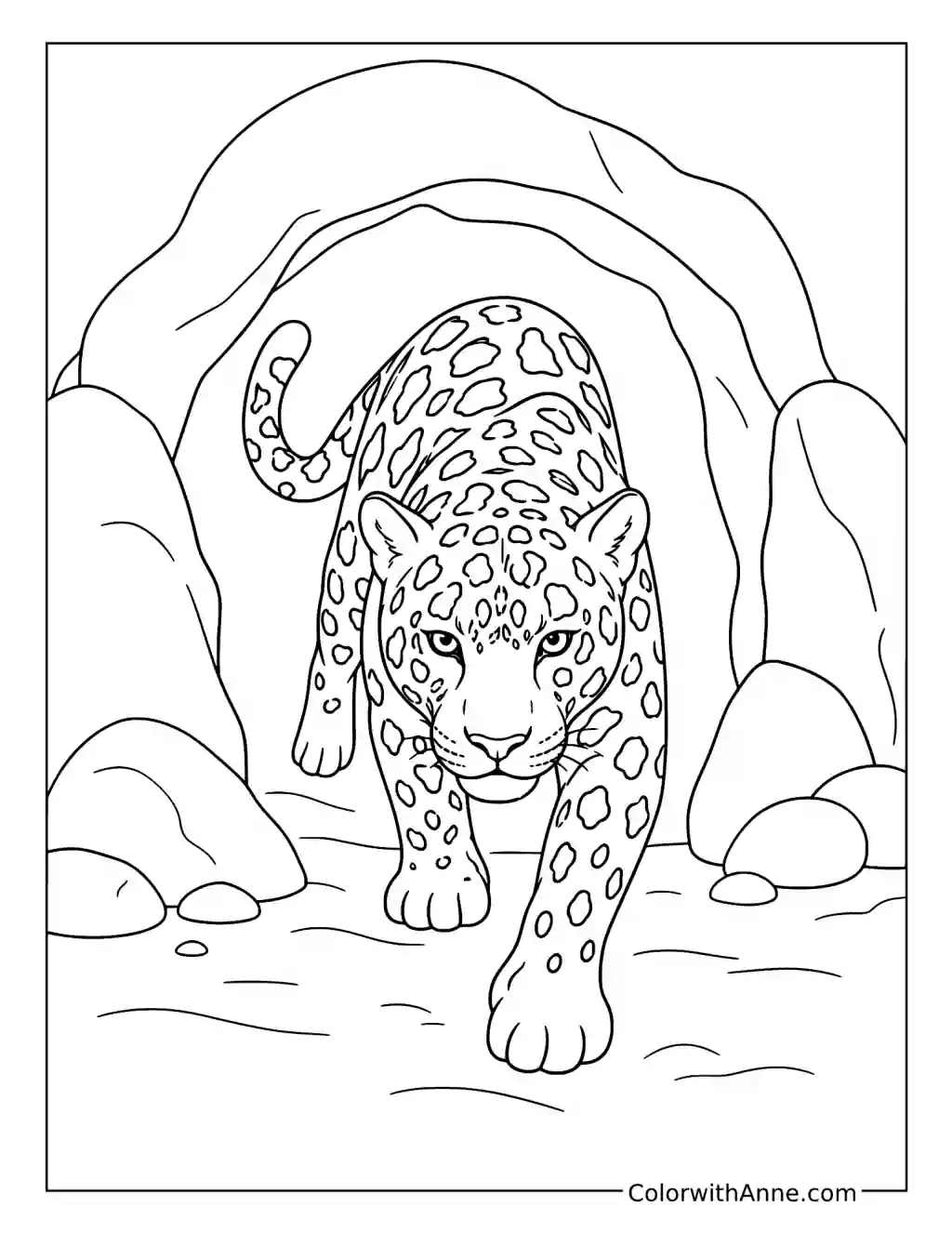
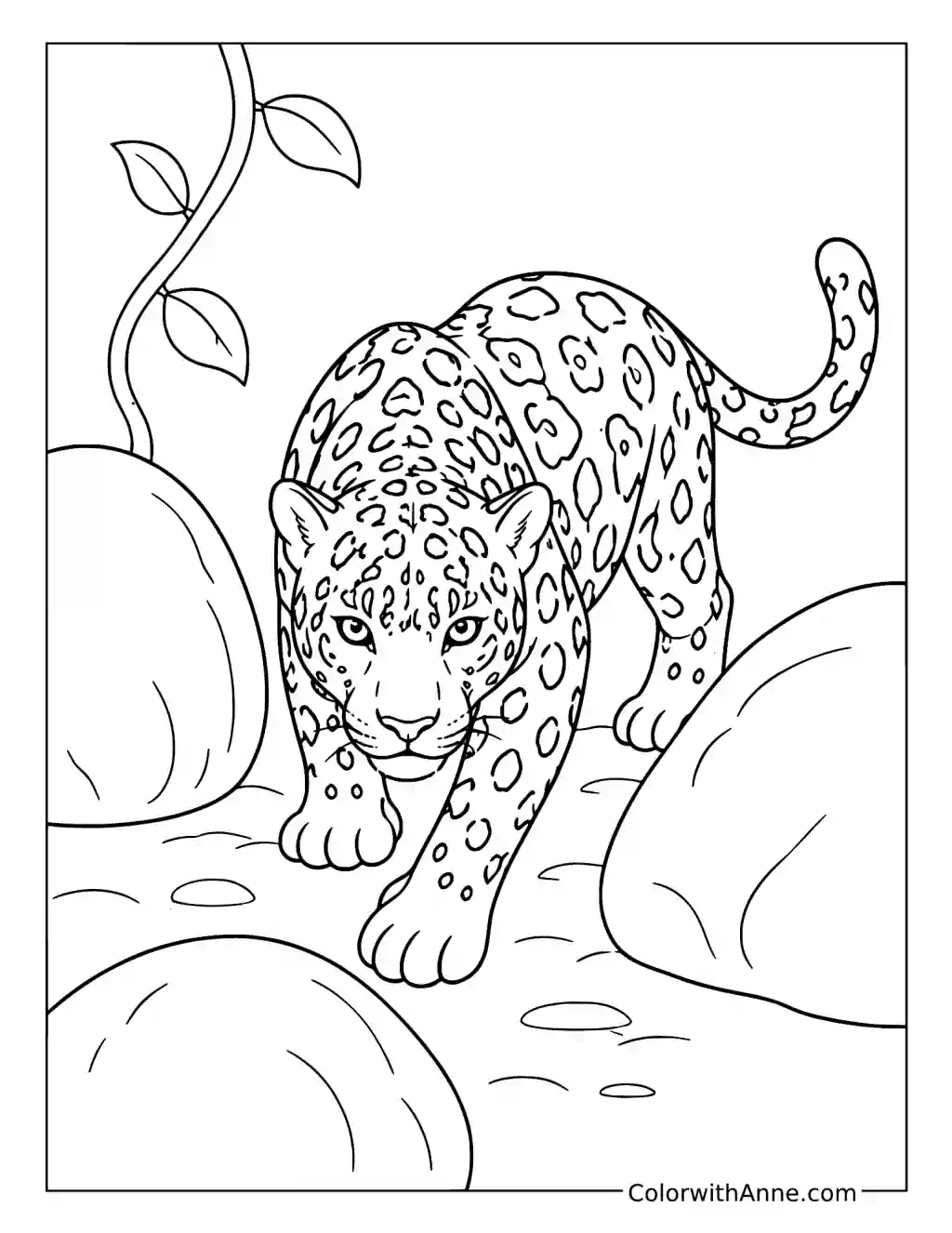
This jaguar advances through closely packed leaves, with its face looking straight out of the picture. Try allowing parts of its coat to merge visually with the surrounding foliage while keeping the eyes and muzzle distinct. Similar patches of light and dark across the animal and leaves can soften its outline. When finished, show the page to someone from a few steps away and ask what they noticed first. The face may appear before the whole body does, giving the drawing a little of the surprise of spotting an animal among vegetation.
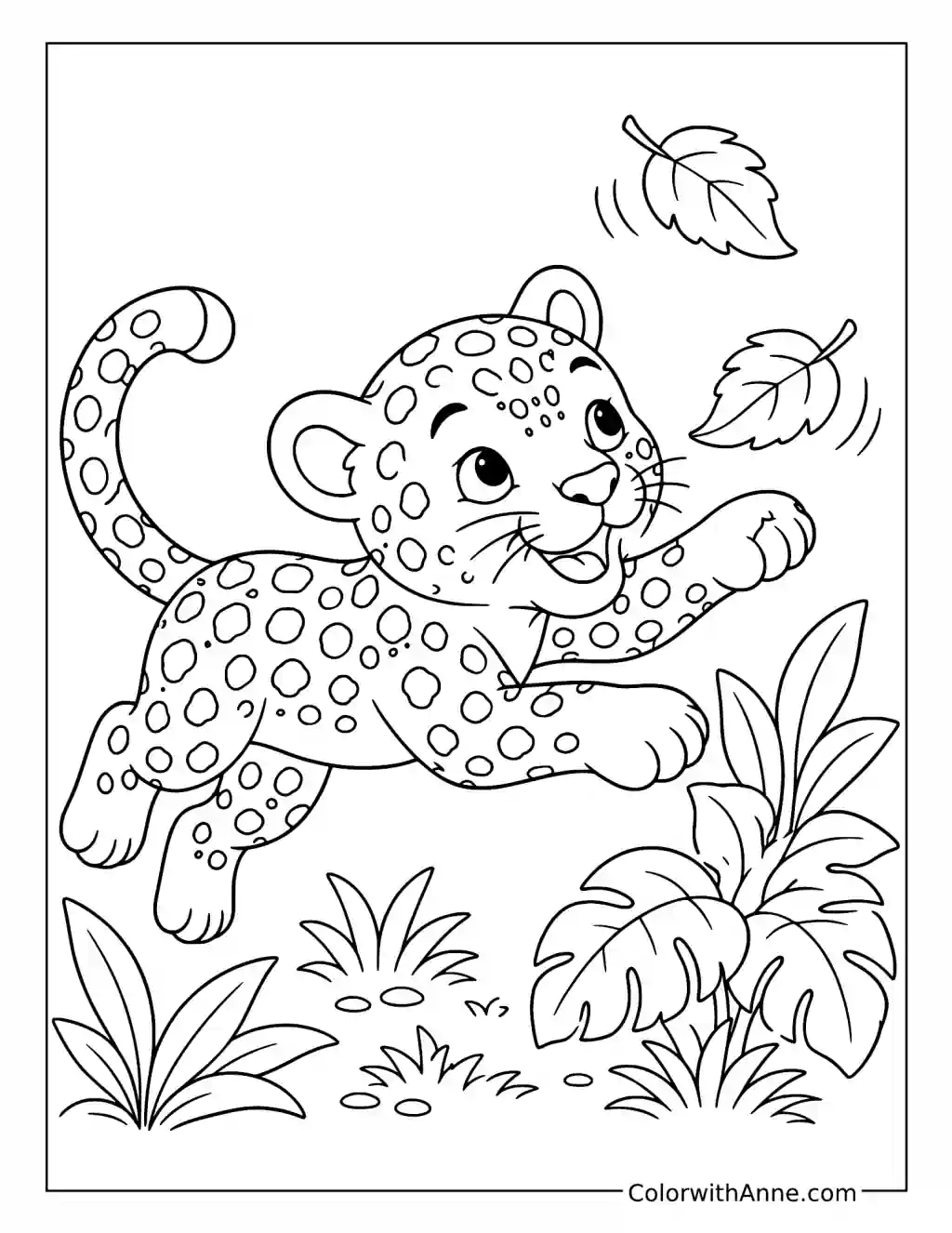
Catch the Cub’s Leaf-Chasing Energy
With one paw stretched forward and leaves tumbling overhead, this cub has found something worth chasing. Anyone who has watched a kitten pursue a drifting scrap of paper will recognize the concentration.
Collect a few fallen leaves on your next walk and look at their curled edges, stems, and veins. Borrow those details for the leaves already in the drawing. Their different angles suggest a fluttering path; a few short curved marks nearby can emphasize it. Leave space between them so the little chase stays lively rather than becoming a solid curtain of foliage.
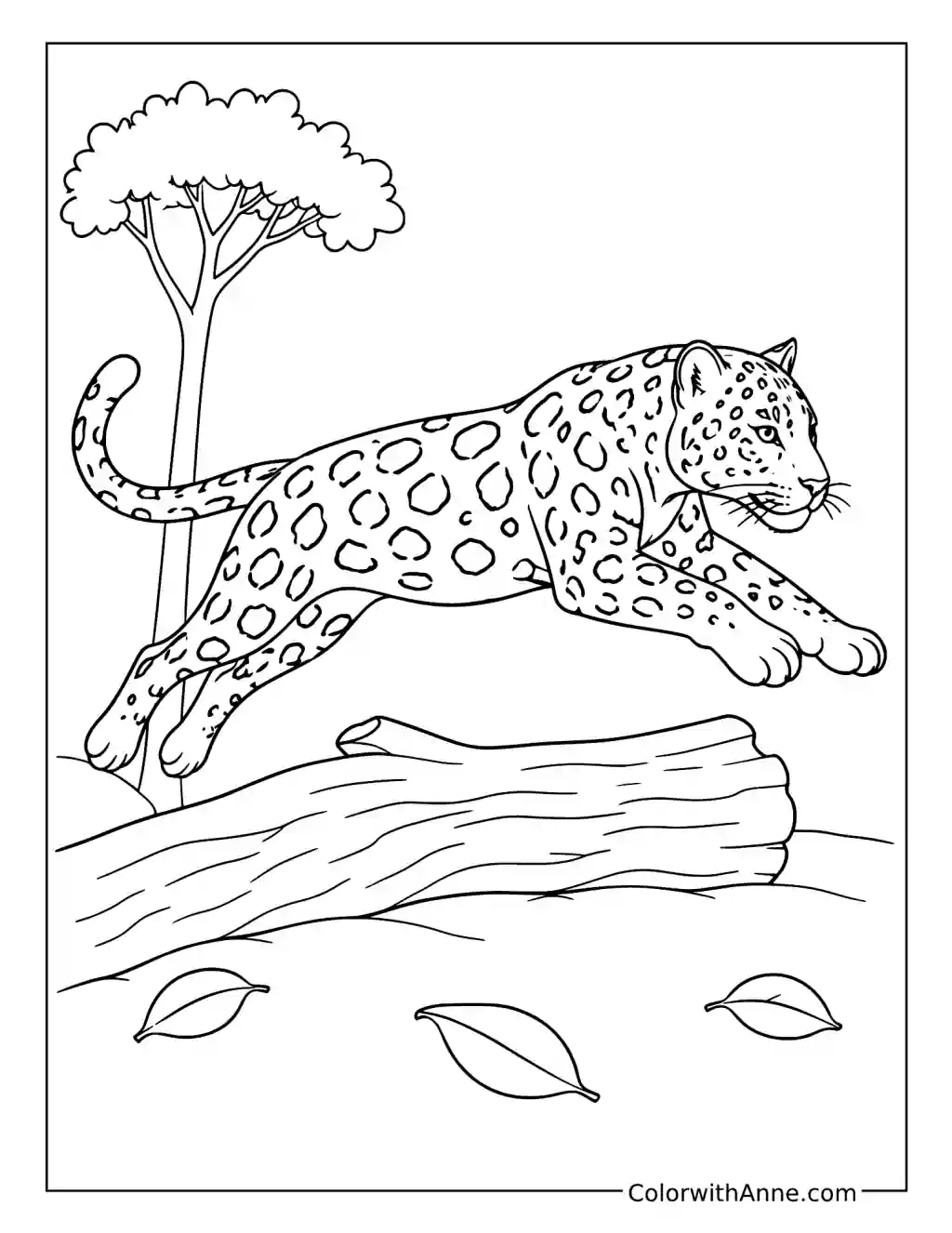
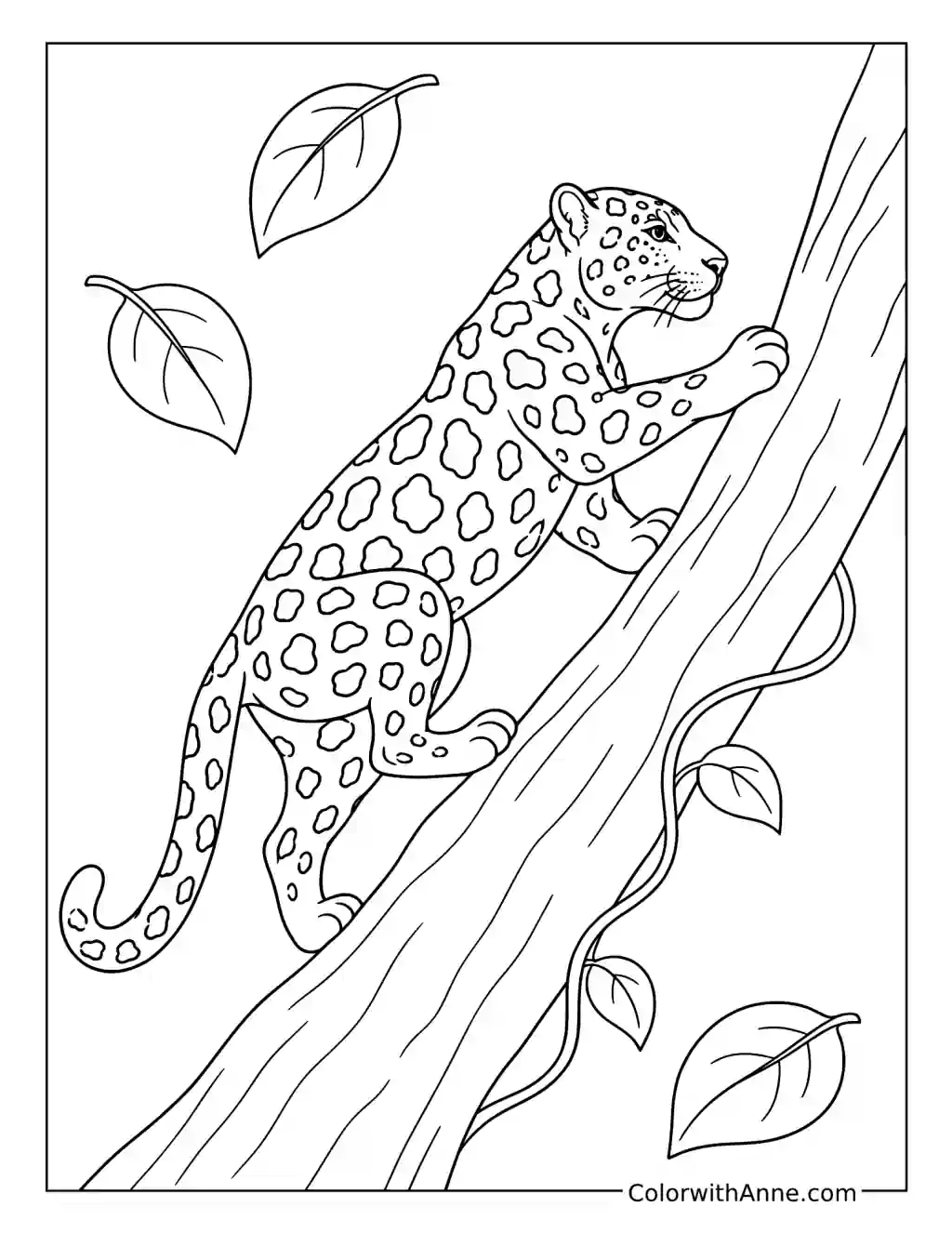
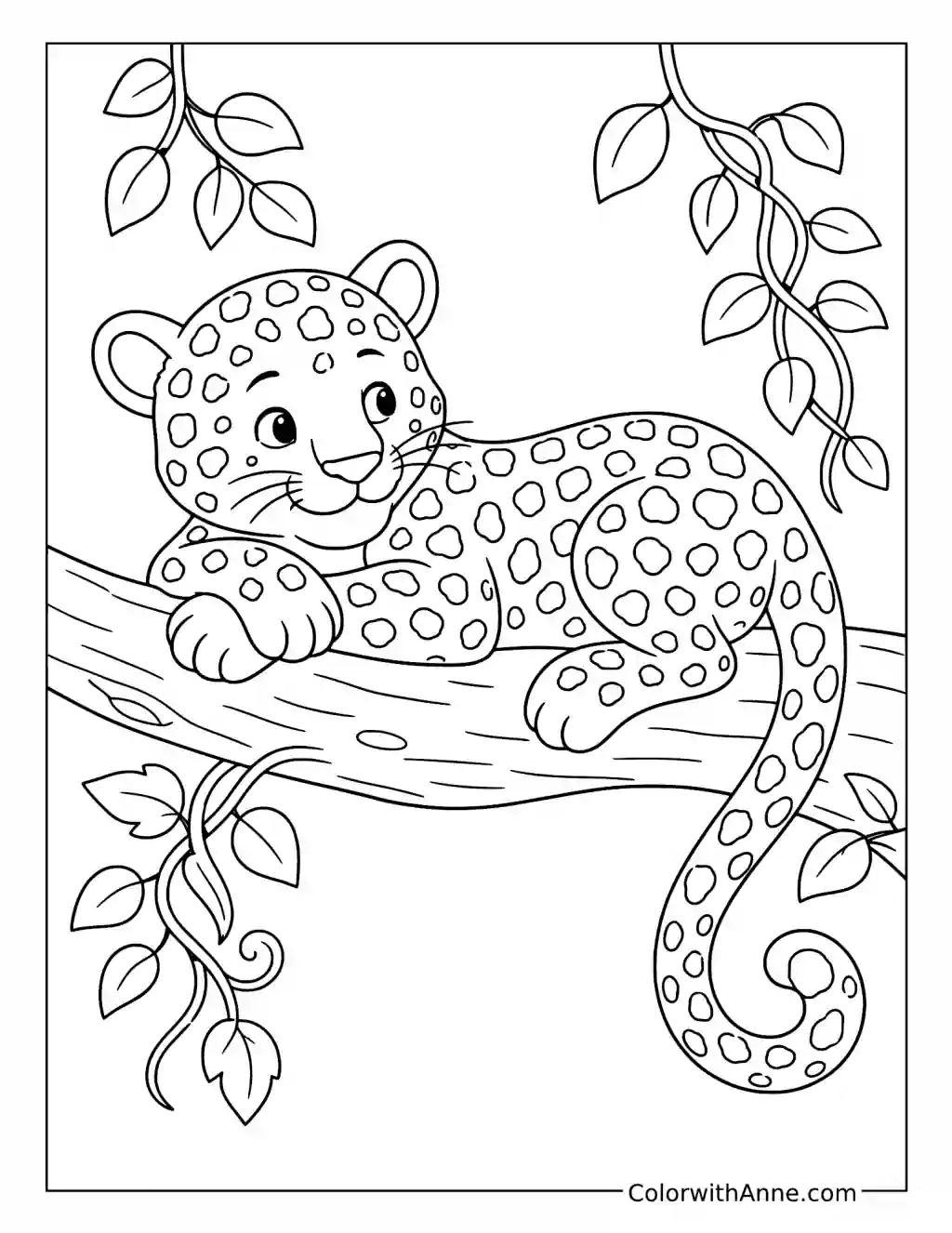
Enjoy the Jaguar’s Branch-Sized Lounge
The jaguar rests along a branch, with its paws gathered beneath its head and its long tail hanging down. The loose posture is the main attraction here. If a cat shares your home, glance at how it settles on a windowsill or sofa arm: where the paws tuck, how the back curves, and what the tail does. Those observations can help you notice the drawing’s relaxed shapes. Give the branch a firmer, rougher texture than the coat, and let the surrounding vines remain light enough that the resting animal holds your attention.
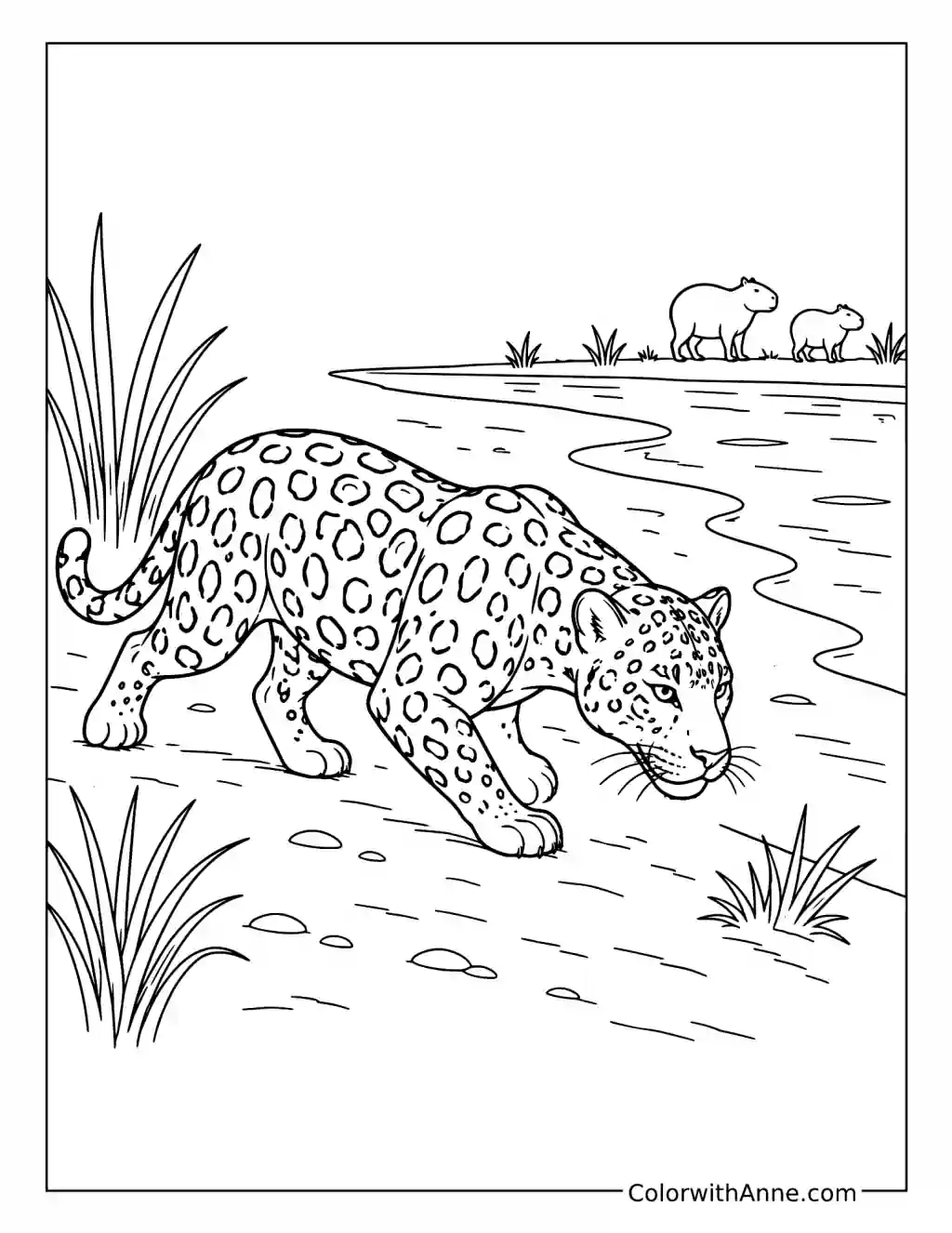
Start a Wildlife Notebook with the Wetland Scene
The jaguar moves low through dense wetland plants, with water and a distant bank beyond it. There is plenty to investigate for someone whose interest in wildlife tends to continue after a documentary ends.
Use the completed page as the opening illustration in a jaguar notebook. On a separate sheet, record one question prompted by the scene, such as where jaguars live or how they use watery habitats. Look for the answer in a wildlife reference book and note the source alongside it. Start with that one question; the picture can lead to further discoveries at its own pace.
Sketch the Landing after the Canyon Leap
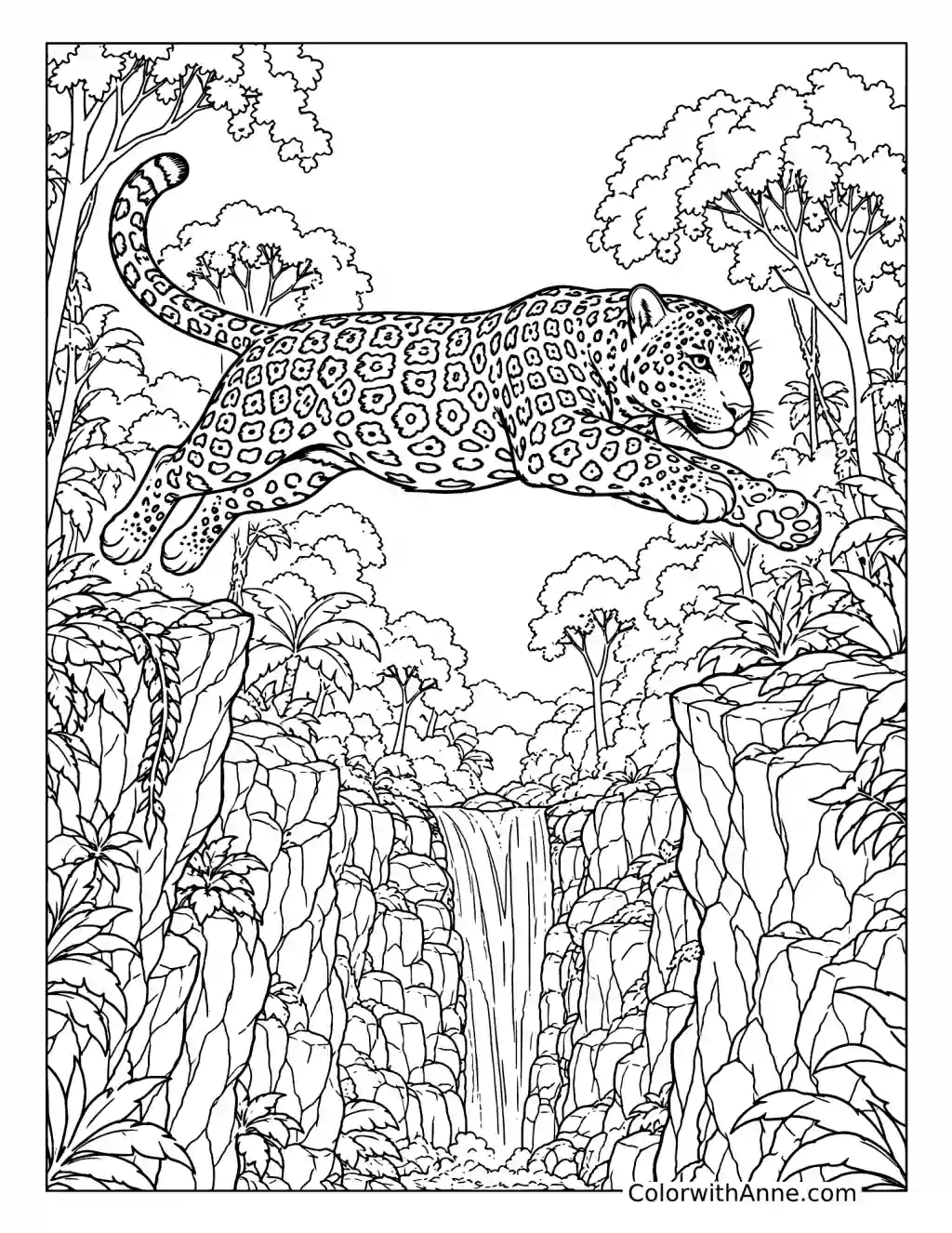
The jaguar stretches between rocky cliffs, its body suspended above the gap. Before working through the coat markings, notice the long line from its tail through its back and toward its reaching forelegs.
On scrap paper, sketch what the next instant might look like when the front paws meet the far ledge. Simple shapes are enough: an oval body, a head, and lines for the legs. Compare that crouched landing with the stretched pose in the coloring page. It is an enjoyable way to explore movement without having to draw every rosette twice.
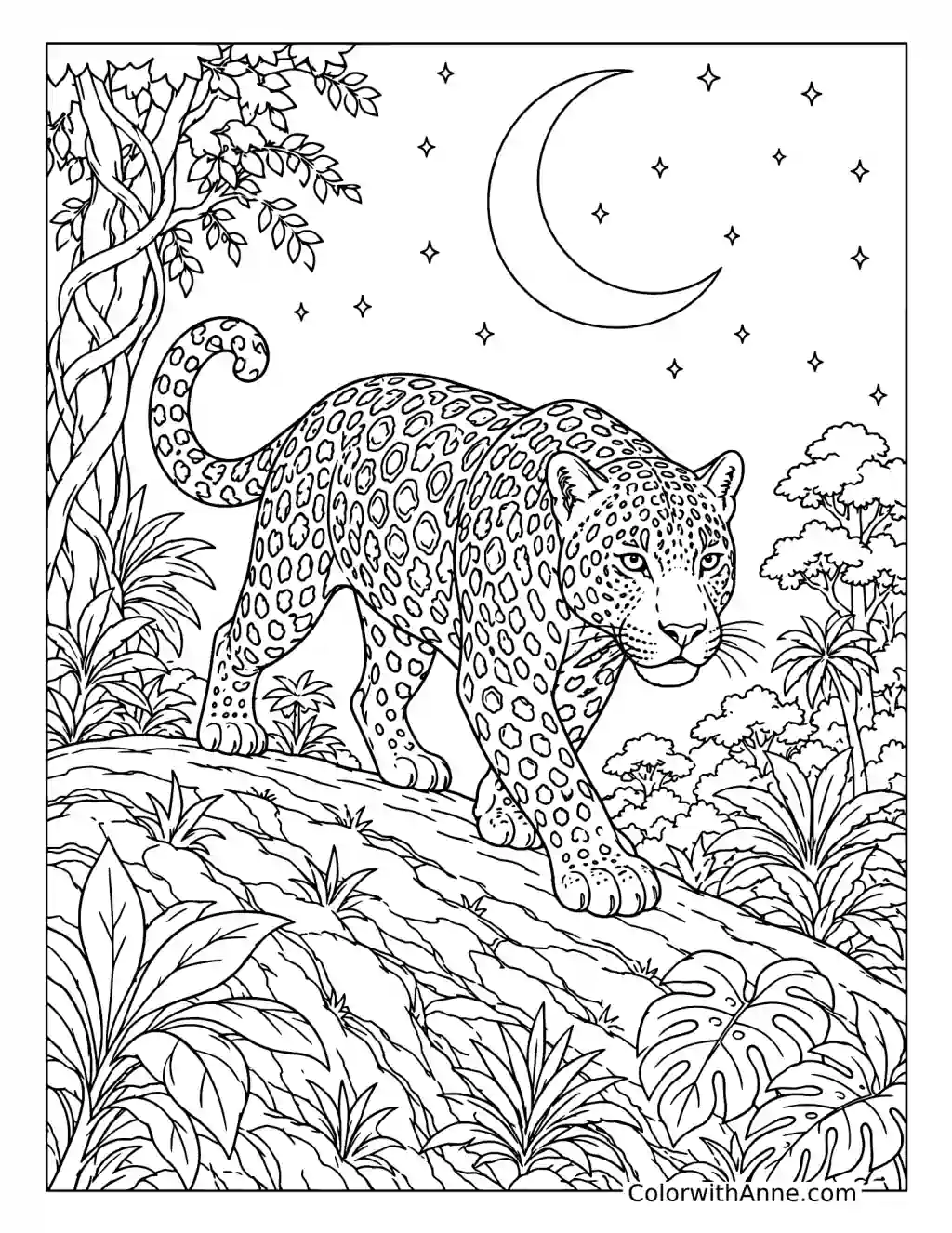
Let Moonlight Pick Out the Ridge
A crescent moon and scattered stars hang above the jaguar as it walks along a rocky ridge. Try preserving narrow highlights on the animal’s upper back, ears, and the tops of nearby rocks, as though the moon were picking them out of the darkness.
The lower foliage can remain less distinct, giving the ridge a clear edge. Keep enough detail around the paws to show where the jaguar is stepping. This scene suits an evening at the table, when the window has gone dark and the picture’s small patches of light begin to feel especially noticeable.