
A teddy bear propped against a cushion can look surprisingly settled, as though that particular corner of the sofa has always belonged to it. Move it to a shelf and the room takes on a slightly different expression. A soft face and a pair of round ears do quite a lot with very little.
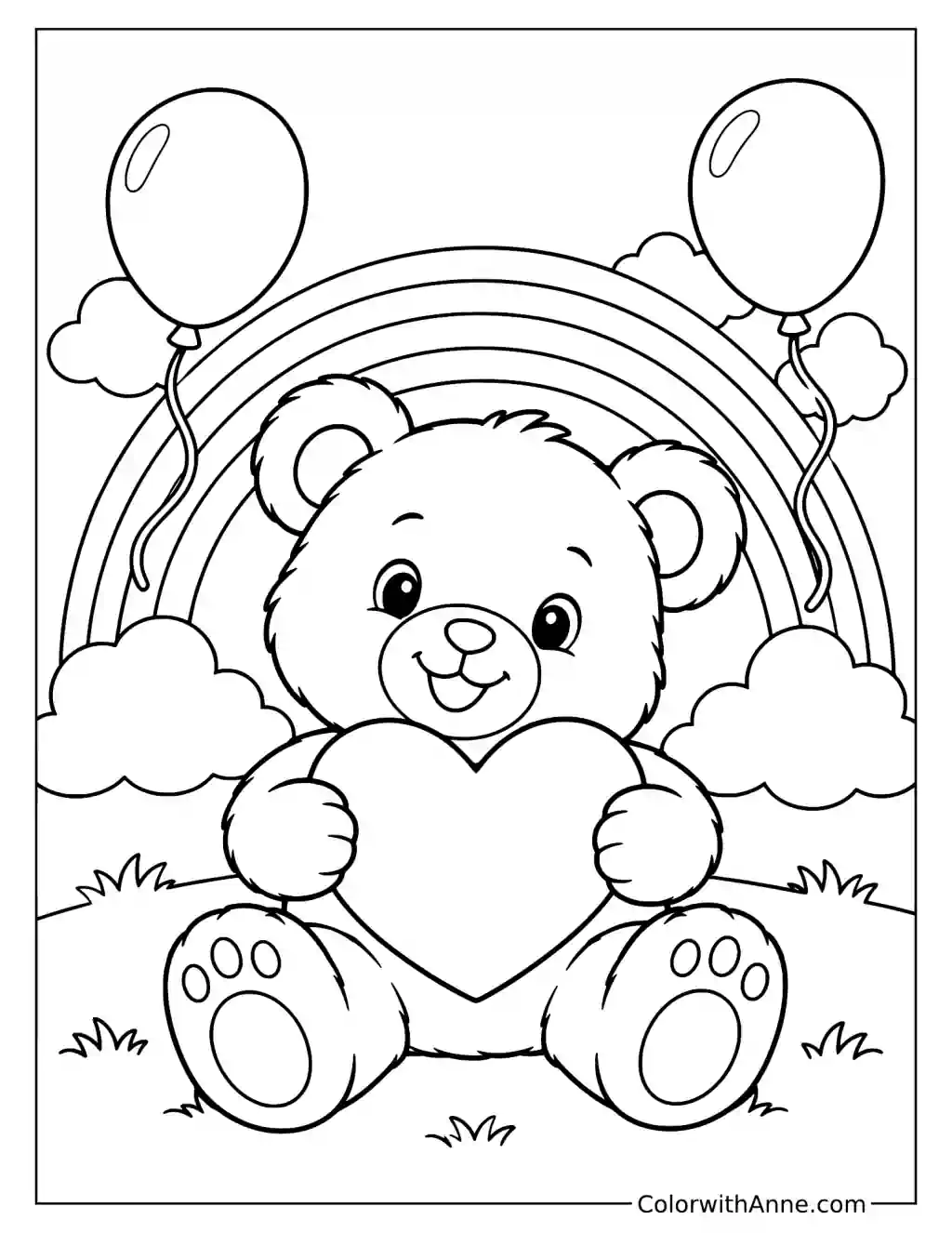
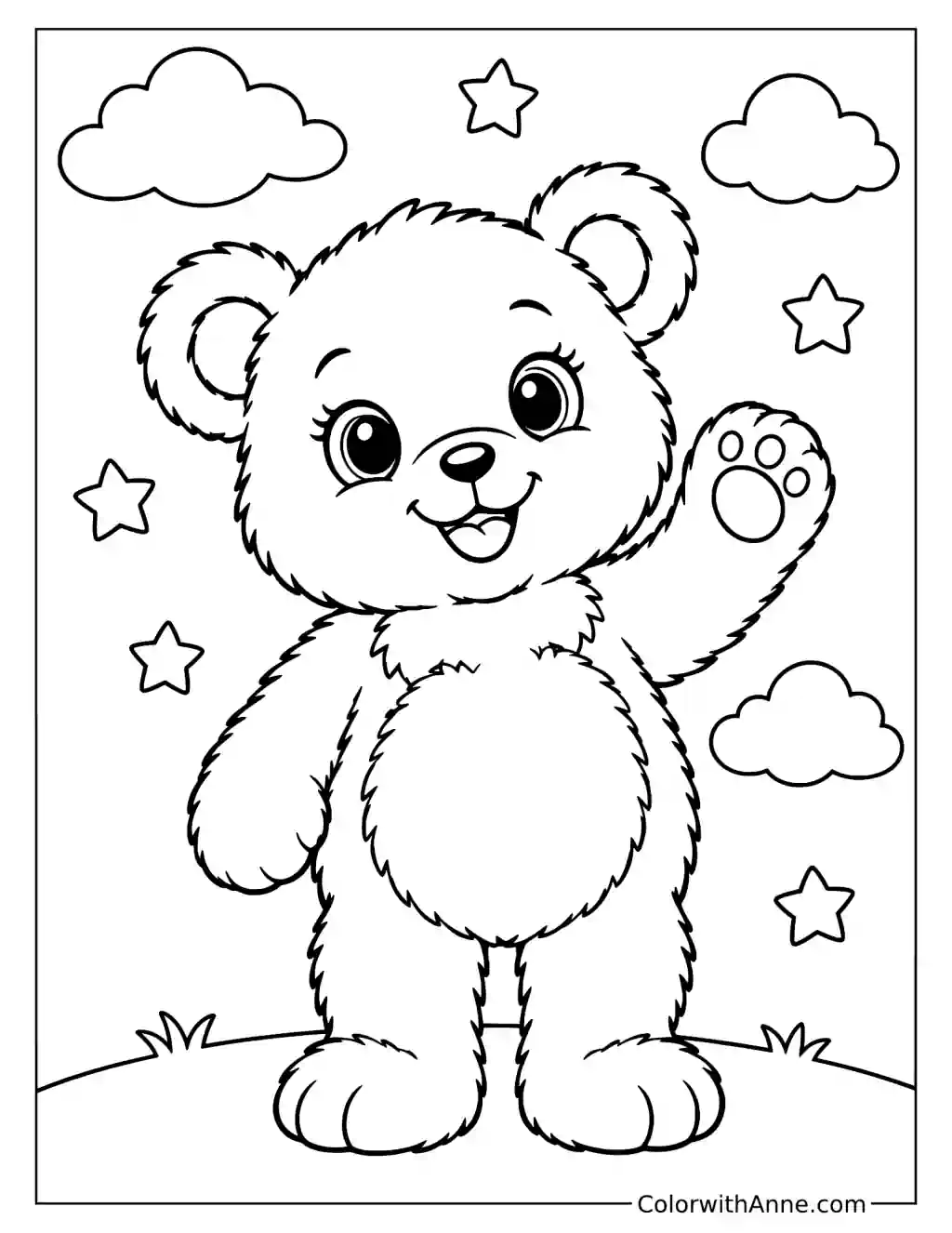
That easy presence is part of the appeal of Teddy Bear coloring pages. There is something pleasing about a companion that can join the household without needing an introduction. It can sit nearby through a busy afternoon, looking entirely content with the place it has been given.
Free Printable Teddy Bear Coloring Pages
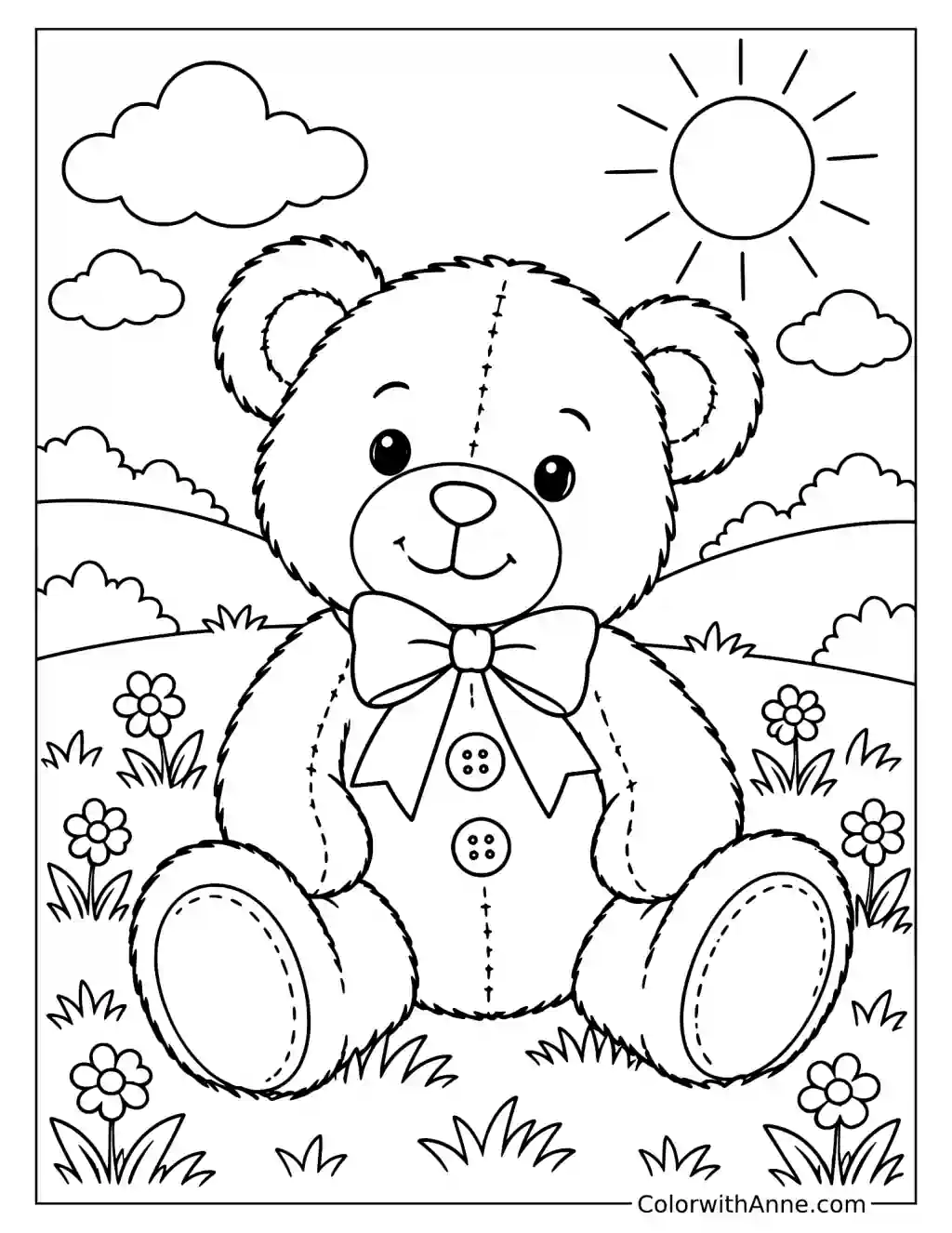
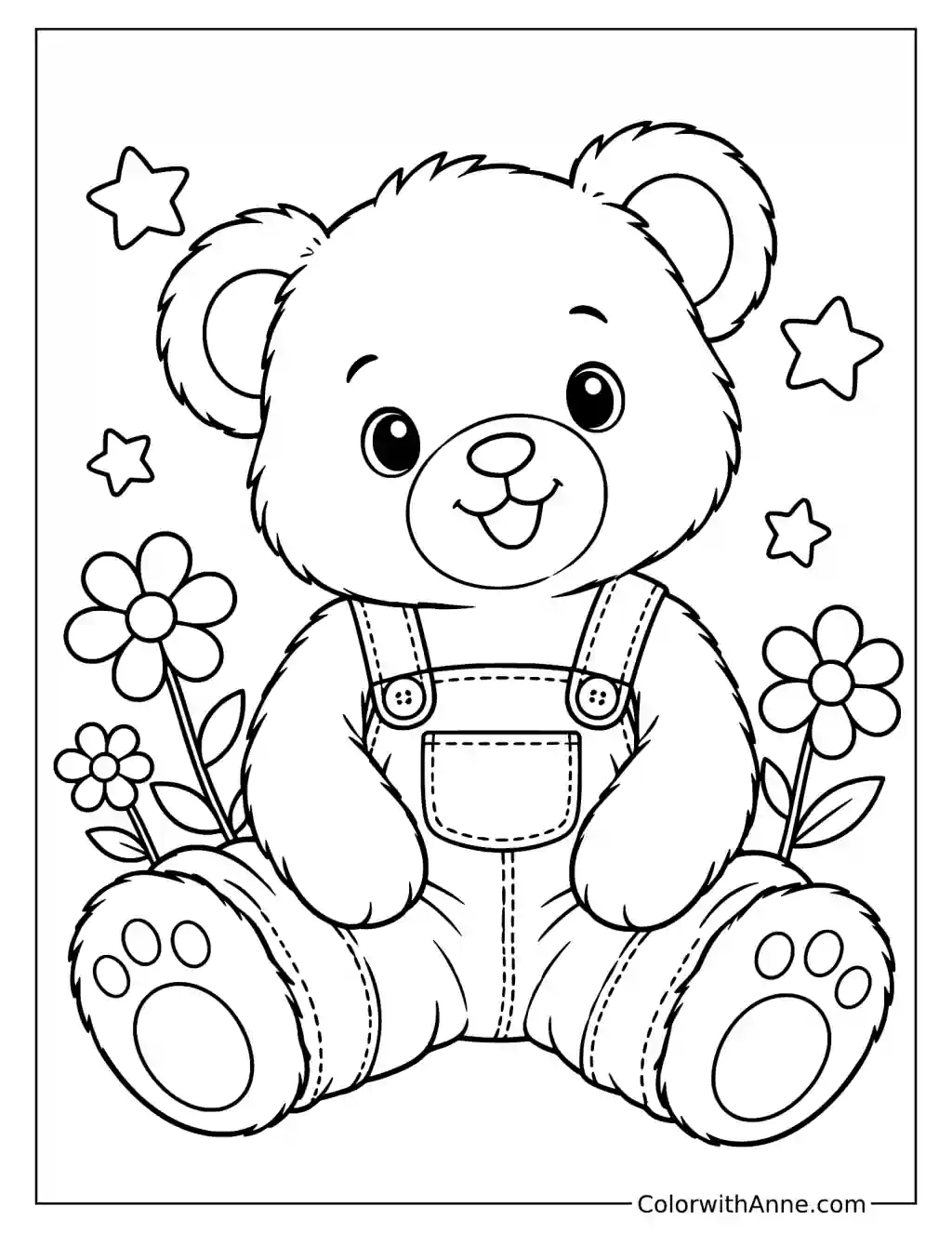
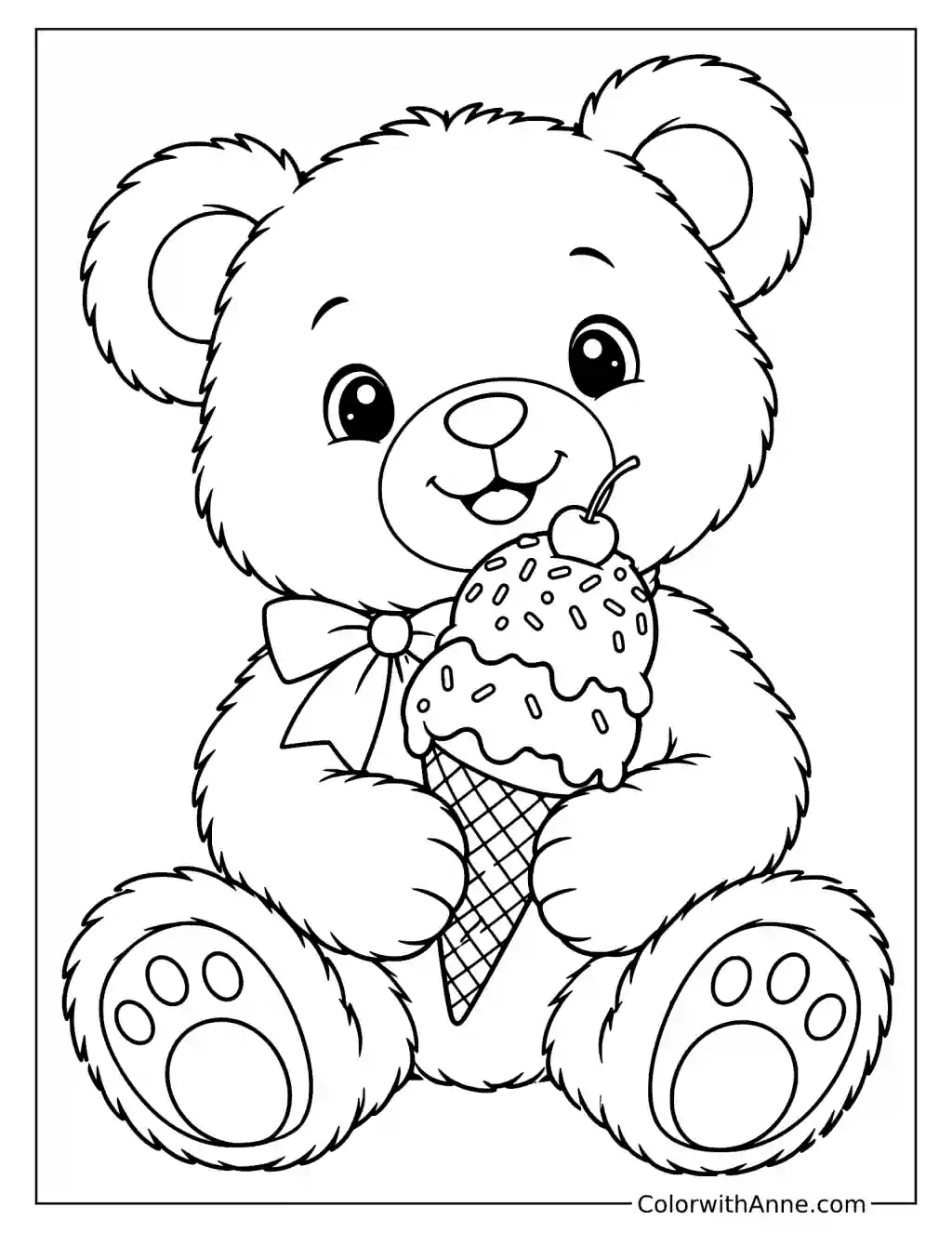
Click any coloring page below to open the PDF, then print on US Letter or A4 paper.
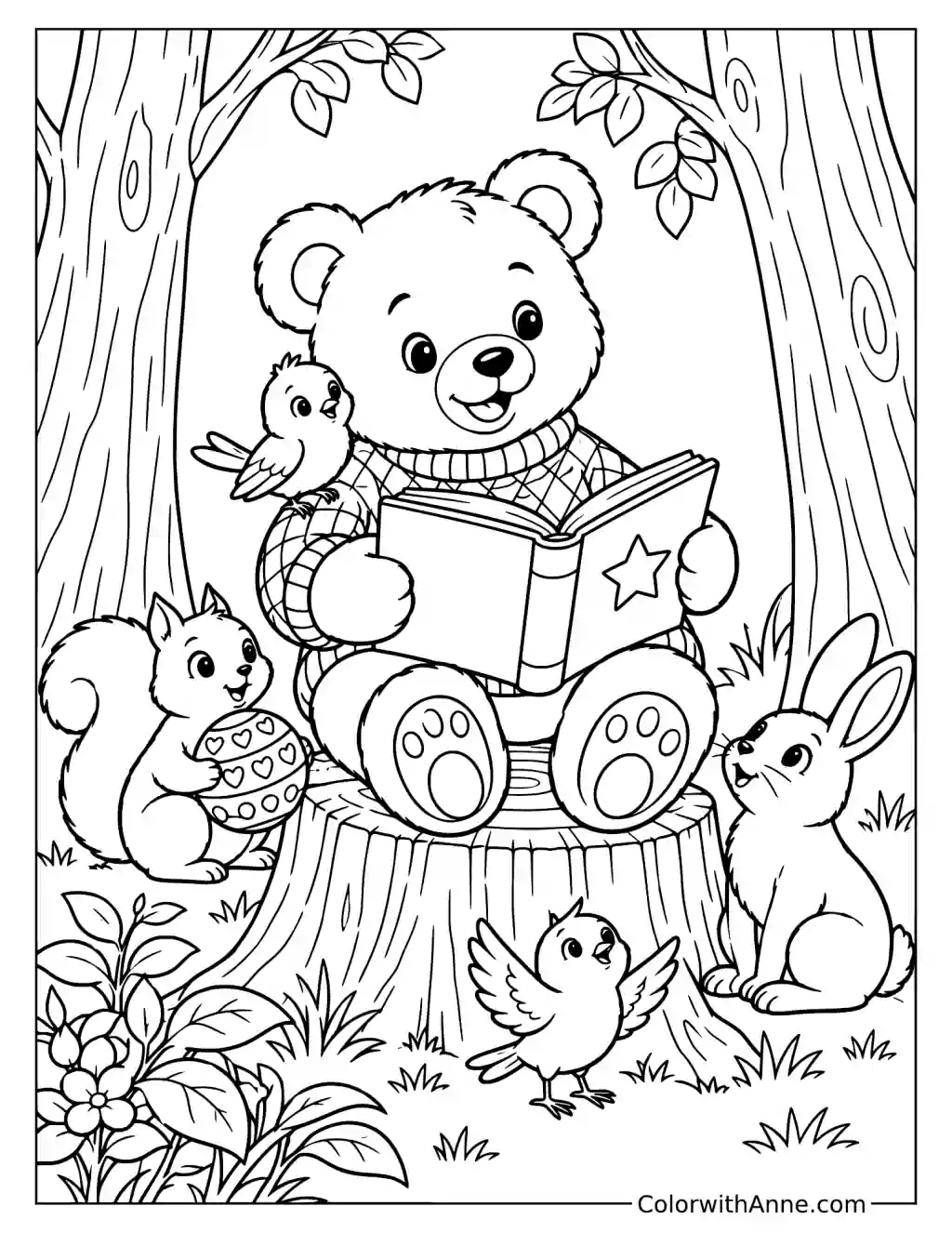
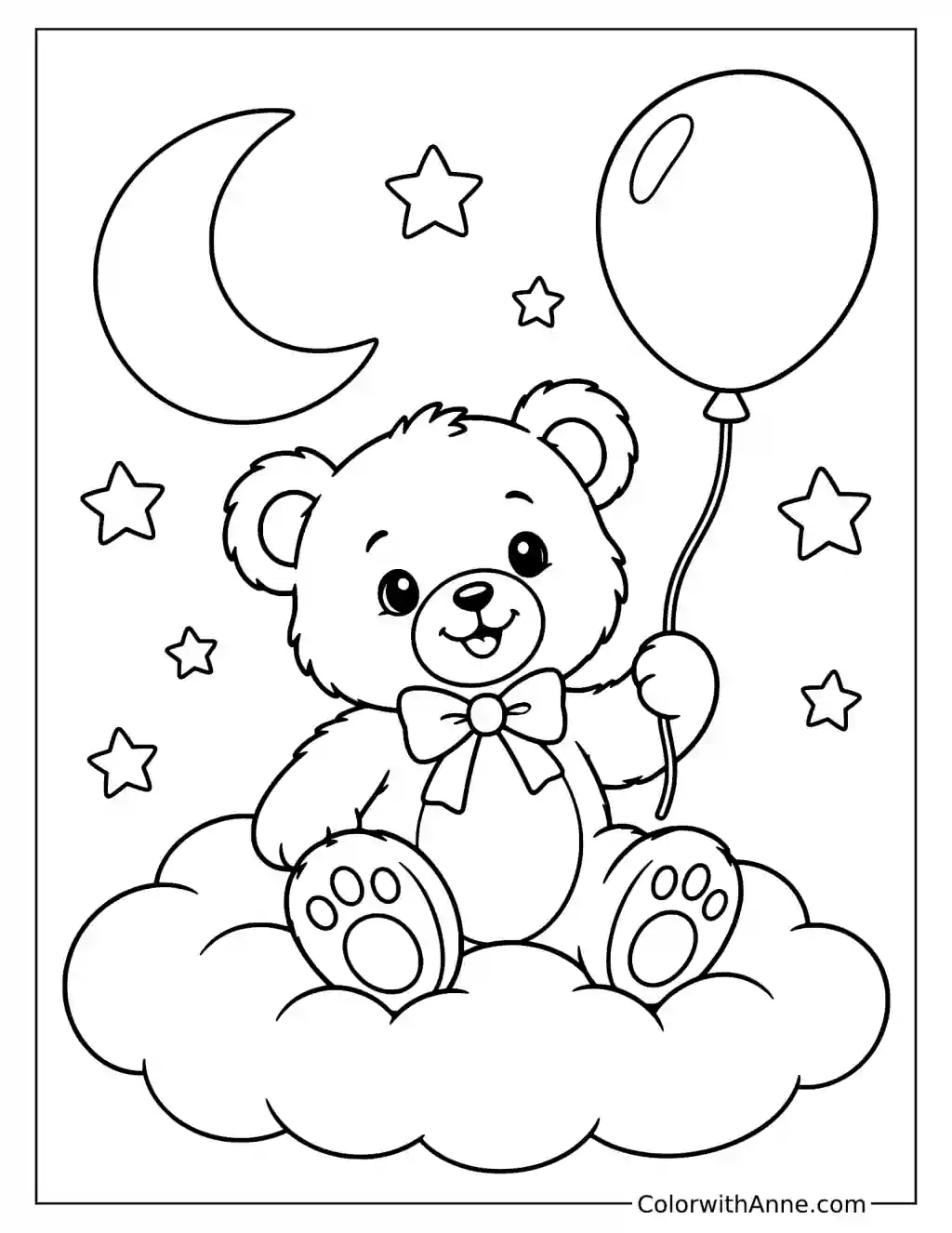
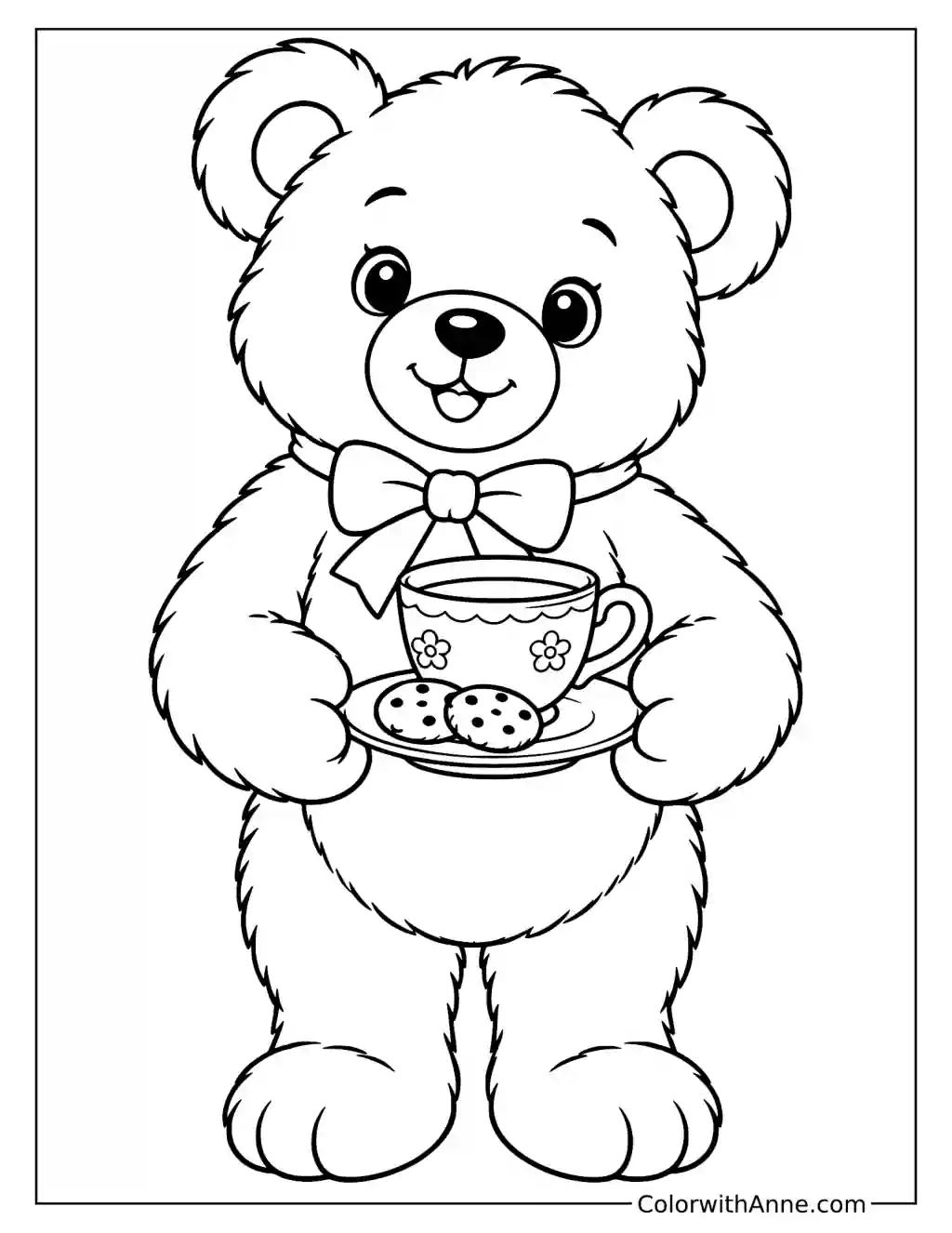
Did you find what you needed?
Help us choose what to create or improve next.
Coloring Ideas for Teddy Bear Pages
Try these creative ideas to make the most of your coloring sheets.
Let the TEDDY Blocks Mark a Toy Shelf
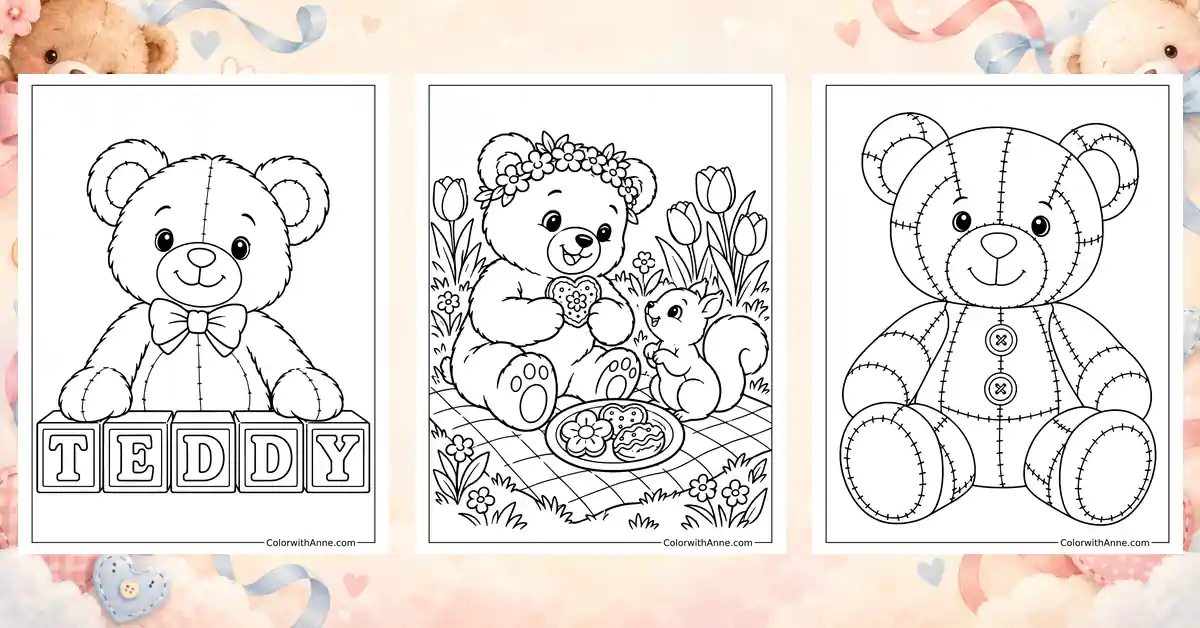
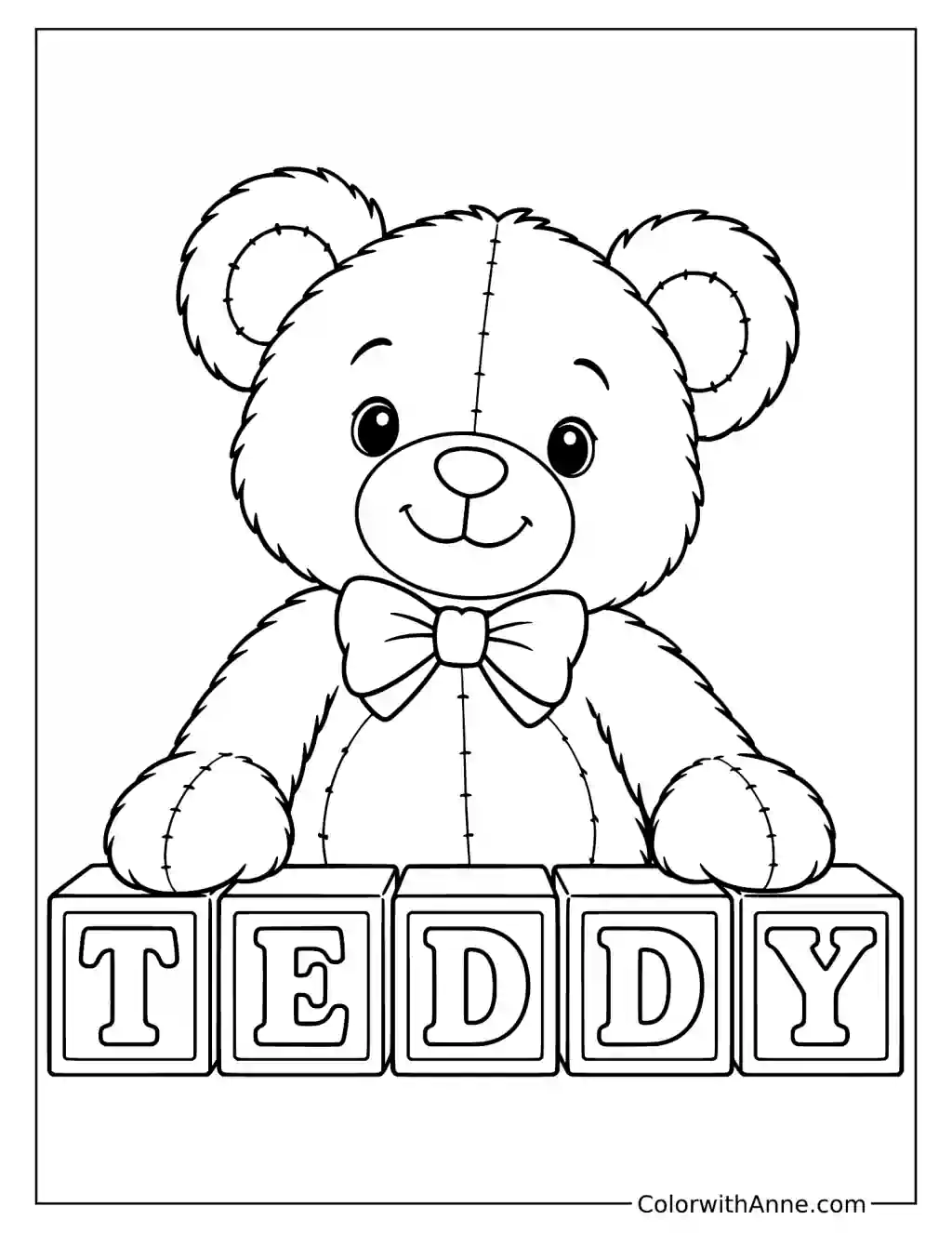
The five blocks in front of this stitched bear already spell TEDDY. Give their faces five different soft colors, with a honey brown bear and a dark blue bow behind them.
Those broad letters make the finished sheet useful beside a small collection of bears. Rest the paper against the back of a shelf, keeping its lower edge visible so the blocks can be read above the toys. Try setting the sheet at one end of the toy group rather than behind the tallest bear.
Rearrange the real toys by height until each face has room. A smaller bear can sit in front, while the taller ones leave the printed word clear enough to read.
Give the Winter Bear a Proper Knit Outfit
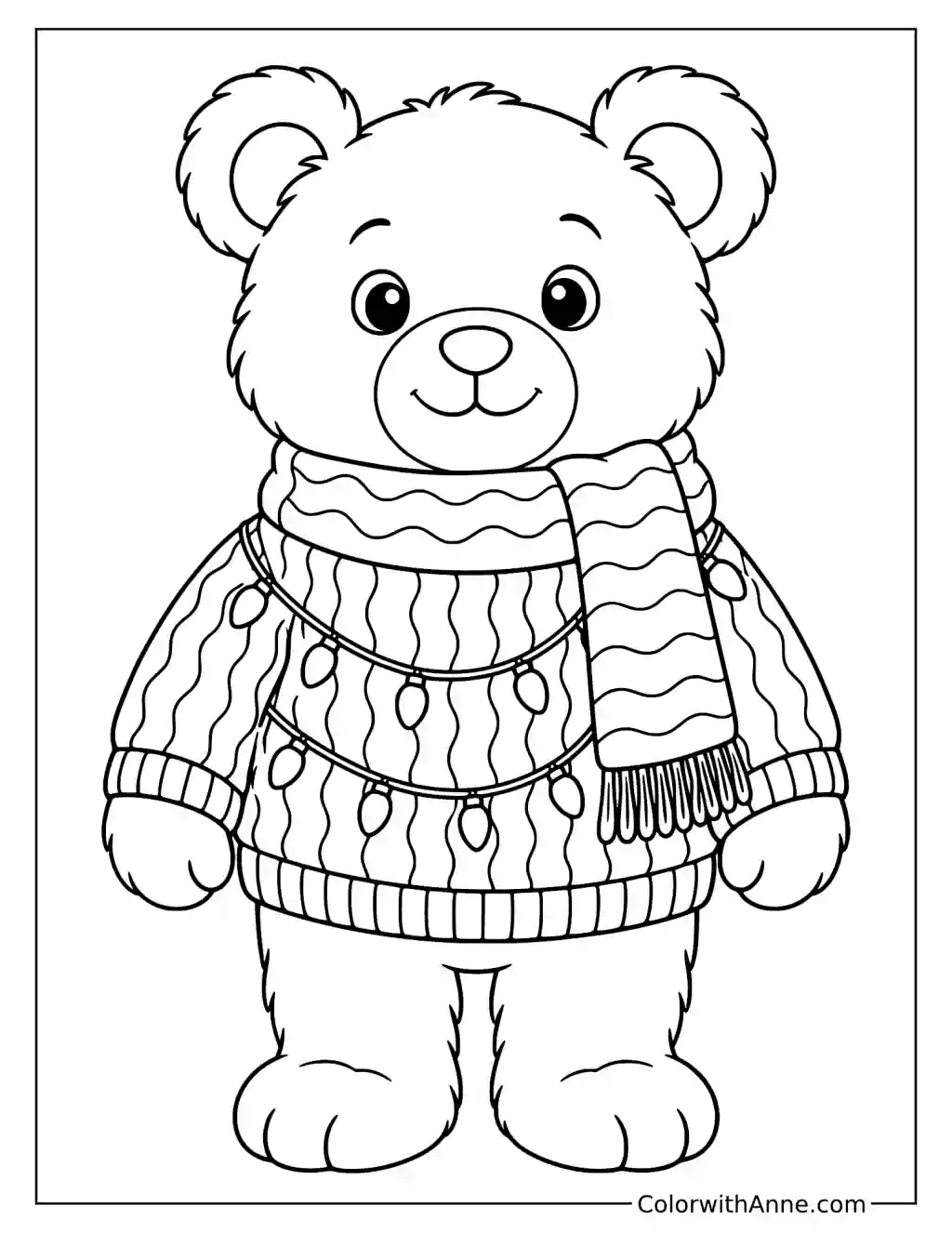
An actual sweater or scarf nearby can help with this bear's winter outfit. Notice which part looks thickest: the cuff, the collar, or the main knitted fabric. Use that observation to decide where the drawn clothes should look most substantial.
Try a deep red sweater with a cream scarf and small golden bulbs along the string across the chest. The long cable shapes and wavy scarf bands give the two garments different surfaces.
Keep the narrow spaces inside the cable pattern a little darker, then leave the raised shapes clearer. The scarf can stay simpler, with its fringe treated as separate strands instead of one solid block at the bottom.
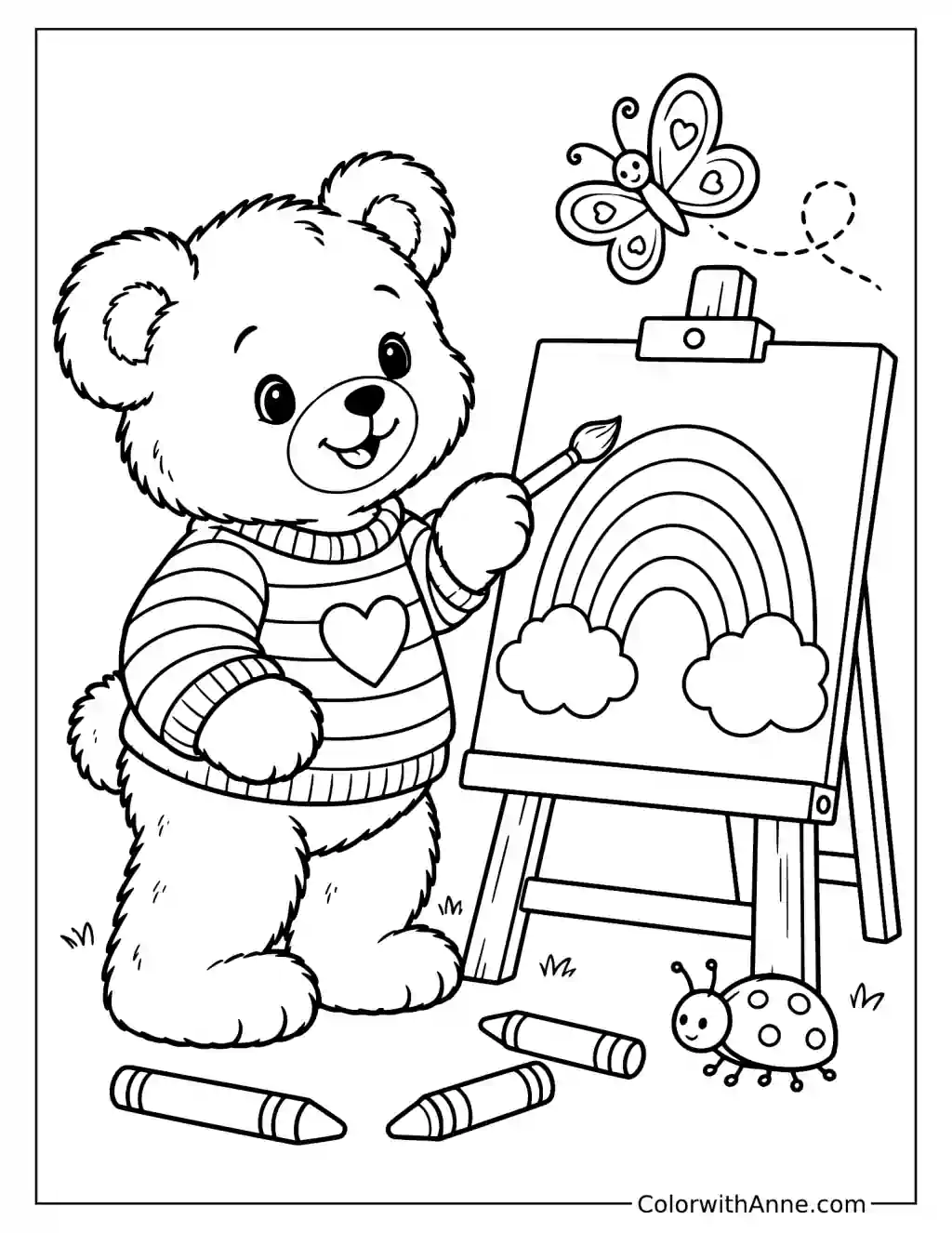
Finish the Artist Bear's Rainbow Picture
The bear has a brush lifted toward a rainbow on an easel, with crayons lying below. A warm brown bear in a blue sweater would leave the rainbow free to carry the brightest colors.
Choose the rainbow's colors before deciding on the artist's clothes. On a scrap, try the sequence you want to use and see whether two neighboring bands are too similar to tell apart. Change the order there before filling the easel picture.
Give the crayons on the ground colors that could have helped make the artwork. One can match the band nearest the brush, as though that shade was just chosen. The small picture and the scattered supplies then belong to the same working session.
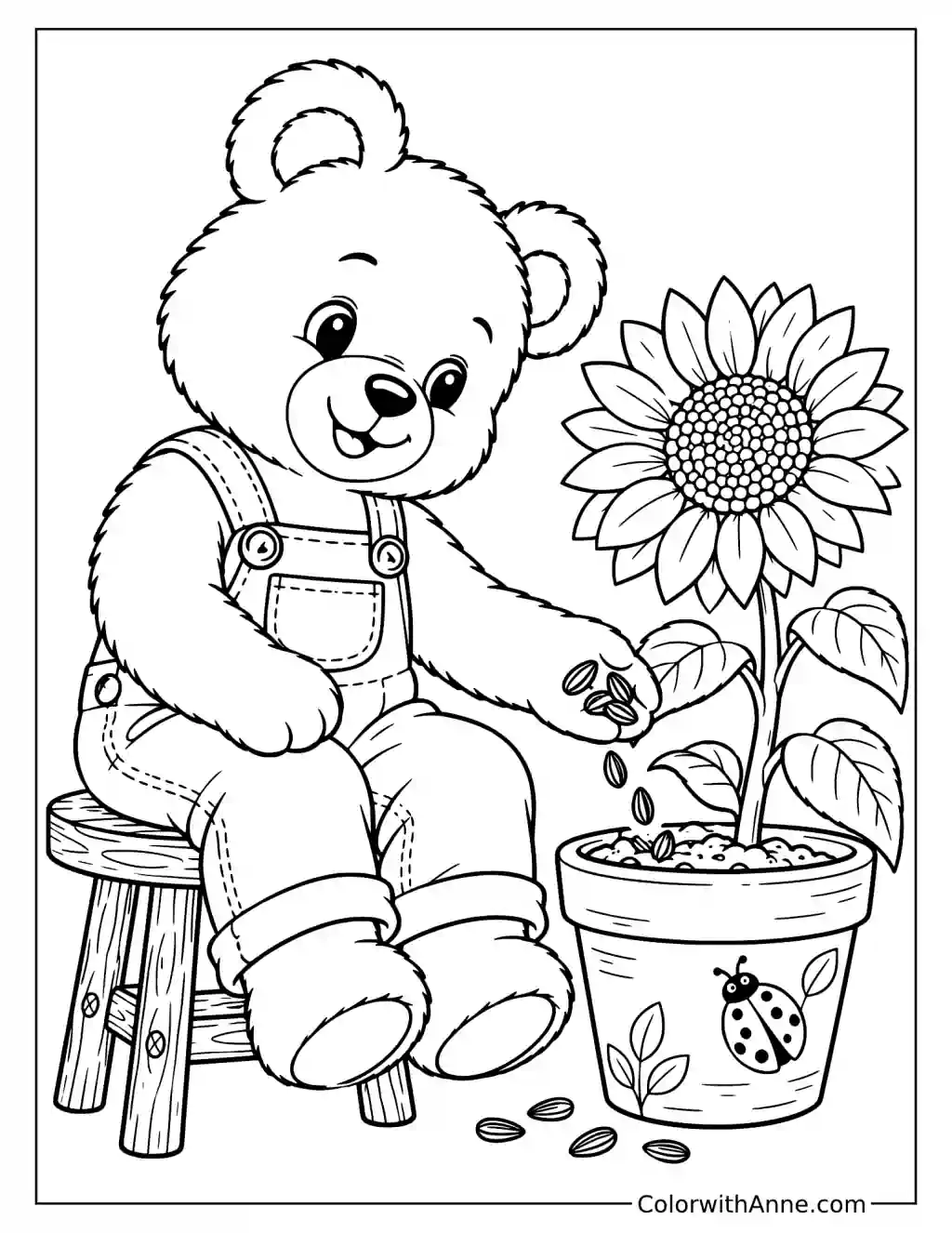
Use the Gardening Bear to Plan One Small Pot
This gardener sits beside a large sunflower in a pot, with seed shapes in one paw and a little packet nearby. Blue overalls, yellow petals, and a terracotta pot would suit the scene.
Think about a real spot where a small planted pot might fit at home. It could be a windowsill or a place outside that an adult has chosen. Draw the shape of that space on a scrap before deciding how wide a pot could sit there comfortably.
The printed pot has its own ladybird decoration. Keep that detail as the bear's choice, then sketch a separate pot you would enjoy seeing in your chosen spot. Compare its shape with the sunflower's tall container.
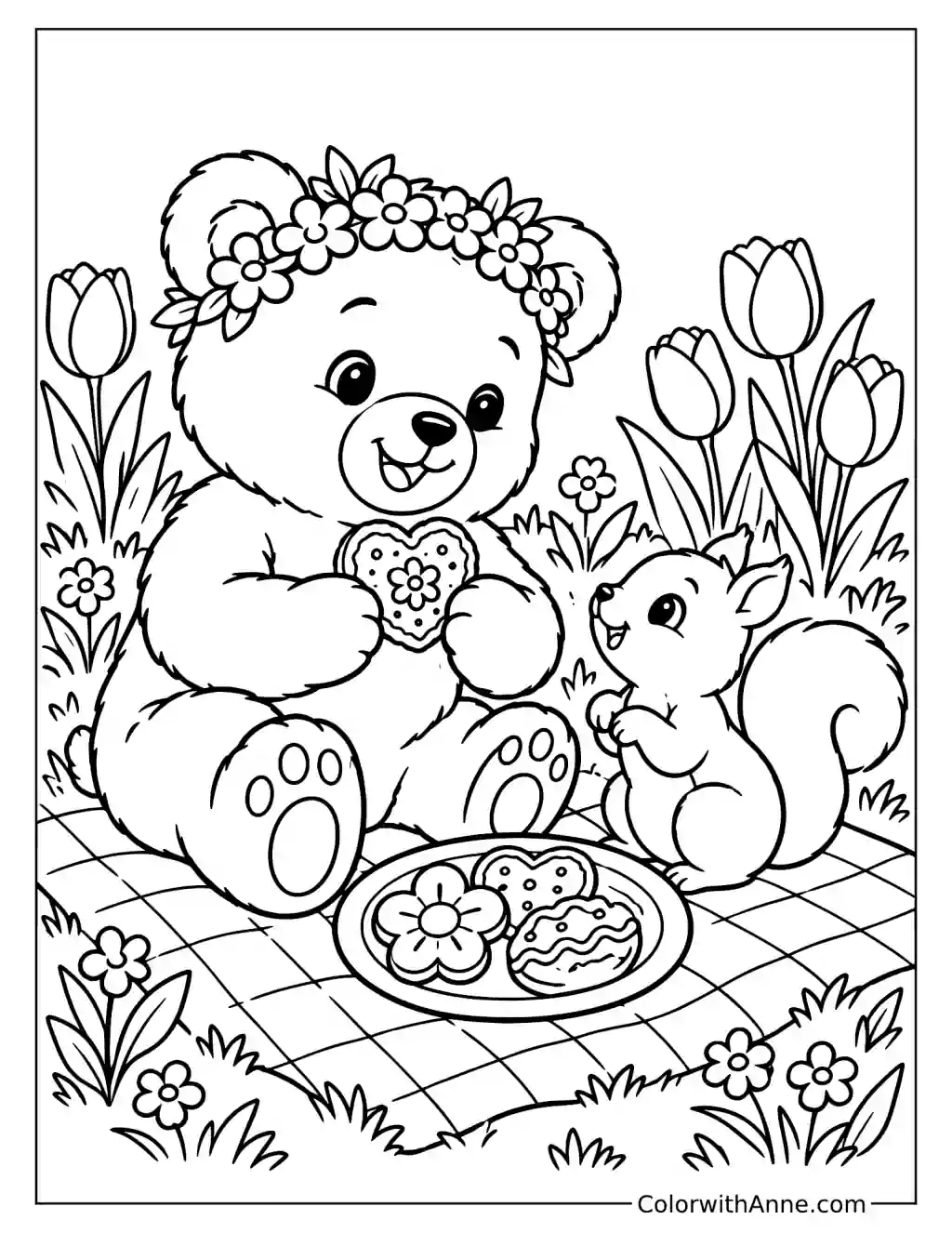
Set a Small Picnic around the Bear and Squirrel
A flower-crowned bear and a squirrel sit on a checked blanket beside a plate of decorated treats. Soft brown fur and a red checked blanket would leave the flowers and icing easy to distinguish.
Use the picture to arrange a pretend picnic for two toys. A folded cloth can stand in for the blanket, with empty toy dishes placed where each guest can reach them. Start with one shared plate in the middle, as in the drawing.
Bring the toys closer together or farther apart until the dishes fit without covering their feet. If another toy joins, decide whether the cloth needs turning or the shared plate needs moving before adding a third place.
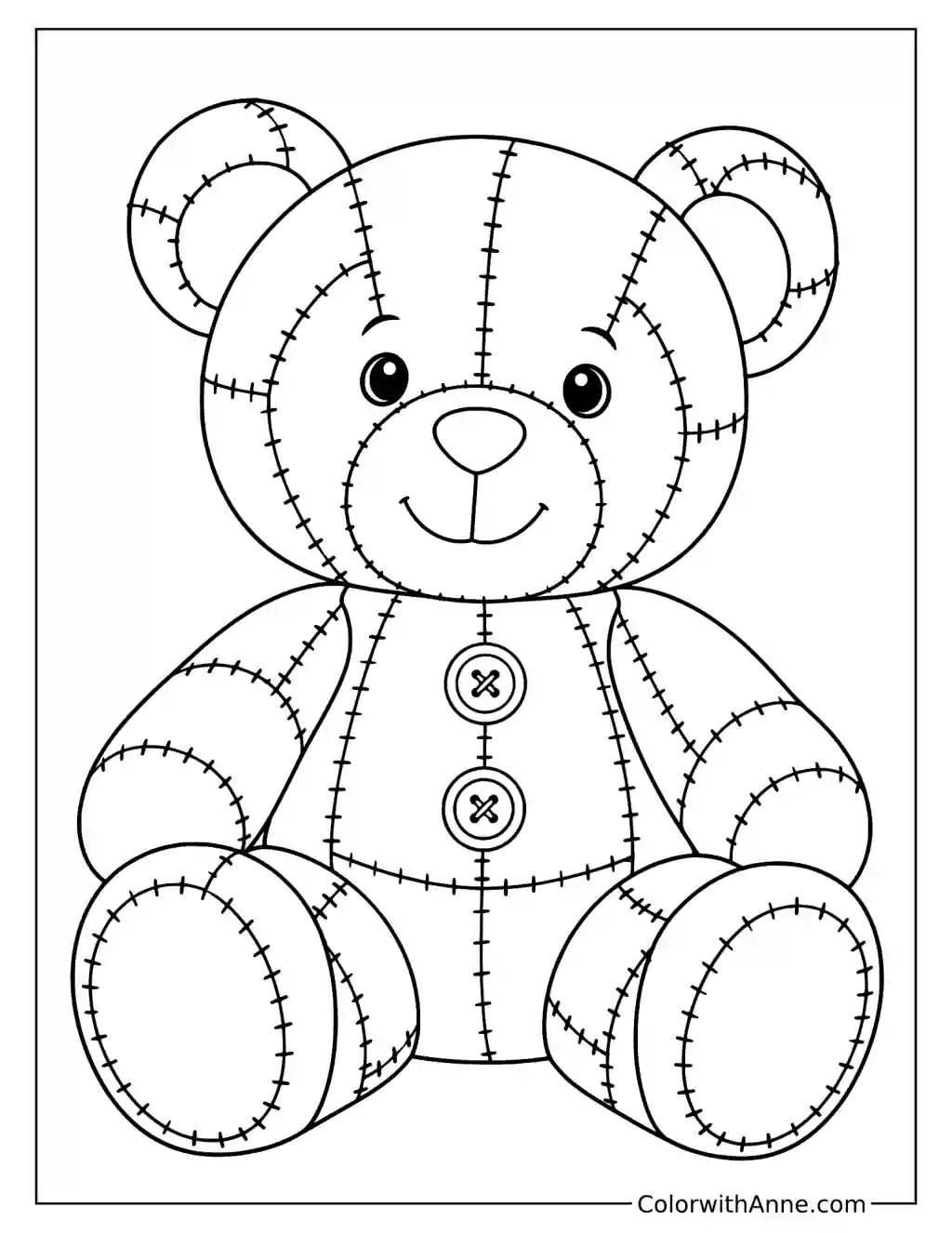
Plan a Patchwork Bear from Paper Offcuts
Gather a few cream, rust, and blue paper offcuts for this patchwork bear before choosing any colors. Its curved seams divide the body into separate pieces, with two buttons down the middle.
Lay the scraps beside the page and assign each one to a patch by pointing rather than gluing. A busy print might suit one ear, while a plain scrap gives the face room to stay clear. Change the arrangement until the strongest pattern has a place you like.
Borrow the chosen colors and one small feature from each scrap for the drawing. Keep the stitch marks visible between sections, so the pieces still appear joined into one soft bear.